Part II History of the Industry (continued 2)
Reading edition
Annexation to the United States in 1898 was the next important step in the development of Hawaii. Its immediate effect was to create a feeling of security and confidence in every direction, for while the reciprocity treaty had produced excellent results, the danger of its being made the subject of attack in Congress was ever present. The hoisting of the American flag in the islands permanently dispelled any anxiety on that score.
Of all the early pioneers whose steadfastness and courage kept the sugar industry alive through so many vicissitudes, but few survive. Their descendants have succeeded to their possessions and responsibilities, and today in Hawaii cane cultivation and sugar manufacture have attained a higher degree of development than has been reached by any other country in the world. Crude methods and appliances have long since disappeared. Scientific principles govern the treatment of the land and the selection and care of the cane. The irrigation works are marvels of engineering skill. The mills are modern steel-frame structures, with concrete floors and equipped with machinery of the most improved type. And the end is not yet. The minds of many highly trained men are constantly at work upon the various problems presented by the industry, and what the fruit of their effort will be, who shall say?
Production of Hawaii since 1837 in tons of 2240 pounds:
1837 2
1838 40
1839 45
1840 161
1841 27
1842 ...
1843 511
1844 229
1845 135
1846 134
1847 225
1848 223
1849 292
1850 335
1851 9
1852 312
1853 287
1854 257
1855 129
1856 248
1857 313
1858 538
1859 816
1860 645
1861 1,144
1862 1,342
1863 2,363
1864 4,649
1865 6,838
1866 7,915
1867 7,646
1868 8,175
1869 8,171
1870 8,386
1871 9,715
1872 7,587
1873 10,326
1874 10,967
1875 11,197
1876 11,640
1877 11,418
1878 17,157
1879 21,884
1880 28,386
1881 41,870
1882 50,572
1883 50,941
1884 63,685
1885 76,496
1886 96,528
1887 94,984
1888 105,307
1889 108,110
1890 115,977
1891 122,761
1892 109,178
1893 136,269
1894 148,600
1895 133,596
1896 201,632
1897 224,200
1898 204,834
1899 252,506
1900 258,522
1901 321,463
1902 317,510
1903 391,063
1904 328,103
1905 380,579
1906 383,226
1907 392,872
1908 465,288
1909 477,818
1910 461,687
1911 506,090
1912 531,480
1913 488,212
1914 550,926
1915 577,183
1916 545,000
LOUISIANA
The cane crop of Louisiana comes from the southern part of the state, principally along the banks of the Mississippi, the Bayou Teche and the Bayou Lafourche. As this region is outside the tropics, being between 29 degrees and 31 degrees north latitude, frosts must be looked for in winter. The sugar industry of Louisiana, therefore, as well as that of Texas, Florida and Georgia, has to cope with climatic conditions that are unknown in most other cane-producing countries.
All of the sugar plantations are situated in the low plains, the highest elevation above sea-level not exceeding 83 feet. The annual rainfall varies from 67 to 95 inches, and 80 inches may be taken as a fair average, which amply suffices for the needs of the growing cane. In December, January and February there is always the danger of frost and planters must be constantly alert to guard against this as far as possible. During the autumnal equinox much damage to the cane is caused by hurricanes that rush in from the Gulf of Mexico.
Sugar cane was brought to Louisiana in 1751. According to Gayarré, two ships that were transporting troops from France to Louisiana touched at a port in Hispaniola during the voyage and the Jesuits of the island obtained permission to put some sugar cane on board these vessels to be taken to Louisiana and there delivered to their Jesuit brethren.
The same means were employed to send a number of negroes to cultivate the cane, which was planted according to direction on a piece of ground belonging to the order situated just above the present course of Canal street, New Orleans. The cane grew to maturity and was sold in the market as a luxury.
In 1759 a rich colonist, Dubreuil by name, built a mill and attempted to make sugar, but his efforts were unsuccessful and the idea was abandoned. Tafia, a kind of rum, was made from sugar cane shortly afterward.
In 1791 Don António Mendez, an officer of the Spanish crown who lived in St. Bernard parish, bought from a Spanish refugee from Santo Domingo named Solis his land, crop of cane and distilling outfit and attacked the problem with a firm determination to conquer it. He called in a Cuban sugar maker named Morin to assist him, but whether it was that he lacked the means to erect a proper factory, or whether he became discouraged, the fact remains that he only succeeded in turning out a few small barrels of sugar. There is evidence that he did something in the way of refining as well, but not in an appreciable quantity.
The first crop of sugar sufficiently large and profitable to serve as an incentive to others was raised by Etienne de Boré about 1794. Of this achievement Gayarré says: “When the whole agricultural interest of Louisiana was thus prostrated and looking around for the discovery of some means to escape from annihilation, and the eager and anxious inquiry of every planter was ‘What shall I do to pay my debts and support my family?’, the energy of one of the most spirited and respected citizens of Louisiana suddenly saved her from utter ruin and raised her to that state of prosperity which has increased with each successive year.”[42]
In 1794 de Boré purchased seed cane from Mendez and Solis and after planting it he went ahead with his preparations for harvesting, crushing and manufacturing. The following year the sugar he produced sold for $12,000, a considerable sum of money in those days. The boiling of the sugar juice to grain was done under the direction of Antoine Morin, the former associate of Mendez. The method was naturally very primitive, the mill being driven by animal power, and much sugar was lost in the bagasse.
Following the example of de Boré, many planters set out cane and built sugar mills. Their operations were highly successful and they all became wealthy within a comparatively short period.
The industry continued to flourish and prosper, and the year 1820 marked a decided step forward. Up to that time the only two kinds of cane that had been grown in Louisiana were the Creole (from Malabar or Bengal) and the Tahiti. The cane originally planted by de Boré and from which he made his first sugar was the Creole; the Tahiti variety was not introduced from Santo Domingo until 1797. It became patent to the planters that neither of these canes was suited to the Louisianan climate, and they set about looking for a hardier plant. Toward the middle of the eighteenth century the purple and striped varieties were brought by the Dutch from Java to the island of St. Eustatius, and from there a quantity of these canes was taken to Savannah, Georgia, about 1814. They throve extremely well and a former resident of Savannah who had moved to Louisiana and become a planter there, having heard about them, secured some for seed purposes. His experiment proved wonderfully successful and from this single estate the cultivation of the new canes spread over the entire sugar-producing region. As these varieties could stand greater cold than the Creole and the Tahiti, the planters were able to extend their growing area northward and in this way greatly increase their acreage. As recently as 1897 these canes still constituted the crops of Louisiana with a few exceptions.
Of late years, however, seedling canes obtained from Demerara have come into great favor in consequence of the researches of the botanists at the experiment station. In addition to an advantage both in cane and sugar over the varieties previously used, the time of vegetation is shorter, so that the canes mature earlier, and this, on account of the short season in which Louisianan cane has to ripen, makes the Demeraran decidedly desirable. It has also been proved that Demeraran cane is better able to resist damage by storms, so that taking it all in all it would appear that the newer varieties are quite likely to displace the older kinds.
Cane is usually planted in the same ground every three years. The crop of plant cane is followed by a crop of ratoons and then maize is put in. As soon as the maize is cut the field is sown with a species of large pea (Vigna sinensis) and when summer is over the pea vines and the maize stubble are ploughed under. A month after this is done, furrows are dug about six feet apart and early in October cane is planted once more. In this operation two rows of whole cane stalks are placed in the furrows and covered with five or six inches of earth as a protection against frost. Most of this layer of earth is removed in the spring to help the growth of the young cane shoots. Stable manure, cotton-seed meal, nitrates, phosphates and kainite are used as fertilizers.
Harvesting begins at the end of November, and, weather permitting, the cane is allowed to remain standing in the fields until required for grinding. If, however, the Government Weather Bureau should predict cold, the cane is cut without delay, piled in the furrows and covered with dry cane leaves to prevent it from freezing. Cane stored in this manner keeps well so long as the weather remains cold, but as soon as warm weather comes it rapidly deteriorates.
Labor in Louisiana is both scarce and costly, consequently agricultural machinery is used in the fields as far as possible.
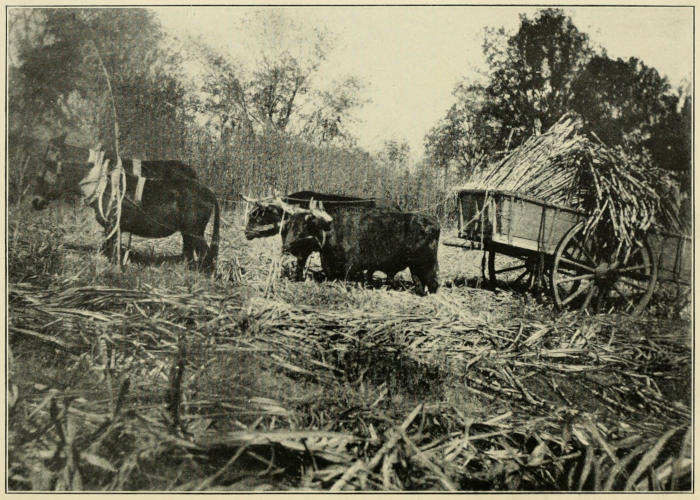
HAULING CANE IN THE FIELDS, LOUISIANA
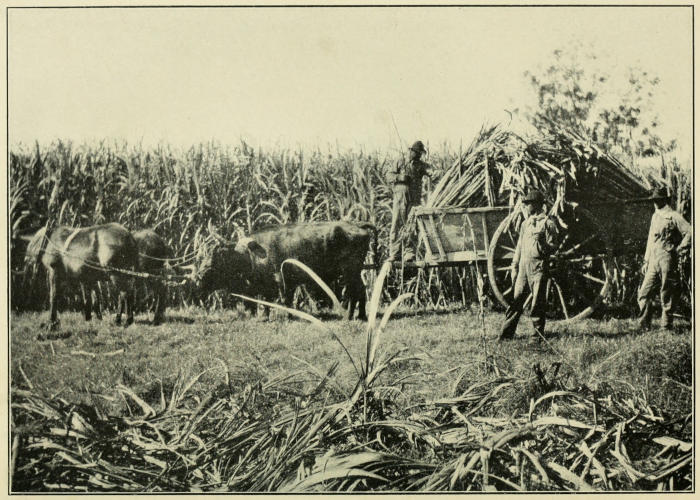
HAULING CANE IN THE FIELDS, LOUISIANA
The steam engine was first employed in the crushing of cane in the year 1822. About this time, when slavery was such a tremendous factor in the South, sugar raising was marked by a tendency toward the large plantation method. From 1830 to 1840 the number of plantations in Louisiana decreased, but the number of slaves employed on them increased 40 per cent. Later, however, the plantations began to grow in number and by 1853 there were more than fifteen hundred of them, as against 668 thirteen years previous. In those days, each plantation had its own sugar mill, so that 1853 may be taken as close to the high-water mark for the number of mills in the South. With the outbreak of the Civil war, the industry was virtually wiped out of existence, and when its rehabilitation was begun, it was carried on along entirely different lines and the separation of the raising of sugar from the manufacture was gradually brought about. Year by year the small mills were abandoned and the crops of cane raised by the planters, large and small, were brought to the central factory to be worked up. Today, where large plantations still exist, it is the practice to rent subdivisions of land from twenty to fifty acres in size to tenants who grow cane for the central mill.
In 1880 there were 1144 small sugar mills in Louisiana and their output of sugar was 121,886 tons. In 1911, 187 mills handled a crop of 5,930,000 tons of cane which gave 308,439 tons of sugar, and this would have been considerably exceeded had it not been for a disastrous freeze. In 1880, 273 factories used horse power, in 1900 only 5, in 1905 none at all. The advent of the vacuum pan and the consequent abolition of the open-kettle method marked another great advance in manufacturing development. In 1880 about 42 per cent of the sugar produced in Louisiana was turned out by factories equipped with vacuum pans. The government statistics for 1909 show a total of 316,829 tons of sugar boiled in vacuum pans and only 3,678 tons of open-kettle sugar.
As has been said, the growing season for cane in Louisiana is limited and the harvesting is done before the plant has attained its full maturity. Whether or not this has any effect upon the flavor of the sugar and molasses produced is a moot point. It is none the less true, however, that the Louisiana “Clarifieds” and the so-called New Orleans molasses possess a flavor distinctively their own.
In the plantation fields, too, the scientists have worked wonders. To illustrate the benefit resulting from the application of modern methods to the cultivation of cane, in 1885 the average yield of cane per acre in Louisiana was about three-quarters of a ton, while in 1909 the average yield per acre in cane was about 20 tons, the recovery of sugar per ton of cane over 157 pounds, or 3140 pounds of sugar per acre.
The Louisiana state experiment station was established by the sugar planters at Audubon park, New Orleans, in 1885 and endowed for a term of years. This institution has grown in importance until at the present time it has ample grounds, well-equipped laboratories and a sugar house with an installation of the latest and best sugar-manufacturing machinery, all directed and operated by the students of the institution. Here is carried on the work of developing seedlings, improvement of cane varieties, investigation of cane diseases, together with the study of all questions of bettering plantation and factory methods.
The sugar production of Louisiana in long tons from 1860-61 to the present time is as follows:
1860-61 117,431
1861-62 235,856
1862-63 43,232
1863-64 39,690
1864-65 5,331
1865-66 9,287
1866-67 21,074
1867-68 19,289
1868-69 42,617
1869-70 44,382
1870-71 75,369
1871-72 65,635
1872-73 55,891
1873-74 46,078
1874-75 60,100
1875-76 72,958
1876-77 85,102
1877-78 65,835
1878-79 106,909
1879-80 88,836
1880-81 121,886
1881-82 71,304
1882-83 136,167
1883-84 128,318
1884-85 94,372
1885-86 127,958
1886-87 80,858
1887-88 157,970
1888-89 144,878
1889-90 128,343
1890-91 215,843
1891-92 160,937
1892-93 201,816
1893-94 265,836
1894-95 317,306
1895-96 237,720
1896-97 282,009
1897-98 310,447
1898-99 245,511
1899-00 147,164
1900-01 270,338
1901-02 321,676
1902-03 329,226
1903-04 228,476
1904-05 355,530
1905-06 336,751
1906-07 188,571
1907-08 302,855
1908-09 273,178
1909-10 269,431
1910-11 263,308
1911-12 315,066
1912-13 137,119
1913-14 261,337
1914-15 216,696
1915-16 122,768
PORTO RICO
Porto Rico, the most easterly and the fourth in size of the Greater Antilles, lies at the entrance to the Caribbean sea, between 17 degrees 50 minutes and 18 degrees 30 minutes north latitude and between 65 degrees 30 minutes and 67 degrees 15 minutes west longitude. It is about 100 miles long by 36 miles wide and has an area of 3606 square miles.
A range of mountains from 2000 feet to 3700 feet in height runs from east to west. The south slope of the island rises abruptly from the foothills, while on the north the ascent is more gradual and broken to a great extent by rugged spurs and deep ravines. There is but little coastal plain on the north, except at the river mouths, but on the south a considerable stretch of lowlands is found. Although many indentations occur in the coast line, few of them afford safe shelter for ships. There are thirty-nine rivers and a great number of smaller streams, but none of the rivers is navigable for more than a mile or two from the sea.
The climate is healthful and is tempered by the northeast trade winds that, with certain modifications due to local conditions, blow steadily the year round. The mean annual temperature is about 80 degrees Fahrenheit. The rainy season begins in May and ends in November and the average yearly precipitation at the foot of Mount El Yunque on the northeast coast is 120 inches. At San Juan it is 55 inches, while other sections of the island are semi-arid or subject to severe droughts. Porto Rico is particularly free from epidemics. The last case of yellow fever was reported in 1897. Cholera and bubonic plague are unknown, and dysentery diseases, formerly common, are steadily decreasing. Like other West Indian islands, it is subject to hurricanes, that of 1899 having been unusually disastrous. The census of 1910 gave the population as 1,118,012.
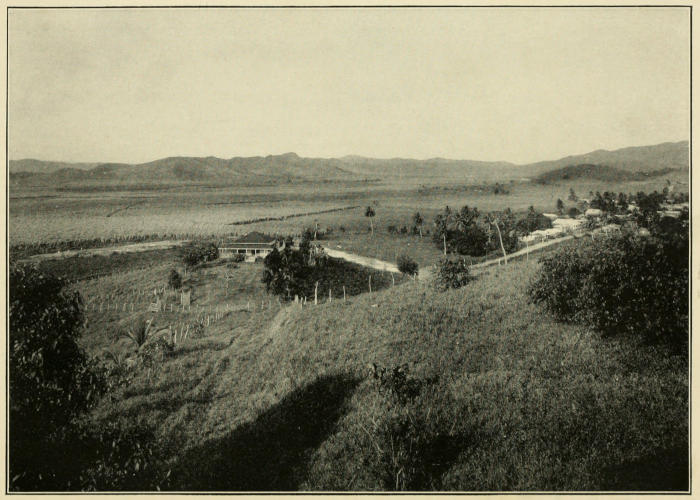
A. Moscioni, Photo.
SUGAR PLANTATION SCENE IN PORTO RICO
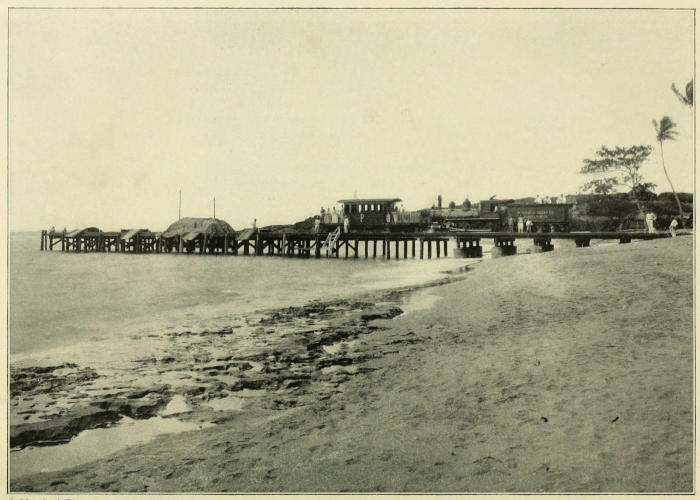
A. Moscioni, Photo.
SUGAR-SHIPPING PORT, PORTO RICO
The soil is fertile and may be divided into three classes. First, the red soil, generally found in the mountains; second, the black soil, containing much humus, and third, the coral sand soil of the coast plains. The black has proved to be the best for sugar cane, although excellent yields have been obtained from the coast lands. Notwithstanding the fact that both soil and climate are well suited to cane cultivation, the extension of the industry is checked by the formation of the country. The hilly character of the island and the comparatively limited transportation facilities do not admit of cane being grown in the interior. All of the modern plantations are near the coast, where sugar can be easily transported to steamers. In the north cane may be raised without irrigation, but in the south, where the greater part of the crop is produced, irrigation is necessary. About 400,000 acres of the surface of Porto Rico are under cultivation and half of this area is devoted to sugar. The cane grows chiefly on the rich alluvial lowlands along the coast. On the southern seaboard there is plenty of good land that has never been planted, but to make this available for agriculture means the construction of costly irrigation works with extensive aqueducts and much tunneling.
Porto Rico was discovered by Columbus in 1493. The name Puerto Rico dates from 1521, when gold was found in the island. The natives suffered cruelly at the hands of their conquerors up to the year 1544, when they were set free by the order of King Charles I of Spain.[43] Out of a population originally estimated at 600,000 only a few hundred remained. Great numbers had died and many had fled to Mexico and Peru, but the Spaniards soon filled their places with African negroes.
For three centuries the island was harried by the English, attacked by pirates and freebooters, torn by rebellion among the slaves or terrorized by the fleets of the Dutch, who were intent upon its conquest, so that Spain was kept constantly on her guard to prevent her colony from being wrested from her. This state of affairs naturally did not encourage population. The country could not meet the cost of its administration and the deficit had to be paid out of the revenues of Mexico. Up to 1778 only Spaniards were allowed to settle there, but after that date the privilege was granted to people of other countries, provided they were of the Roman Catholic faith, and in 1815 all restrictions were removed. Foreigners were welcomed to the island and many inducements offered them. Trade with the United States was permitted in 1815, but only in Spanish ships.
This liberal policy brought many planters from the British and French islands, and as they had experience, capital and slaves, they did much to develop the resources of the colony. Subsequently many refugees came from Haiti, Santo Domingo and Venezuela.
Slavery in Spanish possessions was abolished in 1873 and 34,000 slaves in Porto Rico received their freedom.
After Alphonso XII ascended the Spanish throne in 1875, commercial conditions in the island showed a certain improvement, but politically the situation was deplorable, reflecting as it did all the bad features of an obsolete system of government, complicated by a liberalism that was premature. By reason of its arbitrary decrees and many acts of persecution, the administration stirred up a feeling of bitter antagonism on the part of the colonists. A step toward reform was taken in 1877, when the provincial deputation was re-established, and eighteen years afterward, the home government, in response to vigorous demands from foreign nations, attempted to pass measures to effectively remedy existing evils, but it was far too late. The island received a grant of autonomy in November, 1897, and in July of the following year it was taken over by the United States.
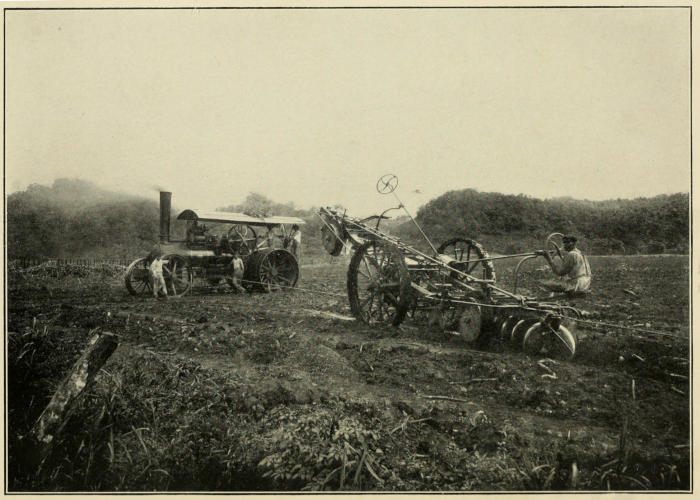
A. Moscioni, Photo.
PLOUGHING CANE FIELD WITH STEAM PLOUGH, PORTO RICO
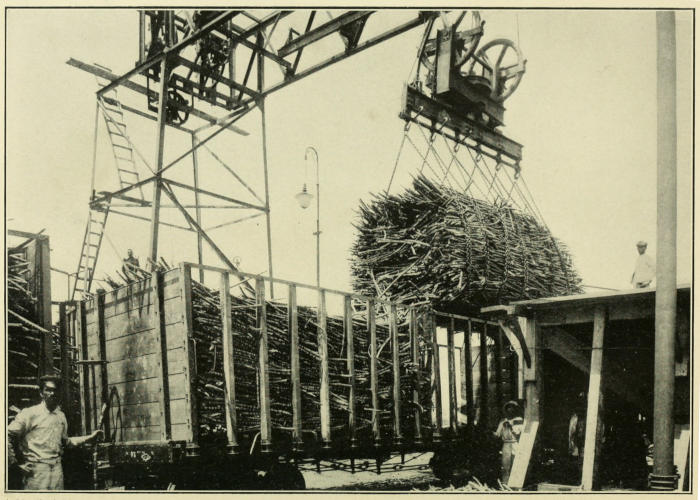
A. Moscioni, Photo.
UNLOADING SUGAR CANE AT A MILL, PORTO RICO
As soon as this became an accomplished fact, there was a marked improvement in conditions, especially from a sugar point of view. Up to this time much attention had been given to the cultivation of coffee, and sugar production had suffered to a certain extent in consequence. Spain had admitted Porto Rican coffee free while protecting it by duties levied on foreign coffee, but when the island passed into the hands of America, this advantage to the coffee raiser disappeared. Besides, the hurricane of 1899 had caused great damage to the coffee plantations and the combination of circumstances proved a severe setback to the coffee industry.
The sugar planters, on the other hand, benefited greatly by annexation. In 1889 the government allowed a reduction of 85 per cent on the duty assessed on Porto Rican sugars entering the United States. In 1901 they came in absolutely free and Porto Rico has enjoyed the full protection of the tariff ever since.
In 1900 Congress passed a law known as the Foraker act, which provided that no corporation should be allowed to acquire more than 500 acres of land in Porto Rico and that no stockholder in any agricultural company operating there should be permitted to hold shares in any other corporation of the kind. The object of the law was, of course, to prevent capitalists from buying up great tracts of land for the cultivation of sugar on a large scale to the detriment of the native land owner.
The act, however, did not serve the interests of the small Porto Rican farmer as its framers apparently intended it should. The owners of large holdings were non-resident and the small farmers lacked the money and enterprise to carry on the industry in a proper manner. The law excluded that which was most urgently needed, namely foreign capital, and when this fact became apparent, the provisions of the measure were construed liberally by the authorities, so that of late years extensive sugar estates have been started in Porto Rico with American, British and French backing, and the production has grown from 85,000 tons in 1902 to 378,509 tons in 1916.
Formerly the Porto Rican planters used to harvest cane from the same lands year after year, without using fertilizers of any kind. When they planted new cane, the soil was only partially prepared; the subsoil was never cleared of roots and rough grasses and cultivation was only indifferently done. The result is that many cane fields are now practically exhausted and some planters find that their lands are becoming spoiled by rapidly multiplying weeds.
Today the usual method is to plough the ground twice before putting in the seed. Deep ploughing is taking the place of scratching the surface and steam ploughs are being used on the larger estates. Where the soil is heavy and the rainfall abundant, the furrows are dug about eight feet apart and two feet deep and the cane planted in double rows at four-foot intervals. In dry, sandy soil the planting is in single rows and the distance between the furrows ranges from four to six feet, according to how rich the soil is. The fields are kept free from weeds and manure is used but seldom.
The greater part of the cane is planted during the last four months of the year and crushing is begun in the second January following, which gives the cane a growing period of fourteen months or more. Some planting is done in January, February and March and this cane is cut in twelve months. Then a certain amount is planted between March and June, and if the sugar content proves satisfactory, it is ground the following season; if not, it is allowed to remain standing for another year. Planting is done every four years and the best results are obtained from the first and second ratoon crops. The yield of cane per acre averages about 18 long tons, although this has been exceeded in good years. The cane is cut close to the ground with a machete and loaded on ox-carts to be taken to the mill or the railway station, according to the location of the field.
Almost all of the cane grown in Porto Rico is ground in the large central factories, but it is only during the last ten or twelve years that this has been done. The small mills have disappeared for the most part, although a few have been able to struggle along.
The centrals usually raise about one-half of the cane they grind. The rest they buy from the colono, who grows cane either on his own land or upon ground rented to him by the central owner. As a rule the price paid to the colono for his cane is 5 per cent of the weight of the cane in sugar, although this is subject to modification at times. As the central factories are of recent construction, they are equipped with the newest and best machinery and the most scientific methods govern their operation.
In 1853 Porto Rico exported 112,000 tons of sugar; the following year the amount was 70,000 tons and during the next twenty years it remained nearly stationary. In 1871 the production reached 105,000 tons, dropping back to 89,000 tons in 1885 and 65,000 tons in 1886. The crop of 1900 was very small—35,000 tons—owing to the havoc wrought by an unusually severe hurricane, but from that time on it has increased year by year.
As most of the diseases and pests that attack sugar cane are met with in Porto Rico, it is obvious that the work of the United States agricultural station at Mayaquez has been of inestimable benefit to the planters. Experimenting with different varieties of cane, importing seed cane from other countries, analysis of soils, scientific advice upon the use of fertilizers and instruction as to the best means to destroy or control harmful parasites, these are but a few of the many important services rendered by the station.
The outlook for Porto Rico’s sugar industry seems hopeful. Labor is cheap and abundant, climatic and soil conditions are favorable and an irrigation project at present under way promises to convert lands now arid into productive cane fields.
Since 1900 the production of sugar in Porto Rico in tons of 2240 pounds has been:
1900 35,000
1901 80,000
1902 85,000
1903 85,000
1904 130,000
1905 145,000
1906 213,000
1907 210,000
1908 200,000
1909 245,000
1910 308,000
1911 295,000
1912 320,000
1913 350,323
1914 325,000
1915 308,178
1916 378,509
THE PHILIPPINES
This group of islands is situated about 500 miles off the southeast coast of Asia, between 4 degrees 10 minutes and 21 degrees 10 minutes north latitude and between 116 degrees 40 minutes and 126 degrees 34 minutes east longitude. It is bounded on the west and north by the China sea, on the east by the Pacific ocean and on the south by the Celebes sea. It comprises 3141 islands, of which 2775 contain less than one square mile each. According to the Philippine census of 1903 the total area is 115,026 square miles,[44] although some authorities estimate it to be as much as 127,800 square miles. Two-thirds of this is forest land and not more than 9½ per cent of the entire archipelago was classified under Farms in 1903. The area devoted to sugar cane the year previous was 177,628 acres, about 5 per cent of the cultivated land.
The islands are chiefly of volcanic origin and their surface is much broken by hills, isolated volcanoes and mountain ranges running north and south, northwest and southeast or northeast and southwest. There are twelve active volcanoes in the group and eight others with well-defined cones that are either dormant or extinct. The highest elevation in the islands is Mount Apo, an extinct volcano on Mindanao, 10,312 feet, with Mount Mayon, an active volcano on Luzon, next, 8970 feet. Earthquakes are frequent and occasionally violent.
The most important of the group are Mindanao, Luzon, Samar, Palawan, Panay, Negros, Leyte, Mindoro, Cebú, Masbate and Bohol. The coast line, which is over 11,000 miles in length, is fringed with coral reefs and indented by many gulfs and bays. There are plenty of good natural harbors, the principal one being Manila in Luzon, which affords perfect shelter for shipping, even in the severest storms. Next in importance are the harbors of Iloilo and Cebú.
Climatic conditions vary widely. However, it may be said in a general way that the climate is characterized by a uniformly high temperature, excessive humidity, heavy rainfall and violent tropical storms. Near the seacoast, it is moderate between November and the first of March. The latter part of March and the months of July, August and September are warm and very hot weather comes in April, May and June. The nights, however, are always cool. The temperature naturally changes as the elevation above the sea increases, but at ordinary levels it averages 77 degrees Fahrenheit in January, and 83 degrees in May.
The annual rainfall is about 74 inches, and two-thirds of this comes in July, August, September and October. Of course the precipitation in certain localities is affected by mountain ranges that cause condensation from moisture-laden trade winds. In the lowlands that are not protected by mountains, the rainfall is regular. Typhoons occur between April and October, but they are not nearly so severe as the hurricanes that visit the West Indies and Mauritius. In October, 1882, a typhoon did a great deal of damage in Manila, and there was a serious loss of life in the great storm that visited Samar and Leyte in 1897. The well-appointed observatory in Manila sends out warnings of the approach of typhoons and much life and property are saved by this means.
The soil is generally reddish-brown in color and is largely made up of disintegrated lava with an admixture of decayed vegetable matter; sometimes decomposed coral limestone is present.
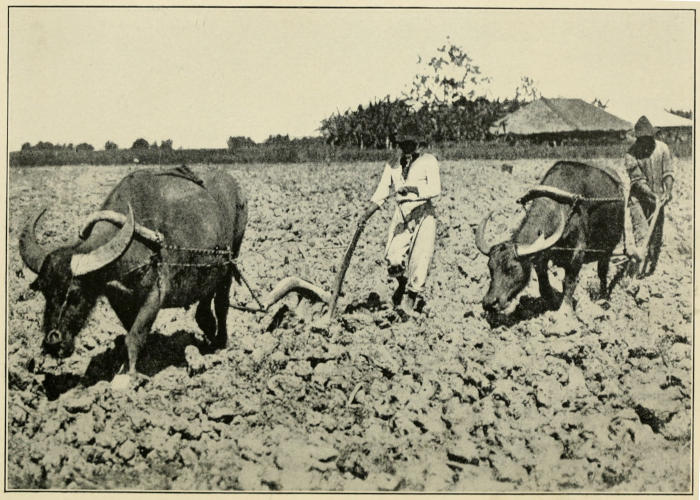
PLOUGHING FIELD BEFORE PLANTING CANE, PHILIPPINES
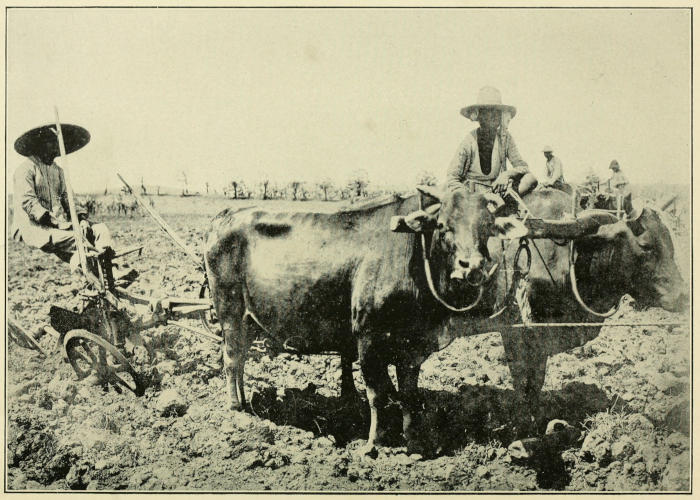
PLOUGHING AT LA CARLOTA, OCCIDENTAL NEGROS, PHILIPPINES
John W. Dwinelle, in an address delivered in San Francisco in 1866, said: “Previous to the discovery of America by Columbus in 1492, the Portuguese had discovered the Azore islands in longitude 31 W., and on the strength of that discovery claimed that the countries discovered by Columbus belonged to the crown of Portugal, and that the Spaniards should be wholly excluded from them. But the Spaniards refused to admit this pretension and referred the matter for decision to the Pope, Alexander VI. It was then part of the law of nations, and of the public law of the world, that the Pope was the ultimate source of all temporal power; that he could make and unmake kings, and dispose of all the kingdoms of the earth—powers which he frequently exercised and against which it were vain to contend. He was therefore, by general consent, the acknowledged source of all lawful title to land. He assumed to decide the case thus referred to his decision, and on May 3d, A. D. 1493, determined the matter in dispute between the crowns of Portugal and Spain, by drawing an imaginary line of longitude one hundred leagues west of the Azores, and granting to the Spanish monarchs all countries inhabited by infidels, which they had already discovered, or might afterwards discover, lying to the west, and to the crown of Portugal all those lying to the east of that line. This line was afterwards removed two hundred and seventy leagues further to the west, by a treaty subsequently made in the year 1494, between the kings of Portugal and Spain; but so thoroughly was the title thus conceded by the Pope respected by the civilized world, that when Henry VII of England was afterwards about to intrude upon some of the dominions thus granted to Spain, he abandoned his project upon being warned by the Pope to desist.”
This division of the surface of the globe into two parts gave to Portugal all the territory both known and unknown east of the arbitrary meridian drawn 470 miles west of the Cape Verde islands, and to Spain everything west of this line.
Ferdinand Magellan, the famous Portuguese navigator, in the service of the Emperor Charles V of Spain, set out on a voyage west-bound with the object of taking possession of the Moluccas, as they lay west of the line of demarcation. Sailing around Cape Horn, Magellan discovered the Philippine islands in 1521, landing first on Malhou, between Samar and Dinagat. Afterward, he touched at Mindanao, from which he sailed to Cebú. Thence he went to the small island of Mactan, where he was killed in a skirmish.
But little action was taken with regard to this territory until after the accession of Philip II (hence “las Filipinas”—Philippines), when an important expedition was fitted out at the Mexican port of Navidad. It sailed in November, 1564, under the command of Miguél Lopez de Legaspi, the distinguished conquistador, who, in the following year established on the island of Cebú the first permanent settlement in the Philippines. The city of Manila was founded in 1571 and became the capital of the group. Through his tact, courage and resourcefulness, Legaspi won the confidence of the people and placed the colony on a sound footing. At the same time he checked all attempts at encroachment on the part of the Portuguese. Spanish rule was undisturbed until 1762, when a British naval force bombarded Manila and occupied it. At the conclusion of the war between Great Britain and Spain in 1764, the British withdrew and the domination of Spain endured until 1898, when the Spanish fleet was destroyed by Dewey at Manila bay.
The title to the Philippines therefore passed through the Pope to Spain and from Spain to the United States.
When Magellan reached these islands he found that sugar was made in a primitive fashion. The methods employed were very much like those in vogue in China, and the sugar, when made, greatly resembled the Chinese product. This is very strong presumptive evidence that cane and the knowledge of its manufacture were originally brought to the Philippines by the Chinese.
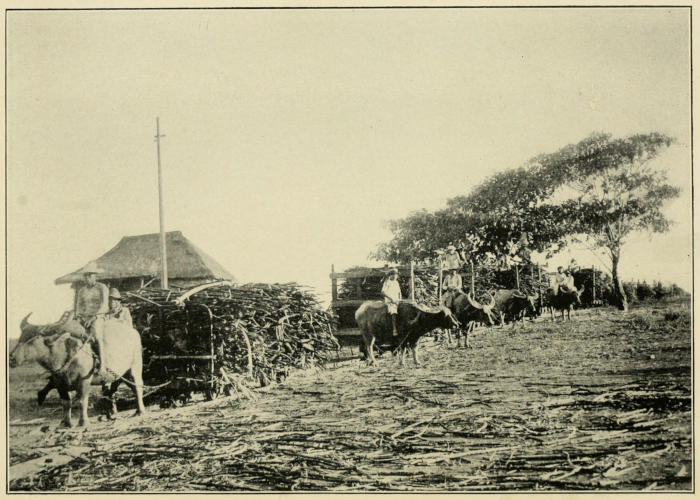
HAULING CANE, PHILIPPINES
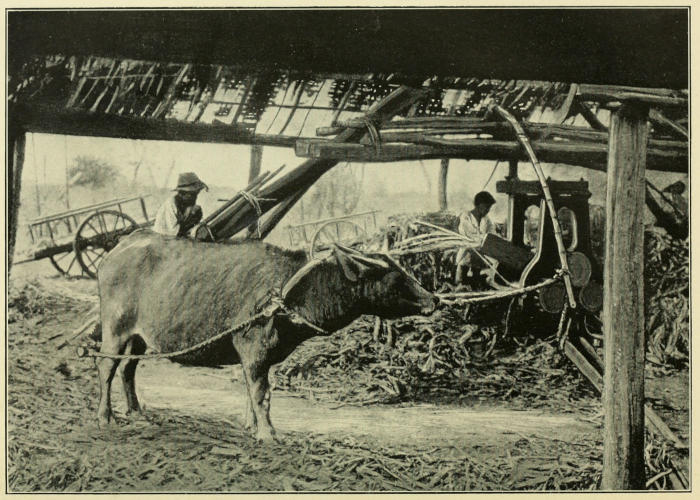
CARABAO MILL, PHILIPPINES
The industry, however, amounted to very little prior to 1849, in which year the island of Negros was placed under the jurisdiction of the religious order of Recoletos, who did much to encourage the manufacture of sugar, and this movement was stimulated by the high prices resulting from the Crimean war. In consequence, cane sugar was exported with profit from Negros, Luzon and Cebú. Notwithstanding the lack of capital, the rough, crude mills, the planters’ scant knowledge of manufacturing methods and the wretched transportation facilities, the sugar trade forged rapidly ahead until in 1893 the exports totaled 257,550 long tons. A slump in the price of silver, however, brought on a financial crisis, and subsequently internal dissensions affected the crops so that in 1901 only 51,448 tons were exported. Since then a change for the better has taken place and the figures for 1915-16 indicate a production of 345,000 tons.
Sugar cane is used as a delicacy in all of the inhabited islands of the Philippine group, but the growing and manufacture of it as a regular industry are confined to Negros, Mindoro, Cebú, Panay, Luzon and Leyte. In 1914-15 about 350,000 acres altogether were planted in cane, and the quantity of sugar exported during 1916 was about 300,000 tons.
The first care of the United States after its occupancy of the Philippines was the bettering of conditions in sanitation, education, banking methods, railway communication and deep water terminals. Apart from the primitive character of the sugar mills and the loss growing out of poor extraction of juice, open-kettle boiling and curing in earthen pots, the sugar producer was generally in debt to the buyer for advances that carried a high rate of interest. The government has taken steps to correct this evil and has made it possible for the farmer to get credit on reasonable terms, limiting its loans, however, to those who have Torrens titles to their property,[45] but the Filipino has been under the influence of the money-lenders too long for him to break his bonds entirely. Besides, his instinctive dislike for anything new is a hindrance to progress in this direction.
In addition to the measures just alluded to, a special law was passed in 1902, under which all Philippine sugars entering the United States paid 25 per cent less than the regular customs tariff. The Payne-Aldrich bill of August 5, 1909, provided for free admission of Philippine sugars up to 300,000 gross tons, and it stipulated that the small producer (less than 500 tons per annum) was to receive first consideration in the event of the importation exceeding 300,000 tons. Any excess coming into the United States would have been assessed the full tariff. During the life of this legislation, however, the largest production of the islands was that of 1913-14, which amounted to 265,000 tons, of which 225,000 tons were exported.[46] The tariff act of 1913, which became effective March 1, 1914, admits all Philippine sugars free of duty without any restriction as to quantity.
The religious orders were formerly large land owners in the Philippines, and the feeling of discontent that ultimately led to the insurrection of the Filipinos against Spain in 1896 was largely due to agrarian difficulties between the friars and their tenants. When the revolution came, the friars had to flee for their lives, and after peace was restored by the United States, the insular government felt that if they returned to their possessions they would be in constant danger from the hostility of the natives. It was, therefore, decided to acquire these lands and to that end Congress passed an act authorizing the Philippine government to issue bonds to the amount of $7,000,000 and to purchase the lands of the various orders with the money so raised. With one or two minor exceptions, all of these lands, amounting to something over 600,000 acres, were bought by the government and are being resold on long-term payments at a price that will reimburse the government. In disposing of this property preference is always given to the resident tenants.
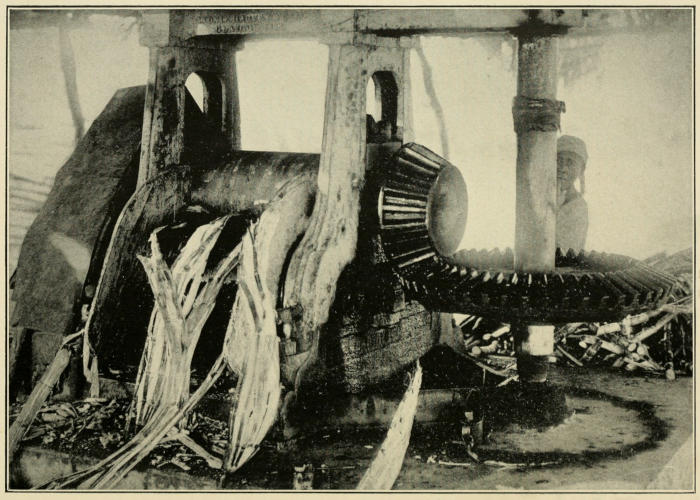
OLD-STYLE SUGAR MILL, PHILIPPINES—SHOWING POOR CRUSHING
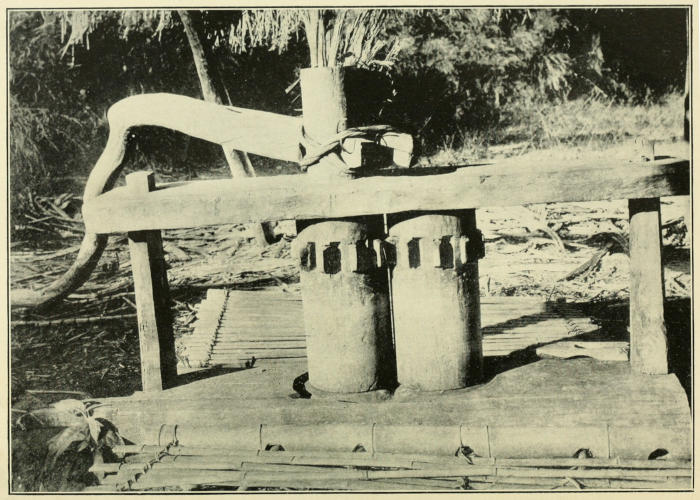
TINGUIAN CANE CRUSHER, LINGAYEN, PHILIPPINES
A measure was carried through the Philippine legislature approving the sale of the unoccupied portions of these friar estates to individuals without restriction as to acreage, and it was under the provisions of this act that large tracts of land were acquired by the interests connected with the Mindoro company in the San José estate in Mindoro and by the people associated with the Calamba estate in the Calamba, Santa Rosa and Biñan districts of Laguna province, Luzon.
Apart from these so-called friar lands, the public lands in the Philippine islands are held for sale or lease subject to the following conditions: Corporations can purchase or lease up to 1024 hectares, or 2500 acres, and individuals up to 64 hectares, or 158 acres. The terms of sale are a minimum of 10 pesos, or $5 per hectare, 25 per cent of which must be paid at the time the contract is entered into and the remainder within five years, with interest at 6 per cent, or leased at a minimum rental of 50 centavos, or 25 cents, per hectare per annum, leases running for fifty years.
The Mindoro and Calamba companies, controlling 55,000 and 20,000 acres respectively, and the San Cárlos Milling company of San Cárlos, Negros, have erected the first and only modern sugar mills in the Philippines, and they have gone into cane cultivation and sugar manufacture in a scientific way. The management of these three enterprises has been entrusted to men who have had thorough field and factory experience in Hawaii.
Unlike the other two large companies, the San Cárlos Milling company operates a central pure and simple. The company owns no land except the site for the mill and the outbuildings connected with it. It has, however, acquired leases of a certain amount of railway trackage. The capacity of the mill is 1000 tons of cane per day, which means about 125 tons of centrifugal sugar. It was completed at the end of 1913 at a cost of about one million dollars, and the first cane ground was from the 1914 crop.
In the Philippines cane is not planted every year. Herbert S. Walker, in his work “The Sugar Industry in the Island of Negros” (Manila, 1910), says: “A decidedly large proportion of the total land under cultivation in Negros is not replanted every year, but is allowed to ratoon, from two to eight crops being taken off without replanting. This is especially true in the rich soils of the districts around Ilog-Cabancalan, Binalbagan-Isabela, San Cárlos and Bais. Theoretically, cane planted in some of these alluvial soils, which are flooded and fertilized each year by silt brought down from the mountains by the overflow of a river, might go on ratooning indefinitely. Practically, the period between plantings is limited strictly by financial considerations.
“Much time and expense are saved by not being obliged to replant. On the other hand, the yield from plant cane is, as a rule, greater than even from first ratoons, and with each successive ratoon crop the total amount of sugar produced per hectare of land is decidedly diminished. This is partially due to the shorter time in which the cane is allowed to ripen. Owing to excessive rains prevalent in this country, canes must be cut every year, and the practice so common in Hawaii of allowing ratoons to ripen for eighteen months or more, is here out of the question. A further obstacle, especially when canes are planted closely in rows, is the tendency of ratoons to spread out in every direction from the original plant so that in the course of a few years the cane rows lose all semblance of regularity, and proper tillage of the soil is rendered very difficult; thus many young ratoons are stunted in their growth by weeds.”
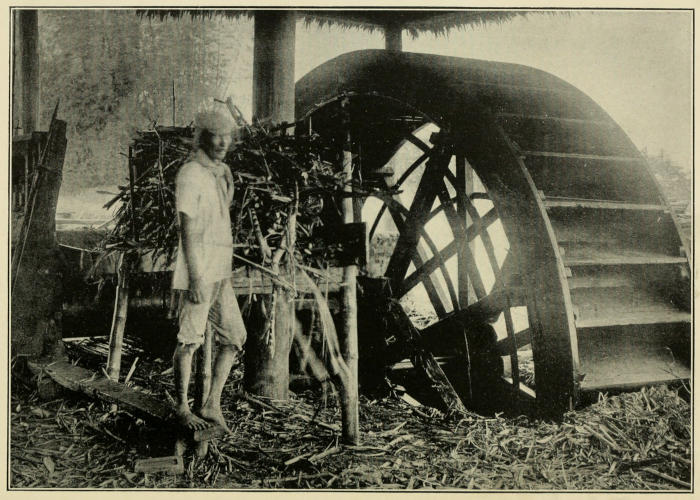
OLD WATER-DRIVEN MILL, ISLAND OF NEGROS, PHILIPPINES
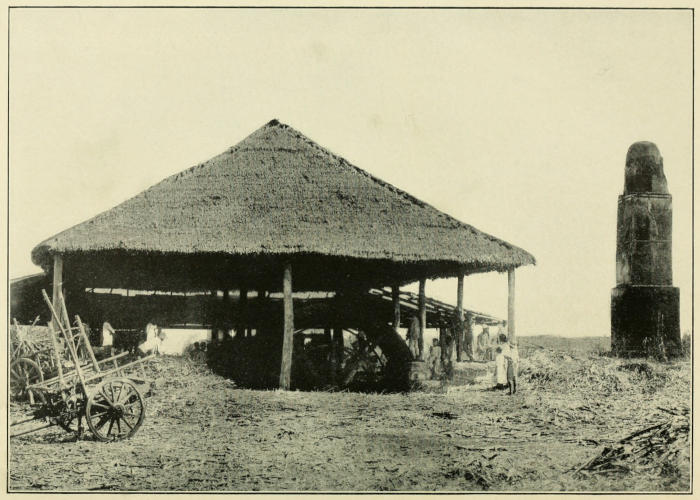
MILL DRIVEN BY WATER POWER, OCCIDENTAL NEGROS, PHILIPPINES
The time of planting in most parts of the islands is usually from December until April, but in Negros, where the soil is good and the rainfall well distributed, planting can be done at almost any time, except during the period of very heavy rains, i. e., from July to October.
The yield of sugar per acre may be approximated as follows:
Plant cane 2.5 tons
First ratoons 2.0 ”
Second ratoons 1.75 ”
Third ratoons 1.50 ”
Fourth ratoons 1.25 ”
When the yield drops as low as eight-tenths of a ton of sugar per acre, replanting is necessary, and allowing for the reduced yield of first and second ratoons, it may be reckoned that one-half of the production is from plant cane and the other half from ratoon crops.
The length of time during which the cane is allowed to remain in the ground varies from nine to fourteen months and will probably average between eleven and twelve.[47]
The labor problem is present in the Philippines as in all cane-sugar countries. The natives are willing enough to work, but shrink at the idea of leaving their homes to take employment at any considerable distance away.
Apart from the three modern factories previously mentioned, sugar-making facilities are greatly behind the times, although there are a few minor exceptions. Over one thousand small mills were in operation in the islands in 1907 and of these 528 were driven by steam, 470 by carabao (water oxen) or natives, and 77 by water power. The carabao mills, however, are rapidly disappearing. The capacity of most of these small mills is from 50 to 60 tons of cane per day, and, as the cane is only crushed once, there is a considerable loss in recovery. A little lime is added to the juice to clarify it and it is then boiled to grain in a series of five or six open pans. The general arrangement is shown by the accompanying sketch, which is taken from Herbert S. Walker’s “Sugar Industry in the Island of Negros.”
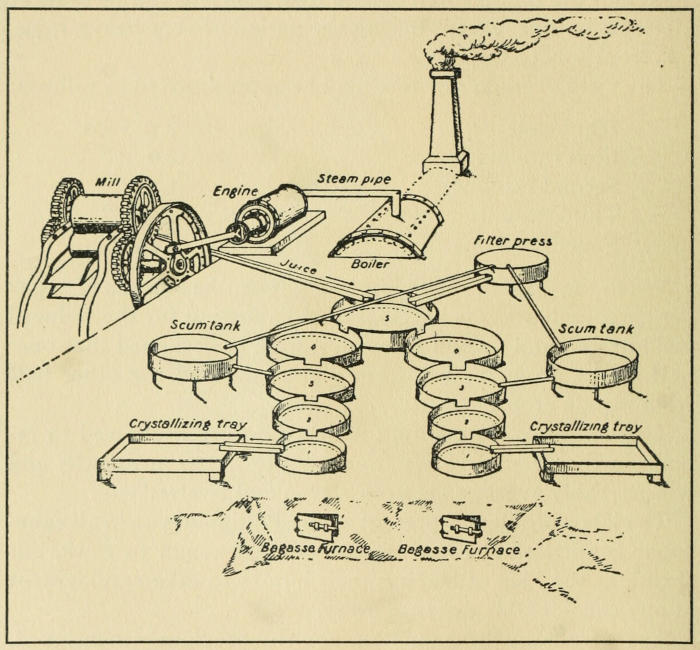
The drawing shows two sets of pans, each set being built over a separate furnace. The number 5 pan, into which the juice from the crusher flows, is connected to both sets. The furnaces are fed directly under number 1 pan, where the final boiling is done and where the greatest heat is required. The two furnaces converge when they reach the boiler, which may be fired separately, so that grinding and boiling may, if necessary, be done independently of each other. As the juice leaves the crusher through an open wooden trough, particles of cane and other matter are removed by straining through a cloth or a close-meshed wire screen. It runs into the receiving pan—number 5—and is heated to between 160 and 175 degrees Fahrenheit, which brings certain impurities to the surface in the form of froth. This is skimmed off and thrown into the scum tank; the juice is then ladled by hand as required into the smaller pans (number 4) where lime is added for clarification. Violent agitation takes place in pans numbers 3 and 2, and as fast as scum forms it is skimmed off. The clarified juices are then concentrated in pans number 2 and number 1, after which the massecuite is put into wooden trays and stirred with a spade until it granulates. It is then ready to be taken to market.
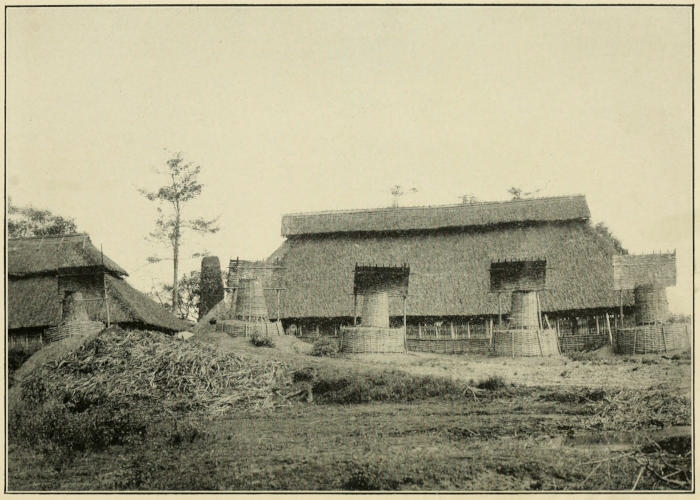
NATIVE SUGAR FACTORY, PAMPANGA PROVINCE, PHILIPPINES
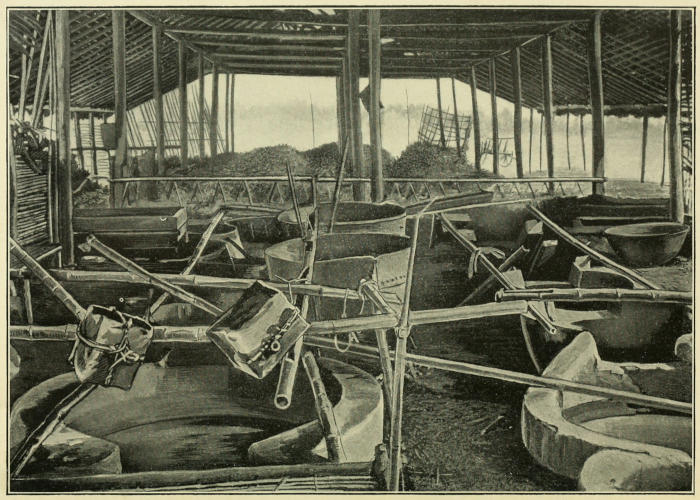
INTERIOR OF CAMARIN, PHILIPPINES
As has been pointed out, the loss in this primitive method of manufacture is very heavy. Notwithstanding the fact that all of the molasses is retained in the sugar, the amount of sucrose that is lost or wasted is 44 per cent, and over one-half of this is left in the bagasse.
Apart from centrifugals, Philippine sugars consist of the following grades: Superior, Humedo (wet) and Corriente (current). Sugars polarizing from 87 to 88.9 degrees are called Superior No. 1, those testing from 85 to 86.9 degrees, Superior No. 2, and those running from 80 to 84.9 degrees, Superior No. 3. Humedo sugars polarize from 76 to 79.9 degrees and Corriente from 70 to 75.9 degrees. Roughly speaking, the proportions are about 85 per cent of Superior of 84 degrees purity and 15 per cent of wet sugar testing somewhere near 75 degrees.
The Bureau of Agriculture of the Philippines maintains experiment stations at La Granja, near La Carlota, Occidental Negros, and at Calamba, Luzon, for the study of cane, soil analysis and the solving of fertilization problems. This work of scientific investigation is sure to be of great benefit to the industry. Some experimental work with sugar cane is also carried on at the station at Alabang, Laguna province, Luzon.
American control in the Philippines promises much for the future of the sugar industry of these islands, for when it is remembered that for many years, in spite of the handicap of crude, uneconomic methods, export duties at home and import duties abroad, sugar was made and sold at a profit in the markets of the world, it is not unreasonable to look for a considerable stimulus to be given to production by advanced scientific management and free admission of the commodity to the markets of the United States.
Quantity of sugar exported from the Philippine islands from 1895 to 1916, in tons of 2240 pounds:
1895 227,279
1896 226,279
1897 198,899
1898 177,962
1899 91,583
1900 61,752
1901 51,448
1902 90,617
1903 88,144
1904 82,656
1905 103,334
1906 122,417
1907 120,050
1908 140,197
1909 125,276
1910 114,506
1911 203,394
1912 190,702
1913 155,201
1914 232,761
1915 207,679
1916 300,000
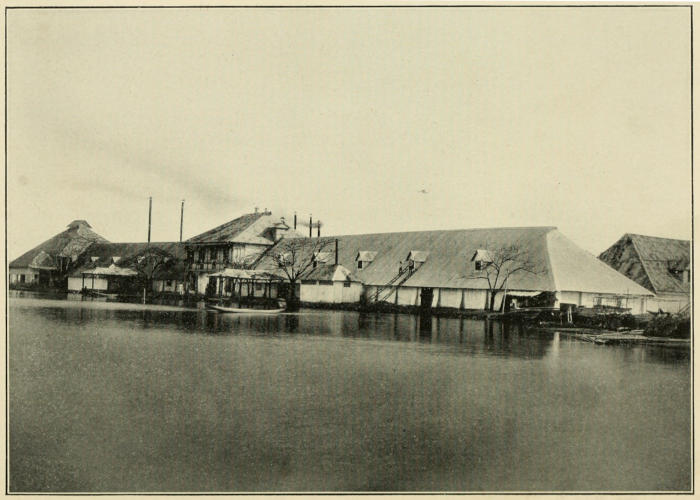
LUZON SUGAR REFINERY, MALABON, RIZAL, PHILIPPINES
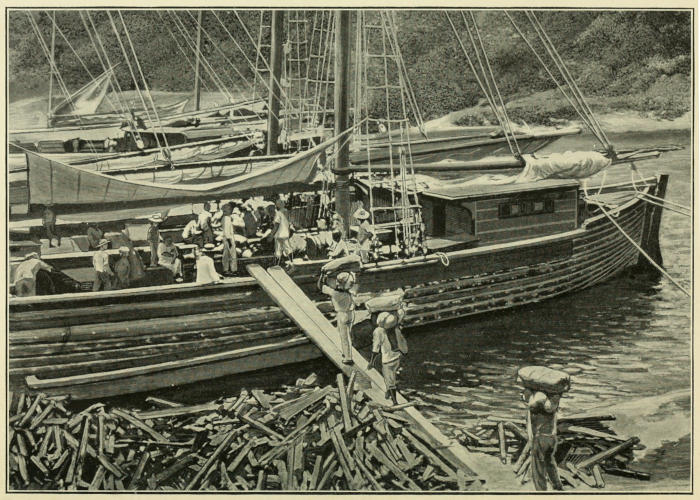
LOADING SUGAR ON LORCHAS, PHILIPPINES
CUBA
The island of Cuba lies between 74 degrees and 85 degrees west longitude and 19 degrees 40 minutes and 23 degrees 33 minutes north latitude; its length is about 730 miles, running nearly east and west, and its width varies from 25 to 100 miles. In area it comprises about 45,883 square miles, or 29,365,120 acres, which is approximately that of Pennsylvania or Louisiana. Habana, the capital, is almost on the same parallel as Honolulu and the City of Mexico.
With the exception of a strip of the central-southern coast, Cuba rises boldly out of the sea and presents a rugged appearance to the eye on approach. About one-quarter of its surface is mountainous; three-fifths consists of gently sloping country, valleys and rolling plains; the rest is swampy.
A variety of topographic and climatic characteristics divides the island naturally into three distinct parts. The eastern end is high and broken, with tall commanding peaks; the wide central region, lying well above sea-level, is made up of excellently drained, undulating plains, interrupted at intervals by low, wooded hills; the western portion is a picturesque country of mountain and valley, but of lower altitude than the eastern end. The entire island is covered with a mantle of luxuriant verdure, kept always green by warm mists and generous rains.
A coral reef extends around the greater part of the coast, but between the forbidding rocks and the marshes there are a number of good harbors, chiefest among which is that of Habana, one of the finest in the world. The distance from Cuba to Key West, Florida, is one hundred miles. The census of 1908 placed the population at 2,048,890.
The prevailing winds are the northeast trades, but these are interrupted at frequent intervals by variable winds from other directions which bring changes in temperature and rainfall. Compared with those of Hawaii, the mountains are low, usually not over 2000 feet, and do not produce the effect of a wet side and a dry side to the island, as the trades sweep it from end to end and not transversely. To give an idea of climatic conditions, the average maximum temperature in Habana in 1914 was 90 degrees Fahrenheit, the minimum 53 degrees and the mean average 77 degrees. The total rainfall was 46.15 inches. Seventy-five per cent of the rain occurs in the summer months, between the first of May and the first of October, and the precipitation is greater in the eastern part of the island than in the western. The winters are comparatively dry. This combination of dry winters and wet summers is extremely favorable to the growing and harvesting of sugar cane.
The low plains along the coast are of coral formation and the soil overlying the coral is often found to be shallow. The richest and most productive soil is that of the uplands some distance from the sea. In Cuba the soils may be said to consist of two kinds—the red and the black. The red is generally of great depth, from 30 to 50 feet, and rests on a stratum of free limestone. The black soil, varying in color from a mulatto to a “gumbo” black, overlies a clay formation, and as a general rule is not so deep as the red soil. Owing to the fact that the black soil retains such a large percentage of water during the extremely rainy period, the cost of cultivation is double that of working the red soil.
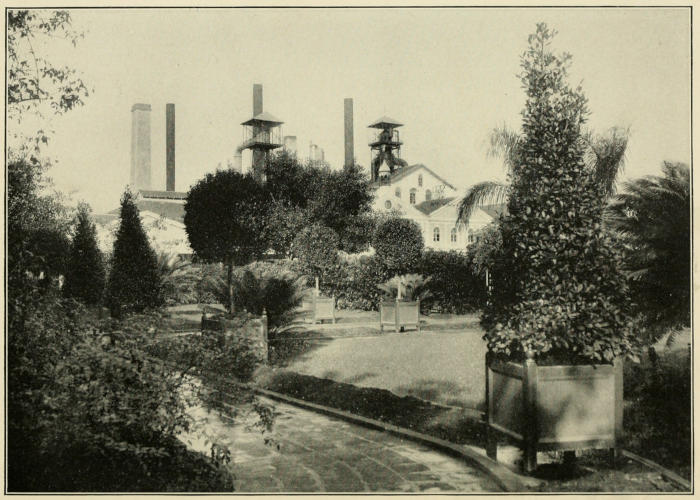
American Photo Co., Habana.
CENTRAL FACTORY, GENERAL VIEW, CUBA
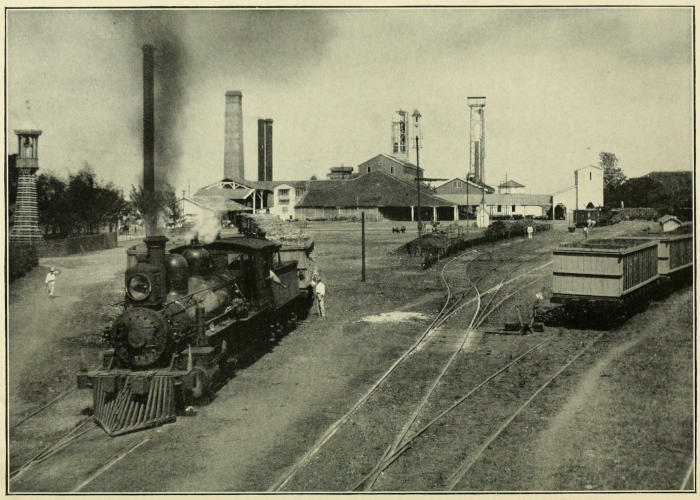
American Photo Co., Habana.
CUBAN CENTRAL—GENERAL VIEW
The date of the introduction of sugar into Cuba is uncertain. Different authorities place it anywhere from shortly after the discovery of the island in 1492 to 1580. Von Humboldt is silent on the point, but says that Cuba did not participate in the sugar industry to any extent in the sixteenth century, so that its importance in that respect belongs to a later period.[48] Up to 1772 sugar cultivation was greatly hampered by restrictions of the Spanish government; after that date special privileges were canceled and the right to grow sugar was given to all Spaniards. This naturally encouraged production, which from 4390 tons in 1760 increased to 14,000 tons in 1790. The revolution which destroyed the sugar plantations and mills of Santo Domingo in 1791 stimulated the development in Cuba still further. During the ten years that followed, the number of mills increased from 473 to 870, and by 1802 the output of sugar reached 40,800 tons. In those days mills were very small, crude affairs and were worked by oxen.
Cuba, in common with all sugar-raising countries, felt the effects of the European wars very severely, but her sugar trade revived after the overthrow of Napoleon and the resumption of commerce through normal channels.
With increased production the question of labor became a serious one. The number of slaves on the island had been sufficient as long as the sugar crop was limited, but with expansion came the need for more African negroes, so in 1834 the governor, Miguél Tacon, caused many new slaves to be brought in. He did much to help the industry in other directions, particularly by suppressing abuses, and under his administration the planters enjoyed prosperity such as had never been known. Fresh lands were brought under cultivation and the shipping ports grew in importance and activity.
While figures showing the annual production of Cuba were tabulated, beginning with 1850, their accuracy was open to question until 1882, in which year an export duty was imposed, and the records kept by the authorities from that time forward are reasonably correct. Nevertheless, it is known beyond any doubt that 610,000 tons were produced in 1870 from 1200 small mills.
The first war with Spain (1868-78) and the abolition of slavery worked havoc with the industry. All children born of slaves were proclaimed free in 1872 and slavery was entirely abolished in 1880, without any indemnification to the slave owners. Sugar producers found freeman labor both costly and hard to obtain, the island was ravaged by fire and sword, and in the markets of the world beet-root sugar, protected by bounties, was proving a powerful competitor. These were dark days for the planter.
With the restoration of peace, conditions improved. By 1890, 470 mills were in operation and their production in that year was 625,000 tons. In Cuba a change in methods came about, just as had been the case in Louisiana; the cultivation of sugar was gradually dissociated from its manufacture, and as mills became fewer in number, plantings increased. The manufacturers leased tracts of land to farmers, from whom they bought the cane raised on it. Independent planters, too, sold their cane to the central mills, and the plan was adopted so generally throughout the island that but little cane was grown by the owners of the centrals. During this period of peace and development, the tonnage mounted steadily upward and in 1894 it totaled 1,054,214 tons.
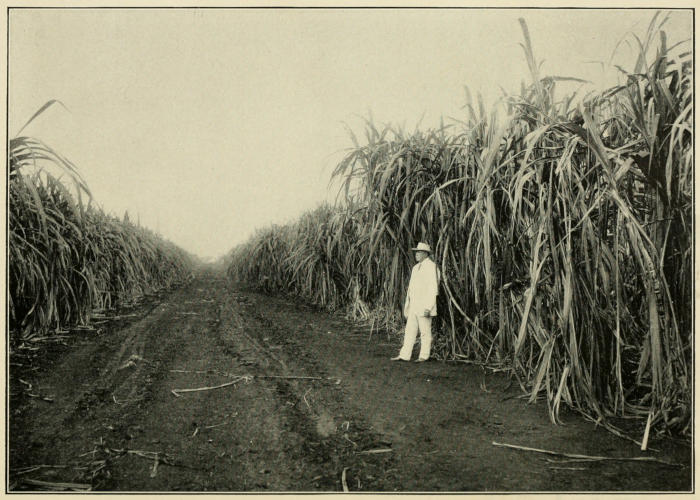
American Photo Co., Habana.
CANE FIELD, CUBA
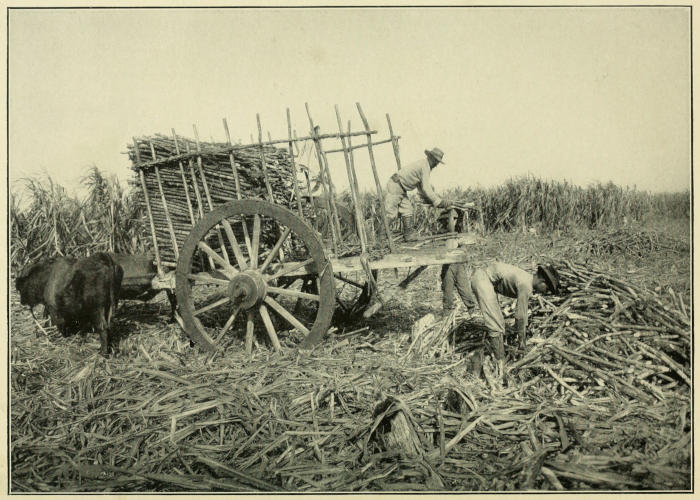
American Photo Co., Habana.
LOADING CANE ON OX-CARTS, CUBA
The following year saw the renewal of hostilities with Spain, which dragged along with brutality and devastation until May, 1898, when the United States declared war against Spain and finally established the Cuban republic. The period of this second rebellion against Spain was marked by ruthless destruction of property, the burning of mills and cane in the fields, and the killing of the cattle that were used for transport purposes. In 1897 the output of sugar had shrunk to 212,051 tons. The work of reconstruction after the expulsion of the Spaniards was slow, involving as it did a tremendous amount of effort and the investment of a great deal of new capital. Manufacturers who were unable to raise money to rebuild or re-equip their mills turned planters and grew cane for the nearest centrals. Some, more fortunate, succeeded in securing the money they needed and restored and extended their property. Far the greatest number, however, being unable to command the ready cash for immediately necessary repairs, incorporated or sold their holdings outright to newcomers. The many small, old-fashioned mills have given way to a limited number of large plants, or centrals, that are under corporate ownership and governed by scientific business principles. This process of consolidating several small factories into one big one is constantly going on, and in addition American capital and enterprise are opening up new lands to cultivation in many parts of the island. To a great extent the old-time planter has had to make room for the corporation, with its powerful resources and modern methods, and while the individual has suffered in many instances, the industry has greatly benefited.
Cuban plantations may be divided into two classes, the ingenios and the centrals. The ingenio is a small plantation whose lands lie in the neighborhood of the mill, while the central, in addition to its own cane, handles the crops of a number of ingenios. The ingenio hauls all of its cane to the factory by ox-carts; the central is served by railroads, both privately and publicly owned, and its equipment and machinery are of the most modern type.
Approximately 90 per cent of the cane grown in Cuba comes from what are termed colonias, i. e., farms varying in size from a few acres up to several hundred.
Colonos, or farmers, may be classified in three groups: in the first is the man with his small estancia, or farm, on which he raises foodstuffs and cattle, and who takes his few hundred arrobas[49] of cane to the central when the price is good, or feeds it to his animals when the pasturage is short. In this class, too, is the man who has a hundred or two hundred caballerías[50] of land, but whose chief interests are in other channels and whose operations in cane growing are merely an adjunct to his regular business.
In the second group is the independent farmer, who owns his land and cane and sells his crop to whom he pleases.
The third and most numerous group comprises those who plant cane on lands belonging to the central. These people either pay rent, or receive a certain fixed amount for their cane, or both. Their work is at all times subject to inspection by the central administration and under such circumstances they may be likened to contractors or employés, whose compensation is based upon the success of their own efforts.
The average size of a colonia, exclusive of those owned by colonos of the first-mentioned class, who are independent of cane growing, doubtless depends upon what would afford a man a decent living with a few luxuries. H. C. Prinsen Geerligs, in his book “The World’s Cane Sugar Industry,” states that one hundred arrobas (2500 pounds) of cane costs the Cuban farmer $2.07 at the mill. If 2½ cents be taken as an average price for sugar and $900 per annum as a fair living wage, then the colono who gets an average yield of 50,000 arrobas per caballería and is paid for it at the rate of 5 per cent, receives $1560 per caballería for cane that has cost him $1035 to produce. According to this reasoning, a colonia should not be less than 1.75 caballerías in size, but of course this is purely speculative.
The farmer who owns his land is paid about six per cent[51] of the weight of the cane he furnishes in centrifugal sugar of 96 degrees, sacked and ready for shipment, and occasionally delivered at the nearest shipping port. Sometimes settlement is made in cash, based upon the value of the agreed percentage of sugar at the Habana quotation on the day the cane is delivered. In other words, for every one hundred pounds of clean cane in bundles, delivered on board the cars, the plantation pays the grower about six per cent of 96-degree centrifugal sugar, or its equivalent in money.[52]
Where the land is furnished by the plantation, the farmer is paid from four to five per cent of the weight of the cane in sugar. He is given a house free of rent and an acre or two of garden land as well. All material, labor or stores supplied to him are debited to him to be accounted for when final settlement is effected.
Planting cane in Cuba is a simple matter. In preparing virgin forest land for seed, no ploughing whatever is done; the trees and shrubs are cut down and allowed to dry, the valuable timber is carried away, and the remainder is burned. When this is done the land is found to be smooth and level, as a rule. Planting consists in making holes in the ground with a heavy pole shod with iron that is driven obliquely into the earth at regular intervals, the seed is then dropped in these holes and covered with earth, completing the operation. Grassy ground, however, must be ploughed, in which case furrows are made six feet apart. The seed cane is planted in them at intervals of from six inches to twelve inches, covered with earth and left to grow. There are the spring plantings and the autumn plantings, the first from April to June and the second in October and November, that is to say, one at the beginning and one at the end of the rainy season. In the case of the former, if the rains come soon after planting, the cane can be cut in the following March or April, i. e., after a growing period from nine to twelve months. If, however, the rains are late the cane cannot mature before the advent of the new rains and therefore cannot be ground until the following December. Cane planted in the fall ripens in December of the next year or sometimes a month later.[53]
Notwithstanding the little care given to the planting, the cane once started yields a generous crop, which is followed by profitable ratoon crops for a number of years without fertilization or a great amount of tillage. Finally, when through age the cane ceases to produce a paying crop of ratoons, the old roots are taken up,[54] and the same soil reseeded brings forth excellent results for another period of years without any rotation of crops being necessary. Not more than ten per cent[55] of the total area of Cuba is devoted to the growing of cane. In addition to the ground on which cane is actually planted, large tracts are needed as pasture for draft cattle. Besides, there is much forest land and many barren spaces that are undoubtedly included in the acreage classified as being under cane cultivation. According to Dr. W. D. Horne,[56] the average yield is from fifteen to twenty tons of cane per acre[57] and the crops are usually allowed to ratoon for ten years.
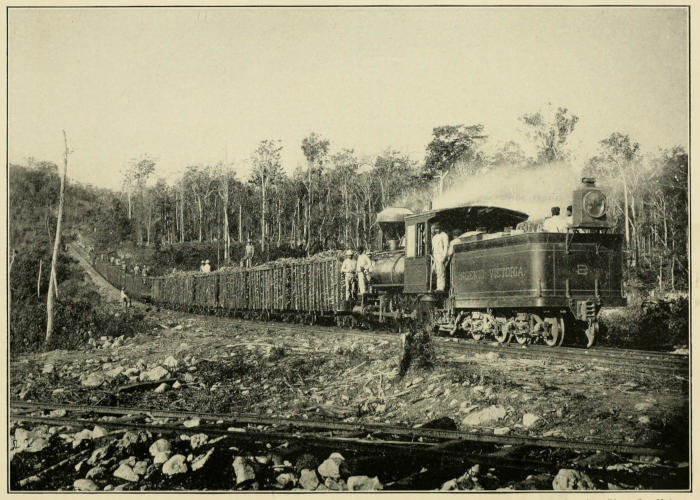
American Photo Co., Habana.
TRAIN-LOAD OF SUGAR CANE, CUBA
American Photo Co., Habana.
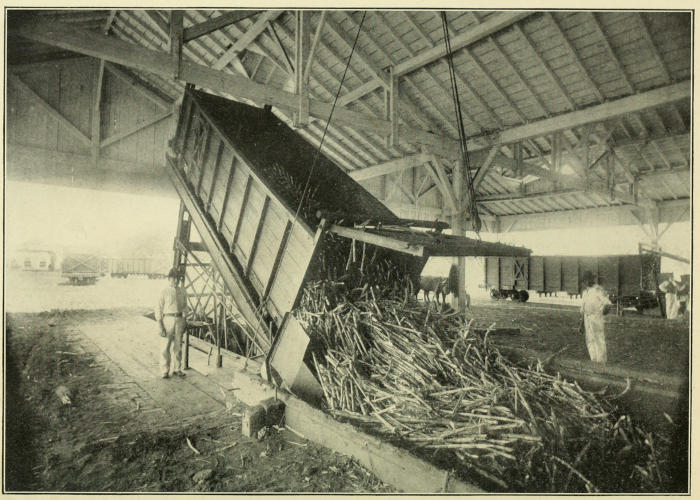
SELF-DUMPING CANE CAR, CUBA
In Cuba, cane diseases are of rare occurrence, but in dry years swarms of mice invade the fields and cause great damage by gnawing the cane. They rapidly disappear, however, as soon as the wet season sets in. It is the weather that brings success or failure to the sugar crop, for the growth of the cane is entirely dependent upon rainfall and a long period of drought is extremely hurtful. Hurricanes that sweep in from the Caribbean sea work havoc in the plantations, beating the cane flat to the ground or uprooting it altogether, which results in heavy damage both to the growing crop and the one following it.
Harvesting is generally begun in December and over in May, although one or two centrals continue in operation practically all the year round. Weather conditions determine when the grinding starts and ends, for, as a rule, the cane has to be hauled from the fields to the weighing station in huge carts drawn by oxen. When the roads are dry, three pairs of oxen can pull a load of 7500 pounds of cane with ease, but as soon as the heavy rains set in the ground quickly softens, the roads become impassable and the movement of cane by carts is out of the question.
The cane is cut close to the ground with a long, heavy knife, called a machete. It is “topped,” cut into two- or three-foot lengths, tied in bundles and loaded on the ox carts to be hauled to the scales and thence by rail to the mill. The stumps that remain in the ground are covered over with dry leaves to conserve the moisture in them. Nourished by occasional showers, the roots quickly sprout and a year afterward a crop of ratoons is ripe and ready to be harvested.
Wages in Cuba are higher than in most important cane-producing countries in the tropics, and Dr. V. S. Clark quotes a number of authorities to show that inefficiency makes Cuban labor costs in most lines of work relatively higher than in the United States and other countries on the American continent, although he says that American supervision has in some instances increased efficiency greatly.[58] (Bureau of Labor, Bull. [L. of C.] 41, pp. 712, 778.)
Complete, reliable and up-to-date information and statistics concerning Cuba’s sugar industry are not obtainable at the moment, nevertheless it is well known that the Cuban plantations and mills that are operated by modern scientific methods can produce sugar at lower costs than Germany or any of the beet-raising countries, while as regards cane-growing countries, Java is the only possible rival. And yet, despite the optimistic views of Cuba’s supporters, the fact remains that the full development of her resources is still a matter of uncertainty, though the possibilities for expansion are enormous, provided that certain obstacles, notably the labor problem, can be overcome. At the present time it is doubtful whether the production of sugar could be largely increased, chiefly because of the growing difficulty of securing adequate help in the fields.
During the season ending midsummer, 1915, Cuba’s output of sugar was 2,592,667 long tons, the largest crop raised in any country in the world, and the vast amount of cane from which it was manufactured was ground by 176 central factories. It is estimated that the production for 1916 will reach 3,000,000 tons.
When it comes to the marketing of her sugar the United States is Cuba’s best customer, only a comparatively small amount being taken by Europe.[59] The 20-per-cent preferential allowed on Cuban sugar duty under the reciprocity treaty, however, does not always go to the Cuban manufacturer. The real beneficiary is the consumer in the United States, for this reason: when the grinding of the Cuban crop is in full swing, the weekly production of raw sugar is approximately 150,000 tons, which speedily exhausts the available storage capacity of the island, so that movement of the sugar is imperative; besides this, the natural anxiety of the planter to realize in order to meet his current expenses causes a strong pressure to sell. It becomes with him a question of whether he can net better figures in New York or the United Kingdom, and owing to difference in port charges and dispatch, the New York results are generally more satisfactory, even with the concession of a part, or at times all of, or even more than, the 20-per-cent preferential. Inversely, it follows that when raw sugars are in keen demand, the planter pursues his advantage to the limit.
The total production of sugar in Cuba from 1850 to the present year is as follows, but the figures prior to 1882 are not entirely dependable, as has been previously explained:
YEAR TONS
1850 223,145
1851 263,999
1852 251,609
1853 322,000
1854 374,000
1855 392,000
1856 348,000
1857 355,000
1858 385,000
1859 536,000
1860 447,000
1861 446,000
1862 525,000
1863 507,000
1864 575,000
1865 620,000
1866 612,000
1867 597,000
1868 749,000 [60]
1869 726,000 [60]
1870 726,000 [60]
1871 547,000 [61]
1872 690,000 [60]
1873 775,000 [60]
1874 681,000 [60]
1875 718,000 [60]
1876 590,000 [60]
1877 520,000 [60]
1878 533,000 [60]
1879 670,000
1880 530,000
1881 493,000
1882 595,000
1883 460,327 [62]
1884 558,932
1885 631,000
1886 731,723
1887 646,578
1888 656,719
1889 560,333
1890 632,368
1891 816,980
1892 976,000
1893 815,894
1894 1,054,214
1895 1,004,264
1896 225,221 [63]
1897 212,051 [63]
1898 305,543 [63]
1899 335,668
1900 283,651 [64]
1901 612,775
1902 863,792
1903 1,003,873
1904 1,052,273
1905 1,183,347
1906 1,229,736
1907 1,444,310 [65]
1908 969,275 [66]
1909 1,521,818
1910 1,804,349
1911 1,483,451
1912 1,895,984
1913 2,428,537
1914 2,597,732
1915 2,592,667
1916 3,000,000 [67]
JAMAICA
Jamaica lies 80 miles south of the eastern end of Cuba, between 17 degrees 43 minutes and 18 degrees 32 minutes north latitude and 76 degrees 10 minutes and 78 degrees 20 minutes west longitude. It is 144 miles long and 50 miles across at its widest part, with a total area of 4207 square miles.
The island is traversed from east to west by a mountain range from which a number of spurs run out to the northwest or southeast. This range is more sharply defined in the eastern end, where the highest point is Blue Mountain Peak, 7360 feet above sea-level. The mountains gradually slope westward down to the hills of the western plateau, which is of limestone formation and comprises two-thirds of the island’s surface. As a rule the highlands terminate abruptly in steep bluffs, a strip of level land lying between them and the sea. On the south coast there are extensive plains. Fully one hundred rivers and streams empty themselves into the Caribbean, but the greater number of them are not navigable and in flood time they become raging torrents. In 1911 the population, of whom only 2 per cent are white, was estimated at 831,123. It is made up of Maroons, descendants of the slaves of the Spanish; descendants of African negro slaves; a mixture of British and negro; laborers from India; a sprinkling of Chinese, and the white settlers.
On the coast the climate is hot and humid, but at the higher elevations it is mild and delightful. The temperature at Kingston and the low sea-level region generally ranges between 70.7 degrees and 87.8 degrees Fahrenheit. At Cinchona, which is 4907 feet high, it runs from 57.5 degrees to 68.5 degrees. With rare exceptions, rain falls during every month in the year, and there are two wet seasons, each of about three weeks duration, one in May and one in October. The amount varies considerably; the yearly average for Kingston is 32.6 inches, for Cinchona 105.5 inches and for the entire island 66.3 inches. Hurricanes, which were of frequent occurrence during the early part of last century, have not visited the island so often of late years. Earthquakes take place from time to time, that of 1907 having been particularly violent and destructive.
Transportation facilities are excellent, the roads are good and a railway 180 miles long connects Port Antonio, Kingston and Montego bay.
Jamaica was discovered by Columbus on May 3, 1494, and was called Santiago by him, but this never supplanted the original Indian name Jaymaca, “the island of springs,” modified into its present form, Jamaica. Columbus put in at the island for shelter in 1505, and four years later his son Diego sent out Don Juan d’Esquivel to take possession of it in the name of the Spanish crown. Sant’ Iago de la Vega, now Spanish Town, founded in 1523, was destroyed by the British in 1596 and was rebuilt after their departure. The British raided the island again in 1635, and twenty years later they occupied it permanently, expelling the Spaniards entirely by 1658. During the three years that followed, Jamaica was under military rule and then a constitution modeled upon that of the mother country was established.
About this time the island became a rendezvous for the buccaneers. These gentry quite often combined the roles of merchants or planters and pirates or sea-rovers. In 1670 the treaty of Madrid confirmed the British in their possession of the island and the buccaneers were suppressed. Jamaica then became a great slave market, and the growing of sugar cane and the manufacture of sugar on an extensive scale were begun. Civil disturbances retarded the progress of the colony until 1728. The town of Port Royal was destroyed by a great earthquake in 1692, while in 1712 and 1722 hurricanes of extreme violence carried destruction throughout the island.
When the Dutch were driven from Brazil by the Portuguese in 1655 many of them settled in Jamaica, Barbados and other West Indian islands. They brought their slaves with them, and, besides, they had a good knowledge of sugar and the necessary capital, so that the industry entered a new phase of development after their arrival. The keenest competitors of the British islands were the French sugar producers of Saint Dominique, Guadeloupe and Martinique, as they were more skilled in manufacturing methods and made sugar at a lower cost. A heavy export tax affected the sugar trade of Jamaica and her sister colonies adversely. The refining of sugar was prohibited and heavy import duties placed upon sugar and syrup entering British North American possessions closed that market to the Jamaican product. Notwithstanding these drawbacks the industry continued to grow and in 1791 the destruction of the plantations of Saint Dominique removed a formidable rival.
Since the passage of the emancipation act in 1834 and the granting of £16,500,000 as partial indemnity to the planters for the loss of their slaves, there has been persistent agitation by the planters, both in Parliament and outside of it. It became very loud when the protection afforded West Indian sugars as against sugars raised in slave-owning countries was lessened and finally withdrawn. It subsided somewhat with the abolition of slavery in the colonies of other European nations, and it was renewed with added vigor when the competition of bounty-nourished beet-root sugar manufactured on the continent of Europe made itself felt. As has been shown, bounties and cartels enabled the European beet-sugar manufacturers to sell their product in foreign markets below actual cost, while realizing a handsome profit in the quantity sold for home consumption. Jamaica and the other cane-producing colonies which had no domestic trade to fall back upon found themselves in a grievous plight.
By 1895 matters had reached such a pass that a royal commission was appointed to make a thorough investigation of conditions and report to the home government. The main features of the remedial measures adopted as a result of the work of this body were:
First: The establishing of the farmers as owners of land, that is to say, parcels of land were sold to small farmers, who were assisted by money advances in the cultivation of their crops, with the understanding that they were to grow cane at their own risk and sell it to the mills.
Second: Planters were encouraged to raise crops other than sugar.
Third: Agricultural experiment stations were built and equipped in Barbados, Trinidad and Jamaica with sub-stations in a number of the smaller islands.
Fourth: A direct steamship service to Canada was established. The service between Jamaica and England was improved and regular steamer communication between the islands was provided.
It was stipulated that the cost of building and maintaining the experiment stations was to be borne by the home government until the results obtained justified their being supported by the colonies. In addition, a grant of money was authorized by Parliament to take care of the pressing needs of the planters during the year before the Brussels convention became effective.
With improved steamship facilities between Jamaica and the mother country, the volume of the trade in fresh fruit was greatly increased.
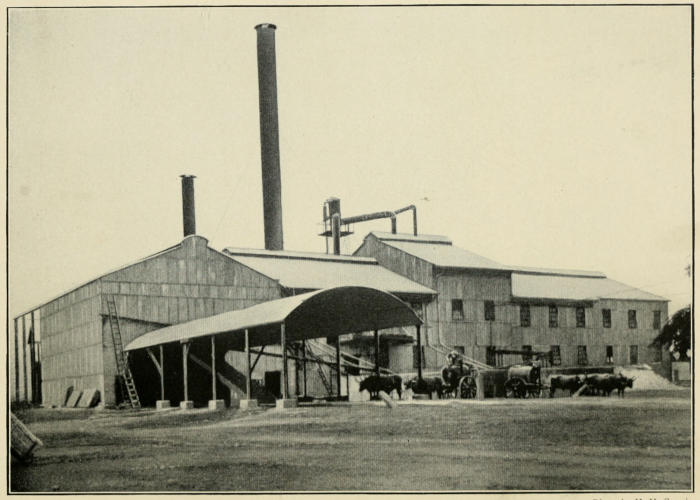
Photo by H. H. Cousins
MORELANDS SUGAR MILL, VERE, JAMAICA
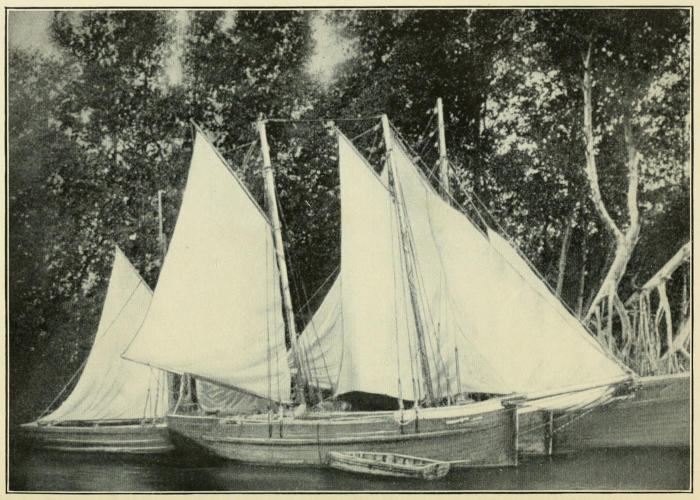
THE FLEET, MORELANDS, VERE, JAMAICA
In 1907 the value of the fruit shipments in pounds sterling was as follows:
Bananas £842,689
Citrus fruits 90,468
as against
Sugar 122,328
Rum 98,923
On January 14, 1907, an appalling earthquake occurred. The buildings in Kingston and Port Royal were destroyed or badly damaged and about one thousand people were killed.
In 1906 the area under cultivation in Jamaica was 750,000 acres and of this only 26,000 were devoted to cane. Sugar planting has been in a stagnant condition for years and only a limited number of the estates that still carry on the industry are making money. Many have stopped growing cane entirely and have turned to bananas, cocoanuts, coffee or cattle raising. In certain districts there is plenty of fertile alluvial land, ample water and cheap labor, but proper cultivation is lacking, so that the results are far from what they should be. Planting simply consists of sticking a piece of cane stalk in a hole in the ground and very little ploughing is done, consequently the weeds are never under control. It takes about twelve months for the cane to ripen and the yield per acre varies widely, ranging from ten to forty-five tons. The average may be taken as about twenty tons per acre.
The island boasts of three central factories and eighty-two small mills, only twelve of the latter having vacuum pans. The others make muscavado sugar and rum. In the operation of boiling by no means all of the sugar is extracted, as a pure liquor is needed for the manufacture of good rum and quite a large amount of cane juice is made into rum direct.
In the process of making muscavado sugar in Jamaica, the cane juice after being brought to boiling point in an open kettle is transferred into a second kettle, where it is treated and the heavy impurities allowed to settle. The clear juice then goes into copper walls, a series of three or more large open copper pans, called teaches. These pans rest above an open fire fed by bagasse, cane trash and wood. After the juice has been boiled to a certain density in the first pan it is transferred to the second and the final concentration takes place in the third or fourth, as the case may be. In some mills the last boiling is done with steam in what is called an Aspinall pan, instead of over an open fire. When the mass becomes sufficiently thick, it is put into large tanks and left to crystallize. Sometimes it is kept in motion during crystallization, but usually no stirring whatever is done. Crystallization completed, the mass is packed in hogsheads with perforated bottoms. These hogsheads are allowed to stand over drainage troughs for two or three weeks so that the molasses may run off. The holes are then plugged up and the sugar is ready to be shipped.
The percentage of sugar, glucose and water in Jamaica muscavados is approximately:
No. 1 Sucrose 88.6 Glucose 5.30 Water 3.42
2 86.2 4.40 3.72
3 83.9 5.92 4.66
4 83.0 6.98 3.84
Management is slipshod and the extraction is poor. It takes fifteen tons of cane and sometimes more to produce a ton of sugar.
As for the future of the sugar industry in Jamaica, much in the way of improvement could be done by the introduction of systematic management, proper cultivation, adequate fertilization and scientific methods of manufacture. Labor is plentiful and cheap, and it would seem that sugar could be produced in Jamaica at as low cost as in Cuba. Thus far, however, there have been no signs of a real awakening.
As regards production, the following figures are taken from Willett & Gray:
1903-04 crop 14,255 tons
1904-05 ” 16,000 ”
1905-06 ” 18,000 ”
1906-07 exports 13,971 ”
1907-08 ” 10,718 ”
1908-09 ” 11,453 ”
1909-10 ” 12,000 ”
1910-11 ” 19,960 ”
1911-12 ” 21,835 ”
1912-13 ” 8,728 ”
1913-14 ” 15,583 ”
1914-15 ” 15,063 ”
1915-16 ” 15,000 [68] tons
BARBADOS
Barbados, the most easterly of the Windward islands, lies seventy-eight miles east of St. Vincent in 13 degrees 4 minutes north latitude and 59 degrees 37 minutes west longitude. It is twenty-one miles long, fourteen and one-half miles at its greatest breadth and its area is 166 square miles. It is of coral origin and at certain points the coral reefs extend out to sea as far as three miles and are a menace to navigation. The island is low and flat, except in the central and northeastern part. Mount Hillaby, the highest peak, rises 1148 feet above sea-level and from it the land slopes in terraces in every direction. Carlisle bay on the southwest is a natural harbor, but only available for vessels of light draft. Barbados is densely populated. In 1906 the number of inhabitants was 196,287, of whom by far the greater number were negroes, who, in proportion to the whites, are as nine to one.
The climate is agreeable, with well-defined wet and dry seasons, and for eight months in the year the heat is modified by the northeast trade winds. The dry, or cold, period is from December to May. The temperature ranges from 70 degrees to 86 degrees Fahrenheit, seldom falling below 65. There is a plentiful rainfall, the annual average being sixty inches, and September is the wettest month. Moisture readily penetrates the coral subsoil and collects in subterranean reservoirs. Porous soil, thorough cultivation and the absence of swamps give miasma no opportunity and fever is unknown, but hurricanes are the scourge of the colony. The soil is thin, but extremely fertile, and there is a theory that it was originally formed of volcanic ash, carried by the winds from St. Vincent during times when La Soufrière was in eruption.
It is said that the Portuguese were the first Europeans to visit the island; be this as it may, they never took possession of it. A British ship touched there in 1605, and, finding no inhabitants, annexed it in the name of King James I. Since that time British ownership has continued without interruption. An actual settlement was established in 1625, in which year the king made a grant of the island to Lord Leigh, afterward the Earl of Marlborough. Bridgetown, the present capital, was founded in 1628.
Barbados was the first of Great Britain’s island colonies to grow sugar cane. The plant was brought there in 1642 during Philip Bell’s governorship, and slaves were imported at the same time. A number of Dutch who were expelled from Brazil in 1655 took refuge in the island, and their knowledge of sugar and experience in its manufacture did much to stimulate the industry. Beginning with the middle of the seventeenth century, Barbados became an important sugar-producing center.
Following emancipation in 1834, the Barbados planters received £1,720,000 to indemnify them for the loss of over 83,000 slaves. At the same time a large number of the freed blacks continued to work on the sugar plantations as before, but under pay; hence abolition did not bring on the same hardships in Barbados as it did in some of the other West Indian colonies.
Labor is plentiful and cheap, so that cultivation is done carefully and in a thorough manner. The naturally rich soil is treated with fertilizers of various kinds, and planting is done every year as a rule, although ratoon crops are often raised on the uplands. Formerly Bourbon cane was grown exclusively, but owing to the falling off in the yield, it was discontinued and the varieties now in favor are White Transparent and seedling canes raised locally. The crops suffer from time to time through hurricanes and droughts, as well as from the common run of cane diseases. Of the entire area of 106,470 acres, about 100,000 acres are cultivated; between 60,000 and 70,000 acres of this are in sugar cane.
In 1902 there were 440 estates on the island, the average area being 168 acres. Of these, 23 exceeded 500 acres and 139 contained less than 100 acres; 19, comprising 6707 acres, were owned by corporations. Each estate had its own mill, and 432 of them made muscavado and eight of them centrifugal sugar. Today the number of factories is estimated at 335, of which 221 are driven by windmills. A few plants are equipped with vacuum pans and modern machinery, but muscavado sugar and molasses still represent nearly all of the production. The molasses obtained in the open-kettle process has a higher value and finds a much readier sale than that resulting from boiling in vacuum pans. Therefore in making comparisons between the yield in sugar from the open-kettle process with that from the vacuum-pan method, the increased price brought by the rich-flavored molasses made in the old-fashioned way must be taken into account.
On an average, the sugar content of the cane is 13.5 per cent and the recovery is about 7.5 per cent muscavado sugar and 3.5 per cent molasses. It is evident that imperfect crushing and crude manufacturing methods cause a considerable loss in sugar on most of the estates.
In 1898 the Imperial Department of Agriculture established its chief West Indian station in Barbados. This station has rendered great service to the planters in improving cane varieties, giving expert advice concerning fertilizing and fighting cane pests.
Undoubtedly much could still be done to better conditions, but the small estates are generally mortgaged and their owners are in no position to borrow more money to enable them to operate on a more extended scale. On the other hand, they are extremely tenacious of their holdings and will not part with them to capitalists who might establish large central factories. It therefore seems altogether improbable that there will be any expansion in the sugar industry of the colony in the near future.
The production of Barbados during the last twenty years in long tons has been as follows:
1895 33,331
1896 45,170
1897 51,275
1898 46,878
1899 40,442
1900 44,250
1901 56,912
1902 45,576
1903 33,795
1904 55,785
1905 41,210
1906 50,630
1907 33,033
1908 31,353
1909 15,571
1910 36,389
1911 32,514
1912 exports 30,548
1913 ” 11,479
1914 ” 33,387
1915 ” 32,578
1916 ” 50,000 [69]
TRINIDAD
Trinidad lies six miles off the northeastern coast of Venezuela, between 10 degrees 3 minutes and 10 degrees 50 minutes north latitude and 60 degrees 39 minutes and 62 degrees west longitude. Its average length is forty-eight miles, it is thirty-five miles in width and has an area of 1754 square miles. It is the largest of the British West Indian islands, with the exception of Jamaica, and the population in 1914 was estimated to be 255,148, one-third of whom were East Indians.
The surface is level or rolling, with a mountain range in the north, which rises to 3100 feet at its highest point, Tucuche Peak. In the south there is a ridge of hills about 600 feet high, and in the central part an upland belt runs from east to west by south. There are a number of small rivers, none of them navigable.
The island enjoys an equable climate, the temperature varying from 70 degrees to 87 degrees Fahrenheit, the mean being 78.6 degrees. The seasons are regular, rainy from May to January, with a four weeks’ interval of fine weather in October, and dry from the end of January until May. The average rainfall is 66.26 inches, but in the cane-growing region it is about 80 inches. Hurricanes, earthquakes and long spells of drought are unknown.
Christopher Columbus discovered Trinidad in 1496 and the Spaniards occupied it ninety years later. It remained in their hands until 1797, when it was taken by the British, to whom it was formally ceded in 1802.
As was the case in other West Indian islands, the aborigines were quickly exterminated by the Spanish conquerors and their places filled with negro slaves. A number of French and Creole settlers came to Trinidad in 1780, and about the middle of the following century Portuguese refugees from Madeira joined the colony. After the abolition of slavery by Great Britain in 1834, many Hindus were brought in under contract.
The soil of the island is very rich and well adapted to the growing of sugar cane and other tropical products. The sugar plantations are found in the level country bordering on the Gulf of Paria, where the soil is a dark clay, and which has been described as one of the finest stretches of sugar land in the West Indies.
As a result of the financial distress of 1895, which caused the home government to pass relief measures, a number of plantation owners were compelled to dispose of a portion of their land to farmers, who grew cane upon it and sold the crop to the sugar factories. It is estimated that today about twenty-five per cent of the cane worked up by the factories is furnished by these small growers, the remainder being raised by the owners of the estates. Grinding begins in January and is finished in May or June.
Trinidad has its own agricultural station, which is chiefly devoted to the study of sugar-cane culture. It has been of great service to the industry in determining the kinds of cane that can be most profitably grown, in fighting cane diseases and pests and in working out fertilization problems.
From 1855 to 1887 an average crop of 59,774 tons was turned out by ninety estates. Of this total, 28,500 tons were vacuum-pan sugar and the rest muscavado. In 1896, 62,975 tons of sugar were made by thirty-nine estates. Seven of these made 2000 tons of common muscavado, six made 5500 tons of centrifugal muscavado, and the remaining twenty-six made vacuum-pan sugar. A report made in that year concerning sugar estates in Trinidad sets forth that advantage has been taken of the most modern improvements in boilers, furnaces, multiple evaporators, crushing mills and other machinery. Trinidad produces a large amount of what are known as “yellow crystals,” which are sold in the British market for direct consumption and command a premium over the ordinary raw sugar.
Statistics compiled in 1909 show that the colony then had sixteen sugar factories, which turned out 52,972 tons of sugar, and the recovery represented 8.74 per cent of the weight of the cane; 451,801 tons of this cane were grown by the estates and 154,663 tons by the small farmers. There were 11,401 of the latter, 6077 of whom were East Indians and 5324 West Indians. Trinidad is the only West Indian colony where the attempt to fill the places of negro laborers with coolies from India has been successful. The production of sugar since 1900 has been as follows:
1900 41,269 tons
1901 51,077 ”
1902 44,913 ”
1903 46,029 ”
1904 50,744 ”
1905 38,240 ”
1906 62,975 ”
1907 50,564 ”
1908 48,933 ”
1909 52,972 ”
1910 exports 44,139 ”
1911 ” 37,282 ”
1912 ” 32,557 ”
1913 ” 31,665 ”
1914 ” 47,251 ”
1915 ” 49,107 ”
1916 ” 55,000 ” [70]
SANTO DOMINGO
Haiti is divided into two unequal parts, the republic of Haiti (République d’Haiti), comprising 10,204 square miles, and the republic of Santo Domingo (República Dominicana), with an area of 19,325 square miles. It is one of the four large islands of the West Indies and lies between 17 degrees 37 minutes and 20 degrees north latitude and 68 degrees 20 minutes and 74 degrees 28 minutes west longitude. Its length from east to west is about 407 miles and its greatest width is 160 miles. The total population is 2,737,700.
The surface of the island is exceedingly mountainous, three distinct ranges traversing it from east to west. The loftiest peak, Loma Tina, near the city of Santo Domingo, reaches a height of 10,300 feet. The extensive intervening valleys are fertile and watered by numerous rivers, none of which, however, are deep enough to be navigable.
The climate is hot and humid. An average temperature for the month of January would be about 75.4 degrees Fahrenheit, for July 84 degrees, and for the year 79.2 degrees. There are no active volcanoes, but great damage is done from time to time by earthquakes and hurricanes. The yearly rainfall is abundant, averaging about 120 inches. In San Pedro de Macoris, however, where the greater part of the sugar crop of the island is grown, the annual precipitation is in the neighborhood of 60 inches. As this is not sufficient for the needs of the growing cane, the planters have to do a certain amount of irrigating, and the water for this purpose is obtained from artesian wells.
The soil of the sugar-growing territory is of porous limestone formation, which shows evidence of disturbances and upheavals due to volcanic agency. Overlying this is a deposit of decomposed vegetable matter from three to twelve inches in thickness, and there are areas where a rich black or red soil, varying from one to two feet in depth, is found.
On December 5, 1492, Columbus sighted the northern coast of Haiti and found safe anchorage there. The newly discovered island was named Española, which was afterward latinized to Hispaniola. Later still, the settlement founded by the Spaniards in the southern part under the name of Santo Domingo gave its name to the entire island. When Columbus set foot on its shores, Haiti had 2,000,000 inhabitants, who were governed by five caciques, each holding both religious and political sway over the separate kingdoms. At the outset the newcomers were received with welcome and honor, but it was not long before their tyranny caused a rupture between them and the natives. A war of extermination followed, and by 1506 the entire island had fallen into the hands of the invaders.
Left in possession of a depopulated country, the Spaniards restocked it with African negro slaves. Meanwhile the interior of the island had been explored, settlements had been established, mines opened up and progress made in agriculture. In 1506 sugar was brought in and its cultivation soon assumed important proportions. About 1625 the French and English began to give trouble to Spain in the western archipelago, and a few years later a number of Englishmen and Frenchmen, who had been expelled from St. Kitts by the Spaniards, took refuge on Tortuga island and became famous under the name of Buccaneers. They succeeded in establishing themselves in a part of Haiti, and in 1697 their right of possession was acknowledged and the territory occupied by them was ceded by Spain to France by the treaty of Ryswick. The new colony was called Saint Dominique, and it entered immediately into an era of prosperity in which the expansion of the sugar industry was the principal factor. When the French revolution broke out, the exportations of sugar amounted to 80,000 tons, and this large production necessitated the employment of a great number of slaves. The whites were few and the unequal proportion led to disaster. The population consisted of whites, free colored people (most of whom were mulattoes) and negro slaves. The mulattoes demanded the same civil rights as the white people and these privileges were accorded them in 1791. Incensed beyond measure, the whites clamored loudly for a reversal of this decree and finally obtained it. On August 23, 1791, a violent insurrection of the blacks broke out; the plantation slaves were joined by the mulattoes and a massacre of the whites followed. Those who escaped the slaughter fled, leaving all their possessions behind; the sugar plantations were destroyed and the entire sugar industry came to an abrupt end.
In 1793 Saint Dominique was attacked by England and Spain, whereupon the French government, in order to conciliate the blacks and retain its dominion over the colony, proclaimed all the slaves free. By the terms of the Peace of Bâle in 1795, the whole island passed into the hands of the French.