THE PRINCESS WHO COULD NOT LAUGH By A. A. MILNE
Reading edition
There was once a King who had an only daughter, the pride of his heart. She was sweet, she was good, she was beautiful, and the King would have said that she was perfection itself, but for one thing. She never laughed. Nothing seemed to amuse her.
Her father, the King, was often amused. The court fool had only to open his mouth, and His Majesty was leaning back in his throne roaring with laughter. Nobody was so quick as His Majesty to see the point of a good story or a clever riddle. But the Princess would listen gravely, and then say “Fancy!” or “Did he really?” or “Well, what happened next?” when the end of the joke had been reached. “My darling,” the King would say, wiping away the tears of laughter which had come into his eyes, “don’t you understand? It’s a joke!” And the Princess would answer, “Yes, I see it’s a joke, Father, but why do you make that noise about it?”
For Her Royal Highness always said that she saw a joke as well as anybody. What made her different from the King was that when His Majesty saw a joke he had to make a loud roaring noise, whereas when she saw one, she didn’t want to make any noise at all. Did that matter very much?
“My darling,” said the King, “it isn’t a question of wanting to. If you have a sense of humour, you have to laugh.”
“I don’t,” said the Princess.
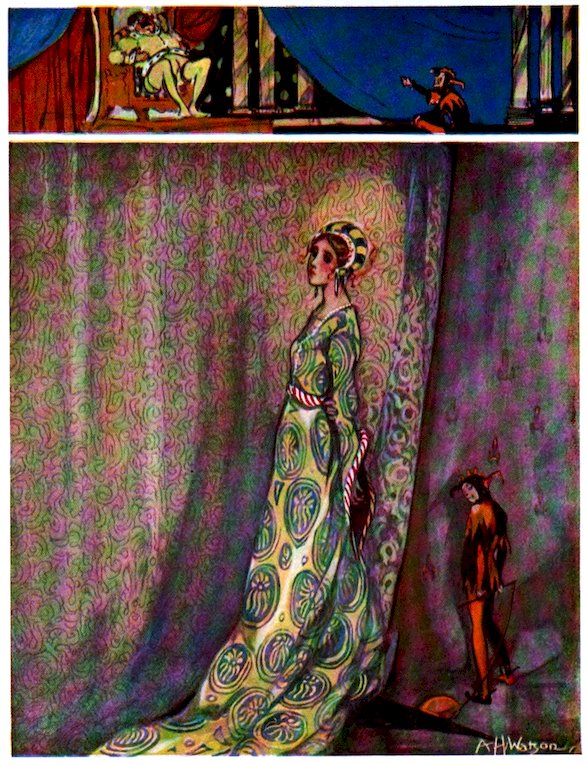
155“I know,” sighed the King; “you don’t.”
And this made him very miserable. Nothing is so pleasant as to tell a funny story to somebody whom you love, to watch the smile coming on her face, and to hear her sudden laughter, and then to linger with her, your laughter catching new life from hers, in happy enjoyment of the joke. And this pleasure the King did not have.
He did his best. He read straight through to her, from beginning to end, that amusing book One Thousand Merrie Jestes collected from Manye Sources, pausing for a moment at the end of each story so that her laughter should not run over on to the next story. But she never laughed once. He then read it through again; still she did not laugh. He gave her to read for herself, Diverting Tales from Divers Lands, and watched her face anxiously. She did not smile. Nothing that he could say or do, nothing that the court fool could say or do, changed the gravity of her face. She was sweet, she was good, she was beautiful—but she could not laugh.
A time came when the King could not bear it any longer, and he felt that somehow or other the young Princess must be 156moved to laughter. In his difficulty he consulted his Chancellor, than whom there was supposed to be no wiser man in His Majesty’s kingdom. Now the Chancellor had a son, the young Count Hoppo, a fellow of no great learning, nor beauty, nor bravery—a fellow, indeed, of no personal attraction whatsoever, but a young man esteemed in his family as a jester. The Chancellor therefore spoke as follows:
“I would suggest Your Majesty, that it be announced to Your Majesty’s faithful people that he who is first able to move Her Royal Highness to laughter be rewarded by the hand of Her Royal Highness and half your Majesty’s kingdom.”
“What do you say, my love?” said the King to his daughter.
“As you please,” said the Princess. “I shall not laugh, for it seems that I have no wish to laugh, nor do I greatly desire to marry. But as you please.”
The King turned to his Chancellor.
“Let it be so announced,” he commanded. “At noon henceforward, for the space of one half-hour, those with humorous riddles or merry jests to tell shall have audience before the whole court, and he who first moves Her Royal Highness to laughter shall be rewarded by her hand in marriage.”
“And half the kingdom?” said the Chancellor anxiously.
“Is that usual?” asked the King.
“Entirely, Your Majesty.”
“Very well. So be it. To-morrow at noon we shall await the competitors.”
At noon, then, all those with good stories to tell, or merry riddles to propound, attended at the Palace, and foremost amongst them was the young Count Hoppo. So one by one 157they put their riddles or told their stories, and Her Royal Highness listened to them.
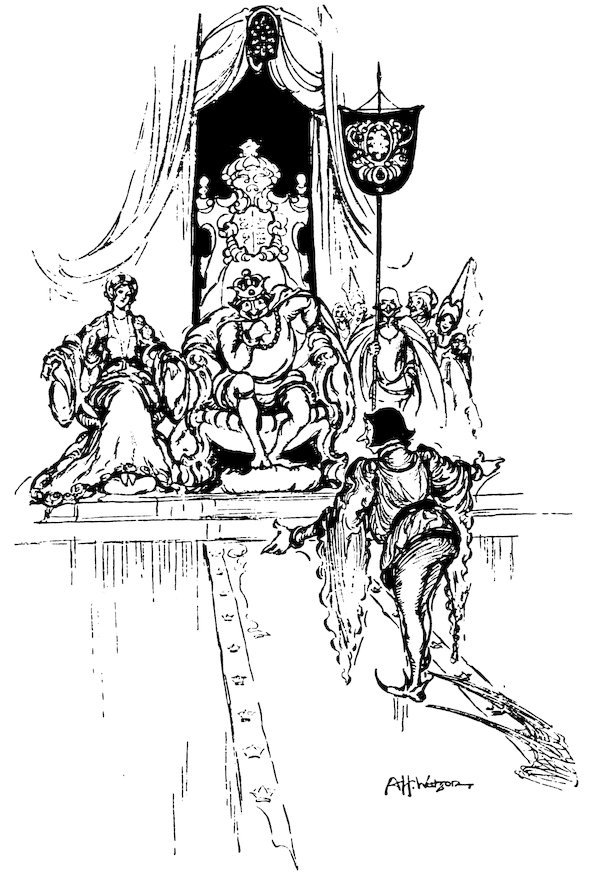
“Why does a dragon cross the road?”
158“Tell me, Your Royal Highness,” said Count Hoppo, “why does a dragon cross the road?”
The King, who knew this one, began to chuckle to himself.
“I suppose,” said the Princess, “that he crosses the road in order to get to the other side.”
“Y-yes,” said Hoppo, a little annoyed. “Yes, exactly.”
“Well?” said the Princess.
“That’s all,” said Hoppo crossly.
“Was it funny?” she said, turning to the King.
“My dear,” said her father, “you missed the point of the joke. The point of the joke was that if you said—I mean, what he expected you to say—then he would have said—only you didn’t.”
“But why else should a dragon cross the road?”
“Quite so,” said the King quickly. “Next competitor.”
Another young man stepped forward and enquired of Her Royal Highness why a silver bowl was like a wasp’s nest.
“It isn’t,” said the Princess. She turned to the King. “Is it, father?”
“It’s a riddle, dear,” explained His Majesty, and he murmured to himself, “Why is a silver bowl like a wasp’s nest—like a wasp’s nest.”
“I still think it isn’t,” said the Princess.
“Well?” said the King to the questioner. “Why is a silver bowl like a wasp’s nest?”
“Because there’s a ‘B’ in ‘Both,’ Your Majesty.”
His Majesty roared with laughter.
159“Not in a wasp’s nest,” said the Princess, “surely!”
The King explained that the letter “B” was in the word “Both.”
“Then why drag in the wasps’ nest?”
The King explained that that was the joke.
“I see,” said the Princess, but she did not laugh.
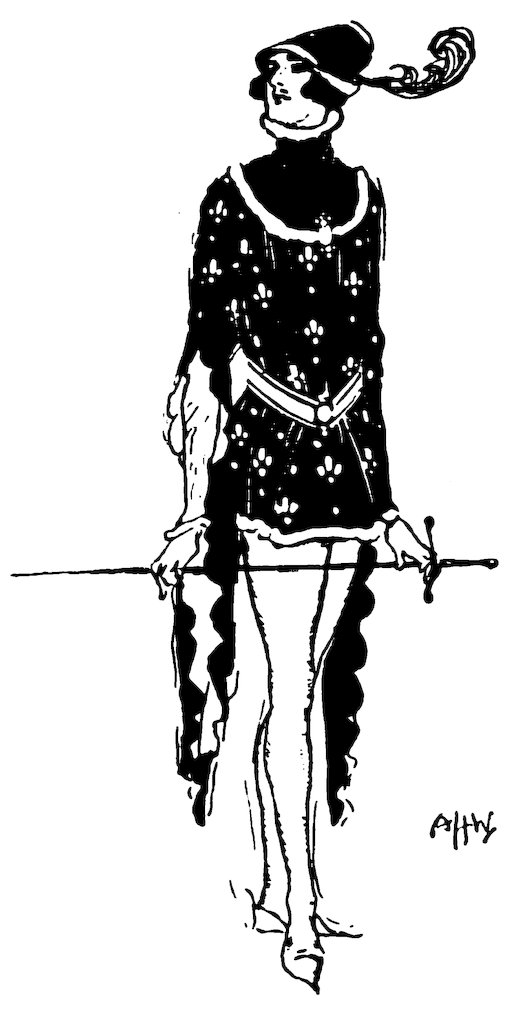
Then a third young man came forward, and this was the Count Rollo. Tall and handsome he was, and of a pleasant smiling countenance, so that the Princess thought to herself: “If only he would win, and not that horrid Count Hoppo.” Count Rollo, it seemed, desired to know the difference between a fly and a bird.
“A fly and a bird,” murmured the King to himself, “a fly and a bird, a fly and a bird, a fly and a bird.”
The Princess hastened to tell him.
“A bird,” she said, “has feathers on its wings, but a fly has not. A bird lays eggs, and a fly—no, that’s wrong, because flies do lay eggs. But a fly hasn’t got a beak. And it doesn’t build a nest. Oh, and it’s much smaller than a bird.”
“All this is true!” smiled Rollo, “but there is another difference, Your Royal Highness.”
160“Well?” said the King.
“A bird can fly, Your Majesty, but a fly cannot bird.”
“Ha-ha-ha!” went the King. “Ha-ha-ha-ha-ha! Ha-ha!”
“Cannot what?” asked the Princess.
“Cannot bird, Your Royal Highness.”
“But what is ‘birding’?”
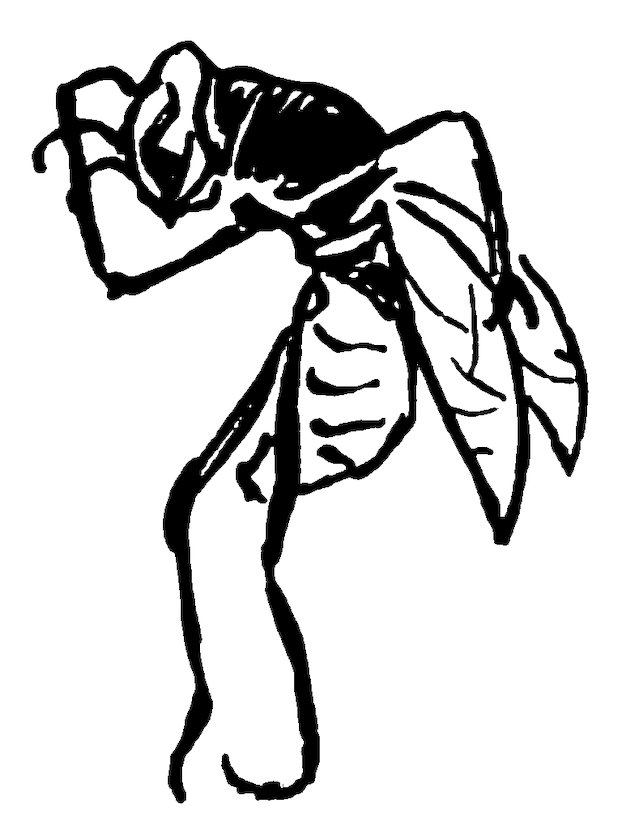
“That is what the poor fly never knew, Your Royal Highness, and often wondered. It seems so unfair, does it not, that if a bird can fly whenever it likes, the fly can never bird, however much it wants to.”
“It does seem rather unfair,” said the Princess, nodding to him in a friendly way.
But she did not laugh.
So, in their turn, all the young men of the country put their riddles and told their stories, not only on that day, but on many other days. And, one by one, they grew tired of trying to make laugh a Princess who could not laugh, and they came no more to the court at the hour of noon. But Count Hoppo and Count Rollo came always, for that Hoppo wished mightily for the half of His Majesty’s kingdom, and Rollo loved and was loved by the Princess. So in the end they two stood there alone.
Now this was to be the last trial between them, wherefore each had spent the night in anxious preparation for the morrow, Rollo wondering which of the few stories he had left untold would be most likely to amuse the Princess, and Hoppo bethinking him of a plan whereby at the same time he might win the Princess and discomfort his rival.
161
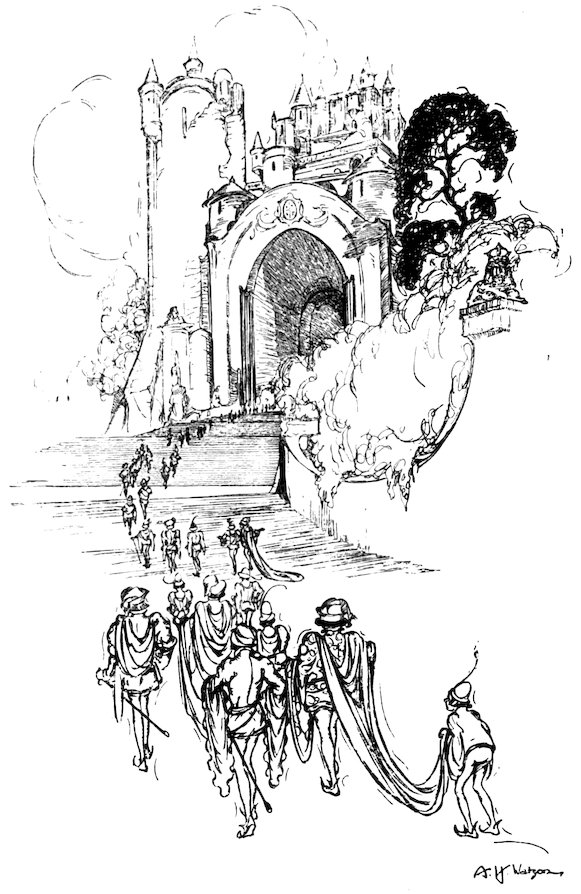
162On the morrow, then, before the whole court Count Hoppo and Count Rollo made final trial for the hand of the Princess. And the Princess looked at them as they stood there before her, and wished with all her heart that it might be Count Rollo who should make her laugh. So Count Rollo came forward to tell her his story.
“There was,” he said, “a stranger who came into a far country, and he desired to know the way to the King’s palace, for he had a present to lay before the King. So he stopped one whom he met on the road, and said to him: ‘Pray, sir, do you know the way to the King’s palace?’ Whereupon the man, wishing to be thought humorous, replied, ‘Yes, I do,’ and walked on. But a moment later, fearing lest his joke should be mistaken for rudeness, he hurried after the stranger, and said, ‘I beg your pardon, sir, but do you wish to know the way to the palace?’ ‘No,’ said the stranger, ‘I don’t,’ and left him there.”
To the King this seemed such a delightfully silly joke that it was some minutes before he could recover his gravity, but the Princess could only look sadly and wistfully at Count Rollo.
“Well, well,” said the King, “you shall have one more turn later. Now it is for Count Hoppo to try.”
Now Count Hoppo was minded to try a trick with which he had often amused the members of his own family. For it had long been a habit of his, when some unwelcome guest was arriving at his father’s door, to prepare a butter-slide in the hall, so that, treading unwarily upon it, the visitor should slip, and his feet should fly into the air, and he should fall heavily to the ground, to the great enjoyment of those of the family who were looking on. So for this occasion he had prepared a most amusing butter-slide a few paces from where 163he and Count Rollo stood, and had warned his father, the Chancellor, to take care that no members of the court trod upon it before the trial began. So now he stepped forward, feeling well assured that in one and the same moment he would win the hand of the Princess and put to shame and laughter the hated Count Rollo.
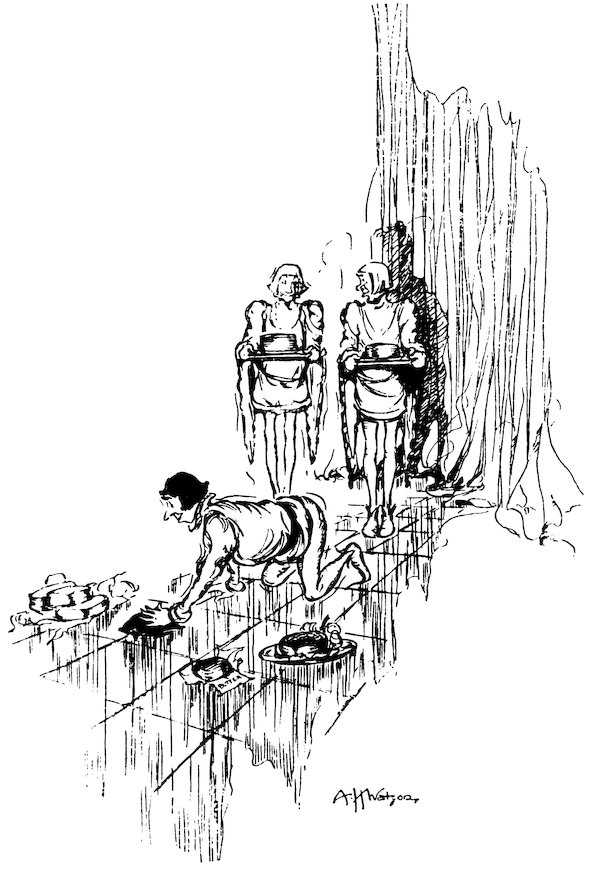
He had prepared a most amusing butter-slide.
164
“I propose,” he said, “to show Your Royal Highness a small humorous joke of a practical nature, which cannot fail to move Your Royal Highness to loud and hearty laughter. Perhaps, before I begin, the Count Rollo would oblige me by moving a little farther away, so as to give me more room for my joke.” He turned to Rollo. “If you would be so good as to withdraw a few paces towards the window——”
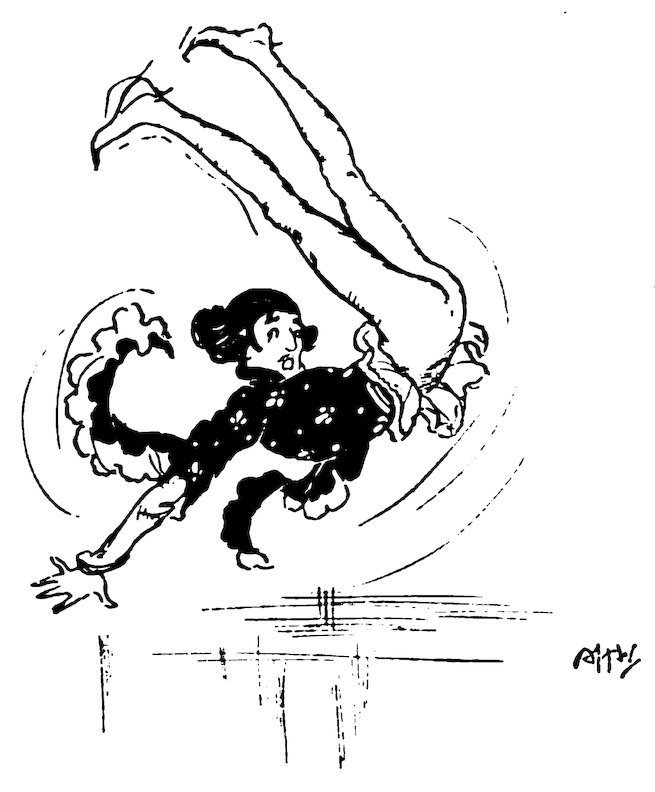
He indicated with a careless gesture the necessary direction, and bowed to Rollo. Rollo bowed to him in reply; bowed gracefully to the King and still more gracefully to the Princess. Then, still bowing with the utmost ease and elegance, he retired a few paces backwards and stepped gracefully upon the butter-slide. There was a loud crash.
“Oh!” gasped the Princess. “Oh-ho-ho-ho-ho-ho! Oh-ha-ha-ha-ha-ha! Oh-he-he-he-he-he!” It was as if somebody had suddenly pressed a button inside her. Her 165laughter pealed round the palace walls. She laughed up and up and up and up, and she laughed down and down and down and down. She trilled and gurgled and choked, and choked and gurgled and trilled. It seemed that there was no end to her laughter.
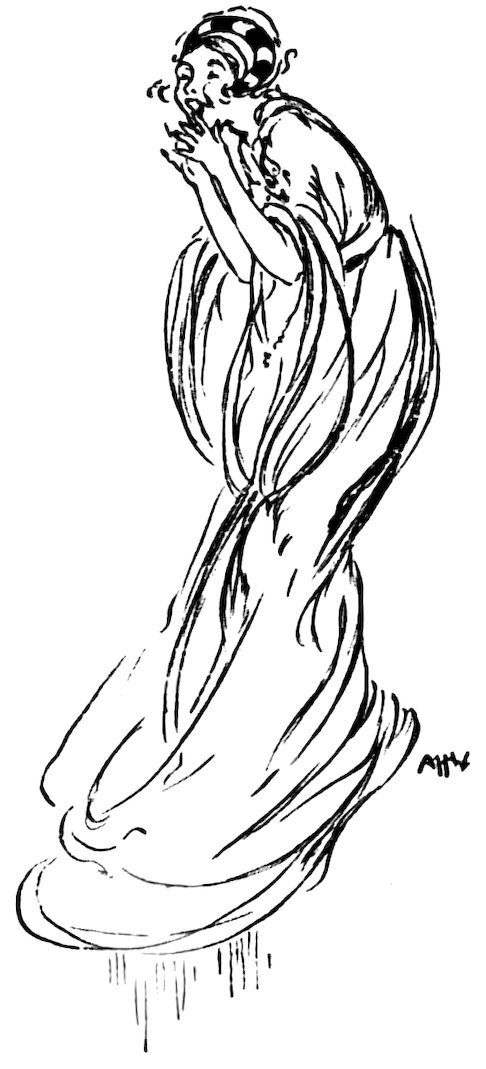
The King too was laughing, the Chancellor was laughing, Count Hoppo was laughing. Save for one man the whole court was laughing.
Count Rollo did not laugh. Feeling ashamed and miserable and angry, he picked himself up and gave the Princess one reproachful look.
“I’m s-s-sorry,” gasped the Princess. “I didn’t mean to laugh, I don’t know why I did laugh, I don’t want to laugh, I——” And then she trilled and gurgled and choked, and choked and gurgled and trilled all over again.
As soon as quiet was restored, the Chancellor stepped forward.
“Your Majesty,” he said, “on behalf of the young Count Hoppo I claim the promised reward.”
“Count Hoppo?” said the King in surprise. “But it was just an accident, was it not?”
“Not so, Your Majesty,” replied Hoppo proudly. And he explained how, with great cleverness, he had prepared the butter-slide, and how, with great cunning, he had arranged for Count Rollo to step upon it. And all the court said 166“Well, well, well!” and “Fancy that now!” And the King frowned and considered the matter.
“Ah, well, in that case,” said His Majesty, “you may fairly claim to have succeeded in moving Her Royal Highness to laughter.” He turned to Count Rollo. “You agree that that is so, Count Rollo?”
Rollo looked at the Princess, and she looked back at him, and their eyes spoke to each other. As plainly as if she were speaking her eyes cried to him, “Save me from this Count Hoppo!” And Rollo smiled back at her, and gave a little nod, as if he would say, “It will be all right.” For an idea had come to him.
So he turned like one in thought, and walked a few paces off. Then, turning again to the King, he said:
“Your Majesty, since I have seen Her Royal Highness day by day, these many days, I have dared to love her. If Your Majesty says now that she is to be wedded to the Count Hoppo, it will be better that I should not look upon her again. But I venture to make this last request of her. I ask her to come down from her throne and say farewell to me here, not as Princess to subject, but as maid to man.”
And he went down on one knee and waited for her.
“I will come,” said the Princess softly.
So she came to him; and, as she drew near, she stepped suddenly upon the butter-slide, and her feet shot into the air, and she fell heavily upon the floor.
There was a cry of anger from the Princess, followed by a cry of horror from all the court. A dozen hands helped her to her feet, and supported her again to the side of her father, the King, who comforted her with royal words.
167“But this is passing strange!” said Rollo loudly. “How comes it that Her Royal Highness does not laugh? Was it not a funny jest?”
The King looked at him with sudden suspicion.
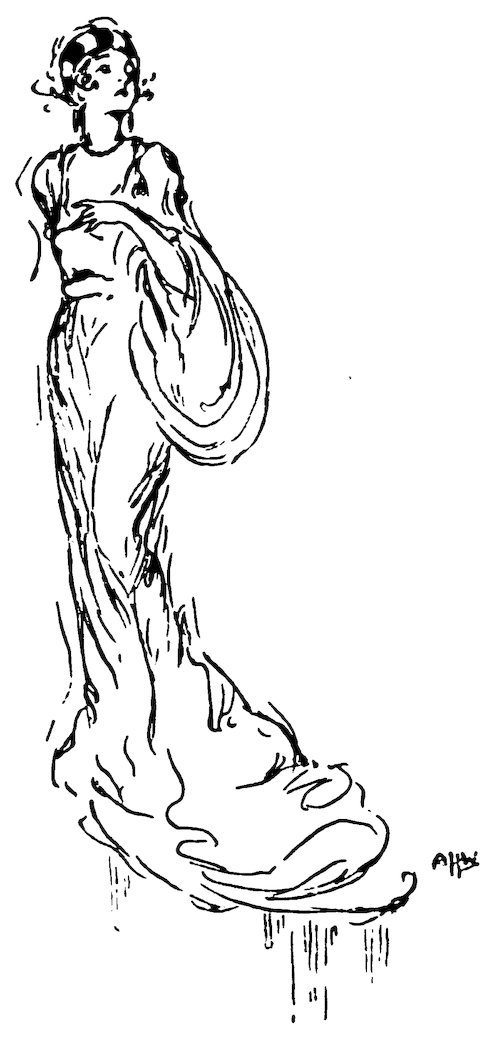
“What does this mean?” said the King sternly. “This talk of saying farewell, was it just a plot to make Her Royal Highness fall?”
“Certainly, Your Majesty,” said Rollo pleasantly. “I hoped that Count Hoppo’s delightful jest would amuse us all again.” He turned to the Princess. “Was Your Royal Highness not amused?”
“We were not amused,” said Her Royal Highness coldly.
“Certainly not,” said the King with dignity.
“But Your Royal Highness was amused before,” said Rollo gently.
“That was altogether different,” said the King.
Then Count Rollo smiled at them all. “In that case, Your Majesty, it was not Count Hoppo’s butter-slide which made Her Royal Highness laugh, but my extremely humorous way of kicking my feet in the air and falling to the ground.”
Then it was the turn of the Princess to smile, as she saw what Rollo would be at.
168
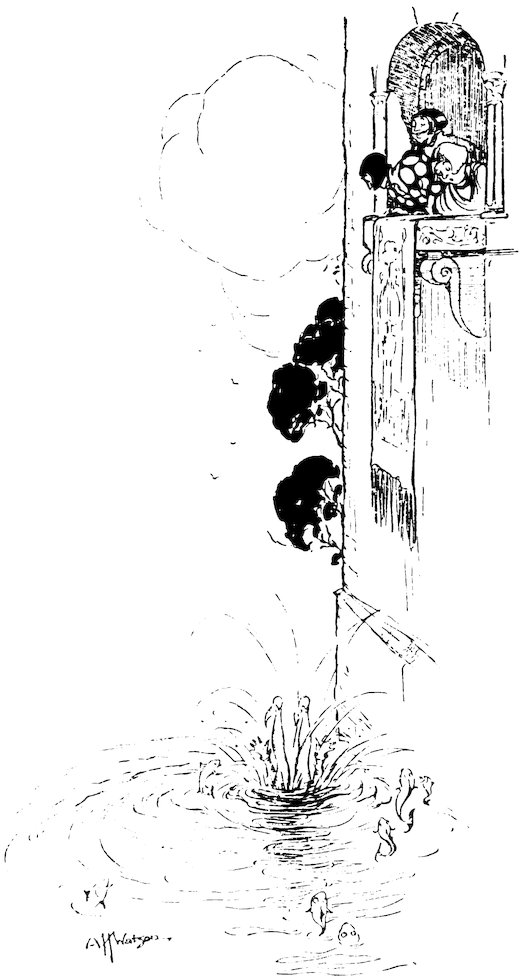
Dropped twenty feet below, splash! into the royal fish pond!
169“Why, yes,” said the King in surprise. “That had not occurred to me, but indeed it would seem to be so. What do you say, my dear?”
“Of course it is, father!” said the Princess quickly. “It was Count Rollo who made me laugh, not Count Hoppo.”
But now Count Hoppo, seeing how things were going against him, cried out suddenly:
“It was me, Your Majesty, it was me! If I had fallen down, I would have made the Princess laugh, just as loudly as Count Rollo did! I’ll make her laugh now! Watch me!” And with these words, he ran across the butter-slide so swiftly that his feet leapt in the air, and he shot heavily through the window and dropped twenty feet below, splash! into the royal fishpond!
“How vulgar!” said the Princess, with her nose in the air.
So young Count Rollo married the Princess, and they lived and loved and laughed happily together for more years than I can remember. But what happened to Count Hoppo when they had dragged him out of the fishpond, I never heard; nor, indeed, does it matter very much.
170