Volume 13 — JOSÉ ECHEGARAY
Reading edition
(1832-)

he period of political disorder and disturbance which followed the revolution of 1868 in Spain was also a period of disorder and decline for the Spanish stage. The drama—throwing off the fetters of French classicism that paralyzed inspiration at the beginning of the century—had revived for a time. But after its rejuvenescence of the glories of the Golden Age of Spanish literature, uniting a new beauty of form with truth to nature in the Classic-Romantic School, it sank into a debasement hitherto unknown. Meretricious sentiment, dullness, or buffoonery, chiefly of foreign production, occupied the scene before adorned by the imagination, the wisdom, and the wit, of a Zorilla, a Tamayo, a Ventura de la Vega.
José Echegaray
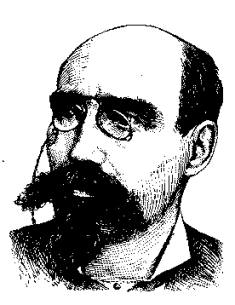
It was at this period of dramatic decadence that Echegaray appeared to revive once more the romantic traditions of the Spanish stage, peopling it again with noble and heroic figures,—in whom, however, the chivalric spirit of the Middle Ages is at times strangely joined to the casuistic modern conscience. The explanation of this is perhaps to be found in part in the mental constitution of the dramatist, in whom the analytic and the imaginative faculties are united in marked degree, and who had acquired a distinguished reputation as a civil engineer long before he entered the lists as an aspirant for dramatic honors. Born in Madrid in 1832, his earlier years were passed in Murcia, where he took his degree of bachelor of arts, applying himself afterward with notable success to the study of the exact sciences. Returning to Madrid, after enlarging his knowledge of his profession of civil engineer by practical study in various provinces of Spain, he was appointed a professor in the School of Engineers, where he taught theoretical and applied mathematics, finding time however for the production of important scientific works, and for the study of political economy and general literature. On the breaking out of the revolution of 1868 he joined actively in the movement, taking office under the new government as Director of Public Works, and holding a ministerial portfolio. He took office a second time in 1872, and later filled the post of Minister of Finance, which he resigned on the proclamation of the Republic. Retiring from public life, he went to Paris; and while there wrote, being then a little past forty, his first dramatic work, 'The Check-Book,' a domestic drama in one act, which was represented anonymously in Madrid two years later, when the author for the third time held a ministerial portfolio.
'The Check-Book' was followed in rapid succession by a series of productions whose titles, 'La Esposa del Vengador' (The Avenger's Bride), 'La Ultima Noche' (The Last Night), 'En el Puño de la Espada' (In the Hilt of the Sword), 'Como Empieza y Como Acaba' (How it Begins and How it Ends), sufficiently indicate their character. They are of unequal merit, but all show dramatic power of a high order. But on the representation in 1877 of 'Locura o Santidad?' (Madman or Saint?), the fame of the statesman and the scientist was completely and finally eclipsed by that of the dramatist, in whom the press and public of Madrid unanimously recognized a new and vital force in the Spanish drama. In this tragedy the keynote of Echegaray's philosophy is clearly struck. Moral perfection, unfaltering obedience to the right, is the end and aim of man; and the catastrophe is brought about by the inability of the hero to make those nearest to him accept this ideal of life. "Then virtue is but a lie," he cries, when the conviction of his moral isolation is forced upon him; "and you, all of you whom I have most loved in this world, perceiving what I regarded as divinity in you, are only miserable egoists, incapable of sacrifice, a prey to greed and the mere playthings of passion! Then you are all of you but clay; you resolve yourselves to dust and let the wind of the tempest carry you off! ... Beings shaped without conscience or free-will are simply atoms that meet to-day and separate to-morrow. Such is matter—then let it go!"
But the punishment of sin, in Echegaray's moral code, is visited upon the innocent equally with the guilty; and the guilty are never allowed to escape the retributive consequences of their wrong-doing. The pessimistic coloring of the picture would be at times unendurably oppressive, were it not relieved and lightened by the moral dignity of the hero. Echegaray's pessimism is, so to say, altruistic, never egoistic; and the compensating sense of righteousness vindicated rarely fails to explain, if not to justify, his darkest scenes.
Judged by the canons of art, Echegaray's dramatic productions will be found to have many imperfections. But their defects are the defects of genius, not of mediocrity, and spring generally from an excess of imagination, not from poverty of invention or faulty insight. The plot is often overweighted with an accumulation of incidents, and the means employed to bring about the desired end are often lacking in verisimilitude. Synthetic rather than analytic in his methods, and a master in producing contrasts, Echegaray captivates the imagination by arts which the cooler judgment not seldom condemns. His characters too are not always inhabitants of the real world, and not infrequently act contrary to the laws which govern it. The secondary characters are too often carelessly drawn, sometimes being mere shadowy outlines, while an altogether disproportionate part of the development of the plot is intrusted to them.
On the other hand, in the world of the passions Echegaray treads with secure step. Its labyrinthine windings, its depths and its heights, are all familiar to him. Here every accent uttered is the accent of truth; every act is prompted by unerring instinct. Nothing is false; nothing is trivial; nothing is strained. The elemental forces of nature seem to be at work, and the catastrophe results as inevitably from their action as if decreed by fate.
The genius of Echegaray, which in its irregular grandeur and its ethical tendency has been not inaptly likened by a Spanish critic to that of Victor Hugo, rarely descends from the tragic heights on which it achieved its first and its greatest triumphs; but that its range has been limited by choice, not nature, is abundantly proved in the best of his lighter productions, 'Un Critico Incipiente' (An Embryo Critic). Of his achievement in tragedy the culminating point was reached—after a second series of noteworthy productions, among them 'Lo Que no Puede Decirse' (What Cannot be Told), 'Mar Sin Orillas' (A Shoreless Sea), and 'En el Seno de la Muerte' (In the Bosom of Death)—in 'El Gran Galeoto' (The Great Galeoto), represented in 1881 before an audience which hailed its author as a "prodigy of genius," a second Shakespeare. Other notable works followed,—'Conflicto entre Dos Deberes' (Conflict between Two Duties), 'Vida Alegre y Muerte Triste' (A Merry Life and a Sad Death), 'Lo Sublime en lo Vulgar' (The Sublime in the Commonplace); but 'El Gran Galeoto' has remained thus far its author's supreme dramatic achievement. In its title is personified the evil speaking which not always with evil intent, sometimes even with the best motives, slays, with a venom surer than that of the adder's tongue, the reputation which it attacks; turning innocence itself by its contaminating power into guilt.
FROM 'MADMAN OR SAINT?'
[Don Lorenzo, a man of wealth and position living in Madrid, has discovered that he is the son, not as he and all the world had supposed, of the lady whose wealth and name he has inherited, but of his nurse Juana, who dies after she has revealed to him the secret of his birth. In consequence he resolves publicly to renounce his name and his possessions, although by doing so he will prevent the marriage of his daughter Inez to Edward, the son of the Duchess of Almonte. The mother will consent to Don Lorenzo's renunciation of his possessions but not of his name, as this would throw a stigma on Inez's origin. He refuses to listen either to the reasoning or to the entreaties of his wife, the duchess, Edward, and Dr. Tomás. Finally they are persuaded that he is mad, and Dr. Tomás calls in a specialist to examine him. The specialist, with two keepers, arrives at the house at the same time with the notary, whom Don Lorenzo has sent for to make before him a formal act of renunciation of his name and possessions.]
Don Lorenzo enters and stands listening to Inez
Don Lorenzo [aside]—"Die," she said!
Edward—You to die! No, Inez, not that; do not say that.
Inez—And why not? If I do not die of grief—if happiness could ever visit me again—I should die of remorse.
Lorenzo [aside]—"Of remorse!" She! "If happiness could ever visit her again!" What new fatality floats in the air and hangs threateningly above my head? Remorse! I have surprised another word in passing! I traverse rooms and halls, and I go from one place to another, urged by intolerable anguish, and I hear words that I do not understand, and I meet glances that I do not understand, and tears greet me here and smiles there, and no one opposes me, and every one avoids me or watches me. [Aloud.] What is this? What is this?
Inez [hurrying to him and throwing herself into his arms]—Father!
Lorenzo—Inez! How pale you are! Why are your lips drawn as if with pain? Why do you feign smiles that end in sighs!—How lovely in her sorrow! And I am to blame for all!
Inez—No, father.
Lorenzo—How cruel I am! Ah! you think it, although you do not say it.
Edward—Inez is an angel. Rebellious thoughts can find no place in her heart; but who that sees her can fail to think it and to say it?
Lorenzo—No one; you are right.
Edward [with energy]—If I am right, then you are wrong.
Lorenzo—I am right also. There is something more pallid than the pallid brow of a lovesick maiden; there is something sadder than the sad tears that fall from her beautiful eyes; something more bitter than the smile that contracts her lips; something more tragic than the death of her beloved.
Edward [with scornful vehemence]—And what is that pallor, what are those tears, and what the tragedies you speak of?
Lorenzo—Insensate! [Seizing him by the arm.] The pallor of crime, the tears of remorse, the consciousness of our own vileness.
Edward—And it would be vile, and criminal, and a source of remorse, to make Inez happy?
Lorenzo [despairingly]—It ought not to be so—but it would! [Pause.] And this it is that tortures me. This is the thought that is driving me mad!
Inez—No, father, do not say that! Follow the path you have marked out for yourself, without thought of me. What does it matter whether I live or die?
Lorenzo—Inez!
Inez—But do not vacillate—and above all, let no one see that you vacillate; let your speech be clear and convincing as it is now; let not anger blind you. Be calm, be calm, father; I implore it of you in the name of God.
Lorenzo—What do you mean by those words? I do not understand you.
Inez—Do I rightly know myself what I mean? There—I am going. I do not wish to pain you.
Edward [to Lorenzo]—Ah, if you would but listen to your heart; if you would but silence the cavilings of your conscience.
Inez [to Edward]—Leave him in peace—come with me; do not anger him, or you will make him hate you.
Lorenzo—Poor girl! She too struggles, but she too will conquer! [With an outburst of pride.] She will show that she is indeed my daughter!
[Inez and Edward go up the stage; passing the study door, Inez sees the keepers and gives a start of horror.]
Inez—What sinister vision affrights my gaze!—No, father, do not enter there.
Edward—Come, come, my Inez!
Inez [to her father]—No, no, I entreat you!
Lorenzo [approaching her]—Inez!
Inez—Those men there—look!
[Inez stretches out her hand toward the study; Don Lorenzo stands and follows her gaze. At this moment the keepers, hearing her cry, show themselves between the curtains.]
Edward [leading Inez away]—At last!
Lorenzo—Now I am more tranquil! The wound is mortal! I feel it here in my heart! I thank thee, merciful God!
Dr. Tomás and Dr. Bermúdez enter and stop to observe Don Lorenzo.
Dr. Tomás—There he is—sitting in the arm-chair.
Dr. Bermúdez—Unfortunate man!
Lorenzo [rising, aside]—Ah, miserable being! Still cherishing impossible hopes. Impossible? And what if they honestly believe that I— [Despairingly] Ah! If they loved me they would not believe it. [Pause.] Did I not hear Inez—the child of my heart—speak of remorse? Why should she speak of remorse? [Aloud, with increasing agitation.] They are all wretches! They would almost be glad that I should die. But no: I will not die until I have fulfilled my duty as an honorable man; until I have put the climax to my madness.
Dr. Tomás [laying his hand on Don Lorenzo's shoulder]—Lorenzo—
Lorenzo [turning, recognizes him and draws back angrily]—He!
Dr. Tomás—Let me present to you Dr. Bermúdez, one of my best friends. [Pause. Don Lorenzo regards both strangely.]
Dr. Bermúdez [to Dr. Tomás, in a low voice]—See the effort he makes to control himself; he is vaguely conscious of his condition—there is not a doubt left on my mind.
Lorenzo—One of your best friends—one of your best friends—
Dr. Bermúdez [aside to Dr. Tomás]—The idea is escaping him, and he is striving to retain it.
Lorenzo [ironically]—If he is one of your best friends, then your loyalty is a guarantee for his.
Dr. Bermúdez [aside, to Dr. Tomás]—At last he has found the word. But notice how unnatural is the tone of his voice. [Aloud.] I have come to be a witness, according to what Dr. Tomás tells me, of a very noble action.
Lorenzo—And of an act of base treachery also.
Dr. Tomás—Lorenzo!
Dr. Bermúdez [aside, to Dr. Tomás]—Let him go on talking.
Lorenzo—And of an exemplary punishment.
Dr. Bermúdez [aside to Dr. Tomás]—A serious case, my friend, a serious case.
Lorenzo [to Dr. Tomás]—Call everybody: those of the household and strangers alike. Let them assemble here, and here await my orders, while I go to fulfill my duty yonder. What are you waiting for?
Dr. Bermúdez [aside, to Dr. Tomás]—Let him have his way; call them.
[Dr. Tomás rings a bell; a servant enters, to whom he speaks in a low voice and who then goes out.]
Lorenzo—It is the final trial; I could almost feel pity for the traitors. Ah! I am sustained by the certainty of my triumph. Be still, my heart. There they are—there they are. I do not wish to see them. To treat me thus who loved them so dearly!—I do not wish, and yet my eyes turn toward them—seeking them—seeking them!
Lorenzo—Inez! It cannot be! She! no, no. It cannot be! My child!
[Hurries towards her with outstretched arms. Inez runs to him.]
Inez—Father!
[Dr. Bermúdez hastens to interpose, and separates them forcibly.]
Dr. Bermúdez—Come, come, Don Lorenzo; you might hurt your daughter seriously.
Lorenzo [seizing him by the arm and shaking him violently]—Wretch! Who are you to part me from my child?
Dr. Tomás—Lorenzo!
Edward—Don Lorenzo!
Angela—My God!
[The women group themselves instinctively together, Inez in her mother's arms, the duchess beside them. Dr. Tomás and Edward hasten to free Bermúdez from Don Lorenzo's grasp.]
Lorenzo [aside, controlling himself]—So! The imbeciles think it is another access of madness! Ha, ha, ha! [Laughing with suppressed laughter. All watch him.]
Dr. Bermúdez [aside to Dr. Tomás]—It is quite clear.
Angela [aside]—Oh, my poor Lorenzo!
Inez [aside]—My poor father!
Lorenzo [aside]—Now you shall see how my madness will end. Before I leave this house, with what pleasure will I turn that doctor out of it. Courage! The coming struggle inspires me with new strength. What! Is a man to be declared mad because he is resolved to do his duty? Ah, it cannot be! Humanity is neither so blind nor so base as that. Enough! I must be calm. Treachery has begun its work; then let the punishment begin too. [Aloud.] The hour has come for me to perform a sacred duty, though a most painful one. It would be useless to ask you to witness formalities which the law requires, but which you would only find irksome. The representative of the law awaits me in yonder room; and in obedience to another and a higher law, I am going now to renounce a fortune which is not mine, and a name which neither I nor my family can conscientiously bear longer. After this is done I will return here, and with my wife, and—and my daughter—and let no one seek to dissuade me from my purpose, for it would be in vain—I will leave this house which has been for me in the past the abode of love and happiness, but which is to-day the abode of treachery and baseness. Gentlemen [to Dr. Tomás and Dr. Bermúdez], lead the way; I beg you to do so.
[All slowly enter the study. On the threshold Lorenzo casts a last look at Inez.]
Translation made for 'A Library of the World's Best Literature,' by Mary J. Serrano
FROM 'THE GREAT GALEOTO'
[In the scenes which are here cited the poison of slander begins to work. Don Severo, uttering the anonymous gossip of the world, has implanted in the mind of his middle-aged brother Don Julian the first suspicion of the honor of his young wife Teodora and the loyalty of his adopted son Ernest. Teodora, who has been warned by Mercedes, Don Severo's wife, overhears the accusing words of her brother-in-law, who is talking with her husband in an inner apartment; and horror-struck, is about to fly from the room.]
Julian [inside]—Let me go!
Mercedes [inside]—No, for Heaven's sake!
Julian—It is they. I will go!
Teodora [to Ernest]—Go! go!
Severo [to Ernest]—You shall give me satisfaction for this!
Ernest—I will not refuse it.
Enter Julian, pale and disordered; wounded and seemingly in a dying condition, supported by Mercedes. Don Severo stations himself at the right, Teodora and Ernest remain in the background.
Julian—Together! Where are they going?—Stop them! They shun my presence! Traitors!
[He makes a movement as if to rush toward them, but his strength fails him and he totters.]
Severo [hurrying to his assistance]—No, no.
Julian—They deceived me—they lied to me! Wretches! [While he is speaking, Mercedes and Severo lead him to the arm-chair on the right.] There—look at them—she and Ernest! Why are they together?
Teodora and Ernest [separating]—No!
Julian—Why do they not come to me? Teodora!
Teodora [stretching out her arms, but without advancing]—My Julian!
Julian—Here, on my heart! [Teodora runs to Julian and throws herself into his arms. He presses her convulsively to his breast. Pause.] You see!—You see! [To his brother.] I know that she deceives me! I press her in my arms—I might kill her if I would—and she would deserve it—but I look at her—I look at her—and I cannot!
Teodora—Julian!
Julian—And he? [Pointing to Ernest.]
Ernest—Sir!—
Julian—And I loved him! Be silent and come hither. [Ernest advances.] You see she is still mine. [Presses her closer.]
Teodora—Yours—yours!
Julian—Do not act a part! Do not lie to me!
Mercedes—For God's sake! [Trying to calm him.]
Severo—Julian!
Julian [to both]—Peace. Be silent. [To Teodora.] I divined your secret. I know that you love him. [Teodora and Ernest try to protest, but he will not let them.] Madrid knows it too—all Madrid!
Ernest—No, father.
Teodora—No.
Julian—They would still deny it! When it is patent to all! When I feel it in every fibre of my being, for the fever that consumes me has illuminated my mind with its flame!
Ernest—All these fancied wrongs are the offspring of a fevered imagination, of delirium! Hear me, sir—
Julian—You will lie to me again!
Ernest—She is innocent! [Pointing to Teodora.]
Julian—I do not believe you.
Ernest—By my father's memory I swear it!
Julian—You profane his name and his memory by the oath.
Ernest—By my mother's last kiss—
Julian—It is no longer on your brow.
Ernest—By all you hold most sacred, father, I swear it, I swear it!
Julian—Let there be no oaths, no deceitful words, no protests.
Ernest—Well, then, what do you wish?
Teodora—What do you wish?
Julian—Deeds!
Ernest—What does he desire, Teodora? What would he have us do?
Teodora—I do not know. What can we do, what can we do, Ernest?
Julian [watching them with instinctive distrust]—Ah, would you deceive me to my very face? You are laying your plans together, wretches! Do I not see it?
Ernest—These are the imaginings of fever.
Julian—Fever, yes! The fire of fever has consumed the bandage with which you both blindfolded me, and at last I see clearly! And now why do you gaze on each other? why, traitors? Why do your eyes shine, Ernest? Speak. Their brightness is not the brightness of tears. Come nearer—nearer still.
[Draws Ernest to him, bends his head, and so forces him to his knees. Don Julian thus remains between Teodora, who stands at his side, and Ernest, who kneels at his feet. Don Julian passes his hand over Ernest's eyes.]
Julian—I was right—It is not with tears! They are dry!
Ernest—Pardon!—Pardon!
Julian—You ask my pardon? Then you confess your guilt.
Ernest—No!
Julian—Yes!
Ernest—It is not that!
Julian—Then look into each other's eyes before me.
Severo—Julian!
Mercedes—Sir!
Julian [to Teodora and Ernest]—You are afraid, then? You do not love each other like brother and sister, then? If you do, prove it! Let your souls rise to your eyes and in my presence mingle their reflection there, that so I may see, watching them closely, if that brightness is the brightness of light or of fire. You too, Teodora—I will have it so. Come—both; nearer still!
[Forces Teodora to kneel before him, draws their faces together, and compels them to look at each other.]
Teodora [freeing herself by a violent effort]—Oh no!
Ernest [also tries to release himself, but Julian holds him in his grasp]—I cannot!
Julian—You love each other! You love each other! I see it clearly! [To Ernest.] Your life!
Ernest—Yes.
Julian—Your blood!
Ernest—All!
Julian [keeping him on his knees]—Remain there.
Teodora—Julian! [Restraining him.]
Julian—Ah, you defend him, you defend him.
Teodora—Not for his sake.
Severo—In Heaven's name—
Julian [to Severo]—Silence! Bad friend! bad son! [Holding him at his feet.]
Ernest—Father!
Julian—Disloyal! Treacherous!
Ernest—No, father.
Julian—Thus do I brand you as a traitor on the cheek—now with my hand, soon with my sword! [With a supreme effort he raises himself and strikes Ernest on the face.]
Ernest [rises to his feet with a terrible cry and retreats, covering his face with his hands]—Ah!
Severo—Justice! [Stretching out his hand toward Ernest.]
Teodora—My God! [Hides her face with her hands and falls into a chair.]
Mercedes [to Ernest, exculpating Julian]—It was delirium!
[These four exclamations in rapid succession. A moment of stupor; Julian still standing and regarding Ernest, Mercedes and Severo trying to calm him.]
Julian—It was not delirium, it was chastisement, by Heaven! What! Did you think your treachery would go unpunished, ingrate!
Mercedes—Let us go, let us go!
Severo—Come, Julian.
Julian—Yes, I am going.
[Walks with difficulty toward his room, supported by Severo and Mercedes, stopping from time to time to look back at Ernest and Teodora.]
Mercedes—Quick, Severo!
Julian—Look at them, the traitors! It was justice! Was it not justice? So I believe.
Severo—For God's sake, Julian! For my sake!
Julian—You, you alone, of all the world, have loved me truly. [Embraces him.]
Severo—Yes, I alone!
Julian [stops near the door and looks at them again]—She weeps for him—and does not follow me. She does not even look at me; she does not see that I am dying—yes, dying!
Severo—Julian!
Julian—Wait, wait! [Pauses on the threshold.] Dishonor for dishonor!—Farewell, Ernest! [Exeunt Julian, Severo, and Mercedes.]
Translation made for 'A Library of the World's Best Literature,' by Mary J. Serrano