Volume 13 / Part 4 — EDWARD EGGLESTON
Reading edition
(1837-)

dward Eggleston was born at Vevay, Indiana, December 10th, 1837. His father was a native of Amelia County, Virginia, and was of a family which migrated from England to Virginia in the seventeenth century, and which became one of much distinction in the State. A brief biography of Mr. Eggleston lately published affords some information as to his early years. He was a sufferer from ill health as a child. He had repeatedly to be removed from school for this cause, and he spent a considerable part of his boyhood on farms in Indiana, where he made acquaintance with that rude backwoods life which he has described in 'The Hoosier Schoolmaster' and other stories. An important incident of his youth was a visit of thirteen months which he paid to his relations in Virginia in 1854. This opportunity of making acquaintance under such favorable circumstances with slave society, must have been of great value to one who was to make American history the chief pursuit of his life. In 1856 he went to Minnesota, and there lived a frontier life to the great improvement of his health. The accounts we have of him show him to have had the ardent and energetic character which belongs to the youth of the West. When not yet nineteen years old he became a Methodist preacher in that State. Later, ill health forced him again to Minnesota, where with the enthusiasm of a young man he traveled on foot, shod in Indian moccasins, in winter and summer preaching to the mixed Indian and white populations on the Minnesota River.
Edward Eggleston
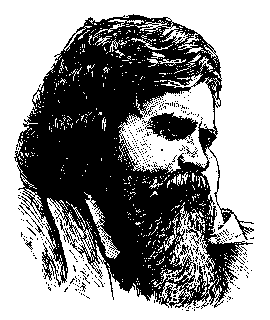
Mr. Eggleston's literary career began, while he was still preaching, with contributions to Western periodicals. Having written for the New York Independent, he was offered in 1870 the place of literary editor of that paper, and the following year became its editor-in-chief. He was afterwards editor of Hearth and Home, to the columns of which journal he contributed 'The Hoosier Schoolmaster,' a story that has been very popular. He wrote a number of other novels, 'The End of the World,' 'The Mystery of Metropolisville,' 'The Circuit Rider,' 'Roxy,' etc. In January 1880, while on a visit to Europe, he began to make plans for a 'History of Life in the United States.' He had always had a strong taste for this subject, a keen natural interest in history being evident here and there in his stories. His historical researches were carried on in many of the chief libraries of Europe and the United States. A result of these studies was the thirteen articles on 'Life in the Colonial Period' published in the Century Magazine. These, however, were but preliminary studies to the work which he intended should be the most important of his life. The first volume of this work, 'The Beginners of a Nation,' was published in 1896.
This work does not pretend to be a particular account of colonial history. It is an attempt rather to describe the colonial individual and colonial society, to state the succession of cause and effect in the establishment of English life in North America, and to describe principles rather than details,—giving however as much detail as is necessary to illustrate principles. The volume of 1896 contains chapters on 'The James River Experiments' and 'The Procession of Motives' which led to colonization. Book ii. of this volume is upon the Puritan migration, and has chapters on the rise of Puritanism in England, on the Pilgrim migration, and the great Puritan exodus. Book iii. receives the name of 'Centrifugal Forces in Colony Planting,' and contains accounts of Lord Baltimore's Maryland colony, of Roger Williams, and the 'New England Dispersions,' by which is meant the establishment of communities in Connecticut and elsewhere. In the sketch of Lord Baltimore, the courtier and friend of kings, we have a striking contrast with the type of men who led the Puritan migrations. There were odd characters in those days; and a court favorite and worldling who, after having feathered his nest, is willing to make two such voyages to Newfoundland as his must have been, and to spend a winter there, all out of zeal for the establishment of his religion in the Western wilds, is certainly a person worthy of study.
The play of the forces that produced emigration, and their relations to the migrations, are described very clearly by the author. People did not emigrate when they were happy at home. Thus, Catholic emigration was small under Laud, when English Catholics were beginning to think that the future was theirs; just as Puritan emigration, vigorous under Laud, dwindled with the days of the Puritan triumph in England. We have in 'The James River Experiments' a good example of the writer's method. The salient and significant facts are given briefly, but with sufficient fullness to enable the reader to have a satisfactory grasp of the matter; and where some principle or general truth is to be pointed out, the author sets this forth strongly. For instance, in describing the motives of colonization in Virginia, he shows how these motives were in almost all cases delusions; how a succession of such delusions ran through the times of Elizabeth and James; and how colonization succeeded in the end only by doing what its projectors had never intended to do. The Jamestown emigrants expected to find a passage to India, to discover gold and silver, to raise wine and silk. But none of these things were done. Wines and silk indeed were raised. It is said that Charles I.'s coronation robe was made of Virginian silk, and Mr. Eggleston tells us that Charles II. certainly wore silk from worms hatched and fed in his Virginian dominions. But these industries, although encouraged to the utmost by government, could not be made to take root. On the other hand, a determined effort was made to discourage the production of tobacco. James I. wrote a book against the culture of that pernicious "weed," as he was the first to describe it. But the hardy plant held its own and flourished in spite of the royal disfavor. Nor were the colonists more successful in their political intentions. Especially interesting, in view of recent discussions, is the account given of the communistic experiments which belonged to the early history of the American colonies. In Virginia all the products of the colony were to go into a common stock. But after twelve years' trial of this plan, there was a division of the land among the older settlers. The pernicious character of the system had been demonstrated. "Every man sharked for his own bootie," says a writer on Virginia in 1609, "and was altogether careless of the succeeding penurie." The two years of communism in the Plymouth colony was scarcely more successful. Bradford, finding that the matter was one of life and death with the colony, abolished the system, although the abolition was a revolutionary stroke, in violation of the contract with the shareholders.
This idea, that the outcome was to be very different from the intentions, appears not only in the striking chapter on 'The Procession of Motives,' but crops up again and again in other parts of the book. Thus, the ill success which attended the government of the colonies from London resulted in the almost unconscious establishment of several independent democratic communities in America. This happened in Virginia and Plymouth. The Massachusetts Bay Colony, however, was self-governing from the start.
But although causes and principles are matters of chief interest with Mr. Eggleston, his book is full of a picturesqueness which is all the more effective for being unobtrusive. The author has not that tiresome sort of picturesqueness which insists on saying the whole thing itself. The reader is credited with a little imagination, and that faculty has frequent opportunity for exercise. It is charmed by the striking passage in which is described the delight of the emigrants of the Massachusetts Bay Colony, when, after having set sail from England, they found themselves upon the open sea for the first time without the supervision, or even the neighborhood, of bosses. We know the sense of freedom which the broad and blue ocean affords to us all; what must have been that feeling to men who had scarcely ever had an hour of life untroubled by the domination of an antagonistic religious authority! Every day, for ten weeks together, they had preaching and exposition. "On one ship," says Mr. Eggleston, "the watches were set to the accompaniment of psalm-singing."
The candor and fair-mindedness of this work is one of its special merits. We have an indication of this quality in the author's refusal to accept the weak supposition, common among writers upon American history, that the faults of our ancestors were in some way more excusable than those of other people. He says in his Preface:—"I have disregarded that convention which makes it obligatory for a writer of American history to explain that intolerance in the first settlers was not just like other intolerance, and that their cruelty and injustice were justifiable under the circumstances." Other very important characteristics are sympathy, warmth of heart, and moral enthusiasm. Nor is the work wanting in an adequate literary merit. The style, especially in the later chapters, is free, simple, nervous, and rhythmical.
Little has been said of Mr. Eggleston's novels in the course of these remarks. But the qualities of his historical writing appear in his novels. The qualities of the realistic novelist are of great use to the historian, when the novelist has the thoroughness and the industry of Mr. Eggleston. By the liveliness of his imagination, he succeeds in making history as real as fiction should be. Mr. Eggleston's novels deserve the popularity they have attained. They are themselves, particularly those which describe Western life, valuable contributions to history. The West, we may add, is Mr. Eggleston's field. His most recent novel, 'The Faith Doctor,' the scene of which is laid in New York, is very inferior to his Western stories. Of these novels probably the best is 'The Graysons,' a book full of its author's reality and warmth of human sympathy; of this book the reader will follow every word with the same lively interest with which he reads 'The Beginners of a Nation.'
ROGER WILLIAMS: THE PROPHET OF RELIGIOUS FREEDOM
From 'The Beginners of a Nation': copyright 1896, by Edward Eggleston
Local jealousy and sectarian prejudice have done what they could to obscure the facts of the trial and banishment of Williams. It has been argued by more than one writer that it was not a case of religious persecution at all, but the exclusion of a man dangerous to the State. Cotton, with characteristic verbal legerdemain, says that Williams was "enlarged" rather than banished. The case has even been pettifogged in our own time by the assertion that the banishment was only the action of a commercial company excluding an uncongenial person from its territory. But with what swift indignation would the Massachusetts rulers of the days of Dudley and Haynes have repudiated a plea which denied their magistracy! They put so strong a pressure on Stoughton, who said that the assistants were not magistrates, that he made haste to renounce his pride of authorship and to deliver his booklet to be officially burned; nor did even this prevent his punishment. The rulers of "the Bay" were generally frank advocates of religious intolerance; they regarded toleration as a door set open for the Devil to enter. Not only did they punish for unorthodox expressions, they even assumed to inquire into private beliefs. Williams was only one of scores bidden to depart on account of opinion.
The real and sufficient extenuation for the conduct of the Massachusetts leaders is found in the character and standards of the age. A few obscure and contemned sectaries—Brownists, Anabaptists, and despised Familists—in Holland and England had spoken more or less clearly in favor of religious liberty before the rise of Roger Williams, but nobody of weight or respectable standing in the whole world had befriended it. All the great authorities in Church and State, Catholic and Protestant, prelatical and Puritan, agreed in their detestation of it. Even Robinson, the moderate pastor of the Leyden Pilgrims, ventured to hold only to the "toleration of tolerable opinions." This was the toleration found at Amsterdam and in some other parts of the Low Countries. Even this religious sufferance, which did not amount to liberty, was sufficiently despicable in the eyes of that intolerant age to bring upon the Dutch the contempt of Christendom. It was a very qualified and limited toleration, and one from which Catholics and Arminians were excluded. It seems to have been that practical amelioration of law which is produced more effectually by commerce than by learning or religion. Outside of some parts of the Low Countries, and oddly enough of the Turkish Empire, all the world worth counting decried toleration as a great crime. It would have been wonderful indeed if Massachusetts had been superior to the age. "I dare aver," says Nathaniel Ward, the New England lawyer-minister, "that God doth nowhere in his Word tolerate Christian States to give tolerations to such adversaries of his Truth, if they have power in their hands to suppress them." To set up toleration was "to build a sconce against the walls of heaven to batter God out of his chair," in Ward's opinion.
This doctrine of intolerance was sanctioned by many refinements of logic, such as Cotton's delicious sophistry that if a man refused to be convinced of the truth, he was sinning against conscience, and therefore it was not against the liberty of conscience to coerce him. Cotton's moral intuitions were fairly suffocated by logic. He declared that men should be compelled to attend religious service, because it was "better to be hypocrites than profane persons. Hypocrites give God part of his due, the outward man, but the profane person giveth God neither outward nor inward man." To reason thus is to put subtlety into the cathedra of common-sense, to bewilder vision by legerdemain. Notwithstanding his natural gift for devoutness and his almost immodest godliness, Cotton was incapable of high sincerity. He would not specifically advise Williams's banishment, but having labored with him round a corner according to his most approved ecclesiastical formula, he said, "We have no more to say in his behalf, but must sit down;" by which expression of passivity he gave the signal to the "secular arm" to do its worst, while he washed his hands in innocent self-complacency. When one scrupulous magistrate consulted him as to his obligation in Williams's case, Cotton answered his hesitation by saying, "You know they are so much incensed against his course that it is not your voice, nor the voice of two or three more, that can suspend the sentence." By such shifty phrases he shirked responsibility for the results of his own teaching. Of the temper that stands alone for the right, nature had given him not a jot. Williams may be a little too severe, but he has some truth when he describes Cotton on this occasion as "swimming with the stream of outward credit and profit," though nothing was further from Cotton's conscious purpose than such worldliness. Cotton's intolerance was not like that of Dudley and Endicott, the offspring of an austere temper; it was rather the outgrowth of his logic and his reverence for authority. He sheltered himself behind the examples of Elizabeth and James I., and took refuge in the shadow of Calvin, whose burning of Servetus he cites as an example, without any recoil of heart or conscience. But the consideration of the character of the age forbids us to condemn the conscientious men who put Williams out of the Massachusetts theocracy as they would have driven the Devil out of the garden of Eden. When, however, it comes to judging the age itself, and especially to judging the Puritanism of the age, these false and harsh ideals are its sufficient condemnation. Its government and its very religion were barbarous; its Bible, except for mystical and ecclesiastical uses, might as well have closed with the story of the Hebrew judges and the imprecatory Psalms. The Apocalypse of John, grotesquely interpreted, was the one book of the New Testament that received hearty consideration, aside from those other New Testament passages supposed to relate to a divinely appointed ecclesiasticism. The humane pity of Jesus was unknown not only to the laws, but to the sermons of the time. About the time of Williams's banishment the lenity of John Winthrop was solemnly rebuked by some of the clergy and rulers as a lax imperiling of the safety of the gospel; and Winthrop, overborne by authority, confessed, explained, apologized, and promised amendment. The Puritans substituted an unformulated belief in the infallibility of "godly" elders acting with the magistrates, for the ancient doctrine of an infallible Church.
In this less scrupulous but more serious age it is easy to hold Williams up to ridicule. Never was a noble and sweet-spirited man bedeviled by a scrupulosity more trivial. Cotton aptly dubbed him "a haberdasher of small questions." His extant letters are many of them vibrant with latent heroism; there is manifest in them an exquisite charity and a pathetic magnanimity: but in the midst of it all the writer is unable to rid himself of a swarm of scruples as pertinacious as the buzzing of mosquitoes in the primitive forest about him. In dating his letters, where he ventures to date at all, he never writes the ordinary name of the day of the week or the name of the month, lest he should be guilty of etymological heathenism. He often avoids writing the year, and when he does insert it he commits himself to the last two figures only and adds a saving clause. Thus 1652 appears as "52 (so called)," and other years are tagged with the same doubting words, or with the Latin "ut vulgo." What quarrel the tender conscience had with the Christian era it is hard to guess. So too he writes to Winthrop, who had taken part in his banishment, letters full of reverential tenderness and hearty friendship. But his conscience does not allow him even to seem to hold ecclesiastical fellowship with a man he honors as a ruler and loves as a friend. Once at least he guards the point directly by subscribing himself "Your worship's faithful and affectionate in all civil bonds." It would be sad to think of a great spirit so enthralled by the scrupulosity of his time and his party, if these minute restrictions had been a source of annoyance to him. But the cheerful observance of little scruples seems rather to have taken the place of a recreation in his life; they were to him perhaps what bric-à-brac is to a collector, what a well-arranged altar and candlesticks are to a ritualist.
Two fundamental notions supplied the motive power of every ecclesiastical agitation of that age. The notion of a succession of churchly order and ordinance from the time of the apostles was the mainspring of the High Church movement. Apostolic primitivism was the aim of the Puritan, and still more the goal of the Separatist. One party rejoiced in a belief that a mysterious apostolic virtue had trickled down through generations of bishops and priests to its own age; the other rejoiced in the destruction of institutions that had grown up in the ages, and in getting back to the primitive nakedness of the early Christian conventicle. True to the law of his nature, Roger Williams pushed this latter principle to its ultimate possibilities. If we may believe the accounts, he and his followers at Providence became Baptists that they might receive the rite of baptism in its most ancient Oriental form. But in an age when the fountains of the great deep were utterly broken up, he could find no rest for the soles of his feet. It was not enough that he should be troubled by the Puritan spirit of apostolic primitivism: he had now swung round to where this spirit joined hands with its twin, the aspiration for apostolic succession. He renounced his baptism because it was without apostolic sanction, and announced himself of that sect which was the last reduction of Separatism. He became a Seeker.
Here again is a probable influence from Holland. The Seekers had appeared there long before. Many Baptists had found that their search for primitivism, if persisted in, carried them to this negative result; for it seemed not enough to have apostolic rites in apostolic form unless they were sanctioned by the "gifts" of the apostolic time. The Seekers appeared in England as early as 1617, and during the religious turmoils of the Commonwealth period the sect afforded a resting-place for many a weather-beaten soul. As the miraculous gifts were lost, the Seekers dared not preach, baptize, or teach; they merely waited, and in their mysticism they believed their waiting to be an "upper room" to which Christ would come. It is interesting to know that Williams, the most romantic figure of the whole Puritan movement, at last found a sort of relief from the austere externalism and ceaseless dogmatism of his age by traveling the road of literalism, until he had passed out on the other side into the region of devout and contented uncertainty.
In all this, Williams was the child of his age, and sometimes more childish than his age. But there were regions of thought and sentiment in which he was wholly disentangled from the meshes of his time, and that not because of intellectual superiority,—for he had no large philosophical views,—but by reason of elevation of spirit. Even the authority of Moses could not prevent him from condemning the harsh severity of the New England capital laws. He had no sentimental delusions about the character of the savages,—he styles them "wolves endued with men's brains"; but he constantly pleads for a humane treatment of them. All the bloody precedents of Joshua could not make him look without repulsion on the slaughter of women and children in the Pequot war, nor could he tolerate dismemberment of the dead or the selling of Indian captives into perpetual slavery. From bigotry and resentment he was singularly free. On many occasions he joyfully used his ascendency over the natives to protect those who kept in force against him a sentence of perpetual banishment. And this ultra-Separatist, almost alone of the men of his time, could use such words of catholic charity as those in which he speaks of "the people of God wheresoever scattered about Babel's banks, either in Rome or England."
Of his incapacity for organization or administration we shall have to speak hereafter. But his spiritual intuitions, his moral insight, his genius for justice, lent a curious modernness to many of his convictions. In a generation of creed-builders which detested schism, he became an individualist. Individualist in thought, altruist in spirit, secularist in governmental theory, he was the herald of a time yet more modern than this laggard age of ours. If ever a soul saw a clear-shining inward light, not to be dimmed by prejudices or obscured by the deft logic of a disputatious age, it was the soul of Williams. In all the region of petty scrupulosity the time-spirit had enthralled him; but in the higher region of moral decision he was utterly emancipated from it. His conclusions belong to ages yet to come.
This union of moral aspiration with a certain disengagedness constitutes what we may call the prophetic temperament. Bradford and Winthrop were men of high aspiration, but of another class. The reach of their spirits was restrained by practical wisdom, which compelled them to take into account the limits of the attainable. Not that they consciously refused to follow their logic to its end, but that, like other prudent men of affairs, they were, without their own knowledge or consent, turned aside by the logic of the impossible. Precisely here the prophet departs from the reformer. The prophet recks nothing of impossibility; he is ravished with truth disembodied. From Elijah the Tishbite to Socrates, from Socrates to the latest and perhaps yet unrecognized voice of our own time, the prophetic temperament has ever shown an inability to enter into treaty with its environment. In the seventeenth century there was no place but the wilderness for such a John Baptist of the distant future as Roger Williams. He did not belong among the diplomatic builders of churches, like Cotton, or the politic founders of States, like Winthrop. He was but a babbler to his own time; but the prophetic voice rings clear and far, and ever clearer as the ages go on.
Reprinted by consent of the author, and of D. Appleton & Company, publishers, New York.