THE CLOCK STRIKES EIGHT
Reading edition
“What are they going to do?” asked the little boy, in great surprise, of the imp who stood nearest him.
“Do!” answered the imp. “Why, we’re going home to Snooze! Hurrah! Hurrah!”
“Hurrah! Hu-u-rra-ah!” yawned several other imps, throwing their night-caps into the air. “The King has the land, but we have the reason! Hurrah! Hurrah!” And in less than a minute the camp was all bustle and confusion.
But the little boy did not wait. He had seen enough precious moments wasted already, and he stalked out of the camp and bent his steps toward the capital city. He was old enough to know that people who put things off from day to day end by never doing them at all. “And I suppose,” thought he, “that it is the same with imps that have once been hours in the world; it is the same everywhere.” He was beginning to see now how foolish it is to endeavour to get the best of old Father Time, and he wondered as he went along why so many sensible people really try to do it.
“I shall tell the King,” said he, as he trudged along the path where the poor little Wollerperleck had once 230wandered in search of himself, “I shall tell the King that those who are always putting things off and waiting, who are always going to do things, really never do them at all; that is what I shall tell him! Then I will hunt up my three friends, and as soon as they have been mustered out, I will go back with them to Minutel and then start home on the first swinger.”
So he trudged boldly on, like the sturdy little fellow that he was, until he saw far ahead of him the tower on the outskirts of the city where he had paused to rest. On he trudged, keeping his big eyes on the tower as he came closer and closer to it, and hurrying as fast as he could.
“There are probably soldiers in it,” said he, “and I will stop there and tell them the news, and then go straight on to Tickerleen.”
On, on he trudged, until finally he stopped short and looked quite perplexed.
“It is a very funny thing,” said he, “that the nearer I get to that tower, the smaller it grows; ’most always it’s the other way. Yet I can see it plainer all the time. I can see something moving in that round, white window up at the top. I guess it’s the soldiers.”
So he marched straight along until finally he was very near to the tower.
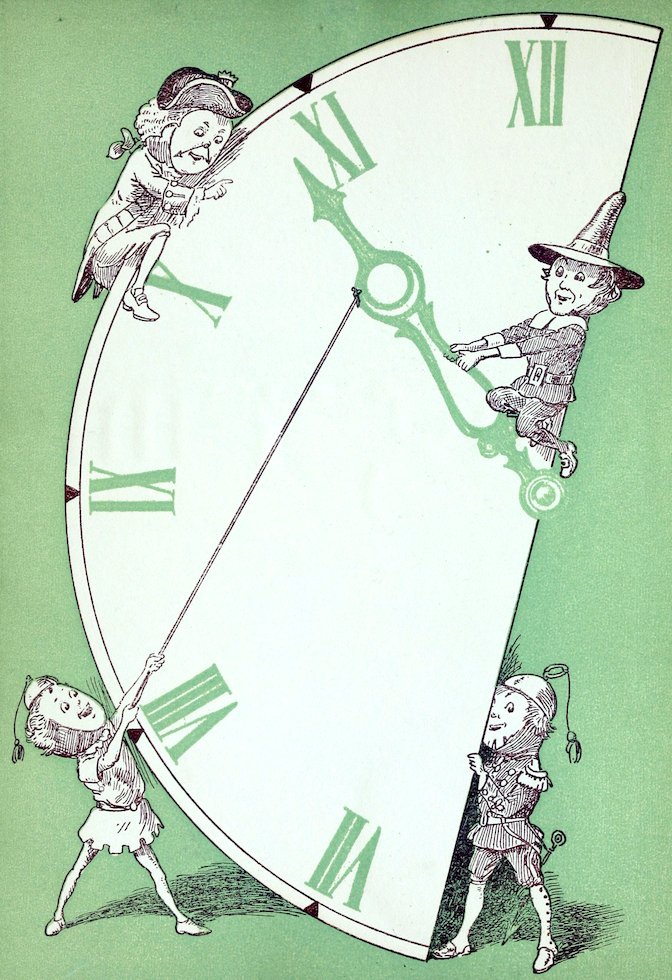
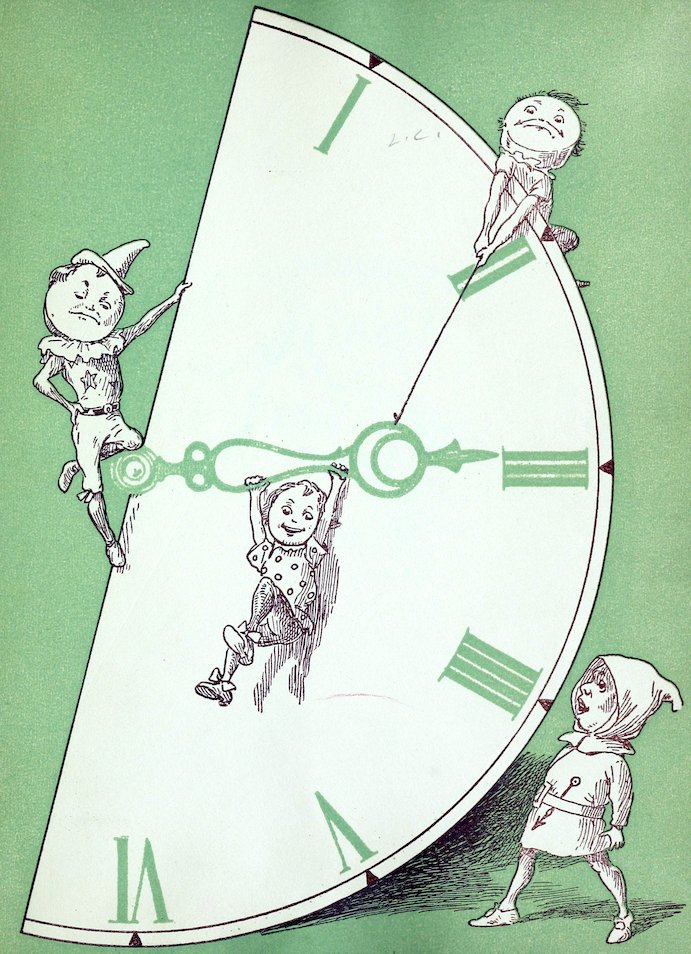
“I didn’t notice it before,” he thought, “but it’s just like all the other buildings and houses here. It’s in the shape of a clock, I do believe!”
231
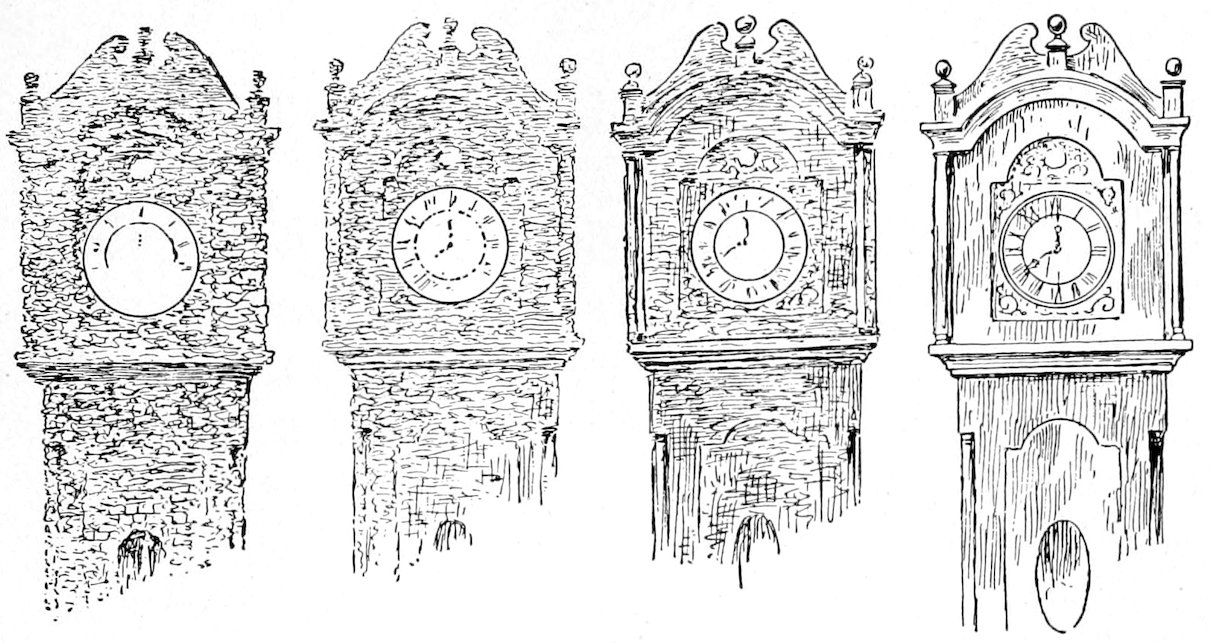
He stalked boldly toward the door and tripped over something and gave it a kick in his anxiety to enter and see the soldiers. It went tumbling away to one side of him and left his path clear. Then going straight up to the door, he began to knock and, receiving no answer, he banged and kicked on the space beside it, calling,
“Come down! Come down! I have wonderful news! I’m going to Tickerleen. Stop drilling up there and come down! The old Duke has gone back to Snooze—he made a speech. Come down! I’m going to tell the King. I can’t wait here!”
He was still calling and trying to get in, when suddenly he heard a door open. But it was not the one which he was trying to enter.
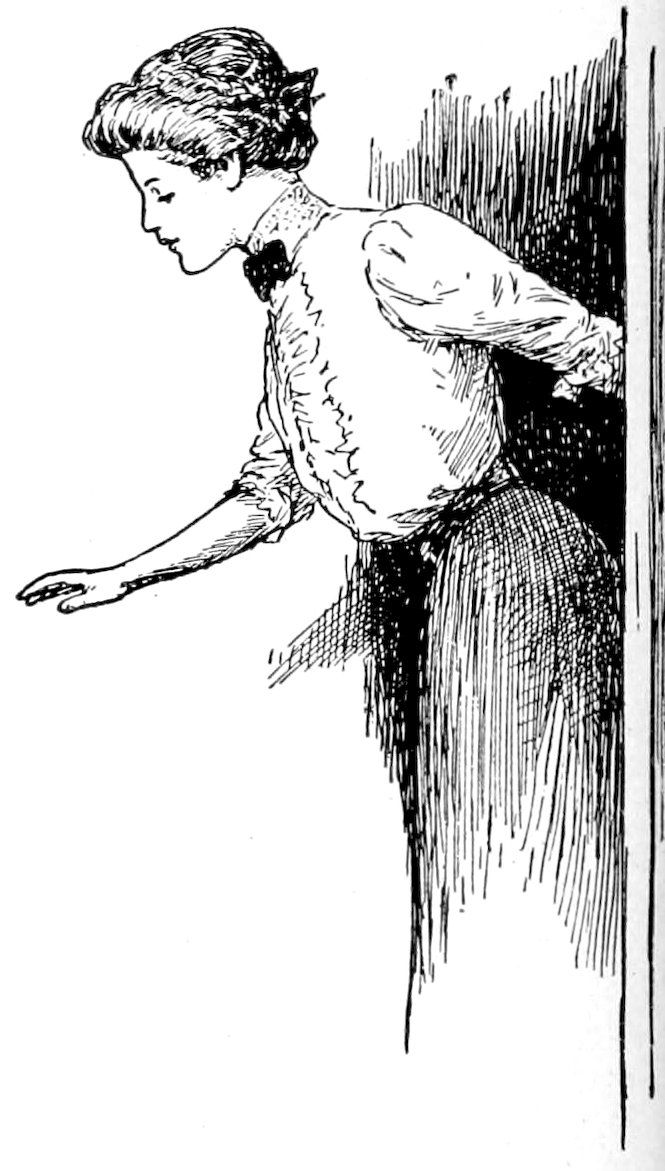
“Gracious me!” said a pleasant and familiar voice. “What are you trying to do to the clock, little man? Stop the pendulum?”
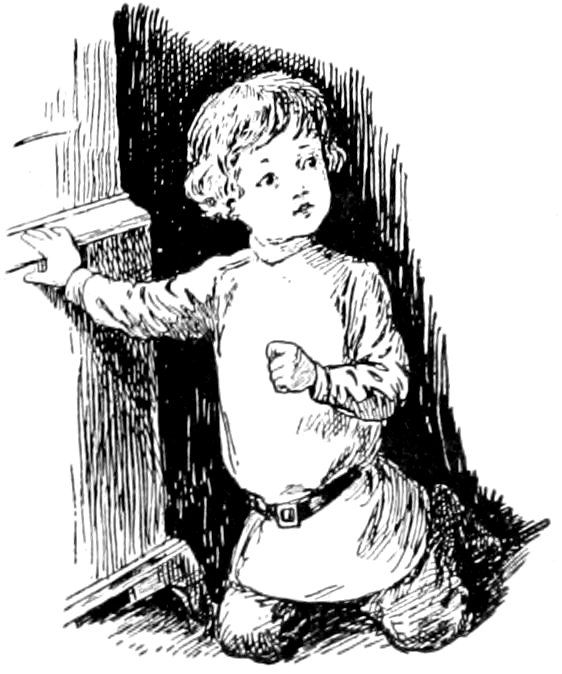
232The little boy rubbed his sleepy eyes; then he looked around, and stood staring.
For it was only the governess!
And there was the clock in his father’s hall,
With its swinger of shiny brass,
Still swinging steadily to and fro
In its little cell of glass,
And everything just as it was before,
When he watched the hours pass.
And the carved design on his father’s chair,
In which he was wont to rock,
Smiled wide at the little waking boy
And gave him a sudden shock,
For it seemed to be in the very shape
Of Mr. Three O’clock!
And the fitful blaze, as it flickered low
From the logs in the big hall grate,
Was the only light within the hall,
So he knew it must be late—
When, hark! And his wandering eyes looked up,
For the clock was striking eight!
Seated in our easy chair,
When the rainy day is o’er,
233See, the sunset’s lurid glare
Says to-morrow will be fair;
That’s an end of fairy lore.
Charmless, then, each mystic tale;
How they seem to fade away!
How each whimsical detail,
Sadly rivalled, seems to pale
In the sunlight’s magic ray!
Go, and seek out pleasures new,
Think no more of nonsense rhyme,
And before my dreaming’s through
I will ask for all of you
Blessings from old Father Time.
TRANSCRIBER’S NOTES
Fixed typos; non-standard spelling and dialect retained.
Music Transcribers note; The music files are the music transcriber's interpretation of the printed notation and are placed in the public domain.