AN EVENING WITH THE COLONIAL HOURS
Reading edition
As the boy awoke from his fainting spell,
And presently opened his eyes,
He glanced about with a startled look
Of the most intense surprise,
For he found himself on a little couch
Of a quite convenient size.
And he saw that the couch was in a room
Where he never had been before,
With old-fashioned mottoes on the wall
And a queer, old-fashioned door,
And a regular, antique warming pan
In a corner on the floor.
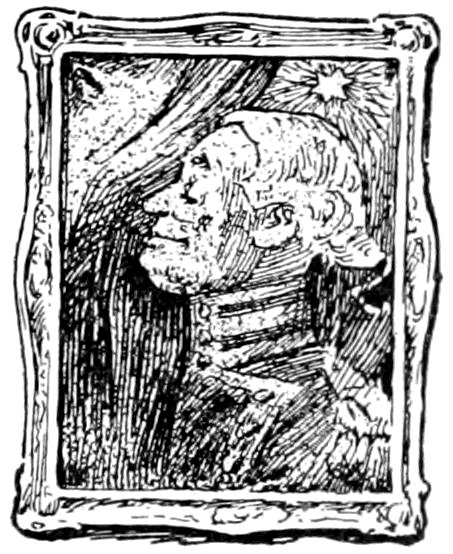
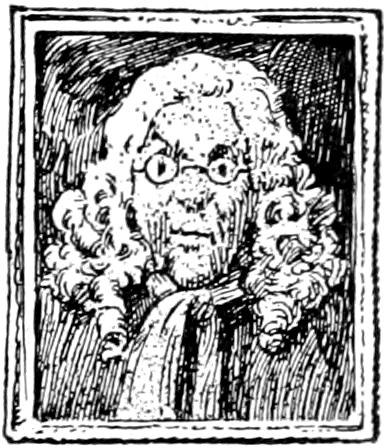
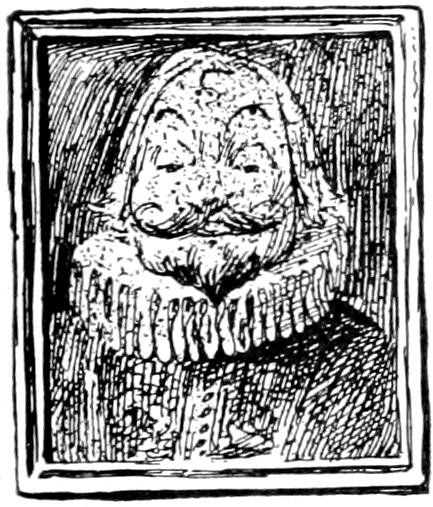
And, staring down from around the wall,
From portraits all faded and old,
Were men with the queerest neckties on,
And features severe and cold;
And the frames which encased these dreadful men
Were covered with greenish mould.
124And off to one side in the queer, old room
He noticed, in looking about,
A chair and a rickety spinning wheel,
And it seemed, without a doubt,
As if he awoke in a room from which
Priscilla had just stepped out.
For articles such as are sold to-day
At a perfectly shocking price
Were placed about in that queer, old room
In a manner all precise,
And the only ornament to be seen
Was a worsted work device.
And, gazing about, he rubbed his eyes,
While he puzzled his brain and tried
To find out how he had gotten there,
When the old door opened wide.
“And how do you do?” said his friend, the host,
And cheerily walked inside.
“I am very well,” said the little boy,
“And delighted to see you here,
For I really don’t know where I am,—
In a bygone age, I fear;
Or else I’ve been sold for a live antique
On account of being queer.
125“Would you mind,” he said, as the host advanced,
“Informing me what you have heard
From Tickerleen since I went to sleep;
Is there any further word?
For the statements on that bulletin board
I’m certain were quite absurd.”
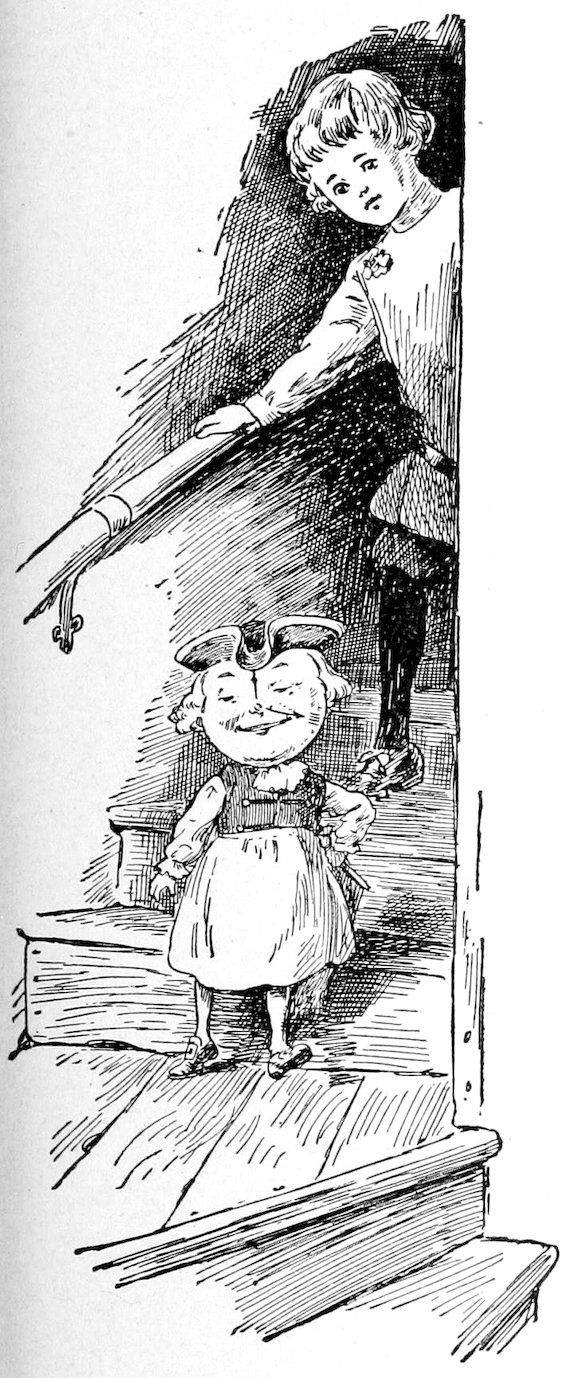
“Oh, never you mind the bulletin board,”
Said his merry and genial friend,
“For this is the good old-fashioned club,
And the members all extend
A welcome to little old-fashioned boys,
And invite you to attend.
“For to-morrow morning you’ll all be off
To the dazzling Tickerleen
With its wondrous streets of custard pies,
And after you all have seen
The local conditions prevailing there
You’ll know what the posters mean!”
So the host and the little boy came out,
Down a creaky old-fashioned stair,
And paused outside of the queer old door
Of a double parlour where
They heard an unearthly and dreadful sound
Which startled the very air.
126’Twas a rollicking, boisterous, noisy song,
Which was not in the least bit sweet,
For every voice sang a different air,
Accompanied by a beat,
And they heard a banging which sounded like
The stamping of many feet.
The little boy peered through the keyhole small,
And there, on a bench in a row,
Were fully a dozen antique imps
In costumes of long ago,
But their noisy behaviour seemed to him
Like a modern minstrel show.
“Now, try it again!” cried the leader imp,
“And try to imagine that you
Are really whipping a little boy
With a slipper or a shoe,
In the genuine, good, old-fashioned way,
As parents used to do!”
So they all started over again with great earnestness and enthusiasm, and sang so fast that the little boy had a good deal of difficulty in following what they sang.
127
Audio content is not currently supported on your device.
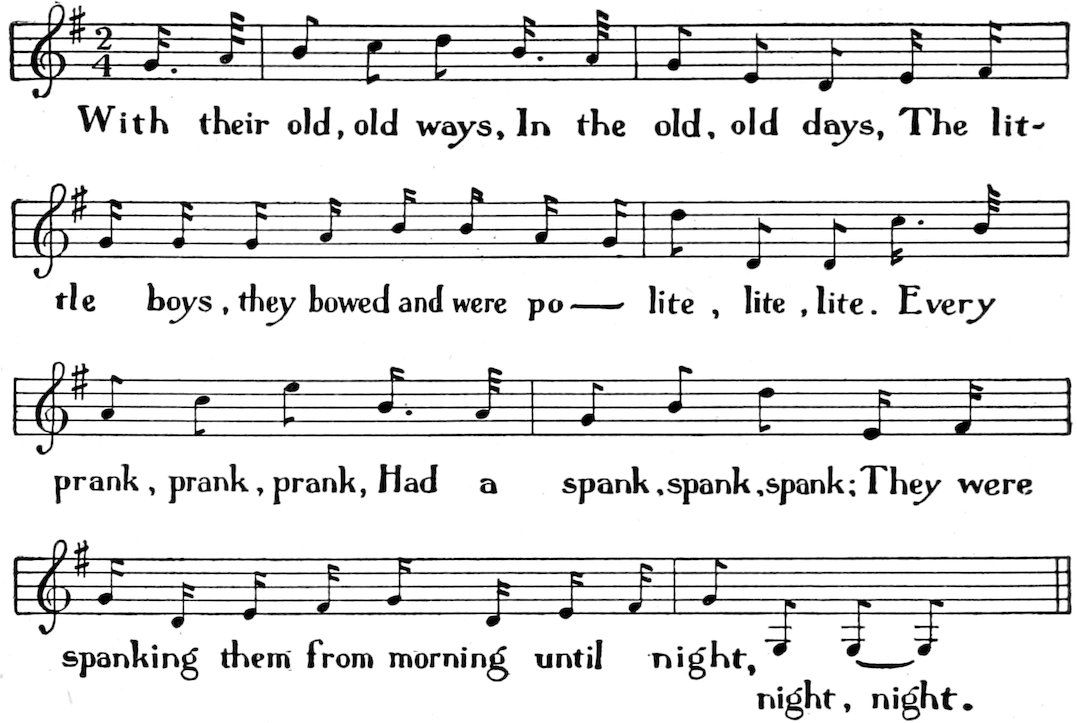
“With their old, old ways,
In the old, old days,
The little boys, they bowed and were polite,
lite,
lite.
“Every prank, prank, prank.
Had a spank, spank, spank,
They were spanking them from morning until night,
night,
night.
“When the small, small boys
Made a noise, noise, noise,
And simply wouldn’t sit up and be still,
still,
still,
128“Every back, back, back,
Had a whack, whack, whack,
And they whacked ’em with a vigour and a will,
will,
will.
“Every child, child, child,
That was wild, wild, wild,
Was very promptly laid out on a couch,
couch,
couch,
“And a slap, slap, slap,
With a strap, strap, strap,
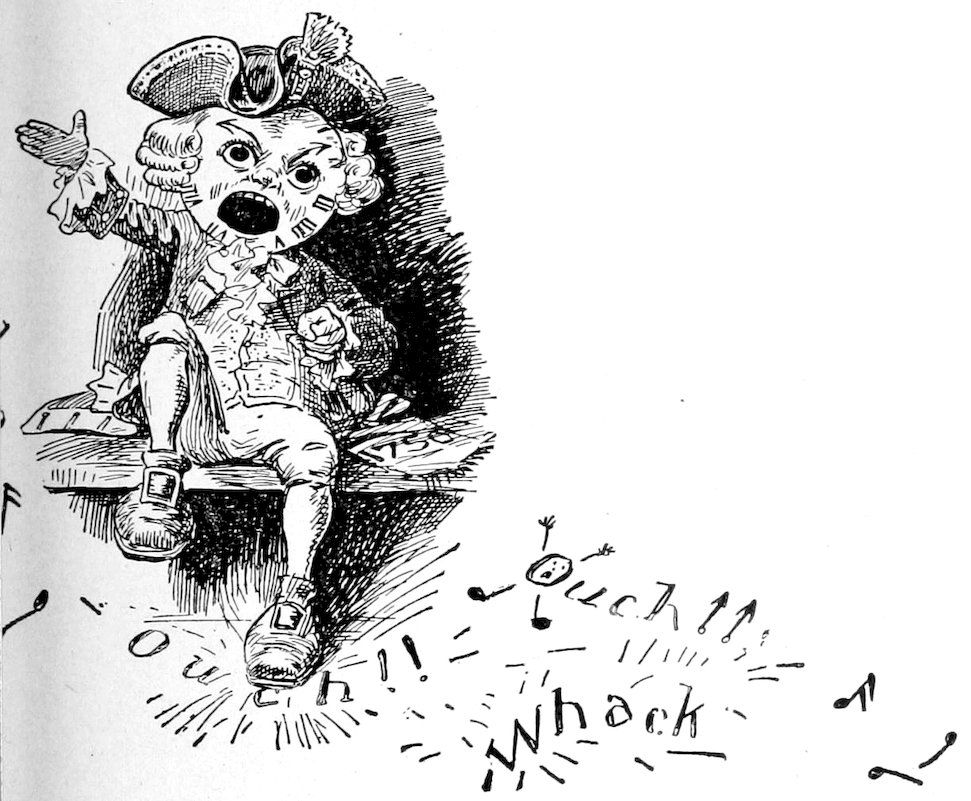
You could hear the little urchins crying, ‘Ouch!
Ouch!
Ouch!’
“With a whack, whack, whack,
On the back, back, back,
How much better than the foolishness of modern ways
“Is a slap, slap, slap,
With a strap, strap, strap,
And they did it to perfection in the olden days.
129
“And we say, say, say,
That to-day, day, day,
When a boy is in a temper or a grouch,
grouch,
grouch,
“’Mid the yelling and distraction,
There’s a singular attraction,
And a pleasant satisfaction,
In an Ouch!
Ouch!!
Ouch!!
Ouch!!
OUCH!!!”
“I have changed my mind,” said the little boy, “I don’t want to go in there.”
“Oh, they won’t hurt you,” said the host.
“No, I know they won’t,” said the little boy, “because I won’t give them a chance; I’ll stay outside.”
“Don’t you believe in spanking?” asked the host.
“I don’t believe in spanking me,” said the little boy.
“Have you never been spanked?”
“No, never!”
“Then you don’t know what you’ve missed.”
“Oh, yes, I know what I missed! I wanted to miss it.”
“And the pain, pain, pain,
From a cane, cane, cane,—”
“There they go again,” said the host. “Let us walk right in; your two friends are in there.”
The little boy gave his hand rather reluctantly to his 130good friend, and the two walked into the room from which the threatening and anything but pleasant sound had emanated.
And such a looking room as it was! The Continental Imp was there in full glory, and so was Mr. Three O’clock, who was making himself very much at home withal, considering that he was a new arrival in the village and a stranger to the old-fashioned set. There must have been as many as twenty or thirty old-fashioned imps, each one wearing a badge with a date, and they were all breathing heavily and seemed to be very much exhausted. And the appearance of the room was frightful!
“If Nurse could only see this,” said the little boy to himself, “she would never complain of my nursery again! I never saw such a litter!”
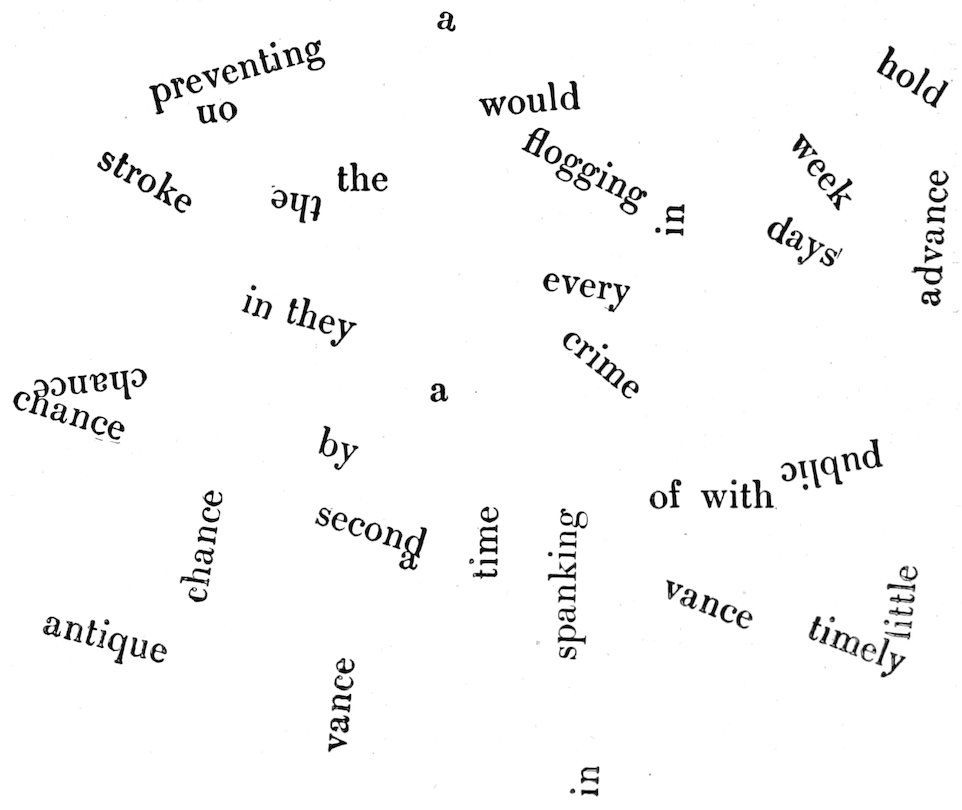
The floor indeed was simply covered with words which had been spilled and scattered about in singing.
“They have been trying to sing too fast,” said the little boy, whispering in the host’s ear. “Did you ever see anything like this!”
“It looks as if the dictionary were on a picnic, doesn’t it?” said the host. “See those ‘chances’ over there! Be careful not to step on these!”
The members of the old-fashioned club stood staring at the little boy, and the little boy stood staring on the floor. Meanwhile, his two friends, the Continental Imp and Mr. Three O’clock, came up and asked him 131if he was feeling quite himself again, and why he had been overcome so at the railroad station. But the little boy could not take his eyes from the floor. He had heard of people being slovenly with food, and he knew how careless he often was about his own toys, but he had never before seen such untidiness caused by loose words.
“It is all because,” thought he, “they tried to use too many words at once, and tried to sing them too fast. They ought to have tin trays to sing on!”
The more he looked, the more amazed he became, for the floor appeared something like this:
132“I hope you will excuse the appearance of things,” said one of the hours, stepping up. “I’m not accustomed to such untidiness myself, but we were singing of the good old days, and I’m afraid we lost all control of ourselves. Won’t you be seated?”
“Are you an hour?” asked the little boy.
“Yes, indeed, I am; I’m the hour that saw the Boston Tea Party—saw all the—”
“Wait a minute,” said another. “I’m the hour that saw the battle of—”
“And I’m the hour that saw Cornwallis surrender at Yorktown!”
“And I’m the hour that saw John Alden carry Myles Standish’s proposal to Priscilla.”
And so all the hours gathered about him, clamouring to tell what they knew, and it was fully ten minutes before the little boy could get an opportunity to speak. As soon as he could he asked what the words all over the floor meant.
“Oh, that’s a verse,” said one of the hours. “We can’t bother to pick it up now.”
“I should like to know what the verse is,” said the little boy. “I’m going to Tickerleen to-morrow.”
“Well, then,” said the hour who had first addressed him, “I’ll tell you what we’ll do. When we get these words all picked up, we’ll put them together the way they ought to go to make the verse and send it to Tickerleen. You must leave your address.”
133“Is the verse about spanking?” asked the little boy.
“Yes, indeed, that was a spanking chorus, you know. It has to be sung fast to be realistic. It ought to sound like the dear, old-fashioned spankings—”
“Let us talk about something else,” said the little boy. “I—I don’t like to talk about spankings. I wonder if any of you hours knew Benjamin Franklin. You know he lived in those old days, and I once heard a story about him—”
“Benjamin Franklin!” said half a dozen imps. “Certainly; we all saw him at different times.”
“Isn’t that wonderful!” said the little boy. “Could any of you tell me about him?”
“Certainly,” said one of the hours. “I’ll tell you what I know about him. He was a great sluggard, you know.”
“What?” said the little boy.
“Just listen,” said the hour, “and I’ll say you a little poem I wrote.”
So they all sat down and the hour who had volunteered to give the little boy some information about Benjamin Franklin, told the following story.
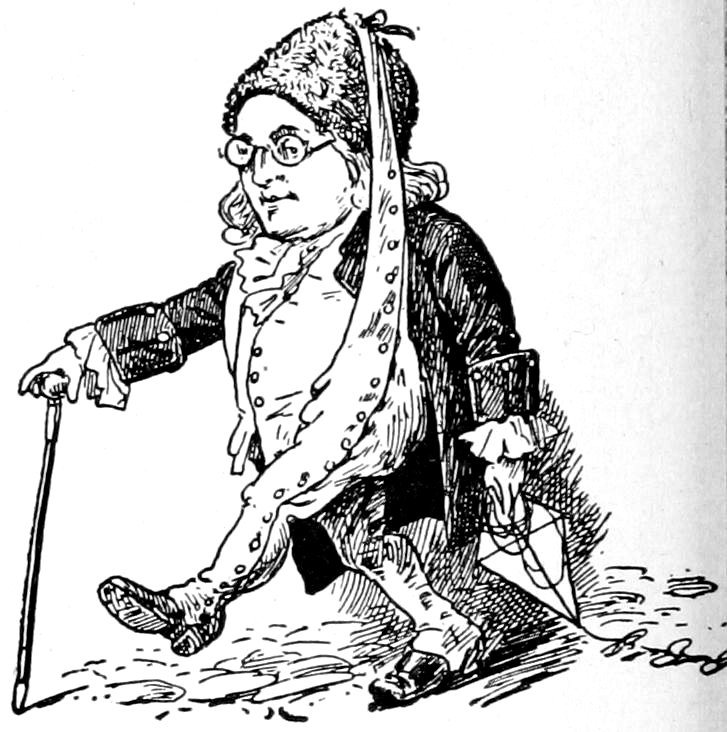
“Of course, you’ve all heard of Electrical Ben,
With spectacles massive in size,
Who claimed, it is said, if you’re early to bed,
You’ll be healthy, and wealthy, and wise.
134
“He ordered his coffee in slices, you know,
And he drank buttered toast from a cup;
And the fact is he never retired at all,
And he always refused to get up.
“Instead of attending to business, you know,
Or joining the army to fight,
He spent all the day in ridiculous play,
And was constantly flying a kite.
“He wore a fur hat that came over his ears
To keep the wind out of his brain,
And his gaiters came up to the top of his head,
And he carried a gold-headed cane.
“He got up an almanac once on a time
To amuse the Colonial folks,
And he filled it with morsels of useful advice
And he packed it with horrible jokes.
“He hated the red-coats with all of his heart,
And he simply detested a pun,
And he never went out in the street after dark
For fear he’d be struck by the sun.”
“Ha, ha, ha!” laughed Mr. Three O’clock. “That’s pretty good! Tells people to get up early so as to be healthy and wealthy and wise, and then sleeps all day! 135Now you see how much truth there is in the school books!”
“Ha, ha, ha!” said the Continental Imp. “You’ll have to excuse me for laughing so, but I never knew that Benjamin Franklin was so much like George Washington! So Benjamin Franklin was in the habit of lying too—”
“He was in the habit of lying down,” said the hour who had recited the verses.
“Well, it’s the same thing,” said the Continental Imp.
The little boy was very anxious to change the subject, for he did not like the freedom with which these great historical characters were talked about, and as for the poem,—he thought it was disgraceful.
“Can’t you sing one of the old-fashioned songs?” he said to the Continental Imp, whereupon that gay little hour took out his Continental handkerchief, and raising his little hand to his eye, wiped away a briny Continental tear.
“I cannot,” said he.
“Try,” said the little boy.
There was a moment of silence while they all waited, until finally, seeing that all eyes were upon him, the little Continental Imp began,
“I cannot sing the old songs now,
I’ll have to be excused;
136Those dear old songs are now, alas,
Too feeble to be used.
“I cannot sing those dear old songs;
I simply cannot start;
For, oh, I never would survive
The strain upon my heart!”
“Don’t try to sing, then,” said the little boy, “if it makes you feel so bad.” But the Imp raised his hand, as if to command silence, and continued,
“I cannot sing those dear old songs,
Those songs of other years;
For, oh, my little handkerchief
Would be all wet with tears!”
“Take mine,” said the host.
“Here’s mine; you’re welcome to it,” said Mr. Three O’clock. And in an instant a dozen handkerchiefs which looked like pages torn from calendars were offered to him. But he motioned again for silence and proceeded in a broken voice.
“I simply cannot sing them now,
For can’t—oh, can’t you see,
The very thought of doing it
Would prove too much for me!”
137“I don’t see why you want to try it, then,” observed the host.
“No one is insisting, you know,” said another imp.
“Of course,” said the little boy, “I’d like to hear a good, old-fashioned song—the kind they sang in 1775—if there is nothing about spanking or George Washington in it?”
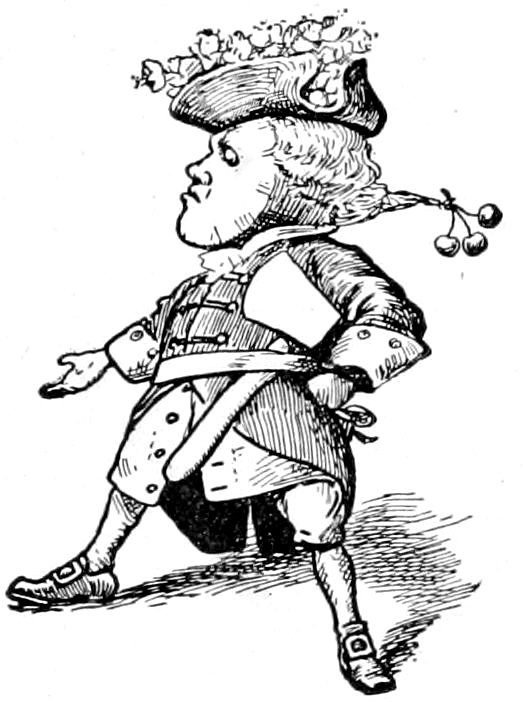
“Who said anything about spanking George Washington?” called a bold, little imp, stepping forward, in a very indignant and independent manner, to where the little boy stood. This imp wore a hat covered with cherry blossoms, and carried a hatchet in his belt.
“I didn’t!” said the little boy.
“You did,” said the indignant imp. “And he was never spanked! Never in his life! I heard his father refuse to spank him when he chopped down the cherry tree and—”
“Put him out!” called a voice.
“He’s a bore and a nuisance!” cried another.
“Throw him out! He’s at it again! He ought never to have been allowed in here!”
And with this the little imp who had seen George Washington chop down the cherry tree was picked up by a half a dozen members of the old-fashioned club, and thrown out of the window, to the utter astonishment 138of the little boy, and to the perfect delight of the Continental Imp, who now continued,
“I cannot try to sing them now,
Those songs of long ago,
For, oh, I know I should break down,
And cruel tears would flow!”
“I am very sorry I asked you to sing,” said the little boy. “I really am! I had no idea—”
“I could not do them justice now,
For each of them belongs
To olden days, and then besides—”
“What?” said the host.
“Besides—besides—” sang the weeping Imp.
“Besides what?” asked the little boy.
“For each of them belongs
To olden days, and then besides—”
“Yes?”
“What?”
“I haven’t got the songs!!
“I cannot, cannot sing them now,
Those songs so true and good;
139I simply can’t, but anyhow,
I wouldn’t if I could!!”
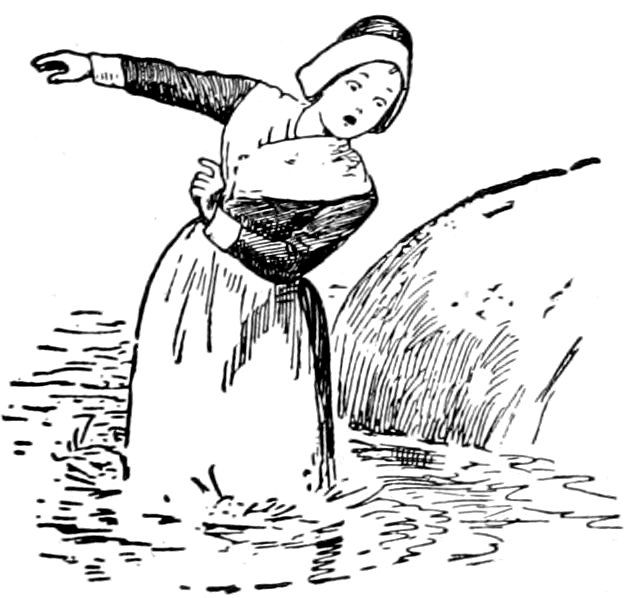
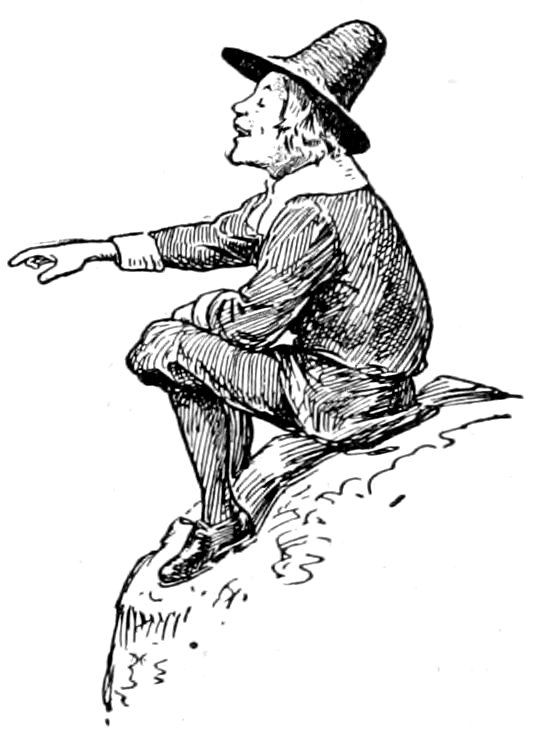
“Well, what was the need of all that fuss, then?” said the host. There was more or less indignation on the part of the other hours as well, who felt that the Continental Imp had been playing a trick on them, but soon the whole party fell into conversation and the little boy listened in rapt attention to the stories which the various imps told. It seemed quite wonderful that he should actually be sitting right among the old hours who had seen so many famous things, and who talked about them just as if they were every-day occurrences. It wasn’t like history books at all, and before long he began to feel that all the famous men who looked so severe and forbidding on pages of the school books which his brother brought home each day, and which his nurse sometimes read to him, were after all nothing but common men, and he even began to suspect that some of the books were wrong. He listened, spell-bound, to the story of the Landing of the Pilgrim Fathers, told by an eye-witness, and laughed out loud 140at hearing how Mistress Priscilla got her feet wet trying to step from Plymouth Rock, and how John Alden made fun of her.
He learned that Benjamin Franklin was not such a terrible person, after all, but was simply a jolly, old gentleman who was very fond of making jokes. He heard about the landing of Columbus, and was surprised to hear that the great discoverer and his little band of followers had not all struck attitudes and performed a tableau as soon as they got on dry land, as if they were going to have their pictures taken.
He was a little shocked at learning that Henry Hudson, whose bold, romantic face, in its high, ruffled stock, he had so much admired, was really nothing but a little, round, fat Dutchman with a red nose. He found that George Washington was a real man who used to chat pleasantly and pat little boys on the head just as any other man might do who was not the father of a country. And he was particularly astonished to know that when Washington crossed the Delaware in the night, he had not stood in the bow of the boat holding a flag, as he is represented in all the pictures, but had sat comfortably down, while one of his kind soldiers performed this duty for him.
All these things were very hard to believe until the little boy became accustomed to them. He was especially amazed to hear that nobody had ever been burned as a witch in America, for all the books and stories 141which he had heard about the Salem witches said distinctly that the poor people who were thought to be witches were burned. He now learned from eye witnesses that they had been hung instead, and that most of the history writers had made a dreadful mistake about it. He learned that Captain John Smith not only had great courage, but that he had a fine imagination as well, and that the Pocahontas incident probably took place only in the captain’s mind—where any number of interesting things happened. Before very long all the old Puritans and Pilgrims began to seem very real, and the Indians began to seem real too and much better than he had ever supposed they were. In fact, he began to think that the shrewd Yankees, with their tall, thin hats and their solemn faces, were really very unfair to the red men, and that they often cheated the poor savages and drove very sharp bargains. He could scarcely believe his ears when he was told that one of these Puritans, who came to America because Europe was so wicked, gave an Indian two glass beads and a bottle of medicine for three hundred acres of land, and it was very shocking to know that the boys used to jeer and make fun of William Penn’s hat.
In fact, the little boy spent a most enjoyable evening among the old-fashioned hours, hearing about the things they had seen and asking them questions. When the time came to go, he thanked the good old hours who had been so perfectly free and candid for a “most enjoyable 142treat,” which were the words his mother had told him to say when he went to a little neighbour’s birthday party. He and his three friends, the host, the Continental Imp and Mr. Three O’clock, then made their way back to the inn, where they sat about the fire eating cold ticklets and discussing plans for the morrow.
They all tried very hard to persuade the kindly host to go to Tickerleen with them on the morning train, and he finally yielded to their arguments and said that he would accompany them on their visit to the capital city.
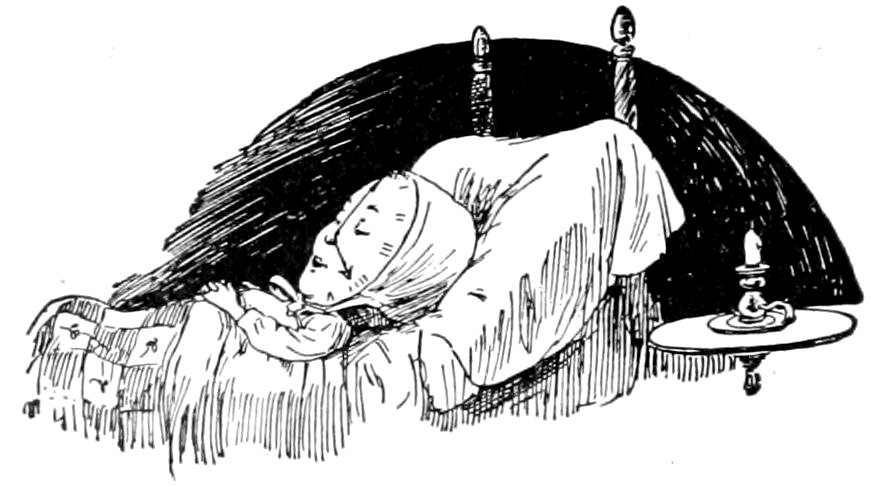
“And now,” said the kindly landlord “it is time to wind you up.” So they all rose and the host accompanied the little boy to his room, where he actually did wind the little fellow very comfortably up in a soft quilt, with Roman numerals worked all over it, and then betaking himself to his own apartment was soon fast asleep.
143
145