THE VILLAGE COW IN NEW ENGLAND. BEING THE JOURNAL OF THE KEEPER.
Reading edition
BY HENRY E. ALVORD, EASTHAMPTON, MASS.
In writing upon this subject the narrative form is convenient, and while it cannot be claimed that this is entirely a “true story,” it may be said to be founded on fact. Personal experience is my basis, and whatever of fancy may be interwoven with the facts would have been quite practicable, and all ought to have occurred as narrated, if all did not.
Let me premise by saying that I own a comfortable little home in a village of a few thousand inhabitants, not a thousand miles from New York, supporting my family by a moderate income earned from day to day, and my occupation is such as to enable me to spend an average of three hours of daylight on my place, from the middle of March to the middle of October, and occasionally a whole day besides. Thus I can make and care for my garden, which for some years has uniformly been an excellent one, quite a model, though I say it. Of this sort of work I have always been very fond, as well as of domestic animals, all kinds of which were familiar to me when a boy.
May 1st, 1875.—For several years I have kept more or less poultry, and sometimes a pig; there is so much from a good garden that is otherwise wasted. The ambition of the family is to own a horse and a cow. It has been talked about a good deal, but we are agreed that the horse would be a pure luxury, in our circumstances, and must wait. The cow I have felt would be a luxury too, that is, cost more than it would produce, but on this point the good wife has differed with me, claiming that it would be a real economy. It has been a part of our domestic policy to use milk and butter liberally, thereby keeping down the butcher’s bill and buying very little lard. Of the value of milk as an article of food, in its natural state, and in the many ways which it can be used in cooking, there can be no doubt, especially where there are young and growing members of the family. Still, I have been skeptical on the economy of keeping a cow, and to convince me, the help-meet recently proved, from well kept accounts, that during the last two years there have been consumed by our family of five persons, one thousand five hundred and forty-five quarts of milk, averaging seven cents a quart, and three hundred and sixty-one pounds of butter, average price thirty-three cents a pound. These have amounted to a cash expenditure of one hundred and thirteen dollars and sixty-four cents a year, which was a decided surprise to me, and feeling pretty sure the expense need not exceed two dollars a week, I yielded to the argument; am the owner of a cow, and here record the result of my experiment. One of the pleasant spring days of last week, we took a drive among the farms of the vicinity, and selected a good looking cow which had just dropped her second calf. The price paid was sixty-five dollars, to be delivered to me to-day, without the calf. The man I bought of called her “pure Alderney,” but she looks large of her age for that race, weighing somewhat over seven hundred pounds, and if, two or three generations back there was a cross of Ayrshire, or of Guernsey, it is all the better. My belief is that she has a streak of Ayrshire blood, and that she will make a fine cow. Being three years old next month (exact date unknown), it has been decided that our cow is to be known as “June.”
May 1st, 1876.—When “June” was bought, it was in the full expectation that pasturage could be hired in a small lot adjoining the rear of mine. I supposed it was fixed, but the spring had been favorable, the grass on the meadow promised well, and the owner concluded he would mow it, so that arrangement fell through. By that time I was too late to secure room in the only pasture convenient to the village, and I have been forced to keep her in the stable and a small stable yard, the whole year. The result is more than satisfactory, considering the disadvantageous circumstances.
A year ago to-day “June” arrived, in fair condition, save that her coat looked a little rough, and with a good bag of milk; her daily yield that month was about twelve quarts. In a day or two I noticed that when in the yard, she rubbed her neck vigorously against the corner of the stable and sometimes backed up to a building or fence for the purpose. An examination proved that she had vermin upon her; so I made a pail full of strong suds, with soft soap, and put into it an ounce of sulphuric acid, and with this I sponged the parts infested, twice daily, for a few days. This seemed efficient and there has been no such trouble since.
For long forage “June” had only dry food, good fine hay, until late in May, and then I began to give her a green bite whenever I could, clippings from the yard, trimmings of early vegetables and whatever there was to spare from the garden. Besides this, everything she ate had to be bought, except a few roots used since February. A little bran was fed for the first few days, and gradually increased, so that during the summer she received four pounds daily, fed in two parts, morning and night. Later in the season corn-meal was added to the ration, and at times oats were substituted for the bran. In the winter, eight pounds of meal and bran, half and half, mixed, was the daily allowance. Buying hay in small quantities I managed to keep both rowen and clover hay on hand, some of it very fresh, and could thus vary the dry food. Also, for variety, I frequently gave one cut feed a day, moistened. Besides this, I obtained and worked in, during the summer, a lot of half-ripe oats, in the straw, which had lodged and were cured like hay. The food, although thus often changed, was changed carefully.
In my garden I made a large parsnip bed, and followed my earliest peas with carrots, so that in the fall there were several bushels of these roots. The carrots were buried in the garden, a mellow loam, and the parsnips left in the ground. The former were opened during a thaw in February, and a few fed to “June” each day, lasting until the end of March; by that time I could get the parsnips and they have just given out. When I began the roots the grain was gradually withheld and she has had none since February. These roots have had a most apparent effect, giving her coat a bright, thrifty look, and she is in fine condition for calving, which is expected in ten days. But the roots made it hard to dry off the cow. She was shrinking in milk fast when we began on the carrots, then started up again and was giving about three quarts a day in March, when the milk (and especially the cream) began to have a sharp, unpleasant, bitter taste, and we soon had to give up using it. It then took a fortnight to dry her off, which was done by lessening the roots, milking not quite dry, then only once a day, and once in two days. Water has been offered three times a day, through the year, all she would drink, salt has always been within her reach. All summer, and every mild, dry day in winter, “June” has passed some hours in the stable yard. A large amount of bedding has been necessary, and for this I have used the waste hay, the rakings of the yard last autumn, the scrapings of the garden walks, garden litter, and the leaves from a row of maple trees in front of the house, carefully saved for the purpose. So much in the stall, “June” has required more personal care, and it has been made a rule to rub and brush her body enough to keep it clean and free from dead skin. But I never use a harsh card; nothing is better for rubbing than a piece of old seine or very coarse bagging. Everything about the cow, too, is kept clean and sweet.
The result of this continuous stabling has been a rapid accumulation of manure, and this having been mixed with all the suitable refuse of the place, and forked over several times, I this spring have on hand a huge pile of rich compost. It is more than can be used on the garden, and the newer part has been corded up under a temporary shed for sale or future use. This alone well pays for all my extra work in keeping the cow, as I have yearly been obliged to buy for the garden.
Our plan during the year has been to sell a little milk to neighbors, set aside two quarts daily for family use, cream and all. The cream from the remainder has been made into butter, and an accurate account kept of the butter produced.
The following is the result of this first year keeping one cow:
EXPENSES:
Interest 7 per cent on cost of cow $ 4.55
4 tons of Hay, av. $20 80.00
500 lbs Oats in straw 4.25
960 lbs. Wheat Bran, @ $1.20 11.52
350 lbs. Corn-Meal @ $1.10 3.85
4 bus. Oats @ 55c. 2.20
Expended $106.37
Less 400 lbs. Hay on hand 3.00
Year’s expense 103.37
RETURNS:
155 qts. Milk sold @ 7c. $ 10.85
311 qts. Skim-milk, @ 3c. 9.33
Sales $ 20.18
620 qts. Milk for family, @ 7c. 43.40
123 lbs. Butter made, @ 35c. 43.05
Year’s return $106.63
Memorandum—Cost $103.37
Less sales 20.18
83.19
Plus purchases—
88 qts. Milk 6.16
52 lbs. Butter 16.64
Cow products cost family $105.99
Here is a net balance of three dollars and twenty-six cents in favor of the cow, without allowing anything for the abundant supply of skim-milk and butter-milk which has been profitably used in the poultry yard as well as at the house—or for the big compost heap, which could readily be sold.
The figures also show that the family has had a better supply of cow products than last year, at seven dollars and sixty-five cents less expense. No labor is charged, for I am not so much keeping an exact account of the maintenance of the cow, as of the profit of my keeping one, taking care of her myself. And no credit is given for manure, as I mean to apply that to reducing the cost of keeping in the future. The cow might have been fed at less cost, but I intended to have her improve on my hands, and she has done so. “June” now weighs seven hundred and sixty-two pounds, is about to have her third calf, and is certainly worth more than was paid for her.
Altogether, in spite of unfavorable conditions there is no occasion to complain of the result of the year.
May 1st, 1877.—Last spring, my neighbor, north, was willing to let me have his acre and a half of meadow for pasturage, but wanted thirty-five dollars for the season. I would not pay that, and, instead, hired a place for “June” in a large pasture half a mile or more distant, paying twenty dollars for the season, May fifteenth, to October fifteenth, and four dollars to a boy for driving. On the ninth of May, the cow dropped a bull calf without difficulty, and I gave it away the next day. No special care was needed or given, except a little caution as to feeding, and on the fifteenth the cow went to pasture. She did remarkably well until early in July, being in pasture during the day, and at the stable at night. Then the weather grew very hot, the pasture dry, and “June” began to fail rapidly in her milk; so I commenced feeding a little bran, and offered hay when she came up at night. Later, a friend recommended cotton-seed meal, and a hundred weight of that was obtained and fed with good results, two or three pounds a day. August was a month of intense dry heat, and the pasture became of little use except for the exercise, shade, and water. In spite of meal and hay fed at night, “June’s” yield of milk shrank to three quarts a day, and we feared she would go dry. August fifth, I made the change of sending her to pasture just before six o’clock in the evening, as the boy went after the other cows, and bringing her up to the stable in the morning, where I kept her during the day. This was an improvement, and also gave better opportunity of feeding sweet corn stalks, vegetable trimmings and the like, fresh from the garden. The grain was continued through August, and she ate more or less hay. At the end of the month she was giving over a gallon of milk a day. Rains came early in September, the pasturage soon became good again, and the daily mess of milk steadily increased until November. By that time she was in the stable for the winter, and the treatment since has been practically a repetition of last year. My root patch in the garden was enlarged, as the result of last year’s experience, and accordingly I put eight or ten bushels of carrots into my cellar in October, covering them with sand, and left a fine lot of parsnips in the ground. I began feeding the carrots in January, two or three a day, just for a relish; gradually increased them, until in February the cow received half a peck or more, and thus they lasted into March. Then I dried her off, getting the last milk to use March twenty-eighth. Grain feeding was stopped the first of March, and she has had none since. After the cow was fully dry, I began on the parsnips, and she is now getting half a peck daily, with all the hay she will eat. “June” will be fresh again on the twentieth of this month.
The season has not satisfied me. Not only has the weather been unfavorable, (we must expect severe summers occasionally,) but I don’t like sending the cow to a distant pasture which I can know very little about, and where nobody knows how the other animals treat her. I shall never do this again if any other arrangement can be made.
The account for the year is as follows:
Expenses.
Interest at 7 per cent. on cost of cow $4.55
Hay from last year 3.00
2½ tons Timothy Hay @ $18 45.00
Pasturage and driving 24.00
750 lbs. Wheat Bran @ $1.10 8.25
450 lbs. Corn-Meal @ $1 4.50
100 lbs. Cotton-seed Meal 2.00
Expended $91.30
Less hay on hand 2.00
Year’s expense $89.30
Returns.
42 qts Milk sold at 6½c. $2.73
286 qts. Skim-milk sold at 3c. 8.58
Sales $11.31
640 qts. Milk for family, at 6½c. 41.60
109 lbs. Butter made @ 32c. 34.88
Year’s returns $87.79
Memorandum—Cost $89.30
Less sales 11.31
77.99
Plus purchases—
86 qts. Milk @ 6½c. $ 5.59
70 lbs. Butter @ 30c. 21.00
Cow products cost family $104.58
Comparing this with last year’s statement, it will be seen that although there is a small balance against the cow, she is still, all things considered, a profitable part of the domestic establishment.
May 1st, 1878.—Dissatisfied with the last year’s management, and seeing that there would last spring be a large surplus of fine compost on hand, more profitable to use than to sell, I planned a new arrangement in the autumn of 1876 for keeping my one cow. First, I secured the meadow west of my lot, renting it from the owner from October first, 1876, until April first, this year, for thirty dollars. The acre and a half yielded about two tons of hay in 1876, but no rowen; the aftermath was good, however, when I came in possession. The south end of it, although in good heart, was weedy and uneven. I drove some strong stakes, and ran a wire fence across, in continuation of my southern boundary, thus cutting off just about a quarter of an acre in rear of my neighbor, south. This piece I dressed with compost made the summer just preceding, and had it plowed and cross-plowed before the ground froze, in preparation for a root crop. The soil is a deep, mellow, sandy loam, but rich. Last spring the new root patch was plowed once, well dressed from the compost pile of 1875-6, and that harrowed in. (There was enough of the same compost for my garden, and to spare, so last June there was still on hand the manure of about a year’s collection put up in good shape.) The rest of the work I was able to do myself. My root-garden, laid out in rows running north and south, was divided as follows: eight square rods of parsnips next to neighbor, south, on the slope, where they caught the wash from his garden; twelve square rods of carrots and ten rods of mangolds; in the point west to the stream I put sweet corn at first, and followed it with strap-leafed turnips, ten square rods. Without going into the details of root-culture, which any one who has made a good garden knows all about, I put into my house cellar last fall fifty-two bushels of Long Orange Carrots, and over forty bushels of Long Yellow Mangel Wurzels (these monstrous, twisted, forked roots are awkward things to measure, but there must have been a ton or more in weight), left in the ground from twenty to twenty-five bushels of Hollow-crowned Parsnips, and harvested thirty-six bushels of English Turnips. This was more than I had bargained for. I see now that roots enough might have been raised in my old garden, and the parsnips would have done much better there, but I sold twenty bushels each of carrots and turnips for more than enough to cover all expenditures for seed and hired labor.
A year ago to-day, I turned “June” into her new pasture of an acre and a quarter; the grass was then starting well, and I preferred to have the change gradual. She ate more or less hay until the end of the month. Doors and gates were so fixed that she could be in stall, yard, or pasture at pleasure, and could drink at the stream bordering the meadow.
CALVING AND AFTER-TREATMENT.
On the eighteenth of May, her bag began to swell, and became feverish. A quart or two of watery milk was drawn at intervals of eight hours for the next three days, and the udder was bathed as often in tepid water, and gently but thoroughly rubbed with goose oil, in which camphor-gum had been dissolved. Each day, also, she was given a quarter of a pound of Epsom Salts, dissolved in a quart of “tea” made from poke-weed root (Phytolacca decandra), which all druggists now keep in store; this was administered as a “drench,” from a bottle, her head being held up while she swallowed it. On the morning of the twenty-second, being two days overdue, she calved, having a hard time, but producing without help a fine large heifer. Very soon after, I gave her a bucket of cool (not cold) water, in which was stirred a quart of wheat bran, a half pound of linseed-meal, previously scalded, and a handful of pulverized poke or garget root. This mess was repeated at noon, and the bag milked dry. A little later, the after-birth naturally passed off and was removed. The udder remained hot, knotty, and so tender that when the calf sucked I had to protect it from the mother’s kicks, and also to prevent it from taking one teat which was extremely sore. From this quarter I carefully drew the milk with one of a set of four “milking-tubes,” which I bought two years ago to do my milking, but soon discarded; here they came in use, just the thing wanted, but one as good as four. At night I milked dry, gave a dose of half a pound of Salts, with one ounce of Nitre, and a warm Bran-mash. The bag was well rubbed as before. The cow ate some hay during the night, and a few cabbage sprouts in the morning. That day (twenty-third), she was on the pasture a little while, and had a full bag of milk, but still hot and tender. The calf was separated from the cow at daylight, and allowed to suck four times during the day, the bag being milked dry, and then oiled and well rubbed every time. The bowels appearing to be in a sufficiently active state, appetite improving, and her eyes natural, the physic was discontinued, the cow allowed to eat grass and hay at will, and for several days the calf sucked at daylight, noon, and dark, the milk left by it being all drawn. The bag was rubbed and anointed two or three times a day, and a little extract of Belladonna added to the oil used. Under this treatment the inflammation gradually subsided. As soon as the cow would allow her calf to take the tenderest teat, I kept it on that side as much as possible while sucking. At the end of a week after calving, the udder was again in sound condition. The calf was kept until the first of June, and then the owner of its sire took it in full for service of bull three seasons. We then began to get the full flow of milk, and the pasture being good, it was a fine mess daily. At that time, I began to measure the milk, and have done so ever since. “June” gave four hundred and eighty-two quarts the month she was five years old, an average of sixteen quarts a day.
Until the last of July, the cow got all her food from the pasture, and one acre would have done as well as one and a quarter. For the next five or six weeks, the grass was hardly sufficient; it was, for this period, based upon the experience of August, 1876, that the corn had been provided. The ten rods of Mammoth Sweet, three hundred and fifty to four hundred hills, had been put in at five different plantings, a week apart, and the earliest was just forming ears the last of July when I began using it, at first once a day, then twice. For each feed, the whole plants of three or four hills were taken, and chopped in a straw-cutter, ears and all, into two-inch lengths. This was eaten with great relish, and during August the cow spent most of the daytime standing in the stream where shaded by trees and grazed at night. The pasturage improved again before the corn gave out, so quite a nice piece of winter fodder was saved from the piece. Then all through September there was every day more or less of green-corn husks, carrot and beet tops, other vegetable and fruit trimmings, clean refuse from house and garden, good food for the cow, so that again one acre of pasture would have sufficed. During October, the carrots and mangolds were harvested, and their tops gave the cow more than she could manage. I also began feeding turnips the last of October, a few with mangel tops at first, increasing until she ate more than half a bushel a day, tops and all. Before the ground froze, the turnips were piled in the barn, without trimming, and covered with hay; were kept safely until the last were fed, November twenty-eighth. The problem of winter feeding really came up the first of November. I had a large supply of roots on hand of my own raising, and the hay and grain to buy. So I went to the books, and after studying both practice and science, decided upon the following daily rations for the next six months: November first to May first, fifteen pounds of meadow rowen and clover hay, in about equal parts; one pound each of coarse wheat bran and corn-meal, mixed. During November, one-half bushel turnips and two pounds cotton-seed meal; December and January, one-half bushel carrots and one and one-half pound cotton-seed meal; February and March, one-half bushel (or more) of mangels and one pound cotton-seed meal; April, one-half bushel parsnips and one and one-half pounds cotton-seed meal; also, one hundred pounds additional hay, and my corn-stalks, for February and March.
This plan has been carried out with little variation. Of course the food has not been accurately weighed daily. The grain portions, kept in barrels, have been dipped out with tin cups, but have held out just about as expected; the quantity of hay and roots has been guessed at.
THE METHOD OF FEEDING
and other work at the stable during the winter has been this: Between six and seven o’clock A. M. stall cleaned, cow brushed off, bedding and absorbents fixed, the milking done, and then a feed of six or seven pounds of chaffed hay, slightly moistened, and the bran and meal mixed with it. After this, a bucket of water left in the stall, except in the coldest weather. The bucket is fixed near the feed-box, so it can not be tipped over, and it has generally been found empty at noon. At that hour, the regular watering, two or three pailfuls, and then a small bunch of hay thrown in the box; the stall cleaned also. Between six and seven at night, the milking done and bedding fixed, the roots fed, chopped up pretty fine with a spade, and the cotton-seed meal sprinkled over them. Hay then given, and the cow left for the night.
It was my intention to feed the roots in two parts, morning and night, and I should have preferred this, but my time in the morning was limited. Preparing the roots over night, they sometimes froze, but I could cut the hay at evening, ready for the morning chop-feed. As one kind of root was about to give out, some of the next to be fed were mixed in, and thus sudden changes avoided. The extra hay and stalks calculated for February and March were not used exactly in those months, but consumed during severely cold and windy spells, being added to the usual noon and night portions. At all times, the cow had, under this plan, full as much as she was ready to eat up clean. The hay left on hand a year ago was all used last summer, and before November a full load each of the best rowen and clover hay were put into the barn, one thousand six hundred and one thousand four hundred pounds respectively, and there is a little left.
It ought also to be mentioned that while the cow was mainly fed on sweet corn, last July and August, I was obliged to add about two pounds of cotton-seed meal a day, to give quality to the milk; it was fed dry, at noon. As soon as the feeding of carrot tops began, this meal was omitted, but it was again needed when turnips were substituted for carrot and beet tops. The ration of mangolds was increased to about two bushels in three days, because there were plenty of them, and my house cellar being rather warm, they commenced to rot. I was very careful to give the cow only sound roots. This extra food in February and March resulted in a better milk record by “June” than in the two months next preceding. I shall feed more roots the coming year. There were more parsnips than could be well used; they were not needed until April, and I sold five dollars’ worth, as an offset to what the cow got from last year’s kitchen garden. The cow goes on to pasture to-day.
Therefore, in review, the cow has been carried through the year with the one and one-half acres rented for thirty dollars, and forty-five dollars expended for hay and grain. Against the manure taken for my garden may be placed the cleanings of the poultry house, the contents of the earth-closet, and the garden refuse and bedding, all of which go into the compost heap. The item of labor alone remains, and as all that has been hired (including the plowing of the garden) was paid from sales of surplus roots, no further account is taken of that; my own time was well spent, as the balance sheet shows. Last August, we fully determined that it would be better for the family cow to be fresh in September than in the spring. The heat of summer is the time when it is most difficult to keep a cow properly fed for a good flow of rich milk on a little place like this. It is the time when milk is plenty and cheap, if one wants to buy, and most difficult to manage or dispose of if one has much on hand. It is almost impossible to make good butter in dog-days, living as we do, with no special appliances, and it is not worth while for us to get a patent creamer and a supply of ice. In the spring, we don’t want a dry cow, but are willing to have one in August. July, with its increasing heat and decreasing pasturage, is a favorable time to dry off a cow. The keeper of one cow can not afford to have her dry more than six weeks in the year, and may manage to have this period four weeks, or even less. Accordingly, I have arranged for “June” to come in next September, and shall in future practice “winter-dairying.” Indeed, we have done so the past season, for with liberal feeding of a succulent character, the cow has held out well in her milk. She is now giving between five and six quarts a day, while not yet on grass, and her total yield for eleven months, since June first (or rather for the year), is found to be two thousand seven hundred and forty-six quarts. Here is my third year’s annual account with “June:”
Expenses.
Interest at 7 per cent. on cost of cow $ 4.55
Rent of 1½ acres of land 30.00
Hay left from last year 2.00
1½ tons of Hay bought 28.50
350 lbs. of Cotton-seed Meal and freight 6.80
159 lbs. Corn-Meal 1.50
200 lbs. Bran @ $1.15 per cwt 2.30
Year’s expense $75.65
Returns.
685 qts. Milk sold at 6c. $41.10
464 qts. Skim-milk sold at 2½c. 11.60
Sales $52.70
670 qts. Milk used @ 6c. 40.20
127 lbs. Butter made @ 30c. 38.10
Year’s return $131.00
Memorandum—Cost keeping $75.65
Less sales 52.70
$22.95
Plus purchases—
55 qts. Milk @ 6c. 3.30
53 lbs. Butter @ 30c. 15.90
Cow products cost family $42.15
An absolute profit of fifty-five dollars from the cow is shown, and a still larger saving in family expenses, besides nine hundred quarts of skim-milk and butter-milk used in the house and poultry-yard and given away. The yield of the cow shows “June” to be a superior animal, and that is what the keeper of one cow should have, for it costs little more in food and care than an ordinary one. But if the cow had been only of medium quality and no new milk could be sold, it would have been a profitable operation. And if, instead of selling new milk, as much butter had been made as possible, there would still have resulted a balance of over twenty dollars in favor of the cow.
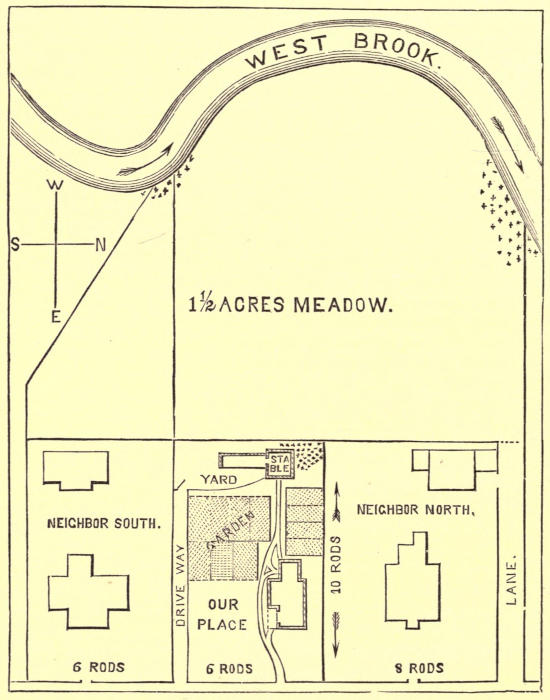
Fig. 4.—PLAN OF VILLAGE LOT AND SURROUNDINGS.
May 1st, 1880.—(To come within the required limits of this paper the journal of the last two years must be condensed. Therefore, omitting detailed descriptions, the general facts are given, and some opinions derived from the five years recorded.) For the year ending May, 1879, the method of keeping “June” was much the same as in that last described, but more roots were raised and fed; some hay was made, and only straw and grain food purchased. The result was even better than that shown by the last account. During the year just ended, the fifth since “June” was bought, I tried soiling, keeping the cow in stall and yard almost all the time, and have actually got through without buying hay or straw, using only one acre and a quarter to produce all the long forage needed. There is so much left over that I am satisfied one acre well managed, the preparation beginning the previous fall, can be made to support my cow, with the exception of the grain food and part of the roots. But this requires more time for labor than I can give, and more manure than one cow makes. I have had to buy fertilizers during the last two years, and although they were good, I prefer hereafter to buy food and make manure, rather than buy manures to make food. For one situated as I am, a semi-soiling system, or limited pasturage helped out with other food, is better, even if more food is bought. I can be surer of what I purchase, and thus use the one cow to better advantage.
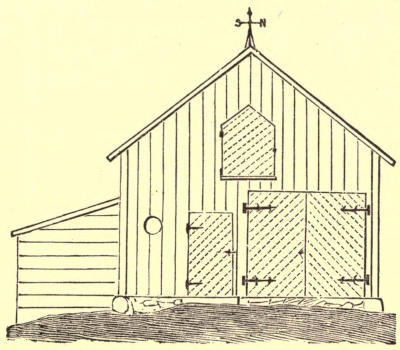
Fig. 5.—EAST END OF STABLE IN 1870.
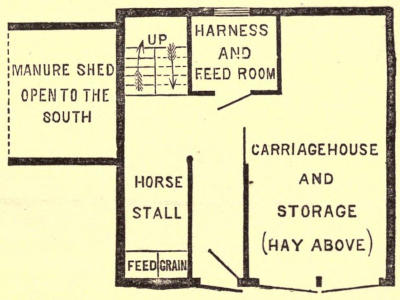
Fig. 6.—PLAN OF STABLE IN 1870.
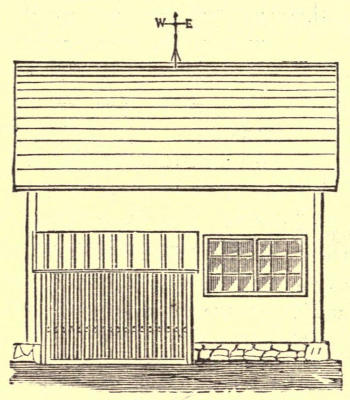
Fig. 7.—SOUTH SIDE OF STABLE AS ADAPTED FOR POULTRY IN 1871-5.
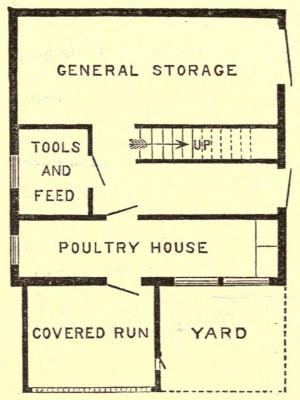
Fig. 8.—PLAN OF STABLE, 1871-5.
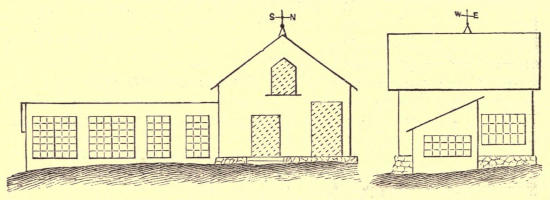
Figs. 9 and 10.—EAST AND SOUTH ELEVATIONS OF STABLE, AS CHANGED FOR POULTRY AND COW IN 1875.
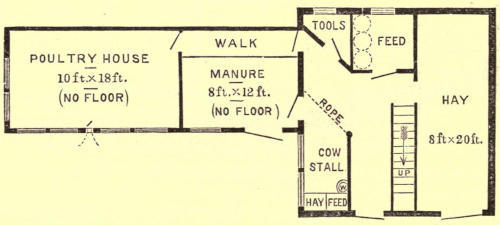
Fig. 11.—MAIN FLOOR PLAN AS CHANGED FOR COW IN 1875.
The only secret of home-made manure is to save everything, especially all liquids, mix everything as already explained, fork over and keep compact, to make a homogenous compost, and keep all under cover until used. A very slight and cheap protecting shed will suffice.
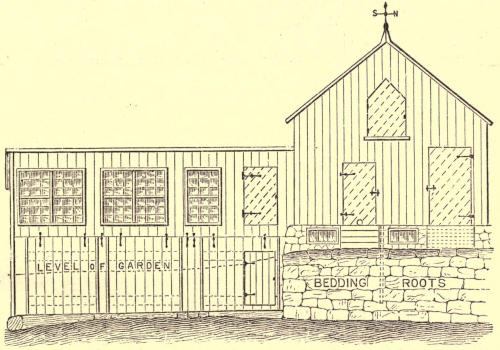
Fig. 12.—FRONT ELEVATION AS CHANGED IN 1878.
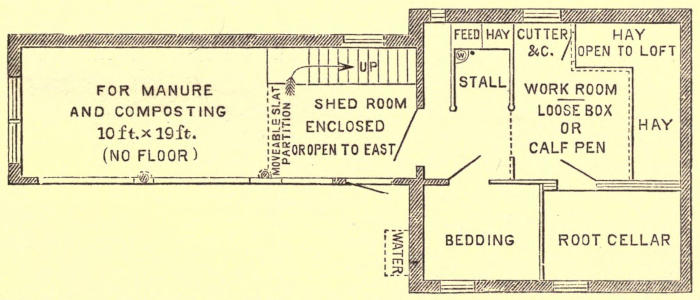
Fig. 13.—PLAN OF BARN BASEMENT WITH NEW STONE FOUNDATIONS, 1878.
As to housing, I began with a plain frame stable found upon the place, made originally for one horse and a buggy, and have gradually changed and added to it, doing most of the work myself, until a very satisfactory building has resulted. It contains room enough for a year’s forage, including root-cellar, a warm, dry stall, conveniently arranged for saving labor, ample shed-room for compost, and a sheltered yard containing five or six square rods, which is as good as more. There is running water in the yard. The plans accompanying this article, figs. 5 to 13 inclusive, show these arrangements better than any description in writing.
“June” had her fifth calf September sixth, 1878, and her sixth exactly a year later. At the fifth calving there was a “false presentation,” and a very serious time. No competent veterinarian was within reach, or else one would have been called. As it was, I looked up the subject in back volumes of agricultural papers and other publications, went to work myself, and getting the calf into proper position, succeeded in effecting a delivery without serious consequences. Last September’s calf was a heifer, and by a fine sire, so, as “June” has reached her prime, if not passed it, I am raising this calf to make a new cow to succeed the worthy dam. Most keepers of one cow, however, are so situated that they had better dispose of calves at once. Making veal is not as profitable as making butter, and feeding skim-milk to children and chickens.
In order to have the products of the cow perfectly satisfactory, I lay great stress upon the utmost care and cleanliness in milking. First, see that the stall and all about it is in order, pure air, and no dust flying, and the udder and flank of the cow quite clean. Except in the coldest weather, the udder is sponged off with tepid water, and wiped dry, just before milking. Then I trust no one to milk for me, but do it myself, quietly, quickly, and completely, milking into a funnel, which carries the fluid to a covered pail, which serves also a seat. This new and truly “Perfect” milking-pail, which I first saw described in the American Agriculturist, is a great improvement on all open vessels. I prefer not to have the cow eating while I milk; she should give her whole attention to the operation, as well as the milker. This certainty that my milk reaches the house absolutely pure, not only satisfies us as to our own cream and butter, but makes “June’s” milk in great demand in the neighborhood. Our neighbors so much prefer it to milkmen’s milk that they are willing to send to the house for it, and pay more than the usual village price. This adds materially to the profit of keeping one cow.
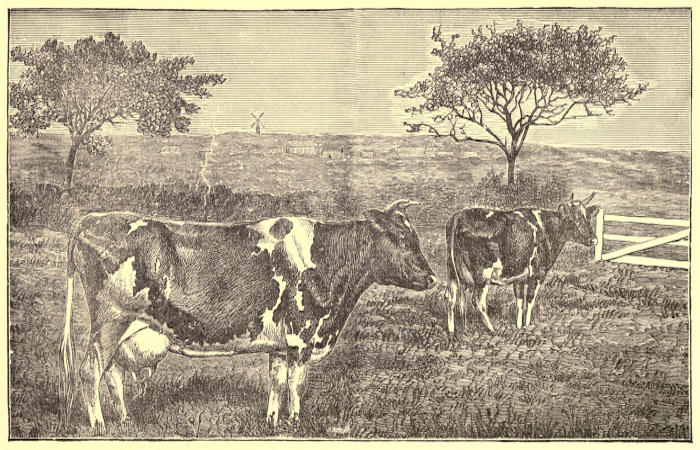
Fig. 14.—THE GUERNSEY COW “LADY JANE” AND HEIFER.