VOLUME XIV SLICE II Hydromechanics to Ichnography (continued 9)
Reading edition
In recent years the study of various abnormal mental states, especially the investigations by French physicians of severe forms of hysteria, have brought to light many facts which seem to justify this assumption of a secondary stream of consciousness, a co- or sub-consciousness coexistent with the personal consciousness; although, from the nature of the case, an absolute proof of such co-consciousness can hardly be obtained. The co-consciousness seems to vary in degree of complexity and coherence from a mere succession of fragmentary sensations to an organized stream of mental activity, which may rival in all respects the primary consciousness; and in cases of the latter type it is usual to speak of the presence of a secondary personality. The co-consciousness seems in the simpler cases, e.g. in cases of hysterical or hypnotic anaesthesia, to consist of elements split off from the normal primary consciousness, which remains correspondingly poorer; and the assumption is usually made that such a stream of co-consciousness is the psychical correlate of groups and systems of neurones dissociated from the main mass of cerebral neurones. If, in spite of serious objections, we entertain this conception, we find that it helps us to give some account of various hypnotic phenomena that otherwise remain quite inexplicable; some such conception seems to be required more particularly by the facts of negative hallucination and the execution of post-hypnotic suggestions involving such operations as counting and exact discrimination without primary consciousness.
Supernormal Hypnotic Phenomena.—The facts hitherto considered, strange and perplexing as many of them are, do not seem to demand for their explanation any principles of action fundamentally different from those operative in the normal human mind. But much of the interest that has centred in hypnotism in recent years has been due to the fact that some of its manifestations seem to go beyond all such principles of explanation, and to suggest the reality of modes of influence and action that science has not hitherto recognized. Of these by far the best attested are the post-hypnotic unconscious reckoning of time and telepathy or “thought-transference” (for the latter see Telepathy). The post-hypnotic reckoning and noting of the lapse of time seems in some instances to have been carried out, in the absence of all extraneous aids and with complete unconsciousness on the part of the normal personality, with such extreme precision that the achievement cannot be accounted for by any intensification of any faculty that we at present recognize or understand. Thus, Dr Milne Bramwell has reported the case of a patient who, when commanded in hypnosis to perform some simple action after the lapse of many thousands of minutes, would carry out the suggestion punctually to the minute, without any means of knowing the exact time of day at which the suggestion was given or the time of day at the moment its performance fell due; more recently a similar case, even more striking in some respects, has been carefully observed and described by Dr T. W. Mitchell. Other reported phenomena, such as telaesthesia or clairvoyance, and telekinesia, are hardly sufficiently well attested to demand serious consideration in this place.
Medical Applications of Hypnotism.—The study and practice of hypnotism is not yet, and probably never will be, regarded as a normal part of the work of the general practitioner. Its successful application demands so much time, tact, and special experience, that it will probably remain, as it is now, and as it is perhaps desirable that it should remain, a specialized branch of medical practice. In England it is only in recent years that it has been possible for a medical man to apply it in his practice without incurring professional odium and some risk of loss of reputation. That, in certain classes of cases, it may effect a cure or bring relief when all other modes of treatment are of no avail is now rapidly becoming recognized; but it is less generally recognized that it may be used with great advantage as a supplement to other modes of treatment in relieving symptoms that are accentuated by nervous irritability or mental disturbance. A third wide field of usefulness lies before it in the cure of undesirable habits of many kinds. Under the first heading may be put insomnia, neuralgia, neurasthenia, hysteria in almost all its many forms; under the second, inflammations such as that of chronic rheumatism, contractures and paralyses resulting from gross lesion of the brain, epilepsy, dyspepsia, menstrual irregularities, sea-sickness; under the third, inebriety, the morphia and other drug habits, nail-biting, enuresis nocturna, masturbation, constipation, facial and other twitchings. In pronounced mental diseases hypnotism seems to be almost useless; for in general terms it may be said that it can be applied most effectively where the brain, the instrument through which it works, is sound and vigorous. The widespread prejudice against the use of hypnotism is no doubt largely due to the marvellous and (to most minds) mysterious character of the effects producible by its means; and this prejudice may be expected to diminish as our insight into the mode of its operation deepens. The more purely bodily results achieved by hypnotic suggestion become in some degree intelligible if we regard it as a powerful means of diverting nervous energy from one channel or organ to others, so as to give physiological rest to an overworked organ or tissue, or so as to lead to the atrophy of one nervous habit and the replacement of it by a more desirable habit. And in the cure of those disorders which involve a large mental element the essential part played by it is to drive out some habitually recurrent idea and to replace it by some idea, expectation or conviction of healthy tendency.
It seems clear that the various systems of “mind-curing” in the hands of persons lacking all medical training, which are now so frequently the cause of distressing and needless disasters, owe their rapid spread to the fact that the medical profession has hitherto neglected to attach sufficient importance to the mental factor in the causation and cure of disease; and it seems clear, too, that a more general and more intelligent appreciation of the possibilities of hypnotic treatment would constitute the best means at the disposal of the profession for combating this growing evil.
The Dangers of Hypnotism.—Much has been written on this head of late years, and some of the enthusiastic advocates of hypnotic treatment have done harm to their cause by ignoring or denying in a too thoroughgoing manner the possibility of undesirable results of the spread of the knowledge and practice of hypnotism. Like all powerful agencies, chloroform or morphia, dynamite or strong electric currents, hypnotic suggestion can only be safely used by those who have special knowledge and experience, and, like them, it is liable to abuse. There is little doubt that, if a subject is repeatedly hypnotized and made to entertain all kinds of absurd delusions and to carry out very frequently post-hypnotic suggestions, he may be liable to some ill-defined harm; also, that an unprincipled hypnotizer might secure an undue influence over a naturally weak subject.
But there is no ground for the belief that hypnotic treatment, applied with good intentions and reasonable care and judgment, does or can produce deleterious effects, such as weakening of the will or liability to fall spontaneously into hypnosis. All physicians of large experience in hypnotic practice are in agreement in respect to this point. But some difference of opinion exists as to the possibility of deliberately inducing a subject to commit improper or criminal actions during hypnosis or by post-hypnotic suggestion. There is, however, no doubt that subjects retain even in deep hypnosis a very considerable power of resistance to any suggestion that is repugnant to their moral nature; and it has been shown that, on some cases in which a subject in hypnosis is made to perform some ostensibly criminal action, such as firing an unloaded pistol at a bystander or putting poison into a cup for him to drink, he is aware, however obscurely, of the unreal nature of the situation. Nevertheless it must be admitted that a person lacking in moral sentiments might be induced to commit actions from which in the normal state he would abstain, if only from fear of punishment; and it is probable that a skilful and evil-intentioned operator could in some cases so deceive a well-disposed subject as to lead him into wrong-doing. The proper precaution against such dangers is legislative regulation of the practice of hypnotism such as is already enforced in some countries.
Bibliography.—The literature of hypnotism has increased in volume at a rapid rate during recent years. Of recent writings the following may be mentioned as among the most important:—Treatment by Hypnotism and Suggestion by C. Lloyd Tuckey, M.D. (5th ed., London, 1907); Hypnotism, its History, Practice and Theory, by J. Milne Bramwell, M.B. (2nd ed., London, 1906); Hypnotism, by Albert Moll (5th ed., London, 1901). All these three books give good general accounts of hypnotism, the first being the most strictly medical, the last the most general in its treatment. See also Hypnotism: or Suggestion in Psycho-Therapy, by August Forel (translated from the 5th German ed. by G. H. W. Armit, London, 1906); a number of papers by Ed. Gurney, and by Ed. Gurney and F. W. H. Myers in Proc. of the Soc. for Psychical Research, especially “The Stages of Hypnotism,” in vol. ii.; also some more recent papers in the same journal by other hands; chapter on Hypnotism in Human Personality and its Survival of bodily Death, by F. W. H. Myers (London, 1903); The Psychology of Suggestion, by Boris Sidis, Ph.D. (New York, 1898); “Zur Psychologie der Suggestion,” by Prof. Th. Lipp, and other papers in the Zeitschrift für Hypnotismus. Of special historical interest are the following:—Étude sur le zoomagnétisme, par A. A. Liébeault (Paris, 1883); Hypnotisme, suggestion, psycho-thérapie, par Prof. Bernheim (Paris, 1891); Braid on Hypnotism (a new issue of James Braid’s Neurypnology), edited by A. E. Waite (London, 1899); Traité du somnambulisme, by A. Bertrand (Paris, 1826). A full bibliography is appended to Dr Milne Bramwell’s Hypnotism.
(W. McD.)
HYPOCAUST (Gr. ὑπόκαυστον: ὑπό, beneath, and καυείν, to burn), the term given to the chamber formed under the floors of the Roman baths, through which the hot air from the furnace passed, sometimes to a single flue, as in the case of the tepidarium, but in the calidarium and sweating-room to a series of flues placed side by side forming the lining of the walls. The floor of the hot-air chamber consisted of tiles, 2 ft. square, laid on a bed of concrete; on this a series of dwarf piers 2 ft. high were built of 8-in. square tiles placed about 16 in. apart, which carried the floor of the hall or room; this floor was formed of a bed of concrete covered with layers of pounded bricks and marble cement, on which the marble pavement in slabs or tesserae was laid. In colder countries, as for instance in Germany and England, the living rooms were all heated in a similar way, and round Trèves (Trier) both systems have been found in two or three Roman villas, with the one flue for the ordinary rooms and several wall flues for the hot baths. In England these hypocausts are found in every Roman settlement, and the chief interest in these is centred in the magnificent mosaic pavements with which the principal rooms were laid. Many of the pavements found in London and elsewhere have been preserved in the British or the Guildhall museums; and in some of the provincial towns, such as Leicester and Lincoln, they remain in situ many feet below the present level of the town.
HYPOCHONDRIASIS (synonyms—“the spleen,” “the vapours”), a medical term (from τὸ ὑποχόνδριον, τὰ ὑποχόνδρια, the soft part of the body immediately under the χόνδρος or cartilage of the breast-bone) given by the ancients, and indeed by physicians down to the time of William Cullen, to diseases or derangements of one or more of the abdominal viscera. Cullen (Clinical Lectures, 1777) classified it amongst nervous diseases, and Jean Pierre Falret (1794-1870) more fully described it as a morbid condition of the nervous system characterized by depression of feeling and false beliefs as to an impaired state of the health. The subjects of hypochondriasis are for the most part members of families in which hereditary predisposition to degradation of the nervous system is strong, or those who have suffered from morbid influences affecting this system during the earlier years of life. It may be dependent on depressing disease affecting the general system, but under such circumstances it is generally so complicated with the symptoms of hysteria as to render differentiation difficult (see Hysteria). Hypochondriasis is often handed down from one generation to another in its individual form, but it is also not unfrequently to be met with in an individual as the sole manifestation in him of a family tendency to insanity. In its most common form it is manifested by simple false belief as to the state of the health, the intellect being otherwise unaffected. We may instance the “vapourish” woman or the “splenetic” as terms society has applied to its milder manifestations. Such persons are constantly asserting a weak state of health although no palpable cause can be discovered. In its more definite phases pain or uneasy sensations are referred by the patient to some particular region, generally the abdomen, the heart or the head. That these are subjective is apparent from the fact that the general health is good: all the functions of the various systems are duly performed; the patient eats and sleeps well; and, when any circumstance temporarily overrides the false belief, he is happy and comfortable. No appeal to the reason is of any avail, and the hypochondriac idea so dominates his existence as to render him unable to perform the ordinary duties of life. In its most aggravated form hypochondriasis amounts to actual insanity, delusions arising as to the existence of living creatures in the intestines or brain, or to the effect that the body is materially changed; e.g. into glass, wood, &c. The symptoms of this condition may be remittent; they may even disappear for years, and only return on the advent of some exciting cause. Suicide is occasionally committed in order to escape from the constant misery. Recovery can only be looked for by placing the patient under such morally hygienic conditions as may help to turn his mind to other matters. (See also Neuropathology.)
HYPOCRISY, pretence, or false assumption of a high character, especially in regard to religious belief or practice. The Greek ὑπόκρισις, from which the word is derived through the Old French, meant primarily the acting of a part on the stage, from ὑποκρίνεσθαι, to give an answer, to speak dialogue, play a part on the stage, hence to practice dissimulation.
HYPOSTASIS, in theology, a term frequently occurring in the Trinitarian controversies of the 4th and 5th centuries. According to Irenaeus (i. 5, 4) it was introduced into theology by Gnostic writers, and in earliest ecclesiastical usage appears, as among the Stoics, to have been synonymous with οὐσία. Thus Dionysius of Rome (cf. Routh, Rel. Sacr. iii. 373) condemns the attempt to sever the Godhead into three separate hypostases and three deities, and the Nicene Creed in the anathemas speaks of ὲξ ἑτέρας ὑποστάσεως ἢ οὐσίας. Alongside, however, of this persistent interchange there was a desire to distinguish between the terms, and to confine ὑπόστασις to the Divine persons. This tendency arose in Alexandria, and its progress may be seen in comparing the early and later writings of Athanasius. That writer, in view of the Arian trouble, felt that it was better to speak of οὐσία as “the common undifferentiated substance of Deity,” and ὑπόστασις as “Deity existing in a personal mode, the substance of Deity with certain special properties” (οὐσία μετά τινων ἰδιωμάτων). At the council of Alexandria in 362 the phrase τρεῖς ὑποστάσεις was permitted, and the work of this council was supplemented by Basil, Gregory of Nazianzus and Gregory of Nyssa in the formula μία οὐσία, τρεῖς ὑποστάσεις or μία οὐσία ἐν τρίσιν ὑποστάσεσιν.
The results arrived at by these Cappadocian fathers were stated in a later age by John of Damascus (De orth. fid. iii. 6), quoted in R. L. Ottley, The Doctrine of the Incarnation, ii. 257.
HYPOSTYLE, in architecture, the term applied to a hall, the flat ceiling of which is supported by columns, as in the Hall of Columns at Karnak. In this case the columns flanking the central avenue are of greater height than those of the side aisles, and this admits of openings in the wall above the smaller columns, through which light is admitted over the aisle roof, through clerestory windows.
HYPOSULPHITE OF SODA, the name originally given to the substance known in chemistry as sodium thiosulphate, Na2S2O3; the earlier name is still commonly used, especially by photographers, who employ this chemical as a fixer. In systematic chemistry, sodium hyposulphite is a salt of hyposulphurous acid, to which Schutzenberger gave the formula H2SO2, but which Bernthsen showed to be H2S2O4. (See Sulphur.)
HYPOTHEC (Lat. hypotheca, Gr. ὑποθήκη), in Roman law, the most advanced form of the contract of pledge. A specific thing may be given absolutely to a creditor on the understanding that it is to be given back when the creditor’s debt is paid; or the property in the thing may be assigned to the creditor while the debtor is allowed to remain in possession, the creditor as owner being able to take possession if his debt is not discharged. Here we have the kind of security known as pledge and mortgage respectively. In the hypotheca, the property does not pass to the creditor, nor does he get possession, but he acquires a preferential right to have his debt paid out of the hypothecated property; that is, he can sell it and pay himself out of the proceeds, or in default of a purchaser he can become the owner himself. The name and the principle have passed into the law of Scotland, which distinguishes between conventional hypothecs, as bottomry and respondentia, and tacit hypothecs established by law. Of the latter the most important is the landlord’s hypothec for rent (corresponding to distress in the law of England), which extends over the produce of the land and the cattle and sheep fed on it, and over stock and horses used in husbandry. The law of agricultural hypothec long caused much discontent in Scotland; its operation was restricted by the Hypothec Amendment (Scotland) Act 1867, and finally by the Hypothec Abolition (Scotland) Act 1880 it was enacted that the “landlord’s right of hypothec for the rent of land, including the rent of any buildings thereon, exceeding two acres in extent, let for agriculture or pasture, shall cease and determine.” By the same act and by the Agricultural Holdings (Scotland) Act 1883 other rights and remedies for rent, where the right of hypothec had ceased, were given to the landlord.
HYPOTHESIS (from Gr. ὑποτιθέναι, to put under; cf. Lat. suppositio, from sub-ponere), in ordinary language, an explanation, supposition or assumption, which is put forward in the absence of ascertained facts or causes. Both in ordinary life and in the acquisition of scientific knowledge hypothesis is all-important. A detective’s work consists largely in forming and testing hypothesis. If an astronomer is confronted by some phenomenon which has no obvious explanation he may postulate some set of conditions which from his general knowledge of the subject would or might give rise to the phenomenon in question; he then tests his hypothesis until he discovers whether it does or does not conflict with the facts. An example of this process is that of the discovery of the planet Neptune: certain perturbations of the orbit of Uranus had been observed, and it was seen that these could be explained on the hypothesis of the existence of a then unknown planet, and this hypothesis was verified by actual observation. The progress of inductive knowledge is by the formation of successive hypotheses, and it frequently happens that the demolition of one or even many hypotheses is the direct road to a new and accurate hypothesis, i.e. to fresh knowledge. A hypothesis may, therefore, turn out to be entirely wrong, yet it may be of the greatest practical use.
The recognition of the importance of hypotheses has led to various attempts at drawing up exact rules for their formation, but logicians are generally agreed that only very elementary principles can be laid down. Thus a hypothesis must contain nothing which is at variance with known facts or principles: it should not postulate conditions which cannot be verified empirically. J. S. Mill (Logic III. xiv. 4) laid down the principle that a hypothesis is not “genuinely scientific” if it is “destined always to remain a hypothesis”: it must “be of such a nature as to be either proved or disproved by comparison with observed facts”: in the same spirit Bacon said that in searching for causes in nature “Deum semper excipimus.” Mill’s principle, though sound in the abstract, has, except in a few cases, little practical value in determining the admissibility of hypotheses, and in practice any rule which tends to discourage hypothesis is in general undesirable. The most satisfactory check on hypothesis is expert knowledge in the particular field of research by which rigorous tests may be applied. This test is roughly of two kinds, first by the ultimate principles or presuppositions on which a particular branch of knowledge rests, and second by the comparison of correlative facts. Useful light is shed on this distinction by Lotze, who contrasts (Logic, § 273) postulates (“absolutely necessary assumptions without which the content of the observation with which we are dealing would contradict the laws of our thought”) with hypotheses, which he defines as conjectures, which seek “to fill up the postulate thus abstractly stated by specifying the concrete causes, forces or processes, out of which the given phenomenon really arose in this particular case, while in other cases maybe the same postulate is to be satisfied by utterly different though equivalent combinations of forces or active elements.” Thus a hypothesis may be ruled out by principles or postulates without any reference to the concrete facts which belong to that division of the subject to explain which the hypothesis is formulated. A true hypothesis, therefore, seeks not merely to connect or colligate two separate facts, but to do this in the light of and subject to certain fundamental principles. Various attempts have been made to classify hypotheses and to distinguish “hypothesis” from a “theory” or a mere “conjecture”: none of these have any great practical importance, the differences being only in degree, not in kind.
The adjective “hypothetical” is used, in the same sense, both loosely in contradistinction to “real” or “actual,” and technically in the phrases “hypothetical judgment” and “hypothetical syllogism.” (See Logic and Syllogism.)
See Naville, La Logique de l’hypothèse (1880), and textbooks of logic, e.g. those of Jevons, Bosanquet, Joseph; Liebmann, Der Klimax d. Theorien.
HYPOTRACHELIUM (Gr. ὑποτραχήλιον, the lower part of the neck, τράχηλος), in classical architecture, the space between the annulet of the echinus and the upper bed of the shafts, including, according to C. R. Cockerell, the three grooves or sinkings found in some of the older examples, as in the temple of Neptune at Paestum and the temple of Aphaea at Aegina; there being only one groove in the Parthenon, the Theseum and later examples. In the temple of Ceres and the so-called Basilica at Paestum the hypotrachelium consists of a concave sinking carved with vertical lines suggestive of leaves, the tops of which project forward. A similar decoration is found in the capital of the columns flanking the tomb of Agamemnon at Mycenae, but here the hypotrachelium projects forward with a cavetto moulding, and is carved with triple leaves like the buds of a rose. In the Roman Doric Order the term was sometimes applied to that which is generally known as the “necking,” the space between the fillet and the annulet.
HYPSOMETER (Gr. ὕψος, height, μέτρον, a measure), an instrument for measuring heights which employs the principles that the boiling-point of a liquid is lowered by diminishing the pressure, and that the barometric pressure varies with the height of the point of observation. The instrument consists of a cylindrical vessel in which the liquid, usually water, is boiled, surmounted by a jacketed column, in the outer partitions of which the vapour circulates, while in the central one a thermometer is placed. To deduce the height of the station from the observed boiling-point, it is necessary to know the relation existing between the boiling-point and pressure, and also between the pressure and height of the atmosphere.
HYRACOIDEA, a suborder of ungulate mammals represented at the present day only by the Syrian hyrax (Procavia syriaca), the “coney” of the Bible, and its numerous African relatives, all of which may be included in the single genus Procavia (or Hyrax), and consequently in the family Procaviidae. These creatures have no proper English name, and are generally known as hyraxes, from the scientific term (Hyrax) by which they were for many years designated—a term which has unfortunately had to give place to the earlier Procavia. In size these animals may be compared roughly to rabbits and hares; and they have rodent-like habits, hunching up their backs after the fashion of some foreign members of the hare-family, more especially the Liu-Kiu rabbit. In the matter of nomenclature these animals have been singularly unfortunate. In the title “hyrax” they have, for instance, usurped the Greek name for the shrew-mouse; while in the Bible they have been given the old English name for the rabbit. Perhaps rock-rabbit would be the best name. At the Cape they are known to the Dutch as dass (badger), which has been anglicized into “dassie.”
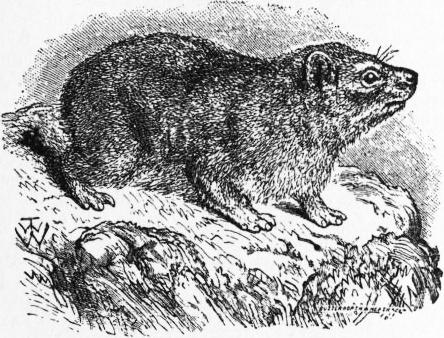
Fig. 1.—The Cape Hyrax (Procavia capensis).
As regards the recent forms, the dentition in the fully adult animal consists only of incisors and cheek-teeth, the formula being i. ½, c. 0⁄0, p. 4⁄4 m. 3⁄3. There is, however, a minute upper canine developed at first, which is early shed; and in extinct forms this tooth was functional and molar-like. The upper incisors have persistent pulps, and are curved longitudinally, forming a semicircle as in rodents; they are, however, not flattened from before backwards as in that order, but prismatic, with an antero-external, an antero-internal and a posterior surface, the first two only being covered with enamel; their tips are consequently not chisel-shaped, but sharp-pointed. They are preceded by functional, rooted milk-teeth. The lower incisors have long tapering roots, but not of persistent growth; and are straight, directed somewhat forwards, with awl-shaped, tri-lobed crowns. Behind the incisors is a considerable gap, followed by the cheek-teeth, which are all contiguous, and formed almost exactly on the pattern of some of the perissodactyle ungulates. The milk-dentition includes three pairs of incisors and one of canines in each jaw. The hyoid arch is unlike that of any known mammal. The dorsal and lumbar vertebrae are very numerous, 28 to 30, of which 21 or 22 bear ribs. The tail is extremely short. There are no clavicles. In the fore foot, the three middle toes are subequally developed, the fifth is present, but smaller, and the first is rudimentary, although, in one species at least, all its normal bones are present. The terminal phalanges of the four outer digits are small, somewhat conical and flattened in form. The carpus has a distinct os centrale. There is a slight ridge on the femur in the place of a third trochanter. The fibula is complete, thickest at its upper end, where it generally unites with the tibia. The articulation between the tibia and astragalus is more complex than in other mammals, the end of the malleolus entering into it. The hind-foot is very like that of a rhinoceros, having three well-developed toes. There is no trace of a first toe, and the fifth meta-tarsal is represented by a small nodule. The terminal phalange of the inner (or second) digit is deeply cleft, and has a peculiar long curved claw, the others having short broad nails. The stomach is formed upon much the same principle as that of the horse or rhinoceros, but is more elongated transversely and divided by a constriction into two cavities—a large left cul de sac, lined by a very dense white epithelium, and a right pyloric cavity, with a thick, soft, vascular lining. The intestinal canal is long, and has, in addition to the ordinary short, but capacious and sacculated caecum at the commencement of the colon, lower down, a pair of large, conical, pointed caeca. The liver is much subdivided, and there is no gall-bladder. The brain resembles that of typical ungulates far more than that of rodents. The testes are permanently abdominal. The ureters open into the fundus of the bladder as in some Rodents. The female has six teats, of which four are inguinal and two axillary, and the placenta is zonary and deciduous. There is a gland on the back.
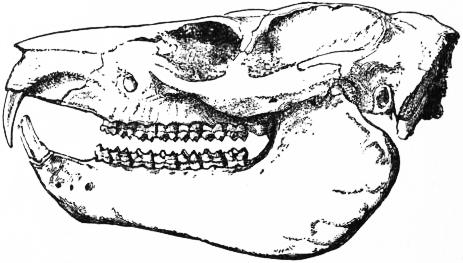
Fig. 2.—Skull and Dentition of Tree-Hyrax (Procavia dorsalis).
The more typical members of the genus are terrestrial in their habits, and their cheek-teeth have nearly the same pattern as in rhinoceroses; while the interval between the upper incisors is less than the width of the teeth; and the lower incisors are only slightly notched at the cutting edge. Vertebrae: C. 7, D. 22, L. 8, S. 6, C. 6. Of this form the earliest known species, P. capensis, is the type; but there are many other species, as P. syriaca, and P. brucei from Syria and eastern Africa. They inhabit mountainous and rocky regions, and live on the ground. In a second section the molar teeth have the same pattern as in Palaeotherium (except that the third lower molar has but two lobes); the interval between the upper incisors exceeds the width of the teeth; and the lower incisors have distinctly tri-lobed crowns. Vertebrae: C. 7, D. 21, L. 7, S. 5, C. 10. The members of this section frequent the trunks and large branches of trees, sleeping in holes. There are several species from Western and South Africa, as P. arboreus and P. dorsalis. The members of both groups appear to have a power like that possessed by geckos of clinging to vertical surfaces of rocks and trees by the soles of their feet.
Extinct Hyracoids.—For many years extinct representatives of the Hyracoidea were unknown, partly owing to the fact that certain fossils were not recognized as really belonging to that group. The longest known of these was originally named Leptodon graecus, but, on account of the preoccupation of the generic title, the designation has been changed to Pliohyrax graecus. This animal, whose remains occur in the Lower Pliocene of both Attica and Samos, was about the size of a donkey, and possessed three pairs of upper incisor teeth, of which the innermost were large and trihedral, recalling those of the existing genus. On the other hand, the two outer pairs of incisors were in contact with one another and with the canines, so as to form on each side a series continuous with the cheek-teeth.
The next representatives of the group occur in the Upper Eocene beds of the Fayum district of Egypt, where the genera Saghatherium and Megalohyrax occur. These are regarded as representing a distinct family, the Saghatheriidae, characterized by the possession of the full series of twenty-two teeth in the upper jaw, among which the first pair of incisors was modified to form trihedral rootless tusks, while the two remaining pairs were separated from one another and from the teeth in front by gaps. The canine was like a premolar, and in contact with the first tooth of that series; and the cheek-teeth were short-crowned, with the premolar simpler than the molars, and a third lobe to the last lower tooth of the latter series. The members of this genus were small or medium-sized ungulates with single-rooted incisors. On the other hand, the representatives of the contemporary genus Megalohyrax were approximately as large as Pliohyrax, and in some instances had double roots to the second and third incisors.
It is now possible to define the suborder Hyracoidea as including ungulates with a centrale in the carpus, plantigrade feet, in which the first and fifth toes are reduced in greater or less degree, and clavicles and a foramen in the lower end of the humerus are absent. The femur has a small third trochanter, the radius and ulna and tibia and fibula are respectively separate, at least in the young, and the fibula articulates with the astragalus. The earlier forms had the full series of 44 teeth, with the premolars simpler than the molars; but in the later types the canines and some of the incisors disappear, and at least the hinder premolars become molar-like. In all cases the first upper incisors are large and rootless.
That the group originated in Africa there can be no reasonable doubt; and it is remarkable that so early as the Upper Eocene the types in existence differed comparatively little in structure from the modern forms. In fact the hyraxes were then almost as distinct from other mammals as they are at the present day.
See also C. W. Andrews, Descriptive Catalogue of the Tertiary Vertebrata of the Fayum, British Museum (1906).
(R. L.*)
HYRCANIA. (1) An ancient district of Asia, south of the Caspian Sea, and bounded on the E. by the river Oxus, called Virkana, or “Wolf’s Land,” in Old Persian. It was a wide and indefinite tract. Its chief city is called Tape by Strabo, Zadracarta by Arrian (probably the modern Astarabad). The latter is evidently the same as Carta, mentioned by Strabo as an important city. Little is known of the history of the country. Xenophon says it was subdued by the Assyrians; Curtius that 6000 Hyrcanians were in the army of Darius III. (2) Two towns named Hyrcania are mentioned, one in Hyrcania, the other in Lydia. The latter is said to have derived its name from a colony of Hyrcanians, transported thither by the Persians.
HYRCANUS (Ὑρκανός), a Greek surname, of unknown origin, borne by several Jews of the Maccabaean period.
John Hyrcanus I., high priest of the Jews from 135 to 105 B.C., was the youngest son of Simon Maccabaeus. In 137 B.C. he, along with his brother Judas, commanded the force which repelled the invasion of Judaea led by Cendebeus, the general of Antiochus VII. Sidetes. On the assassination of his father and two elder brothers by Ptolemy, governor of Jericho, his brother-in-law, in February 135, he succeeded to the high priesthood and the supreme authority in Judaea. While still engaged in the struggle with Ptolemy, he was attacked by Antiochus with a large army (134), and compelled to shut himself up in Jerusalem; after a severe siege peace was at last secured only on condition of a Jewish disarmament, and the payment of an indemnity and an annual tribute, for which hostages were taken. In 129 he accompanied Antiochus as a vassal prince on his ill-fated Parthian expedition; returning, however, to Judaea before winter, he escaped the final disaster. By the judicious mission of an embassy to Rome he now obtained confirmation of the alliance which his father had previously made with the growing western power; at the same time he availed himself of the weakened state of the Syrian monarchy under Demetrius II. to overrun Samaria, and also to invade Idumaea, which he completely subdued, compelling its inhabitants to receive circumcision and accept the Jewish faith. After a long period of rest he directed his arms against the town of Samaria, which, in spite of the intervention of Antiochus, his sons Antigonus and Aristobulus ultimately took, and by his orders razed to the ground (c. 100 B.C.). He died in 105, and was succeeded by Aristobulus, the eldest of his five sons. The external policy of Hyrcanus was marked by considerable energy and tact, and, aided as it was by favouring circumstances, was so successful as to leave the Jewish nation in a position of independence and of influence such as it had not known since the days of Solomon. During its later years his reign was much disturbed, however, by the contentions for ascendancy which arose between the Pharisees and Sadducees, the two rival sects or parties which then for the first time (under those names at least) came into prominence. Josephus has related the curious circumstances under which he ultimately transferred his personal support from the former to the latter.
John Hyrcanus II., high priest from 78 to 40 B.C., was the eldest son of Alexander Jannaeus by his wife Alexandra, and was thus a grandson of the preceding. When his father died in 78, he was by his mother forthwith appointed high priest, and on her death in 69 he claimed the succession to the supreme civil authority also; but, after a brief and troubled reign of three months, he was compelled to abdicate both kingly and priestly dignities in favour of his more energetic and ambitious younger brother Aristobulus II. In 63 it suited the policy of Pompey that he should be restored to the high priesthood, with some semblance of supreme command, but of much of this semblance even he was soon again deprived by the arrangement of the pro-consul Gabinius, according to which Palestine was in 57 B.C. divided into five separate circles (σύνοδοι, συνέδρια). For services rendered to Caesar after the battle of Pharsalia, he was again rewarded with the sovereignty (προστασία τοῦ ἔθνους, Jos. Ant. xx. 10) in 47 B.C., Antipater of Idumaea, however, being at the same time made procurator of Judaea. In 41 B.C. he was practically superseded by Antony’s appointment of Herod and Phasael to be tetrarchs of Judaea; and in the following year he was taken prisoner by the Parthians, deprived of his ears that he might be permanently disqualified for priestly office, and carried to Babylon. He was permitted in 33 B.C. to return to Jerusalem, where on a charge of treasonable correspondence with Malchus, king of Arabia, he was put to death in 30 B.C.
See Josephus (Ant. xiii. 8-10; xiv. 5-13; Bell. Jud. i. 2; i. 8-13). Also Maccabees, History.
(J. H. A. H.)
HYSSOP (Hyssopus officinalis), a garden herb belonging to the natural order Labiatae, formerly cultivated for use in domestic medicine. It is a small perennial plant about 2 ft. high, with slender, quadrangular, woody stems; narrowly elliptical, pointed, entire, dotted leaves, about 1 in. long and 1⁄3 in. wide, growing in pairs on the stem; and long terminal, erect, half-whorled, leafy spikes of small violet-blue flowers, which are in blossom from June to September. Varieties of the plant occur in gardens with red and white flowers, also one having variegated leaves. The leaves have a warm, aromatic, bitter taste, and are believed to owe their properties to a volatile oil which is present in the proportion of ¼ to ½%. Hyssop is a native of the south of Europe, its range extending eastward to central Asia. A strong tea made of the leaves, and sweetened with honey, was formerly used in pulmonary and catarrhal affections, and externally as an application to bruises and indolent swellings.
The hedge hyssop (Gratiola officinalis) belongs to the natural order Scrophulariaceae, and is a native of marshy lands in the south of Europe, whence it was introduced into Britain more than 300 years ago. Like Hyssopus officinalis, it has smooth opposite entire leaves, but the stems are cylindrical, the leaves twice the size, and the flowers solitary in the axils of the leaves and having a yellowish-red veined tube and bluish-white limb, while the capsules are oval and many-seeded. The herb has a bitter, nauseous taste, but is almost odourless. In small quantities it acts as a purgative, diuretic and emetic when taken internally. It was formerly official in the Edinburgh Pharmacopoeia, being esteemed as a remedy for dropsy. It is said to have formed the basis of a celebrated nostrum for gout, called Eau médicinale, and in former times was called Gratia Dei. When growing in abundance, as it does in some damp pastures in Switzerland, it becomes dangerous to cattle. G. peruviana is known to possess similar properties.
The hyssop (’ezob) of Scripture (Ex. xii. 22; Lev. xiv. 4, 6; Numb. xix. 6, 18; 1 Kings v. 13 (iv. 33); Ps. li. 9 (7); John xix. 29), a wall-growing plant adapted for sprinkling purposes, has long been the subject of learned disputation, the only point on which all have agreed being that it is not to be identified with the Hyssopus officinalis, which is not a native of Palestine. No fewer than eighteen plants have been supposed by various authors to answer the conditions, and Celsius has devoted more than forty pages to the discussion of their several claims. By Tristram (Oxford Bible for Teachers, 1880) and others the caper plant (Capparis spinosa) is supposed to be meant; but, apart from other difficulties, this identification is open to the objection that the caper seems to be, at least in one passage (Eccl. xii. 5), otherwise designated (’abiy-yônah). Thenius (on 1 Kings v. 13) suggests Orthotrichum saxatile. The most probable opinion would seem to be that found in Maimonides and many later writers, according to which the Hebrew ’ezob is to be identified with the Arabic sa’atar, now understood to be Satureja Thymus, a plant of very frequent occurrence in Syria and Palestine, with which Thymus Serpyllum, or wild thyme, and Satureja Thymbra are closely allied. Its smell, taste and medicinal properties are similar to those of H. officinalis. In Morocco the sa’atar of the Arabs is Origanum compactum; and it appears probable that several plants of the genera Thymus, Origanum and others nearly allied in form and habit, and found in similar localities, were used under the name of hyssop.
HYSTASPES (the Greek form of the Persian Vishtāspa). (1) A semi-legendary king (kava), praised by Zoroaster as his protector and a true believer, son of Aurvataspa (Lohrasp). The later tradition and the Shahname of Firdousi makes him (in the modern form Kai Gushtāsp) king of Iran. As Zoroaster probably preached his religion in eastern Iran, Vishtāspa must have been a dynast in Bactria or Sogdiana. The Zoroastrian religion was already dominant in Media in the time of the Assyrian king Sargon (c. 715 B.C.), and had been propagated here probably in much earlier times (cf. Persia); the time of Zoroaster and Vishtāspa may therefore be put at c. 1000 B.C. (2) A Persian, father of Darius I., under whose reign he was governor of Parthia, as Darius himself mentions in the Behistun inscription (2. 65). By Ammianus Marcellinus, xxiii. 6. 32, and by many modern authors he has been identified with the protector of Zoroaster, which is equally impossible for chronological and historical reasons, and from the evidence of the development of Zoroastrianism itself (see Persia: Ancient History).
(Ed. M.)
HYSTERESIS (Gr. ὑστέρησις, from ὑστέρειν, to lag behind), a term added to the vocabulary of physical science by J. A. Ewing, who defines it as follows: When there are two qualities M and N such that cyclic variations of N cause cyclic variations of M, then if the changes of M lag behind those of N, we may say that there is hysteresis in the relation of M to N (Phil. Trans., 1885, 176, p. 524). The phenomenon is best known in connexion with magnetism. If an iron bar is subjected to a magnetic force which is first gradually increased to a maximum and then gradually diminished, the resulting magnetization of the bar for any given value of the magnetic force will be greater when the force is decreasing than when it is increasing; the iron always tends to retain the magnetic condition which it has previously acquired, and changes of its magnetization consequently lag behind changes of the magnetic force. Thus there is hysteresis in the relation of magnetization to magnetic force. In consequence of hysteresis the process of magnetizing a piece of iron to a certain intensity and then restoring it to its original condition, or of effecting a double reversal of its magnetization, involves the expenditure of energy, which is dissipated as heat in the iron. Electrical generators and transformers often contain pieces of iron the magnetization of which is reversed many times in a second, and in order to economize power and to avoid undue heating it is essential that hysteresis should in such cases be as small as possible. Iron and mild steels showing remarkably little hysteresis are now specially manufactured for use in the construction of electrical machinery. (See Magnetism.)
HYSTERIA, a term applied to an affection which may manifest itself by a variety of symptoms, and which depends upon a disordered condition of the highest nervous centres. It is characterized by psychical peculiarities, while in addition there is often derangement of the functions subserved by the lower cerebral and spinal centres. Histological examination of the nervous system has failed to disclose associated structural alterations.
By the ancients and by modern physicians down to the time of Sydenham the symptoms of hysteria were supposed to be directly due to disturbances of the uterus (Gr. ὑστέρα, whence the name). This view is now universally recognized to be erroneous. The term “functional” is often used by English neurologists as synonymous with hysterical, a nomenclature which is tentatively advantageous since it is at least non-committal. P. J. Möbius has defined hysteria as “a state in which ideas control the body and produce morbid changes in its functions.” P. Janet, who has done much to popularize the psychical origin of the affection, holds that there is “a limitation of the field of consciousness” comparable to the contraction of the visual fields met with in the disease. The hysterical subject, according to this view, is incapable of taking into the field of consciousness all the impressions of which the normal individual is conscious. Strong momentary impressions are no longer controlled so efficiently because of the defective simultaneous impressions of previous memories. Hence the readiness with which the impulse of the moment is obeyed, the loss of emotional control and the increased susceptibility to external suggestion, which are so characteristic. A secondary subconscious mental state is engendered by the relegation of less prominent impressions to a lower sphere. The dual personality which is typically exemplified in somnambulism and in the hypnotic state is thus induced. The explanation of hysterical symptoms which are independent of the will, and of the existence of which the individual may be unaware, is to be found in a relative preponderance of this secondary subconscious state as compared with the primary conscious personality. An elaboration of this theory affords an explanation of hysterical symptoms dependent upon a “fixed idea.” The following definition of hysteria has recently been advanced by J. F. F. Babinski: “Hysteria is a psychical condition manifesting itself principally by signs that may be termed primary, and in an accessory sense others that we may call secondary. The characteristic of the primary signs is that they may be exactly reproduced in certain subjects by suggestion and dispelled by persuasion. The characteristic of the secondary signs is that they are closely related to the primary phenomena.”
The causes of hysteria may be divided into (a) the predisposing, such as hereditary predisposition to nervous disease, sex, age and national idiosyncrasy; and (b) the immediate, such as mental and physical exhaustion, fright and other emotional influences, pregnancy, the puerperal condition, diseases of the uterus and its appendages, and the depressing influence of injury or general disease. Perhaps, taken over all, hereditary predisposition to nerve-instability may be asserted as the most prolific cause. There is frequently direct inheritance, and cases of epilepsy and insanity or other form of nervous disease are rarely wanting when the family history is carefully enquired into. As regards age, the condition is apt to appear at the evolution periods of life—puberty, pregnancy and the climacteric—without any further assignable cause except that first spoken of. It is rare in young children, but very frequent in girls between the ages of fifteen and twenty-five, while it sometimes manifests itself in women at the menopause. It is much more common in the female than in the male—in the proportion of 20 to 1. Certain races are more liable to the disease than others; thus the Latin races are much more prone to hysteria than are those who come of a Teutonic stock, and in more aggravated and complex forms. In England it has been asserted that an undue proportion of cases occur among Jews. Occupation, or be it rather said want of occupation, is a prolific cause. This is noticeable more especially in the higher classes of society.
An hysterical attack may occur as an immediate sequel to an epileptic fit. If the patient suffers only from petit mal (see Epilepsy), unaccompanied by true epileptic fits, the significance of the hysterical seizure, which is really a post-epileptic phenomenon, may remain unrecognized.
It is convenient to group the very varied symptoms of hysteria into paroxysmal and chronic. The popular term “hysterics” is applied to an explosion of emotionalism, generally the result of mental excitement, on which convulsive fits may supervene. The characters of these vary, and may closely resemble epilepsy. The hysterical fit is generally preceded by an aura or warning. This sometimes takes the form of a sensation as of a lump in the throat (globus hystericus). The patient may fall, but very rarely is injured in so doing. The eyes are often tightly closed, the body and limbs become rigid, and the back may become so arched that the patient rests on her heels and head (opisthotonos). This stage is usually followed by violent struggling movements. There is no loss of consciousness. The attack may last for half-an-hour or even longer. Hysterical fits in their fully-developed form are rarely seen in England, though common in France. In the chronic condition we find an extraordinary complexity of symptoms, both physical and mental. The physical symptoms are extremely diverse. There may be a paralysis of one or more limbs associated with rigidity, which may persist for weeks, months or years. In some cases, the patient is unable to walk; in others there are peculiarities of the gait quite unlike anything met with in organic disease. Perversions of sensation are usually present; a common instance is the sensation of a nail being driven through the vertex of the head (clavus hystericus). The region of the spine is a very frequent seat of hysterical pain. Loss of sensation (anaesthesia), of which the patient may be unaware, is of common occurrence. Very often this sensory loss is limited exactly to one-half of the body, including the leg, arm and face on that side (hemianaesthesia). Sensation to touch, pain, heat and cold, and electrical stimuli may have completely disappeared in the anaesthetic region. In other cases, the anaesthesia is relative or it may be partial, certain forms of sensation remaining intact. Anaesthesia is almost always accompanied by an inability to recognize the exact position of the affected limb when the eyes are closed. When hemianaesthesia is present, sight, hearing, taste and smell are usually impaired on that side of the body. Often there is loss of voice (hysterical aphonia). It is to such cases of hysterical paralysis and sensory disturbance that the wonderful cures effected by quacks and charlatans may be referred. The mental symptoms have not the same tendency to pass away suddenly. They may be spoken of as inter-paroxysmal and paroxysmal. The chief characteristics of the former are extreme emotionalism combined with obstructiveness, a desire to be an object of interest and a constant craving for sympathy which is often procured at an immense sacrifice of personal comfort. Obstructiveness is the invariable symptom. Hysteria may pass into absolute insanity.
The treatment of hysteria demands great tact and firmness on the part of the physician. The affection is a definite entity and has to be clearly distinguished from malingering, with which it is so often erroneously regarded as synonymous. Drugs are of little value. The moral treatment is all-important. In severe cases, removal from home surroundings and isolation, either in a hospital ward or nursing home, are essential, in order that full benefit may be derived from psychotherapeutic measures.
Bibliography.—Charcot, Leçons sur les maladies du système nerveuse (1877); S. Weir Mitchell, Lectures on Diseases of the Nervous System especially in Women (1885); Buzzard, Simulation of Hysteria by Organic Nervous Disease (1891); Pitres, Leçons cliniques sur l’hystérie et l’hypnotisme (1891); Richer, Études cliniques sur la grande hystérie (1891); Gilles de la Tourette, Traité clinique et thérapeutique de l’hystérie (1891); Bastian, Hysterical or Functional Paralysis (1893); Ormerod, Art. “Hysteria,” in Clifford Allbutt’s System of Medicine (1899); Camus and Pagnez, Isolement et Psychotherapie (1904).
(J. B. T.; E. Bra.)
HYSTERON-PROTERON (Gr. ὕστερον, latter, and πρότερον, former), a figure of speech, in which the order of words or phrases is inverted, and that which should logically or naturally come last is put first, to secure emphasis for the principal idea; the classical example is Virgil’s “moriamur et in media arma ruamus,” “let us die and charge into the thick of the fight” (Aen. ii. 358). The term is also applied to any inversion in order of events, arguments, &c.
HYTHE, a market town and watering-place, one of the Cinque Ports, and a municipal and parliamentary borough of Kent, England, 67 m. S.E. by E. of London on a branch of the South Eastern & Chatham railway. Pop. (1901) 5557. It is beautifully situated at the foot of a steep hill near the eastern extremity of Romney Marsh, about half a mile from the sea, and consists principally of one long street running parallel with the shore, with which it is connected by a straight avenue of wych elms. On account of its fine situation and picturesque and interesting neighbourhood, it is a favourite watering-place. A sea-wall and parade extend eastward to Sandgate, a distance of 3 m. There is communication with Sandgate by means of a tramway along the front. On the slope of the hill above the town stands the fine church of St Leonard, partly Late Norman, with a very beautiful Early English chancel. The tower was rebuilt about 1750. In a vault under the chancel there is a collection of human skulls and bones supposed to be the remains of men killed in a battle near Hythe in 456. Lionel Lukin (1742-1834), inventor of the life-boat, is buried in the churchyard. Hythe possesses a guildhall founded in 1794 and two hospitals, that of St Bartholomew founded by Haimo, bishop of Rochester, in 1336, and that of St John (rebuilt in 1802), of still greater antiquity but unknown date, founded originally for the reception of lepers. A government school of musketry, in which instructors for the army are trained, was established in 1854, and has been extended since, and the Shorncliffe military camp is within 2½ m. of the town.
Lympne, which is now 3 m. inland, is thought to have been the original harbour which gave Hythe a place among the Cinque Ports. The course of the ancient estuary may be distinctly traced from here along the road to Hythe, the sea-sand lying on the surface and colouring the soil. Here are remains of a Roman fortress, and excavations have brought to light many remains of the Roman Portus Lemanis. Large portions of the fortress walls are standing. At the south-west corner is one of the circular towers which occurred along the line of wall. The site is now occupied by the fine old castellated mansion of Studfall castle, formerly a residence of the archdeacons of Canterbury. The name denotes a fallen place, and is not infrequently thus applied to ancient remains. The church at Lympne is Early English, with a Norman tower built by Archbishop Lanfranc, and Roman material may be traced in the walls. A short distance east is Shipway or Shepway Cross, where some of the great assemblies relating to the Cinque Ports were held. A mile north from Hythe is Saltwood Castle, of very ancient origin, but rebuilt in the time of Richard II. The castle was granted to the see of Canterbury in 1026, but escheated to the crown in the time of Henry II., when the murder of Thomas à Beckett is said to have been concerted here, and having been restored to the archbishops by King John remained a residence of theirs until the time of Henry VIII. It was restored as a residence in 1882. About 2 m. N.W. of Saltwood are remains of the fortified 14th-century manor-house of Westenhanger. It is quadrangular and surrounded by a moat, and of the nine towers (alternately square and round) by which the walls were defended, three remain.
The parliamentary borough of Hythe, which includes Folkestone, Sandgate and a number of neighbouring villages, returns one member. The town is governed by a mayor, 4 aldermen and 12 councillors. Area 2617 acres.
Hythe (Heda, Heya, Hethe, Hithe, i.e. landing-place) was known as a port in Saxon times, and was granted by Halfden, a Saxon thegn, to Christ Church, Canterbury. In the Domesday Survey the borough is entered among the archbishop’s lands as appurtenant to his manor of Saltwood, and the bailiff of the town was appointed by the archbishop. Hythe was evidently a Cinque Port before the Conquest, as King John in 1205 confirmed the liberties, viz. freedom from toll, the right to be impleaded only at the Shepway court, &c., which the townsmen had under Edward the Confessor. The liberties of the Cinque Ports were confirmed in Magna Carta and later by Edward I. in a general charter, which was confirmed, often with additions, by subsequent kings down to James II. John’s charter to Hythe was confirmed by Henry IV., Henry V. and Henry VI. These charters were granted to the Cinque Ports in return for the fifty-seven ships which they supplied for the royal service, of which five were contributed by Hythe. The ports were first represented in the parliament of 1365, to which they each sent four members.
Hythe was governed by twelve jurats until 1574, when it was incorporated by Elizabeth under the title of the mayor, jurats and commonalty of Hythe; a fair for the sale of fish, &c., was also granted, to be held on the feast of St Peter and St Paul. As the sea gradually retreated from Hythe and the harbour became choked up with sand, the town suffered the fate of other places near it, and lost its old importance.
I the ninth letter of the English and Latin alphabet, the tenth in the Greek and Phoenician, because in these the symbol Teth (the Greek θ) preceded it. Teth was not included in the Latin alphabet because that language had no sound corresponding to the Greek θ, but the symbol was metamorphosed and utilized as the numeral C = 100, which took this form through the influence of the initial letter of the Latin centum. The name of I in the Phoenician alphabet was Yōd. Though in form it seems the simplest of letters it was originally much more complex. In Phoenician it takes the form , which is found also in the earliest Syriac and Palestinian inscriptions with little modification. Ultimately in Hebrew it became reduced to a very small symbol, whence comes its use as a term of contempt for things of no importance as in “not one jot or tittle” (Matthew v. 18). The name passed from Phoenician to Greek, and thence to the Latin of the vulgate as iōta, and from the Latin the English word is derived. Amongst the Greeks of Asia it appears only as the simple upright I, but in some of the oldest alphabets elsewhere, as Crete, Thera, Attica, Achaia and its colonies in lower Italy, it takes the form or S, while at Corinth and Corcyra it appears first in a form closely resembling the later Greek sigma Σ. It had originally no cross-stroke at top and bottom. I being not i but z. The Phoenician alphabet having no vowel symbols, the value of yōd was that of the English y. In Greek, where the consonant sound had disappeared or been converted into h, I is regularly used as a vowel. Occasionally, as in Pamphylian, it is used dialectically as a glide between i and another vowel, as in the proper name Δαμάτριιυς. In Latin I was used alike for both vowel and consonant, as in iugum (yoke). The sound represented by it was approximately that still assigned to i on the continent. Neither Greek nor Latin made any distinction in writing between short and long i, though in the Latin of the Empire the long sound was occasionally represented by a longer form of the symbol I. The dot over the i begins in the 5th or 6th century A.D. In pronunciation the English short i is a more open sound than that of most languages, and does not correspond to the Greek and Latin sound. Nor are the English short and long i of the same quality. The short i in Sweet’s terminology is a high-front-wide vowel, the long i, in English often spelt ee in words like seed, is diphthonged, beginning like the short vowel but becoming higher as it proceeds. The Latin short i, however, in final syllables was open and ultimately became e, e.g. in the neuter of i-stems as utile from utili-s. Medially both the short and the long sounds are very common in syllables which were originally unaccented, because in such positions many other sounds passed into i: officio but facio, redimo but emo, quidlibet but lubet (libet is later); collīdo but laedo, fīdo from an older feido, istis (dative plural) from an earlier istois.


(P. Gi.)
IAMBIC, the term employed in prosody to denote a succession of verses, each consisting of a foot or metre called an iambus (ἵαμβος), formed of two syllables, of which the first is short and the second long (). After the dactylic hexameter, the iambic trimeter was the most popular metre of ancient Greece. Archilochus is said to have been the inventor of this iambic verse, the τρίμετρος consisting of three iambic fed. In the Greek tragedians an iambic line is formed of six feet arranged in obedience to the following scheme:—


Much of the beauty of the verse depends on the caesura, which is usually In the middle of the third foot, and far less frequently in the middle of the fourth. The English language runs more naturally in the iambic metre than in any other. The normal blank verse in English is founded upon an iambic basis, and Milton’s line—
And swims | or sinks | or wades | or creeps | or flies | —
exhibits it in its primitive form. The ordinary alexandrine of French literature is a hexapod iambic, but in all questions of quantity in modern prosody great care has to be exercised to recollect that all ascriptions of classic names to modern forms of rhymed or blank verse are merely approximate. The octosyllabic, or four-foot iambic metre, has found great favour in English verse founded on old romances. Decasyllabic iambic lines rhyming together form an “heroic” metre.
IAMBLICHUS (d. c. A.D. 330), the chief representative of Syrian Neoplatonism, is only imperfectly known to us in the events of his life and the details of his creed. We learn, however, from Suidas, and from his biographer Eunapius, that he was born at Chalcis in Coele-Syria, the scion of a rich and illustrious family, that he studied under Anatolius and afterwards under Porphyry, the pupil of Plotinus, that he himself gathered together a large number of disciples of different nations with whom he lived on terms of genial friendship, that he wrote “various philosophical books,” and that he died during the reign of Constantine,—according to Fabricius, before A.D. 333. His residence (probably) at his native town of Chalcis was varied by a yearly visit with his pupils to the baths of Gadara. Of the books referred to by Suidas only a fraction has been preserved. His commentaries on Plato and Aristotle, and works on the Chaldaean theology and on the soul, are lost. For our knowledge of his system we are indebted partly to the fragments of these writings preserved by Stobaeus and others, and to the notices of his successors, especially Proclus, partly to his five extant books, the sections of a great work on the Pythagorean philosophy. Besides these, Proclus (412-485) seems to have ascribed to him1 the authorship of the celebrated book On the Egyptian Mysteries (so-called), and although its differences in style and in some points of doctrine from the writings just mentioned make it improbable that the work was by Iamblichus himself, it certainly emanated from his school, and in its systematic attempt to give a speculative justification of the polytheistic cultus of the day, marks the turning-point in the history of thought at which Iamblichus stood.
As a speculative theory Neoplatonism (q.v.) had received its highest development from Plotinus. The modifications introduced by Iamblichus were the elaboration in greater detail of its formal divisions, the more systematic application of the Pythagorean number-symbolism, and chiefly, under the influence of Oriental systems, the thorough-going mythic interpretation of what the previous philosophy had still regarded as notional. It is on the last account, probably, that Iamblichus was looked upon with such extravagant veneration. As a philosopher he had learning indeed, but little originality. His aim was to give a philosophical rendering of the popular religion. By his contemporaries he was accredited with miraculous powers (which he, however, disclaimed), and by his followers in the decline of Greek philosophy, and his admirers on its revival in the 15th and 16th centuries, his name was scarcely mentioned without the epithet “divine” or “most divine,” while, not content with the more modest eulogy of Eunapius that he was inferior to Porphyry only in style, the emperor Julian regarded him as not even second to Plato, and said that he would give all the gold of Lydia for one epistle of Iamblichus.
Theoretically, the philosophy of Plotinus was an attempt to harmonize the principles of the various Greek schools. At the head of his system he placed the transcendent incommunicable one (ἓν ἀμέθεκτον), whose first-begotten is intellect (νοῦς), from which proceeds soul (ψυχή), which in turn gives birth to φύσις, the realm of nature. Immediately after the absolute one, Iamblichus introduced a second superexistent unity to stand between it and the many as the producer of intellect, and made the three succeeding moments of the development (intellect, soul and nature) undergo various modifications. He speaks of them as intellectual (θεοὶ νοεροί), supramundane (ὑπερκόσμιοι), and mundane gods (ἐγκόσμιοι). The first of these—which Plotinus represented under the three stages of (objective) being (ὄν), (subjective) life (ζωή), and (realized) intellect (νοῦς)—is distinguished by him into spheres of intelligible gods (θεοὶ νοεροί) and of intellectual gods (θεοὶ νοεροί), each subdivided into triads, the latter sphere being the place of ideas, the former of the archetypes of these ideas. Between these two worlds, at once separating and uniting them, some scholars think there was inserted by Iamblichus, as afterwards by Proclus, a third sphere partaking of the nature of both (θεοὶ νοητοὶ καὶ νοεροί). But this supposition depends on a merely conjectural emendation of the text. We read, however, that “in the intellectual hebdomad he assigned the third rank among the fathers to the Demiurge.” The Demiurge, Zeus, or world-creating potency, is thus identified with the perfected νοῦς, the intellectual triad being increased to a hebdomad, probably (as Zeller supposes) through the subdivision of its first two members. As in Plotinus νοῦς produced nature by mediation of ψυχή, so here the intelligible gods are followed by a triad of psychic gods. The first of these is incommunicable and supramundane, while the other two seem to be mundane though rational. In the third class, or mundane gods (θεοὶ ἐγκόσμιοι), there is a still greater wealth of divinities, of various local position, function, and rank. We read of gods, angels, demons and heroes, of twelve heavenly gods whose number is increased to thirty-six or three hundred and sixty, and of seventy-two other gods proceeding from them, of twenty-one chiefs (ἡγεμόνες) and forty-two nature-gods (θεοὶ γενεσιουργοί), besides guardian divinities, of particular individuals and nations. The world is thus peopled by a crowd of superhuman beings influencing natural events, possessing and communicating knowledge of the future, and not inaccessible to prayers and offerings.
The whole of this complex theory is ruled by a mathematical formulism of triad, hebdomad, &c., while the first principle is identified with the monad, νοῦς with the dyad, and ψυχή with the triad, symbolic meanings being also assigned to the other numbers. “The theorems of mathematics,” he says, “apply absolutely to all things,” from things divine to original matter (ὕλη). But though he thus subjects all things to number, he holds elsewhere that numbers are independent existences, and occupy a middle place between the limited and unlimited.
Another difficulty of the system is the account given of nature. It is said to be “bound by the indissoluble chains of necessity which men call fate,” as distinguished from divine things which are not subject to fate. Yet, being itself the result of higher powers becoming corporeal, a continual stream of elevating influence flows from them to it, interfering with its necessary laws and turning to good ends the imperfect and evil. Of evil no satisfactory account is given; it is said to have been generated accidentally.
In his doctrine of man Iamblichus retains for the soul the middle place between intellect and nature which it occupies in the universal order. He rejects the passionless and purely intellectual character ascribed to the human soul by Plotinus, distinguishing it sharply both from those above and those below it. He maintains that it moves between the higher and lower spheres, that it descends by a necessary law (not solely for trial or punishment) into the body, and, passing perhaps from one human body to another, returns again to the supersensible. This return is effected by the virtuous activities which the soul performs through its own power of free will, and by the assistance of the gods. These virtues were classified by Porphyry as political, purifying (καθαρτικαί), theoretical, and paradigmatic; and to these Iamblichus adds a fifth class of priestly virtues (ἱερατικαὶ ἀρεταί), in which the divinest part of the soul raises itself above intellect to absolute being.
Iamblichus does not seem ever to have attained to that ecstatic communion with and absorption in deity which was the aim of earlier Neoplatonism, and which Plotinus enjoyed four times in his life, Porphyry once. Indeed his tendency was not so much to raise man to God as to bring the gods down to men—a tendency shown still more plainly in the “Answer of Abamon the master to Porphyry’s letter to Anebo and solutions of the doubts therein expressed,” afterwards entitled the Liber de mysteriis, and ascribed to Iamblichus.
In answer to questions raised and doubts expressed by Porphyry, the writer of this treatise appeals to the innate idea all men have of the gods as testifying to the existence of divinities countless in number and various in rank (to the correct arrangement of which he, like Iamblichus, attaches the greatest importance). He holds with the latter that above all principles of being and intelligence stands the absolute one, from whom the first god and king spontaneously proceeds; while after these follow the ethereal, empyrean, and heavenly gods, and the various orders of archangels, angels, demons, and heroes distinguished in nature, power, and activity, and in greater profusion than even the imagination of Iamblichus had conceived. He says that all the gods are good (though he in another place admits the existence of evil demons who must be propitiated), and traces the source of evil to matter; rebuts the objection that their answering prayer implies passivity on the part of gods or demons; defends divination, soothsaying, and theurgic practices as manifestations of the divine activity; describes the appearances of the different sorts of divinities; discusses the various kinds of sacrifice, which he says must be suitable to the different natures of the gods, material and immaterial, and to the double condition of the sacrificer as bound to the body or free from it (differing thus in his psychology from Iamblichus); and, in conclusion, states that the only way to happiness is through knowledge of and union with the gods, and that theurgic practices alone prepare the mind for this union—again going beyond his master, who held assiduous contemplation of divine things to be sufficient. It is the passionless nature of the soul which permits it to be thus united to divine beings,—knowledge of this mystic union and of the worship associated with it having been derived from the Egyptian priests, who learnt it from Hermes.
On one point only does the author of the De mysteriis seem not to go so far as Iamblichus in thus making philosophy subservient to priestcraft. He condemns as folly and impiety the worship of images of the gods, though his master held that these simulacra were filled with divine power, whether made by the hand of man or (as he believed) fallen from heaven. But images could easily be dispensed with from the point of view of the writer, who not only held that all things were full of gods (πάντα πλήρη θεῶν, as Thales said), but thought that each man had a special divinity of his own—an ἴδιος δαίμων—as his guard and companion.
The following are the extant works of Iamblichus: (1) On the Pythagorean (Life Περὶ τοῦ Πυθαγορικοῦ βίου), ed. T. Kiessling (1815), A. Nauck (St Petersburg, 1884); for a discussion of the authorities used see E. Rohde in Rheinisches Museum, xxvi., xxvii. (1871, 1872); Eng. trans. by Thomas Taylor (1818), (2) The Exhortation to Philosophy (Λόγος προτρεπτικὸς εἰς φιλοσοφίαν), ed. T. Kiessling (1813); H. Piselli (1888). (3) The treatise On the General Science of Mathematics (Περὶ τῆς κοινῆς μαθηματικῆς ἐπιστήμης), ed. J. G. Friis (Copenhagen, 1790), N. Festa (Leipzig, 1891). (4) The book On the Arithmetic of Nicomachus (Περὶ τῆς Νικομάχου ἀριθμητικῆς εἰσαγωγῆς), along with fragments on fate (Περὶ εἱμαρμένης) and prayer (Περὶ εὐχῆς), ed. S. Tennulius (1688), the Arithmetic by H. Pistelli (1894). (5) The Theological Principles of Arithmetic (Θεολογούμενα τῆς ἀριθμητικῆς)—the seventh book of the series—by F. Ast (Leipzig, 1817). Two lost books, treating of the physical and ethical signification of numbers, stood fifth and sixth, while books on music, geometry and astronomy followed. The emperor Julian had a great admiration for Iamblichus, whom he considered “intellectually not inferior to Plato”; but the Letters to Iamblicus the Philosopher which bear his name are now generally considered spurious.
The so-called Liber de mysteriis was first edited, with Latin translation and notes, by T. Gale (Oxford, 1678), and more recently by C. Parthey (Berlin, 1857); Eng. trans. by Thomas Taylor (1821).
There is a monograph on Iamblichus by G. E. Hebenstreit (De Iamblichi, philosophi Syri, doctrina, Leipzig, 1764), and one of the De myst. by Harless (Das Buch v. d. ägypt. Myst., Munich, 1858). The best accounts of Iamblichus are those of Zeller, Phil. d. Griechen, iii. 2, pp. 613 sq., 2nd ed.; E. Vacherot, Hist. de l’école d’Alexandrie (1846), ii. 57 sq.; J. Simon, Hist. de l’école d’Alexandrie (1845); A. E. Chaignet, Histoire de la psychologie des Grecs (Paris, 1893) v. 67-108; T. Whittaker, The Neo-Platonists (Cambridge, 1901).
(W. R. So.)
1 Besides the anonymous testimony prefixed to an ancient MS. of Proclus, De Myst. viii. 3 seems to be quoted by the latter as Iamblichus’s. Cf. Meiners. “Judicium de libro qui de Myst. Aeg. inscribitur,” in Comment. Soc. Reg. Sci. Gott., vol. iv., 1781, p. 77.
IAMBLICHUS, of Syria, the earliest of the Greek romance writers, flourished in the 2nd century A.D. He was the author of Βαβυλωνιακά, the loves of Rhodanes and Sinonis, of which an epitome is preserved in Photius (cod. 94). Garmus, a legendary king of Babylon, forces Sinonis to marry him and throws Rhodanes into prison. The lovers manage to escape, and after many singular adventures, in which magic plays a considerable part, Garmus is overthrown by Rhodanes, who becomes king of Babylon. According to Suidas, Iamblichus was a freedman, and a scholiast’s note on Photius further informs us that he was a native Syrian (not descended from Greek settlers); that he borrowed the material for his romance from a love story told him by his Babylonian tutor, and that he subsequently applied himself with great success to the study of Greek. A MS. of the original in the library of the Escorial is said to have been destroyed by fire in 1670. Only a few fragments have been preserved, in addition to Photius’s epitome.
See Scriptores erotici, ed. A. Hirschig (1856) and R. Hercher (1858); A. Mai, Scriptorum veterum nova collectio, ii.; E. Rohde, Der griechische Roman (1900).
IANNINA (i.e. “the city of St John”; Gr. Ioannina; Turk Yaniá; also written Janina, Jannina, and, according to its Albanian pronunciation, Yanina), the capital of the vilayet of Iannina, Albania, European Turkey. Pop. (1905) about 22,000. The largest ethnical groups in the population are the Albanian and Greek; the purest form of colloquial Greek is spoken here among the wealthy and highly educated merchant families. The position of Iannina is strikingly picturesque. At the foot of the grey limestone mass of Mount Mitzekeli (1500 ft.), which forms part of the fine range of hills running north from the Gulf of Arta, there lies a valley (the Hellopia of antiquity) partly occupied by a lake; and the city is built on the slopes of a slight eminence, stretching down to the western shore. It has greatly declined from the state of barbaric prosperity which it enjoyed from 1788 to 1822, when it was the seat of Ali Pasha (q.v.), and was estimated to have from 30,000 to 50,000 inhabitants. The fortress—Demir Kule or Iron Castle, which, like the principal seraglio, was built on a promontory jutting into the lake—is now in ruins. But the city is the seat of a Greek archbishop, and still possesses many mosques and churches, besides synagogues, a Greek college (gymnasium), a library and a hospital. Sayades (opposite Corfu) and Arta are the places through which it receives its imports. The rich gold and silver embroidery for which the city has long been famous is still one of the notable articles in its bazaar; but the commercial importance of Iannina has notably declined since the cession of Arta and Thessaly to Greece in 1881. Iannina had previously been one of the chief centres of the Thessalian grain trade; it now exports little except cheese, hides, bitumen and sheepskins to the annual value of about £120,000; the imports, which supply only the local demand for provisions, textile goods, hardware, &c., are worth about double that sum.
The lake of Iannina (perhaps to be identified with the Pambotus or Pambotis of antiquity) is 6 m. long, and has an area of 24 sq.m., with an extreme depth of less than 35 ft. In time of flood it is united with the smaller lake of Labchistas to the north. There are no affluents of any considerable size, and the only outlets are underground passages or katavothra extending for many miles through the calcareous rocks.
The theory supported by W. M. Leake (Northern Greece, London, 1835) that the citadel of Iannina is to be identified with Dodona, is now generally abandoned in favour of the claims of a more southern site. As Anna Comnena, in describing the capture of the town (τὰ Ἰοάννινα) by Bohemond in 1082, speaks of the walls as being dilapidated, it may be supposed that the place existed before the 11th century. It is mentioned from time to time in the Byzantine annals, and on the establishment of the lordship of Epirus by Michael Angelus Comnenus Ducas, it became his capital. In the middle ages it was successively attacked by Serbs, Macedonians and Albanians; but it was in possession of the successors of Michael when the forces of the Sultan Murad appeared before it in 1430 (cf. Hahn, Alban. Studien, Jena [1854], pp. 319-322). Since 1431 it has continued under Turkish rule.
Descriptions of Iannina will be found in Holland’s Travels (1815); Hughes, Travels in Greece, &c. (1830); H. F. Tozer, Researches in the Highlands of Turkey (London, 1869). See also Albania and the authorities there cited.
IAPETUS, in Greek mythology, son of Uranus and Gaea, one of the Titans, father of Atlas, Prometheus, Epimetheus and Menoetius, the personifications of certain human qualities (Hesiod, Theog. 507). As a punishment for having revolted against Zeus, he was imprisoned in Tartarus (Homer, Iliad, viii. 479) or underneath the island of Inarime off the coast of Campania (Silius Italicus xii. 148). Hyginus makes him the son of Tartarus and Gaea, and one of the giants. Iapetus was considered the original ancestor of the human race, as the father of Prometheus and grandfather of Deucalion. The name is probably identical with Japhet (Japheth), and the son of Noah in the Greek legend of the flood becomes the ancestor of (Noah) Deucalion. Iapetus as the representative of an obsolete order of things is described as warring against the new order under Zeus, and is naturally relegated to Tartarus.
See F. G. Welcker, Griechische Götterlehre, i. (1857); C. H. Völcker, Die Mythologie des Iapetischen Geschlechtes (1824); M. Mayer, Giganten und Titanen (1887).
IAPYDES, or Iapodes, one of the three chief peoples of Roman Illyria. They occupied the interior of the country on the north between the Arsia (Arsa) and Tedanius (perhaps the Zermanja), which separated them from the Liburnians. Their territory formed part of the modern Croatia. They are described by Strabo as a mixed race of Celts and Illyrians, who used Celtic weapons, tattooed themselves, and lived chiefly on spelt and millet. They were a warlike race, addicted to plundering expeditions. In 129 B.C. C. Sempronius Tuditanus celebrated a triumph over them, and in 34 B.C. they were finally crushed by Augustus. They appear to have had a foedus with Rome, but subsequently rebelled.
See Strabo iv. 207, vii. 313-315; Dio Cassius xlix. 35; Appian, Illyrica, 10, 14, 16; Livy, Epit. lix. 131; Tibullus iv. 1. 108; Cicero, Pro Balbo, 14.
IATROCHEMISTRY (coined from Gr. ἰατρός, a physician, and “chemistry”), a stage in the history of chemistry, during which the object of this science was held to be “not to make gold but to prepare medicines.” This doctrine dominated chemical thought during the 16th century, its foremost supporters being Paracelsus, van Helmont and de la Boë Sylvius. But it gave way to the new definition formulated by Boyle, viz. that the proper domain of chemistry was “to determine the composition of substances.” (See Chemistry: I. History; Medicine.)
IAZYGES, a tribe of Sarmatians first heard of on the Maeotis, where they were among the allies of Mithradates the Great. Moving westward across Scythia, and hence called Metanastae, they were on the lower Danube by the time of Ovid, and about A.D. 50 occupied the plains east of the Theiss. Here, under the general name of Sarmatae, they were a perpetual trouble to the Roman province of Dacia. They were divided into freemen and serfs (Sarmatae Limigantes), the latter of whom had a different manner of life and were probably an older settled population enslaved by nomad masters. They rose against them in A.D. 334, but were repressed by foreign aid. Nothing is heard of Iazyges or Sarmatae after the Hunnish invasions. Graves at Keszthely and elsewhere in the Theiss valley, shown by their contents to belong to nomads of the first centuries A.D., are referred to the Iazyges.
(E. H. M.)
IBADAN, a town of British West Africa, in Yorubaland, Southern Nigeria, 123 m. by rail N.E. of Lagos, and about 50 m. N.E. of Abeokuta. Pop. 1910 estimated at 150,000. The town occupies the slope of a hill, and stretches into the valley through which the river Ona flows. It is enclosed by mud walls, which have a circuit of 18 m., and is encompassed by cultivated land 5 or 6 m. in breadth. The native houses are all low, thatched structures, enclosing a square court, and the only break in the mud wall is the door. There are numerous mosques, orishas (idol-houses) and open spaces shaded with trees. There are a few buildings in the European style. Most of the inhabitants are engaged in agriculture; but a great variety of handicrafts is also carried on. Ibadan is the capital of one of the Yoruba states and enjoys a large measure of autonomy. Nominally the state is subject to the alafin (ruler) of Oyo; but it is virtually independent. The administration is in the hands of two chiefs, a civil and a military, the bale and the balogun; these together form the highest court of appeal. There is also an iyaloda or mother of the town, to whom are submitted all the disputes of the women. Ibadan long had a feud with Abeokuta, but on the establishment of the British protectorate the intertribal wars were stopped. In 1862 the people of Ibadan destroyed Ijaya, a neighbouring town of 60,000 inhabitants. A British resident and a detachment of Hausa troops are stationed at Ibadan.
See also Yorubas, Abeokuta and Lagos.
IBAGUÉ, or San Bonifacio de Ibagué, a city of Colombia, and capital of the department of Tolima, about 60 m. W. of Bogotá and 18 m. N.W. of the Nevado de Tolima. Pop. (1900, estimate) 13,000. Ibagué is built on a beautiful plain between the Chipalo and Combeima, small affluents of the Cuello, a western tributary of the Magdalena. Its elevation, 4300 ft. above the sea, gives it a mild, subtropical climate. The plain and the neighbouring valleys produce cacao, tobacco, rice and sugar-cane. There are two thermal springs in the vicinity, and undeveloped mines of sulphur and silver. The city has an endowed college. It is an important commercial centre, being on the road which crosses the Quindio pass, or paramo, into the Cauca valley. Ibagué was founded in 1550 and was the capital of the republic for a short time in 1854.
IBARRA, a city of Ecuador and capital of the province of Imbabura, about 50 m. N.N.E. of Quito, on a small fertile plain at the northern foot of Imbabura volcano, 7300 ft. above sea-level. Pop. (1900, estimate) 5000. It stands on the left bank of the Tahuando, a small stream whose waters flow north and west to the Pacific through the Mira, and is separated from the higher plateau of Quito by an elevated transverse ridge of which the Imbabura and Mojanda volcanoes form a part. The surrounding country is mountainous, the valleys being very fertile. Ibarra itself has a mild, humid climate, and is set in the midst of orchards and gardens. It is the see of a bishop and has a large number of churches and convents, and many substantial residences. Ibarra has manufactures of cotton and woollen fabrics, hats, sandals (alpargates), sacks and rope from cabulla fibre, laces, sugar and various kinds of distilled spirits and cordials made from the sugar-cane grown in the vicinity. Mules are bred for the Colombian markets of Pasto and Popayan. Ibarra was founded in 1597 by Alvaro de Ibarra, the president of Quito. It has suffered from the eruptions of Imbabura, and more severely from earthquakes, that of 1859 causing great damage to its public buildings, and the greater one of the 16th of August 1868 almost completely destroyed the town and killed a large number of its inhabitants. The village of Carranqui, 1¼ m. from Ibarra, is the birthplace of Atahualpa, the Inca sovereign executed by Pizarro, and close by is the small lake called Yaguarcocha where the army of Huaynacapac, the father of Atahualpa, inflicted a bloody defeat on the Carranquis. Another aboriginal battle-field is that of Hatuntaqui, near Ibarra, where Huaynacapac won a decisive victory and added the greater part of Ecuador to his realm. The whole region is full of tolas, or Indian burial mounds.
IBERIANS (Iberi, Ἲβηρες), an ancient people inhabiting parts of the Spanish peninsula. Their ethnic affinities are not known, and our knowledge of their history is comparatively slight. It is almost impossible to make any statement in regard to them which will meet with general agreement. At the same time, the general lines of Iberian controversy are clear enough The principal sources of information about the Iberians are (1) historical, (2) numismatic, (3) linguistic, (4) anthropological.
1. Historical.—The name seems to have been applied by the earlier Greek navigators to the peoples who inhabited the eastern coast of Spain; probably it originally meant those who dwelt by the river Iberus (mod. Ebro). It is possible (Boudard, Études sur l’alphabet ibérien (Paris, 1852) that the river-name itself represents the Basque phrase ibay-erri “the country of the river.” On the other hand, even in older Greek usage (as in Thuc. vi. 1) the term Iberia is said to have embraced the country as far east as the Rhone (see Herodorus of Heraclea, Fragm. Hist. Gr. ii. 34), and by the time of Strabo it was the common Greek name for the Spanish peninsula. Iberians thus meant sometimes the population of the peninsula in general and sometimes, it would appear, the peoples of some definite race (γένος) which formed one element in that population. Of the tribal distribution of this race, of its linguistic, social and political characteristics, and of the history of its relation to the other peoples of Spain, we have only the most general, fragmentary and contradictory accounts. On the whole, the historical evidence indicates that in Spain, when it first became known to the Greeks and Romans there existed many separate and variously civilized tribes connected by at least apparent identity of race, and by similarity (but not identity) of language, and sufficiently distinguished by their general characteristics from Phoenicians, Romans and Celts. The statement of Diodorus Siculus that the mingling of these Iberians with the immigrant Celts gave rise to the Celtiberians is in itself probable. Varro and Dionysius Afer proposed to identify the Iberians of Spain with the Iberians of the Caucasus, the one regarding the eastern, and other the western, settlements as the earlier.
2. Numismatic.—Knowledge of ancient Iberian language and history is mainly derived from a variety of coins, found widely distributed in the peninsula,1 and also in the neighbourhood of Narbonne. They are inscribed in an alphabet which has many points of similarity with the western Greek alphabets, and some with the Punic alphabet; but which seems to retain a few characters from an older script akin to those of Minoan Crete and Roman Libya.2 The same Iberian alphabet is found also rarely in inscriptions. The coinage began before the Roman conquest was completed; the monetary system resembles that of the Roman republic, with values analogous to denarii and quinarii. The coin inscriptions usually give only the name of the town, e.g. plplis (Bilbilis), klaqriqs (Calagurris), seqbrics (Segobriga), tmaniav (Dumania). The types show late Greek and perhaps also late Punic influence, but approximate later to Roman models. The commonest reverse type, a charging horseman, reappears on the Roman coins of Bilbilis, Osca, Segobriga and other places. Another common type is one man leading two horses or brandishing a sword or a bow. The obverse has usually a male head, sometimes inscribed with what appears to be a native name.
3. Linguistic.—The survival of the non-Aryan language among the Basques around the west Pyrenees has suggested the attempt to interpret by its means a large class of similar-sounding place-names of ancient Spain, some of which are authenticated by their occurrence on the inscribed coins, and to link it with other traces of non-Aryan speech round the shores of the Western Mediterranean and on the Atlantic seaboard of Europe. This phase of Iberian theory opens with K. W. Humboldt (Prüfung der Untersuchungen über die Urbewohner Hispaniens vermittelst der waskischen Sprache, Berlin, 1821), who contended that there existed once a single great Iberian people, speaking a distinct language of their own; that an essentially “Iberian” population was to be found in Sicily, Sardinia and Corsica, in southern France, and even in the British Isles; and that the Basques of the present day were remnants of this race, which had elsewhere been expelled or absorbed. This last was the central and the seminal idea of the work, and it has been the point round which the battle of scholarship has mainly raged. The principal evidence which Humboldt adduced in its support was the possibility of explaining a vast number of the ancient topographical names of Spain, and of other asserted Iberian districts, by the forms and significations of Basque. In reply, Graslin (De l’Ibérie, Paris, 1839), maintained that the name Iberia was nothing but a Greek misnomer of Spain, and that there was no proof that the Basque people had ever occupied a wider area than at present; and Bladé (Origine des Basques, Paris, 1869) took the same line of argument, holding that Iberia is a purely geographical term, that there was no proper Iberian race, that the Basques were always shut in by alien races, that their affinity is still to seek, and that the whole Basque-Iberian theory is a figment. His main contention has met with some acceptance,3 but the great current of ethnographical speculation still flows in the direction indicated by Humboldt.
4. Anthropological.—Humboldt’s “Iberian theory” depended partly on linguistic comparisons, but partly on his observation of widespread similarity of physical type among the population of south-western Europe. Since his time the anthropological researches of Broca, Thurnam and Davis, Huxley, Busk, Beddoe, Virchow, Tubino and others have proved the existence in Europe, from Neolithic times, of a race, small of stature, with long or oval skulls, and accustomed to bury their dead in tombs. Their remains have been found in Belgium and France, in Britain, Germany and Denmark, as well as in Spain; and they bear a close resemblance to a type which is common among the Basques as well as all over the Iberian peninsula. This Neolithic race has consequently been nicknamed “Iberians,” and it is now common to speak of the “Iberian” ancestry of the people of Britain, recognizing the racial characteristics of “Iberians” in the “small swarthy Welshman,” the “small dark Highlander,” and the “Black Celts to the west of the Shannon,” as well as in the typical inhabitants of Aquitania and Brittany.4 Later investigators went further. M. d’Arbois de Jubainville, for example (Les Premiers habitants de l’Europe, Paris, 1877), maintained that besides possessing Spain, Gaul, Italy and the British Isles, “Iberian” peoples penetrated into the Balkan peninsula, and occupied a part of northern Africa, Corsica and Sardinia; and it is now generally accepted that a race with fairly uniform characteristics was at one time in possession of the south of France (or at least of Aquitania), the whole of Spain from the Pyrenees to the straits, the Canary Islands (the Guanches) a part of northern Africa and Corsica. Whether this type is more conveniently designated by the word Iberian, or by some other name (“Eur-african,” “Mediterranean,” &c.) is a matter of comparative indifference, provided that there is no misunderstanding as to the steps by which the term Iberian attained its meaning in modern anthropology.