VOLUME V SLICE V Cat to Celt
Reading edition
Articles in This Slice
CAT CAUTERETS
CATABOLISM CAUTIN
CATACLYSM CAUTLEY, SIR PROBY THOMAS
CATACOMB CAUVERY
CATAFALQUE CAVA DEI TIRRENI
CATALANI, ANGELICA CAVAEDIUM
CATALEPSY CAVAGNARI, SIR PIERRE NAPOLEON
CATALOGUE CAVAIGNAC, JEAN BAPTISTE
CATALONIA CAVAIGNAC, LOUIS EUGÈNE
CATALPA CAVAILLON
CATALYSIS CAVALCANTI, GUIDO
CATAMARAN CAVALIER, JEAN
CATAMARCA (province of Argentine) CAVALIER
CATAMARCA (city of Argentine) CAVALIERE, EMILIO DEL
CATANIA CAVALLI, FRANCESCO
CATANZARO CAVALLINI, PIETRO
CATAPHYLL CAVALLO, TIBERIUS
CATAPULT CAVALLOTTI, FELICE
CATARACT CAVALRY
CATARGIU, LASCAR CAVAN (county of Ireland)
CATARRH CAVAN (town of Ireland)
CATARRHINE APE CAVANILLES, ANTONIO JOSÉ
CATASTROPHE CAVATINA
CATAUXI CAVE, EDWARD
CATAWBAS CAVE, WILLIAM
CATCH THE TEN CAVE
CATECHISM CAVEA
CATECHU CAVEAT
CATECHUMEN CAVEDONE, JACOPO
CATEGORY CAVENDISH, GEORGE
CATENARY CAVENDISH, HENRY
CATERAN CAVENDISH, THOMAS
CATERHAM CAVENDISH, SIR WILLIAM
CATERPILLAR CAVETTO
CATESBY, ROBERT CAVIARE
CAT-FISH CAVITE
CATGUT CAVOUR, CAMILLO BENSO
CATHA CAVOUR
CATHARS CAVY
CATHAY CAWDOR
CATHCART, SIR GEORGE CAWNPORE
CATHCART, WILLIAM SCHAW CATHCART CAXTON, WILLIAM
CATHCART CAYENNE
CATHEDRAL CAYENNE PEPPER
CATHELINEAU, JACQUES CAYEY
CATHERINE, SAINT CAYLEY, ARTHUR
CATHERINE I CAYLUS, ANNE CLAUDE DE LÉVIS
CATHERINE II CAYMAN ISLANDS
CATHERINE DE’ MEDICI CAZALÈS, JACQUES ANTOINE DE
CATHERINE OF ARAGON CAZALIS, HENRI
CATHERINE OF BRAGANZA CAZEMBE
CATHERINE OF VALOIS CAZIN, JEAN CHARLES
CATHETUS CAZOTTE, JACQUES
CATHOLIC CEANOTHUS
CATHOLIC APOSTOLIC CHURCH, THE CEARÁ
CATILINE CEAWLIN
CATINAT, NICOLAS CEBES
CATLIN, GEORGE CEBÚ
CATO, DIONYSIUS CECCO D’ASCOLI
CATO, MARCUS PORCIUS (Roman statesman) CECIL
CATO, MARCUS PORCIUS (Roman philosopher) CECILIA, SAINT
CATO, PUBLIUS VALERIUS CECROPIA
CATS, JACOB CECROPS
CAT’S-EYE CEDAR
CATSKILL CEDAR CREEK
CATSKILL MOUNTAINS CEDAR FALLS
CATTANEO, CARLO CEDAR RAPIDS
CATTARO CEFALU
CATTEGAT CEHEGÍN
CATTERMOLE, GEORGE CEILING
CATTLE CEILLIER, REMY
CATULLUS, GAIUS VALERIUS CELAENAE
CATULUS CELANDINE
CAUB CELANO
CAUCA CELEBES
CAUCASIA CELERY
CAUCASUS CÉLESTE, MADAME
CAUCHOIS-LEMAIRE, LOUIS AUGUSTE CELESTINA, LA
CAUCHON, PIERRE CELESTINE (popes)
CAUCHY, AUGUSTIN LOUIS CELESTINE (sulphate)
CAUCUS CELESTINES
CAUDEBEC-EN-CAUX CELIBACY
CAUDINE FORKS CELL
CAUDLE CELLA
CAUL CELLARET
CAULAINCOURT, ARMAND LOUIS CELLE
CAULICULUS CELLIER, ALFRED
CAULON CELLINI, BENVENUTO
CAUSATION CELLULOSE
CAUSEWAY CELSIUS, ANDERS
CAUSSES CELSUS
CAUSSIN DE PERCEVAL, ARMAND-PIERRE CELT (ancient people)
CAUSTIC CELT (ancient stone tools)
CAT,1 properly the name of the well-known domesticated feline animal usually termed by naturalists Felis domestica, but in a wider sense employed to denote all the more typical members of the family Felidae. According to the New English Dictionary, although the origin of the word “cat” is unknown, yet the name is found in various languages as far back as they can be traced. In old Western Germanic it occurs, for instance, so early as from a.d. 400 to 450; in old High German it is ŏchazza or catero, and in Middle German kattaro. Both in Gaelic and in old French it is cat, although sometimes taking the form of chater in the latter; the Gaelic designation of the European wild cat being cat fiadhaich. In Welsh and Cornish the name is cath. If Martial’s cattae refer to this animal, the earliest Latin use of the name dates from the 1st century of our era. In the work of Palladius on agriculture, dating from about the year a.d. 350, reference is made to an animal called catus or cattus, as being useful in granaries for catching mice. This usage, coupled with the existence of a distinct term in Gaelic for the wild species, leaves little doubt that the word “cat” properly denotes only the domesticated species. This is confirmed by the employment in Byzantine Greek of the term κάττος or κάττα to designate domesticated cats brought from Egypt. It should be added that the αἴλουρος of the Greeks, frequently translated by the older writers as “cat,” really refers to the marten-cat, which appears to have been partially domesticated by the ancients and employed for mousing.
As regards the origin of the domesticated cats of western Europe, it is well known that the ancient Egyptians were in the habit of domesticating (at least in some degree) the Egyptian race of the African wild cat (Felis ocreata maniculata), and also of embalming its remains, of which vast numbers have been found in tombs at Beni Hasan and elsewhere in Egypt. These Egyptian cats are generally believed by naturalists to have had a large share in the parentage of the European breeds, which have, however, in many cases been crossed to a greater or less extent with the European wild cat (F. catus).
One of the features by which the Egyptian differs from the European wild cat is the longer and less bushy tail; and it has been very generally considered that the same feature is characteristic of European domesticated cats. According, however, to Dr E. Hamilton, “the measurement of a number of tails of the [European] wild cat and of the domestic cat gives a range between 11 in. and 14½ in., the longer length being quite as often found in the wild cats as in the domestic. The bushy appearance depends entirely on the length of the fur, and accords with the thick fur of the rest of the body of the wild cat, while in the domestic race the fur both on the body and tail is thinner and softer.”
Possibly those domesticated cats with unusually short and bushy tails may have a larger share of European wild-cat blood; while, conversely, such wild cats as show long tails may have a cross of domesticated blood.
More importance was attached by Dr A. Nehring of Berlin (SB. Ges. Naturfor., Berlin, 1887) to the colour of the soles of the hind-feet as a means of determining the relationship of the domesticated cat of Europe. According to his observations, in the Egyptian wild cat the pads of the toes are wholly black, while the black extends back either continuously or in long stripes as far as the calcaneum or heel-bone. In the European wild cat, on the other hand, the black is limited to a small round spot on the pads, while the colour of the hair as far back as the heel-bone is yellowish or yellowish-grey. Since in all domesticated cats retaining the colouring of the wild species the soles of the hind-feet correspond in this particular with the Egyptian rather than with the European wild cat, the presumption is in favour of their descent from the former rather than from the latter.
Later, Dr Nehring (op. cit. 1889) came to the conclusion that the domesticated cat has a dual parentage, one stock coming from south-eastern Asia and the other from north-eastern Africa; in other words, from a domesticated Chinese cat (itself derived from a wild Chinese species) on the one hand, and from the Egyptian cat on the other. The ordinary domesticated cats of Europe are, however, mainly of African origin, although they have largely crossed, especially in Germany (and probably also in Great Britain), with the wild cat. The same author was likewise of opinion that the domestication or taming of various species of wild cats took place chiefly among nationalities of stationary or non-nomadic habits who occupied themselves with agricultural pursuits, since it would be of vital importance that their stores of grain should be adequately protected from the depredations of rats and mice.
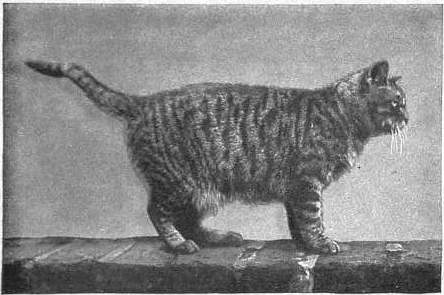
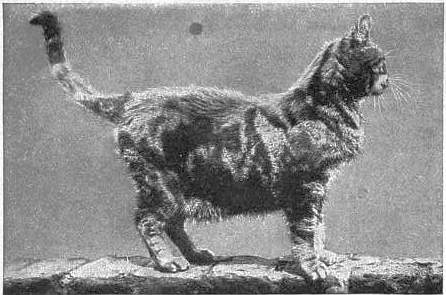
The foregoing opinion as to the dual parentage of our domesticated cats receives support from observations made many years ago by E. Blyth, which have recently been endorsed and amplified by R.I. Pocock (Proc. Zool. Soc. London, 1907). According to these observations, two distinct types of so-called tabby cats are recognizable. In the one the pattern consists of narrow vertical stripes, and in the other of longitudinal or obliquely longitudinal stripes, which, on the sides of the body, tend to assume a spiral or sub-circular arrangement characteristic of the blotched tabby. This latter type appears to be the true “tabby”; since that word denotes a pattern like that of watered silk. One or other of these types is to be found in cats of almost all breeds, whether Persian, short-haired or Manx; and there appear to be no intermediate stages between them. Cats of the striped type are no doubt descended from the European and North African wild cats; but the origin of cats exhibiting the blotched pattern appears to be unknown. As it was to a cat of the latter kind that Linnaeus gave the name of Felis catus, Pocock urges that this title is not available for the European wild cat, which he would call Felis sylvestris. Without accepting this proposed change in nomenclature, which is liable to lead to confusion without any compensating advantage, it may be suggested that the blotched tabby type represents Dr Nehring’s presumed Chinese element in the cat’s parentage, and that the missing wild stock may be one of the numerous phases of the leopard-cat (F. bengalensis), in some of which an incipient spiral arrangement of the markings may be noticed on the shoulder.
As to the introduction of domesticated cats into Europe, the opinion is very generally held that tame cats from Egypt were imported at a relatively early date into Etruria by Phoenician traders; and there is decisive evidence that these animals were established in Italy long before the Christian era. The progeny of these cats, more or less crossed with the indigenous species, thence gradually spread over Europe, to become mingled at some period, according to Dr Nehring’s hypothesis, with an Asiatic stock. The earliest written record of the introduction of domesticated cats into Great Britain dates from about a.d. 936, when Hywel Dda, prince of South Wales, enacted a law for their protection. “The Romans,” writes Dr Hamilton, “were probably the original introducers of this cat, and as the final evacuation of Britain by that nation took place under the emperor Valentinian about a.d. 436, the period of its introduction may certainly be dated some 500 years previous to the Welsh chronicle and even much earlier.” It is added that the remains of cats from Roman villas at Silchester and Dursley are probably referable to the domesticated breed.
Before proceeding to notice some of the different types of domesticated cats, a few lines may be devoted to the wild European species, F. catus. Beyond stating that in colour it conforms very closely to the striped phase of domesticated tabby, it will be unnecessary to describe the species. Its geographical range was formerly very extensive, and included Great Britain, France, the Netherlands, Switzerland, Germany, Bohemia, Hungary, Poland, Transylvania, Galicia, the Caucasus as far as the Caspian, southern Russia, Italy, Spain, Greece, Rumania, Bulgaria, Servia, and portions of central and northern Asia. “At the present time,” observes Dr Hamilton, “the wild cat has become almost extinct in many of the above districts. Examples may perhaps occasionally still be found in the uninhabited forests of Hungary and Transylvania, and occasionally in Spain and Greece, as well as in the Caucasus and in some of the Swiss cantons, but the original race has in most countries interbred with the domestic cat wherever the latter has penetrated.” In Great Britain wild cats survive only in some of the Scottish forests, and even there it is difficult to decide whether pure-bred specimens are extant. Remains of the wild cat occur in English caverns; while from those of Ireland (where the wild species has apparently been unknown during the historic period) have been obtained jaws and teeth which it has been suggested are referable to the Egyptian rather than to the European wild cat. Such a determination is, however, extremely hazardous, even if it be admitted that the remains of cats from the rock-fissures of Gibraltar pertain to Felis ocreata.
Plate I.
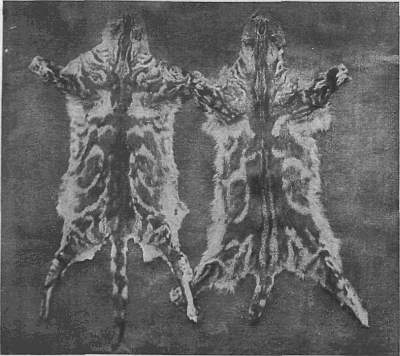
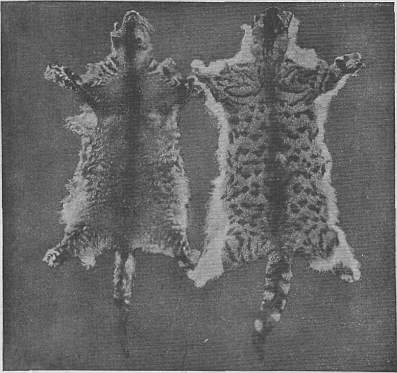
Fig. 1.—SKINS OF THE BLOTCHED DOMESTIC CAT, SHOWING SOME OF THE VARIATIONS TO WHICH THE PATTERN IS LIABLE. (Cf. Fig. 5 on Plate II.) Fig. 2.—SKINS OF THE STRIPED DOMESTIC CAT, GIVING THE “TICKED” BREED AND A PARTIALLY ALBINO SPECIMEN. (Cf. Fig. 4 on Plate II.)
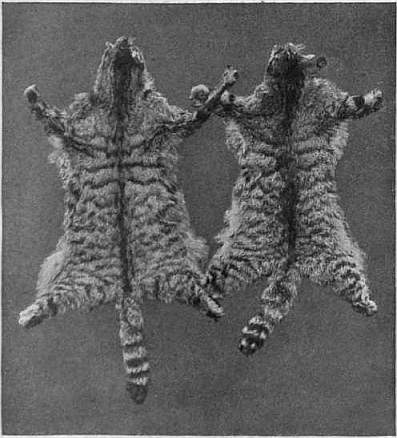
Fig. 3.—SKINS OF THE EUROPEAN WILD CAT, FROM ROSS-SHIRE, SCOTLAND. (Cf. Fig. 1 on Plate II.)
Note—Of the two types of colouration found in modern domestic cats, the striped type obviously corresponds to the original wild cat as seen in various parts of North Europe to-day. The origin of the blotched as a special type is wholly unknown.
(Photos from Plates VIII., IX., and X., P.Z.S., 1907, by permission of the Zoological Society of London.)
Plate II.
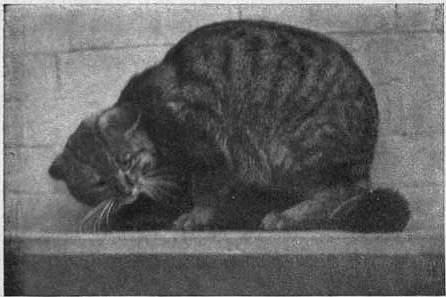
Photo, W.G. Berridge. Photo, W.G. Berridge.
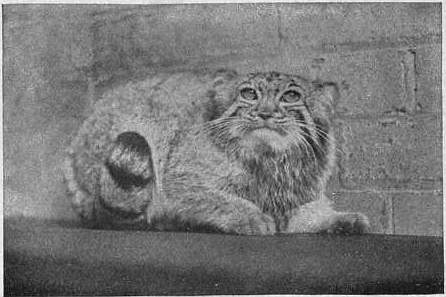
Fig. 1.—EUROPEAN WILD CAT. Fig. 2.—PALLAS’S CAT.
Photo, R.C. Ryan. Photo, Topical Press Agency.
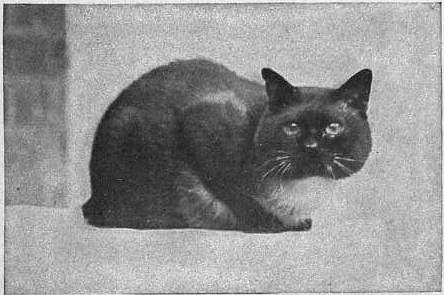
Fig. 3.—ROYAL SIAMESE CAT. Fig. 4.—STRIPED DOMESTIC CAT.
Photo, Topical Press Agency Photo, R.C. Ryan
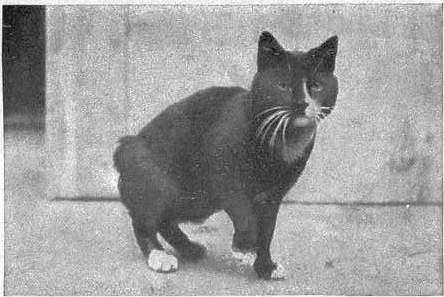
Fig. 5.—BLOTCHED DOMESTIC CAT. Fig. 6.—TAIL-LESS CAT.
Photo, Topical Press Agency. Photo, Topical Press Agency.
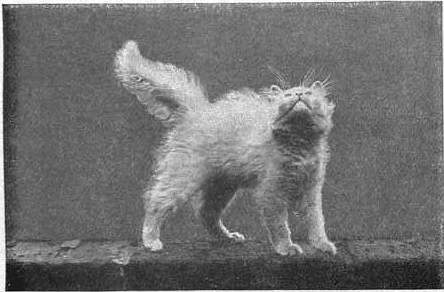
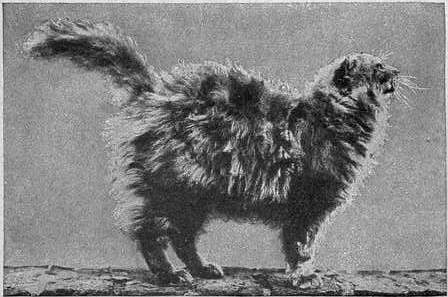
Fig. 7.—WHITE PERSIAN KITTEN. Fig. 8.—BLUE PERSIAN CAT.
Photo, Topical Press Agency.
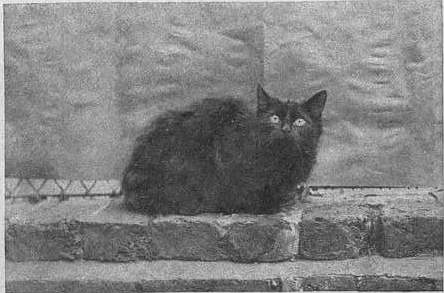
Fig. 9.—BLACK PERSIAN KITTEN.
The favourite haunts of the wild cat are mountain forests where masses or rocks or cliffs are interspersed with trees, the crevices in these rocks or the hollow trunks of trees affording sites for the wild cat’s lair, where its young are produced and reared. In the Spanish plains, however, the young are often produced in nests built in trees, or among tall bamboos in cane-brakes. “To fight like a wild cat” is proverbial, and wild cats are described as some of the most ferocious and untamable of all animals. How far this untamable character lends support to the view of the origin of our domesticated breeds has not yet been determined. Hares, rabbits, field-mice, water-rats, rats, squirrels, moles, game-birds, pigeons, and small birds, form the chief food of the wild cat.
Apart from the above-mentioned division of the striped members of both groups into two types according to the pattern of their markings, the domesticated cats of western Europe are divided into a short-haired and a long-haired group. Of these, the former is the one which bears the closest relationship to the wild cats of Africa and of Europe, the latter being an importation from the East. The striped (as distinct from the blotched) short-haired tabby is probably the one most nearly allied to the wild ancestors, the stripes being, however, to a great extent due to the European wild cat. In one direction the tabby shows a tendency to melanism which culminates in complete blackness, while in the other direction there is an equally marked tendency to albinism; grey cats, which may be regarded as tabbies whose stripes have disappeared, forming the connecting link between the tabby and the white cat. A mixture of the melanistic with the albinistic type will of course give rise to parti-coloured cats. A third colour-phase, the “erythristic” or red, is represented by the sandy cat, the female of which takes the form of the “tortoise-shell,” characterized, curiously enough, by the colour being a blend of black, white, and sandy. The so-called orange tabby is one phase of the erythristic type.
As to long-haired cats, there appear originally to have been two closely-allied strains, the Angora and the Persian, of which the former has been altogether replaced in western Europe by the latter. That these long-haired cats have an ancestry, to some extent at any rate distinct from the ordinary short-haired breeds, is practically certain, and it has been suggested that they are derived from the “manul” cat, or Pallas’s cat (Felis manul), of the deserts of central Asia, which is a long-haired and bushy-tailed species with comparatively slight striping. The fact that in tabby Persians the body-markings are never so strong as in the short-haired breeds is in some degree confirmatory of this, as suggesting descent from a nearly whole-coloured type. At the present day, however, Persians exhibit nearly all the colour and pattern types of the short-haired breeds, the “orange Persian” representing the erythristic phase.
Turning to the tailless or so-called Manx cats, in which the tail should be represented merely by a tuft of hair without any remnant of bone, it seems that the strain is to be met with in many parts of Russia, and there is a very general opinion that it originally came from Japan or some other far eastern country. Throughout Japan, China, Siam, and the Malay countries, normal long-tailed cats are indeed seldom seen. Instead of these are cats with more or less abbreviated tails, showing in greater or less degree a decided kink or bend near the tip. In other cases the tail is of the short curling type of that of a bulldog; sometimes it starts quite straight, but divides in a fork-like manner near the tip; and in yet other instances it is altogether wanting, as in the typical Manx cats. These kink-tailed or tailless cats are moreover smaller in size than the ordinary short-tailed breeds, with rather longer hair, whose texture approaches that of rabbit-fur, and a cry said to be like that of the jungle-cat (F. chaus) of India and Africa, and more dog-like habits. Unless the jungle-cat, which is a nearly whole-coloured species, can claim the position, the ancestry of these Manx-Malay cats is still unknown. Kink-tailed cats, it should be added, are also known from Madagascar.
Among the domesticated cats of India a spotted type of colouring, with a more or less decided tendency for the spots to coalesce into stripes, is very noticeable; and it is probable that these cats are derived from the spotted Indian desert-cat (F. ornata), with a certain amount of crossing from other species. The so-called F. torquata of India is probably based on cats of this type which have reverted to the wild state. Other Indian cats with a tawny or fulvous type of colouring are probably the more or less modified descendants of the jungle-cat. From the same stock may be derived the Abyssinian breed, in which the ears are relatively large and occasionally tipped with long hairs (thus recalling the tufted ears of the jungle-cat). The colour is typically reddish-brown, each individual hair being “ticked” like that of a wild rabbit, whence the popular name of “bunny cat.” Another African breed is the Mombasa cat, in which the hair is reported to be unusually short and stiff.
By far the most remarkable of all the Old World domesticated breeds is, however, the royal Siamese cat, which almost certainly has an origin quite distinct from that of the ordinary European breeds; this being rendered evident not only by the peculiar type of colouring, but likewise by the cry, which is quite unmistakable. Siamese cats may have the tail either straight or kinked, but whether the latter feature belongs of right to the breed, or has been acquired by crossing with the ordinary black and tabby kink-tailed cats of the country, is not known. In the royal Siamese breed the head is rather long and pointed, the body also elongated with relatively slender limbs, the coat glossy and close, the eyes blue, and the general colour some shade of cream or pink, with the face, ears, feet, under-parts, and tail chocolate or seal-brown. There is however a wholly chocolate-coloured strain in which the eyes are yellow. The most remarkable feature about the breed is that the young are white. “The kittens,” observes a lady writer, “are born absolutely white, and in about a week a faint pencilling comes round the ears, and gradually all the points come. At four or five months they are lovely, as generally they retain their baby whiteness, which contrasts well with their almost black ears, deep-brown markings, and blue eyes.” In constitution these cats are extremely delicate. The blue eyes and the white coat of the kitten indicate that the Siamese breed is a semi-albino, which when adult tends towards melanism, such a combination of characters being apparently unknown in any other animal. If the frequent presence of a kink in the tail be an inherent feature, the breed is evidently related to the other kink-tailed Malay cats which, as already stated, have a cry differing from that of European cats. Should this be so, then if the ordinary Malay cats are the descendants of the jungle-cat, we shall have to assign the same ancestry to the Siamese breed.
Although definite information on this point is required, it seems probable that the southern part of North America and South America possessed certain native domesticated breeds of cats previous to the European conquest of the country; and if this be so, it will be obvious that these breeds must be derived from indigenous wild species. One of these breeds is the Paraguay cat, which when adult weighs only about three pounds, and is not more than a quarter the size of an ordinary cat. The body is elongated, and the hair, especially on the tail, short, shiny and close. This small size and elongated form suggest origin from the jaguarondi (F. jaguarondi), a chestnut-coloured wild species; but information appears to be lacking with regard to the colouring of the domesticated breed. Another South American breed is said to be free from the hideous “caterwauling” of the ordinary cat. In old days New Mexico was the home of a breed of hairless cats, said to have been kept by the ancient Aztecs, but now well-nigh if not completely extinct. Although entirely naked in summer, these cats developed in winter a slight growth of hair on the back and the ridge of the tail.
Literature.—St George Mivart, The Cat (London, 1881); R. Lydekker, “Cats,” in Allen’s Naturalists’ Library (1888); F. Hamilton, The Wild Cat of Europe (London. 1896); Frances Simpson, The Book of the Cat (London, 1903).
(R. L.*)
1 The word “cat” is applied to various objects, in all cases an application of the name of the animal. In medieval siegecraft the “cat” (Med. Lat. chattus or gattus, chatta or gatta, in Fr. chat or chat-chasteil) was a movable pent-house used to protect besiegers when approaching a wall or gateway, for the purpose of sapping, mining or direct attack, or to cover a ram or other battering-engine. The word is also sometimes applied to a heavy timber fitted with iron spikes or projections to be thrown down upon besiegers, and to the large work known as a “cavalier.” “Cat” or “cat-head,” in nautical usage, is the projecting beam on the bows of a ship used to clear the anchor from the sides of the vessel when weighed. The stock of the anchor rests on the cat-head when hung outside the ship. The name is also used of a type of a vessel, now obsolete, and formerly used in the coal and timber trade on the north-east coast of England; it had a deep waist and narrow stem; it is still applied to a small rig of sailing boats, with a single mast stepped far forward, with a fore and aft sail. Among other objects also known by the name of “cat” is the small piece of wood pointed at either end used in the game of tip-cat, and the instrument of punishment, generally known as the “cat o’ nine tails.” This consists of a handle of wood or rope, about 18 in. long, with nine knotted cords or thongs. The multiplication of thongs for purposes of flogging is found in the old Roman flagellum, a scourge, which had sometimes three thongs with bone or bronze knots fastened to them. The “cat” was the regular instrument with which floggings were performed in the British army and navy. Since the abolition of flogging in the services, the use of the cat is now restricted to certain classes of offenders in military prisons (Army Act 1881, § 133). In the English criminal law, where corporal punishment is ordered by the court for certain criminal offences, the “cat” is used only where the prisoner is over sixteen years of age. It may not be used except when actually ordered in the sentence, and must be of a pattern approved by a secretary of state. Further floggings are inflicted with the “cat” upon convicted prisoners for breaches of discipline in prison. They must be ordered by the visitors of the prison and confirmed by the home secretary.
CATABOLISM, or Katabolism (Gr. κατἀ, down, βολή, a throw), the biological term for the reverse of anabolism, namely the breaking down of complex into simpler substances, destructive metabolism (see Physiology).
CATACLYSM (Gr. κατακλυσμός, a deluge), a great flood or deluge (q.v.). The term is used in geology to denote an overwhelming catastrophe which has produced sudden changes in the earth’s surface; and also, figuratively, of any great and violent change which sweeps away the existing social or political order.
CATACOMB, a subterranean excavation for the interment of the dead or burial-vault. In this sense the word “catacomb” has gained universal acceptance, and has found a place in most modern languages. The original term, catacumbae, however, had no connexion with sepulture, but was simply the name of a particular locality in the environs of Rome. It was derived from the Greek κατά and κύμβη, “a hollow,” and had reference to the natural configuration of the ground. In the district that bore this designation, lying close to the Appian Way, the basilica of San Sebastiano was erected, and the extensive burial-vaults beneath that church—in which, according to tradition, the bodies of the apostles St Peter and St Paul rested for a year and seven months previous to their removal to the basilicas which bear their names—were, in very early times, called from it coemeterium ad catacumbas, or catacumbas alone. From the celebrity of this cemetery as an object of pilgrimage its name became extensively known, and in entire forgetfulness of the origin of the word, catacumbae came to be regarded as a generic appellation for all burial-places of the same kind. This extension of the term to Christian burial-vaults generally dates from the 9th century, and obtained gradual currency through the Christian world. The original designation of these places of sepulture is crypta or coemeterium.
The largest number of Christian catacombs belong to the 3rd and the early part of the 4th centuries. The custom of subterranean interment gradually died out, and entirely ceased with the sack of Rome by Alaric, a.d. 410. “The end of the catacomb graves,” writes Mommsen (Cont. Rev., May 1871), “is intimately connected with the end of the powerful city itself.... Poverty took the place of wealth, ... the traditions of the Christian tomb-architects sank into utter insignificance, and the expanse of the wasted Campagna now offered room enough to bury the few bodies, without having to descend as once far down below the surface of the earth.” The earliest account of the catacombs, that of St Jerome narrating his visits to them when a schoolboy at Rome, about a.d. 354, shows that interment in them was even then rare if it had not been altogether discontinued; and the poet Prudentius’s description of the tomb of the Christian martyr Hippolytus, and the cemetery in which it stood, leads us to the same conclusion. With the latter part of the 4th century a new epoch in the history of the catacombs arose—that of religious reverence. In the time of Pope Damasus, a.d. 366-384, the catacombs had begun to be regarded with special devotion, and had become the resort of large bands of pilgrims, for whose guidance catalogues of the chief burial-places and the holy men buried in them were drawn up. Some of these lists are still extant.1 Pope Damasus himself displayed great zeal in adapting the catacombs to their new purpose, restoring the works of art on the walls, and renewing the epitaphs over the graves of the martyrs. In this latter work he employed an engraver named Furius Philocalus, the exquisite beauty of whose characters enables the smallest fragment of his work to be recognized at a glance. This gave rise to extensive alterations in their construction and decoration, which has much lessened their value as authentic memorials of the religious art of the 2nd and 3rd centuries. Subsequent popes manifested equal ardour, with the same damaging results, in the repair and adornment of the catacombs, and many of the paintings covering their walls, which have been assigned to the period of their original construction, are really the work of these later times. The catacombs shared in the devastation of Rome by the Goths under Vitiges in the 6th century and by the Lombards at a later period; and partly through the spoliation of these barbarian invaders, partly through the neglect of those who should have been their guardians, they sank into such a state of decay and pollution that, as the only means of preserving the holy remains they enshrined from further desecration, Pope Paul I., in the latter part of the 8th century, and Pope Paschal, at the beginning of the 9th, entered upon the work of the translation of the relics, which was vigorously carried on by successive pontiffs until the crypts were almost entirely despoiled of their dead. The relics having been removed, the visits of pilgrims naturally ceased, and by degrees the very existence of those wonderful subterranean cemeteries was forgotten. Six centuries elapsed before the accidental discovery of a sepulchral chamber by some labourers digging for pozzolana earth (May 31, 1578) revealed to the amazed inhabitants of Rome “the existence,” to quote a contemporary record, “of other cities concealed beneath their own suburbs.” Baronius, the ecclesiastical historian, was one of the first to visit the new discovery, and his Annals in more than one place evidence his just appreciation of its importance. The true “Columbus of this subterranean world,” as he has been aptly designated, was the indefatigable Antonio Bosio (d. 1629), who devoted his life to the personal investigation of the catacombs, the results of which were given to the world in 1632 in a huge folio, entitled Roma sotterranea, profusely illustrated with rude but faithful plans and engravings. This was republished in a Latin translation with considerable alterations and omissions by Paolo Aringhi in 1651; and a century after its first appearance the plates were reproduced by Giovanni Bottari in 1737, and illustrated with great care and learning. Some additional discoveries were described by Marc Antonio Boldetti in his Osservazioni, published in 1720; but, writing in the interests of the Roman Church with an apologetic, not a scientific object, truth was made to bend to polemics, and little addition to our knowledge of the catacombs is to be gained from his otherwise important work. The French historian of art, Seroux d’Agincourt, 1825, by his copious illustrations, greatly facilitated the study of the architecture of the catacombs and the works of art contained in them. The works of Raoul Rochette display a comprehensive knowledge of the whole subject, extensive reading, and a thorough acquaintance with early Christian art so far as it could be gathered from books, but he was not an original investigator. The great pioneer in the path of independent research, which, with the intelligent use of documentary and historical evidence, has led to so vast an increase in our acquaintance with the Roman Catacombs, was Padre Marchi of the Society of Jesus. His work, Monumenti delle arti christiane primitive, is the first in which the strange misconception, received with unquestioning faith by earlier writers, that the catacombs were exhausted sand-pits adapted by the Christians to the purpose of interment, was dispelled, and the true history of their formation demonstrated. Marchi’s line of investigation was followed by the Commendatore De Rossi, and his brother Michele, the former of whom was Marchi’s fellow-labourer during the latter part of his explorations; and it is to them that we owe the most exhaustive scientific examination of the whole subject. The Catacombs of Rome are the most extensive with which we are acquainted, and, as might be expected in the centre of the Christian world, are in many respects the most remarkable. No others have been so thoroughly examined and illustrated. These may, therefore, be most appropriately selected for description as typical examples.
Our description of the Roman Catacombs cannot be more appropriately introduced than by St Jerome’s account of his visits to them in his youth, already referred to, which, after the lapse of above fifteen centuries, presents a Catacombs of Rome. most accurate picture of these wonderful subterranean labyrinths. “When I was a boy,” he writes, “receiving my education in Rome, I and my schoolfellows used, on Sundays, to make the circuit of the sepulchres of the apostles and martyrs. Many a time did we go down into the catacombs. These are excavated deep in the earth, and contain, on either hand as you enter, the bodies of the dead buried in the wall. It is all so dark there that the language of the prophet (Ps. lv. 15) seems to be fulfilled, ‘Let them go down quick into hell.’ Only occasionally is light let in to mitigate the horror of the gloom, and then not so much through a window as through a hole. You take each step with caution, as, surrounded by deep night, you recall the words of Virgil—
“Horror ubique animos, simul ipsa silentia terrent.”2
In complete agreement with Jerome’s vivid picture the visitor to the Roman Catacombs finds himself in a vast labyrinth of narrow galleries, usually from 3 to 4 ft. in width, interspersed with small chambers, all excavated at successive levels, in the strata of volcanic rock subjacent to the city and its environs, and constructed originally for the interment of the Christian dead. The galleries are not the way of access to the cemeteries, but are themselves the cemeteries, the dead being buried in long low horizontal recesses, excavated in the vertical walls of the passages, rising tier above tier like the berths in a ship, from a few inches above the floor to the springing of the arched ceiling, to the number of five, six or even sometimes twelve ranges. These galleries are not arranged on any definite plan, but, as will be seen from the plan (fig. 1), they intersect one another at different angles, producing an intricate network which it is almost impossible to reduce to any system. They generally run in straight lines, and as a rule preserve the same level. The different storeys of galleries lie one below the other (fig. 2) to the number of four or five (in one part of the cemetery of St Calixtus they reach seven storeys), and communicate with one another by stairs cut out of the living rock. Light and air are introduced by means of vertical shafts (luminaria) running up to the outer air, and often serving for several storeys. The drawing (fig. 3) from Northcote gives a very correct idea of these galleries, with the tiers of graves pierced in the walls. The doorways which are seen interrupting the lines of graves are those of the family sepulchral chambers, or cubicula, of which we shall speak more particularly hereafter.
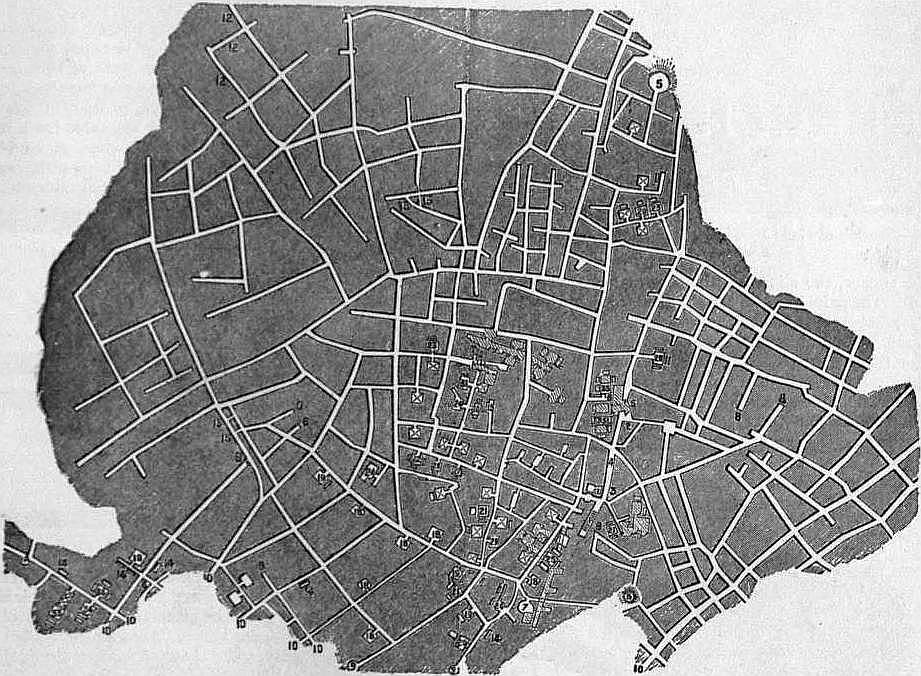
Fig. 1.—Plan of part of the Cemetery of Sant’ Agnese. (From Martigny.)
A. Entrance from the Basilica of St Agnes. 1, 2. Ancient staircases leading to the first storey. 3. Corridors from the staircases. 4. Two ruined staircases leading to the lower storey. 5. Steps of the rock. 6. Air-shafts, or luminaria. 7. Ruined vault. 8. Blind ways. 9. Passages built up or ruined. 10. Passages obstructed by landslips. 11. Unfinished passage. 12. Passages destitute of tombs. 13. Narrow apertures between adjoining galleries. 14-17. Arcosolia. 18-32. Cubicula. 33. Chapel with vestibule and apse, and two chairs. 34. Double chapel with three chairs. 35. Large chapel in five divisions.
The graves, or loculi, as they are commonly designated, were, in the Christian cemeteries, with only a few exceptions (Padre Marchi produces some from the cemetery of St Ciriaca, Monum. primitiv. tav. xiv. xliii. xliv.), parallel with the length of the gallery. In the pagan cemeteries, on the other hand, the sepulchral recess as a rule entered the rock like an oven at right angles to the corridor, the body being introduced endways. The plan adopted by the Christians saved labour, economized space, and consulted reverence in the deposition of the corpse. These loculi were usually constructed for a single body only. Some, however, were formed to contain two, three, or four, or even more corpses. Such recesses were known respectively as bisomi, trisomi, quadrisomi, &c., terms which often appear in the sepulchral inscriptions. After the introduction of the body the loculi were closed with the greatest care, either with slabs of marble the whole length of the aperture, or with huge tiles, three being generally employed, cemented together with great exactness so as to prevent the escape of the products of decomposition (fig. 4). Where any epitaph was set up—an immense number are destitute of any inscription at all—it is always painted or engraved on these slabs or tiles. In the earlier interments the epitaph is usually daubed on the slab in red or black paint. In later examples it is incised in the marbles, the letters being rendered clearer by being coloured with vermilion. The enclosing slab very often bears one or more Christian symbols, such as the dove, the anchor, the olive-branch, or the monogram of Christ (figs. 5, 6). The palm branch, which is also of frequent occurrence, is not an indisputable mark of the last resting-place of a martyr, being found in connexion with epitaphs of persons dying natural deaths, or those prepared by persons in their lifetime, as well as in those of little children, and even of pagans. Another frequent concomitant of these catacomb interments, a small glass vessel containing traces of the sediment of a red fluid, embedded in the cement of the loculus (fig. 7), has no better claim. The red matter proves to be the remains of wine, not of blood; and the conclusion of the ablest archaeologists is that the vessels were placed where they are found, after the eucharistic celebration or agape on the day of the funeral or its anniversary, and contained remains of the consecrated elements as a kind of religious charm. Not a few of the slabs, it is discovered, have done double duty, bearing a pagan inscription on one side and a Christian one on the other. These are known as opisthographs. The bodies were interred wrapped in linen cloths, or swathed in bands, and were frequently preserved by embalming. In the case of poorer interments the destruction of the body was, on the contrary, often accelerated by the use of quicklime.
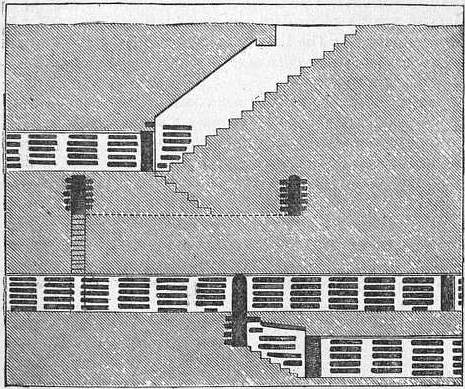
Fig. 2—Section of Galleries at different levels. (From Seroux d’Agincourt.)
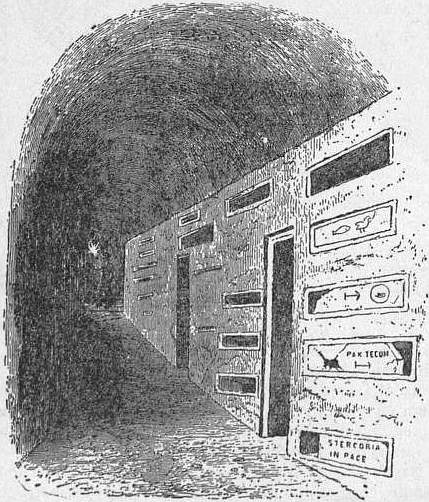
Fig. 3—View of a Gallery.
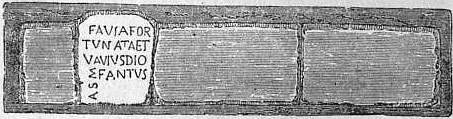
Fig 4.—Loculi. (From de Rossi.)
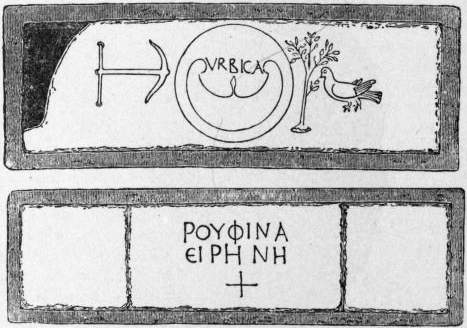
Figs. 5 and 6.—Loculi. (From de Rossi.)
Interment in the wall-recess or loculus, though infinitely the most common, was not the only mode employed in the catacombs. Other forms of very frequent recurrence are the table tomb and arched tomb, or arcosolium. From the annexed woodcuts it will be seen that these only differ in the form of the surmounting recess. In each case the arched tomb was formed by an oblong chest, either hollowed out of the rock, or built of masonry, and closed with a horizontal slab. But in the table-tomb (fig. 8) the recess above, essential for the introduction of the corpse, is square, while in the arcosolium (fig. 9), a form of later date, it is semicircular. Sarcophagi are also found in the catacombs, but are of rare occurrence. They chiefly occur in the earlier cemeteries, and the costliness of their construction confined their use to the wealthiest classes—e.g. in the cemetery of St Domitilla, herself a member of the imperial house. Another unfrequent mode of interment was in graves like those of modern times, dug in the floor of the galleries (Marchi, u.s., tav. xxi. xxvi.). Table-tombs and arcosolia are by no means rare in the corridors of the catacombs, but they belong more generally to the cubicula, or family vaults, of which we now proceed to speak.
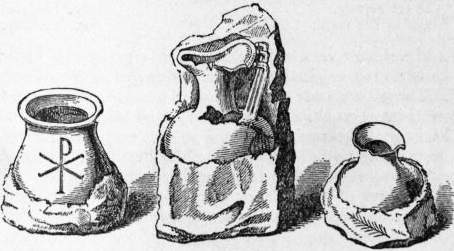
Fig. 7—Glass Bottles. (From Bosio.)
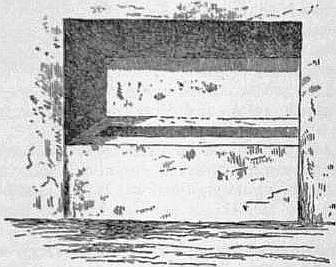
Fig. 8.—Table-tomb.
These cubicula are small apartments, seldom more than 12 ft. square, usually rectangular, though sometimes circular or polygonal, opening out of the main corridors. They are not unfrequently ranged regularly along the sides of the galleries, the doors of entrance, as may be seen in a previous illustration (fig. 3), following one another in as orderly succession as the bedchamber doors in the passage of a modern house. The roof is sometimes flat, but is more usually vaulted, and sometimes rises into a cupola. Both the roof and the walls are almost universally coated with stucco and covered with fresco paintings—in the earlier works merely decorative, in the later always symbolical or historical. Each side of the cubiculum, except that of the entrance, usually contains a recessed tomb, either a table-tomb or an arcosolium. That facing the entrance was the place of greatest honour, where in many instances the remains of a martyr were deposited, whose tomb, according to primitive usage, served as an altar for the celebration of the eucharist. This was sometimes, as in the Papal crypt of St Calixtus (fig. 10), protected from irreverence by lattice work (transennae) of marble. The cubiculum was originally designed for the reception of a very limited number of dead. But the natural desire to be buried near one’s relatives caused new tombs to be cut in the walls, above and around and behind the original tombs, the walls being thus completely honeycombed with loculi, sometimes as many as seventy, utterly regardless of the paintings originally depicted on the walls. Another motive for multiplying the number of graves operated when the cubiculum contained the remains of any noted saint or martyr. The Christian antiquary has cause continually to lament the destruction of works of art due to this craving. One of the most perfect examples of early Christian pictorial decoration, the so-called “Dispute with the Doctors,” in the catacomb of Calixtus, the “antique style of beauty” of which is noticed by Kugler, has thus suffered irreparable mutilation, the whole of the lower part of the picture having been destroyed by the excavation of a fresh grave-recess (Bottari, vol. ii. tav. 15). The plates of De Rossi, Ferret, and, indeed, all illustrations of the catacombs, exhibit frequent examples of the same destructive superstition. The illustrations (figs. 11 and 12), taken from De Rossi’s great work, representing two of the cubicula in the cemetery of St Calixtus, show the general arrangement of the loculi and the character of the frescoes which ornament the walls and roof. These paintings, it will be seen, are simply decorative, of the same style as the wall-paintings of the baths, and those of Pompeii.
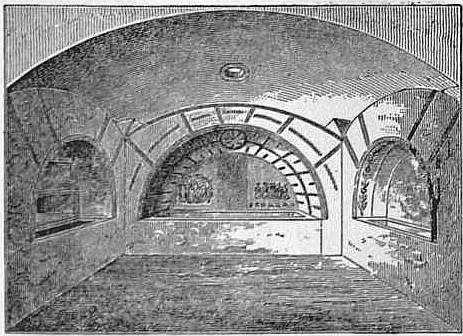
Fig. 9—Arcosolia. (From Bosio.)
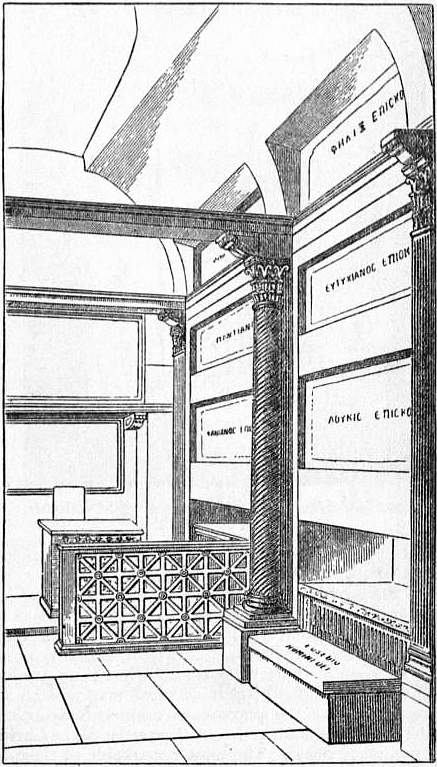
Fig. 10—Restoration of the Papal Crypt, Cemetery of St Calixtus. (From de Rossi.)
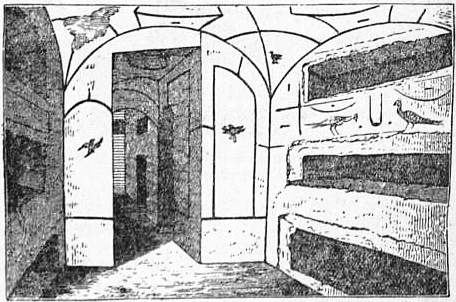
Fig. 11.—Cubiculum in Cemetery of St Calixtus. (From de Rossi.)
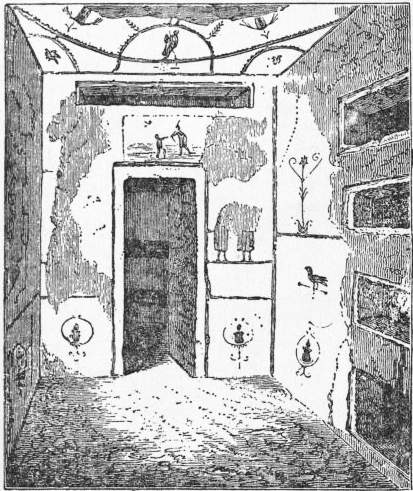
Fig. 12.—Cubiculum in the Cemetery of St Calixtus. (From de Rossi.)
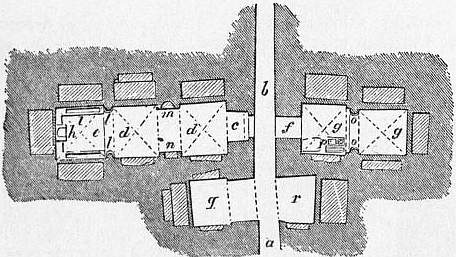
Fig. 13.—Plan of a supposed Church, Catacomb of Sant’ Agnese. (From Marchi.)
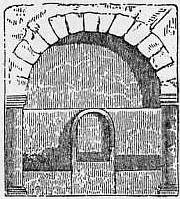
Fig. 14.—Bishop’s Chair. Catacomb of Sant’ Agnese.
Each cubiculum was usually the burying-place of some one family, all the members of which were interred in it, just as in the chantry-chapels connected with medieval churches. In them was celebrated the funeral-feast on the day of burial and on its anniversary, as well as the eucharist, which was the invariable accompaniment of funerals in the primitive church (Bingham, Orig. Eccl. bk. xxiii. c. iii. 12). The funeral-banquet descended to the Christian church from pagan times, and was too often profaned by heathen licence. St Augustine, in several passages, inveighs against those who thus by “gluttony and insobriety buried themselves over the buried,” and “made themselves drunk in the chapels of the martyrs, placing their excesses to the score of religious reverence for the dead.” (August., De Mor. Eccl. Cathol., c. 34, Contr. Faust, lib. xx. c. 21, Confess., lib vi. c. 2) Some curious frescoes representing these funeral-feasts, found in the cubicula which were the scene of them, are reproduced by Bosio (pp. 355, 391) and others. A romantic air has been thrown over these burial chapels by the notion that they were the places of worship used by the Christians in times of persecution. This to a certain extent is doubtless true, as in the case of the chapel of Santa Priscilla, where the altar or stone coffin of a martyr remains, with a small platform behind it for the priest or bishop to stand upon. But that they can have been so used to any large extent is rendered impossible by their limited dimensions, as none of them could hold more than fifty or sixty persons. In some of the catacombs, however, there are larger halls and connected suites of chapels which may possibly have been constructed for the purpose of congregational worship during the dark periods when the public exercise of the Christian religion was made penal. The most remarkable of these is in the cemetery of Sant’ Agnese (see plan, fig. 13). It consists of five rectangular compartments, three on one side of the corridor and two on the other, connected by a passage intersecting the gallery at right angles. Two of the five compartments are supposed to have been assigned to male, and two to female worshippers, the fifth, at the extremity of the whole, being reserved for the altar and its ministers. In the centre of the end-wall stands a stone chair (fig. 14), considered to have been the episcopal cathedra, with a bench for the clergy on each side. There is no trace of an altar, which may, Marchi thinks, have been portable. The walls of the compartments are occupied by arched sepulchral recesses, above and below which are tiers of ordinary graves or loculi. The arrangements are certainly such as indicate a congregational purpose, but the extreme narrowness of the suite, and still more of the passage which connects the two divisions, must have rendered it difficult for any but a small number to take any intelligent part in the services at the same time. Although the idea of the use of the catacombs for religious worship may have been pressed too far, there can be no doubt that the sacred rites of the church were celebrated within them. We have already spoken of the eucharistic celebrations of which the cubicula were the scene; and still existing baptisteries prove that the other sacrament was also administered there. The most remarkable of these baptisteries is that in the catacomb of San Pontianus (fig. 15). Ten steps lead down to a basin of sufficient depth for immersion, supplied by a spring. Some of the subterranean chambers contain armed seats and benches cut out of the tufa rock. These are supposed by Marchi and others to indicate schoolrooms, where the catechumens were instructed by the bishop or presbyters. But this theory wants verification. It is impossible not to be struck with the remarkable analogy between these rock-hewn chairs and those discovered in the Etruscan tombs, of the purpose of which no satisfactory explanation has been given.
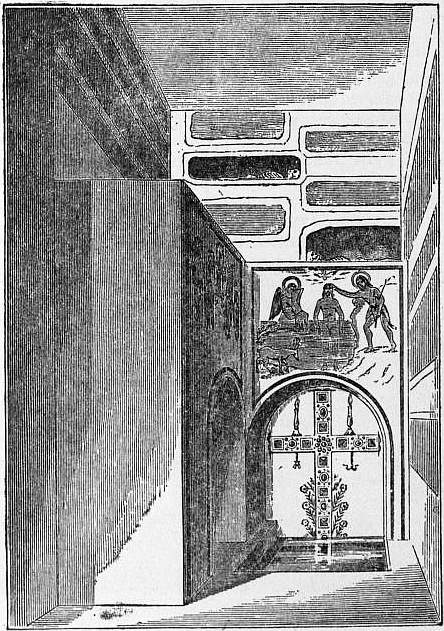
Fig. 15.—Baptistery of San Pontianus. (From Perret.)
Very exaggerated statements have been made as to the employment of the catacombs as dwelling-places by the Christians in times of persecution. We have, however, sufficient evidence that they were used as places of refuge from Theories of the use of the catacombs. the fury of the heathen, in which the believers—especially the bishops and clergy, who would naturally be the first objects of attack—might secrete themselves until the storm had blown over. This was a purpose for which they were admirably adapted both by the intricacy of their labyrinthine passages, in which any one not possessing the clue would be inevitably lost, and the numerous small chambers and hiding-places at different levels which might be passed unperceived in the dark by the pursuers. As a rule also the catacombs had more than one entrance, and frequently communicated with an arenaria or sand-quarry; so that while one entrance was carefully watched, the pursued might escape in a totally different direction by another. But, to quote J.H. Parker, “the catacombs were never intended, nor fit for, dwelling-places, and the stories of persons living in them for months are probably fabulous. According to modern physicians it is impossible to live many days in the caves of pozzolana in which many of the catacombs are excavated.” Equally exaggerated are the statements as to the linear and lateral extent of the catacombs, and their intercommunication with one another. Without resorting to this exaggeration, Mommsen can speak with perfect truth of the “enormous space occupied by the burial vaults of Christian Rome, not surpassed even by the cloacae or sewers of Republican Rome,” but the data are too vague to warrant any attempt to define their dimensions. Marchi has estimated the united length of the galleries at from 800 to 900 m., and the number of interments at between 6,000,000 and 7,000,000; Martigny’s estimate is 587 m.; and Northcote’s, lower still, at “not less than 350 m.” The idea of general intercommunication is negatived by the fact that the chief cemeteries are separated by low ground or valleys, where any subterranean galleries would be at once filled with water.
It now remains to speak of the history of these subterranean burial-places, together with the reasons for, and mode of, their construction. From the period of the rediscovery of the catacombs in the 16th century till comparatively recent times a gigantic fallacy prevailed, repeated by writer after writer, identifying the Christian burial-places with disused sand-pits. It was accepted as an unquestionable fact by every one who undertook to describe the catacombs, that the Christians of Rome, finding in the labyrinthine mazes of the exhausted arenariae, which abounded in the environs of the city, whence the sand used in building had been extracted, a suitable place for the interment of their martyred brethren, where also the sacred rites accompanying the interment might be celebrated without fear of interruption, took possession of them and used them as cemeteries. It only needed a comparison of the theory with the visible facts to refute it at once, but nearly three centuries elapsed before the independence of the arenariae and the catacombs was established. The discovery of this independence is due to Marchi. Starting with the firmest belief in the old traditional view, his own researches by degrees opened his eyes to the truth, now universally recognized, that the catacombs were exclusively the work of the Christians, and were constructed for the interment of the dead. It is true that a catacomb is often connected with the earlier sand-quarry, and starts from it as a commencement, but the two are excavated in different strata, suitable to their respective purposes, and their plan and construction are so completely unlike as to render any confusion between them impossible.
The igneous formation of which the greater part of the Roman Campagna is, in its superior portion, composed, contains three strata known under the common name of tufa,—the “stony,” “granular,” and “sandy” tufa,—the last being commonly known as pozzolana.3 The pozzolana is the material required for building purposes, for admixture with mortar; and the sandpits are naturally excavated in the stratum which supplies it. The stony tufa (tufa litoide) is quarried as building-stone. The granular tufa is useless for either purpose, containing too much earth to be employed in making mortar, and being far too soft to be used as stone for building. Yet it is in this stratum, and in this alone, that the catacombs are constructed; their engineers avoiding with equal care the solid stone of the tufa litoide and the friable pozzolana, and selecting the stratum of medium hardness, which enabled them to form the vertical walls of their galleries, and to excavate the loculi and cubicula without severe labour and also without fear of their falling in. The annexed illustration (fig. 16) from Marchi’s work, when compared with that of the catacomb of Sant’ Agnese already given, presents to the eye the contrast between the wide winding irregular passages of the sand-pit, calculated for the admission of a horse and cart, and the narrow rectilinear accurately-defined galleries of the catacomb. The distinction between the two is also plainly exhibited when for some local or private reasons an ancient arenaria has been transformed into a cemetery. The modifications required to strengthen the crumbling walls to support the roof and to facilitate the excavation of loculi, involved so much labour that, as a rule, after a few attempts, the idea of utilizing an old quarry for burial purposes was abandoned.
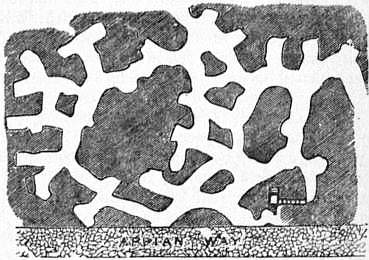
Fig. 16.—Arenaria beneath the Cemetery of Calixtus.
Another equally erroneous idea was that these vast burial-places of the early Christians remained entirely concealed from the eyes of their pagan neighbours, and were constructed not only without the permission of the municipal authorities but without their cognizance. Nothing can be farther from the truth. Such an idea is justly stigmatized by Mommsen as ridiculous, and reflecting a discredit as unfounded as it is unjust on the imperial police of the capital. That such vast excavations should have been made without attracting attention, and that such an immense number of corpses could have been carried to burial in perfect secrecy is utterly impossible. Nor was there any reason why secrecy should have been desired. The decent burial of the dead was a matter especially provided for by the Roman laws. No particular mode was prescribed. Interment was just as legal as cremation, and had, in fact, been universally practised by the Romans until the later days of the republic.4 The bodies of the Scipios and Nasos were buried in still existing catacombs; and if the Christians preferred to adopt that which Minucius Felix calls “the better, and more ancient custom of inhumation” (Octavius, c. 2), there was absolutely nothing, to quote the words of Northcote (Roma sotterran. pp. 56, 61), “either in their social or religious position to interfere with their freedom of action. The law left them entire liberty,... and the faithful did but use their liberty in the way that suited them best, burying their dead according to a fashion to which many of them had been long accustomed, and which enabled them at the same time to follow in death the example of him who was also their model in life.” Interment in rock-hewn tombs, “as the manner of the Jews is to bury,” had been practised in Rome by the Jewish settlers for a considerable period anterior to the rise of the Christian Church. A Jewish catacomb, now lost, was discovered and described by Bosio (Rom. sott. p. 141), and others are still accessible. They are to be distinguished from Christian catacombs only by the character of their decorations, the absence of Christian symbols and the language of their inscriptions. There would, therefore, be nothing extraordinary in the fact that a community, always identified in the popular heathen mind with the Jewish faith, should adopt the mode of interment belonging to that religion. Nor have we the slightest trace of any official interference with Christian burials, such as would render secrecy necessary or desirable. Their funerals were as much under the protection of the law, which not only invested the tomb itself with a sacred character, but included in its protection the area in which it stood, and the cella memoriae or chapel connected with it, as those of their heathen fellow-citizens, while the same shield would be thrown over the burial-clubs, which, as we learn from Tertullian (Apolog. c. 39), were common among the early Christians, as over those existing among the heathen population of Rome.
We may then completely dismiss the notion of there being any studied secrecy in connexion with the early Christian cemeteries, and proceed to inquire into the mode of their formation. Almost without exception, they had their origin in Mode of formation. small burial areas, the property of private persons or of families, gradually ramifying and receiving additions of one subterranean storey after another as each was required for interments. The first step would be the acquisition of a plot of ground either by gift or purchase for the formation of a tomb, Christians were not beyond the pale of the law, and their faith presented no hindrance to the property being secured to them in perpetuity. To adapt the ground for its purpose as a cemetery, a gallery was run all round the area in the tufa rock at a convenient depth below the surface, reached by staircases at the corners. In the upright walls of these galleries loculi were cut as needed to receive the dead. When these first four galleries were full others were mined on the same level at right angles to them, thus gradually converting the whole area into a net-work of corridors. If a family vault was required, or a burial chapel for a martyr or person of distinction, a small square room was excavated by the side of the gallery and communicating with it. When the original area had been mined in this way as far as was consistent with stability, a second storey of galleries was begun at a lower level, reached by a new staircase. This was succeeded by a third, or a fourth, and sometimes even by a fifth. When adjacent burial areas belonged to members of the same Christian confraternity, or by gift or purchase fell into the same hands, communications were opened between the respective cemeteries, which thus spread laterally, and gradually acquired that enormous extent which, “even when their fabulous dimensions are reduced to their right measure, form an immense work.”5 This could only be executed by a large and powerful Christian community unimpeded by legal enactments or police regulations, “a living witness of its immense development corresponding to the importance of the capital.” But although, as we have said, in ordinary times there was no necessity for secrecy, yet when the peace of the Church was broken by the fierce and often protracted persecutions of the heathen emperors, it became essential to adopt precautions to conceal the entrance to the cemeteries, which became the temporary hiding-places of the Christian fugitives, and to baffle the search of their pursuers. To these stormy periods we may safely assign the alterations which may be traced in the staircases, which are sometimes abruptly cut off, leaving a gap requiring a ladder, and the formation of secret passages communicating with the arenariae, and through them with the open country.
When the storms of persecution ceased and Christianity had become the imperial faith, the evil fruits of prosperity were not slow to appear. Cemetery interment became a regular trade in the hands of the fossores, or grave-diggers, who appear to have established a kind of property in the catacombs, and whose greed of gain led to that destruction of the religious paintings with which the walls were decorated, for the quarrying of fresh loculi, to which we have already alluded. Monumental epitaphs record the purchase of a grave from the fossores, in many cases during the lifetime of the individual, not unfrequently stating the price. A very curious fresco, found in the cemetery of Calixtus, preserved by the engravings of the earlier investigators (Bottari, tom. ii. p. 126, tav. 99), represents a “fossor” with his lamp in his hand and his pick over his shoulder, and his tools lying about him. Above is the inscription, “Diogenes Fossor in Pace depositus.”
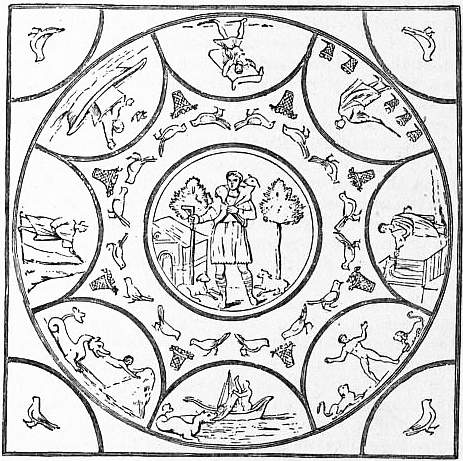
Fig. 17.—Fresco Ceiling. (From Bosio.) The subjects, beginning at the top and going to the right, are—
(1) The paralytic carrying his bed. (2) The seven baskets full of fragments. (3) Raising of Lazarus. (4) Daniel in the lions’ den. (5) Jonah swallowed by the fish. (6) Jonah vomited forth. (7) Moses striking the rock. (8) Noah and the dove. In the centre, the Good Shepherd.
It is unnecessary to enter on any detailed description of the frescoes which cover the walls and ceilings of the burial-chapels in the richest abundance. It must suffice to say that the earliest examples are only to be distinguished from the mural decorations employed by their pagan contemporaries (as seen at Pompeii and elsewhere) by the absence of all that was immoral or idolatrous, and that it was only very slowly and timidly that any distinctly Decoration. religious representations were introduced. These were at first purely symbolical, meaningless to any but a Christian eye, such as the Vine, the Good Shepherd, the Sheep, the Fisherman, the Fish, &c. Even the personages of ancient mythology were pressed into the service of early Christian art, and Orpheus, taming the wild beasts with his lyre, symbolized the peaceful sway of Christ; and Ulysses, deaf to the Siren’s song, represented the Believer triumphing over the allurements of sensual pleasure. The person of Christ appeared but rarely, and then commonly simply as the chief personage in an historical picture. The events depicted from the life of Christ are but few, and always conform rigidly to the same traditional type. The most frequent are the miracle at Cana, the multiplication of the loaves and fishes, the paralytic carrying his bed, the healing of the woman with the issue of blood, the raising of Lazarus, Zacchaeus, and the triumphal entry into Jerusalem. The Crucifixion, and subjects from the Passion, are never represented. The cycle of Old Testament subjects is equally limited. The most common are the history of Jonah as a type of the Resurrection, the Fall, Noah receiving the dove with the olive branch, Abraham’s sacrifice of Isaac, Moses taking off his shoes, David with the sling, Daniel in the lions’ den, and the Three Children in the fiery furnace. The mode of representation is always conventional, the treatment of the subject no less than its choice being dictated by an authority to which the artist was compelled to bow. All the more valuable of these paintings have been produced in J.H. Parker’s series of photographs taken in the catacombs by the magnesium light.6 Wilpert’s great work, in which these frescoes are reproduced in colours, now enables the student even better to distinguish the styles of different centuries and follow the course of artistic development or decay.
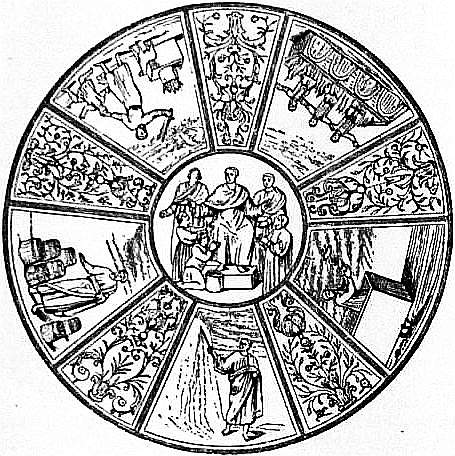
Fig. 18.—Fresco Ceiling. (From Bosio.) The subjects, beginning at the bottom and going to the right, are—
(1) Moses striking the rock. (2) Noah and the dove. (3) The three children in the furnace. (4) Abraham’s sacrifice. (5) The miracle of the loaves.
Beyond Rome and its suburbs the most remarkable Christian catacombs are those in the vicinity of Naples, described by Pelliccia (De Christ. Eccl. Polit. vol. iv. Dissert. 5), and in separate treatises by Bellerman and Schultze. Plans of them are also given by Agincourt in his great work on Christian art. These catacombs differ materially from those of Rome. They were certainly originally stone-quarries, and the hardness of the rock Catacombs of Naples. has made the construction practicable of wide, lofty corridors and spacious halls, very unlike the narrow galleries and contracted chambers in the Roman cemeteries. The mode of interment, however, is the same as that practised in Rome, and the loculi and arcosolia differ by little in the two. The walls and ceilings are covered with fresco paintings of different dates, in some cases lying one over the other. This catacomb contains an unquestionable example of a church, divided into a nave and chancel, with a rude stone altar and bishop’s seat behind it.
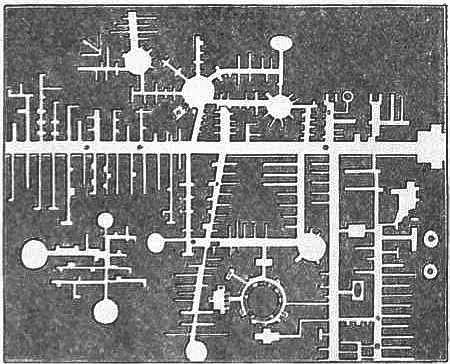
Fig. 19.—Plan of the Catacombs of St John, Syracuse.
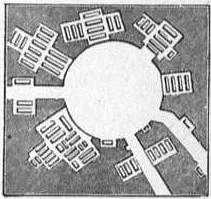
Fig. 20.—Plan of Circular Hall, Catacombs of St John, Syracuse. (From Agincourt.)
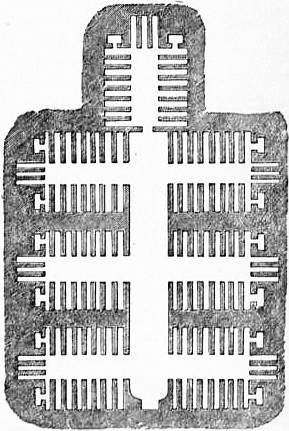
Fig. 21—Plan of Catacomb at Alexandria. (From Agincourt.)
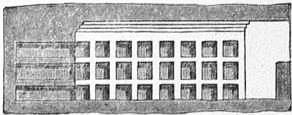
Fig. 22.—Section of a Gallery in Catacomb at Alexandria. (From Agincourt.)
At Syracuse also there are very extensive catacombs known as “the Grottos of St John.” They are also figured by Agincourt, and described by Denon (Voyage en Sicile et Malte) and Führer. There is an entire underground city with Syracuse. several storeys of larger and smaller streets, squares and cross ways, cut out of the rock; at the intersection of the cross ways are immense circular halls of a bottle shape, like a glass-house furnace, lighted by air shafts. The galleries are generally very narrow, furnished on each side with arched tombs, and communicating with family sepulchral-chambers closed originally by locked doors, the marks of the hinges and staples being still visible. The walls are in many places coated with stucco adorned with frescoes, including palms, doves, labara and other Christian symbols. The ground-plans (figs. 19, 20), from Agincourt, of the catacomb and of one of the circular halls, show how widely this cemetery differs in arrangement from the Roman catacombs. The frequency of blind passages and of circular chambers will be noticed, as well as the very large number of bodies in the cruciform recesses, apparently amounting in one instance to nineteen. Agincourt remarks that this cemetery “gives an idea of a work executed with design and leisure, and with means very different from those at command in producing the catacombs of Rome.”
Denon also describes catacombs at Malta near the ancient capital of the island. The passages were all cut in a close-grained stone, and are very narrow, with arched ceilings, running very irregularly, and ramifying in all directions. Malta. The greater part of the tombs stand on either side of the galleries in square recesses (like the table-tombs of the Roman catacombs), and are rudely fashioned to imitate sarcophagi. The interments are not nearly so numerous as in other catacombs, nor are there any vestiges of painting, sculpture or inscriptions. At Taormina in Sicily is a Saracenic catacomb, also Taormina. figured by Agincourt. The main corridor is 12 ft. wide, having three or more ranges of loculi on either side, running longitudinally into the rock, each originally closed by a stone bearing an inscription.
Passing to Egypt, a small Christian catacomb at Alexandria is described and figured by de Rossi.7 The loculi here also are set endways to the passage. The walls are abundantly decorated with paintings, one of a liturgical character. But the most extensive Egypt. catacombs at Alexandria are those of Egypto-Greek origin, from the largest of which, according to Strabo (lib. xvii. p. 795), the quarter where it is placed had the name of the Necropolis. The plan, it will be seen, is remarkable for its regularity (figs. 21, 22). Here, too, the graves run endways into the rock. Other catacombs in the vicinity of the same city are described by Pocock and other travellers, and are figured by Agincourt.
Subterranean cemeteries of the general character of those described are very frequent in all southern and eastern countries. A vast necropolis in the Sidon. environs of Saida, the ancient Sidon, is described in Renan’s Mission en Phénicie, and figured in Thobois’s plates. It consists of a series of apartments approached by staircases, the sides pierced with sepulchral recesses running lengthwise into the rock.
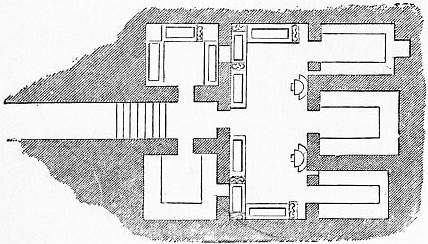
Fig. 23.—Plan of a Tomb at Cervetri. (From Dennis.)
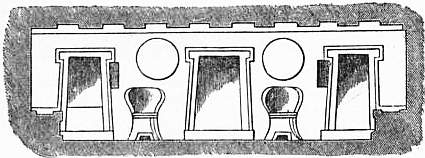
Fig. 24.—Section of the Tomb of the Seats and Shields, Cervetri. (From Dennis.)
The rock-hewn tombs of Etruria scarcely come under the category of catacombs, in the usual sense, being rather independent family burial-places, grouped together in a necropolis. They are, however, far too remarkable Rocktombs of Etruria. to be altogether passed over. These sepulchres are usually hollowed out of the face of low cliffs on the side of a hill. They often rise tier above tier, and are sometimes all on the same level “facing each other as in streets, and branching off laterally into smaller lanes or alleys”; and occasionally forming “a spacious square or piazza surrounded by tombs instead of houses” (Dennis, Cities and Cemeteries of Etruria, ii. 31). The construction of the tombs commonly keeps up the same analogy between the cities of the living and those of the dead. Their plan is for the most part that of a house, with a door of entrance and passage leading into a central chamber or atrium, with others of smaller size opening from it, each having a stone-hewn bench or triclinium on three of its sides, on which the dead, frequently a pair of corpses side by side, were laid as if at a banquet. These benches are often hewn in the form of couches with pillows at one end, and the legs carved in relief. The ceilings have the representation of beams and rafters cut in the rock. In some instances arm-chairs, carved out of the living rock, stand between the doors of the chambers, and the walls above are decorated with the semblance of suspended shields. The walls are often covered with paintings in a very simple archaic style, in red and black. As a typical example of the Etruscan tombs we give the plan and section (figs. 23, 24) of the Grotta detta Sedia at Cervetri from Dennis (pp. 32, 35). The tombs in some instances form subterranean groups more analogous to the general idea of a catacomb. Of this nature is the very remarkable cemetery at Poggio Gaiella, near Chiusi, the ancient Clusium, of a portion of the principal storey of which the woodcut (fig. 25) is a plan. The most remarkable of these sepulchral chambers is a large circular hall about 25 ft. in diameter, supported by a huge cylindrical pillar hewn from the rock. Opening out of this and the other chambers, and connecting them together, are a series of low winding passages or cuniculi, just large enough for a man to creep through on all fours. No plausible suggestion has been offered as to the purpose of these mysterious burrows, which cannot fail to remind us of the labyrinth which, according to Varro’s description as quoted by Pliny (Hist. Nat. lib. xxxvi. c. 19, § 4), was the distinguishing mark of Porsena’s tomb, and which have led some adventurous archaeologists to identify this sepulchre with that of the great king of Etruria (Dennis, u.s., pp. 393 ff.).
(E. V.; O. M. D.)
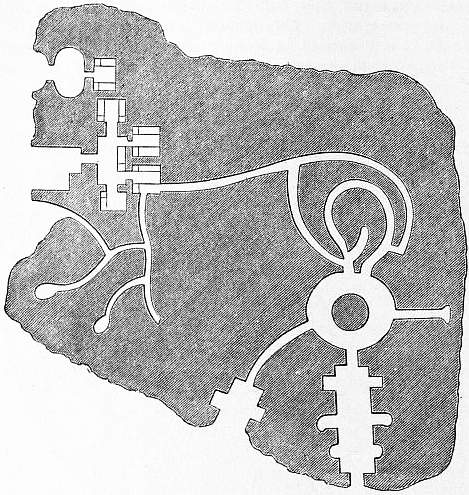
Fig. 25.—Plan of a portion of the principal storey in the Poggio Gajella. (From Dennis.)
Modern Discoveries.—In 1873 was discovered, near the cemetery of St Domitilla, the semi-subterranean basilica of Santi Nereo ed Achilleo, 100 ft. by 60 ft. This is now covered with a roof, and the fallen columns have been raised up. The lower part of a pillar, which once supported a baldachino over the altar, still preserves the name Acilleus, and beneath it a bas-relief of the martyr, with his hands bound, receiving his death-blow from the executioner. The base of a similar column has only feet in the same attitude, and probably bore the name Nereus. In a grave in the apse was found a large fragment of an inscription, composed by Pope Damasus, but set up by his successor Siricius, which, from the note-book of a Salzburg pilgrim of the 8th century, can be completed thus:—

Militiae nomen dederant saevum Officium pariter spectantes juss Praeceptis pulsante metu servi Mira fides rerum subito posue Conversi fugiunt ducis impia castr Projiciunt clypeos faleras tel Confessi gaudent Christi portar Credite per Damasum possit quid
Nereus (see Rom. xvi. 15) and Achilleus, said to have been baptized by St Peter, refused to do the bidding of Domitian as praetorians, and entering the service of Flavia Domitilla, suffered martyrdom with their mistress Petronilla, of the Aurelian family closely connected with the Flavii, and the spiritual daughter of St Peter, who was buried in a sarcophagus with the inscription:—
avreliae · petronillae · fil · dvlcissimae
This is now in St Peter’s, but was probably originally behind the apse of this basilica, for there is a fresco of her in an arcosolium, with a matron named Veneranda. The original entrance to the cemetery leads directly into a spacious corridor with no loculi, but recesses for sarcophagi, and decorations of the classical style of the 2nd century. From this a wide staircase leads directly down to a chamber, discovered in March 1881, of a very early date. Within an arcosolium is a tablet set up by “Aurelius Ampliatus and his son Gordian, to Aurelia Bonifatia, his incomparable wife, a woman of true chastity, who lived 25 years, 2 months, 4 days, and 2 hours.” The letters are of the 2nd century; but above the arcosolium was found a stone with great letters, 5 or 6 in. high: “AMPLIATI, the tomb of Ampliatus.” Now Ampliatus is a servile name: how comes it to be set up with such distinction in the sepulchre of the Flavii? Romans xvi. 8 supplies the answer: “Salute Ampliatus, most beloved to me in the Lord.” De Rossi thinks the identification well grounded (Bullettino, 1881, p. 74). Epitaphs of members of the Flavian family have been found here, and others stating that they are put up “Ex indulgentia flaviae domitillae vespasiani neptis.” So that De Rossi did not hesitate to complete an inscription on a broken stone thus:—

De Rossi began his excavations in the cemetery of Santa Priscilla in 1851, but for thirty years nothing but what had been described by Bosio came to light. In 1880 he unearthed a portion near the Cappella Greca, and found galleries that had not been touched since they were filled in during the Diocletian persecution. The loculi were intact and the epitaphs still in their places, so that “they form a kind of museum, in which the development, the formulae, and the symbolic figures of Christian epigraphy, from its origin to the end of the 3rd or 4th century, can be notified and contemplated, not in artificial specimens as in the Lateran, but in the genuine and living reality of their original condition.” (Bullett., 1884, p. 68). Many of the names mentioned in St Paul’s Epistles are found here: Phoebe, Prisca, Aquilius, Felix Ampliatus, Epenetus, Olympias, Onesimus, Philemon, Asyncritus, Lucius, Julia, Caius, Timotheus, Tychicus, Crescens, Urbanus, Hermogenes, Tryphaena and Trypho(sa) on the same stone. Petrus, a very rare name in the catacombs, is found here several times, both in Greek and in Latin. The neighbouring Coemeterium Ostrianum was anciently known as “Fons S. Petri,” “ubi Petrus baptizavit,” “ubi Petrus prius sedit.” This cemetery derives its name from Priscilla, mother of Pudens, who is said to have given hospitality to St Peter the Apostle. We are reminded of St Paul, and of his friends Aquila and Prisca, by a monument erected by an imperial freedman who was Praepositvs Tabernacvlorvm—chief tentmaker. In 1888 a corridor was discovered which had at one time been isolated from the rest of the cemetery. It had no loculi, but recesses in the wall to receive sarcophagi. At the end of the corridor there was a large chamber, 23 ft. by 13 ft., once lined with marble and the ceiling covered with mosaic, a few fragments of which still remain. The only tomb here was a sarcophagus, of which the broken front bears the letters which show it to have been the epitaph of one of the Acilian family:—
acilio glabrioni filio
In the vicinity are fragments of the epitaphs of Manius Acilius and Priscilla, of Quintus Acilius and Caia Acilia in Greek, another Greek inscription “Acilius Rufinus mayest thou live in God.” After careful examination of the nine Acilii, who were consuls, De Rossi concludes that this was the resting-place of that Acilius Glabrio, consul with Trajan, a.d. 91, who in the year of his consulate was compelled by Domitian to fight with beasts in the arena, and then banished and put to death in 95. The question of his Christianity seems settled by the discovery of the sepulchre of these Christian Acilii. From this crypt a staircase led up to the basilica in which Pope Silvester was buried, and the whole plan of which was laid bare by De Rossi. The tomb of St Silvester could be identified, and that of Pope Siricius “at his feet,” as the pilgrim noted (Bullett., 1890, pp. 106-119).
Just before De Rossi’s death, Mgr. Wilpert discovered in the Cappella Greca a painting of the “Fractio Panis” or eucharistic feast, which he cleansed from the dust with which it had been covered. The picture of the Blessed Virgin and Child, which De Rossi ascribed to the 2nd, if not to the 1st century, has received an unexpected proof of its antiquity. In 1890 the floor of the gallery in which it stands was excavated, and another floor was found to be 6 ft. below its supposed level. The loculi in this lower portion were intact, with inscriptions of the 2nd century still in their places, proving that the niche in which that picture was painted must have been considerably older than the lowering of the floor. A flight of iron steps enables the visitor now to examine this venerable specimen of early Christian art.
After the death of De Rossi, one of his pupils, H. Stevenson, since dead, discovered in 1896 a small subterranean basilica in the catacomb of Santi Pietro e Marcellino on the Via Labicana, with pious acclamations on the plaster similar to those in the Papal crypt in St Calixtus. Near the well-known subterranean chapel in the Coemeterium Ostrianum was discovered by Mgr. Crostarosa, in 1877, another chapel, in which Signor Armellini found traces of St Emerentiana, foster-sister of St Agnes. Near this a whole region of galleries has been brought to light with loculi intact.
Explorations conducted in the cemetery of Domitilla in 1897-1898 brought to light a fine double crypt with frescoes representing Christ seated between six male and female saints; also an inscription relating to a new saint (Eulalius) in a cubiculum of the 3rd century. In 1899-1900 were discovered two opposite cubicula in the catacomb of Santi Pietro e Marcellino. These were unknown to Bosio, and are both covered with frescoes, the vault being in one case decorated with the scene which represents Christ seated among the apostles and pronouncing sentence upon the defunct. An inscription discovered in 1900 on the site of the ancient cemetery of St Ciriaca, and dating from a.d. 405, states that one Euryalus bought a site ad mensam beati martyris Laurentii from a certain fossor whose name has been erased. This is interesting as an example of what was known as memoriae damnatio or the blotting out of a name on account of some dishonourable action. From the end of the 4th to the first half of the 5th century, the fossores had the privilege of selling sites, which frequently led to grave abuses. In 1901-1902 excavations in the cemetery of Santa Priscilla, near the Cappella Greca, revealed a polygonal chamber. This may have originally been the nymphaeum of the great villa of the Acilii Glabriones, the hypogaeum of which was discovered by De Rossi near this spot in 1888. It may have been used as a burial-place for martyrs, and Professor Marucchi is inclined to see in it the sepulchral chapel of Pope Marcellinus, who died in a.d. 304 during the persecutions of Diocletian. In 1902, in that part of the Via Ardeatina which passes between the cemeteries of Calixtus and Domitilla, was discovered a crypt with frescoes and the sanctuary of a martyr: it is thought that this, rather than a neighbouring crypt brought to light in 1897, may prove to be the sepulchral crypt of SS. Marcus and Marcellianus. In a cubiculum leading out of a gallery in the vicinity there was also discovered an interesting impression in plaster of an inscription of the mother of Pope Damasus, beginning:
hic damasi mater posvit lavren[tia membra].
In the same year building operations in the Via di Sant’ Onofrio revealed the presence of catacombs beneath the foundations: examination of the loculi showed that no martyrs or illustrious persons were buried here.
In 1903 a new cemetery with frescoes came to light on the Via Latina, considered by Marucchi to have belonged to a heretical sect. In the same year the Jewish cemetery on the Via Portuense, known to Bosio but since forgotten, was rediscovered. The subterranean basilica of SS. Felix and Adauctus, discovered by Boldetti and afterwards choked up with ruins, was cleared again: the crypt, begun by Damasus and enlarged by Siricius, contains frescoes of the 6th-7th centuries.
A good plan of the catacombs at Albano (at the 15th milestone of the Appian way), discovered by Boldetti and described by De Rossi, has been published by Marucchi (Nuovo Bulletino di archeologia cristiana, 1902, pp. 89 ff.). In 1904 a small subterranean cemetery was discovered at Anagnia. Catacombs have also been recently discovered on the site of Hadrumetum near Sousse in Tunisia.
( W. R. B.; O. M. D.)

Authorities.—The classical work on the catacombs of Rome is G.B. De Rossi’s Roma sotterranea, on which most of the accounts in other languages than Italian have been based. The fine volume by Mgr. Wilpert, Le Pitture delle catacombe romane (Rome, 1903), in which all the important frescoes are reproduced in colours, is to be regarded as an addition to the Roma sotterranea. All new discoveries made by the active Commissione di archeologia sacra are chronicled with as little delay as possible in the Nuovo Bulletino de archeologia cristiana published in Rome.
The most recent accounts of the catacombs are to be found in the following books:—Armellini, Gli Antichi Cimiteri cristiani di Roma e d’ Italia (Rome, 1893); O. Marucchi, Le Catacombe romane (Rome, 1903; also translated into French), Manuale di epigrafia cristiana (Milan, 1904); M. Besnier, Les Catacombes de Rome (Paris, 1909).
Among the older works are: Bosio, Roma sotterranea, Severano’s edition (1632), and Aringhi’s edition (1651); Boldetti, Osservazioni sopra i cimiteri dei santi martiri (Rome, 1720); Bottari, Sculture e pitture sagre, &c. (Rome, 1737-1754); Seroux d’Agincourt, Histoire de l’art par les monuments (Paris, 1823; German ed., 1840); G. Marchi, Monumenti delle arti cristiane primitive (Rome, 1844); Raoul Rochette, Tableau des catacombes de Rome (2nd ed., Paris, 1853); Perret, Les Catacombes de Rome (Paris, 1855)—a sumptuous folio work, but not always accurate, Roller, Les Catacombes de Rome (Paris, 1881); V. Schultze, Die Katakomben (Leipzig, 1882).
Works written in English are: Northcote and Brownlow, Roma sotterranea (London, 1869; based upon De Rossi); Wharton Marriott, The Testimony of the Catacombs (London, 1870); J.H. Parker, The Archaeology of Rome: the Catacombs; Smith and Cheetham, Dictionary of Christian Antiquities, s.v. “Catacombs”; R. Lanciani, Pagan and Christian Rome (London, 1892); W. Lowry, Christian Art and Archaeology, ch. ii. (London, 1901; a useful introduction to the subject); H. Gee, “The Church in the Catacombs,” in W. Lefroy’s Lectures in Ecclesiastical History (1896); Th. Mommsen, in the Contemporary Review, May 1871.
Accounts of the catacombs will also be found in the encyclopaedias and manuals published under the following names: Martigny, Pératé, F.X. Kraus (Realencyklopädie and Geschichte der christlichen Kunst), Reusens, V. Schultze and C.M. Kauffmann, and in the large new Dictionnaire d’archéologie chrétienne et liturgie, published at Paris under the editorship of Dom F. Cabrol.
The catacombs at Naples are described in C.F. Bellermann, Über die ältesten christlichen Begräbnisstätten und besonders die Katakomben zu Neapel (Hamburg, 1839); Armellini, as above, and V. Schultze, Die Katakomben von San Gennaro dei Poveri in Neapel (Jena, 1877).
For the catacombs in Malta, A.A. Caruana, Ancient Pagan Tombs and Christian Cemeteries in the Islands of Malta (Malta, 1898), and A. Mayr, “Die altchristlichen Begräbnisstätten auf Malta,” in Römische Quartalschrift, vol. xv. pp. 216 and 352 (Rome, 1901), may be consulted.
The fullest account of the Sicilian catacombs is given by J. Führer, Forschungen zur Sicilia sotterranea (Munich, 1897); and D.C. Barrecca, Le Catacombe di San Giovanni in Siracusa (Syracuse, 1906).
A catacomb of the 5th century, discovered at Kertch in South Russia, is described by J. Kulakovsky in Materials for Russian Archaeology (St Petersburg, 1896; a publication of the Russian Imperial Archaeological Commission), but it is written in Russian, as also is the account by V. Latyshev, in Vizantieski Vremennik, vol. vi. pp. 337 ff. (St Petersburg, 1899).
The catacombs at Hadrumetum (Sousse) are described by A.F. Leynard, Les Catacombes d’Hadrumète, deuxième campagne de fouilles (1904-1905). See also Revue Tunisienne (1905), p. 250.
For the catacombs of Alexandria, Neroutsos Bey, L’Ancienne Alexandrie, may be consulted in addition to De Rossi’s article mentioned in the text.
(O. M. D.)
1 The most important of these lists are the two Itineraries belonging to the first half of the 7th century, in the Salzburg library. One still earlier, but less complete, appears in the Notitia Urbis Romae, under the title Index Coemeteriorum. Another Itinerary, preserved at Einsiedeln, printed by Mabillon, dates from the latter half of the same century. That found in the works of William of Malmesbury (Hardy’s ed. vol. ii. pp. 539-544) appears to be copied from it, or both may be from the same source. De Rossi gives a comparative table of these Itineraries and other similar lists.
2 Hieron., Comment. in Ezech. lib xx. c. 40. The translation is Dean Burgon’s.
3 In Rome the three strata are known to geologists as tufa litoide, tufa granolare and pozzolana.
4 Cicero is our authority for the burial of Marius, and for Sulla’s being the first member of the Gens Cornelia whose dead body was burnt (De Legg. ii. 22).
5 Mommsen’s chosen example of an ancient burial-chamber, extending itself into a catacomb, or gathering subterranean additions round it till a catacomb was established, is that of the cemetery of St Domitilla, traditionally identified with a granddaughter of Vespasian, and the catacomb of Santi Nereo ed Achilleo on the Appian and Ardeatine way.
6 Parker’s invaluable series of Roman photographs may be seen at the library of the Victoria and Albert museum, at the Ashmolean museum and the Bodleian library, Oxford.
7 Bulletino di archaeologia cristiana, November 1864, August 1865. See also Authorities, below.
CATAFALQUE (a word of unknown origin, occurring in various forms in many European languages, meaning a funeral scaffold or temporary stage), a movable structure of wood sometimes richly decorated, erected temporarily at funeral ceremonies in a church to receive the coffin or effigy of the deceased; also an open hearse or funeral car.
CATALANI, ANGELICA (1780-1849), Italian opera-singer, daughter of a tradesman at Sinigaglia, was educated at the convent of Santa Lucia at Gubbio, where her magnificent soprano voice, of extraordinary compass and purity, soon became famous. In 1795 she made her début on the stage at Venice, and from that moment every impresario in Europe was anxious to engage her. For nearly thirty years she sang at all the great houses, receiving very large fees; her first appearance in London being at the King’s theatre in 1806. She remained in England, a prima donna without a serious rival, for seven years. Then she was given the management of the opera in Paris, but this resulted in financial failure, owing to the incapacity and extravagance of her husband, Captain Valabrègue, whom she married in 1806. But her continental tours continued to be enormously successful, until she retired in 1828. She settled at Florence in 1830, where she founded a free singing school for girls; and her charity and kindness were unbounded. She died of cholera in Paris on the 12th of June 1849.
CATALEPSY (from Gr. κατάληψις, a seizure), a term applied to a nervous affection characterized by the sudden suspension of sensation and volition, accompanied with a peculiar rigidity of the whole or of certain muscles of the body. The subjects of catalepsy are in most instances females of highly nervous temperament. The exciting cause of an attack is usually mental emotion operating either suddenly, as in the case of a fright, or more gradually in the way of prolonged depression. The symptoms presented vary in different cases, and even in the same individual in different attacks. Sometimes the typical features of the disease are exhibited in a state of complete insensibility, together with a statue-like appearance of the body which will retain any attitude it may be made to assume during the continuance of the attack. In this condition the whole organic and vital functions appear to be reduced to the lowest possible limit consistent with life, and to such a degree as to simulate actual death. At other times considerable mental excitement will accompany the cataleptic symptoms, and the patient will sing or utter passionate exclamations during the fit, being all the while quite unconscious. The attack may be of short duration, passing off within a few minutes. It may, however, last for many hours, and in some rare instances persist for several days; and it is conceivable that in such cases the appearances presented might be mistaken for real death, as is alleged to have occasionally happened. Catalepsy belongs to the class of functional nervous disorders (see Muscle and Nerve: Pathology) in which morbid physical and psychical conditions are mixed up. Although it is said to occur in persons in perfect health, careful inquiry will usually reveal some departure from the normal state, as is shown by the greater number of the recorded cases. More particularly is this true of females, in whom some form of menstrual derangement is generally found to have preceded the cataleptic affection. Catalepsy is sometimes associated with epilepsy and with grave forms of mental disease. In ordinary cases, however, the mental phenomena bear close resemblance to those witnessed in hysteria. In many of the subjects of catalepsy there appears to be a remarkable weakness of the will, whereby the tendency to lapse into the cataleptic state is not resisted but rather in some measure encouraged, and attacks may thus be induced by the most trivial circumstances.
CATALOGUE (a Fr. adaptation of the Gr. κατάλογος, a register, from καταλέγειν, to enrol or pick out), a list or enumeration, generally in alphabetical order, of persons, things, &c., and particularly of the contents of a museum or library. A catalogue raisonnée is such a list classified according to subjects or on some other basis, with short explanations and notes. (See also articles Bibliography and Bibliology, and Libraries.)
CATALONIA (Cataluña), a captaincy-general, and formerly a province of Spain, formerly also a principality of the crown of Aragon; bounded on the N. by the Pyrenees, W. by Aragon, S. by Valencia, and E. by the Mediterranean Sea. Pop. (1900) 1,966,382; area, 12,427 sq. m. The triangular territory of Catalonia forms the north-eastern corner of the Iberian Peninsula. A full account of the physical features, and of the modern development of commerce, communications, &c., in this area is given in the articles on the four provinces Barcelona, Gerona, Lérida and Tarragona, into which Catalonia was divided in 1833.
The coast, which is partly sandy, partly rocky, extends about 240 m.; its chief harbours are those of the capital, Barcelona, of Mataró, of Rosas and of Tarragona. The surface is much broken by spurs of the Pyrenees, the direction of which is generally south. Running south-west to north-east, and united on the north with one of the offsets of the Pyrenees, is the range of the Sierra Llena, which bisects Catalonia, and forms its central watershed. The principal rivers are the Ter, the Llobrégat, and the Ebro (q.v.), which all run into the Mediterranean. None of them is navigable. The climate, in spite of frequent mists and rains, sudden changes of temperature, and occasional great mid-day heat, is healthy and favourable to vegetation. The dwarf-palm, orange, lime, and olive grow in the warmer tracts; and on the higher grounds the thorn-apple, pomegranate, myrtle, esparto and heaths flourish. There is much woodland, but meadows and pastures are rare. Maize, millet, rye, flax, liquorice and fruits of all sorts—especially nuts, almonds, oranges, figs, walnuts and chestnuts—are produced. Wheat sufficient for one-fourth of the population is grown, and the vine is extensively cultivated. Few cattle, but numbers of sheep, goats and swine are reared. Game is plentiful, and the fisheries on the coast are excellent. The wines are for the most part rough and strong, though some are very good, especially when matured. They are much used to adulterate those of Oporto, or, after undergoing the blending operation termed compage, are passed off as Bordeaux wines in France. The best of them, priorato, is chiefly known in England, under the disguise of second or third-rate port; it was much used in the military hospitals of America during the Civil War.
The Catalonians are a frugal, sharp-witted, and industrious people, having much national pride, and a strong revolutionary spirit. They are distinct in origin from the other inhabitants of Spain, from whom they differ in their dialect and costume. In their great energy and their love of enterprise they resemble the Basques. Irrigation, careful husbandry and railroad communications have much developed the resources of their country, in themselves excellent; and there are many manufacturing towns and industrial establishments.
Catalonia was one of the first of the Roman possessions in Spain, and formed the north-eastern portion of Hispania Tarraconensis. About 470 it was occupied by the Alans and Goths. It was conquered by the Moors in 712, but these invaders were in turn dispossessed by the Spaniards and the troops of Charlemagne in 788. Catalonia was subsequently ruled by French counts, who soon, however, made themselves independent of France. By the marriage of Count Raymond Berenger IV. of Barcelona with Petronilla of Aragon, Catalonia became annexed to Aragon; but this union was frequently severed. In 1640, when Philip IV. attempted to deprive Catalonia of its rights and privileges, it gave itself up to Louis XIII. of France. It was restored to Spain in 1659, and was once more occupied by the French from 1694 to 1697. Under Philip V. Catalonia, in 1714, was deprived of its cortes and liberties. From 1808 to 1813 it was held by France. It was the scene of civil war in 1823, and of important revolutionary operations in the Carlist wars.
The history and literature of Catalonia have been closely studied, and in many cases the results of research are published in the Catalan language. See Cataluña, sus monumentos y artes, su naturaleza e historia (2 vols. of the illustrated series España), by P. Pifferrer, F. Pi Margall, and A.A. Pijoan (Barcelona, 1884); Historia de Cataluña, by V. Balaguer (11 vols., Madrid, 1886, &c.); Historia de Cataluña, by A. Bori y Fontestá (Barcelona, 1898); Origines históricos de Cataluña, by J. Balari y Jovany (Barcelona, 1899); Coleccio dels monografias de Catalunya, by J. Reig y Vilardell (Barcelona, 1890); Historia del derecho en Catalonia, Mallorca y Valencia, by B. Oliver (Madrid, 1876-1880); and Antigua marina catalana, by F. de Bofarull y Sans (Barcelona, 1898). The Revista catalana (Catalan Review), published at Barcelona from 1889, contains many valuable papers on local affairs. See also Spain: sections Language, Literature and History, and Barcelona.
CATALPA, in botany, a genus belonging to the family Bignoniaceae and containing about ten species in America and eastern Asia. The best known is Catalpa bignonioides, a native of the eastern United States which is often cultivated in parks and gardens. It is a stately tree with large heart-shaped pointed leaves and panicles of white bell-shaped flowers streaked with yellow and brown purple.
CATALYSIS (from the Gr. κατά, down, and λύειν, to loosen), in chemistry, the name given to chemical actions brought about by a substance, termed the “catalyst,” which is recovered unchanged after the action. The term was introduced by Berzelius, who first studied such reactions. It is convenient to divide catalytic actions into two groups:—(1) when the catalyst first combines with one of the reaction components to form a compound which immediately reacts with the other components, the catalyst being simultaneously liberated, and free to react with more of the undecomposed first component; and (2), when the catalyst apparently reacts by mere contact. The theory of catalysis is treated under Chemical Action; in this article mention will be made of some of the more interesting examples.
A familiar instance of a catalytic action is witnessed when a mixture of potassium chlorate and manganese dioxide is heated to 350°, oxygen being steadily liberated, and the manganese dioxide being unchanged at the end of the reaction. The action may be explained as follows:—part of the chlorate reacts with the manganese dioxide to form potassium permanganate, chlorine and oxygen, the chlorine subsequently reacting with the permanganate to produce manganese dioxide, potassium chloride and oxygen, thus