VOLUME V SLICE IV Carnegie to Casus Belli (continued 3)
Reading edition
Authorities.—F.W. Hildebrandt, Karpathenbilder (Glogau, 1863); E. Sagorski and G. Schneider, Flora Carpatorum Centralium (2 vols., Leipzig, 1891); Muriel Dowie, A Girl in the Carpathians (London, 1891); Orohydrographisches Tableau der Karpathen (Vienna, 1886), in six maps of scale 1 : 750,000; V. Uhlig, “Bau und Bild der Karpaten,” in Bau und Bild Österreichs (Vienna, 1903).
(O. Br.; P. La.)
1 The name is derived from the Slavonic word Chrb, which means mountain-range. As Chrawat, it was first applied to the inhabitants of the region, whence it passed in the form Krapat or Karpa as the name of mountain system. In official Hungarian documents of the 13th and 14th centuries the Carpathians are named Thorchal or Tarczal, and also Montes Nivium.
CARPATHUS (Ital. Scarpanto), an island about 30 m. south-west of Rhodes, in that part of the Mediterranean which was called, after it, the Carpathian Sea (Carpathium Mare). It was both in ancient and medieval times closely connected with Rhodes; it was held by noble families under Venetian suzerainty, notably the Cornari from 1306 to 1540, when it finally passed into the possession of the Turks. From its remote position Carpathus has preserved many peculiarities of dress, customs and dialect, the last resembling those of Rhodes and Cyprus.
See L. Ross, Reisen auf den gr. Inseln (Halle, 1840-1845); T. Bent, Journal of Hellenic Studies, vi. (1885), p. 235; R.M. Dawkins, Annual of British School at Athens, ix. and x.
CARPEAUX, JEAN BAPTISTE (1827-1875), French sculptor, was born at Valenciennes, France, on the 11th of May 1827. He was the son of a mason, and passed his early life in extreme poverty. In 1842 he came to Paris, and after working for two years in a drawing-school, was admitted to the École des Beaux-Arts on the 9th of September 1854. The Grand Prix de Rome was awarded to his statue of “Hector bearing in his arms his son Astyanax.” His first work exhibited at the Salon, in 1853, did not show the spirit of an innovator, and was very unlike the work of his master Rude. At Rome he was fascinated by Donatello, and yet more influenced by Michelangelo, to whom he owes his feeling for vehement and passionate action. He sent from Rome a bust, “La Palombella,” 1856; and a “Neapolitan Fisherman,” 1858. This work was again exhibited in the Salon of 1859, and took a second-class medal; but it was not executed in marble till 1863. In his last year in Rome he sent home a dramatic group, “Ugolino and his Sons,” and exhibited at the same time a “Bust of Princess Mathilde.” This gained him a second-class medal and the favour of the Imperial family. In 1864 he executed the “Girl with a Shell,” the companion figure to the young fisherman; and although in 1865 he did not exhibit at the Salon, busts of “Mme. A.E. André,” of “Giraud” the painter, and of “Mlle. Benedetti” showed that he was not idle. He was working at the same time on the decorations of the Pavilion de Flore, of which the pediment alone was seen at the Salon, though the bas-relief below is an even better example of his style. After producing a statue of the prince imperial, Carpeaux was made chevalier of the Legion of Honour in 1866. Two years later he received an important commission to execute one of the four groups for the façade of the new opera house. His group, representing “Dancing,” 1869, was greeted with indignant protests; it is nevertheless a sound work, full of movement, with no fault but that of exceeding the limitations prescribed. In 1869 he exhibited a “Bust of M. Gamier,” and followed this up with two pieces intended for his native city: a statue of Watteau, and a bas-relief, “Valenciennes repelling Invasion.” During the Commune he came to England, and made a “Bust of Gounod” in 1871. His last important work was a fountain, the “Four Quarters of the World,” in which the globe is sustained by four female figures personifying Europe, Asia, Africa and America. This fountain is now in the Avenue de l’Observatoire in Paris. Carpeaux, though exhausted by illness, continued designing indefatigably, till he died at the Château de Bécon, near Courbevoie, on the 12th of October 1875, after being promoted to the higher grade of the Legion of Honour. Many of his best drawings have been presented by Prince Stirbey to the city of Valenciennes.
See Ernest Chesneau, Carpeaux, sa vie et son oeuvre (Paris, 1880); Paul Foucart, Catalogue du Musée Carpeaux, Valenciennes (Paris, 1882); Jules Claretie, J. Carpeaux (1882); François Bournand, J.B. Carpeaux (1893).
CARPENTARIA, GULF OF, an extensive arm of the sea deeply indenting the north coast of Australia, between 10° 40′ and 17° 40′ S., and 135° 30′ and 142° E. Its length is 480 m. and its extreme breadth (E. to W.) 420 m. It is bounded E. by Cape York Peninsula, and W. by the Northern Territory of South Australia. Near its southern extremity is situated a group of islands called Wellesley; and towards the western side are the Sir Edward Pellew Islands, the Groote Eylandt and others. A large number of rivers find their way to the gulf, and some are of considerable size. On the eastern side there is the Mitchell river; at the south-east corner the Gilbert, the Norman, the Flinders, the Leichhardt and the Gregory; and on the west the Roper river. Jan Carstensz, who undertook a voyage of discovery in this part of the globe in 1623, gave the name of Carpentier to a small river near Cape Duyfhen in honour of Pieter Carpentier, at that time governor-general of the Dutch East Indies; and after the second voyage of Abel Tasman in 1644, the gulf, which he had successfully explored, began to appear on the charts under its present designation.
CARPENTER, LANT (1780-1840), English Unitarian minister, was born at Kidderminster on the 2nd of September 1780, the son of a carpet manufacturer. After some months at a non-conformist academy at Northampton, he proceeded to Glasgow University, and then joined the ministry. After a short time as assistant master at a Unitarian school near Birmingham, he was in 1802 appointed librarian at the Liverpool Athenaeum. In 1805 he became pastor of a church in Exeter, removing in 1817 to Bristol. At both Bristol and Exeter he was also engaged in school work, among his Bristol pupils being Harriet and James Martineau. Carpenter did much to broaden the spirit of English Unitarianism. The rite of baptism seemed to him a superstition, and he substituted for it a form of infant dedication. His health, undermined by his constant labours, broke down in 1839, and he was ordered to travel. He was drowned on the night of the 5th of April 1840, having been washed overboard from the steamer in which he was travelling from Leghorn to Marseilles.
CARPENTER, MARY (1807-1877), English educational and social reformer, was born on the 3rd of April 1807 at Exeter, where her father, Dr Lant Carpenter, was Unitarian minister. In 1817 the family removed to Bristol, where Dr Carpenter was called to the ministry of Lewin’s Mead Meeting. As a child Mary Carpenter was unusually earnest, with a deep religious vein and a remarkable thoroughness in everything she undertook. She was educated in her father’s school for boys, learning Latin, Greek and mathematics, and other subjects at that time not generally taught to girls. She early showed an aptitude for teaching, taking a class in the Sunday school, and afterwards helping her father with his pupils. When Dr Carpenter gave up his school in 1829, his daughters opened a school for girls under Mrs Carpenter’s superintendence. In 1833 the raja Rammohun Roy visited Bristol, and inspired Miss Carpenter with a warm interest in India; and Dr Joseph Tuckerman of Boston about the same time aroused her sympathies for the condition of destitute children. Her life-work began with her taking part in organizing, in 1835, a “Working and Visiting Society,” of which she was secretary for twenty years. In 1843 her interest in negro emancipation was aroused by a visit from Dr S.G. Howe. Her interest in general educational work was also growing. A bill introduced in this year “to make provision for the better education of children in manufacturing districts,” as a first instalment of a scheme of national education, failed to pass, largely owing to Nonconformist opposition, and private effort became doubly necessary. So-called “Ragged Schools” sprang up in many places, and Miss Carpenter conceived the plan of starting one in Lewin’s Mead. To this was added a night-school for adults. In spite of many difficulties this was rendered a success, chiefly owing to Miss Carpenter’s unwearied enthusiasm and remarkable organizing power. In 1848 the closing of their own private school gave Miss Carpenter more leisure for philanthropic and literary work. She published a memoir of Dr Tuckerman, and a series of articles on ragged schools, which appeared in the Inquirer and were afterwards collected in book form. This was followed in 1851 by Reformatory Schools for the Children of the Perishing and Dangerous Classes, and for Juvenile Offenders. She sketched out three classes of schools as urgently needed:—(1) good free day-schools; (2) feeding industrial schools; (3) reformatory schools. This book drew public attention to her work, and from that time onwards she was drawn into personal intercourse with leading thinkers and workers. She was consulted in the drafting of educational bills, and invited to give evidence before House of Commons committees. To test the practical value of her theories, she herself started a reformatory school at Bristol, and in 1852 she published Juvenile Delinquents, their Condition and Treatment, which largely helped on the passing of the Juvenile Offenders Act in 1854. Now that the principle of reformatory schools was established, Miss Carpenter returned to her plea for free day-schools, contending that the ragged schools were entitled to pecuniary aid from the annual parliamentary grant. At the Oxford meeting of the British Association (1860) she read a paper on this subject, and, mainly owing to her instigation, a conference on ragged schools in relation to government grants for education was held at Birmingham (1861). In 1866 Miss Carpenter was at last able to carry out a long-cherished plan of visiting India, where she found herself an honoured guest. She visited Calcutta, Madras and Bombay, inaugurated the Bengal Social Science Association, and drew up a memorial to the governor-general dealing with female education, reformatory schools and the state of gaols. This visit was followed by others in 1868 and 1869. Her attempt to found a female normal school was unsuccessful at the time, owing to the inadequate previous education of the women, but afterwards such colleges were founded by government. A start, however, was made with a model Hindu girls’ school, and here she had the co-operation of native gentlemen. Her last visit to India took place in 1875, two years before her death, when she had the satisfaction of seeing many of her schemes successfully established. At the meeting of the prison congress in 1872 she read a paper on “Women’s Work in the Reformation of Women Convicts.” Her work now began to attract attention abroad. Princess Alice of Hesse summoned her to Darmstadt to organize a Women’s Congress. Thence she went to Neuchâtel to study the prison system of Dr Guillaume, and in 1873 to America, where she was enthusiastically received. Miss Carpenter watched with interest the increased activity of women during the busy ’seventies. She warmly supported the movement for their higher education, and herself signed the memorial to the university of London in favour of admitting them to medical degrees. She died at Bristol on the 14th of June 1877, having lived to see the accomplishment of nearly all the reforms for which she had worked and hoped.
(A. Z.)
CARPENTER, WILLIAM BENJAMIN (1813-1885), English physiologist and naturalist, was born at Exeter on the 29th of October 1813. He was the eldest son of Dr Lant Carpenter. He attended medical classes at University College, London, and then went to Edinburgh, where he took the degree of M.D. in 1839. The subject of his graduation thesis, “The Physiological Inferences to be Deduced from the Structure of the Nervous System of Invertebrated Animals,” indicates a line of research which had fruition in his Principles of General and Comparative Physiology. His work in comparative neurology was recognized in 1844 by his election to the Royal Society, which awarded him a Royal medal in 1861; and his appointment as Fullerian professor of physiology in the Royal Institution in 1845 enabled him to exhibit his powers as a teacher and lecturer, his gift of ready speech and luminous interpretation placing him in the front rank of exponents, at a time when the popularization of science was in its infancy. His manifold labours as investigator, author, editor, demonstrator and lecturer knew no cessation through life; but in assessing the value of his work, prominence should be given to his researches in marine zoology, notably in the lower organisms, as Foraminifera and Crinoids. These researches gave an impetus to deep-sea exploration, an outcome of which was in 1868 the “Lightning,” and later the more famous “Challenger,” expedition. He took a keen and laborious interest in the evidence adduced by Canadian geologists as to the organic nature of the so-called Eozoon Canadense, discovered in the Laurentian strata, and at the time of his death had nearly finished a monograph on the subject, defending the now discredited theory of its animal origin. He was an adept in the use of the microscope, and his popular treatise on The Microscope and its Revelations (1856) has stimulated a host of observers to the use of the “added sense” with which it has endowed man. In 1856 Carpenter became registrar of the university of London, and held the office for twenty-three years; on his resignation in 1879 he was made a C.B. in recognition of his services to education generally. Biologist as he was, Carpenter nevertheless made reservations as to the extension of the doctrine of evolution to man’s intellectual and spiritual nature. In his Principles of Mental Physiology he asserted both the freedom of the will and the existence of the “Ego,” and one of his last public engagements was the reading of a paper in support of miracles. He died in London, from injuries occasioned by the accidental upsetting of a spirit-lamp, on the 19th of November 1885.
CARPENTRAS, a town of south-eastern France, capital of an arrondissement in the department of Vaucluse 16 m. N.E. of Avignon by rail. Pop. (1906) town, 7775; commune, 10,721. The town stands on the left bank of the Auzon on an eminence, the summit of which is occupied by the church of St Siffrein, formerly a cathedral, and the adjoining law-court. St Siffrein, in its existing state, dates from the 15th and 16th centuries and is Gothic in style, but it preserves remains of a previous church of Romanesque architecture. The rich sculpture of the southern portal and the relics and works of art in the interior are of some interest. The law-court, built in 1640 as the bishop’s palace, contains in its courtyard a small but well-preserved triumphal arch of the Gallo-Roman period. Other important buildings are the hospital, an imposing structure of the 18th century, opposite which is a statue of its founder, Malachie d’Inguimbert, bishop of Carpentras; and the former palace of the papal legate, which dates from 1640. Of the old fortifications the only survival is the Porte d’Orange, a gateway surmounted by a fine machicolated tower. Their site is now occupied by wide boulevards shaded by plane-trees. Water is brought to the town by an aqueduct of forty-eight arches, completed in 1734.
Carpentras is the seat of a sub-prefect and of a court of assizes, and has a tribunal of first instance, communal college for girls and boys, a large library and a museum. Felt hats, confectionery, preserved fruits and nails are its industrial products, and there are silk-works, tanneries and dye-works. There is trade in silk, wool, fruit, oil, &c. The irrigation-canal named after the town flows to the east of it (see Vaucluse).
Carpentras is identified with Carpentoracte, a town of Gallia Narbonensis mentioned by Pliny, which appears to have been of some importance during the Roman period. Its medieval history is full of vicissitudes; it was captured and plundered by Vandal, Lombard and Saracen. In later times, as capital of the Comtat Venaissin, it was frequently the residence of the popes of Avignon, to whom that province belonged from 1228 till the Revolution. Carpentras was the seat of a bishopric from the 5th century till 1805.
CARPENTRY, the art and work of a carpenter (from Lat. carpentum, a carriage), a workman in wood, especially for building purposes. The labour of the sawyer is applied to the division of large pieces of timber or logs into forms and sizes to suit the purposes of the carpenter and joiner. His working-place is called a sawpit, and his most important tool is a pit-saw. A cross-cut saw, axes, dogs, files, compasses, lines, lampblack, blacklead, chalk and a rule may also be regarded as necessary to him. But this method of sawing timber is now only used in remote country places, and in modern practice logs, &c., are converted into planks and small pieces at saw-mills, which are equipped with modern machinery to drive all kinds of circular saws by electricity, steam or gas.
Carpentry or carpenters’ work has been divided into three principal branches—descriptive, constructive and mechanical. The first shows the lines or method for forming every species of work by the rules of geometry; the second comprises the practice of reducing the timber into particular forms, and joining the forms so produced in such a way as to make a complete whole according to the intention or design; and the third displays the relative strength of the timbers and the strains to which they are subjected by their disposition. Here we have merely to describe the practical details of the carpenter’s work in the operations of building. He is distinguished from the joiner by his operations being directed to the mere carcass of a building, to things which have reference to structure only. Almost everything the carpenter does to a building is absolutely necessary to its stability and efficiency, whereas the joiner does not begin his operations until the carcass is complete, and every article of joiners’ work might at any time be removed from a building without undermining it or affecting its most important qualities. Certainly in the practice of building a few things do occur regarding which it is difficult to determine to whose immediate province they belong, but the distinction is sufficiently broad for general purposes.
The carpenter frames or combines separate pieces of timber by scarfing, notching, cogging, tenoning, pinning and wedging, &c. The tools he uses are the rule, axe, adze, saws, mallet, hammers, chisels, gouges, augers, pincers, set squares, bevel, compasses, gauges, level, plumb rule, jack, trying and smoothing planes, rebate and moulding planes, and gimlets and wedges. The carpenter has little labour to put on to the stuff; his chief work consists in fixing and cutting the ends of timbers, the labour in preparing the timber being done by machinery.
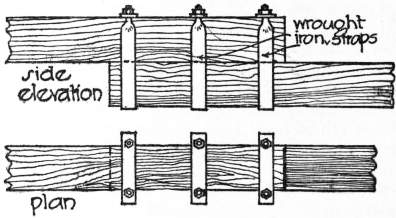
Fig. 1.—Lapped Joint.
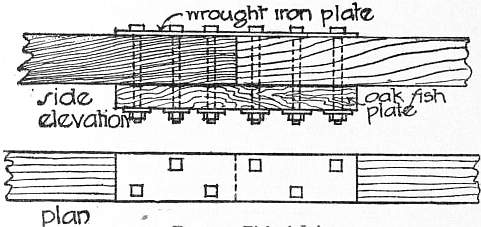
Fig. 2.—Fished Joint.
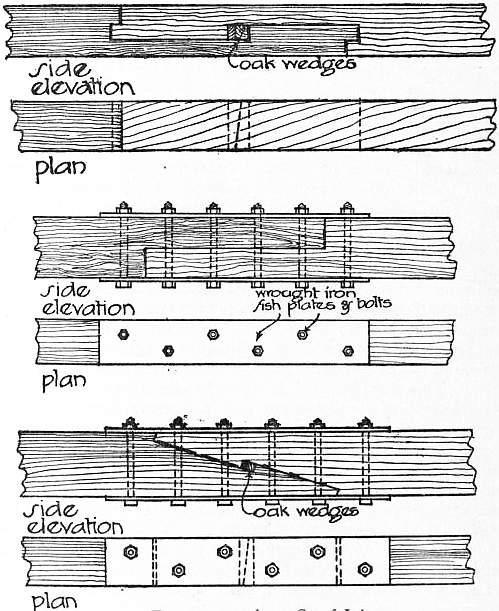
Figs. 3, 4 and 5.—Scarf Joints.
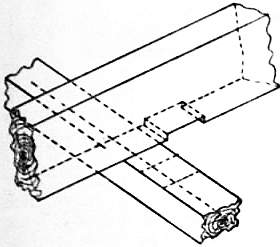
Fig. 6.—Notching.
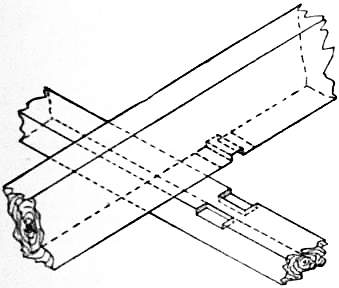
Fig. 7.—Cogging.
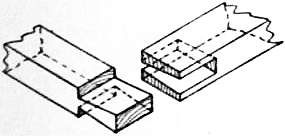
Fig. 8.—Dovetail.
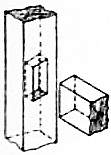
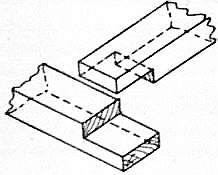
Fig. 9.—Housing. Fig. 10.—Halving.
Joints.—The joints in carpentry are various, and each is designed according to the thrust or strain put upon it. Those principally used are the following: lap, fished, scarf, notching, cogging, dovetailing, housing, halving, mortice and tenon, stub tenon, dovetailed tenon, tusk tenon, joggle, bridle, foxtail wedging, mitre, birdsmouth, built-up, dowel. Illustrations are given of the most useful joints in general use, and these, together with the descriptions, will enable a good idea to be formed of their respective merits and methods of application.
The lapped joint (fig. 1) is used for temporary structures in lengthening timbers and is secured with iron straps and bolts; a very common use of the lap joint is seen in scaffolding secured with cords and wedges.
The fished joint (fig. 2) is used for lengthening beams and is constructed by butting the ends of two pieces of timber together with an iron plate on top and bottom, and bolting through the timber; these iron connecting-plates are usually about 3 ft. long and ¼ in. and ½ in. in thickness. This joint provides a good and cheap method of accomplishing its purpose.
The scarf joint (figs. 3, 4 and 5) is used for lengthening beams, and is made by cutting and notching the ends of timbers and lapping and fitting and bolting through. This method cuts into the timber, but is very strong and neat; in addition for extra strong work an iron fish-plate is used as in the fished joint.
The ends of floor joints and rafters are usually notched (fig. 6) over plates to obtain a good bearing and bring them to the required levels. Where one timber crosses another as in purlins, rafters, wood floor girders, plates, &c, both timbers are notched so as to fit over each other; this cogging (fig. 7) serves instead of fastenings. The timbers are held together with a spike. In this way they are not weakened, and the joint is a very good one for keeping them in position.
Dovetailing (fig. 8) is used for connecting angles of timber together, such as lantern curbs or linings, and is the strongest form. When an end of timber is let entirely into another timber it is said to be housed (fig. 9). Where timbers cross one another and require to be flush on one or both faces, sinkings are cut in each so as to fit over each other (halving); these can either be square (fig. 10), bevelled (fig. 11) or dovetailed sinkings (fig. 12). The end of one piece of timber cut so as to leave a third of the thickness forms a tenon, and the piece of timber which is to be joined to it has a mortice or slot cut through it to receive the tenon; the two are then wedged or pinned with wood pins (fig. 13).
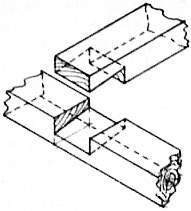
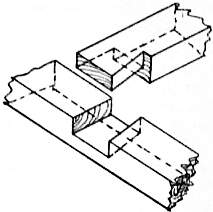
Fig. 11.—Bevelled Halving. Fig. 12.—Dovetailed Halving.
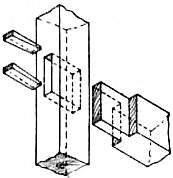
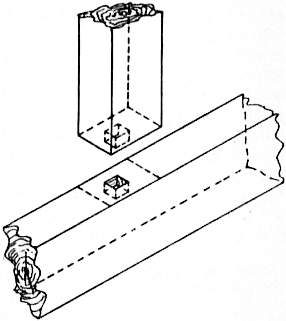
Fig. 13.—Mortice and Tenon. Fig. 14.—Stub Tenon or Joggle.
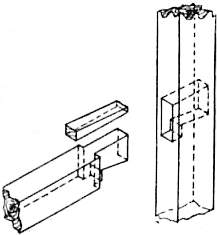
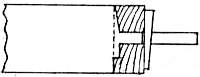
Fig. 15.—Dovetailed Tenon. Fig. 16.—Tusk Tenon.
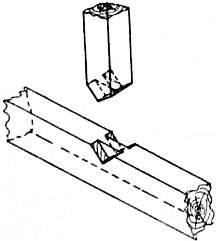
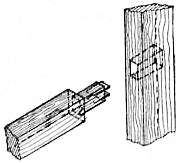
Fig. 17.—-Bridle Joint. Fig. 18.—Foxtail Wedging.
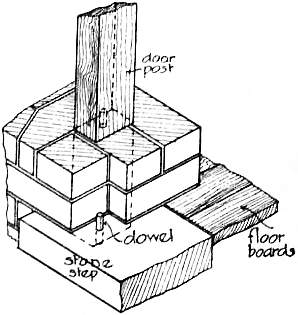
Fig. 19.—Dowelling.
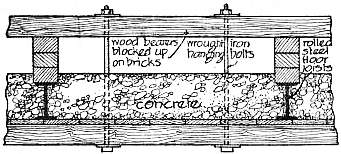
Fig. 20.—Method of supporting Centering for Concrete.
A stub tenon or joggle (fig. 14) is used for fixing a post to a sill; a sinking is cut in the sill and a tenon is cut on the foot of the post to fit into the sinking to keep the post from sliding.
The purpose of a dovetailed tenon (fig. 15) is to hold two pieces of wood together with mortice and tenon so that it can be taken apart when necessary. The tenon is cut dovetail shape, and a long mortice permits the wide part of the tenon to go through, and it is secured with wood wedges. Where the floor joists or rafters are trimmed round fires, wells, &c., the tusk tenon joint (fig. 16) is used for securing the trimmer joist. It is formed by cutting a tenon on the trimmer joist and passing it through the side of the trimming joist and fixing it with a wood key. Where large timbers are tusk tenoned together, the tenons do not pass right through, but are cut in about 4 in. and spiked.
A bridle joint or birdsmouth (fig. 17) is formed by cutting one end of timber either V shape or segmental, and morticing the centre of this shaped end. Similar sinkings are cut on the adjoining timber to fit one into the other; these are secured with pins and also various other forms of fastenings. Foxtail wedging (fig. 18) is a method very similar to mortice and tenon. But the tenon does not go through the full thickness of the timber; and also on the end of the tenon are inserted two wedges, so that when the tenon is driven home the wedges split it and wedge tightly into the mortice. This joint is used mostly in joinery. The mitre is a universal joint, used for connecting angles of timber as in the case of picture frames. Built-up joints involve a system of lapping and bolting and fishing, as in the case of temporary structures, for large spans of centering for arches, and for derrick cranes. Dowels are usually 3 or 4 in. long and driven into a circular hole in the foot of a door frame or post; the other end is let into a hole in the sill (fig. 19).
Centering.—Centering is temporary timber or framing erected so as to carry concrete floors or arches of brick or stone, &c.; when the work has set the centering is removed gradually. The centering for concrete floors is usually composed of scaffold boards resting on wood bearers (fig 20). One wood bearer rests along on top of the steel joists; through this bearer long bolts are suspended, and to the bottom of these bolts a second bearer is fixed, and on the bottom bearer the scaffold boards rest. Another method, not much used now, is to fit the boards to the size of the floor and prop them up on legs, but among other disadvantages this process takes up much space and is more costly.
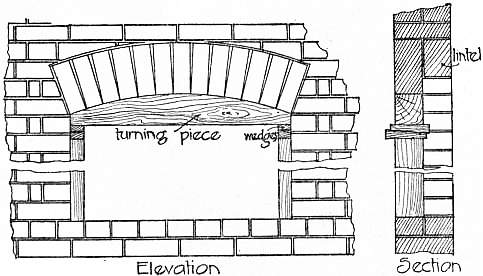
Fig. 21.
Turning piece is a name given to centering required for turning an arch over (fig. 21); it is only 4½ in. wide on the soffit or bed, and is generally cut out of a piece of 3 or 4 in. stuff, the top edge being made circular to the shape of the arch. It is kept in position whilst the arch is setting with struts from ground or sills and is nailed to the reveals, a couple of cross traces being wedged between. In the case of a semicircular or elliptical arch with 4½ in. soffit this turning piece would be constructed of ribs cut out of 4 in. stuff with ties and braces. Or the ribs could be cut out of 1 in. stuff, in which case there must be one set of ribs outside and one inside secured with ties and braces; each set of ribs when formed of thin stuff is made of two thicknesses nailed together so as to lap the joints. For spans up to 15 ft. the thin ribs would be used, and for spans above 15 ft. ribs out of 4 in. stuff and upwards. For arches with 9 in. soffit and upwards, whether segmental or semicircular or elliptical, the centres are formed with the thin ribs and laggings up to 15 ft. span; above 15 ft. with 4 in. ribs and upwards (fig. 22). The lower member of centres is called the tie, and is fixed so as to tie the extremities together and to keep the centre from spreading. Where the span is great, these ties, instead of being fixed straight, are given a rise so as to allow for access or traffic underneath. Braces are necessary to support the ribs from buckling in, and must be strong enough and so arranged as to withstand all stresses. Laggings are small pieces or strips of wood nailed on the ribs to form the surface on which to build the arch, and are spaced 1 in. apart for ordinary arches; for gauged arches they are nailed close together and the joints planed off. When centres are required to be taken down, the wedges upon which the centre rests are first removed so as to allow the arch to take its bearing gradually. Centres for brick sewers and vault arching are formed in the same way as previously mentioned, with ribs and laggings, but the thickness of the timbers depends upon the weight to be carried.
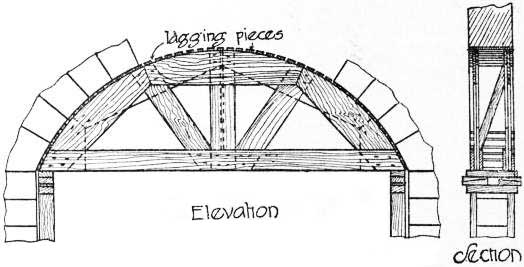
Fig. 22.—Centering for Stone Arch.
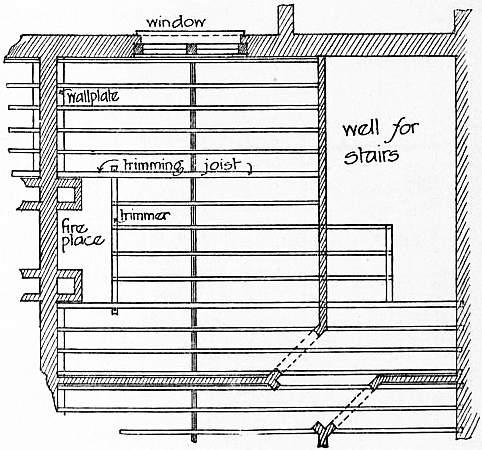
Fig. 23.—Single Floor.
Floors.—For ordinary residential purposes floors are chiefly constructed of timber. Up to about the year 1895 nearly every modern building was constructed with wood joists, but because of evidence adduced by fire brigade experts and the serious fires that have occurred fire-resisting floors have been introduced. These consist of steel girders and joists, filled in with concrete or various patented brick materials in accordance with such by-laws as those passed by the London County Council and other authorities. The majority of the floors of public buildings, factories, schools, and large residential flats are now constructed of fire-resisting materials. There are two descriptions of flooring, single and double.
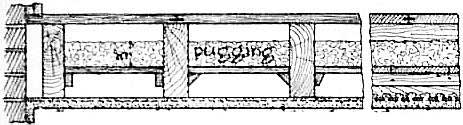
Fig. 24.—Floor pugged to resist passage of sound.
Single flooring (fig. 23) consists of one row of wood joists resting on a wall or partition at each end without any intermediate support, and receiving the floor boards on the upper surface and the ceiling on the underside. Joists Single flooring. should never be less than 2 in. thick, or they are liable to split when the floor brads are driven in; the thickness varies from 2 to 4 in. and the depth from 5 to 11 in. (see By-laws, below), the distance between each joist is usually 12 in. in the clear, but greater strength is obtained in a floor by having deep joists and placing them closer together. These floors are made firm and prevented from buckling by the use of strutting as mentioned hereafter.
The efficiency of single flooring is materially affected by the necessity which constantly occurs in practice of trimming round fireplaces and flues, and round well holes such as lifts, staircases, &c. Trimming is a method of supporting the end of a joist by tenoning it into timber crossing it; the timber so tenoned is called the trimmer joist, and the timber morticed for the tenon of the trimmer is called the trimming joist, while the intermediate timbers tenoned into the trimmer are known as the trimmed joists. This system has to be resorted to when it is impossible to get a bearing on the wall.
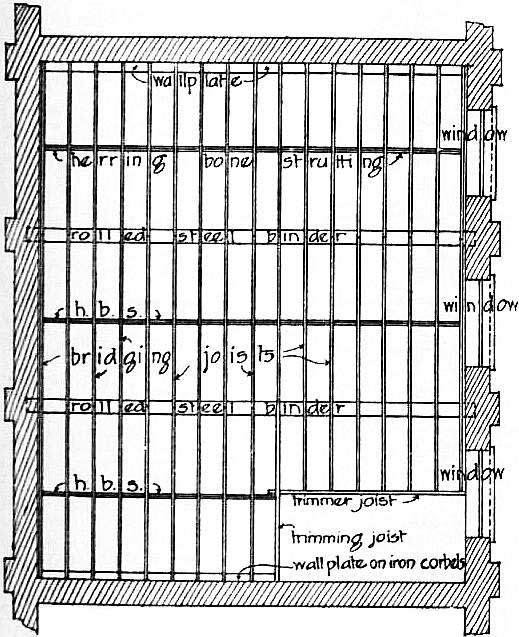
Fig. 25.—Double Floor, with Steel Binders.
A trimmer requires for the most part to be carried or supported at one or both ends by the trimming joists, and both the trimmer and the trimming joists are necessarily made stouter than if they had to bear no more than their own share of the stress. In the usual practice the trimmer and trimming joists are 1 in. thicker than the common joists, but there are special regulations and by-laws set out in the various districts and boroughs (see By-laws, below) to which attention must be given.
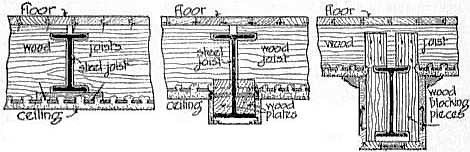
Fig. 26.
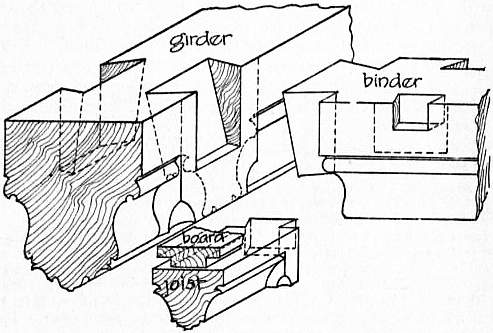
Fig. 27.—Construction of a Medieval Floor.
The principal objection to single flooring is that the sound passes through from floor to floor, so that, in some cases, conversation in one room can almost be understood in another. To stop the sound from passing through floors the remedy is to pug them (fig. 24). This consists in using rough boarding resting on fillets nailed to the sides of the joists about half-way up the depth of the joists, and then filling in on top of the boarding with slag wool usually 3 in. thick. Also to further prevent sound from passing through floors the flooring should be tongued and the ceiling should have a good thick floating coat, in poor work the stuff on ceilings is very stinted. In days gone by, ceiling joists were put at right angles to the floor joists, but this took up head room and was costly, and the arrangement is obsolete.
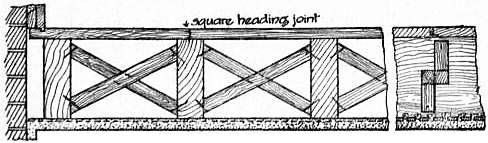
Fig. 28.—Herring-bone Strutting.
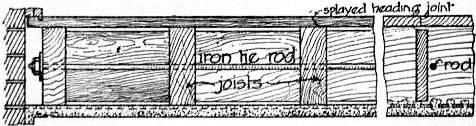
Fig. 29.—Solid Strutting.
Double flooring (fig. 25) consists of single fir joists trimmed into steel girders; in earlier times a double floor consisted of fir joists called binding, bridging and ceiling joists, but these are very little used now and the single fir Double flooring. joists and steel girders have taken their place. Steel girders span from wall to wall, and on their flanges are bolted wood plates to receive the ends of the single joists which are notched over plates and run at right angles to the girders (fig. 26). The bearings of the joists on the wall also rest on wall plates, so as to get a level bed, and are sometimes notched over them. Wall plates, which are usually 4½ in. × 3 in. and are bedded on walls in motar, take the ends of joists and distribute the weight along the wall. The plates bolted on the side of girders are of sizes to suit the width of the flanges.
The medieval floor (fig. 27) consisted of the framed floor with wood girders, binding, bridging and ceiling joists; and the underside of all the timbers was usually wrought, the girders and binders being boldly moulded and the other timbers either square or stop chamfered.
Flooring is strengthened by the use of strutting, either herring-bone (fig. 28) or solid (fig. 29). Herring-bone strutting consists of two pieces of timber, usually 2 in. × 2 in., fixed diagonally between each joist in continuous rows, the rows being about 6 ft. apart. Solid strutting consists of 1¼ in. boards, nearly the same depth as the joists and fitted tightly between the joists, and nailed in continuous rows 6 ft. apart. Where heavy weights are likely to be put on floors long bolts are passed through the centre of joists at the side of strutting; since this draws the strutting tightly together and does not produce any forcing stress on the walls, it is undoubtedly the best method.
Floors are usually constructed to carry the following loads (including weight of floor):—
Residences, 1¼ cwt. per foot super of floor space.
Public buildings, 1½ cwt. per foot super of floor space.
Factories, 2½ to 4 cwt. per foot super of floor space.
Local By-laws.—With regard to floor joists in domestic buildings, the following are required in the Hornsey district, in the north of London. The size of every common bearing floor joist up to 3 ft. long in clear shall be 3 in. × 2½ in.; from 3 ft. to 6 ft. in clear it shall be 4½ in. × 3 in.; from 6 ft. to 8 ft., 6½ in. × 2½ in.; from 8 ft. to 12 ft., 7 in. × 2½ in., and so on according to the clear span. The Hornsey by-laws with regard to trimmers are as follows:—A trimmer joist shall not receive more than six common joists, and the thickness of a trimming joist receiving a trimmer at not more than 3 ft. from one end and of every trimmer joist shall be 1⁄8th of an inch greater than the thickness for a common joist of the same bearing for every common joist carried by a trimmer. For example, if the common joists are 7 in. × 2½ in. and the trimmer has six joists trimmed into same, the size of trimmer would have to be 7 in. × 3¼ in. The Hornsey council also requires that the floor boards shall not be less than 7⁄8ths of an inch thick.
There is little difference in the requirements of the various localities. For example, the regulations of the Croydon council require that every common bearing joist for lengths up to 3 ft. 4 in. in clear shall be 3 in. × 2½ in.; for lengths between 3 ft. 4 in. and 5 ft. 4 in., 4 in. × 2 in.; for lengths between 5 ft. 4 in. and 7 ft. 4 in., 4 in. × 3 in.; and so on according to the clear span. The Croydon by-laws with regard to trimmers are as follows:—A trimmer joist shall not receive more than six common joists, and the thickness of a trimming joist shall be 1½ in. thicker than that for common joists of the same bearing, and the thickness of a trimmer joist shall be ¼ in. thicker for every joist trimmed into same than the common joist. For example, if the common joists are 4 in. × 3 in. the trimming joists would have to be 4 in. × 4¼ in., and the trimmer joist would have to be 4 in. × 4½ in.
Partitions.—Partitions are screens used to divide large floor spaces into smaller rooms and are sometimes constructed to carry the floors above by a system of trussing. They are built of various materials; those in use now are common stud partitions, bricknogged partitions, and solid deal and hardwood partitions, 4½ in. brick walls or bricks laid on their sides, so making a 3 in. partition, and various patent partitions such as coke breeze concrete or hollow brick partitions (see Brickwork), iron and wire partitions, and plaster slab partitions (see Plasterwork).
There are two kinds of stud or quarter partitions, common and trussed.
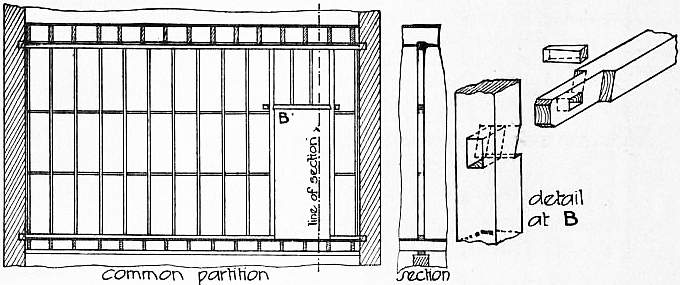
Fig. 30.—Common Partition.
Common partitions (fig. 30) simply act as a screen to divide one room from another, and do not carry any weight. They weigh about 25 ℔ per foot superficial including plastering on both sides, and are composed of 4 in. × 3 in. Common partitions. head and sill and 4 in. × 2 in. upright studs; 4 in. × 2 in. nogging pieces are fitted between the studs to keep them from bending in, and are placed parallel with the head, usually 4 ft. apart. Where door-openings occur in these partitions the studs next the opening are 4 in. × 3 in. Should the floor boards have been laid, the sill of the partition would be laid direct on them, but if the partitions are erected at the time of building the structure the sill should either rest directly over a joist, if parallel with it, or at right angles to the joists; should the position of the sill come between two joists, that is, parallel with them, then short pieces called bridging pieces of 4 in. × 2 in. stuff are wedged between the two joists and nailed to carry the sill.
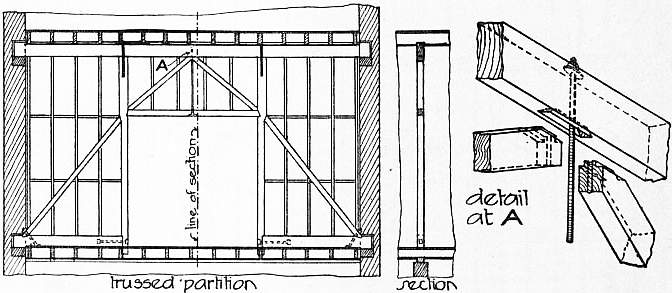
Fig. 31.—Trussed Partition.
Trussed partitions (fig. 31) are very similar to the last, but they are so built as to carry their own weight and also to support floors, and in addition have braces; the Trussed partitions. head and sill are larger, and calculated according to the clear bearing and the weight put upon them. There are two forms of trussing, namely, queen post (fig. 32) and king post (fig. 33).
Bricknogged partitions are formed in the same manner as the common stud partition, except that the studs are placed usually 18 or 27 in. apart in the clear instead of 12 in., and the 18 and 27 in. widths being multiples of a brick dimension, Bricknogged partitions. they are filled in with brickwork 4½ in. thick and always built in cement. These are used to prevent sound from passing from one room to another, and also to prevent fire from spreading, and are vermin-proof. Another method is to fill the space between the studs with coke breeze concrete instead of brickwork.
Timber partitions have the advantages that they are light and cheap and substantial, and the disadvantages that they are not fire-resisting or sound-resisting or vermin-proof; they should never be erected in damp positions such as the lower floors of buildings.
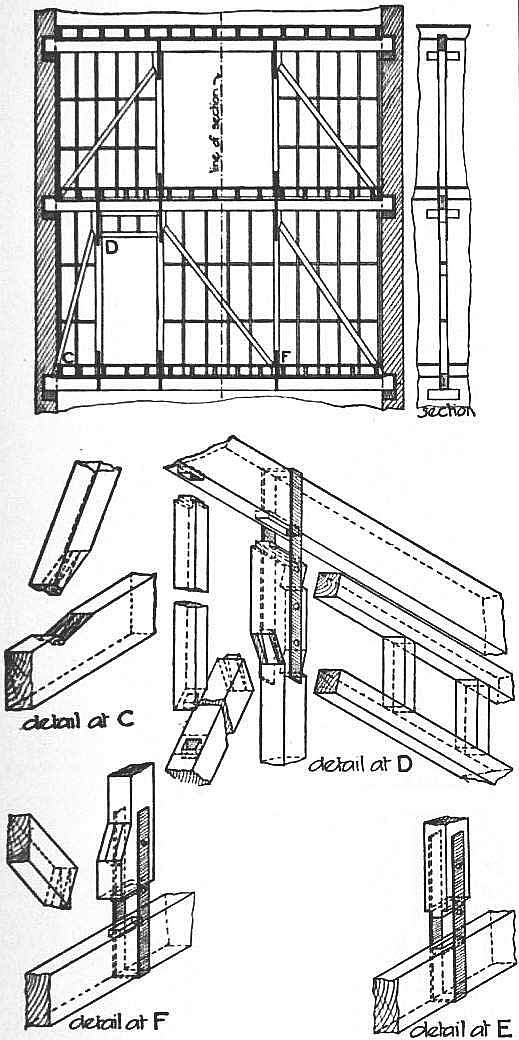
Fig. 32.—Queen Post Trussed Partition.
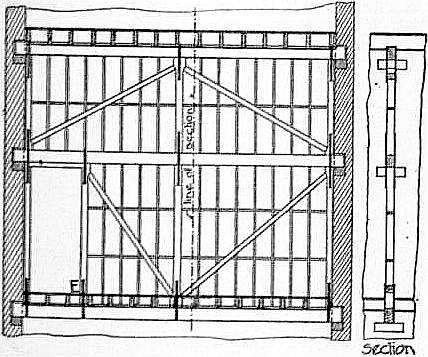
Fig. 33.—King Post Trussed Partition.
Solid wood partitions are used in offices and classrooms of schools, the upper portions usually being glazed; where these partitions enclose a staircase in a public building the London Building Act requires them to be of 2 in. hardwood, with only small panels of fire-resisting glass.
Timber Work.—Half timber work consists of a framework of timber; the upper storeys of suburban and country residences are often thus treated, and the spaces between the timbers are filled in with brickwork and plastered inside, and rough cast outside, though sometimes tiles are hung on the outside. In some instances in country places there is no filling between the timbers, and both sides are lath and plastered, and in others the timbers are solid, or facing pieces are simply plugged to the walls, the joints being pinned with hardwood pins. Half timber work (fig. 34) well designed has a very pleasing, homely and rural effect. The best and most durable wood to use is English oak worked smooth on the external face and usually painted; the by-laws of various authorities differ considerably as to the method of construction and in the restrictions as to its use. Some very fine early examples are to be seen in England, as at Holborn Bars, London, in the old parts of Bristol, and at Moreton Old Hall, near Congleton, Cheshire (see House, Plate IV. fig. 13).
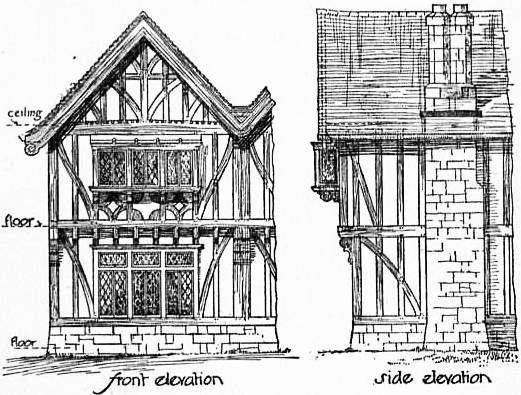
Fig. 34.—Half Timber Construction.
Timber-framed permanent buildings are not used in the towns of England, not being allowed by the by-laws. In some English villages timber bungalows are allowed, plastered inside, and either rough cast outside, or with tiles, or with sheet iron painted. At the garden city of Letchworth, in Hertfordshire, there are a few timber-framed bungalows (erected about 1904 and originally intended to be used as week-end cottages), the outsides of which are covered with sheet iron and painted. Other instances of the temporary use of this kind of building are found in soldiers’ barracks, offices and chapels.
In America and the British colonies this class of building is very largely erected on the outskirts of the cities. In American practice in framing the walls of wooden buildings two distinct methods are used and are distinguished as “braced” and “balloon.”
The Braced (fig. 35) was the only kind in use previous to about the year 1850. In this method of framing the sills, posts, girts and plates are made of heavy timber morticed and pinned together and braced with 4 in. × 4 in. or 4 in. × 6 in. braces and common studding. To frame a building in this way it is necessary to cut all the pieces and make all the mortice holes on the ground, and then fit them together and raise a whole side at a time or at least one storey of it. The common studs are only one storey high.
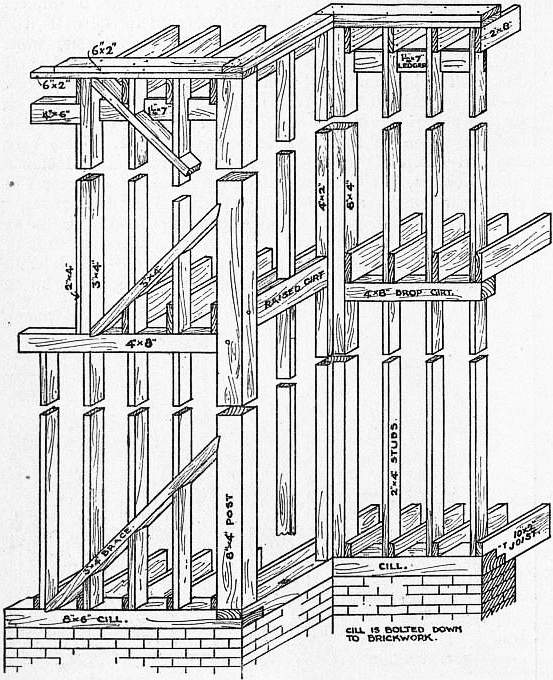
Fig. 35.—Braced Frame.
The Balloon frame (fig. 36) is composed of much smaller scantlings and is more rapidly erected and less expensive. The method is to first lay the sill, generally 4 in. × 6 in., halved at the angles. After the floor is laid, the corner posts, usually 4 in. × 6 in., are erected and temporarily secured in place with the aid of stays. The common studs are then set up and spiked to the sill, and a temporary board nailed across their face on the inside. These common studs are the full height from sill to roof plate, and the second tier of floor joists are supported by notching a 1¼ in. × 7 in. board, called a false girt or ribbon, into their inside edge at the height to receive the floor joists. The ends of the joists are also placed against a stud and spiked. The tops of the studs are cut to a line, and a 2 in. × 4 in. plate is spiked on top, an additional 2 in. × 4 in. plate being placed on the top of the last breaking joint. Should the studs not be long enough to reach the plate, then short pieces are fished on with pieces of wood spiked on both sides. The diagram shows a portion of the framework of a two-storey house constructed in the manner described. In the balloon frame the timbers are held together entirely by nails and spikes, thus permitting them to be put up rapidly. The studs are doubled where windows or openings occur. In both these methods dwarf brick foundations should be built, upon which to rest the sill. For buildings of a superior kind a combination of the braced and balloon frames is sometimes adopted.
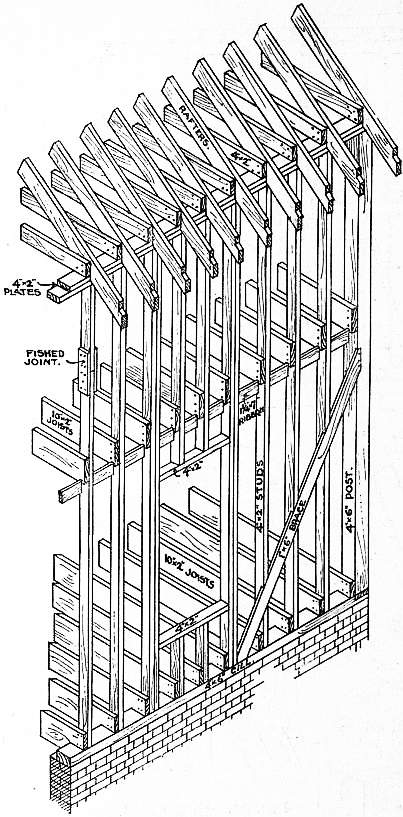
Fig. 36.—Balloon Frame.
The sides of frame buildings are covered with siding, which is fastened to a sheathing of rough boards nailed to the studs. The siding may consist of matched boards placed diagonally, or of clapboards or weather boards—which are thin boards thicker at one edge than the other, and arranged horizontally with the thick edge downwards and overlapping the thin edge of the board below. Shingles or wooden tiles are also employed.
Authorities.—The following are the principal publications on carpentry: T. Tredgold, Carpentry; Peter Nicholson, Carpenter and Joiner; J. Newlands, Carpenter’s Assistant; J. Gwilt, Encyclopaedia of Architecture; Rivington, Building Construction (elementary and advanced); E.L. Tarbuck, Encyclopaedia of Practical Carpentry and Joinery; A.W. Pugin, Details of Ancient Timber Houses; Beresford Pite, Building Construction; J.P. Allen, Building Construction; H. Adams. Notes on Building; C.F. Mitchell, Building Construction (elementary and advanced); Burrell, Building Construction; F.E. Kidder, Building Construction (U.S.A.); E.E. Viollet le Duc, Dictionnaire; J.K. Krafft, L’Art de la charpente.
(J. Bt.)
CARPET, the name given to any kind of textile covering for the ground or the floor, the like of which has also been in use on couches and seats and sometimes even for wall or tent hangings or curtains. In modern times, however, carpet usually means a patterned fabric woven with a raised surface of tufts (either cut or looped), and used as a floor covering. Other floor coverings are and have been made also without such a tufted surface, and of these some are simple shuttle-woven materials plain or enriched with needlework or printed with patterns, others are woven after the manner of tapestry-weaving (see Tapestry) or in imitation of it, and a further class of carpets is made of felt (see Felt). This last material is entirely different from that of shuttle or tapestry weaving. Although carpet weaving by hand is, and for centuries has been, an Oriental industry, it has also been, and is still, pursued in many European countries. Carpet-weaving by steam-driven machinery is solely European in origin, and was not brought to the condition of meeting a widespread demand until the 19th century.
Plate I
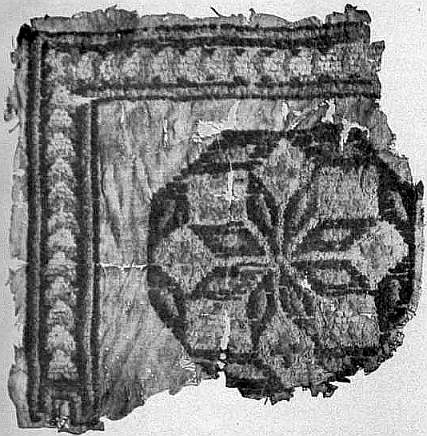
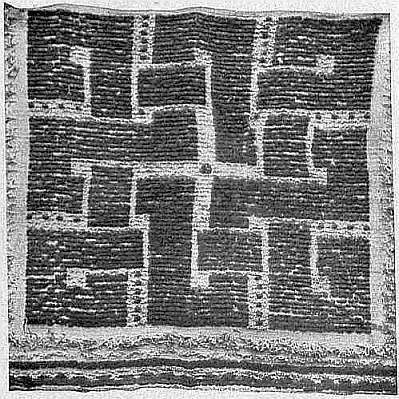
Fig. 1.—PART OF A LINEN COVERING OVER-WROUGHT WITH ORNAMENT IN LOOPS OF COLOURED WOOLS. Egypto-Roman of the 3rd or 4th century a.d. (Victoria and Albert Museum, South Kensington.) Fig. 2.—PART OF A LINEN COVERING OVER-WROUGHT WITH ORNAMENT IN LOOPS OF DARK-BROWN WOOL. Egypto-Roman of the 3rd or 4th century a.d. (Victoria and Albert Museum, South Kensington.)
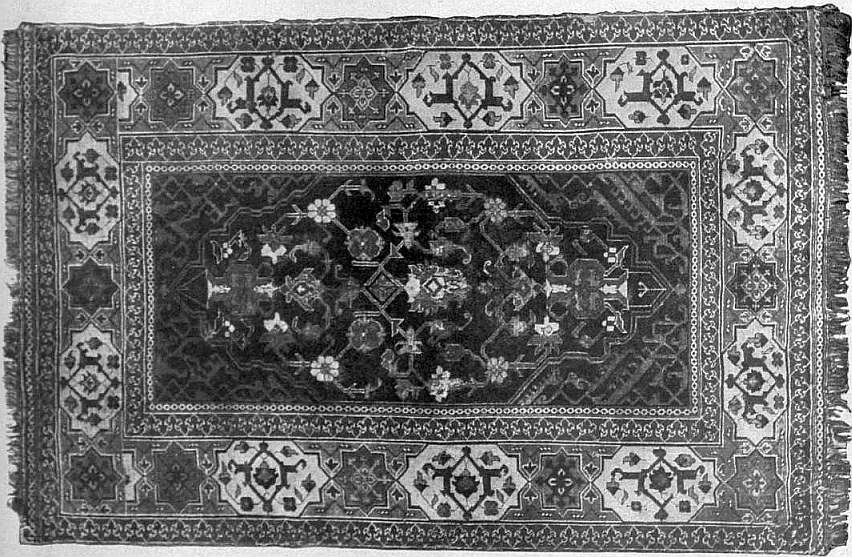
Fig. 3.—CUT PILE TURKEY CARPET, 18th CENTURY, EXEMPLIFYING SUCH CHARACTERISTIC ANGULAR TREATMENT OF QUASI-BOTANICAL FORMS AS IS USUALLY FOUND IN CARPETS AND RUGS MADE IN ASIA MINOR. FROM DESIGNS OF PERSIAN OR MOSIL ORIGIN. (Victoria and Albert Museum, South Kensington.)
Plate II
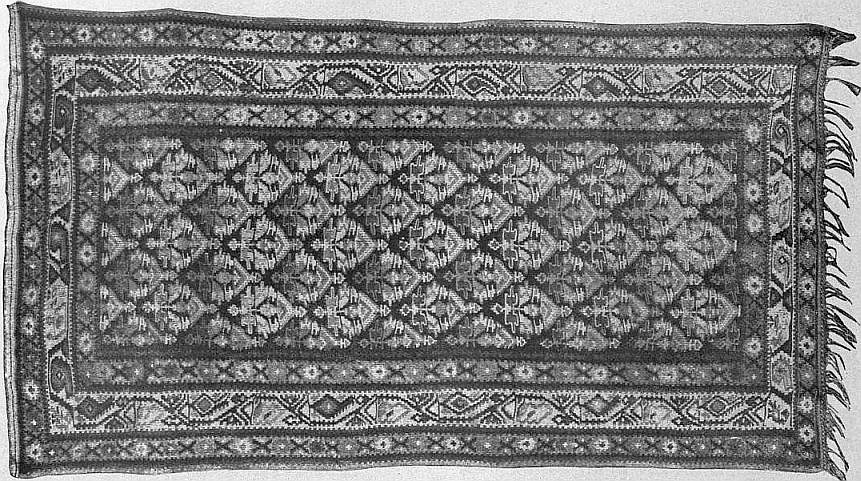
Fig. 4.—RUG MADE IN PERSIA IN THE MANNER OF TAPESTRY WEAVING.
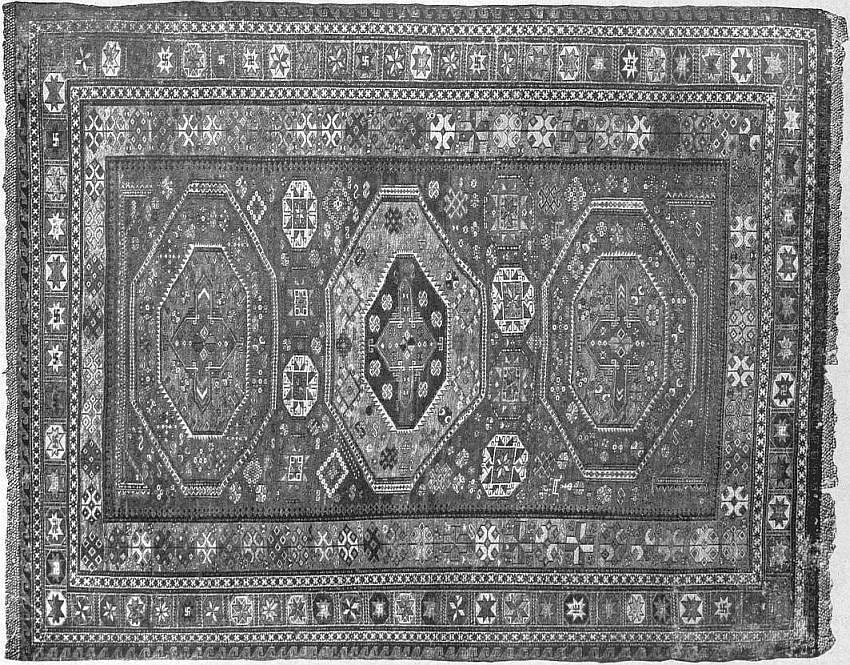
Fig. 5.—CARPET OF STOUT FLAX OR HEMP WOVEN AND THEN COMPLETELY COVERED WITH ORNAMENT WORKED IN CLOSE NEEDLE STITCHES IN COLOURED THREADS.
In connexion with the word “carpet” (Lat. carpita, rug; O. Fr. carpite) notice may be taken of the Gr. τάπης and the Lat. tapetium, whence also comes the Fr. tapis (the present word for “carpet”) as well as our own word History. “tapestry.” This latter, though now more particularly descriptive of hangings and curtains woven in a special way, was, in later medieval times, indiscriminately applied to them and to stuffs used as floor and seat coverings. From a very early period classical writers make mention of them. In ancient Egypt, for instance, floor and seat coverings were used in temples for religious ceremonies by the priests of Amen Ra; later on they were used to garnish the palaces of the Pharaohs. If one may judge from rare remains of decorative textiles, in the museum at Cairo especially, dating from at least 1480 b.c., such Egyptian fabrics were of linen inwoven with coloured wools in a tapestry-weaving manner, and were not tufted or piled textures. Taken from the palace at Nineveh is a large marble slab carved in low relief with a geometrical pattern surrounded by a border of lotus flowers and buds, evidently a copy of an Assyrian floor cover or rug about 705 b.c., such as was also woven probably in the tapestry-weaving manner. On the other hand, its design equally well suggests patchwork—a method of needlework in vogue with Egyptians, at least 900 years b.c., for ornamental purposes, as indicated by the elaborately patterned canopy which covered the bier of an Egyptian queen—the mother-in-law of Shishak who took Jerusalem some three or four years after the death of Solomon—and is preserved in the museum at Cairo. In the Odyssey, tapetia are frequently mentioned, but these again, whether floor coverings or hangings, are more likely to have been flat-textured and not piled fabrics. On the tomb of Cyrus was spread a “covering of Babylonian tapestry, the carpets underneath of the finest wrought purple” (Arrian vi. 29). Athenaeus (bk. v. ch. 27) gives from Callixenus the Rhodian (c. 280 b.c.) an account of a banquet given by Ptolemy Philadelphus at Alexandria, and describes “the purple carpets of finest wool, with the pattern on both sides,” as well as “handsomely embroidered rugs very beautifully elaborated with figures”; these again were probably not piled fabrics but kindred to the hangings in the palace of Ptolemy Philadelphus decorated with portraits, which were likely to have been of tapestry-weaving, and would be nearly the same in appearance on both sides of the fabric. Of corresponding tapestry woven work are Egypto-Roman specimens dating from the 2nd or 3rd century a.d., a considerable collection of which is in the Victoria and Albert Museum at South Kensington. From about the same period date bits of hangings or coverings woven in linen, over-wrought in a method of needlework with ornament of compact loops of worsted (Plate I. figs, 1 and 2). These are the earliest extant specimens of textiles presenting a tufted or piled surface very kindred to that of woven pile carpets of much later date. But the modus operandi in producing the earlier only remotely corresponds with that of the later—though making a surface of loops by means of needlework as in the Coptic or Egypto-Roman specimens of Plate I. figs, 1 and 2 seems to be a step in a progress towards the introduction at an apparently later date of tufts into loom weavings such as we find in 16th-century tufted or piled carpets.
The simple traditional Oriental method of making these latter is briefly as follows:—The foundation is a warp of strong cotton or hempen or woollen or silk threads, the number of which is regulated by the breadth of the carpet and Method of making piled carpets. the fineness or coarseness to be given to its pile. Short lengths of coloured wool or goats’ or camels’ hair or silk are knotted on to each of the warp threads so that the two ends of each twist or tuft of coloured yarn, of whatever material it is, project in front. Across the width of the warp and above the range of tufts a weft thread is run in; another line or row of tufts is then knotted, and above this another weft thread is run in across the warps, and so on. These rows of tufts and weft as made are compressed together by means of a blunt fork or rude comb-like instrument, and thus a compact textile with a pile or tufted surface is produced; the projecting tufts are then carefully clipped to an even surface. In the East the rude wooden frames in which the warp-threads are stretched either stand upright upon, or are level with, the ground. They are easily transported and put together, and the weaving in them is done chiefly by wandering groups of weavers. The local surroundings, often those of rocky arid districts, in which Kurdish and other families weave carpets are well illustrated in Oriental Rugs by J.H. Mumford. For making pile carpets and rugs two traditional knots are in use; the first is termed the Turkish or Ghiordes knot, from Ghiordes, an old city not far from Brusa. It is in vogue principally throughout Asia Minor, as far east as Kurdistan and the Caucasus, but it is also used farther south-east in parts of Persia and India. The yard of the pile is knotted in short lengths upon the warp-threads so that the two outstanding ends of each knot alternate with every two threads of the warp. The second traditional knot is the Persian or Sehna knot, which, though better calculated to produce a close, fine, even, velvety surface, has in many parts of Persia been abandoned for the Ghiordes knot, which is a trifle more easily tied. The Persian or Sehna knot is tied so that from every space between the warp-threads one end of the knot protrudes. The number of knots to the inch tied according to either the Turkish or Persian method is determined by the size and closeness of the warp-threads and the size and number of weft-threads thrown across after each row of knots. The patterns of the fabrics made by country weavers are usually taken by them from old rugs. But in towns where weaving is conducted under more organized conditions new patterns are often devised, and are traced sometimes upon great cardboards, on which the stitches, or knots, are indicated by squares each painted in its proper colour. In some of the Persian carpets and rugs made at Sehna, Kirman and Tabriz, the warp is of silk, a material that contributes to fine compact pile textures.
There is much uncertainty as to the period when cut pile carpets were first made in the East. Their texture is certainly akin to that of fustian and velvet; while that of the finer Persian carpets, which were not made much Date of original pile textures. earlier than about the 15th century, is practically not distinguishable from velvet, having long or heavy pile. Fustian, the English name for a cut short pile textile, is derived from Fostat (old Cairo), and such material is likely to have been made there, as soon as anywhere else, by Saracens, especially during the propitious times of the Fatimite Khalifs, who for more than two centuries previously to the 13th century were noted for the encouragement they gave to all sorts of arts and manufactures. It seems that velvet came into use in Europe not much earlier than the 14th century, and various French church inventories of the time contain entries of “tapis velus (cut pile carpets) d’aultre mer, à mettre par terre” (see Essai sur l’histoire des tapisseries et tapis, by W. Chocqueel, Paris, 1863, pp. 22-23). It is an open question if the making of cut pile carpets in Persia or by Saracens elsewhere preceded that of fustians and velvets or whether the developments in making the three proceeded pari passu.
The making of carpets with a flat surface, however, is probably far older than that of cut pile carpets, and characteristic of one such old method is that in the making of Soumak carpets (Plate II. fig. 5), the ornament of which done in Carpets with flat surface. close needle stitches with coloured threads completely conceals the stout flax or hemp web which is the essential material of these carpets. Soumak is a distortion of Shernaka, a Caucasian town in the far east of Asia Minor. But so-called Soumak carpets are made in other districts, and the particular needlework used in them is practically of the same kind as that on a smaller scale used for the well-known Persian Nakshe or woman’s trousering, and again that used on a still smaller scale in the ornamentation of valuable Kashmir shawls. Quilted and chain-stitched cotton prayer and bath rugs from Persia are referred to in the article on Embroidery.
Another method of making carpets with a flat surface is that of tapestry-weaving (see Plate II. fig. 4), which, according to existing and well-authenticated specimens of considerable antiquity (already referred to), appears to be the oldest of any historic process of ornamental weaving (see Tapestry).
Very broadly considered, the traditional designs or patterns of Oriental carpets fall into two classes: the one, prevailing to a much larger extent than the other, seems to reflect the austerity of the Sunni or orthodox Mahommedans Motives in traditional designs in Oriental carpets. in making patterns with abstract geometric and angular forms, stiff interlacing devices, cryptic signs and symbols and the like; whilst the other suggests the freer thought of the Shiah or unorthodox sect, in designs of ingenious blossom and leafy scrolls, conventional arabesques, botanical and animal forms, and cartouches enclosing Kufic inscriptions (see the splendid example known as the Ardebil carpet, Plate III. fig. 7, and another in Plate IV. fig. 9). Types of the more austere design occur in carpets from Afghanistan, Turkestan, Bokhara and Asia Minor, N.W. India and even Morocco, the other types of freer design being almost special to Persian rugs and carpets.
Next in historic importance to Persia, Turkestan and Asia Minor is India, where the making of cut pile carpets—known as Kalin and Kalicha—was presumably introduced by the Mahommedans during the latter part of the Indian Carpets. 14th century. But the industry did not apparently attain importance until after the founding of the Mogul dynasty by Baber early in the 16th century. The designs mainly derived from those of Persian carpets of that period do not as a rule rise to the excellence of their prototypes. Historical centres of Indian carpet making are in Kashmir, the Punjab and Sind, and at Agra, Mirzapur, Jubbulpore, Warangal in the Deccan, Malabar and Masulipatam. Velvets are richly embroidered in gold and silver thread at Benares and Murshidabad and used as ceremonial carpets, and silk pile carpets are made at Tanjore and Salem. For the most part the best of the Indian woollen pile carpets have been produced by workers of repute engaged by princes, great nobles and wealthy persons to carry on the craft in their dwellings and palaces. These groups of highly skilled workers as part of the household staff were paid fixed salaries, but they were also allowed to execute private orders. During the 19th century the carpet industry was developed in government gaols. Produced in great quantities the prison-made carpets as a rule are less well turned out, and the competition, set up between them and the rugs and carpets of private factories has had a somewhat detrimental effect upon the industry generally. Older in origin than the cut pile carpets are those of thinner and flat surface texture, which from almost immemorial times have been woven in cotton with blue and white or blue and red stripes in the simplest way. These are called daris and satranjis, and are made chiefly in Benares and northern India. They are also made in the south and by such aborigines retaining primitive habits as the Todas of the Nilgiri Hills, a fact which points to the age of this particular method of making ground or floor coverings.
A condition that has always controlled the designs of Oriental carpets is their rectangular shape, more often oblong than square. As a rule, there is a well-schemed border, enclosing the main portion or field over which the Condition controlling designs of Oriental Carpets. details of the pattern are symmetrically distributed. Simpler patterns in the field of a carpet or rug consist of repetitions of the same device or of a small number of different devices (see Plate II. fig. 4). Richer patterns display more organic pattern in the construction, of which the leading and continuous features are expressed as diversified bands, scrolls and curved stems; amongst these latter are very varied devices which play either predominant or subordinate parts in the whole effect of the design (Plate III. fig. 7). Angular and simplified treatments of these elaborate designs are rendered in many Asia Minor or Turkey carpets (Plate I. fig. 3); but the typical flowing and more graceful versions are of Persian origin (see Plate III. fig. 7, and Plate IV. fig. 9), usually of the 16th century. Mingled in such intricate stem designs or “arabesques” are details many of which have been derived on the one hand from Sassanian and even from far earlier Mesopotamian emblematical ornament based on cheetahs seizing gazelles, on floral forms, blossoms and buds so well conventionalized in Assyrian decoration, and on the other hand from Tatar and Chinese sources. The style, strong in suggestion of successive historical periods, seems to have been matured in Mosil engraved and damascened metal work of the 12th and 13th centuries before its occurrence in Persian carpet designs, the finest of which were produced about the reign of Shah Abbas. A good deal earlier than this period are carpets designed chiefly according to the simpler taste of the Sunnites, and such as these appear to be mentioned by Marco Polo (1256-1323) when writing that “in Turcomania they weave the handsomest carpets in the world.” He quotes Conia (Konieh in Anatolia), Savast (Sivas in Asia Minor), some 300 m. north-east of Konieh, and Cassaria (Kaisaria or Caesaraea in Anatolia) as the chief weaving centres. It is the carpets from such places rather than from Persia that appear to have been the first Oriental ones known in European countries.
Entries of Oriental carpets are frequent in the inventories of European cathedral treasures. In England, for instance, carpets are said to have been first employed by Queen Eleanor of Castile and her suite during the latter part of the Carpets in Europe. 13th century, who had them from Spain, where their manufacture was apparently carried on by Saracens or Moors in the southern part of the country. On the other hand, Pierre Dupont, a master carpet-maker of the Savonnerie (see below), gives his opinion in 1632 that the introduction of carpet-making into France was due to the Saracens after their defeat by Charles Martel in a.d. 726. But more historically precise is the record in the book of crafts (Livre des métiers) by Etienne Boileau, provost of the merchants in Paris (1258-1268), of “the tapicers or makers of tapis sarrasinois,1 who say that their craft is for the service only of churches or great men like kings and nobles.” In the 13th and 14th centuries Saracen weavers of rich and ornamental stuffs were also employed at Venice, which was a chief centre for importing Oriental goods, including carpets, and distributing them through western Europe. Dr Bode, in his Vorderasiatische Knüpfteppiche, instances Oriental carpets with patterns mainly of geometric and angular forms represented in frescoes and other paintings by Domenico di Bartolo (1440), Niccolo di Buonaccorso (1450), Lippo Memmi (1480) and others.
Of greater interest perhaps, and especially as throwing light upon the trade, in, if not the making of, carpets in England somewhat in the method of contemporary Turkey carpets, is the specimen represented in Plate III. fig. 6. This may have been made in England, where foreign workmen, especially Flemings, were from early times often encouraged to settle in order to develop industries, amongst which pile carpet-making probably and tapestry-weaving certainly were included. The earliest record of tapestry-weaving works in England is that of William Sheldon’s at Barcheston, Warwickshire, in 1509, and, besides wall hangings, carpets of tapestry-weaving were also possibly made there.2 The cut pile carpet belonging to Lord Verulam (Plate III. fig. 6) was perhaps made at Norwich. It has a repeating and simply contrived continuous pattern of carnations and intertwining stems with a large lozenge in the centre bearing the royal arms of England with the letters E.R. (Elizabeth Regina) and the date 1570. It also has the arms of the borough of Ipswich and those of the family of Harbottle. The sequence or continuity of its border pattern fails in the corners at one end of the rug or carpet in a way very common to many Asia Minor and Spanish carpets (see Plate I. fig. 3, Plate II. fig. 4, and Plate IV. fig. 10); not, however, to the majority of Persian carpets (see Plate III. fig. 7, and Plate IV. fig. 8). A large cut pile carpet in the Victoria and Albert Museum has a repeating pattern of star devices, rather Moorish in style, with the inscription on one end of the border, “Feare God and Keep His Commandments, made in the yeare 1603,” and in the field the shield of arms of Sir Edward Apsley of Thakeham, Sussex, impaling those of his wife, Elizabeth Elmes of Lifford, Northamptonshire. This may have been made in England. A carpet of very similar design, especially in its border, is to be seen in a painting by Marc Gheeraedts of the conference at old Somerset House of English and Spanish plenipotentiaries (1604), now in the National Portrait Gallery, London. A more important and finer carpet belongs to the Girdlers’ Company (Plate IV. fig. 8), and is of Persian design, into which are introduced the arms of the company, shields with eagles, and white panels with English letters, the monogram of Robert Bell the master in 1634, but this was made at Lahore3 to his order.
Before dealing with later phases of the carpet industry in England, mention may now be made of Spanish carpets, of European as distinct from Saracenic or Persian design; the making of them dates at least from the Spanish carpets. end of the 15th century or the beginning of the 16th century. It is only within recent years that specimens of them have been obtained for public collections, and at present little is known of the factories in Spain whence they came. A large and most interesting series is shown in the Victoria and Albert Museum, and a portion of one of the earlier of the Spanish cut pile carpets in that museum is given in Plate IV. fig. 10. The inner repeating pattern has suggestions of a lingering Moorish influence, but a superior version of it with better definition is to be seen in extant bits of Spanish shuttle-woven silks of the 16th century. The border of distorted dragon-like creatures is of a Renaissance style, and this style is more pronounced in other Spanish carpets having borders of poorly treated Italian 16th-century pilaster ornament. Beside cut pile, many Spanish carpets of the 17th and 18th centuries have looped and flat surfaces, and bear Spanish names and inscriptions; many too are of needlework in tent or cross stitch.
Another interesting class of very fine pile carpets that has also become known comparatively recently to collectors is the so-called Polish carpets, generally made of silk pile for the ornament, which is distinctively Oriental, and of Polish carpets gold and silver thread textile for the ground, very much after the manner of early 17th-century Brusa fabrics. Many of these carpets are in the Czartoryski collection at Cracow. They are discussed by Dr Bode in his treatise on Oriental carpets already referred to. European coats of arms of the persons for whom they were made are often introduced into them, sometimes different in workmanship from that of the carpets, though there are specimens in which the workmanship is the same throughout. The details of their designs consist for the most part of arabesques and long curved serrated leaves similar to such as are commonly used in Rhodian pottery decoration of the 16th century, though more typical of those so frequent in 17th-century Turkish ornament. Various considerations lead to the conclusion that these so-called Polish carpets were probably made in either Constantinople or Damascus (tapete Damaschini frequently occur in Venetian inventories of the 16th century) rather than, as has been thought, by the Persian workmen employed at the Mazarski silk factory which lasted for a short period only during the 18th century at Sleucz in Poland.
The European carpet manufactory, of which a continuous history for some two hundred and fifty years is recorded with exceptional completeness, is that which has been maintained under successive regimes, royal, imperial Carpets made in France. and republican, in France—at the Hotel des Gobelins in Paris. Seventy years before its organization under Colbert in 1667 as a state manufactory (Manufacture Royale des Meubles de la Couronne), Henry IV. had founded royal art workshops for all sorts of decorative work, at the Louvre; and here in 1604 a workroom was established for making Oriental carpets by the side of that which existed for making tapis flamands. In 1610 letters patent were granted to the Sieur Fortier, who has been reputed to be the first inventor in France of the art of making in silk and wool real Turkey and other piled carpets with grounds of gold thread, which must have been sumptuous fabrics probably resembling the so-called Polish carpets of this date. Some ten years later it is recorded that Pierre Dupont and Simon Lourdet started a pile carpet (tapis veloutés) manufactory at Chaillot (Paris) in large premises which had been used for the manufacture of soap—whence the name of “Savonnerie.” To this converted manufactory were transferred in 1631 the carpet-makers from the Louvre, and under the direct patronage of the crown it continued its operations for many years at Chaillot. It was not until 1828 that the making of tapis de la Savonnerie (pile carpets of a fine velvety character) was transferred to the Hôtel des Gobelins. Here, in contradistinction to the Savonnerie, carpets are made others which, like those of Beauvais (where a manufactory of hangings and carpets was established by Colbert in 1664), are tapis ras or non-piled carpets, being of tapestry-weaving, as also are those made by old-established firms at Aubusson and at Felletin, where the manufacture was flourishing, at the former place in 1732 and at the latter in 1737.
Returning now to England, there are evidences towards the end of the 17th century, if not earlier, that Walloon and Flemish makers of Turkey pile carpets had settled and set up works in different parts of the country. A protective charter, for instance, was granted in 1701 by William III. to weavers in Axminster and Wilton. The ultimate celebrity of the pile carpet industry at Wilton was due mainly to the interest taken in it during the earlier part of the 18th century by Henry, earl of Pembroke and Montgomery, who in the course of his travels abroad collected certain French and Walloon carpet-makers to work for him in Wiltshire—over them he put two Frenchmen, Antoine Dufossy and Pierre Jemale. More notable, however, than these is Pere Norbert, who naturalized himself as an Englishman, changed his name to Parisot, and started a manufactory of pile carpets and a training school in the craft at Fulham about 1751. In 1753 he wrote and published “An account of the new manufactory of Tapestry after the manner of that at the Gobelins, and of carpets after the manner of that at Chaillot (i.e. Savonnerie) now undertaken at Fulham by Mr Peter Parisot.” Two refugee French carpet-makers from the Savonnerie had arrived in London in 1750, and started weaving a specimen carpet in Westminster. Parisot, having found them out, induced the duke of Cumberland to furnish funds for their removal to better workrooms at Paddington. The carpet when finished was presented by the duke to the princess dowager of Wales. Parisot quarrelled with his two employees, enticed others to come over, and then removed the carpet works from Paddington to Fulham. A worker, J. Baptiste Grignon, writing to “Mr Parisot in Foulleme Manufactory,” mentions the marked preference “shown by the English court for velvet,” and how much a “chair-back he had worked in the manner of the Savonnerie had been admired.” Correspondence published in the Nouvelles Archives de l’art français (1878) largely relates to the efforts of the French government to stop the emigration to England of workers from the Gobelins and the Savonnerie. Parisot’s Fulham works were sold up in 1755. He then tried to start a manufactory at Exeter, but apparently without success, as in 1756 his Exeter stock was sold in the Great Piazza auction rooms, Covent Garden. Joseph Baretti (Dr Johnson’s friend), writing from Plymouth on the 18th of April 1760, alludes to his having that morning visited the Exeter manufactory of tapisseries de Gobelins “founded by a distinguished anti-Jesuit—the renowned Father Nobert.” Previously to this a Mr Passavant of Exeter4 had received in 1758 a premium from the Society of Arts of London for making a carpet in “imitation of those brought from the East and called Turky carpets.” Similar premiums had been awarded by the society in 1757 to a Mr Moore of Chiswell Street, Moorfields, and to a Mr Whitty of Axminster. In 1759 a society’s premium was won by Mr Jeffer of Frome. In the Transactions of the Society, vol. i., dated 1783, it is stated that by their rewards, the manufacture of “Turky carpets is now established in different parts of the kingdom, and brought to a degree of elegance and beauty which the Turky carpets never attained.” Such records as these convey a fair notion of the sporadic attempts which immediately preceded a systematic manufacture of pile carpets in this country. Whilst the Wilton industry survived, that actually carried on at Axminster died towards the end of the 18th century, and the name of Axminster like that of Savonnerie carpets now perpetuates the memory of a locally deceased manufactory, much as in a parallel way Brussels carpets seem to owe their name to the renown of Brussels as an important centre in the 15th and 16th centuries for tapestry-weaving.
Before the existence of steam-driven carpet-making machinery in England, employers, following the example set by the French, applied the Jacquard apparatus, for regulating and facilitating the weaving of patterns, to the hand Modern machinery. manufacture of carpets. This was early in the 19th century; a great acceleration in producing English carpets occurred, severely threatening the industry as pursued (largely for tapis ras) at Tournai in Belgium, at Nimes, Abbeville, Aubusson, Beauvais, Tourcoing and Lannoy in France. The severity of the competition, however, was still more increased when English enterprise, developing the inventions of Erastus B. Bigelow (1814-1879) of America and Mr William Wood of England, took the lead in perfecting Jacquard weaving carpet looms worked by steam, which resulted in the setting up of many power-loom carpet manufactories in the United Kingdom. It was not until 1880 that French pile carpet manufacturers began to adopt similar carpet power-looms, importing them from England.
These machines for weaving pile carpets, either looped (bouclé) as in Brussels, or cut (velouté) as in Wilton or Axminster carpets, were similar in all respects to such as had been in use by the important English manufacturers—Crossley of Halifax, Templeton of Glasgow, Humphreys of Kidderminster, Southwell of Bridgnorth, and others. A so-called tapestry carpet weaving-loom was invented by Richard Whytock of Edinburgh in 1832, but it was not brought to sufficient completeness for sustained manufacture until 1855. The essential feature of Mr Whytock’s process was that the warp-threads were dyed and parti-coloured, in such a way that when woven the several points of colour formed the pattern of the whole fabric. Although the name “tapestry” is used, the texture of these wares has but a remote likeness to that of hand-made tapestry hangings and carpets such as those of the Gobelins and Aubusson manufactories, nor is it the same as the texture of Brussels carpets. Machine-made tapestry carpets are also called “ingrain” carpets, because the wool or worsted is dyed in the grain, i.e. before manufacture. Germany in her manufacture of carpets resorts chiefly to the “ingrain” process, but in common with Holland and Belgium she produces pile (looped and cut) carpets from power-looms. In the United States of America there are many similar and very important carpet manufactories; and Austria produces fine cut pile carpets (veloutés), the designs of which are largely derived from those of the Aubusson tapestry-woven carpets (tapis ras).
Lengths or pieces of felt and other substantial material are frequently made for floor and stair carpeting, and are often printed with patterns. These of course come into quite another class technically. The technological aspects of the several branches of carpet manufacture by machinery are treated in the articles on Textile-printing and Weaving. Briefly, the products of carpet manufacture practically fall into three main divisions: (1) Pile carpets (tapis moquettes) which are either looped (bouclé) or cut (velouté); (2) flat surface carpets (tapis ras) as in hand tapestry-woven material; and (3) printed stuffs used for carpeting.
Whilst the production of carpets by steam power predominates in Europe and the United States of America, and at one time appeared to be giving the coup de grâce to the craft of making carpets by hand, there has been in Modern hand-made carpets. recent times a revival in this latter, and many carpets of characteristic modern design, several of them made in England, are due to the influence of the late William Morris, who devoted much of his varied energies to tapestry weaving and pile carpet weaving by hand, both of which crafts are being fostered as cottage industries in parts of Ireland, as well as in England. At the same time leading English carpet manufactures continue to produce hand-made carpets as occasion requires. In France a much more systematic existence of tapestry weaving and pile carpet making by hand has been maintained and is of course attributable to the perennial activity of the state tapestry works in Paris (at the Gobelins workshops) and in Beauvais, and of corresponding works managed by private enterprise at Aubusson and elsewhere.
Designing patterns for English carpet manufacture is now more organized than it was, and greater thought and invention are given to devising ornament suitable to the purpose of floor coverings. Before 1850 and for a few years later, rather rude realistic representations of animals and botanical forms (decadent versions of Savonnerie designs) were often wrought in rugs and carpets, and survivals of these are still to be met with, but the lessons that have been subsequently derived from intelligent study of Oriental designs have resulted in the definite designing of conventional forms for surface patterns. The early movement in this direction owes much to the teaching of Owen Jones, and in its later and rather freer phases the Morris influence has been powerful. Schools of art at Glasgow, at Manchester, Birmingham and elsewhere in the United Kingdom have trained and continue to train designers, whose work has contributed to the formation of an English style with a new note, which, as a French writer puts it, has created a sensation in France, in Germany, in fact in all Europe and America.
France retains that facility of execution and liveliness in invention which have been nurtured for over three hundred years by systematic, governmental solicitude for education in decorative design and enterprise in perfecting manufacture. Her Aubusson and Savonnerie carpets have maintained a style of design in form and colour entirely different from any that clearly throws back to Oriental principles, and many of the designs for the finer and larger of these carpets are schemed with large central oval panels, garlands of flowers and fantastic frames very much on the plan of what is frequently to be seen in the decoration of ceilings. At the same time the style called l’art nouveau has become developed. It largely grows from very fanciful dispositions of free-growing natural forms, as well as curiously curved and tenuous forms, many of which are bone-like and fibre-like in character, flat in treatment and rather thin and washy in colour, and its influence has slightly percolated into designs for pile carpets. This style, sometimes intermixed with the more robust, less fantastic and rather fuller-coloured English style, has found followers in England, America and Germany, but the bulk of the designs now used in power carpet looms seems to be mainly of Oriental descent.
The more important art museums in Europe contain collections of Oriental carpets, and the history of many is fairly well established. The subject has become one of serious study, the results of which have been published and elucidated by means of well-executed coloured reproductions of carpets and rugs preserved in both public and private collections.
Plate III.
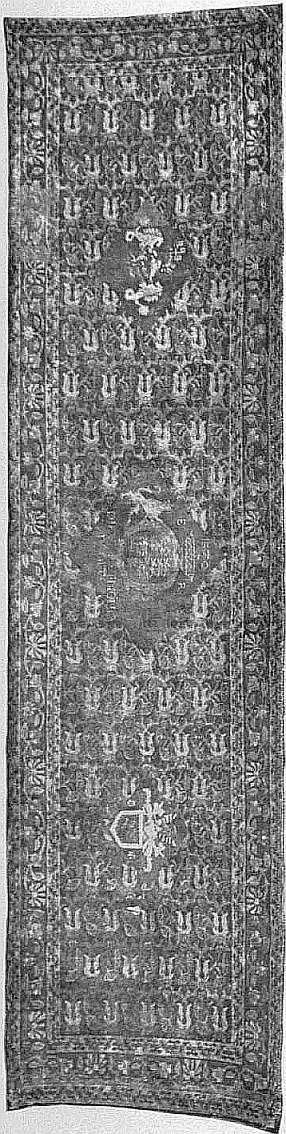
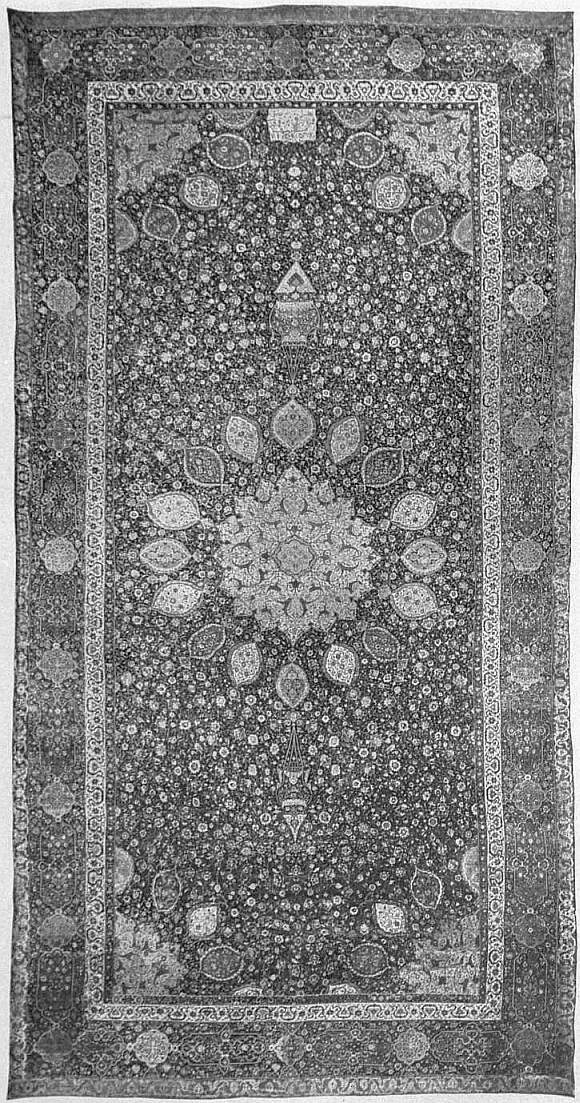
Fig. 6.—CUT PILE WORSTED CARPET, BEARING ROYAL ARMS OF ENGLAND WITH E.R. (ELIZABETH REGINA); DATE 1570. Fig. 7.—VERY FINE CUT PILE PERSIAN CARPET KNOWN AS THE HOLY CARPET OF THE MOSQUE AT ARDEBIL.
Plate IV.
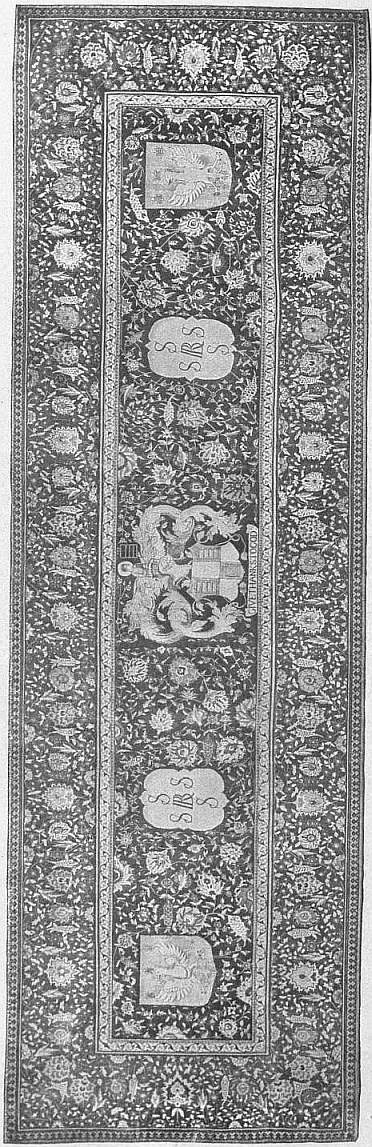
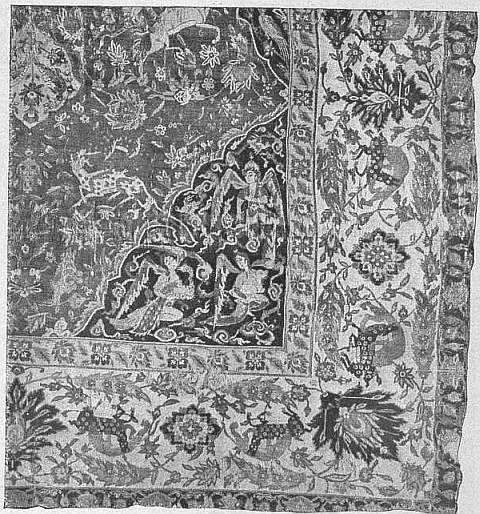
Fig. 9.—CORNER OF A CUT PILE CARPET OF PERSIAN MANUFACTURE, 16TH CENTURY.
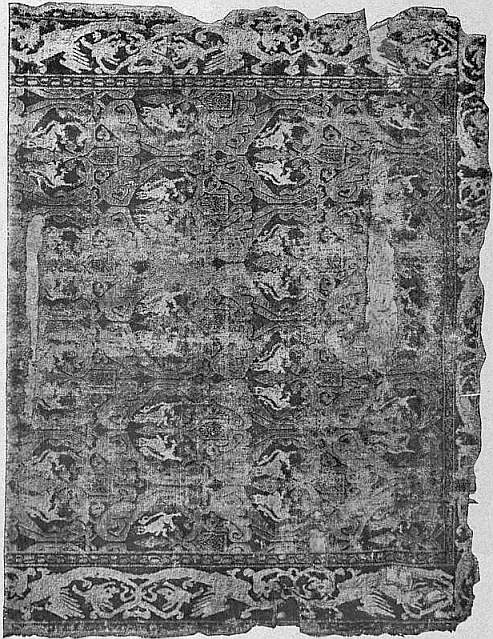
Fig. 8.—FINE CUT PILE LAHORE CARPET (c. 1664) BELONGING TO GIRDLERS’ COMPANY IN LONDON. OF PERSIAN DESIGN. Fig. 10.—CUT PILE CARPET OF SPANISH MANUFACTURE, EARLY 16TH CENTURY.
Bibliography.—(1) An Account of the New Manufactory of Tapestry after the manner of that at the Gobelins; and of Carpets after the manner of that at Chaillot, &c., now undertaken at Fulham, by Mr Peter Parisot (London, Dodsley, 1753, 8vo). This is probably the only account of carpet-making in England during the 18th century; it is of peculiar interest in that respect, and as containing a statement that “the Manufacture of Chaillot is altogether of wool, and worked in the manner of Velvet. All sorts of Figures of Men and Animals may be imitated in this work; but Fruits and Flowers answer better; and the properest employment for this Art is to make Carpets and all sorts of Skreens.” (2) Essai sur l’histoire et la situation actuelle de l’industrie des tapisseries et tapis, by W. Chocqueel (Paris, 1863). (3) Vol. xi. of Reports on the Paris Universal Exhibition of 1867, containing “Report on Carpets, Tapestry and other stuffs for Furniture,” by Matthew Digby Wyatt, F.S.A. (1868). In reviewing the modern products shown at the exhibition, Sir Digby Wyatt discusses at some length the aesthetics of carpet design. (4) British Manufacturing Industries, edited by G. Phillips Bevan, “Carpets,” by Christopher Fresser (London, 1876). (5) Altorientalische Teppichmuster nach Bildern und Originalen des xv.-xvi. Jahrhunderts, by Julius Lessing (Berlin, 1877). Numerous references are made in this illustrated work to the carpet designs that occur in paintings by Italian and Flemish masters. (6) Eastern Carpets, by Vincent J. Robinson, with water-colour drawings by E. Julia Robinson (London, 1882, large 4to). In this publication, which precedes by nine or ten years the more learned works by Riegl and Bode, there are two examples, one ascribed to the manufactory at Alcaraz in La Mancha, and one to the supposed manufactory of the 17th century at Warsaw. By the light of later and more complete investigations Mr Robinson’s ascriptions are scarcely borne out. (7) Oriental Carpets, by Herbert Coxon (London, 1884, 8vo). (8) Altorientalische Teppiche, by Alois Riegl (Leipzig, 1891); a useful book of reference (containing thirty-six illustrations) of manufacturing, archaeological and artistic interest. (9) Jahrbuch der kunsthistorischen Sammlungen des Allerhöchsten Kaiserhauses, vol. xiii. (Wien, 1892). Containing an important and finely illustrated article, “Ältere orientalische Teppiche aus dem Besitze des Allerhöchsten Kaiserhauses,” by Alois Riegl, in the course of which comparisons are made between the designs in Persian MS. illustrations, in engraved metal work and those of carpets. (10) Oriental Carpets, published by the Austrian Commercial Museum (English edition by C. Purdon Clarke) (Vienna, 1892-1896). This contains a series of monographs by I.M. Stockel, Smyrna; Dr William Bode, Berlin; Vincent Robinson, London; M. Gerspach, Paris; T.A. Churchill, Tehran; Sir George Birdwood, London; C. Purdon Clarke, London; and Alois Riegl, Vienna, and a preface by A. von Scala, Vienna, (n) Ancient Oriental Carpets, a supplement to the above, four parts containing twenty-five plates with text (Leipzig, 1906, large folio). (12) Vorderasiatische Knüpfteppiche aus älterer Zeit, by Wilhelm Bode (Leipzig, 1901). This learned treatise gives inter alia suggestive notes upon the production of the so-called Polish carpets and of Spanish carpets. (13) Ein orientalischer Teppich vom Jahre 1202 und die ältesten orientalischen Teppiche, by Alois Riegl (Berlin, 1895). A coloured illustration is given of a pile curtain with a triple niche design and an Armenian inscription that it was made by “Gorzi the Artist” to the glory of the church of St Hripsime—an Armenian martyr. The date 651 appears in the inscription, but Riegl adduces valid reasons for reading it as the equivalent of a.d. 1202. Another pile carpet of conventional garden design, probably not of earlier manufacture than 14th century, is also illustrated and carefully discussed, especially in connexion with the appearance in it of well-authenticated Sassanid devices—streams with fishes and birds, &c. (14) Report on Carpets at the Paris Exhibition of 1900, by Ferdinand Leborgne (1901, 8vo). (15) Oriental Rugs, by John Kimberly Mumford (London, 1901), contains twenty-four colour-plate and autotype reproductions of rugs and eight photo-engravings of phases of the rug industry—amongst which latter are: “A Nomad Studio,” “Kurdish Girls at the Loom,” “Boy Weavers of Tabriz,” and a “Rug Market in Iran.” (16) Rugs, Oriental and Occidental, by Rosa Belle Holt (Chicago, 1901), well illustrated, with colour-plate reproductions of various types of rugs, including less known Chinese and Navajo specimens. (17) The Art Workers’ Quarterly, vol. iii. No. II, July 1904; article on the pile carpet belonging to the Worshipful Company of Girdlers of the City of London, by A.F. Kendrick, with a colour-plate of this remarkable carpet, made to the order of the master of the company in 1634 at Lahore. (18) Journal of Indian Art and Industry: Indian Carpets and Rugs (parts 87 to 94) (London, 1905 and 1906). Upwards of ninety-nine illustrations of many varieties of Indian and Persian carpets are given in this publication, a large number showing debased versions of fine designs, e.g. some from the Punjab, Warangal, Mirzapur and Elura; those from Yarkand exhibit Tatar and Chinese influences. (19) A History of Oriental Carpets before 1800, by F.R. Martin, published by the State Printing Office in Vienna (Bernard Quaritch, London, 1906). This contains a series of excellent reproductions in colours of Oriental carpets, many of which, being presents to kings of Sweden by the shah of Persia in the 17th century, are to be seen in the castles of Stockholm and Copenhagen—others are in the Imperial Museum at Constantinople or belong to private owners.
(A. S. C.)
1 The tapissiers sarrasinois were apparently the makers of piled or velvety carpets, and have always been written about in contradistinction to the tapissiers de haute lisse or tapissiers nostrez, who it appears did not weave piled or velvety material, but made tapestry-woven hangings and coverings for furniture.
2 In Hakluyt’s Voyages mention is made of directions having been given to Morgan Hubblethorne, a dyer, to proceed (about 1579) to Persia to learn the arts of dyeing and of making carpets.
3 The Royal Factory at Lahore was established by Akbar the Great in the 16th century.
4 A wealthy serge-maker of Swiss nationality, who had been settled for some years in Exeter, and bought up the plant of Parisot’s Exeter works. (See Bulletin de la société de l’histoire de l’art français, p. 97, vol. 1875 to 1878.)
CARPET-BAGGER, a political slang term for a person who stands as a candidate for election in a locality in which he is a stranger. It is particularly used of such a candidate sent down by the central party organization. The term was first used in the western states of America of speculative bankers who were said to have started business with no other property than what they could carry in a carpet-bag, and absconded when they failed. The term became of general use in American politics in the reconstruction period after the Civil War, as a term of contempt for the northern political adventurers in the South who, by the help of the negro vote, gained control of the administration.
CARPET-KNIGHT, properly one who has been knighted in time of peace on the carpet before the king’s throne, and not on the field of battle as an immediate reward for valour. It is used as a term of reproach for a soldier who stays at home, and avoids active service and its hardships, with a particular reference to the carpet of a lady’s chamber, in which such a sainéant soldier lingers.
CARPI, GIROLAMO DA (1501-1556), Italian historical and portrait painter, born at Ferrara, was one of Benvenuto Garofalo’s best pupils. Becoming infatuated with the work of Correggio, he quitted Ferrara, and spent several years in copying that master’s paintings at Parma, Modena and elsewhere, succeeding in aping his mannerisms so well as to be able to dispose of his own works as originals by Correggio. It is probable that not a few pictures yet attributed to the great painter are in reality the work of his parasite. Da Carpi’s best paintings are a Descent of the Holy Spirit, in the church of St Francis at Rovigo; a Madonna, an Adoration of the Magi, and a St Catharine, at Bologna; and the St George and the St Jerome, at Ferrara.
CARPI, UGO DA, Italian 15th-century painter, was long held the inventor of the art of printing in chiaroscuro, afterwards brought to such perfection by Parmigiano and by Baltasar Peruzzi of Siena. The researches of Michael Huber (1727-1804) and Johann Gottlob Immanuel Breitkopf (1719-1794) have proved, however, that this art was known and practised in Germany by Johann Ulrich Pilgrim (Wächtlin) and Nikolaus Alexander Mair (1450-c. 1520), at least as early as 1499, while the date of the oldest of Da Carpi’s prints is 1518. Printing in chiaroscuro is performed by using several blocks. Da Carpi usually employed three—one for the outline and darker shadows, another for the lighter shadows, and a third for the half-tint. By means of them he printed engravings after several pictures and after some of the cartoons of Raphael. Of these a Sybil, a Descent from the Cross, and a History of Simon the Sorcerer are the most remarkable.
CARPI, a Dacian tribe established upon the lower Danube from the 1st century b.c. They rose to considerable power during the 3rd century a.d., and claiming to be superior to the Goths accordingly demanded that their incursions into Roman territory likewise should be bought off by tribute. When this was refused they invaded in force, but were beaten back by the emperor Philip. After this they joined with the Goths in their successful inroads until both nations were defeated by Claudius Gothicus. Later, after repeated defeats under Diocletian and Galerius, they were taken under Roman protection and the greater part established in the provinces of Pannonia and Moesia; some were left beyond the Danube, and they are last heard of as allies of the Huns and Sciri in the time of Theodosius I. Ptolemy speaks of Harpii and a town Harpis. This was no doubt the form the name assumed in the mouths of their Germanic neighbours, Bastarnae and Goths.
(E. H. M.)
CARPI, a town and episcopal see of Emilia, Italy, in the province of Modena, 9 m. N.N.W. by rail from the town of Modena. Pop. (1905) 7118 (town), 27,135 (commune). It is the junction of a branch line to Reggio nell’ Emilia via Correggio, and the centre of a fertile agricultural district. Carpi contains several Renaissance buildings of interest, the façade of the old cathedral (an early Romanesque building in origin, with some early 15th-century frescoes), the new cathedral (after 1513), perhaps the nave of S. Niccolò and a palace, all being by Baldassare Peruzzi: while the prince’s palace (with a good court and a chapel containing frescoes by Bernardino Loschi of Parma, 1489-1540) and the colonnades opposite the theatre are also good. These, and the fortifications, are all due to Alberto Pio of Carpi, a pupil of Aldus Manutius, expelled in 1525 by Charles V., the principality being given to the house of Este.
CARPINI, JOANNES DE PLANO, the first noteworthy European explorer of the Mongol empire (in the 13th century), and the author of the earliest important Western work on northern and central Asia, Russian Europe, and other regions of the Tatar dominion. He appears to have been a native of Umbria, where a place formerly called Pian del Carpine, but now Piano della Magione, stands near Perugia, on the road to Cortona. He was one of the companions and disciples of his countryman St Francis of Assisi, and from sundry indications can hardly have been younger than the latter, born in 1182. Joannes bore a high repute in the order, and took a foremost part in the propagation of its teaching in northern Europe, holding successively the offices of warden (custos) in Saxony, and of provincial (minister) of Germany, and afterwards of Spain, perhaps of Barbary, and of Cologne. He was in the last post at the time of the great Mongol invasion of eastern Europe and of the disastrous battle of Liegnitz (April 9, 1241), which threatened to cast European Christendom beneath the feet of barbarous hordes. The dread of the Tatars was, however, still on men’s mind four years later, when Pope Innocent IV. despatched the first formal Catholic mission to the Mongols (1245), partly to protest against the latter’s invasion of Christian lands, partly to gain trustworthy information regarding the hordes and their purposes; behind there may have lurked the beginnings of a policy much developed in after-time—that of opening diplomatic intercourse with a power whose alliance might be invaluable against Islam.
At the head of this mission the pope placed Friar Joannes, at this time certainly not far from sixty-five years of age; and to his discretion nearly everything in the accomplishment of the mission seems to have been left. The legate started from Lyons, where the pope then resided, on Easter day (April 16, 1245), accompanied by another friar, one Stephen of Bohemia, who broke down at Kanev near Kiev, and was left behind. After seeking counsel of an old friend, Wenceslaus, king of Bohemia, Carpini was joined at Breslau by another Minorite, Benedict the Pole, appointed to act as interpreter. The onward journey lay by Kiev; the Tatar posts were entered at Kanev; and thence the route ran across the Dnieper (Neper, Nepere, in Carpini and Benedict) to the Don and Volga (Ethil in Benedict; Carpini is the first Western to give us the modern name). Upon the last-named stood the Ordu or camp of Batu, the famous conqueror of eastern Europe, and the supreme Mongol commander on the western frontiers of the empire, as well as one of the most senior princes of the house of Jenghiz. Here the envoys, with their presents, had to pass between two fires, before being presented to the prince (beginning of April 1246). Batu ordered them to proceed onward to the court of the supreme khan in Mongolia; and on Easter day once more (April 8, 1246) they started on the second and most formidable part of their journey—“so ill,” writes the legate, “that we could scarcely sit a horse; and throughout all that Lent our food had been nought but millet with salt and water, and with only snow melted in a kettle for drink.” Their bodies were tightly bandaged to enable them to endure the excessive fatigue of this enormous ride, which led them across the Jaec or Ural river, and north of the Caspian and the Aral to the Jaxartes or Syr Daria (quidam fluvius magnus cujus nomen ignoramus), and the Mahommedan cities which then stood on its banks; then along the shores of the Dzungarian lakes; and so forward, till, on the feast of St Mary Magdalene (July 22), they reached at last the imperial camp called Sira Orda (i.e. Yellow Pavilion), near Karakorum and the Orkhon river—this stout-hearted old man having thus ridden something like 3000 m. in 106 days.
Since the death of Okkodai the imperial authority had been in interregnum. Kuyuk, Okkodai’s eldest son, had now been designated to the throne; his formal election in a great Kurultai, or diet of the tribes, took place while the friars were at Sira Orda, along with 3000 to 4000 envoys and deputies from all parts of Asia and eastern Europe, bearing homage, tribute and presents. They afterwards, on the 24th of August, witnessed the formal enthronement at another camp in the vicinity called the Golden Ordu, after which they were presented to the emperor. It was not till November that they got their dismissal, bearing a letter to the pope in Mongol, Arabic and Latin, which was little else than a brief imperious assertion of the khan’s office as the scourge of God. Then commenced their long winter journey homeward; often they had to lie on the bare snow, or on the ground scraped bare of snow with the traveller’s foot. They reached Kiev on the 9th of June 1247. There, and on their further journey, the Slavonic Christians welcomed them as risen from the dead, with festive hospitality. Crossing the Rhine at Cologne, they found the pope still at Lyons, and there delivered their report and the khan’s letter.