Tenth Chapter A Taxi Is Trailed
May Massee translation
Three of the staff runners came storming out of Trautenau Street, brandishing their arms about wildly.
“Off!” said the Professor, and on the second he, Emil, the Mittenzwey boys, and Krummbiegel ran toward Kaiser Avenue as if they were trying to break the record for the hundred-yard dash. The last twelve yards to the news-stand they took very carefully, and held back, because Gustav motioned to them to stop.
“Too late?” asked Emil out of breath.
“Are you crazy, man?” whispered Gustav. “When I do anything I do it right.”
The thief was standing across the street in front of the Café Josty, looking around at the view as if he were in Switzerland. Presently he bought an evening paper from the newsboy and began to read.
“If he comes across and runs into us now,” murmured Krummbiegel, “it will be a nasty business.”
They stood behind the news-stand, craning their necks around the side, and trembled with excitement.
The thief took not the slightest notice, but turned the pages of his paper with admirable perseverance.
“He must be squinting over the edge, though, to see if anyone is spying on him,” Mittenzwey the older decided.
“Has he looked over toward you often?” asked the Professor.
“Not a blink. He gobbled as if he hadn’t eaten for three days.”
“Attention!” called Emil.
The man in the stiff hat folded up his paper, glanced over the passers-by, and then like lightning beckoned to an empty taxi that was passing. The taxi stopped, the man got in, and the taxi rolled off.
But, presto, there sat the boys in another taxi, and Gustav was saying to the driver: “Do you see that car that’s just turning into Prager Place? Yes? Drive behind it, please. But be careful, so that he won’t notice.” The car started up, crossed Kaiser Avenue, and traveled along at a safe distance behind the other taxi.
“What’s up?” asked the chauffeur.
“The fellow ahead there pulled a raw one, and we’re sticking to him like burrs,” explained Gustav. “But that’s just between ourselves, understand?”
“Just as you gentlemen wish,” answered the chauffeur, and inquired further: “But have you any money?”
“What do you take us for?” called the Professor reproachfully.
“Oh, well,” grumbled the man.
“I A. 3733 is his number,” Emil informed them.
“That’s important,” decided the Professor, and made a note of the figures.
“Not too near to the fellow,” warned Krummbiegel.
“All right,” mumbled the chauffeur.
So they went down Motz Street, down Viktoria-Luise Place and on down Motz Street again. Some people stopped on the sidewalk and laughed at the strange company of gentlemen in the taxi.
“Duck,” whispered Gustav. The boys threw themselves on the floor of the cab and lay huddled together like cabbages and turnips.
“What’s the matter?” asked the Professor.
“There’s a red light at Luther Street, man! You’ve got to stop there, and the other car won’t get across, either.”
Sure enough both cars stopped and waited, one behind the other, until the green light came on and gave the right of way again. But no one could have told that the second car was occupied. It seemed empty. The boys crouched down to give it that appearance. The chauffeur turned around, saw the performance, and had to laugh. As the car drove on they all bobbed up cautiously again.
“If only the trip doesn’t last too long,” said the Professor, as he inspected the meter. “This joy ride has cost eighty pfennigs already.”
The journey was even then coming to an end. At Nollendorf Place the first taxi stopped right in front of the Hôtel Kreid. The second car put on its brakes at the same moment and waited outside the danger zone for whatever might happen next.
The man in the stiff hat got out, paid his fare, and disappeared into the hotel.
“Gustav, after him!” commanded the Professor anxiously. “If that place has two entrances he is off.” Gustav vanished.
Then the other boys got out. Emil paid. It cost one mark. The Professor led his followers through a gate leading past a movie theater into a great courtyard that stretched behind the theater to Nollendorf Place. Then he sent Krummbiegel out to catch Gustav.
“Lucky for me if the guy stays in the hotel,” decided Emil. “This courtyard makes a wonderful headquarters.”
“With all the modern conveniences,” added the Professor, “subway station over there, telephone booths, and places to hide. It couldn’t be better.”
“Hope Gustav will get out of it all right,” said Emil.
“Trust him,” answered Mittenzwey the younger. “He’s not so dumb as he looks.”
“If only he’d come soon,” worried the Professor, and seated himself in a chair that had been left in the courtyard. He looked like Napoleon before the battle of Leipzig.
And then Gustav came back.
“We’ve got him!” he said, and rubbed his hands together. “He is really staying in the hotel. I saw the elevator boy take him upstairs. There isn’t any other entrance, either. I looked the joint over from all sides. If he doesn’t go off over the roof, he is trapped.”
“Krummbiegel is keeping watch?” asked the Professor.
“Of course, man!”
Then Mittenzwey the elder got a nickel, ran into a café, and telephoned little Dienstag.
“Hello! Dienstag?”
“Yes, speaking,” crowed little Dienstag at the other end.
“Password, Emil. This is Mittenzwey, senior. The man in the stiff hat is staying at Hôtel Kreid in Nollendorf Place. The headquarters is located in the courtyard of the West-movie, the left entrance.”
Little Dienstag noted it all down conscientiously, repeated it, and then asked, “Do you need any reinforcements, Mittendurch?”
“No!”
“Was it hard up to now?”
“Oh, so-so. The guy took a taxi, and we took another, you understand, and kept right behind him until he got out. He’s taken a room and is up there now. Probably looking to see who’s under the bed and playing skat with himself.”
“What’s the room number?”
“We don’t know yet. But we’ll get it soon.”
“How I wish I were there with you! Do you know, the first time after vacation that we can choose our own theme subjects I’m going to write it up.”
“Any of the others called up yet?”
“No, no one. It makes me sick.”
“Well, so long, little Dienstag.”
“Success to you, gentlemen. What else did I want to say?... Password, Emil!”
“Password, Emil,” replied Mittenzwey, and reported back to headquarters in the courtyard of the West-movie. It was already eight o’clock. The Professor went to check up on the guard.
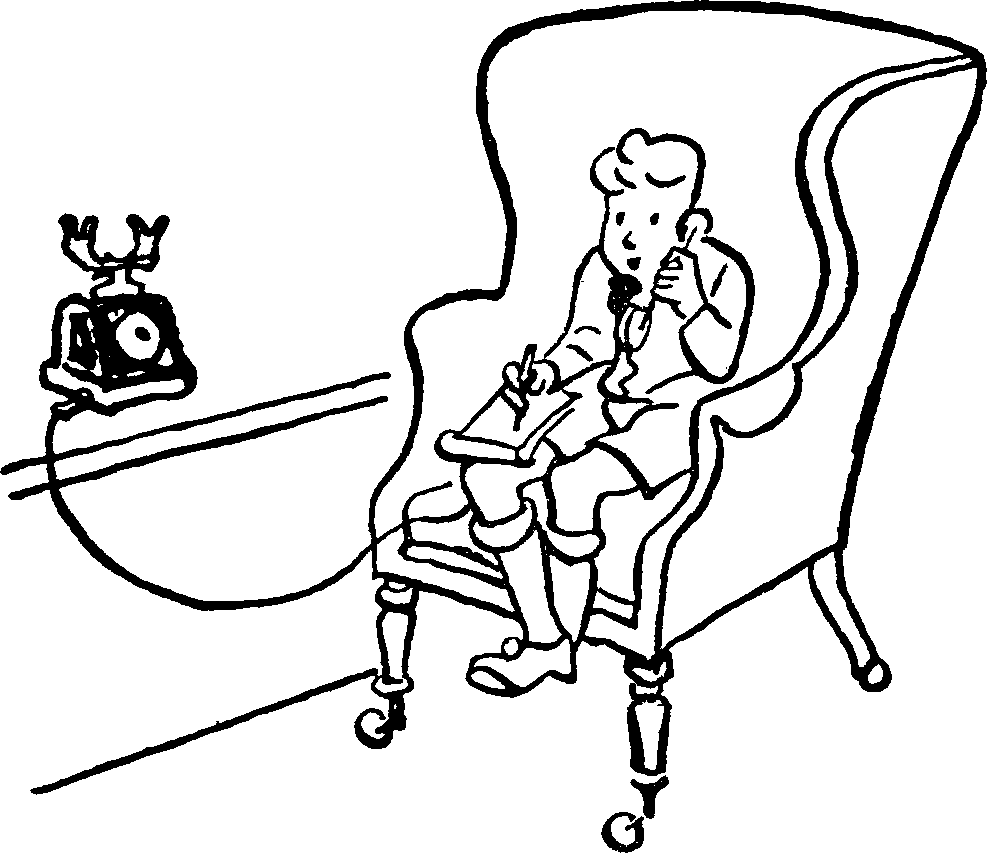
Little Dienstag noted it all down conscientiously.
“We won’t get him to-day, that’s sure,” said Gustav fretfully.
“Still, it will be lucky for us if he goes right to bed,” Emil explained. “For if he runs around for hours more in an auto and goes to restaurants, or to dance, or to the theater, or all together, we’ll have to dig up a little foreign credit beforehand.”
The Professor came back, sent the two Mittenzweys as communication men to Nollendorf Place, and was very preoccupied. “We must plan some way to keep a closer watch on the man,” he said. “Everybody think hard, please.”
So they all sat for a long time and pondered heavily.
Just then a bicycle bell tinkled through the yard, and into the court rolled a small nickel-plated bicycle. Seated upon it was a small girl, and on the wheel stood Comrade Bleuer, and both sang out, “Hurrah!”
Emil jumped up, helped them both off the wheel, shook hands with the little girl enthusiastically, and announced to the others, “This is my cousin, Pony Hütchen.”
The Professor politely offered his chair to Pony, and she seated herself.
“There, now, Emil, you villain,” she said. “Come to Berlin and immediately act like a movie. We were just going back to the Friedrich Strasse Station to meet the next train from Neustadt when your friend Bleuer came with the note. A nice boy too. Congratulations.”
Bleuer stuck out his chest and blushed.
“Now, then,” continued Pony. “Mother and Father and Grandmother are waiting at home, having brainstorms trying to figure out what really is the matter with you. Of course, we didn’t tell them anything. I just stopped Bleuer in front of the house and skipped off a little. But I must go right back home. Or else they’ll be calling the police. Because, another child lost on the self-same day—that would be more than their nerves could stand.”
“Here is the groschen for the return trip,” said Bleuer, very proud. “We saved it.” The Professor put the money away.
“Were they cross?” asked Emil.
“Not a bit,” answered Pony. “Grandmother galloped around the room crying, ‘Grandson Emil has just gone to make a call on the President,’ until Mother and Father quieted her down. But you’ll have the guy by to-morrow, I hope? Who is your Sherlock Holmes?”
“Here,” said Emil, “that is the Professor.”
“So pleased, Professor,” declared Pony, “to meet a real detective at last.”
The Professor laughed sheepishly and stuttered a few unintelligible words.
“And now,” said Pony, “here is my pocket money, fifty-five pfennigs. Buy yourself some cigars.”
Emil took the money. Pony sat like the queen of beauty on her throne, and the boys stood around her like the judges.
“And now I must make myself scarce,” said Pony Hütchen. “I’ll be here early to-morrow. Where are you going to sleep? Gee, but I’d like to stay here and make your coffee in the morning. But what can you do? A woman’s place is in the home. So long. See you later, gentlemen. Good-night, Emil!”
She gave Emil a clap on the shoulder, jumped on her wheel, tinkled the bell gayly, and rolled away.
The detectives stood for some time speechless.
Finally the Professor opened his mouth and said, “Great gosh!”
And the others agreed heartily.