But the Story Does Not Begin Yet
May Massee translation
I might as well tell you—this affair of Emil’s was a great surprise to me. As a matter of fact, I wanted to write an entirely different book: a book in which tigers would gnash their teeth and date palms rattle their coconuts in sheer terror! And the little black and white checked cannibal maid who swam across the Pacific Ocean to get herself a toothbrush from Drinkwater & Company in San Francisco was to be called Petersilie. By her first name only, of course.
A real South Sea romance was what I had in mind. Because once a man with a Santa Claus beard told me that was what you would like best to read.
And the first three chapters were all finished to the last dot. The chieftain, Carrion Crow, also called the Fast Mail, was just cocking his knife, piled high with baked apple, aiming in cold blood and counting as fast as he could to three hundred and ninety-seven....
All of a sudden, I didn’t know how many legs has a whale! I stretched myself flat on the floor, because I can always meditate better that way, and I thought it over. But this time it didn’t help a bit. I looked through the encyclopedia. I searched all through the “W” volume—not a word about it. And I had to know for certain if I was going to write any more. I absolutely had to know.
Because unless at this very moment the whale with the twisted leg were to come walking out of the primeval forest, the chieftain, Carrion Crow, also called the Fast Mail, could not possibly hit him.
And if he didn’t hit the whale with his baked apples, then the tiny black and white cannibal maid called Petersilie would never in her life meet the Diamanten-Waschfrau Lehmann.
And if Petersilie didn’t meet Frau Lehmann she never would receive the exchange coupon which you had to present to Drinkwater & Company in San Francisco if you wanted to get a brand-new shiny toothbrush free. Yes, and then....
My South Sea romance—and I had been so pleased over it—wrecked as it were on the legs of a whale! I hope you understand. I was frightfully sorry. And when I told Fräulein Fiedelbogen about it she almost wept. Only she really didn’t have time just then, because she had to set the table for supper, so she postponed the weeping till later. And then she forgot all about it. Just like a woman!
I wanted to call the book Petersilie in the Jungle. A swell title, wasn’t it? But at present the first three chapters are lying at home under the leg of the table to keep it from wobbling. And I ask you, is that the right sort of an occupation for a romance that started in the South Seas?
The head waiter, Nietenführ, with whom I frequently talk over my work, inquired a few days later whether I really ever had been down there.
“Down where?” I asked him.
“Why, in the South Seas and Australia and Sumatra and Borneo and around.”
“No,” I said, “but why?”
“Because a man can write only about things he knows and has seen,” he answered coldly.
“I beg to differ, my dear Nietenführ.”
“But that’s as clear as thick ink,” he went on. “The Neugebauers—they live right here in our neighborhood—actually had a little servant girl who had never watched anybody roast a fowl. And last Christmas she was supposed to be roasting the goose while Frau Neugebauer was doing her shopping, and when she came home there was a pretty mess! The girl had put the goose in the oven just as it had been bought in the market. Not singed, not cut open, not cleaned. There was a horrible stench, I can tell you.”
“What of it?” I answered, “and from that do I infer that you think roasting geese and writing books are one and the same thing? Do not be offended, dear Nietenführ, but I can’t help laughing at that.”
He waited for me to be through with my laughing. It didn’t take very long either. And then he said, “Your South Seas, and your man eaters, and your coral reefs—the whole show—that is your goose. And the story—that is your oven in which the Pacific Ocean and little Petersilie and the tigers are going to be cooked. And if you don’t know how to cook such a kittle-kettle, then there will be a glorious smell. Just as there was for the little servant girl at the Neugebauers’.”
“But that is exactly the way most authors do write!” I shouted.
“I wish them good appetites.” That was all he said.
I brooded over that for a while. Then I opened the conversation again. “Herr Nietenführ, do you know Schiller?”
“Schiller? Do you mean the Schiller who is foreman at the Castle Brewery?”
“Not at all,” I said, “but the poet Friedrich von Schiller, who wrote a lot of plays for the theater, over a hundred years ago.”
“Oh, yes, that Schiller! The one with all those monuments!”
“Right. Once he wrote a piece about what happened in Switzerland. It is called William Tell. School children always had to write exercises about it.”
“We did too,” said Nietenführ. “I know that Tell. It’s a great play, all right. You have to hand Schiller that. Give him what’s coming to him. But the questions they asked us about it were frightful. I remember one now. It was—‘Why did not Tell tremble when he aimed at the apple?’ I got a Five in that one. But then tests were never my——”
“Yes, yes, but now let me have the floor,” I said. “And, mark you, although Schiller never was in Switzerland in his whole life, still, that play of William Tell is Swiss to the last comma.”
“He’d probably read his cook books beforehand,” commented Nietenführ.
“Cook books?”
“Certainly. Where you find everything: How high the mountains of Switzerland are. And when the snow melts. And how it is when there’s a terrible storm on Lake Lucerne. And how it was when the peasants started a revolt against Governor Gessler.”
“You’re exactly right,” I said, “that’s certainly what Schiller did.”
“You see,” Nietenführ explained to me, as he flicked at a fly with his napkin, “you see, if you do the same and read your books beforehand, then of course you can write your kangaroo story of Australia too.”
“But that isn’t what I want to do at all. If I had the money I’d like to go there and see everything for myself. On the spot! But read books—bah!”
“Then I’ll give you an A-1 piece of advice,” he said. “It’s always best to write about the things you know yourself. For instance, subways and hotels and such things. And the children that run right before your nose every day and are just like what we used to be.”
“But the man with the Santa Claus beard who knew children like his own vest pocket told me emphatically that they didn’t like such stories.”
“Fiddlesticks!” snapped Herr Nietenführ. “You depend on what I tell you. I have children of my own. Two boys and a little girl. And on my day off I tell them about everything that happens right here in this place: If someone skips without paying his check, or once, of a man who was squiffed and made a grab for the cigarette boy but slapped a fine lady who happened to be going by, instead. Then my children listen, let me tell you, as if it was thundering in the cellar.”
“Well, if you think for a moment, Herr Nietenführ——” I said angrily.
“Just so, and you can take poison on that, Herr Kästner,” he called, as he vanished because a guest was rapping his knife sharply against his glass, wanting to pay his bill.
And so, simply because Headwaiter Nietenführ wanted it, I have written a story about things that we, you and I, have known about for a long time.
First I went back home, hung out of my window awhile, looked up and down Prager Street, and thought perhaps the tale I wanted would pass right by. Then I simply would have beckoned to it and said, “Oh, please, just come up one flight! I would like so much to write you.”
But the story came and came not. And I began to freeze. So I slammed the window down and ran around the table fifty-three times. And that didn’t help.
Finally I stretched myself out on the floor again, just as before, and spent a long time in deep meditation.
When you lie flat on the floor like that, the whole world takes on an entirely different look. You see chair legs, house slippers, flowers in the rug, cigarette ashes, rolls of dust, and table legs. And you even find your left glove under the sofa, the one you were hunting for in the cupboard three days before.
So I lay there looking curiously around, considering how different my surroundings were when seen from below than from above and suddenly I noticed, to my great astonishment, that the chair legs actually had calves, regular strapping dark-colored calves, as if they belonged to a family of little black boys, or to schoolboys with brown stockings.
And while I was still counting the chair legs and table legs to see how many little darkies or schoolboys were really standing around on my rug—this business about Emil came to me! Perhaps because I was just thinking of schoolboys with brown stockings? Or perhaps, instead, because Emil’s family name was Tischbein, too?1
At any rate, this affair of his popped into my head at that very moment. I stayed there absolutely quiet. Because thoughts or memories coming to you are just like dogs that are used to being whipped. If you move too suddenly, or if you speak to them, or if you try to pet them—zip—they are gone. And then you can wait for a month of Sundays before they will dare come back to you.
So I lay there without moving and just smiled pleasantly to my sudden inspiration. I wanted to give it courage. And it was so reassured that it almost began to trust me—took one step and another step nearer.... I grabbed it by the nape of the neck. And then I had it!
Only by the nape of the neck, though. That was all at the moment. For it makes a great difference whether it’s a dog you catch by his hair and hold fast or just a story that you are trying to recall. When you grab a dog by the neck you have him there, all of him, for better or for worse: his paws, his muzzle, his little tail, and everything else that belongs to a live dog.
You catch memories quite differently. You catch memories bit by bit. First, perhaps, you grab the topknot. Then in flies the left fore leg; then the right; then the tail end; then a left hind leg—piece by piece, like that. And when you think the story must be all there, presto! In floats another bit of an ear. And finally, if you are lucky, you have the whole thing.
I saw something once in the movies that reminds me of what I have just been describing. A man was standing in a room with nothing on but his shirt. Suddenly the door opened and his trousers flew in. He put those on. Then in whizzed his left shoe. Then his walking stick, then his bow tie. Then his collar. Then his vest, one sock, his other shoe, his hat, his coat, his other sock, his spectacles. It was crazy. But finally the man was all dressed, and everything was in its right place.
That’s just how it went with my story as I lay there in my study and counted table legs and thought about Emil. Probably the same sort of thing often has happened to you. I lay there and caught up the memories that were popping into my head from all sides, as is the way of ideas.
At last I had everything beautifully put together, and the story was done. Now I only had to sit down and write it all out in good order.
Of course, I did that too. For if I hadn’t you would not be holding the finished book about Emil in your hand now. But before that I hastily arranged something quite different. I scribbled down the parts just as they came running at me from the door, until I had them all together—the left shoe, the collar, the stick, the bow tie, the right sock, and so forth.
An adventure story, a romance, a fairy tale—these are all like living creatures, and perhaps they are of a sort. They have heads and legs, circulation and clothes, just like people. And if one of them has no nose on its face or is wearing two shoes that don’t match, you notice it if you look close.
But before I tell you the story as I have put it together, I want to show you the little bombarding force that tossed me the ideas and pieces to make the whole thing clear.
Perhaps you’ll be quick enough to make up the story from the different parts before I tell it to you? That would be a stunt—just as if you were given a pile of building blocks and you had to build a station or a church, and you had no plan, and you weren’t allowed to have one block left over.
It really is something like a test.
Brrr!
Only there’s no one to mark you.
Thank goodness for that!
First: Emil himself.
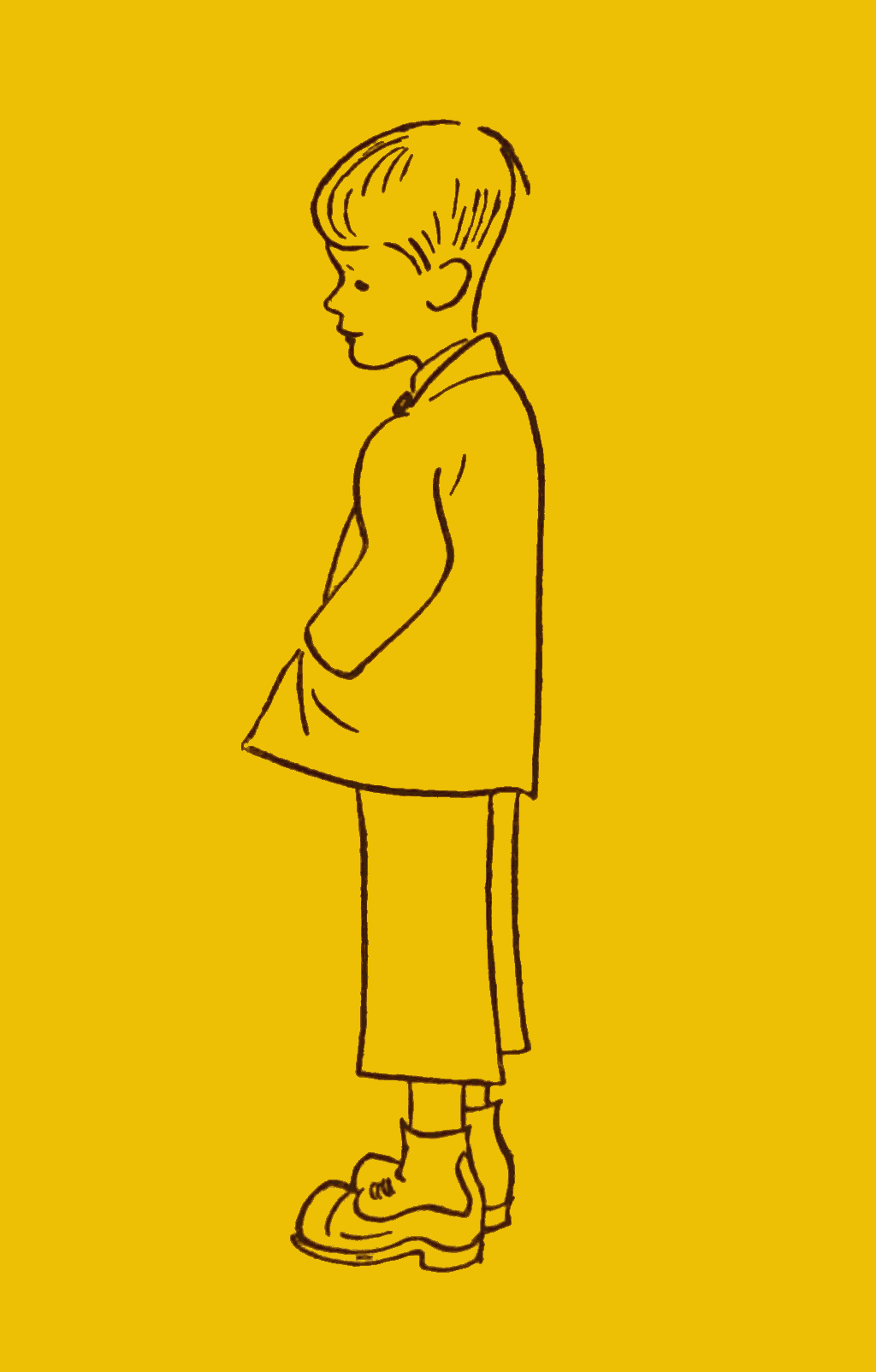
First of all, here is Emil himself. In his dark blue Sunday suit. He doesn’t care much about wearing it and only puts it on when he has to. Blue clothes do get spotted so easily—and then Emil’s mother dampens the clothesbrush, holds the boy between her knees, and scrubs and brushes while she says, “Tut, tut, you know I can’t buy you another suit.” And then Emil remembers when it’s too late that his mother works all day long so that they can have enough to eat and Emil can go to school.
Second: Frau Friseuse Tischbein, Emil’s mother.
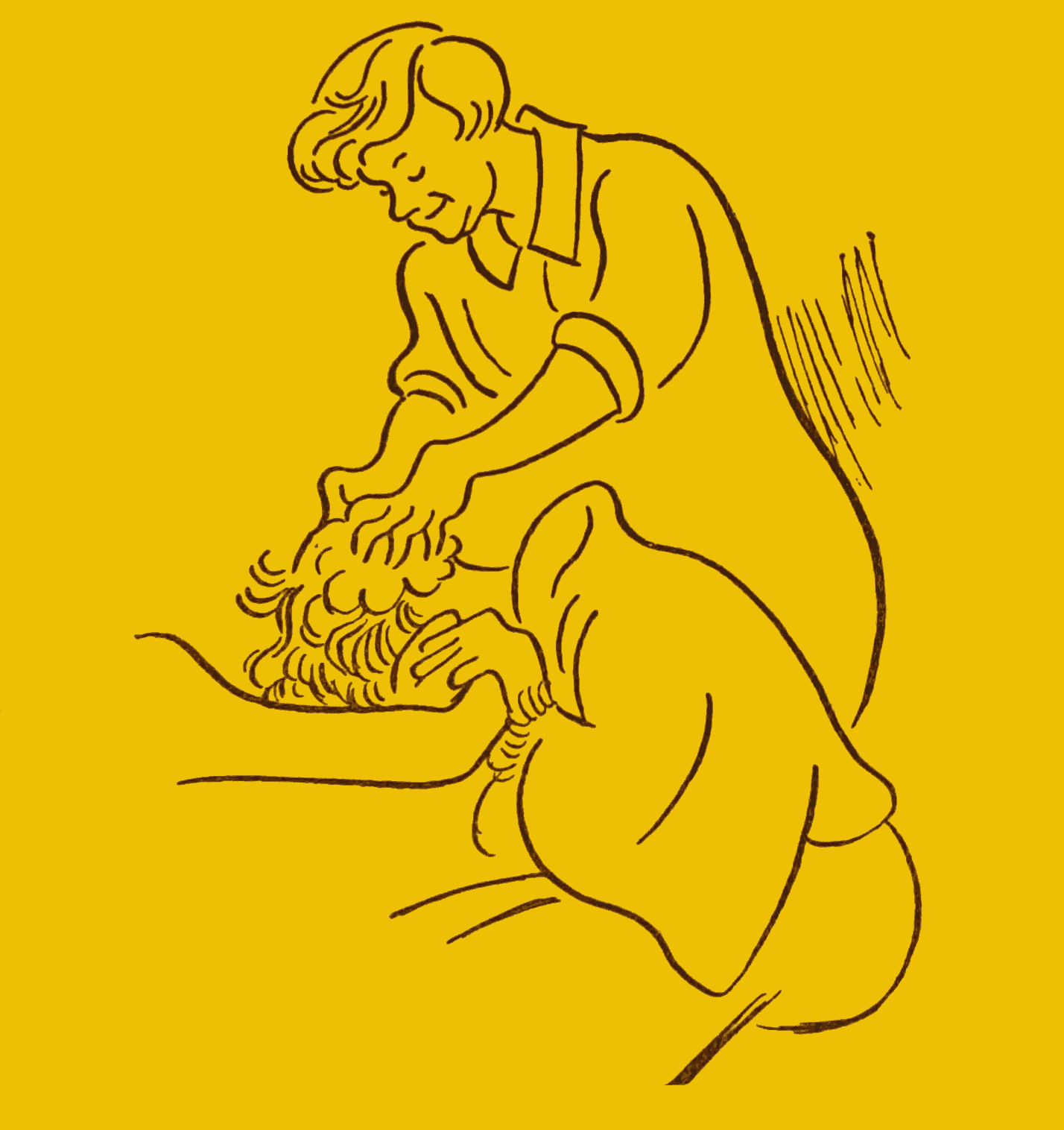
When Emil was five years old his father died. He was Herr Klempnermeister Tischbein. Since then Emil’s mother has dressed people’s hair. And waved it. And shampooed the shop girls and the married women of the neighborhood. Besides that she has to cook and keep her house in order and do all her own big washing. She is very fond of Emil and is glad that she can work and earn money. Sometimes she sings gay little songs. Sometimes she is ill, and Emil cooks fried eggs for her and for himself. He can do that. He can fry steak, too, with breadcrumbs and onions.
Third: A rather important train compartment.
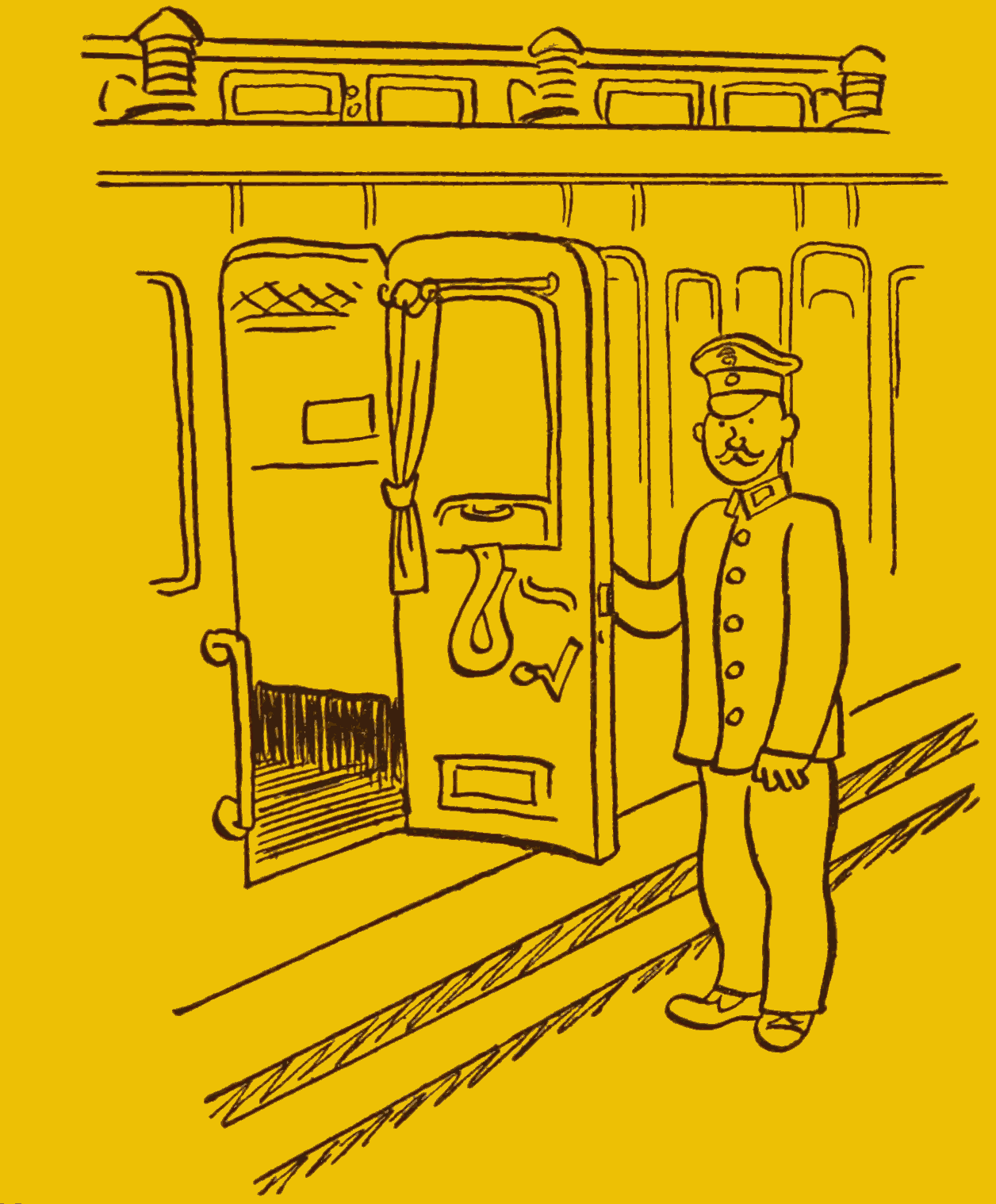
The train this coach belongs to travels to Berlin. And probably in this compartment, in the next chapters, strange things will happen. A compartment like this is a curious contrivance. Perfect strangers sit here, and in a couple of hours they are as friendly as if they had known each other for years. Sometimes that’s very nice and pleasant. But sometimes it isn’t. For who knows what sort of people they all are?
Fourth: The man in the stiff hat.

No one knows him. Of course, as a rule, you should think the best of anyone until you know something to prove the contrary. But in this connection I must beg of you to be a little cautious. Because, as they say, “Foresight is better than hindsight.” Man is good, they say. Well, that is true. But you’d better not take him too much for granted, this good man. Because he might suddenly become bad.
Fifth: Pony Hütchen, Emil’s cousin.

The little one on the little bicycle is Emil’s cousin from Berlin. In the main Pony Hütchen is a charming child, and of course her real name is something quite different. Her mother and Frau Tischbein are sisters. And Pony Hütchen is only a nickname.
Sixth: The hotel on Nollendorf Place.

Nollendorf Place is in Berlin. And if I am not mistaken, on Nollendorf Place is the hotel where several people of this story meet each other without shaking hands at all. The hotel might be on Wittenberg Place, as far as that goes. Perhaps even on Fehrbelliner Place. In other words, I know just exactly where it is! But the manager came to me, when he heard that I was going to write a book about what happened there, and said that I must not tell you the name of the Place. Because, he said, obviously it wouldn’t be a recommendation for his hotel if it were known that “such people” had spent the night there. I saw right away what he meant. And then he went off again.
Seventh: The boy with the automobile horn.
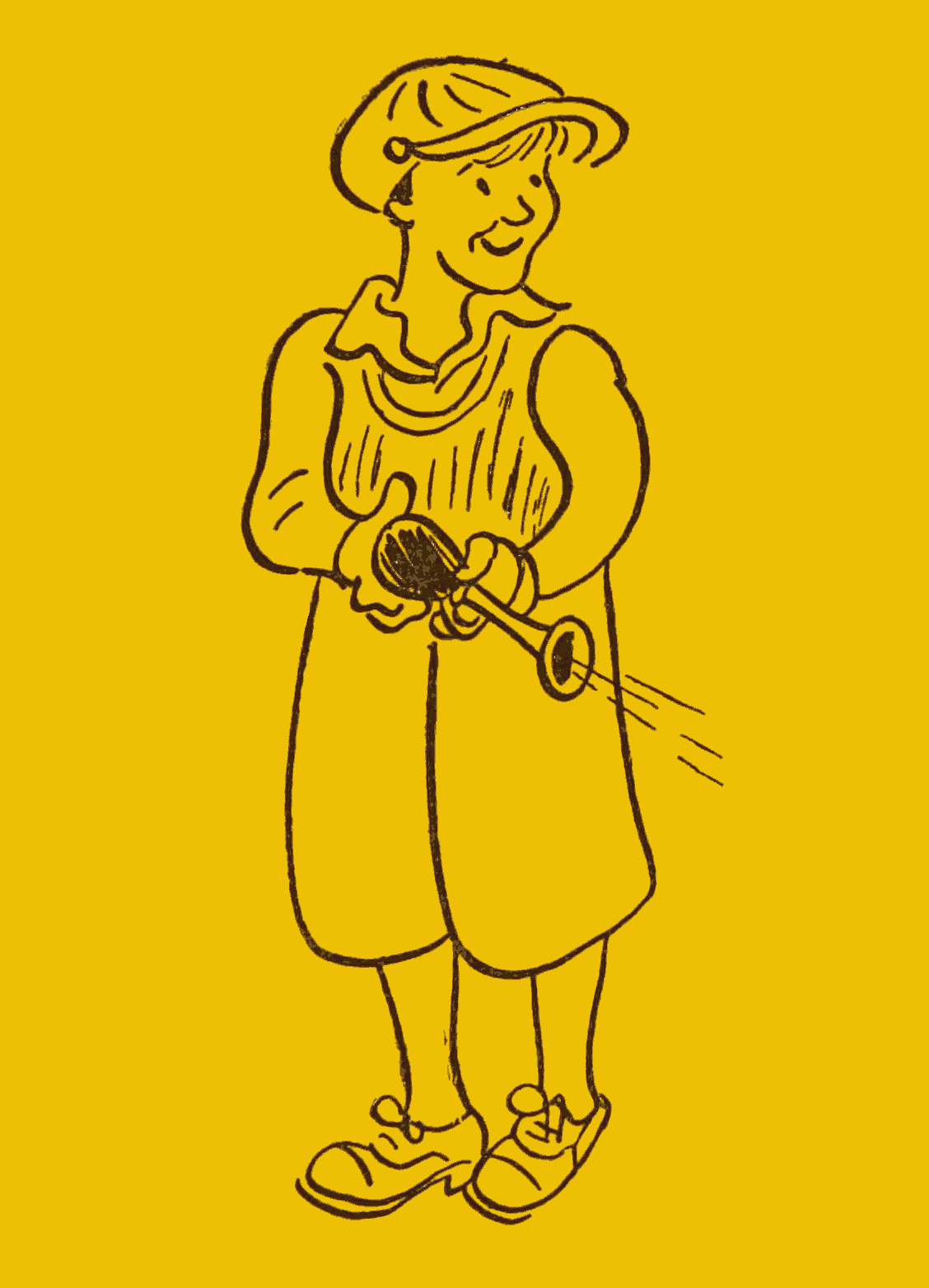
Gustav is his name. And in gym work he has a straight A. What else has he? A good kind heart and an automobile horn. All the boys in the fourth grade know him and treat him as if he were their president. When he runs through the neighborhood honking his horn the children drop everything and tear downstairs to see what’s up. Usually he just wants to get enough boys for two football teams, and they all go off to the playground. But sometimes the horn serves quite different purposes. As, for instance, in the affair with Emil.
Eighth: The little branch bank.
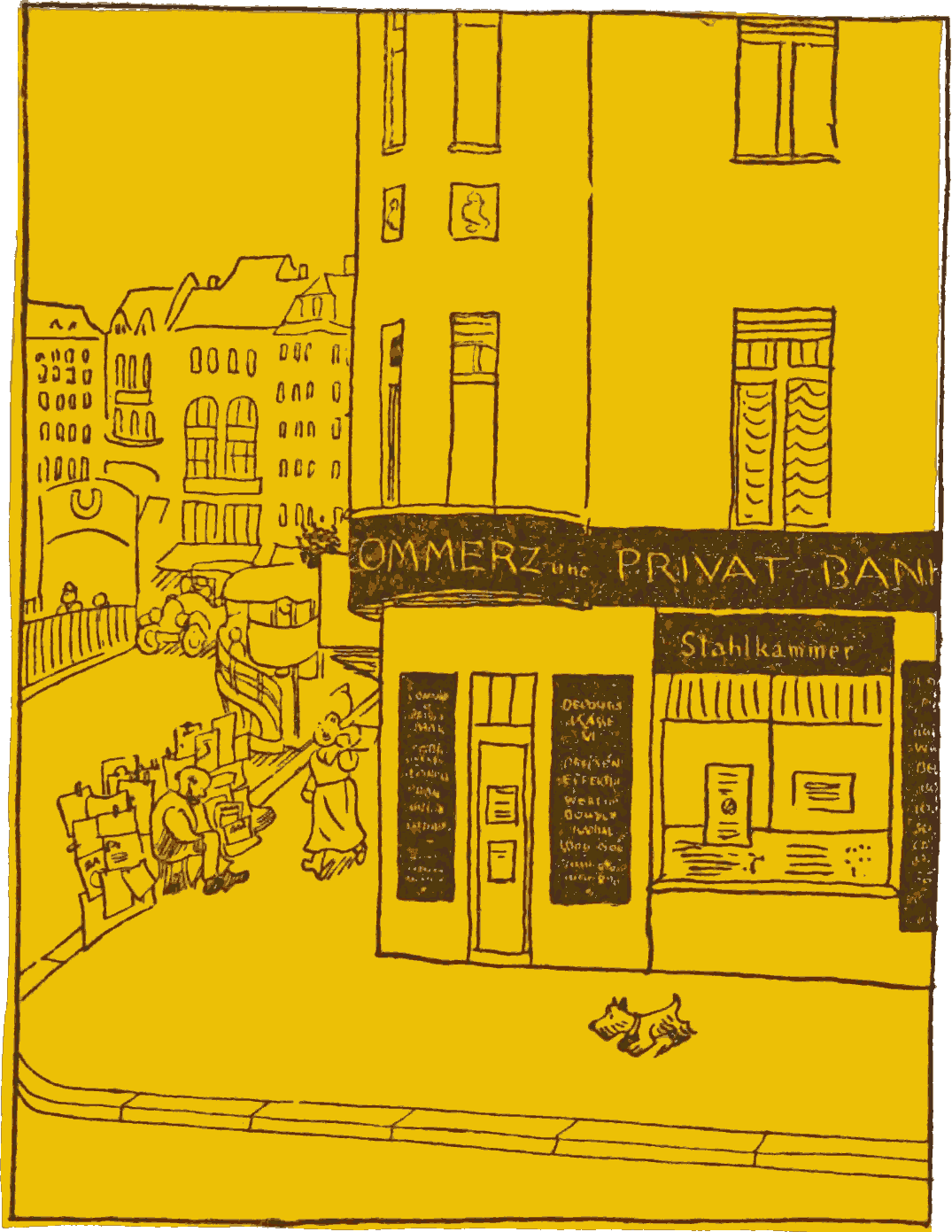
In all parts of the city the big banks have their branch offices. There, if you have money, you can buy shares, and if you have an account, you can cash checks. Sometimes, too, the apprentices and messenger girls come to change ten marks into a hundred tenpenny pieces so their cashiers can have small change. And whoever wants to can have dollars or French francs or Italian lire changed into German money here. Even at night people sometimes come to the bank although there is no one there to wait on them. So they have to help themselves.
Ninth: Emil’s grandmother.
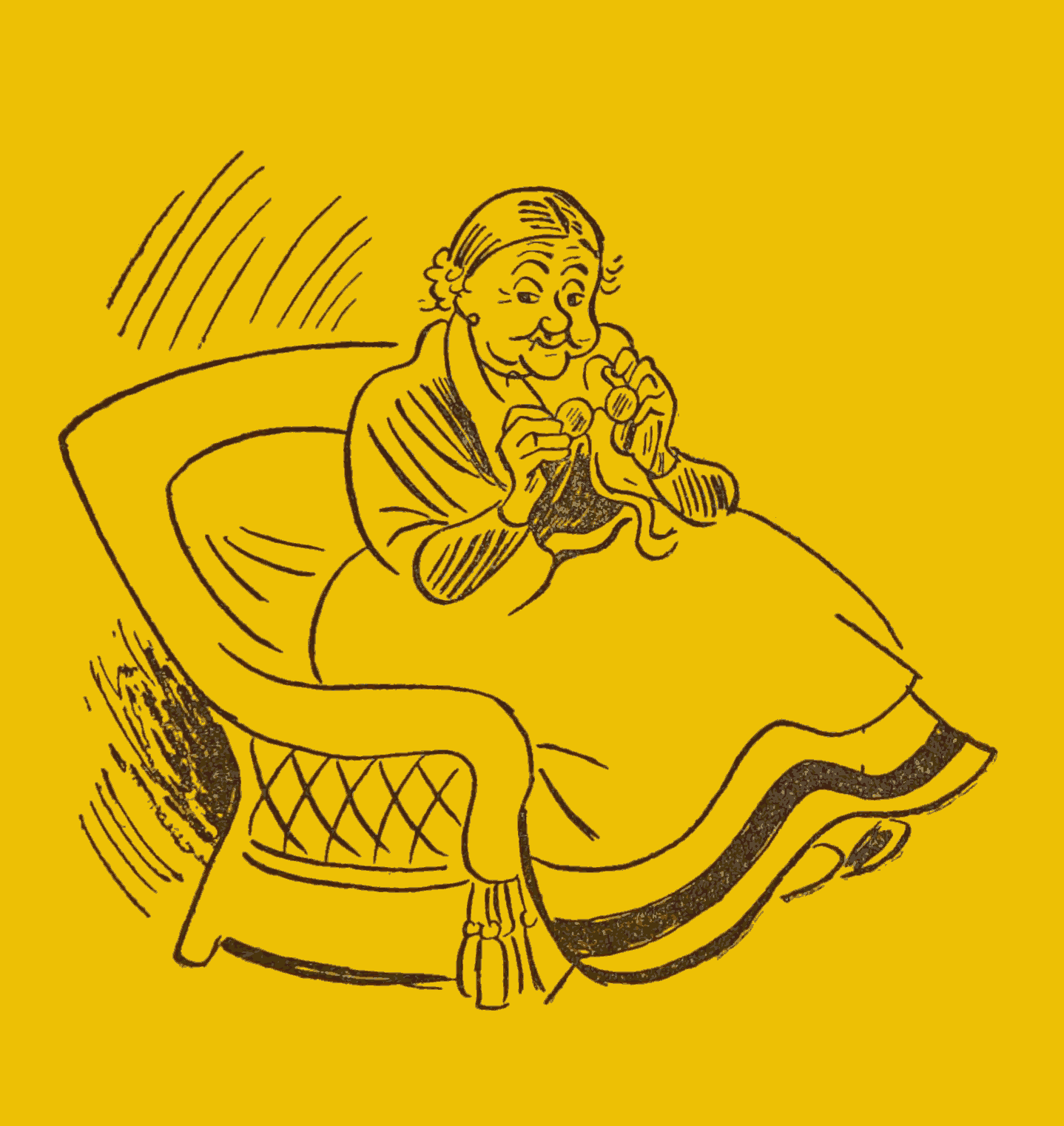
She is the jolliest old grandmother I know. Yet she has had nothing but worries all her life long. Some people don’t have any trouble at all to keep cheerful. For others it’s a strenuous and serious business. She used to live with Emil’s parents. But when Herr Tischbein died she went to her other daughter’s, in Berlin. Because Emil’s mother did not earn enough for three people to live on. Now the old woman lives in Berlin. And every letter she writes ends with this: “I am well and hope you are the same.”
Tenth: The composing room of a great paper.
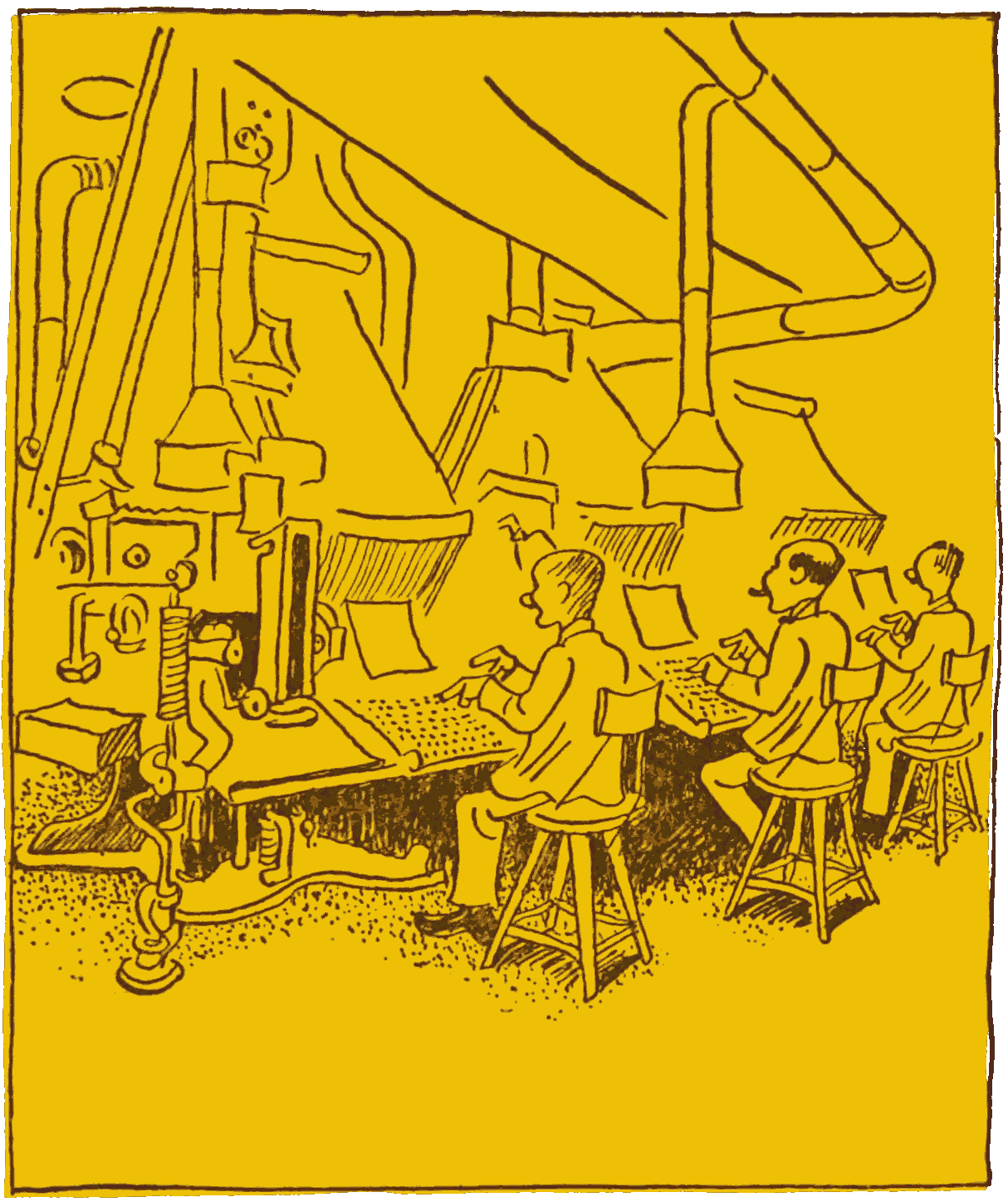
Everything that happens gets into the paper. Only it must be just a bit out of the ordinary. If a calf has four legs, naturally no one is interested. But if she has five or six—and that does happen—then the grown-ups want to read about it for breakfast. If Herr Müller is an exemplary citizen, no one wants to know anything about him. But if Herr Müller puts water in the milk and sells the stuff for sweet cream, then he gets into the paper no matter what he may do to prevent it.
Have you ever passed a newspaper building at night? It rattles and rings and rumbles and the walls shake.
There! Now, at last, we will begin!