PART SECOND. OF PARTICULAR SURGICAL SUBJECTS. (continued 5)
Reading edition
To expose the tumour and admit of the bone being readily divided, incision of the soft parts requires to be extensive. And previously to determining on the plan of operation, the extent of the disease must be ascertained accurately. If, for example, the tumour is included between the lateral incisor tooth and last molar on the same side—these teeth must be extracted to permit division at these points. A semilunar incision may then be made along the base of the jaw, the horns of the incision pointing upwards and passing over the space which was occupied by the extracted teeth. The flap is dissected up, and the membrane of the cheek divided along the line of incision. The bistoury is then carried along the inside of the bone so as to divide the membrane of the mouth and separate the attachments of the muscles. The tongue is pushed aside, and a copper spitula placed under the jaw at the part to be divided, in order that the soft parts may not be injured during the sawing. A small narrow saw, or one commonly known by the name of Hey’s, is applied to the bone at the points where the teeth were extracted, and by a few motions of this instrument a notch is made of no great depth; a pair of strong cutting pliers are placed in the track, and by them division of the bone is accomplished with equal neatness, and much more rapidly than if the use of the saw had been continued. The pliers should be strong in every point, and the handles long, to afford the advantage of a powerful lever. In edentulous subjects, as the one alluded to above, there is no necessity for using the saw at all: the bone is at once and easily cut by the forceps. The chain saw has been recommended for performing the section of the bone, but I have not yet seen one to be depended on; it is not only slow, but uncertain, in its operation.
The incisions may be made otherwise. The cheek may be divided by passing through it a long narrow bistoury, close to the anterior edge of the masseter muscle, and carrying the instrument forwards and through at the angle of the mouth. From each extremity of this incision another is made downwards, the anterior one inclining forwards, the other backwards. By reflection of the flap thus formed, the bone is exposed more easily, rapidly, and perfectly, than by the former mode of incision. The objection to this mode of procedure is the deformity occasioned by the scars, though, if care is taken in putting the edges together, this is very slight indeed, and not remarkable.
In either method, no artery, except the facial, requires to be secured by ligature. After division of the bone, the attachments of the tumour, which may not have been separated previously, are cut with the bistoury, the cavity is filled lightly with charpie, and the incisions are carefully and neatly put together, and retained by points of interrupted and twisted suture; the latter form of suture being adopted at those points where accurate coaptation is most important.
The symphysis of the lower jaw has been removed, and its extirpation may again be rendered necessary, either on account of tumour commencing in its internal structure, or from disease of the sockets extending deeply and approaching the base. I removed it in a case of malignant disease, by which, and by the applications used as remedies, great ravages had been made on the under lip; the gums and alveoli were involved, as also the bone, to a considerable extent, without any apparent affection of the lymphatics. Nothing untoward occurred in the operation, and the case was proceeding favourably; but after some weeks the patient was seized with violent erysipelas of the face and head, and perished. One objection to the operation is, that the muscular attachments of the tongue to the symphysis cannot be divided without some risk; the antagonist muscles are unrestrained; the os hyoides and root of the tongue may be drawn backwards upon the forepart of the vertebræ, so as to close the air-passage, and cause suffocation. This is guarded against by the introduction of a thick ligature. The disposition to retraction soon ceases.
Disarticulation of one side of the jaw is not unfrequently necessary; it is absolutely required when the tumour encroaches upon and involves the angle and ramus. It is a more severe operation than excision of part of the bone, and attended with greater risk; yet it may be advised and undertaken with a very fair and probable chance of ultimate success. The incision of the cheek is made to incline more upwards than those recommended for partial excision, and is extended to over the articulation of the jaw; from this point, another is made in the direction of the ramus, and prolonged an inch or more beyond the angle. A third incision is made perpendicular to the first, or to the lower lip, over that part of the bone in front which is to be divided. The flap is turned down, and the muscles and membrane of the mouth separated from the bone opposite to the last incision; after which, the finger is passed through to complete the detachment. A preferable form of incision along the posterior border of the ramus and under the base of the jaw and tumour to over the point at which the bone is to be sawn, but without division of the lip, is recommended in the Practical Surgery. This method I have practised repeatedly; the cicatrix is then completely out of sight, and in the male is entirely covered and concealed. During the cure, also, the discharges escape more readily, the opening being quite dependent. The bone is then divided at that point by the saw and pliers, the tooth in the line of the track having been extracted previously to the commencement of the operation. The cut end of the jaw is laid hold of by the left hand, and depressed, and the bistoury carried backwards along the internal surface, to effect detachment as far as the angle. The bone is still more depressed, and the temporal muscle cut from the coronoid process. The mass is thus loosened, and forced downwards and backwards on the neck; the forepart of the capsule is then cut, and the bone twisted out. Separation of the remaining attachments is completed by a few rapid strokes of the knife, and the whole mass removed. Hemorrhage is then to be permanently arrested, but instead of immediately tying every open mouth which presents itself, it is sometimes better to expose the common trunk of the internal maxillary and temporal arteries—which is easily effected, as it emerges from under the digastric muscle—and to pass a ligature beneath it, by means of an aneurism needle. This is more quickly done than the applying of ligatures to the many branches of this trunk which have been divided. The other vessels—the facial, branches of the lingual, &c.—are then tied, the cavity is filled with charpie, and the incisions of the soft parts are carefully closed. In these, union by the first intention usually takes place nearly throughout the whole extent; suppuration occurs from the deep wound; the charpie is dislodged gradatim, and removed; granulations spring up; and, after some time, the cavity is obliterated. The cheek must necessarily fall inward very considerably, but the deformity is not to be compared to that caused by the tumour. During granulation, the patient is made comfortable by the frequent use of tepid gargles, lodgement of pus in the mouth being thereby diminished. Articulation and mastication are not so perfect as when the jaw was entire and sound; but the patient gradually becomes accustomed to the want, and these functions improve. A contrivance described in the Practical Surgery is used to prevent the remaining portion of jaw from being drawn towards the mesial line, and to keep the teeth opposite to those of the corresponding side of the upper jaw. Partial paralysis of the side of the face necessarily follows, for there is no possibility of accomplishing disarticulation of the jaw without dividing many branches of the portio dura.
Supposing that the portion of the jaw between the angle and symphysis had been removed on account of osteosarcoma, and that the ramus subsequently became affected, it is no easy matter to effect disarticulation, as I have experienced.—The patient was a female, aged 30, of delicate constitution, and subject to toothache from infancy. I removed an osteosarcomatous tumour, extending from the angle to the canine tooth, on the right side. Division was made wide of the existing disease, and the sawn surfaces appeared quite healthy; but about five months afterwards, symptoms of return occurred in the ramus, and ten months after the first operation disarticulation was indispensable. The operation was accomplished with very considerable difficulty, on account of there being no lever to overcome the action of the temporal muscle. After separating the attachments as much as possible, an attempt was made to force down the coronoid process, from under the zygoma, by pushing the lower end of the bone backwards, in order to divide the insertion of the temporal muscle; but this proved ineffectual. The capsular ligament of the joint was then divided, and the bone with difficulty turned over from behind, forwards. It was then detached underneath the coronoid process, pulled down from under the zygoma, and the temporal muscle at length divided at its insertion.
In none of these operations is there a necessity for preliminary exposure and ligature of either the carotid artery or its branches; by so doing, a great addition is made to the patient’s sufferings, the real operation is only commenced when the patient supposes it should have been finished, and he is thus annoyed and worn out. The flow of blood is easily moderated, or altogether arrested, by the pressure of an assistant’s fingers against the forepart of the vertebræ, below the angle of the jaw.
The position of the patient is either recumbent, with the face turned from the operator, or sitting with the head supported and steadied.
The instruments required are, a very strong, sharp-pointed bistoury, for division of the soft parts; saws, of which Hey’s is to be preferred for notching the bone; strong and long pliers, for completing its section; an aneurism needle, for securing the common trunk of the temporal and internal maxillary artery; dissecting and artery forceps, hooks blunt and sharp, narrow copper spatulæ, ligatures, &c.
Wounds of the Face and Neck.—Accidental wounds of the face may involve the more important blood vessels and nerves, and interfere with the eye or its appendages, with the nose, or with the mouth. Injury of these parts is to be avoided in incisions premeditated for the removal of disease or deformity; and, in such premeditated wounds, the line of incision should always be, if possible, in the direction of the muscular fibres. The bleeding seldom proves troublesome; pressure on the vessels, as they pass over the bones, arrests it temporarily; and ligature is seldom required, accurate adaptation of the divided surfaces proving sufficient for effecting permanent closure of the divided branches. Paralysis, more or less extensive, follows division of the nerves and muscles. But paralysis of the face also arises from a variety of other causes; it often remains after injuries of the head, probably in consequence of extravasation on the brain; it attends on morbid formations in the substance of the brain, or in its membranes, and follows long-continued irritation in the neighbourhood of the nerves. Paralysis from the last-mentioned causes is not likely to be recovered from; that following simple division of nerve, may disappear after a considerable time, the nervous tissue reuniting, and resuming its functions. When there is reason to suppose that the nervous function is alone deranged, while the structure remains sound and the continuity undissolved, advantage may follow the application of strychnine to a raw surface over the course of the affected nerves.
In Tic Doloureux, division of the nerves of the face, as they pass out of the foramina, is seldom resorted to; nor ought it to be practised, unless at the urgent request of the patient, and after all other means have failed to afford relief; and even then the operation is scarcely warrantable, since it may be said never to have succeeded in affording permanent relief. We must trust to milder measures, to the removal of local irritations, to paying strict attention to the digestive organs, to the administration of purgatives, tonics, and anodynes; occasionally benefit has resulted from the external use of the nitrate of silver, applied so as to cause very slight vesication. Ointments containing veratria and aconitine have been used with advantage, and the endermic application of the salts of morphia has also been found useful.
Spasmodic action of the muscles of the face, without pain, sometimes follows wounds and other injuries of the nerves which supply them; and sometimes no cause can be assigned for the occurrence. In this affection also, the application of nitrate of silver to the integuments over the nerves may sometimes be made with advantage.
Division of the parotid duct, or wound of the gland itself, is occasionally followed by the formation of a fistulous aperture, discharging saliva over the cheek. We endeavour to prevent this by accurate union of the recent wound. After the fistula has formed, an opening is to be made from it into the mouth, and kept pervious; the external aperture is then closed by suture after excision of the smooth edges, or is made to contract by the repeated application of a heated wire; pressure alone is of little use.
All wounds of the face are to be put into the most favourable state for healing without granulation, so that deformity may be prevented as much as possible. The twisted suture is best adapted for this purpose; more accurate coaptation being thereby obtained than by the interrupted form. In extensive wounds, the parts may be brought somewhat into their proper position by a few points of interrupted suture; twisted sutures are then placed in the intervals, and the isinglass plaster is of use in closing those points which may still gape slightly; in many cases, the greater part of the approximation may be accomplished by isinglass plaster alone.38
Deep wounds behind the angle of the jaw, and at the lateral and lower parts of the neck, are highly dangerous; indeed they are almost certainly and immediately fatal, as can readily be understood when the large bloodvessels and important nerves are considered which have their course in these parts, and which must be either wounded or completely divided. The bleeding has in some cases been arrested by immediate ligature of the divided extremities of the vessel, by firm and permanent pressure, or by pressure at first, and ligature of the trunk of the vessel on the recurrence of hemorrhage after the lapse of many days; of these methods immediate ligature of each extremity is certainly the safest and best. In lacerated wounds violent hemorrhage may take place some time after the infliction of the injury, from ulceration or sloughing of a large artery; in such circumstances either permanent pressure may be resorted to, or ligature applied to the vessel above and below the open point.
Dissections for the removal of morbid growths in the situations just mentioned must be conducted with much caution, and with a full recollection of the relative anatomy. Unless the tumour be tolerably loose and defined, it ought not to be interfered with. But it is to be recollected that tumours of these parts are bound down by their condensed coverings—the platysma myoides and cervical fasciæ; and that after division of these, the tumour, if not intimately incorporated with the neighbouring tissues, is loosened, and often enough can be readily detached.
From constant external pressure, tumours growing rapidly spread amongst the deep parts, and often form firm attachments. The parotid is displaced, and almost entirely absorbed, by the pressure of tumours growing out of the lymphatic glands which are lodged on its anterior surface. Such tumours attain a large size, and occupy the exact situation of the parotid; on their removal, the space betwixt the angle of the jaw and the mastoid process is completely exposed, and the styloid and pterygoid processes can be distinctly felt. From these circumstances many have been led to believe that they have dissected out the parotid; but this and the other salivary glands seldom if ever degenerate. And if the parotid do become the seat of carcinoma or medullary sarcoma, it is impossible to remove it with either safety or advantage. Even in the healthy state, removal of the parotid is a troublesome dissection; and the difficulty must be greatly increased when enlargement has taken place from disease, when neighbouring parts are involved, when firm and deep connections have been formed, and important structures encroached upon. I have taken away many tumours from the site of the parotid, and some of large size, but would scarcely attempt, or boast, as some have done, of having removed the diseased gland itself.
The incisions, for the removal of the tumours of which we have been speaking, are to be made in the direction of the fibres of those muscles which are interposed betwixt them and the integuments, in the direction of the bloodvessels and nerves, and towards those points where the vessels are expected to enter the diseased mass. Attention to the last recommendation is important in order to save blood. For when the trunks of the arteries are divided at the commencement of the dissection, they are easily secured temporarily by the fingers of an assistant: the operation is proceeded in and accomplished with scarcely any further hemorrhage, and in many instances no other vessels require ligature; whereas, if an opposite course be pursued, the same vessels will be divided three or four different times; the hemorrhage will be greater, and the operation delayed. By cutting also in the direction of the vessels and nerves, fewer arteries are divided, and nerves are less apt to be injured, than if the incisions were made across.
Wounds inflicted with the view of effecting suicide are generally on the fore and upper part of the neck, and their severity depends on the resolution of the individual. Some penetrate the integuments merely, and are consequently of slight extent; there is little bleeding, and the edges are easily brought together, after the cessation of bleeding and when the surfaces are glazed, by inclining the head forwards, and introducing a few points of suture. Others divide the muscles, and branches of the lingual or of the superior thyroid arteries; such wounds are gaping, more extensive than the former, and accompanied with smart hemorrhage. Some penetrate the mouth, separating the os hyoides, tongue, and epiglottis from the thyroid cartilage. Occasionally the wound is lower, through the thyroid, or betwixt that cartilage and the cricoid; and sometimes through these into the gullet; it is seldom lower. Such are truly horrible; the countenance is contorted, and presents a frightful expression; inspiration is difficult, hurried, and noisy, and at each expiration blood frothed with air is forcibly ejected from the wound. I have seen wounds of the trachea, near the top of the sternum, but without extensive division of the lateral parts; large wounds, such as are usually made at the upper part of the neck, could not be inflicted here without division of the large vessels, and instant death. Some determined suicides reach the vessels even high in the neck, dividing everything down to the vertebræ; immediate dissolution takes place from loss of blood. But, in general, mere opening of the air-passage is all that is aimed at, there being a vulgar notion that this is sufficient for the extinction of life. A considerable quantity of blood is lost, though the branches only of the external carotid are wounded, and the loss may prove fatal; but the hemorrhage generally ceases on syncope taking place; and if the patient be then discovered, means should be immediately adopted for permanently arresting it. Its recurrence may cause death, on the patient recovering from the first faint; or he may die some days after, from the effects of loss of blood. Hemorrhage, though to no very alarming extent, is always to be dreaded in those advanced in life; though in most cases the fatal result is not attributable solely to the bleeding, but is expedited by other circumstances, as defective supply of proper nourishment, and an unfavourable state of the mind.
Some patients seem to be going on most favourably towards a cure, but, within two days after the injury, are suddenly seized with difficult breathing, and die in a few minutes. On the examination of such, blood is sometimes found in the ramifications of the bronchial tubes, and the lungs can contain little or no air; or the bronchial tubes and ramifications are loaded with adherent mucus; in either case the patients die from asphyxia. In others, nothing remarkable is observed; perhaps passage of the air may have been prevented by inspissated mucus lodging in the windpipe around the wound, and closing the aperture, or by faulty adaptation of the divided surfaces. Likewise, during motion of the head, or attempts to swallow, either the upper or lower part of the windpipe may change its relative position; the continuity of the tube will be thereby destroyed, either partially or wholly, and suffocation ensue. When the wound is large and transverse, as the majority of such wounds are, there is difficulty in freeing the air-passage from mucus. This result becomes evident, when we consider how coughing is effected in the healthy state of parts—that the upper part of the windpipe is contracted by its own muscles, and the air driven through, by sudden action of the muscles of the chest, in a forcible and small stream, so as to carry the mucus along with it. This process cannot be accomplished when the muscles employed in contracting the orifice of the larynx are injured, or when an opening is formed below the glottis, through which the patient breathes, either wholly or in part.
In other cases, death is more slow. The patient is seized with dyspnœa, great anxiety, and occasional spasmodic action of the muscles of respiration, which symptoms gradually become more urgent and alarming. They are attributable to awkward position of the parts, to swelling around the wound, inflammatory or œdematous and rapid or slow, or to bronchitis. To the latter affection patients breathing through artificial openings in the larynx or trachea are peculiarly subject, probably from the inspired air not being heated, as in natural respiration, before it enters the bronchial tubes. A view from behind is here introduced of the larynx of a patient who some weeks previously attempted suicide by wounding the forepart of the neck. By some mismanagement the edges of the incision were kept asunder, and they cicatrised. The patient was seized with difficult breathing, the inspirations were rare, long, and laborious; he had threatening of suffocation during his disturbed sleep. These symptoms were disregarded. He started up suddenly in the night, caught hold of the patient in the next bed, and fell down in a state of asphyxia, from which he could not be recovered. The œdematous swelling of the rima glottidis is remarkable; beyond that is seen the rounded opening betwixt the thyroid cartilage and epiglottis, which is in a normal state.
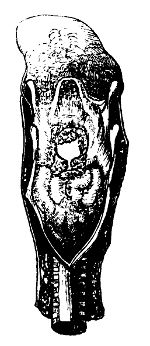
The bleeding is to be arrested as speedily as possible by ligature, and the patient placed in bed with the head and shoulders raised. The edges of the wound are brought together by attention to the position of the head; but, provided the patient breathes easily with the wound open, closure should not be attempted till after eight, ten, or twelve hours—that is, not until all oozing of blood has ceased; the time depends on the extent to which the air-tube has been divided. There is little chance of immediate union taking place; and the wound not being approximated when recent and bleeding, does not diminish the chance, but on the contrary augments it. Adhesion is prevented by the insinuation of air and mucus betwixt the edges, by frequent motion of the edges on each other, by the slightest change in the position of the head, either rotatory or nodding, by the action of the muscles of the os hyoides, and by attempting to swallow food or saliva. Every circumstance is opposed to complete approximation and immediate union of transverse wounds of the throat.
Plasters and bandages surrounding the part are inapplicable, and unwarrantable from the interruption thereby caused to breathing and circulation; they likewise prevent the escape of mucus and air. Emphysema is apt to occur in consequence, and may prove troublesome; the cellular tissue of the neck becomes filled, so as to interfere with free respiration, and the infiltration of air extends over the face and chest. Neither can many stitches be used without bad effects. The corners of an extensive wound may be kept together by points of suture; and one may be placed at the middle, through the integuments only, to prevent overlapping or inversion of the edges. The head is placed in a comfortable position, inclined forwards, and secured by a bandage passed round it, with the ends brought down and fixed to a band round the chest. In many cases the patient requires to be watched attentively, to have the motions of his hands restrained by proper means, in order to prevent him from interfering with the wound, or committing other insane acts which might prove dangerous. The state of the breathing and of the pulse must be strictly attended to; inflammatory symptoms must be actively combated, and swelling prevented from gaining a dangerous extent, by bleeding, general and local. But depletion is indeed very seldom necessary, the loss of blood in the first instance proving a pretty effectual preventive of inflammation; it is more frequently requisite to administer nourishment or even stimulants; but these must be given gradually in those advanced in life, and in those who have lost much blood.
The slightest difficulty or noisiness of breathing must be closely watched, and on the occurrence of any alarming symptoms, energetic measures adopted. Swelling about the wound, producing difficult expectoration and a diminished current of air, may require the making of a longitudinal opening into the trachea below the wound, and the insertion of a tube. Thus the respiration is quickly relieved; and the patient is soon able to regulate the size of the aperture; he is readily taught to apply his finger over part of the orifice of the tube, when it is wished to clear the passage from mucus. The operation of tracheotomy should be had recourse to in such cases without hesitation or delay; there is no danger from its performance, but much from its being withheld.
If the mouth or gullet have not been opened by the cutting instrument, or only slightly, the patient may be allowed to swallow naturally; though it is true that even the slightest motion of the parts affects the wound injuriously. But, as already observed, immediate union is not to be expected; swallowing, or attempting to swallow, saliva, produces an involuntary action of the muscles, quite as prejudicial as the swallowing of liquids in large quantity does; and these motions cannot be prevented, since the patient has no control over them. If the wound of the mouth or gullet is extensive, portions of the ingesta are apt to interfere with the air-tube, particularly if the wound is high, and the epiglottis cut away or difigured. In such cases, soups and other nutritious fluids are conveyed through an elastic tube, passed by the mouth over the root of the tongue to beyond the injured part, and introduced only when it becomes necessary to administer food; or a small tube may be passed by the nostril, and retained. If the wound is very severe, and the necessity for thus conveying nourishment likely to continue long, the latter method is adopted; it is more difficult in execution than the former, but when the instrument is once passed, no further trouble is given to either the patient or surgeon. Small quantities of nourishment are to be given frequently, of such strength as the symptoms indicate; many patients have died from inattention on this score.
Many have died suddenly and unexpectedly (though this should not be, if symptoms and circumstances were attended to) from the effects of apparently slight wounds; whilst others have recovered, when recovery was unlooked for, after dreadful injuries, and these perhaps not treated in the most approved manner. In illustration, I shall briefly detail, though it did not fall under my own observation, an interesting and remarkable case of recovery. A criminal under confinement attempted suicide by transverse wound of the throat. The larynx was severed at the upper part of the cricoid cartilage, and the cut extremities had retracted at least three inches; the œsophagus was also cut across, but the extent to which it had receded was not ascertained. A large quantity of blood had been lost; attempts were made to bring the parts together, but were abandoned on account of the violent dyspnœa which was induced. The attendant endeavoured in vain to pass an elastic gum tube into the gullet, from the nose and from the mouth. The patient was kept alive by nutritious enema. On the second day after the accident, the cut extremities of the larynx were approximated by two ligatures; and, the retraction being thereby diminished, it was then discovered that there was another wound between the cricoid cartilage and the trachea. All ingesta by the mouth passed through the upper wound. On the fifth day, the ligatures separated, and the larynx again retracted. On the sixth, an elastic gum catheter was passed into the inferior cut extremity of the gullet, and through this nutritious fluids were regularly administered. The wound granulated, and filled up in some measure; the patient continued to receive both air and nourishment through tubes introduced downwards from the wound in the throat. Whilst pouring in food, saliva was secreted in the mouth in great profusion. The sense of smelling remained tolerably acute, and he also possessed the power of imperfect whispering articulation.
When, from the untoward circumstances of the case, or from neglect, the opening in the windpipe remains long open, and becomes fistulous, the larynx contracts, and the voice is in a great measure lost, the patient breathes almost entirely by the unnatural opening, and all the respiratory functions are conducted imperfectly. But even this state of parts may admit of remedy, as is exemplified by the following case: Elizabeth Oswald, aged twenty-seven, attempted suicide in 1826, and wounded the larynx through the crico-thyroid ligament. She was under treatment for several months; but was at length abandoned with loss of voice, breathing entirely through a silver tube placed in the original wound. On her applying to me, I found the larynx had contracted; an exceedingly minute aperture, not capable of admitting a common dressing probe, extended from the wound towards the glottis, constituting all that remained of the upper part of the natural air-passage at this point. Small bougies were introduced from the wound into this diminutive canal; and by gradually increasing their size, the passage was brought to its natural diameter in less than three months. Part of the trachea below the wound had also contracted considerably, and was dilated by similar means.
A long œsophagus tube was introduced by the wound into the mouth, there laid hold of and drawn upwards, and then pushed down into the trachea, so that it extended from the mouth to some inches below the wound of the trachea. Its introduction was followed by a severe fit of coughing, which lasted about half an hour. The tube, nine inches long, and equal in diameter to the largest œsophagus tube, was retained in the windpipe for fifteen days, during which it caused great salivation; the teeth loosened, and the strength was extremely reduced.
The callous edges of the wound were removed by incision, and the opening closed by suture. The tube was removed on the tenth day thereafter, and the patient breathed well. Within a few hours, however, respiration became difficult, and tracheotomy (below the isthmus of the thyroid) was performed. A silver tube was introduced into this recent longitudinal opening, and retained for five days, when it was replaced by a smaller one. After twenty days, this tube was also removed, and in a short time afterwards the wound closed completely. The patient continued to breathe with ease through the larynx, and slowly recovered her voice. When agitated, or after sudden and violent exertion, her inspirations are a little longer than natural, but in other respects the cure is complete. She was in very good health some years after the restoration of the air-tube.
Laryngitis, cynanche trachealis, most frequently occurs in children, and in them it is termed croup; but it also, though rarely, attacks adults. The voice is brazen, hoarse, and croaking; the cough is barking, and the countenance suffused. Inspiration is long, painful, effected with much difficulty, and attended with a wheezing or rattling noise. Expiration, on the contrary, is easy.
Difficult inspiration is a symptom common to all affections of the larynx, and admits of ready explanation. The membrane lining the glottis is thickened, and covered also by a viscid mucus; the passage is thus much contracted; the muscles, by the action of which the rima is opened, participate in the inflammatory action, and are thereby incapacitated for the full performance of their functions. While inspiration is thus difficult, expiration is more easy, all the powerful muscles of the chest combining to empty the lungs of the little air which they receive.
In croup, there is confusion and pain of the head, the lips are of a livid hue, and the veins of the neck are much distended. Respiration is extremely laborious, the chest and nostrils heave, and all the auxiliary muscles of respiration are called into play. Sleep is broken and unrefreshing; the patient starts, much alarmed, from a feeling of impending suffocation, and catches at the nearest object. The circulation is accelerated, and becomes weak and irregular as the disease advances.
A common cause of croup is exposure to cold and damp; but the frequency of its occurrence in children is attributable to dentition. Dentition induces a long catalogue of infantile diseases, and is intimately connected with most cases of croup. Children are besides of a peculiarly irritable system; and in them disorder of the digestive organs may, in many instances, be considered as at least a predisposing cause, and in all cases it is a constant attendant on the disease. It may also be occasioned by inflammatory action extending to the larynx and trachea from a neighbouring surface; from the fauces, for instance. In some instances inflammatory swelling has been produced by the direct application of stimuli to the membrane; as by the patient inadvertently swallowing boiling water, and a portion of the hot fluid, or rather of the steam, being drawn into the windpipe. It is supposed that certain slight degrees of this affection are to be ascribed to spasm; in nervous and hysterical females, paroxysms of slight difficulty in breathing are not of unfrequent occurrence, and in them it may be ascribed, with much probability, to a spasmodic action. The expiration may be then performed with difficulty, and occasionally there is almost complete aphonia. In children, dyspnœa, apparently dependent on spasm, is produced by some affection of the base of the brain.
The most desirable termination of the disease is of course resolution—the cough, pain, and uneasiness subsiding, and the constitution gradually attaining its former state of composure. Too frequently, however, the inflammatory action proceeds unabated, and terminates in effusion of lymph, which is generally of great extent, adhering to the surface of the mucous lining, and forming what is termed a false or adventitious tubular membrane. On the occurrence of lymphatic formation, dyspnœa is much aggravated; and the second stage of the disease is then said to have commenced. Occasionally the patient sinks before effusion has taken place. The extent to which the pseudo-membranous deposit occurs is extremely various; in some cases it is confined to the larynx, or to the upper part of it; in others it lines the whole of the windpipe, and often is prolonged, either in flakes or tubes, into the ramifications of the bronchi. In general, it is not at every point adherent to the mucous membrane, but more or less detached, particularly at its inferior extremity, by a quantity of vitiated mucus which intervenes between it and the mucous surface, and is intimately adherent to the latter. The mucous membrane is also slightly elevated by effusion into the subjacent cellular tissue.
By the formation of false membrane, the symptoms may be so much increased as to cause speedy dissolution; but in many cases the patient’s strength is not altogether exhausted, and the extraneous substance by its irritation causes frequent and violent attempts to expectorate, by which the lymph is not unfrequently expelled either entire or in irregular portions; the relief thereby afforded, though considerable, is in general temporary, for lymph is speedily redeposited, or there is a profuse muco-purulent expectoration, and the patient succumbs. It has been already stated that a portion of the false membrane is usually detached from the lining membrane of the canal, and from this the existence of the membrane is in general easily recognised; for on its being moved by the passage of air in the canal, a peculiar sound is frequently audible, and has been compared to that made by the movement of the valve or clapper of a pump. When perceived during inspiration, it indicates that the membrane is detached at its superior extremity; when in expiration, that the separation has occurred inferiorly. A fatal termination may suddenly take place, in consequence of the detached extremity being so displaced by the passage of the air as to form a complete valve, obstructing respiration, and causing death by suffocation.
When the inflammation extends into the bronchi and substance of the lungs, laborious breathing and the mucous rattle occur. The bronchi are obstructed by vitiated mucus, or by lymph, and serum is effused at the base of the brain; and from either or both of these circumstances the patient soon perishes. In children the gums should be looked to, and if swollen or tender, they must be freely scarified; this always affords relief, and often forms the most important part of the treatment. The bowels must be completely freed from the fetid dark-coloured matter which they contain; and if this be effected at an early period, it will generally be sufficient to arrest the progress of the disease. Calomel is the medicine usually preferred, not only from its excellent qualities as correcting and purging out the vitiated secretions, but also on account of its supposed effect of preventing lymphatic effusion. To the procuring of copious evacuations from the stomach and bowels, the attention of the practitioner ought to be chiefly directed at the commencement. With the same view, emetics are of much service. The warm bath will be of use in promoting the cutaneous discharge, and assisting to allay irritation. When the inflammatory symptoms are violent, bleeding, both local and general, is indispensable, and must be had recourse to early; for during the commencement only of the disease can it be of service. The first, or acute, inflammatory stage is of but short continuance, speedily terminating in effusion; and when this has occurred, the symptoms all denote debility of the system, and will be irreparably aggravated by depletion. The most effectual mode of abstracting blood, is by opening the external jugular vein, and this may be followed by the application of leeches to the forepart of the neck; in the second stage of the disease, their place is to be supplied by blisters, and other counter-irritants. Much benefit will be derived from the continued use of nauseating doses of the tartrite of antimony; in the first stage the vascular action will be thereby subdued, and in the second the medicine acts as a powerful expectorant, determines to the surface, and promotes the evacuations from the bowels. Often, however, the disease defies all sanative measures, and advances unsubdued to a fatal termination.
Tracheotomy has been both proposed and performed in this disease. Recourse to it is not warrantable till the later period of the affection, and then it will be found unavailing. If performed early, there is found no obstruction to respiration that can be removed; it can therefore be of no service, and is not required. If it be undertaken at a more advanced period, lymph will most probably be found to extend below the incision; the bronchial tubes and the substance of the lungs are then the principal seat of the disease, and consequently the operation is futile, at least in children. When first I entered on practice I was several times prevailed on to perform tracheotomy on children labouring under croup; the results were unsuccessful, and from my own experience I cannot recommend the practice.
The fauces and larynx of children are occasionally injured, as stated above, by the attempt to swallow by mistake boiling water, and inhaling the steam. The alarming symptoms follow in a very few hours, in consequence of the formation of numerous minute vesicles, with swelling, from effusion of serum into the submucous tissue. Great pain is generally experienced at the moment, but after crying violently the child may fall asleep and awaken croupy, and with threatened suffocation. By this time inflammatory action has been fairly established, the submucous effusion has begun to take place, and it is this that gives rise to the danger. The excited action is to be combated by leeching and exhibition of calomel in small doses, with or without opium frequently repeated, so as to arrest the lymphatic effusion, which is apt to supervene. When these means fail, tracheotomy must be resorted to without delay. The fauces and upper part of the larynx are only involved at first; this practice is sound, and good success may be expected from the operation. The breathing has been suddenly suspended in children by the attempt to swallow acrid fluids, such as alkaline solutions, or concentrated acids.
Cynanche laryngea, in adults, is of comparatively rare occurrence; at least that kind of inflammation of the windpipe, which in children is so rapid in its progress, and so prone to terminate in effusion of lymph, is not often met with in persons of an advanced age. Inflammatory affections of the larynx and trachea are, however, by no means unfrequent in adults; but are of a very different character, as to symptoms, progress, and termination, from that affection which is strictly denominated croup. Pain is felt in the region of the windpipe, and is aggravated by pressure on the forepart of the neck, by speaking, and by deglutition; expectoration is increased, and ultimately assumes a muco-purulent character. The voice is altered in tone and in strength, and occasionally there is complete aphonia. Frequently these symptoms, after having continued for a short time, gradually subside; if not, the mucous membrane, particularly in the upper part of the larynx, becomes thickened and considerably softened in texture, with effusion of serous fluid in the subjacent cellular tissue, and apparently in the substance of the membrane itself. In consequence of such effusion, the difficulty of breathing is much increased. Occasionally lymph is effused on the surface of the membrane; but this is seldom met with, and when it does take place, is generally confined to the upper part of the larynx. The larynx and trachea of an old lady of seventy years is here shown, with very extensive false membranes blocking up the bronchi; a large portion besides was coughed up. The specimen, a rare one, is in my collection.
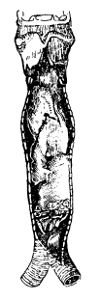
The effusion of serum is often abundant, causing protrusion of the mucous membrane, and narrowing of the canal; and when it is limited to the upper part of the larynx, as frequently happens, the disease is termed Œdema Glottidis. In this affection, the majority of the symptoms, which have been already enumerated as attendant on laryngitis, are all present, and in an aggravated form. Inspiration is extremely difficult and sibilant, and occasionally the patient experiences a sensation, as if a foreign body were lodged in the passage, and had changed its position on the muscles of the part being put in motion. The symptoms of œdema come on gradually in some cases, in others with alarming rapidity. They often follow ulcerations of the soft palate, and of the root of the tongue, as shown in treating of diseases of that organ, occurring on the patient being exposed to cold or moisture, or supervening rapidly when discharge from the ulcerations is by any accident suddenly suppressed. The difficult breathing, with cough and violent attempts at expectoration, takes place in paroxysms, and often to so alarming a degree as to threaten immediate suffocation, especially during the night. The patient, if he has fallen asleep, often starts up suddenly, and catches at the nearest object, having dreamed probably of drowning or strangulation. Deglutition is seriously impeded, the strength is exhausted, the body is emaciated, the features become contracted, and evince great anxiety. As already stated, the serous effusion is chiefly situated in the upper part of the larynx, particularly on the lips of the glottis, and on the inferior surface of the epiglottis; and on introducing the finger, a soft swelling can be felt beneath this cartilage. Perhaps the following sketch exhibits the most complete instance of œdematous swelling of the rima glottidis to be found in collections of morbid anatomy. The patient was brought to the Royal Infirmary labouring under all the symptoms of the disease in a very aggravated form. Tracheotomy was performed without delay, and with instant relief. The patient fell into a quiet and profound sleep, which lasted for six or seven hours. He started up suddenly and fell down dead; probably the end of the tube had become obstructed by mucus. It is scarcely to be supposed that the patient could have breathed at all with such a state of parts at the top of the air-tube, as here represented. Could any of the swelling have come on in the interval betwixt the performance of the operation and his sudden death? In some instances, the disease rapidly proceeds to a fatal termination, the glottis being speedily and entirely shut by the swelling; in others, the patient lingers for weeks, or even months.
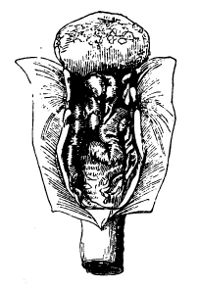
Depletion, local and general, especially the former, if employed on the first appearance of the inflammatory symptoms, will often arrest their progress; but if practised at a more advanced period, it can be productive of no benefit, and if any advantage does follow, it is merely temporary. Sometimes considerable benefit will be derived from the use of blisters, or from the unguentum tartritis antimonii being rubbed on the sides of the neck and over the larynx, so as to produce an eruption of numerous pustules. When all hopes of procuring resolution have passed, and when the urgent symptoms occasionally threatening suffocation supervene, tracheotomy should be performed without delay; and it ought to be borne in mind, that the more early this operation is resorted to, the greater is the chance of success. It has been repeatedly stated, that the disease is confined to the larynx, and, in most instances, to the upper part of it; so that, by making an opening in the windpipe below the thyroid gland, the disease is situated above the incision, the patient breathes through a canal which is in its healthy state, the affected parts are set at rest, and from their remaining comparatively motionless the disease often subsides spontaneously; if not, the various applications to the parts can be employed much more successfully than before; for when the parts remain subject to constant irritation from the movements necessary for respiration and nutrition, all medicines and all topical applications are generally productive of little or no benefit. But if the incision be made into the crico-thyroid membrane, we shall, in most instances, cut into the very middle of the disease; at any rate, the affected parts can be at no great distance from the incision, and the irritation of the tube will be a sufficient cause to excite inflammatory action in parts contiguous to the original disease, and already disposed to assume a similar action; thus the disease may be extended. I have performed tracheotomy on a very considerable number of patients afflicted with œdema glottidis, and I may say, with almost uniform success. The disease was speedily subdued, and in most of them there was no great difficulty in closing the artificial aperture, and restoring natural respiration. The relief afforded by the operation is almost instantaneous; the performance of it, if skilful, is attended with no danger; and want of success will generally be found to proceed from its having been too long delayed.
In consequence of laryngitis, or of long-continued irritation in the neighbourhood, the mucous membrane becomes indurated, and subsequently ulcerates; or ulceration may extend from the fauces. In some cases, the ulcers of the larynx are few, and of slight extent; in others, they are more numerous, and of considerable width and depth; and in some there is extensive and uninterrupted destruction of the surface, surrounded by thickened and elevated mucous membrane. This disease is termed Phthisis Laryngea. It is characterised by constant tickling cough with expectoration of purulent matter; by pain in the region of the larynx increased on pressure; by great prostration of strength, with general sinking of the vital powers, and frequently by hectic fever. From extension of the ulceration, the vocal chords, the ventricles of the larynx, and the mucous folds forming the rima glottidis, are more or less injured, and frequently altogether obliterated; partial or complete aphonia is the consequence. In phthisis laryngea, especially when advanced, swelling from serous effusion, to a greater or less degree, almost certainly supervenes, the œdema is found in the upper surface of the epiglottis, beneath the mucous membrane, upper and forepart of the pharynx, and occasionally also in the lips of the glottis,—an effect of the contiguous ulceration,—in the same way as œdema glottidis supervenes on ulceration of the lining membrane of fauces and pharynx; the usual train of symptoms denoting phthisis laryngea may thus be interrupted by those of œdema of the glottis becoming (each paroxysm) more and more urgent, terminating in suffocation or relieved by tracheotomy.
From the reasons which have been already stated, inspiration is performed with difficulty, and accompanied with a wheezing and rattling sound, resembling the passage of air through a narrow aperture lined with viscid fluid. Deglutition is difficult; and, from the inactive state of the muscles which naturally close the glottis during swallowing, and from the greater or less destruction of the epiglottis, a portion of the fluid taken by the mouth escapes into the windpipe, produces violent coughing, and is ejected by the mouth or nostrils. As the disease advances, the lungs become affected, the patient is incapacitated for ordinary exertion by the dyspnœa which ensues, he grows weak and languid, and seems, in fact, to labour under phthisis pulmonalis. Not unfrequently the two diseases are combined; but, in the majority of cases, the affection of the lungs supervenes on that of the larynx. Ulcers with tubercular bases are very frequent about the ventricles of the larynx in subjects dead of pulmonary phthisis. The chordæ vocales are thus often exposed. The affection of the lungs is perhaps attributable to frequent and harassing cough, occasioned by the state of the larynx and ejection of profuse vitiated secretions.
When the ulceration extends deeply, portions of the cartilages sometimes become diseased; the soft parts surrounding them are destroyed, they become necrosed, and are expectorated along with a quantity of highly fetid purulent fluid. In some instances, the expectorated portions are osseous, of loose texture, irregular margins, and dark colour, exhaling an odour intolerably fetid. It sometimes happens that the ulcerations proceed still more deeply, perforating the parietes of the canal, and establishing a communication betwixt the windpipe and gullet; or, if the perforation is anteriorly, the communication is with the cellular tissue on the forepart of the neck, abscess forms which may attain a large size and be productive of much inconvenience and danger.
The disease has been frequently produced by mercury, when the abuse of that mineral was common; its abuse is still far from uncommon.
The symptoms may be mitigated by counter-irritation. The parts covering the trachea should not be subjected to counter-irritation; in consequence of repeated blistering, the application of irritating ointments, effusion and thickening of the cellular tissue is caused, and this may prove a serious obstacle in the performance of tracheotomy, should that afterwards, as is too likely, be required. Setons may be inserted on the sides of the neck, and applications made over the box of the larynx. But tracheotomy affords the only hope of permanent relief; and if performed at an early period, if the lungs are not the seat of tubercular disease, as they too frequently are, there is every reason to expect that it will prove successful. It is followed by the beneficial results mentioned when speaking of the preceding disease, and the nitrate of silver can be applied to the more external ulcers, along with the internal use of sarsaparilla, &c. Ulcers, which there is every reason to suppose had been both extensive and deep, have healed even after the discharge of portions of dead, sometimes ossified, cartilage. The symptoms abate; the patient recovers, though in general with imperfect voice, as might be expected.
It may even be practicable to employ topical applications to the ulcers within the cavity of the larynx, as in the following case, which, though unsuccessful, shows the advantages to be expected from similar procedure adopted at a more early period. T. C., aged 22, had laboured under the symptoms of phthisis laryngea for five months previous to his application. He was much emaciated, and experienced great difficulty in swallowing, on account of the irritation induced in the region of the glottis; he had occasional cough, purulent sputa, and aphonia almost complete. The larynx was painful when pressed, the epiglottis was seen to be œdematous, and the general symptoms were of a hectic character. The œdema of the epiglottis was reduced by scarification.
The symptoms increased, notwithstanding counter-irritation and tonic remedies. The stethoscopic indications regarding the chest were so far favourable.
Tracheotomy was performed, and the patient felt very much relieved in consequence. On the tenth day after the operation, the inner surface of the larynx was touched with a strong solution of the nitrate of silver, applied by means of a bit of lint wrapped round the end of a probe slightly bent, and introduced upwards from the wound. The solution was applied every second or third day, and under its use the patient was remarkably benefited. He swallowed, spoke, slept, and looked better; the purulent sputa diminished, and the cough abated. He complained of less pain in the larynx, and seemed to be regaining strength, though slowly.
But after the lapse of several weeks, from imprudent exposure to cold, evident symptoms of bronchitis supervened, under which his constitution already shattered, speedily sank. The larynx was found extensively ulcerated, but at a number of points there were distinct marks of recent cicatrisation. The state of the lungs clearly showed that phthisis pulmonalis had not only commenced, but made considerable progress. The practice here detailed has been repeated again and again with good success.
Dyspnœa is caused by other circumstances besides those already mentioned; some rare cases are met with in which warty excrescences have grown from the seat of the vocal chords: a beautiful specimen from the collections of my friends, Messrs. Grainger and Pilcher, is here delineated. Dyspnœa frequently arises from paralysis of the muscles of the larynx, in consequence of effusion at the base of the brain, from long-continued irritation, as from an irritating cause seated in the mouth, and in old people from a general decay of the animal powers. In the last case, it is generally a symptom of approaching dissolution, as is the dysphagia which often attends it.
Severe dyspnœa is sometimes caused by external violence. A fine healthy child, aged eight, in running across the street, fell, and struck the larynx with great force upon a large stone. She was taken up quite lifeless, and some time elapsed before respiration was at all established. A gentleman finding her face livid, opened the temporal artery, and applied leeches to the throat, with some relief. I saw her about three hours after the accident. The breathing, inspiration more particularly, was exceedingly difficult; and this appeared to proceed not only from the injury to the larynx, probably occasioning loss of power in the muscles, but from the collection of some fluid in the trachea and its ramifications. The child was evidently in such a state that, unless active measures were resorted to, and that speedily, a fatal termination would soon take place. Tracheotomy was performed; a quantity of coagulated blood and bloody mucus was evacuated from the opening; and when the discharge and coughing had ceased, a tube was introduced. In eight days the tube was withdrawn, the aperture closed; and no unfavourable symptom recurred. In the museum at Chatham is a larynx showing fracture of the thyroid cartilage from the kick of a horse. The immediate consequence was great difficulty of breathing and rapid general emphysema. The patient, a young soldier, died soon after the injury.
Large or irregular foreign bodies, as coins, pebbles, portions of stone or of coal, seeds of fruit, &c., put heedlessly into the mouth, are apt to become impacted in the rima glottidis, and give rise to severe and dangerous dyspnœa, or even cause sudden dissolution. Smaller and smooth substances pass through into the trachea. Such accidents happen most frequently to children. Peas, beans, small shells, &c., slip into the air-passage, are obstructed for a short time in the rima, but are soon forced by the convulsive actions of the patient into the trachea, and frequently lodge in the right bronchus, it being more capacious, and more a continuation of the trachea than the left; or they remain loose in the trachea, and are moved up and down by the passage of the air. Immediately on their introduction, most violent coughing takes place, respiration is convulsive and imperfect, the patient writhes in agony, and is in dread of instant suffocation; the countenance becomes inflated and livid, and most strenuous efforts are made by nature to expel the foreign body. At length he is exhausted, and an interval of perfect quiet ensues; but this is soon interrupted by renewed attempts at expulsion. After a time, the intervals of repose increase in duration, and in many cases are so long continued, as to lull the patient and his friends into a belief that the windpipe contains no extraneous substance. But still violent fits of coughing supervene from time to time, and the dyspnœa is very alarming; on attentive examination, the presence of this foreign body may be ascertained beyond doubt by the peculiar noise produced by its movements in the passage; at the same time, thin mucus is copiously discharged from the lining membrane. Occasionally the foreign body becomes so placed in the canal as to form a complete valve, and then the labours of the patient to dislodge it are most painfully severe; if they fail, he is suffocated. During laborious breathing the neck sometimes becomes emphysematous. The parts may at length get accustomed to the presence of the foreign body, and all uneasiness subside. But danger, though not immediate, still remains. Foreign bodies have remained for years without causing much inconvenience; but in such cases they have generally settled in some remote ramification of the bronchial tubes; abscess commonly, sooner or later, takes place around, purulent expectoration follows, all the symptoms of pulmonary phthisis are established, the patient becomes hectic, and dies.
The existence of the foreign body, when suspected, is to be ascertained by accurate and attentive examination along the forepart of the neck, and by listening carefully to the sounds which may be present in the trachea; but the urgency and continuance of the symptoms will seldom leave the surgeon to entertain a doubt. If he attentively watch the patient, he can scarcely be mistaken. It has been recommended to examine the œsophagus previously to adopting active measures, a large foreign body impacted in that passage being capable of materially obstructing respiration by compression of the trachea; and it is safe and prudent to follow this recommendation whenever the least uncertainty exists regarding the real nature of the case.
When a foreign body has lodged in the windpipe, tracheotomy should be had recourse to without delay. In general, the offending substance presents itself immediately after the division of the trachea, and is expelled by a strong current of air. But in some cases it may be necessary to introduce instruments—probes, scoops, or small forceps—upwards or downwards, to dislodge and extract the body. A case in which a foreign body, which had lodged in the right bronchus for about six months, was successfully extracted, is detailed fully in the Lancet, and noticed shortly in the Practical Surgery, p. 416. A little blood from the wound may cause coughing for some minutes, but this soon ceases; the wound is closed after a few hours, respiration is completely reëstablished, and all that the surgeon has then to combat are the evil effects on the mucous membrane which the contact of a foreign body may have occasioned.
Tracheotomy is, in nearly all cases, preferable to laryngotomy. In disease of the windpipe, as formerly stated, it is better to cut into a sound part of the passage, or at least as far as possible from the seat of the disease. When an adult, for example, labours under acute laryngitis, the effused lymph is generally confined to the larynx, as was already mentioned; an opening below the thyroid gland is removed from the effusion, and by means of it the patient breathes through the natural tube yet sound; whereas, if the opening is made in the crico-thyroid membrane, the surgeon frequently cuts into the middle of the diseased part; little or no benefit follows, and, if the danger is not increased, equivocal good is all that can be expected from such an operation. Tracheotomy is also preferable for the removal of foreign bodies, unless it is certain that the body is impacted in the rima, for in such circumstances laryngotomy is much more suitable. In tracheotomy, the incision of the tracheal rings can be extended with much less injury than can division of the laryngeal cartilages, when the largeness of the foreign body, its being firmly fixed, or other circumstances, require that the wound be of considerable size. The risk or danger in the one operation is not much greater than in the other. Division of the crico-thyroid membrane and skin is effected by one incision; there is nothing important in the way of the knife. In very young children, when suffocation is threatened, as from the effects following upon the attempt to swallow very hot fluids, and the inhalation of steam, this operation may with great propriety be performed. Tracheotomy, on the contrary, requires to be proceeded in more carefully, particularly in children, in whom the neck is short, and the trachea deep. The tube is moreover very small, and not easily steadied. I had occasion, not long since, to open the passage in a child under sixteen months old, who had tried to swallow the contents of a teapot recently filled with boiling water. The difficulty experienced in such cases is often very great. Obstacles may also be presented by the thyroid and other veins being distended, and the soft parts are perhaps tumid and infiltrated with serum.
The patient, if adult, should be seated with the trunk erect, and by throwing back the head, space in the neck is gained. In a female on whom I operated some years since, this advantage could not be obtained on account of induration in the belly of the sterno-mastoid muscle, with contraction. The incision of the integument is commenced in the mesial line over the cricoid cartilage, and carried downwards, an inch in the adult, but proportionally shorter in children. The cellular tissue is divided by a few touches with the point of the instrument (a small scalpel or bistoury); the finger is then introduced to separate the sterno-hyoid muscles, and to feel for any stray vessels which may be in the way; for the thyroid arteries sometimes cross the line of incision, and it may happen that some of the larger arteries of the neck, by following an unusual course, become liable to injury, if the operation were rashly performed. The plexus of veins on the forepart of the neck is pushed downwards, and the isthmus of the thyroid gland, if it exist, is displaced slightly upwards; thus the rings of the trachea are cleared. The patient is desired to swallow his saliva, in order to elongate and stretch the windpipe; and the surgeon, seizing the favourable opportunity, pushes the point of the knife, with its back towards the top of the sternum, into the tube at the lower part of the incision. The instrument is carried steadily upwards, so as to divide three or four rings. It is not at all necessary to cut out any part of the rings of the trachea as recommended by some writers; contraction of the tube may afterwards result; nor can any good purpose be served by making the opening crucial.
If the operation has been undertaken for the removal of a foreign body, its object is usually accomplished immediately on division of the rings; if not, the substance must be dislodged by proper instruments, as was previously remarked. The opening is allowed to close after the oozing of blood has entirely ceased; but its edges must be kept asunder till then, lest the blood be drawn into the bronchial tubes, which occurrence, however slowly it take place, is always dangerous. The union and cicatrisation of such longitudinal wounds are soon accomplished; they close permanently in a few days, even after having been open for many weeks with a foreign substance interposed between their edges. The same obstacles do not interfere as in transverse wounds; on the contrary, every circumstance is in favour of rapid union.
When the object of the operation is to relieve respiration, impeded by disease in the superior part of the canal, a silver tube, of convenient curve, length, and calibre, is introduced into the wound immediately on the knife being withdrawn, and secured by tapes attached to the rings at the orifice of the tube, and tied round the neck. Frequently a violent fit of coughing, alarming to the patient, follows the introduction, in consequence of some blood having entered the trachea. But on the ejection of some frothy mucus, mixed with blood, the patient becomes quiet and tranquil, breathes easily, and feels composed and relieved. The form of the tube—the calibre gradually increasing from below towards the orifice—completely prevents any farther ingress of blood, by the uniform compression which it makes on the edges of the wound. The secretion of mucus in the trachea is increased by the presence of the foreign body, but the patient easily frees himself from its annoyance, being instructed to place his finger on the orifice of the tube, so as to narrow the aperture, when he wishes to cough and expectorate. In those cases where the operation has been performed without there being diminution of calibre of upper part by swelling or otherwise, expectoration through the tube is more difficult. Mucus, however, is apt to adhere to the inner surface of the tube, and thereby obstruct breathing; to prevent this, it is necessary occasionally to introduce a feather, or a probe wrapped round with lint, for some hours after the operation; the attendance of an assistant may be necessary for this purpose, but the patient readily undertakes the duty himself, on being made aware of its necessity. A double tube has been recommended, to facilitate the keeping of the passage clear, the inner one being occasionally withdrawn, cleaned, and replaced. But this is not in ordinary cases necessary. The frequent introduction of a feather, or probe, is sufficient for some hours after the operation, and in a very short time the patient finds that he breathes freely, though the tube is removed for a few minutes, in order to be cleaned. At first, a funnel-shaped tube is used, to compress the edges of the wound and prevent oozing, as already mentioned; afterwards, one of uniform calibre is more easily coughed through. The patient should be kept in an atmosphere of warm and equal temperature, and it is also prudent to place some cloth of very loose texture over the tube, that the temperature of the respired air may resemble as much as possible that passing through the whole track of the windpipe; thus bronchitis may be averted.
In some cases, the necessity for continuing the tube speedily goes off, the larynx, in consequence of rest, having recovered its healthy state and action. After eight or ten days, on taking out the tube, and closing the aperture in the trachea, the patient breathes and speaks well, and continues to do so.
In other instances, the difficult breathing recurs soon after withdrawal of the tube, the morbid state of the laryngeal mucous membrane having not been wholly removed. In such circumstances, the tube must be replaced and continued, but a smaller one suffices, less mucus is secreted, and a considerable quantity of air passes through the larynx; in short, the patient requires merely a small tube to obviate the danger which might arise from complete closure of the artificial opening, and to compensate for the narrowness of the natural canal. He speaks tolerably well, on placing his finger over the orifice of the tube. In course of time, the larynx may recover, and the tube be no longer necessary.
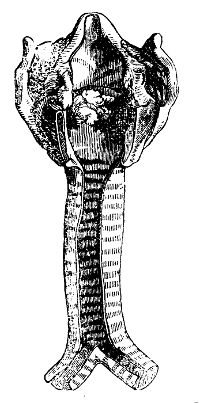
In some cases, a tube of a certain size must be worn during the remainder of life; and it does not generally cause much inconvenience. Attempts to discontinue its use give rise to dreadful suffering; the difficult breathing, threatened suffocation, and horrible feelings during the night, all recur. The box of the larynx has fallen in, as it were, in consequence of having been long disused, and is unable to resume its functions to their full extent. Besides, great, though gradual, change of structure has in all probability taken place. In several such cases, I have attempted to restore the natural dimensions of the passage, by the occasional introduction of bougies, gradually increased in size; but in none have I completely succeeded, except in the case of attempted suicide which has been already detailed shortly. In all, my attempts were at first followed by encouraging amelioration, but untoward symptoms occurring forced me to abandon them, though repeatedly persevered in. In one man, I succeeded in restoring natural respiration and closing the opening in the neck, but this was not of long continuance; a fresh accession of difficult breathing made renewal of the artificial opening absolutely necessary within a few months. Still the results are not such as to forbid further trials; and at any rate, it is now well understood that much greater freedom may be safely used with the air-tube than was formerly imagined; yet it must be acknowledged that little benefit can be expected to follow such, or any treatment, in many cases of contraction of the canal, from long-continued disease. The larynx and trachea obtained from the patient whose case is alluded to above are here represented. The poor fellow had worn a small silver tube in an opening in his windpipe for many years. It was originally introduced on account of long-continued disease of the larynx, with dreadful suffering and constant sense of impending suffocation. He could not be made to dispense with the tube entirely, as he felt immediately on the wound closing a threatening of return of his painful and dangerous symptoms. A small one was substituted for that at first used. He led a very irregular life, used a vast quantity of opium, and no small amount of spirituous liquors. He used to be out in the open air occasionally all night, and suffered repeatedly under attacks of bronchitis. He was under treatment again and again in the hospital, on account of rheumatic affection and deranged digestive organs. He used occasionally to present himself, complaining of difficult breathing, and stating that his silver tube was too short. He could articulate tolerably well when he stopped with his finger the orifice of the silver tube; at all times a part of the respired air passing through the natural channel. Latterly, he used to suffer from threatening of suffocation, and he used to relieve himself of the cause of this, viz., the inspissated and ropy mucus which got entangled in the trachea, then not suspected to be in a diseased state, by pushing through the opening in his neck and into the bronchi, long turkey’s feathers; of these he carried a good store, and some are now in my possession. This feat he performed without causing the slightest excitement or coughing. Ultimately, and about twelve years after the operation had been performed, he died, principally from diseased viscera. His liver was enormously enlarged and altered in structure; the larynx is seen to be very much contracted at two points. The tube is observed to be considerably dilated below the contractions.
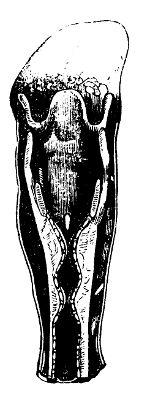
The introduction of tubes into the larynx has been supposed likely to supersede bronchotomy in some cases; and it is said that their presence does not produce so much irritation as has been stated. But the practice must, in all cases, be most troublesome to the surgeon, and painful to the patient; and, in my opinion, continuance of it is in the great majority of cases impracticable. Besides, it is difficult, and not unattended with danger. Bronchotomy is quite safe, and not likely to be followed by such suffering to the patient, or by any other unpleasant consequence, to which the other method is liable.
Pharyngitis.—Inflammation of the pharynx is of rare occurrence. The inflammation may extend from neighbouring parts, or be produced by the direct application of an irritating or stimulating cause, as the lodgement of foreign bodies, of pins, fish-bones, seeds, portions of hard food; or by the application of acrid fluids to the membrane, acids, hot water, &c. In one instance which I met with, it occurred in a very violent form, in consequence of a large and sharp portion of an earthenware plate having been swallowed so far by the patient whilst eating his porridge, and becoming firmly impacted in the lower part of the pharynx. I have seen a considerable number of instances in which the disease was produced by the swallowing of soap lees, a fluid, it would appear, highly acrid, occasioning a severe degree of inflammation, and even destroying a portion of the parietes.
A man employed by the police in fumigating houses during the prevalence of cholera, had given to him as a practical joke a glass of sulphuric acid instead of whiskey. He suffered at the time, as may be supposed, most excruciating pain, violent inflammation supervened, followed by a bad stricture of the gullet.
Deglutition is difficult and painful; an exquisite degree of pain is occasioned by pressure on the sides of the neck, and the circulation is more or less excited. Redness and swelling of a portion of the mucous membrane can be observed on looking into the fauces. The changes which occur in the membrane are similar to those produced in the windpipe by inflammation.
Resolution will generally be effected by the application of leeches to the neck, the exhibition of purgatives and diaphoretics, and strict observance of the antiphlogistic regimen.
If the inflammation does not soon subside, it sometimes happens that constriction of the passage occurs, either from thickening or œdematous swelling of a portion of the mucous membrane, or from effusion of lymph, and adhesion of the opposed surfaces. The common seat of stricture, as in other mucous canals, is that portion of the tube which is naturally the narrowest, the lower part of the pharynx and commencement of the œsophagus, immediately behind the cricoid cartilage: occasionally it takes place in other parts of the canal. In general, the contraction is of small extent, and unaccompanied with much thickening around. The tube immediately above the constricted point is more or less dilated, and often to so enormous a size as almost to resemble a first stomach. In the majority of cases, the parietes of this pouch are attenuated; but occasionally they are much thickened, and the seat of a purulent collection, which subsequently opens into the general cavity. In cases of long standing, ulceration often occurs, usually limited to the neighbourhood of the stricture. When the parts immediately below the stricture are ulcerated, the circumstances is often attributed to the retching which generally attends the disease; but it appears to be the result of morbid action, seated in the parts themselves, similar to the ulcerative process in the larynx following inflammatory affection. But ulceration occurs as frequently above the stricture as below it; and, besides the natural cause to which it is referable, is often produced, or at least aggravated, by injudicious or unskilful attempts to remove the constriction. Though the ulcers seldom enlarge to any great extent, yet, in some rare cases, a portion of the parietes of the canal is perforated, and a communication thus established with the trachea, or with the cellular substance amongst the muscles of the neck. Or the ulcers, from either long continuance, or inherent disposition, may assume a malignant action, extend rapidly in both width and depth, throw out fungous and unhealthy granulations, form sinuous false passages, and produce a most horrible and intractable disease. But strictures are often of temporary duration, and appear to depend on spasmodic contraction of the circular muscular fibres of the tube. And dysphagia may also arise from an opposite condition of the fibres—from paralysis, in consequence of cerebral affection, a fatal symptom in any disease.
The prominent symptom of stricture of the œsophagus is difficult deglutition. Some patients can swallow only liquids; and when an attempt is made to get over any solid substance, this is stopped at the contraction, and completely obstructs the passage. In such cases patients will frequently apply for relief, in order that the portion of food may be pushed through the narrow portion of the canal; with the accomplishment of this many are quite satisfied, and are unwilling to submit to farther treatment, obstruction to solid matter being the only inconvenience experienced. But when contraction is great, and the involved portion of the canal almost obliterated, little food of any kind can pass into the stomach, the patient becomes feeble and emaciated, and ultimately dies from inanition. The subjects of this affection are generally far advanced in years, and in them it often occurs without any evident cause.
If pharyngitis have subsided, either spontaneously or after antiphlogistic treatment, and symptoms of stricture supervene, the existence or non-existence of this latter disease must be ascertained by gentle and cautious introduction of a gum-elastic bougie or ivory-ball probe. If stricture exist, the descent of the instrument will be resisted at the contracted point, and most frequently at the lower part of the pharynx: this, in the adult, will be at a distance of about nine inches from the incisor teeth. When the seat of the stricture is ascertained, a bougie is to be introduced, sufficiently small to pass through it; and when this has been pushed beyond, the disease, if unattended with malignant disposition or action, is completely in the power of the surgeon. After sufficient time has been allowed for the irritation following the first introduction to subside, a larger bougie is to be passed, and retained as long as its presence can be endured. This practice must be continued, till, by gradual increase of the bougie, the canal is dilated so as to admit readily an instrument sufficient to distend the gullet in its healthy state. Thus the passage will be gently and gradually dilated, till it regain its original calibre. The process is partly mechanical, but also greatly dependent on vital action; by the presence of the bougie the parts are stimulated, the fluid, which may be effused beneath the mucous membrane or into its substance, is absorbed, and the new solid matter is also gradually removed by increased action of the absorbents. But if the bougie be rudely and forcibly introduced, or too long retained, the absorbent action from being salutary becomes morbid, and ulceration is established, which may proceed to destroy the parietes of the canal, so producing an additional and equally formidable disease; or if the ulcerative action subside, the parts will cicatrise and consequently contract, so giving rise to a new stricture, and narrowing the canal to an equal or greater extent than formerly. Before introducing the bougie, the head must be thrown as far back as possible, as here seen, and brought to a horizontal position, that the natural curve of the upper part of the canal may be lessened, and the passage of the instrument thus facilitated. It is of consequence also to keep the point of the bougie pushed back towards the vertebræ (the patient being desired to make an effort to swallow), and to grasp the larynx with the left hand and pull it gently forwards, that there may be no risk of the instrument passing into the windpipe, instead of into the gullet; if such a mistake should happen, the surgeon will soon be apprised of it by the violent and convulsive coughing which is generally induced, though not always. Bougies armed with caustic have been recommended, but are unnecessary, the simple bougie being sufficient to remove the disease, if skilfully employed; besides, their use is not unattended with danger, ulceration being frequently produced. In very bad cases, in which the stricture is long in yielding to the means already mentioned, and the nutriment which the patient is able to swallow is necessarily small,—when the canal is altogether obliterated either at one point or to a considerable extent, as has sometimes happened, and when there is consequently little hope of success from any treatment—the strength of the patient may be supported, and life prolonged for some time by the use of nutritive enemata.
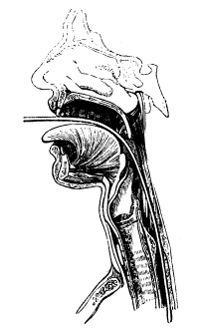
Dysphagia may also be caused by tumours in the œsophagus; but as these are generally of a medullary structure, and consequently endowed with malignant action, the treatment can only be palliative—there is no hope of a radical cure.
Dysphagia may arise from an aneurismal tumour of the arch of the aorta, or of the large arterial trunks passing off from it, pressing on the œsophagus, and so narrowing its calibre. In such cases, also, no hope of success from any treatment can be entertained; often the case terminates fatally in a very sudden manner, in consequence of the aneurismal tumour giving way at the point which protrudes on the gullet; the contents are discharged into the stomach, or ejected by the mouth. If treatment by bougies be attempted in dysphagia arising from such a cause, the practitioner not being aware of the nature of the disease, the fatal issue will be fearfully hastened—a very unpleasant consequence of any practice.
Foreign bodies lodged in the œsophagus produce difficult deglutition, and, if large, may obstruct the passage completely; much irritation is also caused to the parts with which they are in contact, and inflammatory action kindled in them. A large substance firmly impacted likewise creates difficulty of breathing, by compressing the posterior part of the trachea. Indeed every consequence is of such an annoying nature, as to render dislodgement and removal of the offending substance necessary, though there were no apprehension of danger from its long-continued presence. The proceedings must be varied according to the consistence, form, size, and situation of the foreign body. There are a great many instruments for effecting dislodgement and extraction, but the great majority of them are more curious and ingenious than applicable to the purpose intended; few are of any use. A probang, mounted with a bit of sponge, or with an ivory-ball—a blunt flat hook attached to a whalebone probe—and long curved forceps, constitute the whole useful apparatus. The feelings of the patient are generally sufficient to mark the position which the body occupies; he is made to throw the parts into action, by attempts to swallow the saliva, and during the attempt to point to the seat of pain. But by this both patient and surgeon may be deceived, for pain and a feeling of foreign matter being lodged often remain at a fixed point, after the body has passed down; similar deception occurs in other situations, as in regard to extraneous substances in the eye, urethra, &c.
Small and sharp substances seldom remain long in the œsophagus, but readily descend into the stomach and intestines; they then either escape along with the feces, or, as sometimes happens, penetrate the parietes of the alimentary canal, generally near its termination. On leaving the stomach or the intestines, by gradual perforation, they frequently travel great distances in the trunk or limbs, without causing much inconvenience,—effusion of lymph surrounding them, and filling up their track. They will appear, long after their insertion, at a far distant point, approach the surface, and gradually make their way through the integument, or be readily extracted. When they enter from the surface, also, they often come within reach long afterwards, and far from their point of entrance. Needles, thus travelling, become oxidised. They are easily removed, on coming near the surface, by fixing them with the fingers, and making a small incision over the more superficial extremity. A needle may sometimes be taken out, by making pressure on both ends, and so forcing the point through the integument.
Small pointed bodies, needles, pins, fish-bones, &c., often get entangled in the root of the tongue or in the folds of the palate; on opening the mouth they can be seen, and are easily brought away. If lodged in the pharynx, they can be reached by the finger. The patient is seated with the head thrown back, and the jaws extended; the finger is introduced with determination, regardless of attempts to vomit, and swiftly passed into all the sinuosities by the side of the epiglottis, into the pouches betwixt the os hyoides and cornua of the thyroid cartilage, so that no part is left unsearched. The substance, when felt, may be extracted with the finger by entangling it in the point of the nail; or curved forceps may be introduced, and applied conveniently to the body by the guidance of the finger. Great care and caution is required in dislodging the foreign body, when both ends, as is often the case, have penetrated the parietes; if it be rudely grasped and pulled, the parts are lacerated; or it breaks, and the surgeon, after bringing out the portion held in the forceps, may find great difficulty in detecting and disentangling the other. I have often found it very troublesome to remove delicate needles entire. When they are beyond the reach of the finger, it is of no use to attempt their removal; the patient suffers great pain during the endeavour, and there is no chance of successful issue; besides, the surgeon is apt to bring discredit on himself.
Coins may be removed by the forceps, or by the hook, if lodged at the narrow part of the passage behind the cricoid cartilage; if lower, they generally defy attempts at extraction, and slip into the stomach gradually. Halfpennies, halfcrowns, &c., pass readily along the alimentary canal, and are voided in a short time.
Tendinous or cartilaginous portions of hard meat, when within reach of the finger, can be laid hold of by the curved forceps, and pulled up. Smaller and soft portions, if impeded in the passage, as when it has been narrowed by previous disease, are dislodged and pushed down by the cautious use of a small probang or œsophagus bougie. In the introduction of any instrument, attention should always be paid to the steps advised when treating of stricture of the gullet.
Œsophagotomy is an operation that may, under some peculiar circumstances, be required. When a foreign body is of such a nature that, when once lodged in the gullet, it cannot be removed either upwards or downwards, without serious læsion of the parts, and, when breathing is impeded by its projection, incision of the œsophagus may be warrantable. The operation is easily accomplished. An incision of about three inches is made in the superior triangular space of the neck, on the left side,—the gullet usually inclining to the left of the mesial line. It is commenced opposite to the os hyoides, and carried downwards parallel with the trachea; the use of the knife is continued till by cautious dissection the wound is brought to the level of the common sheath of the large vessels. Assistants separate the edges by thin and broad copper spatulæ, and the cavity is frequently sponged. The larynx is pulled aside, and turned a little over on its axis; the pharynx is thus exposed. During the latter part of the dissection, the laryngeal nerves and thyroid arteries must be looked for and avoided. The foreign body is felt through the parietes, and these are laid open to an extent sufficient for its extraction. It is advisable to nourish the patient for some days afterwards through an elastic tube passed by the mouth or nares into the gullet, with its extremity one or two inches beyond the wound. Its introduction requires caution; an instance is on record of a tube being passed with the view of conveying nourishment, in which the surgeon did not discover that its extremity had slipped into the larynx till after the injection of some fluid. It is recommended to wait for some minutes before proceeding to inject, and that, if during that time no air pass through the tube, the instrument may be considered certainly in the œsophagus. It is seldom that the opening of the œsophagus will close by the first intention, and therefore accurate approximation of the external wound need not be attempted.
Removal of noxious matter from the stomach is now successfully practised by the aid of instruments. This is required when the excitability of the organ has been impaired or destroyed, and emetics in consequence do not act.
It is unnecessary here to treat of the emetics which act most quickly, or which are most proper in different cases, nor of antidotes for various poisons. Many stomach-pumps have been contrived, and their merits have caused much rivalry; but they are all constructed on much the same principle. People, too, seem to indulge the inventors by swallowing deleterious substances much more frequently than before. There has been a demand for cases of poisoning, and the supply has kept pace pretty well with the demand. Now-a-days twenty seem to attempt suicide by poison for one that did so long ago.
Most vegetable narcotics—those which do not act with great rapidity, can be removed mechanically; but some of the mineral poisons are heavy and difficult of solution, and are not so readily extracted. Read’s apparatus appears to me the simplest and the best, for this and various other purposes. Ample directions for its use are given along with the instrument.
Inflammation and Abscess of the Ear are either deep-seated, or confined to the external meatus. Suppurations in the internal parts—in the cavity of the tympanum, or in the mastoid cells—are often attended with the most violent symptoms, excruciating pain, fever, delirium. Such are highly dangerous in their consequences. Collections nearer the surface, under the membrane lining the meatus, are, though not so dangerous, also attended with great suffering and severe constitutional symptoms. The disease may occur at all ages, but is most common in children during dentition; in them it is often accompanied with convulsions and head symptoms, leading to a suspicion of hydrocephalus being established. The symptoms are all much relieved on the occurrence of copious purulent discharge.
Suppuration in the organ of hearing often follows eruptive diseases; and both ears, or one, may continue to discharge for a long time. There is always more or less derangement of the functions of the parts. When the disease is external, perhaps hearing may not be much affected; but when, as often happens, the ossicula, nervous expansions, membrane, parietes, are all destroyed or injured, hearing is lost, or rendered at least very obtuse. Purulent discharge often continues for the rest of the patient’s life, at one time scanty, at another profuse, and preceded or accompanied by inflammatory symptoms. Openings form over the mastoid process, communicating with the cells; and these are often connected with abscess betwixt the dura mater and pars petrosa of the temporal bone. Abscesses, too, of the middle lobe of the cerebrum, or in the cerebellum, are sometimes evacuated through the meatus auditorius. In all cases, but in the last more particularly, the patient suffers extremely on the discharge being suppressed, and is again relieved on its recurrence. At length, fever and delirium may supervene, terminating in coma and death; I have dissected many who have perished in this manner. Or, after long-continued discharge from the meatus, perhaps with paralysis of one side of the face, a soft tumour of the dura mater will be found lying over the pars petrosa, having caused extensive absorption of the bone, and exposed the semicircular canals, cochlea, tympanum, &c., filled with purulent matter. Abscess of the tympanum itself discharges long; and large, flabby, soft granulations fill up the meatus, very different in appearance from the solid tumours which sometimes occupy that situation.
Ordinary earache—inflammation extending along the meatus externus, and confined to the lining membrane—will be relieved by leeching behind the auricle, and by assiduous and regular fomentation afterwards. But suppuration is seldom prevented. The abscess may sometimes be opened, with great relief. If deeply seated, the parts are soothed by fomentation and poultice, till spontaneous evacuation of the matter occurs; this is then to be washed away, from time to time, by the injection of a warm and bland fluid; the abscess gradually closes, and the discharge slowly disappears. In cases of long-continued discharge, it is generally impossible to ascertain from what depth the matter comes, and there is always great risk in using means to arrest its flow. The patient must submit to the annoyance. The discharge can be moderated, or altogether suppressed, by injections of astringent salts, but the practice is unsafe, and in most cases unwarrantable. The parts are to be kept clean by frequent ablution with tepid water, lime water, or other bland fluids; and cotton or wool may be worn in the meatus to take up the discharge, and prevent bad effects from cold. Discharge from the external meatus, and about the auricle, is often kept up by irritation in the mouth, in both children and adults; this should be looked to, and the offending cause removed, if possible.