Chapter IV · (continued 4)
Reading edition
There is no doubt that, as time shall go on, the system of building many-storied clusters of rectangular rooms will gradually be abandoned by these people. In the absence of the defensive motive a more convenient system, employing scattered small houses, located near springs and fields, will gradually take its place, thus returning to a mode of building that probably prevailed in the evolution of the pueblo prior to the clustering of many rooms into large defensive villages. Pl. LXXXIII illustrates a building of the type described located on the outskirts of Zuñi, across the river from the main pueblo.
The cultural distinctions between the Pueblo Indians and neighboring tribes gradually become less clearly defined as investigation progresses. Mr. Cushing’s study of the Zuñi social, political, and religious systems has clearly established their essential identity in grade of culture with those of other tribes. In many of the arts, too, such as weaving, ceramics, etc., these people in no degree surpass many tribes who build ruder dwellings.
In architecture, though, they have progressed far beyond their neighbors; many of the devices employed attest the essentially primitive character of the art, and demonstrate that the apparent distinction in grade of culture is mainly due to the exceptional condition of the environment.
Footnotes
INDEX
The following partial Index is specific to this article. The Index for the entire Eighth Annual Report is included in the Index.
A
Acoma, arrival of the Asanyumu at 30
direction of kivas of 116
kiva trap-doors at 207
Adobe, use in Tusayan 54, 78
use in Zuñi attributed to foreign influence 139
necessity for protecting against rain 156
used in Spanish churches 224
Adobe balls used in garden walls 146
Adobe bricks, in Hawikut church 81
use modern in Zuñi 138
Adobe mortar, in Tâaaiyalana structures 90
Cibola and Tusayan use of, compared 137
Adobe walls on stone foundation at Moenkopi 78
Áikoka. See Acoma 30
Aiyáhokwi, the descendants of the Asa at Zuñi 30
Alleyway, Hawikuh 81
Altar, conformity of, to direction of kiva 116
Andiron, Shumopavi 176
Annular doorway 192, 193
Apache, inroads upon Tusayan by the 25, 26, 35
exposure of southern Cibola to the 96
Architectural nomenclature 220, 223
Architecture, comparison of constructional details of Tusayan and Cibola 100-223
adaption to defense 226, 227
adaption to environment 225, 226, 227, 228
Art, textile and fictile, degree of Pueblo advancement in 227
Arts of Cibola and Tusayan closely related 224
Asa, migrations of the 30, 31
language of the 37
houses of, Hano 61
Asanyumu. See Asa.
Awatubi, survey of 14
Spanish mission established at 22
when and by whom built 29
settlement of the Asa at 30
attacked by the Walpi 34
description of ruins of 49, 50
possession of sheep by the 50
clay tubes used as roof drains at 155
fragments of passage wall at 181
Aztecs, ruined structures attributed to the 225
B
Badger people leave Walpi 31
Baho, use of, in kiva consecratory ceremonies 119-120, 129, 130
Balcony, notched and terraced 187
Banded masonry 145
Bandelier, A.F., description of chimney 173
explorations of 197
on ancient stone inclosures 216
Bat house, description of ruin of 52
Bátni, the first pueblo of the Snake people of Tusayan 18
Bedsteads not used by Pueblos 214
Beams, Tusayan kivas, taken from Spanish church at Shumopavi 76
for supporting upper walls 144
modern finish of 149
construction of steps upon 162
for supporting passageway wall 181
Chaco pueblos, how squared 184
Bear people, settlement in Tusayan of the 20, 26
removal to Walpi of the 21, 27
movements of 27, 30, 31, 38
Bear-skin-rope people, settlement in Tusayan of the 26, 27
Benches or ledges of masonry, Zuñi rooms 110
Tusayan kivas 121, 123, 125
Mashongnavi mungkiva 127
around rooms of pueblo houses 213
Bins for storage in Tusayan rooms 109, 209, 210
Blankets formerly used to cover doorways 182, 188, 189, 194
Blue Jay people, settlement in Tusayan of the 26, 27
Bond stones used in pueblo walls 144, 198
Boss, or andiron, Shumopavi 176
Boundary line, Hano and Sichumovi 36
Boundary mark, Shumopavi and Oraibi 28
Boxes for plumes 210
Bricks of adobe modern in Zuñi 138
Brush, use of, in roof construction 150
Brush shelters 217-219
Burial custom of K’iakima natives 86
Burial inclosures at K’iakima 147
Burial place of Zuñi 148
Burrowing Owl people, settlement in Tusayan of the 26
Buttress, formerly of Halona, existing in Zuñi 88, 89
Buttress projections, Zuñi 111
Tusayan rooms 109, 110
girders supported by 144
chimney supported by 172, 173
support of passageway roofs by 181
C
Cages for eagles at Zuñi 214
Canyon de Chelly, proposed study of ruins of 14
Tusayan, tradition concerning villages of 19
early occupancy of, by the Bear people at Tusayan 20
occupied by the Asa 30
use of whitewash in cliff houses of 74, 145
circular kivas of 117, 133
finish of roofs of houses of 150, 151
doorway described and figured 190
cliff dwellings of 217
Casa Blanca, traces of whitewashing at 145
Castañeda’s account of Cibolan milling 211, 212
Cattle introduced into Tusayan 22
Cave lodges occupied in historic times 225
Cave used by inhabitants of Kwaituki 57
Ceiling plan of Shupaulovi kiva 123, 125, 126
Ceilings, retention of original appearance of rooms through nonrenovation of 89
Cellars not used in Tusayan and Cibola 143
Ceremonial chamber. See Kiva.
Ceremonial paraphernalia of Tusayan taken by the Navajo 50
Ceremonies connected with Tusayan house-building 100-104, 168
Ceremonies accompanying kiva construction 115, 118
Ceremonies performed at placing of Zuñi ladders 160
Chaco ruins, character of 14, 70
compared with Kin-tiel 92
finish of masonry of 140, 226
upper story partitions of, supported by beams 144
finish of woodwork of 149, 184
symmetry of arrangement of outer openings of 195
loop-holes in walls of 198
Chair of modern form in Zuñi 213
Chairs, lack of in Pueblo houses 212
Chalowe, description of 83
Charred roof timbers of Tusayan kiva 120
Chimney. See Fireplace.
Chimney-hoods, how constructed 169-175
Chimneys, traces of in K’iakima 85
remains of, at Matsaki 86
Tusayan 102
Zuñi 111
described and figured 167-180
Chukubi pueblo, built by the Squash people 25
description 58, 59
fragments of passage wall at 181
Church, Shumopavi, established by Spanish monks 75, 76
Hawikuh 81, 138
Ketchipauan, remains of 81, 82
in court of Zuñi 98, 138, 148
See Mission.
Churches established in Zuñi and Tusayan 224
Cibola, ruins and inhabited villages of 80-99
architecture of compared with that of Tusayan 100-223
See Zuñi.
Circular doorway of Kin-tiel described 192
Circular kivas, antiquity of 116
traditional references to 135
absent in Cibolan pueblos 224
Circular room at Oraibi Wash 54-55
Circular rooms at Kin-tiel 93
Circular wall of kiva near Sikyatki 117
Clay surface of pueblo roofs 151
Clay tubes used as roof drains 155
Cliff dwellings, Moen-kopi 54
use of whitewash in 74
absence of chimneys in 168
developed from temporary shelters 217
occupied in historic times 225
Climatic conditions, effect of, upon pueblo architecture 140, 227
Clustering of Tâaaiyalana ruins 89-90
Cochití claimed to be a former Tewa pueblo 37
Communal village, development of pueblo architecture from conical lodge to 226
Consecration of kivas 129
Contours represented on plans, interval of 45
Cooking, pueblo method of 164
Cooking pits and ovens described 162-166, 176-177
Cooking stones of Tusayan, flames of 104
Copings of walls described 151-152
Coping of hatchways 203
Coping. See Roof-coping.
Cords, used for suspending chimney 170
Corner stones of Tusayan kivas 119
Corrals, Payupki 59
Sichumovi 62-63
Hawikuh 81
Ketchipauan 81
modern, at K’iakima 85
how constructed 146
described in detail 214-217
Cotton cultivated by the Tusayan 33
Courts, Mishiptonga 52
Kwaituki 56
Chukubi 59
Sichumovi 62
Walpi 63
Mashongnavi 68
Shupaulovi 71
Shumopavi 74
Hawikuh 81
Ketchipauan 81
Matsaki 86
Tâaaiyalana 90
Kin-tiel 92
Pescado 95
Zuñi 98
Covered way, how developed 76
Covered passages and gateways described 180-182
Coyote people, settlement in Tusayan of the 26
Coyote kiva, direction of the 116
Crossbars used in fastening wooden doors 183
Crosspieces of ladders 159
Cruzate, visit to Awatubi of 49
Culture of pueblo tribes, degree of 227
Cushing, Frank H., identifies K’iakima as scene of death of Estevanico 86
excavations at Halona 88, 193
opinion concerning western wall of Halona 89
opinion concerning distribution of Tâaaiyalana ruins 89-90
on the former occupancy of Kin-tiel 92
Haloua identified as one of the Seven Cities of Cibola 97
on Zuñi tradition concerning stone-close 192
D
Dais of kivas 121, 122, 123
Dance ceremony in kiva consecration 130
Dance rock, Tusayan, reference to snake dance of 65
Débris, how indicated in plans of ruins 45
an indication of original height of walls 90
Decoration, house openings 145-146
Kiva roof timbers 119, 120
ladder crosspieces 159
roof beams 123, 124
wall of Mashongnavi house 146
wooden chair 213
Zuñi window sashes 196
Deer horns used as pegs in Zuñi 111
Defense, wall for, at Bat House 52
a motive for selection of dwelling site 56
architecture relied upon for 58
method of, of Payupki 59, 60
not a factor in selection of Mashongnavi site 67
features of, at Ojo Calient 69
wall for, at Pueblo Bonito 70
features of, at Tusayan and Zuñi compared 76
sites chosen for, inconvenient to sources of subsistence 77
use of Kelchipauan church for, by natives 82
the motive of occupation of Tâaaiyalana mesa 90
provision for, at Kin-tie 92, 93
provisions for, in Ketchipauan church 96
motive for, dying out in Zuñi 96-97
efficiency of, at Zuñi 97
not a motive in selection of site of Zuñi 97
gateways arranged for 180, 182
loopholes for 198
adaptation of architecture to 225
Doors to ground floor rooms of Zuñi 143
Doors of various lands described 183-194
Doorway, Walpi kiva, closed with cottonwood slab 64
Kin-tiel 93
position of, in Tusayan 103
stepped form in Tusayan 109
how sealed against intrusion 110
window and chimney in one 121
annular 193
Doorways, closed with masonry 183, 187, 188, 189
why made small 197
Drainage of roof, relations of certain roof openings to 203-204
Drains of roofs described 153-156
Drains. See roof drains.
E
Eagle cages of Zuñi 214
Eagle people, migration legend of the 28
Earth used in pueblo roof construction 150
Eaves, lack of, in Tusayan houses 102
Echo Cave fireplace described 168
Entrances, uniformity of direction of, in Zuñi kivas 116
Environment, adaptation, of architecture to 225, 226, 227, 228
Estevanico’s death, at K’iakima 86
Estufa. See Kiva.
F
Families occupying Oraibi 105-108
Farming outlook, Matsaki used as 86
near Kin-tiel 93
Farming pueblos, Cibola 14
Moen-kopi 77
Nutria 94, 95
Pescado 95-96
Ojo Caliente 96
Zuñi 198
Fastenings of doors 186
Feathers, use of, in house-building ceremonies 101, 102
Feather wand or baho used in kiva-building ceremonials 119, 120, 129, 130
Fences of corrals and gardens 215, 217
Fetiches, where placed during kiva ceremonial 122
Tusayan kivas 130, 131
Fire gens, Tebugkihu constructed by the 57
Fire-house or Tebugkihu, Tusayan 20, 57, 100, 142, 224
Fire people of Tusayan, migration of the 20
Fireplaces 102, 109, 121, 125, 163, 167-180
Floor, Mashongnavi house 109
stone flags, Tusayan kiva 121
sandstone slabs, Shupaulovi kiva 123
Floors in pueblo buildings, various kinds described 121, 135, 148-151
Folk-tale of the Zuñi, describing stone-close 193
Food sacrifices in Tusayan house building 101, 102
Fortress houses the highest type of Pueblo construction 77
Frames of trap-doors, method of making 206
Framing of windows, method of 196-198
Fuel, how stored in Tusayan 103
Fuel used in kivas 121
Fuel of kivas, where stored 124
Furniture of the Pueblos described 208-214
G
Gardens and corrals of the Pueblos 214-217
Gardens and garden walls 215-217
Garden walls, how constructed 146
Gateway at Awatubi 49
Gateway jambs at Kin-tiel, finish of 181
Gateways, probable existence in Kin-tiel of 93
Gateways and covered passages described 180-182
Gateways of corrals 214
Genesis myth of the Tusayan 16
Gentes of Tusayan, grouping of houses by 24
land apportionment by 29
list of traditionary 38
localization of 104-108
Girders supporting upper walls 144
Tusayan houses supported by piers 151
Glass used in modern Pueblo windows 193
Glazing of Pueblo windows 196, 197
Goat kiva of Walpi, height of 119
Gourd used as roof drain 154, 155
Grass, use of, in roof construction 150
Graves, probable existence of, in Kin-tiel 93
Gravestones at K’iakima 85, 86, 147
Greasewood, the ordinary kiva fuel 121
Grinding stones. See Metate; Milling.
Ground plan, Mashongnavi room 108
Shupaulovi kiva 125
Ground plans of Zuñi and Tusayan compared 76
of mesa villages influenced by prevailing winds 182
Guyave or piki oven 173, 175
Gyarzobi or Paroquet kiva, roof timbers of 120
Gypsum used as whitewash 73, 74, 172
H
Hairdressing among the Tusayan 37
Halona, description of 88, 89
remains of the nucleus of Zuñi 97, 98
walls of the nucleus of modern Zuñi 138
stone-close at, described 193
“Halving” of timbers in kiva trap-frames 206
Hampassawan, description of 83-85
Hand-holds cut in faces of cliffs 191
Hand-holds in frames of trap-doors 192
Hano, Asa group occupy site of 30
description of 61, 62
direction of kivas of 115
kiva, ownership of 134
kivas, list of 136
rude transom over roof beam in 187
sealed openings in 199
Hano people, length of time spent in Tusayan by the 35
received by the Tusayan 36
trouble between the Walpi and 37
Hanomuh, the inhabitants of Hano 17
definition of 36
Hano traditions regarding settlement in Tusayan 35
Harvest time, how determined in Zuñi 148
Hatchways to pueblo houses 110, 120, 121, 124, 127
Hawikuh, description of 80, 81
Hawikuh church, durability of masonry of 138
Hemenway Southwestern Archeological Expedition, excavations at Halona 193
High-house people, a Navajo clan 30
Hinged sashes not in use in Zuñi 196
Hinges of Pueblo doors 184
Hodge, F. Webb, on stone-close of Halona 193
Holmes, William H., on ruins of the San Juan 147
Homólobi, the early home of the Sun and Water peoples 29
legend of Water people concerning 31
Hopituh, the native name of the Tusayan 17
Hopituh marriage within phratries and gentes 24
Horn House, description of ruin of 50, 51
Horn people migration legend 18
early settlement in Tusayan of the 19
House-building rites of Tusayan 100-104
House clusters in Zuñi, arrangement of 98
Hungo Pavie, finish of roofs in 150
I
Interior arrangement of pueblos 108-111
Interior of Zuñi house described 110
Irrigation of gardens near Walpi 217
J
Jackson, W. H., on ruins of the San Juan 147
photographs of pueblo ruins by 147
describes fireplace of Echo Cave 168
Jar of large size used for storage 210
Jars used in chimney construction 180
Jeditoh group of ruins 52, 53
Jemez oven-opening described 165
K
Kaékibi, an ancient pueblo 30
Kaiwáika. See Laguna 30
Kápung. See Santa Clara 37
Katchina kiva of Oraibi 135
Katchina people depart from Oraibi for eastern Tusayan villages 26, 27
Katchinkihu, occurrence of, in ruined kiva near Sikyatki 117
described 121, 123
Shupaulovi kiva 126
Mashonguavi mungkiva 127
Kótite. See Cochití.
Ketchipauan church built of stone 224
Ketchipauan, description of 81-83
Kiáini. See High-house people 30
K’iakima, description of 85, 86
upright stone slabs at 147
Kikoli rooms occupied in winter 103, 104, 131
Kin-tiel, description of 91-94
compared with Nutria 94
compared with Pescado 96
plan of, prearranged 100
compared with Oraibi 114
occurrence of upright stone slab at 147-148
beams of ruins of 149
upper room of, paved with stone 151
fireplace in room of 163, 168
defensive gateway at 181
Kin-tiel, finish of gateway jambs at 181
circular doorway at, described 192, 193
openings at, of uniform height 194
site of 224
Kisákobi, description of pueblo of 21
Kishoni, or uncovered shade 217-218
“Kisi” construction 217-219
Kitdauwi—the house song of Tusayan 118-119
Kiva, study of construction of 14
remains of, at Payupki 60
Mashongnavi 66
of Moen-kopi 78
origin of the name 111
ancient form of 116, 117
native explanation of position of 118
duties of mungwi, or chief of the 133
ownership of 133-134
motive for building 134-135
significance of structural plan of 135
measurements of 136
hatchways of 201-202, 205-207
openings of, at Acoma 207
See Mungkiva.
Kivas, excavated, at Awatubi 50
Hano 61
Sichumovi 62
Walpi 63, 64, 65
Shupaulovi 72
Shumopavi 74
Kin-tiel and Cibola compared 93
Zuñi, where located during Spanish occupancy 99
in Tusayan 111-137
typical plans of 118-129
dimensions of 118, 136
of, measurements of 118, 136
annually repaired by women 129
uses of 130
nomenclature of 130, 223-223
Tusayan, list of 136
nonuse of chimneys in 178
Zuñi, stone window-frames of 197
circular, absent in Cibolan pueblos 224
Kwaituki, description of ruin of 56-57
Kwálakwai, Hano tradition related by 35
Kwetcap tutwi, the second pueblo of the snake people of Tusayan 18
L
Ladders, arrangement in Tusayan kiva 121
withdrawal of rungs to prevent use of 113
significance of position of, in kivas 135
described 156-162
second-story terrace of Tusayan reached principally by 182
openings for, in roofs 205
Laguna, arrival of the Asanyumu at 30
Lalénkobáki, a female society of Tusayan 134
Land apportionment by gentes in Tusayan 29
Language of the Asa and Hano of Tusayan 37
Languages of Tusayan, tradition regarding difference in 36
Las Animas ruins, trap-door frames in 206
Latches of doors 186-187
Latch strings used on Zuñi doors 183
Lathing or wattling of kiva walls 126
Ledges of masonry in kivas 121
Ledges or benches around rooms 213
Lenbaki, society of Tusayan 18
Light, method of introducing, in inner rooms 207
Lighting, method of, in crowded portions of Zuñi 99
Lintels of old windows embedded in masonry 200
Lizard people move from Walpi 31, 38
Lock and key of wood, how made 187
Loom appurtenances 212
Loom posts of kivas 128-129, 132
Loophole-like openings in pueblo buildings 127, 198
M
Mamzrántiki, an Oraibi society of women 134
Mandan ladder described and figured 158
Maricopa, myth of the Water people of Tusayan concerning the 32
Marriage of the Hopituh within phratries and gentes 24
Mashongnavi, origin of name of 26
settlement of Paroquet and Katchina peoples in 27
settlementof the Water people at 32
description of ruins of 48
age of masonry at 66
description of 66-70
ground plan of room of 108
direction of kivas of 115
description of dais of kiva at 122
list of kivas at 136
wall decoration at 146
notched ladder of 157-158
pi-gummi ovens at 163-164
shrines of 167
chimney hoods of 170-171
second-story fireplace at 174
doorway with transom at 190
corrals of rude stonework at 214
See Old Mashongnavi.
Masonry, ancient, at Nutria 94
Ojo Caliente carelessly constructed 96
exterior, of kivas 114
Masonry of Pueblo Bonito, skill shown in 195
Mat close for kiva hatchways 127, 128
Matsaki, description of 86
sun symbol at 148
Meal, votive, used in pueblo house-building 101
Mealing trough. See Milling.
Metate used as roof-drain 154, 155
Metates, or grinding stones, how arranged in pueblo houses 109, 110, 210, 211
Migration, effect of, upon pueblo architecture 15
Migration of the Tusayan 17
Migration of Tusayan Water people 31, 32
Migration of the Horn people 18, 19
Migration of the Bear people of Tusayan 20
Migration of the Asanynmu of Tusayan 30
Milling troughs of Pueblo households 109, 210, 212
Mindeleff, Cosmos, acknowledgments to 14, 15
on traditional history of Tusayan 16-41
Mindeleff, Victor, paper on pueblo architecture 3-228
Mishiptonga, description of ruin of 52-53
Mission buildings of Shumopavi 27, 75-76
Mission house at Walpi, timbers of, used in Walpi kiva 119
Missions of Tusayan 22, 49
Moen-kopi surveyed and studied 14
description of ruins of 53-54
description of village of 77
Mole people, settlement in Tusayan of the 27
Montezuma Canyon ruins, use of large stone blocks in 147
Monument marking boundary of Oraibi and Shumopavi 28
Morgan, L.H., Mandan ladder described by 158
on. trap-door frames in Las Animas ruins 205
Mormon and Pueblo building compared 148
Mormons, effect of the, upon development of Moen-kopi 77
establishment of woolen mill at Moen-kopi by the 78
fort built by, at Moen-kopi 184
lock and key contrivance of 187
Mortar of adobe mud 137
Mortars used in Pueblo households 212
Mortised door in Zuñi house 110, 186
Mummy cave, Arizona, ruin in 64
finish of roofs in ruins of 150
Mungkiva, Mashongnavi 127
of Shupaulovi 113, 122
Tusayan 134
N
Nambé, Tewa pueblo 37
Navajo, Asa of Tusayan live among 30
huts of, closed with blankets 189
method of sheep-herding compared with Pueblo 214
Nelson, E.W., graves unearthed by 86
collection of stone-closes by 193
Niches, use of, in kivas 121, 122
Niches formed in old window openings 110, 200, 208-209
Nomenclature of Tusayan structural details 220-223
Númi. See Nambé.
Notched logs used as ladders 157-158
Nutria, compared with Kin-tiel 91
description of 91-95
Nuvayauma, old Mashongnavi tradition related by 47-48
Nuvwatikyuobi kiva 120
O
Oak mound kiva, Tusayan, decadence of membership of 135
Ohke. See San Juan.
Ojo Caliente, a modern village 54, 96-97
chinked walls of 142
Old Mashongnavi, tradition concerning occupation of 47-48
Openings, splayed, in Ketchipauan church 82
walls of Tâaaiyalana structures 90
Kin-tiel walls 92, 93
oblique Zuñi 98, 207-208
to kivas 113-114
in wall of Zuñi kiva 114
in lee walls 182
Openings of Pueblo houses banded with whitewash 145-146
Oraibi, retirement of Sikyátki inhabitants to 24
departure of Ketchina and Paroquet peoples from 27
settlement by the Bears of 27
traditions regarding first settlement of 27
settlement of the Water people at 33
affray between the Walpi and 35
description of 76-77
families occupying 105-108
direction of kivas of 115-116
rare use of plastering on outer walls of 144
Oraibi, notched ladders described and figured 157-158
stone steps at, figured 161
corral walls at, laid without mortar 147
distribution of gentes of 104-105
kiva for women 134
list of kivas of 137
kiva, hatchway of 201
corrals at, large size of 214
Oraibi-Shumopavi boundary stone 28
Oraibi wash, ruins on the 54-56
Orientation of kivas 115-116
Ovens at Pescado 95
upon roofs 151
various kinds described 162-166
in Zuñi 164-165
Oven-shaped structures described and figured 167
Oven-surface imbedded with pottery scales 139
P
Paintings on kiva walls 131
Palát Kivabi, the pristine habitat of the Squash and Sun people of Tusayan 25, 29
Paneled doors in modern pueblos 184-186
Parallelogramic form of Tusayan buildings 102-118
Paroquet people, settlement in Shumopavi of the 37
Partitions in Ketchipauan church 82
Partitions of upper story supported by beams 144
Passageways, Shupaulovi 72
Shumopavi 74
rarity of, at Oraibi 76
description of 180-182
Paving Shupaulovi kiva 126
Paving stones of kiva floor, how finished 125
Payupki, tradition concerning pueblo of 40
migration legend 40
description of 59-60
finish of masonry of 143
fragments of passage wall at 181
Peaches planted by the Asa people 30
Pegs, deer horns used as, in Zuñi 111
Pegs for suspending kiva fuel 121
Peña Blanca formerly inhabited by the Hano 35
Peñasco Blanco, occurrence of upright stone slab at 148
method of roof construction at 150
Pescado compared with Kin-tiel 91
description of 95-96
corral walls at, how constructed 147
outside steps at 160
ovens at, described and figured 165-166
fragment of stone close in steps of 193
stone inclosure in court of 214
Pestles or crushers used with Pueblo mortars 212
Petroglyph, or sun-symbol at Matsaki 86
Ketchipauan church 82
legend of the Tusayan concerning 32
Phratries, Tusayan 24, 38
Pictograph on Oraibi-Shumopavi boundary monument 28
Piers of masonry for supporting girders 151
Piers. See Buttresses.
Pi-gummi ovens of Mashongnavi 163
Piki or guyave oven 173-175
Piki stone, process of making 175
Pima, myth of the Water people of Tusayan concerning the 32
opinion of the, as to ancient stone inclosures 216
Pinawa, description of 86, 88
Pine invariably used for kiva ladders 135
Pink clay used in house decorations 146
Pits for cooking 163
Plan of villages, traditional mention of 104
Plans and descriptions, Tusayan ruins 45-60
inhabited villages 61-79
Cibolan ruins 80
Zuñi villages 94-99
Plan of pueblo houses not usually prearranged 100-162
Planting time, how determined in Zuñi 148
Plaster, frequent renewal of, at Shumopavi 73
Plastering, renovation of rooms by frequent 89
on outer walls in Ojo Caliente 96
custom formerly observed in 102
on floor in Mashongnavi 109
kiva walls 115
Shupaulovi kiva, condition of 124-125
Shupaulovi kiva 126
on walls 140
on masonry 144
chimney hoods 169, 172
side hole of door for fastening 183-184
Platform in floor of Tusayan kiva 121
Platform at head of steps 161-162
Plaza. See Court.
Plume boxes 210
Plume stick, baho, or feather wand, used in Kiva consecratory ceremonials 119-120, 129, 130
Plume-stick shrines at Mashongnavi 167
Pojoaque, a Tewa pueblo 37
Pokwádi. See Pojoaque 37
Polaka, Hano tradition given by 35
Poles for suspension of blankets, etc. 110, 189, 208, 214
Ponobi kiva of Oraibi, wall lathing of 126
Population, enlargement of pueblos necessitated by increase of 70
Porch posts 81, 82
Posówe, a former Tewa pueblo 37
Posts of porch, remains of, at Hawikuh and Ketchipauan 81, 82
Posts sunk in floor forming part of loom 212
Pots used in chimney construction 179-180
Pottery fragments, Horn House ruin 51
Kwaituki 57
ruin on Oraibi wash 55
used in mud-plastered walls 139
Pottery of Payupki, character of 60
Poultry house of Sichumovi 167
Prayer plume, or baho, used in kiva consecratory ceremonials 119, 120, 129, 130
Props used for fastening wooden doors 183
Pueblo architecture, study of, by Victor Mindeleff 8-228
Pueblo Bonito, additions to 70
the largest yet examined 92
finish of roof of 150
stairway described 160
symmetry of arrangement of outer openings of 195
skill shown in masonry of 195
Pueblo buildings, mode of additions to 70, 97, 98, 102, 148-149
Pueblo construction in Tusayan and Cibola, details of 137-223
Pueblo Grande. See Kin-tiel.
Pueblo openings, carelessness in placing 196
Pueblo remains, area occupied by 13
Pueblo revolt of 1680 89
Pueblos of Tusayan and Cibola compared 80
Pueblos, inhabited 61-79, 94-99
Pyramidal form of pueblo house rows 61
R
Rabbit-skin robes used to cover doorways 182, 194
Racks for suspending clothes 208, 214
Rawhide thong used in pueblo construction to fasten lock 186, 187, 214
Rectangular kivas, antiquity of 116
Rectangular rooms, how developed 226
Rectangular type of architecture 72
Reeds used for kiva lathing 126
Repair of houses infrequent in Tusayan 73
Reservoirs, pueblo 82-83, 91, 92, 97
Reservoir site as affecting selection of dwelling site 51-52
Revolt of the Pueblos in 1680 23
Rites and methods of Tusayan kiva building 118-137
Rites of house-building at Tusayan 100-104
Rito de los Frijoles, chimney of, described 173
Roof construction, pueblo buildings 120, 149
Roof-coping of Tusayan houses 102
Roof-drains, pueblo buildings 102, 153-156
Roof-openings, pueblo buildings 61, 63, 77, 98, 169, 178, 201-208
Roofs, pueblo buildings 63, 102, 119, 148-151
Roof timbers of kivas 119
Rooms, arrangement of, into rows in Tusayan 49
confused arrangement of, in Walpi 63
Tâaaiyalana ruins, arrangement of 90
circular, at Kin-tiel 93
Tusayan, smaller than in Zuñi 108
names of, in Tusayan 223
Rows of houses forming Shumopavi 74
Ruins, method of survey of 45
Ruins, Tusayan 45-60
between Horn House and Bat House 51
Oraibi wash 54-56
Cibola 80
Tâaaiyalana 89
Rungs of ladders, how attached 158, 159
S
Sacrifices of food in Tusayan house-building 101, 102
Sandals of yucca found in Canyon de Chelly 133
Sandstone used in pueblo construction, how quarried 225
San Felipe, return of Payupki to 41
San Juan, a Tewa pueblo 37
Santa Clara doubtfully identified with Kápung 37
Santo Domingo, settlement of the Asanyumu 30
Sash of rude construction in window openings 196
Sealing of doorways of pueblo buildings 110, 183-184, 198-201
Seats of stone in Tusayan kivas 132
Selenite used in pueblo windows 196, 197
Semisubterranean kivas of Tusayan 113
Seven cities of Cibola. See Cibola.
Sheep, introduced into Tusayan 22
possessed by the Awatubi 50
introduction of, among the Pueblos 214
Shitáimu pueblo 28, 48, 49
Shelters in pueblo fields 60, 198, 217-219
Shelves, pueblo buildings 109, 173, 209
Shrine, Matsaki 86
court of Shupaulovi 71
court of Shumopavi 75
Tâaaiyalana 90
Shrines, pueblo 72, 148, 167
Shumopavi, Spanish mission established at 22
by whom built 27
removal of portion of Bear people from 27
description of 73-76
kivas of 113, 114, 137
primitive andiron at 176
piki stone at 176
fireplace and chimney of 176, 177
ground cooking-pit of 178
Shumopavi-Oraibi boundary stone 28
Shumopavi people, removal of, to mesa site 23
Shupaulovi, settlement of Paroquet and Ketchina peoples in 27
when established 29
settlement of Bear people at 30
settlement of the water people at 32
description of 71-73
mungkiva of, described 113
direction of kivas of 115
description of dais of kiva of 123
ground and ceiling plans of kiva of 125
list of kivas of 136
description of chimney-hood at 171, 172
passageway at, described 181
Sichumovi, settled by peoples from Walpi 31
derivation of term 38
description of 62, 63
direction of kivas of 115
ownership of kiva of 134
list of kivas of 136
poultry-house of 167
fireplace and mantel of 173
piki stone at 175
Sikyatki, ruin of 20, 21
pueblo of 24
ancient kiva near 117
Sikyátki people dispute with the Walpi 24
slaughtered by the Walpi 25
Sills of doors 110, 186, 194
Sióki. See Zuñi 30
Sipapuh, Tusayan kivas 117, 121, 122, 123, 126, 130, 131, 135
Sites of pueblo buildings, why selected 63, 66, 90, 97, 112, 223
Slabs of stone in pueblo architecture 147
Slavery among the Tusayan 41
Smallpox prevalent in Tusayan 38, 134
Smoke escape through roof-opening and transoms 189, 204, 206, 207
Snake dance, relation of dance-rock to 65
Snake people, the first occupants of the Tusayan region 17
construction of modern Walpi by the 23
Snow, use of, as water supply by the Zuñi 91
Spaniards, early visit of, to Tusayan 21, 22
Spanish authority, effect of, upon purity of Zuñi kiva type 112
Spanish beams in Tusayan kivas 119, 123, 124, 125, 126
Spanish churches at pueblos, Hawikuk 81, 82, 138
Spanish influence in Zuñi and Tusayan 169, 180, 196, 213, 224
Spanish missions established in Tusayan 22
Spider people, settlement in Tusayan of the 27
Splash-stones described and figured 155, 156
Splayed openings in Ketchipauan church 82
Squash people, settlement in Tusayan of the 25
Stakes used in construction of stone walls 147
Stephen, A. M., material on traditional history of Tusayan collected by 16-41
opinion on Walpi architectural features 72
acknowledgments to 100
on distribution of Oraibi gentes 104, 105
on orientation of Tusayan kivas 115
discovery of ancient kiva type near Sikyatki 117
typical kiva measurements by 122
on wattling or lathing of kiva walls 126
on significance of structural plan of kiva 135
collection of primitive andirons or bosses by 176
Steps and ladders described 156-162
Steps cut in faces of cliffs 191
Steps or foot-holes of Walpi trail 65
Steps to kivas 114
Stone, size, character, and finish of, in pueblo ruins 55, 58, 60, 138
means of obtaining, in Zuñi 139
effect of use of, in chimney hoods 172
corrals 214
flags used to floor Tusayan kiva 121
inclosures in Southern Arizona 216
roof drains, curious forms of 154
shelters, possible remains of, at Payupki 60
slabs formerly used to close doorways 188
Stone-close anciently used 192, 193
Stone wedges used in pueblo wall finish 140, 142
Stonework, Shumopavi 75
at Oraibi 144
Mormon and Pueblos compared 148
Stone steps, Pescado 95
Tusayan 157
Stools used by the Pueblos 212, 213
Storage facilities of pueblo dwellings 57, 62, 103, 109, 143, 144, 182, 209
Straw adobe made by Spaniards 138, 224
Structural features of kivas similar 129
Subterranean character of kivas 63, 72, 112, 113
Sullivan, Jeremiah, Payupki tradition obtained by 40
Sunflower stalks used in chimney construction 170
Sun people of Tusayan 29
Supplies, how taken to Walpi mesa 65
Survey of Tusayan and Cibola, methods of 44-45
T
Tâaaiyalana, relation of K’iakima to 85
stone inclosures at base of 85
description of ruins of 89-91
flight of Zuñis to, during Pueblo revolt 89
mesa of, temporarily occupied 223
Tables not used in Pueblo houses 212, 214
Talla Hogan. See Awatubi 49-50
Taos formerly partly inhabited by the Tewa 37
Tceewáge. See Peña Blanca.
Tcosobi or Jay kiva, roof timbers of 120
Tebowúki, an early pueblo of the fire people of Tusayan 20
Tebugkihu or fire-house, description of 57
fragments of passage-wall at 181
Terraced doorways 190-191
Terraced gardens 217
Terraced roofs of Tusayan, names of 104
Terrace cooking-pits and fireplaces 174-177
Terrace rooms, half open, not seen in ancient pueblos 187
Terraces, Sichumovi form of 62
Oraibi, formed by natural causes 76
Zuñi 97, 98, 144
ancient pueblos, how reached 156
Tusayan names of 223
Tusayan, order of settlement of, by various peoples 29
Tesuque, a Tewa pueblo 37
Tetsógi. See Tesuque.
Tewa conflict with the Ute 36
Tewa, language of the 37
Tewa. See Hano.
Timbers for roof, kind used in kiva-building 19
Time for planting and harvesting, how determined in Zuñi 148
Tiponi of Tusayan explained 131
Topography, houses of Walpi constructed to conform to 64
of Shupaulovi 71
Tradition, historical value of 15
Tradition, Tusayan 16-41
Hano 35
regarding Hano and Tusayan languages 36
concerning Payupki pueblo 40
concerning occupancy of Old Mashongnavi 47-48
of foundation of Walpi 63
concerning circular kivas 135
Zuñi concerning stone-close 92-193
concerning early occupancy of former pueblos by existing tribes 225
Traditionary gentes of Tusayan, list of 38
Trails, Walpi 65, 66
Tâaaiyalana 89
Transoms over pueblo doorways 187-189
Transportation to Walpi mesa, Indian method 66
Trapdoors, Sichumovi 63
kivas, no means of fastening 113
frames furnished with hand-holds 192
Tupubi defined 176
Túpkabi. See Canyon de Chelly.
Tusayan, survey of 15
traditional history of 16-41
ruins and inhabited villages of 42-79
house-building rites 100-104
houses of, owned by women 101
kivas in 111-137
list of kivas of 136
Tusayan and Cibola architecture, compared by constructional details 100-223
details of 137-223
Tusayan. See Hopituh.
Tuwahlki, or watch-house 217
Tuwii. See Santo Domingo 30
Twigs, use of, in roof construction 150
U
Ute, conflict with, by the Tewa of Hano 36
inroads of, upon Tusayan 25, 26, 35
V
Vargas, Don Diego, visit to Tusayan of 35
Vocabulary of Tusayan architectural terms 220-223
W
Walls, how indicated on plans of ruins 45
defensive, at Bat House 52
construction of, in Moen-kopi ruins 53
curved, instances of 54
showing precision of workmanship 54
dimensions in Tâaaiyalana mesa 90
original height of, indicated by débris 90
thickness of, in modern Tusayan 102
paintings on, in Tusayan kiva 131
pueblo, mode of construction of 137-148
copings of 139, 151, 152
Walls, strength of 144
weakness of, in Zuñi 182
of gardens 215
Walpi, settlement of Bear people at 21, 27
Spanish mission established at 22
construction of, by the Snake people 23
dispute of, with the Sikyatki 24
settlement of the Asa at 30, 31
abandoned by Bear, Lizard, Asa, and Badger peoples 31
description of 63-66
court-surrounded kiva of 114
kivas of 119, 136
upper story partitions of, supported by beams 144
use of large stone blocks in garden walls of 47
cooking pit at 176, 177
south passageway of, described 181
Walpi people, attack of Awatubi by the 34
affray between the Oraibi and 35
trouble between the Hano and 37
various pueblos formerly occupied by the 46, 47
Warp-sticks, mode of supporting 133
Water, method of carrying, at Walpi 65
Water family, last to settle at Tusayan 29
migration legend of 31
Water jars used in chimney construction 180
Water supply, Cibola 80
Ketchipauan 82, 83
Tâaaiyalana dwellings 90, 91
Kin-tiel 92
Zuñi 97
Water vessels, forms of 109
Wattling or lathing of kiva walls 126
Weaving appliances 212
Wejegi pueblo, loop-holes in 198
Well or reservoir of Zuñi 97
Whitewash on outer walls of Shumopavi 73-74
on Mashongnavi room 109
how made and applied in Zuñi 145
on house walls 145
used for coating doors 186
Wíksrun people, settlement in Tusayan of the 27
Willow wands used in roof construction 150
Window, doorway and chimney in one 121
Windows of various kinds described 194, 201
Wings constructed in court of Pueblo Bonito 70
Women, house owners at Tusayan 101
work of, in Tusayan house-building 101, 102
roof-building performed by 102
work of, in kiva-building 129
when admitted to kivas 134
societies of, and kivas for, in Tusayan 134
Wood, kinds of, used in Tusayan construction 102
Wood rack of pueblos described 103
Wood-working, how performed 184
Wooden doors not found in pre-Columbian ruins 184
Wooden features of pueblo windows 196
Woolen mill established by Mormons at Moen-kopi 78
Workshop, use of the kiva, as a 129, 133
Y
Yeso used for interior whitewash 74
Yucca, use of, in lathing 127
Yucca fiber sandals from Canyon de Chelly 133
Z
Zuñi, survey of pueblo of 14
arrival of the Asanyumu at 30
portion of site of, formerly occupied by Halona 88
tradition as to occupancy of Kin-tiel by the 92
plans and descriptions of villages of 94-99
description of pueblo of 97-99
See Cibola.
Transcriber’s Notes on the Illustrations
Bureau of Ethnology articles rarely included artist credits, but some of the drawings are signed:
Henry Hobart Nichols (1869-1962) was one of the Smithsonian’s stable of artists. These drawings would have been some of his earliest work. The “fil.” in one signature distinguishes him from his father, the engraver H. Hobart Nichols (1838-1886), whose signature also appears in at least one Bureau of Ethnology publication.
The spellings “turquois” and “turquoise” are used interchangeably.
The middle sections of Plates CXXI - CXXIII (sand paintings) were missing. Each has been reconstructed from other sources.
CEREMONIAL OF HASJELTI DAILJIS
AND
MYTHICAL SAND PAINTING OF THE NAVAJO INDIANS
BY
JAMES STEVENSON
CONTENTS.
Page.
Introduction 235
Construction of the Medicine Lodge 237
First day 237
Personators of the gods 237
Second day 239
Description of the sweat houses 239
Sweat houses and masks 242
Preparation of the sacred reeds (cigarettes) and prayer-sticks 242
Third day 244
First ceremony 244
Second ceremony 245
Third ceremony 247
Fourth ceremony (night) 248
Fourth day 249
First ceremony 249
Second ceremony 250
Third ceremony 250
Fourth ceremony 252
Fifth ceremony 253
Sixth ceremony 253
Foods brought into the lodge 256
Fifth day 257
First ceremony 257
Second ceremony 259
Third ceremony 260
Sixth day 261
Seventh day 263
Eighth day 265
Ninth day 269
First ceremony 269
Second ceremony 270
Song of the Etsethle 272
Prayer to the Etsethle 272
Conclusion—the dance 273
Myths of the Navajo 275
Creation of the sun 275
Hasjelti and Hostjoghon 277
The floating logs 278
Naiyenesgony and Tobaidischinni 279
The brothers 280
The old man and woman of the first world 284
Footnotes
Index
ILLUSTRATIONS.
All Plates are shown as thumbnails linked to larger versions.
Plate CXII. A, Rainbow over eastern sweat house; B, Rainbow over western sweat house 240
CXIII. Blanket rug and medicine tubes 242
CXIV. Blanket rug and medicine tubes 244
CXV. Masks: 1, Naiyenesyong; 2, 3, Tobaidischinne; 4, 5, Hasjelti; 6, Hostjoghon; 7, Hostjobokon; 8, Hostjoboard 246
CXVI. Blanket rug and medicine tubes 248
CXVII. 1, Pine boughs on sand bed; 2, Apache basket containing yucca suds lined with corn pollen; 3, Basket of water surface covered with pine needles 250
CXVIII. Blanket rug and medicine tubes and sticks 252
CXIX. Blanket rug and medicine tube 258
CXX. First sand painting 260
CXXI. Second sand painting 262
CXXII. Third sand painting 264
CXXIII. Fourth sand painting 266
Fig. 115. Exterior lodge 236
116. Interior lodge 237
117. Gaming ring 238
118. Sweat house 240
CEREMONIAL OF HASJELTI DAILJIS AND MYTHICAL SAND PAINTING OF THE NAVAJO INDIANS.
By James Stevenson.
INTRODUCTION.
During my visit to the Southwest, in the summer of 1885, it was my good fortune to arrive at the Navajo Reservation a few days before the commencement of a Navajo healing ceremonial. Learning of the preparation for this, I decided to remain and observe the ceremony, which was to continue nine days and nights. The occasion drew to the place some 1,200 Navajos. The scene of the assemblage was an extensive plateau near the margin of Keam’s Canyon, Arizona.
A variety of singular and interesting occurrences attended this great event—mythologic rites, gambling, horse and foot racing, general merriment, and curing the sick, the latter being the prime cause of the gathering. A man of distinction in the tribe was threatened with loss of vision from inflammation of the eyes, having looked upon certain masks with an irreligious heart. He was rich and had many wealthy relations, hence the elaborateness of the ceremony of healing. A celebrated theurgist was solicited to officiate, but much anxiety was felt when it was learned that his wife was pregnant. A superstition prevails among the Navajo that a man must not look upon a sand painting when his wife is in a state of gestation, as it would result in the loss of the life of the child. This medicine man, however, came, feeling that he possessed ample power within himself to avert such calamity by administering to the child immediately after its birth a mixture in water of all the sands used in the painting. As I have given but little time to the study of Navajo mythology, I can but briefly mention such events as I witnessed, and record the myths only so far as I was able to collect them hastily. I will first describe the ceremony of Yebitchai and give then the myths (some complete and others incomplete) explanatory of the gods and genii figuring in the Hasjelti Dailjis (dance of Hasjelti) and in the nine days’ ceremonial, and then others independent of these. The ceremony is familiarly called among the tribe, “Yebitchai,” the word meaning the giant’s uncle. The name was originally given to the ceremonial to awe the children who, on the eighth day of the ceremony, are initiated into some of its mysteries and then for the first time are informed that the characters appearing in the ceremony are not real gods, but only their representatives. There is good reason for believing that their ideas in regard to the sand paintings were obtained from the Pueblo tribes, who in the past had elaborated sand paintings and whose work at present in connection with most of their medicine ceremonies is of no mean order. The Mission Indians of southern California also regard sand paintings as among the important features in their medicine practices. While the figures of the mythical beings represented by the Navajo are no doubt of their own conception, yet I discovered that all their medicine tubes and offerings were similar to those in use by the Zuñi. Their presence among the Navajo can be readily explained by the well known fact that it was the custom among Indians of different tribes to barter and exchange medicine songs, ceremonies, and the paraphernalia accompanying them. The Zuñi and Tusayan claim that the Navajo obtained the secrets of the Pueblo medicine by intruding upon their ceremonials or capturing a pueblo, and that they appropriated whatever suited their fancy.
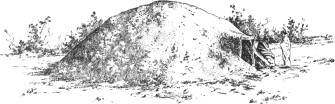
Fig. 115. Exterior lodge.
My explanation of the ceremonial described is by authority of the priest doctor who managed the whole affair and who remained with me five days after the ceremonial for this special purpose. Much persuasion was required to induce him to stay, though he was most anxious that we should make no mistake. He said:
My wife may suffer and I should be near her; a father’s eyes should be the first to look upon his child; it is like sunshine in the father’s heart; the father also watches his little one to see the first signs of understanding, and observes the first steps of his child, that too is a bright light in the father’s heart, but when the little one falls, it strikes the father’s heart hard.
The features of this ceremonial which most surprise the white spectator are its great elaborateness, the number of its participants and its prolongation through many days for the purpose of restoring health to a single member of the tribe.
CONSTRUCTION OF THE MEDICINE LODGE.
A rectangular parallelogram was marked off on the ground, and at each corner was firmly planted a forked post extending 10 feet above the surface, and on these were laid 4 horizontal beams, against which rested poles thickly set at an angle of about 20°, while other poles were placed horizontally across the beams forming a support for the covering. The poles around the sides were planted more in an oval than a circle and formed an interior space of about 35 by 30 feet in diameter. On the east side of the lodge was an entrance supported by stakes and closed with a buffalo robe, and the whole structure was then thickly covered first with boughs, then with sand, giving it the appearance of a small earth mound.
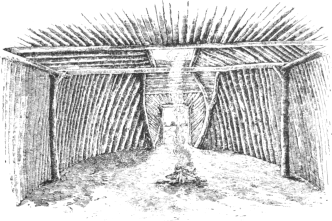
Fig. 116. Interior lodge.
FIRST DAY.
PERSONATORS OF THE GODS.
The theurgist or song-priest arrived at noon on the 12th of October, 1885. Almost immediately after his arrival we boldly entered the medicine lodge, accompanied by our interpreter, Navajo John, and pleaded our cause. The stipulation of the medicine man was that we should make no mistakes and thereby offend the gods, and to avoid mistakes we must hear all of his songs and see all of his medicines, and he at once ordered some youths to prepare a place for our tent near the lodge. During the afternoon of the 12th those who were to take part in the ceremonial received orders and instructions from the song-priest. One man went to collect twigs with which to make twelve rings, each 6 inches in diameter. These rings represented gaming rings, which are not only used by the Navajo, but are thought highly of by the genii of the rocks. (See Fig. 117.) Another man gathered willows with which to make the emblem of the concentration of the four winds. The square was made by dressed willows crossed and left projecting at the corners each one inch beyond the next. The corners were tied together with white cotton cord, and each corner was ornamented with the under tail feather of the eagle. These articles were laid in a niche behind the theurgist, whose permanent seat was on the west side of the lodge facing east. The night ceremony commenced shortly after dark. All those who were to participate were immediate friends and relatives of the invalid excepting the theurgist or song-priest, he being the only one who received direct compensation for his professional services. The cost of such a ceremony is no inconsiderable item. Not only the exorbitant fee of the theurgist must be paid, but the entire assemblage must be fed during the nine days’ ceremonial at the expense of the invalid, assisted by his near relatives.
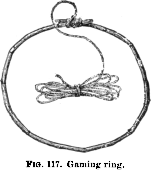
A bright fire burned in the lodge, and shortly after dark the invalid appeared and sat upon a blanket, which was placed in front of the song-priest. Previously, however, three men had prepared themselves to personate the gods—Hasjelti, Hostjoghon, and Hostjobokon—and one to personate the goddess, Hostjoboard. They left the lodge, carrying their masks in their hands, went a short distance away and put on their masks. Then Hasjelti and Hostjoghon returned to the lodge, and Hasjelti, amid hoots, “hu-hoo-hu-huh!” placed the square which he carried over the invalid’s head, and Hostjoghon shook two eagle wands, one in each hand, on each side of the invalid’s head and body, then over his head, meanwhile hooting in his peculiar way, “hu-u-u-u-uh!” He then followed Hasjelti out of the lodge. The men representing Hostjobokon and Hostjoboard came in alternately. Hostjobokon took one of the rings which had been made during the afternoon, and now lay upon the blanket to the right of the invalid, and placed it against the soles of the feet of the invalid, who was sitting with knees drawn up, and then against his knees, palms, breast, each scapula, and top of his head; then over his mouth. While touching the different parts of the body the ring was held with both hands, but when placed to the mouth of the invalid it was taken in the left hand. The ring was made of a reed, the ends of which were secured by a long string wrapped over the ring like a slipnoose. When the ring was placed over the mouth of the invalid the string was pulled and the ring dropped and rolled out of the lodge, the long tail of white cotton yarn, with eagle plume attached to the end, extending far behind. Hostjoboard repeated this ceremony with a second ring, and so did Hostjobokon and Hostjoboard alternately, until the twelve rings were disposed of. Three of the rings were afterward taken to the east, three to the south, three to the west, and three to the north, and deposited at the base of piñon trees. The rings were placed over the invalid’s mouth to give him strength, cause him to talk with one tongue, and to have a good mind and heart. The other portions of the body were touched with them for physical benefit. When the rings had all been rolled out of the lodge Hasjelti entered, followed by Hostjoghon. He passed the square (the concentrated winds) four times over the head of the invalid during his hoots. Hostjoghon then waved his turkey wands about the head and body of the invalid, and the first day’s ceremony was at an end.
SECOND DAY.
DESCRIPTION OF THE SWEAT HOUSES.
The construction of the first sweat house, or tachi, was begun at dawn. Four of these houses were built on four consecutive mornings, each one located about 400 feet distant from the great central medicine lodge, toward the four cardinal points, and all facing to the east. The first one built was east of the lodge. A description of the construction of this particular one will answer for all, but the ceremonies differ in detail.
Four upright poles, forked at the upper ends, were placed at the four cardinal points within an area designated as the base of the house, the forked ends resting against each other, a circular excavation some 6 feet in diameter and 1 foot in depth having first been made. Between the uprights smaller poles were laid; on the poles piñon boughs, sage and Bigelovia Douglasii (a kind of sage brush) were placed as a thatch; all being laid sufficiently compact to prevent the sand placed over the top from sifting through. The doorway, on the east side of the house, was about 2½ feet high and 20 inches wide. Highly polished sticks (the same as those employed in blanket weaving) were used to render the sand covering of the structure smooth. The sweat houses to the east and west had the rainbow painted over them. Those to the north and south were devoid of such decoration, because the song priest seldom completes his medicine in one ceremonial; and he chose to omit the songs which would be required if the bow ornamented the north and south sweat houses. Under the direction of the priest of the sweat house, who received instruction from the song priest, three young men painted the rainbow, one the head and body, another the skirt and legs, while the third painted the bow. The head of this goddess was to the north, the bow extending over the structure. The colors used were made from ground pigments sprinkled on with the thumb and forefinger. Whenever a pinch of the dry paint was taken from the pieces of bark which served as paint cups, the artist breathed upon the hand before sprinkling the paint. This, however, had no religious significance, but was merely to clear the finger and thumb of any superfluous sand. The colors used in decoration were yellow, red, and white from sandstones, black from charcoal, and a grayish blue, formed of white sand and charcoal, with a very small quantity of yellow and red sands. (See Fig. 118.) The decorators were carefully watched by the song priest.
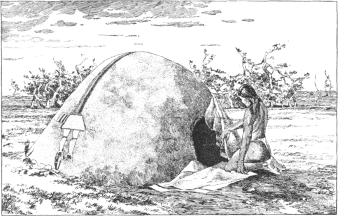
Fig. 118. Sweat house.
Upon the completion of the rainbow the song priest returned to the medicine lodge, but soon reappeared bearing a basket of twelve turkey wands, and these he planted around the base of the sweat house on a line of meal he had previously sprinkled. There was a fire some 20 feet from the house, in which stones were heated. These stones were placed in the sweat house on the south side, and upon them was thrown an armful of white sage and Bigelovia Douglasii. A few pine boughs were laid by the side of the stones for the invalid to sit upon. The entrance to the sweat house was then covered with a black and white striped blanket upon which were placed two large Coçonino buckskins one upon the other, and upon them a double piece of white cotton. The buckskins represented daylight, or the twilight that comes just at the dawn of day. The invalid for whom this ceremony was held took off all his clothing except the breech cloth, and sat on the outside by the entrance of the sweat house amid the din of rattle and song, the theurgist being the only one who had a rattle. The invalid propelled himself into the house feet foremost, the covering of the sweat house having been raised for this purpose. After entering it, he rid himself of his breechcloth and the coverings were immediately dropped. The song continued 5 minutes, when all stopped for a moment and then recommenced.
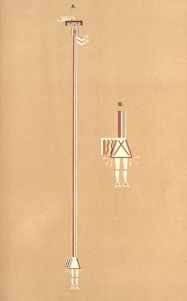
Plate CXII. RAINBOW OVER SWEAT HOUSE. Larger View
During the song the theurgist mixed various herbs in a gourd over which he poured water. After chanting some twenty minutes he advanced to the entrance of the house, taking the medicine gourd with him, and, after pouring some of its contents on the heated stones, took his seat and joined in the chanting. After another twenty minutes Hasjelti and Hostjoghon appeared. A Navajo blanket had previously been placed on the ground at the south side of the entrance. Hasjelti lifted the coverings from the entrance, and the patient, having first donned his breech cloth, came out and sat on the blanket. Hasjelti rubbed the invalid with the horn of a mountain sheep held in the left hand, and in the right hand a piece of hide, about 10 inches long and 4 wide, from between the eyes of the sheep. The hide was held flatly against the palm of the hand, and in this way the god rubbed the breast of the invalid, while he rubbed his back with the horn, occasionally alternating his hands. Hostjoghon put the invalid through the same manipulation. The gods then gave him drink four times from the gourd containing medicine water composed of finely-chopped herbs and water, they having first taken a draught of the mixture. The soles of the feet, palms, breast, back, shoulders, and top of the head of the invalid were touched with medicine water, and the gods suddenly disappeared. The patient arose and bathed himself with the remainder of the medicine water and put on his clothing. The coverings of the entrance, which were gifts to the song priest from the invalid, were gathered together by the song priest and carried by an attendant to the medicine lodge. An attendant erased the rainbow by sweeping his hand from the feet to the head, drawing the sands with him, which were gathered into a blanket and carried to the north and deposited at the base of a piñon tree. The song priest placed the wands in a basket, and thus, preceded by the invalid, carried them in both hands to the medicine lodge singing a low chant. The sweat house was not carelessly torn down, but was taken down after a prescribed form. Four men commenced at the sides toward the cardinal points, and with both hands scraped the sand from the boughs. When this was all removed the boughs were carefully gathered and conveyed to a piñon tree some 50 feet distant and fastened horizontally in its branches about 2 feet above the ground. The heated stones from the interior of the sweat house were laid on the boughs; the upright logs which formed the frame work of the house were carried to a piñon tree, a few feet from the tree in which the boughs and heated stones were placed, and arranged crosswise in the tree, and on these logs corn meal was sprinkled and on the meal a medicine tube (cigarette) was deposited. The tube was about 2 inches long and one third of an inch in diameter, and it contained a ball composed of down from several varieties of small birds, sacred tobacco, and corn pollen. It was an offering to Hasjelti. Meal was sprinkled on the tube. The ground on which the house had stood was smoothed over, the ashes from the fire carefully swept away, and thus all traces of the ceremony were removed. The invalid upon entering the lodge took his seat on the west side facing east. The song priest continued his chant. He took from the meal bag some sacred meal and placed it to the soles of the feet of the invalid and on his palms, knees, breast, back, shoulders, and head. At the conclusion of this ceremony all indulged in a rest for an hour or more. The bark cups which contained the colored sands for decorating were placed in the medicine lodge north of the door.
SWEAT HOUSES AND MASKS.
The deer skins which hang over the entrance of the sweat houses (a different skin being used for each sweat house) must be from animals which have been killed by being smothered. The deer is run down and secured by ropes or otherwise. Corn pollen is then put into the mouth of the deer and the hands are held over the mouth and nostrils until life is extinct. The animal now being placed upon his back, a line is drawn with corn pollen, over the mouth, down the breast and belly to the tail. The line is then drawn from the right hoof to the right foreleg to the breast line. The same is done on the left fore leg and the two hind legs. The knife is then passed over this line and the deer is flayed. Skins procured in this way are worth, among the Navajo, $50 each. Masks are made of skins prepared in the same manner. If made of skins of deer that have been shot the wearer would die of fever.
Buckskin over the entrance to an eastern sweat house denotes dawn; over a southern, denotes red of morning; over a western, sunset; over a northern, night.
PREPARATION OF THE SACRED REEDS (CIGARETTE) AND PRAYER STICKS.
Before noon two sheepskins were spread one upon the other before the song-priest. Upon these was laid a blanket, and on the blanket pieces of cotton. These rugs extended north and south. The theurgist then produced a large medicine bag, from which a reed was selected. The reed was rubbed with a polishing stone, or, more accurately speaking, the polishing stone was rubbed with the reed, as the reed was held in the right hand and rubbed against the stone, which was held in the left. It was then rubbed with finely broken native tobacco, and afterwards was divided into four pieces, the length of each piece being equal to the width of the first three fingers. The reeds were cut with a stone knife some 3½ inches long. An attendant then colored the tubes. The first reed was painted blue, the second black, the third blue, and the fourth black. Through all these, slender sticks of yucca had been run to serve as handles while painting the tubes and also to support the tubes while the paint was drying. The attendant who cut the reeds sat left of the song-priest, facing east; a stone containing the paints was placed to the north of the rug; and upon the end of the stone next to himself the reed-cutter deposited a bit of finely broken tobacco. In cutting the reeds occasionally a bit splintered off; these scraps were placed by the side of the tobacco on the northeast end of the rug.
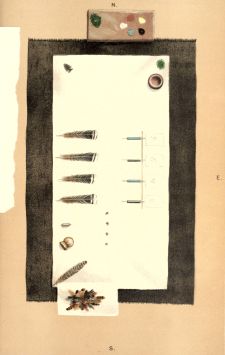
Plate CXIII. BLANKET RUG AND MEDICINE TUBES. Larger View
The attendant who colored the reeds sat facing west; and as each reed was colored it was placed on the rug, the yucca end being laid on a slender stick which ran horizontally. The first reed painted was laid to the north. Three dots were put upon each blue reed to represent eyes and mouth; two lines encircled the black reeds. Four bits of soiled cotton cloth were deposited in line on the east of the rug. The three attendants under the direction of the song-priest took from the medicine bag, first two feathers from the Arctic blue bird (Sialia arctica), which he placed west of the bit of cloth that lay at the north end of the rug; he placed two more of the same feathers below the second piece of cloth; two under the third, and two below the fourth, their tips pointing east. Then upon each of these feathers he placed an under tail-feather of the eagle. The first one was laid on the two feathers at the north end of the rug; again an under tail-feather of the turkey was placed on each pile, beginning with that of the north. Then upon each of these was placed a hair from the beard of the turkey, and to each was added a thread of cotton yarn. During the arrangement of the feathers the tube decorator first selected four bits of black archaic beads, placing a piece on each bit of cloth; then four tiny pieces of white shell beads were laid on the cloths; next four pieces of abalone shell and four pieces of turquois.
In placing the beads he also began at the north end of the rug. An aged attendant, under the direction of the song-priest, plucked downy feathers from several humming-birds and mixed them together into four little balls one-fourth of an inch in diameter and placed them in line running north and south, and south of the line of plume piles. He sprinkled a bit of corn pollen upon each ball; he then placed what the Navajo term a night-owl feather under the balls with its tip pointing to the northeast. (See Pl. CXIII). The young man facing west then filled the colored reeds, beginning with the one on the north end. He put into the hollow reed, first, one of the feather balls, forcing it into the reed with the quill end of the night-owl feather. (A night-owl feather is always used for filling the reeds after the corn is ripe to insure a warm winter; in the spring a plume from the chaparral cock, Geococcyx californianus, is used instead to bring rain). Then a bit of native tobacco was put in. When the reed was thus far completed it was passed to the decorator, who had before him a tiny earthen bowl of water, a crystal, and a small pouch of corn pollen. Holding the crystal in the sunbeam which penetrated through the fire opening in the roof, he thus lighted the cigarettes which were to be offered to the gods. The forefinger was dipped into the bowl of water and then into the corn pollen, and the pollen that adhered to the finger was placed to the top of the tube. After the four tubes were finished they were placed on the pieces of cloth, not, however, until a bit of pollen had been sprinkled on the beads which lay on the cloth. The pollen end of the tube pointed to the east. The four bunches of feathers were then laid on the tubes. The song-priest rolled up each cloth and holding the four parcels with both hands he placed them horizontally across the soles of the feet, knees, palms, breast, back, shoulders, head, and across the mouth of the invalid, and the invalid drew a breath as the parcel touched his lips. He sat to the north of the rug facing east. The sick man then received the parcels from the song-priest and held them so that the ends projected from between the thumbs and forefingers, and repeated a prayer after the theurgist, who sat facing the invalid. The prayer ran thus:
People of the mountains and rocks, I hear you wish to be paid. I give to you food of corn pollen and humming-bird feathers, and I send to you precious stones and tobacco which you must smoke; it has been lighted by the sun’s rays and for this I beg you to give me a good dance; be with me. Earth, I beg you to give me a good dance, and I offer to you food of humming-birds’ plumes and precious stones, and tobacco to smoke lighted by the sun’s rays, to pay for using you for the dance; make a good solid ground for me, that the gods who come to see the dance may be pleased at the ground their people dance upon; make my people healthy and strong of mind and body.
The prayer being offered, the parcels were given by the theurgist to an attendant, who deposited them in line three feet apart along the side of the dancing ground in front of the lodge. Their proper place is immediately on the ground that is to be danced upon, but to prevent them from being trampled on they are laid to one side. The black tubes are offerings to the gods and the blue to the goddesses of the mountains and to the earth.
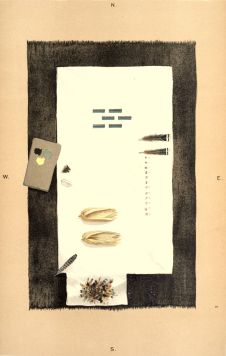
Plate CXIV. BLANKET RUG AND MEDICINE TUBES. Larger View
THIRD DAY.
FIRST CEREMONY.
The construction of the second sweat house began at sunrise and was completed at nine o’clock. Several large rocks were heated and placed in the sweat house and as before white sage and Bigelovia Douglasii were thrown in, the fumes of which were designed as medicine for the sick man. After the invalid entered the sweat house, buckskin blankets, etc., were drawn over the entrance. The song-priest, accompanied by two attendants, sat a little to the south. He sprinkled meal around the west base of the house and over the top from north to south and placed the wands around its base in the manner heretofore described (the twelve wands and medicine used were the special property of the theurgist). The song-priest holding the rattle joined the choir in a chant. To his right were two Navajo jugs filled with water and an Apache basket partly filled with corn meal. A bunch of buckskin bags, one of the small blue medicine tubes, a mountain sheep’s horn, and a piece of undressed hide lay on the meal. Near by was a gourd half filled with water in which meal was sprinkled; near this was a small earthenware vase containing water and finely chopped herbs. At the conclusion of the chant the song-priest passed his rattle to one of the choir and stirred the mixture in the bowl with his forefinger, and after a few remarks to the invalid, who was still in the sweat house, he threw some of the mixture in upon the hot rocks. This was repeated four times, when the song-priest returned to his former position. The sweat-house priest took from his shoulders a Navajo blanket and spread it near the door a little to the right. A call from one of the attendants was a signal for Hasjelti and Hostjoghon to appear. The two men personating these gods were behind a tree south of the sweat house, their bodies, arms, and legs painted white. Foxskins were attached pendent to the backs of their girdles. As the gods approached the sweat house, the patient came out and sat upon the blanket, and Hasjelti took a mountain sheep’s horn, in the right hand and the piece of hide in the other and rubbed the sick man, beginning with the limbs; as he rubbed down each limb, he threw his arms toward the eastern sky and cried “yo-yo!” He also rubbed the head and body, holding the hands on opposite sides of the body. After this rubbing, the sick man drank from the bowl of medicine-water, then arose and bathed himself with the same mixture, the filled gourds being handed to him four times by Hasjelti, each time accompanied with his peculiar hoot. Hostjoghon repeated the same ceremony over the invalid. There was a constant din of rattle and chanting, the gods disappeared, and immediately thereafter the theurgist gathered the twelve wands from the base of the sweat house. He removed the blue reed from the basket and laid it a little to the left of the priest of the sweat house, who in turn handed it to an attendant to be deposited with the wood of the sweat house in a neighboring tree. The invalid proceeded to the medicine lodge followed by the song-priest uttering a low chant. After entering the lodge the invalid took his seat on the west side; the song-priest, still standing, took from a small buckskin bag white powdered material which he rubbed on the soles of the feet, palms, knees, breast, shoulders, and head of the invalid; then taking a pinch of the same material he extended his hand first toward the east and then toward the heavens and the earth. After these attentions he took his accustomed seat in the lodge and joined in conversation with his attendants.
SECOND CEREMONY.
Two sheepskins, a blanket, and cotton cloth were spread one upon the other in front of the song-priest; and from the long reeds that had been first rubbed with a polishing stone, then with tobacco, were cut ten pieces an inch and a quarter long and two pieces 2 inches long. These were colored black and blue, one long piece and five small ones being black, the others blue. While these were being decorated the song-priest and choir sang “My fathers, see, we are getting ready! We do our work well, and you would better go into the house for we are to have rain! Now, mothers, send down rain upon us!” This song was constantly repeated.
The tubes when completed were laid in position to form a dual person. The long black tube representing the body was first placed in position. The long blue tube was then laid by its side and south of it. The pollen end of the tubes pointed to the east. The right black leg was the next placed in position, then the right blue leg, the left black leg and left blue leg. The right black arm, then the right blue arm, the left black arm and the left blue arm, then the black head and the blue head. (See Pl. CXV.)
These tubes were filled with feathers, balls, and tobacco, and tipped with the corn pollen and lighted with the crystal, the black tubes being offerings to the gods, the blue to the goddesses. After they were completed they were placed in position by a second attendant; and while the tubes were being filled the song-priest and choir sang “See, fathers! We fill these with tobacco; it is good; smoke it!” A message was received from the fathers that they would smoke, and, puffing the smoke from their mouths, they would invoke the watering of the earth. They again sang “All you people who live in the rocks, all you who are born among the clouds, we wish you to help us; we give you these offerings that you may have food and a smoke! All women, you who live in the rocks, you who are born among the fog, I pray you come and help us; I want you to come and work over the sick; I offer to you food of humming-birds’ plumes, and tobacco to smoke!” Two bunches of feathers which had been placed to the east side of the rug pointing east were deposited in two corn husks, each husk containing bits of turquoise, black archaic beads, and abalone shell; corn pollen was sprinkled on these. The song-priest then placed the dual body in the husks thus: First, the black body was laid upon the husks to the north, and upon this a pinch of pollen was sprinkled; the blue body was placed in the other husks and pollen sprinkled upon it; then the two right legs (black and blue) were put into the corn husks with the black body; the two left legs were added to the same; the right and left arms and the two heads were placed in the husk with the blue body and corn pollen sprinkled upon them. The husks were closed and held by the song-priest to the soles of the feet, palms, knees, breast, shoulders, back, and top of head of the invalid, who repeated a long prayer after the theurgist, and the parcels were given to an attendant, who carried them some distance from the lodge to the north and placed them in a secluded shady spot upon the ground. Two bits of tobacco were laid upon the ground and upon these the body was placed, the figure in a recumbent position with the arms over the head. The invalid for whom this ceremony was held spared no expense in having the theurgist make the most elaborate explanation to his near relatives of the secrets of the medicine tubes.
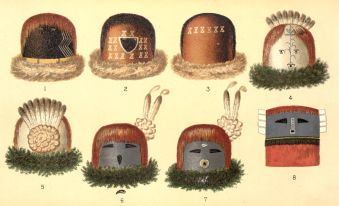
Plate CXV. CEREMONIAL MASKS. Larger View
THIRD CEREMONY.
The theurgist occupied his usual seat, surrounded by his corps of attendants. The man personating Naiyenesgony had his body and limbs painted black. The legs below the knee, the scapula, the breasts, and the arm above the elbow were painted white. His loins were covered with a fine red silk scarf, held by a silver belt; his blue knit stockings were tied with red garters below each knee, and quantities of coral, turquois, and white shell beads ornamented the neck. The man representing Tobaidischinni had his body colored reddish brown, with this figure (the scalp knot) in white on the outside of each leg below the knee, on each arm below the shoulder, each scapula, and on each breast. This design represents the knot of hair cut from the heads of enemies, and the style is still in use by the Navajo. The man wore a red woolen scarf around the loins, caught on by a silver belt, and his neck was profusely ornamented with coral, turquois, and white beads.1 Naiyenesgony and Tobaidischinni left the lodge, carrying with them their masks. (See Pl. CXV, 1, 2, 3.) Bunches of pine boughs, which during the forenoon had been made into wreaths by joining pieces together with yucca in this fashion , were laid across each end of the rug.A


After the two men personating the gods left the lodge the invalid entered and took his seat on the rug with his back to the theurgist. Two attendants dressed him with the wreaths, beginning with the right ankle; a piece was then tied around the calf, thigh, waist, around the chest, right wrist, elbow, upper arm, throat, forehead, then around the upper left arm, elbow, wrist, thigh, left knee, calf, and ankle. Thus the man was literally obscured with a mass of pine. He sat in an upright position with the legs extended and arms falling by his sides. A chant was sung by the song priest, and in a few minutes Naiyenesgony and Tobaidischinni appeared. Naiyenesgony drew his stone knife in front of the invalid over the forehead to the feet, then down the right side and down the back and down the left side. He then began to remove the pine. As each wreath was taken off the clusters were partly separated with the stone knife. Tobaidischinni assisted Naiyenesgony by holding the wreaths while they were being cut.
When all the evergreen had been removed the personators of the gods exclaimed, “Now, my people, we have killed all enemies!” and immediately left the lodge. The song priest placed a small wreath of the pine on the sick man’s head, and holding in his left hand a bunch of eagle plumes, and in his right hand a rattle, he sang the ten songs and prayers, assisted by the choir, that were given by Naiyenesgony and Tobaidischinni to the Navajo to bring health and good fortune. After the pine-bough wreaths had been separated the bits of yucca-strings were picked up by the attendant and handed to Naiyenesgony, who held them over the sick man’s head, after which the bits were again divided with the knife. After the ten songs and prayers had been chanted the invalid left the rug and sat a little to the northeast, of it, with his knees drawn up. The song priest placed two live coals in front of the invalid and sprinkled chopped herbs on the coals, the fumes of which the invalid inhaled. The pines were carried off and placed in the shade of a pine tree, that the disease might not leave the pine and return to the invalid.2
FOURTH CEREMONY.
The personators of Hasjelti and Hostjoghon adorned themselves for the ceremony. Hasjelti wore ordinary clothing and a red scarf, with a silver belt around the waist. Hostjoghon’s body was painted white, and he wore a red woolen scarf around the loins, caught on with a silver belt. A rug, composed of a blanket and a piece of white cotton, was spread in front of the song priest, and the masks of Hasjelti and Hostjoghon placed thereon. (See Pl. CXV, 4, 5, 6.)
Upon the completion of the toilets of the personators of the gods they hurried from the lodge, bearing their masks with them, when an attendant made a cavity immediately in front of the rug 4 inches in diameter, and the song priest sprinkled a circle of meal around the cavity. The invalid entered the lodge and stood on the rug and removed all of his clothing except the breech cloth. He then took his seat facing east, with knees drawn up. A mask of the Hostjobokon, which had been laid upon the rug, was drawn over the invalid’s head. Hasjelti and Hostjoghon appeared at this juncture bearing a pine bough some 5 feet in height. An attendant made gestures over the sick man, holding in his right hand a pinch of sacred meal, which was afterward placed in the cavity. Hasjelti waved the pine bough five times around the invalid and planted it in the cavity, where it was held in place by the gods. Then bending its top, the attendant attached it to the mask over the invalid’s head by a buckskin string which was fastened to the mask. The song priest and choir all the while sang a weird chant. The gods raised the bough, gave their peculiar hoots, and disappeared from the lodge, carrying with them the pine bough with the mask attached to it. In a few minutes they came back with the mask. After the chant the song-priest placed meal on the soles of the invalid’s feet, knees, palms, breast, back, shoulders, and head, and then put some in the cavity, after which the cavity was filled with earth. Two coals were laid in front of the invalid, and upon these the song priest placed finely broken herbs; an attendant sprinkled water on the herbs, and the invalid inhaled the fumes. The cotton cloth was removed from the blanket rug, and the invalid stepped upon the rug and put on his clothing. When the mask was removed from the invalid’s head it drew all fever with it.
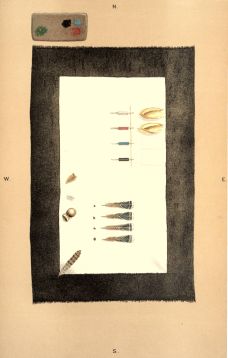
Plate CXVI. BLANKET RUG AND MEDICINE TUBES. Larger View
FOURTH DAY.
FIRST CEREMONY.
The theurgist carried a bowl of water and pine needles, and an attendant bore a gourd of water, a small vase of powdered herbs, and an Apache basket containing corn meal, buckskin bags, horn of the mountain sheep and a piece of hide cut from between the eyes of the animal. The theurgist and attendant took seats to the right of the entrance of the sweat house west of the medicine lodge. This sweat house was decorated with the rainbow. Over the entrance were, first, two striped blankets, one upon the other, a buckskin, and a piece of white cotton. Hot stones, etc., having been previously placed in the sweat house, the sick man entered. The song-priest and four attendants sang, accompanied by the rattle. At the conclusion of the chant Hasjelti and Hostjoghon appeared as on the previous days. Hasjelti lifted the coverings from the entrance and the invalid came out and sat upon a blanket south of the entrance and bathed both his hands in the bowl containing the pine needles and water; he then drank of it and bathed his feet and legs to the thighs, his arms and shoulders, body and face and head, and then emptied the remainder over his back. Hasjelti manipulated the right leg with the sheep’s horn and hide, rubbing the upper part of the leg with the right hand, then the under part with the left; he then rubbed the sides of the leg in the same manner, each time giving a hoot; the arms, chest, head, and face were similarly manipulated. Hostjoghon repeated the hooting every time he changed the position of the hands. Hasjelti, taking the gourd containing the water and corn meal, gave four draughts of it to the invalid, hooting each time the bowl was put to the lips; Hostjoghon did the same. The song and rattle continued. Hasjelti, then put the powdered plants from the small vase to the soles of the feet, knees, palms, breast, back, shoulders, and top of the head of the invalid, hooting each time an application was made; this was repeated by Hostjoghon. The invalid took a sip from the bowl and rubbed the remainder over his body. The song-priest then removed the wands from the base of the sweat house and the coverings from the door; the pine boughs and hot stones were also removed and the invalid preceded the song-priest to the medicine lodge. All the wood of the sweat house was placed in a tree, excepting four small pieces, which were deposited, together with the pine boughs from the interior of the sweat house, in a semicircle formed by the rocks from the sweat house at the base of a piñon tree. A line of meal 2 inches in length running east and west was sprinkled on the apex of the semicircle, and upon this line the black tube was laid. A bit of meal was sprinkled on the tube and a quantity over the pine boughs of this small shrine. Before sprinkling the meal on the top of the medicine tube the attendant waved his hand in a circle from left to right, calling “hooshontko;” meaning: Widespread blessings that come not from spoken words, but come to all, that people may have the blessings of corn pollen, and that tongues may speak with the softness of corn pollen.
SECOND CEREMONY.
A rug was laid in front of the theurgist. Four medicine tubes were placed on the rug, the one to the north end being white; the second one black and red, a white line dividing the two colors; the third one, blue; the fourth, black. The white tube was an offering to Hasjelti; the red, to Zaadoltjaii; the blue, to Hostjoboard; the black, to Naaskiddi, the hunchback. The tubes were filled as before described. These tubes were begun and finished by the same person. (See Pl. CXVI.) When the tubes were finished they were put into corn husks and bits of cotton cloth; tiny pieces of turquois, white shell, abalone, and archaic black beads having first been placed on the husks and cloths. The four turkey plumes with barred tips that lay upon the rug were subsequently placed upon the tubes. These parcels were sprinkled by the song priest with corn pollen, and after closing them he placed them in the hands of the invalid, who sat at the northeast corner of the rug facing east. The song-priest sat before him and said a long prayer, which the invalid repeated. At the close of the prayer an aged attendant received the parcels from the theurgist and placed them to the soles of the feet, palms, etc., of the invalid. They were afterward placed to his mouth and he drew from them a long breath. The old man carried the parcels south over the brow of a hill and deposited them in secluded spots about 4 feet apart, repeating a brief prayer over each one; he then motioned toward the east, south, west, and north, and returned to the lodge. During his absence the choir sang; in the meantime the fire in the lodge was reduced to embers.
THIRD CEREMONY.
About noon a circular bed of sand, some four inches in height and four feet in diameter, was made. Five grains of corn and five pine boughs were laid thereon; four of the grains of corn and four of the boughs were placed to the cardinal points. The fifth and center branch of pine covered most of the circle, its tips pointing to the east. The fifth grain of corn was dropped in the center of the sand bed. (See Pl. CXVII, 1). Four of these pine boughs were cut from the east, south, north, and west sides of one tree. The fifth bough may be taken from any part of the tree. Of the five grains of corn one must be white, one yellow, and one blue, and the other two grains may be of either of these three colors. On this particular occasion there were two blue, two white, and one yellow. These grains were, after the ceremony, dried and ground by the theurgist and placed among his medicines. The boughs and sand absorbed the disease from the invalid, and at the close of the ceremony they were carried to the north and deposited in a shady spot that the sun might not touch and develop the latent disease that had been absorbed by them. The boughs and sand were never afterward to be touched. An Apache basket containing yucca root and water was placed in front of the circle. (See Pl. CXVII 2.) There was a second basket south of it which contained water and a quantity of pine needles sufficiently thick to form a dry surface, and on the top a number of valuable necklaces of coral, turquois, and silver. A square was formed on the edge of the basket with four turkey wands. (See Pl. CXVII 3.) The song-priest with rattle led the choir. The invalid sat to the northeast of the circle; a breechcloth was his only apparel. During the chanting an attendant made suds from the yucca. The basket remained in position; the man stooped over it facing north; his position allowed the sunbeams which came through the fire opening to fall upon the suds. When the basket was a mass of white froth the attendant washed the suds from his hands by pouring a gourd of water over them, after which the song-priest came forward and with corn pollen drew a cross over the suds, which stood firm like the beaten whites of eggs, the arms of the cross pointing to the cardinal points. A circle of the pollen was then made around the edge of the suds. The attendant who prepared the suds touched his right hand to the four points of the pollen lines and in the center and placed it upon the head of the patient who first made a circle embracing the sand and basket and then knelt upon the boughs in the center of the sand.3 A handful of the suds was afterwards put upon his head. The basket was placed near him and he bathed his head thoroughly; the maker of the suds afterwards assisted him in bathing the entire body with the suds, and pieces of yucca were rubbed upon the body. The chant continued through the ceremony and closed just as the remainder of the suds was emptied by the attendant over the invalid’s head. The song priest collected the four wands from the second basket and an attendant gathered the necklaces. A second attendant placed the basket before the invalid who was now sitting in the center of the circle and the first attendant assisted him in bathing the entire body with this mixture; the body was quite covered with the pine needles which had become very soft from soaking. The invalid then returned to his former position at the left of the song priest, and the pine needles and yucca, together with the sands, were carried out and deposited at the base of a piñon tree. The body of the invalid was dried by rubbing with meal.
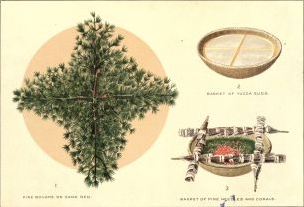
Plate CXVII. 1. PINE BOUGHS. 2, 3. BASKETS. Larger View
FOURTH CEREMONY.
This ceremony commenced almost immediately after the close of the one preceding. The rug was spread over the ground in front of the song priest; four bunches of small sticks were brought in and laid in piles north, south, east, and west of the rug. Four attendants took seats, each before a pile of the wood, and scraped off the bark of their respective heaps; they then cut twelve pieces 2 inches in length, except that cut by the attendant who sat at the north, who made his about 1¼ inches long. Being asked why he cut his shorter than the rest, he replied, “All men are not the same size.” The sticks were sharpened at one end and cut squarely off at the other. In order that all of the sticks should be of the same length they were measured by placing the three first fingers across the stick. The fifth man sat immediately to the right of the song priest, who took a hollow reed from the large medicine bag from which he cut four pieces, each piece the breadth of his three fingers. The reed, which was cut with a stone knife, was afterwards rubbed with native tobacco. Six sticks of each of the piles had their square ends beveled; these represented females. The attendant on the east side of the rug having completed his twelve sticks, painted them white with kaolin finely ground and mixed with water. The flat ends of the sticks were colored black; the beveled parts were painted blue; around the lower end of the blue was a bit of yellow which represented the jaw painted with corn pollen. Three black dots were painted upon the blue for the eyes and mouth; the ground color was laid on with the finger; the other decorations were made with yucca brushes. The man on the south side colored his sticks blue. The tops of six sticks were painted yellow, and six were black. The black ends were those having the beveled spots. These spots were blue with a chin of yellow; they also had the three black dots for eyes and mouth. The man to the west colored his sticks yellow with the flat ends black; the beveled spots of six of them were blue with a yellow chin and three black dots for eyes and mouth. The sticks to the north were colored black; six of them had the beveled parts colored blue with a yellow jaw, and three spots for eyes and mouth; the six sticks that were not beveled had their flat tops painted blue. All these sticks were laid on the rug with their flat ends outward. The attendants who prepared the reeds, each reed being colored for a cardinal point, filled them with balls of humming-bird feathers and tobacco and lighted them with a crystal, when they were touched with corn pollen. The reed for the east was white, the one for the south blue, that for the west yellow, and that for the north black. Each reed was placed at its appropriate point in line with the sticks. (See Pl. CXVIII.) The theurgist then advanced, carrying a basket half filled with corn meal. This he placed in the center of the rug; when kneeling on the edge of the rug and beginning with the white sticks, he placed first the white reed in the east side of the basket, and passing from this point around to the right he placed the six offerings to the gods, then the six to the goddesses. Next taking the blue tube at the south end he placed it to the left of the white line of sticks, leaving sufficient space for the sticks between it and the white tube; all the blue ones were placed in position corresponding to the white. The yellow followed next, and then the black. All were placed with their flat ends or heads pointed to the rim of the basket. The theurgist deposited the basket in the niche on a pile of turkey feather wands, the wands resting upon a large medicine bag. The sticks and scraps left after making the tubes were carried out and deposited without ceremony.
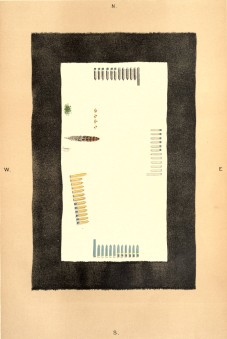
Plate CXVIII. BLANKET RUG AND MEDICINE TUBES AND STICKS. Larger View
FIFTH CEREMONY.
The rug which was spread in front of the song priest was composed of two blankets whose edges met, and upon this rug there were two lines of masks running north and south; the tops of the masks were to the east. There were sixteen masks; those representing the gods cover the head, and those representing goddesses cover the face only. They were decorated with ribbons, plumes, etc. During the forenoon prayers were said over them and meal sprinkled upon them.
SIXTH CEREMONY.
Just after dark those who were to take part in the ceremony prepared to personate one of the Hostjobokon and two of the Hostjoboard (goddesses)—Hostjoghon and Hasjelti. Hostjobokon’s body and limbs were painted, and he wore a mountain lion’s skin doubled lengthwise and fastened around the loins at the back, and a silver belt encircled his waist. Hasjelti wore knee breeches and a shirt of black velvet, ornamented with silver buttons. His face and hands were covered with white kaolin. Hostjoghon’s body was painted white, and he wore a red silk scarf around the loins, caught on with a silver belt. The two men personating the goddesses had their limbs painted white; one wore a black sash around his loins, held by a silver belt. The other had a red woolen scarf and silver belt; gray foxskins hung from the back of the belts. The masks were fastened to their heads before leaving the lodge by means of a string and a lock of their hair, and they were then thrown back from the head. After a little indulgence in their hoots they all left the lodge. The invalid entered the lodge and, stepping upon a piece of white cotton which had been laid diagonally across the rug to the northeast and southwest, took off his clothing. The lodge had now become very crowded. The fire, which had burned brightly during the day, was mere coals. The attendant at the left of the song priest opened the choir with the rattle. The invalid sat upon the cotton cloth. Hasjelti, entering with his favorite hoot amidst rattle and song, placed the square (representing the concentrated winds) four times over the head of the invalid and ran out of the lodge. He entered again and received from the theurgist one of the twelve white sticks which during the forenoon had been placed in the basket. The white stick farthest from the white reed was handed him. This Hasjelti placed to the soles of the feet, knees, palms, etc., of the invalid, amid hoots and antics, after which he dashed out and hurled the stick to the east. One of the Hostjoboard entered and received the next white stick, and after the same ceremony ran out and cast it to the east. Hostjobokon returned and the theurgist handed him the next white stick, when he repeated the ceremony, hurried from the lodge, and threw the stick to the east. Hostjoboard again entered, received a stick, repeated the ceremony, and ran out and threw it to the east; and thus Hostjobokon and Hostjoboard alternated until all the white sticks were disposed of, when Hasjelti reappeared and received from the song priest the white reed (cigarette) and carried it from the lodge. When he returned the theurgist handed him one of the blue sticks, with which he repeated the ceremony and, leaving the lodge, threw it to the south, when Hostjoghon and Hostjoboard alternately disposed of the blue sticks in the same order in which the white sticks had been distributed. The yellow and black sticks were disposed of in a similar manner, Hasjelti officiating with the first stick of each color and the reeds. The yellow sticks were thrown to the west; the black to the north. This was all done amidst the wildest hoots and song of the choir, accompanied by the rattle.