Chapter IV · (continued 5)
Reading edition
Hasjelti again appeared and placed the square four times over the invalid’s head with wild hoots. The four cigarettes to be smoked by the gods were afterwards taken by four of the personators of the gods and deposited in a secluded spot under a tree and sprinkled with corn pollen; after their return Hasjelti again placed the square over the invalid’s head. The song priest placed two live coals in front of the invalid, and upon the coals he put a pinch of tobacco, the smoke of which the invalid inhaled. The attendant poured water over the coals, when they were thrown out at the fire opening of the lodge. The personators of the gods returned to the lodge bearing their masks in their hands. The invalid put on his clothing and took his seat upon the rug, but in a short time he returned to his former seat on the northwest side of the lodge. The sweat-house priest appeared with a large buffalo robe which he spread before the song priest, the head pointing north, and upon this various kinds of calico were laid, carefully folded the length of the robe. There were many yards of this. Upon the calico was spread a fine large buckskin, and on this white muslin; these were all gifts from the invalid to the song priest. The masks were then laid upon the cotton (see Pl. CXV, 7, 8); the mask of Hasjelti was on the east side to the north end, that of Hostjoghon at the south end, and between these the six masks of the Hostjobokon were placed. Immediately under these were the six Hostjoboard, and beneath the latter were the masks of Naiyenesgony and Tobaidischinni at the north end. Three other masks of the Etsethle followed in line running south. After all the masks had been properly arranged the song priest sprinkled them with pollen. Beginning with Hasjelti he sprinkled every mask of the upper line thus: Over the top of the head down the center of the face, then forming a kind of half-circle he passed over the right cheek, then passing his hand backward to the left he sprinkled the same line up the left cheek. The second and third rows had simply a line of the pollen run across the masks, beginning at the north end. The theurgist repeated a prayer during the sprinkling of the pollen, then handed the bag of pollen to the priest of the sweat house, who repeated the sprinkling of the masks, when everyone in the lodge, each having his individual bag of pollen, hastened forward and sprinkled the masks, at the same time offering prayers. The theurgist and priest of the sweat house again sprinkled pollen on the masks as heretofore described.
Baskets and bowls in unlimited quantity, filled with food, were placed in a circle around the fire which now burned brightly. The guests formed into groups and drew the food toward them, but did not touch it for a time. The invalid, song-priest, and his attendants, indulged in a smoke which was social and not religious, the white man’s tobacco being preferred on such occasions. A girl and a boy, about 12 years of age, came into the lodge. The boy was the son of the invalid, the girl his sister’s child. The boy knelt at the northeast end of the rug and the girl at the southeast end. They were richly dressed in Navajo blankets, coral necklaces, etc., and they remained perfectly quiet. The theurgist and his attendants talked together in an undertone, and if the inmates of the lodge spoke at all their voices were scarcely audible. After a time the choir opened, led by the song-priest with his rattle. During the singing the rattle was passed from one to the other. The invalid did not join in the song. The choir continued an hour without cessation, and then rested 2 minutes, and again began and continued for another hour.4 At the conclusion of the singing the song-priest handed to the girl a wand of turkey plumes taken from a basket of feathers which had stood, since the placing of the masks, on the west side of him. Another wand was passed to the boy; and the children received some instructions from the song-priest, who spoke in an undertone, after which, an attendant filled with water from a wicker water jug a basket that had stood throughout the ceremony at the east of the rug.
The song was now resumed, and dipping the wand he held in the basket of water the boy sprinkled the masks, beginning at the north end and east row. The girl repeated the same. The east row of masks was sprinkled twice. When the children sprinkled the middle and west rows, the ceremony was always begun at the north end of each line of masks; again dipping their wands in the water, the boy beginning at the north side and the girl at the south, they sprinkled the inmates of the lodge. The children were very awkward, and were rendered more so by the many scoldings given them for their mistakes. The sprinkling of the people was continued until the water was exhausted. The lodge was also sprinkled at the cardinal points. The song never ceased throughout this ceremony. The girl and boy, taking the position first assigned them, an attendant, with a reed filled with sacred tobacco, puffed the smoke over the masks, smoking each mask separately on the east row; the middle and west rows he hurriedly passed over. While this was being done an attendant took a pinch from all the different foods and placed what he gathered into a basket in the niche behind the song-priest.5 After the masks had been smoked, the attendant puffed the smoke over all the people, beginning on the north side of the lodge. During the smoking the song ceased, but was resumed when the attendant took his seat. At the close of the song sacred meal was mixed with water in a Zuñi pottery bowl. This meal is made of green corn baked in the earth and then ground. During the preparation of this medicine mixture the song-priest sang: “This food is mixed for the people of the rocks! We feed you with this food, O people of the rocks!” The theurgist then dipped his forefinger into the mixture, and running his hand rapidly over the masks from north to south, he touched each mouth; each line was passed over four times. The invalid dipped his three first fingers into the basket, and placing them in his mouth, sucked in his breath with a loud noise. This was repeated four times by the invalid and then by each of the attendants, when all the inmates of the lodge were expected to partake of the mixture. This was done with a prayer for rain, good crops, health, and riches. All hands now participated in the feast.
FOODS BROUGHT INTO THE LODGE.
Da’ttuneilgaij Pats made of wheat flour and fried.
Tab’aestch’lŏnni Corn meal pats wrapped in corn husks and boiled.
Tanā’shkiji Thick mush boiled and stirred with sticks.
Nänesk’ādi Tortillas.
Ta’bijai Four small balls of corn meal wrapped in corn husks and boiled.
Insi’dok’ui Corn bread with salt, made from the new corn, wrapped in corn husks and baked in ashes.
Tkāditin White corn meal mush.
Klesa’hn Corn meal dough in rectangular cakes baked in ashes, hot earth, or sand.
Tsēste’lttsoi Cakes some fourth of an inch thick made from sweet corn mixed with goat’s milk and baked on a hot rock.
Tseste’ Bread made of corn first toasted and then finely ground and made into a thin batter which is baked upon a highly polished lava slab. The crisp gauzy sheets are folded or rolled.
Tki’neshpipizi Small balls of corn meal mush.
To’tkonji Corn meal cakes one-fourth of an inch in thickness of old corn, baked in a pan; they are seasoned with salt.
Älkaandt A bread made from sweet corn which is first parched then ground on a metate and then chewed by women and girls and placed in a mass in a flat basket; this must be either of yellow or white corn, the blue corn is never used for this purpose. A mush is made of either white or yellow corn meal and the former preparation which has become yeast is stirred into the mush. A hole is then dug in the ground (near the fire) and lined with shucks into which the mush is poured, it is then covered with shucks after which earth is thrown over it and a large fire built which burns all night. In the early morning the cinders and coals are removed when the bread is found to be baked.
Tkleheljoe Yeast is prepared for this bread in the same manner as that for the Älkaandt except that the corn is baked instead of parched. The yeast is then mixed with meal into a stiff dough and baked in corn husks, four pats are placed in each package.
Ta’nätnil (beverage) Is the same preparation as the yeast used in the Älkaandt except in this case a drink is made of it by pouring boiling water over it.
Diz’etso Peaches (fresh or dried) stewed. There were also several large bowls of stewed mutton.
Little groups of threes and fives were formed over the floor of the lodge; others less fortunate were closely packed together around the outer edge of the lodge and could procure their food only through the generosity of their neighbors. The girl and boy left the lodge after having partaken of the sacred meal mixture. After refreshment the song-priest lifted each mask with his left hand beginning with Hasjelti, and first extending his right hand, which held a fine large crystal, toward the heavens, he touched the under part of each mask with the crystal; four times he passed over the masks. The choir sang but no rattle was used. The crystal was afterward placed on the rug opposite the basket of feathers. The food vessels were removed and the song continued for a time when the song-priest repeated a long low prayer, after which the song was resumed, and thus the night was consumed in prayer and song over the masks.
FIFTH DAY.
FIRST CEREMONY.
A basket of yucca suds was prepared by an attendant, who cleansed his hands of the suds by pouring a gourd of clear water over them; he then put a handful of the suds upon the head of a man who stood before him, nude with the exception of a breech cloth, after which the man washed his head from a water jug which was held over the head of the bather by the attendant. The bather covered his body with the suds, and the contents of the jug was emptied on the floor of the lodge by the attendant. The man dressed himself in the ordinary cotton clothing with rare beads around his neck, and a leather pouch held by a band of mountain sheep skin over his shoulders; he knelt before a bowl of white kaolin which he spread over his face; he then took his seat between two attendants, the one to the right of him holding a pinch of native tobacco and the one on the left holding corn meal in the palms of the right hands.
At early dawn the buffalo robe at the entrance of the lodge was slightly dropped from the doorway to admit the rays of approaching day. The masks which had been sung and prayed over all night were laid away in the niche behind the song-priest. The little girl who performed the previous night returned to the lodge, but I could not see that she was there for any purpose save to eat some of the remaining food, which had been gathered into two large parcels and left by the old woman who removed the vessels after the feast. A red blanket was laid and upon it a piece of white cotton. A reed five inches in length and twice the diameter of the others heretofore used was prepared. The reed was colored black in the usual manner and filled with a feather ball and tobacco. It was lighted with the crystal and touched with the pollen. Upon the completion of the tube the invalid took his seat on the west side of the rug, the attendant who prepared the tube sitting on the west side; he took from one pouch four white shell beads and from another a turquoise bead; he looped a cord of white cotton yarn some three feet long around the pollen end of the tube and fastened to the loop two wing feathers of the Arctic blue bird, one from the right wing and one from the left, and a tail feather from the same bird and three feathers from a bird of yellow plumage, the right and left wing and tail feather. The five beads were strung on the string, the turquoise being the first put on; these were slipped up the cord and two under tail-feathers and a hair from the beard of the turkey were fastened to the end of the string with a loop similar to that which attached it to the tube. (See Pl. CXIX.) This was the great (cigarette) offering to Hasjelti and must be placed in a canyon near a spring, for all birds gather at the waters. This was offered that the song-priest might have his prayers passed straight over the line of song. This offering secures the presence of this most valued god and so fills the mind of the song-priest with song and prayer that it comes forth without hesitation and without thought, so that he may never have to think for his words. A small quantity of each variety of sand used in decorating was placed on a husk with a little tobacco, and on these a pinch of corn pollen; the tube was then laid on the husk and the string and feathers carefully placed. Two additional feathers, the under tail of the eagle and turkey, were laid on the husk. A blue feather was dipped in water, then in pollen, and rubbed twice over these feathers; an attendant folded the parcel and the song-priest received it and touched it to the soles of the feet, knees, palms, breast, and back and mouth of the invalid; he then put a pinch of the pollen into the invalid’s mouth, and a pinch on the top of the head; he placed the folded husk in the invalid’s hand, and stood in front of him and whispered a long prayer which the invalid repeated after him. The manner of holding the husk has been previously described. The man with painted face received the husk from the theurgist, who returned to his seat and at once opened the chant with the rattle. At the close of the chant the holder of the husk touched the soles of the feet, palms, etc., of the invalid with it and left the lodge. This precious parcel was taken three miles distant and deposited in a canyon near a spring where there is a luxuriant growth of reeds. Prayers were offered by the depositor for health, rain, food, and good fortune to all. Only the theurgist and his attendants and a few of the near relatives of the invalid were present at this ceremony.
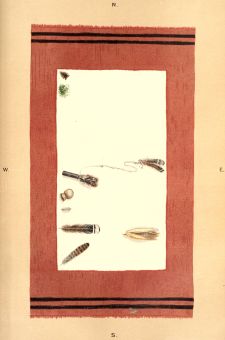
Plate CXIX. BLANKET RUG AND MEDICINE TUBE. Larger View
SECOND CEREMONY.
The sweat-house priest preceded the invalid and song-priest, the latter carrying his medicine basket, wands, etc. The hot stones and pine boughs were put into the sweat house; meal was sprinkled around the west base and the wands deposited, as before described, by the song-priest. Three white and black striped blankets were placed over the entrance, one upon the other, and upon these were a buckskin and several folds of white muslin. An attendant brought a large medicine bowl half filled with pine needles; water was poured upon these; a small earthen bowl and a gourd containing water were placed before the song-priest, who put into the bowl chopped sage, over which he sprinkled dried foods reduced to powder; a small quantity of meal was also sprinkled into the gourd and bowl. The song then began. A small pine bough was laid to the right of the entrance of the sweat house. The opening of the song was a call upon the gods to impart to the medicine power to complete the cure of the invalid and to make all people well, and to have a wet and good ground all over the earth. This song is specially addressed to Toneennili, the water sprinkler.
Hasjelti and Hostjoghon arrived just as the sick man emerged from the sweat house. The invalid bathed himself from the bowl of pine needles and water. Taking the sheep’s horn in the left hand and a piece of hide in the right, Hasjelti pressed the invalid’s body as before described. The god was requested by the priest of the sweat house to pay special attention to the rubbing of the head of the invalid. The small gourd was handed to Hasjelti, who gave four drafts of its contents to the invalid. Hasjelti touched the soles of the feet, palms, etc., of the invalid with medicine water from the bowl. The gods then suddenly disappeared. On this occasion Hostjoghon took no part in administering the medicine. The invalid, after putting on his clothing, proceeded to the lodge, followed by the song-priest. The sweat house was razed as usual, and the pine boughs and stones were placed to the north of the house in a small piñon tree; the logs of the house were deposited on the ground a few feet from the tree. A line of meal the length of the medicine tube was sprinkled on the logs and the tube laid thereon. Meal was sprinkled over the tube and logs.
THIRD CEREMONY.
The first sand painting occurred on October 16; it was begun in the early forenoon and completed at sundown. Common yellowish sand was brought in blankets. This formed the ground color for the painting. It was laid to form a square 3 inches in depth and 4 feet in diameter. Upon this three figures were painted after the manner described of the painting of the rainbow over the sweat house. Nine turkey wands were placed on the south, west, and north sides of the square, and a line of meal with four foot-marks extended from near the entrance of the lodge to the painting. (See Pl. CXX.)
Hasjelti stands to the north end in the illustration, holding the emblem of the concentrated winds. The square is ornamented at the corners with eagle plumes, tied on with cotton cord; an eagle plume is attached to the head of Hasjelti with cotton cord. The upper horizontal lines on the face denote clouds; the perpendicular lines denote rain; the lower horizontal and perpendicular lines denote the first vegetation used by man. Hasjelti’s chin is covered with corn pollen, the head is surrounded with red sunlight, the red cross lines on the blue denote larynx; he wears ear rings of turquoise, fringed leggings of white buckskin, and beaded moccasins tied on with cotton cord. The figure to the south end is Hostjoghon; he too has the eagle plume on the head, which is encircled with red sunshine. His earrings are of turquoise; he has fox-skin ribbons attached to the wrists; these are highly ornamented at the loose ends with beaded pendants attached by cotton strings; he carries wild turkey and eagle feather wands, brightened with red, blue, and yellow sunbeams. The center figure is one of the Hostjobokon, and upon this figure the invalid for whom the ceremonial is held sits. The four footprints are made of meal. These the invalid steps upon as he advances and takes his seat, with knees drawn up, upon the central figure. After dark the invalid walked over the line of meal, being careful to step upon the footprints in order that his mental and moral qualities might be strengthened. The invalid removed his clothing immediately after entering the lodge; he had downy breast feathers of the eagle attached to the scalp lock with white cotton cord; he advanced to the painting and took his seat upon the central figure. An attendant followed him, and with his right hand swept the line of meal after the invalid, removing all traces of it. The entrance of the invalid into the lodge was a signal for the song-priest to open the chant with the rattle. Hasjelti and Hostjoghon bounded into the lodge hooting wildly. The former carried the square (the concentrated winds), which he placed over the sick man’s head. Hostjoghon carried a turkey wand in each hand, and these he waved over the invalid’s head and hooted; this was repeated four times, and each time the gods ran out of the lodge. Hasjelti wore a velvet dress, but Hostjoghon’s body was nude, painted white. This wild, weird ceremony over, the sick man arose and the song-priest gathered the turkey wands from around the painting, while an attendant erased it by rubbing his hands over the sand to the center. The sands were gathered into a blanket and carried out of the lodge and deposited some distance away from the lodge, where the sun could not generate the germ of the disease. The sand is never touched by any one when once carried out, though before the paintings are erased the people clamor to touch them, and then rub their hands over their own bodies that they may be cured of any malady. The invalid, after putting on his clothes, returned to his family lodge. A group then gathered around the spot where the paintings had been and joined in a weird chant, which closed the fifth day’s ceremony.
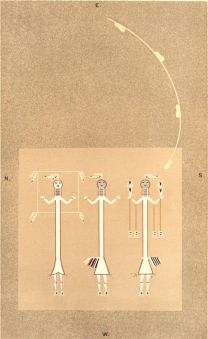
Plate CXX. FIRST SAND PAINTING. Larger View
SIXTH DAY.
Preparations for a great sand painting began at daylight. Sand for the ground work was carried in in blankets; the fire which had burned through the previous ceremonies was first removed and all traces of it covered with sand. As the artists were to begin the painting with the center of the picture only a portion of the ground color was laid at first, in order to enable them to work with greater facility. While the ground color was being laid a man sat on one side of the lodge grinding with a metate and mixing the colors. A quantity of coals were taken from the exhausted fire from which to prepare black paint. A small quantity of red sand was mixed with the charcoal to give it body or weight. The colors used in this sand painting have all been referred to in the description of the rainbow over the sweat house. After the central portion of the ground work for the painting was smoothed off a Jerusalem cross was drawn in black. The eye usually was the only guide for drawing lines, though on two occasions a weaving stick was used. As a rule four artists were employed, one beginning at each point of the cross. Each arm of the cross was completed by the artist who began the work. For illustration of painting see Pl. CXXI.
The black cross-bars in the illustration denote pine logs; the white lines the froth of the water; the yellow, vegetable debris gathered by the logs; the blue and red lines, sunbeams. The blue spot in center of cross denotes water. There are four Hostjobokon with their wives the Hostjoboard; each couple sit upon one of the cross arms of the logs. These gods carry in their right hands a rattle, and in their left sprigs of piñon; the wives or goddesses carry piñon sprigs in both hands; the rattle brings male rains, and the piñon, carried by the women, female rains; these rains meet upon the earth, conceive and bring forth all vegetation. Their heads are ornamented with eagle plumes tied on with cotton cord. (Note: In all cases the round head denotes male and octangular head female.) The gods have also a bunch of night-owl feathers and eagle plumes on the left side of the head; both male and female wear turquois earrings and necklaces of the same. The larynx is represented by the parallel lines across the blue. A line of sunlight encircles the head of both males and females. The white spots on the side of the females’ heads represent the ears. The arms of the goddesses are covered with corn pollen, and long ribbons of fox skins are attached to the wrists, as shown on painting number one. All wear beaded moccasins tied on with cotton cord. Their chins are covered with corn pollen and red sunlight surrounds the body. The skirts only have an additional line of blue sunlight. Hasjelti is to the east of the painting. He carries a squirrel skin filled with tobacco. His shirt is white cotton and very elastic. The leggings are of white deer skin fringed, and the moccasins are similar to the others. His head is ornamented with an eagle’s tail, and to the tip of each plume there is a fluffy feather from the breast of the eagle. A bunch of night-owl feathers is on either side of the eagle tail where it is attached to the head. The horizontal and perpendicular lines on the face were referred to in the description of the first sand painting. The projection on the right of the throat is a fox skin. Hostjoghon’s headdress is similar to that of Hasjelti’s. Two strips of beaver skin tipped with six quills of the porcupine are attached to the right of the throat. The four colored stars on the body are ornaments of beads. The shirt of this god is invisible; the dark is the dark of the body. Hostjoghon carries a staff colored black from a charred plant. The Navajo paint their bodies with the same plant. The top of the staff is ornamented with a turkey’s tail tied to the staff with white cotton cord; eagle and turkey plumes are alternately attached to the staff with a cord.
The Naaskiddi are to the north and south of the painting; they carry staffs of lightning ornamented with eagle plumes and sunbeams. Their bodies are nude except the loin skirt; their leggings and moccasins are the same as the others. The hunch upon the back is a black cloud, and the three groups of white lines denote corn and other seeds of vegetation. Five eagle plumes are attached to the cloud backs (eagles live with the clouds); the body is surrounded with sunlight; the lines of red and blue which border the bunch upon the back denote sunbeams penetrating storm clouds. The black circle zigzagged with white around the head is a cloud basket filled with corn and seeds of grass. On either side of the head are five feathers of the red shafted flicker (Colaptes cafer); a fox skin is attached to the right side of the throat; the mountain sheep horns are tipped with the under tail feathers of the eagle, tied on with cotton cord. The horns are filled with clouds. The rainbow goddess, upon which these gods often travel, completes the picture.
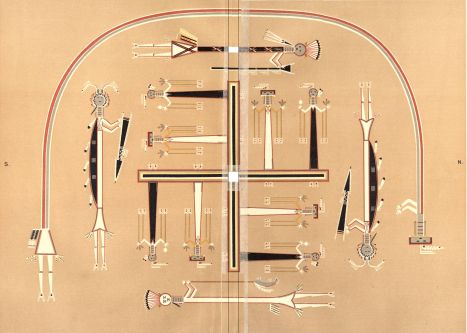
Plate CXXI. SECOND SAND PAINTING. Larger View
Upon completion of the painting the song-priest, who stood to the east of it holding in his hand a bag of sacred meal, stepped carefully between the figures, sprinkling pollen upon the feet and heart of each. He then sprinkled a thread of pollen up each cheek and down the middle of the face of the figures, afterwards extending his right hand toward the east. The face of the encircling rainbow goddess was also sprinkled. The song-priest placed the sacred wands around the rainbow, commencing on the west side of the painting, and repeated a prayer, pointing his finger to the head of each figure. He also placed a small gourd of medicine water in the hands of the rainbow goddess and laid a small cedar twig on the gourd. The invalid upon entering the lodge was handed an Apache basket containing sacred meal, which he sprinkled over the painting and placed the basket near the feet of the rainbow goddesses; the song-priest and choir sang to the accompaniment of the rattle. A short time after the entrance of the invalid Hasjelti appeared, and taking the evergreen from the gourd dipped it into the medicine water and sprinkled the feet, heart, and heads of the sand figures, after which the invalid sat in the center of the cross. Hasjelti gave him a sip of the sacred water from the gourd and returned the gourd to its place; then he touched the feet, heart, and head of each figure successively with his right hand, each time touching the corresponding parts of the body of the invalid. Every time Hasjelti touched the invalid he gave a weird hoot. After he had been touched with sands from all the paintings the theurgist, selecting a few live coals from a small fire which had been kept burning near the door, threw them in front of the invalid, who still retained his seat in the center of the painting. The theurgist placed herbs, which he took from a buckskin bag, on the coals from which a very pleasant aroma arose. An attendant sprinkled water on the coals and a moment after threw them out of the fire opening. The song-priest gathered the wands from around the edge of the painting and four attendants began to erase it by scraping the sands from the cardinal points to the center. Again the people hurried to take sand from the hearts, heads, and limbs of the figures to rub upon themselves. The sands were gathered into a blanket and deposited at the base of a piñon tree about one hundred yards north of the lodge. A chant closed the ceremony.
SEVENTH DAY.
The first business of the day was the preparation of an elaborate sand picture, and though the artists worked industriously from dawn, it was not completed until after 3 o’clock. The paint grinder was kept busy to supply the artists. It was observed that in drawing some of the lines the artists used a string of stretched yarn instead of the weaving stick. When five of the figures had been completed, six young men came into the lodge, removed their clothes, and whitened their bodies and limbs with kaolin; they then left the lodge to solicit food from the people, who were now quite thickly gathered over the mesa to witness the closing ceremonies. The mesa top for a mile around was crowded with Indians, horses, sheep, and hogans (lodges); groups of 3 to 20 Indians could be seen here and there gambling, while foot and horse racing were features of special interest. Indeed, the people generally were enjoying themselves at the expense of the invalid. The rainbow goddess, Nattsilit, surrounding the painting, was about 25 feet in length. Upon the completion of the painting the song-priest sprinkled the figures with pollen as before described and planted the feather wands around the pictures.
In the illustration of this painting, Pl. CXXIII, Hasjelti will be recognized as the leader. He carries a fawn skin filled with sacred meal; the spots on the skin are seven and in the form of a great bear. The fawn skin indicates him as the chief of all game. It was Hasjelti who created game. The first six figures following Hasjelti are the Ethsethle. The next six figures are their wives. Toneennili, the water sprinkler (to, water, and yonily, to sprinkle), follows carrying a water jug, from which he sprinkles the earth. The Ethsethle wear leggings of corn pollen and the forearms of the gods are covered with pollen. Their wives have their arms and bodies covered with the same. The skirts of the Ethsethle are elaborately ornamented and their pouches at their sides are decorated with many beads, feathers, and fringes. The gods are walking upon black clouds and mist (the yellow denoting mist), the women upon blue clouds and mist.
During the ceremony an Apache basket containing meal was brought in and placed at the feet of the rainbow goddess. The invalid entered the lodge, which had become quite filled with privileged spectators, and receiving the basket of meal, sprinkled the figures from left to right; he then removed all his clothing except his breech cloth and stood east of the painting. Hostjoghon stepped to the head of the rainbow goddess and taking the small gourd of medicine water dipped the cedar twig into the water and sprinkled the figures, then touched the twig to the feet, heart, and head of each figure, commencing at the male figure to the north and passing south, then beginning with the female figures to the north and passing south. The invalid took his seat in the center of the painting with his knees drawn to his chin. Hostjoghon held the medicine gourd over each figure and passed it to the invalid, who took four sips, Hostjoghon hooting each time he passed the gourd to the invalid. After returning the gourd and twig to their former position he placed the palms of his hands to the feet and head of each figure and then placed his palms on the corresponding parts of the invalid’s body, and pressed his head several times between his hands. After touching any part of the invalid, Hostjoghon threw his hands upward and gave one of his characteristic hoots. The song-priest placed coals in front of the invalid and herbs upon them, as he had done the day before, and then retired. The coals were afterwards thrown out of the fire opening and the crowd rushed to the painting to rub their bodies with the sand. The painting was obliterated in the usual manner and the sand carried out and deposited at the base of a piñon tree some 200 yards from the lodge.
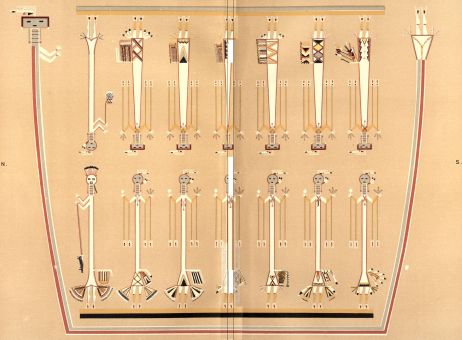
Plate CXXII. THIRD SAND PAINTING. Larger View
EIGHTH DAY.
The grinding of the paint began at daylight, and just at sunrise the artists commenced their work. When any mistake occurred, which was very seldom, it was obliterated by sifting the ground color over it. Each artist endeavored to finish his special design first, and there was considerable betting as to who would succeed. The rapidity with which these paints are handled is quite remarkable, particularly as most of the lines are drawn entirely by the eye. After the completion of the painting, each figure being three and a half feet long, corn pollen was sprinkled over the whole by the song priest. (See illustration, Pl. CXXIII.)
The corn stalk in the picture signifies the main subsistence of life; the square base and triangle are clouds, and the three white lines at the base of the corn stalk denote the roots of the corn. The figures of this picture are each 3½ feet in length. These are the Zenichi (people of the white rock with a red streak through it) and their wives. Their homes are high in the canyon wall. The black parallelogram to the west of the painting designates a red streak in the rock in which are their homes. The delicate white lines indicate their houses, which are in the interior or depths of the rock, and can not be seen from the surface. This canyon wall is located north of the Ute Mountain. These people of the rocks move in the air like birds. The red portion of the bodies of the Zenichi denote red corn; the black portion black clouds. The red half of the face represents also the red corn; the blue of the bodies of the others denote vegetation in general, and the yellow, pollen of all vegetation. The zigzag lines of the bodies is lightning; the black lines around the head, zigzagged with white, are cloud baskets that hold red corn, which is stacked in pyramidal form and capped with three eagle plumes. There are five feathers of the red and black shafted flicker (Colapteo cafer) on either side of the head. A lightning bow is held in the left hand, the right holds a rattle ornamented with feathers. The females carry in their hands decorated baskets and sprigs of piñon, and they wear white leggings and beaded moccasins. The Zenichi never dance. These gods are also called Zaadoljaii, meaning rough mouth, or anything that protrudes roughly from the mouth. (The mouth and eyes of these gods protrude.) The rainbow goddess is represented at the north and south end of the painting. The corn stalk has two ears of corn, while the original stalk had 12 ears. Two of these ears the gods gave to the younger brother of the Tolchini when they commanded him to return to the Navajo and instruct them how to represent the gods in sand painting and in masks. The four corner figures will be recognized as the Naashiddi (hunchback, or mountain sheep).
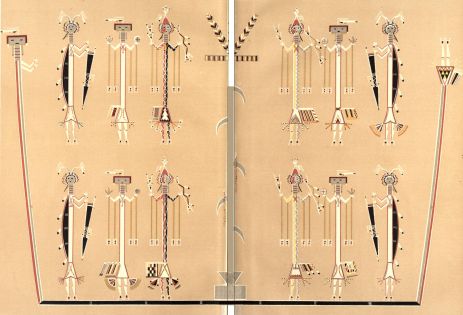
Plate CXXIII. FOURTH SAND PAINTING. Larger View
During the ceremony Hasjelti, dressed in black velvet ornamented with silver, and Hostjoboard, with her nude body painted white and with silk scarf around the loins caught on with silver belt, left the lodge to gather the children upon the mesa for the purpose of initiating them; but the children had already been summoned by men who rode over the mesa on horseback, visiting every hogan to see that all the children were brought for initiation. A buffalo robe was spread at the end of the avenue which extended from the medicine lodge some three hundred yards. The head of the robe was to the east; at the end of the robe blankets were spread in a kind of semicircle. Most of the children were accompanied by their mothers. The boys were stripped of their clothing and sat upon the buffalo robe. The head of the line being to the north, they all faced east with their feet stretched out. Their arms hung by their sides and their heads were bent forward. The girls sat in line upon the blanket in company with their mothers and the mothers of the boys. It is entirely a matter of choice whether or not a mother accompanies her child or takes any part in the ceremony. The girls also sat like the boys, their heads bent forward. Their heads were bent down that they might not look upon the gods until they had been initiated. Up to this time they were supposed never to have had a close view of the masks or to have inspected anything pertaining to their religious ceremonies. The children ranged from five to ten years of age. At this particular ceremony nine boys and six girls were initiated. When the children were all in position, Hasjelti, carrying a fawn skin containing sacred meal, and Hostjoboard, carrying two needles of the Spanish bayonet, stood in front of the children. The boy at the head of the line was led out and stood facing the east. Hasjelti, with the sacred meal, formed a cross on his breast, at the same time giving his peculiar hoot. Hostjoboard struck him upon the breast, first with the needles held in her right hand and then with those held in the left. Hasjelti then turned the boy toward the right until he faced west and made a cross with meal upon his back, when Hostjoboard struck him twice on the back with the needles. He was again turned to face the east, when both arms were extended and brought together. Hasjelti made a cross over the arms and then over the knees. Each time the boy was crossed with the meal Hostjoboard struck the spot first with the needles in the right hand and then with those in the left, after which the boy returned to his seat. The cross denotes the scalp knot. Most of the boys advanced quite bravely to receive the chastisement. I noticed but one who seemed very nervous, and with great difficulty he kept back the tears. The boys’ ceremony over, the gods approached the girls, beginning at the end of the line next to the boys. Hasjelti marked a line of meal on each side of the foot of the girl, when Hostjoboard, now holding two ears of yellow corn wrapped with piñon twigs, placed them to the soles of the girl’s feet and Hasjelti drew a line of meal on each hand; after which Hostjoboard placed the ears of corn to the palms of the hands, she holding the corn in her palms and pressing it to the palms of the girl’s hands. Hasjelti formed a cross on the breast with the meal and Hostjoboard pressed the two ears of corn to the breast; a cross was made on the back and the two ears of corn pressed to the back. Hasjelti, with his right hand, then drew a line on the girl’s left shoulder, and with his left hand a line on the girl’s right shoulder, the corn being pressed to the shoulders in the manner described. Two lines of meal were run over the forehead back to the top of the head, and the two ears of corn pressed to the top of head. The boys were nude but the girls were gayly dressed in blankets, jewelry, etc. At the close of this ceremony the representatives of the gods removed their masks and called upon the children to raise their heads. The amazement depicted upon the faces of the children when they discovered their own people and not gods afforded much amusement to the spectators. The masks were laid upon a blanket and the girls and boys were commanded to look upon them. Hostjoboard placed her mask upon the face of each boy and girl and woman in the line, beginning at the north end of the line, giving a hoot each time the mask was placed upon anyone. Great care was taken that the mask should be so arranged upon the face that the eyes might look directly through the eyeholes, for should any blunder occur the sight of at least one eye would be lost. It is scarcely on before it is removed. After the masks had been placed on all the faces it was laid beside Hasjelti’s. The man personating Hasjelti sprinkled his mask and then Hostjoboard’s with pollen, and the man personating Hostjoboard sprinkled Hasjelti’s mask and then his own with pollen. The boy to the north end of the line was called out and from the pollen bag took a pinch of pollen and sprinkled first the mask of Hasjelti and then Hostioboard’s. This was repeated by each boy, girl, and woman in the line. In approaching the masks they always pass back of the line around to the north side and then step in front of the masks. The mask is sprinkled in this wise: A line of pollen is run from the top of the head down to the mouth; passing around to the right the line is drawn upward over the left cheek; the hand continues to move outside of the mask to a point below the right cheek, then up the right cheek. The younger children’s hands were guided by the representatives of the gods. It would be a great fatality to sprinkle a drop of meal over the eye holes; the individual committing such an error would become blind at least in one eye. Great care is also taken that the line is run up the cheek, for if it was run down not only would vegetation be stunted, but the lives of the people would become so, as all people and things should aim upward not downward. The line running down through the center of the face calls upon the gods above to send down rain upon the earth and health to all people. Two or three children started through ignorance to run the meal down one of the cheeks; they were instantly stopped by Hasjelti, but not until the people looking on had expressed great horror. All in the line having gone through this ceremony the crowd of spectators sprinkled the masks in the same manner. I was requested to sprinkle them, and at the same time was specially instructed to run the lines up the cheeks. This closed the ceremony of initiation. The boys were then permitted to go around at will and look at the masks and enter the lodge and view the sand painting. Hasjelti and Hostjoboard returned to the lodge, carrying their masks in their hands.
About an hour after the ceremony of the initiation of the children a large buffalo robe was spread on the avenue with his head to the east, around which a circle of some hundred feet in diameter was formed by horsemen and pedestrians who gathered, eager to witness the outdoot ceremony. The theurgist and invalid were seated outside of the lodge, south of the entrance. The dieties personated in this occasion were the gods Hasjelti and Taadotjaii, and the goddess Tebahdi. Haskjelti wore black velvet and silver ornaments, with red silk scarf around the waist. Taadotjaii was nude, his body being painted a reddish color. The limbs and body were zigzagged with white, representing lightning and downy breast feathers of the eagle, and in his right hand a gourd rattle devoid of ornamentation. Yebahdi wore the ordinary squaw’s dress and moccasins, with many silver ornaments, and a large blanket around her shoulders touching the ground. Hasjelti approached dancing, and sprinkled meal over the buffalo robe, and the invalid stood upon the robe. Hasjelti, followed by Zaadoltjaii, again entered the circle and sprinkled meal upon the robe. The goddess Yebahdi following, stood within the circle some 20 feet from the robe on the east side and facing west. Hasjelti, amidst hoots and anties, sprinkled meal upon the invalid, throwing both his hands upward. Immediately Zaadoltjaii, with arrow in the left hand and rattle int he right, threw both hands up over the invalid amidst hoots and antics. They then passed to Yebahdi, who holds with both hands a basket containing the two yellow ears of corn wrapped with pine twigs that were used in the children’s ceremony, and indulged in similar antics over the goddess. As each representative of the gods threw up his hands she raised her basket high above and in front of her head. Hasjelti, together with Zaadoltjaii and Yebahdi, then passed around within the circle to the other three points of the compass. At each point Yebahdi took her position about 20 feet from the buffalo robe, when Hasjelti and Zaadoltjhaii repeated their performance over the invalid and then over Yebahdi each time she elevated the basket. The invalid then entered the lodge, followed by the representatives of the gods, who were careful to remove their masks before going in. The invalid sat on the cornstalk in the center of the sand painting, facing east. Zaadoltjaii stepped upon the painting, and taking the little medicine gourd from the hands of the rainbow goddess, dipped the cedar twig into the medicine water and sprinkled the painting, beginning at the south side. Zaadoltjaii gave the invalid a draft from the gourd, and waving the gourd from left to right formed a circle, amidst the wildest cries. He gave three more drafts to the invalid, each time waving the gourd around the invalid with a wave toward the east. He then placed the palm of his hand over the feet of all the figures, beginning with the figure at the south end, west side; running up that line he began with the figure on the north end east side, running down that line; he then placed his hands to the soles of the feet of the invalid, hooting twice; then the heart of the invalid was touched in the same manner with the palm of the right hand, the left hand being placed to his back. The body was pressed in this way four times amid loud cries. This was repeated upon the invalid. After touching each figure of the painting, the right hand was placed to the forehead of the invalid and the left hand to the back of the head, and the head pressed in this way on all sides. The song-priest put live coals before the invalid and upon them sprinkled tobacco and water, the fumes of which the invalid inhaled. An attendant then threw the coals out of the fire opening, and the song-priest gathered the twelve turkey wands from around the painting while the inmates of the lodge hastened forward to press their hands upon what remained of the figures, then drawing a breath from their hands, they pressed them upon their bodies that they might be cured of any infirmities, moral or physical, after which four men gathered at the points of the compass and swept the sand to the center of the painting, and placing it in a blanket deposited it a short distance from the lodge.
NINTH DAY.
FIRST CEREMONY.
The final decoration of masks with ribbons, plumes, etc., began at sunrise and consumed most of the morning. About noon two sticks 1 inch in diameter and 6 inches long were colored; one, of piñon, was painted black, the other, of cedar, was colored red. Three medicine tubes were made, one black, one red, and one blue. These were placed in a basket half filled with meal; the basket stood in the niche behind the song-priest. Two men personated Naiyenesgony and Tobaidischinni. Naiyenesgony’s body was painted black (from the embers of a burnt weed of which specimens were procured) and on the outside of his legs below the knee, on the upper arms, breast and scapula were bows in white but without arrows. Tobaidischinni had his body painted with the scalp knot in white in relative positions to the bows on Naiyenesgony. A third man, personating the turquois hermaphrodite Ahsonnutli, wore the usual squaw’s dress with a blanket fastened over the shoulders reaching to the ground. Her mask was blue. The three left the lodge carrying their masks in their hands. Passing some distance down the avenue to the east they put on their masks and returned to the lodge. A buffalo robe had been spread in front of the lodge. Just as the maskers returned, the invalid, wrapped in a fine red Navajo blanket and bearing a basket of sacred meal, stepped upon the robe; he had before stood in front of the lodge by the side of the song-priest. The many spectators on foot and horseback clad in their rich blankets formed a brilliant surrounding for this ceremony, which took place just at the setting of the son. Naiyenesgony carried in his right hand a large lava celt which was painted white. Tobaidischinni followed next carrying in his right hand the black wood stick which had been prepared in the morning, and in his left hand the red stick. Ahsonnutli followed with bow and arrow in the left hand and an arrow in the right with a quiver thrown over the shoulder.
Naiyenesgony drew so close to the invalid that their faces almost touched and pointed his celt toward the invalid. Tobaidischinni then approached and in the same manner pointed the sticks toward him, after which he was approached by Ahsonnutli with her bow and arrows. This was repeated on the south, west, and north sides of the invalid; each time the invalid partially turned his arm, shoulder, and back to sprinkle meal upon the gods. The gods then rushed to the entrance of the medicine lodge repeating the ceremony there, when they hurried to the south side of the lodge (the invalid having returned to the lodge; the buffalo robe was carried in by an attendant). The gods went from the south side of the lodge to the west and then to the north performing the same ceremony. As the invalid had spent many days in the lodge and the disease at each day’s ceremony exuded from his body, it was deemed necessary that these gods should go to the four points of the compass and draw the disease from the lodge. When they entered the lodge the buffalo robe had been spread in front of the song-priest with its head north. Upon this robe each god knelt on his left knee, Naiyenesgony on the north end of the robe, Ahsonnutli on the south end, and Tobaidischinni between them, all facing east. The song-priest, followed by the invalid, advanced to the front of the line carrying the basket containing the medicine tubes. He sprinkled Naiyenesgony with corn pollen, passing it up the right arm over the head and down the left arm to the hand. He placed the black tube in the palm, of the left hand of the god, the priest chanting all the while a prayer. The red tube was given with the same ceremony to Tobaidischinni, and the blue tube with the same ceremony to Ahsonnutli. The quiver was removed from Ahsonnutli before she knelt. The song-priest, kneeling in front of Naiyenesgony, repeated a long litany with responses by the invalid, when the gods left the lodge led by Naiyenesgony who deposited his tube and stick in a piñon tree, Tobaidischinni depositing his in a cedar tree, and Ahsonnutli hers in the heart of a shrub.
SECOND CEREMONY.
The scene was a brilliant one. Long before the time for the dance a line of four immense fires burned on each side of the avenue where the dance was to take place, and Navajo men and women clad in their bright colored blankets and all their rare beads and silver encircled each fire. Logs were piled 5 or 6 feet high. In addition to these eight fires there were many others near and far, around which groups of gamblers gathered, all gay and happy. Until this night no women but those who carried food to the lodge had been present at any of the ceremonies except at the initiation of the children. To say that there were 1,200 Navajo would be a moderate calculation. This indeed was a picture never to be forgotten. Many had been the objections to our sketching and writing, but throughout the nine days the song-priest stood steadfastly by us. One chief in particular denounced the theurgist for allowing the medicine to be put on paper and carried to Washington. But his words availed nothing. We were treated with every consideration. We were allowed to handle the masks and examine them closely, and at times the artists working at the sand painting really inconvenienced themselves and allowed us to crowd them that we might observe closely the many minute details which otherwise could not have been perceived, as many of their color lines in the skirt and sash decorations were like threads. The accompanying sketches show every detail.
The green or dressing room was a circular inclosure of pine boughs at the end of the avenue. It was about 10 feet high by 20 feet in diameter made of piñon branches with their butts planted in the ground, their tops forming a brush or hedge. Within this inclosure the masks were arranged in a row on the west side. A large fire burned in the center affording both heat and light. The different sets, when a change of dress from one set of men to another was to be made, repaired to this green room for that purpose. This inclosure was also the resort during the night for many Indians who assisted the dancers in their toilets.
At 10 o’clock the ceremonies opened by the entrance upon the avenue of the song-priest who came from the green room. He wore a rich red blanket and over this a mountain lion skin; immediately after him followed Hasjelti, leading the four Etsethle (the first ones). These represented first, natan (corn); second, natin (rain); third, nanase (vegetation); fourth, jadetin (corn pollen). Their masks were blue ornamented with feathers and were similar to the masks worn by the dancers; their bodies were painted white with many rare beads around their necks, and they wore loin skirts with silver belts; a gray fox skin was attached pendant to the back of the belt, and blue stockings, tied with red garters, and moccasins completed their dress. They carried in their right hands gourd rattles painted white. The handles of these may be of any kind of wood, but it must be selected from some tree near which lightning has struck, but not of the wood of the tree struck by lightning. Corn pollen was in the palms of their left hands and in the same hand they carried also a piñon bough. Hasjelti wore a suit of velvet ornamented with silver buttons; he never speaks except by signs. They advanced single file with a slow regular step and when within 20 feet of the lodge the priest turned and faced Hasjelti and repeated a short prayer, when the Etsethle sang.
SONG OF THE ETSETHLE.
From below (the earth) my corn comes I walk with you. From above water young (comes) I walk with you. From above vegetation (comes to the earth) I walk with you. From below the earth corn pollen comes I walk with you.
These lines are repeated four times. The first line indicates that corn is the chief subsistence; the second, that it is necessary to pray to Hasjelti that the earth may be watered; the third, that the earth must be embraced by the sun in order to have vegetation; the fourth, that pollen is essential in all religious ceremonies. The Etsethle signify doubling the essential things by which names they are known, corn, grain, etc., they are the mystic people who dwell in canyon sides unseen. After the song the invalid with meal basket in hand passed hurriedly down the line of gods and sprinkled each one with meal, passing it from the right hand up to the right arm, to the head then down the left arm to the hand, placing a pinch in the palm of the left hand. The invalid then returned and stood to the north side of Hasjelti who was to the left of the song-priest. The theurgist stood facing natan (corn) and offered a prayer which was repeated by the invalid. Continency must be observed by the invalid during the nine days ceremonial and for four days thereafter.
PRAYER TO THE ETSETHLE.
“People, you come to see us; you have a house in the heart of the rocks; you are the chief of them; you are beautiful. Come inside of our houses. Your feet are white; come into our house! Your legs are white; come into our house! Your bodies are white; come into our house! Your face is white; come into our house! Old man, this world is beautiful; the people look upon you and they are happy. This day let all things be beautiful.”
This prayer is repeated many times, merely substituting for old man old woman, then youth, young girl, boy, then all children. The old man and woman spoken of are not the first old man and woman in the myth of the old man and woman of the first world. After the prayer the song-priest and invalid took seats by the entrance of the lodge. Hasjelti took his position to the west end and to the north of the line of the Etsethle. He remained standing while the four slowly raised the right foot squarely from the ground, then on the toe of the left foot, which motion shook the rattle. In a short time Hasjelti passed down the line hooting. He passed around the east end, then returned up the north side to his former position, and again hooting, resumed the leadership of the Etsethle, who gave a long shake of the rattle as soon as Hasjelti stood in front of them. They then followed their leader to the dressing room.
CONCLUSION—THE DANCE.
The song-priest having returned to the green room, emerged therefrom, followed by Hasjelti, who carried a fawn skin partially filled with meal, and by twelve dancers and Hostjoghon, holding in each hand a feather wand. The twelve dancers represented the old man and woman six times duplicated. Hasjelti led the dancers and Hostjoghon followed in the rear. When they came near the lodge the song-priest turned and faced the dancers, and being joined by the invalid, he led him down the line of dancers on the north side, the invalid carrying a sacred meal basket, and sprinkled the right side of each dancer. The song-priest and invalid then returned to their seats in front of the lodge. Hasjelti passed down the line on the north side and joined Hostjoghon at the east end of the line, both then passing to the west end, where each one endeavored to be the first to stamp twice upon the ground immediately in front of the leading dancer. This double stamp is given with hoots, and they then returned down the line to the center, when Hasjelti dashes back to the west end, clasping the throat of the fawn skin with his right hand and holding the legs with his left, with both his arms extended to the front. Hostjoghon extending his hands with the feather wands in them, they point the head of the skin and tops of the wands directly in front of them as they stand facing each other, hooting at the same time. Reversing sides by dashing past each other, Hasjelti points his fawn skin to the east while Hostjoghon points his wands to the west. They then return to their respective positions as leader and follower.
After the dance begins Hasjelti passes down the north side and joins Hostjoghon at the east end of the dancers, Hasjelti keeping to the north side of Hostjoghon. Three of the men, representing women, were dressed in Navajo squaw dresses and three of them in Tusayan squaw dresses; they held their arms horizontally to the elbow and the lower arm vertically, and, keeping their feet close together, raised themselves simultaneously on their toes. The dance was begun in single file, the men raising only their right feet to any height and balancing on the left. After a minute or two the line broke, the women passing over to the north side and the men to the south side; almost instantaneously, however, they grouped into a promiscuous crowd, women carrying a pine twig in each hand and the men a gourd rattle in the right hand and a pine twig in the left. The men’s bodies were painted white and were nude, excepting the silk scarfs and mountain lion and other skins worn around the loins. Just before the stamping of the feet in the beginning of the dance, a rattle was shaken by all the male dancers, which was the signal for a peculiar back motion of the right arm and body and one which preceded the actual dancing. The six males lean their bodies to the right side extending the right hand backward, and then bringing it forward in a circular under sweep around to the mouth with a hoot. They then turn and face the east, and bending their bodies toward the south perform the same motion as before, when they turn to the west and repeat it in that direction. At the same time the leader and follower repeat their peculiar performance with the fawn skin and wands to the east and west. Dancing promiscuously for a few moments to song and rattle, the men representing women singing in feminine tones, they form again in two lines, the women as before on the north side. The man at the west end of the male line and the woman at the same end of the female line, meeting each other midway between the lines she passes her right arm through the arm of her partner, his arm being bent to receive it; they pass between the line and are met a short distance from the other end of the line by Hasjelti and Hostjoghon, who dance up to meet them, the movement resembling closely the old-fashioned Virginia reel. The couple then dance backward between the lines to their starting point, then down again, when they separate, the man taking his place in the rear of the male line and the woman hers in the rear of the female line. This couple starting down the second time, the man and woman immediately next in line lock arms and pass down in the same manner, Hasjelti and Hostjoghon scarcely waiting for the first couple to separate before dancing up to meet the second couple; the remaining couples following in like order until the first couple find themselves in their former position at the head of the line. Now a group dance is indulged in for a minute or two when lines are again formed, and a second figure exactly like the first is danced. This figure was again repeated without variation, after which the men and women fell into single file, and, led by Hasjelti and followed by Hostjoghon, left the dancing ground. They did not go to the green, however, but moved off a short distance to rest for a moment and returned. Upon each return the invalid passed down the line on the north side sprinkling each dancer with meal, Hasjelti and Hostjoghon performing with the fawn skin and wands. This dance of four figures was repeated twelve times, each time the dancers resting but a moment. After the twelve dances the dancers passed to the green room, where they were relieved by a second set of men. The second series of dances were exactly like the first. There were twenty-one dances, four figures in each dance, and each time the dancers appeared they were sprinkled with meal by the invalid, while Hasjelti and Hostjoghon performed their antics with fawn skin and wands. The third series embraced all the dances exactly like the above. The fourth series embraced nineteen dances. The only variation in this was that the leaders were often more clownish in their performances, and upon several occasions only four men representing women appeared. In this case two men danced together. Some of the dancers dropped out from weariness, which caused diminution in some of the sets. The last dance closed at the first light of day. The song-priest had preceded the last dancers to the green room and awaited their arrival to obtain the masks, which were his special property.
MYTHS OF THE NAVAJO.
CREATION OF THE SUN.
The first three worlds were neither good nor healthful. They moved all the time and made the people dizzy. Upon ascending into this world the Navajo found only darkness and they said “We must have light.”
In the Ute Mountain lived two women, Ahsonnutli, the turquoise hermaphrodite, and Yolaikaiason, the white-shell woman. These two women were sent for by the Navajo, who told them they wished light. The Navajo had already partially separated light into its several colors. Next to the floor was white indicating dawn, upon the white blue was spread for morning, and on the blue yellow for sunset, and next was black representing night. They had prayed long and continuously over these, but their prayers had availed nothing. The two women on arriving told the people to have patience and their prayers would eventually be answered.
Night had a familiar, who was always at his ear. This person said, “Send for the youth at the great falls.” Night sent as his messenger a shooting star. The youth soon appeared and said, “Ahsonnutli, the ahstjeohltoi (hermaphrodite), has white beads in her right breast and turquoise in her left. We will tell her to lay them on darkness and see what she can do with her prayers.” This she did.6 The youth from the great falls said to Ahsonnutli, “You have carried the white-shell beads and turquoise a long time; you should know what to say.” Then with a crystal dipped in pollen she marked eyes and mouth on the turquoise and on the white-shell beads, and forming a circle around these with the crystal she produced a slight light from the white-shell bead and a greater light from the turquoise, but the light was insufficient.
Twelve men lived at each of the cardinal points. The forty-eight men were sent for. After their arrival Ahsonnutli sang a song, the men sitting opposite to her; yet even with their presence the song failed to secure the needed light. Two eagle plumes were placed upon each cheek of the turquoise and two on the cheeks of the white-shell beads and one at each of the cardinal points. The twelve men of the east placed twelve turquoises at the east of the faces. The twelve men of the south placed twelve white-shell beads at the south. The twelve men of the west placed twelve turquoises at the west. Those of the north placed twelve white-shell beads at that point. Then with the crystal dipped in corn pollen they made a circle embracing the whole. The wish still remained unrealized. Then Ahsonnutli held the crystal over the turquoise face, whereupon it lighted into a blaze. The people retreated far back on account of the great heat, which continued increasing. The men from the four points found the heat so intense that they arose, but they could hardly stand, as the heavens were so close to them. They looked up and saw two rainbows, one across the other from east to west, and from north to south. The heads and feet of the rainbows almost touched the men’s heads. The men tried to raise the great light, but each time they failed. Finally a man and woman appeared, whence they knew not. The man’s name was Atseatsine and the woman’s name was Atseatsan. They were asked “How can this sun be got up.” They replied, “We know; we heard the people down here trying to raise it, and this is why we came.” “Chanteen” (sun’s rays), exclaimed the man, “I have the chanteen; I have a crystal from which I can light the chanteen, and I have the rainbow; with these three I can raise the sun.” The people said, “Go ahead and raise it.” When he had elevated the sun a short distance it tipped a little and burned vegetation and scorched the people, for it was still too near. Then the people said to Atseatsine and Atseatsan, “Raise the sun higher,” and they continued to elevate it, and yet it continued to burn everything. They were then called upon to “lift it higher still, as high as possible,” but after at certain height was reached their power failed; it would go no farther.
The couple then made four poles, two of turquoise and two of white-shell beads, and each was put under the sun, and with these poles the twelve men at each of the cardinal points raised it. They could not get it high enough to prevent the people and grass from burning. The people then said, “Let us stretch the world;” so the twelve men at each point expanded the world. The sun continued to rise as the world expanded, and began to shine with less heat, but when it reached the meridian the heat became great and the people suffered much. They crawled everywhere to find shade. Then the voice of Darkness went four times around the world telling the men at the cardinal points to go on expanding the world. “I want all this trouble stopped,” said Darkness; “the people are suffering and all is burning; you must continue stretching.” And the men blew and stretched, and after a time they saw the sun rise beautifully, and when the sun again reached the meridian it was only tropical. It was then just right, and as far as the eye could reach the earth was encircled first with the white dawn of day, then with the blue of early morning, and all things were perfect. And Ahsonnutli commanded the twelve men to go to the east, south, west, and north, to hold up the heavens (Yiyanitsinni, the holders up of the heavens), which office they are supposed to perform to this day.
HASJELTI AND HOSTJOGHON.
Hasjelti and Hostjoghon were the children of Ahsonnutli, the turquoise, and Yolaikaiason (white-shell woman, wife of the sun). Ahsonnutli placed an ear of white corn and Yolaikaiason an ear of yellow corn on the mountain where the fogs meet. The corn conceived, the white corn giving birth to Hasjelti and the yellow corn to Hostjoghon. These two became the great song-makers of the world. They gave to the mountain of their nativity (Henry Mountain in Utah) two songs and two prayers; they then went to Sierra Blanca (Colorado) and made two songs and prayers and dressed the mountain in clothing of white shell with two eagle plumes placed upright upon the head. From here they visited San Mateo Mountain (New Mexico) and gave to it two songs and prayers, and dressed it in turquoise, even to the leggings and moccasins, and placed two eagle plumes on the head. Hence they went to San Francisco Mountain (Arizona) and made two songs and prayers and dressed that mountain in abalone shells with two eagle plumes upon the head. They then visited Ute Mountain and gave to it two songs and prayers and dressed it in black beads. This mountain also had two eagle plumes on its head. They then returned to the mountain of their nativity to meditate, “We two have made all these songs.”
Upon inquiring of their mothers how they came into existence, and being informed, they said, “Well, let our number be increased; we can not get along with only two of us.” The woman placed more yellow and white corn on the mountain and children were conceived as before. A sufficient number were born so that two brothers were placed on each of the four mountains, and to these genii of the mountains the clouds come first. All the brothers consulted together as to what they should live upon and they concluded to make game, and so all game was created.
Navajo prayers for rain and snow are addressed to Hasjelti and Hostjoghon. These gods stand upon the mountain tops and call the clouds to gather around them. Hasjelti is the mediator between the Navajo and the sun. He prays to the sun, “Father, give me the light of your mind, that my mind may be strong; give me some of your strength, that my arm may be strong, and give me your rays that corn and other vegetation may grow.” It is to this deity that the most important prayers of the Navajo are addressed. The lesser deities have shorter prayers and less valuable offerings made to them. Hasjelti communicates with the Navajo through the feathered kingdom, and for this reason the choicest feathers and plumes are placed in the cigarettes and attached to the prayer sticks offered to him.
THE FLOATING LOGS.
A man sat thinking, “Let me see; my songs are too short; I want more songs; where shall I go to find them?” Hasjelti appeared and, perceiving his thoughts, said, “I know where you can go to get more songs.” “Well, I much want to get more, and I will follow you.” When they reached a certain point in a box canyon in the Big Colorado River they found four gods (the Hostjobokon) at work hewing logs of cottonwood. Hasjelti said, “This will not do; cottonwood becomes water-soaked; you must use pine instead of cottonwood.” The Hostjobokon then began boring the pine with flint, when Hasjelti said, “That is slow work,” and he commanded the whirlwind to hollow the log. A Jerusalem cross was formed with one solid log and a hollow one. The song-hunter entered the hollow log and Hasjelti closed the end with a cloud, that the water of the river might not enter when the logs were launched upon the great waters. The Hostjobokon, accompanied by their wives, rode upon the logs, a couple sitting on the end of each cross arm. These were accompanied by Hasjelti, Hostjoghon, and two Naaskiddi, who walked on the banks to ward the logs off from the shore. Hasjelti carried a squirrel skin filled with tobacco from which to supply the gods on their journey. Hostjoghon carried a staff ornamented with eagle and turkey plumes and a gaming ring with two humming birds tied to it with white cotton cord. The two Naaskiddi carried staffs of lightning.7 After floating a long distance down the river they came to waters that had a shore on one side only, and they landed. Here they found people like themselves. These people, on learning of the song-hunter’s wish, gave to him many songs and they painted pictures on a cotton blanket and said, “These pictures must go with the songs. If we give this blanket to you you will lose it. We will give you white earth and black coals which you will grind together to make black paint, and we will give you white sand, yellow sand, and red sand, and for the blue paint you will take white sand and black coals with a very little red and yellow sand. These together will give you blue.8”
The song-hunter remained with these people until the corn was ripe. There he learned to eat corn and he carried some back with him to the Navajo, who had not seen corn before, and he taught them how to raise it and how to eat it.
As the logs would not float upstream the song-hunter was conveyed by four sunbeams, one attached to each end of the cross-logs, to the box canyon whence he emerged. Upon his return he separated the logs, placing an end of the solid log into the hollow end of the other and planted this great pole in the river, whereto this day it is to be seen by those so venturesome as to visit this point.
The old song priest who related this myth to me regretted that so few of his people now visited the sacred spot.
“When I was young,” he said, “many went there to pray and make offerings.”
NAIYENESGONY AND TOBAIDISCHINNI.
This world was destroyed five times. The first time by a whirlwind; the second, by immense hail stones; the third, by smallpox, when each pustule covered a whole cheek; the fourth, all was destroyed by coughing; the fifth time Naiyenesgony and Tobaidischinni went over the earth slaying all enemies.
These two boys were born at Tohatkle (where the waters are mated), near Ute Mountain, in Utah; they were the children of Ahsonnutli. Ahsonnutli and Yolaikaiason (the white-shell woman) were the creators of shells. Ahsonnutli had a beard under her right arm and Yolaikaiason had a small ball of flesh under her left arm from which they made all shells. The eyes of Naiyenesgony and Tobaidischinni were shells placed on their faces by Ahsonnutli; the shells immediately becoming brilliant the boys could look upon all things and see any distance without their eyes becoming weary. A stick colored black was placed to the forehead of Naiyenesgony and one colored blue to that of Tobaidischinni. When Naiyenesgony shook his head the stick remained firm on the forehead, but he felt something in the palm of his hand, which proved to be three kinds of seeds, and he said, “We must go by this.” When Tobaidischinni shook his head the stick dropped off the forehead and they thought a long time and said, “We must go by this.” This is why the deer sheds his horns. In ceremonials the breath is drawn from sticks which are made to represent the originals; the sticks are also held to wounds as a curative.
These two boys grew from infancy to manhood in four days and on the fourth day they made bows and arrows; on the fifth day they began using them. Although they were the children of Ahsonnutli they did not know her as their mother, but supposed her to be their aunt. Frequently they inquired of her where they could find their father. She always told them to stop their inquiries, for they had no father. Finally they said to her, “We know we have a father and we intend to go and look for him.” She again denied that they had a father, but they were determined and they journeyed far to the east and came to the house of the sun. The house was of white shell, and the wife of the sun (Yolaikaiason) was also of white shell. The wife inquired of the youths where they were from, and, said she, “What do you want here?” They replied, “We came to hunt our father.” When the sun returned to his home in the evening he discovered the youths as soon as he entered his house and he asked, “Where are those two boys from?” The wife replied, “You say you never do anything wrong when you travel; these two boys call you father and I know they are your children.” The wife was very angry. The sun sent the boys off a distance and threw a great roll of black clouds at them intending to kill them, but they were not injured, and they returned to the house. He then pushed them against a sharp stone knife, but they slipped by uninjured. Four times they were thrust against the knife, but without injury. The sun finding his attempts unsuccessful said, “It is so, you are my sons.” The sun then ordered Hasjelti and Toneennili (these two were special attendants upon the sun) to build a sweat house and put the boys in, that they might die from the heat. Toneennili made an excavation inside of the sweat house, put the boys into the hole, and placed a rock over the hole and built a fire over the rock. When the rock became very hot the sun ordered Toneennili to sprinkle it four times with water, being careful to keep the entrance to the sweat house closely covered. After a time he uncovered the entrance and removing the rock the sun commanded the boys to come out. He did not expect to be obeyed, as he thought and hoped the boys were dead, but they came out unharmed. The sun then said, “You are indeed my own children; I have tried in vain to destroy you.” The boys wished to return to the woman whom they supposed to be their aunt. Before departing the sun asked them what they wished; they said, “We want bows and arrows, knives, and good leggings. There are people around the world eating our people (the Navajo). Some of these people are great giants and some are as small as flies; we wish to kill them with lightning.” The sun gave the youths clothing that was invulnerable, and he gave them lightning with which to destroy all enemies, and a great stone knife. They then went over the world. Naiyenesgony killed with the lightning arrows and Tobaidischinni scalped with his knife. After all enemies had been destroyed Naiyenesgony and Tobaidischinni said to the Navajo, “Now we will leave you and return to our home in the Ute Mountains, where the waters are mated, but before leaving you we will give to you the ten songs and prayers that will bring health and good fortune to your people. Tobaidischinni is the parent of all waters.”
THE BROTHERS.
The Tolchini (a Navajo clan) lived at Wind Mountain. One of the brothers became crazy and he went off a long way, and on his return brought with him a pine bough; a second time he returned with corn, and from each trip he brought something new and had a story to tell about it. His brothers would not believe him, and said, “He is crazy; he does not know what he is talking about.” The brothers, however, became very jealous of him, and constantly taunted him with being a crazy liar. The Tolchini left the Wind Mountain and went to a rocky foothill east of San Mateo Mountain. They had nothing to eat but a kind of seed grass. The eldest brother said, “Let us go hunt,” and told the crazy brother not to leave the camp. But after five days and nights and no word coming from the brothers he determined to follow them and help them, bring home the game; he thought they had killed more deer than they could carry. After a day’s travel he camped near a canyon, selecting a cavelike place in which to sleep, for he was tired and thirsty. There was much snow, but no water, so he made a fire and heated a rock and made a hole in the ground, and placing the rock in the cavity put in some snow, which melted and furnished him a draft to quench his thirst. Just then he heard a tumult over his head like people passing and he went out to see who made the noise, and he discovered many crows crossing back and forth over the canyon. This was the home of the crow. There were other feathered people also (the chaparral cock was among them). He saw also many fires which had been made by the crows on either side of the canyon. Two other crows arrived and stood near him and he listened hard to hear all that was being said. These two crows cried out, “Somebody says, somebody says.” The youth did not know what to make of this. Then, a crow from the opposite side of the canyon called, “What is the matter; tell us, tell us; what is wrong?” The two first criers then said, “Two of us got killed; we met two men who told us. They said the two men, who were all the time traveling around (referring to the two brothers of the crazy youth), killed twelve deer and a party of our people went to the deer after they were killed. Two of us who went after the blood of the deer were shot.” The crows on the other side of the canyon, called, “Which men got killed?” The first crier replied, “The chaparral cock, who sat on the horn of the deer, and the crow, who sat on its backbone.” The other called out, “We are not surprised that they were killed; that is what we tell you all the time. If you will go after the dead deer you must expect to be killed.” “We will not think of them longer; they are dead and gone. We are talking of things of long ago.” The younger brother sat quietly below and listened to everything that was being said.
After a time the crows on the other side of the canyon made a great noise and began to dance. They had many songs at that time. The youth could not see what they were doing, but he listened all the time. After the dance began a great fire was made, and then he could see black objects moving, but he could not distinguish any people. He recognized the voice of Hasjelti. Though the youth was crazy, he remembered everything in his heart. He even remembered the words of the songs that continued all the night; he remembered every word of every song. He said to himself, “I will listen until daylight.” These people did not remain on one side of the canyon where the first fires were built, but they crossed and recrossed in their dance and had fires on both sides of the canyon. They danced back and forth until daylight (on the ninth night of the Hasjelti Dailjis was a repetition of this dance), when all the crows and the other birds flew away to the west. All that he saw after they left was the fires and smoke. The crazy youth then started off in a run to his brothers’ camp to tell what he had seen and heard. His brothers were up early and saw the boy approaching. They said, “I bet he will have lots of stories to tell. He will say he saw something no one ever saw, or somebody jumped on him.” And the brother-in-law who was with them said, “Let him alone; when he comes into camp he will tell us all, and I believe these things do happen, for he could not make up these things all the time.”
The camp was surrounded by piñon brush and a large fire burned in the center of the inclosure; there was much meat roasting over the fire. As soon as the youth reached the camp he raked over the coals and said, “I feel cold.” The brother-in-law replied, “It is cold. When people camp together they tell stories to one another in the mornings; we have told ours and we must now hear yours.” The youth related his experiences of the past night. He said, “Where I stopped last night was the worst camp I ever had.” The brothers kept their backs to the youth and pretended not to pay any attention, but the brother-in-law listened and questioned him. He continued, “I never heard such a noise.” The brothers then remarked, “I thought he would say something like that” (they were jealous of this crazy brother, he saw so much they could not see). The brother-in-law was inclined to believe the youth’s story and asked what kind of people made the noise. “I do not know. They were strange people to me, but I do know they danced all night back and forth across the canyon, and I know my brothers killed twelve deer, and afterwards killed two of their people who went for the blood of the deer. I heard them say, ’That is what must be expected if you will go to such places you must expect to be killed.’” The elder brother began thinking and without turning toward the youth asked, “How many deer did you say were killed?” and he answered “twelve.” Then the older brother said, “Well, sir, you have told me many stories and I never believed you, but this story I do believe. What is the matter with you that you know all these things? How do you know these things and find out these things?” The youth replied, “I do not know how, but all these things come to my mind and my eyes.” The elder brother said, “I will now give more thought to you and study how you find out all about these things. We have a lot of meat and we did not know how to get it home; now that you have come let us return; you shall carry the meat.” When halfway home they were about to descend a mesa, and when on the edge they sat down to rest; then they saw far down the mesa four mountain sheep, and the brothers commanded the youth to kill one for them. They said, “Our meat is dry; your legs are fresh, so you will kill the sheep.” The youth succeeded in heading off the sheep by hiding in a bush (Bigelovia Douglasii9) sometimes called sage brush but it is not the true sage brush. The sheep came directly toward him; he aimed his arrow at them, but before he could pull the bow his arm stiffened and became dead and the sheep passed by. All the sheep passed him, but he again headed them off by hiding in the stalks of a large yucca.10 The sheep passed within five steps of him, and again when the time to pull the bow came his arm stiffened. The crow people were watching him all the time. He again followed the sheep and got ahead of them and hid behind a birch tree in bloom; he had his bow ready, but as the sheep approached him they became gods. The first one was Hasjelti, the second was Hostjoghon, the third was Naaskiddi, the fourth one was Hadatchishi. At this strange metamorphosis the youth was greatly alarmed, he dropped his bow and fell to the ground senseless. Hasjelti stood at the east side of the youth, Hostjoghon to the south, Naaskiddi to the west, and Hadatchishi to the north of him. Each had a rattle, which was used to accompany the songs for the recovery of the youth. They also traced with their rattle in the sand this emblem, meaning a figure of a man, and drew parallel lines at the head and feet with the rattle. When this was done the youth recovered and the gods had again assumed the form of sheep. They asked the youth why he had tried to shoot them. “You see you are one of us,” they said. The youth had become transformed into a sheep. “There is to be a dance far off to the north beyond Ute Mountain; we want you to go with us to the dance. We will dress you like ourselves and teach you to dance; we will then go over the world.” The brothers who watched from the mesa top wondered what the trouble could be. They could not see the gods. They saw the youth lying on the ground and said, “We must go and see what is the matter.” On reaching the place they found that their young brother had gone. They saw where he had lain and where the people had worked over him. They began crying and said, “For a long time we would not believe him, and now he has gone off with the sheep.” They made many efforts to head off the sheep, but without success, and they cried all the more, saying, as they returned to the mesa, “Our brother told us the truth and we would not believe him; had we believed him he would not have gone off with the sheep; perhaps some day we will see him.”

At the dance the sheep found seven others like themselves. This made their number twelve. The seven joined the others in their journey around the world. All people let them see their dances and learn their songs. Then all the number excepting the youth talked together and they said, “There is no use keeping him with us longer (referring to the youth); he has learned everything; he may as well go now and tell his people and have them do as we do.” The youth was instructed to have twelve in the dance, six gods and six goddesses, with Hasjelti to lead them. He was told to have his people make masks to represent them. It would not do to have twelve Naaskiddi represented among the Navajo, for they would not believe it and there would be trouble. They could not learn all of their songs. The youth returned to his brothers, carrying with him all songs, all medicine, and clothing.
THE OLD MAN AND WOMAN OF THE FIRST WORLD.
In the lower world four gods were created by Etseastin and Etseasun. These gods were so annoyed by ants that they said, “Let us go to the four points of the world.” A spring was found at each of the cardinal points, and each god took possession of a spring, which he jealously guarded.