Front matter (continued 6)
Reading edition
He undertook to determine the proportion of heritage that is, on the average, contributed by each parent, grandparent, etc., and arrived at the following conclusions: "The parents together contribute one-half the total heritage, the four grandparents together one-fourth, the eight great-grandparents one-sixteenth, and all the remainder of the ancestry one-sixteenth."
Carl Pearson has investigated this law of ancestral inheritance. He substantiates the law in its principle, but modifies slightly the mathematical expression of it.
This field of research, which involves measurements and mathematics and the handling of large bodies of statistics, has been considerably cultivated, so that there is in existence in England a journal devoted exclusively to biometrics, which is edited by Carl Pearson, and is entitled Biometrika.
The whole subject of heredity is undergoing a thorough revision. What seems to be most needed at the present time is more exact experimentation, carried through several generations, together with more searching investigations into the microscopical constitution of egg and sperm, and close analysis of just what takes place during fertilization and the early stages of the development of the individual. Experiments are being conducted on an extended scale in endowed institutions. There is notably in this country, established under the Carnegie Institution, a station for experimental evolution, at Cold Spring Harbor, New York, of which C.B. Davenport is director. Other experimental stations in England and on the Continent have been established, and we are to expect as the result of coördinated and continuous experimental work many substantial contributions to the knowledge of inheritance.
FOOTNOTES:
CHAPTER XV
THE SCIENCE OF FOSSIL LIFE
It gradually dawned on the minds of men that the crust of the earth is like a gigantic mausoleum, containing within it the remains of numerous and varied forms of life that formerly existed upon the surface of the earth. The evidence is clear that untold generations of living forms, now preserved as fossils, inhabited the earth, disported themselves, and passed away long before the advent of man. The knowledge of this fossil life, on account of its great diversity, is an essential part of biology, and all the more so from the circumstance that many forms of life, remains of which are exhibited in the rocks, have long since become extinct. No history of biology would be complete without an account of the rise and progress of that department of biology which deals with fossil life.
It has been determined by collecting and systematically studying the remains of this ancient life that they bear testimony to a long, unbroken history in which the forms of both animals and plants have been greatly altered. The more ancient remains are simple in structure, and form with the later ones, a series that exhibits a gradually increasing complexity of structure. The study of the fossil series has brought about a very great extension of our knowledge regarding the age of the world and of the conditions under which life was evolved.
Strange Views Regarding Fossils.—But this state of our knowledge was a long time coming, and in the development of the subject we can recognize several distinct epochs, "well-marked by prominent features, but like all stages of intellectual growth, without definite boundaries." Fossils were known to the ancients, and by some of the foremost philosophers of Greece were understood to be the remains of animals and plants. After the revival of learning, however, lively controversies arose as to their nature and their meaning.
Some of the fantastic ideas that were entertained regarding the nature of fossil remains may be indicated. The fossils were declared by many to be freaks of nature; others maintained that they were the results of spontaneous generation, and were produced by the plastic forces of nature within the rocks in which they were found embedded. Another opinion expressed was that they were generated by fermentations. As the history of intellectual development shows, the mind has ever seemed benumbed in the face of phenomena that are completely misconceived; mystical explanations have accordingly been devised to account for them. Some of the pious persons of that period declared that fossils had been made and distributed by the Creator in pursuance of a plan beyond our comprehension. Another droll opinion expressed was that the Creator in His wisdom had introduced fossil forms into the rocks in order that they should be a source of confusion to the race of geologists that was later to arise.
And still another fantastic conception suggested that the fossils were the original molds used by the Creator in forming different varieties of animals and plants, some of which had been used and others discarded. It was supposed that in preparing for the creation of life He experimented and discarded some of His earliest attempts; and that fossils represented these discarded molds and also, perhaps, some that had been used in fashioning the created forms.
When large bones, as of fossil elephants, began to be exhumed, they became for the most part the objects of stupid wonder. The passage in the Scriptures was pointed out, that "there were giants in those days," and the bones were taken to be evidences of the former existence of giants. The opinions expressed regarding the fossil bones were varied and fantastic, "some saying that they were rained from Heaven, others saying that they were the gigantic limbs of the ancient patriarchs, men who were believed to be tall because they were known to be old." Following out this idea, "Henrion in 1718 published a work in which he assigned to Adam a height of 123 feet 9 inches, Noah being 20 feet shorter, and so on."
Determination of the Nature of Fossils.—In due course it came to be recognized that fossils were the remains of forms that had been alive during earlier periods of time; but in reaching this position there was continual controversy. Objections were especially vigorous from theological quarters, since such a conclusion was deemed to be contradictory to the Scriptures. The true nature of fossils had been clearly perceived by Leonardo da Vinci (1452-1519) and certain others in the sixteenth century.
The work, however, that approached more nearly to scientific demonstration was that of Steno (1638-1686), a Dane who migrated to Italy and became the court physician to the dukes of Tuscany. He was a versatile man who had laid fast hold upon the new learning of his day. Eminent as anatomist, physiologist, and physician, with his ever active mind he undertook to encompass all learning. It is interesting that Steno—or Stensen—after being passionately devoted to science, became equally devoted to religion and theology, and, forsaking all scientific pursuits, took orders and returned to his native country with the title of bishop. Here he worked in the service of humanity and religion to the end of his life.
In reference to his work in geology, his conclusions regarding fossils (1669) were based on the dissection of the head of a shark, by which means he showed an almost exact correspondence between certain glossy fossils and the teeth of living sharks. He applied his reasoning, that like effects imply like causes, to all manner of fossils, and clearly established the point that they should be regarded as the remains of animals and plants. The method of investigation practiced by Steno was that "which has consciously or unconsciously guided the researches of palæontologists ever since."
Although his conclusions were well supported, they did not completely overthrow the opposing views, and become a fixed basis in geology. When, at the close of the eighteenth century and the beginning of the nineteenth, fossil remains were being exhumed in great quantities in the Paris basin, Cuvier, the great French naturalist, reëstablished the doctrine that fossils are the remains of ancient life. An account of this will be given presently, and in the mean time we shall go on with the consideration of a question raised by the conclusions of Steno.
Fossil Deposits Ascribed to the Flood.—After it began to be reluctantly conceded that fossils might possibly be the remains of former generations of animals and plants, there followed a period characterized by the general belief that these entombed forms had been deposited at the time of the Mosaic deluge. This was the prevailing view in the eighteenth century. As observation increased and the extent and variety of fossil life became known, as well as the positions in which fossils were found, it became more difficult to hold this view with any appearance of reason. Large forms were found on the tops of mountains, and also lighter forms were found near the bottom. Miles upon miles of superimposed rocks were discovered, all of them bearing quantities of animal forms, and the interpretation that these had been killed and distributed by a deluge became very strained. But to the reasoners who gave free play to their fancies the facts of observation afforded little difficulty. Some declared that the entire surface of the earth had been reduced to the condition of a pasty mass, and that the animals drowned by the Deluge had been deposited within this pasty mass which, on the receding of the waters, hardened into rocks.
The belief that fossil deposits were due to the Deluge sensibly declined, however, near the close of the eighteenth century, but was still warmly debated in the early part of the nineteenth century. Fossil bones of large tropical animals having been discovered about 1821, embedded in the stalagmite-covered floor of a cavern in Yorkshire, England, some of the ingenious supporters of the flood-theory maintained that caves were produced by gases proceeding from the bodies of decaying animals of large size; that they were like large bubbles in the crust of the earth, and, furthermore, that bones found in caverns were either those from the decayed carcasses or others that had been deposited during the occurrence of the Flood.
Even the utterances of Cuvier, in his theory of catastrophism to which we shall presently return, gave countenance to the conclusion that the Deluge was of universal extent. As late as 1823, William Buckland, reader in geology in Oxford, and later canon (1825) of Christ Church, and dean (1845) of Westminster, published his Reliquiæ Diluvianæ, or Observations on the Organic Remains Attesting the Action of a Universal Deluge.
The theory that the Mosaic deluge had any part in the deposit of organic fossils was finally surrendered through the advance of knowledge, owing mainly to the labors of Lyell and his followers.
The Comparison of Fossil and Living Animals.—The very great interest connected with the reëstablishment of the conclusion of Steno, that fossils were once alive, leads us to speak more at length of the discoveries upon which Cuvier passed his opinion. In the gypsum rocks about Paris the workmen had been turning up to the light bones of enormous size. While the workmen could recognize that they were bones of some monsters, they were entirely at loss to imagine to what kind of animals they had belonged, but the opinion was frequently expressed that they were the bones of human giants.
Cuvier, with his extensive preparation in comparative anatomy, was the best fitted man perhaps in all the world to pass judgment upon these particular bones. He went to the quarries and, after observing the remains, he saw very clearly that they were different from the bones of any animals now existing. His great knowledge of comparative anatomy was founded on a comprehensive study of the bony system as well as the other structures of all classes of living animals. He was familiar with the anatomy of elephants, and when he examined the large bones brought to light in the quarries of Montmartre, he saw that he was confronted with the bones of elephant-like animals, but animals differing in their anatomy from those at present living on the earth.
The great feature of Cuvier's investigations was that he instituted comparisons on a broad scale between fossil remains and living animals. It was not merely that he followed the method of investigation employed by Steno; he went much further and reached a new conclusion of great importance. Not only was the nature of fossil remains determined, but by comparing their structure with that of living animals the astounding inference was drawn that the fossil remains examined belonged to forms that were truly extinct. This discovery marks an epoch in the development of the knowledge of extinct animals.
Cuvier the Founder of Vertebrate Palæontology.—The interesting discovery that the fossil relics in the Eocene rocks about Paris embraced extinct species was announced to the Institute by Cuvier in January, 1796; and thereafter he continued for a quarter of a century to devote much attention to the systematic study of collections made in that district. These observations were, however, shared with other labors upon comparative anatomy and zoölogy, which indicates the prodigious industry for which he was notable. In 1812-1813 he published a monumental work, profusely illustrated, under the title Ossemens Fossiles. This standard publication entitles him to recognition as the founder of vertebrate palæontology.
In examining the records of fossil life, Cuvier and others saw that the evidence indicated a succession of animal populations that had become extinct, and also that myriads of new forms of life appeared in the rocks of succeeding ages. Here Cuvier, who believed that species were fixed and unalterable, was confronted with a puzzling problem. In attempting to account for the extinction of life, and what seemed to him the creation of new forms, he could see no way out consistent with his theoretical views except to assume that the earth had periodically been the scene of great catastrophes, of which the Mosaic deluge was the most recent, but possibly not the last. He supposed that these cataclysms of nature resulted in the extinction of all life, and that after each catastrophe the salubrious condition of the earth was restored, and that it was re-peopled by a new creation of living beings. This conception, known as the theory of catastrophism, was an obstacle to the progress of science. It is to be regretted that Cuvier was not able to accept the views of his illustrious contemporary Lamarck, who believed that the variations in fossil life, as well as those of living forms, were owing to gradual transformations.
Lamarck Founds Invertebrate Palæontology.—The credit of founding the science of palæontology does not belong exclusively to Cuvier. Associated with his name as co-founders are those of Lamarck and William Smith. Lamarck, that quiet, forceful thinker who for so many years worked by the side of Cuvier, founded the science of invertebrate palæontology. The large bones with which Cuvier worked were more easy to be recognized as unique or as belonging to extinct animals than the shells which occurred in abundance in the rocks about Paris. The latter were more difficult to place in their true position because the number of forms of life in the sea is very extended and very diverse. Just as Cuvier was a complete master of knowledge regarding vertebrate organization, so Lamarck was equally a master of that vast domain of animal forms which are of a lower grade of organization—the invertebrates. From his study of the collections of shells and other invertebrate forms from the rocks, Lamarck created invertebrate palæontology and this, coupled with the work of Cuvier, formed the foundations of the entire field.
Lamarck's study of the extinct invertebrates led him to conclusions widely at variance with those of Cuvier. Instead of thinking of a series of catastrophes, he saw that not all of the forms of life belonging to one geological period became extinct, but that some of them were continued into the succeeding period. He saw, therefore, that the succession of life in the rocks bore testimony to a long series of gradual changes upon the earth's surface, and did not in any way indicate the occurrence of catastrophes. The changes, according to the views of Lamarck, were all knit together into a continuous process, and his conception of the origin of life upon the earth grew and expanded until it culminated in the elaboration of the first consistent theory of evolution.
These two men, Lamarck and Cuvier, form a contrast as to the favors distributed by fortune: Cuvier, picturesque, highly honored, the favorite of princes, advanced to the highest places of recognition in the government, acclaimed as the Jove of natural science; Lamarck, hard-working, harassed by poverty, insufficiently recognized, and, although more gifted than his confrère, overlooked by the scientific men of the time. The judgment of the relative position of these two men in natural science is now being reversed, and on the basis of intellectual supremacy Lamarck is coming into general recognition as the better man of the two. In the chapters dealing with organic evolution some events in the life of this remarkable man will be given.
The Arrangement of Fossils in Strata.—The other name associated with Lamarck and Cuvier is that of William Smith, the English surveyor. Both Lamarck and Cuvier were men of extended scientific training, but William Smith had a moderate education as a surveyor. While the two former were able to express scientific opinions upon the nature of the fossil forms discovered, William Smith went at his task as an observer with a clear and unprejudiced mind, an observer who walked about over the fields, noticing the conditions of rocks and of fossil forms embedded therein. He noted that the organic remains were distributed in strata, and that particular forms of fossil life characterized particular strata and occupied the same relative position to one another. He found, for illustration, that certain particular forms would be found underlying certain other forms in one mass of rocks in a certain part of the country. Wherever he traveled, and whatever rocks he examined, he found these forms occupying the same relative positions, and thus he came to the conclusion that the living forms within the rocks constitute a stratified series, having definite and unvarying arrangement with reference to one another.
In short, the work of these three men—Cuvier, Lamarck, and William Smith—placed the new science of palæontology upon a secure basis at the beginning of the nineteenth century.
Summary.—The chief steps up to this time in the growth of the science of fossil life may now be set forth in categories, though we must remember that the advances proceeded concurrently and were much intermingled, so that, whatever arrangement we may adopt, it does not represent a strict chronological order of events:
I. The determination of the nature of fossils. Owing to the labors of Da Vinci, Steno, and Cuvier, the truth was established that fossils are the remains of former generations of animals and plants.
II. The comparison of organic fossils with living forms that was instituted on a broad scale by Cuvier resulted in the conclusion that some of the fossils belong to extinct races. The belief of Cuvier that entire populations became extinct simultaneously, led him to the theory of catastrophism. The observations of Lamarck, that, while some species disappear, others are continued and pass through transmutations, were contrary to that theory.
III. The recognition that the stratified rocks in which fossils are distributed are sedimentary deposits of gradual formation. This observation and the following took the ground from under the theory that fossils had been deposited during the Mosaic deluge.
IV. The discovery by William Smith that the arrangement of fossils within rocks is always the same, and the relative age of rocks may be determined by an examination of their fossil contents.
Upon the basis of the foregoing, we come to the next advance, viz.:
V. The application of this knowledge to the determination of the history of the earth.
Fossil Remains as an Index to the Past History of the Earth.—The most advanced and enlightened position that had been taken in reference to the fossil series during the first third of the nineteenth century was that taken by Lamarck, he being the first to read in the series the history of life upon the globe, weaving it into a connected story, and establishing thereon a doctrine of organic evolution. It was not until after 1859, however, that the truth of this conclusion was generally admitted, and when it was accepted it was not through the earlier publications of Lamarck, but through the arguments of later observers, founded primarily upon the hypothesis set forth by Darwin. There were several gradations of scientific opinion in the period, short as it was, between the time of Cuvier and of Darwin; and this intermediate period was one of contention and warfare between the theologians and the geologists. Cuvier had championed the theory of a succession of catastrophes, and since this hypothesis did not come into such marked conflict with the prevailing theological opinion as did the views of Lamarck, the theologians were ready to accept the notion of Cuvier, and to point with considerable satisfaction to his unique position as an authority.
Lyell.—In 1830 there was published an epoch-making work in geology by Charles Lyell (Fig. 97), afterward Sir Charles, one of the most brilliant geologists of all the world. This British leader of scientific thought showed the prevalence of a uniform law of development in reference to the earth's surface. He pointed out the fact that had been maintained by Hutton, that changes in the past were to be interpreted in the light of what is occurring in the present. By making a careful study of the work performed by the waters in cutting down the continents and in transferring the eroded material to other places, and distributing it in the form of deltas; by observing also the action of frost and wind and wave; by noting, furthermore, the conditions under which animals die and are subsequently covered up in the matrix of detritus—by all this he showed evidences of a series of slow, continuous changes that have occurred in the past and have molded the earth's crust into its present condition.
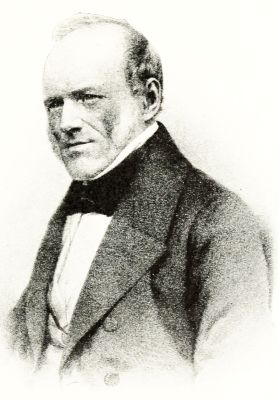
Fig. 97.—Charles Lyell, 1797-1875.
He showed, further, that organic fossils are no exception to this law of uniform change. He pointed to the evidences that ages of time had been required for the formation of the rocks bearing fossils; and that the regular succession of animal forms indicates a continual process of development of animal life; and that the disappearance of some forms, that is, their becoming extinct, was not owing to sudden changes, but to gradual changes. When this view was accepted, it overthrew the theory of catastrophism and replaced it by one designated uniformatism, based on the prevalence of uniform natural laws.
This new conception, with all of its logical inferences, was scouted by those of theological bias, but it won its way in the scientific world and became an important feature in preparing for the reception of Darwin's great book upon the descent of animal life.
We step forward now to the year 1859, to consider the effect upon the science of palæontology of the publication of Darwin's Origin of Species. Its influence was tremendous. The geological theories that had provoked so much controversy were concerned not merely with the disappearance of organic forms, but also with the introduction of new species. The Origin of Species made it clear that the only rational point of view in reference to fossil life was that it had been gradually developed, that it gave us a picture of the conditions of life upon the globe in past ages, that the succession of forms within the rocks represented in outline the successive steps in the formation of different kinds of animals and plants.
Owen.—Both before and after Darwin's hypothesis was given to science, notable anatomists, a few of whom must be mentioned, gave attention to fossil remains. Richard Owen (1804-1892) had his interest in fossil life stimulated by a visit to Cuvier in 1831, and for more than forty years thereafter he published studies on the structure of fossil animals. His studies on the fossil remains of Australia and New Zealand brought to light some interesting forms. The extinct giant bird of New Zealand (Fig. 98) was a spectacular demonstration of the enormous size to which birds had attained during the Eocene period. Owen's monograph (1879) on the oldest known bird—the archæopteryx—described an interesting form uniting both bird-like and reptilian characteristics.
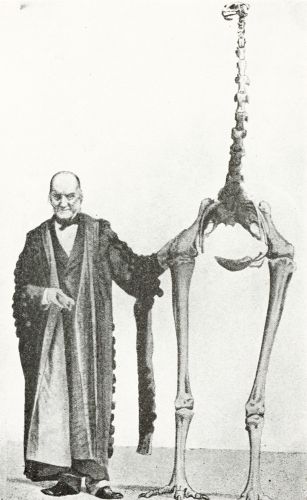
Fig. 98.—Professor Owen and the Extinct Fossil Bird (Dinornis) of New Zealand. Permission of D. Appleton & Co.
Agassiz.—Louis Agassiz (1807-1873) (Fig. 99) also came into close personal contact with Cuvier, and produced his first great work partly under the stimulus of the latter. When Agassiz visited Paris, Cuvier placed his collections at Agassiz's disposal, together with numerous drawings of fossil fishes. The profusely illustrated monograph of Agassiz on the fossil fishes (1833-1844) began to appear in 1833, the year after Cuvier's death, and was carried on eleven years before it was completed.
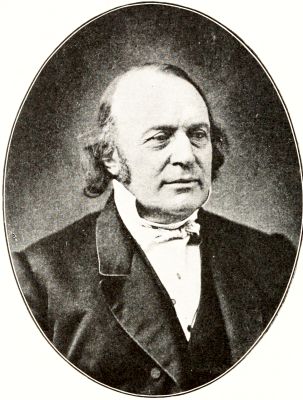
Fig. 99.—Louis Agassiz, 1807-1873.
Agassiz, with his extensive knowledge of the developmental stages of animals, came to see a marked parallelism between the stages in development of the embryo and the successive forms in the geological series. This remarkable parallelism between the fossil forms of life and the stages in the development of higher forms of recent animals is very interesting and very significant, and helps materially in elucidating the idea that the fossil series represent roughly the successive stages through which animal forms have passed in their upward course of development from the simplest to the highest, through long ages of time. Curiously enough, however, Agassiz failed to grasp the meaning of the principle that he had worked out. After illustrating so nicely the process of organic evolution, he remained to the end of his life an opponent of that theory.
Huxley.—Thomas Henry Huxley (1825-1895) was led to study fossil life on an extended scale, and he shed light in this province as in others upon which he touched. With critical analysis and impartial mind he applied the principles of evolution to the study of fossil remains. His first conclusion was that the evidence of evolution derived from palæontology was negative, but with the advances in discovery he grew gradually to recognize that palæontologists, in bringing to light complete evolutionary series, had supplied some of the strongest supporting evidence of organic evolution. By many geologists fossils have been used as time-markers for the determination of the age of various deposits; but, with Huxley, the study of them was always biological. It is to the latter point of view that palæontology owes its great importance and its great development. The statement of Huxley, that the only difference between a fossil and a recent animal is that one has been dead longer than the other, represents the spirit in which the study is being carried forward.
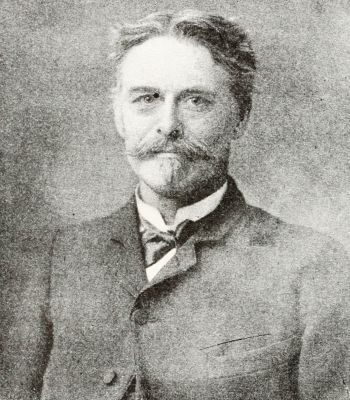
Fig. 100.—E.D. Cope, 1840-1897.
With the establishment of the doctrine of organic evolution palæontology entered upon its modern phase of growth; upon this basis there is being reared a worthy structure through the efforts of the recent votaries to the science. It is neither essential nor desirable that the present history of the subject should be followed here in detail. The collections of material upon which palæontologists are working have been enormously increased, and there is perhaps no place where activity has been greater than in the United States. The rocks of the Western States and Territories embrace a very rich collection of fossil forms, and, through the generosity of several wealthy men, exploring parties have been provided for and immense collections have been brought back to be preserved in the museums, especially of New Haven, Conn., and in the American Museum of Natural History in New York City.
Leidy, Cope, and Marsh.—Among the early explorers of the fossils of the West must be named Joseph Leidy, E.D. Cope (Fig. 100), and O.C. Marsh. These gentlemen all had access to rich material, and all of them made notable contributions to the science of palæontology. The work of Cope (1840-1897) is very noteworthy. He was a comparative anatomist equal to Cuvier in the extent of his knowledge, and of larger philosophical views. His extended publications under the direction of the United States Government have very greatly extended the knowledge of fossil vertebrate life in America.
O.C. Marsh (Fig. 101) is noteworthy for similar explorations; his discovery of toothed birds in the Western rocks and his collection of fossil horses, until recently the most complete one in existence, are all very well known. Throughout his long life he contributed from his own private fortune, and intellectually through his indefatigable labors, to the progress of palæontology.
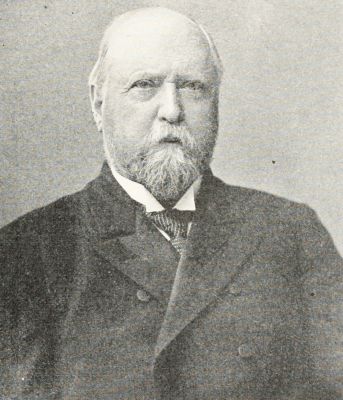
Fig. 101.—O.C. Marsh, 1831-1899.
Zittel.—The name most widely known in palæontology is that of the late Karl von Zittel (1839-1904), who devoted all his working life to the advancement of the science of fossils. In his great work, Handbuch der Palaeontologie (1876-1893), he brought under one view the entire range of fossils from the protozoa up to the mammals. Osborn says: "It is probably not an exaggeration to say that he did more for the promotion and diffusion of palæontology than any other single man who lived during the nineteenth century. While not gifted with genius, he possessed extraordinary judgment, critical capacity, and untiring industry." His portrait (Fig. 102) shows a face "full of keen intelligence and enthusiasm."
Zittel's influence was exerted not only through his writings, but also through his lectures and the stimulus imparted to the large number of young men who were attracted to Munich to study under his direction. These disciples are now distributed in various universities in Europe and the United States, and are there carrying forward the work begun by Zittel. The great collection of fossils which he left at Munich contains illustrations of the whole story of the evolution of life through geological ages.
Recent Developments.—The greatest advance now being made in the study of fossil vertebrate life consists in establishing the lineage of families, orders, and classes. Investigators have been especially fortunate in working out the direct line of descent of a number of living mammals. Fossils have been collected which supply a panoramic view of the line of descent of horses, of camels, of rhinoceroses, and of other animals. The most fruitful worker in this field at the present time is perhaps Henry F. Osborn, of the American Museum of Natural History, New York City. His profound and important investigations in the ancestry of animal life are now nearing the time of their publication in elaborated form.
Palæontology, by treating fossil life and recent life in the same category, has come to be one of the important lines of investigation in biology. It is, of course, especially rich in giving us a knowledge of the hard parts of animals, but by ingenious methods we can arrive at an idea of some of the soft parts that have completely disappeared. Molds of the interior of the cranium can be made, and thus one may form a notion of the relative size and development of the brain in different vertebrated animals. This method of making molds and studying them has shown that one characteristic of the geological time of the tertiary period was a marked development in regard to the brain size of the different animals. There was apparently, just prior to the quaternary epoch, a need on the part of animals to have an increased brain-growth; and one can not doubt that this feature which is demonstrated by fossil life had a great influence in the development of higher animal forms.
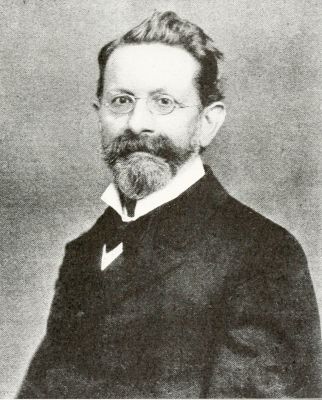
Fig. 102.—Karl von Zittel, 1839-1904.
The methods of collecting fossils in the field have been greatly developed. By means of spreading mucilage and tissue paper over delicate bones that crumble on exposure to the air, and of wrapping fossils in plaster casts for transportation, it has been made possible to uncover and preserve many structures which with a rougher method of handling would have been lost to science.
Fossil Man.—One extremely interesting section of palæontology deals with the fossil remains of the supposed ancestors of the present human race. Geological evidence establishes the great antiquity of man, but up to the present time little systematic exploration has been carried on with a view to discover all possible traces of fossil man. From time to time since 1840 there have been discovered in caverns and river-gravels bones which, taken together, constitute an interesting series. The parts of the skull are of especial importance in this kind of study, and there now exists in different collections a series containing the Neanderthal skull, the skulls of Spy and Engis, and the Java skull described in 1894 by Dubois. There have also been found recently (November, 1906) in deposits near Lincoln, Neb., some fossil human remains that occupy an intermediate position between the Neanderthal skull and the skulls of the lower representatives of living races of mankind. We shall have occasion to revert to this question in considering the evidences of organic evolution. (See page 364.)
The name palæontology was brought into use about 1830. The science affords, in some particulars, the most interesting field for biological research, and the feature of the reconstruction of ancient life and the determination of the lineage of living forms has taken a strong hold on the popular imagination. According to Osborn, the most important palæontological event of recent times was the discovery, in 1900, of fossil beds of mammals in the Fayûm lake-province of Egypt, about forty-seven miles south of Cairo. Here are embedded fossil forms, some of which have been already described in a volume by Charles W. Andrews, which Osborn says "marks a turning-point in the history of mammalia of the world." It is now established that "Africa was a very important center in the evolution of mammalian life." It is expected that the lineage of several orders of mammalia will be cleared up through the further study of fossils from this district.
PART II
THE DOCTRINE OF ORGANIC EVOLUTION
CHAPTER XVI
WHAT EVOLUTION IS: THE EVIDENCE UPON WHICH IT RESTS, ETC.
The preceding pages have been devoted mainly to an account of the shaping of ideas in reference to the architecture, the physiology, and the development of animal life.
We come now to consider a central theme into which all these ideas have been merged in a unified system; viz., the process by which the diverse forms of animals and plants have been produced.
Crude speculations regarding the derivation of living forms are very ancient, and we may say that the doctrine of organic evolution was foreshadowed in Greek thought. The serious discussion of the question, however, was reserved for the nineteenth century. The earlier naturalists accepted animated nature as they found it, and for a long time were engaged in becoming acquainted merely, with the different kinds of animals and plants, in working out their anatomy and development; but after some progress had been made in this direction there came swinging into their horizon deeper questions, such as that of the derivation of living forms. The idea that the higher forms of life are derived from simpler ones by a process of gradual evolution received general acceptance, as we have said before, only in the last part of the nineteenth century, after the work of Charles Darwin; but we shall presently see how the theory of organic development was thought out in completeness by Lamarck in the last years of the eighteenth century, and was further molded by others before Darwin touched it.
Vagueness Regarding Evolution.—Although "evolution" is to-day a word in constant use, there is still great vagueness in the minds of most people as to what it stands for; and, what is more, there is very little general information disseminated regarding the evidence by which it is supported, and regarding the present status of the doctrine in the scientific world.
In its broad sense, evolution has come to mean the development of all nature from the past. We may, if we wish, think of the long train of events in the formation of the world, and in supplying it with life as a story inscribed upon a scroll that is being gradually unrolled. Everything which has come to pass is on that part so far exposed, and everything in the future is still covered, but will appear in due course of time; thus the designation of evolution as "the unrolling of the scroll of the universe" becomes picturesquely suggestive. In its wide meaning, it includes the formation of the stars, solar systems, the elements of the inorganic world, as well as all living nature—this is general evolution; but the word as commonly employed is limited to organic evolution, or the formation of life upon our planet. It will be used hereafter in this restricted sense.
The vagueness regarding the theory of organic evolution arises chiefly from not understanding the points at issue. One of the commonest mistakes is to confuse Darwinism with organic evolution. It is known, for illustration, that controversies are current among scientific workers regarding Darwinism and certain phases of evolution, and from this circumstance it is assumed that the doctrine of organic evolution as a whole is losing ground. The discussions of De Vries and others—all believers in organic evolution—at the Scientific Congress in St. Louis in 1904, led to the statement in the public press that the scientific world was haggling over the evolution-theory, and that it was beginning to surrender it. Such statements are misleading and tend to perpetuate the confusion regarding its present status. Furthermore, the matter as set forth in writings like the grotesque little book, At the Deathbed of Darwinism tends to becloud rather than to clear the atmosphere.
The theory of organic evolution relates to the history of animal and plant life, while Darwin's theory of natural selection is only one of the various attempts to point out the causes for that history's being what it is. An attack upon Darwinism is not, in itself, an attack upon the general theory, but upon the adequacy of his explanation of the way in which nature has brought about the diversity of animal and plant life. Natural selection is the particular factor which Darwin has emphasized, and the discussion of the part played by other factors tends only to extend the knowledge of the evolutionary process, without detracting from it as a general theory.
While the controversies among scientific men relate for the most part to the influences that have been operative in bringing about organic evolution, nevertheless there are a few in the scientific camp who repudiate the doctrine. Fleischmann, of Erlangen, is perhaps the most conspicuous of those who are directing criticism against the general doctrine, maintaining that it is untenable. Working biologists will be the first to admit that it is not demonstrated by indubitable evidence, but the weight of evidence is so compelling that scientific men as a body regard the doctrine of organic evolution as merely expressing a fact of nature, and we can not in truth speak of any considerable opposition to it. Since Fleischmann speaks as an anatomist, his suppression of anatomical facts with which he is acquainted and his form of special pleading have impressed the biological world as lacking in sincerity.
This is not the place, however, to deal with the technical aspects of the discussion of the factors of organic evolution; it is rather our purpose here to give a descriptive account of the theory and its various explanations. First we should aim to arrive at a clear idea of what the doctrine of evolution is, and the basis upon which it rests; then of the factors which have been emphasized in attempted explanations of it; and, finally, of the rise of evolutionary thought, especially in the nineteenth century. The bringing forward of these points will be the aim of the following pages.
Nature of the Question.—It is essential at the outset to perceive the nature of the question involved in the theories of organic evolution. It is not a metaphysical question, capable of solution by reflection and reasoning with symbols; the data for it must rest upon observation of what has taken place in the past in so far as the records are accessible. It is not a theological question, as so many have been disposed to argue, depending upon theological methods of interpretation. It is not a question of creation through divine agencies, or of non-creation, but a question of method of creation.
Evolution as used in biology is merely a history of the steps by which animals and plants came to be what they are. It is, therefore, a historical question, and must be investigated by historical methods. Fragments of the story of creation are found in the strata of the earth's crust and in the stages of embryonic development. These clues must be brought together; and the reconstruction of the story is mainly a matter of getting at the records. Drummond says that evolution is "the story of creation as told by those who know it best."
The Historical Method.—The historical method as applied to searching out the early history of mankind finds a parallel in the investigations into the question of organic evolution. In the buried cities of Palestine explorers have uncovered traces of ancient races and have in a measure reconstructed their history from fragments, such as coins, various objects of art and of household use, together with inscriptions on tombs and columns and on those curious little bricks which were used for public records and correspondence. One city having been uncovered, it is found by lifting the floors of temples and other buildings, and the pavement of public squares, that this city, although very ancient, is built upon the ruins of a more ancient one, which in turn covers the ruins of one still older. In this way, as many as seven successive cities have been found, built one on top of the other, and new and unexpected facts regarding ancient civilization have been brought to light. We must admit that this gives us an imperfect history, with many gaps; but it is one that commands our confidence, as being based on facts of observation, and not on speculation.
In like manner the knowledge of the past history of animal life is the result of explorations by trained scholars into the records of the past. We have remains of ancient life in the rocks, and also traces of past conditions in the developing stages of animals. These are all more ancient than the inscriptions left by the hand of man upon his tombs, his temples, and his columns, but nevertheless full of meaning if we can only understand them. This historical method of investigation applied to the organic world has brought new and unexpected views regarding the antiquity of life.
The Diversity of Living Forms.—Sooner or later the question of the derivation of the animals and plants is bound to come to the mind of the observer of nature. There exist at present more than a million different kinds of animals. The waters, the earth, the air teem with life. The fishes of the sea are almost innumerable, and in a single order of the insect-world, the beetles, more than 50,000 species are known and described. In addition to living animals, there is entombed in the rocks a great multitude of fossil forms which lived centuries ago, and many of which have become entirely extinct. How shall this great diversity of life be accounted for? Has the great variety of forms existed unchanged from the days of their creation to the present? Or have they, perchance, undergone modifications so that one original form, or at least a few original types, may have through transformations merged into different kinds? This is not merely an idle question, insoluble from the very nature of the case; for the present races of animals have a lineage reaching far into the past, and the question of fixity of form as against alteration of type is a historical question, to be answered by getting evidence as to their line of descent.
Are Species Fixed in Nature?—The aspect of the matter which presses first upon our attention is this: Are the species (or different kinds of animals and plants) fixed, and, within narrow limits, permanent, as Linnæus supposed? Have they preserved their identity through all time, or have they undergone changes? This is the heart of the question of organic evolution. If observation shows species to be constant at the present time, and also to have been continuous so far as we can trace their parentage, we must conclude that they have not been formed by evolution; but if we find evidence of their transmutation into other species, then there has been evolution.
It is well established that there are wide ranges of variation among animals and plants, both in a wild state and under domestication. Great changes in flowers and vegetables are brought about through cultivation, while breeders produce different kinds of pigeons, fowls, and stock. We know, therefore, that living beings may change through modification of the circumstances and conditions that affect their lives. But general observations extending over a few decades are not sufficient. We must, if possible, bring the history of past ages to bear upon the matter, and determine whether or not there had been, with the lapse of time, any considerable alteration in living forms.
Evolutionary Series.—Fortunately, there are preserved in the rocks the petrified remains of animals, showing their history for many thousands of years, and we may use them to test the question. It is plain that rocks of a lower level were deposited before those that cover them, and we may safely assume that the fossils have been preserved in their proper chronological order. Now, we have in Slavonia some fresh-water lakes that have been drying up from the tertiary period. Throughout the ages, these waters were inhabited by snails, and naturally the more ancient ones were the parents of the later broods. As the animals died their shells sank to the bottom and were covered by mud and débris, and held there like currants in a pudding. In the course of ages, by successive accumulations, these layers thickened and were changed into rock, and by this means shells have been preserved in their proper order of birth and life, the most ancient at the bottom and the newest at the top. We can sink a shaft or dig a trench, and collect the shells and arrange them in proper order.
Although the shells in the upper strata are descended from those near the bottom, they are very different in appearance. No one would hesitate to name them different species; in fact, when collections were first made, naturalists classified these shells into six or eight different species. If, however, a collection embracing shells from all levels is arranged in a long row in proper order, a different light is thrown on the matter; while those at the ends are unlike, yet if we begin at one end and pass to the other we observe that the shells all grade into one another by such slight changes that there is no line showing where one kind leaves off and another begins. Thus their history for thousands of years bears testimony to the fact that the species have not remained constant, but have changed into other species.
Fig. 103 will give an idea of the varieties and gradations. It represents shells of a genus, Paludina, which is still abundant in most of the fresh waters of our globe.
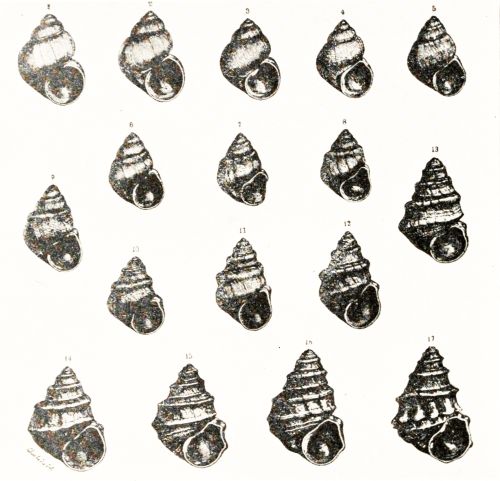
Fig. 103.—Transmutations of Paludina. (After Neumayer.)
A similar series of shells has been brought to light in Württemberg in which the variations pass through wider limits, so that not only different species may be observed, but different genera connected by almost insensible gradations. These transformations are found in a little flattened pond-shell similar to the planorbis, which is so common at the present time.
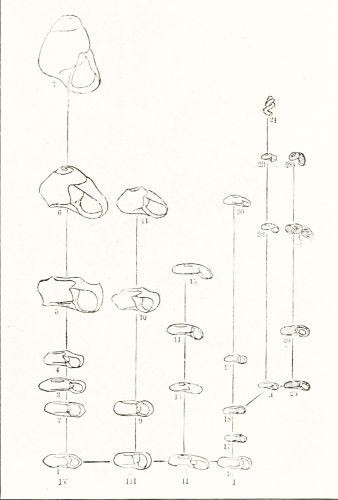
Fig. 104.—Planorbis Shells from Steinheim. (After Hyatt.)
Fig. 104 shows some of these transformations, the finer gradations being omitted. The shells from these two sources bear directly upon the question of whether or not species have held rigidly to their original form.
After this kind of revelation in reference to lower animals, we turn with awakened interest to the fossil bones of the higher animals.
Evolution of the Horse.—When we take into account the way in which fossils have been produced we see clearly that it is the hard parts, such as the shells and the bones, that will be preserved, while the soft parts of animals will disappear. Is it not possible that we may find the fossil bones of higher animals arranged in chronological order and in sufficient number to supplement the testimony of the shells? There has been preserved in the rocks of our Western States a very complete history of the evolution of the horse family, written, as it were, on tablets of stone, and extending over a period of more than two million years, as the geologists estimate time. Geologists can, of course, measure the thickness of rocks and form some estimate of the rate at which they were deposited by observing the character of the material and comparing the formation with similar water deposits of the present time. Near the surface, in the deposits of the quarternary period, are found remains of the immediate ancestors of the horse, which are recognized as belonging to the same genus, Equus, but to a different species; thence, back to the lowest beds of the tertiary period we come upon the successive ancestral forms, embracing several distinct genera and exhibiting an interesting series of transformations.
If in this way we go into the past a half-million years, we find the ancestors of the horse reduced in size and with three toes each on the fore and hind feet. The living horse now has only a single toe on each foot, but it has small splint-like bones that represent the rudiments of two more. If we go back a million years, we find three toes and the rudiments of a fourth; and going back two million years, we find four fully developed toes, and bones in the feet to support them. It is believed that in still older rocks a five-toed form will be discovered, which was the parent of the four-toed form.
In the collections at Yale College there are preserved upward of thirty steps or stages in the history of the horse family, showing that it arose by evolution or gradual change from a four-or five-toed ancestor of about the size of a fox, and that it passed through many changes, besides increase in size, in the two million years in which we can get facts as to its history.
Remarkable as is this feature of the Marsh collection at New Haven, it is now surpassed by that in the Museum of Natural History in New York City. Here, through the munificent gifts of the late W.C. Whitney, there has been accumulated the most complete and extensive collection of fossil horses in the world. This embraced, in 1904, some portions of 710 fossil horses, 146 having been derived from explorations under the Whitney fund. The extraordinary character of the collection is shown from the fact that it contains five complete skeletons of fossil horses—more than existed at that time in all other museums of the world.
The specimens in this remarkable collection show phases in the parallel development of three or four distinct races of horse-like animals, and this opens a fine problem in comparative anatomy; viz., to separate those in the direct line of ancestry of our modern horse from all the others. This has been accomplished by Osborn, and through his critical analysis we have become aware of the fact that the races of fossil horses had not been distinguished in any earlier studies. As a result of these studies, a new ancestry of the horse, differing in details from that given by Huxley and Marsh, is forthcoming.
Fig. 105 shows the bones of the foreleg of the modern horse, and Fig. 106 some of the modifications through which it has passed. Fig. 107 shows a reconstruction of the ancestor of the horse made by Charles R. Knight, the animal painter, under the direction of Professor Osborn.
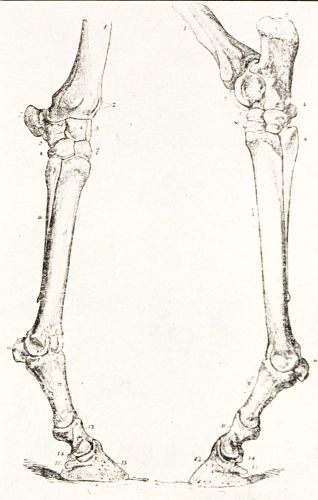
Fig. 105.—Bones of the Foreleg of a Horse.
While the limbs were undergoing the changes indicated, other parts of the organism were also being transformed and adapted to the changing conditions of its life. The evolution of the grinding teeth of the horse is fully exhibited in the fossil remains. All the facts bear testimony that the horse was not originally created as known to-day, but that his ancestors existed in different forms, and in evolution have transcended several genera and a considerable number of species. The highly specialized limb of the horse adapted for speed was the product of a long series of changes, of which the record is fairly well preserved. Moreover, the records show that the atavus of the horse began in North America, and that by migration the primitive horses spread from this continent to Europe, Asia, and Africa.
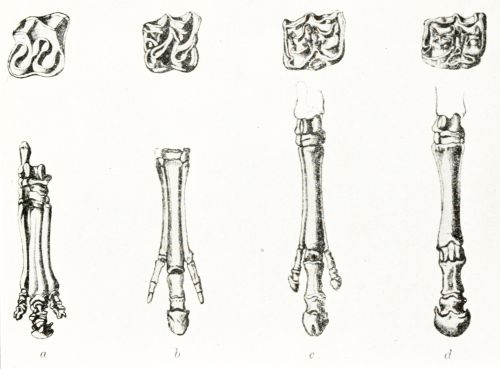
Fig. 106.—Bones of the Foreleg and Molar Teeth of Fossil Ancestors of the Horse. European Forms. (After Kayser.)
So far we have treated the question of fixity of species as a historical one, and have gone searching for clues of past conditions just as an archæologist explores the past in buried cities. The facts we have encountered, taken in connection with a multitude of others pointing in the same direction, begin to answer the initial question, Were the immense numbers of living forms created just as we find them, or were they evolved by a process of transformation?
The geological record of other families of mammals has also been made out, but none so completely as that of the horse family. The records show that the camels were native in North America, and that they spread by migration from the land of their birth to Asia and Africa, probably crossing by means of land-connections which have long since become submerged.
The geological record, considered as a whole, shows that the earlier formed animals were representatives of the lower groups, and that when vertebrate animals were formed, for a very long time only fishes were living, then amphibians, reptiles, birds, and finally, after immense reaches of time, mammals began to appear.
Connecting Forms.—Interesting connecting forms between large groups sometimes are found, or, if not connecting forms, generalized ones embracing the structural characteristics of two separate groups. Such a form is the archæopteryx (Fig. 108), a primitive bird with reptilian anatomy, with teeth in its jaws, and a long, lizard-like tail covered with feathers, which seems to show connection between birds and reptiles. The wing also shows the supernumerary fingers, which have been suppressed in modern birds. Another suggestive type of this kind is the flying reptile or pterodactyl, of which a considerable number have been discovered. Illustrations indicating that animals have had a common line of descent might be greatly multiplied.
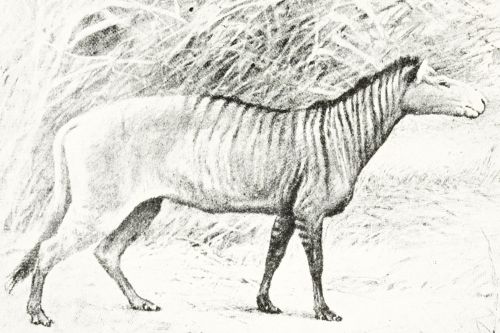
Fig. 107.—Reconstruction of the Ancestor of the Horse by Charles R. Knight, under the direction of Professor Osborn. Permission American Museum Natural History.
The Embryological Record and its Connection with Evolution.—The most interesting, as well as the most comprehensive clues bearing on the evolution of animal life are found in the various stages through which animals pass on their way from the egg to the fully formed animal. All animals above the protozoa begin their lives as single cells, and between that rudimentary condition and the adult stage every gradation of structure is exhibited. As animals develop they become successively more and more complex, and in their shifting history many rudimentary organs arise and disappear. For illustration, in the young chick, developing within the hen's egg, there appear, after three or four days of incubation, gill-slits, or openings into the throat, like the gill-openings of lower fishes. These organs belong primarily to water life, and are not of direct use to the chick. The heart and the blood-vessels at this stage are also of the fish-like type, but this condition does not last long; the gill-slits, or gill-clefts, fade away within a few days, and the arteries of the head and the neck undergo great changes long before the chick is hatched. Similar gill-clefts and similar arrangements of blood-vessels appear also very early in the development of the young rabbit, and in the development of all higher life. Except for the theory of descent, such things would remain a lasting enigma. The universal presence of gill-clefts is not to be looked on as a haphazard occurrence. They must have some meaning, and the best suggestion so far offered is that they are survivals inherited from remote ancestors. The higher animals have sprung from simpler ones, and the gill-slits, along with other rudimentary organs, have been retained in their history. It is not necessary to assume that they are inherited from adult ancestors; they are, more likely, embryonic structures still retained in the developmental history of higher animals. Such traces are like inscriptions on ancient columns—they are clues to former conditions, and, occurring in the animal series, they weigh heavily on the side of evolution.
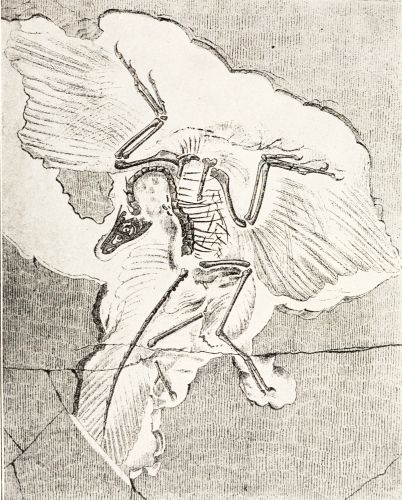
Fig. 108.—Fossil Remains of a Primitive Bird (Archeopteryx). From the specimen in the Berlin Museum. (After Kayser.)
An idea of the appearance of gill-clefts may be obtained from Fig. 109 showing the gill-clefts in a shark and those in the embryo of a chick and a rabbit.
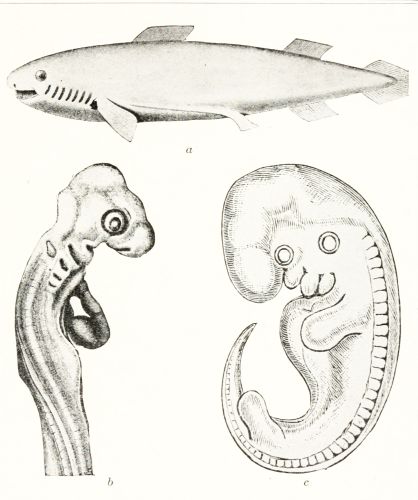
Fig. 109.—The Gill-clefts of a Shark (upper fig.) Compared with Those of the Embryonic Chick (to the left) and Rabbit.
Of a similar nature are the rudimentary teeth in the jaws of the embryo of the whalebone whale (Fig. 110). The adults have no teeth, these appearing only as transitory rudiments in the embryo. It is to be assumed that the teeth are inheritances, and that the toothless baleen whale is derived from toothed ancestors.
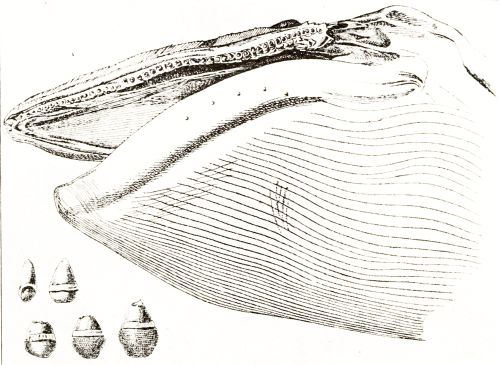
Fig. 110.—The Jaws of an Embryonic Whale, Showing Rudimentary Teeth.
If we now turn to comparative anatomy, to classification, and to the geographical distribution of animals, we find that it is necessary to assume the doctrine of descent in order to explain the observed facts; the evidence for evolution, indeed, becomes cumulative. But it is not necessary, nor will space permit, to give extended illustrations from these various departments of biological researches.
The Human Body.—Although the broad doctrine of evolution rests largely upon the observation of animals and plants, there is naturally unusual interest as to its teaching in reference to the development of the human body. That the human body belongs to the animal series has long been admitted, and that it has arisen through a long series of changes is shown from a study of its structure and development. It retains marks of the scaffolding in its building. The human body has the same devious course of embryonic development as that of other mammals. In the course of its formation gill-clefts make their appearance; the circulation is successively that of a single-, a double-, and a four-chambered heart, with blood-vessels for the gill-clefts. Time and energy are consumed in building up rudimentary structures which are evanescent and whose presence can be best explained on the assumption that they are, as in other animals, hereditary survivals.
Wiedersheim has pointed out more than one hundred and eighty rudimentary or vestigial structures belonging to the human body, which indicate an evolutionary relationship with lower vertebrates. It would require a considerable treatise to present the discoveries in reference to man's organization, as Wiedersheim has done in his Structure of Man. As passing illustrations of the nature of some of these suggestive things bearing on the question of man's origin may be mentioned: the strange grasping power of the newly born human infant, retained for a short time, and enabling the babe to sustain its weight; the presence of a tail and rudimentary tail muscles; of rudimentary ear muscles; of gill-clefts, etc.
Antiquity of Man.—The geological history of man is imperfectly known, although sporadic explorations have already accumulated an interesting series, especially as regards the shape and capacity of skulls. The remains of early quarternary man have been unearthed in various parts of Europe, and the probable existence of man in the tertiary period is generally admitted. As Osborn says, "Virtually three links have been found in the chain of human ancestry." The most primitive pre-human species is represented by portions of the skull and of the leg bones found in Java by the Dutch surgeon Dubois in the year 1890. These remains were found in tertiary deposits, and were baptized under the name of Pithecanthropus erectus. The structural position of this fossil is between the chimpanzee, the highest of anthropoid apes, and the "Neanderthal man." With characteristic scientific caution Osborn says that the Pithecanthropus "belongs in the line of none of the existing anthropoid apes, and falls very near, but not directly, in the line of human ancestry."
The second link is supplied by the famous Neanderthal skull found in the valley of the Neander, near Düsseldorf, in 1856. The discovery of this skull, with its receding forehead and prominent ridges above the orbits of the eyes, and its small cranial capacity, created a sensation, for it was soon seen that it was intermediate between the skulls of the lowest human races and those of the anthropoid apes. Virchow declared that if the skull was pre-human its structural characteristics were abnormal. This conclusion, however, was rendered untenable by the discovery in 1886 of similar skulls and the skeletons of two persons, in a cave near Spy in Belgium. The "Spy man" and the "Neanderthal man" belong to the same type and are estimated to have been living in the middle of the palæolithic age.
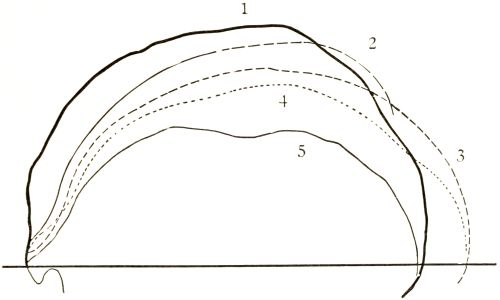
Fig. 111.—Profile Reconstructions of the Skulls of Living and Fossil Men: 1. Brachycephalic European; 2. The more ancient of the Nebraska skulls; 3. The Neanderthal man; 4. One of the Spy skulls; 5. Skull of the Java man. (Altered from Schwalbe and Osborn.)
The third link is in the early Neolithic man of Engis.
And now to this interesting series of gradations has been added another by the discovery in 1906 of a supposed primitive race of men in Nebraska. The two skulls unearthed in Douglass County in that State indicate a cranial capacity falling below that of the "Australian negro, the lowest existing type of mankind known at present."
Fig. 111 shows in outline profile reconstructions of the skulls of some of the fossil types as compared with the short-headed type of Europe.
Palæontological discoveries are thus coming to support the evidences of man's evolution derived from embryology and archæology. While we must admit that the geological evidences are at present fragmentary, there is, nevertheless, reasonable ground for the expectation that they will be extended by more systematic explorations of caverns and deposits of the quarternary and late tertiary periods.
Mental Evolution.—Already the horizon is being widened, and new problems in human evolution have been opened. The evidences in reference to the evolution of the human body are so compelling as to be already generally accepted, and we have now the question of evolution of mentality to deal with. The progressive intelligence of animals is shown to depend upon the structure of the brain and the nervous system, and there exists such a finely graded series in this respect that there is strong evidence of the derivation of human faculties from brute faculties.
Sweep of the Doctrine of Evolution.—The great sweep of the doctrine of evolution makes it "one of the greatest acquisitions of human knowledge." There has been no point of intellectual vantage reached which is more inspiring. It is so comprehensive that it enters into all realms of thought. Weismann expresses the opinion that "the theory of descent is the most progressive step that has been taken in the development of human knowledge," and says that this position "is justified, it seems to me, even by this fact alone: that the evolution idea is not merely a new light on the special region of biological sciences, zoölogy and botany, but is of quite general importance. The conception of an evolution of life upon the earth reaches far beyond the bounds of any single science, and influences our whole realm of thought. It means nothing less than the elimination of the miraculous from our knowledge of nature, and the placing of the phenomena of life on the same plane as the other natural processes, that is, as having been brought about by the same forces and being subject to the same laws."
One feature of the doctrine is very interesting; it has enabled anatomists to predict that traces of certain structures not present in the adult will be found in the embryonic condition of higher animals, and by the verification of these predictions, it receives a high degree of plausibility. The presence of an os centrale in the human wrist was predicted, and afterward found, as also the presence of a rudimentary thirteenth rib in early stages of the human body. The predictions, of course, are chiefly technical, but they are based on the idea of common descent and adaptation.
It took a long time even for scientific men to arrive at a belief in the continuity of nature, and having arrived there, it is not easy to surrender it. There is no reason to think that the continuity is broken in the case of man's development. Naturalists have now come to accept as a mere statement of a fact of nature that the vast variety of forms of life upon our globe has been produced by a process of evolution. If this position be admitted, the next question would be, What are the factors which have been operative to bring this about? This brings us naturally to discuss the theories of evolution.
CHAPTER XVII
THEORIES OF EVOLUTION: LAMARCK, DARWIN
The impression so generally entertained that the doctrine of organic evolution is a vague hypothesis, requiring for its support great stretches of the imagination, gives way to an examination of the facts, and we come to recognize that it is a well-founded theory, resting upon great accumulations of evidence. If the matter could rest here, it would be relatively simple; but it is necessary to examine into the causes of the evolutionary process. While scientific observation has shown that species are not fixed, but undergo transformations of considerable extent, there still remains to be accounted for the way in which these changes have been produced.
One may assume that the changes in animal life are the result of the interaction of protoplasm and certain natural agencies in its surroundings, but it is evidently a very difficult matter to designate the particular agencies or factors of evolution that have operated to bring about changes in species. The attempts to indicate these factors give rise to different theories of evolution, and it is just here that the controversies concerning the subject come in. We must remember, however, that to-day the controversies about evolution are not as to whether it was or was not the method of creation, but as to the factors by which the evolution of different forms was accomplished. Says Packard: "We are all evolutionists, though we may differ as to the nature of the efficient causes."
Of the various theories which had been advanced to account for evolution, up to the announcement of the mutation-theory of De Vries in 1900, three in particular had commanded the greatest amount of attention and been the field for varied and extensive discussion. These are the theories of Lamarck, Darwin, and Weismann. They are comprehensive theories, dealing with the process as a whole. Most of the others are concerned with details, and emphasize certain phases of the process.
Doubtless the factors that have played a part in molding the forms that have appeared in the procession of life upon our globe have been numerous, and, in addition to those that have been indicated, Osborn very aptly suggests that there may be undiscovered factors of evolution. Within a few years De Vries has brought into prominence the idea of sudden transformations leading to new species, and has accounted for organic evolution on that basis. Further consideration of this theory, however, will be postponed, while in the present chapter we shall endeavor to bring out the salient features of the theories of Lamarck and Darwin, without going into much detail regarding them.
Lamarck
Lamarck was the first to give a theory of evolution that has retained a place in the intellectual world up to the present time, and he may justly be regarded as the founder of that doctrine in the modern sense. The earlier theories were more restricted in their reach than that of Lamarck. Erasmus Darwin, his greatest predecessor in this field of thought, announced a comprehensive theory, which, while suggestive and forceful in originality, was diffuse, and is now only of historical importance. The more prominent writers on evolution in the period prior to Lamarck will be dealt with in the chapter on the Rise of Evolutionary Thought.
Lamarck was born in 1744, and led a quiet, monotonous life, almost pathetic on account of his struggles with poverty, and the lack of encouragement and proper recognition by his contemporaries. His life was rendered more bearable, however, even after he was overtaken by complete blindness, by the intellectual atmosphere that he created for himself, and by the superb confidence and affection of his devoted daughter Cornélie, who sustained him and made the truthful prediction that he would be recognized by posterity ("La postérité vous honorera").
His Family.—He came of a military family possessing some claims to distinction. The older name of the family had been de Monet, but in the branch to which Lamarck belonged the name had been changed to de Lamarque, and in the days of the first Republic was signed plain Lamarck by the subject of this sketch. Jean Baptiste Lamarck was the eleventh and last child of his parents. The other male members of the family having been provided with military occupations, Jean was selected by his father, although against the lad's own wish, for the clerical profession, and accordingly was placed in the college of the Jesuits at Amiens. He did not, however, develop a taste for theological studies, and after the death of his father in 1760 "nothing could induce the incipient abbé, then seventeen years of age, longer to wear his bands."
His ancestry asserted itself, and he forsook the college to follow the French army that was then campaigning in Germany. Mounted on a broken-down horse which he had succeeded in buying with his scanty means, he arrived on the scene of action, a veritable raw recruit, appearing before Colonel Lastic, to whom he had brought a letter of recommendation.
Military Experience.—The Colonel would have liked to be rid of him, but owing to Lamarck's persistence, assigned him to a company; and, being mounted, Lamarck took rank as a sergeant. During his first engagement his company was exposed to the direct fire of the enemy, and the officers one after another were shot until Lamarck by order of succession was in command of the fourteen remaining grenadiers. Although the French army retreated, Lamarck refused to move with his squad until he received directions from headquarters to retire. In this his first battle he showed the courage and the independence that characterized him in later years.
Adopts Natural Science.—An injury to the glands of the neck, resulting from being lifted by the head in sport by one of his comrades, unfitted him for military life, and he went to Paris and began the study of medicine, supporting himself in the mean time by working as a bank clerk. It was in his medical course of four years' severe study that Lamarck received the exact training that was needed to convert his enthusiastic love for science into the working powers of an investigator. He became especially interested in botany, and, after a chance interview with Rousseau, he determined to follow the ruling passion of his nature and devote himself to natural science. After about nine years' work he published, in 1778, his Flora of France, and in due course was appointed to a post in botany in the Academy of Sciences. He did not hold this position long, but left it to travel with the sons of Buffon as their instructor. This agreeable occupation extended over two years, and he then returned to Paris, and soon after was made keeper of the herbarium in the Royal Garden, a subordinate position entirely beneath his merits. Lamarck held this poorly paid position for several years, and was finally relieved by being appointed a professor in the newly established Jardin des Plantes.
He took an active part in the reorganization of the Royal Garden (Jardin du Roi) into the Jardin des Plantes. When, during the French Revolution, everything that was suggestive of royalty became obnoxious to the people, it was Lamarck who suggested in 1790 that the name of the King's Garden be changed to that of the Botanical Garden (Jardin des Plantes). The Royal Garden and the Cabinet of Natural History were combined, and in 1793 the name Jardin des Plantes proposed by Lamarck was adopted for the institution.
It was through the endorsements of Lamarck and Geoffroy Saint-Hilaire that Cuvier was brought into this great scientific institution; Cuvier, who was later to be advanced above him in the Jardin and in public favor, and who was to break friendship with Lamarck and become the opponent of his views, and who also was to engage in a memorable debate with his other supporter, Saint-Hilaire.
The portrait of Lamarck shown in Fig. 112 is one not generally known. Its date is undetermined, but since it was published in Thornton's British Plants in 1805, we know that it was painted before the publication of Lamarck's Philosophie Zoologique, and before the full force of the coldness and heartless neglect of the world had been experienced. In his features we read supremacy of the intellect, and the unflinching moral courage for which he was notable. Lamarck has a more hopeful expression in this portrait than in those of his later years.
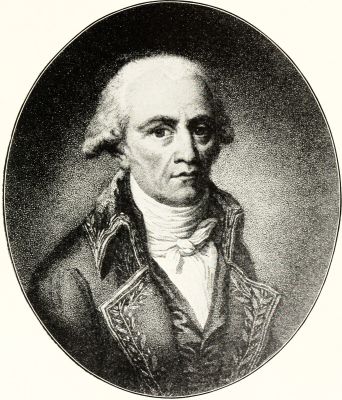
Fig. 112.—Lamarck, 1774-1829. From Thornton's British Plants, 1805.
Lamarck Changes from Botany to Zoölogy.—Until 1794, when he was fifty years of age, Lamarck was devoted to botany, but on being urged, after the reorganization of the Jardin du Roi, to take charge of the department of invertebrates, he finally consented and changed from the study of plants to that of animals. This change had profound influence in shaping his ideas. He found the invertebrates in great confusion, and set about to bring order out of chaos, an undertaking in which, to his credit be it acknowledged, he succeeded. The fruit of his labors, the Natural History of Invertebrated Animals (Historie naturelle des Animaux sans Vertèbres, 1815-1822), became a work of great importance. He took hold of this work, it should be remembered, as an expert observer, trained to rigid analysis by his previous critical studies in botany. In the progress of the work he was impressed with the differences in animals and the difficulty of separating one species from another. He had occasion to observe the variations produced in animals through the influence of climate, temperature, moisture, elevation above the sea-level, etc.
He observed also the effects of use and disuse upon the development of organs: the exercise of an organ leading to its greater development, and the disuse to its degeneration. Numerous illustrations are cited by Lamarck which serve to make his meaning clear. The long legs of wading birds are produced and extended by stretching to keep above the water; the long neck and bill of storks are produced by their habit of life; the long neck of the giraffe is due to reaching for foliage on trees; the web-footed birds, by spreading the toes when they strike the water, have stimulated the development of a membrane between the toes, etc. In the reverse direction, the loss of the power of flight in the "wingless" bird of New Zealand is due to disuse of the wings; while the loss of sight in the mole and in blind cave animals has arisen from lack of use of eyes.
The changes produced in animal organization in this way were believed to be continued by direct inheritance and improved in succeeding generations.
He believed also in a perfecting principle, tending to improve animals—a sort of conscious endeavor on the part of the animal playing a part in its better development. Finally, he came to believe that the agencies indicated above were the factors of the evolution of life.
His Theory of Evolution.—All that Lamarck had written before he changed from botany to zoölogy (1794) indicates his belief in the fixity of species, which was the prevailing notion among naturalists of the period. Then, in 1800, we find him apparently all at once expressing a contrary opinion, and an opinion to which he held unwaveringly to the close of his life. It would be of great interest to determine when Lamarck changed his views, and upon what this radical reversal of opinion was based; but we have no sure record to depend upon. Since his theory is developed chiefly upon considerations of animal life, it is reasonable to assume that his evolutionary ideas took form in his mind after he began the serious study of animals. Doubtless, his mind having been prepared and his insight sharpened by his earlier studies, his observations in a new field supplied the data which led him directly to the conviction that species are unstable. As Packard, one of his recent biographers, points out, the first expression of his new views of which we have any record occurred in the spring of 1800, on the occasion of his opening lecture to his course on the invertebrates. This avowal of belief in the extensive alteration of species was published in 1801 as the preface to his Système des Animaux sans Vertèbres. Here also he foreshadowed his theory of evolution, saying that nature, having formed the simplest organisms, "then with the aid of much time and favorable circumstances ... formed all the others." It has been generally believed that Lamarck's first public expression of his views on evolution was published in 1802 in his Recherches sur l'Organisation des Corps Vivans, but the researches of Packard and others have established the earlier date.
Lamarck continued for several years to modify and amplify the expression of his views. It is not necessary, however, to follow the molding of his ideas on evolution as expressed in the opening lectures to his course in the years 1800, 1802, 1803, and 1806, since we find them fully elaborated in his Philosophie Zoologique, published in 1809, and this may be accepted as the standard source for the study of his theory. In this work he states two propositions under the name of laws, which have been translated by Packard as follows:
"First Law: In every animal which has not exceeded the term of its development, the more frequent and sustained use of any organ gradually strengthens this organ, develops and enlarges it, and gives it a strength proportioned to the length of time of such use; while the constant lack of use of such an organ imperceptibly weakens it, causing it to become reduced, progressively diminishes its faculties, and ends in its disappearance.
"Second Law: Everything which nature has caused individuals to acquire or lose by the influence of the circumstances to which their race may be for a long time exposed, and consequently by the influence of the predominant use of such an organ, or by that of the constant lack of use of such part, it preserves by heredity and passes on to the new individuals which descend from it, provided that the changes thus acquired are common to both sexes, or to those which have given origin to these new individuals.
"These are the two fundamental truths which can be misunderstood only by those who have never observed or followed nature in its operations," etc. The first law embodies the principle of use and disuse, the second law that of heredity.
In 1815 his theory received some extensions of minor importance. The only points to which attention need be called are that he gives four laws instead of two, and that a new feature occurs in the second law in the statement that the production of a new organ is the result of a new need (besoin) which continues to make itself felt.
Simplified Statement of Lamarck's Views.—For practical exposition the theory maybe simplified into two sets of facts: First, those to be classed under variation; and, second, those under heredity. Variations of organs, according to Lamarck, arise in animals mainly through use and disuse, and new organs have their origin in a physiological need. A new need felt by the animal expresses itself on the organism, stimulating growth and adaptations in a particular direction. This part of Lamarck's theory has been subjected to much ridicule. The sense in which he employs the word besoin has been much misunderstood; when, however, we take into account that he uses it, not merely as expressing a wish or desire on the part of the animal, but as the reflex action arising from new conditions, his statement loses its alleged grotesqueness and seems to be founded on sound physiology.
Inheritance.—Lamarck's view of heredity was uncritical; according to his conception, inheritance was a simple, direct transmission of those superficial changes that arise in organs within the lifetime of an individual owing to use and disuse. It is on this question of the direct inheritance of variations acquired in the lifetime of an individual that his theory has been the most assailed. The belief in the inheritance of acquired characteristics has been so undermined by experimental evidence that at the present time we can not point to a single unchallenged instance of such inheritance. But, while Lamarck's theory has shown weakness on that side, his ideas regarding the production of variations have been revived and extended.
Variation.—The more commendable part of his theory is the attempt to account for variation. Darwin assumed variation, but Lamarck attempted to account for it, and in this feature many discerning students maintain that the theory of Lamarck is more philosophical in its foundation than that of Darwin.
In any theory of evolution we must deal with the variation of organisms and heredity, and thus we observe that the two factors discussed by Lamarck are basal. Although it must be admitted that even to-day we know little about either variation or heredity, they remain basal factors in any theory of evolution.
Time and Favorable Conditions.—Lamarck supposed a very long time was necessary to bring about the changes which have taken place in animals. The central thought of time and favorable conditions occurs again and again in his writings. The following quotation is interesting as coming from the first announcement of his views in 1800:
"It appears, as I have already said, that time and favorable conditions are the two principal means which nature has employed in giving existence to all her productions. We know that for her time has no limit, and that consequently she has it always at her disposal.
"As to the circumstances of which she has had need and of which she makes use every day in order to cause her productions to vary, we can say that in a manner they are inexhaustible.
"The essential ones arising from the influence and from all the environing media, from the diversity of local causes, of habits, of movements, of action, finally of means of living, of preserving their lives, of defending themselves, of multiplying themselves, etc. Moreover, as the result of these different influences, the faculties, developed and strengthened by use, become diversified by the new habits maintained for long ages, and by slow degrees the structure, the consistence—in a word, the nature, the condition of the parts and of the organs consequently participating in all these influences, became preserved and were propagated by heredity (génération)." (Packard's translation.)
Salient Points.—The salient points in Lamarck's theory may be compacted into a single sentence: It is a theory of the evolution of animal life, depending upon variations brought about mainly through use and disuse of parts, and also by responses to external stimuli, and the direct inheritance of the same. His theory is comprehensive, so much so that he includes mankind in his general conclusions.
Lamarck supposed that an animal having become adapted to its surroundings would remain relatively stable as to its structure. To the objection raised by Cuvier that animals from Egypt had not changed since the days when they were preserved as mummies, he replied that the climate of Egypt had remained constant for centuries, and therefore no change in its fauna was to be expected.
Species.—Since the question of the fixity of species is the central one in theories of evolution, it will be worth while to quote Lamarck's definition of species: "All those who have had much to do with the study of natural history know that naturalists at the present day are extremely embarrassed in defining what they mean by the word species.... We call species every collection of individuals which are alike or almost so, and we remark that the regeneration of these individuals conserves the species and propagates it in continuing successively to reproduce similar individuals." He then goes on with a long discussion to show that large collections of animals exhibit a great variation in species, and that they have no absolute stability, but "enjoy only a relative stability."
Herbert Spencer adopted and elaborated the theory of Lamarck. He freed it from some of its chief crudities, such as the idea of an innate tendency toward perfection. In many controversies Mr. Spencer defended the idea of the transmission of acquired characters. The ideas of Lamarck have, therefore, been transmitted to us largely in the Spencerian mold and in the characteristic language of that great philosopher. There has been but little tendency to go to Lamarck's original writings. Packard, whose biography of Lamarck appeared in 1901, has made a thorough analysis of his, writings and had incidentally corrected several erroneous conception.
Neo-Lamarckism.—The ideas of Lamarck regarding the beginning of variations have been revived and accorded much respect under the designation of Neo-Lamarckism. The revival of Lamarckism is especially owing to the palæontological investigations of Cope and Hyatt. The work of E.D. Cope in particular led him to attach importance to the effect of mechanical and other external causes in producing variation, and he points out many instances of use-inheritance. Neo-Lamarckism has a considerable following; it is a revival of the fundamental ideas of Lamarck.
Darwin's Theory
While Lamarck's theory rests upon two sets of facts, Darwin's is founded on three: viz., the facts of variation, of inheritance, and of natural selection. The central feature of his theory is the idea of natural selection. No one else save Wallace had seized upon this feature when Darwin made it the center of his system. On account of the part taken by Wallace simultaneously with Darwin in announcing natural selection as the chief factor of evolution, it is appropriate to designate this contribution as the Darwin-Wallace principle of natural selection. The interesting connection between the original conclusions of Darwin and Wallace is set forth in Chapter XIX.
Variation.—It will be noticed that two of the causes assigned by Darwin are the same as those designated by Lamarck, but their treatment is quite different. Darwin (Fig. 113) assumed variation among animals and plants without attempting to account for it, while Lamarck undertook to state the particular influences which produce variation, and although we must admit that Lamarck was not entirely successful in this attempt, the fact that he undertook the task places his contribution at the outset on a very high plane.
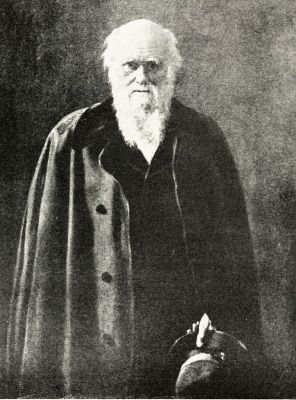
Fig. 113.—Charles Darwin, 1809-1882.
The existence of variation as established by observation is unquestioned. No two living organisms are exactly alike at the time of their birth, and even if they are brought up together under identical surroundings they vary. The variation of plants and animals under domestication is so conspicuous and well known that this kind of variation was the first to attract attention. It was asserted that these variations were perpetuated because the forms had been protected by man, and it was doubted that animals varied to any considerable extent in a state of nature. Extended collections and observations in field and forest have, however, set this question at rest.
If crows or robins or other birds are collected on an extensive scale, the variability of the same species will be evident. Many examples show that the so-called species differ greatly in widely separated geographical areas, but collections from the intermediate territory demonstrate that the variations are connected by a series of fine gradations. If, for illustration, one should pass across the United States from the Atlantic to the Pacific coast, collecting one species of bird, the entire collection would exhibit wide variations, but the extremes would be connected by intermediate forms.
The amount of variation in a state of nature is much greater than was at first supposed, because extensive collections were lacking, but the existence of wide variation is now established on the basis of observation. This fact of variation among animals and plants in the state of nature is unchallenged, and affords a good point to start from in considering Darwinism.
Inheritance.—The idea that these variations are inherited is the second point. But what particular variations will be preserved and fostered by inheritance, and on what principle they will be selected, is another question—and a notable one. Darwin's reply was that those variations which are of advantage to the individual will be the particular ones selected by nature for inheritance. While Darwin implies the inheritance of acquired characteristics, his theory of heredity was widely different from that of Lamarck. Darwin's theory of heredity, designated the provisional theory of pangenesis, has been already considered (see Chapter XIV).
Natural Selection.—Since natural selection is the main feature of Darwin's doctrine, we must devote more time to it. Darwin frequently complained that very few of his critics took the trouble to find out what he meant by the term natural selection. A few illustrations will make his meaning clear. Let us first think of artificial selection as it is applied by breeders of cattle, fanciers of pigeons and of other fowls, etc. It is well known that by selecting particular variations in animals and plants, even when the variations are slight, the breeder or the horticulturalist will be able in a short time to produce new races of organic forms. This artificial selection on the part of man has given rise to the various breeds of dogs, the 150 different kinds of pigeons, etc., all of which breed true. The critical question is, Have these all an individual ancestral form in nature? Observation shows that many different kinds—as pigeons—may be traced back to a single ancestral form, and thus the doctrine of the fixity of species is overthrown.
Now, since it is demonstrated by observation that variations occur, if there be a selective principle at work in nature, effects similar to those caused by artificial selection will be produced. The selection by nature of the forms fittest to survive is what Darwin meant by natural selection. We can never understand the application, however, unless we take into account the fact that while animals tend to multiply in geometrical progression, as a matter of fact the number of any one kind remains practically constant. Although the face of nature seems undisturbed, there is nevertheless a struggle for existence among all animals.
This is easily illustrated when we take into account the breeding of fishes. The trout, for illustration, lays from 60,000 to 100,000 eggs. If the majority of these arrived at maturity and gave rise to progeny, the next generation would represent a prodigious number, and the numbers in the succeeding generations would increase so rapidly that soon there would not be room in the fresh waters of the earth to contain their descendants. What becomes of the immense number of fishes that die? They fall a prey to others, or they are not able to get food in competition with other more hardy relatives, so that it is not a matter of chance that determines which ones shall survive; those which are the strongest, the better fitted to their surroundings, are the ones which will be perpetuated.
The recognition of this struggle for existence in nature, and the consequent survival of the fittest, shows us more clearly what is meant by natural selection. Instead of man making the selection of those particular forms that are to survive, it is accomplished in the course of nature. This is natural selection.
Various Aspects of Natural Selection.—Further illustrations are needed to give some idea of the various phases of natural selection. Speed in such animals as antelopes may be the particular thing which leads to their protection. It stands to reason that those with the greatest speed would escape more readily from their enemies, and would be the particular ones to survive, while the weaker and slower ones would fall victims to their prey. In all kinds of strain due to scarcity of food, inclemency of weather, and other untoward circumstances, the forms which are the strongest, physiologically speaking, will have the best chance to weather the strain and to survive. As another illustration, Darwin pointed out that natural selection had produced a long-legged race of prairie wolves, while the timber wolves, which have less occasion for running, are short-legged.
We can also see the operation of natural selection in the production of the sharp eyes of birds of prey. Let us consider the way in which the eyes of the hawk have been perfected by evolution. Natural selection compels the eye to come up to a certain standard. Those hawks that are born with weak or defective vision cannot cope with the conditions under which they get their food. The sharp-eyed forms would be the first to discern their prey, and the most sure in seizing upon it. Therefore, those with defective vision or with vision that falls below the standard will be at a very great disadvantage. The sharp-eyed forms will be preserved by a selective process. Nature selects, we may say, the keener-eyed birds of prey for survival, and it is easy to see that this process of natural selection would establish and maintain a standard of vision.
But natural selection tends merely to adapt animals to their surroundings, and does not always operate in the direction of increasing the efficiency of the organ. We take another illustration to show how Darwin explains the origin of races of short-winged beetles on certain oceanic islands. Madeira and other islands, as Kerguelen island of the Indian Ocean, are among the most windy places in the world. The strong-winged beetles, being accustomed to disport themselves in the air, would be carried out to sea by the sudden and violent gales which sweep over those islands, while the weaker-winged forms would be left to perpetuate their kind. Thus, generation after generation, the strong-winged beetles would be eliminated by a process of natural selection, and there would be left a race of short-winged beetles derived from long-winged ancestors. In this case the organs are reduced in their development, rather than increased; but manifestly the short-winged race of beetles is better adapted to live under the particular conditions that surround their life in these islands.