Front matter (continued 4)
Reading edition
Among the ancient physiologists the great Roman physician Galen is the most noteworthy figure. As he was the greatest anatomist, so he was also the greatest physiologist of ancient times. All physiological knowledge of the time centered in his writings, and these were the standards of physiology for many centuries, as they were also for anatomy. In the early days anatomy, physiology, and medicine were all united into a poorly digested mass of facts and fancies. This state of affairs lasted until the sixteenth century, and then the awakening came, through the efforts of gifted men, endued with the spirit of independent investigation. The advances made depended upon the work or leadership of these men, and there are certain periods of especial importance for the advance of physiology that must be pointed out.
Period of Harvey.—The first of these epochs to be especially noted here is the period of Harvey (1578-1657). In his time the old idea of spirits and humors was giving way, but there was still much vagueness regarding the activities of the body. He helped to illuminate the subject by showing a connection between arteries and veins, and by demonstrating the circulation of the blood. As we have seen in an earlier chapter, Harvey did not observe the blood passing through the capillaries from arteries to veins, but his reasoning was unassailable that such a connection must exist, and that the blood made a complete circulation. He gave his conclusions in his medical lectures as early as 1619, but did not publish his views until 1628. It was reserved for Malpighi, in 1661, actually to see the circulation through the capillaries under the microscope, and for Leeuwenhoek, in 1669 and later years, to extend these observations.
It was during Harvey's life that the microscope was brought into use and was of such great assistance in advancing knowledge. Harvey himself, however, made little use of this instrument. It was during his life also that the knowledge of development was greatly promoted, first through his own efforts, and later through those of Malpighi.
Harvey is to be recognized, then, as the father of modern physiology. Indeed, before his time physiology as such can hardly be spoken of as having come into existence. He introduced experimental work into physiology, and thus laid the foundation of modern investigation. It was the method of Harvey that made definite progress in this line possible, and accordingly we honor him as one of the greatest as well as the earliest of physiologists.
Period of Haller.—From Harvey's time we pass to the period of Haller (1708-1777), at the beginning of which physiology was still wrapped up with medicine and anatomy. The great work of Haller was to create an independent science of physiology. He made it a subject to be studied for its own sake, and not merely as an adjunct to medicine. Haller was a man of vast and varied learning, and to him was applied by unsympathetic critics the title of "that abyss of learning." His portrait, as shown in Fig. 54, gives the impression of a somewhat pompous and overbearing personality. He was egotistical, self-complacent, and possessed of great self-esteem. The assurance in the inerrancy of his own conclusions was a marked characteristic of Haller's mind. While he was a good observer, his own work showing conscientious care in observation, he was not a good interpreter, and we are to recollect that he vigorously opposed the idea of development set forth by Wolff, and we must also recognize that his researches formed the chief starting-point of an erroneous conception of vitality.
As Verworn points out, Haller's own experiments upon the phenomena of irritability were exact, but they were misinterpreted by his followers, and through the molding influence of others the attempted explanation of their meaning grew into the conception of a special vital force belonging to living organisms only. In its most complete form, this idea provided for a distinct dualism between living and lifeless matter, making all vital actions dependent upon the operation of a mystical supernatural agency. This assumption removed vital phenomena from the domain of clear scientific analysis, and for a long time exercised a retarding influence upon the progress of physiology.
His chief service of permanent value was that he brought into one work all the facts and the chief theories of physiology carefully arranged and digested. This, as has been said, made physiology an independent branch of science, to be pursued for itself and not merely as an adjunct to the study of medicine. The work referred to is his Elements of Physiology (Elementa Physiologiæ Corporis Humani, 1758), one of the noteworthy books marking a distinct epoch in the progress of science.
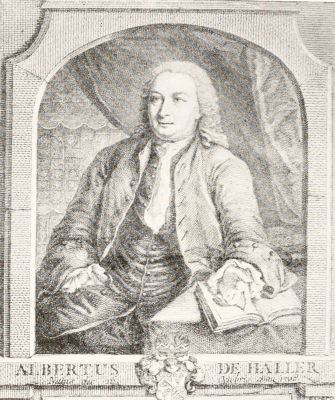
Fig. 54.—Albrecht Haller, 1708-1777.
To the period of Haller also belongs the discovery of oxygen, in 1774, by Priestley, a discovery which was destined to have profound influence upon the subsequent development of physiology, so that even now physiology consists largely in tracing the way in which oxygen enters the body, the manner in which it is distributed to the tissues, and the various phases of vital activity that it brings about within the living tissues.
Charles Bell.—The period of Haller may be considered as extending beyond his lifetime and as terminating when the influence of Müller began to be felt. Another discovery coming in the closing years of Haller's period marks a capital advance in physiology. I refer to the discovery of Charles Bell (1774-1842) showing that the nerve fibers of the anterior roots of the spinal cord belong to the motor type, while those of the posterior roots belong to the sensory type.
This great truth was arrived at theoretically, rather than as the result of experimental demonstration. It was first expounded by Bell in 1811 in a small essay entitled Idea of a New Anatomy of the Brain, which was printed for private distribution. It was expanded in his papers, beginning in 1821, and published in the Philosophical Transactions of the Royal Society of London, and finally embodied in his work on the nervous system, published in 1830. At this latter date Johannes Müller had reached the age of twenty-nine, and had already entered upon his career as the leading physiologist of Germany. What Bell had divined he demonstrated by experiments.
Charles Bell (Fig. 55) was a surgeon of eminence; in private life he was distinguished by "unpretending amenity, and simplicity of manners and deportment."
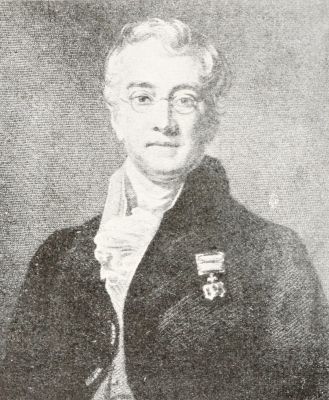
Fig. 55.—Charles Bell, 1774-1842.
Period of Johannes Müller.—The period that marks the beginning of modern physiology came next, and was due to the genius and force of Johannes Müller (1801-1858). Verworn says of him: "He is one of those monumental figures that the history of every science brings forth but once. They change the whole aspect of the field in which they work, and all later growth is influenced by their labors." Johannes Müller was a man of very unusual talent and attainments, the possessor of a master mind. Some have said, and not without reason, that there was something supernatural about Müller, for his whole appearance bore the stamp of the uncommon. His portrait, with its massive head above the broad shoulders, is shown in Fig. 56. In his lectures his manner and his gestures reminded one of a Catholic priest. Early in his life, before the disposition to devote himself to science became so overwhelming, he thought of entering the priesthood, and there clung to him all his life some marks of the holy profession. In his highly intellectual face we find "a trace of severity in his mouth and compressed lips, with the expression of most earnest thought on his brow and eyes, and with the remembrance of a finished work in every wrinkle of his countenance."
This extraordinary man exercised a profound influence upon those who came into contact with him. He excited almost unbounded enthusiasm and great veneration among his students. They were allowed to work close by his side, and so magnetic was his personality that he stimulated them powerfully and succeeded in transmitting to them some of his own mental qualities. As professor of physiology in Berlin, Müller trained many gifted young men, among whom were Ludwig (1816-1895), Du Bois-Reymond (1818-1896), and Helmholtz (1821-1894), who became distinguished scholars and professors in German universities. Helmholtz, speaking of Müller's influence on students, paid this tribute to the grandeur of his teacher: "Whoever comes into contact with men of the first rank has an altered scale of values in life. Such intellectual contact is the most interesting event that life can offer."
The particular service of Johannes Müller to science was to make physiology broadly comparative. So comprehensive was his grasp upon the subject that he gained for himself the title of the greatest physiologist of modern times. He brought together in his great work on the physiology of man not only all that had been previously made known, carefully sifted and digested, but a great mass of new information, which was the result of his own investigations and of those of his students. So rigorous were his scientific standards that he did not admit into this treatise anything which had been untested either by himself or by some of his assistants or students. Verworn says of this monumental work, which appeared in 1833, under the title Handbuch der Physiologie des Menschen: "This work stands to-day unsurpassed in the genuinely philosophical manner in which the material, swollen to vast proportions by innumerable special researches, was for the first time sifted and elaborated into a unitary picture of the mechanism within the living organism. In this respect the Handbuch is to-day not only unsurpassed, but unequalled."
Müller was the most accurate of observers; indeed, he is the most conspicuous example in the nineteenth century of a man who accomplished a prodigious amount of work all of which was of the highest quality. In physiology he stood on broader lines than had ever been used before. He employed every means at his command—experimenting, the observation of simple animals, the microscope, the discoveries in physics, in chemistry, and in psychology.
He also introduced into physiology the principles of psychology, and it is from the period of Johannes Müller that we are to associate recognition of the close connection between the operations of the mind and the physiology of the brain that has come to occupy such a conspicuous position at the present time.
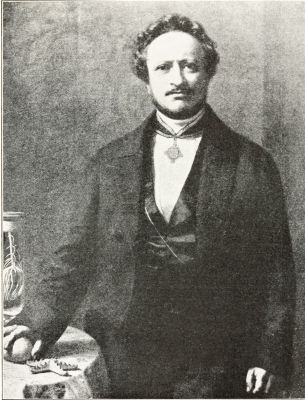
Fig. 56.—Johannes Müller, 1801-1858.
Müller died in 1858, having reached the age of fifty-seven, but his influence was prolonged through the teachings of his students.
Physiology after Müller
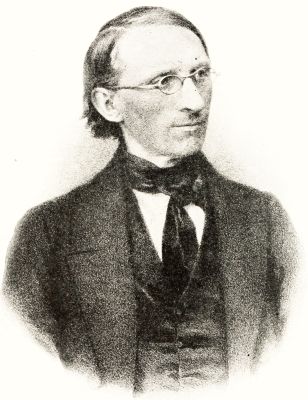
Fig. 57.—Ludwig, 1816-1895.
Ludwig.—Among the men who handed on the torch of Müller there has already been mentioned Ludwig (Fig. 57). For many years he lectured in the University of Leipsic, attracting to that university high-minded, eager, and gifted young men, who received from this great luminary of physiology by expression what he himself had derived from contact with Müller. There are to-day distributed through the universities a number of young physiologists who stand only one generation removed from Johannes Müller, and who still labor in the spirit that was introduced into this department of study by that great master.
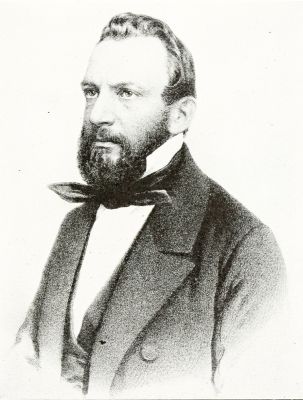
Fig. 58.—Du Bois-Reymond, 1818-1896.
Du Bois-Reymond.—Du Bois-Reymond (Fig. 58), another of his distinguished pupils, came to occupy the chair which Müller himself had filled in the University of Berlin, and during the period of his vigor was in physiology one of the lights of the world. It is no uncommon thing to find recently published physiologies dedicated either to the memory of Johannes Müller, as in the case of that remarkable General Physiology by Verworn; or to Ludwig, or to Du Bois-Reymond, who were in part his intellectual product. From this disposition among physiologists to do homage to Müller, we are able to estimate somewhat more closely the tremendous reach of his influence.
Bernard.—When Müller was twelve years old there was born in Saint-Julien, department of the Rhône, Claude Bernard, who attained an eminence as a physiologist, of which the French nation are justly proud. Although he was little thought of as a student, nevertheless after he came under the influence of Magendie, at the age of twenty-six, he developed rapidly and showed his true metal. He exhibited great manual dexterity in performing experiments, and also a luminous quality of mind in interpreting his observations. One of his greatest achievements in physiology was the discovery of the formation within the liver of glycogen, a substance chemically related to sugar. Later he discovered the system of vaso-motor nerves that control and regulate the caliber of the blood-vessels. Both of these discoveries assisted materially in understanding the wonderful changes that are going on within the human body. But besides his technical researches, any special consideration of which lies quite beyond the purpose of this book, he published in 1878-1879 a work upon the phenomena of life in animals and vegetables, a work that had general influence in extending the knowledge of vital activities. I refer to his now classic Leçons sur les Phénomènes de la vie communs aux animaux et aux végétaux.
The thoughtful face of Bernard is shown in his portrait, Fig. 59. He was one of those retiring, silent men whose natures are difficult to fathom, and who are so frequently misunderstood. A domestic infelicity, that led to the separation of himself from his family, added to his isolation and loneliness. When touched by the social spirit he charmed people by his personality. He was admired by the Emperor Napoleon Third, through whose influence Bernard acquired two fine laboratories. In 1868 he was elected to the French Academy, and became thereby one of the "Forty Immortals."
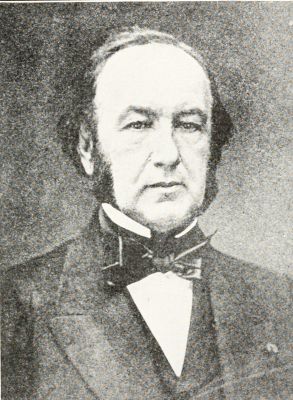
Fig. 59.—Claude Bernard, 1813-1878.
Foster describes him thus: "Tall in stature, with a fine presence, with a noble head, the eyes full at once of thought and kindness, he drew the look of observers upon him wherever he appeared. As he walked in the streets passers-by might be heard to say 'I wonder who that is; he must be some distinguished man.'"
Two Directions of Growth.—Physiology, established on the broad foundations of Müller, developed along two independent pathways, the physical and the chemical. We find a group of physiologists, among whom Weber, Ludwig, Du Bois-Reymond, and Helmholtz were noteworthy leaders, devoted to the investigations of physiological facts through the application of measurements and records made by machinery. With these men came into use the time-markers, the myographs, and the ingenious methods of recording blood-pressure, changes in respiration, the responses of muscle and nerve to various forms of stimulation, the rate of transmission of nerve-currents, etc.
The investigation of vital activities by means of measurements and instrumental records has come to represent one especial phase of modern physiology. As might have been predicted, the discoveries and extensions of knowledge resulting from this kind of experimentation have been remarkable, since it is obvious that permanent records made by mechanical devices will rule out many errors; and, moreover, they afford an opportunity to study at leisure phenomena that occupy a very brief time.
The other marked line of physiological investigation has been in the domain of chemistry, where Wöhler, Liebig, Kühne, and others have, through the study of the chemical changes occurring in its body, observed the various activities that take place within the organism. They have reduced all tissues and all parts of the body to chemical analysis, studied the chemical changes in digestion, in respiration, etc. The more recent observers have also made a particular feature of the study of the chemical changes going on within the living matter.
The union of these two chief tendencies into the physico-chemical aspects of physiology has established the modern way of looking upon vital activities. These vital activities are now regarded as being, in their ultimate analysis, due to physical and chemical changes taking place within the living substratum. All along, this physico-chemical idea has been in contest with that of a duality between the body and the life that is manifested in it. The vitalists, then, have had many controversies with those who make their interpretations along physico-chemical lines. We will recollect that vitalism in the hands of the immediate successors of Haller became not only highly speculative, but highly mystical, tending to obscure any close analysis of vital activity and throwing explanations all back into the domain of mysticism. Johannes Müller was also a vitalist, but his vitalism was of a more acceptable form. He thought of changes in the body as being due to vitality—to a living force; but he did not deny the possibility of the transformation of this vital energy into other forms of energy; and upon the basis of Müller's work there has been built up the modern conception that there is found in the human body a particular transformation-form of energy, not a mystical vital force that presides over all manifestations of life.
The advances in physiology, beginning with those of William Harvey, have had immense influence not only upon medicine, but upon all biology. We find now the successful and happy union between physiology and morphology in the work which is being so assiduously carried on to-day under the title of experimental morphology.
The great names in physiology since Müller are numerous, and perhaps it is invidious to mention particular ones; but, inasmuch as Ludwig and Du Bois-Reymond have been spoken of, we may associate with them the names of Sir Michael Foster and Burdon-Sanderson, in England; and of Brücke (one of Müller's disciples) and Verworn, in Germany, as modern leaders whose investigations have promoted advance, and whose clear exposition of the facts and the theories of physiology have added much to the dignity of the science.
CHAPTER X
VON BAER AND THE RISE OF EMBRYOLOGY
Anatomy investigates the arrangement of organic tissues; embryology, or the science of development, shows how they are produced and arranged. There is no more fascinating division of biological study. As Minot says: "Indeed, the stories which embryology has to tell are the most romantic known to us, and the wildest imaginative creations of Scott or Dumas are less startling than the innumerable and almost incredible shifts of rôle and change of character which embryology has to entertain us with in her histories."
Embryology is one of the most important biological sciences in furnishing clues to the past history of animals. Every organism above the very lowest, no matter how complex, begins its existence as a single microscopic cell, and between that simple state and the fully formed condition every gradation of structure is exhibited. Every time an animal is developed these constructive changes are repeated in orderly sequence, and one who studies the series of steps in development is led to recognize that the process of building an animal's body is one of the most wonderful in all nature.
Rudimentary Organs.—But, strangely enough, the course of development in any higher organism is not straightforward, but devious. Instead of organs being produced in the most direct manner, unexpected by-paths are followed, as when all higher animals acquire gill-clefts and many other rudimentary organs not adapted to their condition of life. Most of the rudimentary organs are transitory, and bear testimony, as hereditary survivals, to the line of ancestry. They are clues by means of which phases in the evolution of animal life may be deciphered.
Bearing in mind the continually shifting changes through which animals pass in their embryonic development, one begins to see why the adult structures of animals are so difficult to understand. They are not only complex; they are also greatly modified. The adult condition of any organ or tissue is the last step in a series of gradually acquired modifications, and is, therefore, the farthest departure from that which is ancestral and archetypal. But in the process of formation all the simpler conditions are exhibited. If, therefore, we wish to understand an organ or an animal, we must follow its development, and see it in simpler conditions, before the great modifications have been added.
The tracing of the stages whereby cells merge into tissues, tissues into organs, and determining how the organs by combinations build up the body, is embryology. On account of the extended applications of this subject in biology, and the light which it throws on all structural studies, we shall be justified in giving its history at somewhat greater length than that adopted in treating of other topics.
Five Historical Periods.—The story of the rise of this interesting department of biology can, for convenience, be divided into five periods, each marked by an advance in general knowledge. These are: (1) the period of Harvey and Malpighi; (2) the period of Wolff; (3) the period of Von Baer; (4) the period from Von Baer to Balfour; and (5) the period of Balfour, with an indication of present tendencies. Among all the leaders Von Baer stands as a monumental figure at the parting of the ways between the new and the old—the sane thinker, the great observer.
The Period of Harvey and Malpighi
In General.—The usual account of the rise of embryology is derived from German writers. But there is reason to depart from their traditions, in which Wolff is heralded as its founder, and the one central figure prior to Pander and Von Baer.
The embryological work of Wolff's great predecessors, Harvey and Malpighi, has been passed over too lightly. Although these men have received ample recognition in closely related fields of investigation, their insight into those mysterious events that culminate in the formation of a new animal has been rarely appreciated. Now and then a few writers, as Brooks and Whitman, have pointed out the great worth of Harvey's work in embryology, but fewer have spoken for Malpighi in this connection. Koelliker, it is true, in his address at the unveiling of the statue of Malpighi, in his native town of Crevalcuore, in 1894, gives him well-merited recognition as the founder of embryology, and the late Sir Michael Foster has written in a similar vein in his delightful Lectures on the History of Physiology.
However great was Harvey's work in embryology, I venture to say that Malpighi's was greater when considered as a piece of observation. Harvey's work is more philosophical; he discusses the nature of development, and shows unusual powers as an accurate reasoner. But that part of his treatise devoted to observation is far less extensive and exact than Malpighi's, and throughout his lengthy discussions he has the flavor of the ancients.
Malpighi's work, on the contrary, flavors more of the moderns. In terse descriptions, and with many sketches, he shows the changes in the hen's egg from the close of the first day of development onward.
It is a noteworthy fact that, at the period in which he lived, Malpighi could so successfully curb the tendency to indulge in wordy disquisitions, and that he was satisfied to observe carefully, and tell his story in a simple way. This quality of mind is rare. As Emerson has said: "I am impressed with the fact that the greatest thing a human soul ever does in this world is to see something, and tell what it saw in a plain way. Hundreds of people can talk for one who can think, but thousands can think for one who can see. To see clearly is poetry, philosophy, and religion all in one." But "to see" here means, of course, to interpret as well as to observe.
Although there were observers in the field of embryology before Harvey, little of substantial value had been produced. The earliest attempts were vague and uncritical, embracing only fragmentary views of the more obvious features of body-formation. Nor, indeed, should we look for much advance in the field of embryology even in Harvey's time. The reason for this will become obvious when we remember that the renewal of independent observation had just been brought about in the preceding century by Vesalius, and that Harvey himself was one of the pioneers in the intellectual awakening. Studies on the development of the body are specialized, involving observations on minute structures and recondite processes, and must, therefore, wait upon considerable advances in anatomy and physiology. Accordingly, the science of embryology was of late development.
Harvey.—Harvey's was the first attempt to make a critical analysis of the process of development, and that he did not attain more was not owing to limitations of his powers of discernment, but to the necessity of building on the general level of the science of his time, and, further, to his lack of instruments of observation and technique. Nevertheless, Harvey may be considered as having made the first independent advance in embryology.
By clearly teaching, on the basis of his own observations, the gradual formation of the body by aggregation of its parts, he anticipated Wolff. This doctrine came to be known under the title of "epigenesis," but Harvey's epigenesis[3] was not, as Wolff's was, directed against a theory of pre-delineation of the parts of the embryo, but against the ideas of the medical men of the time regarding the metamorphosis of germinal elements. It lacked, therefore, the dramatic setting which surrounded the work of Wolff in the next century. Had the doctrine of pre-formation been current in Harvey's time, we are quite justified in assuming that he would have assailed it as vigorously as did Wolff.
His Treatise on Generation.—Harvey's embryological work was published in 1651 under the title Exercitationes de Generatione Animalium. It embraces not only observations on the development of the chick, but also on the deer and some other mammals. As he was the court physician of Charles I, that sovereign had many deer killed in the park, at intervals, in order to give Harvey the opportunity to study their development.
As fruits of his observation on the chick, he showed the position in which the embryo arises within the egg, viz., in the white opaque spot or cicatricula; and he also corrected Aristotle, Fabricius, and his other predecessors in many particulars.
Harvey's greatest predecessor in this field, Fabricius, was also his teacher. When, in search of the best training in medicine, Harvey took his way from England to Italy, as already recounted, he came under the instruction of Fabricius in Padua. In 1600, Fabricius published sketches showing the development of animals; and, again, in 1625, six years after his death, appeared his illustrated treatise on the development of the chick. Except the figures of Coiter (1573), those of Fabricius were the earliest published illustrations of the kind. Altogether his figures show developmental stages of the cow, sheep, pig, galeus, serpent, rat, and chick.
Harvey's own treatise was not illustrated. With that singular independence of mind for which he was conspicuous, the vision of the pupil was not hampered by the authority of his teacher, and, trusting only to his own sure observation and reason, he described the stages of development as he saw them in the egg, and placed his own construction on the facts.
One of the earliest activities to arrest his attention in the chick was a pulsating point, the heart, and, from this observation, he supposed that the heart and the blood were the first formations. He says: "But as soon as the egg, under the influence of the gentle warmth of the incubating hen, or of warmth derived from another source, begins to pullulate, this spot forthwith dilates, and expands like the pupil of the eye; and from thence, as the grand center of the egg, the latent plastic force breaks forth and germinates. This first commencement of the chick, however, so far as I am aware, has not yet been observed by any one."
It is to be understood, however, that the descriptive part of his treatise is relatively brief (about 40 pages out of 350 in Willis's translation), and that the bulk of the 106 "exercises" into which his work is divided is devoted to comments on the older writers and to discussions of the nature of the process of development.
The aphorism, "omne vivum ex ovo," though not invented by Harvey, was brought into general use through his writings. As used in his day, however, it did not have its full modern significance. With Harvey it meant simply that the embryos of all animals, the viviparous as well as the oviparous, originate in eggs, and it was directed against certain contrary medical theories of the time.
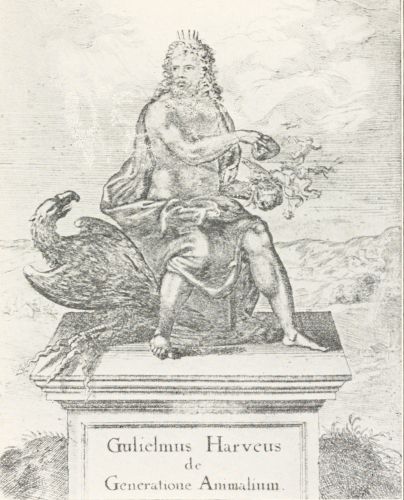
Fig. 60.—Frontispiece to Harvey's Generatione Animalium (1651).
The first edition of his Generatione Animalium, London, 1651, is provided with an allegorical frontispiece embodying this idea. As shown in Fig. 60, it represents Jove on a pedestal, uncovering a round box, or ovum, bearing the inscription "ex ovo omnia," and from the box issue all forms of living creatures, including also man.
Malpighi.—The observer in embryology who looms into prominence between Harvey and Wolff is Malpighi. He supplied what was greatly needed at the time—an illustrated account of the actual stages in the development of the chick from the end of the first day to hatching, shorn of verbose references and speculations.
His observations on development are in two separate memoirs, both sent to the Royal Society in 1672, and published by the Society in Latin, under the titles De Formatione Pulli in Ovo and De Ovo Incubato. The two taken together are illustrated by twelve plates containing eighty-six figures, and the twenty-two quarto pages of text are nearly all devoted to descriptions, a marked contrast to the 350 pages of Harvey unprovided with illustrations.
His pictures, although not correct in all particulars, represent what he was able to see, and are very remarkable for the age in which they were made, and considering the instruments of observation at his command. They show successive stages from the time the embryo is first outlined, and, taken in their entirety, they cover a wide range of stages.
His observations on the development of the heart, comprising twenty figures, are the most complete. He clearly illustrates the aortic arches, those transitory structures of such great interest as showing a phase in ancestral history.
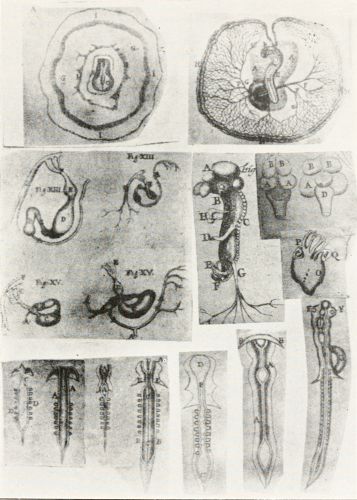
Fig. 61.—Selected Sketches from Malpighi's Works. Showing Stages in the Development of the Chick (1672).
He was also the first to show by pictures the formation of the head-fold and the neural groove, as well as the brain-vesicles and eye-pockets. His delineation of heart, brain, and eye-vesicles are far ahead of those illustrating Wolff's Theoria Generationis, made nearly a hundred years later.
Fig. 61 shows a few selected sketches from the various plates of his embryological treatises, to compare with those of Wolff. (See Fig. 63.)
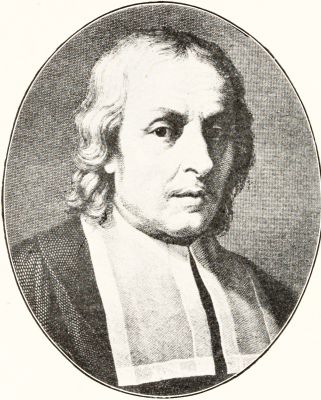
Fig. 62.—Marcello Malpighi, 1628-1694.
The original drawings for De Ovo Incubato, still in possession of the Royal Society, are made in pencil and red chalk, and an examination of them shows that they far surpass the reproductions in finish and accuracy.
While Harvey taught the gradual formation of parts, Malpighi, from his own observations, supposed the rudiments of the embryo to pre-exist within the egg. He thought that, possibly, the blood-vessels were in the form of tubes, closely wrapped together, which by becoming filled with blood were distended. Nevertheless, in the treatises mentioned above he is very temperate in his expressions on the whole matter, and evidently believed in the new formation of many parts.
The portrait of Malpighi shown in Fig. 62 is taken from his life by Atti. From descriptions of his personal appearance (see page 58) one would think that this is probably a better likeness than the strikingly handsome portrait painted by Tabor, and presented by Malpighi to the Royal Society of London. For a reproduction of the latter see page 59.
Malpighi's Rank.—On the whole, Malpighi should rank above Harvey as an embryologist, on account of his discoveries and fuller representation, by drawings and descriptions, of the process of development. As Sir Michael Foster has said: "The first adequate description of the long series of changes by which, as they melt the one into the other, like dissolving views, the little white opaque spot in the egg is transformed into the feathered, living, active bird, was given by Malpighi. And where he left it, so for the most part the matter remained until even the present century. For this reason we may speak of him as the founder of embryology."
The Period of Wolff
Between Harvey and Wolff, embryology had become dominated by the theory that the embryo exists already pre-formed within the egg, and, as a result of the rise of this new doctrine, the publications of Wolff had a different setting from that of any of his predecessors. It is only fair to say that to this circumstance is owing, in large part, the prominence of his name in connection with the theory of epigenesis. As we have already seen, Harvey, more than a century before the publications of Wolff, had clearly taught that development is a process of gradual becoming. Nevertheless, Wolff's work, as opposed to the new theory, was very important.
While the facts fail to support the contention that he was the founder of epigenesis, it is to be remembered that he has claims in other directions to rank as the foremost student of embryology prior to Von Baer.
As a preliminary to discussing Wolff's position, we should bring under consideration the doctrine of pre-formation and encasement.
Rise of the Theory of Pre-delineation.—The idea of pre-formation in its first form is easily set forth. Just as when we examine a seed we find within an embryo plantlet, so it was supposed that the various forms of animal life existed in miniature within the egg. The process of development was supposed to consist of the expansion or unfolding of this pre-formed embryo. The process was commonly illustrated by reference to flower-buds. "Just as already in a small bud all the parts of the flower, such as stamens and colored petals, are enveloped by the green and still undeveloped sepals; just as the parts grow in concealment and then suddenly expand into a blossom, so also in the development of animals, it was thought that the already present, small but transparent parts grow, gradually expand, and become discernible." (Hertwig.) From the feature of unfolding this was called in the eighteenth century the theory of evolution, giving to that term quite a different meaning from that attached to it at the present time.
This theory, strange as it may seem to us now, was founded on a basis of actual observation—not entirely on speculation. Although it was a product of the seventeenth century, from several printed accounts one is likely to gather the impression that it arose in the eighteenth century, and that Bonnet, Haller, and Leibnitz were among its founders. This implication is in part fostered by the circumstance that Swammerdam's Biblia Naturæ, which contains the germ of the theory, was not published until 1737—more than half a century after his death—although the observations for it were completed before Malpighi's first paper on embryology was published in 1672. While it is well to bear in mind that date of publication, rather than date of observation, is accepted as establishing the period of emergence of ideas, there were other men, as Malpighi and Leeuwenhoek, contemporaries of Swammerdam, who published in the seventeenth century the basis for this theory.
Malpighi supposed (1672) the rudiment of the embryo to pre-exist within the hen's egg, because he observed evidences of organization in the unincubated egg. This was in the heat of the Italian summer (in July and August, as he himself records), and Dareste suggests that the developmental changes had gone forward to a considerable degree before Malpighi opened the eggs. Be this as it may, the imperfection of his instruments and technique would have made it very difficult to see anything definitely in stages under twenty-four hours.
In reference to his observations, he says that in the unincubated egg he saw a small embryo enclosed in a sac which he subjected to the rays of the sun. "Frequently I opened the sac with the point of a needle, so that the animals contained within might be brought to the light, nevertheless to no purpose; for the individuals were so jelly-like and so very small that they were lacerated by a light stroke. Therefore, it is right to confess that the beginnings of the chick pre-exist in the egg, and have reached a higher development in no other way than in the eggs of plants." ("Quare pulli stamina in ovo præexistere, altiorémque originem nacta esse fateri convenit, haud dispari ritu, ac in Plantarum ovis.")
Swammerdam (1637-1680) supplied a somewhat better basis. He observed that the parts of the butterfly, and other insects as well, are discernible in the chrysalis stage. Also, on observing caterpillars just before going into the pupa condition, he saw in outline the organs of the future stage, and very naturally concluded that development consists of an expansion of already formed parts.
A new feature was introduced through the discovery, by Leeuwenhoek, about 1677,[4] of the fertilizing filaments of eggs. Soon after, controversies began to arise as to whether the embryo pre-existed in the sperm or in the egg. By Leeuwenhoek, Hartsoeker, and others the egg was looked upon as simply a nidus within which the sperm developed, and they asserted that the future animal existed in miniature in the sperm. These controversies gave rise to the schools of the animalculists, who believed the sperm to be the animal germ, and of the ovulists, who contended for the ovum in that rôle.
It is interesting to follow the metaphysical speculations which led to another aspect of the doctrine of pre-formation. There were those, notably Swammerdam, Leibnitz, and Bonnet, who did not hesitate to follow the idea to the logical consequence that, if the animal germ exists pre-formed, one generation after another must be encased within it. This gave rise to the fanciful idea of encasement or emboîtement, which was so greatly elaborated by Bonnet and, by Leibnitz, applied to the development of the soul. Even Swammerdam (who, by the way, though a masterly observer, was always a poor generalizer) conceived of the germs of all forthcoming generations as having been located in the common mother Eve, all closely encased one within the other, like the boxes of a Japanese juggler. The end of the human race was conceived of by him as a necessity, when the last germ of this wonderful series had been unfolded.
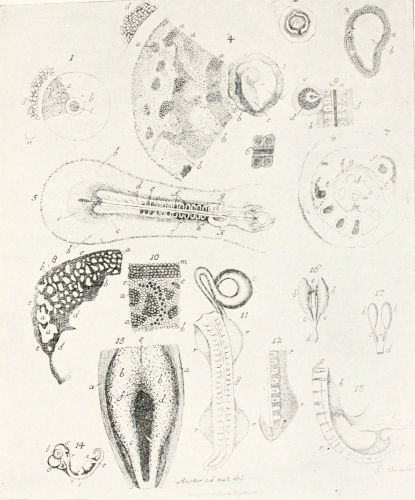
Fig. 63.—Plate from Wolff's Theoria Generationis (1759), Showing Stages in the Development of the Chick.
His successors, in efforts to compute the number of homunculi which must have been condensed in the ovary of Eve, arrived at the amazing result of two hundred millions.
Work of Wolff.—Friedrich Kaspar Wolff, as a young man of twenty-six years, set himself against this grotesque doctrine of pre-formation and encasement in his Theoria Generationis, published in 1759. This consists of three parts: one devoted to the development of plants, one to the development of animals, and one to theoretical considerations. He contended that the organs of animals make their appearance gradually, and that he could actually follow their successive stages of formation.
The figures in it illustrating the development of the chick, some of which are shown in Fig. 63, are not, on the whole, so good as Malpighi's. Wolff gives, in all, seventeen figures, while Malpighi published eighty-six, and his twenty figures on the development of the heart are more detailed than any of Wolff's. When the figures represent similar stages of development, a comparison of the two men's work is favorable to Malpighi. The latter shows much better, in corresponding stages, the series of cerebral vesicles and their relation to the optic vesicles. Moreover, in the wider range of his work, he shows many things—such as the formation of the neural groove, etc.—not included in Wolff's observations. Wolff, on the other hand, figures for the first time the primitive kidneys, or "Wolffian bodies," of which he was the discoverer.
Although Wolff was able to show that development consists of a gradual formation of parts, his theory of development was entirely mystical and unsatisfactory. The fruitful idea of germinal continuity had not yet emerged, and the thought that the egg has inherited an organization from the past was yet to be expressed. Wolff was, therefore, in the same quandary as his predecessors when he undertook to explain development. Since he assumed a total lack of organization in the beginning, he was obliged to make development "miraculous" through the action on the egg of a hyperphysical agent. From a total lack of organization, he conceived of its being lifted to the highly organized product through the action of a "vis essentialis corporis."
He returned to the problem of development later, and, in 1768-1769, published his best work in this field on the development of the intestine.[5] This is a very original and strong piece of observational work. While his investigations for the Theoria Generationis did not reach the level of Malpighi's, those of the paper of 1768 surpassed them and held the position of the best piece of embryological work up to that of Pander and Von Baer. This work was so highly appreciated by Von Baer that he said: "It is the greatest masterpiece of scientific observation which we possess." In it he clearly demonstrated that the development of the intestine and its appendages is a true process of becoming. Still later, in 1789, he published further theoretical considerations.
Opposition to Wolff's Views.—But all Wolff's work was launched into an uncongenial atmosphere. The great physiologist Haller could not accept the idea of epigenesis, but opposed it energetically, and so great was his authority that the views of Wolff gained no currency. This retarded progress in the science of animal development for more than a half-century.
Bonnet was also a prolific writer in opposition to the ideas of Wolff, and we should perhaps have a portrait of him (Fig. 64) as one of the philosophical naturalists of the time. His prominent connection with the theory of pre-delineation in its less grotesque form, his discovery of the development of the eggs of plant-lice without previous fertilization, his researches on regeneration of parts in polyps and worms, and other observations place him among the conspicuous naturalists of the period. His system of philosophy, which has been carefully analyzed by Whitman, is designated by that writer as a system of negations.
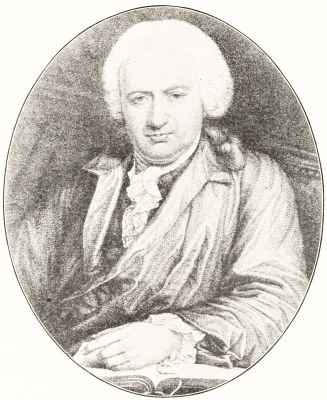
Fig. 64.—Charles Bonnet, 1720-1793.
In 1821, J. Fr. Meckel, recognizing the great value of Wolff's researches on the development of the intestines, rescued the work from neglect and obscurity by publishing a German translation of the same, and bringing it to the attention of scholars. From that time onward Wolff's labor was fruitful.
His De Formatione Intestinorum rather than his Theoria Generationis embodies his greatest contribution to embryology. Not only is it a more fitting model of observation, but in it he foreshadows the idea of germ-layers in the embryo, which, under Pander and Von Baer, became the fundamental conception in structural embryology. Throughout his researches both early and late, he likens the embryonic rudiments, which precede the formation of organs, to leaflets. In his work of 1768 he described in detail how the leaf-like layers give rise to the systems of organs; showing that the nervous system arises first from a leaf-like layer, and is followed, successively, by a flesh layer, the vascular system, and lastly, by the intestinal canal—all arising from original leaf-like layers.
In these important generalizations, although they are verbally incorrect, he reached the truth as nearly as it was possible at the time, and laid the foundation of the germ-layer theory.
Wolff was a man of great power as an observer, and although his influence was for a long time retarded, he should be recognized as the foremost investigator in embryology before Von Baer.
Few Biographical Facts.—The little known of his life is gained through his correspondence and a letter by his amanuensis. Through personal neglect, and hostility to his work, he could not secure a foothold in the universities of Germany, and, in 1764, on the invitation of Catherine of Russia, he went to the Academy of Sciences at St. Petersburg, where he spent the last thirty years of his life.
It has been impossible to discover a portrait of Wolff, although I have sought one in various ways for several years. The secretary of the Academy of Sciences at St. Petersburg writes that no portrait of Wolff exists there, and that the Academy will gratefully receive information from any source regarding the existence of a portrait of the great academician.
His sincere and generous spirit is shown in his correspondence with Haller, his great opponent. "And as to the matter of contention between us, I think thus: For me, no more than for you, glorious man, is truth of the very greatest concern. Whether it chance that organic bodies emerge from an invisible into a visible condition, or form themselves out of the air, there is no reason why I should wish the one were truer than the other, or wish the one and not the other. And this is your view also, glorious man. We are investigating for truth only; we seek that which is true. Why then should I contend with you?" (Quoted from Wheeler.)
The Period of Von Baer
What Johannes Müller was for physiology, von Baer was for embryology; all subsequent growth was influenced by his investigations.
The greatest classic in embryology is his Development of Animals (Entwicklungsgeschichte der Tiere—Beobachtung und Reflexion), the first part of which was published in 1828, and the work on the second part completed in 1834, although it was not published till 1837. This second part was never finished according to the plan of Von Baer, but was issued by his publisher, after vainly waiting for the finished manuscript. The final portion, which Von Baer had withheld, in order to perfect in some particulars, was published in 1888, after his death, but in the form in which he left it in 1834.
The observations for the first part began in 1819, after he had received a copy of Pander's researches, and covered a period of seven years of close devotion to the subject; and the observations for the last part were carried on at intervals for several years.
It is significant of the character of his Reflexionen that, although published before the announcement of the cell-theory, and before the acceptance of the doctrine of organic evolution, they have exerted a molding influence upon embryology to the present time. The position of von Baer in embryology is owing as much to his sagacity in speculation as to his powers as an observer. "Never again have observation and thought been so successfully combined in embryological work" (Minot).
Von Baer was born in 1792, and lived on to 1876, but his enduring fame in embryology rests on work completed more than forty years before the end of his useful life. After his removal from Königsberg to St. Petersburg, in 1834, he very largely devoted himself to anthropology in its widest sense, and thereby extended his scientific reputation into other fields.
If space permitted, it would be interesting to give the biography[6] of this extraordinary man, but here it will be necessary to content ourselves with an examination of his portraits and a brief account of his work.
Portraits.—Several portraits of von Baer showing him at different periods of his life have been published. A very attractive one, taken in his early manhood, appeared in Harper's Magazine for 1898. The expression of the face is poetical, and the picture is interesting to compare with the more matured, sage-like countenance forming the frontispiece of Stieda's Life of Von Baer (see Fig. 65). This, perhaps the best of all his portraits, shows him in the full development of his powers. An examination of it impresses one with confidence in his balanced judgment and the thoroughness and profundity of his mental operations.
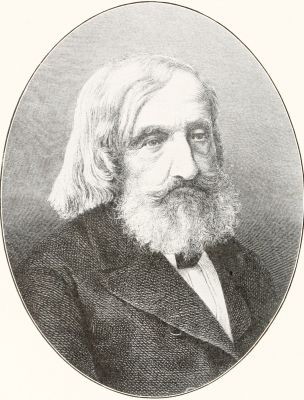
Fig. 65.—Karl Ernst von Baer, 1792-1876.
The portrait of Von Baer at about seventy years of age, reproduced in Fig. 66, is, however, destined to be the one by which he is commonly known to embryologists, since it forms the frontispiece of the great cooperative Handbook of Embryology just published under the editorship of Oskar Hertwig.
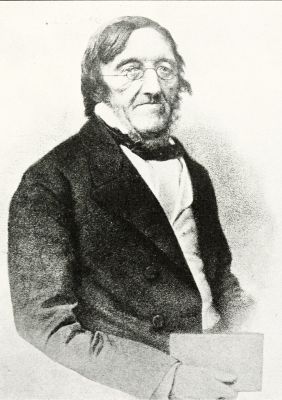
Fig. 66.—Von Baer at about Seventy Years of Age.
Von Baer's Especial Service.—Apart from special discoveries, Von Baer greatly enriched embryology in three directions: In the first place, he set a higher standard for all work in embryology, and thereby lifted the entire science to a higher level. Activity in a great field of this kind is, with the rank and file of workers, so largely imitative that this feature of his influence should not be overlooked. In the second place, he established the germ-layer theory, and, in the third, he made embryology comparative.
In reference to the germ-layer theory, it should be recalled that Wolff had distinctly foreshadowed the idea by showing that the material out of which the embryo is constructed is, in an early stage of development, arranged in the form of leaf-like layers. He showed specifically that the alimentary canal is produced by one of these sheet-like expansions folding and rolling together.
Pander, by observations on the chick (1817), had extended the knowledge of these layers and elaborated the conception of Wolff. He recognized the presence of three primary layers—an outer, a middle, and an inner—out of which the tissues of the body are formed.
The Germ-Layers.—But it remained for Von Baer,[7] by extending his observations into all the principal groups of animals, to raise this conception to the rank of a general law of development. He was able to show that in all animals except the very lowest there arise in the course of development leaf-like layers, which become converted into the "fundamental organs" of the body.
Now, these elementary layers are not definitive tissues of the body, but are embryonic, and therefore may appropriately be designated "germ-layers." The conception that these germ-layers are essentially similar in origin and fate in all animals was a fuller and later development of the germ-layer theory, a conception which dominated embryological study until a recent date.
Von Baer recognized four such layers; the outer and inner ones being formed first, and subsequently budding off a middle layer composed of two sheets. A little later (1845) Remak recognized the double middle layer of Von Baer as a unit, and thus arrived at the fundamental conception of three layers—the ecto-, endo-, and mesoderm—which has so long held sway. For a long time after Von Baer the aim of embryologists was to trace the history of these germ-layers, and so in a wider and much qualified sense it is to-day.
It will ever stand to his credit, as a great achievement, that Von Baer was able to make a very complicated feature of development clear and relatively simple. Given a leaf-like rudiment, with the layers held out by the yolk, as is the case in the hen's egg, it was no easy matter to conceive how they are transformed into the nervous system, the body-wall, the alimentary canal, and other parts, but Von Baer saw deeply and clearly that the fundamental anatomical features of the body are assumed by the leaf-like rudiments being rolled into tubes.
Fig. 67 shows four sketches taken from the plates illustrating von Baer's work. At A is shown a stage in the formation of the embryonic envelope, or amnion, which surrounds the embryos of all animals above the class of amphibia. B, another figure of an ideal section, shows that, long before the day of microtomes, Von Baer made use of sections to represent the relationships of his four germ-layers. At C and D is represented diagrammatically the way in which these layers are rolled into tubes. He showed that the central nervous system arose in the form of a tube, from the outer layer; the body-wall in the form of a tube, composed of skin and muscle layers; and the alimentary tube from mucous and vascular layers.
The generalization that embryos in development tend to recapitulate their ancestral history is frequently attributed to Von Baer, but the qualified way in which he suggests something of the sort will not justify one in attaching this conclusion to his work.
Von Baer was the first to make embryology truly comparative, and to point out its great value in anatomy and zoölogy. By embryological studies he recognized four types of organization—as Cuvier had done from the standpoint of comparative anatomy. But, since these types of organization have been greatly changed and subdivided, the importance of the distinction has faded away. As a distinct break, however, with the old idea of a linear scale of being it was of moment.
Among his especially noteworthy discoveries may be mentioned that of the egg of mammals (1827), and the notochord as occurring in all vertebrate animals. His discovery of the mammalian egg had been preceded by Purkinje's observations upon the germinative spot in the bird's egg (1825).
Von Baer's Rank.—Von Baer has come to be dignified with the title of the "father of modern embryology." No man could have done more in his period, and it is owing to his superb intellect, and to his talents as an observer, that he accomplished what he did. As Minot says: "He worked out, almost as fully as was possible at this time, the genesis of all the principal organs from the germ-layers, instinctively getting at the truth as only a great genius could have done."
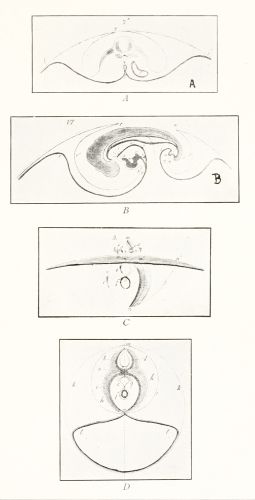
Fig. 67.—Sketches from Von Baer's Embryological Treatise (1828).
After his masterly work, the science of embryology could never return to its former level; he had given it a new direction, and through his influence a period of great activity was introduced.
The Period from Von Baer to Balfour
In the period between Von Baer and Balfour there were great general advances in the knowledge of organic structure that brought the whole process of development into a new light.
Among the most important advances are to be enumerated the announcement of the cell-theory, the discovery of protoplasm, the beginning of the recognition of germinal continuity, and the establishment of the doctrine of organic evolution.
The Cell-Theory.—The generalization that the tissues of all animals and plants are structurally composed of similar units, called cells, was given to the world through the combined labors of Schleiden and Schwann. The history of this doctrine, together with an account of its being remodeled into the protoplasm doctrine, is given in Chapter XII.
The broad-reaching effects of the cell-theory may be easily imagined, since it united all animals on the broad place of likeness in microscopic structure. Now for the first time the tissues of the body were analyzed into their units; now for the first time was comprehended the nature of the germ-layers of Von Baer.
Among the first questions to emerge in the light of the new researches were concerning the origin of cells in the organs, the tissues, and the germ-layers. The road to the investigation of these questions was already opened, and it was followed, step by step, until the egg and the sperm came to be recognized as modified cells. This position was reached, for the egg, about 1861, when Gegenbaur showed that the eggs of all vertebrate animals, regardless of size and condition, are in reality single cells. The sperm was put in the same category about 1865.
The rest was relatively easy: the egg, a single cell, by successive divisions produces many cells, and the arrangement of these into primary embryonic layers brings us to the starting-point of Wolff and Von Baer. The cells, continuing to multiply by division, not only increase in number, but also undergo changes through division of physiological labor, whereby certain groups are set apart to perform a particular part of the work of the body. In this way arise the various tissues of the body, which are, in reality, similar cells performing a similar function. Finally, from combinations of tissues, the organs are formed.
But the egg, before entering on the process of development, must be stimulated by the union of the sperm with the nucleus of the egg, and thus the starting-point of every animal and plant, above the lowest group, proves to be a single cell with protoplasm derived from two parents. While questions regarding the origin of cells in the body were being answered, the foundation for the embryological study of heredity was also laid.
Advances were now more rapid and more sure; flashes of morphological insight began to illuminate the way, and the facts of isolated observations began to fit into a harmonized whole.
Apart from the general advances of this period, mentioned in other connections, the work of a few individuals requires notice.
Rathke and Remak were engaged with the broader aspects of embryology, as well as with special investigations. From Rathke's researches came great advances in the knowledge of the development of insects and other invertebrates, and Remak is notable for similar work with the vertebrates. As already mentioned, he was the first to recognize the middle layer as a unit, through which the three germ-layers of later embryologists emerged into the literature of the subject.
Koelliker, 1817-1905, the veteran embryologist, for so many years a professor in the University of Würzburg, carried on investigations on the segmentation of the egg. Besides work on the invertebrates, later he followed with care the development of the chick and the rabbit; he encompassed the whole field of embryology, and published, in 1861 and again in 1876, a general treatise on vertebrate embryology, of high merit. The portrait of this distinguished man is shown in Chapter VIII, where also his services as a histologist are recorded.
Huxley took a great step toward unifying the idea of germ-layers throughout the animal kingdom, when he maintained, in 1849, that the two cell-layers in animals like the hydra and oceanic hydrozoa correspond to the ectoderm and endoderm of higher animals.
Kowalevsky (Fig. 68) made interesting discoveries of a general bearing. In 1866 he showed the practical identity, in the early stages of development, between one of the lowest vertebrates (amphioxus) and a tunicate. The latter up to that time had been considered an invertebrate, and the effect of Kowalevsky's observations was to break down the sharply limited line supposed to exist between the invertebrates and the vertebrates. This was of great influence in subsequent work. Kowalevsky also founded the generalization that all animals in development pass through a gastrula stage—a doctrine associated, since 1874, with the name of Haeckel under the title of the gastræa theory.
Beginning of the Doctrine of Germinal Continuity.—The conception that there is unbroken continuity of germinal substance between all living organisms, and that the egg and the sperm are endowed with an inherited organization of great complexity, has become the basis for all current theories of heredity and development. So much is involved in this conception that, in the present decade, it has been designated (Whitman) "the central fact of modern biology." The first clear expression of it is found in Virchow's Cellular Pathology, published in 1858. It was not, however, until the period of Balfour, and through the work of Fol, Van Beneden (chromosomes, 1883), Boveri, Hertwig, and others, that the great importance of this conception began to be appreciated, and came to be woven into the fundamental ideas of development.
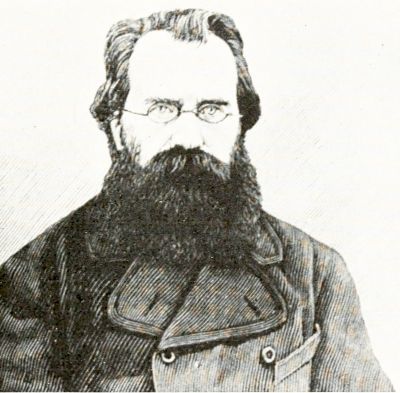
Fig. 68.—A. Kowalevsky, 1840-1901.
Influence of the Doctrine of Organic Evolution.—This doctrine, although founded in its modern sense by Lamarck in the early part of the nineteenth century, lay dormant until Darwin, in 1859, brought a new feature into its discussion by emphasizing the factor of natural selection. The general acceptance of the doctrine, which followed after fierce opposition, had, of course, a profound influence on embryology. The latter science is so intimately concerned with the genealogy of animals and plants, that the newly accepted doctrine, as affording an explanation of this genealogy, was the thing most needed.
The development of organisms was now seen in the light of ancestral history, rudimentary organs began to have meaning as hereditary survivals, and the whole process of development assumed a different aspect. This doctrine supplied a new impulse to the interpretation of nature at large, and of the embryological record in particular. The meaning of the embryological record was so greatly emphasized in the period of Balfour that it will be commented upon under the next division of our subject.
The period between Von Baer and Balfour proved to be one of great importance on account of the general advances in knowledge of all organic nature. Observations were moving toward a better and more consistent conception of the structure of animals and plants. A new comparative anatomy, more profound and richer in meaning than Cuvier's, was arising. The edifice on the foundation of Von Baer's work was now emerging into recognizable outlines.
The Period of Balfour, with an Indication of Present Tendencies
Balfour's Masterly Work.—The workers of this period inherited all the accumulations of previous efforts, and the time was ripe for a new step. Observations on the development of different animals, vertebrates and invertebrates, had accumulated in great number, but they were scattered through technical periodicals, transactions of learned societies, monographs, etc., and there was no compact science of embryology with definite outlines. Balfour reviewed all this mass of information, digested it, and molded it into an organized whole. The results were published in the form of two volumes with the title of Comparative Embryology. This book of "almost priceless value" was given to the world in 1880-1881. It was a colossal undertaking, but Balfour was a phenomenal worker. Before his untimely death at the age of thirty-one, he had been able to complete this work and to produce, besides, a large number of technical researches. The period of Balfour is taken arbitrarily in this volume as beginning about 1874, when he published, with Michael Foster, The Elements of Embryology.
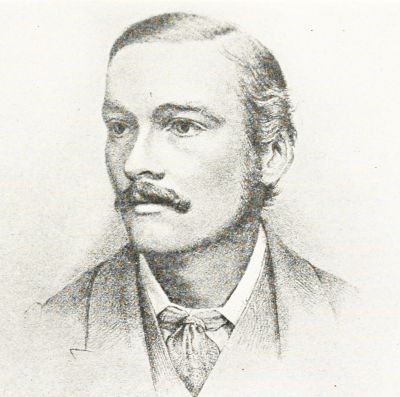
Fig. 69.—Francis M. Balfour, 1851-1882.
His University Career.—Balfour (Fig. 69) was born in 1851. During his days of preparation for the university he was a good student, but did not exhibit in any marked way the powers for which later he became distinguished. At Cambridge, his distinguished teacher, the late Sir Michael Foster, recognized his great talents, and encouraged him to begin work in embryology. His labors in this field once begun, he threw himself into it with great intensity. He rose rapidly to a professorship in Cambridge, and so great was his enthusiasm and earnestness as a lecturer that in seven years "voluntary attendance on his classes advanced from ten to ninety." He was also a stimulator of research, and at the time of his death there were twenty students engaged in his laboratory on problems of development.
He was distinguished for personal attractiveness, and those who met him were impressed with his great sincerity, as well as his personal charm. He was welcomed as an addition to the select group of distinguished scientific men of England, and a great career was predicted for him. Huxley, when he felt the call, at a great personal sacrifice, to lay aside the more rigorous pursuits of scientific research, and to devote himself to molding science into the lives of the people, said of Balfour: "He is the only man who can carry out my work."
His Tragic Fate.—But that was not destined to be. The story of his tragic end need be only referred to. After completing the prodigious labor on the Comparative Embryology he went to Switzerland for recuperation, and met his death, with that of his guide, by slipping from an Alpine height into a chasm. His death occurred in July, 1882.
The memorial edition of his works fills four quarto volumes, but the "Comparative Embryology" is Balfour's monument, and will give him enduring fame. It is not only a digest of the work of others, but contains also general considerations of a far-seeing quality. He saw developmental processes in the light of the hypothesis of organic evolution. His speculations were sufficiently reserved, and nearly always luminous. It is significant of the character of this work to say that the speculations contained in the papers of the rank and file of embryological workers for more than two decades, and often fondly believed to be novel, were for the most part anticipated by Balfour, and were also better expressed, with better qualifications.
The reading of ancestral history in the stages of development is such a characteristic feature of the embryological work of Balfour's period that some observations concerning it will now be in place.
Interpretation of the Embryological Record.—Perhaps the most impressive feature of animal development is the series of similar changes through which all pass in the embryo. The higher animals, especially, exhibit all stages of organization from the unicellular fertilized ovum to the fully formed animal so far removed from it. The intermediate changes constitute a long record, the possibility of interpreting which has been a stimulus to its careful examination.
Meckel, in 1821, and later Von Baer, indicated the close similarity between embryonic stages of widely different animals; Von Baer, indeed, confessed that he was unable to distinguish positively between a reptile, a bird, and a mammalian embryo in certain early stages of growth.
In addition to this similarity, which is a constant feature of the embryological record, there is another one that may be equally significant; viz., in the course of embryonic history, sets of rudimentary organs arise and disappear. Rudimentary teeth make their appearance in the embryo of the whalebone whale, but they are transitory and soon disappear without having been of service to the animal. In the embryos of all higher vertebrates, as is well known, gill-clefts and gill-arches with an appropriate circulation, make their appearance, but disappear long before birth. These indications, and similar ones, must have some meaning.
Now whatever qualities an animal exhibits after birth are attributed to heredity. May it not be that all the intermediate stages are also inheritances, and, therefore, represent phases in ancestral history? If they be, indeed, clues to ancestral conditions, may we not, by patching together our observations, be able to interpret the record, just as the history of ancient peoples has been made out from fragments in the shape of coins, vases, implements, hieroglyphics, inscriptions, etc.?
The Recapitulation Theory.—The results of reflection in this direction led to the foundation of the recapitulation theory, according to which animals are supposed, in their individual development, to recapitulate to a considerable degree phases of their ancestral history. This is one of the widest generalizations of embryology. It was suggested in the writings of Von Baer and Louis Agassiz, but received its first clear and complete expression in 1863, in the writings of Fritz Müller.
Although the course of events in development is a record, it is, at best, only a fragmentary and imperfect one. Many stages have been dropped out, others are unduly prolonged or abbreviated, or appear out of chronological order, and, besides this, some of the structures have arisen from adaptation of a particular organism to its conditions of development, and are, therefore, not ancestral at all, but, as it were, recent additions to the text. The interpretation becomes a difficult task, which requires much balance of judgment and profound analysis.
The recapitulation theory was a dominant note in all Balfour's speculations, and in that of his contemporary and fellow-student Marshall. It has received its most sweeping application in the works of Ernst Haeckel.
Widely spread throughout recent literature is to be noted a reaction against the too wide and unreserved application of this doctrine. This is naturally to be expected, since it is the common tendency in all fields of scholarship to demand a more critical estimate of results, and to undergo a reaction from the earlier crude and sweeping conclusions.
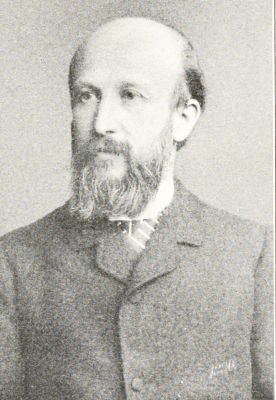
Fig. 70.—Oskar Hertwig in 1890.
Nearly all problems in anatomy and structural zoölogy are approached from the embryological side, and, as a consequence, the work of the great army of anatomists and zoölogists has been in a measure embryological. Many of them have produced beautiful and important researches, but the work is too extended to admit of review in this connection.
Oskar Hertwig, of Berlin (Fig. 70), is one of the representative embryologists of Europe, while, in this country, lights of the first magnitude are Brooks, Minot, Whitman, E.B. Wilson, and others.
Although no attempt is made to review the researches of the recent period, we cannot pass entirely without mention the discovery of chromosomes, and of their reduction in the ripening of the egg and in the formation of sperm. This has thrown a flood of light on the phenomena of fertilization, and has led to the recognition of chromosomes as probably the bearers of heredity. The nature of fertilization, investigated by Fol, O. Hertwig, and others, formed the starting-point for a series of brilliant discoveries.
The embryological investigations of the late Wilhelm His (Fig. 71) are also deserving of especial notice. His luminous researches on the development of the nervous system, the origin of nerve fibers, and his analysis of the development of the human embryo are all very important.
Recent Tendencies. Experimental Embryology.—Soon after the publication of Balfour's great work on "Comparative Embryology," a new tendency in research began to appear which led onward to the establishment of experimental embryology. All previous work in this field had been concerned with the structure, or architecture, of organisms, but now the physiological side began to receive attention. Whitman has stated with great aptness the interdependence of these two lines of work, as follows: "Morphology raises the question, How came the organic mechanism into existence? Has it had a history, reaching its present stage of perfection through a long series of gradations, the first term of which was a relatively simple stage? The embryological history is traced out, and the palæontological records are searched, until the evidence from both sources establishes the fact that the organ or organism under study is but the summation of modifications and elaborations of a relatively simple primordial. This point settled, physiology is called upon to complete the story. Have the functions remained the same through the series? or have they undergone a series of modifications, differentiations, and improvements more or less parallel with the morphological series?"
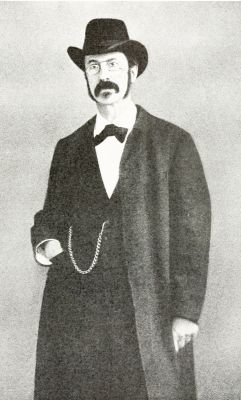
Fig. 71.—Wilhelm His, 1831-1904. At Sixty-four Years.
Since physiology is an experimental science, all questions of this nature must be investigated with the help of experiments. Organisms undergoing development have been subjected to changed conditions, and their responses to various forms of stimuli have been noted. In the rise of experimental embryology we have one of the most promising of the recent departures from the older aspects of the subject. The results already attained in this attractive and suggestive field make too long a story to justify its telling in this volume. Roux, Herbst, Loeb, Morgan, E.B. Wilson, and many others have contributed to the growth of this new division of embryology. Good reasons have been adduced for believing that qualitative changes take place in the protoplasm as development proceeds. And a curb has been put upon that "great fault of embryology, the tendency to explain any and every operation of development as merely the result of inheritance." It has been demonstrated that surrounding conditions have much to do with individual development, and that the course of events may depend largely upon stimuli coming from without, and not exclusively on an inherited tendency.
Cell-Lineage.—Investigations on the structural side have reached a high grade of perfection in studies on cell-lineage. The theoretical conclusions in the germ-layer theory are based upon the assumption of identity in origin of the different layers. But the lack of agreement among observers, especially in reference to the origin of the mesoderm, made it necessary to study more closely the early developmental stages before the establishment of the germ-layers. It is a great triumph of exact observation that, although continually changing, the consecutive history of the individual cells has been followed from the beginning of segmentation to the time when the germ-layers are established. Some of the beautifully illustrated memoirs in this field are highly artistic.
Blochman (1882) was a pioneer in observations of this kind, and, following him, a number of American investigators have pursued studies on cell-lineage with great success. The researches of Whitman, Wilson, Conklin, Kofoid, Lillie, Mead, and Castle have given us the history of the origin of the germ-layers, cell by cell, in a variety of animal forms. These studies have shown that there is a lack of uniformity in the origin of at least the middle layer, and therefore there can be no strict homology of its derivatives. This makes it apparent that the earlier generalizations of the germ-layer theory were too sweeping, and, as a result, the theory is retained in a much modified form.
Theoretical Discussions.—Certain theoretical discussions, based on embryological studies, have been rife in recent years. And it is to be recognized without question that discussions regarding heredity, regeneration, the nature of the developmental process, the question of inherited organization within the egg, of germinal continuity, etc., have done much to advance the subject of embryology.
Embryology is one of the three great departments of biology which, taken in combination, supply us with a knowledge of living forms along lines of structure, function, and development. The embryological method of study is of increasing importance to comparative anatomy and physiology. Formerly it was entirely structural, but it is now becoming also experimental, and it will therefore be of more service to physiology. While it has a strictly technical side, the science of embryology must always remain of interest to intelligent people as embracing one of the most wonderful processes in nature—the development of a complex organism from the single-celled condition, with a panoramic representation of all the intermediate stages.
FOOTNOTES:
CHAPTER XI
THE CELL THEORY—SCHLEIDEN, SCHWANN, SCHULTZE
The recognition, in 1838, of the fact that all the various tissues of animals and plants are constructed on a similar plan was an important step in the rise of biology. It was progress along the line of microscopical observation. One can readily understand that the structural analysis of organisms could not be completed until their elementary parts had been discovered. When these units of structure were discovered they were called cells—from a misconception of their nature—and, although the misconception has long since been corrected, they still retain this historical but misleading name.
The doctrine that all tissues of animals and plants are composed of aggregations of these units, and the derivatives from the same, is known as the cell-theory. It is a generalization which unites all animals and plants on the broad plane of similitude of structure, and, when we consider it in the light of its consequences, it stands out as one of the great scientific achievements of the nineteenth century. There is little danger of overestimating the importance of this doctrine as tending to unify the knowledge of living organisms.
Vague Foreshadowings of the Cell-Theory.—In attempting to trace the growth of this idea, as based on actual observations, we first encounter vague foreshadowings of it in the seventeenth and the eighteenth centuries. The cells were seen and sketched by many early observers, but were not understood.
As long ago as 1665 Robert Hooke, the great English microscopist, observed the cellular construction of cork, and described it as made up of "little boxes or cells distinguished from one another." He made sketches of the appearance of this plant tissue; and, inasmuch as the drawings of Hooke are the earliest ones made of cells, they possess especial interest and consequently are reproduced here. Fig. 72, taken from the Micrographia, shows this earliest drawing of Hooke. He made thin sections with a sharp penknife; "and upon examination they were found to be all cellular or porous in the manner of a honeycomb, but not so regular."
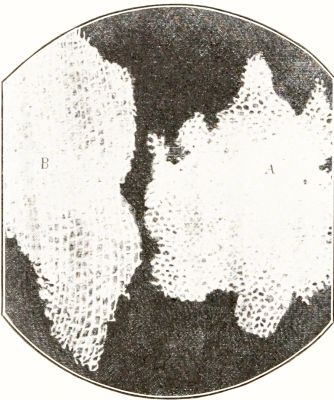
Fig. 72.—The Earliest Known Picture of Cells from Hooke's Micrographia (1665). From the edition of 1780.
We must not completely overlook the fact that Aristotle (384-322 B.C.) and Galen (130-200 A.D.), those profound thinkers on anatomical structure, had reached the theoretical position "that animals and plants, complex as they may appear, are yet composed of comparatively few elementary parts, frequently repeated"; but we are not especially concerned with the remote history of the idea, so much as with the principal steps in its development after the beginning of microscopical observations.
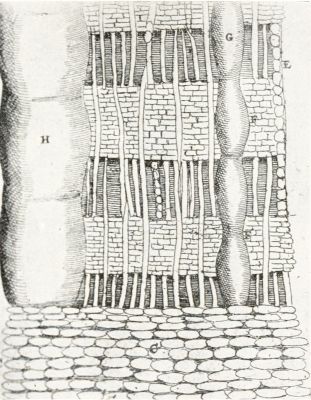
Fig. 73.—Sketch from Malpighi's Treatise on the Anatomy of Plants (1670).
Pictures of Cells in the Seventeenth Century.—The sketches illustrating the microscopic observations of Malpighi, Leeuwenhoek, and Grew show so many pictures of the cellular construction of plants that one who views them for the first time is struck with surprise, and might readily exclaim: "Here in the seventeenth century we have the foundation of the cell-theory." But these drawings were merely faithful representations of the appearance of the fabric of plants; the cells were not thought of as uniform elements of organic architecture, and no theory resulted. It is true that Malpighi understood that the cells were separable "utricles," and that plant tissue was the result of their union, but this was only an initial step in the direction of the cell-theory, which, as we shall see later, was founded on the supposed identity in development of cells in animals and plants. Fig. 73 shows a sketch, made by Malpighi about 1670, illustrating the microscopic structure of a plant. This is similar to the many drawings of Grew and Leeuwenhoek illustrating the structure of plant tissues.
Wolff.—Nearly a century after the work of Malpighi, we find Wolff, in 1759, proposing a theory regarding the organization of animals and plants based upon observations of their mode of development. He was one of the most acute scientific observers of the period, and it is to be noted that his conclusions regarding structure were all founded upon what he was able to see; while he gives some theoretical conclusions of a purely speculative nature, Wolff was careful to keep these separate from his observations. The purpose of his investigations was to show that there was no pre-formation in the embryo; but in getting at the basis of this question, he worked out the identity of structure of plants and animals as shown by their development. In his famous publication on the Theory of Development (Theoria Generationis) he used both plants and animals.
Huxley epitomizes Wolff's views on the development of elementary parts as follows: "Every organ, he says, is composed at first of a little mass of clear, viscous, nutritive fluid, which possesses no organization of any kind, but is at most composed of globules. In this semifluid mass cavities (Bläschen, Zellen) are now developed; these, if they remain round or polygonal, become the subsequent cells; if they elongate, the vessels; and the process is identically the same, whether it is examined in the vegetating point of a plant, or in the young budding organs of an animal."
Wolff was contending against the doctrine of pre-formation in the embryo (see further under the chapter on Embryology), but on account of his acute analysis he should be regarded, perhaps, as the chief forerunner of the founders of the cell-theory. He contended for the same method of development that was afterward emphasized by Schleiden and Schwann. Through the opposition of the illustrious physiologist Haller his work remained unappreciated, and was finally forgotten, until it was revived again in 1812.
We can not show that Wolff's researches had any direct influence in leading Schleiden and Schwann to their announcement of the cell-theory. Nevertheless, it stands, intellectually, in the direct line of development of that idea, while the views of Haller upon the construction of organized beings are a side-issue. Haller declared that "the solid parts of animals and vegetables have this fabric in common, that their elements are either fibers or unorganized concrete." This formed the basis of the fiber-theory, which, on account of the great authority of Haller in physiology, occupied in the accumulating writings of anatomists a greater place than the views of Wolff.
Bichat, although he is recognized as the founder of histology, made no original observations on the microscopic units of the tissues. He described very minutely the membranes in the bodies of animals, but did not employ the microscope in his investigations.
Oken.—In the work of the dreamer Oken (1779-1851), the great representative of the German school of "Naturphilosophie," we find, about 1808, a very noteworthy statement to the effect that "animals and plants are throughout nothing else than manifoldly divided or repeated vesicles, as I shall prove anatomically at the proper time." This is apparently a concise statement of the cell-idea prior to Schleiden and Schwann; but we know that it was not founded on observation. Oken, as was his wont, gave rein to his imagination, and, on his part, the idea was entirely theoretical, and amounted to nothing more than a lucky guess.
Haller's fiber-theory gave place in the last part of the eighteenth century to the theory that animals and plants are composed of globules and formless material, and this globular theory was in force up to the time of the great generalization of Schleiden and Schwann. It was well expounded by Milne-Edwards in 1823, and now we can recognize that at least some of the globules which he described were the nucleated cells of later writers.
The Announcement of the Cell-Theory.—We are now approaching the time when the cell-theory was to be launched. During the first third of the nineteenth century there had accumulated a great mass of separate observations on the microscopic structure of both animals and plants. For several years botanists, in particular, had been observing and writing about cells, and interest in these structures was increasing. "We must clearly recognize the fact that for some time prior to 1838 the cell had come to be quite universally recognized as a constantly recurring element in vegetable and animal tissues, though little importance was attached to it as an element of organization, nor had its character been clearly determined" (Tyson).
Then, in 1838, came the "master-stroke in generalization" due to the combined labors of two friends, Schleiden and Schwann. But, although these two men are recognized as co-founders, they do not share honors equally; the work of Schwann was much more comprehensive, and it was he who first used the term cell-theory, and entered upon the theoretical considerations which placed the theory before the scientific world.
Schleiden was educated as a lawyer, and began the practice of that profession, but his taste for natural science was so pronounced that when he was twenty-seven years old he deserted law, and went back to the university to study medicine. After graduating in medicine, he devoted himself mainly to botany. He saw clearly that the greatest thing needed for the advancement of scientific botany was a study of plant organization from the standpoint of development. Accordingly he entered upon this work, and, in 1837, arrived at a new view regarding the origin of plant cells. It must be confessed that this new view was founded on erroneous observations and conclusions, but it was revolutionary, and served to provoke discussion and to awaken observation. This was a characteristic feature of Schleiden's influence upon botany. His work acted as a ferment in bringing about new activity.
The discovery of the nucleus in plant cells by Robert Brown in 1831 was an important preliminary step to the work of Schleiden, since the latter seized upon the nucleus as the starting-point of new cells. He changed the name of the nucleus to cytoblast, and supposed that the new cell started as a small clear bubble on one side of the nucleus, and by continued expansion grew into the cell, the nucleus, or cytoblast, becoming encased in the cell-wall. All this was shown by Nägeli and other botanists to be wrong; yet, curiously enough, it was through the help of these false observations that Schwann arrived at his general conclusions.
Schleiden was acquainted with Schwann, and in October, 1838, while the two were dining together, he told Schwann about his observations and theories. He mentioned in particular the nucleus and its relationship to the other parts of the cell. Schwann was immediately struck with the similarity between the observations of Schleiden and certain of his own upon animal tissues. Together they went to his laboratory and examined the sections of the dorsal cord, the particular structure upon which Schwann had been working. Schleiden at once recognized the nuclei in this structure as being similar to those which he had observed in plants, and thus aided Schwann to come to the conclusion that the elements in animal tissues were practically identical with those in plant tissues.
Schwann.—The personalities of the co-founders of the cell-theory are interesting. Schwann was a man of gentle, pacific disposition, who avoided all controversies aroused by his many scientific discoveries. In his portrait (Fig. 74) we see a man whose striking qualities are good-will and benignity. His friend Henle gives this description of him: "He was a man of stature below the medium, with a beardless face, an almost infantile and always smiling expression, smooth, dark-brown hair, wearing a fur-trimmed dressing-gown, living in a poorly lighted room on the second floor of a restaurant which was not even of the second class. He would pass whole days there without going out, with a few rare books around him, and numerous glass vessels, retorts, vials, and tubes, simple apparatus which he made himself. Or I go in imagination to the dark and fusty halls of the Anatomical Institute where we used to work till nightfall by the side of our excellent chief, Johann Müller. We took our dinner in the evening, after the English fashion, so that we might enjoy more of the advantages of daylight."
Schwann drew part of his stimulus from his great master, Johannes Müller. He was associated with him as a student, first in the University of Würzburg, where Müller, with rare discernment for recognizing genius, selected Schwann for especial favors and for close personal friendship. The influence of his long association with Müller, the greatest of all trainers of anatomists and physiologists of the nineteenth century, must have been very uplifting. A few years later, Schwann found himself at the University of Berlin, where Müller had been called, and he became an assistant in the master's laboratory. There he gained the powerful stimulus of constant association with a great personality.
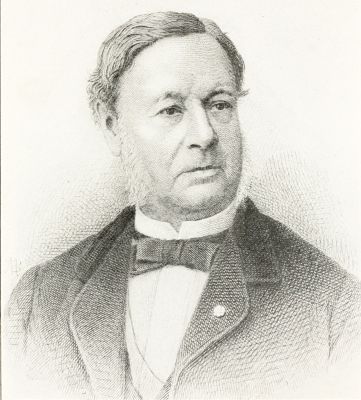
Fig. 74.—Theodor Schwann, 1810-1882.
In 1839, just after the publication of his work on the cell-theory, Schwann was called to a professorship in the University of Louvain, and after remaining there nine years, was transferred to the University of Liège. He was highly respected in the university, and led a useful life, although after going to Belgium he published only one work—that on the uses of the bile. He was recognized as an adept experimenter and demonstrator, and "clearness, order, and method" are designated as the characteristic qualities of his teaching.
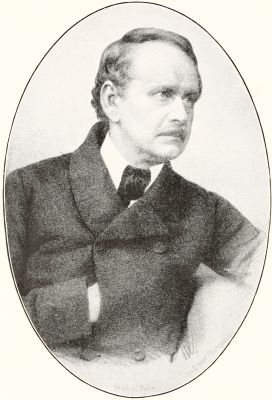
Fig. 75.—M. Schleiden, 1804-1881.
His announcement of the cell-theory was his most important work. Apart from that his best-known contributions to science are: experiments upon spontaneous generation, his discovery of the "sheath of Schwann," in nerve fibers, and his theory of fermentation as produced by microbes.
Schleiden.—Schleiden (Fig. 75) was quite different in temperament from Schwann. He did not have the fine self-control of Schwann, but was quick to take up the gauntlet and enter upon controversies. In his caustic replies to his critics, he indulged in sharp personalities, and one is at times inclined to suspect that his early experience as a lawyer had something to do with his method of handling opposition. With all this he had correct ideas of the object of scientific study and of the methods to be used in its pursuit. He insisted upon observation and experiment, and upon the necessity of studying the development of plants in order to understand their anatomy and physiology. He speaks scornfully of the botany of mere species-making as follows:
"Most people of the world, even the most enlightened, are still in the habit of regarding the botanist as a dealer in barbarous Latin names, as a man who gathers flowers, names them, dries them, and wraps them in paper, and all of whose wisdom consists in determining and classifying this hay which he has collected with such great pains."
Although he insisted on correct methods, his ardent nature led him to champion conclusions of his own before they were thoroughly tested. His great influence in the development of scientific botany lay in his earnestness, his application of new methods, and his fearlessness in drawing conclusions, which, although frequently wrong, formed the starting-point of new researches.
Let us now examine the original publications upon which the cell-theory was founded.
Schleiden's Contribution.—Schleiden's paper was particularly directed to the question, How does the cell originate? and was published in Müller's Archiv, in 1838, under the German title of Ueber Phytogenesis. As stated above, the cell had been recognized for some years, but the question of its origin had not been investigated. Schleiden says: "I may omit all historical introduction, for, so far as I am acquainted, no direct observations exist at present upon the development of the cells of plants."
He then goes on to define his view of the nucleus (cytoblast) and of the development of the cell around it, saying: "As soon as the cytoblasts have attained their full size, a delicate transparent vesicle arises upon their surface. This is the young cell." As to the position of the nucleus in the fully developed cell, he is very explicit: "It is evident," he says, "from the foregoing that the cytoblast can never lie free in the interior of the cell, but is always enclosed in the cell-wall," etc.
Schleiden fastened these errors upon the cell-theory, since Schwann relied upon his observations. On another point of prime importance Schleiden was wrong: he regarded all new cell-formation as the formation of "cells within cells," as distinguished from cell-division, as we now know it to take place.
Schleiden made no attempt to elaborate his views into a comprehensive cell-theory, and therefore his connection as a co-founder of this great generalization is chiefly in paving the way and giving the suggestion to Schwann, which enabled the latter to establish the theory. Schleiden's paper occupies some thirty-two pages, and is illustrated by two plates. He was thirty-four years old when this paper was published, and directly afterward was called to the post of adjunct professor of botany in the University of Jena, a position which with promotion to the full professorship he occupied for twenty-three years.
Schwann's Treatise.—In 1838, Schwann also announced his cell-theory in a concise form in a German scientific periodical, and, later, to the Paris Academy of Sciences; but it was not till 1839 that the fully illustrated account was published. This treatise with the cumbersome title, "Microscopical Researches into the Accordance in the Structure and Growth of Animals and Plants" (Mikroscopische Untersuchungen über die Uebereinstimmung in der Structur und dem Wachsthum der Thiere und Pflanzen) takes rank as one of the great classics in biology. It fills 215 octavo pages, and is illustrated with four plates.
"The purpose of his researches was to prove the identity of structure, as shown by their development, between animals and plants." This is done by direct comparisons of the elementary parts in the two kingdoms of organic nature.
His writing in the "Microscopical Researches" is clear and philosophical, and is divided into three sections, in the first two of which he confines himself strictly to descriptions of observations, and in the third part of which he enters upon a philosophical discussion of the significance of the observations. He comes to the conclusion that "the elementary parts of all tissues are formed of cells in an analogous, though very diversified manner, so that it may be asserted that there is one universal principle of development for the elementary parts of organisms, however different, and that this principle is the formation of cells."
It was in this treatise also that he made use of the term cell-theory, as follows: "The development of the proposition that there exists one general principle for the formation of all organic productions, and that this principle is the formation of cells, as well as the conclusions which may be drawn from this proposition, may be comprised under the term cell-theory, using it in its more extended signification, while, in a more limited sense, by the theory of cells we understand whatever may be inferred from this proposition with respect to the powers from which these phenomena result."
One comes from the reading of these two contributions to science with the feeling that it is really Schwann's cell-theory, and that Schleiden helped by lighting the way that his fellow-worker so successfully trod.
Modification of the Cell-Theory.—The form in which the cell-theory was given to the world by Schleiden and Schwann was very imperfect, and, as already pointed out, it contained fundamental errors. The founders of the theory attached too much importance to the cell-wall, and they described the cell as a hollow cavity bounded by walls that were formed around a nucleus. They were wrong as to the mode of the development of the cell, and as to its nature. Nevertheless, the great truth that all parts of animals and plants are built of similar units or structures was well substantiated. This remained a permanent part of the theory, but all ideas regarding the nature of the units were profoundly altered.
In order to perceive the line along which the chief modifications were made we must take account of another scientific advance of about the same period. This was the discovery of protoplasm, an achievement which takes rank with the advances of greatest importance in biology, and has proved to be one of the great events of the nineteenth century.
The Discovery of Protoplasm and its Effect on the Cell-Theory.—In 1835, before the announcement of the cell-theory, living matter had been observed by Dujardin. In lower animal forms he noticed a semifluid, jelly-like substance, which he designated sarcode, and which he described as being endowed with all the qualities of life. The same semifluid substance had previously caught the attention of some observers, but no one had as yet announced it as the actual living part of organisms. Schleiden had seen it and called it gum. Dujardin was far from appreciating the full importance of his discovery, and for a long time his description of sarcode remained separate; but in 1846 Hugo von Mohl, a botanist, observed a similar jelly-like substance in plants, which he called plant schleim, and to which he attached the name protoplasma.
The scientific world was now in the position of recognizing living substance, which had been announced as sarcode in lower animals, and as protoplasm in plants; but there was as yet no clear indication that these two substances were practically identical. Gradually there came stealing into the minds of observers the suspicion that the sarcode of the zoölogists and the protoplasm of the botanists were one and the same thing. This proposition was definitely maintained by Cohn in 1850, though with him it was mainly theoretical, since his observations were not sufficiently extensive and accurate to support such a conclusion.
Eleven years later, however, as the result of extended researches, Max Schultze promulgated, in 1861, the protoplasm doctrine, to the effect that the units of organization consist of little masses of protoplasm surrounding a nucleus, and that this protoplasm, or living substance, is practically identical in both plants and animals.