Front matter (continued 5)
Reading edition
The effect of this conclusion upon the cell-theory was revolutionary. During the time protoplasm was being observed the cell had likewise come under close scrutiny, and naturalists had now an extensive collection of facts upon which to found a theory. It has been shown that many animal cells have no cell-wall, and the final conclusion was inevitable that the essential part of a cell is the semifluid living substance that resides within the cavity when a cell-wall is present. Moreover, when the cell-wall is absent, the protoplasm is the "cell." The position of the nucleus was also determined to be within the living substance, and not, as Schleiden had maintained, within the cell-wall. The definition of Max Schultze, that a cell is a globule of protoplasm surrounding a nucleus, marks a new era in the cell-theory, in which the original generalization became consolidated with the protoplasm doctrine.
Further Modifications of the Cell-Theory.—The reformed cell-theory was, however, destined to undergo further modification, and to become greatly extended in its application. At first the cell was regarded merely as an element of structure; then, as a supplement to this restricted view, came the recognition that it is also a unit of physiology, viz., that all physiological activities take place within the cell. Matters did not come to a rest, however, with the recognition of these two fundamental aspects of the cell. The importance of the cell in development also took firmer hold upon the minds of anatomists after it was made clear that both the egg and its fertilizing agents are modified cells of the parent's body. It was necessary to comprehend this fact in order to get a clear idea of the origin of cells within the body of a multicellular organism, and of the relation between the primordial element and the fully developed tissues. Finally, when observers found within the nucleus the bearers of hereditary qualities, they began to realize that a careful study of the behavior of the cell elements during development is necessary for the investigation of hereditary transmissions.
A statement of the cell-theory at the present time, then, must include these four conceptions: the cell as a unit of structure, the cell as a unit of physiological activity, the cell as embracing all hereditary qualities within its substance, and the cell in the historical development of the organism.
Some of these relations may now be more fully illustrated.
Origin of Tissues.—The egg in which all organisms above the very lowest begin, is a single cell having, under the microscope, the appearance shown in Fig. 76. After fertilization, this divides repeatedly, and many cohering cells result. The cells are at first similar, but as they increase in number, and as development proceeds, they grow different, and certain groups are set apart to perform particular duties. The division of physiological labor which arises at this time marks the beginning of separate tissues. It has been demonstrated over and over that all tissues are composed of cells and cell-products, though in some instances they are much modified. The living cells can be seen even in bone and cartilage, in which they are separated by a lifeless matrix, the latter being the product of cellular activity.
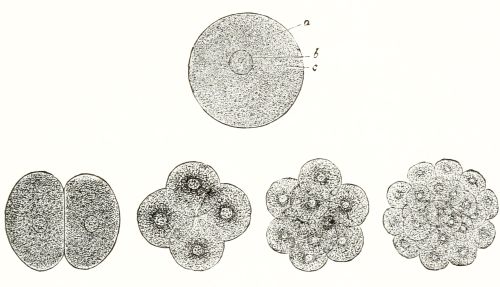
Fig. 76.—The Egg and Early Stages in its Development. (After Gegenbaur.)
Fig. 77 shows a stage in the development of one of the mollusks just as the differentiation of cells has commenced.
The Nucleus.—To the earlier observers the protoplasm appeared to be a structureless, jelly-like mass containing granules and vacuoles; but closer acquaintance with it has shown that it is in reality very complex in structure as well as in chemical composition. It is by no means homogeneous; adjacent parts are different in properties and aptitudes. The nucleus, which is more readily seen than other cell elements, was shown to be of great importance in cell-life—to be a structure which takes the lead in cell division, and in general dominates the rest of the protoplasm.
Chromosomes.—After dyes came into use for staining the protoplasm (1868), it became evident that certain parts of it stain deeply, while other parts stain faintly or not at all. This led to the recognition of protoplasm as made up of a densely staining portion called chromatin, and a faintly staining portion designated achromatin. This means of making different parts of protoplasm visible under the microscope led to important results, as when, in 1883, it was discovered that the nucleus contains a definite number of small (usually rod-shaped) bodies, which become evident during nuclear division, and play a wonderful part in that process. These bodies take the stain more deeply than other components of the nucleus, and are designated chromosomes.
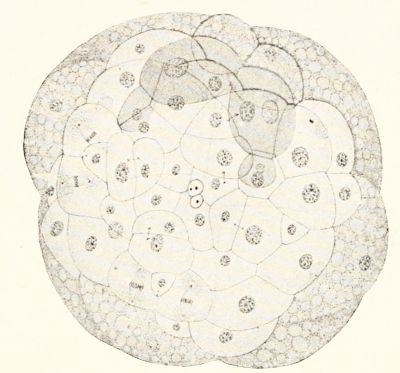
Fig. 77.—An Early Stage in the Development of the Egg of a Rock-Limpet. (After Conklin.)
Attention having been directed to these little bodies, continued observations showed that, although they vary in number—commonly from two to twenty-four—in different parts of animals and plants, they are, nevertheless, of the same number in all the cells of any particular plant or animal. As a conclusion to this kind of observation, it needs to be said that the chromosomes are regarded as the actual bearers of hereditary qualities. The chromosomes do not show in resting-stages of the nucleus; their substance is present, but is not aggregated into the form of chromosomes.
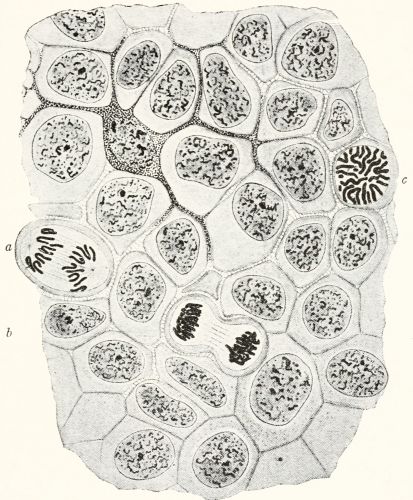
Fig. 78.—Highly Magnified Tissue Cells from the Skin of a Salamander in an Active State of Growth. Dividing cells with chromosomes are shown at a, b, and c,. (After Wilson.)
Fig. 78 shows tissue cells, some of which are in the dividing and others in the resting-stage. The nuclei in process of division exhibit the rod-like chromosomes, as shown at a, b, and c.
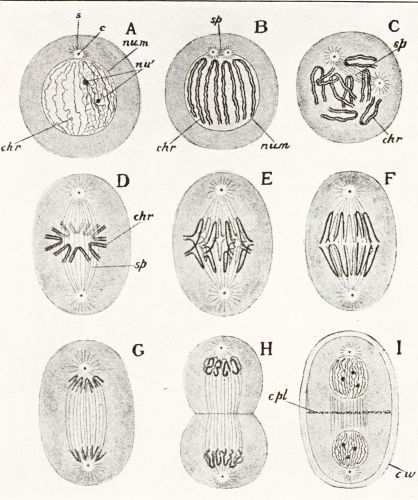
Fig. 79.—Diagram of the Chief Steps in Cell-division. (After Parker as altered from Fleming.)
Centrosome.—The discovery (1876) of a minute spot of deeply staining protoplasm, usually just outside the nuclear membrane, is another illustration of the complex structure of the cell. Although the centrosome, as this spot is called, has been heralded as a dynamic agent, there is not complete agreement as to its purpose, but its presence makes it necessary to include it in the definition of a cell.
The Cell in Heredity.—The problems of inheritance, in so far as they can be elucidated by structural studies, have come to be recognized as problems of cellular life. But we cannot understand what is implied by this conclusion without referring to the behavior of the chromosomes during cell-division. This is a very complex process, and varies somewhat in different tissues. We can, however, with the help of Fig. 79, describe what takes place in a typical case. The nucleus does not divide directly, but the chromosomes congregate around the equator of a spindle (D) formed from the achromatin; they then undergo division lengthwise, and migrate to the poles (E, F, G), after which a partition wall is formed dividing the cell. This manner of division of the chromosomes secures an equable partition of the protoplasm. In the case of fertilized eggs, one-half of the chromosomes are derived from the sperm and one-half from the egg. Each cell thus contains hereditary substance derived from both maternal and paternal nuclei. This is briefly the basis for regarding inheritance as a phenomenon of cell-life.
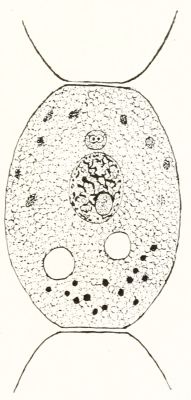
Fig. 80.—Diagram of a Cell. (Modified after Wilson.)
A diagram of the cell as now understood (Fig. 80) will be helpful in showing how much the conception of the cell has changed since the time of Schleiden and Schwann.
Definition.—The definition of Verworn, made in 1895, may be combined with this diagram: A cell is "a body consisting essentially of protoplasm in its general form, including the unmodified cytoplasm, and the specialized nucleus and centrosome; while as unessential accompaniments may be enumerated: (1) the cell membrane, (2) starch grains, (3) pigment granules, (4) oil globules, and (5) chlorophyll granules." No definition can include all variations, but the one quoted is excellent in directing attention to the essentials—to protoplasm in its general form, and the modified protoplasmic parts as distinguished from the unessential accompaniments, as cell membrane and cell contents.
The definition of Verworn was reached by a series of steps representing the historical advance of knowledge regarding the cell. Schleiden and Schwann looked upon the cell as a hollow chamber having a cell-wall which had been formed around the nucleus; it was a great step when Schultze defined the cell in terms of living substance as "a globule of protoplasm surrounding a nucleus," and it is a still deeper level of analysis which gives us a discriminating definition like that of Verworn.
When we are brought to realize that, in large part, the questions that engage the mind of the biologist have their basis in the study of cells, we are ready to appreciate the force of the statement that the establishment of the cell-theory was one of the great events of the nineteenth century, and, further, that it stands second to no theory, with the single exception of that of organic evolution, in advancing biological science.
CHAPTER XII
PROTOPLASM, THE PHYSICAL BASIS OF LIFE
The recognition of the rôle that protoplasm plays in the living world was so far-reaching in its results that we take up for separate consideration the history of its discovery. Although it is not yet fifty years since Max Schultze established the protoplasm doctrine, it has already had the greatest influence upon the progress of biology. To the consideration of protoplasm in the previous chapter should be added an account of the conditions of its discovery, and of the personality and views of the men whose privilege it was to bring the protoplasm idea to its logical conclusion. Before doing so, however, we shall look at the nature of protoplasm itself.
Protoplasm.—This substance, which is the seat of all vital activity, was designated by Huxley "the physical basis of life," a graphic expression which brings before the mind the central fact that life is manifested in a material substratum by which it is conditioned. All that biologists have been able to discover regarding life has been derived from the observation of that material substratum. It is not difficult, with the help of a microscope, to get a view of protoplasmic activity, and that which was so laboriously made known about 1860 is now shown annually to students beginning biology.
Inasmuch as all living organisms contain protoplasm, one has a wide range of choice in selecting the plant or the animal upon which to make observations.
We may, for illustration, take one of the simplest of animal organisms, the amœba, and place it under the high powers of the microscope. This little animal consists almost entirely of a lump of living jelly. Within the living substance of which its body is composed all the vital activities characteristic of higher animals are going on, but they are manifested in simpler form. These manifestations differ only in degree of development, not in kind, from those we see in bodies of higher organisms.
We can watch the movements in this amœba, determine at first hand its inherent qualities, and then draw up a sort of catalogue of its vital properties. We notice an almost continual flux of the viscid substance, by means of which it is able to alter its form and to change its position. This quality is called that of contractility. In its essential nature it is like the protoplasmic movement that takes place in a contracting muscle. We find also that the substance of the amœba responds to stimulations—such as touching it with a bristle, or heating it, or sending through it a light electric shock. This response is quite independent of the contractility, and by physiologists is designated the property of being irritable.
By further observations one may determine that the substance of the amœba is receptive and assimilative, that it is respiratory, taking in oxygen and giving off carbonic dioxide, and that it is also secretory. If the amœba be watched long enough, it may be seen to undergo division, thus producing another individual of its kind. We say, therefore, that it exhibits the power of reproduction. All these properties manifested in close association in the amœba are exhibited in the bodies of higher organisms in a greater degree of perfection, and also in separation, particular organs often being set apart for the performance of one of these particular functions. We should, however, bear in mind that in the simple protoplasm of the amœba is found the germ of all the activities of the higher animals.
It will be convenient now to turn our attention to the microscopic examination of a plant that is sufficiently transparent to enable us to look within its living parts and observe the behavior of protoplasm. The first thing that strikes one is the continual activity of the living substance within the boundaries of a particular cell. This movement sometimes takes the form of rotation around the walls of the cell (Fig. 81 A). In other instances the protoplasm marks out for itself new paths, giving a more complicated motion, called circulation (Fig. 81 B). These movements are the result of chemical changes taking place within the protoplasm, and they are usually to be observed in any plant or animal organism.
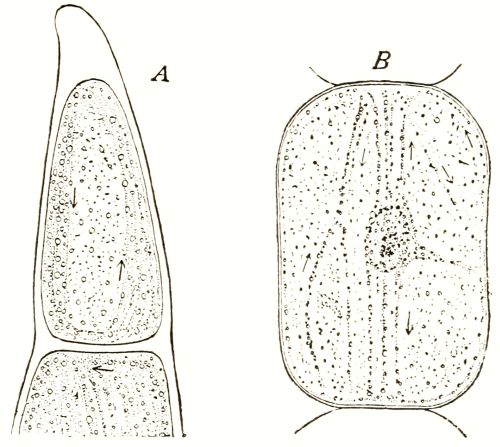
Fig. 81.—(A) Rotation of Protoplasm in the Cells of Nitella. (B) Highly Magnified Cell of a Tradescantia Plant, Showing Circulation of Protoplasm. (After Sedgwick and Wilson.)
Under the most favorable conditions these movements, as seen under the microscope, make a perfect torrent of unceasing activity, and introduce us to one of the wonderful sights of which students of biology have so many. Huxley (with slight verbal alterations) says: "The spectacle afforded by the wonderful energies imprisoned within the compass of the microscopic cell of a plant, which we commonly regard as a merely passive organism, is not easily forgotten by one who has watched its movement hour by hour without pause or sign of weakening. The possible complexity of many other organisms seemingly as simple as the protoplasm of the plant just mentioned dawns upon one, and the comparison of such activity to that of higher animals loses much of its startling character. Currents similar to these have been observed in a great multitude of very different plants, and it is quite uniformly believed that they occur in more or less perfection in all young vegetable cells. If such be the case, the wonderful noonday silence of a tropical forest is due, after all, only to the dullness of our hearing, and could our ears catch the murmur of these tiny maelstroms as they whirl in the innumerable myriads of living cells that constitute each tree, we should be stunned as with the roar of a great city."
The Essential Steps in Recognizing the Likeness of Protoplasm in Plants and Animals
Dujardin.—This substance, of so much interest and importance to biologists, was first clearly described and distinguished from other viscid substance, as albumen, by Félix Dujardin in 1835. Both the substance and the movements therein had been seen and recorded by others: by Rösel von Rosenhof in 1755 in the proteus animalcule; again in 1772 by Corti in chara; by Mayen in 1827 in Vallisnieria; and in 1831 by Robert Brown in Tradescantia. One of these records was for the animal kingdom, and three were for plants. The observations of Dujardin, however, were on a different plane from those of the earlier naturalists, and he is usually credited with being the discoverer of protoplasm. His researches, moreover, were closely connected with the development of the ideas regarding the rôle played in nature by this living substance.
Dujardin was a quiet modest man, whose attainments and service to the progress of biology have usually been under-rated. He was born in 1801 at Tours, and died in 1860 at Rennes. Being descended from a race of watchmakers, he received in his youth a training in that craft which cultivated his natural manual dexterity, and, later, this assisted him in his manipulations of the microscope. He had a fondness for sketching, and produced some miniatures and other works of art that showed great merit. His use of colors was very effective, and in 1818 he went to Paris for the purpose of perfecting himself in painting, and with the intention of becoming an artist. The small financial returns, however, "led him to accept work as an engineer directing the construction of hydraulic work in Sédan." He had already shown a love for natural science, and this led him from engineering into work as a librarian and then as a teacher. He made field observations in geology and botany, and commenced publication in those departments of science.
About 1834 he began to devote his chief efforts to microscopic work, toward which he had a strong inclination, and from that time on he became a zoölogist, with a steadily growing recognition for high-class observation. Besides his technical scientific papers, he wrote in a popular vein to increase his income. Among his writings of this type may be mentioned as occupying high rank his charmingly written "Rambles of a Naturalist" (Promenades d'un Naturaliste, 1838).
By 1840 he had established such a good record as a scientific investigator that he was called to the newly founded University of Rennes as dean of the faculty. He found himself in an atmosphere of jealous criticism, largely on account of his being elevated to the station of dean, and after two years of discomfort he resigned the deanship, but retained his position as a professor in the university. He secured a residence in a retired spot near a church, and lived there simply. In his leisure moments he talked frequently with the priests, and became a devout Catholic.
His contributions to science cover a wide range of subjects. In his microscopic work he discovered the rhizopods in 1834, and the study of their structure gave him the key to that of the other protozoa. In 1835 he visited the Mediterranean, where he studied the oceanic foraminifera, and demonstrated that they should be grouped with the protozoa, and not, as had been maintained up to that time, with the mollusca. It was during the prosecution of these researches that he made the observations upon sarcode that are of particular interest to us.
His natural history of the infusoria (1841) makes a volume of 700 pages, full of original observations and sketches. He also invented a means of illumination for the microscope, and wrote a manual of microscopic observation. Among the ninety-six publications of Dujardin listed by Professor Joubin there are seven general works, twenty relating to the protozoa, twenty-four to geology, three to botany, four to physics, twenty-five to arthropods, eight to worms, etc., etc. But as Joubin says: "The great modesty of Dujardin allowed him to see published by others, without credit to himself, numerous facts and observations which he had established." This failure to assert his claims accounts in part for the inadequate recognition that his work has received.
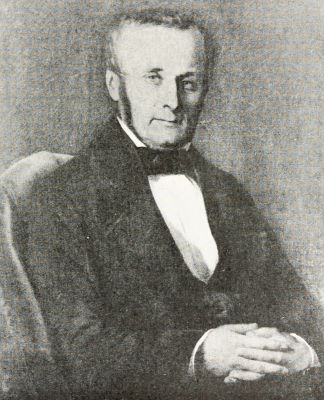
Fig. 82.—Félix Dujardin, 1801-1860.
No portrait of Dujardin was obtainable prior to 1898. Somewhat earlier Professor Joubin, who succeeded other occupants of the chair which Dujardin held in the University of Rennes, found in the possession of his descendants a portrait, which he was permitted to copy. The earliest reproduction of this picture to reach this country came to the writer through the courtesy of Professor Joubin, and a copy of it is represented in Fig. 82. His picture bespeaks his personality. The quiet refinement and sincerity of his face are evident. Professor Joubin published, in 1901 (Archives de Parasitologie), a biographical sketch of Dujardin, with several illustrations, including this portrait and another one which is very interesting, showing him in academic costume. Thanks to the spread of information of the kind contained in that article, Dujardin is coming into wider recognition, and will occupy the historical position to which his researches entitle him.
It was while studying the protozoa that he began to take particular notice of the substance of which their bodies are composed; and in 1835 he described it as a living jelly endowed with all the qualities of life. He had seen the same jelly-like substance exuding from the injured parts of worms, and recognized it as the same material that makes the body of protozoa. He observed it very carefully in the ciliated infusoria—in Paramœcium, in Vorticella, and other forms, but he was not satisfied with mere microscopic observation of its structure. He tested its solubility, he subjected it to the action of alcohol, nitric acid, potash, and other chemical substances, and thereby distinguished it from albumen, mucus, gelatin, etc.
Inasmuch as this substance manifestly was soft, Dujardin proposed for it the name of sarcode, from the Greek, meaning soft. Thus we see that the substance protoplasm was for the first time brought very definitely to the attention of naturalists through the study of animal forms. For some time it occupied a position of isolation, but ultimately became recognized as being identical with a similar substance that occurs in plants. At the time of Dujardin's discovery, sarcode was supposed to be peculiar to lower animals; it was not known that the same substance made the living part of all animals, and it was owing mainly to this circumstance that the full recognition of its importance in nature was delayed.
The fact remains that the first careful studies upon sarcode were due to Dujardin, and, therefore, we must include him among the founders of modern biology.
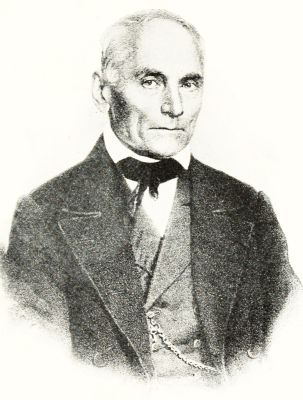
Fig. 83.-Purkinje, 1787-1869.
Purkinje.—The observations of the Bohemian investigator Purkinje (1787-1869) form a link in the chain of events leading up to the recognition of protoplasm. Although Purkinje is especially remembered for other scientific contributions, he was the first to make use of the name protoplasm for living matter, by applying it to the formative substance within the eggs of animals and within the cells of the embryo. His portrait is not frequently seen, and, therefore, is included here (Fig. 83), to give a more complete series of pictures of the men who were directly connected with the development of the protoplasm idea. Purkinje was successively a professor in the universities of Breslau and Prague. His anatomical laboratory at Breslau is notable as being one of the earliest (1825) open to students. He went to Prague in 1850 as professor of physiology.
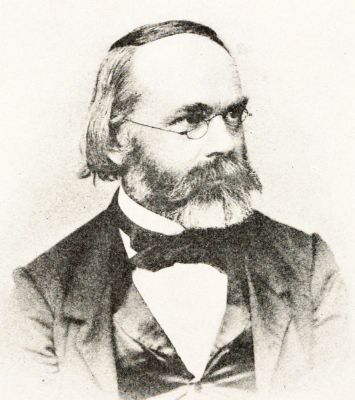
Fig. 84.—Carl Nägeli, 1817-1891.
Von Mohl.—In 1846, eleven years after the discovery of Dujardin, the eminent botanist Hugo von Mohl (1805-1872) designated a particular part of the living contents of the vegetable cell by the term protoplasma. The viscid, jelly-like substance in plants had in the mean time come to be known under the expressive term of plant "schleim." He distinguished the firmer mucilaginous and granular constituent, found just under the cell membrane, from the watery cell-sap that occupies the interior of the cell. It was to the former part that he gave the name protoplasma. Previous to this, the botanist Nägeli had studied this living substance, and perceived that it was nitrogenous matter. This was a distinct step in advance of the vague and indefinite idea of Schleiden, who had in reality noticed protoplasm in 1838, but thought of it merely as gum. The highly accomplished investigator Nägeli (Fig. 84) made a great place for himself in botanical investigation, and his name is connected with several fundamental ideas of biology. To Von Mohl, however, belongs the credit of having brought the word protoplasm into general use. He stands in the direct line of development, while Purkinje, who first employed the word protoplasm, stands somewhat aside, but his name, nevertheless, should be connected with the establishment of the protoplasm doctrine.
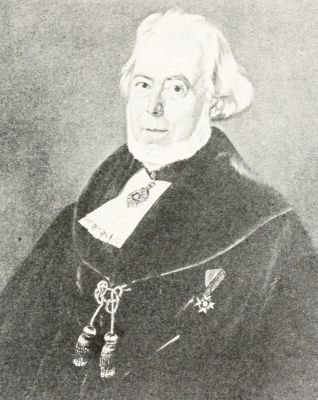
Fig. 85.—Hugo von Mohl, 1805-1872.
Von Mohl (Fig. 85) was an important man in botany. Early in life he showed a great love for natural science, and as in his day medical instruction afforded the best opportunities for a man with scientific tastes, he entered upon that course of study in Tübingen at the age of eighteen. He took his degree of doctor of medicine in 1823, and spent several years in Munich. He became professor of physiology in Bern in 1832, and three years later was transferred to Tübingen as professor of botany. Here he remained to the end of his life, refusing invitations to institutions elsewhere. He never married, and, without the cares and joys of a family, led a solitary and uneventful life, devoted to botanical investigation.
Cohn.—After Von Mohl's studies on "plant schleim" there was a general movement toward the conclusion that the sarcode of the zoölogists and the protoplasm of the botanists were one and the same substance. This notion was in the minds of more than one worker, but it is perhaps to Ferdinand Cohn (1828-1898) that the credit should be given for bringing the question to a head. After a study of the remarkable movements of the active spores of one of the simplest plants (protococcus), he said that vegetable protoplasm and animal sarcode, "if not identical, must be, at any rate, in the highest degree analogous substances" (Geddes).
Cohn (Fig. 86) was for nearly forty years professor of botany in the University of Breslau, and during his long life as an investigator greatly advanced the knowledge of bacteria. His statement referred to above was made when he was twenty-two years of age, and ran too far ahead of the evidence then accumulated; it merely anticipated the coming period of the acceptance of the conclusion in its full significance.
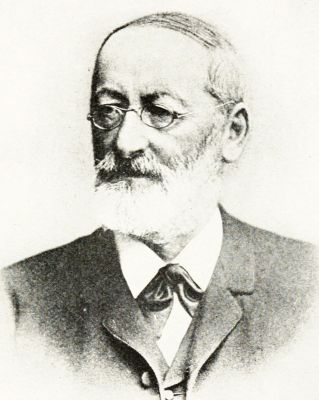
Fig. 86.—Ferdinand Cohn, 1828-1898.
De Bary.—We find, then, in the middle years of the nineteenth century the idea launched that sarcode and protoplasm are identical, but it was not yet definitely established that the sarcode of lower animals is the same as the living substance of the higher ones, and there was, therefore, lacking an essential factor to the conclusion that there is only one general form of living matter in all organisms. It took another ten years of investigation to reach this end.
The most important contributions from the botanical side during this period were the splendid researches of De Bary (Fig. 87) on the myxomycetes, published in 1859. Here the resemblance between sarcode and protoplasm was brought out with great clearness. The myxomycetes are, in one condition, masses of vegetable protoplasm, the movements and other characteristics of which were shown to resemble strongly those of the protozoa. De Bary's great fame as a botanist has made his name widely known.
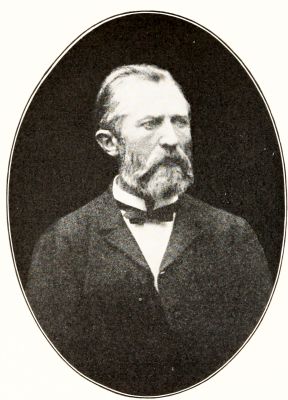
Fig. 87.—Heinrich A. de Bary, 1831-1888.
In 1858 Virchow also, by his extensive studies in the pathology of living cells, added one more link to the chain that was soon to be recognized as encircling the new domain of modern biology.
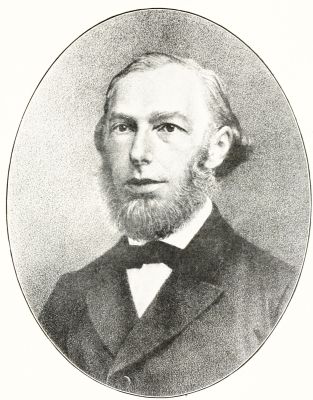
Fig. 88.—Max Schultze, 1825-1874.
Schultze.—As the culmination of a long period of work, Max Schultze, in 1861, placed the conception of the identity between animal sarcode and vegetable protoplasm upon an unassailable basis, and therefore he has received the title of "the father of modern biology." He showed that sarcode, which was supposed to be confined to the lower invertebrates, is also present in the tissues of higher animals, and there exhibits the same properties. The qualities of contractility and irritability were especially indicated. It was on physiological likeness, rather than on structural grounds, that he formed his sweeping conclusions. He showed also that sarcode agreed in physiological properties with protoplasm in plants, and that the two living substances were practically identical. His paper of 1861 considers the living substance in muscles (Ueber Muskelkörperchen und das was man eine Zelle zu nennen habe), but in this he had been partly anticipated by Ecker who, in 1849, compared the "formed contractile substance" of muscles with the "unformed contractile substance" of the lower types of animal life (Geddes).
The clear-cut, intellectual face of Schultze (Fig. 88) is that of an admirable man with a combination of the artistic and the scientific temperaments. He was greatly interested in music from his youth up, and by the side of his microscope was his well-beloved violin. He was some time professor in the University of Halle, and in 1859 went to Bonn as professor of anatomy and director of the Anatomical Institute. His service to histology has already been spoken of (Chapter VIII).
This astute observer will have an enduring fame in biological science, not only for the part he played in the development of the protoplasm idea, but also on account of other extensive labors. In 1866 he founded the leading periodical in microscopic anatomy, the Archiv für Mikroscopische Anatomie. This periodical was continued after the untimely death of Schultze in 1874, and to-day is one of the leading biological periodicals.
It is easy, looking backward, to observe that the period between 1840 and 1860 was a very important one for modern biology. Many new ideas were coming into existence, but through this period we can trace distinctly, step by step, the gradual approach to the idea that protoplasm, the living substance of organism, is practically the same in plants and in animals. Let us picture to ourselves the consequences of the acceptance of this idea. Now for the first time physiologists began to have their attention directed to the actually living substance; now for the first time they saw clearly that all future progress was to be made by studying this living substance—the seat of vital activity. This was the beginning of modern biology.
Protoplasm is the particular object of study for the biologist. To observe its properties, to determine how it behaves under different conditions, how it responds to stimuli and natural agencies, to discover the relation of the internal changes to the outside agencies: these, which constitute the fundamental ideas of biology, were for the first time brought directly to the attention of the naturalist, about the year 1860—that epoch-making time when appeared Darwin's Origin of Species and Spencer's First Principles.
CHAPTER XIII
THE WORK OF PASTEUR, KOCH, AND OTHERS
The knowledge of bacteria, those minutest forms of life, has exerted a profound influence upon the development of general biology. There are many questions relating to bacteria that are strictly medical, but other phases of their life and activities are broadly biological, and some of those broader aspects will next be brought under consideration.
The bacteria were first described by Leeuwenhoek in 1687, twelve years after his discovery of the microscopic animalcula now called protozoa. They are so infinitesimal in size that under his microscope they appeared as mere specks, and, naturally, observation of these minute organisms was suspended until nearly the middle of the nineteenth century, after the improvement of microscope lenses. It is characteristic of the little knowledge of bacteria in Linnæus's period that he grouped them into an order, with other microscopic forms, under the name chaos.
At first sight, the bacteria appear too minute to figure largely in human affairs, but a great department of natural science—bacteriology—has been opened by the study of their activities, and it must be admitted that the development of the science of bacteriology has been of great practical importance. The knowledge derived from experimental studies of the bacteria has been the chief source of light in an obscure domain which profoundly affects the well-being of mankind. To the advance of such knowledge we owe the germ-theory of disease and the ability of medical men to cope with contagious diseases. The three greatest names connected with the rise of bacteriology are those of Pasteur, Koch, and Lister, the results of whose labors will be considered later.
Among the general topics which have been clustered around the study of bacteria we take up, first, the question of the spontaneous origin of life.
The Spontaneous Origin of Life
It will be readily understood that the question of the spontaneous generation of life is a fundamental one for the biologist. Does life always arise from previously existing life, or under certain conditions is it developed spontaneously? Is there, in the inorganic world, a happy concourse of atoms that become chained together through the action of the sun's rays and other natural forces, so that a molecule of living matter is constructed in nature's laboratory without contact or close association with living substance? This is a question of biogenesis—life from previous life—or of abiogenesis—life without preëxisting life or from inorganic matter alone.
It is a question with a long history. Its earliest phases do not involve any consideration of microscopic forms, since they were unknown, but its middle and its modern aspect are concerned especially with bacteria and other microscopic organisms. The historical development of the problem may be conveniently considered under three divisions: I. The period from Aristotle, 325 B.C., to the experiments of Redi, in 1668; II. From the experiments of Redi to those of Schulze and Schwann in 1836 and 1837; III. The modern phase, extending from Pouchet's observations in 1859 to the present.
I. From Aristotle to Redi.—During the first period, the notion of spontaneous generation was universally accepted, and the whole question of spontaneous origin of life was in a crude and grotesque condition. It was thought that frogs and toads and other animals arose from the mud of ponds and streams through the vivifying action of the sun's rays. Rats were supposed to come from the river Nile, the dew was supposed to give origin to insects, etc.
The scientific writers of this period had little openness of mind, and they indulged in scornful and sarcastic comments at the expense of those who doubted the occurrence of spontaneous generation. In the seventeenth century Alexander Ross, commenting on Sir Thomas Brown's doubt as to whether mice may be bred by putrefaction, flays his antagonist in the following words: "So may we doubt whether in cheese and timber worms are generated, or if beetles and wasps in cow-dung, or if butterflies, locusts, shell-fish, snails, eels, and such life be procreated of putrefied matter, which is to receive the form of that creature to which it is by formative power disposed. To question this is to question reason, sense, and experience. If he doubts this, let him go to Egypt, and there he will find the fields swarming with mice begot of the mud of Nylus, to the great calamity of the inhabitants."
II. From Redi to Schwann.—The second period embraces the experimental tests of Redi (1668), Spallanzani (1775), and Schwann (1837)—notable achievements that resulted in a verdict for the adherents to the doctrine of biogenesis. Here the question might have rested had it not been opened upon theoretical ground by Pouchet in 1859.
The First Experiments.—The belief in spontaneous generation, which was so firmly implanted in the minds of naturalists, was subjected to an experimental test in 1668 by the Italian Redi. It is a curious circumstance, but one that throws great light upon the condition of intellectual development of the period, that no one previous to Redi had attempted to test the truth or falsity of the theory of spontaneous generation. To approach this question from the experimental side was to do a great service to science.
The experiments of Redi were simple and homely. He exposed meat in jars, some of which were left uncovered, some covered with parchment, and others with fine wire gauze. The meat in all these vessels became spoiled, and flies, being attracted by the smell of decaying meat, laid eggs in that which was exposed, and there came from it a large crop of maggots. The meat which was covered by parchment also decayed in a similar manner, without the appearance of maggots within it; and in those vessels covered by wire netting the flies laid their eggs upon the wire netting. There they hatched, and the maggots, instead of appearing in the meat, appeared on the surface of the wire gauze. From this Redi concluded that maggots arise in decaying meat from the hatching of the eggs of insects, but inasmuch as these animals had been supposed to arise spontaneously within the decaying meat, the experiment took the ground from under that hypothesis.
He made other observations on the generation of insects, but with acute scientific analysis never allowed his conclusions to run ahead of his observations. He suggested, however, the probability that all cases of the supposed production of life from dead matter were due to the introduction of living germs from without. The good work begun by Redi was confirmed and extended by Swammerdam (1637-1681) and Vallisnieri (1661-1730), until the notion of the spontaneous origin of any forms of life visible to the unaided eye was banished from the minds of scientific men.
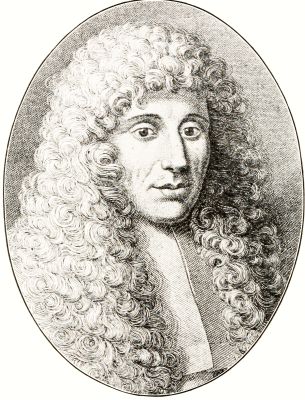
Fig. 89.—Francesco Redi, 1626-1697.
Redi (Fig. 89) was an Italian physician living in Arentino, distinguished alike for his attainments in literature and for his achievements in natural science. He was medical adviser to two of the grand dukes of Tuscany, and a member of the Academy of Crusca. Poetry as well as other literary compositions shared his time with scientific occupations. His collected works, literary, scientific, and medical, were published in nine octavo volumes in Milan, 1809-1811. This collection includes his life and letters, and embraces one volume of sonnets. The book that has been referred to as containing his experiments was entitled Esperienze Intorno Alla Generazione Degl'Insetti, and first saw the light in quarto form in Florence in 1668. It went through five editions in twenty years. Some of the volumes were translated into Latin, and were published in miniature, making books not more than four inches high. Huxley says: "The extreme simplicity of his experiments, and the clearness of his arguments, gained for his views and for their consequences almost universal acceptance."
New Form of the Question.—The question of the spontaneous generation of life was soon to take on a new aspect. Seven years after the experiments of Redi, Leeuwenhoek made known a new world of microscopic organisms—the infusoria—and, as we have seen, he discovered, in 1687, those still minuter forms, the bacteria. Strictly speaking, the bacteria, on account of their extreme minuteness, were lost sight of, but spontaneous generation was evoked to account for the birth of all microscopic organisms, and the question circled mainly around the infusorial animalcula. While the belief in the spontaneous generation of life among forms visible to the unaided eye had been surrendered, nevertheless doubts were entertained as to the origin of microscopic organisms, and it was now asserted that here were found the beginnings of life—the place where inorganic material was changed through natural agencies into organized beings microscopic in size.
More than seventy years elapsed before the matter was again subjected to experimental tests. Then Needham, using the method of Redi, began to experiment on the production of microscopic animalcula. In many of his experiments he was associated with Buffon, the great French naturalist, who had a theory of organic molecules that he wished to sustain. Needham (1713-1784), a priest of the Catholic faith, was an Englishman living on the Continent; he was for many years director of the Academy of Maria Theresa at Brussels. He engaged in scientific investigations in connection with his work of teaching. The results of Needham's first experiments were published in 1748. These experiments were conducted by extracting the juices of meat by boiling; by then enclosing the juices in vials, the latter being carefully corked and sealed with mastic; by subjecting the sealed bottles, finally, to heat, and setting them away to cool. In due course of time, the fluids thus treated became infected with microscopic life, and, inasmuch as Needham believed that he had killed all living germs by repeated heating, he concluded that the living forms had been produced by spontaneous generation.
Spallanzani.—The epoch-making researches of Spallanzani, a fellow-countryman of Redi, were needed to point out the error in Needham's conclusions. Spallanzani (Fig. 90) was one of the most eminent men of his time. He was educated for the church, and, therefore, he is usually known under the title of Abbé Spallanzani. He did not, however, actively engage in his churchly offices, but, following an innate love of natural science and of investigation, devoted himself to experiments and researches and to teaching. He was first a professor at Bologna, and afterward at the University of Pavia. He made many additions to knowledge of the development and the physiology of organisms, and he was the first to make use of glass flasks in the experimental study of the question of the spontaneous generation of life.
Spallanzani thought that the experiments of Needham had not been conducted with sufficient care and precision; accordingly, he made use of glass flasks with slender necks which could be hermetically sealed after the nutrient fluids had been introduced. The vials which Needham used as containers were simply corked and sealed with mastic, and it was by no means certain that the entrance of air after heating had been prevented; moreover, no record was made by Needham of the temperature and the time of heating to which his bottles and fluids had been subjected.
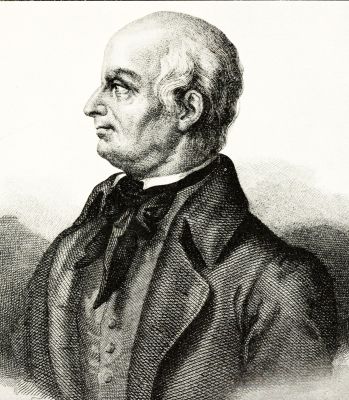
Fig. 90.—Lazzaro Spallanzani, 1729-1799.
Spallanzani took nutrient fluids, such as the juices of vegetables and meats which had been extracted by boiling, placed them in clear flasks, the necks of which were hermetically sealed in flame, and afterward immersed them in boiling water for three-quarters of an hour, in order to destroy all germs that might be contained in them. The organic infusions of Spallanzani remained free from change. It was then, as now, a well-known fact that organic fluids, when exposed to air, quickly decompose and acquire a bad smell; they soon become turbid, and in a little time a scum is formed upon their surface. The fluids in the flasks of Spallanzani remained of the same appearance and consistency as when they were first introduced into the vessel, and the obvious conclusion was drawn that microscopic life is not spontaneously formed within nutrient fluids.
"But Needham was not satisfied with these results, and with a show of reason maintained that such a prolonged boiling would destroy not only germs, but the germinative, or, as he called it, the 'vegetative force' of the infusion itself. Spallanzani easily disposed of this objection by showing that when the infusions were again exposed to the air, no matter how severe or prolonged the boiling to which they had been subjected, the infusoria reappeared. His experiments were made in great numbers, with different infusions, and were conducted with the utmost care and precision" (Dunster). It must be confessed, however, that the success of his experiments was owing largely to the purity of the air in which he worked, the more resistant atmospheric germs were not present: as Wyman showed, long afterward, that germs may retain their vitality after being subjected for several hours to the temperature of boiling water.
Schulze and Schwann.—The results of Spallanzani's experiments were published in 1775, and were generally regarded by the naturalists of that period as answering in the negative the question of the spontaneous generation of life. Doubts began to arise as to the conclusive nature of Spallanzani's experiments, on account of the discovery of the part which oxygen plays in reference to life. The discovery of oxygen, one of the greatest scientific events of the eighteenth century, was made by Priestley in 1774. It was soon shown that oxygen is necessary to all forms of life, and the question was raised: Had not the boiling of the closed flasks changed the oxygen so that through the heating process it had lost its life-giving properties? This doubt grew until a reëxamination of the question of spontaneous generation became necessary under conditions in which the nutrient fluids were made accessible to the outside air.
In 1836 Franz Schulze, and, in the following year, Theodor Schwann, devised experiments to test the question on this new basis. Schwann is known to us as the founder of the cell-theory, but we must not confuse Schulze with Max Schultze, who established the protoplasm doctrine. In the experiments of Schulze, a flask was arranged containing nutrient fluids, with a large cork perforated and closely fitted with bent glass tubes connected on one side with a series of bulbs in which were placed sulphuric acid and other chemical substances. An aspirator was attached to the other end of this system, and air from the outside was sucked into the flask, passing on its way through the bulbs containing the chemical substances. The purpose of this was to remove the floating germs that exist in the air, while the air itself was shown, through other experiments by Schwann, to remain unchanged.
Tyndall says in reference to these experiments: "Here again the success of Schulze was due to his working in comparatively pure air, but even in such air his experiment is a risky one. Germs will pass unwetted and unscathed through sulphuric acid unless the most special care is taken to detain them. I have repeatedly failed, by repeating Schulze's experiments, to obtain his results. Others have failed likewise. The air passes in bubbles through the bulbs, and to render the method secure, the passage of the air must be so slow as to cause the whole of its floating matter, even to the very core of each bubble, to touch the surrounding fluid. But if this precaution be observed water will be found quite as effectual as sulphuric acid."
Schwann's apparatus was similar in construction, except that the bent tube on one side was surrounded by a jacket of metal and was subjected to a very high temperature while the air was being drawn through it, the effect being to kill any floating germs that might exist in the air. Great care was taken by both experimenters to have their flasks and fluids thoroughly sterilized, and the results of their experiments were to show that the nutrient fluids remained uncontaminated.
These experiments proved that there is something in the atmosphere which, unless it be removed or rendered inactive, produces life within nutrient fluids, but whether this something is solid, fluid, or gaseous did not appear from the experiments. It remained for Helmholtz to show, as he did in 1843, that this something will not pass through a moist animal membrane, and is therefore a solid. The results so far reached satisfied the minds of scientific men, and the question of the spontaneous origin of life was regarded as having been finally set at rest.
III. The Third Period. Pouchet.—We come now to consider the third historical phase of this question. Although it had apparently been set at rest, the question was unexpectedly opened again in 1859 by the Frenchman Pouchet, the director of the Natural History Museum of Rouen. The frame of mind which Pouchet brought to his experimental investigations was fatal to unbiased conclusions: "When, by meditation," he says, in the opening paragraph of his book on Heterogenesis, "it was evident to me that spontaneous generation was one of the means employed by nature for the production of living beings, I applied myself to discover by what means one could place these phenomena in evidence." Although he experimented, his case was prejudiced by metaphysical considerations. He repeated the experiments of previous observers with opposite results, and therefore he declared his belief in the falsity of the conclusions of Spallanzani, Schulze, and Schwann.
He planned and executed one experiment which he supposed was conclusive. In introducing it he said: "The opponents of spontaneous generation assert that the germs of microscopic organisms exist in the air, which transports them to a distance. What, then, will these opponents say if I succeed in introducing the generation of living organisms, while substituting artificial air for that of the atmosphere?"
He filled a flask with boiling water and sealed it with great care. This he inverted over a bath of mercury, thrusting the neck of the bottle into the mercury. When the water was cooled, he opened the neck of the bottle, still under the mercury, and connected it with a chemical retort containing the constituents for the liberation of oxygen. By heating the retort, oxygen was driven off from the chemical salts contained in it, and being a gas, the oxygen passed through the connecting tube and bubbled up through the water of the bottle, accumulating at the upper surface, and by pressure forcing water out of the bottle. After the bottle was about half filled with oxygen imprisoned above the water, Pouchet took a pinch of hay that had been heated to a high temperature in an oven, and with a pair of sterilized forceps pushed it underneath the mercury and into the mouth of the bottle, where the hay floated into the water and distributed itself.
He thus produced a hay infusion in contact with pure oxygen, and after a few days this hay infusion was seen to be cloudy and turbid. It was, in fact, swarming with micro-organisms. Pouchet pointed with triumphant spirit to the apparently rigorous way in which his experiment had been carried on: "Where," said he, "does this life come from? It can not come from the water which had been boiled, destroying all living germs that may have existed in it. It can not come from the oxygen which was produced at the temperature of incandescence. It can not have been carried in the hay, which had been heated for a long period before being introduced into the water." He declared that this life was, therefore, of spontaneous origin.
The controversy now revived, and waxed warm under the insistence of Pouchet and his adherents. Finally the Academy of Sciences, in the hope of bringing it to a conclusion, appointed a committee to decide upon conflicting claims.
Pasteur.—Pasteur had entered into the investigation of the subject about 1860, and, with wonderful skill and acumen, was removing all possible grounds for the conclusions of Pouchet and his followers. In 1864, before a brilliant audience at the Sorbonne, he repeated the experiment outlined above and showed the source of error. In a darkened room he directed a bright beam of light upon the apparatus, and his auditors could see in the intense illumination that the surface of the mercury was covered with dust particles. Pasteur then showed that when a body was plunged beneath the mercury, some of these surface granules were carried with it. In this striking manner Pasteur demonstrated that particles from the outside had been introduced into the bottle of water by Pouchet. This, however, is probably not the only source of the organisms which were developed in Pouchet's infusions. It is now known that a hay infusion is very difficult to sterilize by heat, and it is altogether likely that the infusions used by Pouchet were not completely sterilized.
The investigation of the question requires more critical methods than was at first supposed, and more factors enter into its solution than were realized by Spallanzani and Schwann.
Pasteur demonstrated that the floating particles of the air contained living germs, by catching them in the meshes of gun cotton, and then dissolving the cotton with ether and examining the residue. He also showed that sterilized organic fluids could be protected by a plug of cotton sufficiently porous to admit of exchange of air, but matted closely enough to entangle the floating particles. He showed also that many of the minute organisms do not require free oxygen for their life processes, but are able to take the oxygen by chemical decomposition which they themselves produce from the nutrient fluids.
Jeffries Wyman, of Harvard College, demonstrated that some germs are so resistant to heat that they retain their vitality after several hours of boiling. This fact probably accounts for the difference in the results that have been obtained by experimenters. The germs in a resting-stage are surrounded by a thick protective coat of cellulose, which becomes softened and broken when they germinate. On this account more recent experimenters have adopted a method of discontinuous heating of the nutrient fluid that is being tested. The fluids are boiled at intervals, so that the unusually resistant germs are killed after the coating has been rendered soft, and when they are about to germinate.
After the brilliant researches of Pasteur, the question of spontaneous germination was once again regarded as having been answered in the negative; and so it is regarded to-day by the scientific world. Nevertheless, attempts have been made from time to time, as by Bastian, of England, in 1872, to revive it on the old lines.
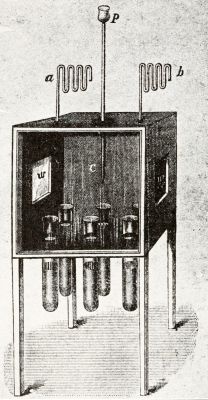
Fig. 91.—Apparatus of Tyndall for Experimenting on Spontaneous Generation.
Tyndall.—John Tyndall (1820-1893), the distinguished physicist, of London, published, in 1876, the results of his experiments on this question, which, for clearness and ingenuity, have never been surpassed. For some time he had been experimenting in the domain of physics with what he called optically pure air. It was necessary for him to have air from which the floating particles had been sifted, and it occurred to him that he might expose nutrient fluids to this optically pure air, and thus very nicely test the question of the spontaneous origin of life within them.
He devised a box, or chamber, as shown in Fig. 91, having in front a large glass window, two small glass windows on the ends, and in the back a little air-tight trap-door. Through the bottom of this box he had fitted ordinary test tubes of the chemist, with an air-tight surrounding, and on the top he had inserted some coiled glass tubes, which were open at both ends and allowed the passage of air in and out of the box through the tortuous passage. In the middle of the top of the box was a round piece of rubber. When he perforated this with a pinhole the elasticity of the rubber would close the hole again, but it would also admit of the passage through it of a small glass tube, such as is called by chemists a "thistle tube." The interior of this box was painted with a sticky substance like glycerin, in order to retain the floating particles of the air when they had once settled upon its sides and bottom. The apparatus having been prepared in this way, was allowed to stand, and the floating particles settled by their own weight upon the bottom and sides of the box, so that day by day the number of floating particles became reduced, and finally all of them came to rest.
The air now differed from the outside air in having been purified of all of its floating particles. In order to test the complete disappearance of all particles. Tyndall threw a beam of light into the air chamber. He kept his eye in the darkness for some time in order to increase its sensitiveness; then, looking from the front through the glass into the box, he was able to see any particles that might be floating there. The floating particles would be brightly illuminated by the condensed light that he directed into the chamber, and would become visible. When there was complete darkness within the chamber, the course of the beam of light was apparent in the room as it came up to the box and as it left the box, being seen on account of the reflection from the floating particles in the air, but it could not be seen at all within the box. When this condition was reached, Tyndall had what he called optically pure air, and he was now ready to introduce the nutrient fluids into his test tubes. Through a thistle tube, thrust into the rubber diaphragm above, he was able to bring the mouth of the tube successively over the different test tubes, and, by pouring different kinds of fluids from above, he was able to introduce these into different test tubes. These fluids consisted of mutton broth, of turnip-broth, and other decoctions of animal and vegetable matter. It is to be noted that the test tubes were not corked and consequently that the fluids contained within them were freely exposed to the optically pure air within the chamber.
The box was now lifted, and the ends of the tubes extending below it were thrust into a bath of boiling oil. This set the fluids into a state of boiling, the purpose being to kill any germs of life that might be accidentally introduced into them in the course of their conveyance to the test tubes. These fluids, exposed freely to the optically pure air within this chamber, then remained indefinitely free from micro-organisms, thus demonstrating that putrescible fluids may be freely exposed to air from which the floating particles have been removed, and not show a trace either of spoiling or of organic life within them.
It might be objected that the continued boiling of the fluids had produced chemical changes inimical to life, or in some way destroyed their life-supporting properties; but after they had remained for months in a perfectly clear state, Tyndall opened the little door in the back of the box and closed it at once, thereby admitting some of the floating particles from the outside air. Within a few days' time the fluids which previously had remained uncontaminated were spoiling and teeming with living organisms.
These experiments showed that under the conditions of the experiments no spontaneous origin of life takes place. But while we must regard the hypothesis of spontaneous generation as thus having been disproved on an experimental basis, it is still adhered to from the theoretical standpoint by many naturalists; and there are also many who think that life arises spontaneously at the present time in ultra-microscopic particles. Weismann's hypothetical "biophors," too minute for microscopic observation, are supposed to arise by spontaneous generation. This phase of the question, however, not being amenable to scientific tests, is theoretical, and therefore, so far as the evidence goes, we may safely say that the spontaneous origin of life under present conditions is unknown.
Practical Applications.—There are, of course, numerous practical applications of the discovery that the spoiling of putrescible fluids is due to floating germs that have been introduced from the air. One illustration is the canning of meats and fruits, where the object is, by heating, to destroy all living germs that are distributed through the substance, and then, by canning, to keep them out. When this is entirely successful, the preserved vegetables and meats go uncontaminated. One of the most important and practical applications came in the recognition (1867) by the English surgeon Lister that wounds during surgical operations are poisoned by floating particles in the air or by germs clinging to instruments or the skin of the operator, and that to render all appliances sterile and, by antiseptic dressings, completely to prevent the entrance of these bacteria into surgical wounds, insures their being clean and healthy. This led to antiseptic surgery, with which the name of Lister is indissolubly connected.
The Germ-Theory of Disease
The germ-theory of disease is another question of general bearing, and it will be dealt with briefly here.
After the discovery of bacteria by Leeuwenhoek, in 1687, some medical men of the time suggested the theory that contagious diseases were due to microscopic forms of life that passed from the sick to the well. This doctrine of contagium vivum, when first promulgated, took no firm root, and gradually disappeared. It was not revived until about 1840. If we attempt briefly to sketch the rise of the germ-theory of disease, we come, then, first to the year 1837, when the Italian Bassi investigated the disease of silkworms, and showed that the transmission of that disease was the result of the passing of minute glittering particles from the sick to the healthy. Upon the basis of Bassi's observation, the distinguished anatomist Henle, in 1840, expounded the theory that all contagious diseases are due to microscopic germs.
The matter, however, did not receive experimental proof until 1877, when Pasteur and Robert Koch showed the direct connection between certain microscopic filaments and the disease of splenic fever, which attacks sheep and other cattle. Koch was able to get some of these minute filaments under the microscope, and to trace upon a warm stage the different steps in their germination. He saw the spores bud and produce filamentous forms. He was able to cultivate these upon a nutrient substance, gelatin, and in this way to obtain a pure culture of the organism, which is designated under the term anthrax. He inoculated mice with the pure culture of anthrax germs, and produced splenic fever in the inoculated forms. He was able to do this through several generations of mice. In the same year Pasteur showed a similar connection between splenic fever and the anthrax.
This demonstration of the actual connection between anthrax and splenic fever formed the first secure foundation of the germ-theory of disease, and this department of investigation became an important one in general biology. The pioneer workers who reached the highest position in the development of this knowledge are Pasteur, Koch, and Lister.
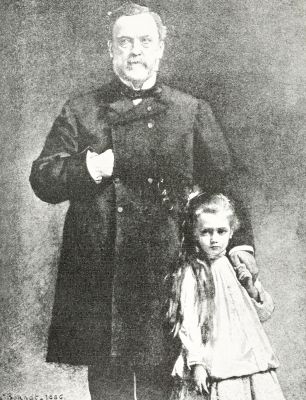
Fig. 92.—Louis Pasteur (1822-1895) and his Granddaughter.
Veneration of Pasteur.—Pasteur is one of the most conspicuous figures of the nineteenth century. The veneration in which he is held by the French people is shown in the result of a popular vote, taken in 1907, by which he was placed at the head of all their notable men. One of the most widely circulated of the French journals—the Petit Parisien—appealed to its readers all over the country to vote upon the relative prominence of great Frenchmen of the last century. Pasteur was the winner of this interesting contest, having received 1,338,425 votes of the fifteen millions cast, and ranking above Victor Hugo, who stood second in popular estimation, by more than one hundred thousand votes. This enviable recognition was won, not by spectacular achievements in arms or in politics, but by indefatigable industry in the quiet pursuit of those scientific researches that have resulted in so much good to the human race.
Personal Qualities.—He should be known also from the side of his human qualities. He was devotedly attached to his family, enjoying the close sympathy and assistance of his wife and his daughter in his scientific struggles, a circumstance that aided much in ameliorating the severity of his labors. His labors, indeed, overstrained his powers, so that he was smitten by paralysis in 1868, at the age of forty-six, but with splendid courage he overcame this handicap, and continued his unremitting work until his death in 1895.
The portrait of Pasteur with his granddaughter (Fig. 92) gives a touch of personal interest to the investigator and the contestant upon the field of science. His strong face shows dignity of purpose and the grim determination which led to colossal attainments; at the same time it is mellowed by gentle affection, and contrasts finely with the trusting expression of the younger face.
Pasteur was born of humble parents in Dôle in the Jura, on December the 27th, 1822. His father was a tanner, but withal, a man of fine character and stern experience, as is "shown by the fact that he had fought in the legions of the First Empire and been decorated on the field of battle by Napoleon." The filial devotion of Pasteur and his justifiable pride in his father's military service are shown in the dedication of his book, Studies on Fermentation, published in 1876:
"To the memory of my Father,
Formerly a soldier under the First Empire, and Knight of the Legion of Honor.
The longer I live, the better do I understand the kindness of thy heart and the superiority of thy judgment.
The efforts which I have devoted to these studies and to those which have preceded them are the fruits of thy example and of thy counsel.
Desiring to honor these precious recollections, I dedicate this book to thy memory."
When Pasteur was an infant of two years his parents removed to the town of Arbois, and here he spent his youth and received his early education. After a period of indifference to study, during which he employed his time chiefly in fishing and sketching, he settled down to work, and, thereafter, showed boundless energy and enthusiasm.
Pasteur, whom we are to consider as a biologist, won his first scientific recognition at the age of twenty-five, in chemistry and molecular physics. He showed that crystals of certain tartrates, identical in chemical composition, acted differently upon polarized light transmitted through them. He concluded that the differences in optical properties depended upon a different arrangement of the molecules; and these studies opened the fascinating field of molecular physics and physical chemistry.
Pasteur might have remained in this field of investigation, but his destiny was different. As Tyndall remarked, "In the investigation of microscopic organisms—the 'infinitely little,' as Pasteur loved to call them—and their doings in this, our world, Pasteur found his true vocation. In this broad field it has been his good fortune to alight upon a crowd of connected problems of the highest public and scientific interest, ripe for solution, and requiring for their successful treatment the precise culture and capacities which he has brought to bear upon them."
In 1857 Pasteur went to Paris as director of scientific studies in the École Normale, having previously been a professor in Strasburg and in Lille. From this time on his energies became more and more absorbed in problems of a biological nature. It was a momentous year (1857) in the annals of bacteriology when Pasteur brought convincing proof that fermentation (then considered chemical in its nature) was due to the growth of organic life. Again in 1860 he demonstrated that both lactic (the souring of milk) and alcoholic fermentation are due to the growth of microscopic organisms, and by these researches he developed the province of biology that has expanded into the science of bacteriology.
After Pasteur entered the path of investigation of microbes his progress was by ascending steps; each new problem the solution of which he undertook seemed of greater importance than the one just conquered. He was led from the discovery of microbe action to the application of his knowledge to the production of antitoxins. In all this he did not follow his own inclinations so much as his sense of a call to service. In fact, he always retained a regret that he was not permitted to perfect his researches on crystallography. At the age of seventy he said of himself: "If I have a regret, it is that I did not follow that route, less rude it seems to me, and which would have led, I am convinced, to wonderful discoveries. A sudden turn threw me into the study of fermentation, fermentations set me at diseases, but I am still inconsolable to think that I have never had the time to go back to my old subject" (Tarbell).
Although the results of his combined researches form a succession of triumphs, every point of his doctrines was the subject of fierce controversy; no investigations ever met with more determined opposition, no investigator ever fought more strenuously for the establishment of each new truth.
He went from the study of the diseases of wines (1865) to the investigation (1865-1868) of the silkworm plague which had well-nigh crushed the silk industry of his country. The result was the saving of millions of francs annually to the people of France.
His Supreme Service.—He then entered upon his chief services to humanity—the application of his discoveries to the cure and prevention of diseases. By making a succession of pure cultures of a disease-producing virus, he was able to attenuate it to any desired degree, and thereby to create a vaccinating form of the virus capable of causing a mild affection of the disease. The injection of this attenuated virus secured immunity from future attacks. The efficacy of this form of inoculation was first proved for the disease of fowl cholera, and then came the clear demonstration (1881) that the vaccine was effective against the splenic fever of cattle. Crowning this series of discoveries came the use of inoculation (1885) to prevent the development of hydrophobia in one bitten by a mad dog.
The Pasteur Institute.—The time had now come for the establishment of an institute, not alone for the treatment of hydrophobia, but also for the scientific study of means to control other diseases, as diphtheria, typhoid, tuberculosis, etc. A movement was set on foot for a popular subscription to meet this need. The response to this call on the part of the common people was gratifying. "The extraordinary enthusiasm which accompanied the foundation of this great institution has certainly not been equaled in our time. Considerable sums of money were subscribed in foreign countries, while contributions poured in from every part of France. Even the inhabitants of obscure little towns and villages organized fêtes, and clubbed together to send their small gifts" (Franckland). The total sum subscribed on the date of the opening ceremony amounted to 3,586,680 francs.
The institute was formally opened on November 14th, 1888, with impressive ceremonies presided over by the President of the Republic of France. The establishment of this institute was an event of great scientific importance. Here, within the first decade of its existence, were successfully treated more than twenty thousand cases of hydrophobia. Here has been discovered by Roux the antitoxin for diphtheria, and here have been established the principles of inoculation against the bubonic plague, against lockjaw, against tuberculosis and other maladies, and of the recent microbe inoculations of Wright of London. More than thirty "Pasteur institutes," with aims similar to the parent institution, have been established in different parts of the civilized world.
Pasteur died in 1895, greatly honored by the whole world. On Saturday, October 5th of that year, a national funeral was conducted in the Church of Notre-Dame, which was attended by the representatives of the state and of numerous scientific bodies and learned societies.
Koch.—Robert Koch (Fig. 93) was born in 1843, and is still living, engaged actively in work in the University of Berlin. His studies have been mainly those of a medical man, and have been crowned with remarkable success. In 1881 he discovered the germ of tuberculosis, in 1883 the germ that produces Asiatic cholera, and since that time his name has been connected with a number of remarkable discoveries that are of continuous practical application in the science of medicine.
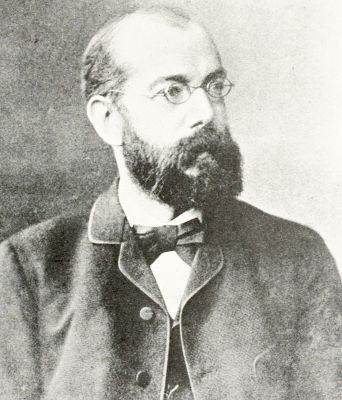
Fig. 93.—Robert Koch, Born 1843.
Koch, with the rigorous scientific spirit for which he is noteworthy, established four necessary links in the chain of evidence to show that a particular organism is connected with a particular disease. These four postulates of Koch are: First, that a microscopic organism of a particular type should be found in great abundance in the blood and the tissue of the sick animal; second, that a pure culture should be made of the suspected organism; third, that this pure culture, when introduced into the body of another animal, should produce the disease; and, fourth, that in the blood and tissues of that animal there should be found quantities of the particular organism that is suspected of producing the disease. In the case of some diseases this entire chain of evidence has been established; but in others, such as cholera and typhoid fever, the last steps have not been completed, for the reason that the animals experimented upon, namely, guinea-pigs, rabbits, and mice, are not susceptible to these diseases.
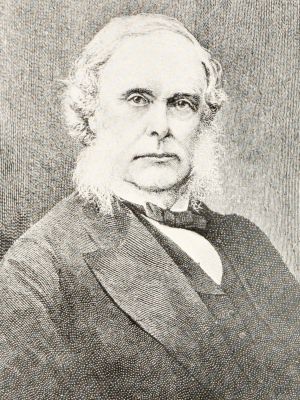
Fig. 94.—Sir Joseph Lister, Born 1827.
Lister.—The other member of the great triumvirate of bacteriology is Sir Joseph Lister (Fig. 94); born in 1827, he has been successively professor of surgery in the universities of Glasgow (1860) and of Edinburgh (1869), and in King's College, London (1877). His practical application of the germ-theory introduced aseptic methods into surgery and completely revolutionized that field. This was in 1867. In an address given that year before the British Medical Association in Dublin, he said: "When it had been shown by the researches of Pasteur that the septic property of the atmosphere depended, not on oxygen or any gaseous constituent, but on minute organisms suspended in it, which owed their energy to their vitality, it occurred to me that decomposition in the injured part might be avoided without excluding the air, by applying as a dressing some material capable of destroying the life of the floating particles." At first he used carbolic acid for this purpose. "The wards of which he had charge in the Glasgow Infirmary were especially affected by gangrene, but in a short time became the healthiest in the world; while other wards separated by a passageway retained their infection." The method of Lister has been universally adopted, and at the same time has been greatly extended and improved.
The question of immunity, i.e., the reason why after having had certain contagious diseases one is rendered immune, is of very great interest, but is of medical bearing, and therefore is not dealt with here.
Bacteria and Nitrates.—One further illustration of the connection between bacteria and practical affairs may be mentioned. It is well known that animals are dependent upon plants, and that plants in the manufacture of protoplasm make use of certain nitrites and nitrates which they obtain from the soil. Now, the source of these nitrites and nitrates is very interesting. In animals the final products of broken-down protoplasm are carbon dioxide, water, and a nitrogenous substance called urea. These products are called excretory products. The animal machine is unable to utilize the energy which exists in the form of potential energy in these substances, and they are removed from the body.
The history of nitrogenous substance is the one which at present interests us the most. Entering the soil, it is there acted upon by bacteria residing in the soil, these bacteria possessing the power of making use of the lowest residuum of energy left in the nitrogenous substance. They cause the nitrogen and the hydrogen to unite with oxygen in such a way that there are produced nitrous and nitric acids, and from these two acids, through chemical action, result the nitrites and the nitrates. These substances are then utilized by the plant in the manufacture of protoplasm, and the plant is fed upon by animal organisms, so that a direct relationship is established between these lower forms of life and the higher plant and animal series; a relationship that is not only interesting, but that helps to throw an important side-light upon the general nature of vital activities, their kind and their reach. In addition to the soil bacteria mentioned above, there are others that form association with the rootlets of certain plants and possess the power of fixing free nitrogen from the air.
The nitrifying bacteria, are, of course, of great importance to the farmer and the agriculturist.
It is not our purpose, however, to trace the different phases of the subject of bacteriology to their conclusions, but rather to give a picture of the historical development of this subject as related to the broader one of general biology.
CHAPTER XIV
HEREDITY AND GERMINAL CONTINUITY—MENDEL, GALTON, WEISMANN
It is a matter of common observation that in the living world like tends to produce like. The offspring of plants, as well as of animals, resembles the parent, and among all organisms endowed with mind, the mental as well as the physical qualities are inherited. This is a simple statement of the fact of heredity, but the scientific study of inheritance involves deep-seated biological questions that emerged late in the nineteenth century, and the subject is still in its infancy.
In investigating this question, we need first, if possible, to locate the bearers of hereditary qualities within the physical substance that connects one generation with the next; then, to study their behavior during the transmission of life in order to account for the inheritance of both maternal and paternal qualities; and, lastly, to determine whether or not transiently acquired characteristics are inherited.
Hereditary Qualities in the Germinal Elements.—When we take into consideration the fact established for all animals and plants (setting aside cases of budding and the division of unicellular organisms), that the only substance that passes from one generation to another is the egg and the sperm in animals, and their representatives in plants, we see that the first question is narrowed to these bodies. If all hereditary qualities are carried in the egg and the sperm—as it seems they must be—then it follows that these germinal elements, although microscopic in size, have a very complex organization. The discovery of this organization must depend upon microscopic examination. Knowledge regarding the physical basis of heredity has been greatly advanced by critical studies of cells under the microscope and by the application of experimental methods, while other phases of the problems of inheritance have been elucidated by the analysis of statistics regarding hereditary transmissions. The whole question, however, is so recent that a clear formulation of the direction of the main currents of progress will be more helpful than any attempt to estimate critically the underlying principles.
Early Theories.—There were speculations regarding the nature of inheritance in ancient and mediæval times. To mention any of them prior to the eighteenth century would serve no useful purpose, since they were vague and did not form the foundation upon which the modern theories were built. The controversies over pre-formation and epigenesis (see Chapter X) of the eighteenth century embodied some ideas that have been revived. The recent conclusion that there is in the germinal elements an inherited organization of great complexity which conditions inheritance seems, at first, to be a return to the doctrine of pre-formation, but closer examination shows that there is merely a general resemblance between the ideas expressed by Haller, Bonnet, and philosophers of their time and those current at the present time. Inherited organization, as now understood, is founded on the idea of germinal continuity and is vastly different from the old theory of pre-formation. The meaning of epigenesis, as expressed by Wolff, has also been modified to include the conception of pre-localization of hereditary qualities within particular parts of the egg. It has come now to mean that development is a process of differentiation of certain qualities already laid down in the germinal elements.
Darwin's Theory of Pangenesis.—In attempting to account for heredity, Darwin saw clearly the necessity of providing some means of getting all hereditary qualities combined within the egg and the sperm. Accordingly he originated his provisional theory of pangenesis. Keeping in mind the fact that all organisms begin their lives in the condition of single cells, the idea of inheritance through these microscopic particles becomes difficult to understand. How is it possible to conceive of all the hereditary qualities being contained within the microscopic germ of the future being? Darwin supposed that very minute particles, which he called gemmules, were set free from all the cells in the body, those of the muscular system, of the nervous system, of the bony tissues, and of all other tissues contributing their part. These liberated gemmules were supposed to be carried by the circulation and ultimately to be aggregated within the germinal elements (ovum and sperm). Thus the germinal elements would be a composite of substances derived from all organs and all tissues.
With this conception of the blending of the parental qualities within the germinal elements we can conceive how inheritance would be possible and how there might be included in the egg and the sperm a representative in material substance of all the qualities of the parents. Since development begins in a fertilized ovum, this complex would contain minute particles derived from every part of the bodies of both parents, which by growth would give rise to new tissues, all of them containing representatives of the tissues of the parent form.
Theory of Pangenesis Replaced by that of Germinal Continuity.—This theory of Darwin served as the basis for other theories founded upon the conception of the existence of pangens; and although the modifications of Spencer, Brooks, and others were important, it is not necessary to indicate them in detail in order to understand what is to follow. The various theories founded upon the idea of pangens were destined to be replaced by others founded on the conception of germinal continuity—the central idea in nineteenth-century biology.
The four chief steps which have led to the advancement of the knowledge of heredity, as suggested by Thomson, are as follows: "(a) The exposition of the doctrine of germinal continuity, (b) More precise investigation of the material basis of inheritance, (c) Suspicions regarding the inheritance of acquired characteristics, (d) Application of statistical methods which have led to the formulation of the law of ancestral heredity." We shall take these up in order.
Exposition of the Doctrine of Germinal Continuity.—From parent to offspring there passes some hereditary substance; although small in amount, it is the only living thread that connects one generation with another. It thus appears that there enters into the building of the body of a new organism some of the actual substance of both parents, and that this transmitted substance must be the bearer of hereditary qualities. Does it also contain some characteristics inherited from grandparents and previous generations? If so, how far back in the history of the race does unbroken continuity extend?
Briefly stated, genetic continuity means that the ovum and its fertilizing agent are derived by continuous cell-lineage from the fertilized ovum of previous generations, extending back to the beginning of life. The first clear exposition of this theory occurs in the classical work of Virchow on Cellular Pathology, published in 1858. Virchow (1821-1902), the distinguished professor of the University of Berlin, has already been spoken of in connection with the development of histology. He took the step of overthrowing the theory of free cell-formation, and replacing it by the doctrine of cell-succession. According to the theory of Schleiden and Schwann, cells arose from a blastema by a condensation of matter around a nucleus, and the medical men prior to 1858 believed in free cell-formation within a matrix of secreted or excreted substance. This doctrine was held with tenacity especially for pathological growths. Virchow demonstrated, however, that there is a continuity of living substance in all growths—that cells, both in health and in disease, arise only by the growth and division of previously existing living cells; and to express this truth he coined the formula "omnis cellula e cellula." Manifestly it was necessary to establish this law of cell-succession before any idea of germinal continuity could prevail. Virchow's work in this connection is of undying value.
When applied to inheritance the idea of the continuity of living substance leads to making a distinction between germ-cells and body-cells. This had been done before the observations of Virchow made their separation of great theoretical value. Richard Owen, in 1849, pointed out certain differences between the body-cells and the germinal elements, but he did not follow up the distinction which he made. Haeckel's General Morphology, published in 1866, forecasts the idea also, and in 1878 Jaeger made use of the phrase "continuity of the germ protoplasm." Other suggestions and modifications led to the clear expression by Nussbaum, about 1875, that the germinal substance was continued by unbroken generations from the past, and is the particular substance in which all hereditary qualities are included. But the conception finds its fullest expression in the work of Weismann.
Weismann's explanation of heredity is at first sight relatively simple. In reply to the question, "Why is the offspring like the parent?" he says, "Because it is composed of some of the same stuff." In other words, there has been unbroken germinal continuity between generations. His idea of germinal continuity, i.e., unbroken continuity, through all time, of the germinal substance, is a conception of very great extent, and now underlies all discussion of heredity.
In order to comprehend it, we must first distinguish between the germ-cells and the body-cells. Weismann regards the body, composed of its many cells, as a derivative that becomes simply a vehicle for the germ-cells. Owen's distinction between germ-cells and body-cells, made in 1849, was not of much importance, but in the theory of Weismann it is of vital significance. The germ-cells are the particular ones which carry forward from generation to generation the life of the individual. The body-cells are not inherited directly, but in the transmission of life the germ-cells pass to the succeeding generation, and they in turn have been inherited from the previous generation, and, therefore, we have the phenomenon of an unbroken connection with all previous generations.
When the full significance of this conception comes to us, we see why the germ-cells have an inherited organization of remarkable complexity. This germinal substance embodies all the past history of the living, impressionable protoplasm, which has had an unbroken series of generations. During all time it has been subjected to the molding influence of external circumstances to which it has responded, so that the summation of its experiences becomes in some way embedded within its material substance. Thus we have the germinal elements possessing an inherited organization made up of all the previous experiences of the protoplasm, some of which naturally are much more dominant than the others.
We have seen that this idea was not first expressed by Weismann; it was a modification of the views of Nussbaum and Hertwig. While it was not his individually, his conclusions were apparently reached independently. This idea was in the intellectual atmosphere of the times. Several investigators reached their conclusions independently, although there is great similarity between them. Although the credit for the first formulation of the law of germinal continuity does not belong to Weismann, that of the greatest elaboration of it does. This doctrine of germinal continuity is now so firmly embedded in biological ideas of inheritance and the evolution of animal life that we may say it has become the corner-stone of modern biology.
The conclusion reached—that the hereditary substance is the germ-plasm—is merely preliminary; the question remains, Is the germ-plasm homogeneous and endowed equally in all parts with a mixture of hereditary qualities? This leads to the second step.
The More Precise Investigation of the Material Basis of Inheritance.—The application of the microscope to critical studies of the structure of the germ-plasm has brought important results which merge with the development of the idea of germinal continuity. Can we by actual observation determine the particular part of the protoplasmic substance that carries the hereditary qualities? The earliest answer to this question was that the protoplasm, being the living substance, was the bearer of heredity. But close analysis of the behavior of the nucleus during development led, about 1875, to the idea that the hereditary qualities are located within the nucleus of the cell.
This idea, promulgated by Fol, Koelliker, and Oskar Hertwig, narrowed the attention of students of heredity from the general protoplasmic contents of the cell to the nucleus. Later investigations show that this restriction was, in a measure, right. The nucleus takes an active part during cell-division, and it was very natural to reach the conclusion that it is the particular bearer of hereditary substance. But, in 1883, Van Beneden and Boveri made the discovery that within the nucleus are certain distinct little rod-like bodies which make their appearance during cell-division. These little bodies, inasmuch as they stain very deeply with the dyes used in microscopic research, are called chromosomes. And continued investigation brought out the astounding fact that, although the number of chromosomes vary in different animals (commonly from two to twenty-four), they are of the same number in all the cells of any particular animal or plant. These chromosomes are regarded as the bearers of heredity, and their behavior during fertilization and development has been followed with great care.
Brilliant studies of the formation of the egg have shown that the egg nucleus, in the process of becoming mature, surrenders one-half its number of chromosomes; it approaches the surface of the egg and undergoes division, squeezing out one-half of its substance in the form of a polar globule; and this process is once repeated.[8] The formation of polar globules is accompanied by a noteworthy process of reduction in the number of chromosomes, so that when the egg nucleus has reached its mature condition it contains only one-half the number of chromosomes characteristic of the species, and will not ordinarily undergo development without fertilization.
The precise steps in the formation of the sperm have also been studied, and it has been determined that a parallel series of changes occur. The sperm, when it is fully formed, contains also one-half the number of chromosomes characteristic of the species. Now, egg and sperm are the two germinal elements which unite in development. Fertilization takes place by the union of sperm and egg, and inasmuch as the nuclei of each of these structures contain one-half of the number of chromosomes characteristic of the species, their union in fertilization results in the restoration of the original number of chromosomes. The fertilized ovum is the starting-point of a new organism, and from the method of its fertilization it appears that the parental qualities are passed along to the cells of every tissue.
The complex mechanism exhibited in the nucleus during segmentation is very wonderful. The fertilized ovum begins to divide, the nucleus passing through a series of complicated changes whereby its chromosomes undergo a lengthwise division—a division that secures an equable partition of the substance of which they are composed. With each successive division, this complicated process is repeated, and the many cells, arising from continued segmentation of the original cell, contain nuclei in which are embedded descendants of the chromosomes in unbroken succession. Moreover, since these chromosomes are bi-parental, we can readily understand that every cell in the body carries both maternal and paternal qualities.
The careful analysis of the various changes within the nuclei of the egg proves to be the key to some of the central questions of heredity. We see the force of the point which was made in a previous chapter, that inheritance is in the long run a cellular study, and we see in a new light the importance of the doctrine of germinal continuity. This conception, in fact, elucidates the general problem of inheritance in a way in which it has never been elucidated by any other means.
For some time the attention of investigators was concentrated upon the nucleus and the chromosomes, but it is now necessary to admit that the basis of some structures is discoverable within the cytoplasm that surrounds the nucleus. Experimental observations (Conklin, Lillie, Wilson) have shown the existence of particular areas within the apparently simple substance of the egg, areas which are definitely related to the development of particular parts of the embryo. The removal of any one of these pre-localized areas prevents the development of the part with which it is genetically related. Researches of this kind, necessitating great ingenuity in method and great talents in the observers, are widening the field of observation upon the phenomena of heredity.
The Inheritance of Acquired Characteristics.—The belief in the inheritance of acquired characteristics was generally accepted up to the middle of the nineteenth century, but the reaction against it started by Galton and others has assumed great proportions. Discussions in this line have been carried on extensively, and frequently in the spirit of great partizanship. These discussions cluster very much about the name and the work of Weismann, the man who has consistently stood against the idea of acquired characteristics. More in reference to this phase of the question is given in the chapter dealing with Weismann's theory of evolution (see p. 398). Wherever the truth may lie, the discussions regarding the inheritance of acquired characteristics provoked by Weismann's theoretical considerations, have resulted in stimulating experiment and research, and have, therefore, been beneficial to the advance of science.
The Application of Statistical Methods and Experiments to the Ideas of Heredity. Mendel.—This feature of investigating questions of heredity is of growing importance. The first to complete experiments and to investigate heredity to any purpose was the Austrian monk Mendel (1822-1884) (Fig. 95), the abbot of a monastery at Brünn. In his garden he made many experiments upon the inheritance, particularly in peas, of color and of form; and through these experiments he demonstrated a law of inheritance which bids fair to be one of the great biological discoveries of the nineteenth century. He published his papers in 1866 and 1867, but since the minds of naturalists at that time were very much occupied with the questions of organic evolution, raised through the publications of Darwin, the ideas of Mendel attracted very little attention. The principles that he established were re-discovered in 1900 by De Vries and other botanists, and thus naturalists were led to look up the work of Mendel.
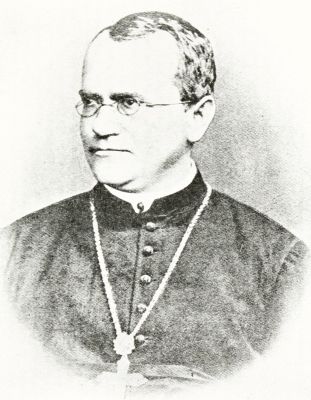
Fig. 95.—Gregor Mendel, 1822-1884. Permission of Professor Bateson.
The great discovery of Mendel may be called that of the purity of the germ-cells. By cross-fertilization of pure breeds of peas of different colors and shapes he obtained hybrids. The hybrid embodied the characteristics of the crossed peas; one of the characteristics appearing, and the other being held in abeyance—present within the organization of the pea, but not visible. When peas of different color were cross-fertilized, one color would be stronger apparently than the other, and would stand out in the hybrids. This was called the dominant color. The other, which was held in abeyance, was called recessive; for, though unseen, it was still present within the young seeds. That the recessive color was not blotted out was clearly shown by raising a crop from the hybrid, a condition under which they would produce seeds like those of the two original forms, and in equal number; and thereafter the descendants of these peas would breed true. This so-called purity of the germ-cells, then, may be expressed in this way: "The hybrid, whatever its own character, produces ripe germ-cells, which produce only the pure character of one parent or of the other" (Castle).
Although Mendel's discovery was for a long time overlooked, happily the facts were re-discovered, and at the present time extensive experiments are being made with animals to test this law: experiments in the inheritance of poultry, the inheritance of fur in guinea-pigs, of erectness in the ears of rabbits, etc., etc. In this country the experiments of Castle, Davenport, and others with animals tend to support Mendel's conclusion and lift it to the position of a law.
Rank of Mendel's Discovery.—The discovery by Mendel of alternative inheritance will rank as one of the greatest discoveries in the study of heredity. The fact that in cross-breeding the parental qualities are not blended, but that they retain their individuality in the offspring, has many possible practical applications both in horticulture and in the breeding of animals. The germ-cells of the hybrids have the dominant and the recessive characters about equally divided; this will appear in the progeny of the second generation, and the races, when once separated, may be made to breed true.
Mendel's name was not recognized as a prominent one in the annals of biological history until the re-discovery of his law in 1900; but now he is accorded high rank. It may be remarked in passing that the three leading names in the development of the theories of heredity are those of Mendel, Galton, and Weismann.
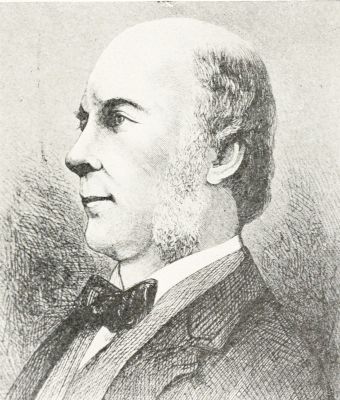
Fig. 96.—Francis Galton, Born 1822.
Galton.—The application of statistical methods is well illustrated in the theories of Francis Galton (Fig. 96). This distinguished English statistician was born in 1822, and is still living. He is the grandson of Dr. Erasmus Darwin and the cousin of Charles. After publishing books on his travels in Africa, he began the experimental study of heredity and, in 1871, he read before the Royal Society of London a paper on Pangenesis, in which he departed from that theory as developed by Darwin. The observations upon which he based his conclusions were made upon the transfusion of blood in rabbits and their after-breeding. He studied the inheritance of stature, and other characteristics, in human families, and the inheritance of spots on the coat of certain hounds, and was led to formulate a law of ancestral inheritance which received its clearest expression in his book, Natural Inheritance, published in 1889.