Front matter (continued 2)
Reading edition
Fabricius was already sixty-one years of age, and when Harvey came to Padua was perfecting his knowledge upon the valves of the veins. The young student was taken fully into his confidence, and here was laid that first familiarity with the circulatory system, the knowledge of which Harvey was destined so much to advance and amplify. But it was the stimulus of his master's friendship, rather than what he taught about the circulation, that was of assistance to Harvey. For the views of Fabricius in reference to the circulation were those of Galen; and his conception of the use of the valves of the veins was entirely wrong. A portrait of this great teacher of Harvey is shown in Fig. 9.
At Padua young Harvey attracted notice as a student of originality and force, and seems to have been a favorite with the student body as well as with his teachers. His position in the university may be inferred from the fact that he belonged to one of the aristocratic-student organizations, and, further, that he was designated a "councilor" for England. The practice of having student councilors was then in vogue in Padua; the students comprising the council met for deliberations, and very largely managed the university by their votes upon instructors and university measures.
It is a favorable comment upon the professional education of his time that, after graduating at the University of Cambridge, he studied four or more years (Willis says five years) in scientific and medical lines to reach the degree of Doctor of Physic.
On leaving Padua, in 1602, he returned to England and took the examinations for the degree of M.D. from Cambridge, inasmuch as the medical degree from an English university advanced his prospects of receiving a position at home. He opened practice, was married in 1604, and the same year began to give public lectures on anatomy.
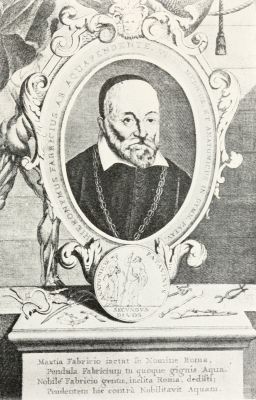
Fig. 9.—Fabricius, 1537-1619, Harvey's Teacher.
His Personal Qualities.—Harvey had marked individuality, and seems to have produced a powerful impression upon those with whom he came in contact as one possessing unusual intellectual powers and independence of character. He inspired confidence in people, and it is significant that, in reference to the circulation of the blood, he won to his way of thinking his associates in the medical profession. This is important testimony as to his personal force, since his ideas were opposed to the belief of the time, and since also away from home they were vigorously assailed.
Although described as choleric and hasty, he had also winning qualities, so that he retained warm friendships throughout his life, and was at all times held in high respect. It must be said also that in his replies to his critics, he showed great moderation.
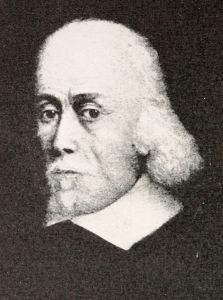
Fig. 10.—William Harvey, 1578-1667.
The contemplative face of Harvey is shown in Fig. 10. This is taken from his picture in the National Portrait Gallery in London, and is usually regarded as the second-best portrait of Harvey, since the one painted by Jansen, now in possession of the Royal College of Physicians, is believed to be the best one extant. The picture reproduced here shows a countenance of composed intellectual strength, with a suggestion, in the forehead and outline of the face, of some of the portraits of Shakespeare.
An idea of his personal appearance may be had from the description of Aubrey, who says: "Harvey was not tall, but of the lowest stature; round faced, with a complexion like the wainscot; his eyes small, round, very black, and full of spirit; his hair black as a raven, but quite white twenty years before he died; rapid in his utterance, choleric, given to gesture," etc.
He was less impetuous than Vesalius, who had published his work at twenty-eight; Harvey had demonstrated his ideas of the circulation in public anatomies and lectures for twelve years before publishing them, and when his great classic on the Movement of the Heart and Blood first appeared in 1628, he was already fifty years of age. This is a good example for young investigators of to-day who, in order to secure priority of announcement, so frequently rush into print with imperfect observations as preliminary communications.
Harvey's Writings.—Harvey's publications were all great; in embryology, as in physiology, he produced a memorable treatise. But his publications do not fully represent his activity as an investigator; it is known that through the fortunes of war, while connected with the sovereign Charles I as court physician, he lost manuscripts and drawings upon the comparative anatomy and development of insects and other animals. His position in embryology will be dealt with in the chapter on the Development of Animals, and he will come up for consideration again in the chapter on the Rise of Physiology. Here we are concerned chiefly with his general influence on the development of biology.
His Great Classic on Movement of the Heart and Blood.—Since his book on the circulation of the blood is regarded as one of the greatest monuments along the highroad of biology, it is time to make mention of it in particular. Although relatively small, it has a long title out of proportion to its size: Exercitatio Anatomica de Motu Cordis et Sanguinis in Animalibus, which maybe freely translated, "An Anatomical Disquisition on the Movement of the Heart and Blood in Animals." The book is usually spoken of under the shorter title, De Motu Cordis et Sanguinis. The full title seems somewhat repellent, but the contents of the book will prove to be interesting to general readers. It is a clear, logical demonstration of the subject, proceeding with directness from one point to another until the culminating force of the argument grows complete and convincing.
The book in its first edition was a quarto volume of seventy-eight pages, published in Frankfort in 1628. An interesting facsimile reprint of this work, translated into English, was privately reproduced in 1894 by Dr. Moreton and published in Canterbury. As stated above, it is known that Harvey had presented and demonstrated his views in his lectures since 1616. In his book he showed for the first time ever in print, that all the blood in the body moves in a circuit, and that the beating of the heart supplies the propelling force. Both ideas were new, and in order to appreciate in what sense they were original with Harvey, we must inquire into the views of his forerunners.
Question as to Harvey's Originality.—The question of how near some of his predecessors came to anticipating his demonstration of the circulation has been much debated. It has been often maintained that Servetus and Realdus Columbus held the conception of the circulation for which Harvey has become so celebrated. Of the various accounts of the views of Harvey's predecessors, those of Willis, Huxley, and Michael Foster are among the most judicial; that of Foster, indeed, inasmuch as it contains ample quotations from the original sources, is the most nearly complete and satisfactory. The discussion is too long to enter into fully here, but a brief outline is necessary to understand what he accomplished, and to put his discovery in the proper light.
To say that he first discovered—or, more properly, demonstrated—the circulation of the blood carries the impression that he knew of the existence of capillaries connecting the arteries and the veins, and had ocular proof of the circulation through these connecting vessels. But he did not actually see the blood moving from veins to arteries, and he knew not of the capillaries. He understood clearly from his observations and experiments that all the blood passes from veins to arteries and moves in "a kind of circle"; still, he thought that it filters through the tissues in getting from one kind of vessel to the other. It was reserved for Malpighi, in 1661, and Leeuwenhoek, in 1669, to see, with the aid of lenses, the movement of the blood through the capillaries in the transparent parts of animal tissues. (See under Leeuwenhoek, p. 84.)
The demonstration by Harvey of the movement of the blood in a circuit was a matter of cogent reasoning, based on experiments with ligatures, on the exposure of the heart in animals and the analysis of its movements. It has been commonly maintained (as by Whewell) that he deduced the circulation from observations of the valves in the veins, but this is not at all the case. The central point of Harvey's reasoning is that the quantity of blood which leaves the left cavity of the heart in a given space of time makes necessary its return to the heart, since in a half-hour (or less) the heart, by successive pulsations, throws into the great artery more than the total quantity of blood in the body. Huxley points out that this is the first time that quantitative determinations were introduced into physiology.
Views of His Predecessors on the Movement of the Blood.—Galen's view of the movement of the blood was not completely replaced until the establishment of Harvey's view. The Greek anatomist thought that there was an ebb and flow of blood within both veins and arteries throughout the system. The left side of the heart was supposed to contain blood vitalized by a mixture of animal spirits within the lungs. The veins were thought to contain crude blood. He supposed, further, that there was a communication between the right and the left side of the heart through very minute pores in the septum, and that some blood from the right side passed through the pores into the left side and there became charged with animal spirits. It should also be pointed out that Galen believed in the transference of some blood through the lungs from the right to the left side of the heart, and in this foreshadowed the views which were later developed by Servetus and Realdus Columbus.
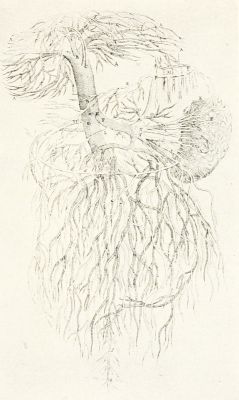
Fig. 11.—Scheme of the Portal Circulation According to Vesalius, 1543.
Vesalius, in the first edition of his work (1543) expressed doubts upon the existence of pores in the partition-wall of the heart through which blood could pass; and in the second edition (1555) of the Fabrica he became more skeptical. In taking this position he attacked a fundamental part of the belief of Galen. The careful structural studies of Vesalius must have led him very near to an understanding of the connection between arteries and veins. Fig. 11 shows one of his sketches of the arrangement of arteries and veins. He saw that the minute terminals of arteries and veins came very close together in the tissues of the body, but he did not grasp the meaning of the observation, because his physiology was still that of Galen; Vesalius continued to believe that the arteries contained blood mixed with spirits, and the veins crude blood, and his idea of the movement was that of an ebb and flow. In reference to the anatomy of the blood-vessels, he goes so far as to say of the portal vein and the vena cava in the liver that "the extreme ramifications of these veins inosculate with each other, and in many places appear to unite and be continuous." All who followed him had the advantage of his drawings showing the parallel arrangement of arteries and veins, and their close approach to each other in their minute terminal twigs, but no one before Harvey fully grasped the idea of the movement of the blood in a complete circuit.
Servetus, in his work on the Restoration of Christianity (Restitutio Christianismi, 1553), the work for which Calvin accomplished his burning at the stake, expressed more clearly than Galen had done the idea of a circuit of blood through the lungs. According to his view, some of the blood took this course, while he still admits that a part may exude through the wall of the ventricle from the right to the left side. This, however, was embodied in a theological treatise, and had little direct influence in bringing about an altered view of the circulation. Nevertheless, there is some reason to think that it may have been the original source of the ideas of the anatomist Columbus, as the studies into the character of that observer by Michael Foster seem to indicate.
Realdus Columbus, professor of anatomy at Rome, expressed a conception almost identical with that of Servetus, and as this was in an important work on anatomy, published in 1559, and well known to the medical men of the period, it lay in the direct line of anatomical thought and had greater influence. Foster suggests that the devious methods of Columbus, and his unblushing theft of intellectual property from other sources, give ground for the suspicion that he had appropriated this idea from Servetus without acknowledgment. Although Calvin supposed that the complete edition of a thousand copies of the work of Servetus had been burned with its author in 1553, a few copies escaped, and possibly one of these had been examined by Columbus. This assumption is strengthened by the circumstance that Columbus gives no record of observations, but almost exactly repeats the words of Servetus.
Cæsalpinus, the botanist and medical man, expressed in 1571 and 1593 similar ideas of the movement of the blood (probably as a matter of argument, since there is no record of either observations or experiments by him). He also laid hold of a still more important conception, viz., that some of the blood passes from the left side of the heart through the arteries of the body, and returns to the right side of the heart by the veins. But a fair consideration of the claims of these men as forerunners of Harvey requires quotations from their works and a critical examination of the evidence thus adduced. This has been excellently done by Michael Foster in his Lectures on the History of Physiology. Further considerations of this aspect of the question would lie beyond the purposes of this book.
At most, before Harvey, the circuit through the lungs had been vaguely defined by Galen, Servetus, Columbus, and Cæsalpinus, and the latter had supposed some blood to pass from the heart by the arteries and to return to it by the veins; but no one had arrived at an idea of a complete circulation of all the blood through the system, and no one had grasped the consequences involved in such a conception. Harvey's idea of the movement of the heart (De Motu Cordis) was new; his notion of the circulation (et Sanguinis) was new; and his method of demonstrating these was new.
Harvey's Argument.—The gist of Harvey's arguments is indicated in the following propositions quoted with slight modifications from Hall's Physiology: (I) The heart passively dilates and actively contracts; (II) the auricles contract before the ventricles do; (III) the contraction of the auricles forces the blood into the ventricles; (IV) the arteries have no "pulsific power," i.e., they dilate passively, since the pulsation of the arteries is nothing else than the impulse of the blood within them; (V) the heart is the organ of propulsion of the blood; (VI) in passing from the right ventricle to the left auricle the blood transudes through the parenchyma of the lungs; (VII) the quantity and rate of passage of the blood peripherally from the heart makes it a physical necessity that most of the blood return to the heart; (VIII) the blood does return to the heart by way of the veins. It will be noticed that the proposition VII is the important one; in it is involved the idea of applying measurement to a physiological process.
Harvey's Influence.—Harvey was a versatile student. He was a comparative anatomist as well as a physiologist and embryologist; he had investigated the anatomy of about sixty animals and the embryology of insects as well as of vertebrates, and his general influence in promoting biological work was extensive.
His work on the movement of the blood was more than a record of a series of careful investigations; it was a landmark in progress. When we reflect on the part played in the body by the blood, we readily see that a correct idea of how it carries nourishment to the tissues, and how it brings away from them the products of disintegrated protoplasm is of prime importance in physiology. It is the point from which spring all other ideas of the action of tissues, and until this was known the fine analysis of vital processes could not be made. The true idea of respiration, of the secretion by glands, the chemical changes in the tissues, in fact, of all the general activities of the body, hinge upon this conception. It was these consequences of his demonstration, rather than the fact that the blood moves in a circuit, which made it so important. This discovery created modern physiology, and as that branch of inquiry is one of the parts of general biology, the bearing of Harvey's discovery upon biological thought can be readily surmised.
Those who wish to examine Harvey's views at first hand, without the burden of translating them from the Latin, will find an edition of his complete works translated into English by Willis, and published by the Ray Society, of London.
As is always the case with new truths, there was hostility to accepting his views. In England this hostility was slight on account of his great personal influence, but on the Continent there was many a sharp criticism passed upon his work. His views were so illuminating that they were certain of triumph, and even in his lifetime were generally accepted. Thus the new conception of vital activities, together with his method of inquiry, became permanent parts of biological science.
CHAPTER IV
THE INTRODUCTION OF THE MICROSCOPE AND THE PROGRESS OF INDEPENDENT OBSERVATION
The introduction of the microscope greatly increased the ocular powers of observers, and, in the seventeenth century, led to many new departures. By its use the observations were carried from the plane of gross anatomy to that of minute structure; the anatomy of small forms of life, like insects, began to be studied, and also the smaller microscopic animalcula were for the first time made known.
Putting aside the disputed questions as to the time of the invention and the identity of the inventor of the microscope—whether to Fontana, Galileo, or the Jenssens belongs the credit—we know that it was improved by the Hollander Drebbel in the early years of the seventeenth century, but was not seriously applied to anatomical studies till after the middle of that century.
The Pioneer Microscopists
The names especially associated with early microscopic observations are those of Hooke and Grew in England, Malpighi in Italy, and Swammerdam and Leeuwenhoek, both in Holland. Their microscopes were imperfect, and were of two kinds: simple lenses, and lenses in combination, forming what we now know as the compound microscope. Some forms of these early microscopes will be described and illustrated later. Although thus early introduced, microscopic observation did not produce its great results until the nineteenth century, just after magnifying-lenses had been greatly improved.
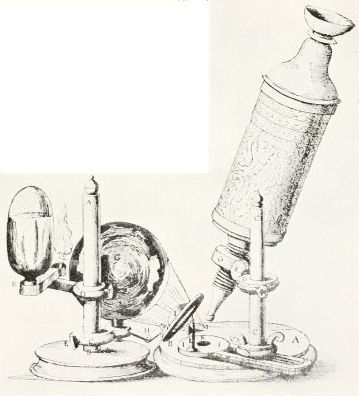
Fig. 12.—Hooke's Microscope, 1665. From Carpenter's The Microscope and Its Revelations. Permission of P. Blakiston's Sons & Co.
Robert Hooke (1635-1703), of London, published in 1665 a book of observations with the microscope entitled Micrographia, which was embellished with eighty-three plates of figures. Hooke was a man of fine mental endowment, who had received a good scientific training at the University of Cambridge, but who lacked fixedness of purpose in the employment of his talents. He did good work in mathematics, made many models for experimenting with flying machines, and claimed to have discovered gravitation before Newton, and also the use of a spring for regulating watches before Huygens, etc. He gave his attention to microscopic study for a time and then dropped it; yet, although we can not accord to him a prominent place in the history of biology, he must receive mention as a pioneer worker with the microscope. His book gave a powerful stimulus to microscopy in England, and, partly through its influence, labor in this field was carried on more systematically by his fellow-countryman Nehemiah Grew.
The form of the microscope used by Hooke is known through a picture and a description which he gives of it in his Micrographia. Fig. 12 is a copy of the illustration. His was a compound microscope consisting of a combination of lenses attached to a tube, one set near the eye of the observer and the other near the object to be examined. When we come to describe the microscopes of Leeuwenhoek, with which so much good work was accomplished, we shall see that they stand in marked contrast, on account of their simplicity, to the somewhat elaborate instrument of Hooke.
Grew (1628-1711) devoted long and continuous labor to microscopic observation, and, although he was less versatile and brilliant than Hooke, his patient investigations give him just claim to a higher place in the history of natural science. Grew applied the microscope especially to the structure of plants, and his books entitled Idea of a Philosophical History of Plants (1673) and Anatomy of Vegetables (1682) helped to lay the foundations of vegetable histology. When we come to consider the work of Malpighi, we shall see that he also produced a work upon the microscopic structure of plants which, although not more exact and painstaking than Grew's, showed deeper comprehension. He is the co-founder with Grew of the science of the microscopic anatomy of plants.
It is not necessary to dwell long upon the work of either Hooke or Grew, since that of Malpighi, Swammerdam, and Leeuwenhoek was more far-reaching in its influence. The publications of these three men were so important, both in reference to microscopic study and to the progress of independent investigation, that it will be necessary to deal with them in more detail. In the work of these men we come upon the first fruits of the application of the methods introduced by Vesalius and Harvey. Of this triumvirate, one—Malpighi—was an Italian, and the other two were Hollanders. Their great service to intellectual progress consisted chiefly in this—that, following upon the foundations of Vesalius and Harvey, "they broke away from the thraldom of mere book-learning, and relying alone upon their own eyes and their own judgment, won for man that which had been quite lost—the blessings of independent and unbiased observation."
It is natural that, working when they did, and independently as they did, their work overlapped in many ways. Malpighi is noteworthy for many discoveries in anatomical science, for his monograph on the anatomy of the silkworm, for observations of the minute structure of plants, and of the development of the chick in the hen's egg. Swammerdam did excellent and accurate work upon the anatomy and metamorphosis of insects, and the internal structure of mollusks, frogs, and other animals. Leeuwenhoek is distinguished for much general microscopic work; he discovered various microscopic animalcula; he established, by direct observation, the fact of a connection between arteries and veins, and examined microscopically minerals, plants, and animals. To him, more than to the others, the general title of "microscopist" might be applied.
Since these men are so important in the growth of biology, let us, by taking them individually, look a little more closely into their lives and labors.
Marcello Malpighi, 1628-1694
Personal Qualities.—There are several portraits of Malpighi extant. These, together with the account of his personal appearance given by Atti, one of his biographers, enable us to tell what manner of man he was. The portrait shown in Fig. 13 is a copy of the one painted by Tabor and presented by Malpighi to the Royal Society of London, in whose rooms it may still be seen. This shows him in the full attractiveness of his early manhood, with the earnest, intellectual look of a man of high ideals and scholarly tastes, sweet-tempered, and endowed with the insight that belongs to a sympathetic nature. Some of his portraits taken later are less attractive, and the lines and wrinkles that show in his face give evidence of imperfect health. According to Atti, he was of medium stature, with a brown skin, a delicate complexion, a serious countenance, and a melancholy look.
Accounts of his life show that he was modest, quiet, and of a pacific disposition, notwithstanding the fact that he lived in an atmosphere of acrimonious criticism, of jealousy and controversy. A family dispute in reference to the boundary-lines between his father's property and the adjoining land of the Sbaraglia family gave rise to a feud, in which representatives of the latter family followed him all his life with efforts to injure both his scientific reputation and his good name. Under all this he suffered acutely, and his removal from Bologna to Messina was partly to escape the harshness of his critics. Some of his best qualities showed under these persecutions; he was dignified under abuse and considerate in his reply. In reference to the attacks upon his scientific standing, there were published after his death replies to his critics that were written while he was smarting under their injustice and severity, but these replies are free from bitterness and are written in a spirit of great moderation. The following picture, taken from Ray's correspondence, shows the fine control of his spirit. Under the date of April, 1684, Dr. Tancred Robinson writes: "Just as I left Bononia I had a lamentable spectacle of Malpighi's house all in flames, occasioned by the negligence of his old wife. All his pictures, furniture, books, and manuscripts were burnt. I saw him in the very heat of the calamity, and methought I never beheld so much Christian patience and philosophy in any man before; for he comforted his wife and condoled nothing but the loss of his papers."
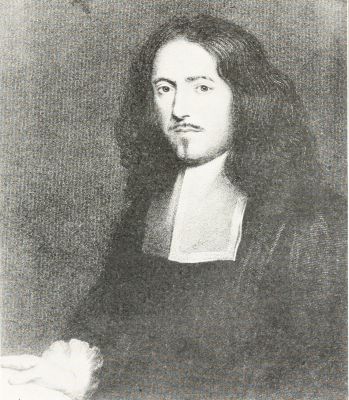
Fig. 13.—Malpighi, 1628-1694.
Education.—Malpighi was born at Crevalcuore, near Bologna, in 1628. His parents were landed peasants, or farmers, enjoying an independence in financial matters. As their resources permitted it, they designed to give Marcellus, their eldest child, the advantage of masters and schools. He began a life of study; and, before long, he showed a taste for belles-lettres and for philosophy, which he studied under Natali.
Through the death of both parents, in 1649, Malpighi found himself orphaned at the age of twenty-one, and as he was the eldest of eight children, the management of domestic affairs devolved upon him. He had as yet made no choice of a profession; but, through the advice of Natali, he resolved, in 1651, to study medicine. This advice followed, in 1653, at the age of twenty-five, he received from the University of Bologna the degree of Doctor of Medicine.
University Positions.—In the course of a few years he married the sister of Massari, one of his teachers in anatomy, and became a candidate for a chair in the University of Bologna. This he did not immediately receive, but, about 1656, he was appointed to a post in the university, and began his career as a teacher and investigator. He must have shown aptitude for this work, for he was soon called to the University of Pisa, where, fortunately for his development, he became associated with Borelli, who, as an older man, assisted him in many ways. They united in some work, and together they discovered the spiral character of the heart muscles. But the climate of Pisa did not agree with him, and after three years he returned, in 1659, to teach in the University of Bologna, and applied himself assiduously to anatomy.
Here his fame was in the ascendant, notwithstanding the machinations of his enemies and detractors, led by Sbaraglia. He was soon (1662) called to Messina to follow the famous Castelli. After a residence there of four years he again returned to Bologna, and as he was now thirty-eight years of age, he thought it time to retire to his villa near the city in order to devote himself more fully to anatomical studies, but he continued his lectures in the university, and also his practice of medicine.
Honors at Home and Abroad.—Malpighi's talents were appreciated even at home. The University of Bologna honored him in 1686 with a Latin eulogium; the city erected a monument to his memory; and after his death, in the city of Rome, his body was brought to Bologna and interred with great pomp and ceremony. At the three hundredth anniversary of his death, in 1894, a festival was held in Bologna, his monument was unveiled, and a book of addresses by eminent anatomists was published in his honor.
During his lifetime he received recognition also from abroad, but that is less remarkable. In 1668 he was elected an honorary member of the Royal Society of London. He was very sensible of this honor; he kept in communication with the society; he presented them with his portrait, and deposited in their archives the original drawings illustrating the anatomy of the silkworm and the development of the chick.
In 1691 he was taken to Rome by the newly elected pope, Innocent XII, as his personal physician, but under these new conditions he was not destined to live many years. He died there, in 1694, of apoplexy. His wife, of whom it appears that he was very fond, had died a short time previously. Among his posthumous works is a sort of personal psychology written down to the year 1691, in which he shows the growth of his mind, and the way in which he came to take up the different subjects of investigation.
In reference to his discoveries and the position he occupies in the history of natural science, it should be observed that he was an "original as well as a very profound observer." While the ideas of anatomy were still vague, "he applied himself with ardor and sagacity to the study of the fine structure of the different parts of the body," and he extended his investigations to the structure of plants and of different animals, and also to their development. Entering, as he did, a new and unexplored territory, naturally he made many discoveries, but no man of mean talents could have done his work.
Activity in Research.—During forty years of his life he was always busy with research. Many of his discoveries had practical bearing on the advance of anatomy and physiology as related to medicine. In 1661 he demonstrated the structure of the lungs. Previously these organs had been regarded as a sort of homogeneous parenchyma. He showed the presence of air-cells, and had a tolerably correct idea of how the air and the blood are brought together in the lungs, the two never actually in contact, but always separated by a membrane. These discoveries were first made on the frog, and applied by analogy to the interpretation of the lungs of the human body. He was a comparative anatomist, and the first to insist on analogies of structure between organs throughout the animal kingdom, and to make extensive practical use of the idea that discoveries on simpler animals can be utilized in interpreting the similar structures in the higher ones.
It is very interesting to note that in connection with this work he actually observed the passage of blood through the capillaries of the transparent lungs of the frog, and also in the mesentery. Although this antedates the similar observations of Leeuwenhoek (1669), nevertheless the work of Leeuwenhoek was much more complete, and he is usually recognized in physiology as the discoverer of the capillary connection between arteries and veins. At this same period Malpighi also observed the blood corpuscles.
Soon after he demonstrated the mucous layer, or pigmentary layer of the skin, intermediate between the true and the scarf skin. He had separated this layer by boiling and maceration, and described it as a reticulated membrane. Even its existence was for a long time controverted, but it remains in modern anatomy under the title of the Malpighian layer.
His observation of glands was extensive, and while it must be confessed that many of his conclusions in reference to glandular structure were erroneous, he left his name connected with the Malpighian corpuscles of the kidney and of the spleen. He was also the first to indicate the nature of the papillæ on the tongue. The foregoing is a respectable list of discoveries, but much more stands to his credit. Those which follow have a bearing on comparative anatomy, zoölogy, and botany.
Monograph on the Structure and Metamorphosis of the Silkworm.—Malpighi's work on the structure of the silkworm takes rank among the most famous monographs on the anatomy of a single animal. Much skill was required to give to the world this picture of minute structure. The marvels of organic architecture were being made known in the human body and the higher animals, but "no insect—hardly, indeed, any animal—had then been carefully described, and all the methods of the work had to be discovered." He labored with such enthusiasm in this new territory as to throw himself into a fever and to set up an inflammation in the eyes. "Nevertheless," says Malpighi, "in performing these researches so many marvels of nature were spread before my eyes that I experienced an internal pleasure that my pen could not describe."
He showed that the method of breathing was neither by lungs nor by gills, but through a system of air-tubes, communicating with the exterior through buttonhole shaped openings, and, internally, by an infinitude of branches reaching to the minutest parts of the body. Malpighi showed an instinct for comparison; instead of confining his researches to the species in hand, he extended his observations to other insects, and has given sketches of the breathing-tubes, held open by their spiral thread, taken from several species.
The nervous system he found to be a central white cord with swellings in each ring of the body, from which nerves are given off to all organs and tissues. The cord, which is, of course, the central nervous system, he found located mainly on the ventral surface of the body, but extending by a sort of collar of nervous matter around the œsophagus, and on the dorsal surface appearing as a more complex mass, or brain, from which nerves are given off to the eyes and other sense organs of the head. As illustrations from this monograph we have, in Fig. 14, reduced sketches of the drawings of the nervous system and the food canal in the adult silkworm. The sketch at the right hand illustrates the central nerve cord with its ganglionic enlargement in each segment, the segments being indicated by the rows of spiracles at the sides. The original drawing is on a much larger scale, and reducing it takes away some of its coarseness. All of his drawings lack the finish and detail of Swammerdam's work.
He showed also the food canal and the tubules connected with the intestine, which retain his name in the insect anatomy of to-day, under the designation of Malpighian tubes. The silk-forming apparatus was also figured and described. These structures are represented, as Malpighi drew them, on the left of Fig. 14.
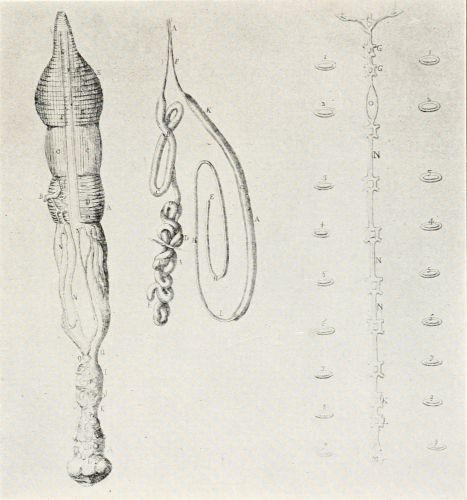
Fig. 14.—From Malpighi's Anatomy of the Silkworm, 1669.
This monograph, which was originally published in 1669 by the Royal Society of London, bears the Latin title, Dissertatio Epistolica de Bombyce. It has been several times republished, the best edition being that in French, which dates from Montpellier, in 1878, and which is prefaced by an account of the life and labors of Malpighi.
Anatomy of Plants.—Malpighi's anatomy of plants constitutes one of his best, as well as one of his most extensive works. In the folio edition of his works, 1675-79, the Anatome Plantarum occupies not less than 152 pages and is illustrated by ninety-three plates of figures. It comprises an exposition of the structure of bark, stem, roots, seeds, the process of germination, and includes a treatise on galls, etc., etc.
In this work the microscopic structure of plants is amply illustrated, and he anticipated to a certain degree the ideas on the cellular structure of plants. Burnett says: "His observations appear to have been very accurate, and not only did he maintain the cellular structure of plants, but also declared that it was composed of separate cells, which he designated 'utricles.'" Thus did he foreshadow the cell theory of plants as developed by Schleiden in the nineteenth century. When it came to interpretations, he made several errors. Applying his often-asserted principle of analogies, he concluded that the vessels of plants are organs of respiration and of circulation, from a certain resemblance that they bear to the breathing-tubes of insects. But his observations on structure are good, and if he had accomplished nothing more than this work on plants he would have a place in the history of botany.
Work in Embryology.—Difficult as was his task in insect anatomy and plant histology, a more difficult one remains to be mentioned, viz., his observations of the development of animals. He had pushed his researches into the finer structure of organisms, and now he attempted to answer this question: How does one of these organisms begin its life, and by what series of steps is its body built up? He turned to the chick, as the most available form in which to get an insight into this process, but he could not extend his observations successfully into periods earlier than about the twenty-four-hour stage of development. Two memoirs were written on this subject, both in 1672, which were published by the Royal Society of England under the titles De Formatione Pulli in Ovo and De Ovo Incubato. Of all Malpighi's work, this has received the least attention from reviewers, but it is, for his time, a very remarkable achievement. No one can look over the ten folio plates without being impressed with the extent and accuracy of his observations. His sketches are of interest, not only to students of embryology, but also to educated people, to see how far observations regarding the development of animals had progressed in 1672. Further consideration of his position in embryology will be found in the chapter on the rise of that subject.
Little is known regarding the form of microscope employed by Malpighi. Doubtless, much of his work was done with a simple lens, since he speaks of examining the dried lungs with a microscope of a single lens against the horizontal sun; but he is also known to have observed with an instrument consisting of two lenses.
Malpighi was a naturalist, but of a new type; he began to look below the surface, and essayed a deeper level of analysis in observing and describing the internal and minute structure of animals and plants, and when he took the further step of investigating their development he was anticipating the work of the nineteenth century.
Jan Swammerdam (1637-1680)
Swammerdam was a different type of man—nervous, incisive, very intense, stubborn, and self-willed. Much of his character shows in the portrait by Rembrandt represented in Fig. 15. Although its authenticity has been questioned, it is the only known portrait of Swammerdam.
Early Interest in Natural History.—He was born in 1637, nine years after Malpighi. His father, an apothecary of Amsterdam, had a taste for collecting, which was shared by many of his fellow-townsmen. The Dutch people of this time sent their ships into all parts of the world, and this vast commerce, together with their extensive colonial possessions, fostered the formation of private museums. The elder Swammerdam had the finest and most celebrated collection in all Amsterdam. This was stored, not only with treasures, showing the civilization of remote countries, but also with specimens of natural history, for which he had a decided liking. Thus "from the earliest dawn of his understanding the young Swammerdam was surrounded by zoölogical specimens, and from the joint influence, doubtless, of hereditary taste and early association, he became passionately devoted to the study of natural history."
Studies Medicine.—His father intended him for the church, but he had no taste for theology, though he became a fanatic in religious matters toward the close of his life; at this period, however, he could brook no restraint in word or action. He consented to study medicine, but for some reason he was twenty-six years old before entering the University of Leyden. This delay was very likely owing to his precarious health, but, in the mean time, he had not been idle; he had devoted himself to observation and study with great ardor, and had already become an expert in minute dissection. When he went to the University of Leyden, therefore, he at once took high rank in anatomy. Anything demanding fine manipulation and dexterity was directly in his line. He continued his studies in Paris, and about 1667 took his degree of Doctor of Medicine.
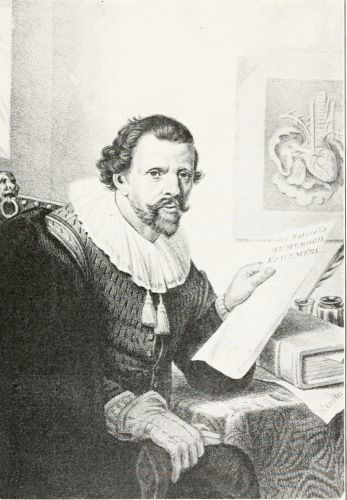
Fig. 15.—Swammerdam, 1637-1680.
During this period of medical study he made some rather important observations in human anatomy, and introduced the method of injection that was afterward claimed by Ruysch. In 1664 he discovered the valves of lymphatic vessels by the use of slender glass tubes, and, three years later, first used a waxy material for injecting blood-vessels.
It should be noted, in passing, that Swammerdam was the first to observe and describe the blood corpuscles. As early as 1658 he described them in the blood of the frog, but not till fifty-seven years after his death were his observations published by Boerhaave, and, therefore, he does not get the credit of this discovery. Publication alone, not first observation, establishes priority, but there is conclusive evidence that he observed the blood corpuscles before either Malpighi or Leeuwenhoek had published his findings.
Love of Minute Anatomy.—After graduating in medicine he did not practice, but followed his strong inclination to devote himself to minute anatomy. This led to differences with his father, who insisted on his going into practice, but the self-willed stubbornness and firmness of the son now showed themselves. It was to gratify no love of ease that Swammerdam thus held out against his father, but to be able to follow an irresistible leading toward minute anatomy. At last his father planned to stop supplies, in order to force him into the desired channel, but Swammerdam made efforts, without success, to sell his own personal collection and preserve his independence. His father died, leaving him sufficient property to live on, and brought the controversy to a close soon after the son had consented to yield to his wishes.
Boerhaave, his fellow-countryman, gathered Swammerdam's complete writings after his death and published them in 1737 under the title Biblia Naturæ. With them is included a life of Swammerdam, in which a graphic account is given of his phenomenal industry, his intense application, his methods and instruments. Most of the following passages are selected from that work.
Intensity as a Worker.—He was a very intemperate worker, and in finishing his treatise on bees (1673) he broke himself down.
"It was an undertaking too great for the strongest constitution to be continually employed by day in making observations and almost as constantly engaged by night in recording them by drawings and suitable explanations. This being summer work, his daily labors began at six in the morning, when the sun afforded him light enough to enable him to survey such minute objects; and from that time till twelve he continued without interruption, all the while exposed in the open air to the scorching heat of the sun, bareheaded, for fear of interrupting the light, and his head in a manner dissolving into sweat under the irresistible ardors of that powerful luminary. And if he desisted at noon, it was only because the strength of his eyes was too much weakened by the extraordinary efflux of light and the use of microscopes to continue any longer upon such small objects.
"This fatigue our author submitted to for a whole month together, without any interruption, merely to examine, describe, and represent the intestines of bees, besides many months more bestowed upon the other parts; during which time he spent whole days in making observations, as long as there was sufficient light to make any, and whole nights in registering his observations, till at last he brought his treatise on bees to the wished-for perfection."
Method of Work.—"For dissecting very minute objects, he had a brass table made on purpose by that ingenious artist, Samuel Musschenbroek. To this table were fastened two brass arms, movable at pleasure to any part of it, and the upper portion of these arms was likewise so contrived as to be susceptible of a very slow vertical motion, by which means the operator could readily alter their height as he saw most convenient to his purpose. The office of one of these arms was to hold the little corpuscles, and that of the other to apply the microscope. His microscopes were of various sizes and curvatures, his microscopical glasses being of various diameters and focuses, and, from the least to the greatest, the best that could be procured, in regard to the exactness of the workmanship and the transparency of the substance.
"But the constructing of very fine scissors, and giving them an extreme sharpness, seems to have been his chief secret. These he made use of to cut very minute objects, because they dissected them equably, whereas knives and lancets, let them be ever so fine and sharp, are apt to disorder delicate substances. His knives, lancets, and styles were so fine that he could not see to sharpen them without the assistance of the microscope; but with them he could dissect the intestines of bees with the same accuracy and distinctness that others do those of large animals.
"He was particularly dexterous in the management of small tubes of glass no thicker than a bristle, drawn to a very fine point at one end, but thicker at the other."
These were used for inflating hollow structures, and also for making fine injections. He dissolved the fat of insects in turpentine and carried on dissections under water.
An unbiased examination of his work will show that it is of a higher quality than Malpighi's in regard to critical observation and richness of detail. He also worked with minuter objects and displayed a greater skill.
The Religious Devotee.—The last part of his life was dimmed by fanaticism. He read the works of Antoinette Bourignon and fell under her influence; he began to subdue his warm and stubborn temper, and to give himself up to religious contemplation. She taught him to regard scientific research as worldly, and, following her advice, he gave up his passionate fondness for studying the works of the Creator, to devote himself to the love and adoration of that same Being. Always extreme and intense in everything he undertook, he likewise overdid this, and yielded himself to a sort of fanatical worship until the end of his life, in 1680. Had he possessed a more vigorous constitution he would have been greater as a man. He lived, in all, but forty-three years; the last six or seven years were unproductive because of his mental distractions, and before that, much of his time had been lost through sickness.
The Biblia Naturæ.—It is time to ask, What, with all his talents and prodigious application, did he leave to science? This is best answered by an examination of the Biblia Naturæ, under which title all his work was collected. His treatise on Bees and Mayflies and a few other articles were published during his lifetime, but a large part of his observations remained entirely unknown until they were published in this book fifty-seven years after his death. In the folio edition it embraces 410 pages of text and fifty-three plates, replete with figures of original observations. It "contains about a dozen life-histories of insects worked out in more or less detail. Of these, the mayfly is the most famous; that on the honey-bee the most elaborate." The greater amount of his work was in structural entomology. It is known that he had a collection of about three thousand different species of insects, which for that period was a very large one. There is, however, a considerable amount of work on other animals; the fine anatomy of the snail, the structure of the clam, the squid; observations on the structure and development of the frog; observations on the contraction of the muscles, etc., etc.
It is to be remembered that Swammerdam was extremely exact in all that he did. His descriptions are models of accuracy and completeness.
Fig. 16 shows reduced sketches of his illustrations of the structure of the snail. The upper sketch shows the central nervous system and the nerve trunks connected therewith, and the lower figure shows the shell and the principal muscles. This is an exceptionally good piece of anatomization for that time, and is a fair sample of the fidelity with which he worked out details in the structure of small animals. Besides showing this, these figures also serve the purpose of pointing out that Swammerdam's fine anatomical work was by no means confined to insects. His determinations on the structure of the young frog were equally noteworthy.
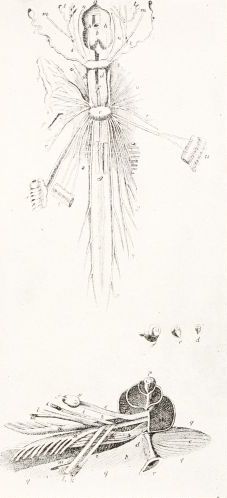
Fig. 16.—From Swammerdam's Biblia Naturæ.
But we should have at least one illustration of his handling of insect anatomy to compare more directly with that of Malpighi, already given. Fig. 17 is a reduced sketch of the anatomy of the larva of an ephemerus, showing, besides other structures, the central nervous system in its natural position. When compared with the drawings of Malpighi, we see there is a more masterly hand at the task, and a more critical spirit back of the hand. The nervous system is very well done, and the greater detail in other features shows a disposition to go into the subject more deeply than Malpighi.
Besides working on the structure and life-histories of animals, Swammerdam showed, experimentally, the irritability of nerves and the response of muscles after their removal from the body. He not only illustrates this quite fully, but seems to have had a pretty good appreciation of the nature of the problem of the physiologist. He says:
"It is evident from the foregoing observations that a great number of things concur in the contraction of the muscles, and that one should be thoroughly acquainted with that wonderful machine, our body, and the elements with which we are surrounded, to describe exactly one single muscle and explain its action. On this occasion it would be necessary for us to consider the atmosphere, the nature of our food, the blood, the brain, marrow, and nerves, that most subtle matter which instantaneously flows to the fibers, and many other things, before we could expect to attain a sight of the perfect and certain truth."
In reference to the formation of animals within the egg, Swammerdam was, as Malpighi, a believer in the pre-formation theory. The basis for his position on this question will be set forth in the chapter on the Rise of Embryology.
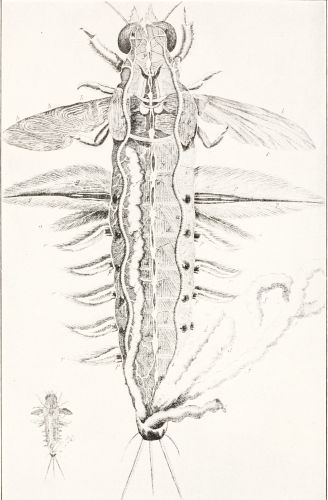
Fig. 17.—Anatomy of an Insect: Dissected and Drawn by Swammerdam.
There was another question in his time upon which philosophers and scientific men were divided, which was in reference to the origin of living organisms: Does lifeless matter, sometimes, when submitted to heat and moisture, spring into life? Did the rats of Egypt come, as the ancients believed, from the mud of the Nile, and do frogs and toads have a similar origin? Do insects spring from the dew on plants? etc., etc. The famous Redi performed his noteworthy experiments when Swammerdam was twenty-eight years old, but opinion was divided upon the question as to the possible spontaneous origin of life, especially among the smaller animals. Upon this question Swammerdam took a positive stand; he ranged himself on the side of the more scientific naturalists against the spontaneous formation of life.
Antony van Leeuwenhoek (1632-1723)
In Leeuwenhoek we find a composed and better-balanced man. Blessed with a vigorous constitution, he lived ninety-one years, and worked to the end of his life. He was born in 1632, four years after Malpighi, and five before Swammerdam; they were, then, strictly speaking, contemporaries. He stands in contrast with the other men in being self-taught; he did not have the advantage of a university training, and apparently never had a master in scientific study. This lack of systematic training shows in the desultory character of his extensive observations. Impelled by the same gift of genius that drove his confrères to study nature with such unexampled activity, he too followed the path of an independent and enthusiastic investigator.
The portrait (Fig. 18) which forms a frontispiece to his Arcana Naturæ represents him at the age of sixty-three, and shows the pleasing countenance of a firm man in vigorous health. Richardson says: "In the face peering through the big wig there is the quiet force of Cromwell and the delicate disdain of Spinoza." "It is a mixed racial type, Semitic and Teutonic, a Jewish-Saxon; obstinate and yet imaginative; its very obstinacy a virtue, saving it from flying too far wild by its imagination."
Recent Additions to His Biography.—There was a singular scarcity of facts in reference to Leeuwenhoek's life until 1885, when Dr. Richardson published in The Asclepiad[1] the results of researches made by Mr. A. Wynter Blyth in Leeuwenhoek's native town of Delft. I am indebted to that article for much that follows.
His Arcana Naturæ and other scientific letters contained a complete record of his scientific activity, but "about his parentage, his education, and his manner of making a living there was nothing but conjecture to go upon." The few scraps of personal history were contained in the Encyclopædia articles by Carpenter and others, and these were wrong in sustaining the hypothesis that Leeuwenhoek was an optician or manufacturer of lenses for the market. Although he ground lenses for his own use, there was no need on his part of increasing his financial resources by their sale. He held under the court a minor office designated 'Chamberlain of the Sheriff.' The duties of the office were those of a beadle, and were set forth in his commission, a document still extant. The requirements were light, as was also the salary, which amounted to about £26 a year. He held this post for thirty-nine years, and the stipend was thereafter continued to him to the end of his life.
Van Leeuwenhoek was derived from a good Delft family. His grandfather and his great-grandfather were Delft brewers, and his grandmother a brewer's daughter. The family were doubtless wealthy. His schooling seems to have been brought to a close at the age of sixteen, when he was "removed to a clothing business in Amsterdam, where he filled the office of bookkeeper and cashier." After a few years he returned to Delft, and at the age of twenty-two he married, and gave himself up largely to studies in natural history. Six years after his marriage he obtained the appointment mentioned above. He was twice married, but left only one child, a daughter by his first wife. In the old church at Delft is a monument erected by this daughter to the memory of her father.
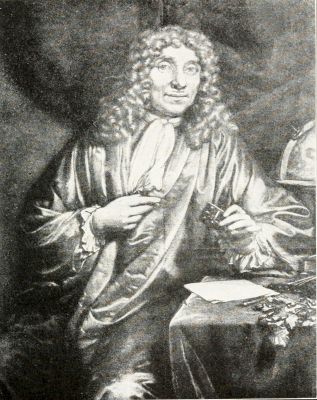
Fig. 18.—Leeuwenhoek, 1632-1723.
He led an easy, prosperous, but withal a busy life. The microscope had recently been invented, and for observation with that new instrument Leeuwenhoek showed an avidity amounting to a passion.
"That he was in comfortable, if not affluent, circumstances is clear from the character of his writings; that he was not troubled by any very anxious and responsible duties is certain from the continuity of his scientific work; that he could secure the services of persons of influence is discernible from the circumstances that, in 1673, De Graaf sent his first paper to the Royal Society of London; that in 1680 the same society admitted him as fellow; that the directors of the East India Company sent him specimens of natural history, and that, in 1698, Peter the Great paid him a call to inspect his microscopes and their revelations."
Leeuwenhoek seems to have been fascinated by the marvels of the microscopic world, but the extent and quality of his work lifted him above the level of the dilettante. He was not, like Malpighi and Swammerdam, a skilled dissector, but turned his microscope in all directions; to the mineral as well as to the vegetable and animal kingdoms. Just when he began to use the microscope is not known; his first publication in reference to microscopic objects did not appear till 1673, when he was forty-one years old.
His Microscopes.—He gave good descriptions and drawings of his instruments, and those still in existence have been described by Carpenter and others, and in consequence we have a very good idea of his working equipment. During his lifetime he sent as a present to the Royal Society of London twenty-six microscopes, each provided with an object to examine. Unfortunately, these were removed from the rooms of the society and lost during the eighteenth century. His lenses were of fine quality and were ground by himself. They were nearly all simple lenses, of small size but considerable curvature, and needed to be brought close to the object examined. He had different microscopes for different purposes, giving a range of magnifying powers from 40 to 270 diameters and possibly higher. The number of his lenses is surprising; he possessed not less than 247 complete microscopes, two of which were provided with double lenses, and one with a triplet. In addition to the above, he had 172 lenses set between plates of metal, which give a total of 419 lenses used by him in his observations. Three were of quartz, or rock crystal; the rest were of glass. More than one-half the lenses were mounted in silver; three were in gold.
It is to be understood that all his microscopes were of simple construction; no tubes, no mirror; simple pieces of metal to hold the magnifying-glass and the objects to be examined, with screws to adjust the position and the focus.
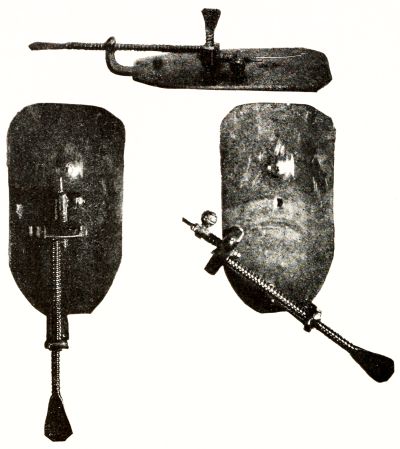
Fig. 19.—Leeuwenhoek's Microscope. Natural size. From Photographs by Professor Nierstrasz, of Utrecht.
The three aspects of one of Leeuwenhoek's microscopes shown in Fig. 19 will give a very good idea of how they were constructed. These pictures represent the actual size of the instrument. The photographs were made by Professor Nierstrasz from the specimen in possession of the University of Utrecht. The instrument consists of a double copper plate in which the circular lens is inserted, and an object-holder—represented in the right-hand lower figure as thrown to one side. By a vertical screw the object could be elevated or depressed, and by a transverse screw it could be brought nearer or removed farther from the lens, and thus be brought into focus.
Fig. 20a shows the way in which the microscope was arranged to examine the circulation of blood in the transparent tail of a small fish. The fish was placed in water in a slender glass tube, and the latter was held in a metallic frame, to which a plate (marked D) was joined, carrying the magnifying glass. The latter is indicated in the circle above the letter D, near the tail-fin of the fish. The eye was applied close to this circular magnifying-glass, which was brought into position and adjusted by means of screws. In some instances, he had a concave reflector with a hole in the center, in which his magnifying-glass was inserted; in this form of instrument the objects were illumined by reflected, and not by transmitted light.
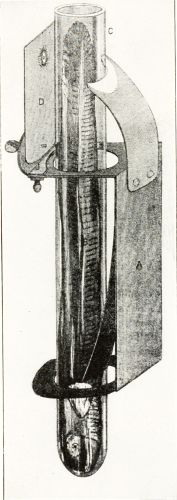
Fig. 20a.—Leeuwenhoek's Mechanism for Examining the Circulation of the Blood.
His Scientific Letters.—His microscopic observations were described and sent to learned societies in the form of letters. "All or nearly all that he did in a literary way was after the manner of an epistle," and his written communications were so numerous as to justify the cognomen, "The man of many letters." "The French Academy of Sciences, of which he was elected a corresponding member in 1697, got twenty-seven; but the lion's share fell to the young Royal Society of London, which in fifty years—1673-1723—received 375 letters and papers." "The works themselves, except that they lie in the domain of natural history, are disconnected and appear in no order of systematized study. The philosopher was led by what transpired at any moment to lead him."
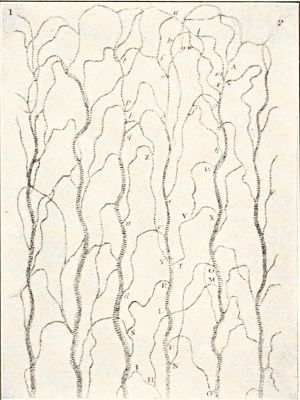
Fig. 20b.—The Capillary Circulation. (After Leeuwenhoek.)
The Capillary Circulation.—In 1686 he observed the minute circulation of the blood, and demonstrated the capillary connection between arteries and veins, thus forging the final link in the chain of observation showing the relation between these blood-vessels. This was perhaps his most important observation for its bearing on physiology. It must be remembered that Harvey had not actually seen the circulation of the blood, which he announced in 1628. He assumed on entirely sufficient grounds the existence of a complete circulation, but there was wanting in his scheme the direct ocular proof of the passage of blood from arteries to veins. This was supplied by Leeuwenhoek. Fig. 20b shows one of his sketches of the capillary circulation. In his efforts to see the circulation he tried various animals; the comb of the young cock, the ears of white rabbits, the membraneous wing of the bat were progressively examined. The next advance came when he directed his microscope to the tail of the tadpole. Upon examining this he exclaims:
"A sight presented itself more delightful than any mine eyes had ever beheld; for here I discovered more than fifty circulations of the blood in different places, while the animal lay quiet in the water, and I could bring it before my microscope to my wish. For I saw not only that in many places the blood was conveyed through exceedingly minute vessels, from the middle of the tail toward the edges, but that each of the vessels had a curve or turning, and carried the blood back toward the middle of the tail, in order to be again conveyed to the heart. Hereby it plainly appeared to me that the blood-vessels which I now saw in the animal, and which bear the names of arteries and veins are, in fact, one and the same; that is to say, that they are properly termed arteries so long as they convey the blood to the furtherest extremities of its vessels, and veins when they bring it back to the heart. And thus it appears that an artery and a vein are one and the same vessel prolonged or extended."
This description shows that he fully appreciated the course of the minute vascular circulation and the nature of the communication between arteries and veins. He afterward extended his observations to the web of the frog's foot, the tail of young fishes and eels.
In connection with this it should be remembered that Malpighi, in 1661, observed the flow of blood in the lungs and in the mesentery of the frog, but he made little of the discovery. Leeuwenhoek did more with his, and gave the first clear idea of the capillary circulation. Leeuwenhoek was anticipated also by Malpighi in reference to the microscopic structure of the blood. (See also under Swammerdam.) To Malpighi the corpuscles appeared to be globules of fat, while Leeuwenhoek noted that the blood disks of birds, frogs, and fishes were oval in outline, and those of mammals circular. He reserved the term 'globule' for those of the human body, erroneously believing them to be spheroidal.
Other Discoveries.—Among his other discoveries bearing on physiology and medicine may be mentioned: the branched character of heart muscles, the stripe in voluntary muscles, the structure of the crystalline lens, the description of spermatozoa after they had been pointed out to him in 1674 by Hamen, a medical student in Leyden, etc. Richardson dignified him with the title 'the founder of histology,' but this, in view of the work of his great contemporary, Malpighi, seems to me an overestimate.
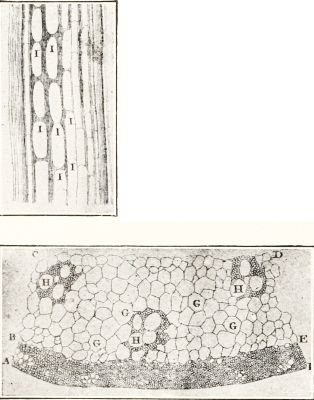
Fig. 21.—Plant Cells. (From Leeuwenhoek's Arcana Naturæ.)
Turning his microscope in all directions, he examined water and found it peopled with minute animalcules, those simple forms of animal life propelled through the water by innumerable hair-like cilia extending from the body like banks of oars from a galley, except that in many cases they extend from all surfaces. He saw not only the animalcules, but also the cilia that move their bodies.
He also discovered the Rotifers, those favorites of the amateur microscopists, made so familiar to the general public in works like Gosse's Evenings at the Microscope. He observed that when water containing these animalcules evaporated they were reduced to fine dust, but became alive again, after great lapses of time, by the introduction of water.
He made many observations on the microscopic structure of plants. Fig. 21 gives a fair sample of the extent to which he observed the cellular construction of vegetables and anticipated the cell theory. While Malpighi's research in that field was more extensive, these sketches from Leeuwenhoek represent very well the character of the work of the period on the minute structures of plants.
His Theoretical Views.—It remains to say that on the two biological questions of the day he took a decisive stand. He was a believer in pre-formation or pre-delineation of the embryo in an extreme degree, seeing in fancy the complete outline of both maternal and paternal individuals in the spermatozoa, and going so far as to make sketches of the same. But on the question of the spontaneous origin of life he took the side that has been supported with such triumphant demonstration in this century; namely, the side opposing the theory of the occurrence of spontaneous generation under present conditions of life.
Comparison of the Three Men.—We see in these three gifted contemporaries different personal characteristics. Leeuwenhoek, the composed and strong, attaining an age of ninety-one; Malpighi, always in feeble health, but directing his energies with rare capacity, reaching the age of sixty-seven; while the great intensity of Swammerdam stopped his scientific career at thirty-six and burned out his life at the age of forty-three.
They were all original and accurate observers, but there is variation in the kind and quality of their intellectual product. The two university-trained men showed capacity for coherent observation; they were both better able to direct their efforts toward some definite end; Leeuwenhoek, with the advantages of vigorous health and long working period, lacked the systematic training of the schools, and all his life wrought in discursive fashion; he left no coherent piece of work of any extent like Malpighi's Anatome Plantarum or Swammerdam's Anatomy and Metamorphosis of Insects.
Swammerdam was the most critical observer of the three, if we may judge by his labors in the same field as Malpighi's on the silkworm. His descriptions are models of accuracy and completeness, and his anatomical work shows a higher grade of finish and completeness than Malpighi's. Malpighi, it seems to me, did more in the sum total than either of the others to advance the sciences of anatomy and physiology, and through them the interests of mankind. Leeuwenhoek had larger opportunity; he devoted himself to microscopic observations, but he wandered over the whole field. While his observations lose all monographic character, nevertheless they were important in opening new fields and advancing the sciences of anatomy, physiology, botany, and zoölogy.
The combined force of their labors marks an epoch characterized by the acceptance of the scientific method and the establishment of a new grade of intellectual life. Through their efforts and that of their contemporaries of lesser note the new intellectual movement was now well under way.
FOOTNOTES:
CHAPTER V
THE PROGRESS OF MINUTE ANATOMY.
The work of Malpighi, Swammerdam, and Leeuwenhoek stimulated investigations into the structure of minute animals, and researches in that field became a feature of the advance in the next century. Considerable progress was made in the province of minute anatomy before comparative anatomy grew into an independent subject.
The attractiveness of observations upon the life-histories and the structure of insects, as shown particularly in the publications of Malpighi and Swammerdam, made those animals the favorite objects of study. The observers were not long in recognizing that some of the greatest beauties of organic architecture are displayed in the internal structure of insects. The delicate tracery of the organs, their minuteness and perfection are well calculated to awaken surprise. Well might those early anatomists be moved to enthusiasm over their researches. Every excursion into this domain gave only beautiful pictures of a mechanism of exquisite delicacy, and their wonder grew into amazement. Here began a new train of ideas, in the unexpected revelation that within the small compass of the body of an insect was embraced such a complex set of organs; a complete nervous system, fine breathing-tubes, organs of circulation, of digestion, etc., etc.
Lyonet.—The first piece of structural work after Swammerdam's to which we must give attention is that of Lyonet, who produced in the middle of the eighteenth century one of the most noteworthy monographs in the field of minute anatomy. This was a work like that of Malpighi, upon the anatomy of a single form, but it was carried out in much greater detail. The 137 figures on the 18 plates are models of close observation and fine execution of drawings.
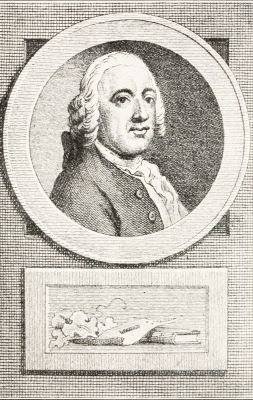
Fig. 22.—Lyonet, 1707-1789.
Lyonet (also written Lyonnet) was a Hollander, born in The Hague in 1707. He was a man of varied talents, a painter, a sculptor, an engraver, and a very gifted linguist. It is said that he was skilled in at least eight languages; and at one time he was the cipher secretary and confidential translator for the United Provinces of Holland. He was educated as a lawyer, but, from interest in the subject, devoted most of his time to engraving objects of natural history. Among his earliest published drawings were the figures for Lesser's Theology of Insects (1742) and for Trembley's famous treatise on Hydra (1744).
His Great Monograph.—Finally Lyonet decided to branch out for himself, and produce a monograph on insect anatomy. After some preliminary work on the sheep-tick, he settled upon the caterpillar of the goat moth, which lives upon the willow-tree. His work, first published in 1750, bore the title Traité Anatomique de la Chenille qui ronge le bois de Saule. In exploring the anatomy of the form chosen, he displayed not only patience, but great skill as a dissector, while his superiority as a draughtsman was continually shown in his sketches. He engraved his own figures on copper. The drawings are very remarkable for the amount of detail that they show. He dissected this form with the same thoroughness with which medical men have dissected the human body. The superficial muscles were carefully drawn and were then cut away in order to expose the next underlying layer which, in turn, was sketched and then removed. The amount of detail involved in this work may be in part realized from the circumstance that he distinguished 4,041 separate muscles. His sketches show these muscles accurately drawn, and the principal ones are lettered. When he came to expose the nerves, he followed the minute branches to individual small muscles and sketched them, not in a diagrammatic way, but as accurate drawings from the natural object. The breathing-tubes were followed in the same manner, and the other organs of the body were all dissected and drawn with remarkable thoroughness. Lyonet was not trained in anatomy like Malpighi and Swammerdam, but being a man of unusual patience and manual dexterity, he accomplished notable results. His great quarto volume is, however, merely a description of the figures, and lacks the insight of a trained anatomist. His skill as a dissector is far ahead of his knowledge of anatomy, and he becomes lost in the details of his subject.
Extraordinary Quality of the Drawings.—A few figures will serve to illustrate the character of his work, but the reduced reproductions which follow can not do justice to the copper plates of the original. Fig. 23 gives a view of the external appearance of the caterpillar which was dissected. When the skin was removed from the outside the muscles came into view, as shown in Fig. 24. This is a view from the ventral side of the animal. On the left side the more superficial muscles show, and on the right the next deeper layer.
Fig. 25 shows his dissection of the nerves. In this figure the muscles are indicated in outline, and the distribution of nerves to particular muscles is shown.
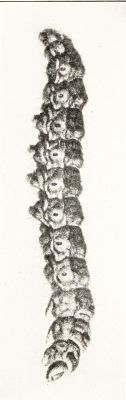
Fig. 23.—Larva of the Willow Moth. (From Lyonet's Monograph, 1750.)
Lyonet's dissection of the head is an extraordinary feat. The entire head is not more than a quarter of an inch in diameter, but in a series of seven dissections he shows all of the internal organs in the head. Fig. 26 shows two sketches exhibiting the nervous ganglia, the air tubes, and muscles of the head in their natural position.
Fig. 27 shows the nervous system of the head, including the extremely fine nervous masses which are designated the sympathetic nervous system.
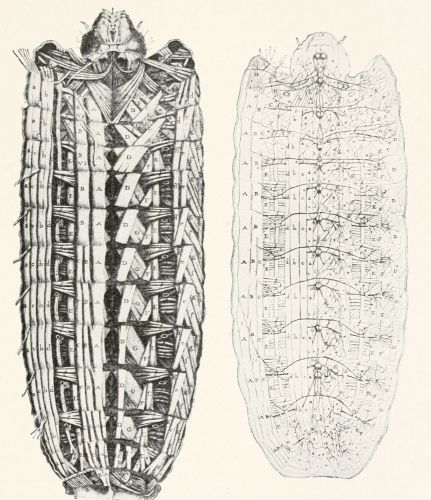
Fig. 24.—Muscles of the Larva of the Willow Moth. (From Lyonet's Monograph.)
Fig. 25.—Central Nervous System and Nerves of the Same.
The extraordinary character of the drawings in Lyonet's monograph created a sensation. The existence of such complicated structures within the body of an insect was discredited, and, furthermore, some of his critics declared that even if such a fine organization existed, it would be beyond human possibilities to expose the details as shown in his sketches. Accordingly, Lyonet was accused of drawing on his imagination. In order to silence his critics he published in the second edition of his work, in 1752, drawings of his instruments and a description of his methods.
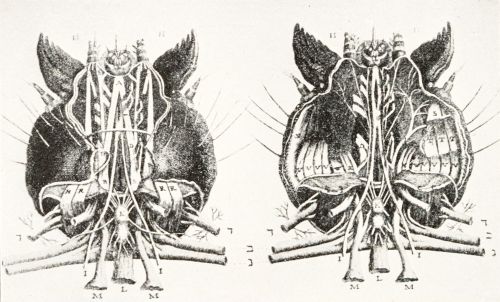
Fig. 26.—Dissection of the Head of the Larva of the Willow Moth.
Lyonet intended to work out the anatomy of the chrysalis and the adult form of the same animal. In pursuance of this plan, he made many dissections and drawings, but, at the age of sixty, on account of the condition of his eyes, he was obliged to stop all close work, and his project remained unfinished. The sketches which he had accumulated were published later, but they fall far short of those illustrating the Traité Anatomique. Lyonet died in 1789, at the age of eighty-one.
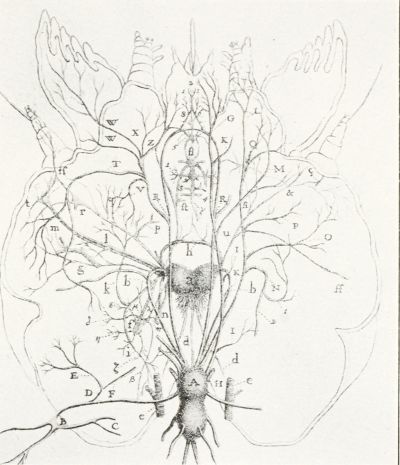
Fig. 27.—The Brain and Head Nerves of the Same Animal.
Roesel, Réaumur, and De Geer on Insect Life.—We must also take note of the fact that, running parallel with this work on the anatomy of insects, observations and publications had gone forward on form, habits, and metamorphosis of insects, that did more to advance the knowledge of insect life than Lyonet's researches. Roesel, in Germany, Réaumur, in France, and De Geer, in Sweden, were all distinguished observers in this line. Their works are voluminous and are well illustrated. Those of Réaumur and De Geer took the current French title of Mémoires pour servir à l'Histoire des Insectes. The plates with which the collected publications of each of the three men are provided show many sketches of external form and details of external anatomy, but very few illustrations of internal anatomy occur. The sketches of Roesel in particular are worthy of examination at the present time. Some of his masterly figures in color are fine examples of the art of painting in miniature. The name of Roesel (Fig. 28) is connected also with the earliest observations of protoplasm and with a notable publication on the Batrachians.
Réaumur (Fig. 29), who was distinguished for kindly and amiable personal qualities, was also an important man in his influence upon the progress of science. He was both physician and naturalist; he made experiments upon the physiology of digestion, which aided in the understanding of that process; he invented the thermometer which bears his name, and did other services for the advancement of science.
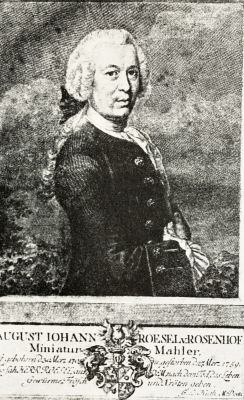
Fig. 28.—Roesel von Rosenhof, 1705-1759.
Straus-Dürckheim's Monograph on Insect Anatomy.—Insect anatomy continued to attract a number of observers, but we must go forward into the nineteenth century before we find the subject taking a new direction and merging into its modern phase. The remarkable monograph of Straus-Dürckheim represents the next step in the development of insect anatomy toward the position that it occupies to-day. His aim is clearly indicated in the opening sentence of his preface: "Having been for a long time occupied with the study of articulated animals, I propose to publish a general work upon the comparative anatomy of that branch of the animal kingdom." He was working under the influence of Cuvier, who, some years earlier, had founded the science of comparative anatomy and whom he recognized as his great exemplar. His work is dedicated to Cuvier, and is accompanied by a letter to that great anatomist expressing his thanks for encouragement and assistance.
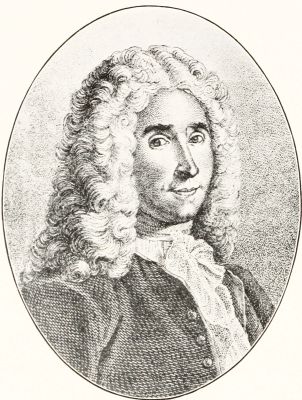
Fig 29.—Réaumur, 1683-1757.
Straus-Dürckheim (1790-1865) intended that the general considerations should be the chief feature of his monograph, but they failed in this particular because, with the further developments in anatomy, including embryology and the cell-theory, his general discussions regarding the articulated animals became obsolete. The chief value of his work now lies in what he considered its secondary feature, viz., that of the detailed anatomy of the cockchafer, one of the common beetles of Europe. Owing to changed conditions, therefore, it takes rank with the work of Malpighi and Lyonet, as a monograph on a single form. Originally he had intended to publish a series of monographs on the structure of insects typical of the different families, but that upon the cockchafer was the only one completed.
Comparison with the Sketches of Lyonet.—The quality of this work upon the anatomy of the cockchafer was excellent, and in 1824 it was accepted and crowned by the Royal Institute of France. The finely lithographed plates were prepared at the expense of the Institute, and the book was published in 1828 with the following cumbersome title: Considérations Générales sur l'Anatomie comparée des Animaux Articulés auxquelles on a joint l'Anatomie Descriptive du Melolontha Vulgaris (Hanneton) donnée comme example de l'Organisation des Coléoptères. The 109 sketches with which the plates are adorned are very beautiful, but one who compares his drawings, figure by figure, with those of Lyonet can not fail to see that those of the latter are more detailed and represent a more careful dissection. One illustration from Straus-Dürckheim will suffice to bring the achievements of the two men into comparison.
Fig. 30 shows his sketch of the anatomy of the central nervous system. He undertakes to show only the main branches of the nerves going to the different segments of the body, while Lyonet brings to view the distribution of the minute terminals to particular muscles. Comparison of other figures—notably that of the dissection of the head—will bring out the same point, viz., that Lyonet was more detailed than Straus-Dürckheim in his explorations of the anatomy of insects, and fully as accurate in drawing what he had seen.
Nevertheless, the work of Straus-Dürckheim is conceived in a different spirit, and is the first serious attempt to make insect anatomy broadly comparative.
Comment.—Such researches as those of Swammerdam, Lyonet, and Straus-Dürckheim represent a phase in the progress of the study of nature. Perhaps their chief value lies in the fact that they embody the idea of critical observation. As examples of faithful, accurate observations the researches helped to bring about that close study which is our only means of getting at basal facts. These men were all enlisted in the crusade against superficial observation. This had to have its beginning, and when we witness it in its early stages, before the researches have become illuminated by great ideas, the prodigious effort involved in the detailed researches may seem to be poorly expended labor. Nevertheless, though the writings of these pioneers have become obsolete, their work was of importance in helping to lift observations upon nature to a higher level.
Dufour.—Léon Dufour extended the work of Straus-Dürckheim by publishing, between 1831 and 1834, researches upon the anatomy and physiology of different families of insects. His aim was to found a general science of insect anatomy. That he was unsuccessful in accomplishing this was owing partly to the absence of embryology and histology from his method of study.
Newport.—The thing most needed now was not greater devotion to details and a willingness to work, but a broadening of the horizon of ideas. This arrived in the Englishman Newport, who was remarkable not only for his skill as a dissector, but for his recognition of the importance of embryology in elucidating the problems of structure. His article "Insecta" in Todd's Cyclopædia of Anatomy and Physiology, in 1841, and his papers in the Philosophical Transactions of the Royal Society contain this new kind of research. Von Baer had founded embryology by his great work on the development of animals in 1828, before the investigations of Dufour, but it was reserved for Newport to recognize its great importance and to apply it to insect anatomy. He saw clearly that, in order to comprehend his problems, the anatomist must take into account the process of building the body, as well as the completed architecture of the adult. The introduction of this important idea made his achievement a distinct advance beyond that of his predecessors.
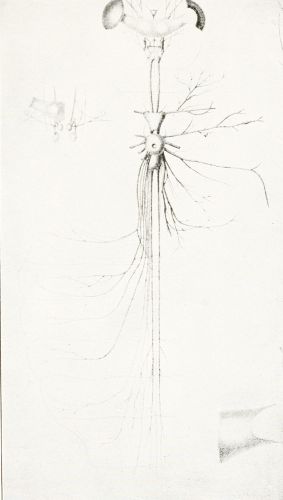
Fig. 30.—Nervous System of the Cockchafer. (From Straus-Dürckheim's Monograph, 1828.)
Leydig.—Just as Newport was publishing his conclusions the cell-theory was established (in 1838-39); and this was destined to furnish the basis for a new advance. The influence of the doctrine that all tissues are composed of similar vital units, called cells, was far-reaching. Investigators began to apply the idea in all directions, and there resulted a new department of anatomy, called histology. The subject of insect histology was an unworked field, but manifestly one of importance. Franz Leydig (for portrait see p. 175) entered the new territory with enthusiasm, and through his extensive investigations all structural studies upon insects assumed a new aspect. In 1864 appeared his Vom Bau des Thierchen Körpers, which, together with his special articles, created a new kind of insect anatomy based upon the microscopic study of tissues. The application of this method of investigation is easy to see; just as it is impossible to understand the working of a machine without a knowledge of its construction, so a knowledge of the working units of an organ is necessary to comprehend its action. For illustration, it is perfectly evident that we can not understand what is taking place in an organ for receiving sensory impressions without first understanding its mechanism and the nature of the connections between it and the central part of the nervous system. The sensory organ is on the surface in order more readily to receive impressions from the outside world. The sensory cells are also modifications of surface cells, and, as a preliminary step to understanding their particular office, we must know the line along which they have become modified to fit them to receive stimulation.
Then, if we attempt to follow in the imagination the way by which the surface stimulations reach the central nervous system and affect it, we must investigate all the connections. It thus appears that we must know the intimate structure of an organ in order to understand its physiology. Leydig supplied this kind of information for many organs of insects. In his investigations we see the foundation of that delicate work upon the microscopic structure of insects which is still going forward.
Summary.—In this brief sketch we have seen that the study of insect anatomy, beginning with that of Malpighi and Swammerdam, was lifted to a plane of greater exactitude by Lyonet and Straus-Dürckheim. It was further broadened by the researches of Dufour, and began to take on its modern aspects, first, through the labors of Newport, who introduced embryology as a feature of investigation, and, finally, through Leydig's step in introducing histology. In the combination of the work of these two observers, the subject for the first time reached its proper position.
The studies of minute structure in the seventeenth and eighteenth centuries were by no means confined to insects; investigations were made upon a number of other forms. Trembley, in the time of Lyonet, produced his noteworthy memoirs upon the small fresh-water hydra (Mémoires pour servir à l'histoire des polypes d'eau douce, 1744); the illustrations for which, as already stated, were prepared by Lyonet. The structure of snails and other mollusks, of tadpoles, frogs, and other batrachia, was also investigated. We have seen that Swammerdam, in the seventeenth century, had begun observations upon the anatomy of tadpoles, frogs, and snails, and also upon the minute crustacea commonly called water-fleas, which are just large enough to be distinguished by the unaided eye. We should remember also that in the same period the microscopic structure of plants began to be investigated, notably by Grew, Malpighi, and Leeuwenhoek (see Chapter IV).
In addition to those essays into minute anatomy, in which scalpel and scissors were employed, an endeavor of more subtle difficulty made its appeal; there were forms of animal life of still smaller size and simpler organization that began to engage the attention of microscopists. A brief account of the discovery and subsequent observation of these microscopic animalcula will now occupy our attention.
The Discovery of the Simplest Animals and the Progress of Observations upon Them
These single-celled animals, since 1845 called protozoa, have become of unusual interest to biologists, because in them the processes of life are reduced to their simplest expression. The vital activities taking place in the bodies of higher animals are too complicated and too intricately mixed to admit of clear analysis, and, long ago, physiologists learned that the quest for explanations of living activities lay along the line of investigating them in their most rudimentary expression. The practical recognition of this is seen in our recent text-books upon human physiology, which commonly begin with discussions of the life of these simplest organisms. That greatest of all text-books on general physiology, written by Max Verworn, is devoted largely to experimental studies upon these simple organisms as containing the key to the similar activities (carried on in a higher degree) in higher animals. This group of animals is so important as a field of experimental observation that a brief account of their discovery and the progress of knowledge in reference to them will be in place in this chapter.
Discovery of the Protozoa.—Leeuwenhoek left so little unnoticed in the microscopic world that we are prepared to find that he made the first recorded observations upon these animalcula. His earliest observations were communicated by letter to the Royal Society of London, and were published in their Transactions in 1677. It is very interesting to read his descriptions expressed in the archaic language of the time. The following quotation from a Dutch letter turned into English will suffice to give the flavor of his writing:
"In the year 1675 I discovered living creatures in rainwater which had stood but four days in a new earthen pot, glazed blew within. This invited me to view the water with great attention, especially those little animals appearing to me ten thousand times less than those represented by Mons. Swammerdam, and by him called water-fleas or water-lice, which may be perceived in the water with the naked eye. The first sorte by me discovered in the said water, I divers times observed to consist of five, six, seven or eight clear globules, without being able to discover any film that held them together or contained them. When these animalcula, or living atoms, did move they put forth two little horns, continually moving themselves; the place between these two horns was flat, though the rest of the body was roundish, sharpening a little towards the end, where they had a tayle, near four times the length of the whole body, of the thickness (by my microscope) of a spider's web; at the end of which appeared a globule, of the bigness of one of those which made up the body; which tayle I could not perceive even in very clear water to be mov'd by them. These little creatures, if they chanced to light upon the least filament or string, or other such particle, of which there are many in the water, especially after it has stood some days, they stook entangled therein, extending their body in a long round, and striving to dis-entangle their tayle; whereby it came to pass, that their whole body lept back towards the globule of the tayle, which then rolled together serpent-like, and after the manner of copper or iron wire, that having been wound around a stick, and unwound again, retains those windings and turnings," etc.[2]
Any one who has examined under the microscope the well-known bell-animalcule will recognize in this first description of it, the stalk, and its form after contraction under the designation of a 'tayle which retains those windings and turnings.'
There are many other descriptions, but the one given is typical of the others. He found the little animals in water, in infusions of pepper, and other vegetable substances, and on that account they came soon to be designated infusoria. His observations were not at first accompanied by sketches, but in 1711 he sent some drawings with further descriptions.
O. Fr. Müller.—These animalcula became favorite objects of microscopic study. Descriptions began to accumulate and drawings to be made until it became evident that there were many different kinds. It was, however, more than one hundred years after their discovery by Leeuwenhoek that the first standard work devoted exclusively to these animalcula was published. This treatise by O. Fr. Müller was published in 1786 under the title of Animalcula Infusoria. The circumstance that this volume of quarto size had 367 pages of description with 50 plates of sketches will give some indication of the number of protozoa known at that time.
Ehrenberg.—Observations in this domain kept accumulating, but the next publication necessary to mention is that of Ehrenberg (1795-1876). This scientific traveler and eminent observer was the author of several works. He was one of the early observers of nerve fibres and of many other structures of the animal frame. His book of the protozoa is a beautifully illustrated monograph consisting of 532 pages of letterpress and 69 plates of folio size. It was published in 1836 under the German title of Die Infusionsthierchen als Vollkommene Organismen, or "The Infusoria as Perfect Organisms." The animalcula which he so faithfully represented in his sketches have the habit, when feeding, of taking into the body collections of food-particles, aggregated into spherical globules or food vacuoles. These are distinctly separated, and slowly circulate around the single-celled body while they are undergoing digestion. In a fully fed animal these food-vacuoles occupy different positions, and are enclosed in globular spaces in the protoplasm, an adjustment that gave Ehrenberg the notion that the animals possessed many stomachs. Accordingly he gave to them the name "Polygastrica," and assigned to them a much higher grade of organization than they really possess. These conclusions, based on the general arrangement of food globules, seem very curious to us to-day. His publication was almost simultaneous with the announcement of the cell-theory (1838-39), the acceptance of which was destined to overthrow his conception of the protozoa, and to make it clear that tissues and organs can belong only to multicellular organisms.
Ehrenberg (Fig. 31) was a man of great scientific attainments, and notwithstanding the grotesqueness of some of his conclusions, was held in high esteem as a scientific investigator. His observations were accurate, and the beautiful figures with which his work on the protozoa is embellished were executed with such fidelity regarding fine points of microscopic detail that they are of value to-day.
Dujardin, whom we shall soon come to know as the discoverer of protoplasm, successfully combated the conclusions of Ehrenberg regarding the organization of the protozoa. For a time the great German scientist tried to maintain his point, that the infusoria have many stomachs, but this was completely swept away, and finally the contention of Von Siebold was adopted to the effect that these animals are each composed of a single cell.
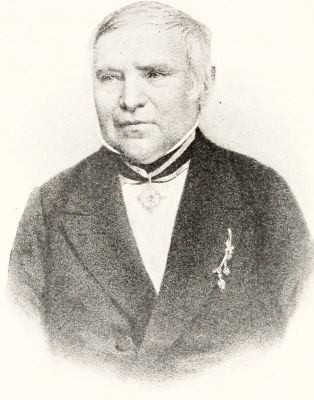
Fig. 31.—Ehrenberg, 1795-1876.
In 1845 Stein is engrossed in proposing names for the suborders of infusoria based upon the distribution of cilia upon their bodies. This simple method of classification, as well as the names introduced by Stein, is still in use.
From Stein to Bütschli, one of the present authorities on the group, there were many workers, but with the studies of Bütschli on protozoa we enter the modern epoch.
The importance of these animals in affording a field for experimentation on the simplest expressions of life has already been indicated. Many interesting problems have arisen in connection with recent studies of them. The group embraces the very simplest manifestations of animal life, and the experiments upon the different forms light the way for studies of the vital activities of the higher animals. Some of the protozoa are disease-producing; as the microbe of malaria, of the sleeping sickness, etc., while, as is well known, most diseases that have been traced to specific germs are caused by plants—the bacteria. Many experiments of Maupas, Caulkins and others have a bearing upon the discussions regarding the immortality of the protozoa, an idea which was at one time a feature of Weissmann's theory of heredity. Binet and others have discussed the evidences of psychic life in these micro-organisms, and the daily activity of a protozoan became the field for observation and record in an American laboratory of psychology. The extensive studies of Jennings on the nature of their responses to stimulations form a basis for some of the discussions on animal behavior.
FOOTNOTES:
CHAPTER VI
LINNÆUS AND SCIENTIFIC NATURAL HISTORY
We turn now from the purely anatomical side to consider the parallel development of the classification of animals and of plants. Descriptive natural history reached a very low level in the early Christian centuries, and remained there throughout the Middle Ages. The return to the writings of Aristotle was the first influence tending to lift it to the position from which it had fallen. After the decline of ancient civilization there was a period in which the writers of classical antiquity were not read. Not only were the writings of the ancient philosophers neglected, but so also were those of the literary men as well, the poets, the story-tellers, and the historians. As related in Chapter I, there were no observations of animated nature, and the growing tendency of the educated classes to envelop themselves in metaphysical speculations was a feature of intellectual life.
The Physiologus or Sacred Natural History.—During this period of crude fancy, with a fog of mysticism obscuring all phenomena of nature, there existed a peculiar kind of natural history that was produced under theological influence. The manuscripts in which this sacred natural history was embodied exist in various forms and in about a dozen languages of Eastern and Western Europe. The writings are known under the general title of the Physiologus, or the Bestiarius. This served for nearly a thousand years as the principal source of thought regarding natural history. It contains accounts of animals mentioned in the Bible and others of a purely mythical character. These are made to be symbolical of religious beliefs, and are often accompanied by quotations of texts and by moral reflections. The phœnix rising from its ashes typifies the resurrection of Christ. In reference to young lions, the Physiologus says: "The lioness giveth birth to cubs which remain three days without life. Then cometh the lion, breatheth upon them, and bringeth them to life.... Thus it is that Jesus Christ during three days was deprived of life, but God the Father raised him gloriously." (Quoted from White, p. 35.) Besides forty or fifty common animals, the unicorn and the dragon of the Scriptures, and the fabled basilisk and phœnix of secular writings are described, and morals are drawn from the stories about them. Some of the accounts of animals, as the lion, the panther, the serpent, the weasel, etc., etc., are so curious that, if space permitted, it would be interesting to quote them; but that would keep us too long from following the rise of scientific natural history from this basis.