QUADRATIC EQUATIONS
Reading edition
1. Define a quadratic equation; a pure quadratic; an affected (or complete) quadratic; an equation in the quadratic form.
2. Solve the pure quadratic
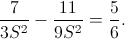
Review the first (or usual) method of completing the square. Solve by it the following:
3.

4.

5.
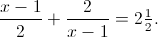
6.

Review the solution by factoring. Solve by it the following:
7.

8.

9.

10.

Solve, by factoring, these equations, which are not quadratics:
11.

12.

13.

Review the solution by formula. Solve by it the following:
14.

15.

16.

17.

Solve graphically:
18.

19.

Reference: The chapter on Quadratic Equations in any algebra (first part of the chapter).
1. Solve by three methods—formula, factoring, and completing the square:
Review equations in the quadratic form and solve:
2.

3.

4. (Let and substitute.)
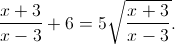

5.

6.
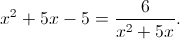
Solve and check:
7.

8.
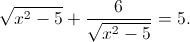
9.

Give results by inspection:
10.

11.

12. How many gallons each of cream containing 33% butter fat and milk containing 6% butter fat must be mixed to produce 10 gallons of cream containing 25% butter fat?
13. I have $6 in dimes, quarters, and half-dollars, there being 33 coins in all. The number of dimes and quarters together is ten times the number of half-dollars. How many coins of each kind are there? (College Entrance Board.)
Reference: The last part of the chapter on Quadratic Equations in any algebra.