Chapter VI · THE BATTLE OF THE YALU AND THE JAPANESE ADVANCE
Reading edition
The battle of the Yalu was the first great land action of the Russo-Japanese War. The Russians were outnumbered by their opponents, but they were also outwitted and outmanœuvred, and the result was an overwhelming victory for the Japanese. In the crossing of the Yalu the Japanese exhibited the decided superiority of their shell-fire, they accomplished the brilliant strategic feat of crossing a river in the face of an intrenched enemy, and their commander, General Kuroki, proved himself a tactician of the first rank.
The first triumph of Japanese cleverness was in deceiving the enemy as to the probable place of crossing. Bridge materials were brought to the shore below Wiju and preparations were apparently made for building a bridge at that point. Under cover of night most of these materials were rushed to the north of Wiju and above the extreme left of the Russian line. From this position the main body of the Japanese army crossed to the Manchurian side with comparatively little opposition. On the Russian left (up the river) the bank rose in a precipitous rocky formation to a height of a thousand feet. At the base was a path and a line of sand left by the falling current. Stretching along this for a mile or more, like so many blue pencil marks on brown paper, were the Japanese. Any Russians above them could have done more damage with tumbling bowlders than with rifle fire. Once on this, the Japanese were under a shelf. They could be reached only by shooting straight down the stream, and had gun or rifle ventured this the Russians would have found no cover save the smoke of shrapnel from the batteries which would have sent them back. The crossing of the Yalu was effected by a few rounds of musket-fire. The impregnable position of the enemy became cover for the Japanese advance.
Once on the western bank and far enough north of the Russian line to be safe from attack on his own right flank, Kuroki’s plan was to execute a series of flank movements and attacks from the rear which would drive the Russians from their position and render what slight fortifications they had made on the heights along the river valueless. In spite of the reckless bravery of the Russians and the stubbornness of their defence, the impetus of the Japanese attack and the marvelous speed and effectiveness of the Japanese shell-fire could not be withstood, and the Russians were routed all along the line. They made a last stand at Hamatan Hill, a few miles to the rear of their original position, but the Japanese surrounded them on three sides and before the force retreated nearly four hundred men were compelled to surrender. Of the Japanese forces, 5 officers and 160 men were killed, while 29 officers and 666 men were wounded. The Russian dead, buried by the Japanese, numbered nearly 1,400, and 475 wounded Russians were taken to Japanese hospitals. Probably 500 wounded Russians, at least, escaped with the retreating army. The Japanese captured 28 guns, 50 ammunition wagons, and many other munitions of war.
82
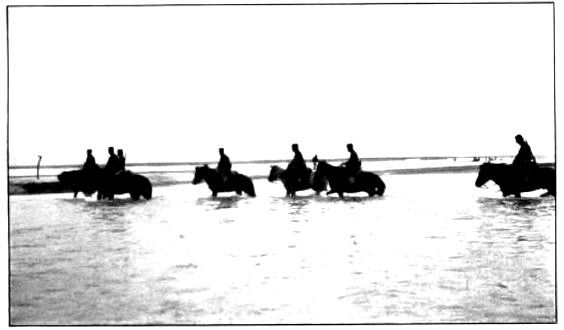
JAPANESE CAVALRY FORDING A TRIBUTARY OF THE YALU
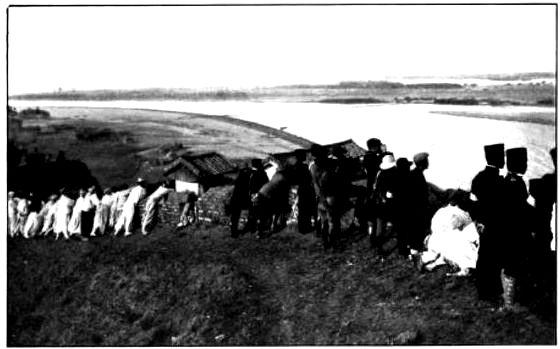
CORRESPONDENTS AND KOREANS WATCHING THE SHELLING OF KU-LIEN-CHENG
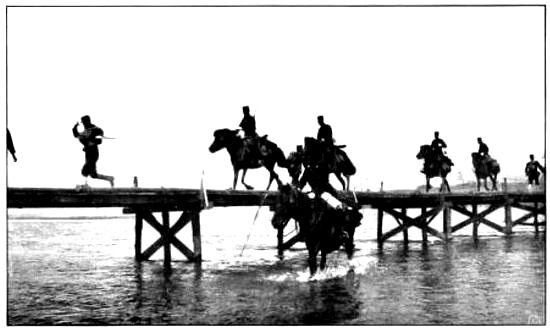
CROSSING THE YALU ON MAY 1, AT THE DOUBLE-QUICK
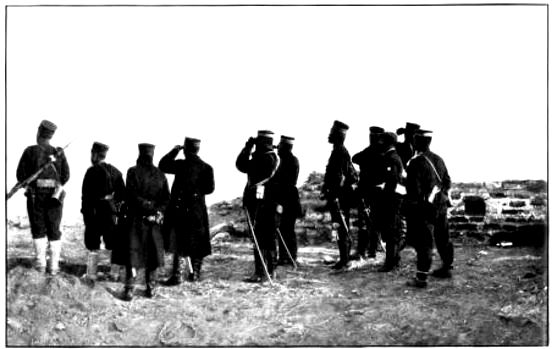
THE STAFF VIEWING THE FIGHT FROM THE HEIGHTS AT WIJU
INCIDENTS OF THE BATTLE OF THE YALU
83
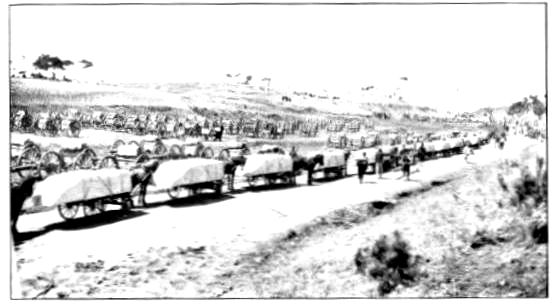
BRINGING THE PONTOONS UP TO THE YALU
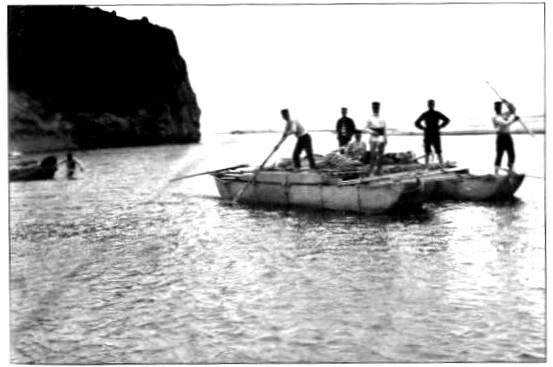
POLING PONTOONS TO THE AI RIVER FROM THE YALU
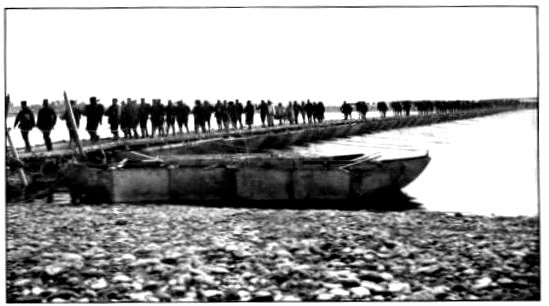
JAPANESE INFANTRY CROSSING THE RIVER
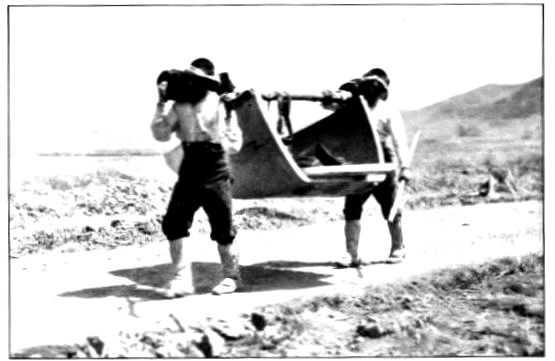
COOLIES CARRYING SECTIONS OF A PONTOON BRIDGE
THE CROSSING OF THE YALU
84
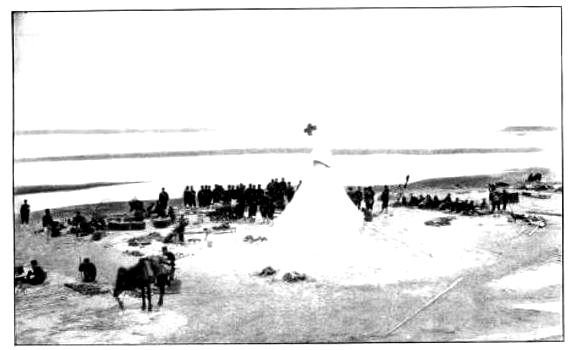
FIELD HOSPITAL ON THE SANDS AT THE EDGE OF THE RIVER
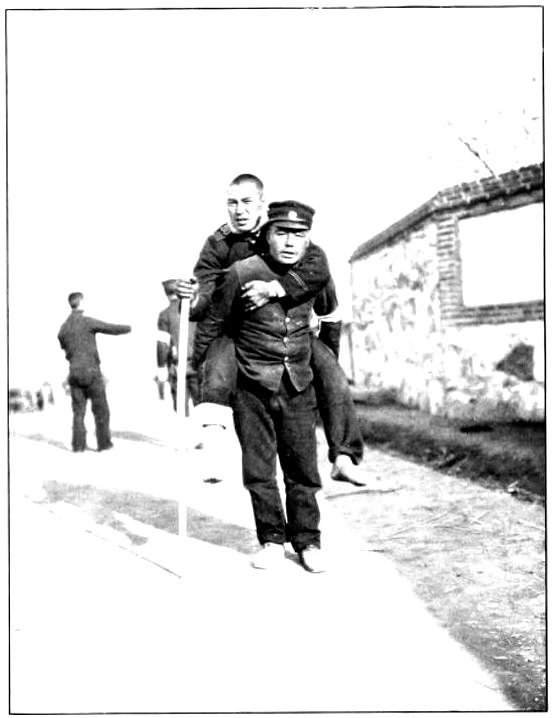
CARRYING SOLDIER TO HIS QUARTERS AFTER HIS WOUND HAD BEEN DRESSED
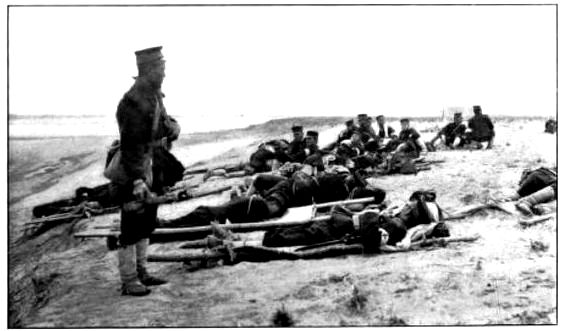
WOUNDED JAPANESE WAITING THEIR TURN AT THE OPERATING TABLE
WITH THE WOUNDED AFTER THE FIGHT AT THE YALU
85
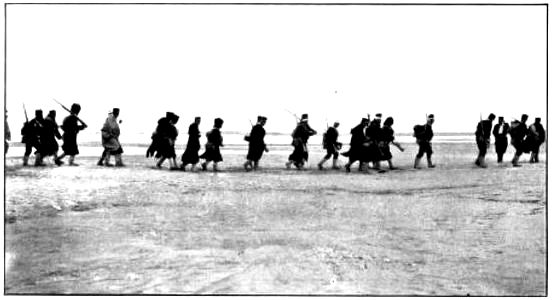
WOUNDED JAPANESE RETURNING TO THE HOSPITAL AT WIJU
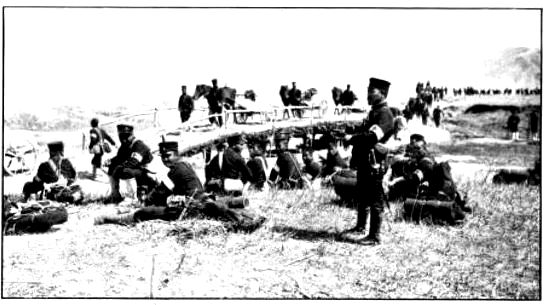
JAPANESE STRETCHER-BEARERS CARRYING WOUNDED RUSSIAN TO THE HOSPITAL
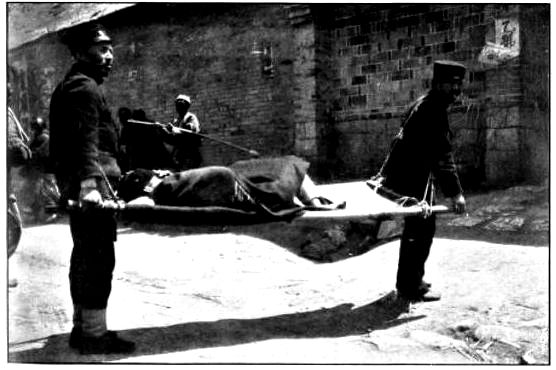
HOSPITAL CORPS WAITING DURING THE ACTION OF MAY 1
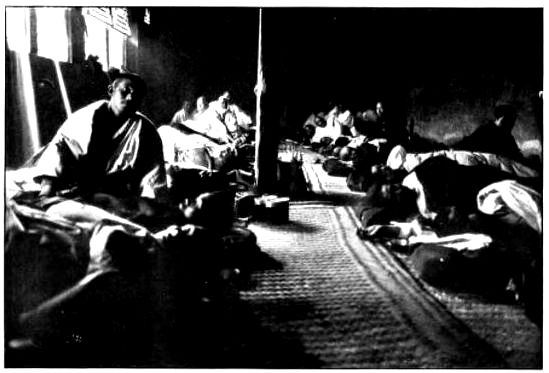
THE HOSPITAL AT ANTUNG TWO DAYS AFTER THE YALU BATTLE
HOSPITAL CORPS AND WOUNDED JAPANESE AT THE BATTLE OF THE YALU
86
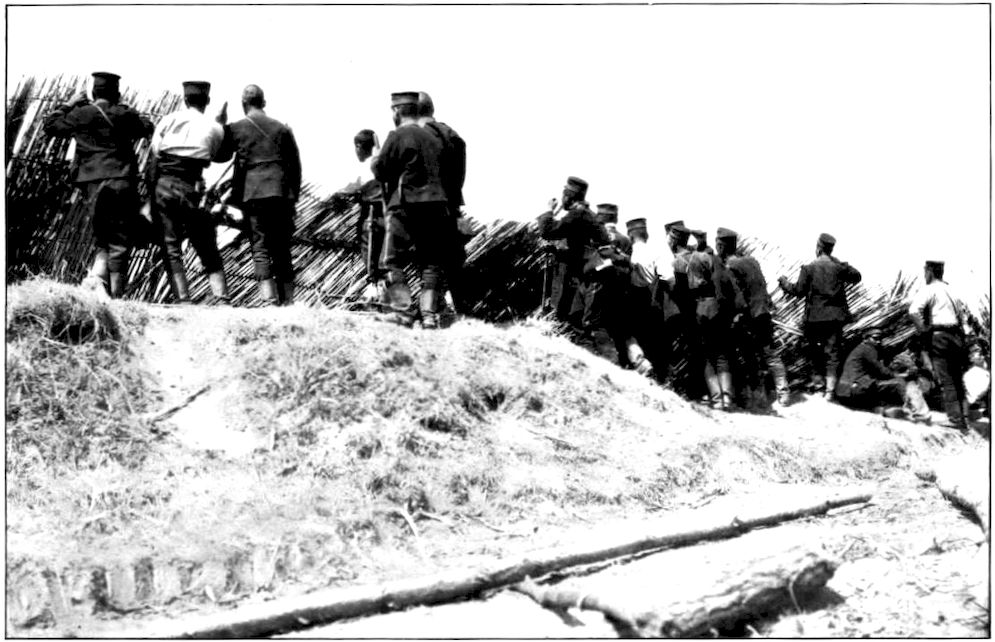
JAPANESE RESERVES WATCHING THE BATTLE FROM THE SOUTH BANK OF THE RIVER
The fence behind which these reserves are standing was one of those with which the Japanese concealed their march, from the point south of Wiju where they first made a feint at crossing to the point north of the town where the brilliant crossing was finally made. The impetus of this final attack was such that the Russians were soon routed all along the line.
87
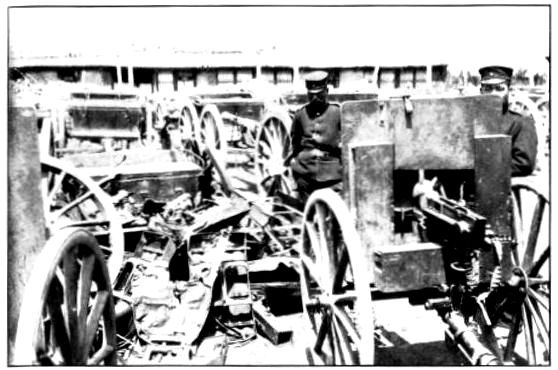
RUSSIAN GUN-CARRIAGE DEMOLISHED BY JAPANESE FIRE
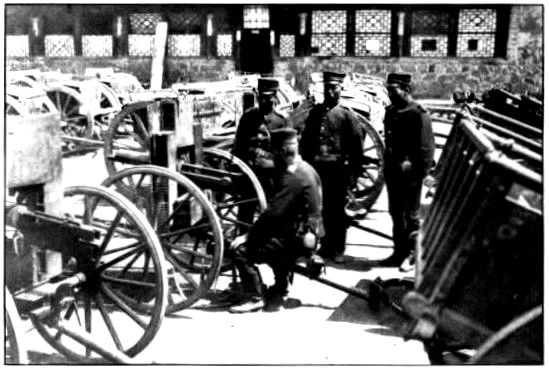
RAPID FIRE MAXIMS CAPTURED AT HAMATAN HILL
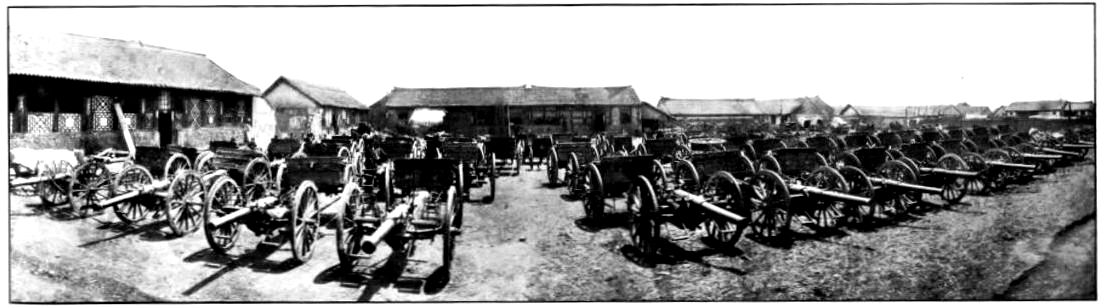
RUSSIAN FIELD GUNS CAPTURED AND TAKEN TO ANTUNG
ARTILLERY SPOILS CAPTURED BY THE JAPANESE DURING THE YALU BATTLE
88
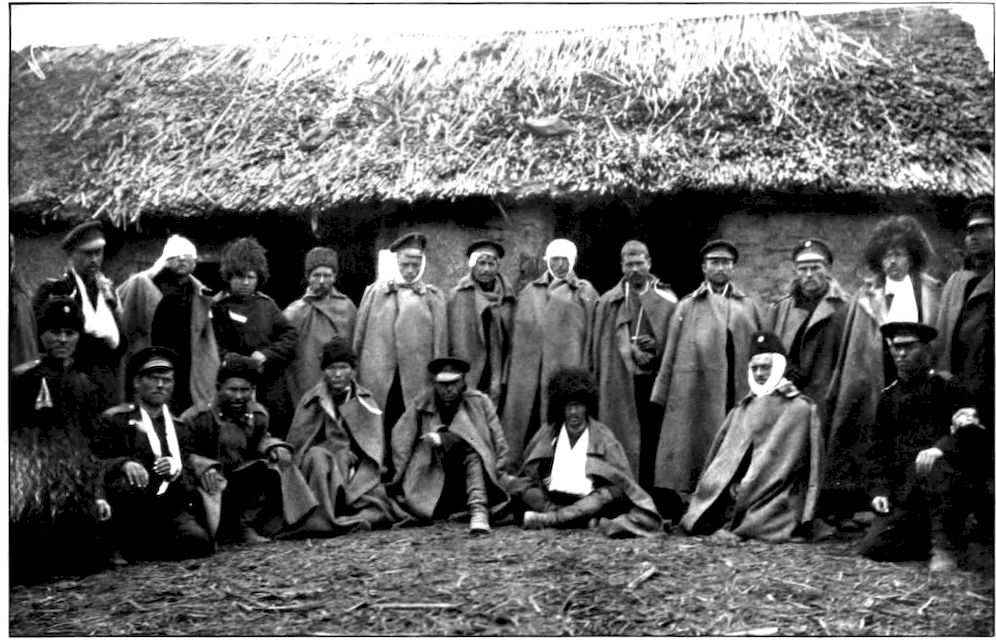
SOME OF THE RUSSIAN PRISONERS WOUNDED DURING THE YALU FIGHT
89
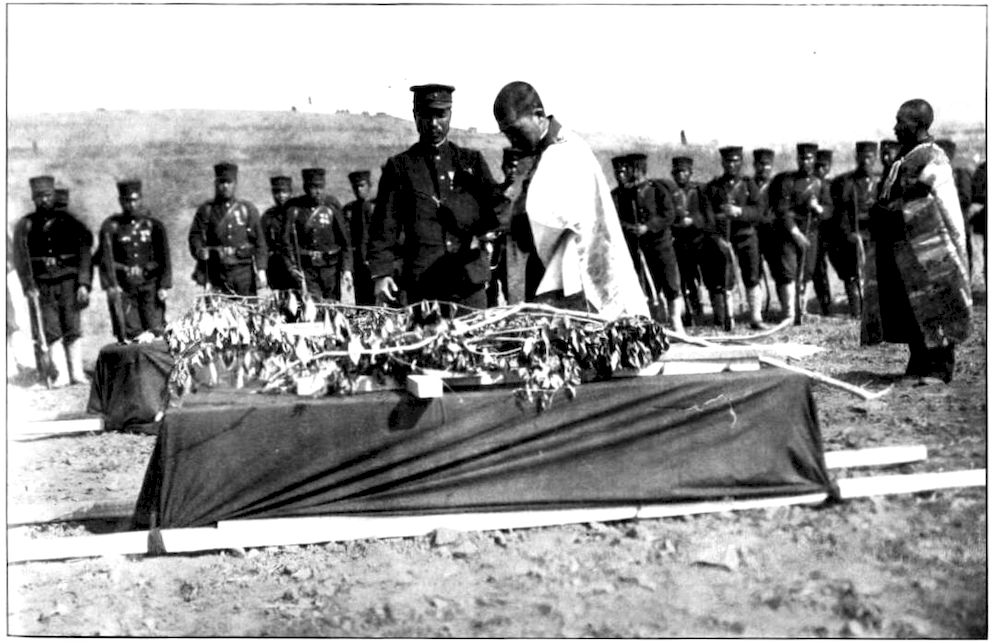
JAPANESE BURYING A RUSSIAN CAPTAIN WITH MILITARY HONORS AT ANTUNG
The care of the Russian wounded by the Japanese after the Yalu battle, and the burial of several Russian officers with military honors, were things which surprised many sceptical observers of Japanese civilization, who had predicted that, once in hand-to-hand conflict with the enemy, the veneer of European civilization would quickly drop off and reveal the barbarian
90
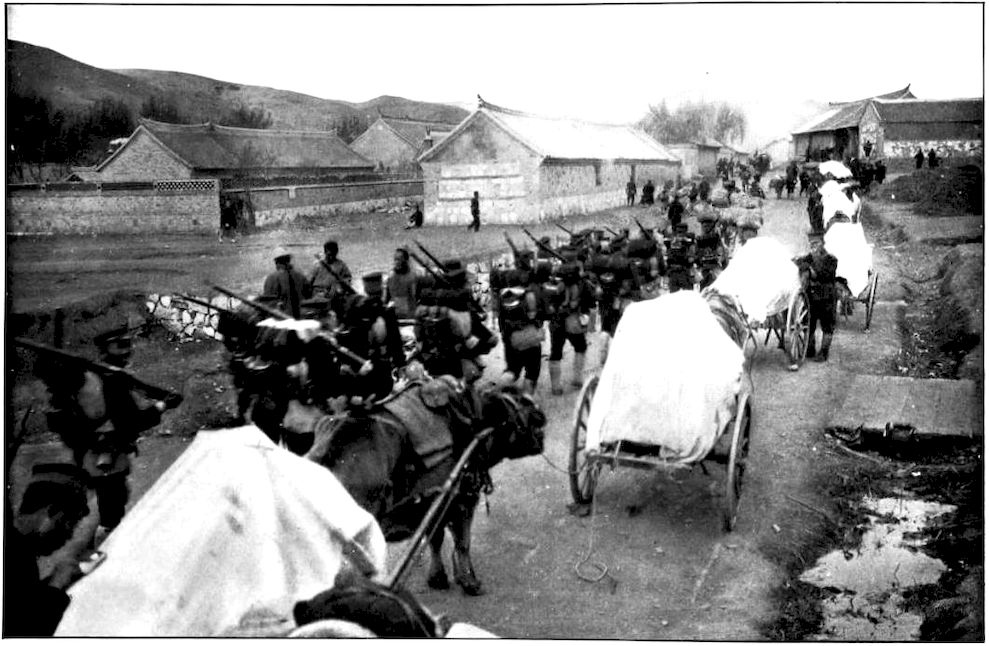
JAPANESE TRANSPORTATION TRAINS AND INFANTRY LEAVING FOR THE FRONT AFTER THE YALU BATTLE
91
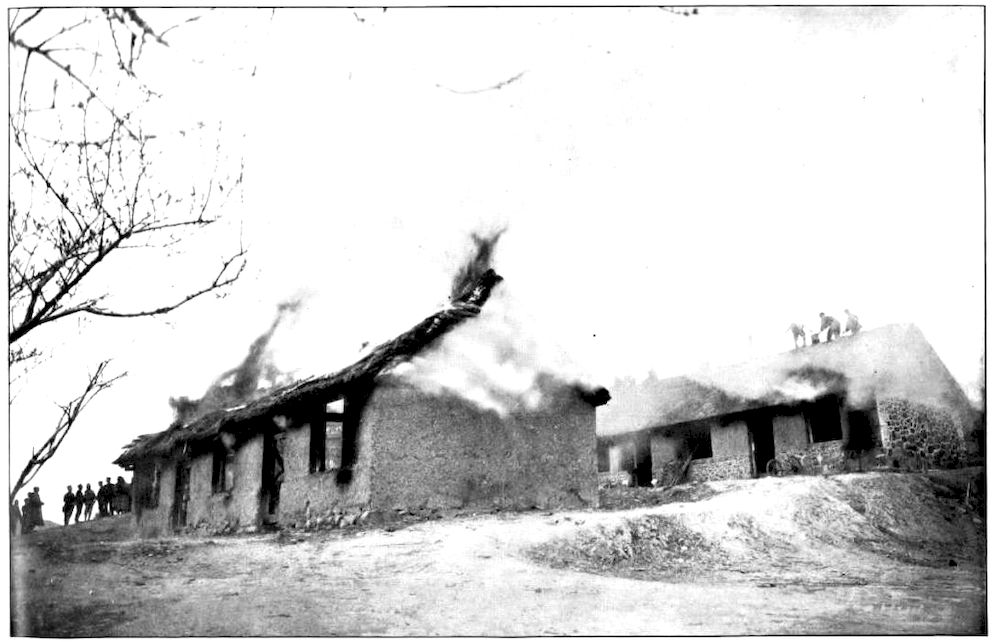
FIRE AND DEVASTATION IN THE WAKE OF THE RETREATING ARMY
92
CHINESE MANDARIN GOING OUT TO MEET GENERAL KUROKI
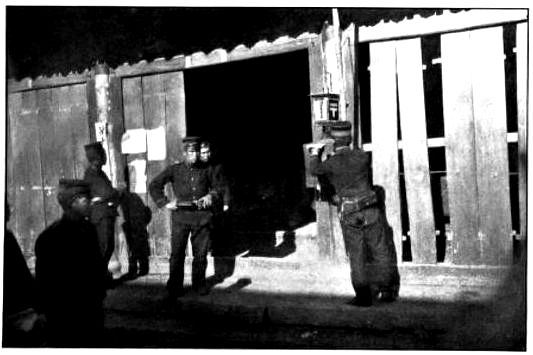
FIELD POST-OFFICE ESTABLISHED IMMEDIATELY AFTER THE OCCUPATION
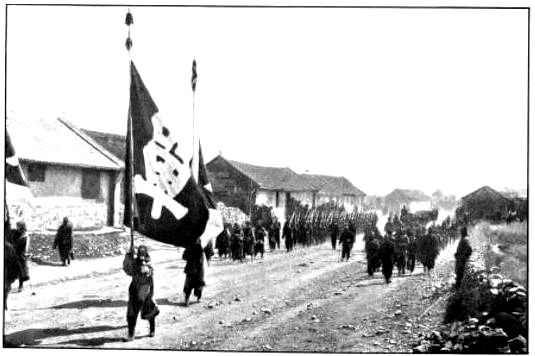
GENERAL KUROKI AND STAFF ENTERING FENG-WANG-CHENG
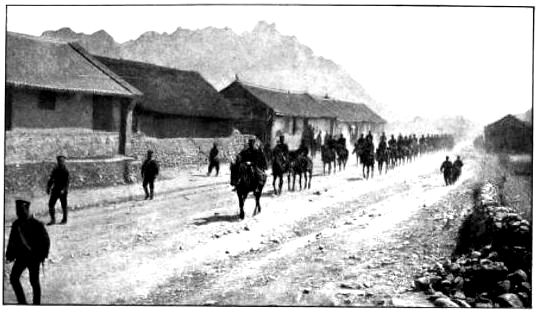
OFFICIAL CHINESE ESCORT TO GENERAL KUROKI AT FENG-WANG-CHENG
THE JAPANESE OCCUPATION OF FENG-WANG-CHENG
93
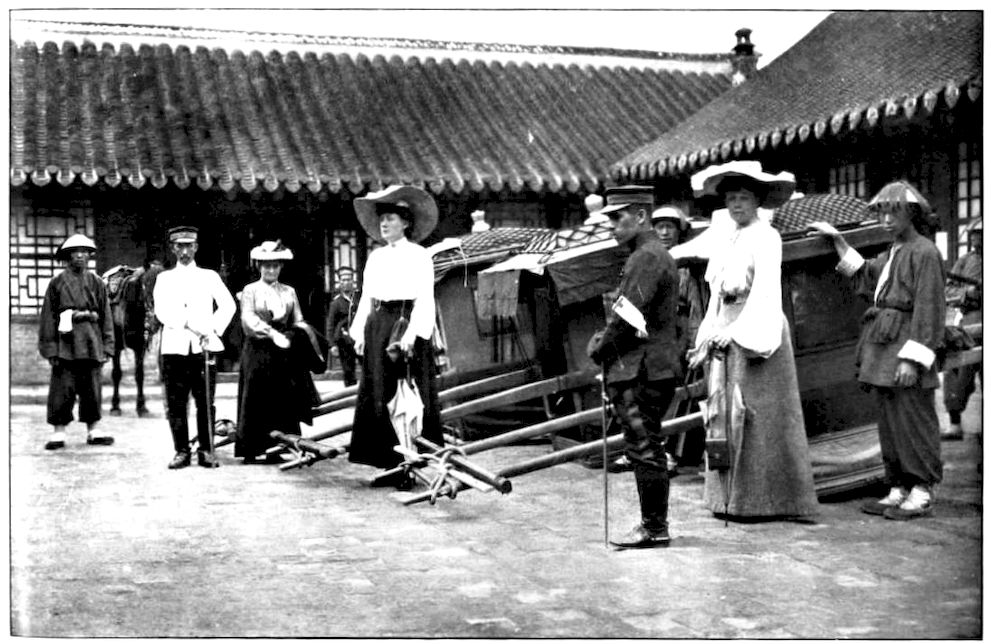
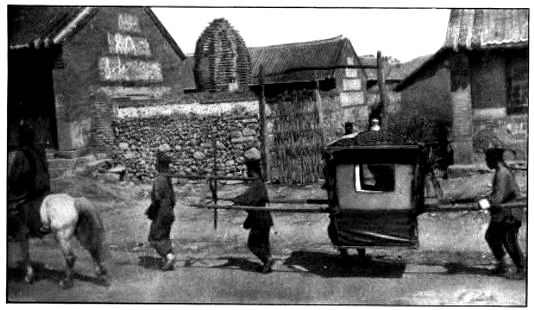
ENGLISH NURSES SENT BY THE QUEEN TO INSPECT THE WORKINGS OF THE JAPANESE RED CROSS
These representatives of the Queen, Miss St. Aubyn and Miss McCall, accompanied by Madame Kuroda, a Japanese lady, and Dr. Tamura, visited the hospitals at Feng-Wang-Cheng. They found everything so satisfactory that they remained with the army only a few days. The photograph shows them about to enter their palanquins, after visiting one of the hospitals. Miss McCall is at the right
94
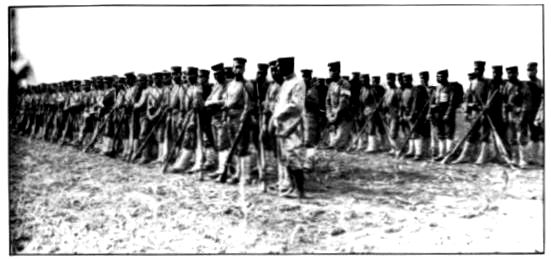
INFANTRY DRAWN UP TO VIEW THE CEREMONIES
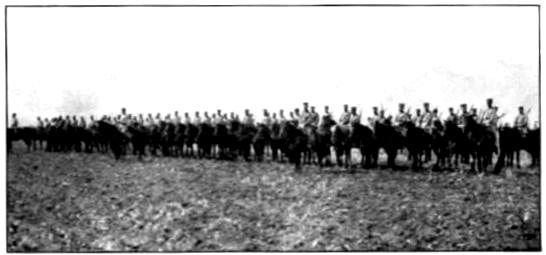
JAPANESE CAVALRY VIEWING FUNERAL CEREMONIES
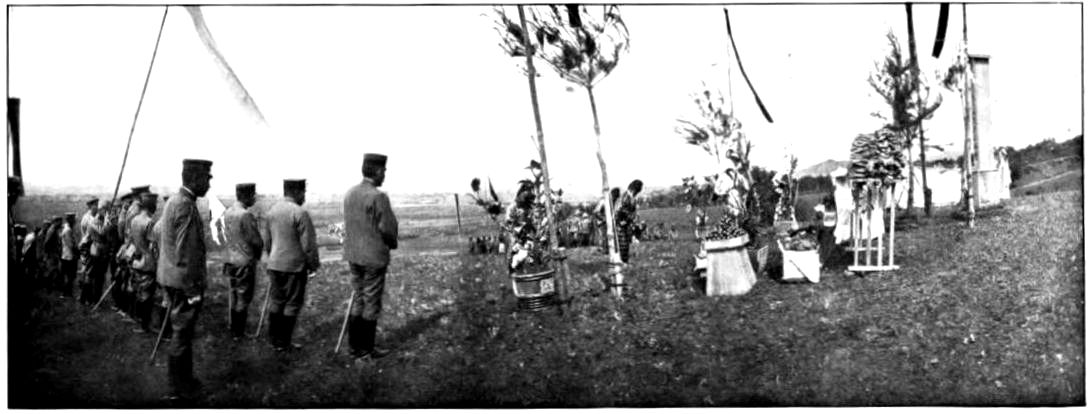
SHINTO CEREMONY HELD BY THE JAPANESE IN HONOR OF THOSE WHO FELL AT THE YALU
This impressive funeral ceremony was held at Feng-Wang-Cheng while the army was gathering its breath after the Yalu victory to push on into Manchuria. The whole army was drawn up in a vast body on the plain, while on the hilltop, in view of all, the officers and priests stood, going through the curious Shinto ceremonies in honor of the dead who had fallen in battle
95
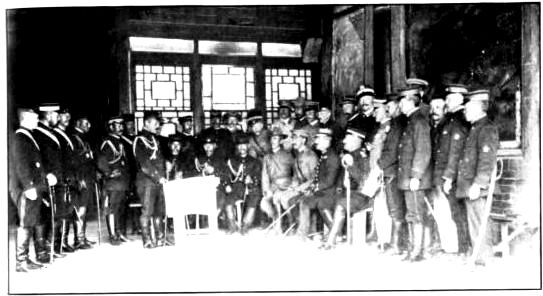
JAPANESE EXPLAINING TO MILITARY ATTACHÉS TACTICS USED AT THE YALU
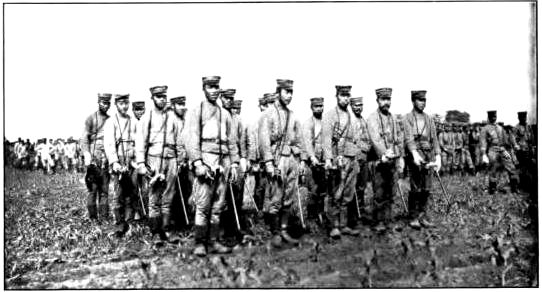
CAPTAIN OKADA INSPECTING BOMB-PROOF AT FENG-WANG-CHENG
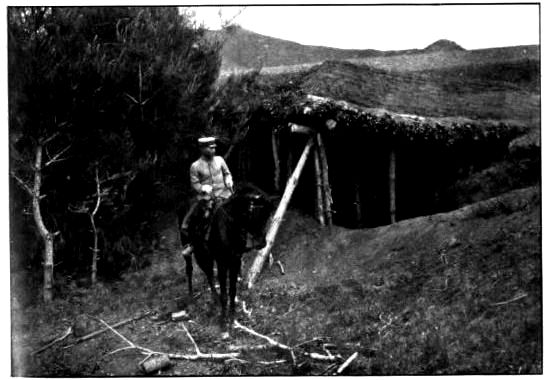
BUGLE SQUAD AT THE FUNERAL CEREMONY AT FENG-WANG-CHENG
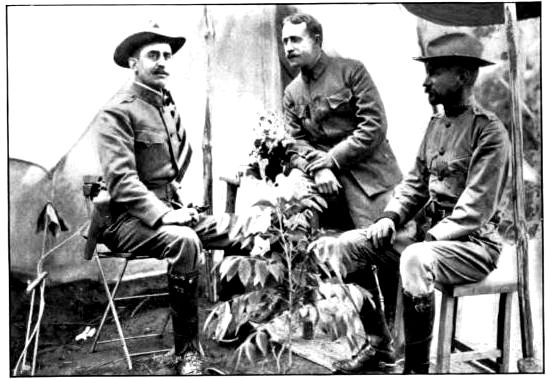
UNITED STATES ARMY ATTACHÉS AND COLLIER’S SPECIAL CORRESPONDENT
SCENES AT FENG-WANG-CHENG AFTER THE JAPANESE OCCUPATION
96
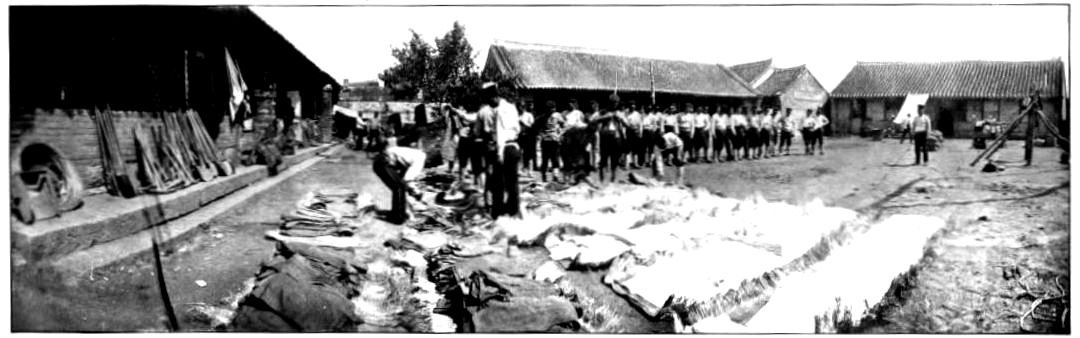
ISSUING KHAKI UNIFORMS TO JAPANESE TROOPS AT FENG-WANG-CHENG
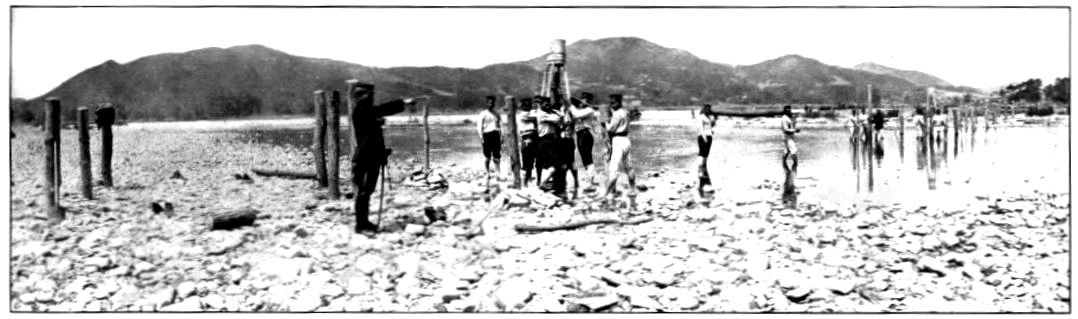
ENGINEERS OF KUROKI’S ARMY BRIDGING A STREAM AT FENG-WANG-CHENG
JAPANESE GETTING READY TO PUSH ON INTO MANCHURIA
97
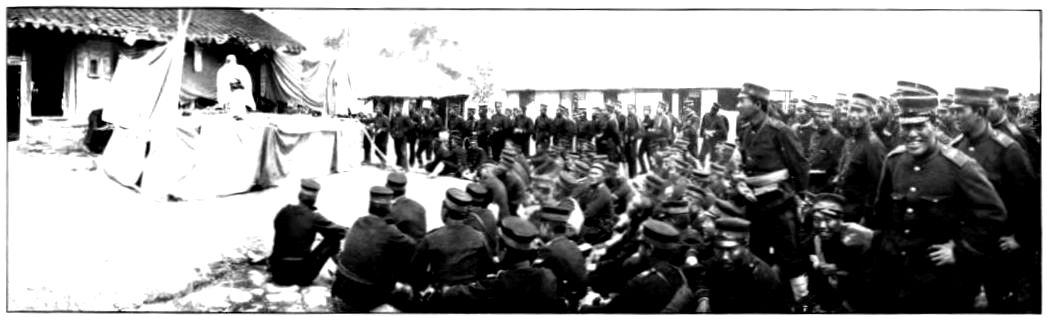
SOLDIERS AMUSING THEMSELVES WITH IMITATION GEISHA DANCES WHILE IN CAMP
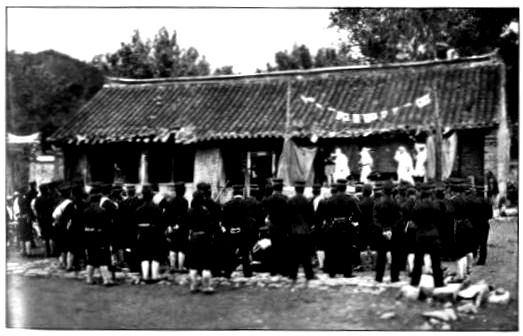
SOLDIERS OFF DUTY WATCHING AMATEUR THEATRICALS
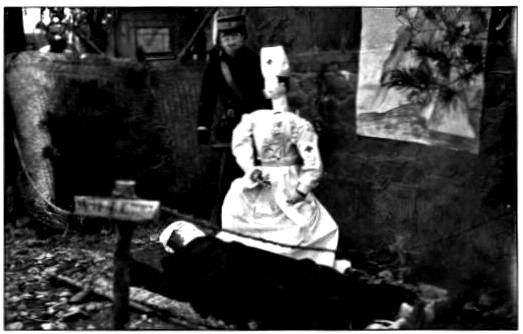
DUMMY FIGURES CONSTRUCTED BY SOLDIERS AT FENG-WANG-CHENG
RECREATIONS OF THE JAPANESE BETWEEN BATTLES IN MANCHURIA
98
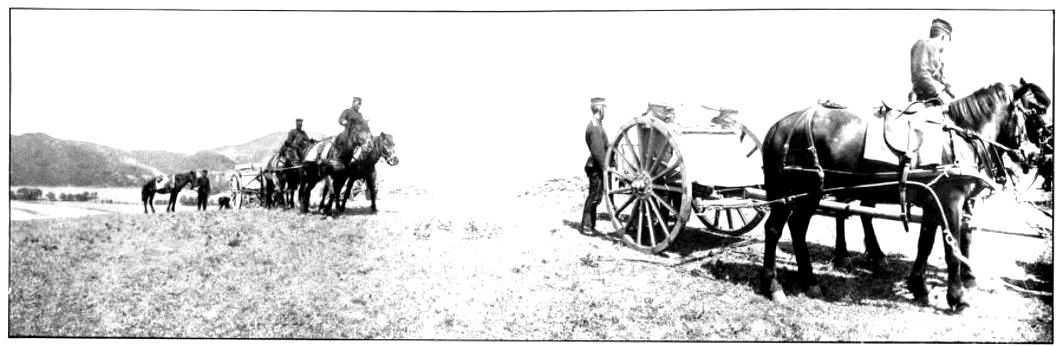
DETACHING THE LIMBERS AND GETTING GUNS INTO POSITION BEHIND THE BREASTWORKS
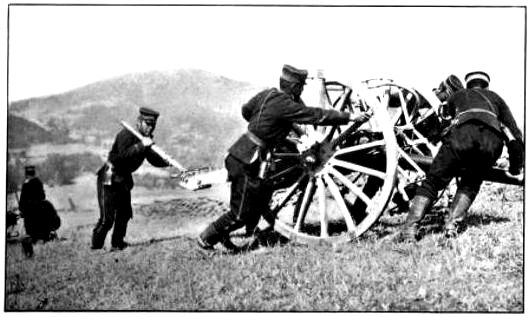
GUNNERS WHEELING GUN INTO POSITION
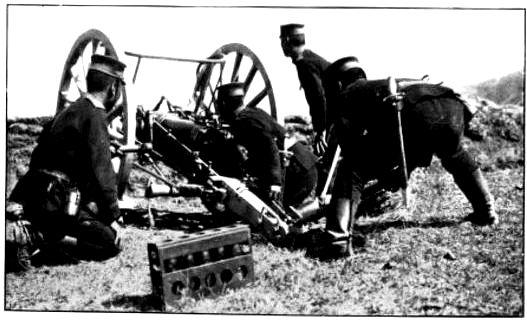
GETTING THE RANGE AND ADJUSTING THE SIGHT
JAPANESE BATTERY GOING INTO ACTION AT FENG-WANG-CHENG
99
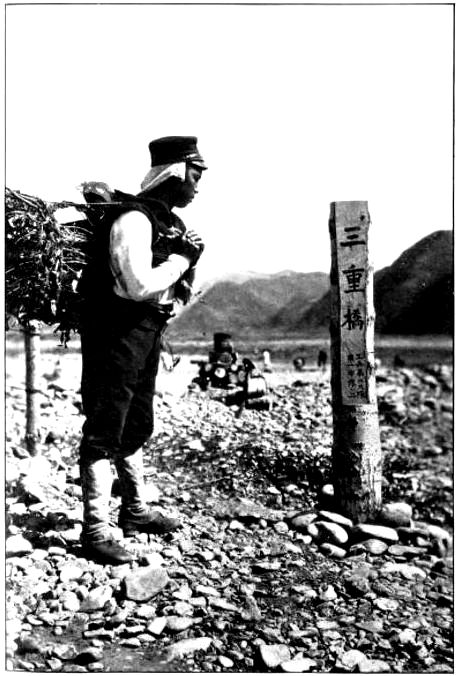
JAPANESE GUIDE-POST AT FENG-WANG-CHENG
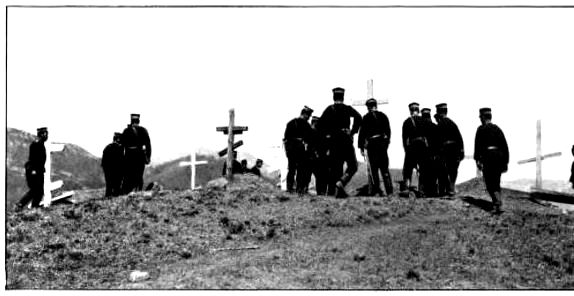
JAPANESE VISITING RUSSIAN GRAVES AT FENG-WANG-CHENG
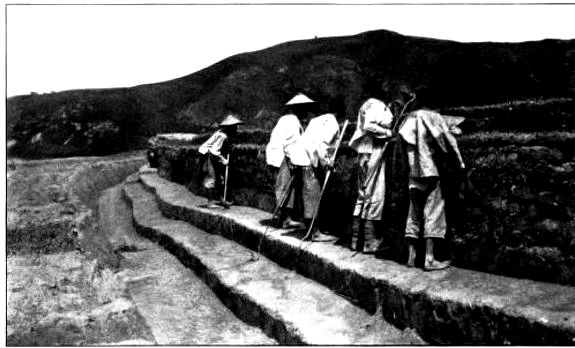
CHINESE FARMERS VIEWING AN ENGAGEMENT FROM ABANDONED TRENCHES
WITH THE JAPANESE INVADERS IN MANCHURIA
100
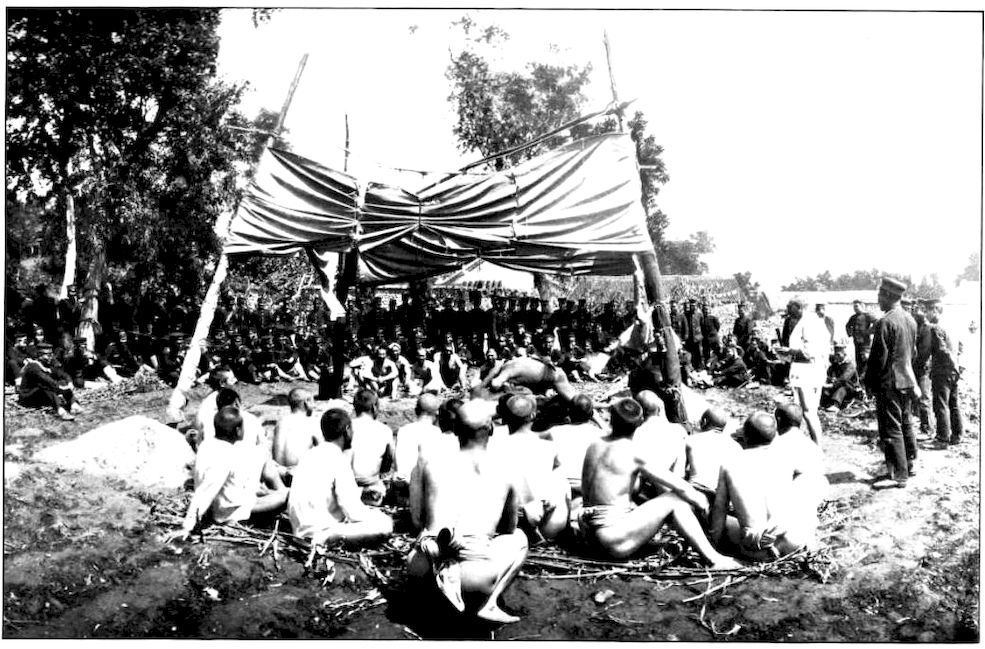
WHILING AWAY THE TIME BETWEEN BATTLES AT FENG-WANG-CHENG WITH INTER-COMPANY WRESTLING BOUTS
101
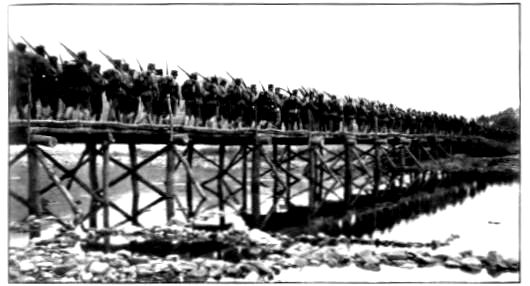
JAPANESE INFANTRY LEAVING FENG-WANG-CHENG
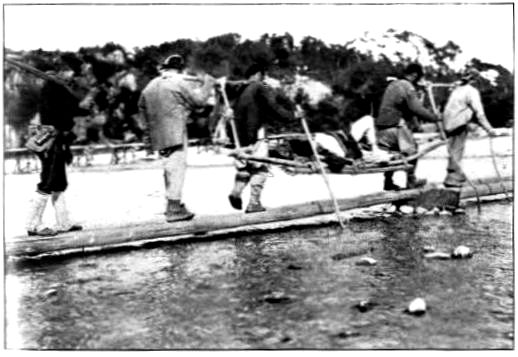
CARRYING A WOUNDED RUSSIAN PRISONER ACROSS A STREAM
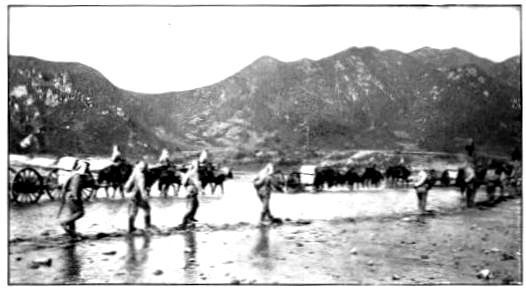
BATTERY FORDING ONE OF THE STREAMS THAT CROSS THE PEKING ROAD
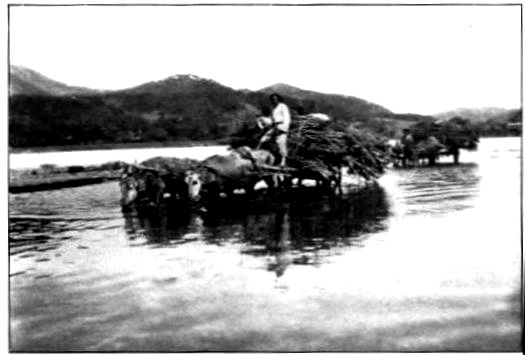
CHINESE BRINGING WOOD FOR THE JAPANESE ARMY
INCIDENTS OF THE ADVANCE FROM FENG-WANG-CHENG
102
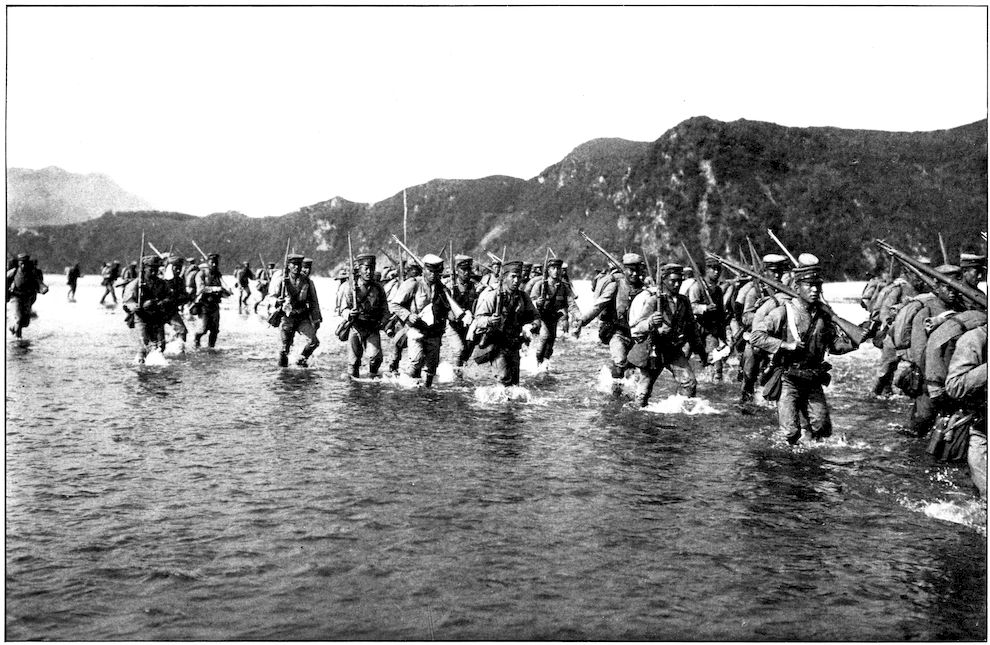
INFANTRY CROSSING THE SO RIVER IN THE ADVANCE ON LIAO-YANG
103
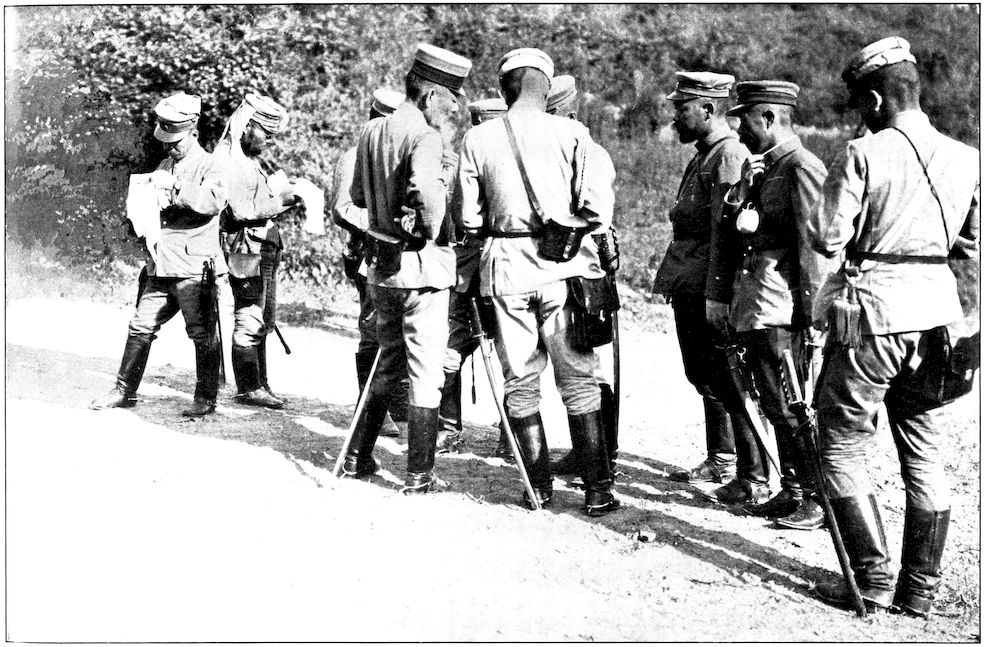
GENERAL NISHI AND HIS STAFF HALTING TO STUDY MAPS AND SCOUTS’ REPORTS ON THE MARCH FROM FENG-WANG-CHENG
104
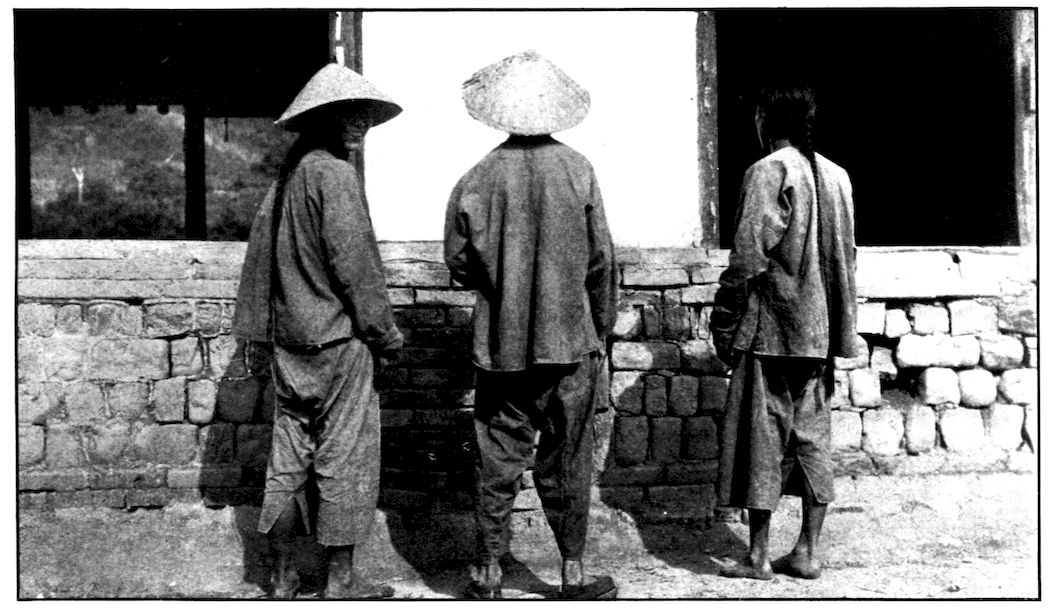
CHINESE READING PROCLAMATION ISSUED BY THE JAPANESE
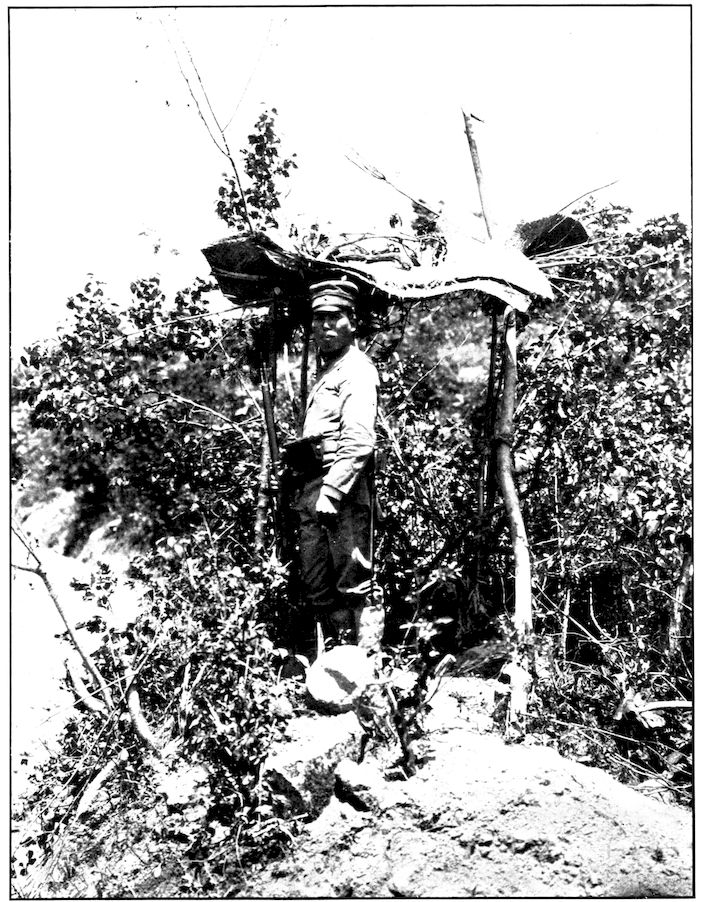
OUTPOST HIDDEN IN FOLIAGE AND UNDER A SUNSHADE
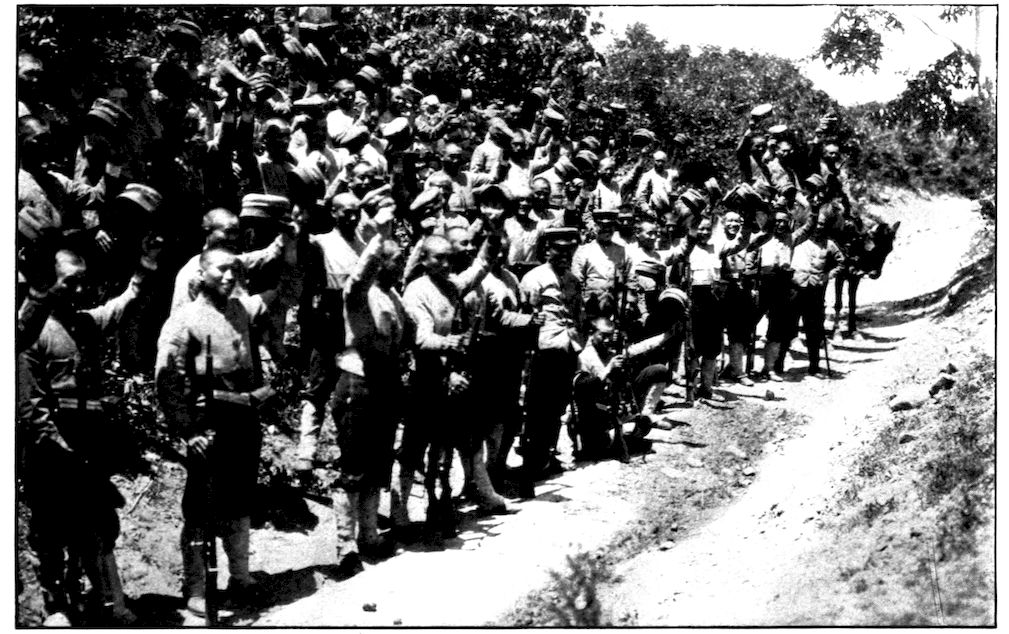
JAPANESE CHEERING NEWS OF A VICTORY NEAR LIENSHANKWAN
WITH THE VICTORIOUS JAPANESE AT LIENSHANKWAN
105
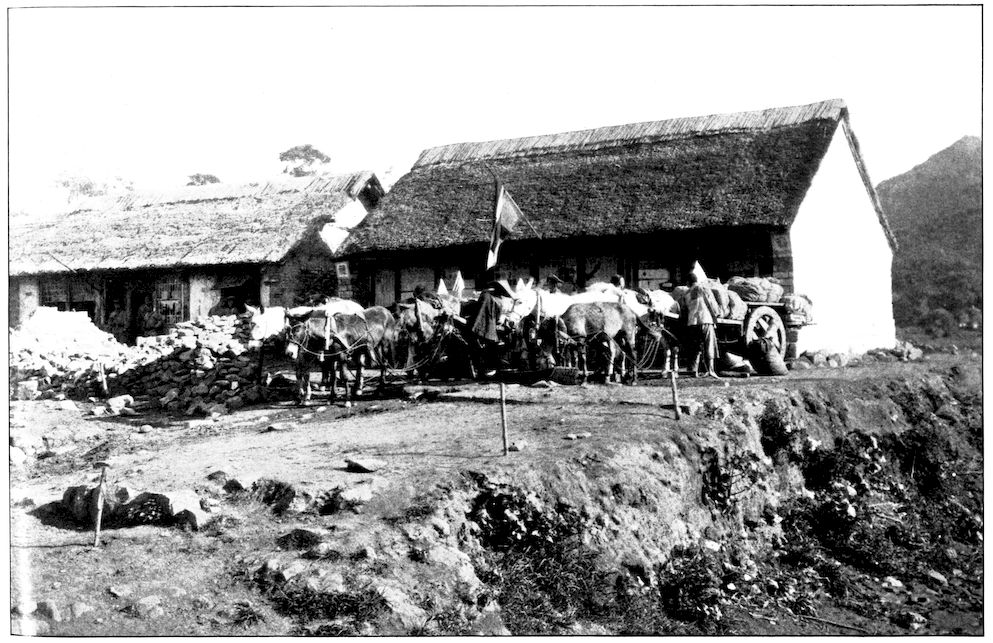
ARRIVAL OF MAIL FOR THE ARMY IN THE FIELD AT LIENSHANKWAN
106
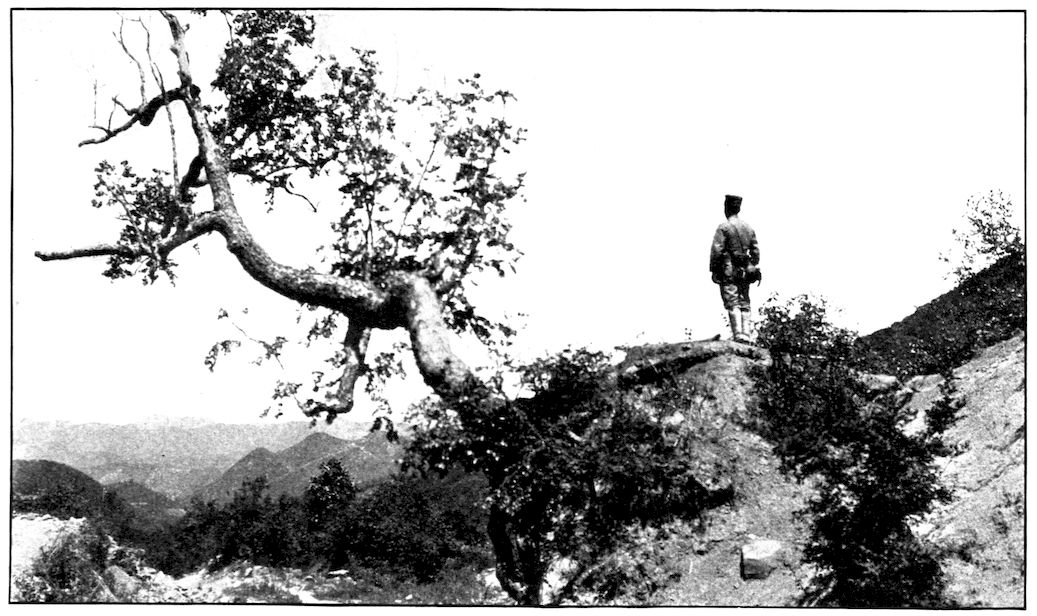
JAPANESE OUTPOST ON DUTY
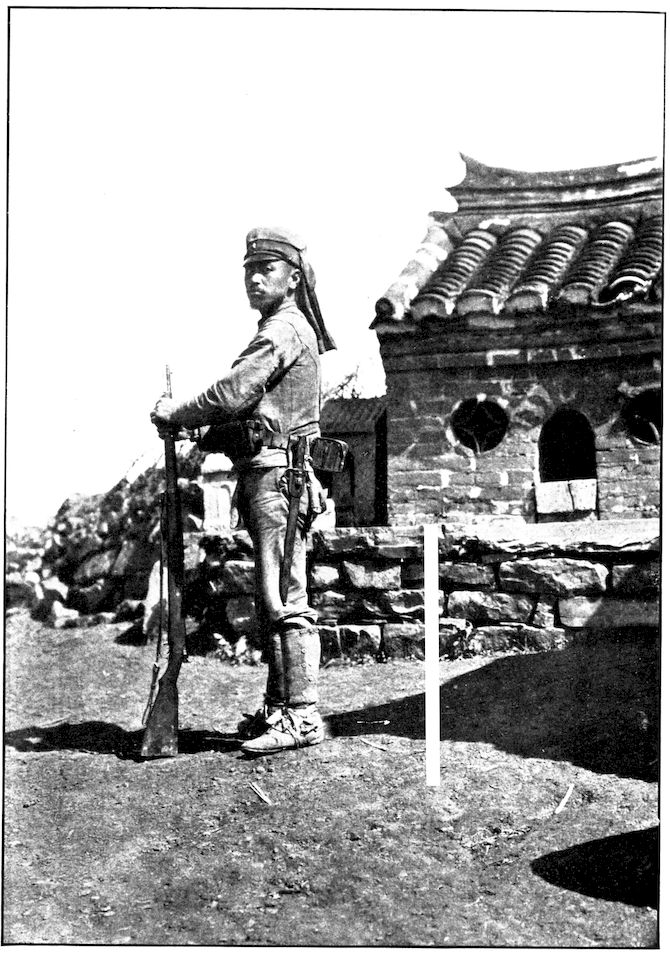
VETERAN, WITH COIL OF ROPE AT HIS BELT FOR TYING PRISONERS
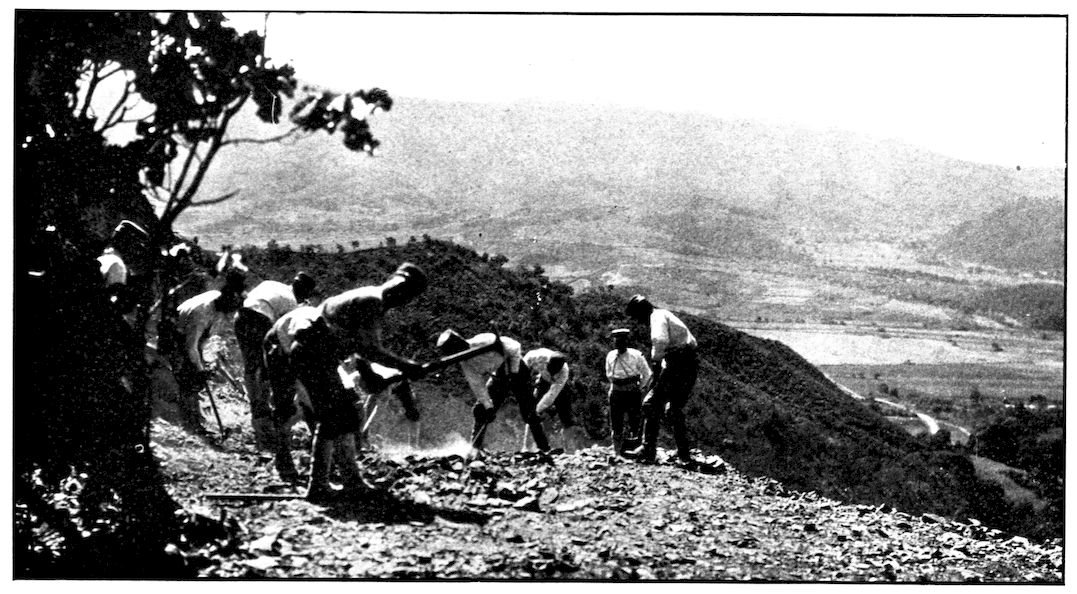
PIONEERS BUILDING MILITARY ROAD FOR THE ARMY
INTO MANCHURIA WITH THE JAPANESE INVADERS
107
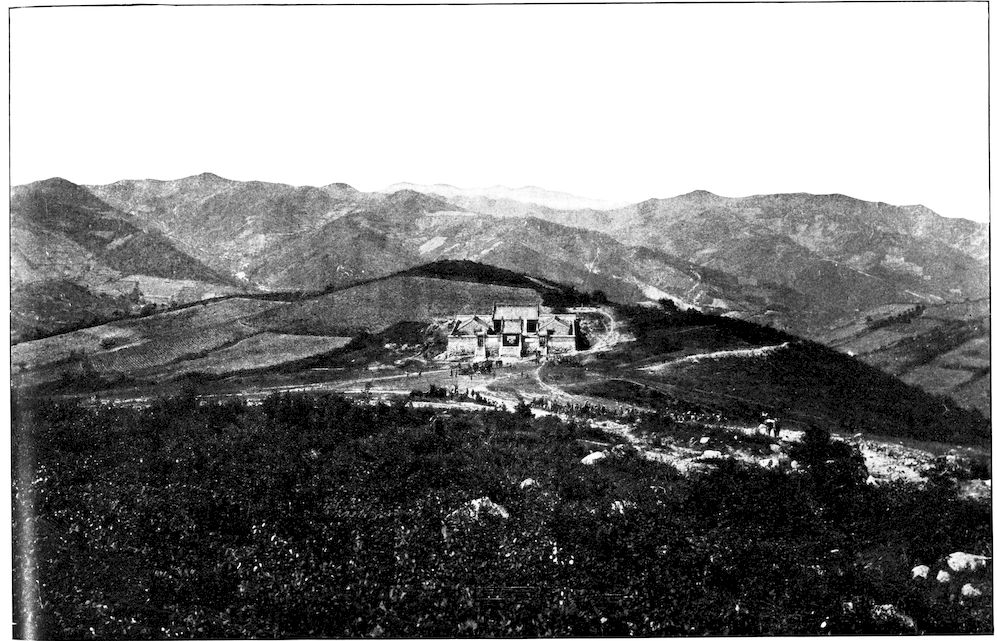
KWANTEI TEMPLE NEAR MOTIEN PAS
This temple was the scene of two severe fights between the advancing Japanese and the Russians, in which the Russians were routed and driven back. The temple was built by the Chinese after their last war with Japan because they thought that the gods of another temple had prevented the Japanese from taking the pass. The gods and the Russians together could not stop the enemy this time.
108
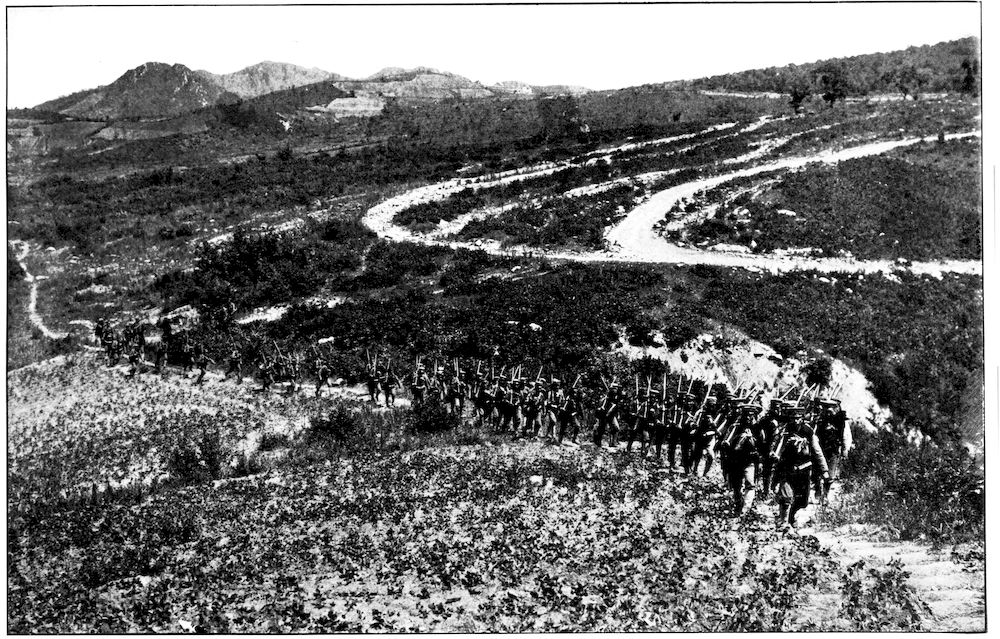
DETACHMENT OF JAPANESE COMING UP AT THE DOUBLE-QUICK DURING THE FIGHT AT MOTIEN PASS
109
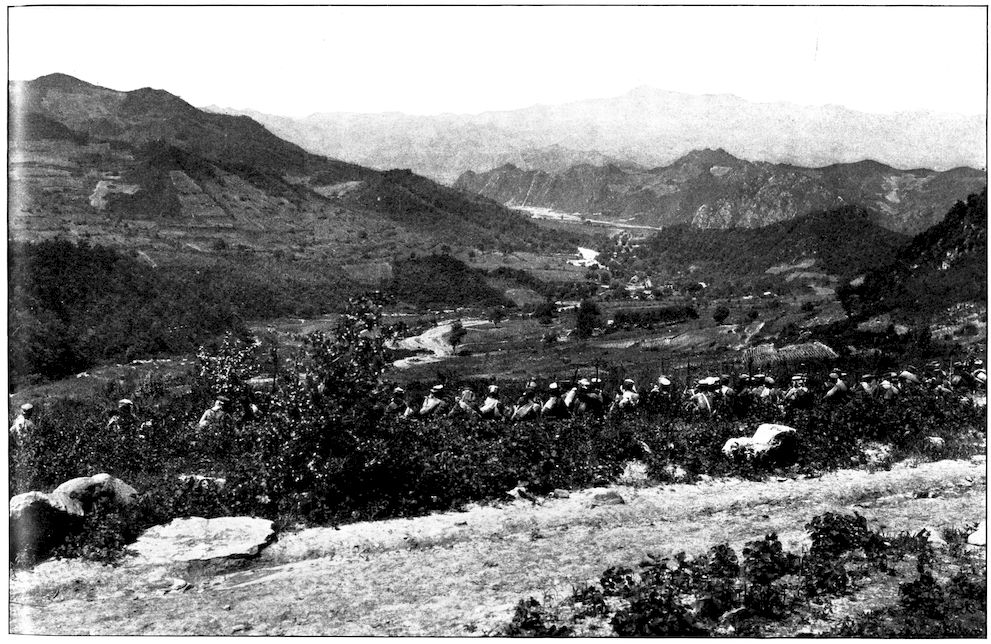
SHARPSHOOTERS COVERING THE ADVANCE AGAINST THE RUSSIANS ON THE RIDGES
The Japanese in the trenches in the foreground are firing on the Russians retreating up the hillside in the distance clear across the valley. The Japanese advance is concealed in the timber in the middle distance just beyond the farmhouses. The Russians are too far away to be seen. Collier’s photographer, J. H. Hare, took this unusual picture from a tree-top just behind the Japanese trenches
110
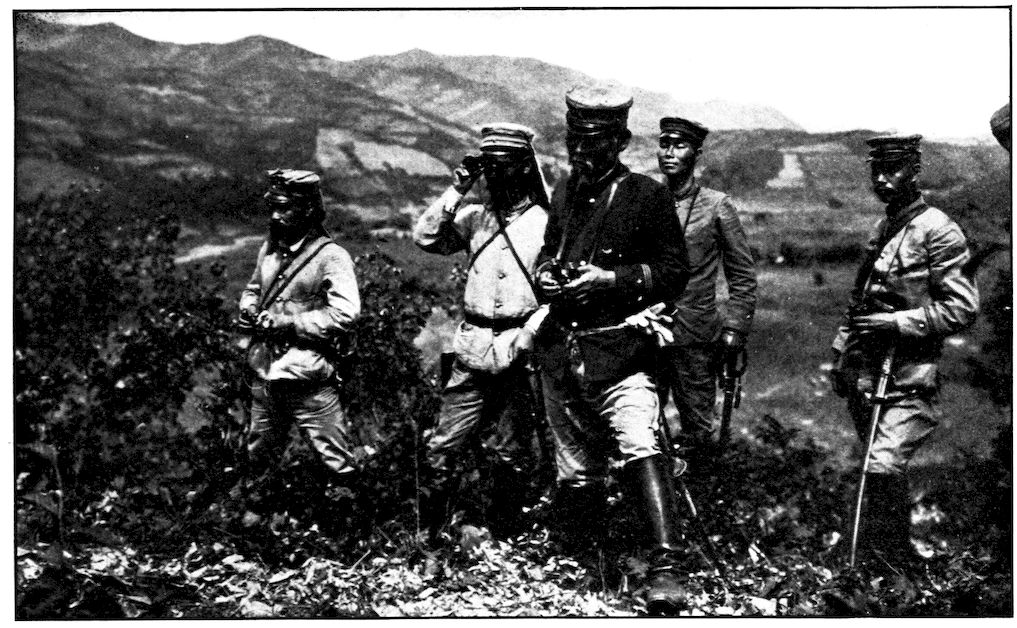
COLONEL BABA OF THE SIXTEENTH REGIMENT AT MOTIENLING
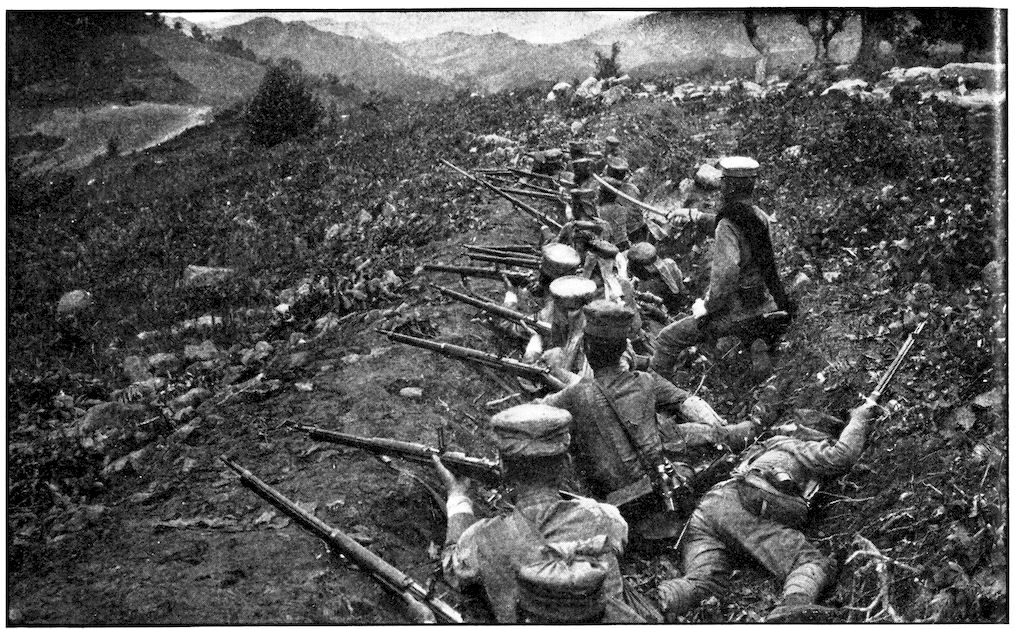
BRINGING AMMUNITION UP TO THE FIRING LINE
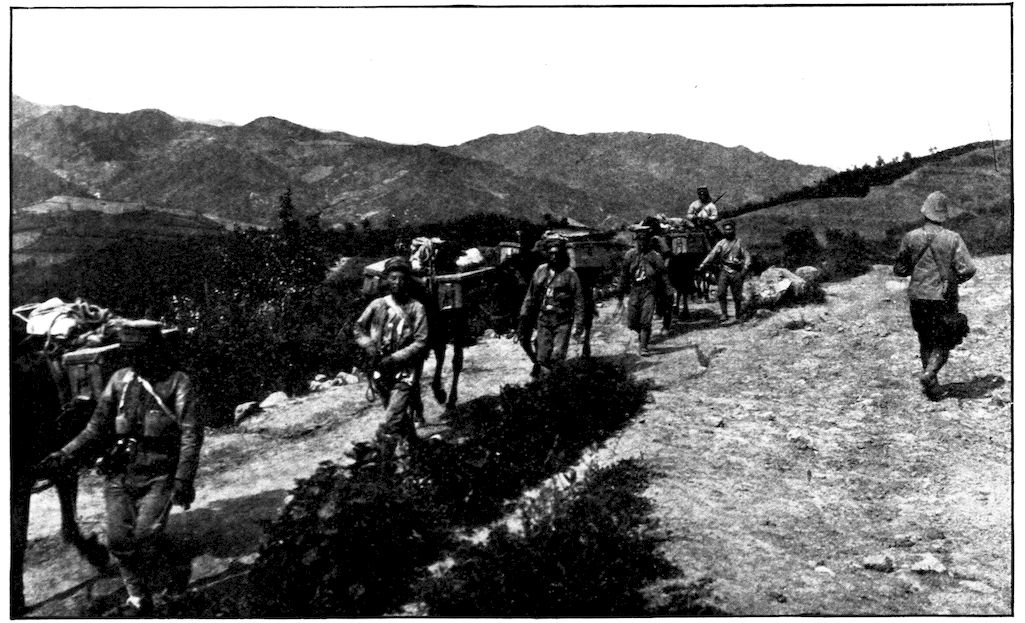
IN THE TRENCHES AT MOTIENLING ON JULY 4
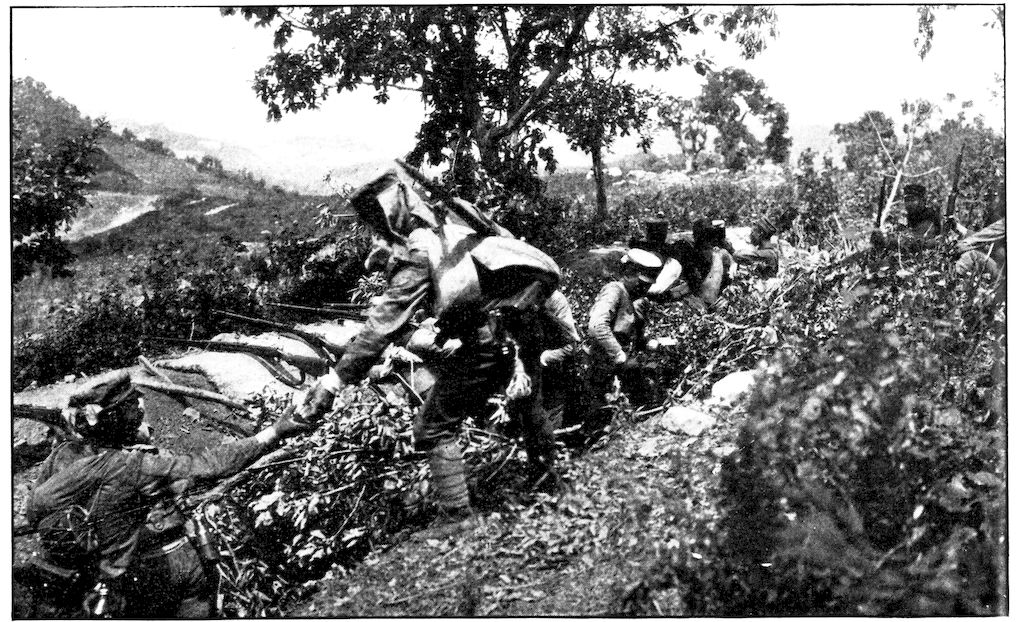
DISTRIBUTING AMMUNITION TO THE MEN IN THE TRENCHES
SCENES DURING THE BATTLE OF MOTIENLING
111
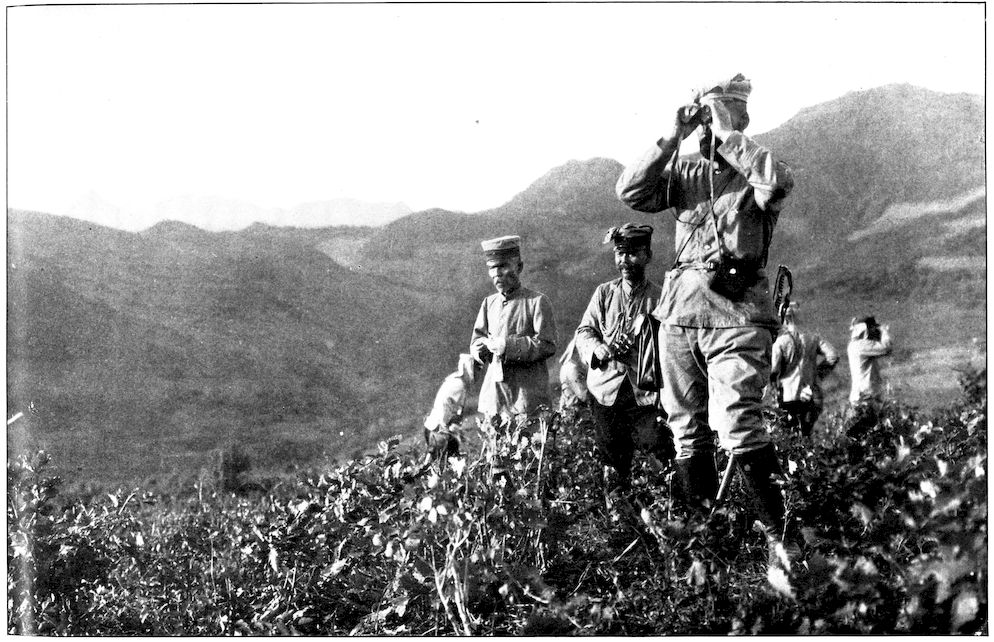
GENERAL KUROKI AND HIS CHIEF OF STAFF, LIEUTENANT-GENERAL FUJI, WATCHING THE FIGHT AT MOTIENLING
112
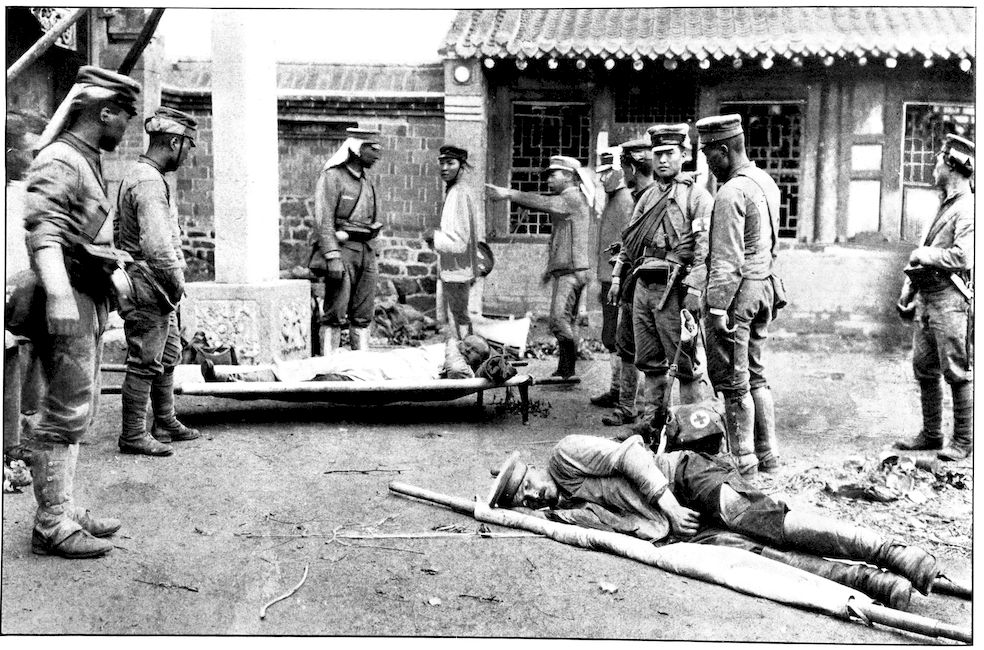
BRINGING WOUNDED RUSSIANS TO THE DRESSING STATION AT THE KWANTEI TEMPLE ON JULY 4
113
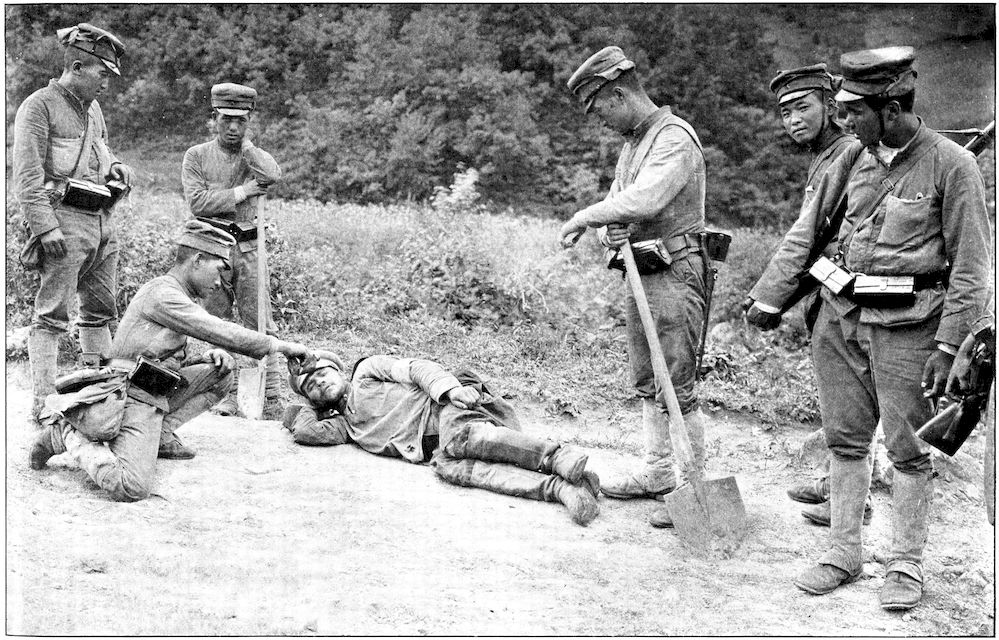
RUSSIAN RED CROSS SOLDIER WOUNDED AT MOTIEN PASS
114
BADLY WOUNDED AND DELIRIOUS RUSSIAN UNABLE TO WALK
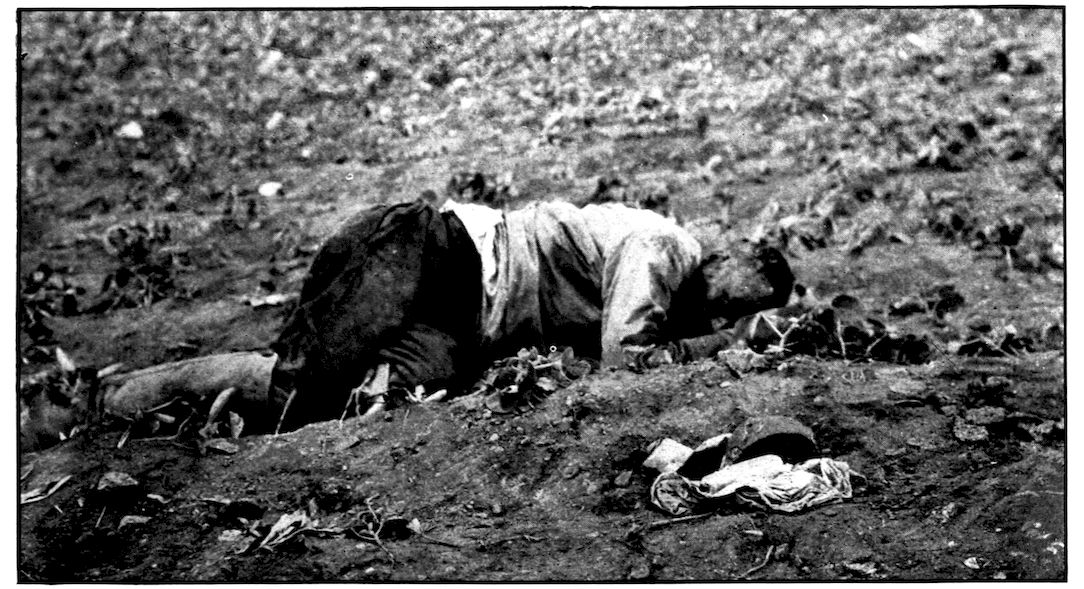
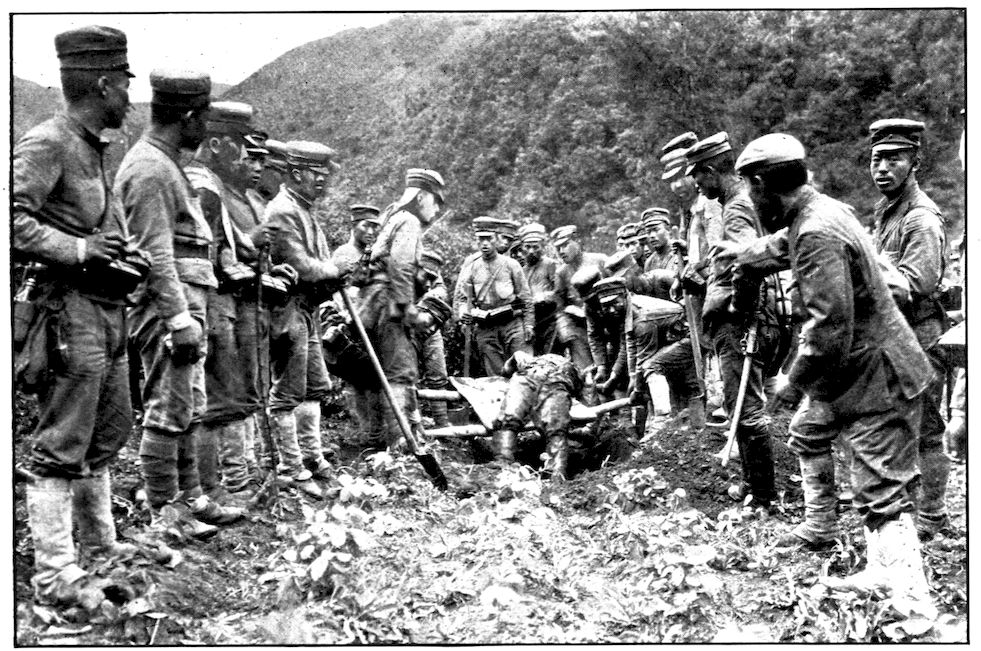
JAPANESE BURYING A DEAD RUSSIAN AFTER THE FIGHT
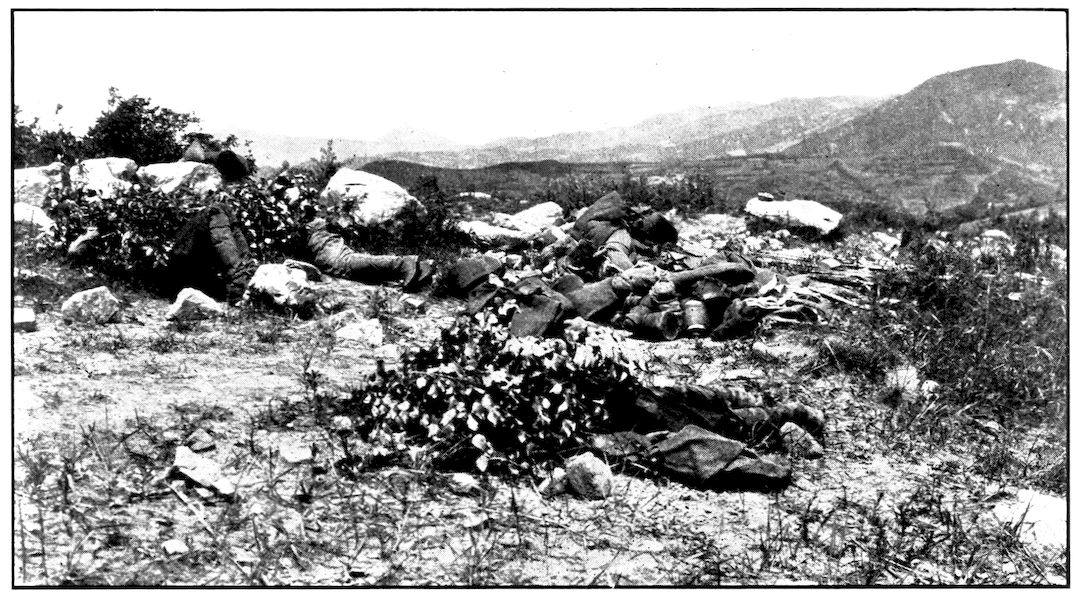
RUSSIAN DEAD COVERED WITH BRANCHES BY JAPANESE AT MOTIEN PASS
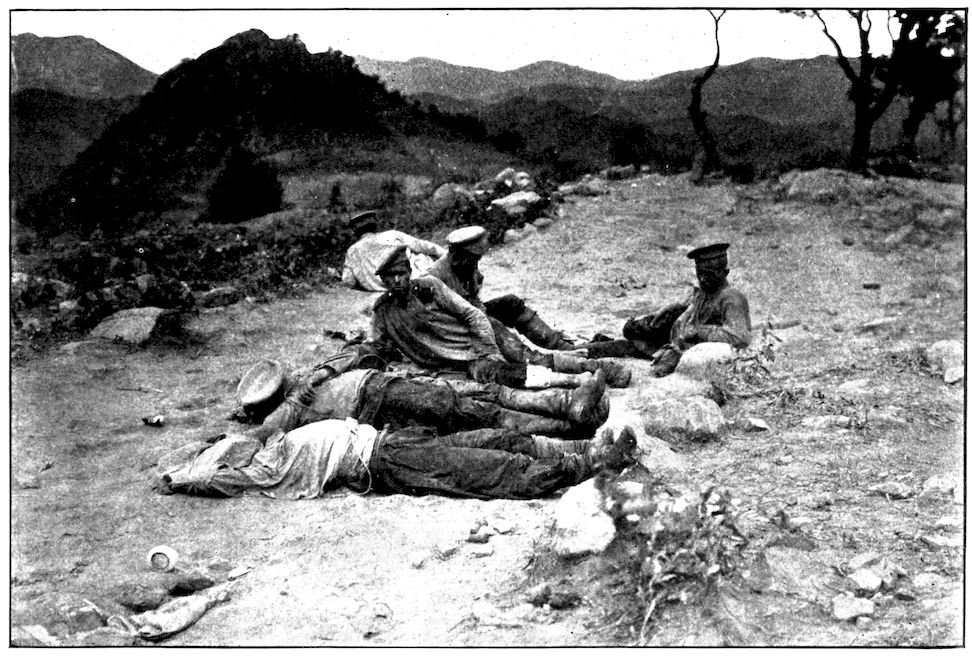
RUSSIAN DEAD AND WOUNDED LYING TOGETHER AT MOTIENLING
RUSSIAN WOUNDED AND DEAD AT MOTIEN PASS
115
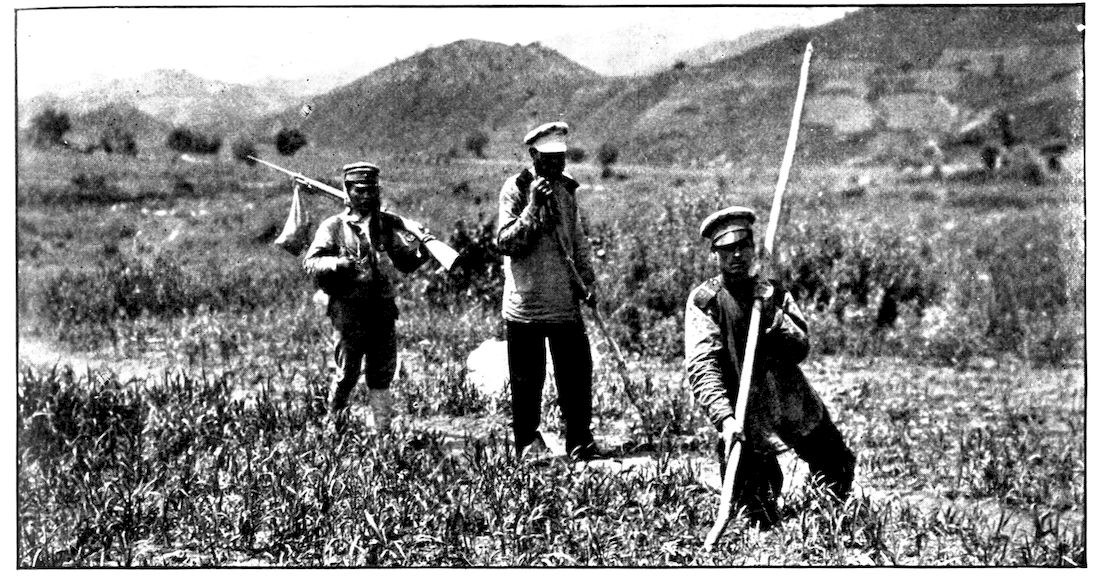
WOUNDED PRISONERS HOBBLING INTO THE JAPANESE CAMP
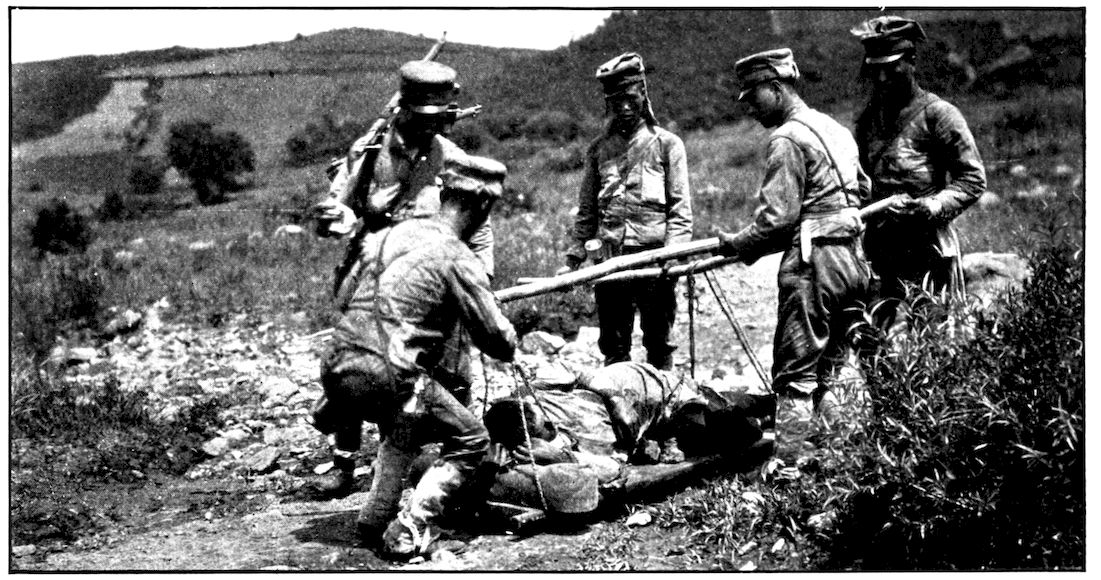
RUSSIAN PRISONER TOO SEVERELY WOUNDED TO WALK
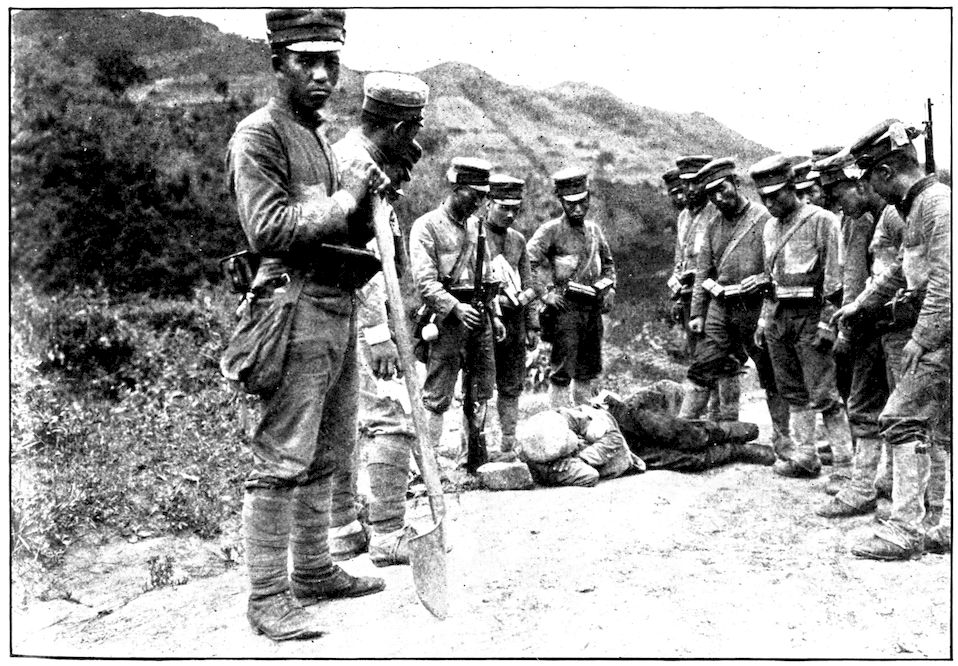
JAPANESE CARRYING WOUNDED RUSSIAN TO DRESSING STATION
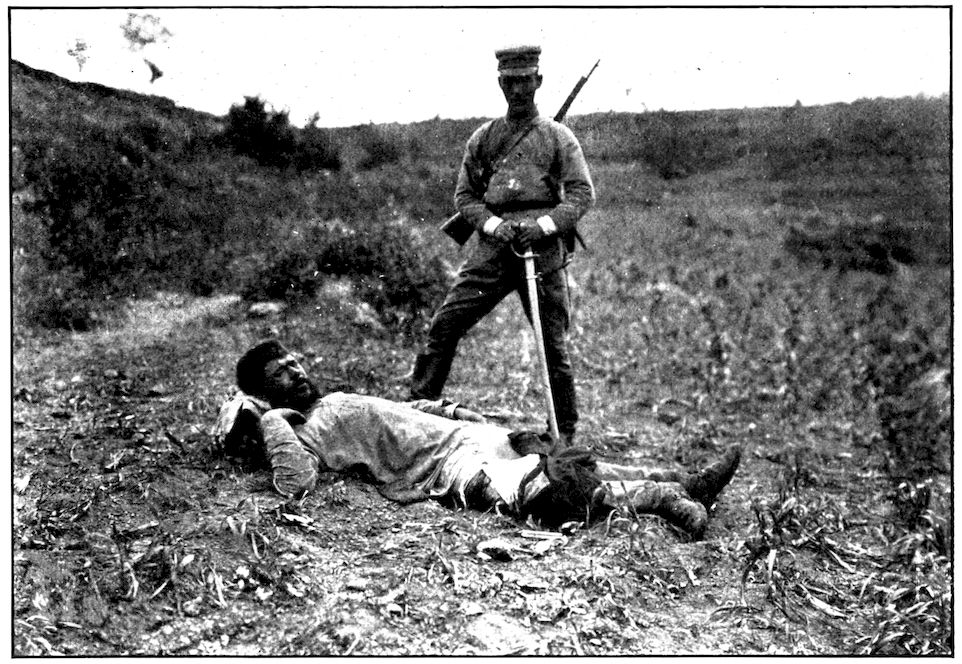
BADLY WOUNDED IN THE LEG, BUT CHEERFUL
WITH THE WOUNDED AND CAPTURED AT MOTIEN PASS
116
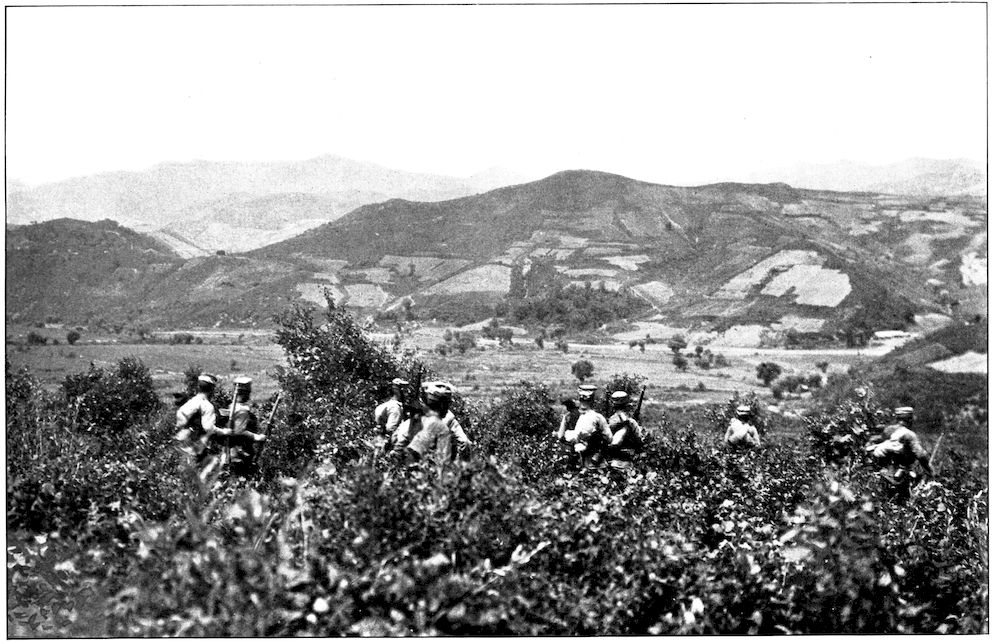
JAPANESE SKIRMISHERS ADVANCING TO FLANK THE ENEMY AT MOTIENLING
117
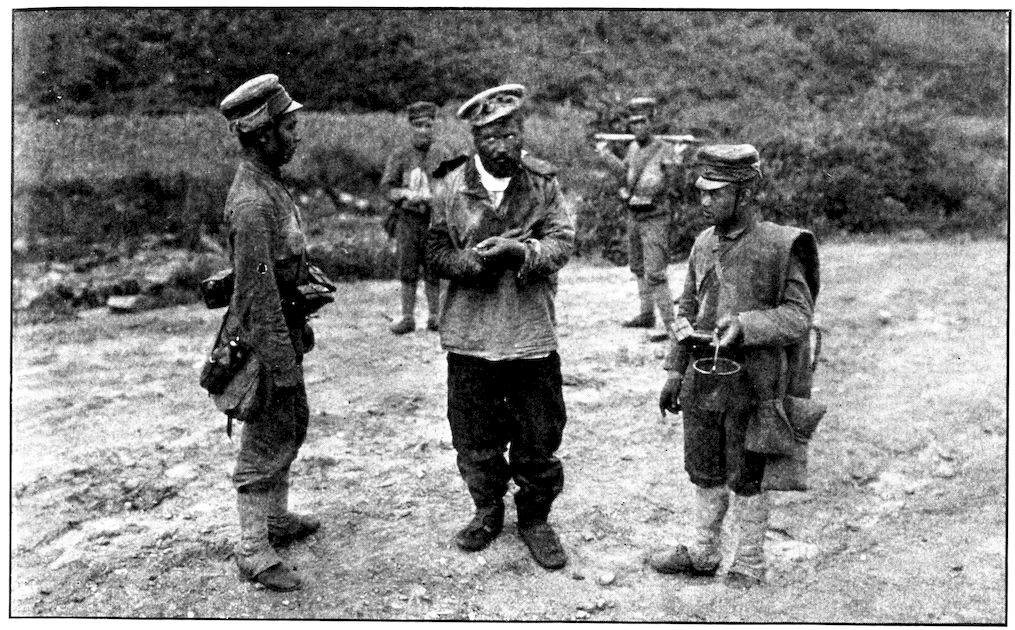
WANDERING IN HIS HEAD AND WOUNDED IN THE ARM
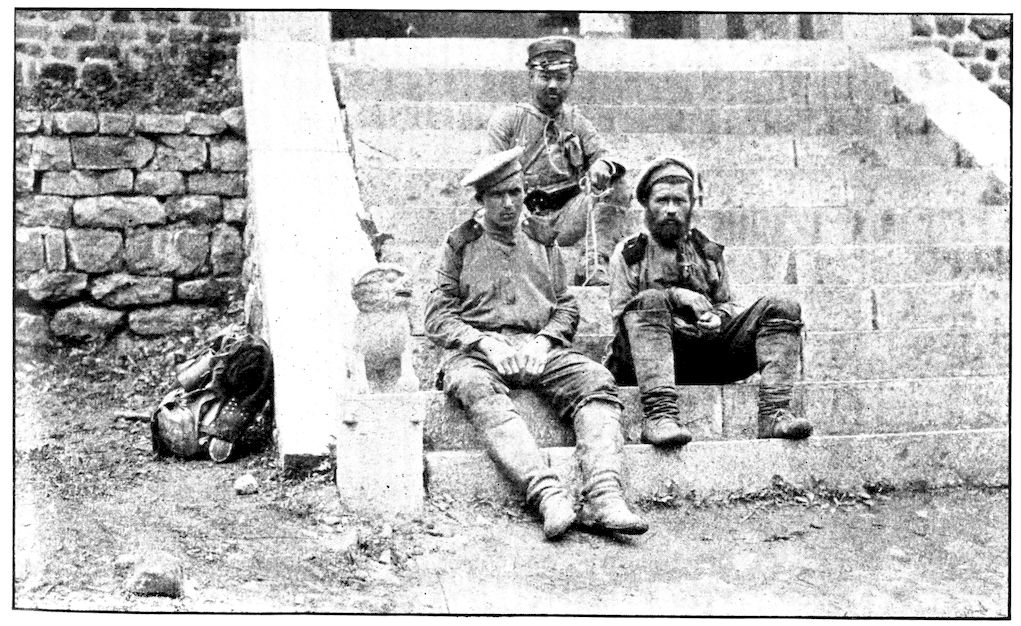
RUSSIAN PRISONERS SITTING ON THE TEMPLE STEPS
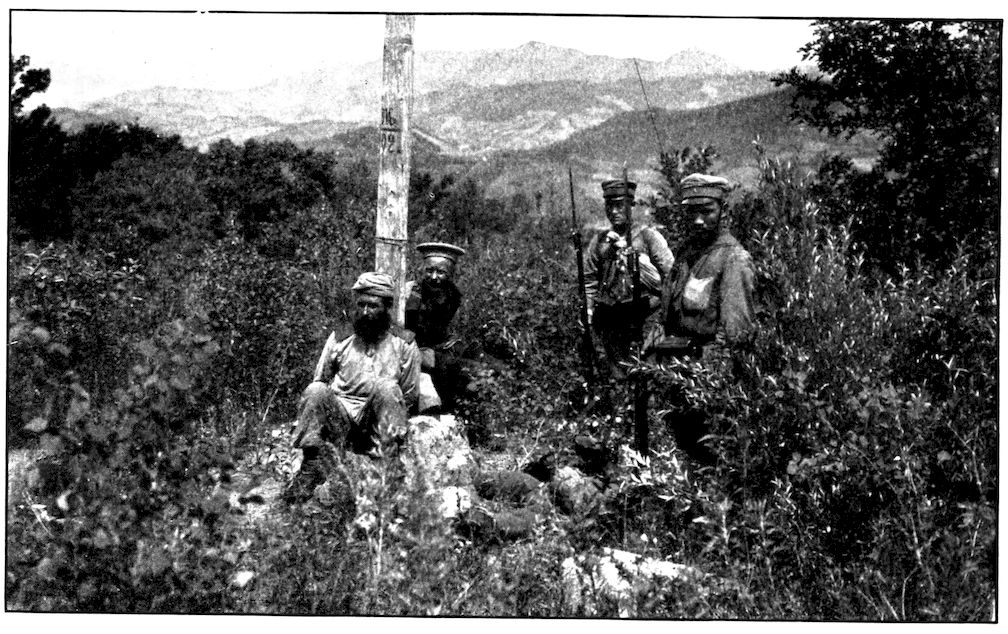
RUSSIAN PRISONERS TIED TO TELEPHONE POLE FOR SAFE-KEEPING
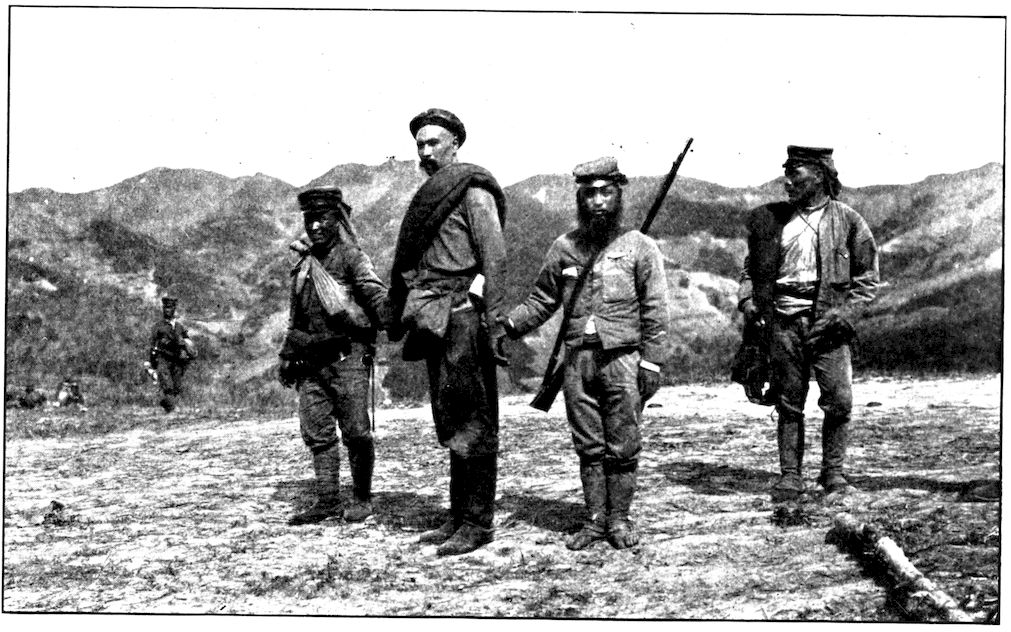
THE BIG PRISONER AND THE LITTLE CAPTORS
PRISONERS AND CAPTORS AT MOTIENLING
118
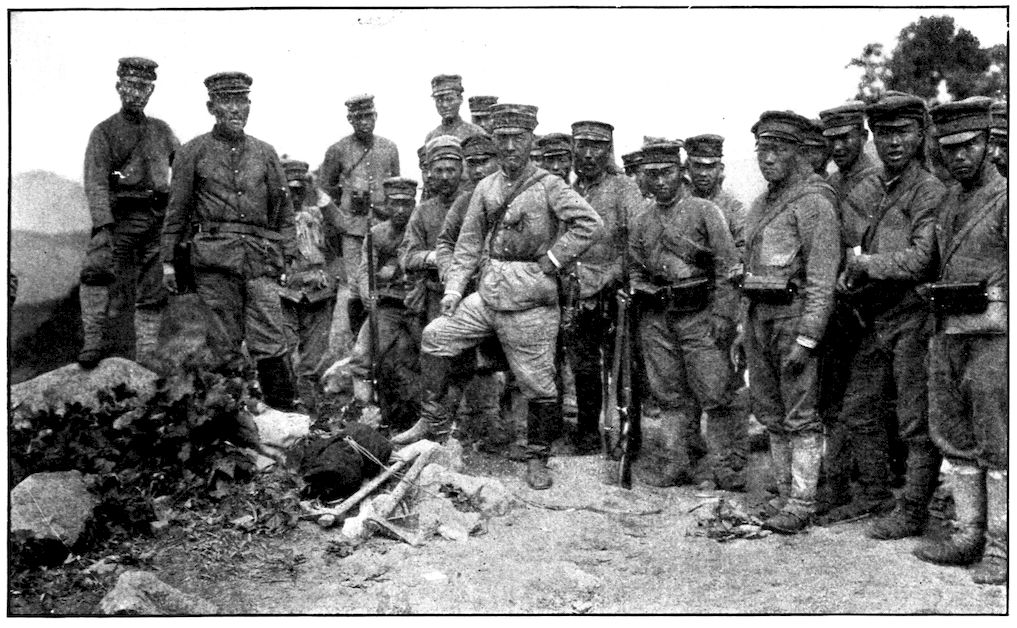
LIEUTENANT WHO CUT DOWN FOUR RUSSIANS WITH HIS SABRE
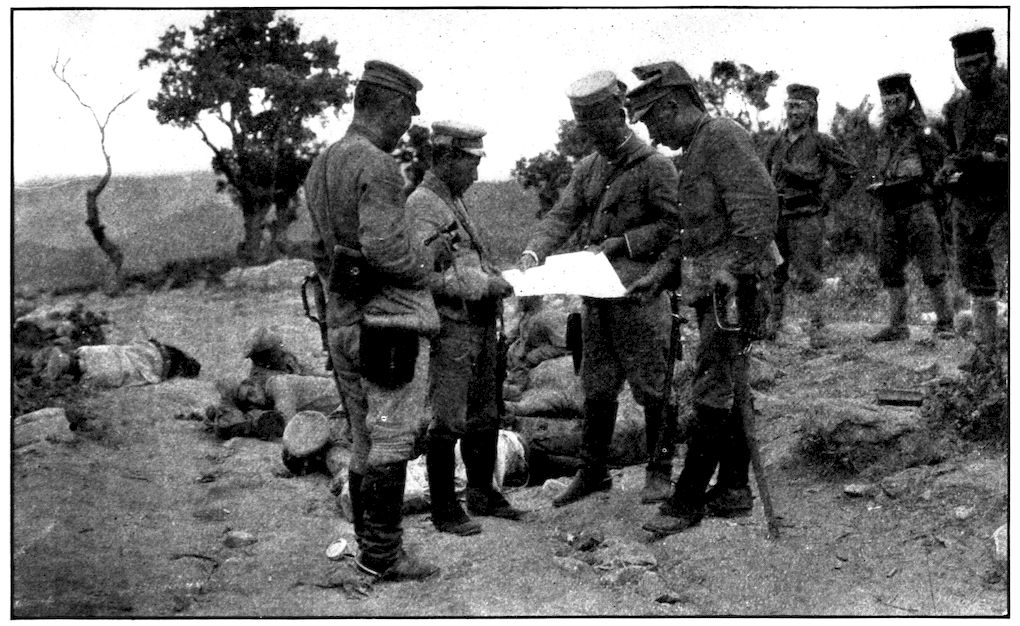
MAJOR TAKUSAGO EXAMINING A MAP OF THE FIELD
JOVIAL JAPANESE COLLECTING THE SPOILS OF BATTLE
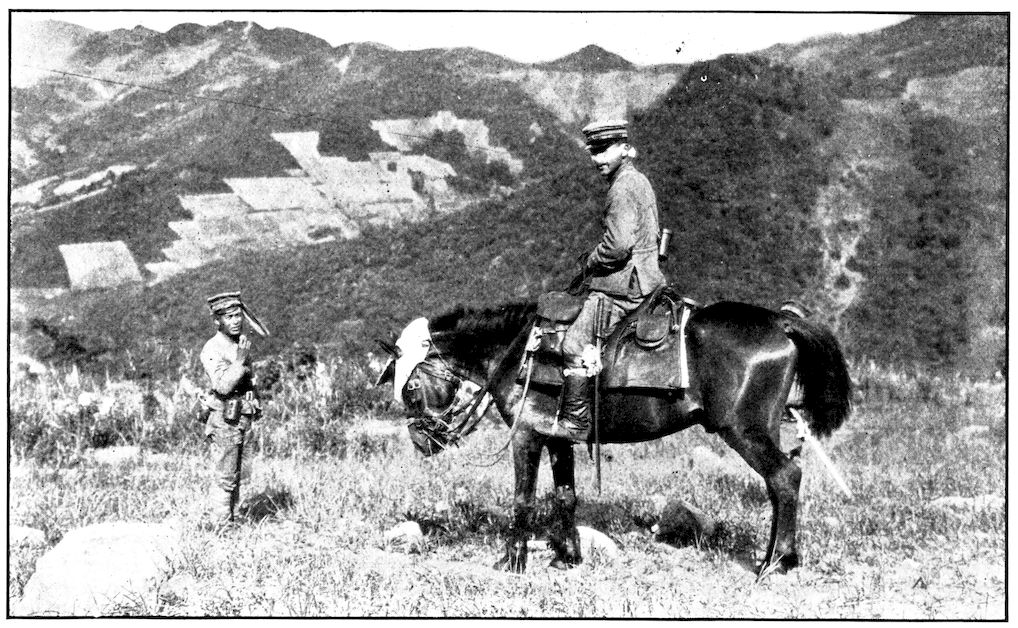
CAVALRYMAN RETURNING TO THE FIGHT AFTER HAVING HIS WOUND DRESSED
INCIDENTS OF THE RUSSIAN ATTEMPT TO RECAPTURE MOTIEN PASS
119
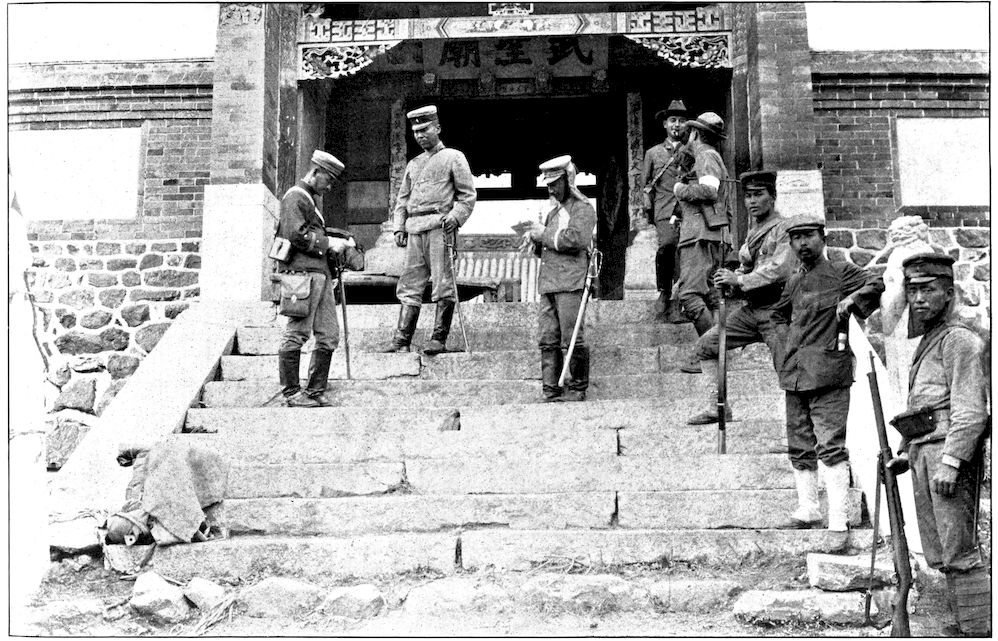
GENERAL OKASAKI, WHO DEFEATED THE RUSSIANS AT MOTIENLING
The Japanese commander is shown standing on the steps of the Kwantei temple during the battle of July 4, receiving reports from his staff and sending out orders. Motien Pass was one of the places on the line of march taken by Kuroki’s army which was thought before the battle to be practically impregnable. The Russians attempted to recapture it afterward, but were defeated with great loss
120
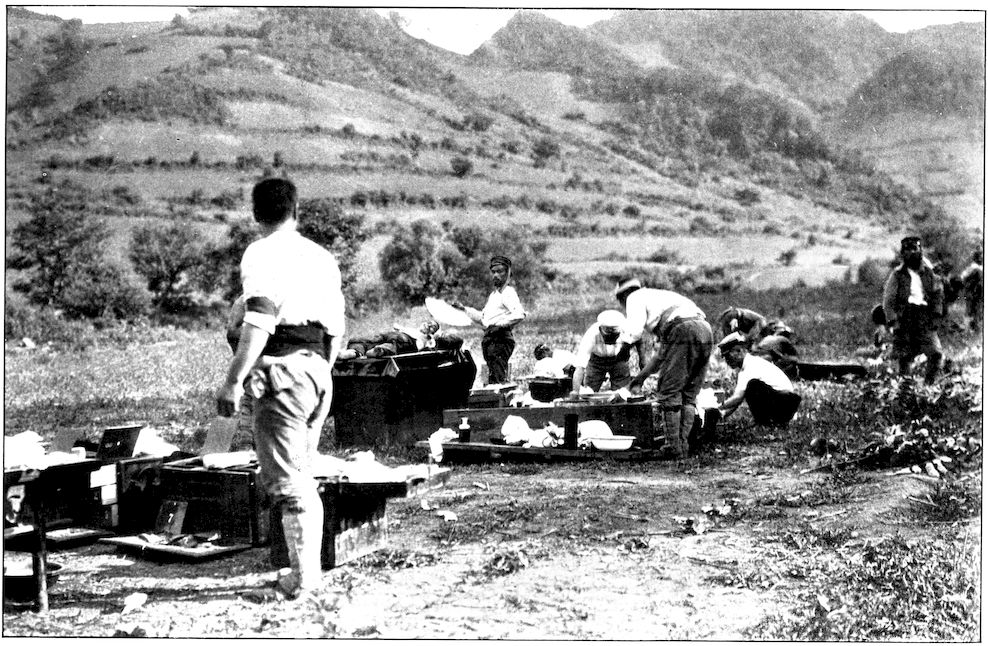
THE FIELD DRESSING STATION FOR THOSE TOO SEVERELY WOUNDED TO BE CARRIED TO THE BASE HOSPITAL
121
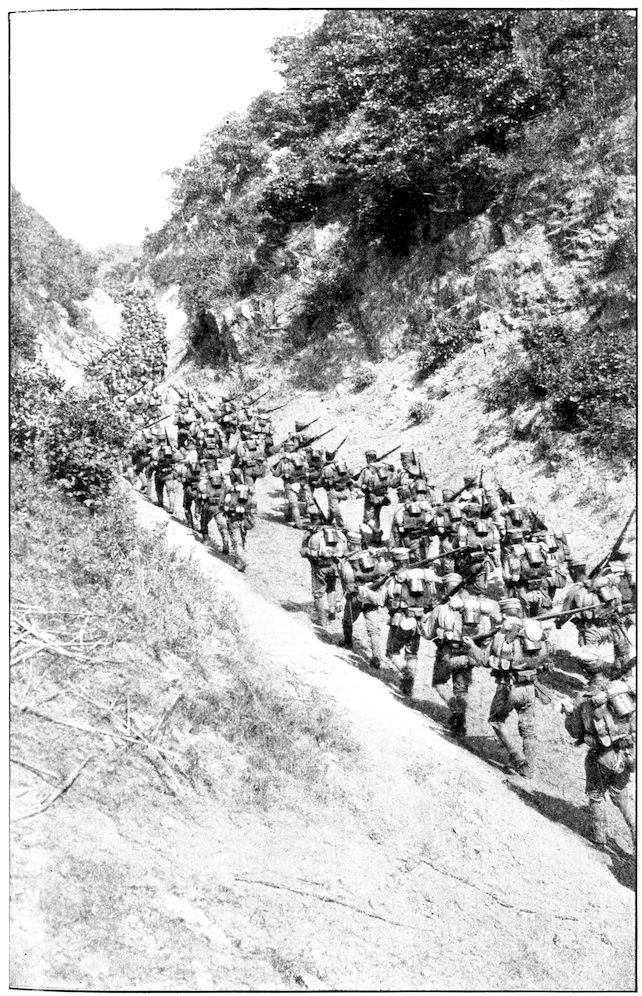
JAPANESE MARCHING ON ONE OF THEIR MILITARY ROADS
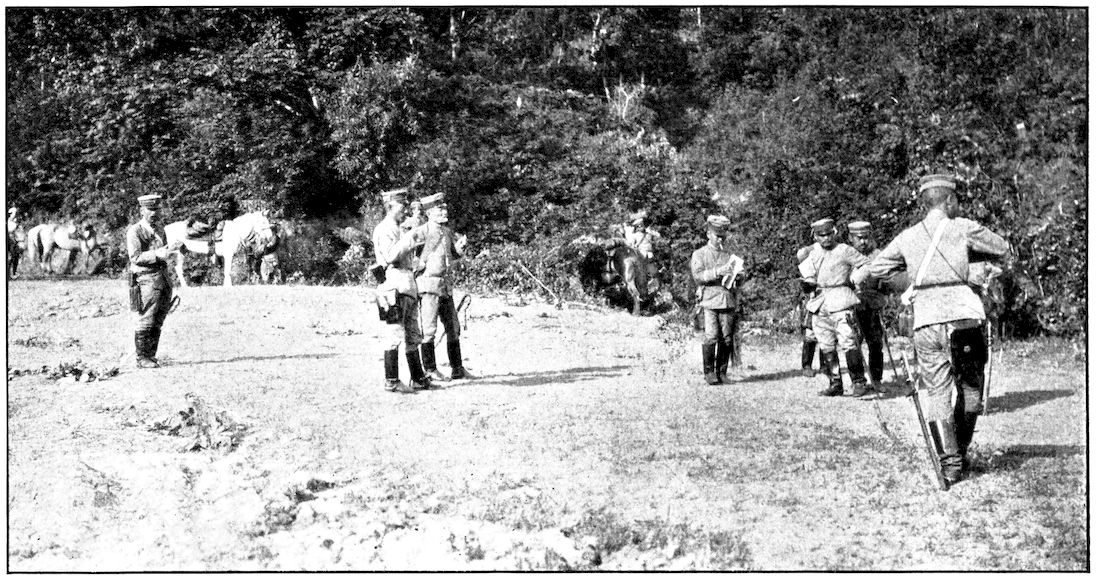
GENERAL NISHI AND HIS STAFF HALTING TO LOOK OVER MAPS WHILE ON THE MARCH
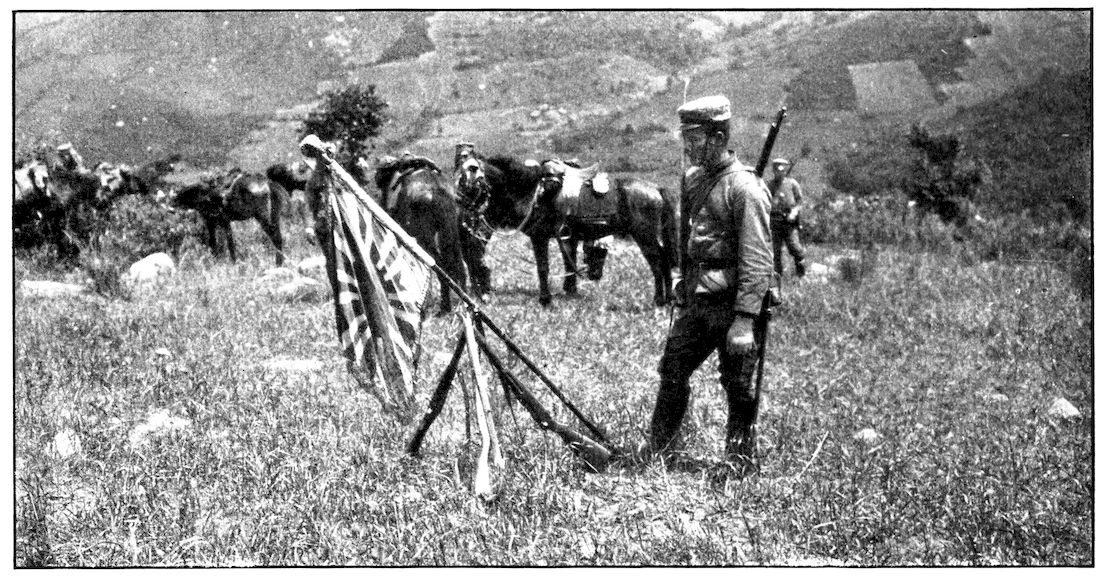
JAPANESE COLOR SERGEANT GUARDING THE REGIMENTAL FLAG
WITH THE JAPANESE ADVANCE FROM THE YALU THROUGH THE MANCHURIAN MOUNTAINS
122
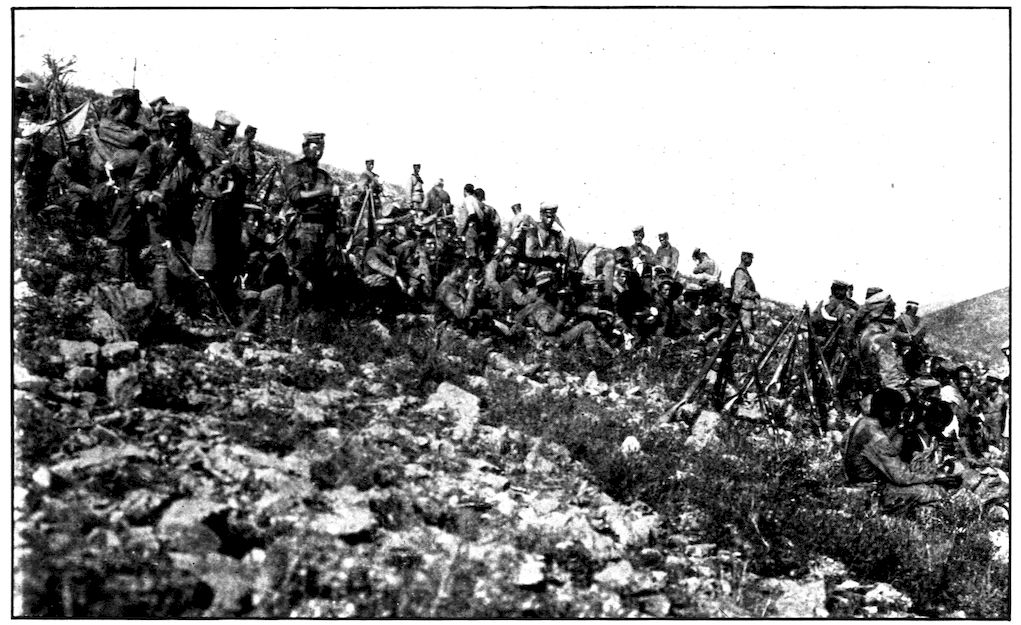
TAKING SHELTER BEHIND A HILL WHILE AWAITING THE OPPORTUNITY TO ATTACK
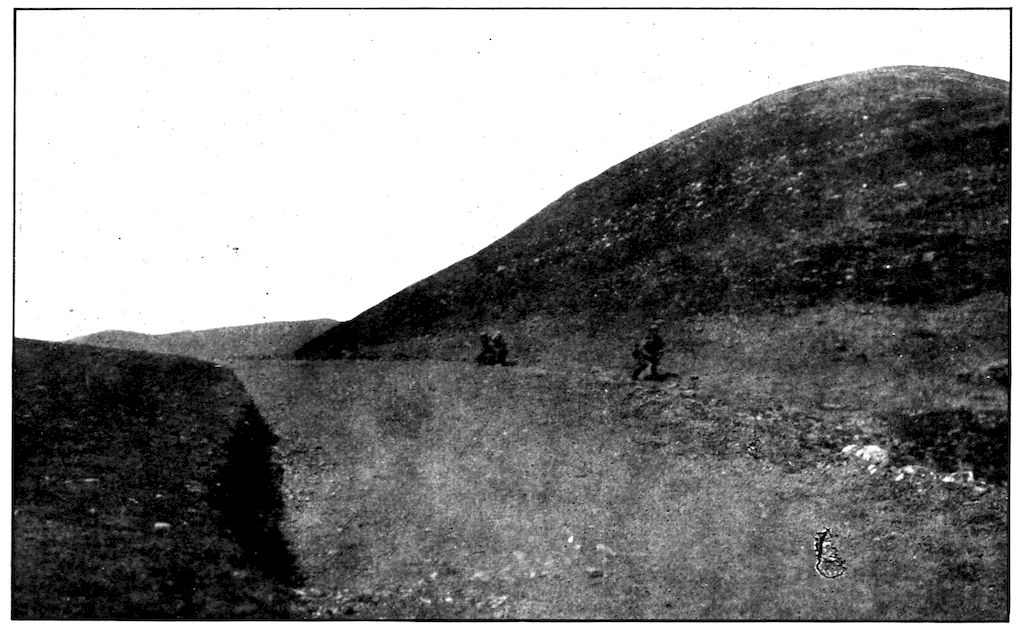
JAPANESE CREEPING ACROSS AN OPEN SPACE ON THE WAY TO THE FIRING LINE
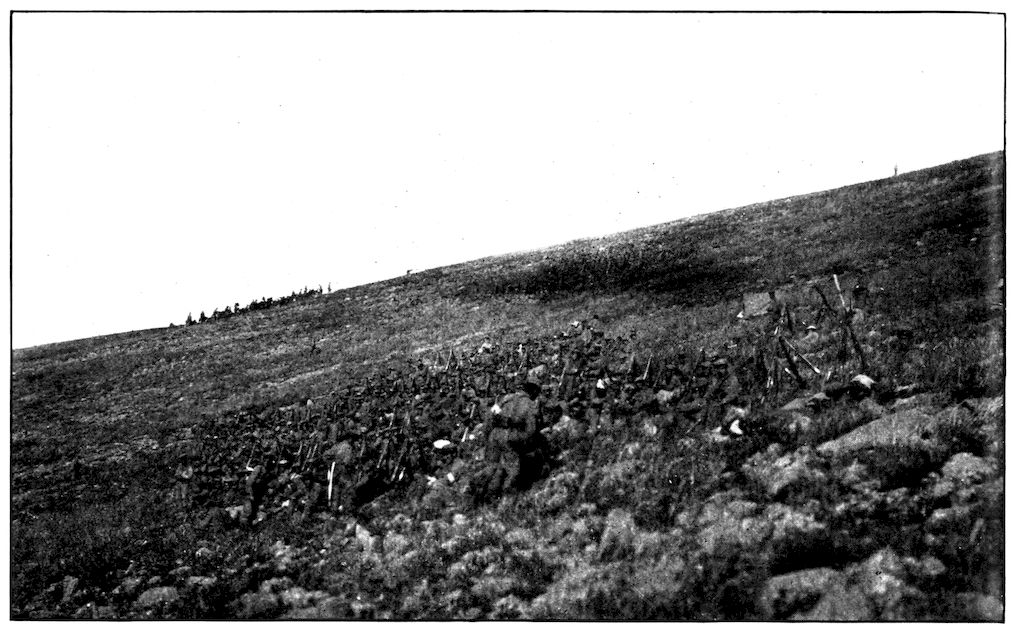
WHERE THE KHAKI UNIFORMS BECOME ALMOST INDISCERNIBLE AGAINST A HILLSIDE
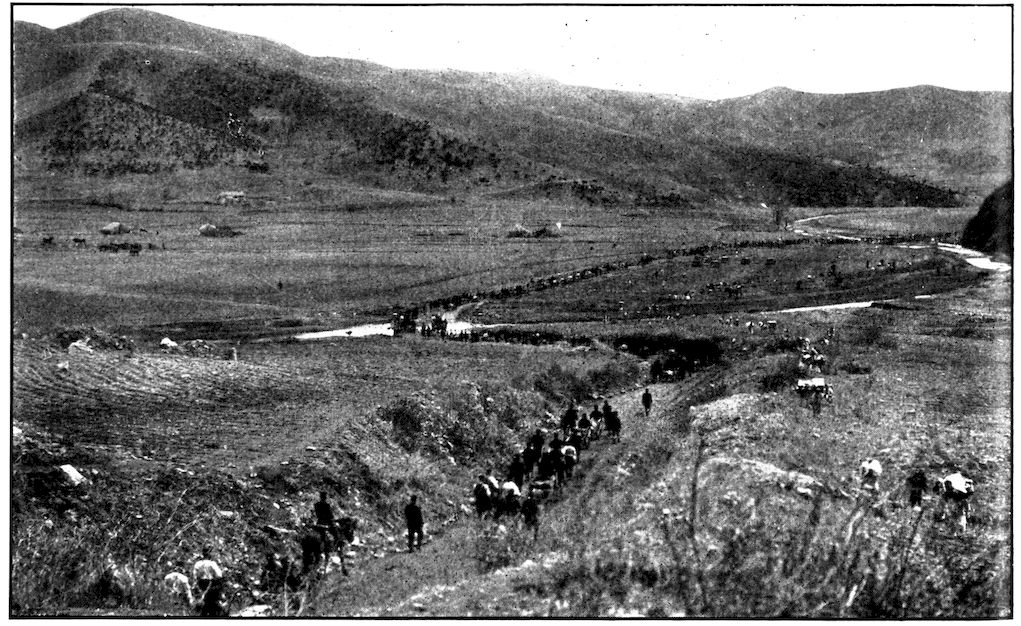
JAPANESE RESERVES COMING UP TO THE FIRING LINE ACROSS THE TANG RIVER
WITH THE JAPANESE DURING THE FIGHTING NEAR ANPING
123
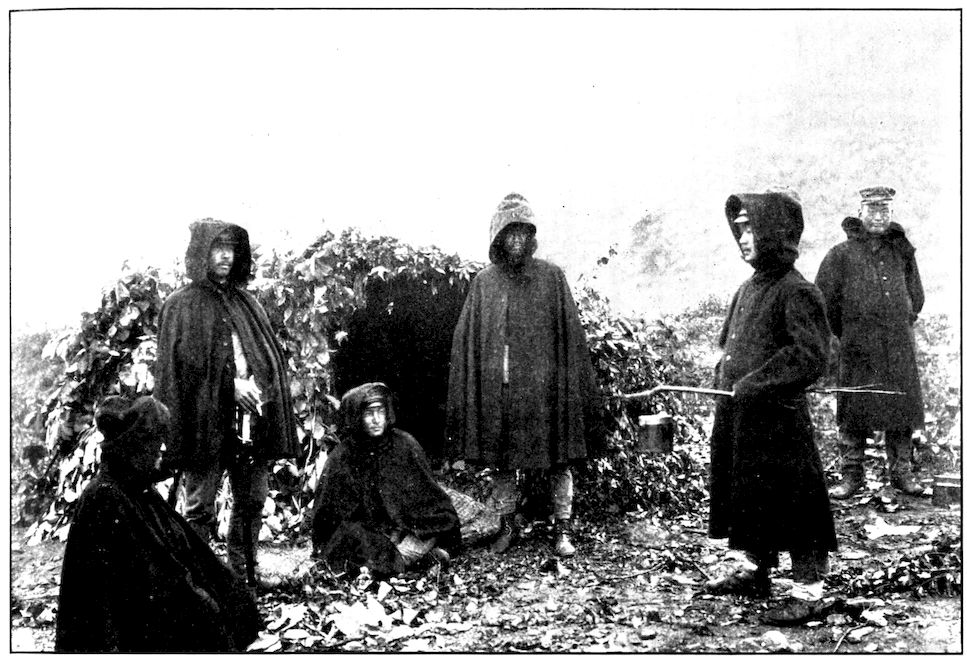
JAPANESE SOLDIERS BREAKFASTING IN THE RAIN NEAR KANSUITAN
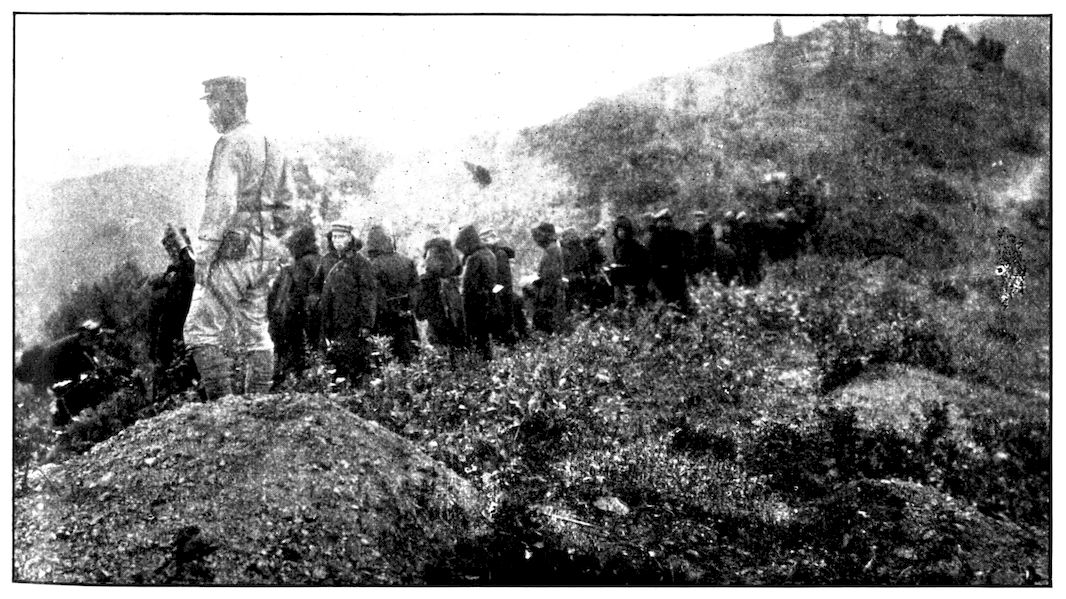
A COMPANY OF THE SIXTEENTH REGIMENT HALTING AFTER A NIGHT ATTACK
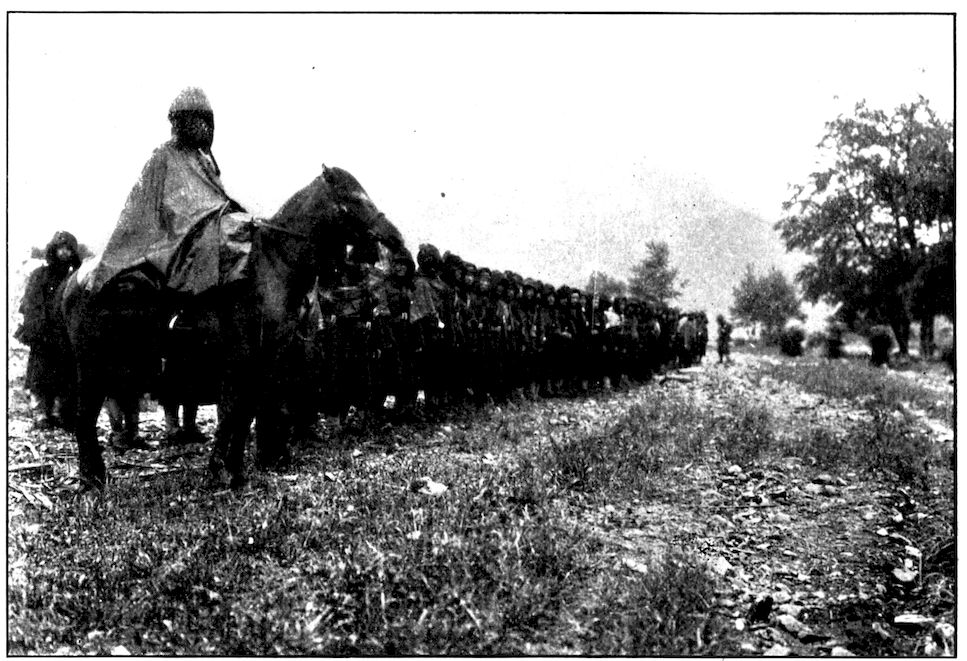
TROOPS WRAPPED IN RAIN-COATS REPORTING FOR INSPECTION
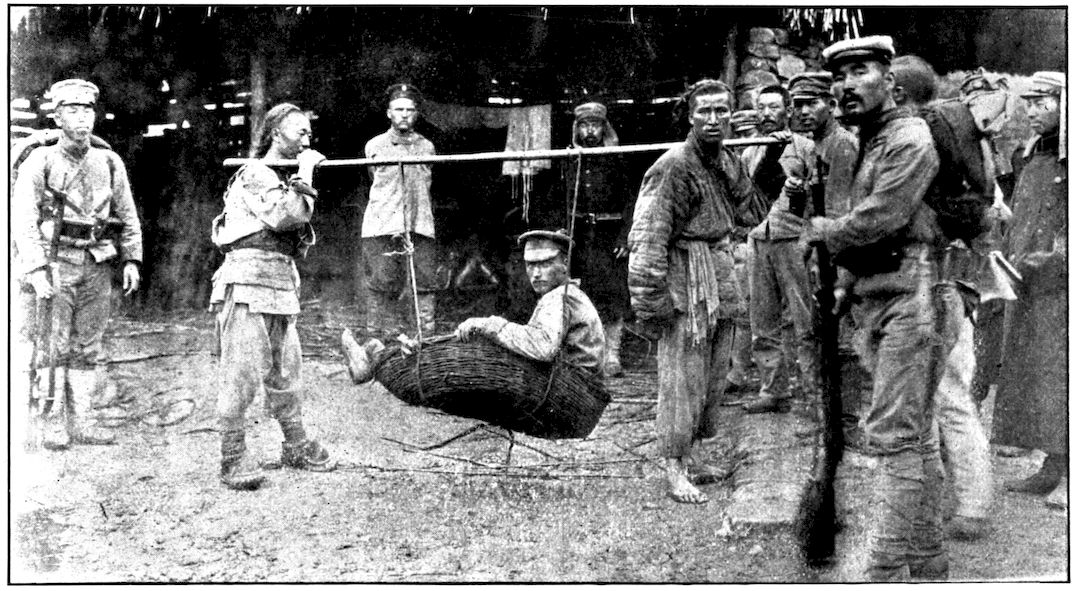
THE CHINESE COOLIE DROPPED HIS BURDEN WHEN THE CAMERA WAS OPENED
JAPANESE AND CAPTURED RUSSIANS IN MANCHURIA DURING THE RAINY SEASON
124
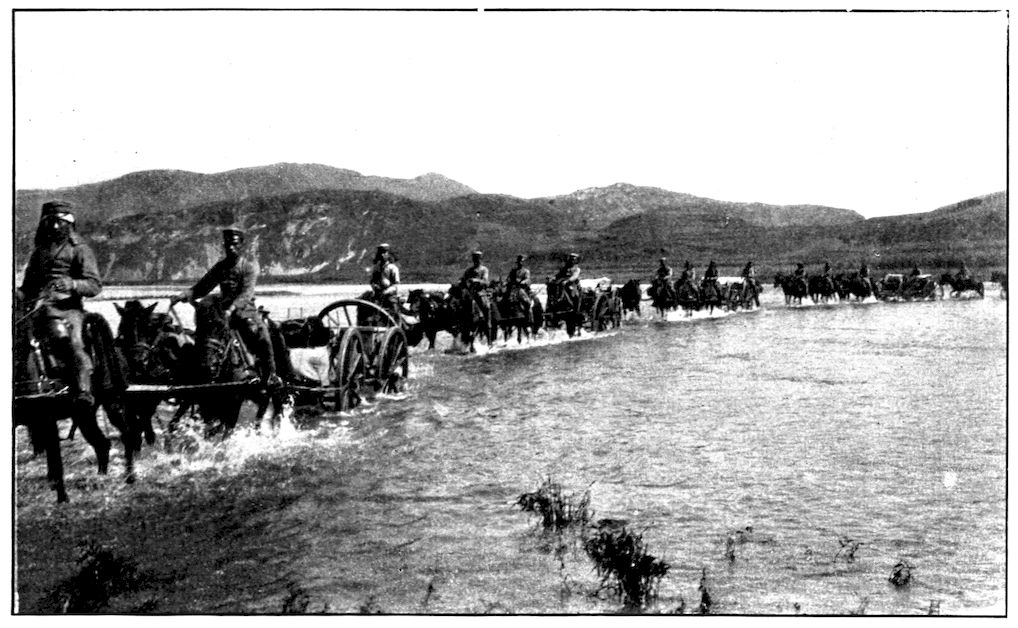
JAPANESE BATTERY FORDING THE SHALLOW TANG RIVER
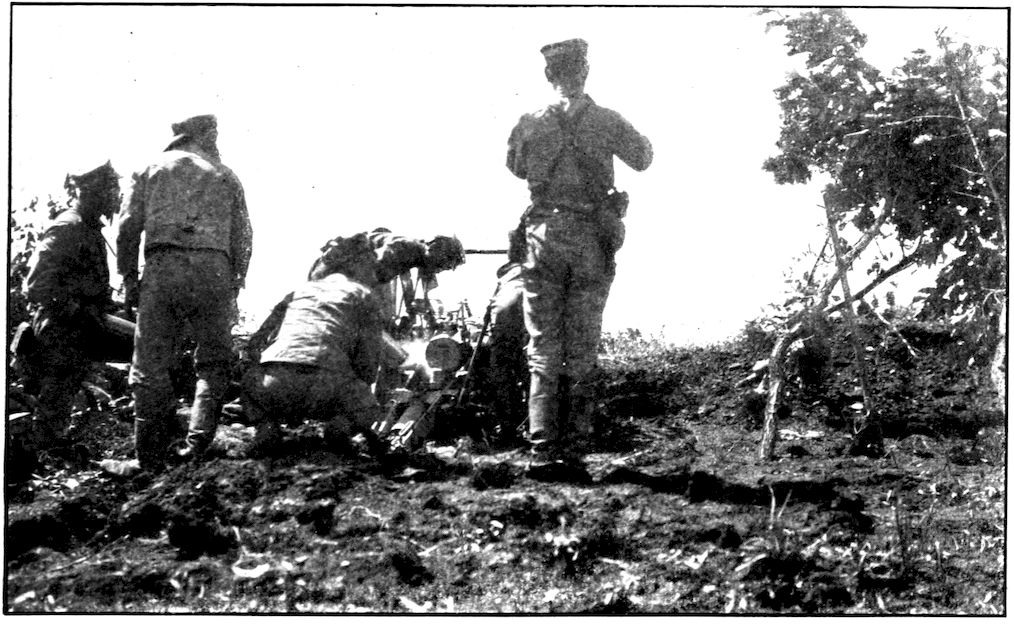
THE ONLY SMOKE VISIBLE—THAT OF THE CARTRIDGE WITHDRAWN FROM THE GUN
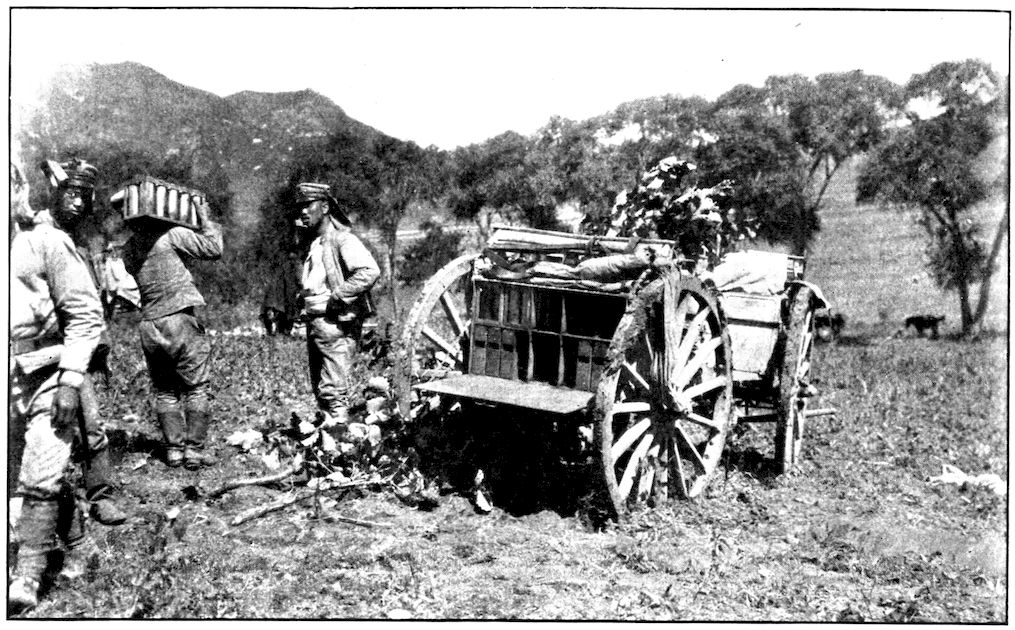
CARRYING SHELLS FROM THE CAISSONS TO THE GUNS
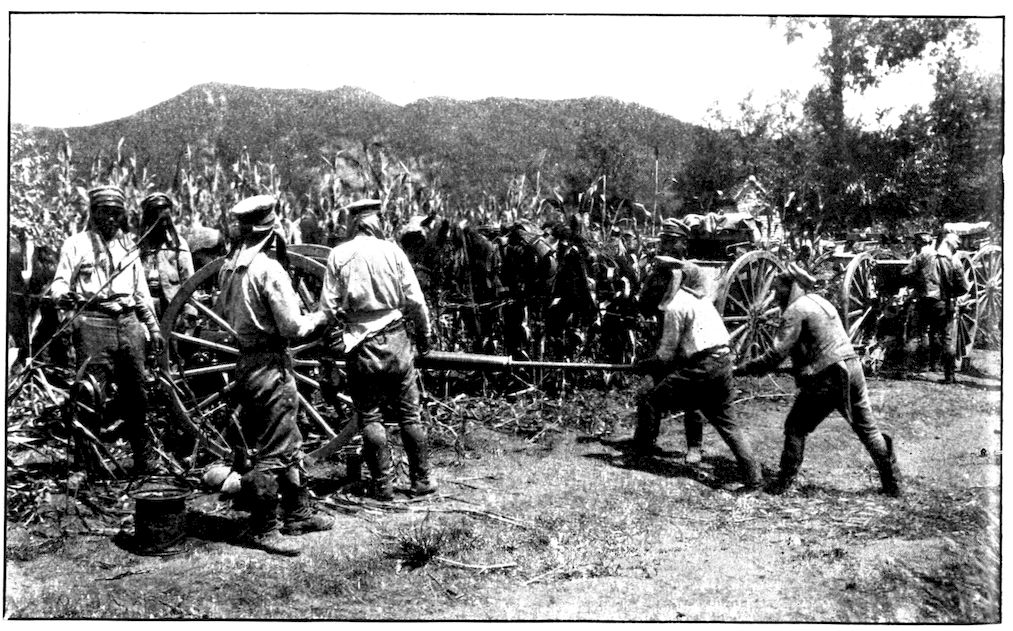
ARTILLERYMEN CLEANING OUT GUNS AFTER AN ACTION
WITH THE SMOKELESS BATTERIES HIDDEN IN FIELDS OF KOWLIANG
125
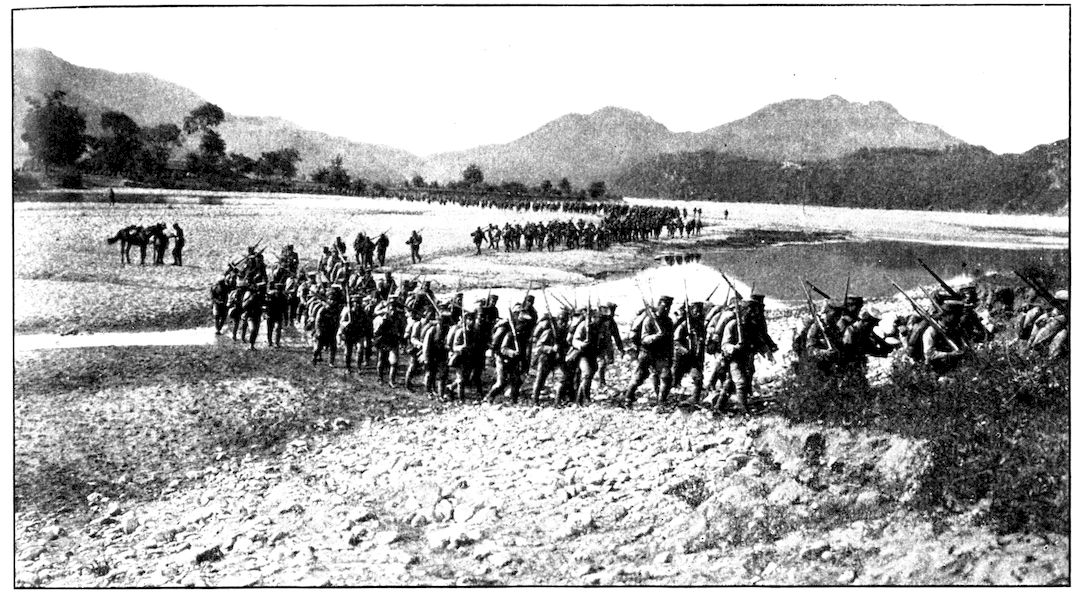
SECOND DIVISION OF THE FIRST ARMY MARCHING ON THE OLD PEKIN ROAD
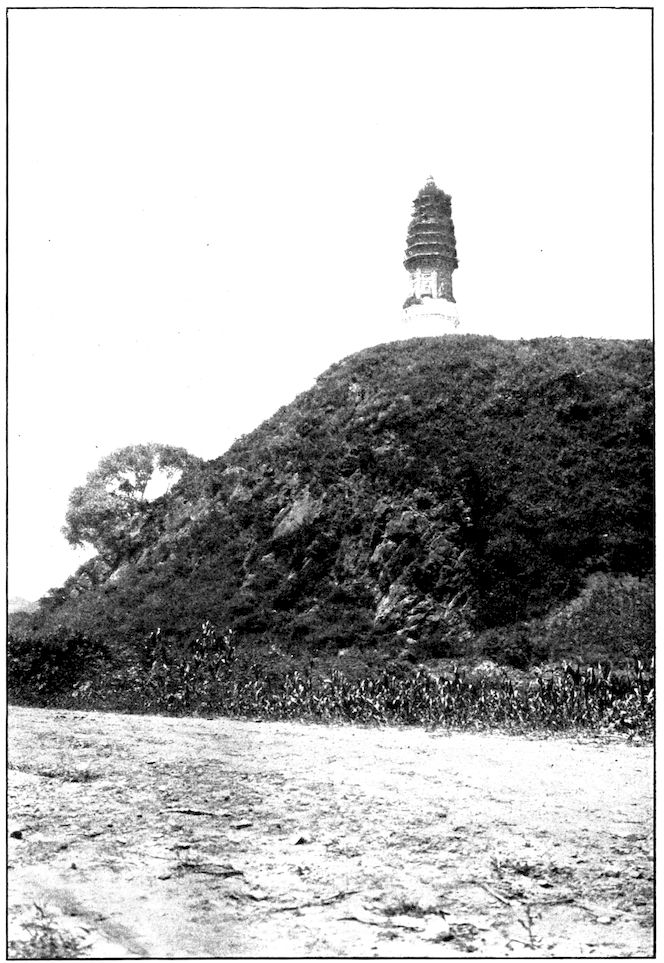
PAGODA FROM WHICH THE RUSSIAN STAFF SAW THEIR DEFEAT
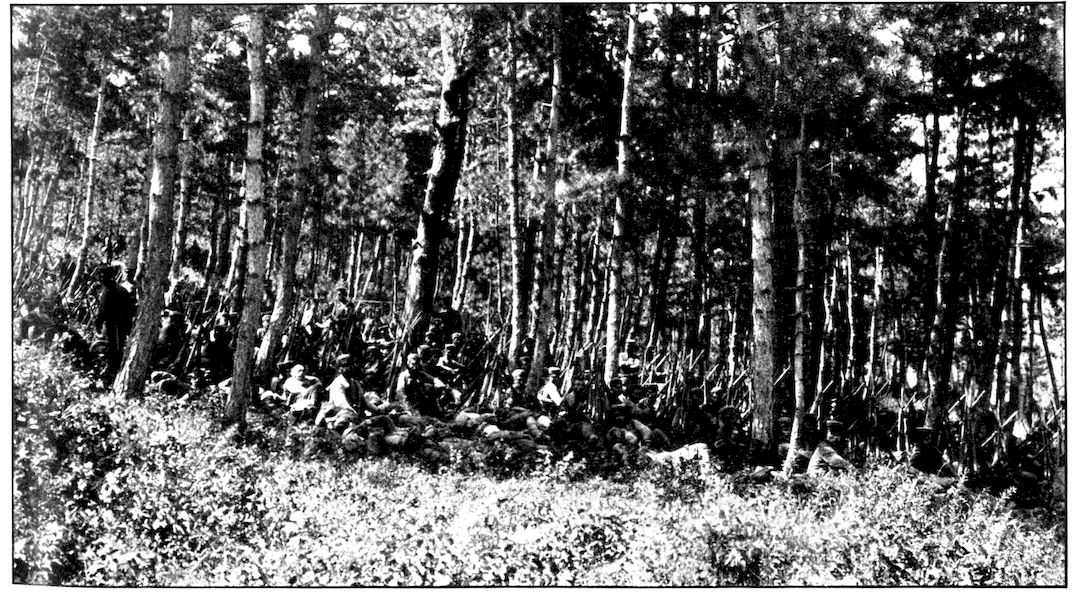
SIXTEENTH JAPANESE REGIMENT IN SHELTER AWAITING ORDER TO MARCH
IN THE NEIGHBORHOOD OF TOWAN DURING THE FIGHTING IN THE FIRST WEEK OF JULY
126
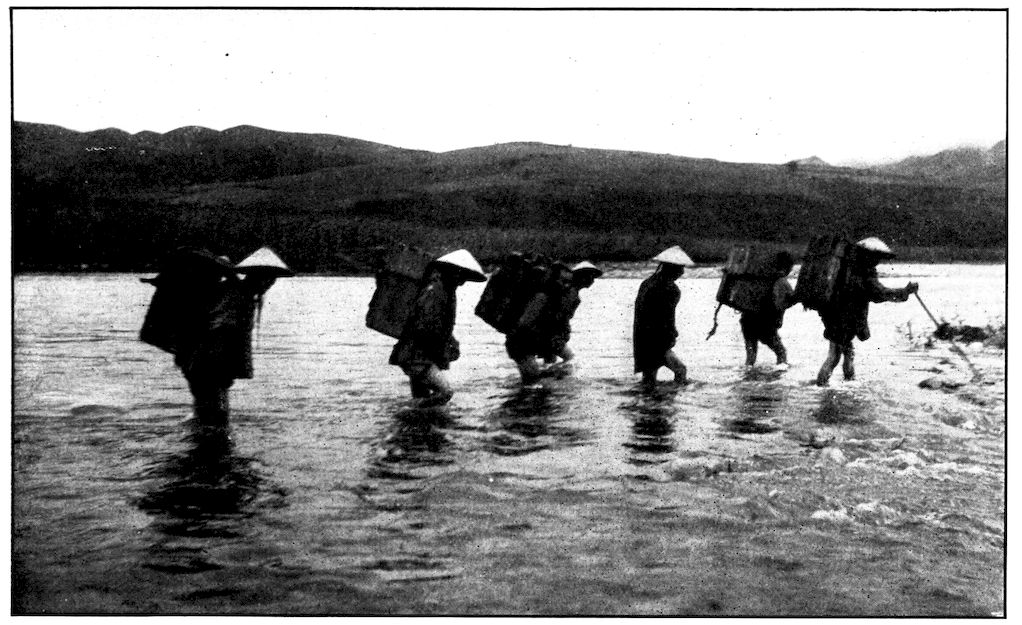
CHINESE COOLIES FORDING A MANCHURIAN STREAM SWOLLEN BY RAINS
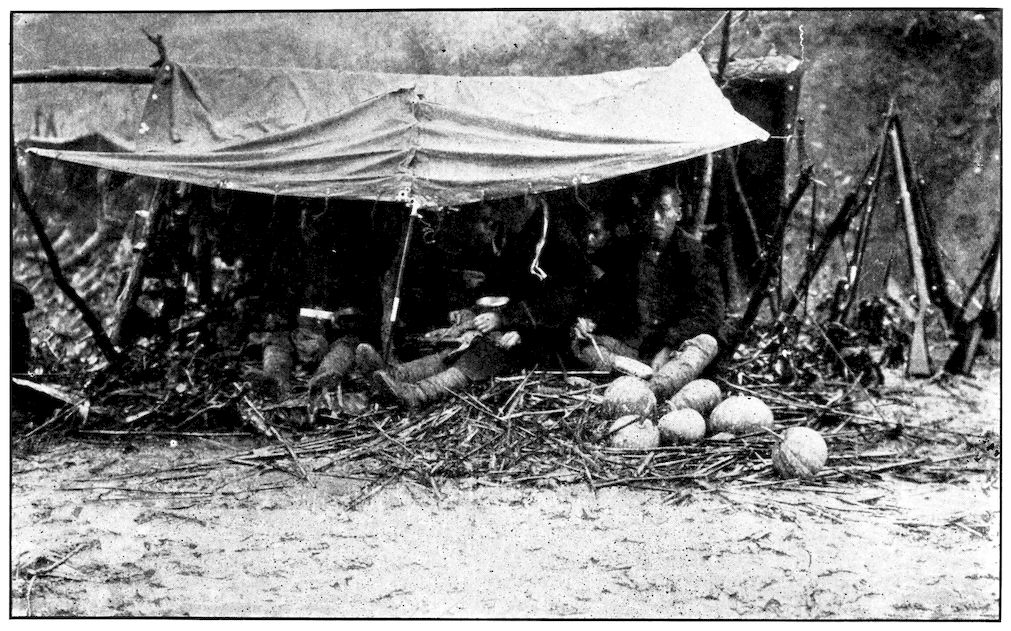
COOKING SUPPER UNDER DIFFICULTIES IN THE RAIN
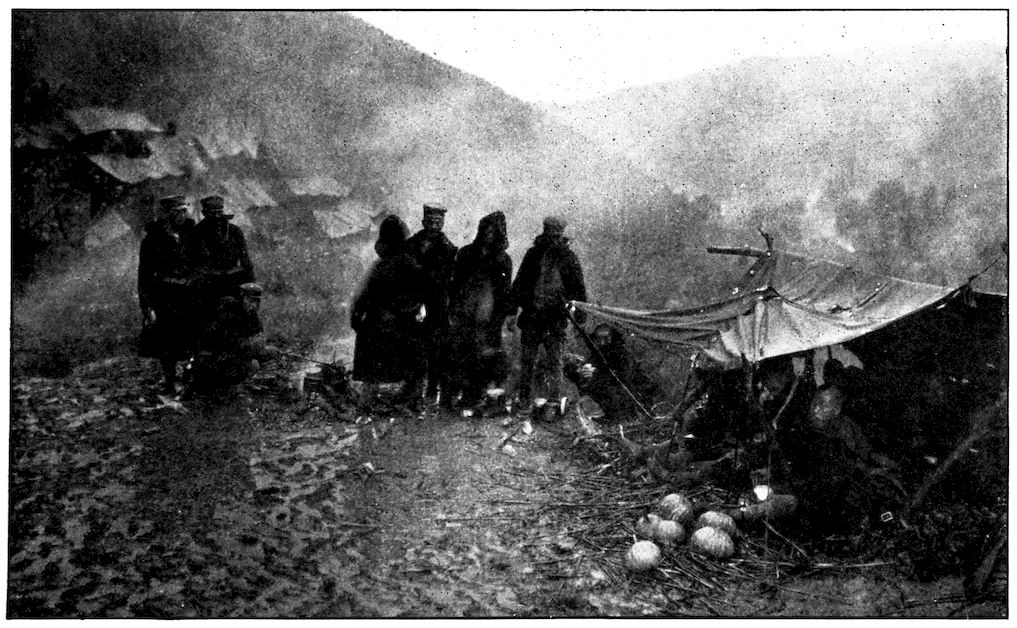
JAPANESE SOLDIERS EATING SUPPER UNDER A SHELTER TENT IN THE RAIN
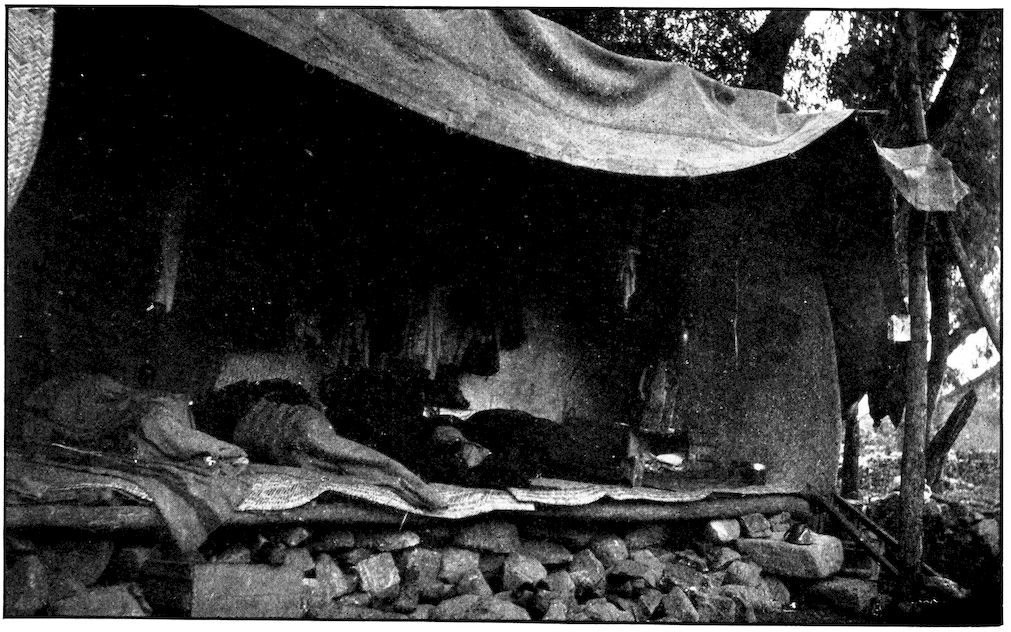
SHELTERED FROM THE RAIN AND A SAFE DISTANCE FROM THE GROUND
DIFFICULTIES OF CAMPAIGNING DURING THE RAINY SEASON IN MANCHURIA
127
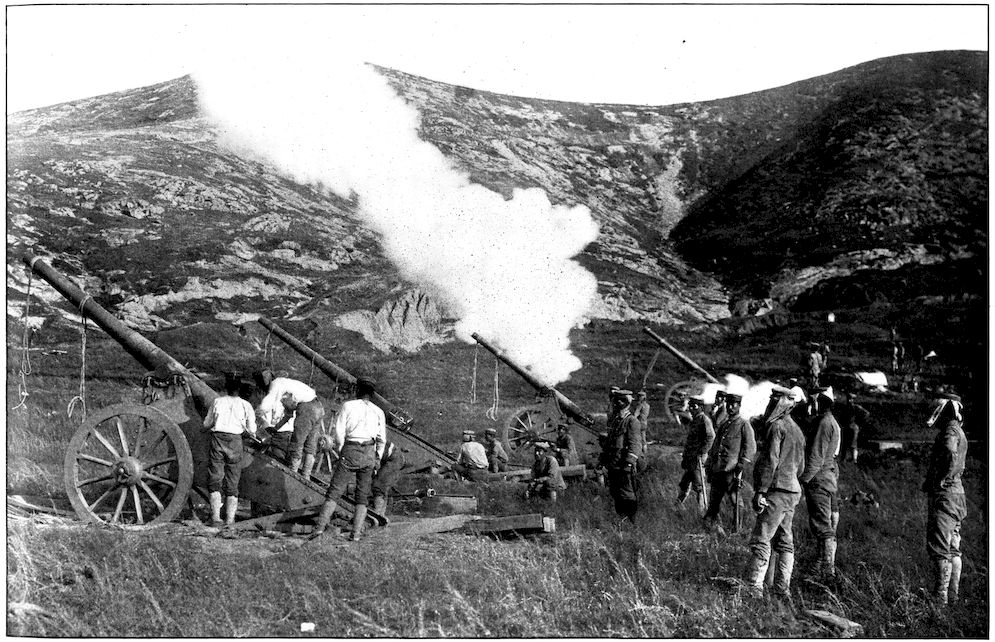
RUSSIAN GUNS CAPTURED AT NANSHAN USED BY THE JAPANESE AT SHUZAN-HO
128
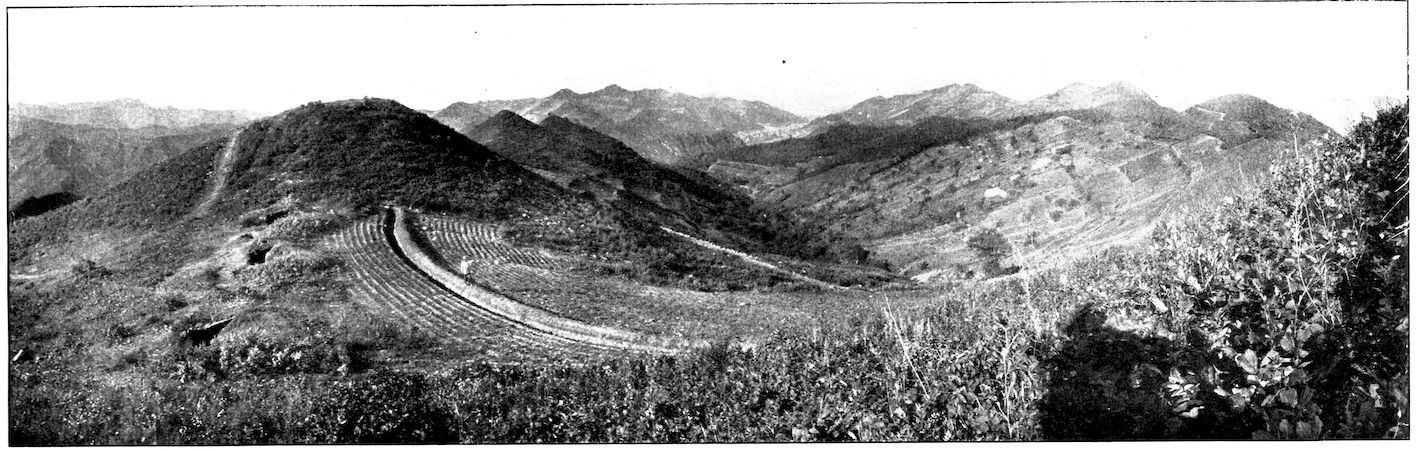
RUSSIAN BATTERY POSITION AT YUSHULING, WITH PROTECTING INFANTRY TRENCH CAPTURED BY THE JAPANESE
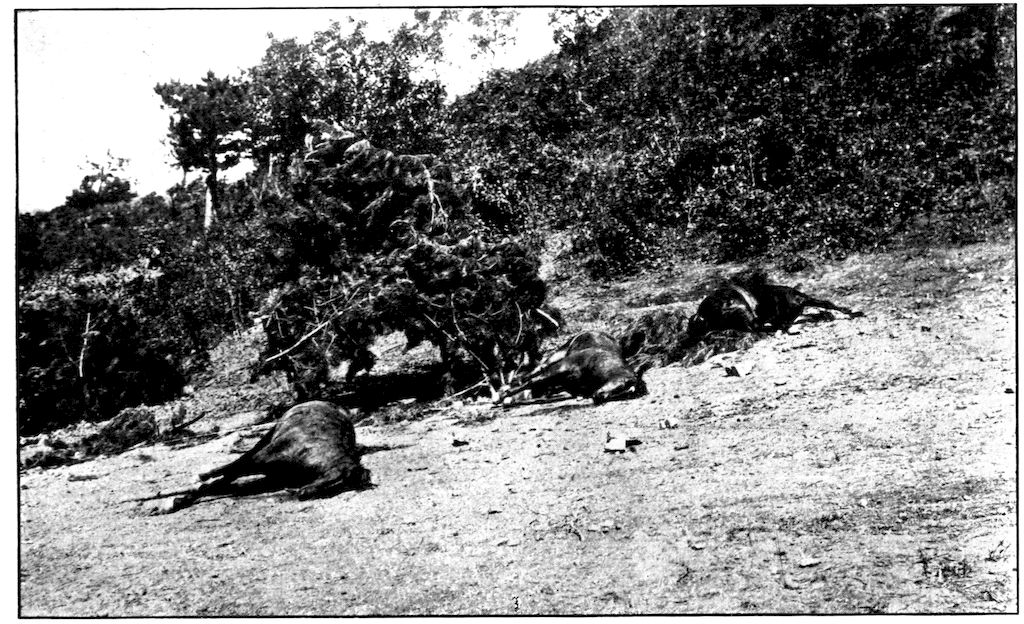
JAPANESE HORSES KILLED AT BATTERY POSITION NEAR TOWAN
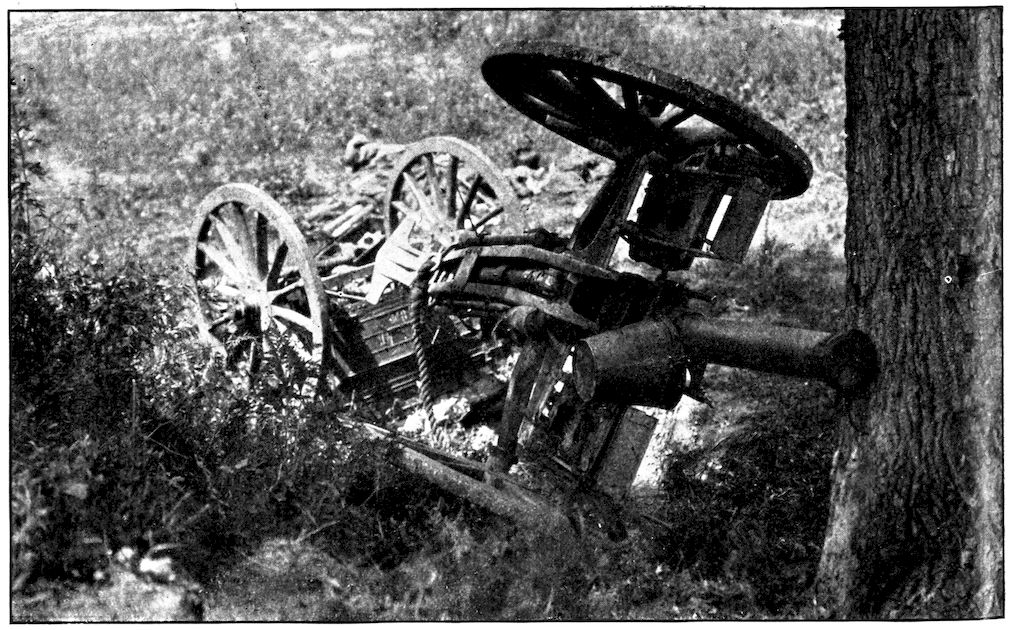
RUSSIAN GUN OVERTURNED AND ABANDONED IN RETREAT FROM TOWAN
ALONG THE LINE OF BATTLE IN THE MANCHURIAN PASSES SOUTH OF LIAO-YANG
129
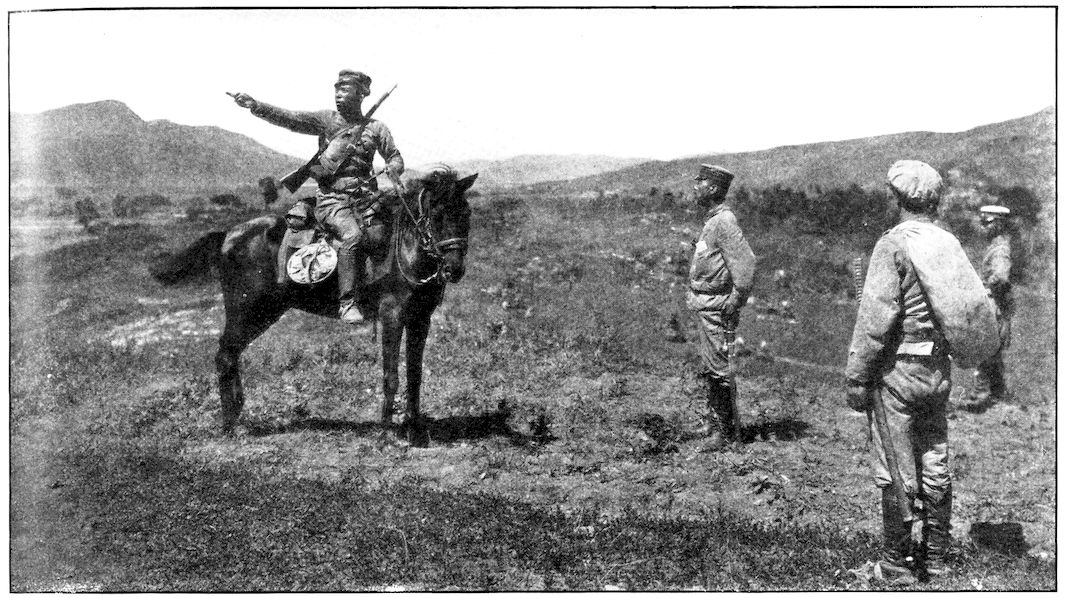
SCOUT BRINGING INFORMATION ABOUT THE ENEMY TO GENERAL OKASAKI
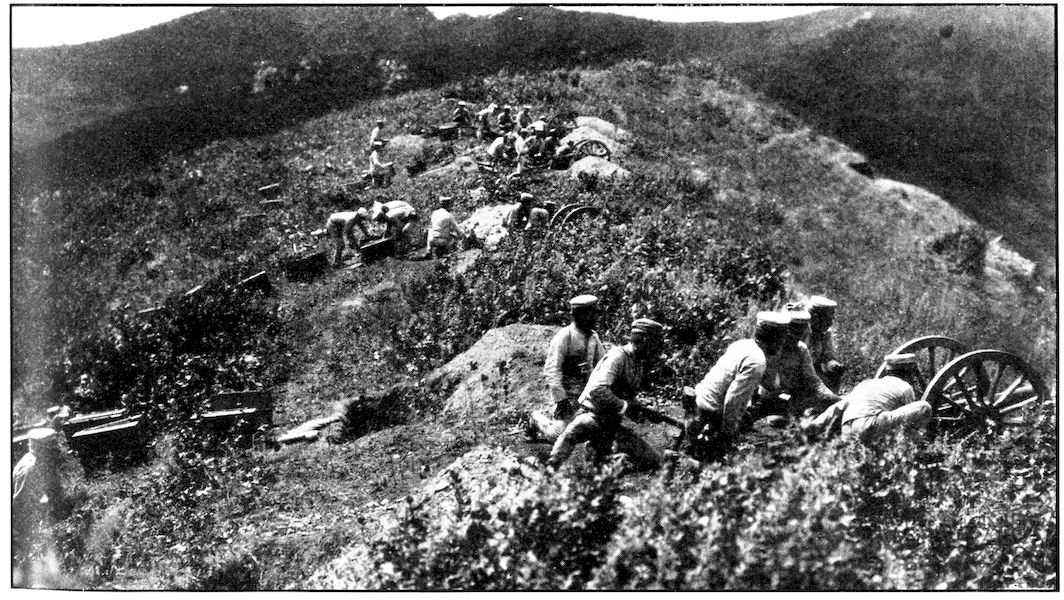
JAPANESE MOUNTAIN BATTERY IN ACTION NEAR LIAO-YANG
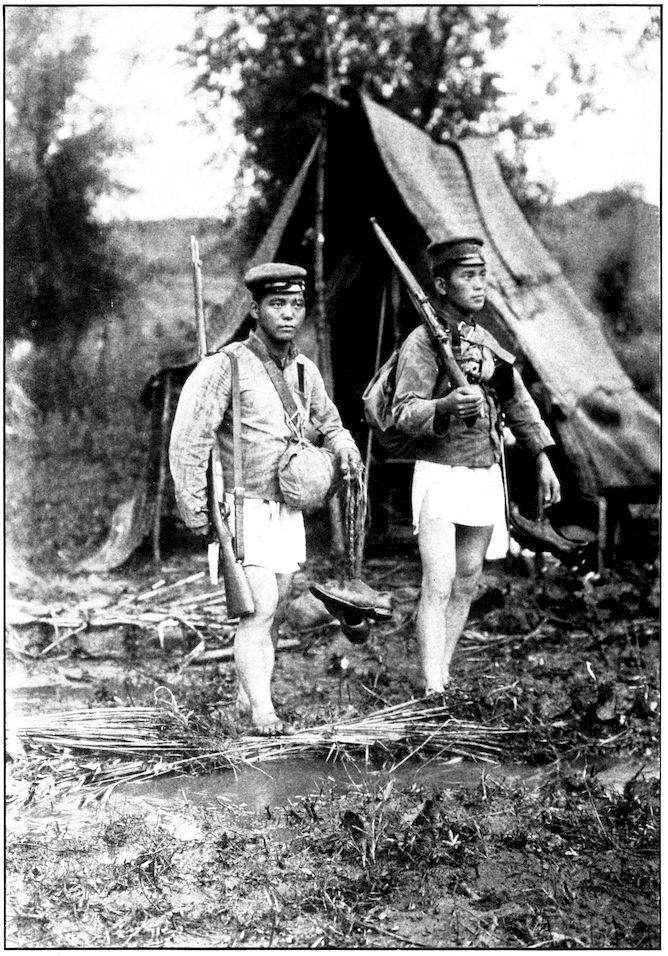
SOLDIERS MAKING THEMSELVES COMFORTABLE ON A HOT, WET DAY
PRESSING THE RUSSIANS CLOSE IN THE NEIGHBORHOOD OF LIAO-YANG
130
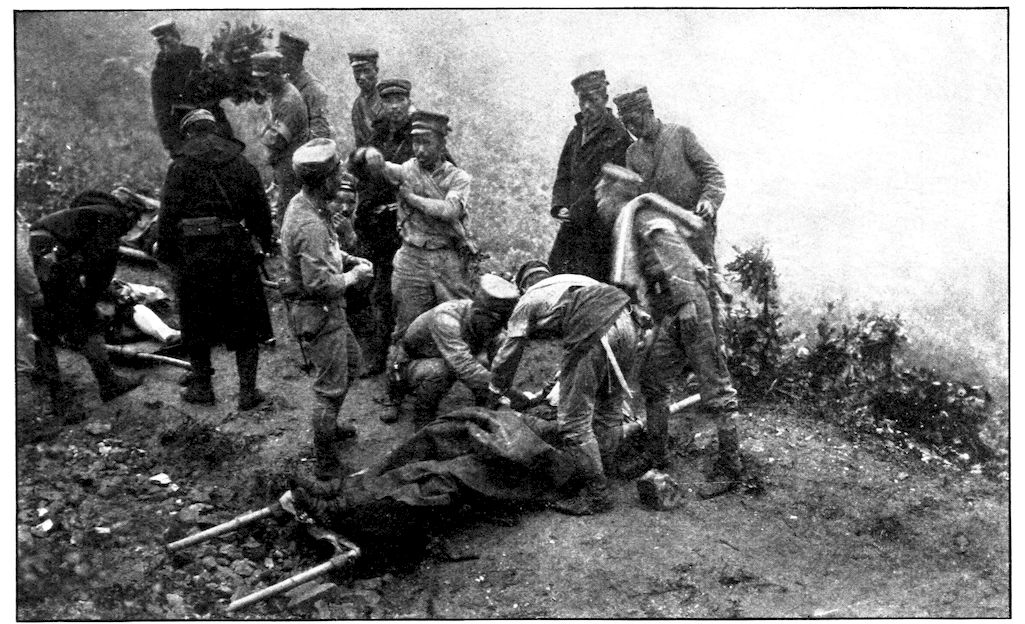
GATHERING THE WOUNDED RUSSIANS WHO HAD LAIN ALL NIGHT IN THE RAIN
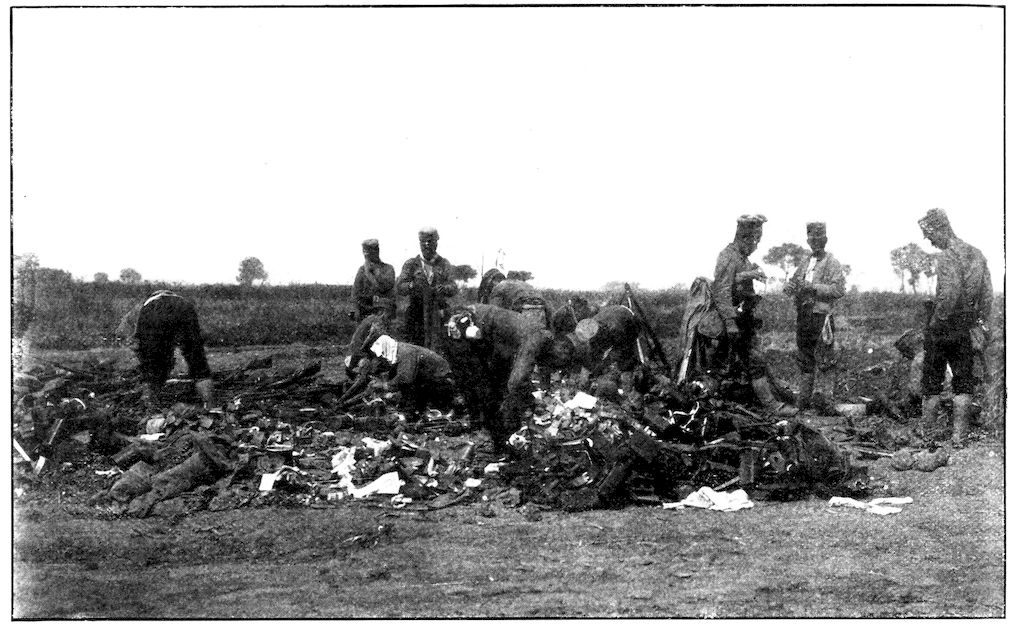
SOME OF THE SPOILS GATHERED IN JUST BEFORE THE CAPTURE OF LIAO-YANG
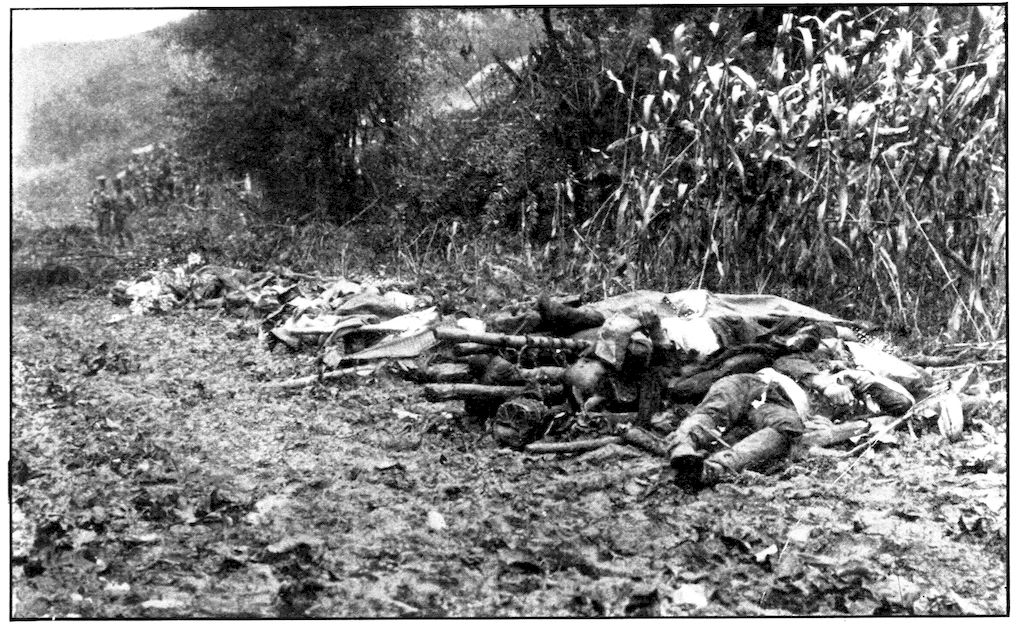
BODIES OF JAPANESE SOLDIERS READY FOR CREMATION
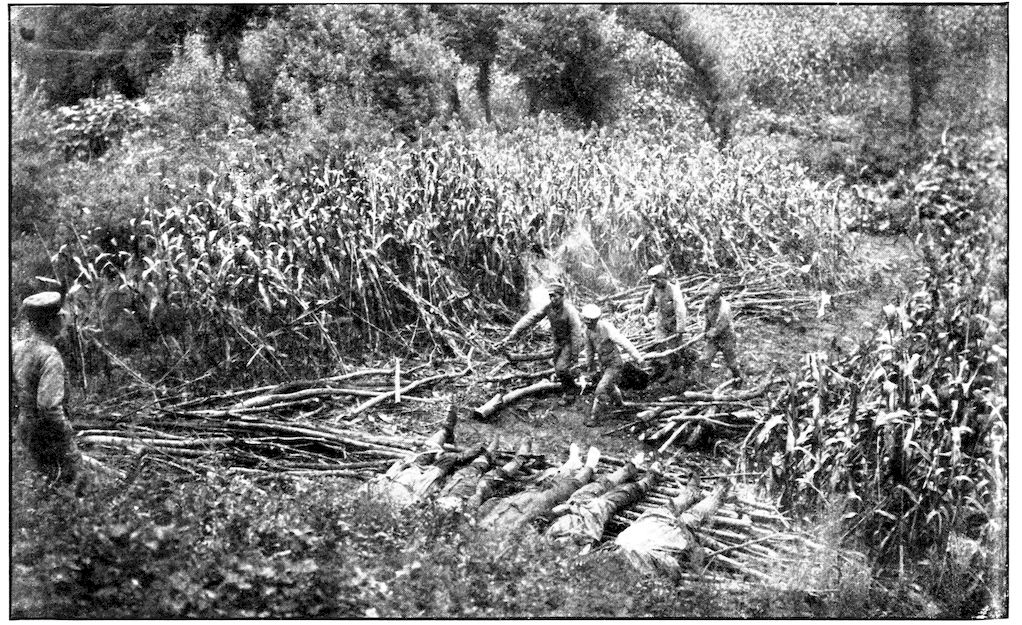
BURNING THE BODIES OF THE DEAD IN THE FIELDS NEAR LIAO-YANG
WITH THE JAPANESE ON AUGUST THIRTIETH CLOSE TO LIAO-YANG
131