Chapter V · THE RUSSIAN ADVANCE TO THE FRONT
Reading edition
The supreme difficulty under which Russia labored during the early months of the war was the enormous distance from her military base to the battle front. The only line of land communication between Russia and Manchuria was the single-track Siberian railroad, and when war began this line was broken by the ice-locked Lake Baikal. Russia had need of 300,000 men in Manchuria as soon as they could be rushed there, and with Lake Baikal frozen to the depth of nine feet, less than four thousand and more often not more than one thousand men could cross it in a day.
Lake Baikal, this weakest link of a very weak chain, is the largest body of fresh water in the Old World, except the Victoria Nyanza in Africa. It is nearly 15,000 square miles in extent, and therefore inferior only to Superior and Huron among the great American lakes. It is 600 versts long, with a width varying from 27 to 85 versts. It is 3,185 feet deep. The railroad was broken by the southern end of this lake, where it is about 40 miles wide. This is the gap that disastrously impairs the utility of the Trans-Siberian for the moving of troops and war supplies to the Manchurian and Korean frontier.
The lake begins to freeze in November, is completely ice-bound by the middle of December, remaining so for five months. The ice freezes to a thickness of nine feet, which would make sledge traffic perfect, were it not for the fact that wide fissures break its surface, which have a way of frequently closing up and piling the ice high into impassable windrows. These crevices have a width of three to six feet, and are often more than a verst in length, forming a serious impediment to progress on the ice and rendering next to impossible the marching of troops across the lake or the safe sledging of supplies. A thunderous crash, as of an explosion, marks the forming of the crevice, followed by a long, rolling reverberation. The rift instantly fills with water to the level of the ice, and is so agitated at the surface by currents or other forces that eight to fourteen days are required for it to freeze over, when the operation of cracking begins anew, and is repeated throughout the coldest portion of the winter.
The obvious solution to this difficulty was to build a railroad round the end of the lake, a detour of nearly 150 miles, and necessitating the construction of four tunnels. This was out of the question. A powerful ice-crusher, the “Baikal,” modeled after the ice-crushers successfully used in the Straits of Mackinac, had been built. She could break ice four feet thick, but on the nine-foot ice of the Russian inland sea she made no successful impression. The result was that a line of track had to be laid across the lake, and that before this was completed the troops had to be marched across the forty-mile stretch of wind-swept ice, while their supplies and baggage had to be dragged after them in sledges. Many of the men, wandering on to treacherous ice, were drowned; many were frost-bitten, and all suffered extremely from the arduous labor of the march and the bitter cold.
66
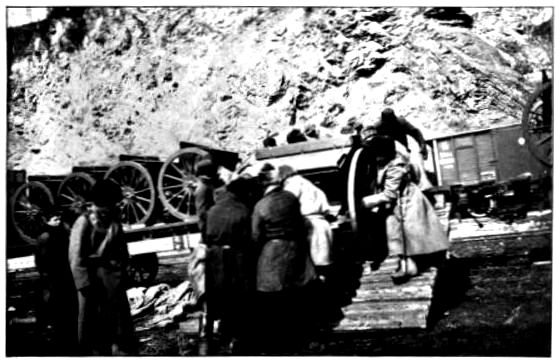
UNLOADING ARMY TRANSPORT WAGONS AT THE LAKE
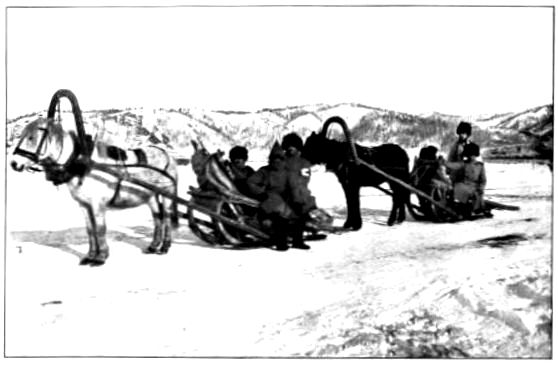
OFFICERS CROSSING THE ICE IN RUSSIAN SLEDGES
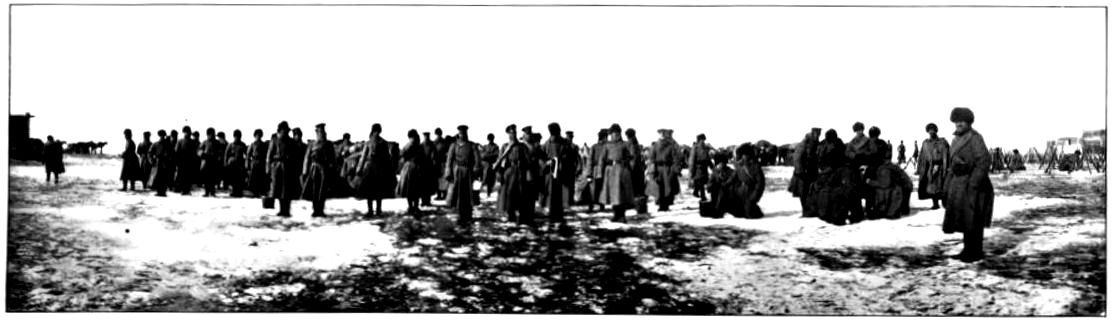
DETACHMENT OF INFANTRY STOPPING FOR A MEAL OF HOT SOUP WHILE ON THE MARCH
RUSSIANS CROSSING LAKE BAIKAL IN MIDWINTER
67
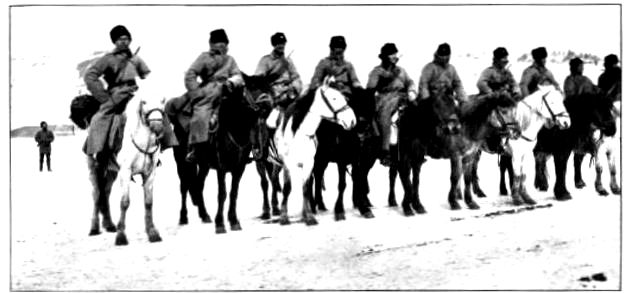
RUSSIAN CAVALRY CROSSING LAKE BAIKAL
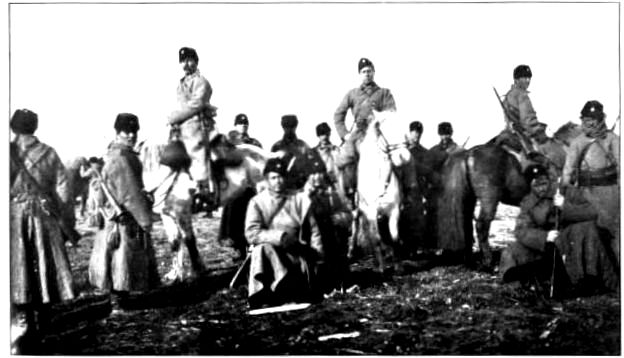
RUSSIAN CAVALRY READY TO CROSS THE LAKE
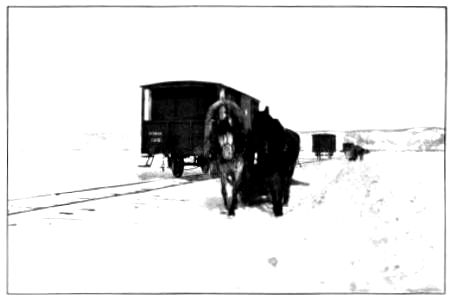
DRAGGING FREIGHT CARS ACROSS THE ICE
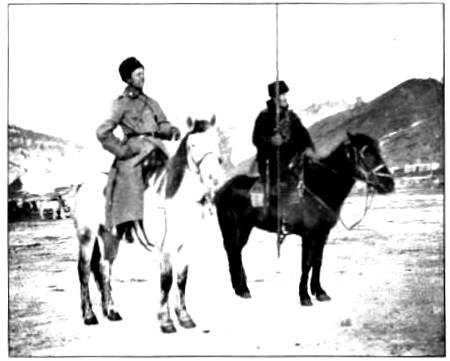
MOUNTED COSSACKS AT LAKE BAIKAL
WITH THE RUSSIAN FORCES ON THEIR WAY TO THE FRONT
68
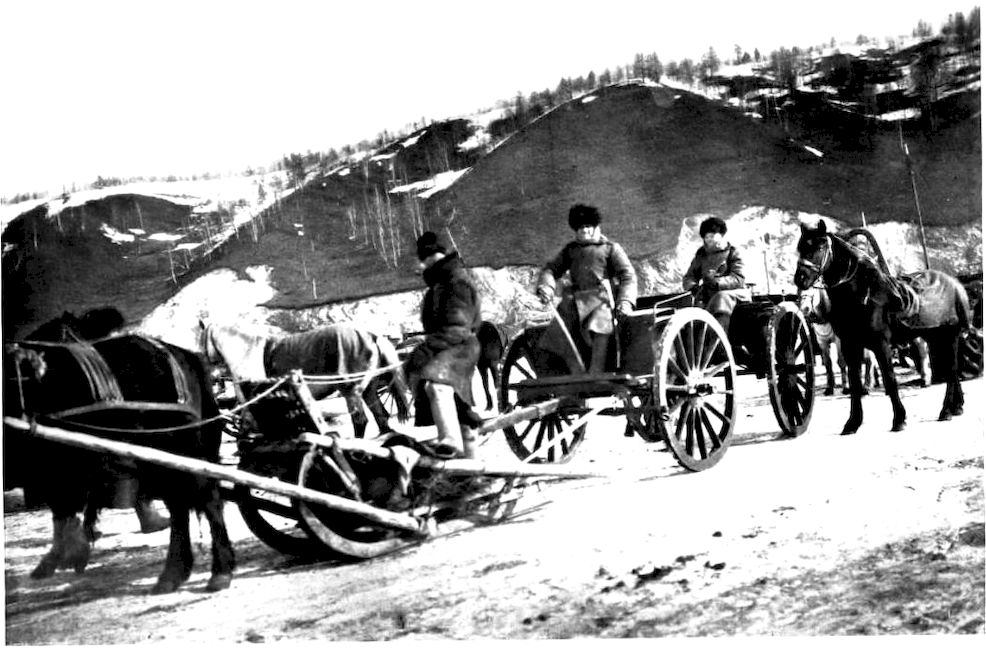
ARTILLERY CAISSONS AND SLEDGES ABOUT TO CROSS LAKE BAIKAL
69
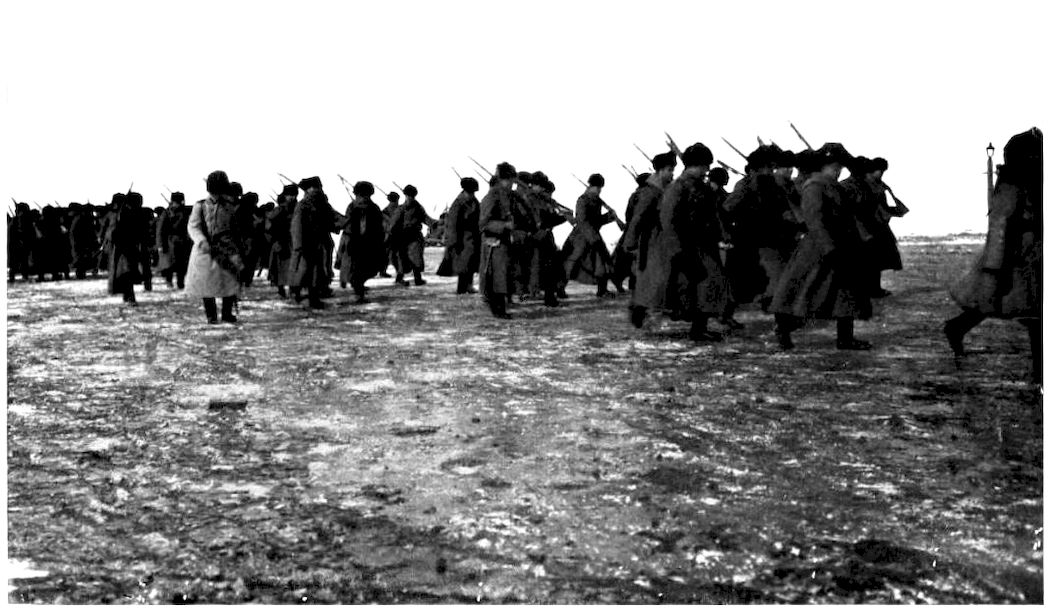
RUSSIAN SOLDIERS MARCHING ACROSS FROZEN LAKE BAIKAL
70
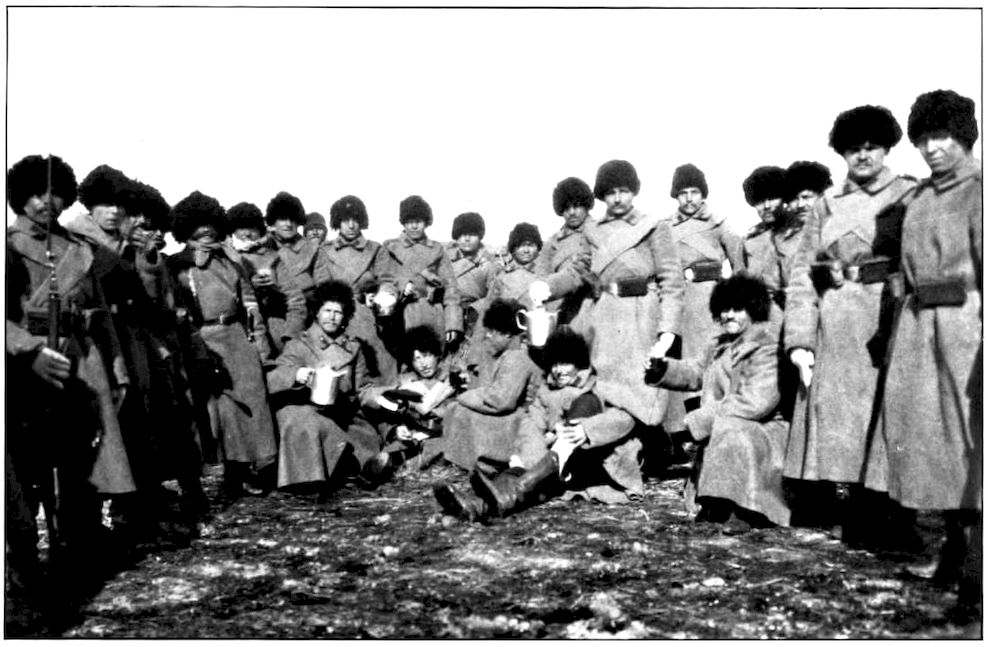
RUSSIAN INFANTRY WARMING UP WITH HOT TEA BEFORE STARTING ACROSS LAKE BAIKAL
71
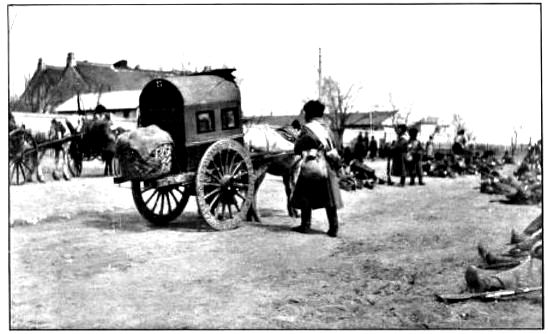
A “PEKING CAR,” THE MOST LUXURIOUS METHOD OF TRAVELING
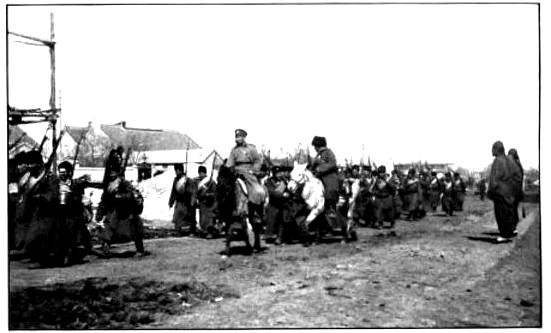
TYPICAL RUSSIAN INFANTRYMEN IN HEAVY MARCHING ORDER
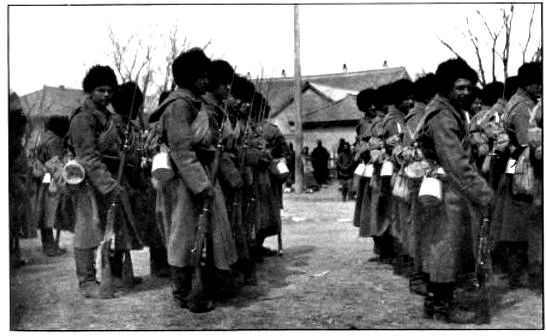
DETACHMENT OF RUSSIAN INFANTRY ENTERING NEWCHWANG
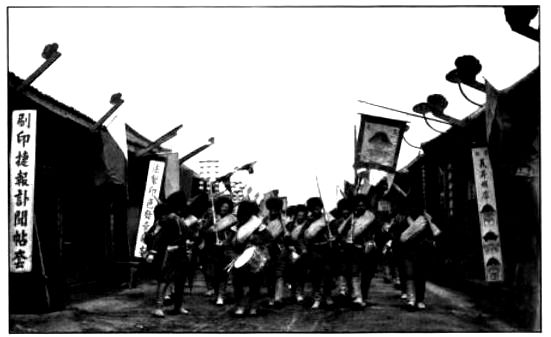
RUSSIAN SOLDIERS SWINGING THROUGH THE STREETS OF MUKDEN
THE RUSSIAN ADVANCE TO THE FRONT
72
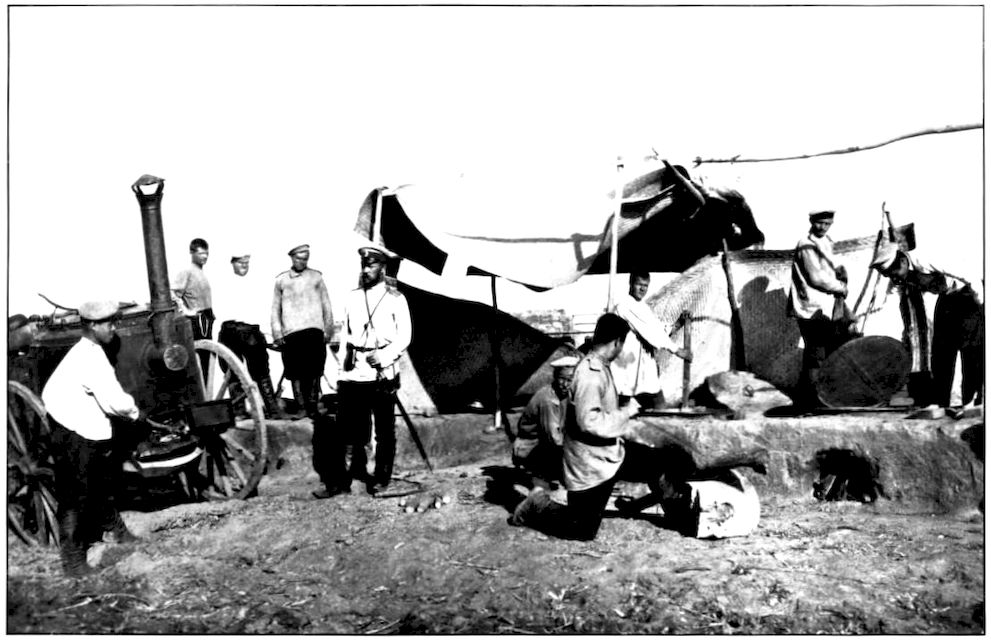
THE TRAVELING SOUP KITCHEN AND SOUP-KETTLE OVENS USED BY THE RUSSIANS
73
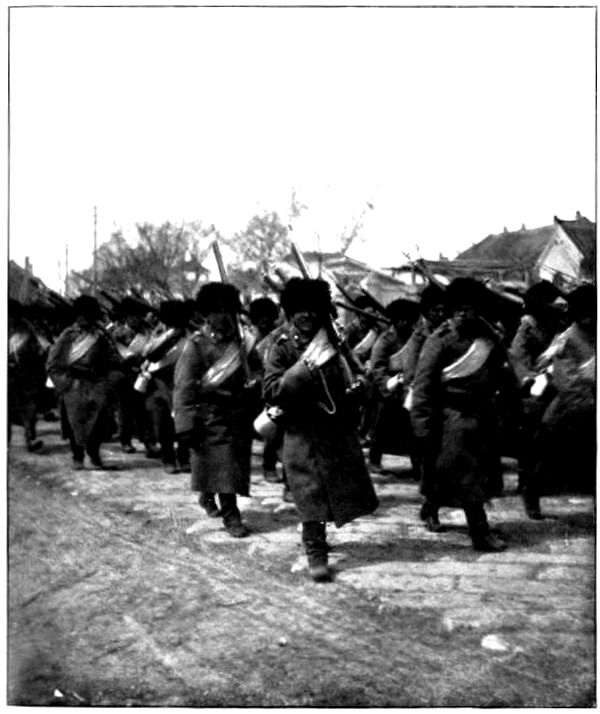
THE ENTRY OF THE RUSSIAN FORCES INTO NEWCHWANG
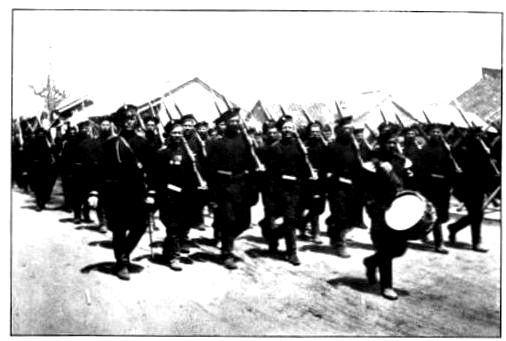
RUSSIAN INFANTRY, IN SUMMER UNIFORMS, MARCHING THROUGH LIAO-YANG
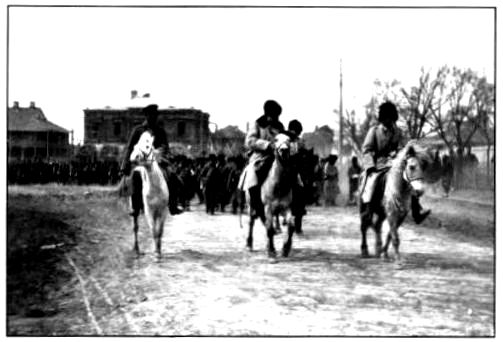
RUSSIAN TROOPS ENTERING YINKOW EARLY IN APRIL
WITH THE RUSSIANS DURING THE EARLY ADVANCE TO THE FRONT
74
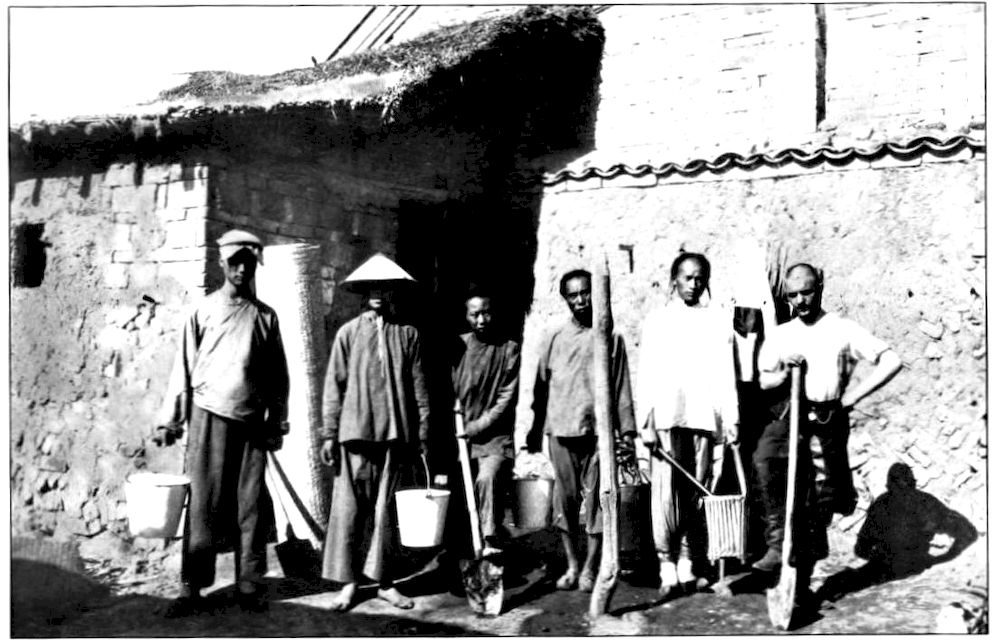
CHINESE COOLIES WITH RUSSIAN OVERSEER READY FOR WORK
75
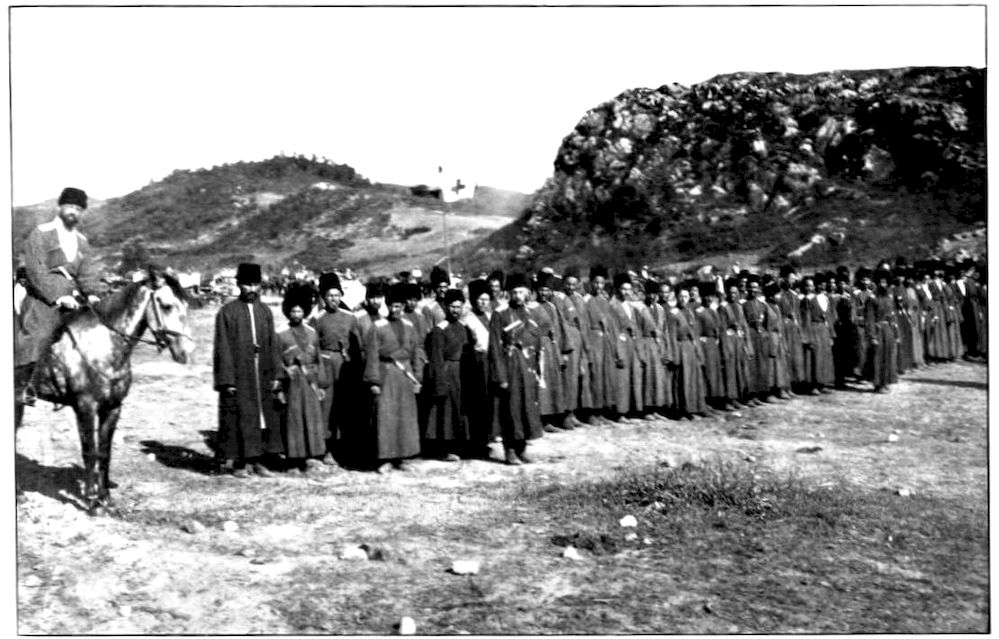
SQUAD OF COSSACKS DISMOUNTED AND LINED UP FOR INSPECTION
76
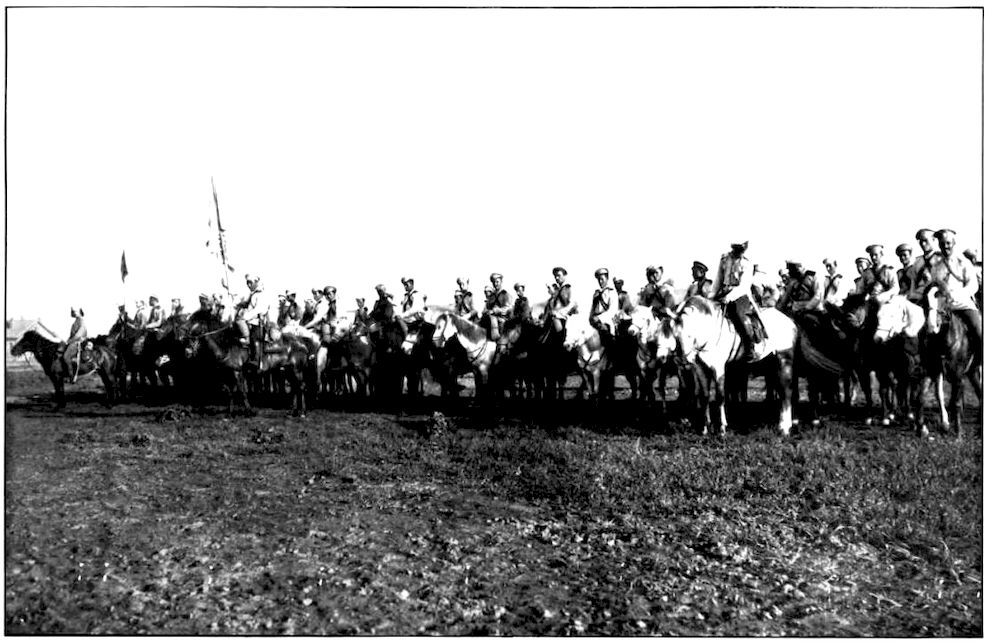
GENERAL HERSCHELMANN’S DIVISION OF RUSSIAN CAVALRY AT ANTUNG
77
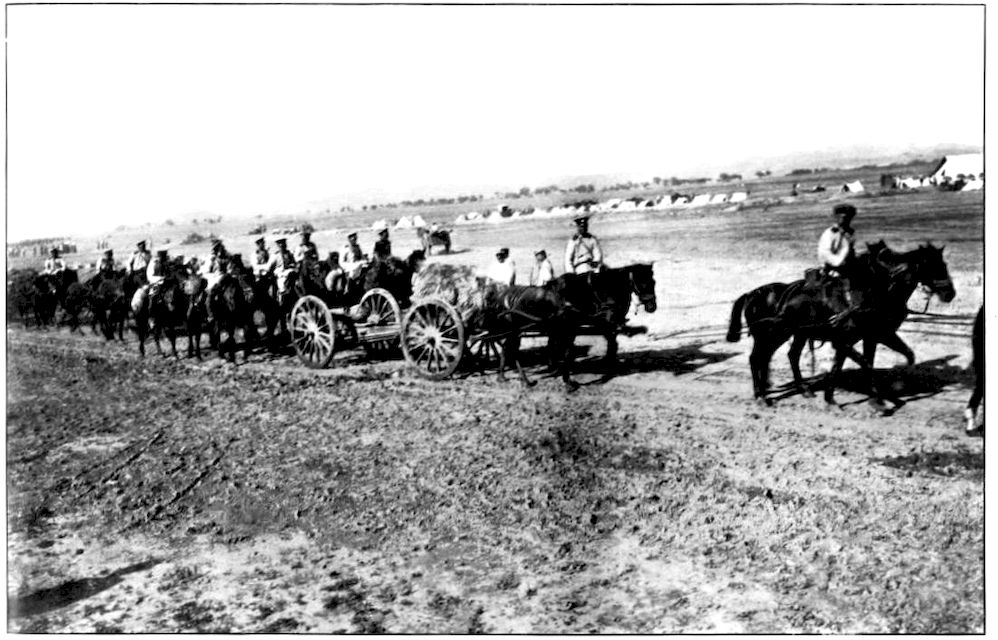
RUSSIAN ARTILLERY ADVANCING TOWARD THE YALU
78
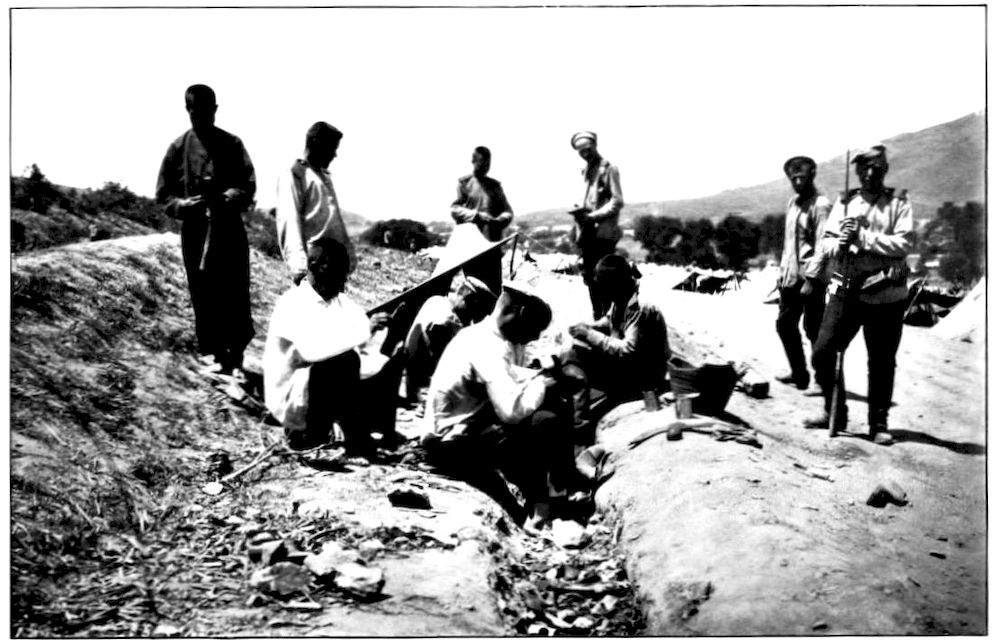
RUSSIAN COBBLERS AT WORK IN THE FIELD ON SOLDIERS’ BOOTS
79
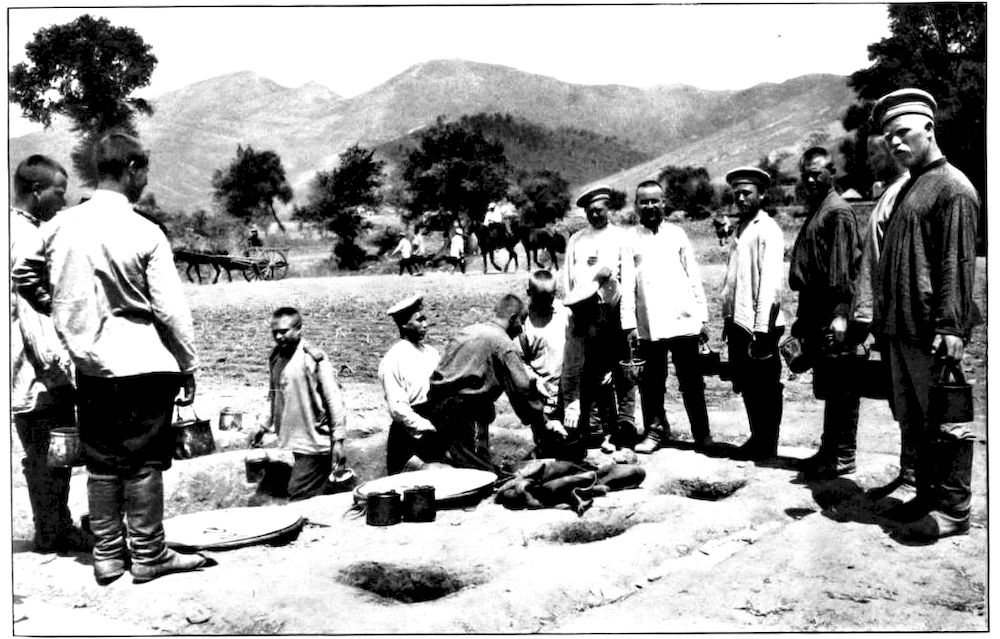
DINNER TIME WITH THE NINETEENTH EAST SIBERIAN RIFLE CORPS
80
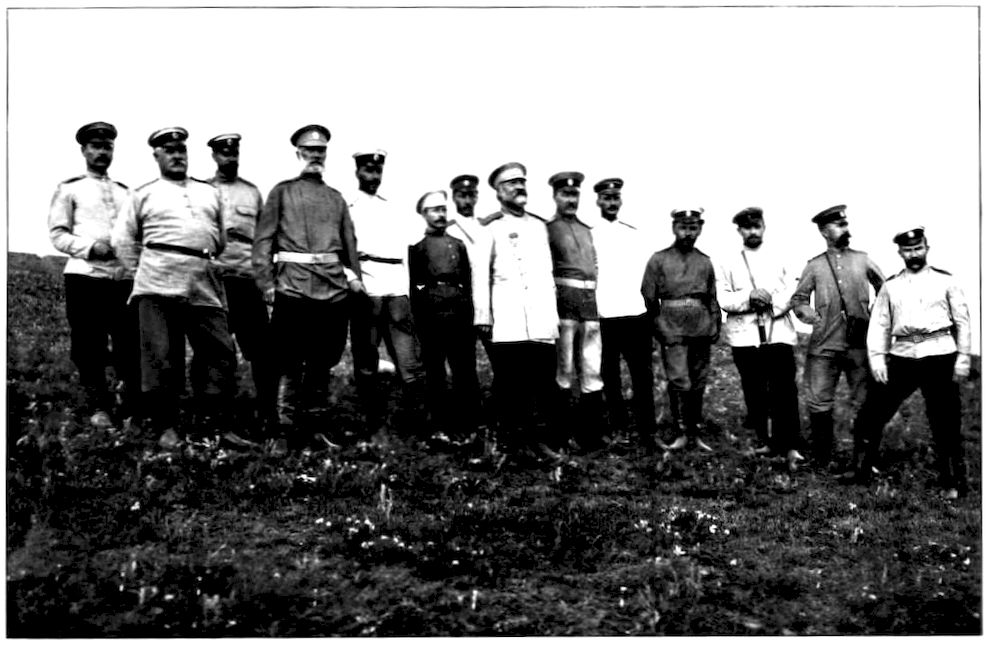
GENERAL SASSULITCH AND STAFF IN COMMAND AT THE BATTLE OF THE YALU
81