Chapter XI · THE FIGHTING ALONG THE SHA-HO
Reading edition
The Japanese armies occupied Liao-Yang on September 4, and on September 8 the Russians announced that their entire forces had safely reached Mukden. For a fortnight or so the two vast armies paused for breath, while far to the southward the bombardment of Port Arthur continued, and thousands of miles to the westward Russia’s Baltic fleet sailed from Kronstadt for the Far East. During the latter part of September there was desultory fighting along a considerable battle front, and when General Gripenberg took command of the second Russian army in Manchuria, General Kuropatkin began, the first week in October, an offensive movement against his conquerors.
Whether this advance was his own idea or whether it was prematurely ordered from St. Petersburg was not positively known, but it began with an oratorical proclamation to the army that the time had come for Russia to take the initiative and force Japan to do her bidding. Kuropatkin’s force numbered nearly 300,000 men, his artillery was said to be superior to the Japanese, and it was plain that the fight was to be on as vast if not a vaster scale than that at Liao-Yang. For a time there were a few slight Russian successes, and after sharp fighting Kuropatkin succeeded in capturing Bentziaputze, about half-way between Liao-Yang and Mukden and on the Japanese right. The offensive movement was directed along the whole Japanese line, extending about thirty miles from Bentziaputze westward to the Sha-Ho. For nearly a fortnight fierce fighting continued, a test of endurance on both sides, until the Russians were finally obliged to retreat, leaving behind many guns and having lost, it was estimated, some sixty thousand men. The Japanese losses were about twenty thousand. Desultory engagements continued through October and November, in the midst of heavy rains, until the cold set in in earnest, and both armies went into winter quarters.
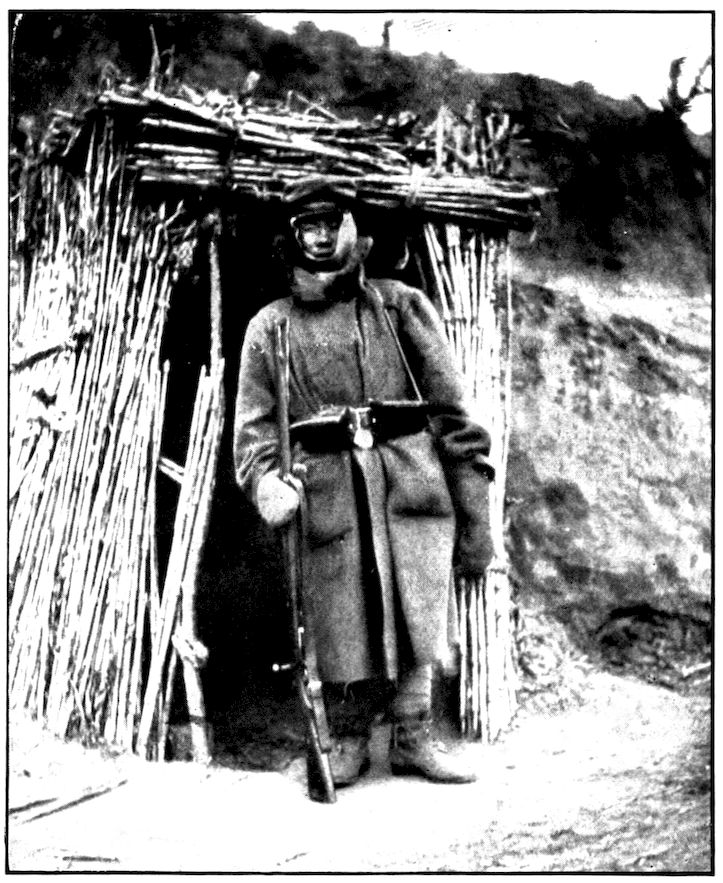
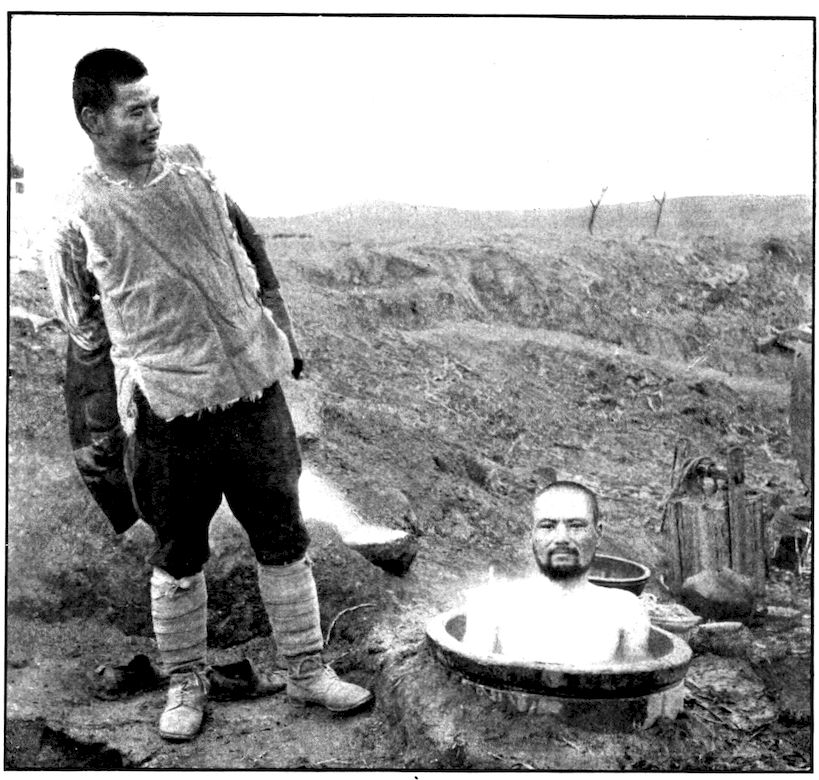
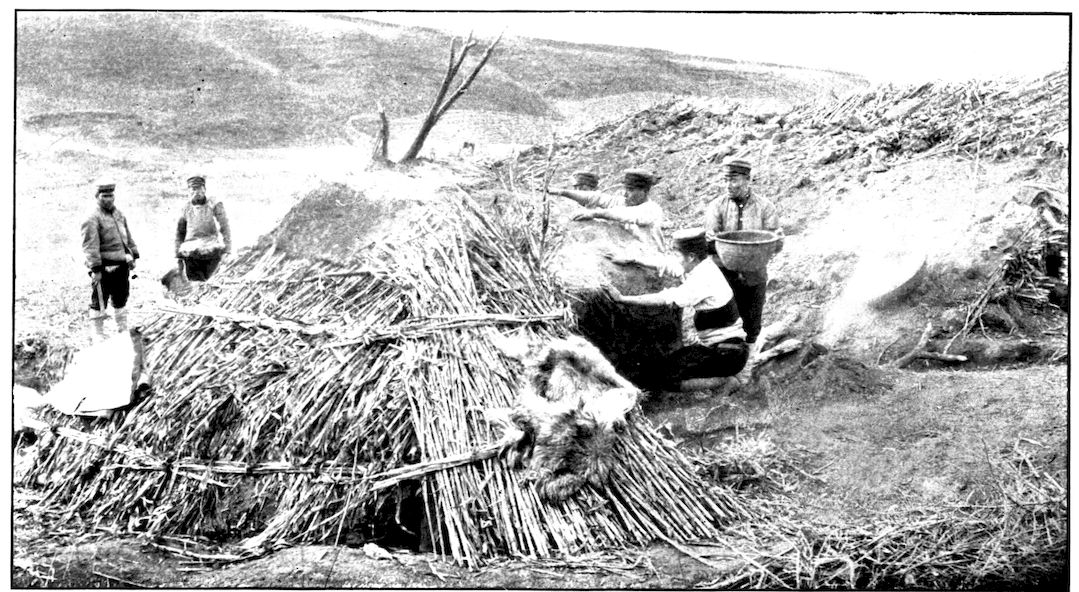
In zero weather the two armies faced each other, burrowing underground in their dugouts, in many places so close to each other that the sentries could almost call one to another. The time was spent in target practice, in chopping up wood to be used for building and for making charcoal, and in drilling the recruits who were sent up to refill the shattered regiments. The quarters in which the armies found shelter were dugouts roofed over with logs, kowliang, and earth. That same attention to detail which was characteristic of the Japanese army during the campaign was as noticeable now that they were idle. There were even hot baths for the soldiers. Earthenware jars were sunk in the ground much like the Russian soup kettles. Water was heated in these and baths could be taken as in so many vertical bathtubs. During the lull in the fighting there was a celebration in honor of the successes on the Sha-Ho at which there was a target-shoot between the military attaches. Meanwhile the Baltic fleet was pursuing its slow journey to the Orient, and the army of General Nogi was closing-in on Port Arthur.
202
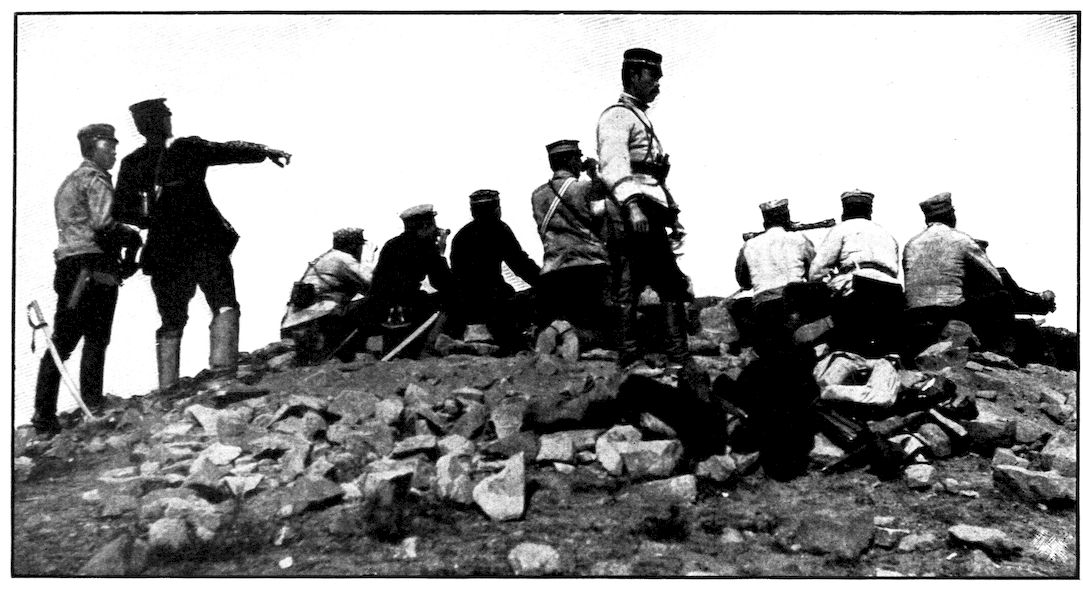
STAFF OF THE SECOND DIVISION AT THE BATTLE OF THE SHA-HO
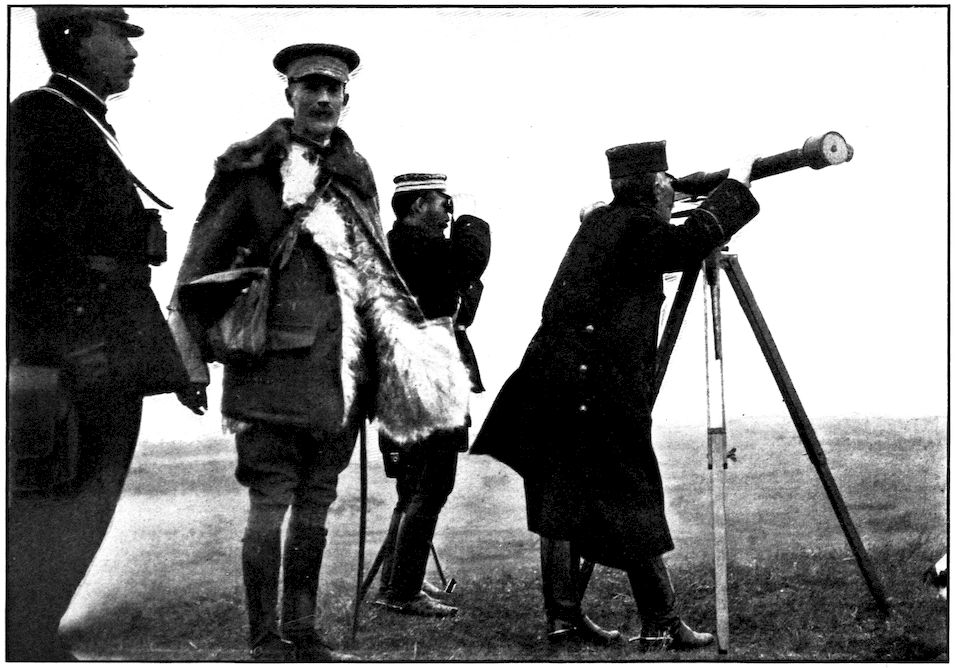
GENERAL SIR IAN HAMILTON, BRITISH ATTACHÉ, WITH GENERAL KUROKI
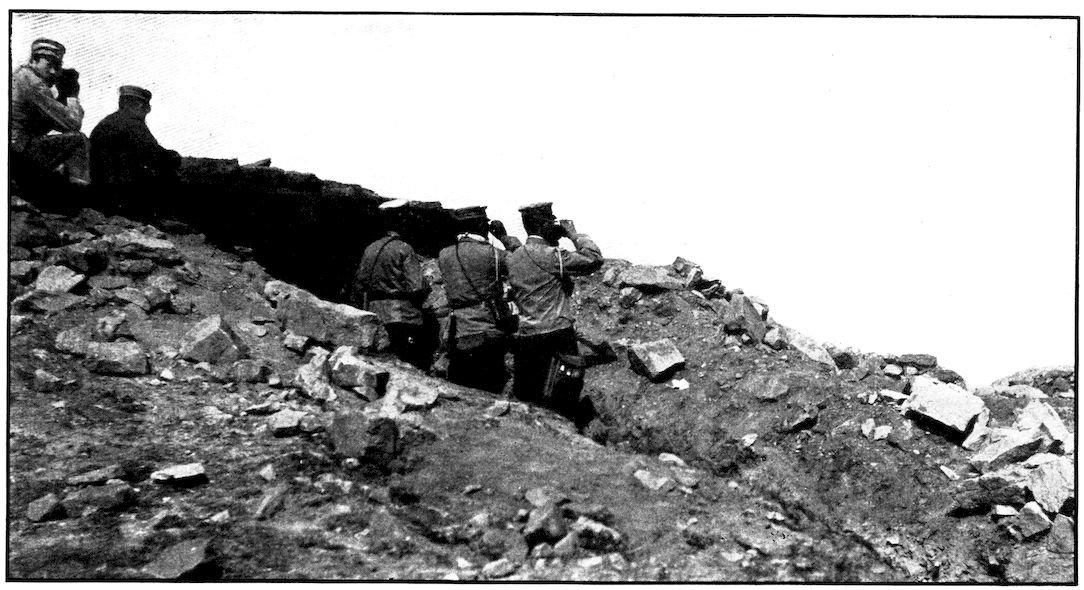
GENERAL NISHIJIMA AND STAFF VIEWING THE FIGHT FROM A BOMB-PROOF
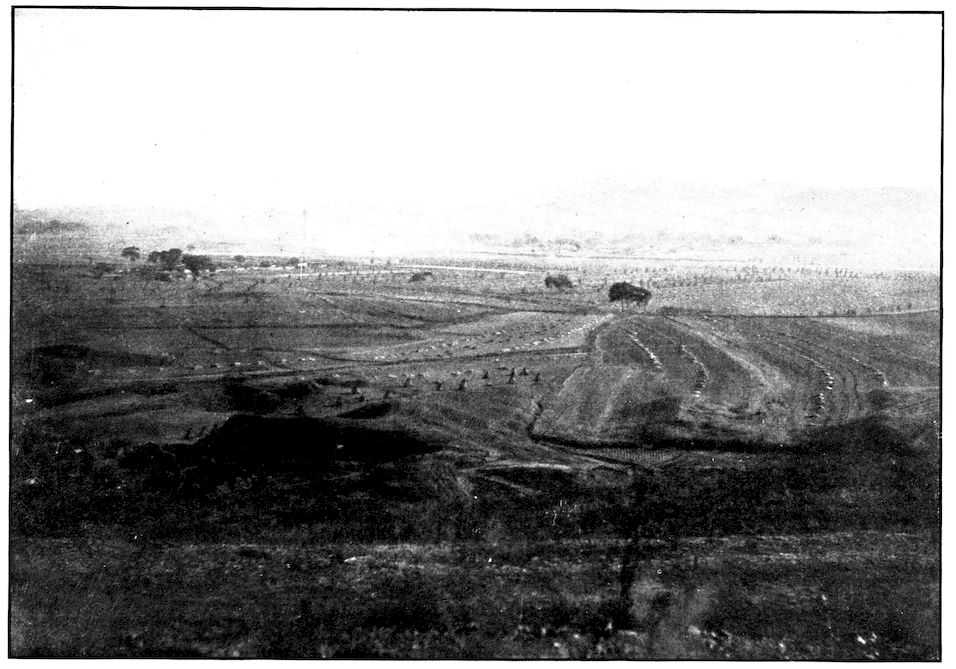
RUSSIANS SHELLING VILLAGE OF CHONG-JU ON OCTOBER TENTH
SCENES DURING THE FIGHTING EARLY IN OCTOBER IN THE NEIGHBORHOOD OF THE SHA-HO
203
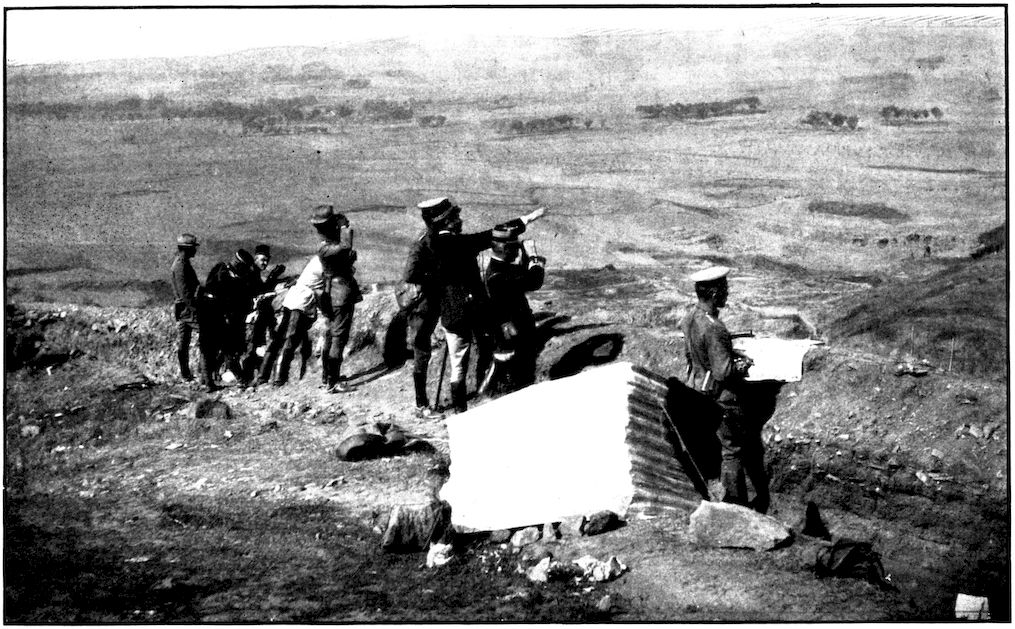
ATTACHÉS WATCHING THE FIGHT FROM POSITION NEAR THE YENTAI COAL MINES
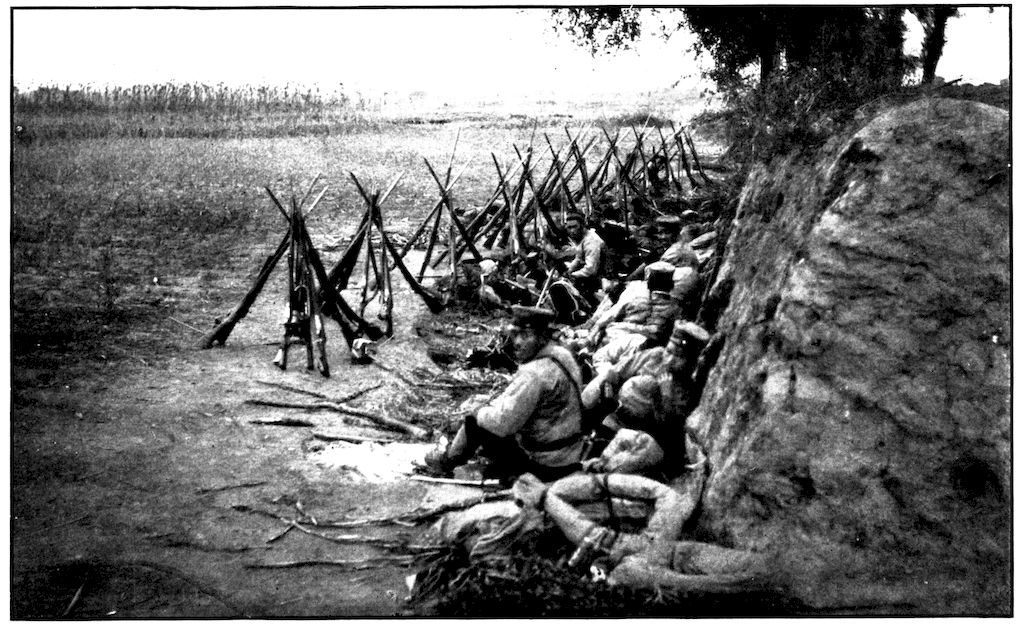
RESERVES UNDER FIRE SHELTERED BY AN EMBANKMENT
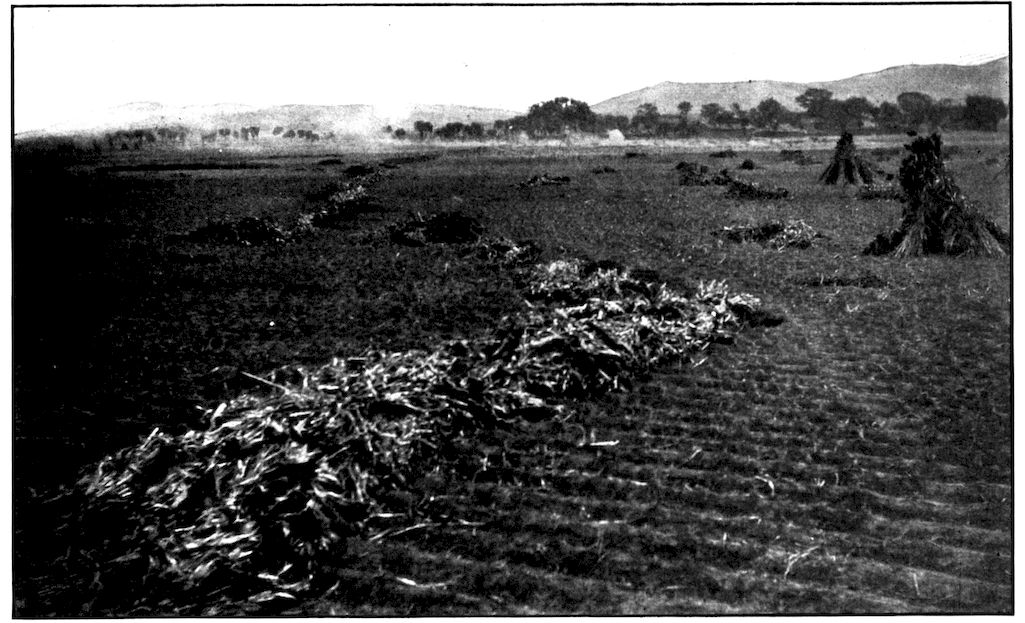
SHELLS SWEEPING A KOWLIANG FIELD—“NO TRESPASSING HERE!”
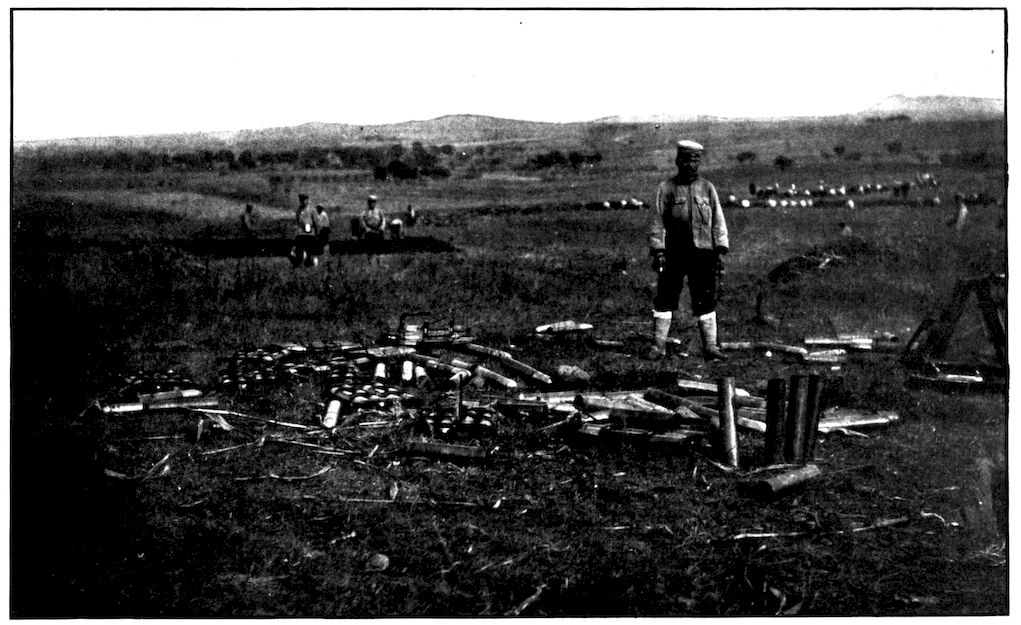
EMPTY SHELL CASES LEFT AT A BATTERY POSITION AFTER THE ACTION
CLOSE TO THE FIRING LINE DURING THE ENGAGEMENT NEAR THE YENTAI COAL MINES
204
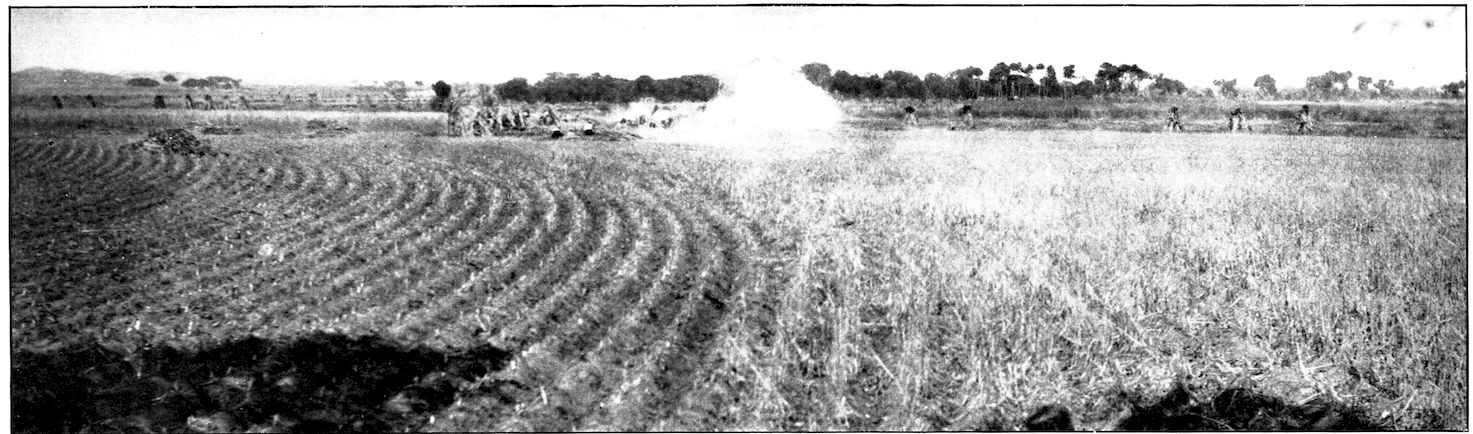
RUSSIAN SHELLS BURSTING CLOSE TO JAPANESE BATTERY DURING THE SHA-HO FIGHT
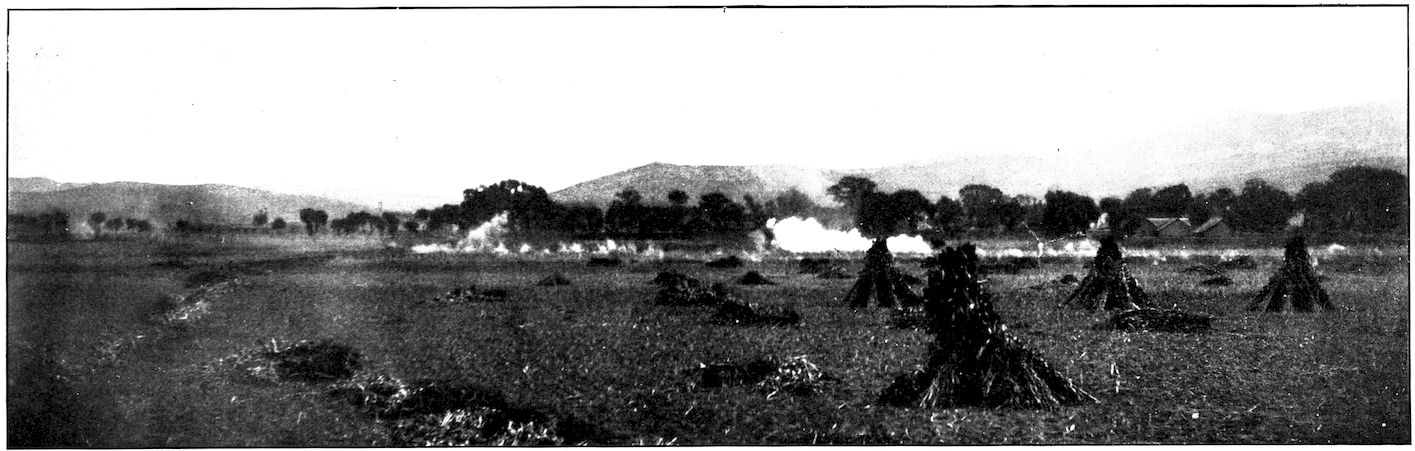
A REMARKABLE PHOTOGRAPH SHOWING SHRAPNEL SHELLS BURSTING AND SWEEPING ACROSS A FIELD
Of these two unusual close-range photographs the lower one shows how shrapnel looks when it bursts properly. The thick white smoke is one bursting shell, and the little puffs of smoke to the right are the 250 or so shrapnel bullets zipping along the ground. Those to the left are from another shell. The photographs were taken at great personal risk by Collier’s photographer, James H. Hare
205
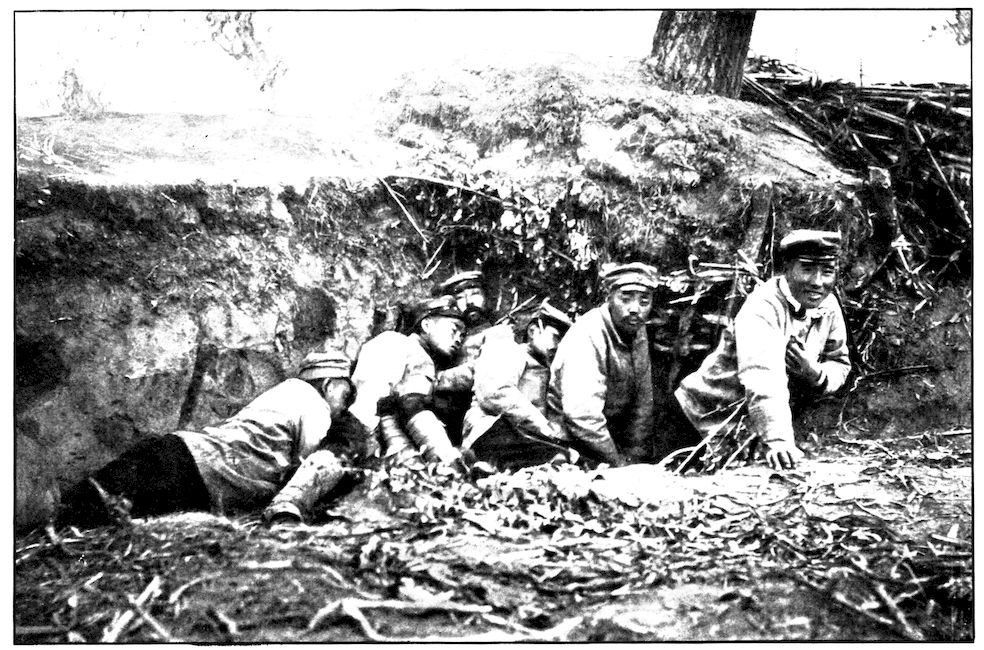
EXHAUSTED ENGINEERS SLEEPING UNDER FIRE DURING THE SHA-HO FIGHT
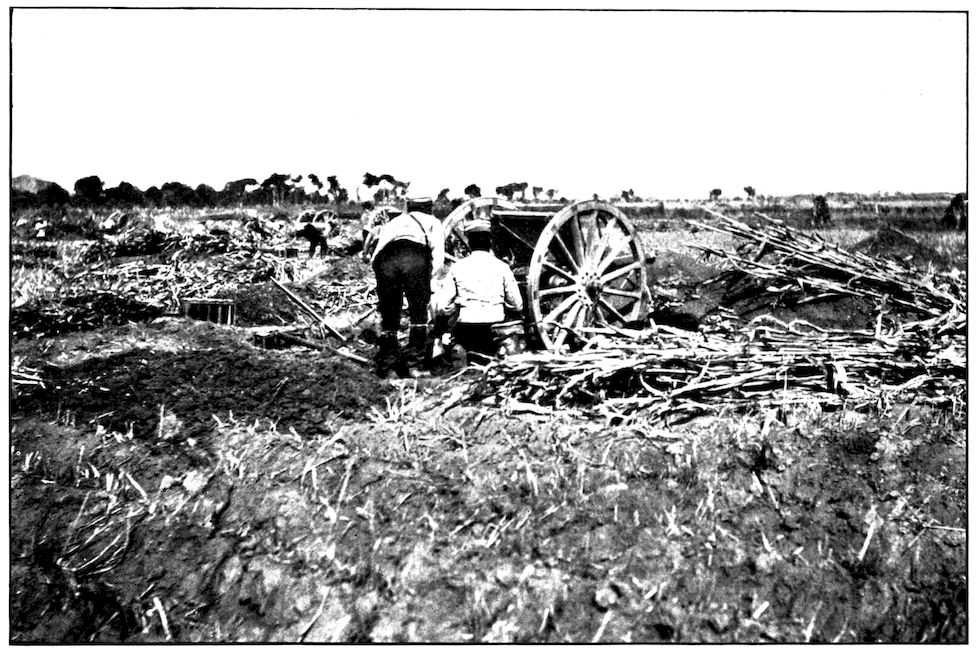
JAPANESE BATTERY PEPPERING THE RUSSIANS ACROSS THE FIELDS
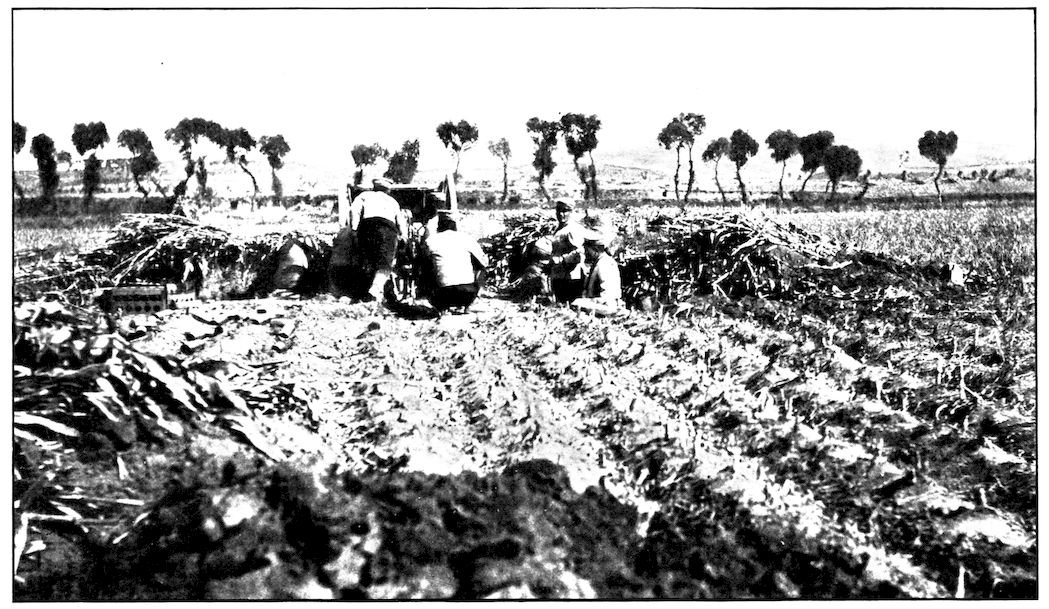
JAPANESE BATTERY IN ACTION NEAR CHONG-JU
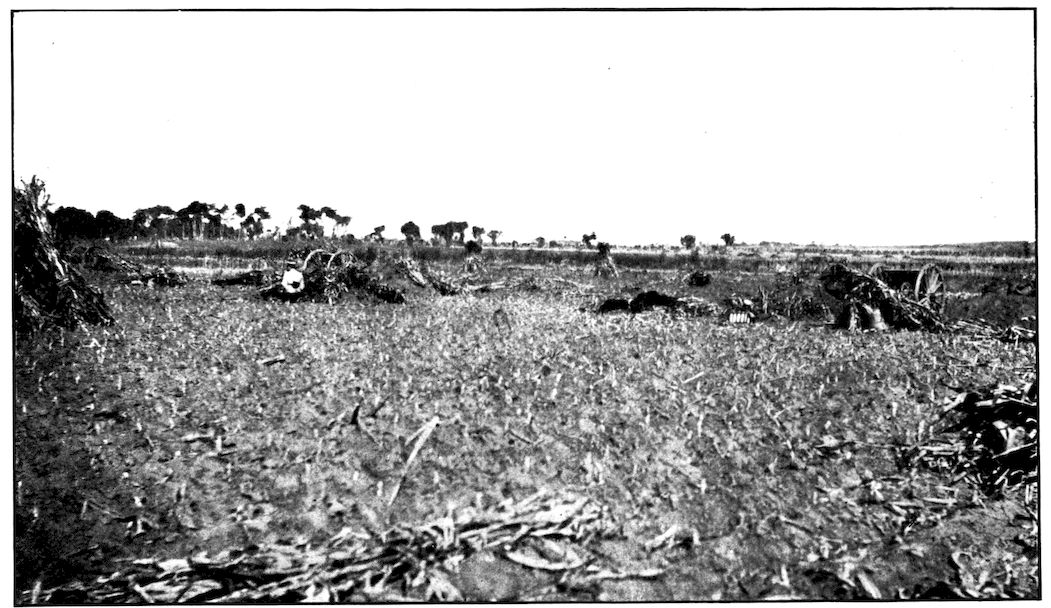
IN THE KOWLIANG FIELDS WITH A JAPANESE BATTERY
WITH THE JAPANESE ON OCTOBER TENTH AT THE SHA-HO
206
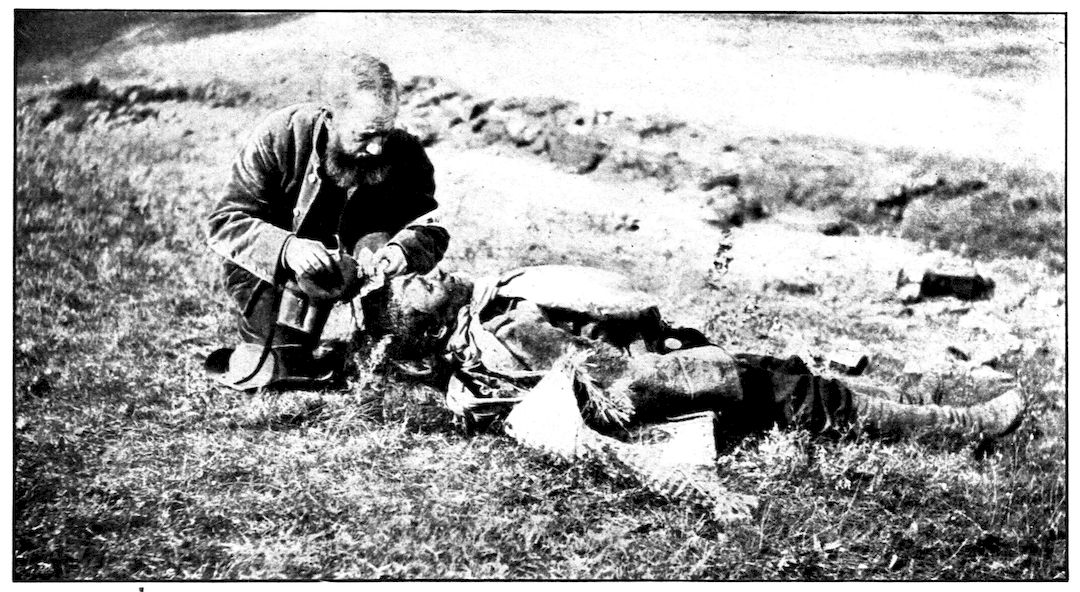
COLLIER’S PHOTOGRAPHER, JAMES H. HARE, RESUSCITATING WOUNDED RUSSIAN
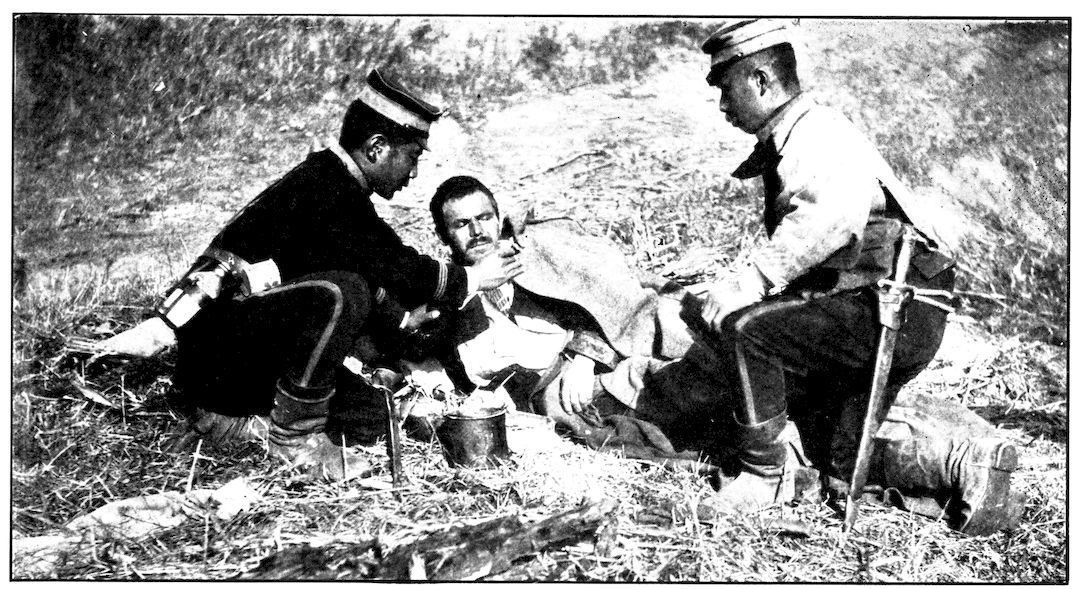
CORRESPONDENTS ASSISTING DISABLED RUSSIANS DURING THE SHA-HO FIGHT
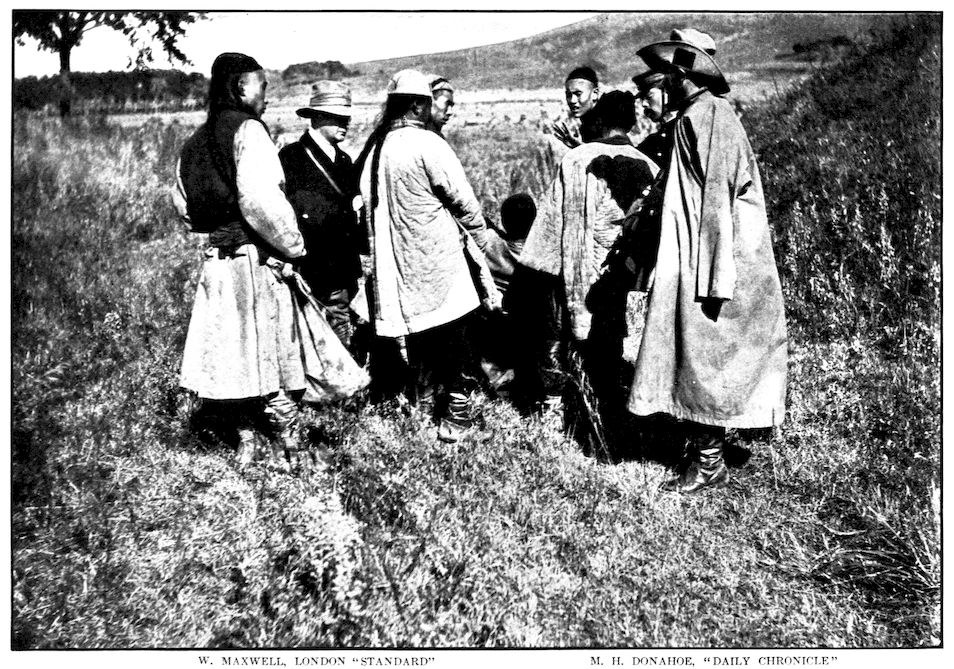
JAPANESE SOLDIERS ASSISTING WOUNDED RUSSIANS AFTER THE ENGAGEMENT
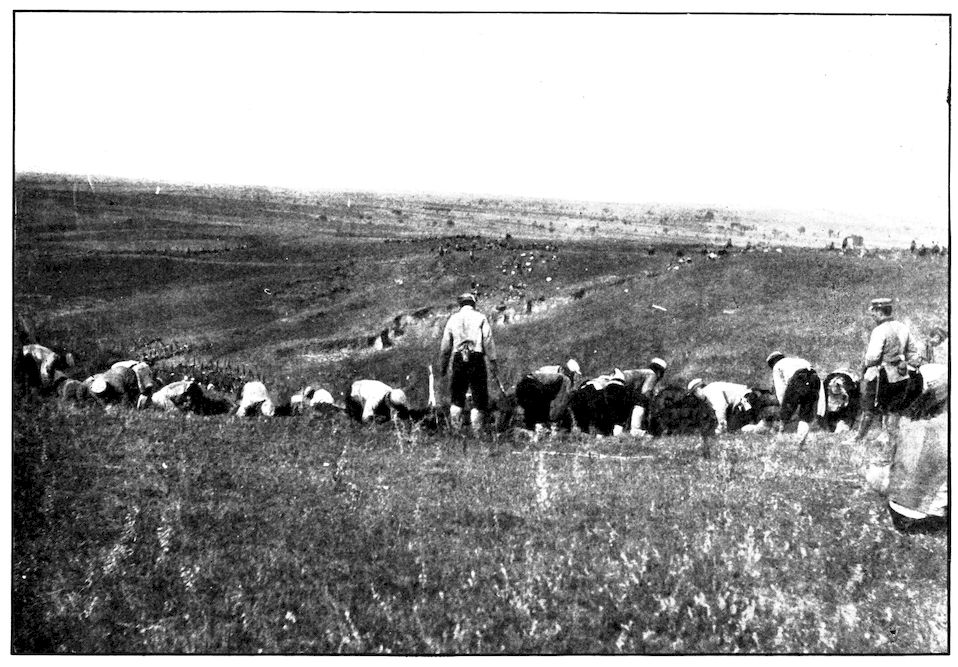
SAPPERS REVERSING RUSSIAN TRENCH AFTER JAPANESE HAD TAKEN IT
ON THE SHA-HO BATTLEFIELD WITH THE JAPANESE
207
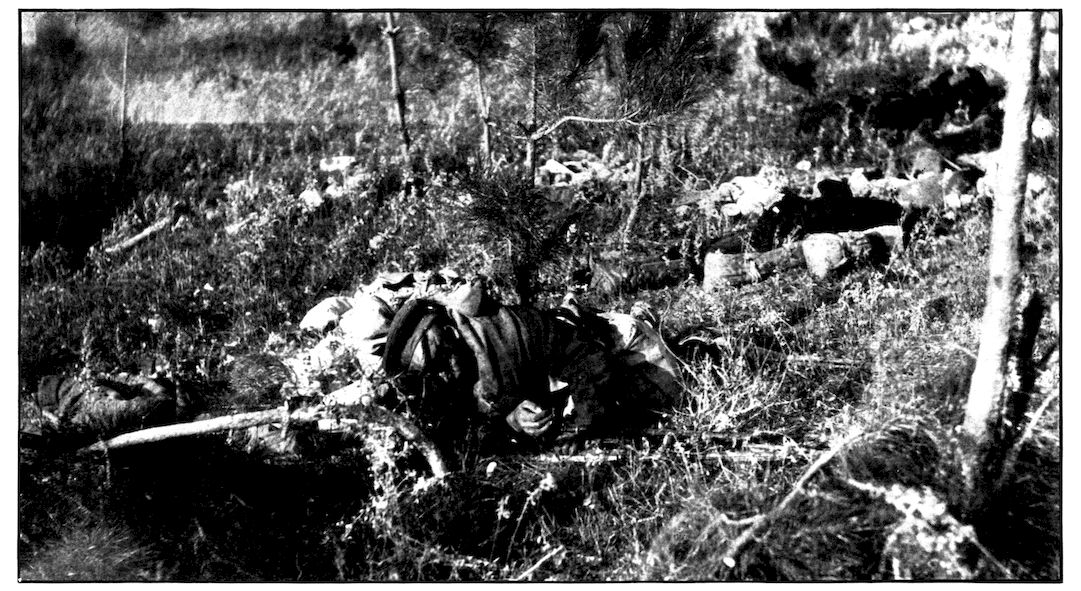
RUSSIAN SOLDIER KILLED WITH HIS HAND ON THE TRIGGER
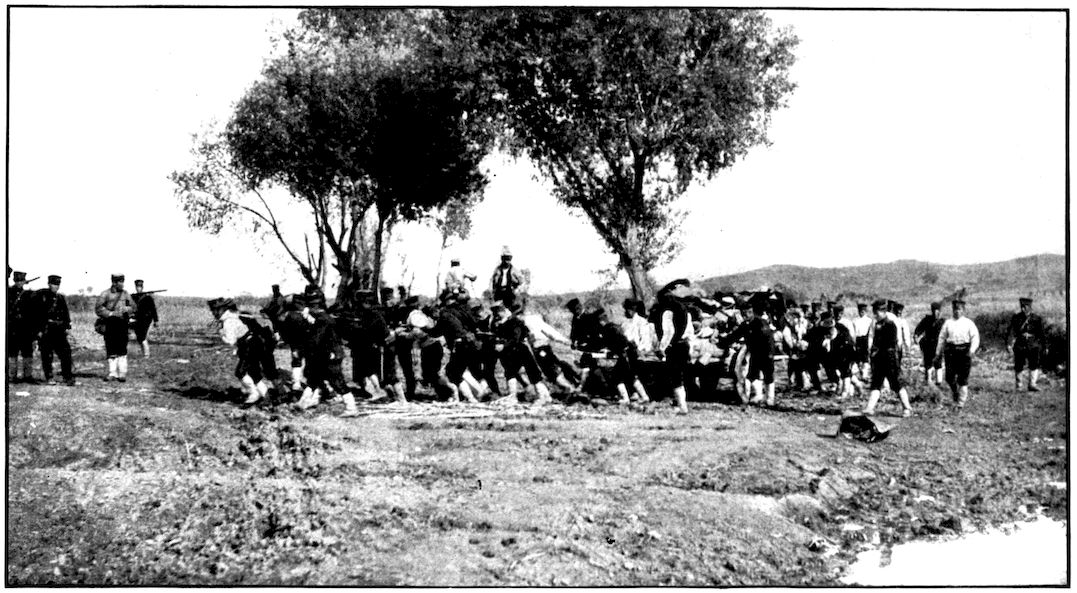
DAMAGE WROUGHT TO THE “TEMPLE OF EVERLASTING PEACE” AT THE SHA-HO
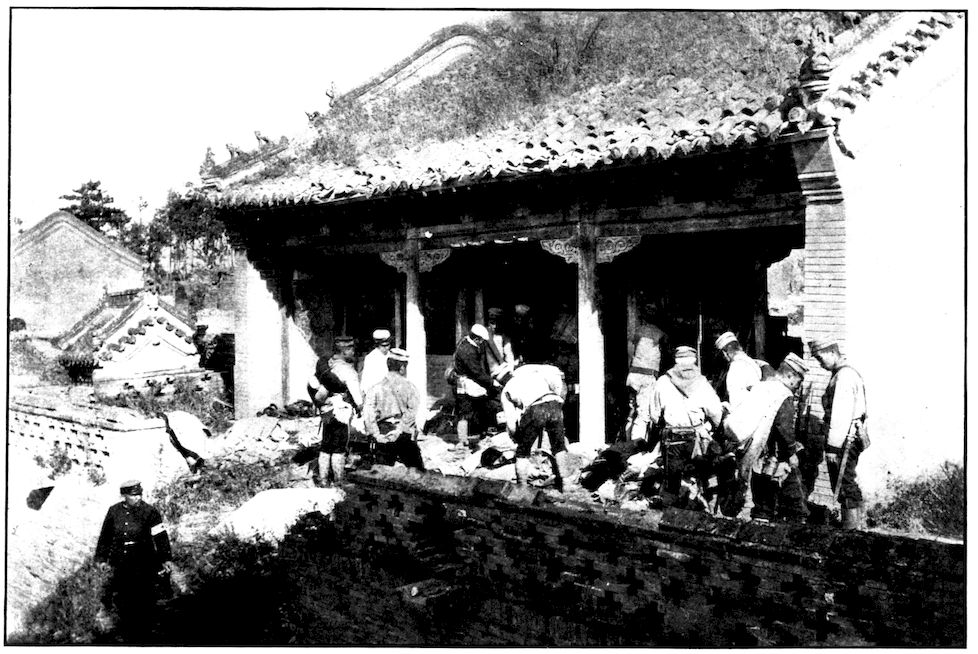
GATHERING UP DÉBRIS FROM THE FIELD OF BATTLE
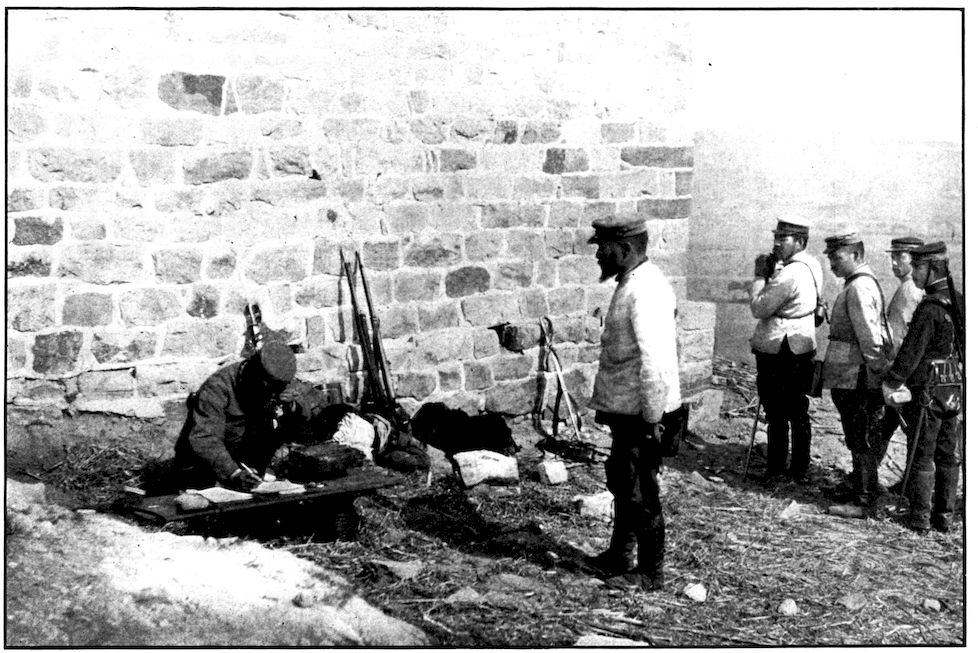
FIELD TELEPHONES AT THE SHA-HO, SHELTERED BEHIND CHINESE HOUSE
VICTORS AND VANQUISHED IN THE FIGHTING IN THE NEIGHBORHOOD OF THE SHA-HO
208
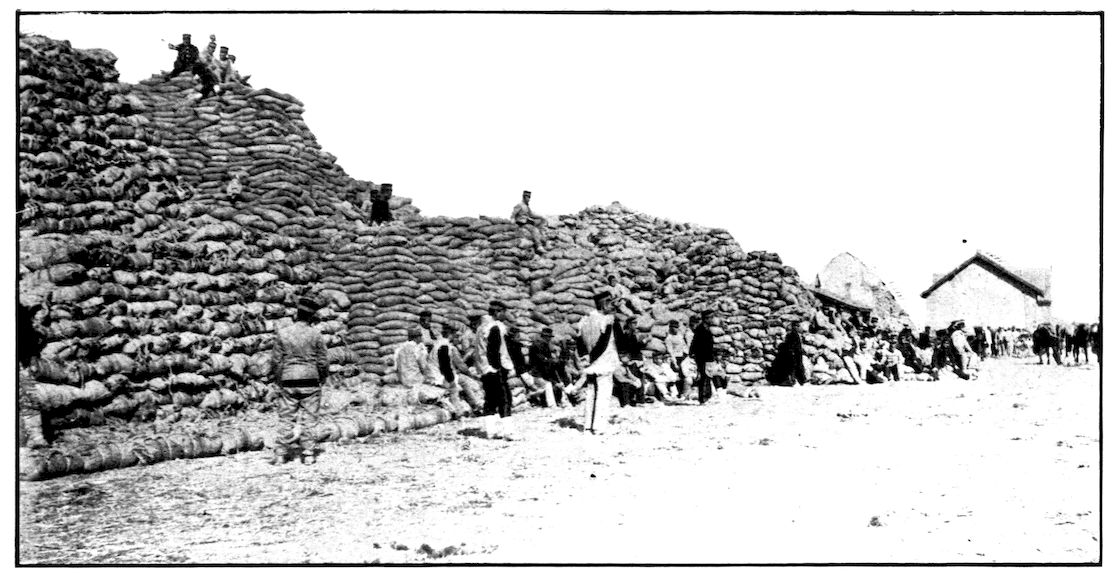
RICE FOR THE JAPANESE ARMY STORED AT YENTAI
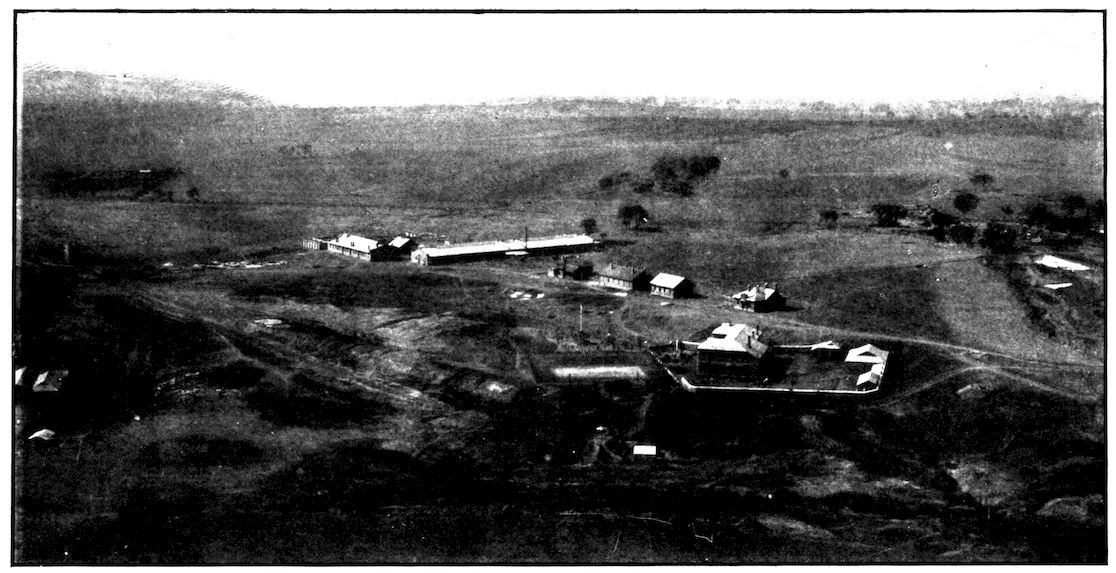
JAPANESE QUARTERMASTER’S STORES PILED UP AT YENTAI
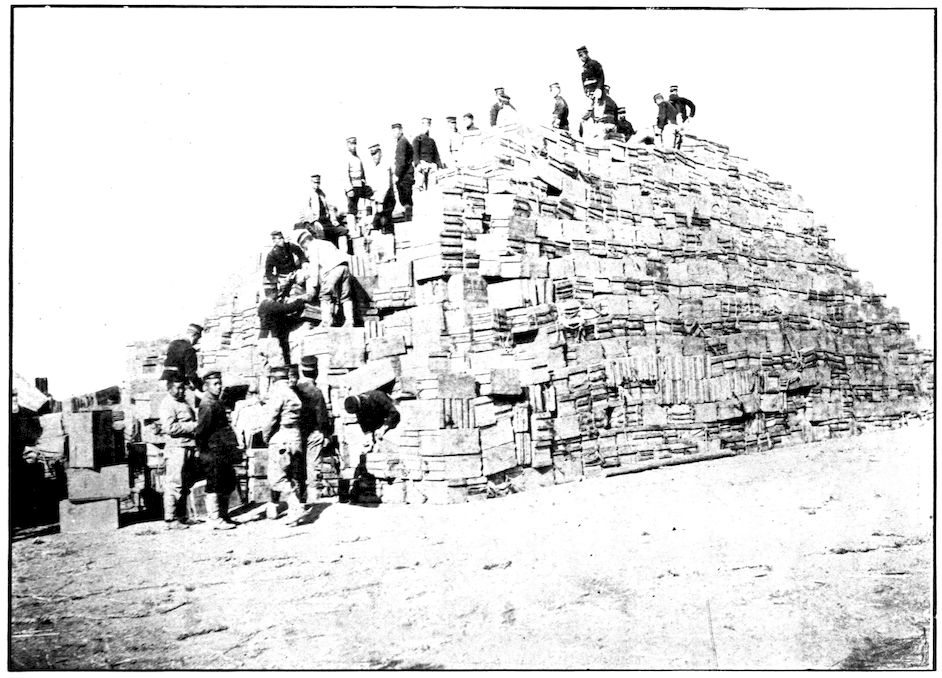
THE YENTAI COAL MINES AFTER THE RUSSIANS HAD BEEN REPULSED
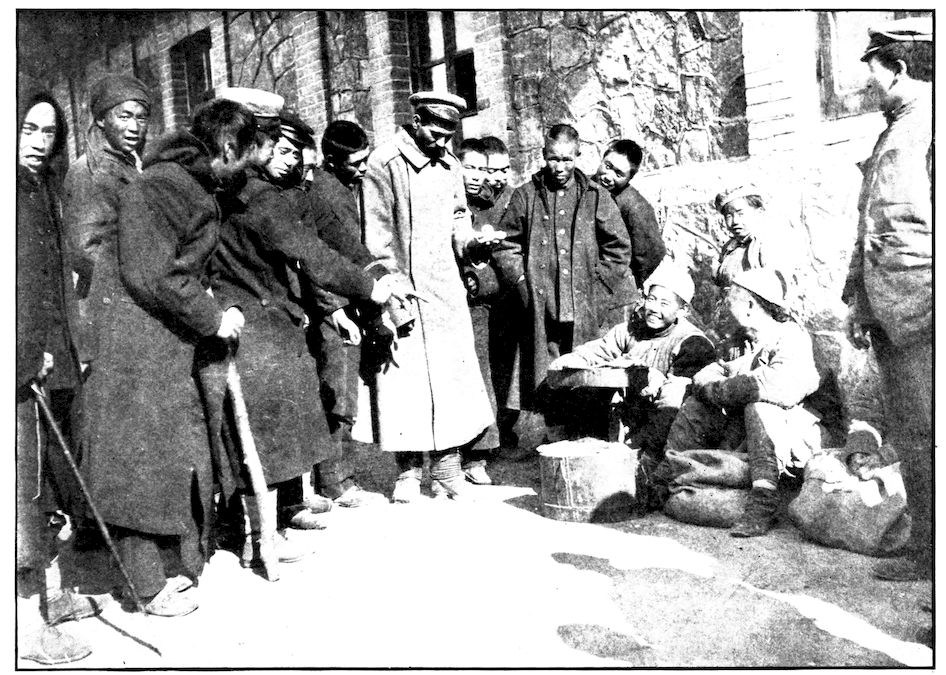
RUSSIAN AND JAPANESE WOUNDED BUYING FROM CHINESE PEDLERS AT YENTAI
THE AFTERMATH OF BATTLE IN THE NEIGHBORHOOD OF YENTAI
209
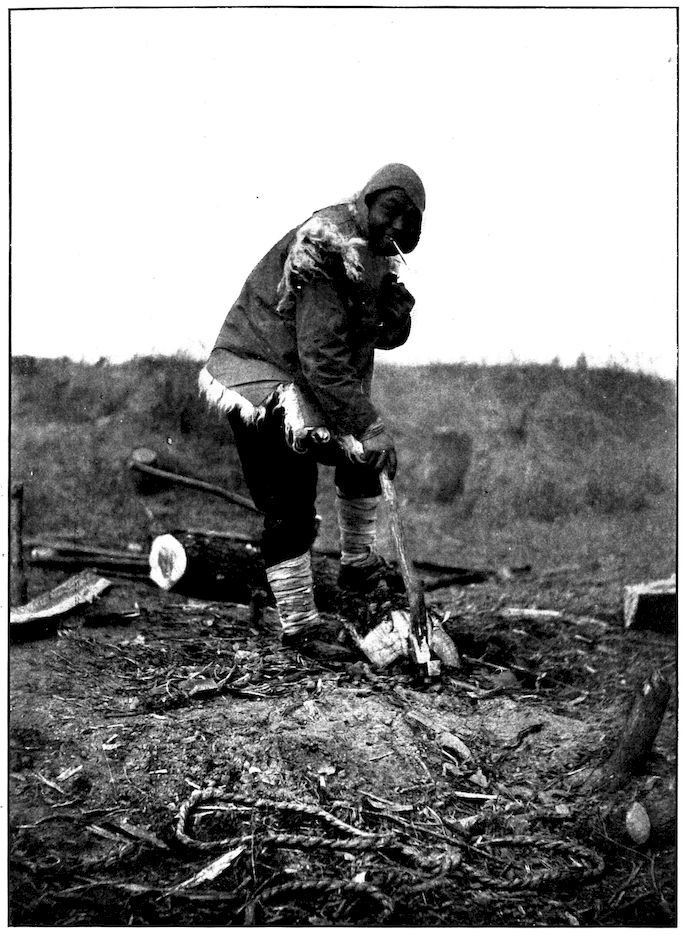
JAPANESE WOODSMAN SMOKING HIS LITTLE JAPANESE PIPE WHILE AT WORK
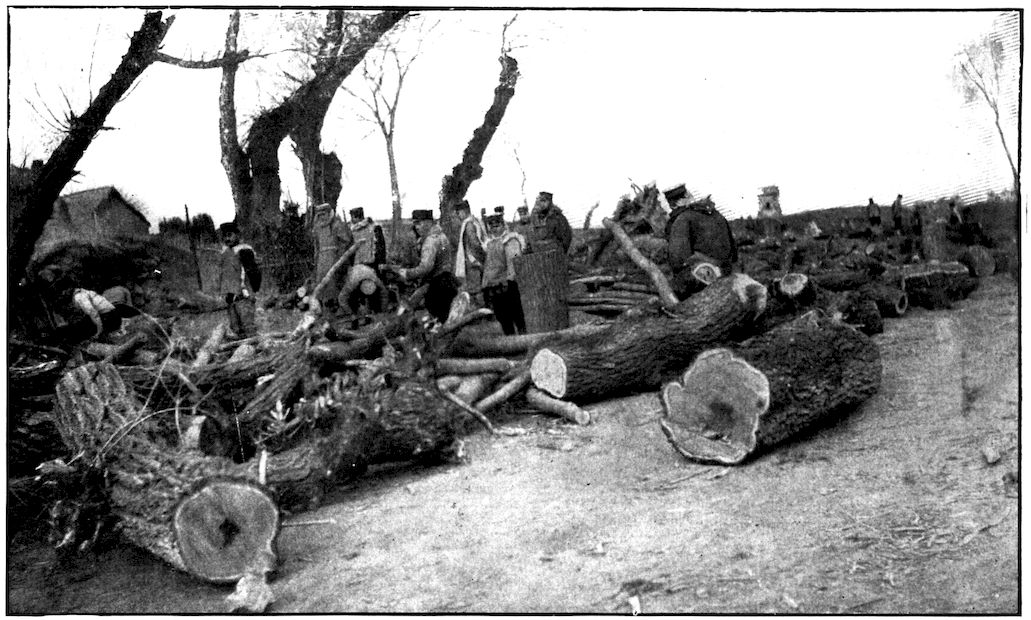
CUTTING UP TIMBER TO BE BURNED FOR CHARCOAL
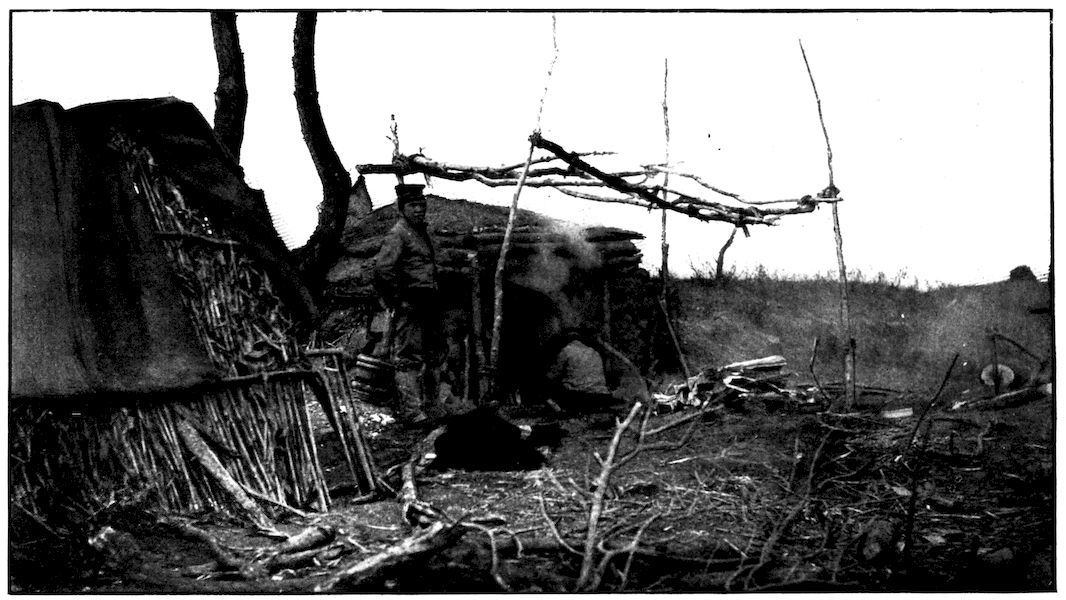
JAPANESE BURNING WOOD TO MAKE CHARCOAL FOR THE ARMY
PREPARING CHARCOAL FOR THE ARMY WHILE IT WAS ENCAMPED ON THE SHA-HO
210
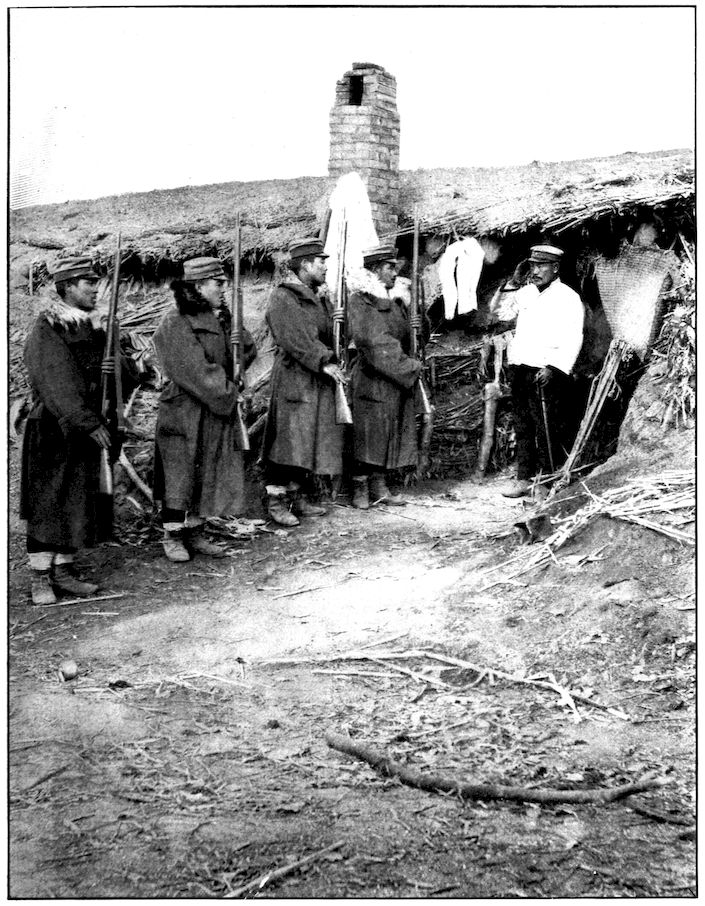
SALUTING THE CAPTAIN AS HE EMERGES FROM HIS DUGOUT
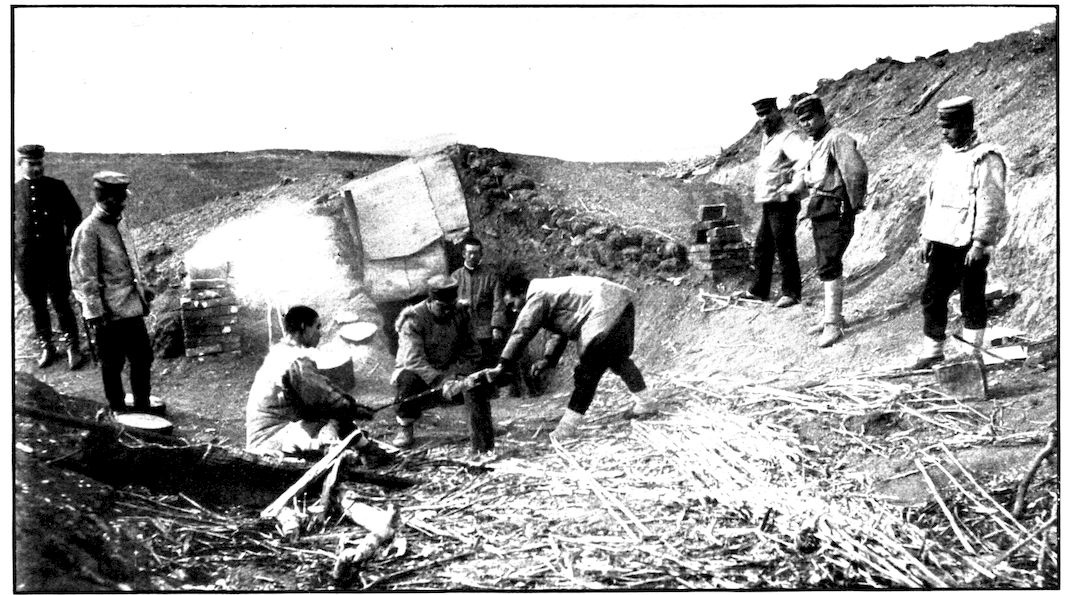
JAPANESE CUTTING TIMBER FOR FUEL WITH PORTABLE SAW
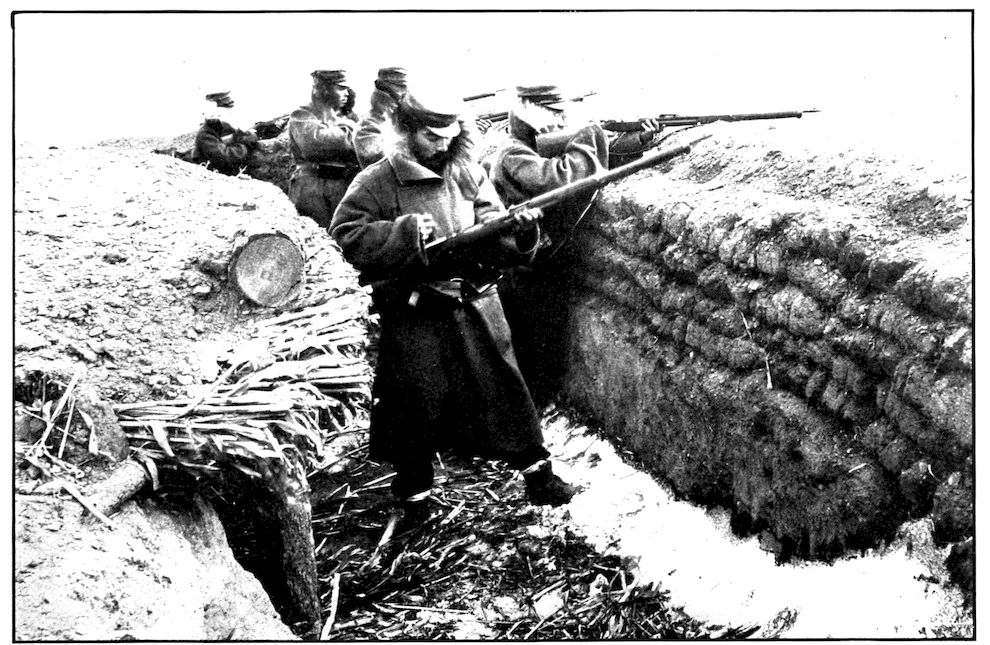
IN AN OUTPOST TRENCH ALONG THE SHA-HO
IN WINTER QUARTERS WITH THE JAPANESE ARMY ON THE SHA-HO
211
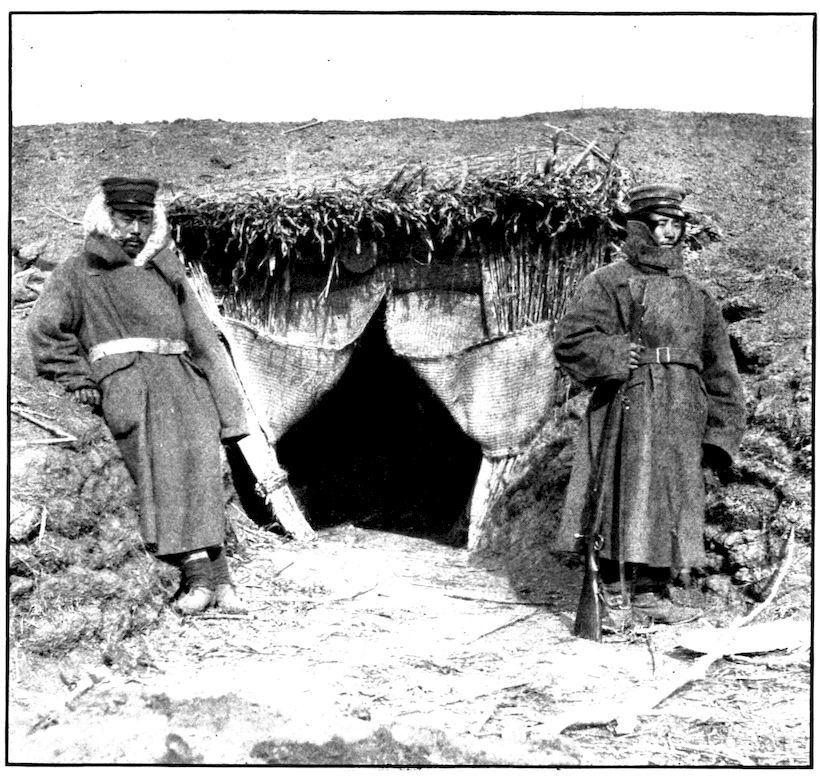
HEADQUARTERS OF THE REGIMENTAL COMMANDER
JAPANESE BUILDING A BATH-HOUSE ON THE SHA-HO
SENTRY ON DUTY AT OFFICER’S DOOR
TAKING A HOT BATH—THERMOMETER TWELVE BELOW
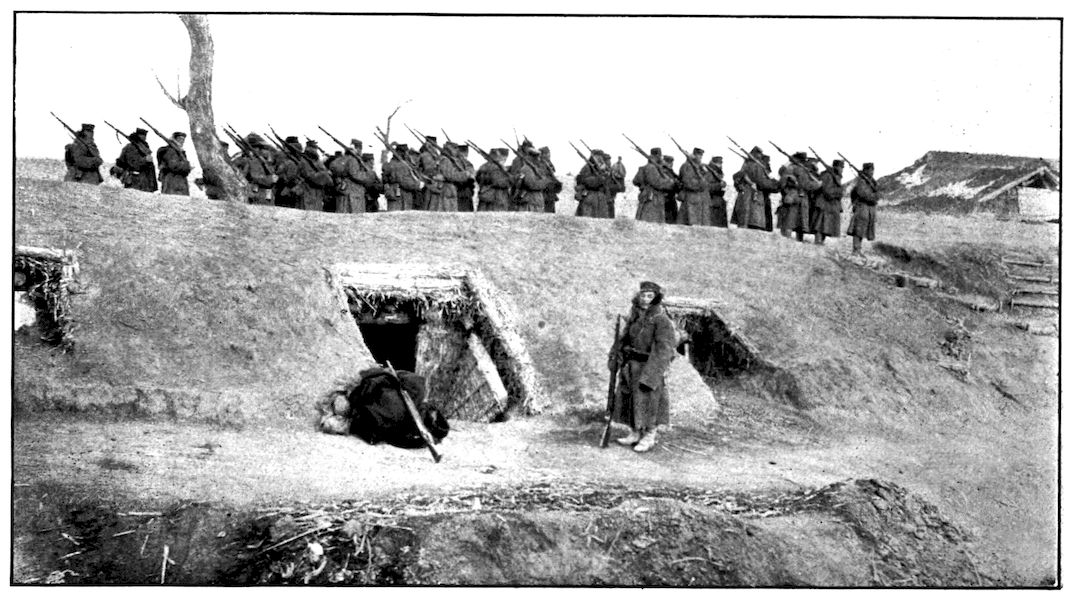
SOLDIERS’ DUGOUTS IN THE SHA-HO WINTER QUARTERS
WITH THE JAPANESE ARMY IN DECEMBER IN CAMP ON THE SHA-HO
212
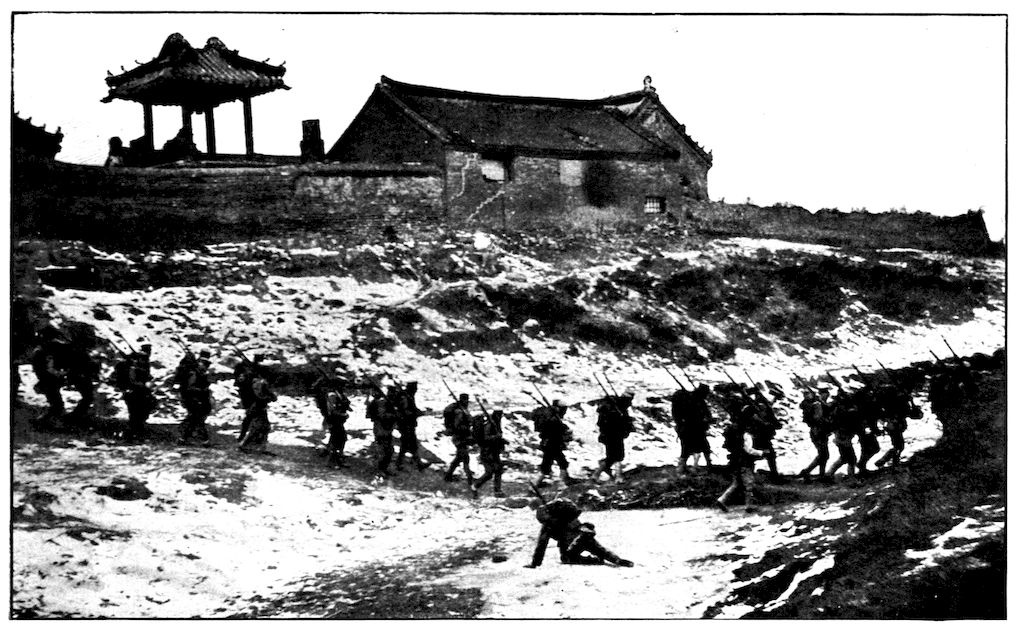
JAPANESE REINFORCEMENTS MARCHING THROUGH SHI-LI-HO TOWARD THE FRONT
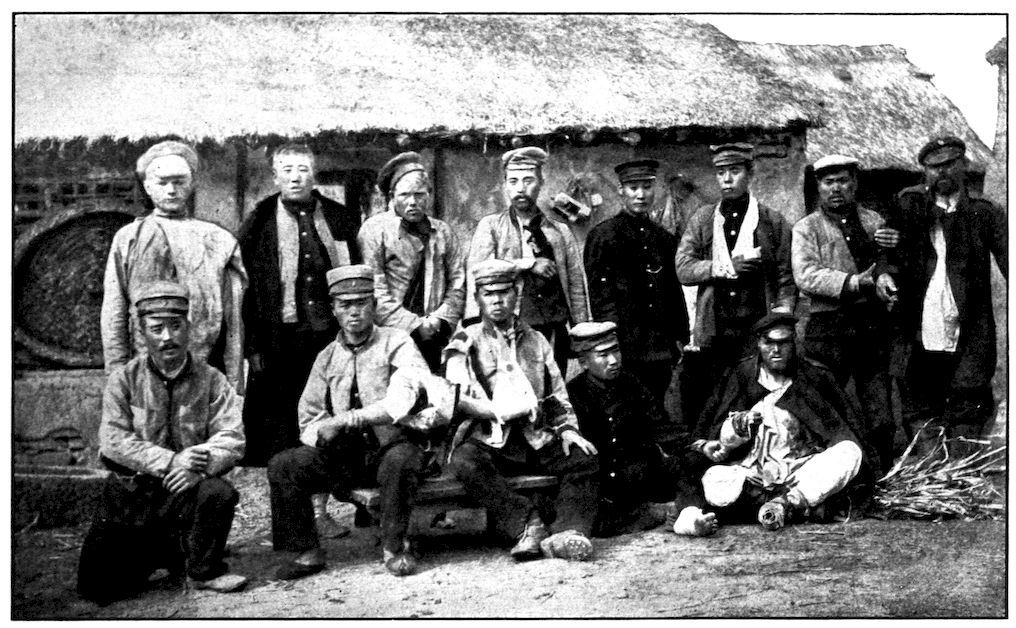
WOUNDED RUSSIANS AND JAPANESE AT PALANSANSU
TRYING TO KEEP WARM AT SHI-LI-HO WITH THE THERMOMETER FIFTEEN BELOW
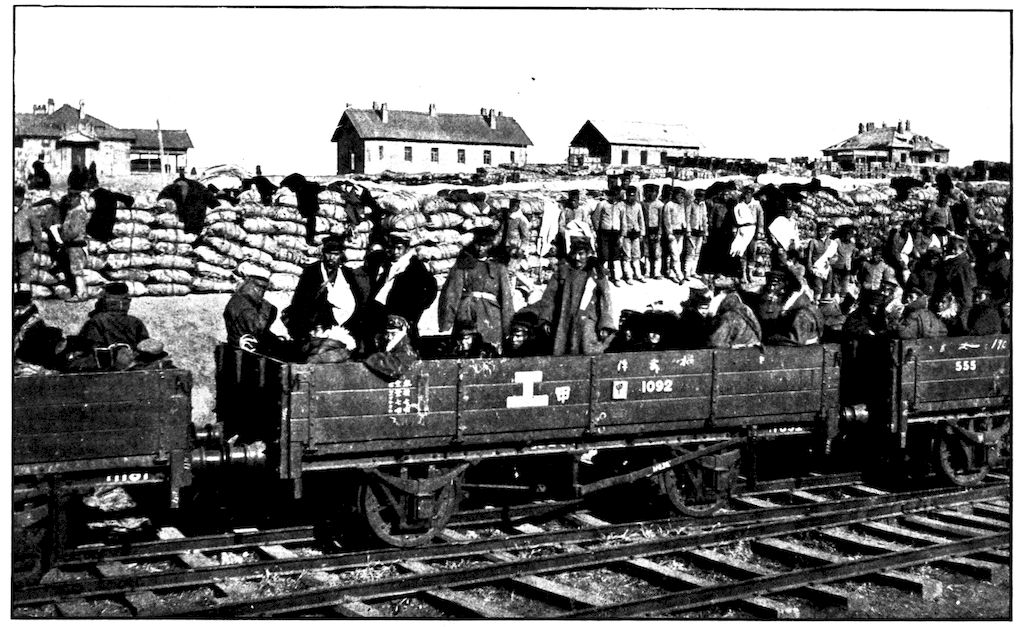
JAPANESE WOUNDED GOING FROM YENTAI TO LIAO-YANG BY TRAIN
BETWEEN BATTLES WITH THE JAPANESE IN THE NEIGHBORHOOD OF THE SHA-HO
213
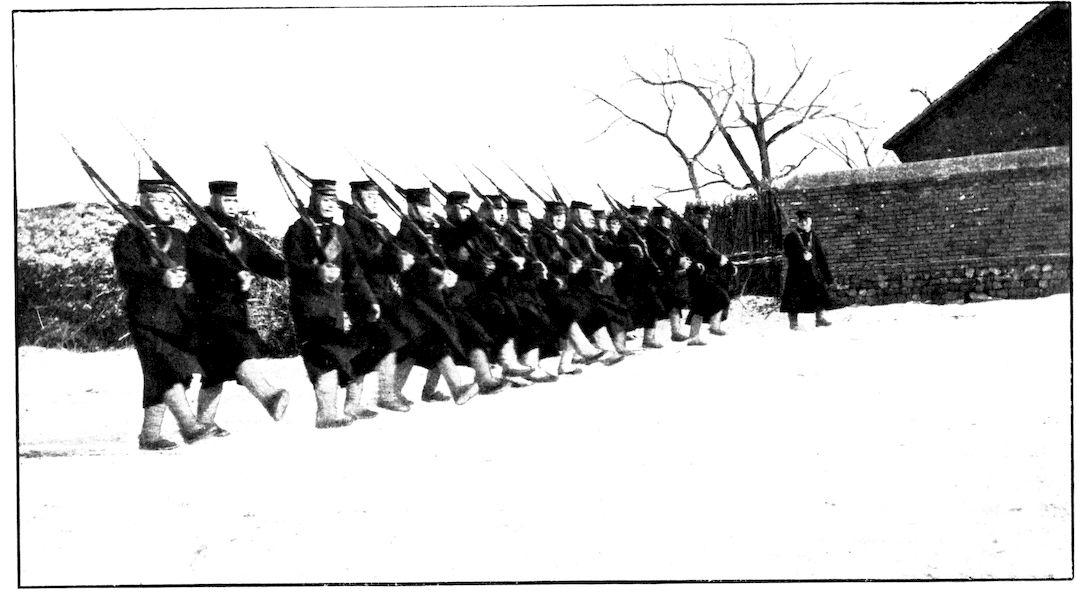
DRILLING THE NEWLY ARRIVED RECRUITS IN THE MILITARY STEP
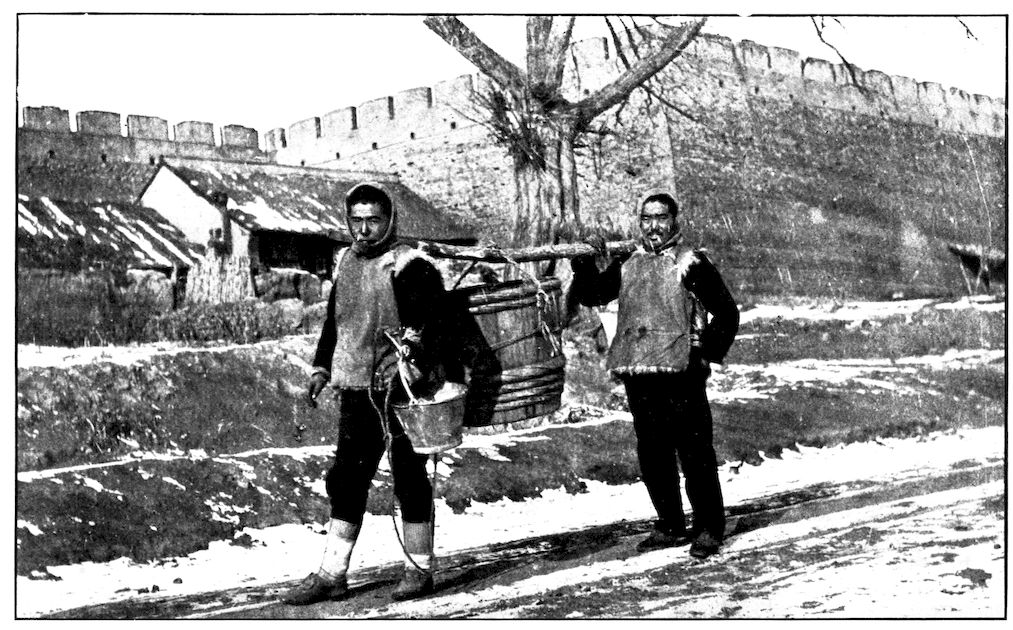
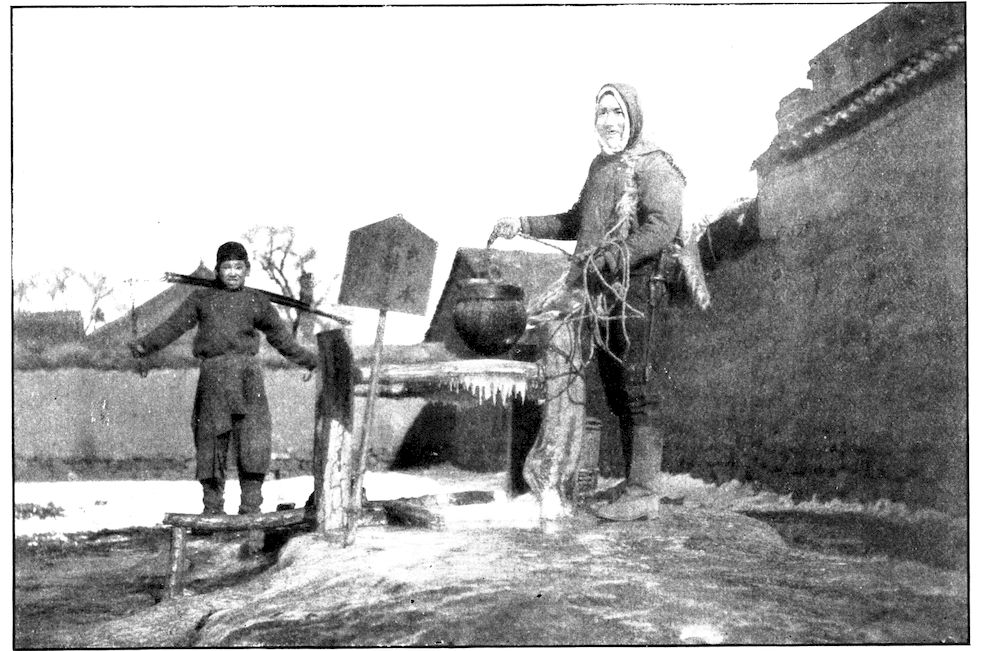
DRAWING WATER FROM THE WELL IN FREEZING WEATHER
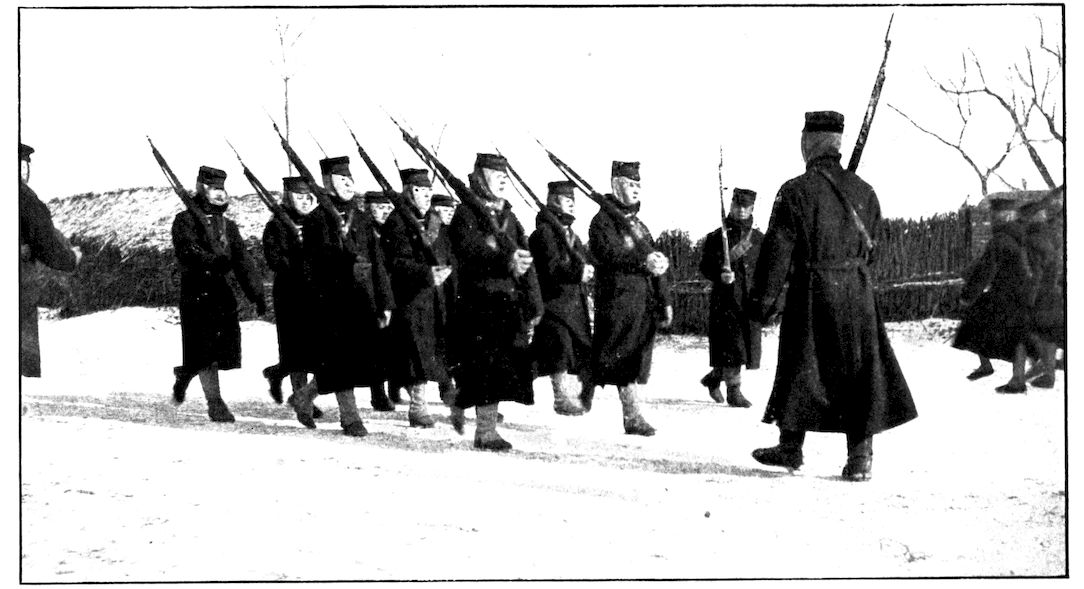
RECRUITS DRILLING AT THE SHA-HO WITH CAPTURED RUSSIAN RIFLES
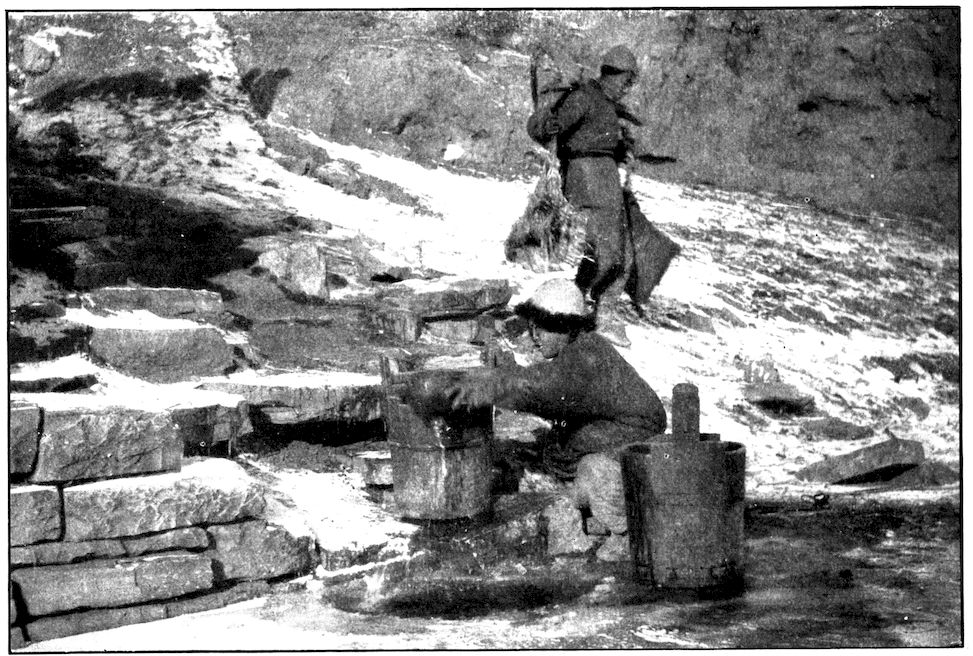
COOLIES DRAWING WATER FROM THE SPRING FOR THE JAPANESE
WITH THE JAPANESE IN WINTER QUARTERS AT THE SHA-HO
214
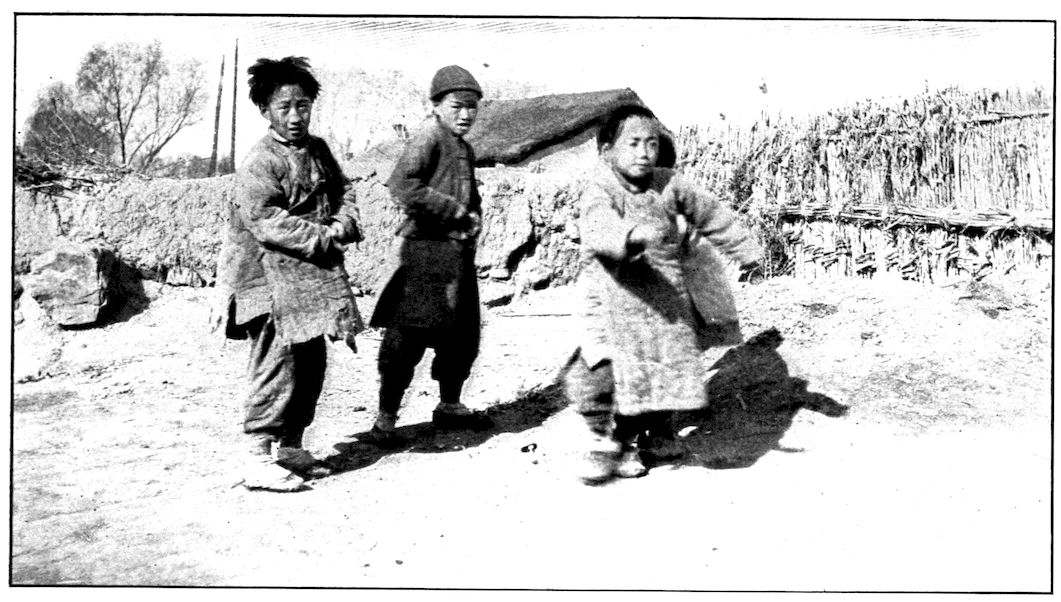
CHILDREN PLAYING DUCK-ON-THE-ROCK WITH PIECES OF BROKEN SHELLS
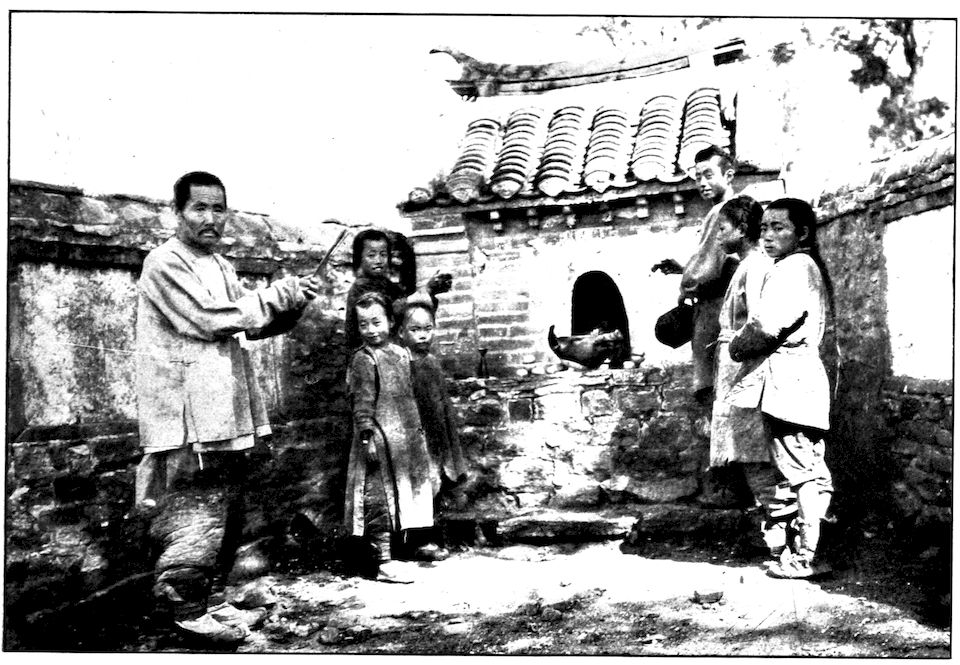
OFFERING UP THE HOG’S HEAD TO PROPITIATE THE JOSS
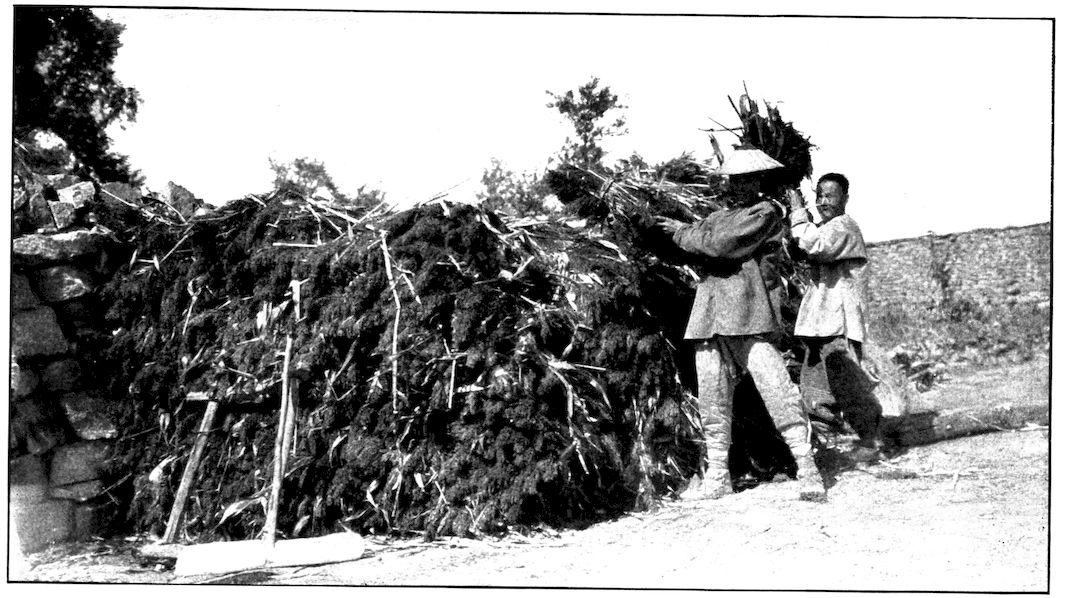
PEASANTS STACKING UP KOWLIANG FOR WINTER USE
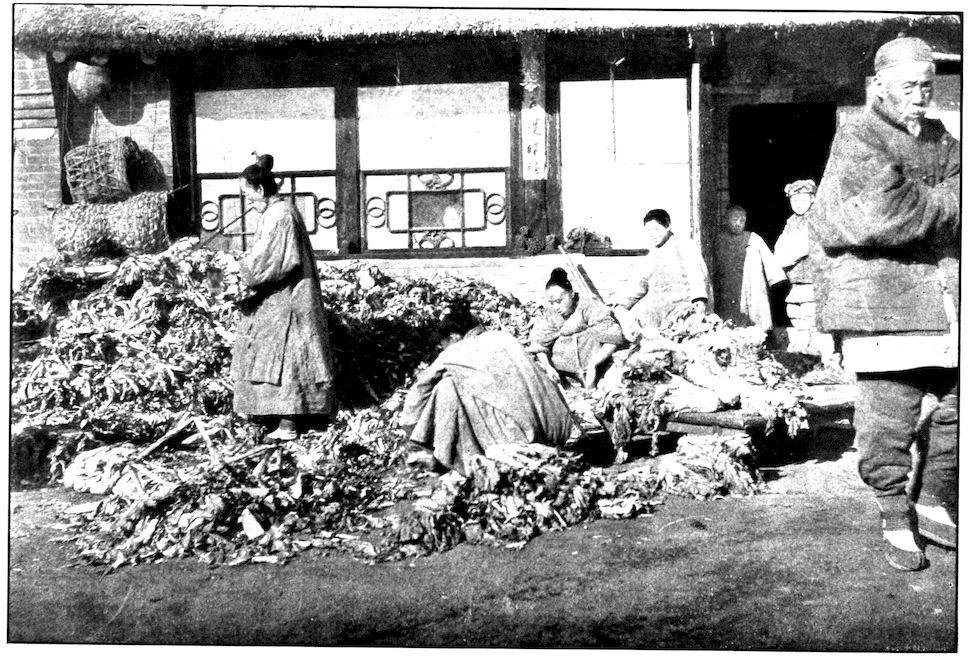
MANCHURIAN WOMEN PREPARING VEGETABLES FOR PICKLING
TYPICAL VIEWS OF MANCHURIAN PEASANTS AFTER THE ARRIVAL OF THE JAPANESE
215
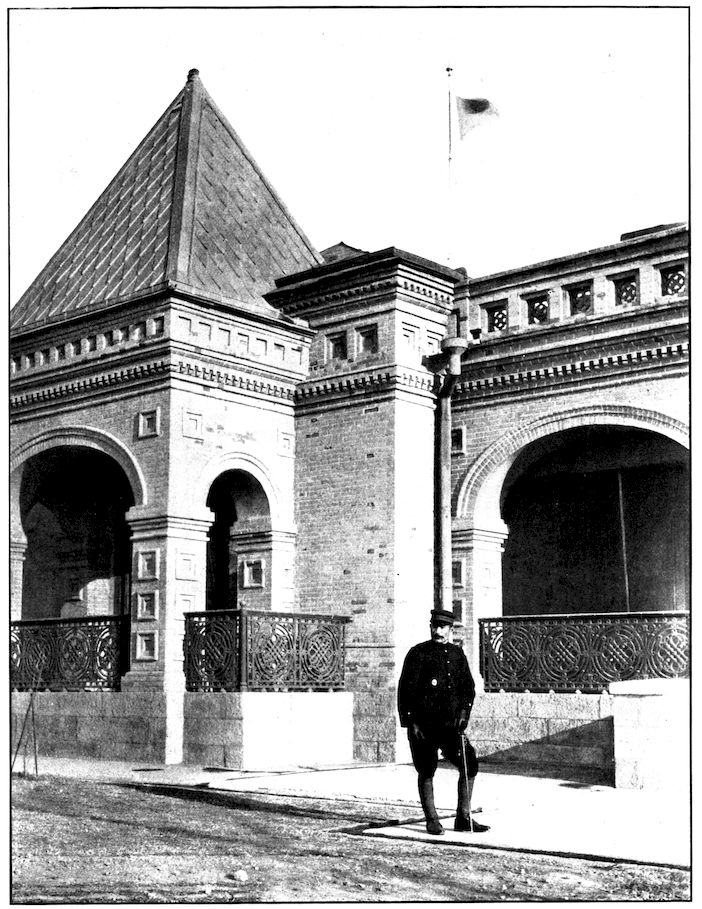
MAJOR YOKURA, FIRST JAPANESE ADMINISTRATOR
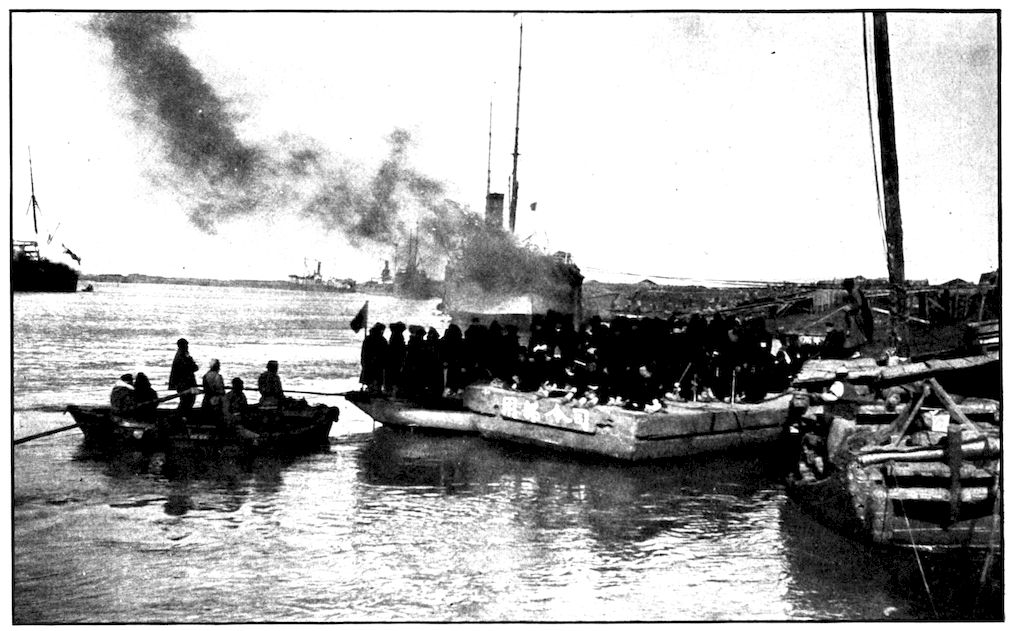
JAPANESE CROSSING THE LIAO AT NEWCHWANG BEFORE IT FROZE OVER
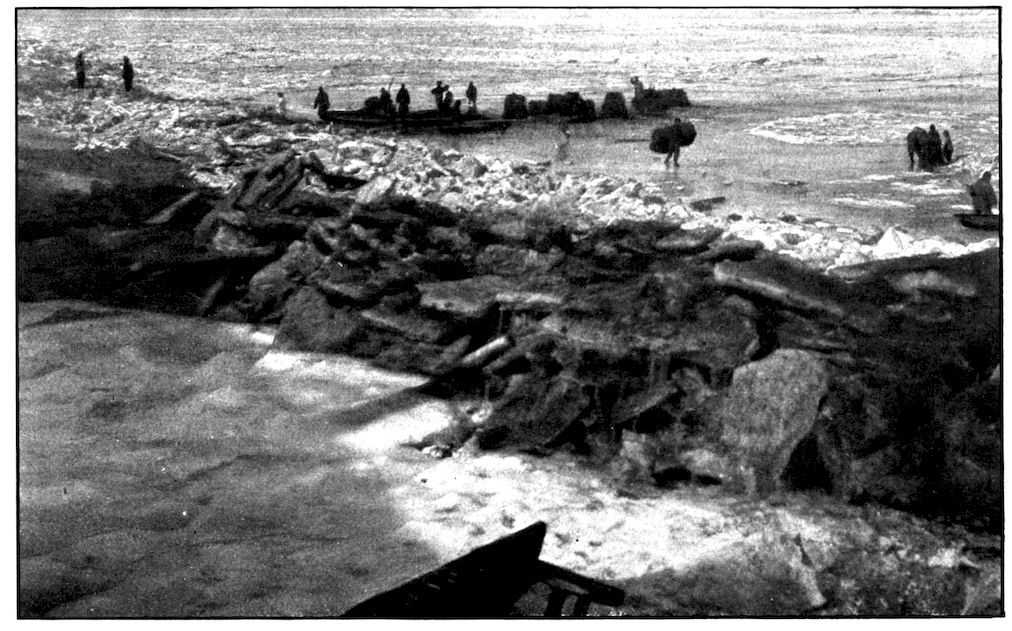
CHINESE CROSSING THE FROZEN LIAO RIVER ON SLEDS
SCENES AT NEWCHWANG SHORTLY AFTER THE FALL OF PORT ARTHUR
216
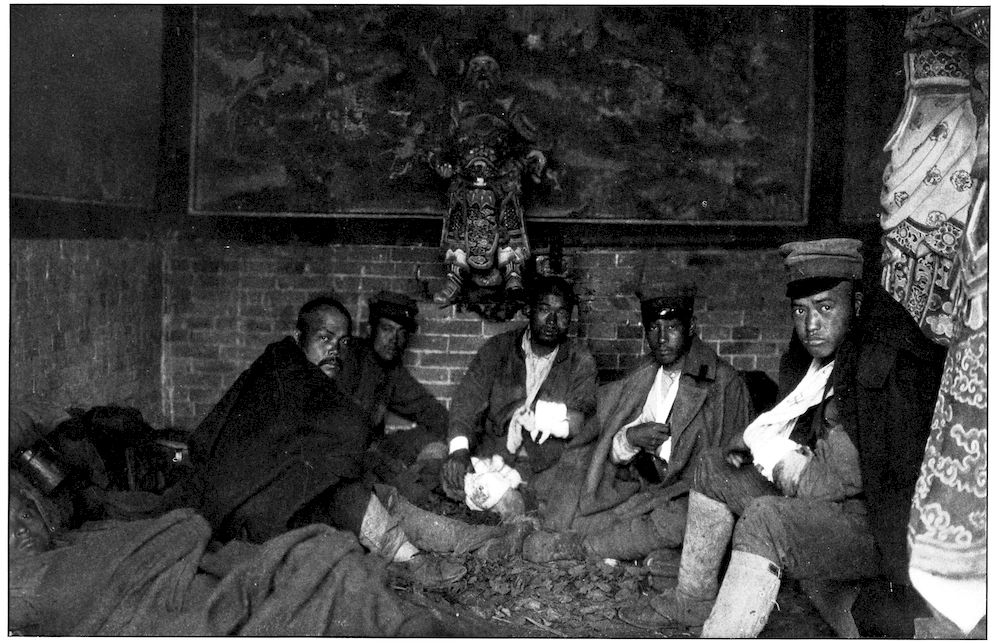
JOSSES OF AN ANCIENT CHINESE TEMPLE LOOKING DOWN ON THE WOUNDED INVADERS
217