Chapter II · THE FIRST BATTLES OF THE WAR
Reading edition
It was on the night of February 8, 1904, that all hope of a peaceful solution of the Russo-Japanese entanglement was blown to the winds by the startling attack of Admiral Togo’s torpedo-boats on the Russian fleet at Port Arthur. The Russians were quite unready for so swift an onslaught; many officers were on shore, while the lookouts and scouting service were scarcely more vigilant than in time of peace. The Japanese torpedo flotilla sped in among the close-huddled battleships, launched their missiles, and were scurrying to sea before the Russian crews began to repel the attack. The first-class battleships “Retvizan” and “Czarevitch” and the cruiser “Pallada” were so badly injured that they had to be beached. The Japanese fleet returned the next day and bombarded the Russian ships and forts. In this attack the battleship “Poltava,” and the cruisers “Diana,” “Novik,” and “Askold” were temporarily disabled.
Before the news of the battle of Port Arthur had fairly reached the eyes of the Western world came the more tragic story of the destruction of the “Variag” and the “Korietz” in Chemulpo Harbor. Admiral Uriu, commanding six Japanese battleships, six cruisers, and twelve torpedo craft, appeared off Chemulpo and demanded the surrender of the two Russian ships. Captain Behr of the “Variag” and Captain Roudnoff of the “Korietz” refused to surrender, and on the morning of February 9, the “Variag,” with bands playing, steamed out of the harbor to meet the hopeless odds. She met the Japanese fleet eight miles out, the enemy using long-range 12-inch guns, and pounding away at distances which made the “Variag’s” batteries harmless. Ten large projectiles riddled the cruiser, and in fifty minutes not a gun could be worked, the ship was on fire, engines crippled, and 109 officers and men of a complement of 540 lay dead and wounded on the decks. The “Variag” crept back into port, her crew was removed to the British cruiser “Talbot” and the French cruiser “Pascal,” and she was set on fire. Three hours later, the “Variag,” after only eighteen months’ service, was at the bottom, a shattered and blackened mass of steel. The “Korietz” was a slow gunboat of only 1,200 tons, mounting one 6-inch gun and two 8-inch guns, with no armor protection. She was untouched, but after the fight her commander decided to destroy his ship, because Admiral Uriu had promised to renew the attack at four in the afternoon. Precisely at four o’clock, two deafening explosions came from the “Korietz.” As the smoke cleared, where the “Korietz” had been, only bits of wreckage and about four feet of her funnel could be seen.
On the day after the Russian ships had been destroyed a division of the Japanese army was thrown ashore at Chemulpo. The landing was made in perfect order. The army was dependent for nothing upon the port. A large force was sent to occupy Seoul, and within two days Japan was in complete control of the most advantageous strategic bases of Korea.
32
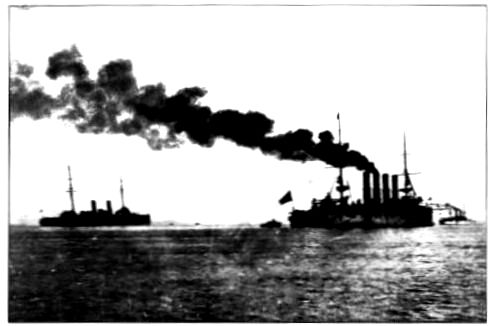
THE RUSSIAN SHIPS AT CHEMULPO BEFORE THE BATTLE
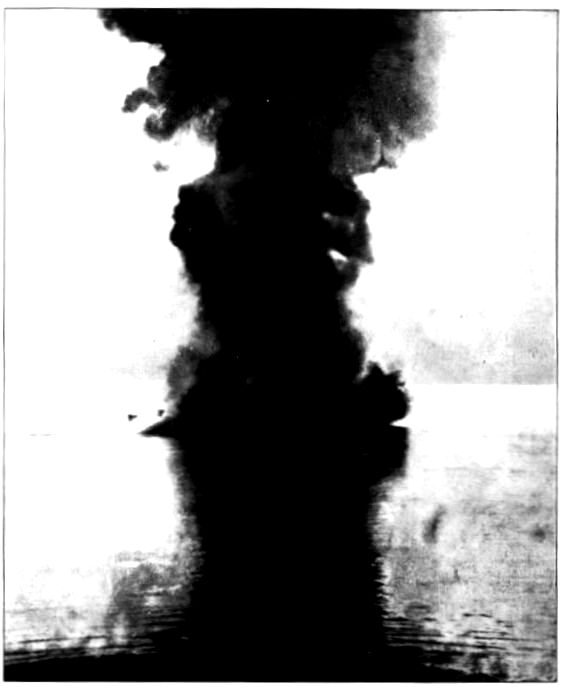
THE RUSSIAN GUNBOAT “KORIETZ” AT THE MOMENT OF THE EXPLOSION
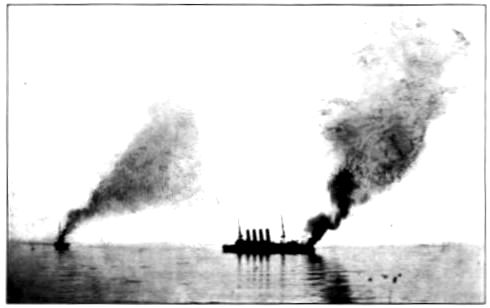
THE RUSSIAN CRUISER “VARIAG” ON FIRE AT CHEMULPO
DESTRUCTION OF THE “VARIAG” AND “KORIETZ” IN THE HARBOR OF CHEMULPO
33
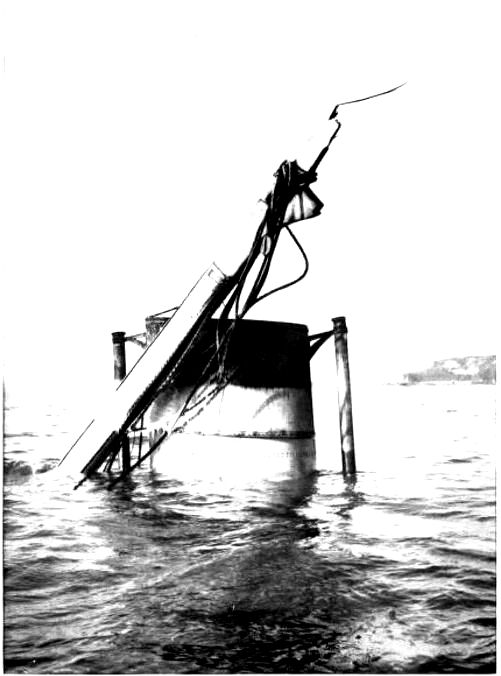
FUNNEL OF THE GUNBOAT “KORIETZ”
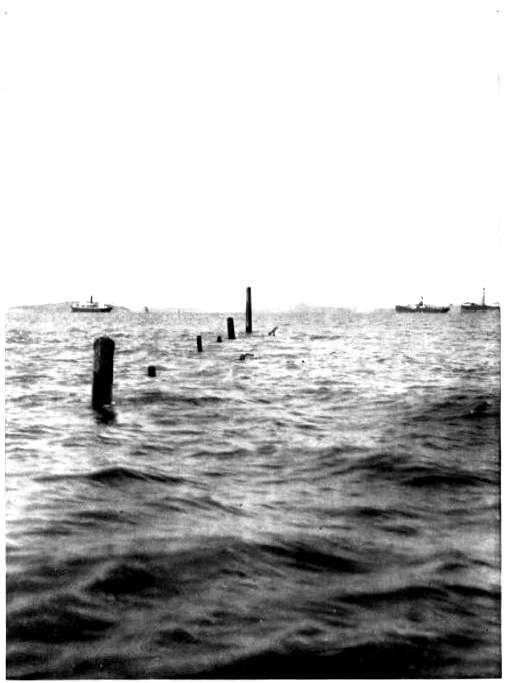
TOPMASTS OF THE CRUISER “VARIAG”
WRECKS OF THE RUSSIAN WARSHIPS IN CHUMULPO HARBOR
34
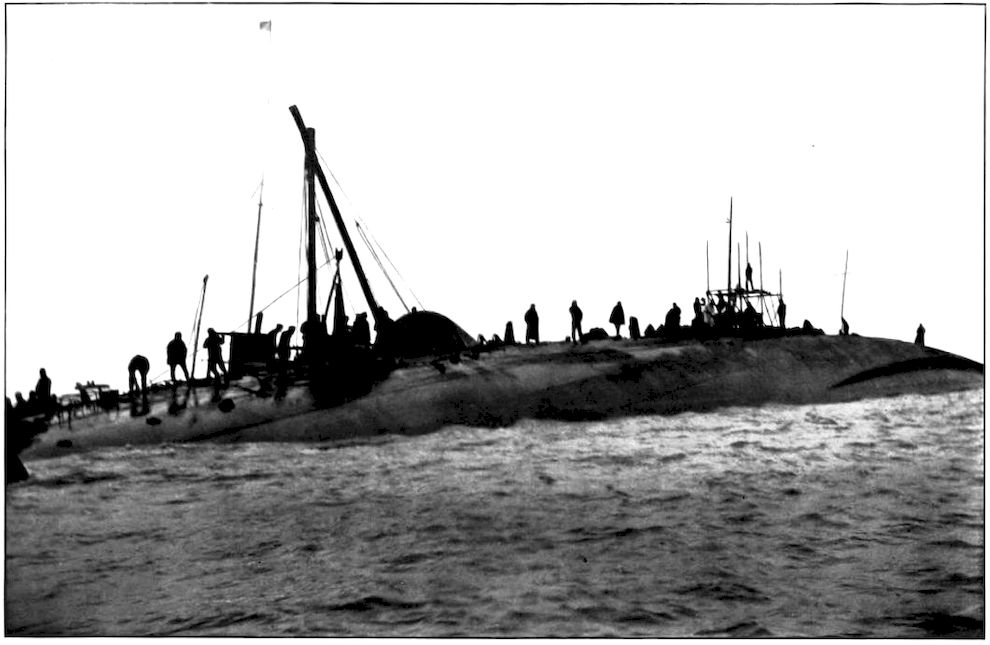
JAPANESE SALVAGE CORPS WORKING ON THE WRECK OF THE “VARIAG” AT CHEMULPO
35
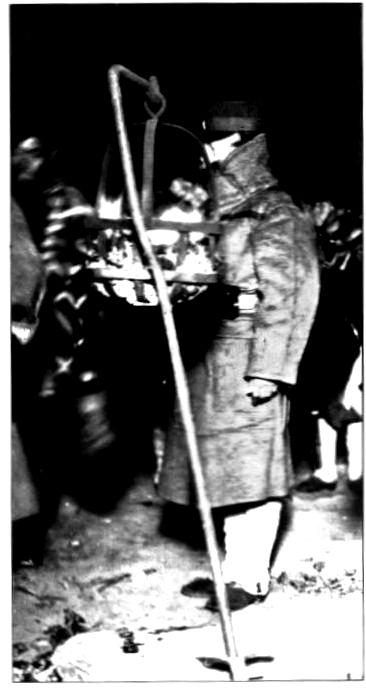
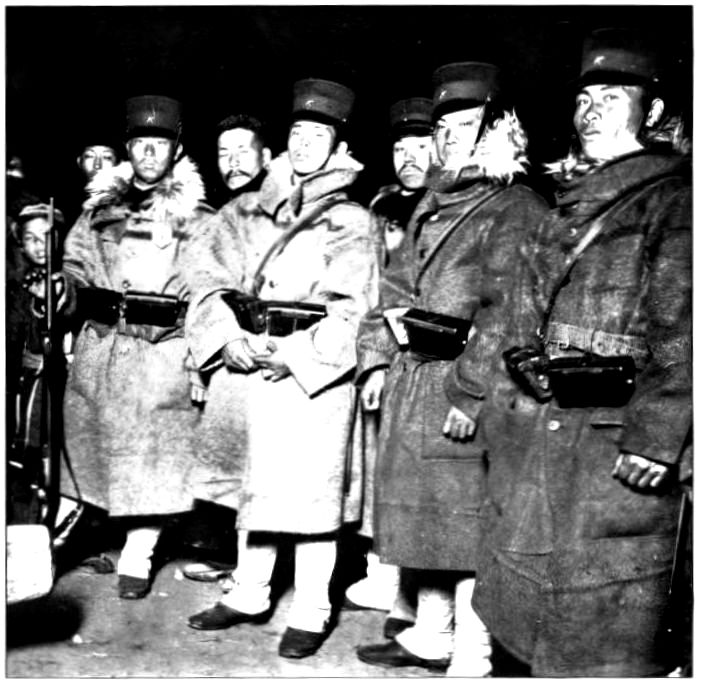
THE NIGHT LANDING OF THE JAPANESE TROOPS AT CHEMULPO
All through the night of February 9 boatloads of these little soldiers, with their inscrutable, unimpassioned faces, were landed in the snow on the Korean shore. This landing was one of the first proofs the Western world had of the wonderful preparedness of the soldiers of the Mikado. In spite of the darkness, fitfully punctuated by blazing torches, fires, and braziers, the task went on like clockwork
36
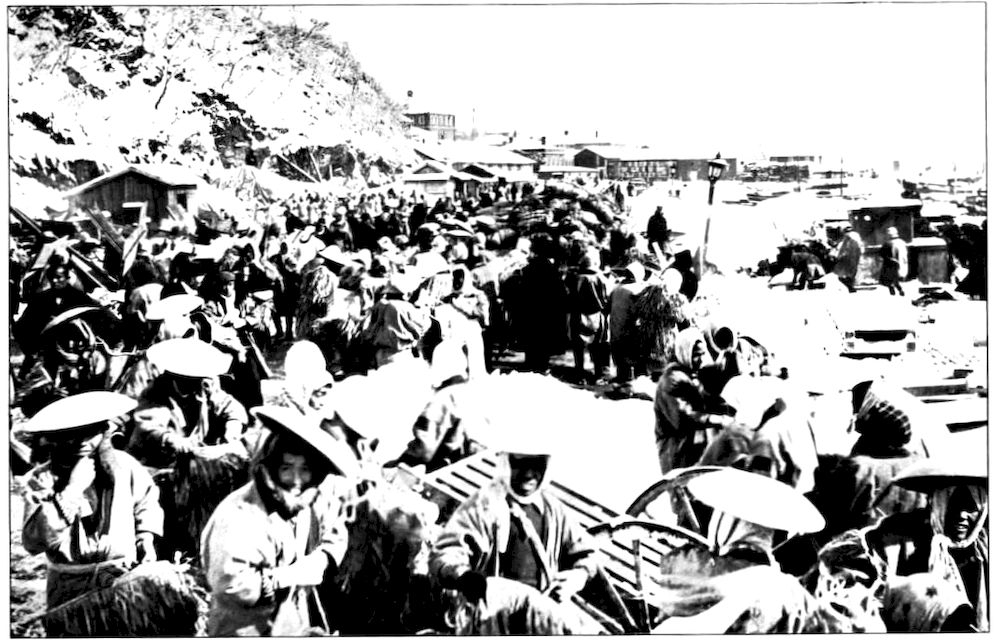
COOLIES HANDLING JAPANESE SUPPLIES AFTER THE LANDING AT CHEMULPO
37
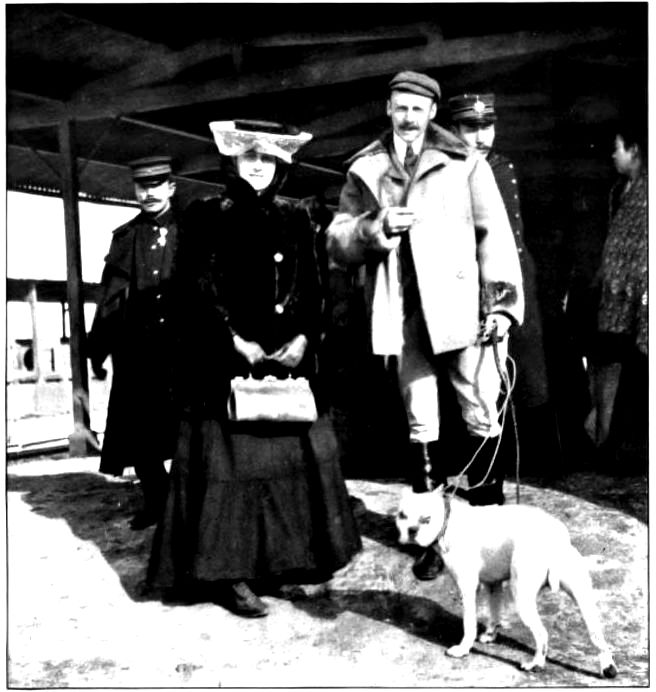
MRS. PAVLOV, WIFE OF THE RUSSIAN MINISTER TO KOREA, AT THE SEOUL RAILWAY STATION
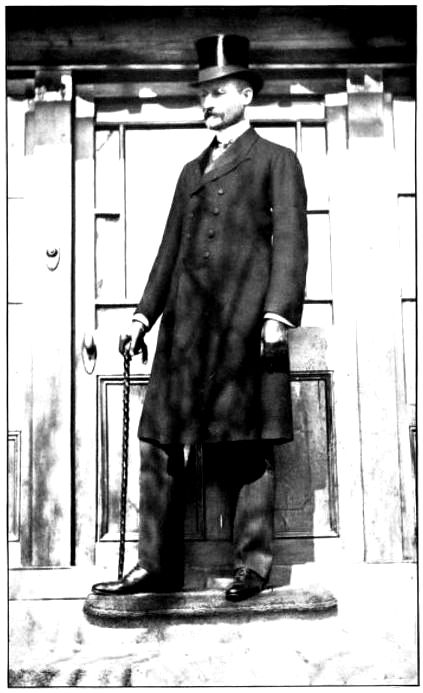
DR. H. N. ALLEN, UNITED STATES MINISTER TO KOREA
Mrs. Pavlov, the wife of the Russian Minister, is a cousin of the Countess Cassini. When the Minister was invited to leave on the arrival of the Japanese, she was accompanied to the station not only by the Japanese guard, but by all the gallant young men of the diplomatic circle. Dr. Allen, the United States Minister, is shown standing at the door of the Legation at Seoul
38
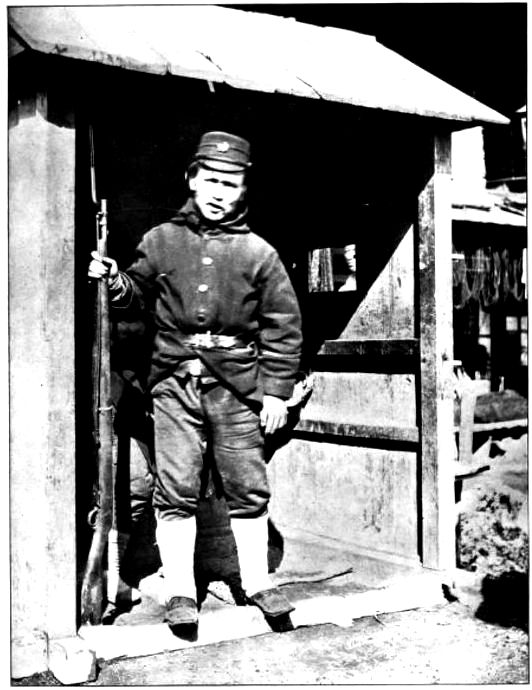
KOREAN SENTRY AT SEOUL
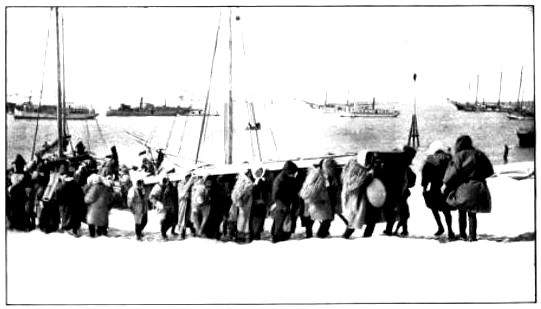
BRINGING LANDING STAGES ASHORE AT CHEMULPO
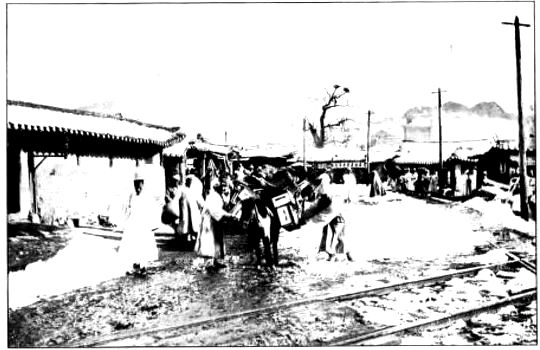
PACKING HORSES WITH BAGGAGE KITS AT CHEMULPO
THE JAPANESE ADVANCE THROUGH KOREA
39
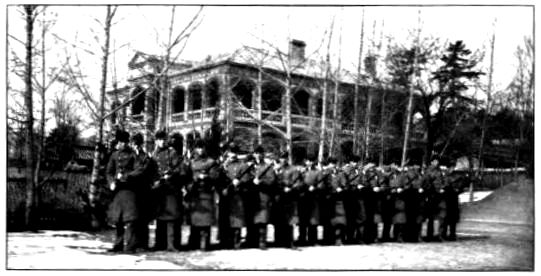
UNITED STATES MARINES NEAR THE LEGATION AT SEOUL
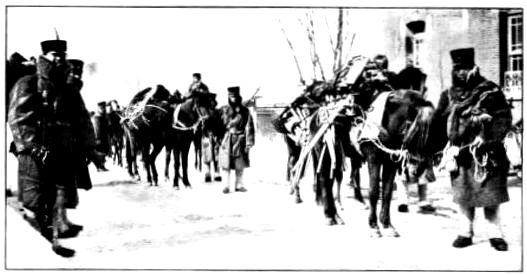
SAPPERS AND MINERS STARTING FOR NORTHERN KOREA
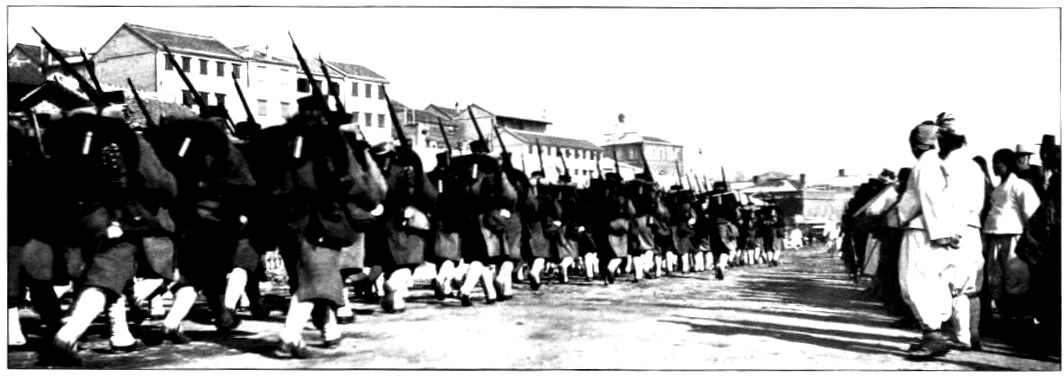
JAPANESE INFANTRY MARCHING THROUGH THE MAIN STREET OF SEOUL
THE JAPANESE OCCUPATION OF SEOUL
40
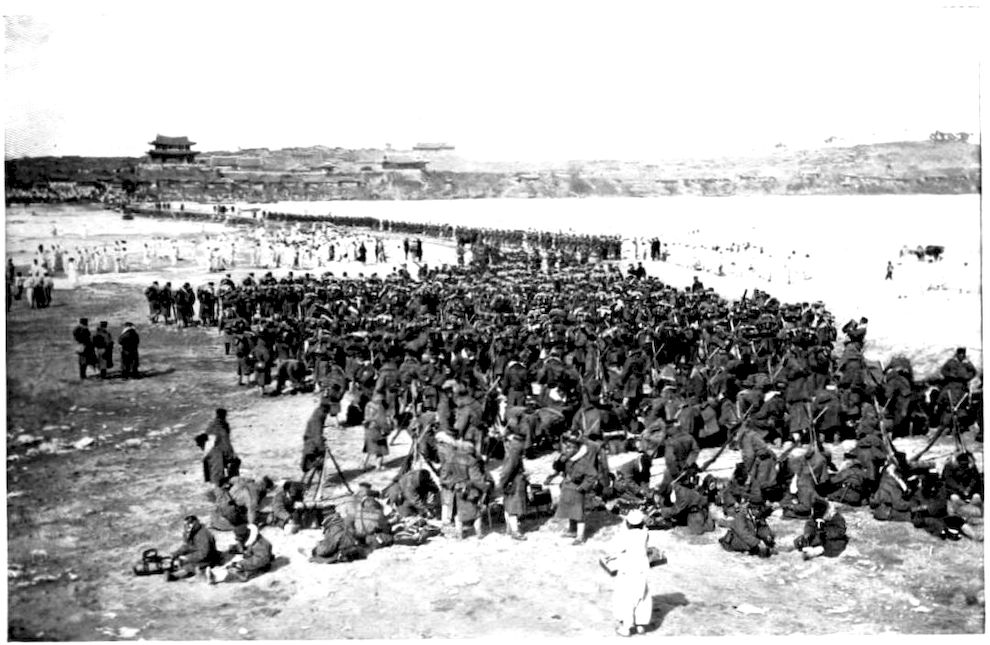
JAPANESE TROOPS WAITING TO CROSS THE RIVER AT PING-YANG
41
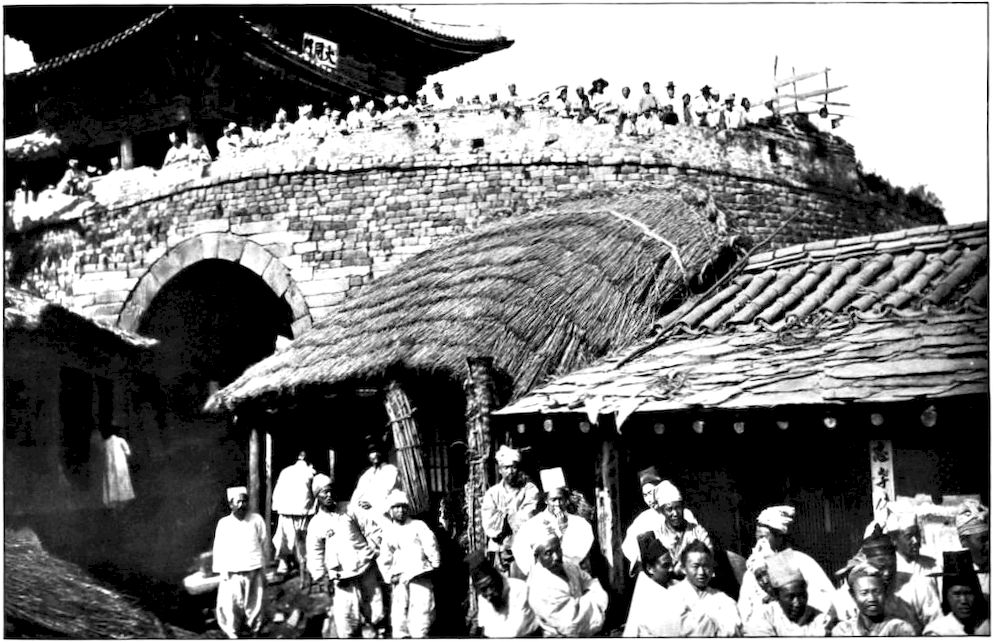
KOREANS WATCHING FROM THE GREAT GATE THE ENTRY OF THE JAPANESE AT SEOUL
42
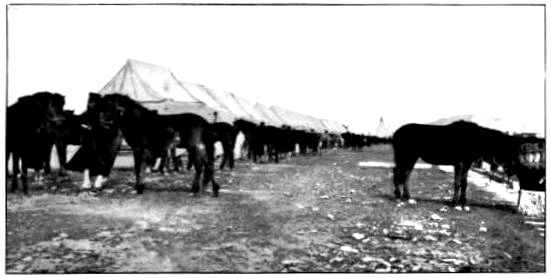
COMMISSARY TENTS IN THE JAPANESE CAMP AT CHEMULPO
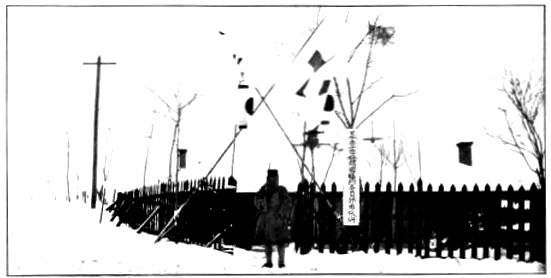
EXTERIOR OF THE HOSPITAL BUILDING, RED CROSS FLAGS OVER THE GATE
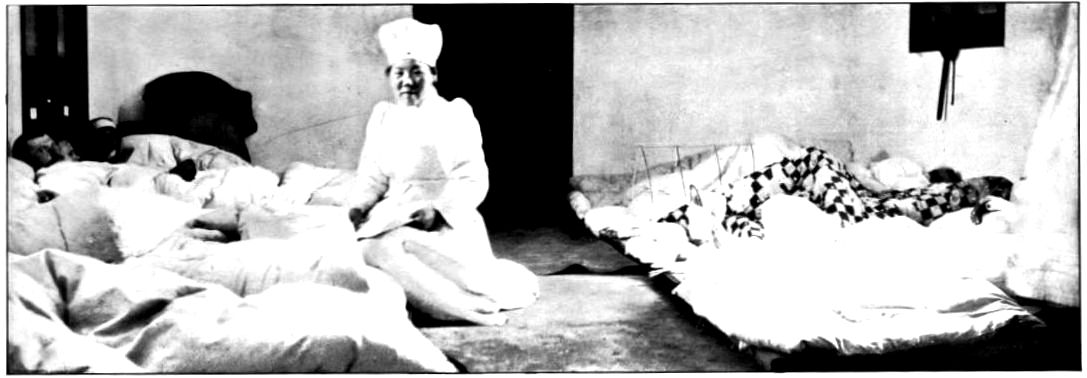
JAPANESE RED CROSS NURSE ATTENDING RUSSIAN SAILORS WOUNDED IN THE BATTLE OF FEBRUARY 9
THE JAPANESE RED CROSS HOSPITAL AT CHEMULPO
As soon as the Japanese landed after the battle between the warships in Chemulpo Harbor, a hospital was improvised and the more dangerously wounded Russians brought ashore from the foreign battleships, where they had been cared for temporarily, and nursed by the Japanese Red Cross service. As a mark of appreciation Russia contributed 2,000 yen ($1,000) to the Japanese branch of the Red Cross]
43