Chapter XII · THE FALL OF PORT ARTHUR
Reading edition
The first day of January, 1905, witnessed the end of the gigantic siege that had furnished a tragic background for eleven of the twelve months of 1904. The first blow struck by the Japanese in the war was aimed at Port Arthur, and during the month that followed they and the defenders employed and endured more terrific forces of destruction than were ever used at any other siege in the history of the world. The fall of this Gibraltar of the East seemed to prove that there can be no such thing as an impregnable fortress. The attack on Port Arthur began with Togo’s dash against the Russian fleet on the night of February 8. Four months later, through the successes of the Japanese on the Liaotung peninsula, the fortress had been cut off from all outside help.
From the outer line of defence at Nanshan, and thirty miles from the town, the Japanese worked their way literally inch by inch, burrowing underground, digging deep trenches that zig-zagged toward the enemy’s lines, until near enough to make a rush. In many places the ground was solid rock and countermining was impossible. Barbed-wire entanglements covered the country for miles, and wide stretches of bare ground had been covered a foot deep with powdered white ash, which stirred into a thick white cloud when trodden on, so as to make a splendid target for machine guns. There were buried mines, some to explode automatically, others to explode when the lookout man in a distant fort pressed a button. At night searchlights flashed across every yard of the country near the lines of forts, and sometimes the Russian gunboats creeping along the shore outside the harbor got far enough to pour a cross-fire into the Japanese encampments. Day and night Togo’s squadron sent in from long range the terrible Shimose shells, worse than lyddite, on the battered town and forts. Where it was impossible to tunnel or burrow, masses of rock and bags full of sand were rushed forward at night to make a temporary shelter where a regiment could go forward a hundred yards, rest, fire for a few minutes, and advance another hundred yards, until at last they were close to the enemy. Then, in the teeth of fierce rifle fire, reinforced, perhaps, by shells from the other forts, the final charge was made.
The last stage of the advance began on November 30 with the capture of 203-Metre Hill. From this hill the Japanese were able for the first time to get the range of the Russian ships in the harbor. All the larger vessels of the Russian fleet were soon disabled. The great Keekwan Mountain fort was captured on December 18, and on the 30th Ehrlung Fort, the key of the inner defences, was stormed. That day and the next the Japanese captured half a dozen neighboring positions, and finally, on January 1, General Stoessel, who had said at the beginning of the siege that Port Arthur would be his tomb, sent a message to General Nogi offering to surrender. For a second time Port Arthur passed into the hands of those from whom the European powers had wrested it ten years before.
218
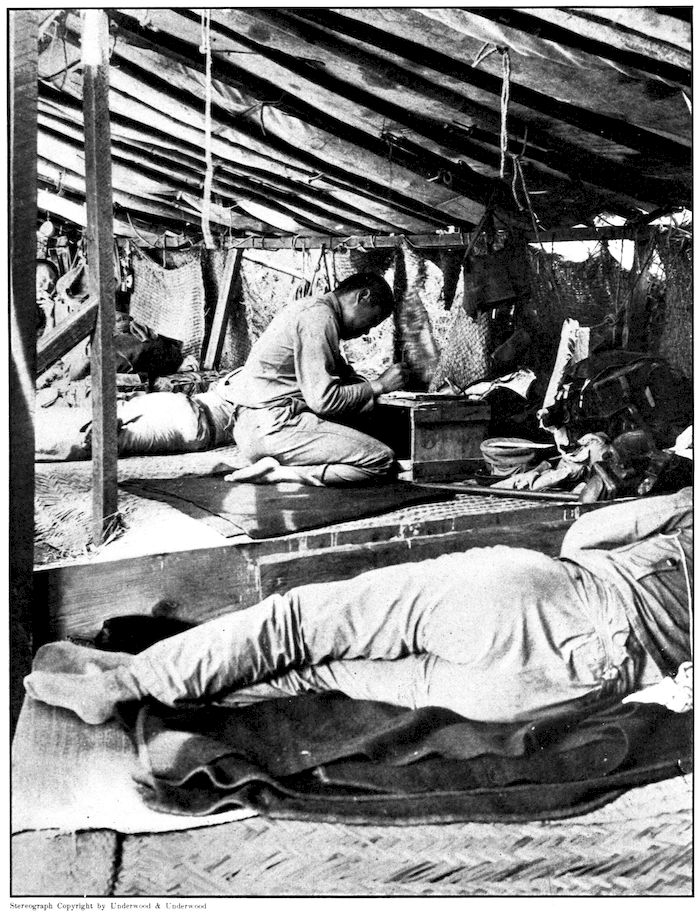
NOGI’S FIGHTING MEN RESTING IN CAMP AT HOOZAN HILL
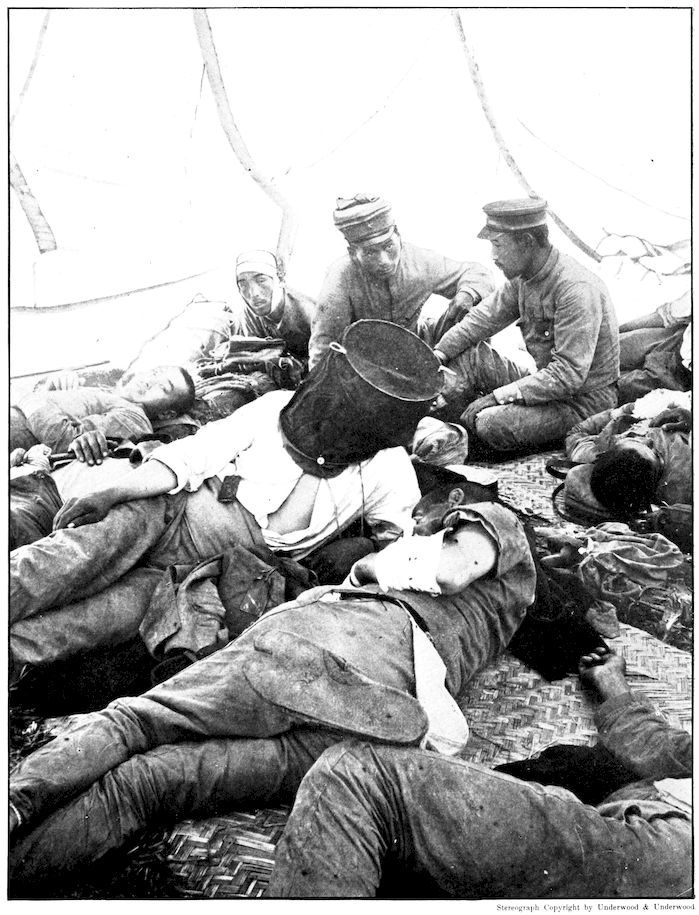
WOUNDED IN A SHELTER TENT THREE MILES FROM RUSSIAN BATTERIES
WITH THE JAPANESE DURING THE LAST DAYS OF THE SIEGE OF PORT ARTHUR
219
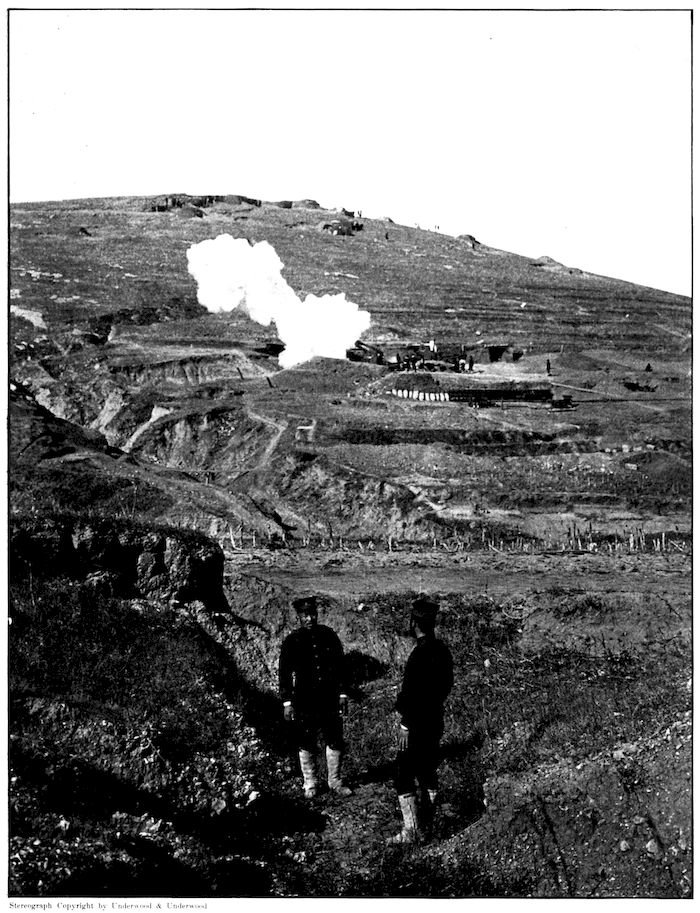
SIEGE GUNS ON THE SLOPE, FIELD GUNS AT THE TOP OF THE HILL
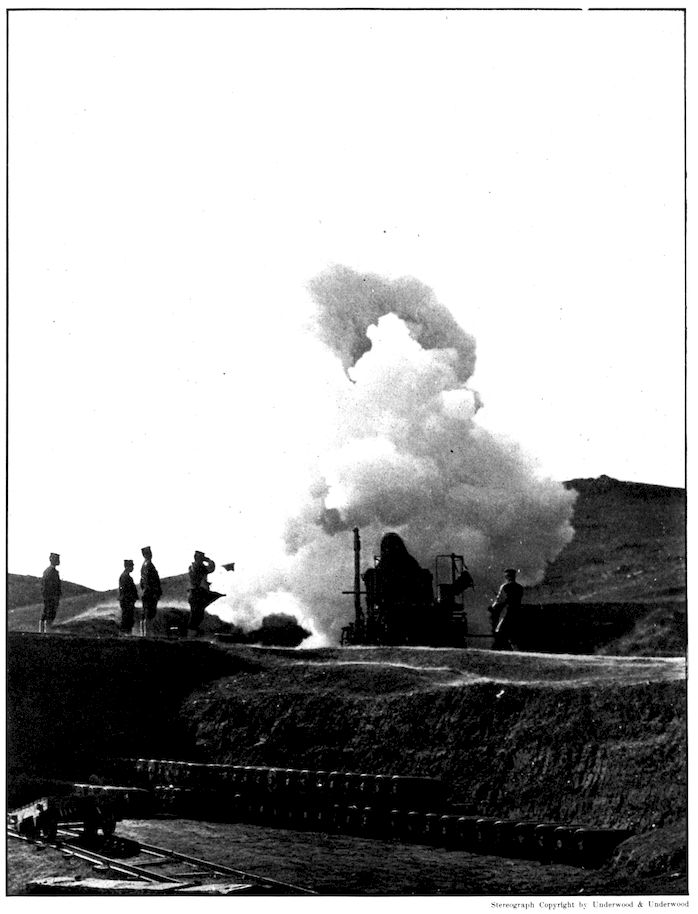
ONE OF THE SHELLS BEGINNING ITS LONG FLIGHT TOWARD THE TOWN
THE GREAT SIEGE GUNS THROWING ELEVEN-INCH SHELLS INTO PORT ARTHUR
220
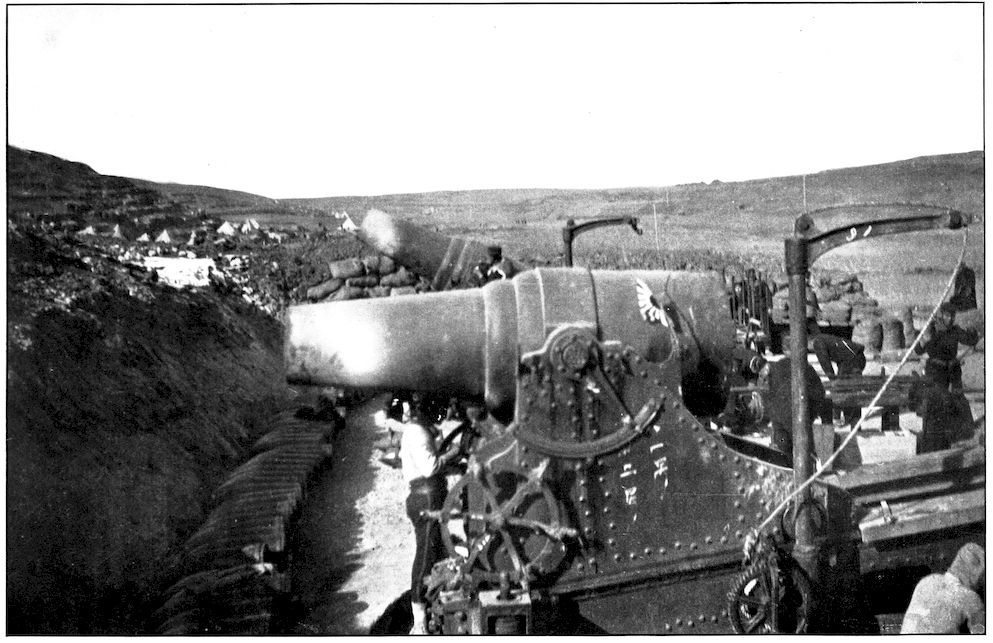
TWO OF THE GREAT TWENTY-EIGHT CENTIMETER SIEGE GUNS USED BY THE JAPANESE AGAINST PORT ARTHUR
221
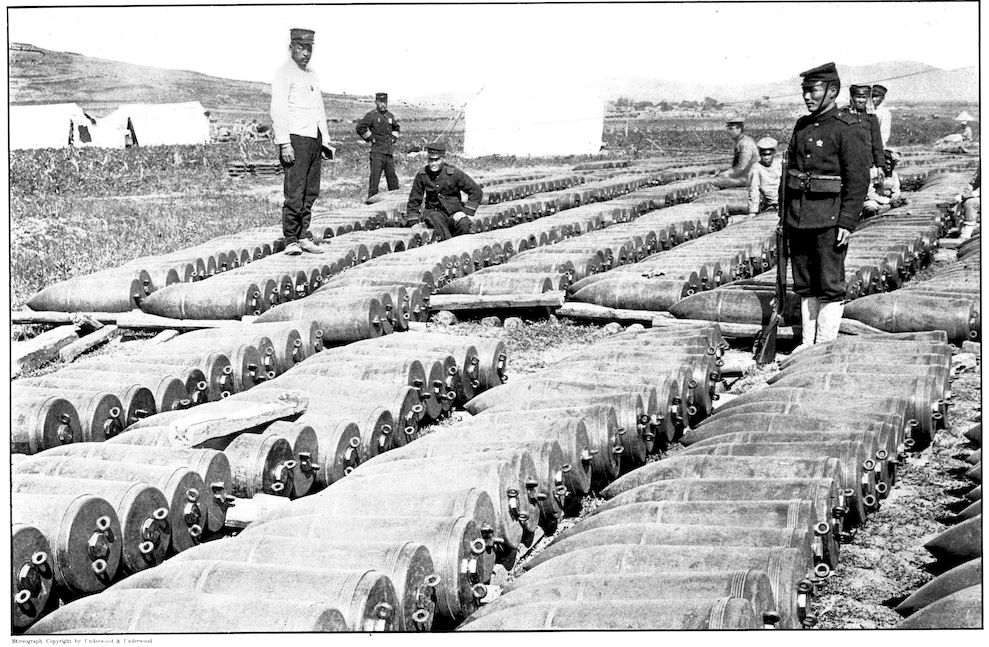
FIVE-HUNDRED-POUND SHELLS WAITING TO BE HURLED INTO PORT ARTHUR
222
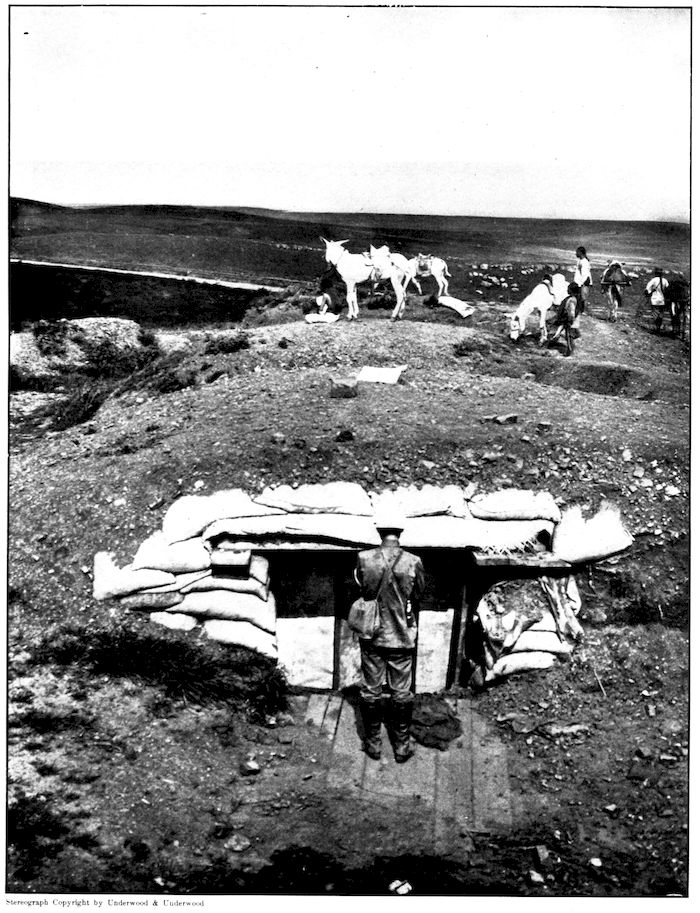
RUSSIAN BOMB-PROOF NEAR NANSHAN HILL CAPTURED BY THE JAPANESE
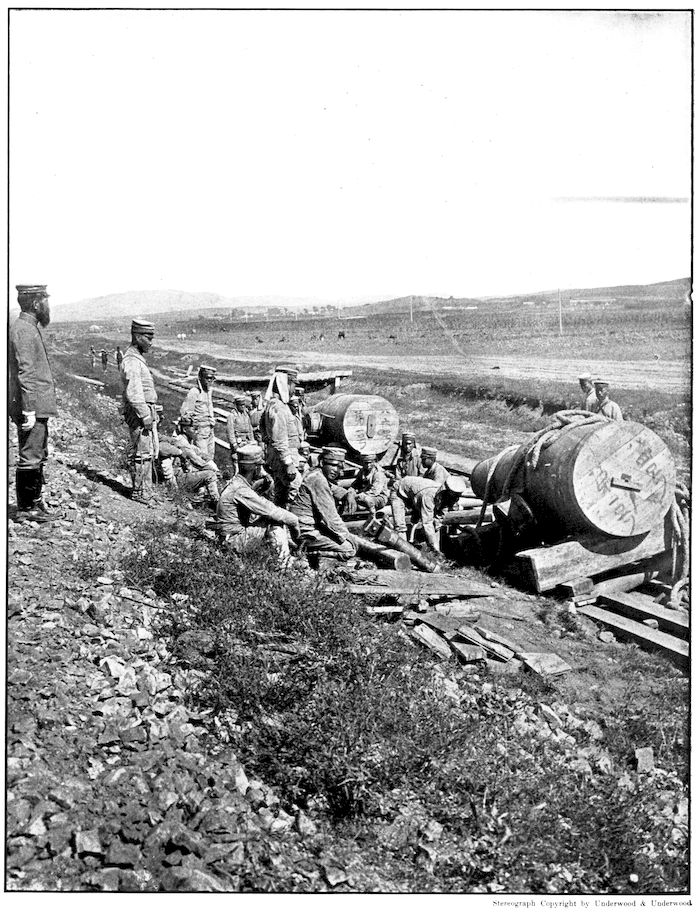
THE SLOW WORK OF MOVING THE SIEGE GUNS TO NEW EMPLACEMENTS
SCENES IN THE NEIGHBORHOOD OF PORT ARTHUR DURING THE LONG SIEGE
223
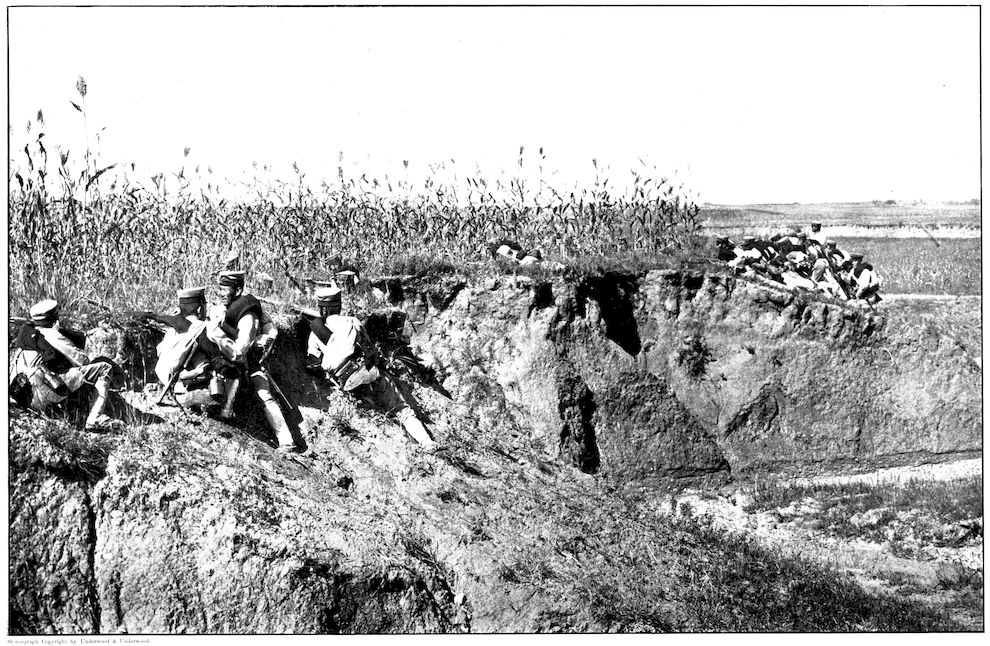
INFANTRY HIDDEN BY CORNFIELDS AND RAVINES WAITING THE ORDER TO ADVANCE
224
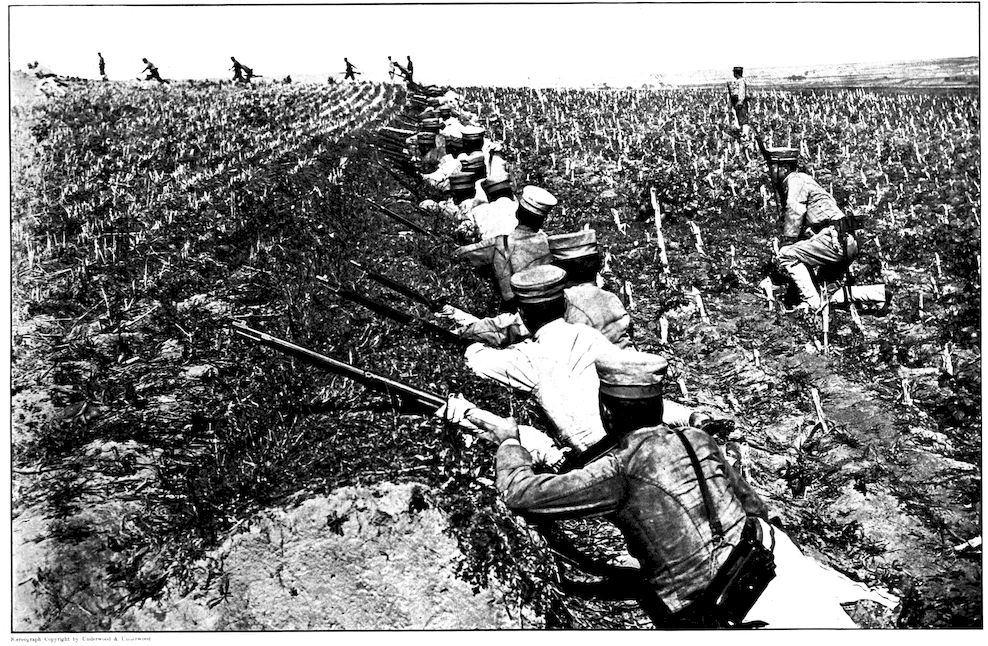
JAPANESE INFANTRY CREEPING THROUGH A CORNFIELD TOWARD THE RUSSIAN POSITION NEAR HOOZAN
225
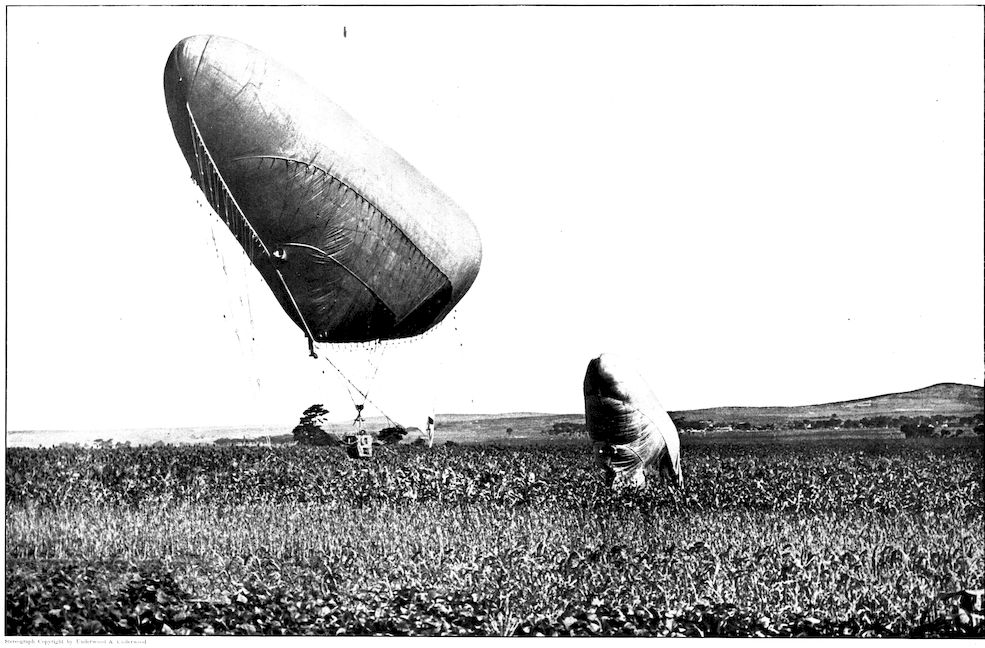
JAPANESE WAR BALLOON AND GAS BAG IN A FIELD ABOUT FOUR MILES NORTH OF PORT ARTHUR
226
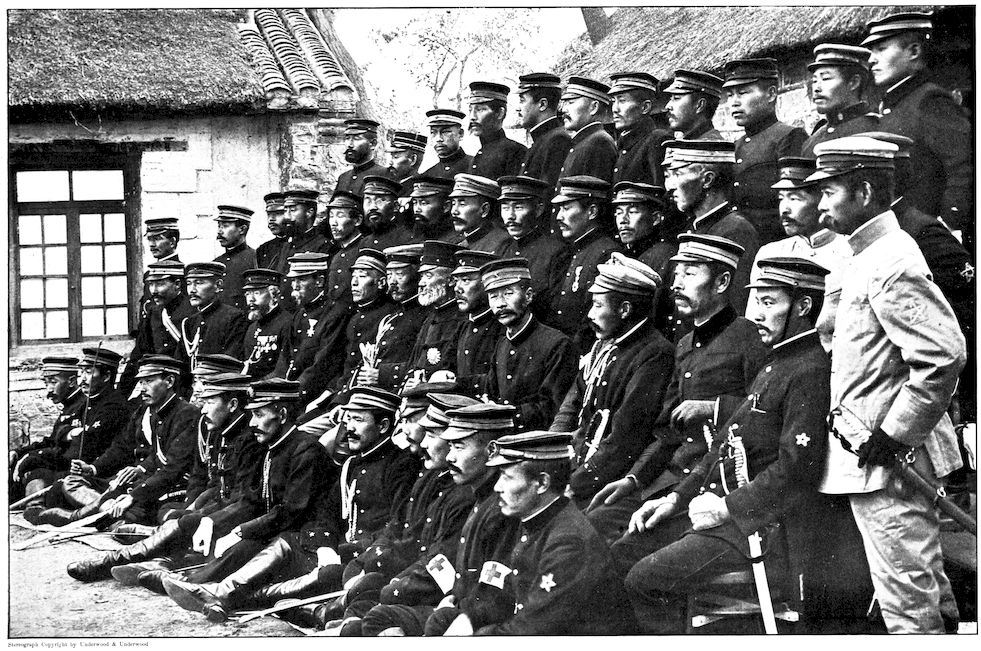
GENERAL NOGI AND HIS STAFF, THE CONQUERORS OF PORT ARTHUR
General Nogi sits in the centre, the gray-bearded man with the round decoration on his breast. On his right is General Ijichi, his chief of staff, who conducted the negotiations for the surrender. On Ijichi’s right is the Surgeon-General of the Third Army, and beyond, with the beard and many decorations, is Major Arriga, Japan’s greatest expert on international law
227
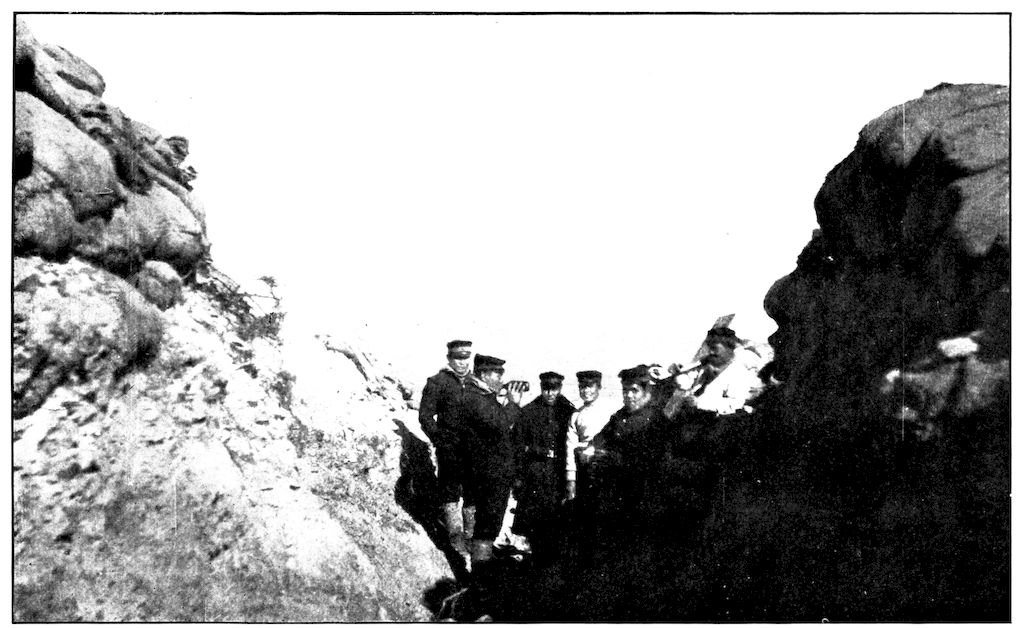
BETWEEN FIGHTS IN THE TRENCH AT SHOGERSAN FORT
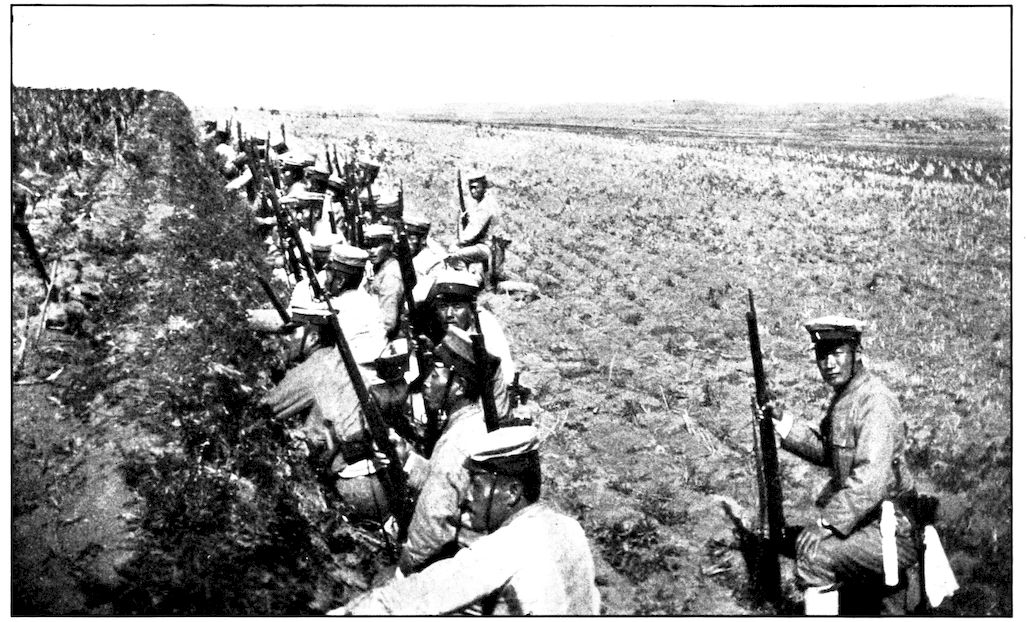
SHELTERED INFANTRY AWAITING OPPORTUNITY TO ADVANCE
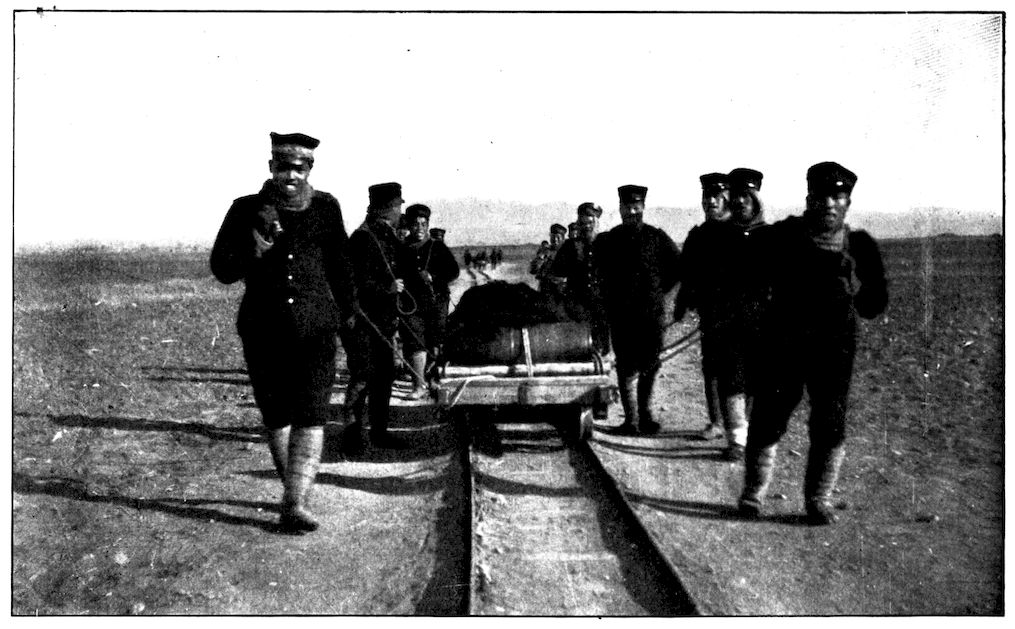
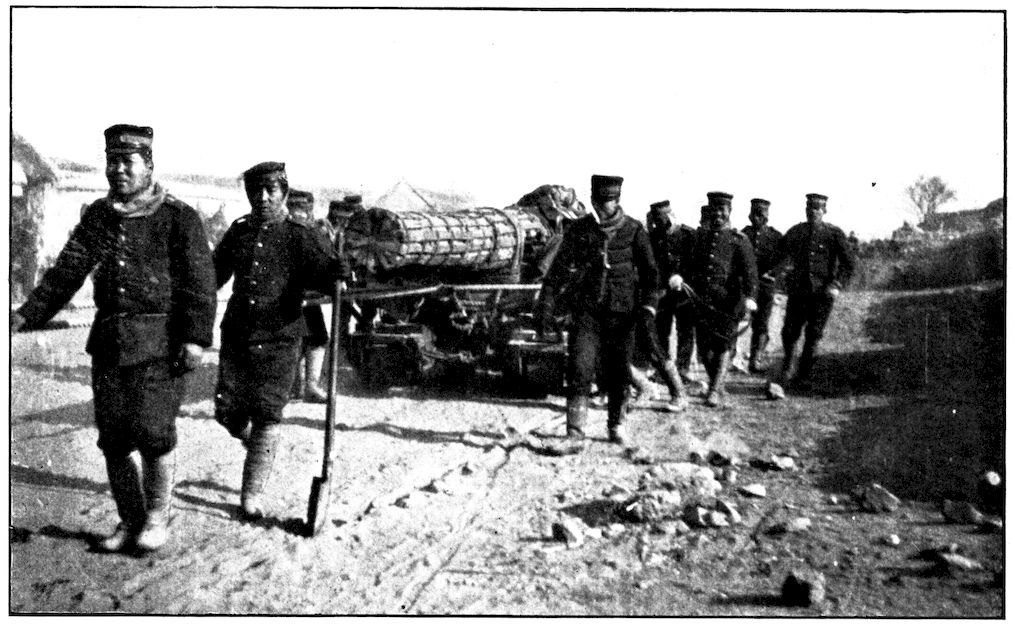
BRINGING UP THE BIG TWENTY-EIGHT CENTIMETER SHELLS
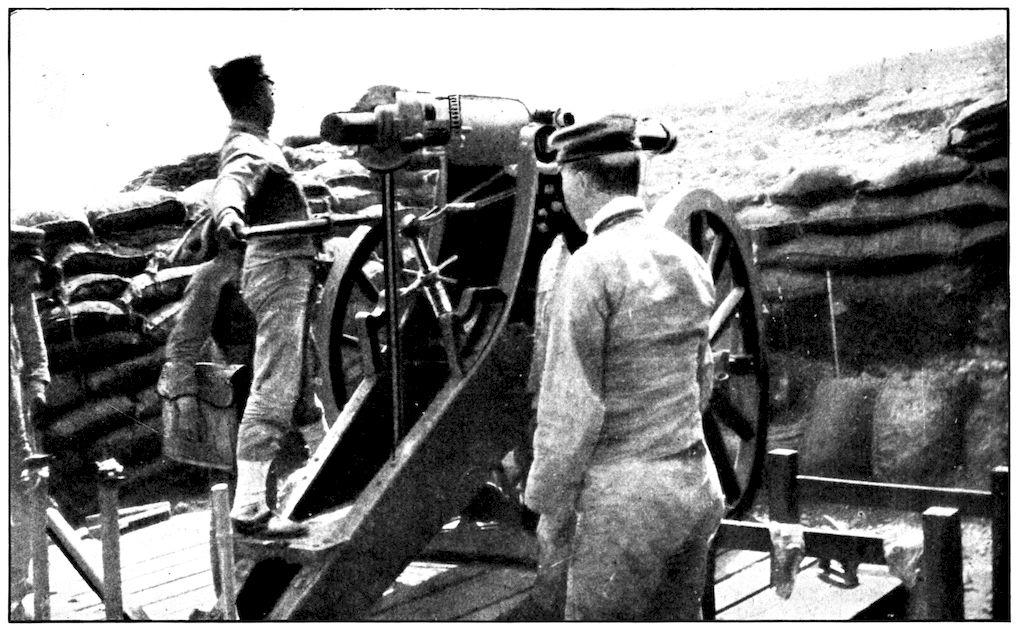
SIEGE GUN SHELTERED BEHIND BAGS OF EARTH
WITH THE JAPANESE AS THEY CLOSED IN AROUND PORT ARTHUR
228
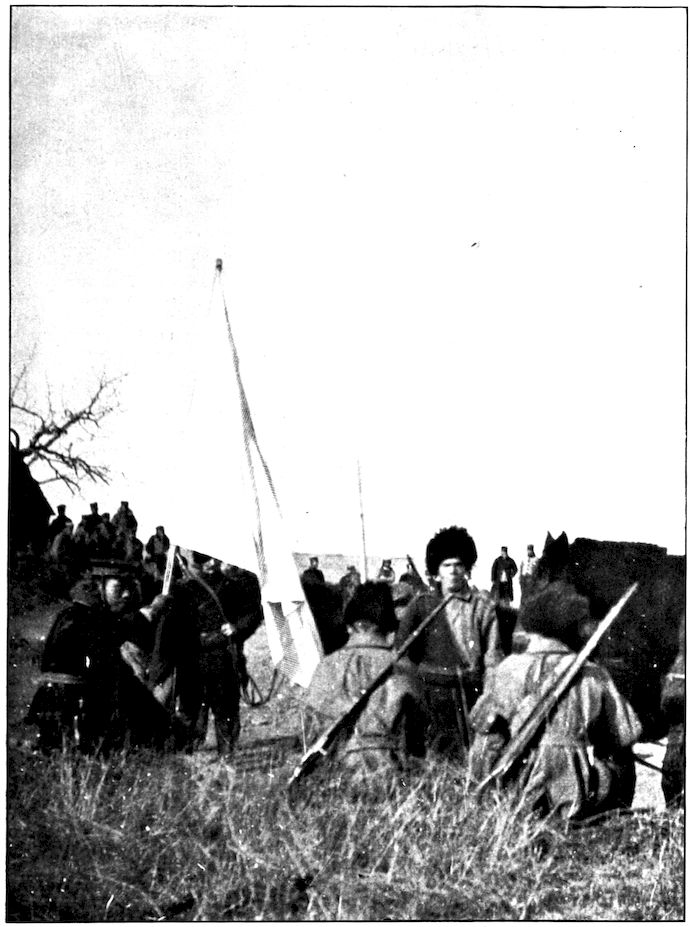
THE JAPANESE AND RUSSIAN WHITE FLAGS OF TRUCE
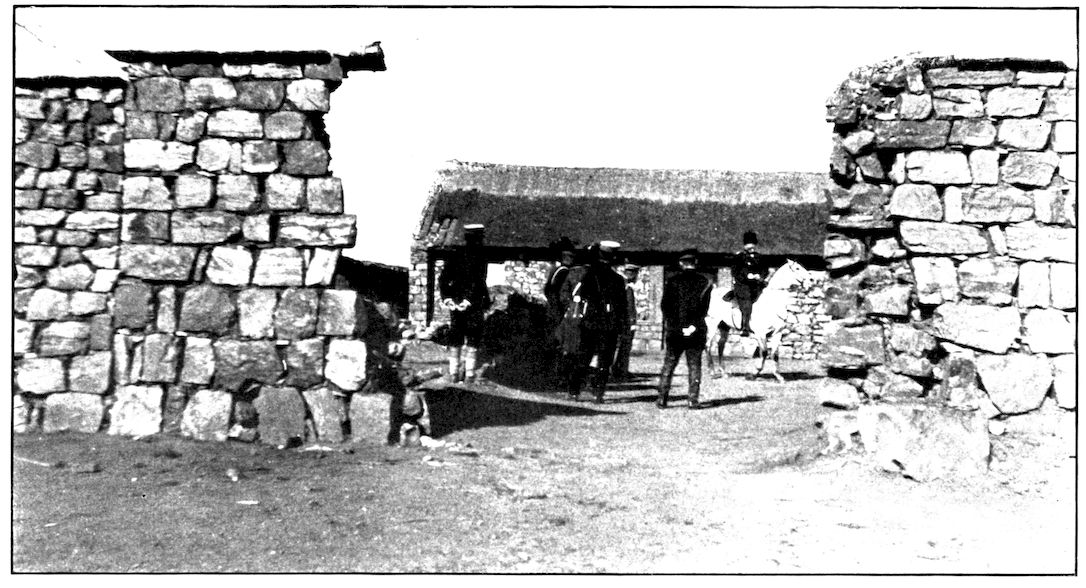
GENERAL STOESSEL ABOUT TO PRESENT HIS FAVORITE HORSE TO GENERAL NOGI
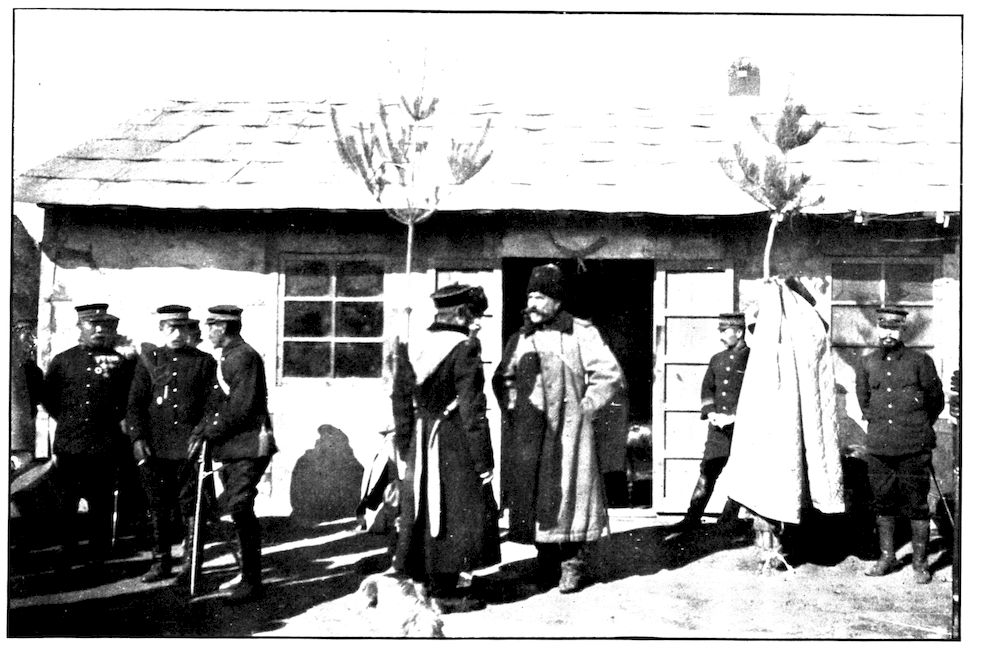
GENERAL STOESSEL AT THE STATION WAITING TO TAKE THE TRAIN FOR DALNY
INCIDENTS OF THE SURRENDER OF PORT ARTHUR TO THE JAPANESE
229
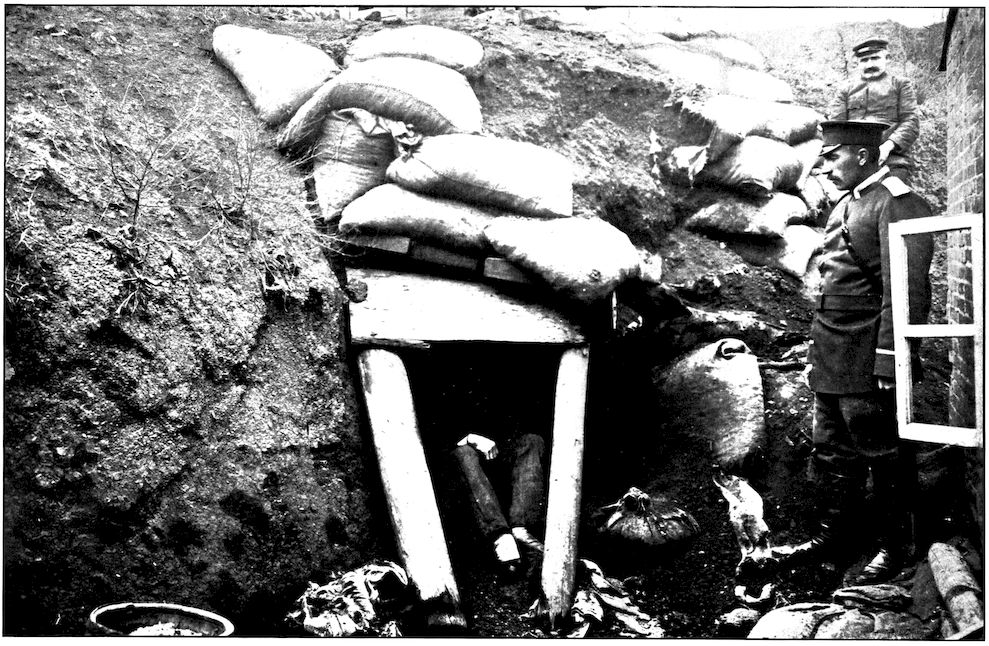
ONE OF THE MANY “BOMB-PROOFS” USED BY CIVILIANS AT PORT ARTHUR
Although a woman was killed in this shelter shortly before the photograph was taken, they were, generally speaking, fairly effective protections. During the heavier bombardments, the occupants lived in them for days at a time. The Russo-Chinese Bank transacted business underground in “bomb-proofs” constructed in this manner for some time during the latter part of the siege
230
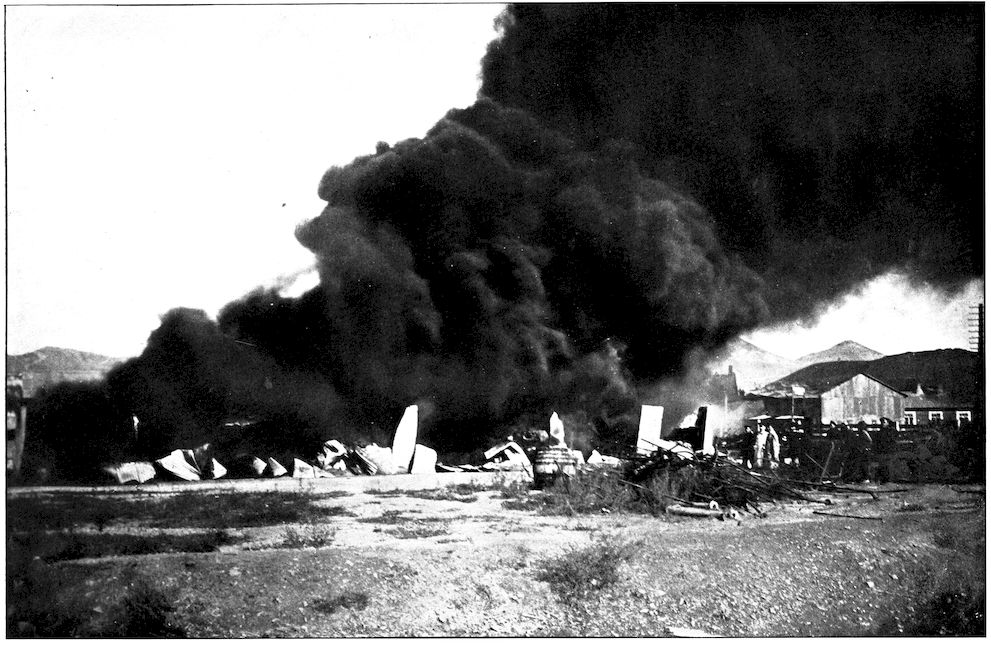
ENGINEERS’ STORES, SET ON FIRE BY JAPANESE SHELLS, BURNING AT PORT ARTHUR
231
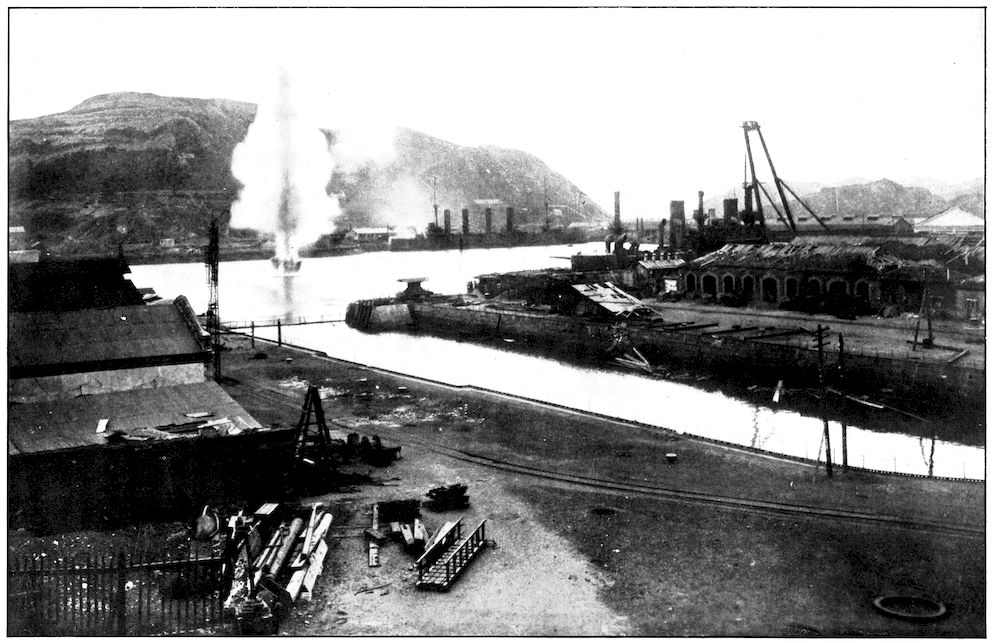
JAPANESE SHELL BURSTING IN THE BASIN IN THE EASTERN SECTION OF THE OLD TOWN, PORT ARTHUR
232
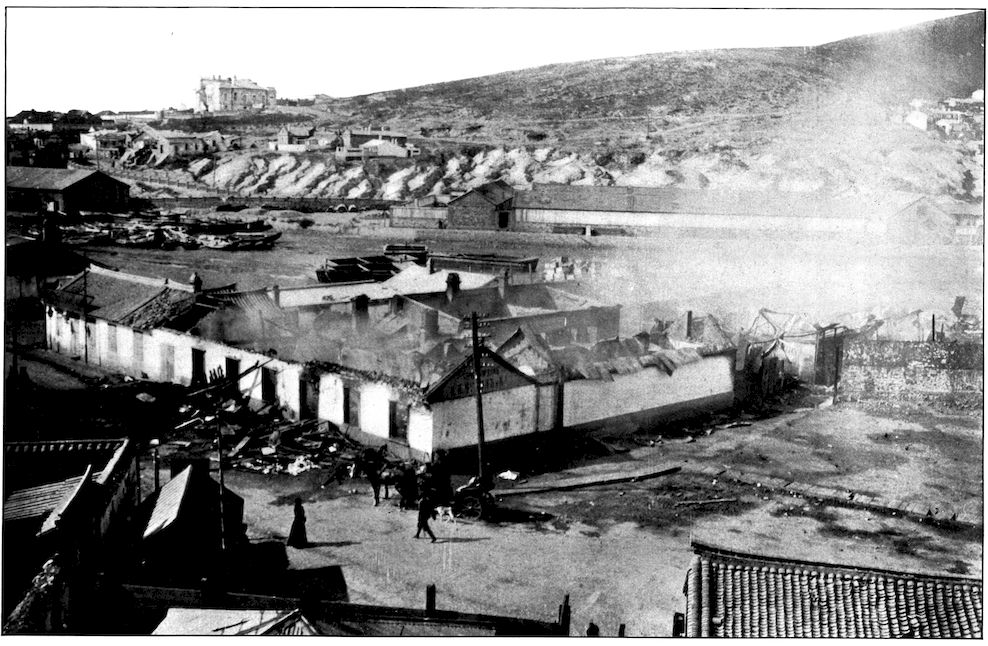
VIEW OF THE OLD TOWN, PORT ARTHUR, IN NOVEMBER, AFTER A BOMBARDMENT
233
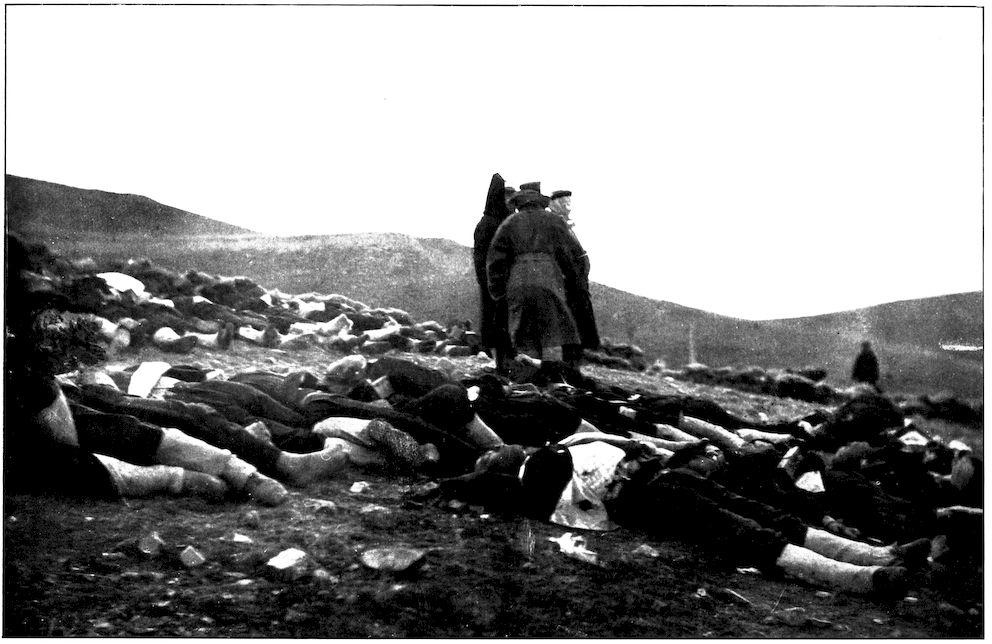
THE PRICE OF VICTORY—PART OF THE JAPANESE DEAD LYING ON 203-METER HILL
234
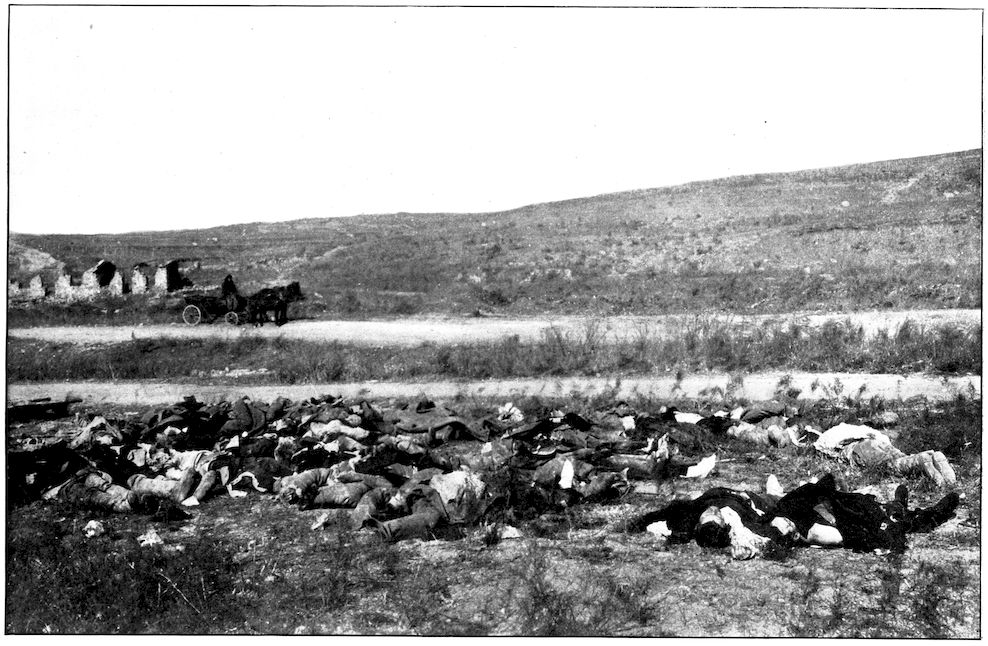
RUSSIAN DEAD AWAITING BURIAL IN THE OUTSKIRTS OF PORT ARTHUR
235
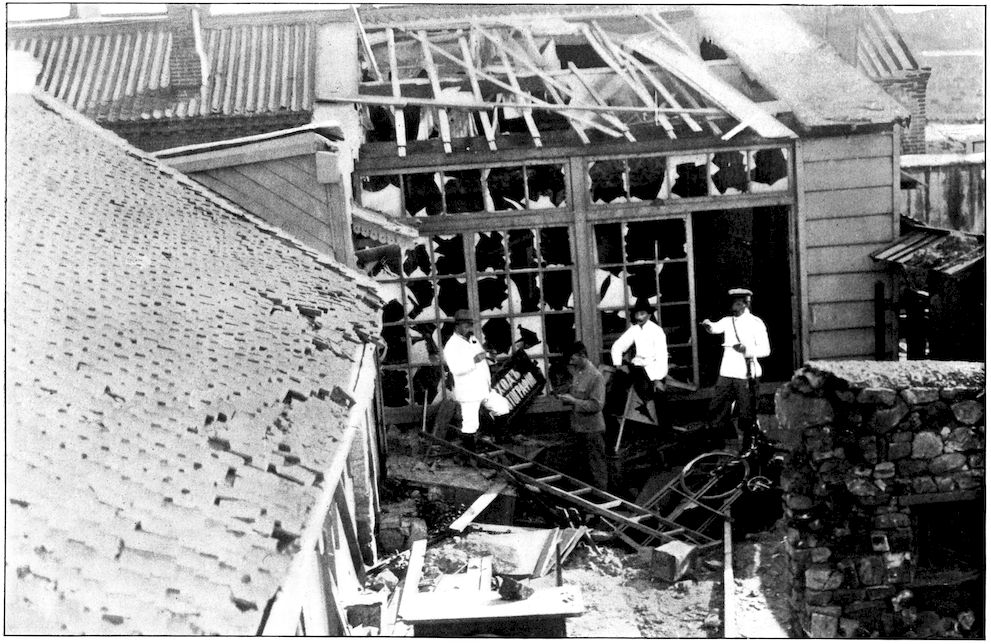
PHOTOGRAPHER’S STUDIO AT PORT ARTHUR AFTER IT HAD BEEN STRUCK BY ONE OF THE JAPANESE SHELLS
236
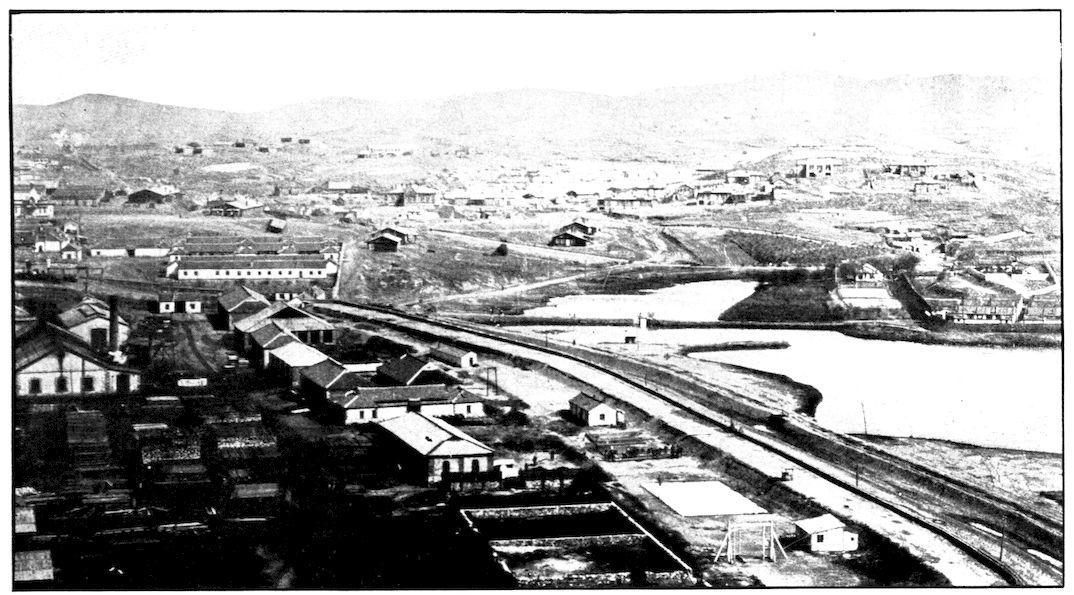
MAIN ROAD OUT OF THE NEW TOWN, PORT ARTHUR
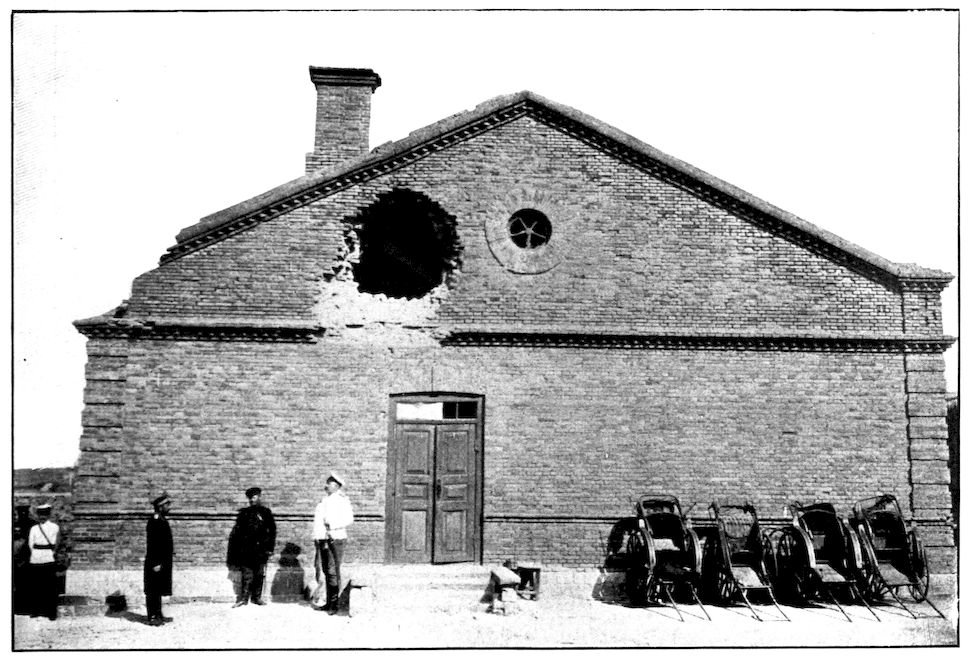
RUSSIAN POLICE STATION, PORT ARTHUR, HIT BY JAPANESE SHELL
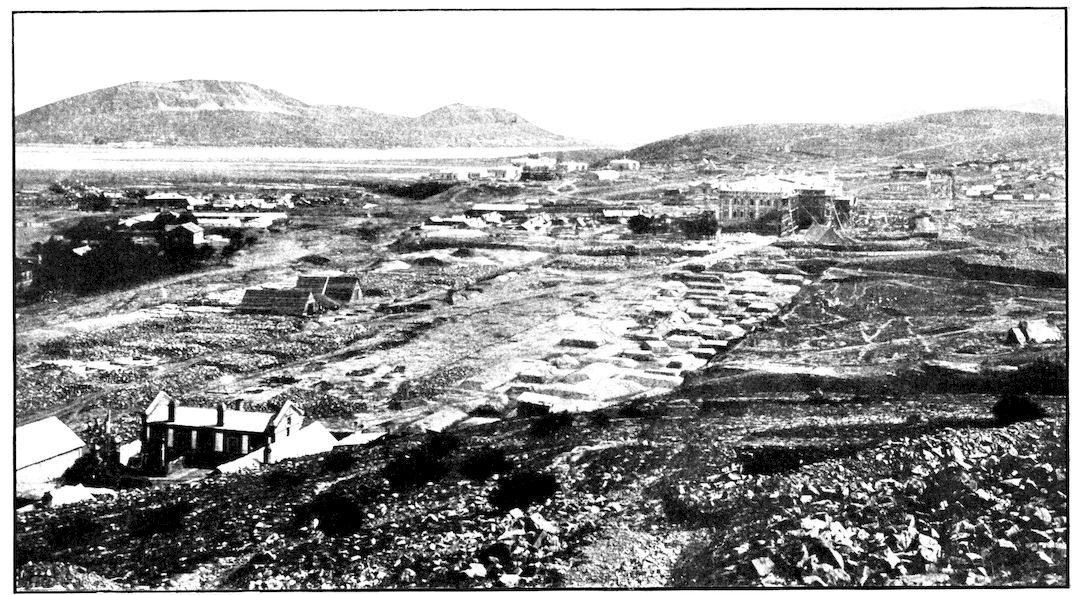
VIEW OF THE NEW TOWN, PORT ARTHUR, IN OCTOBER
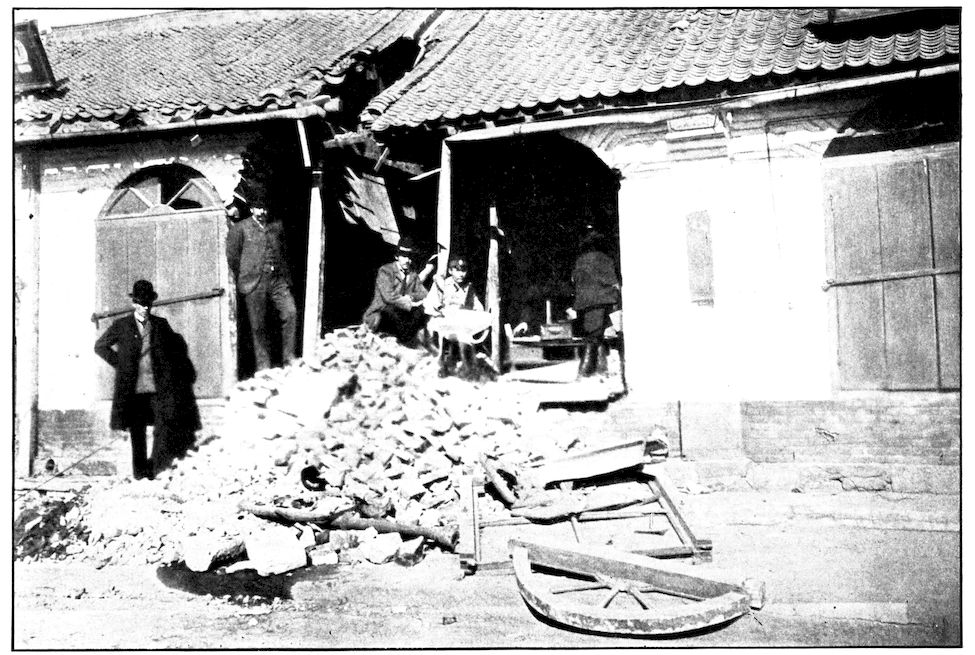
WHERE A JAPANESE SHELL HAD EXPLODED IN THE MIDDLE OF THE TOWN
VIEWS OF PORT ARTHUR, IN OCTOBER, WHEN THE SIEGE WAS HALF OVER
237
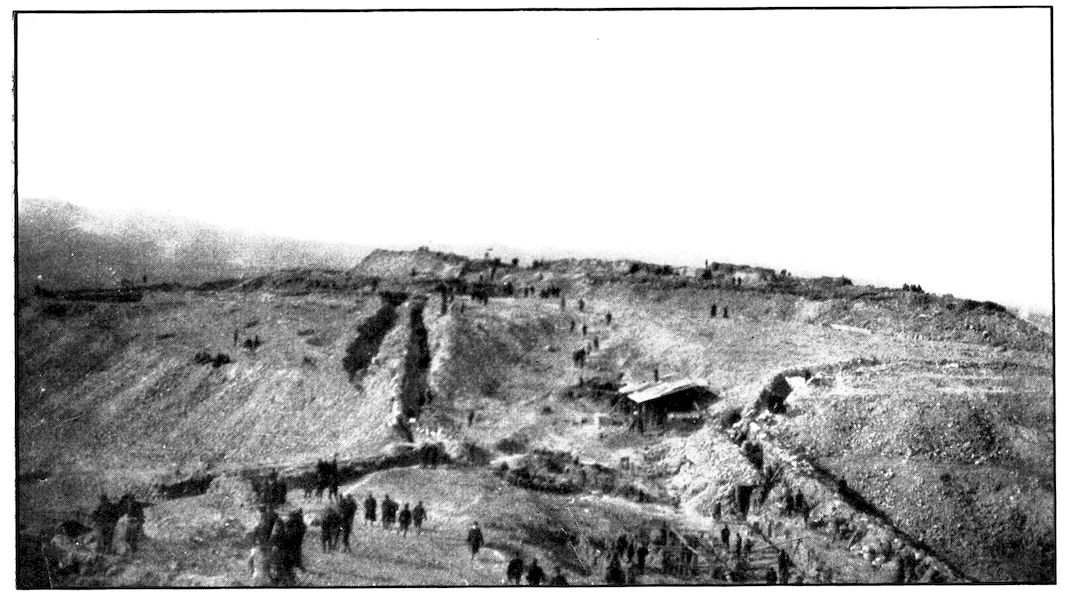
INSIDE FORT NILUSAN AFTER THE RUSSIANS HAD GIVEN IT UP
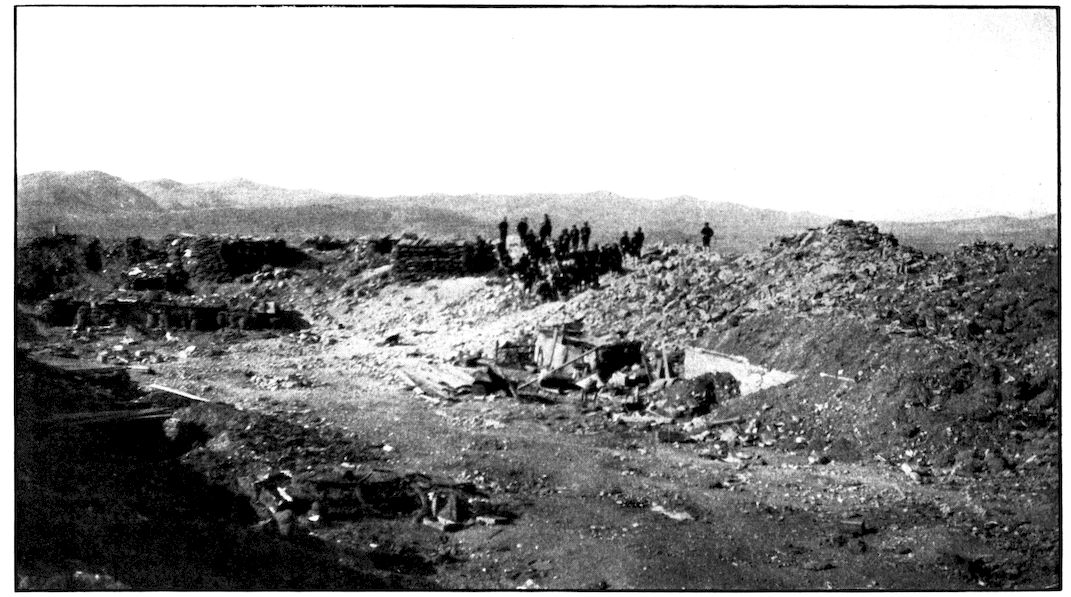
STANDING ON A “BOMB-PROOF” INSIDE ONE OF THE PORT ARTHUR FORTS
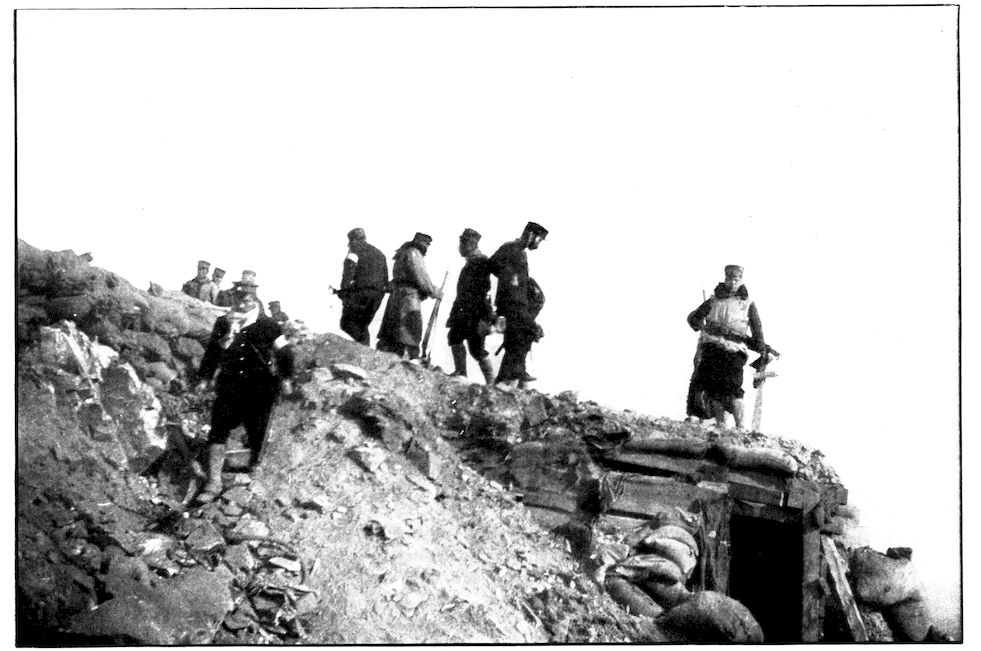
NORTH KEEKWANSAN FORT AFTER THE SURRENDER
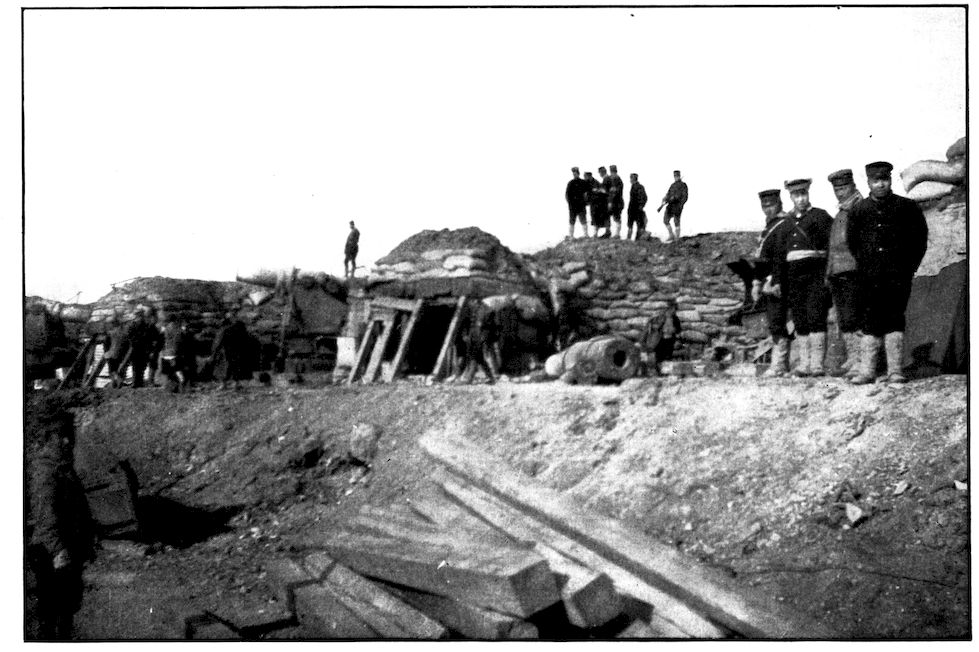
DISMOUNTED SIEGE GUNS INSIDE ONE OF THE RUSSIAN FORTS
INSIDE SOME OF THE RUSSIAN FORTS AT PORT ARTHUR AFTER ITS SURRENDER
238
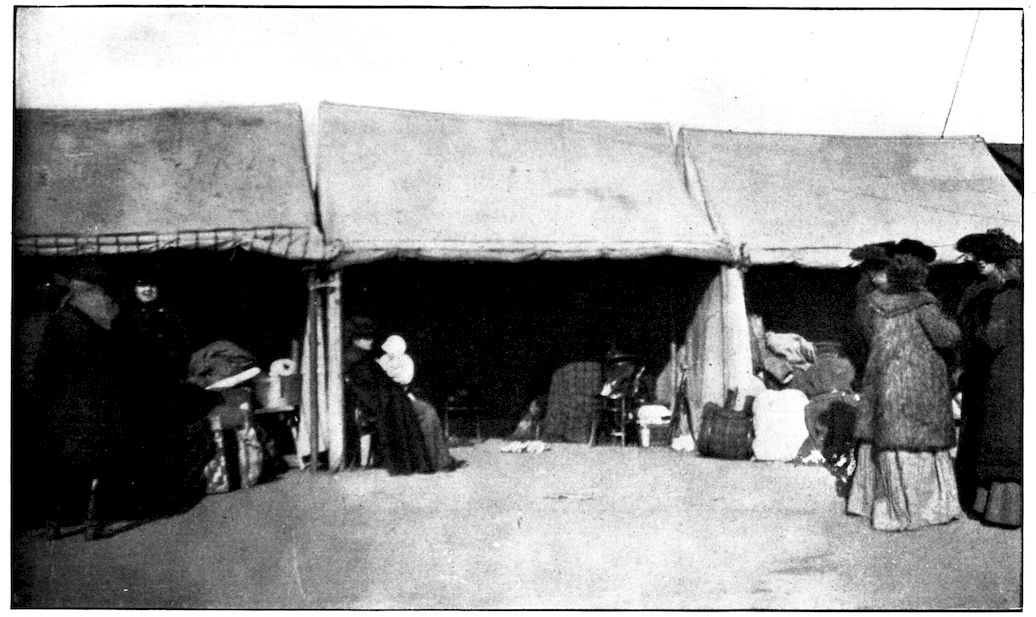
WOMEN AND CHILDREN ABOUT TO TAKE THE TRAIN FROM PORT ARTHUR
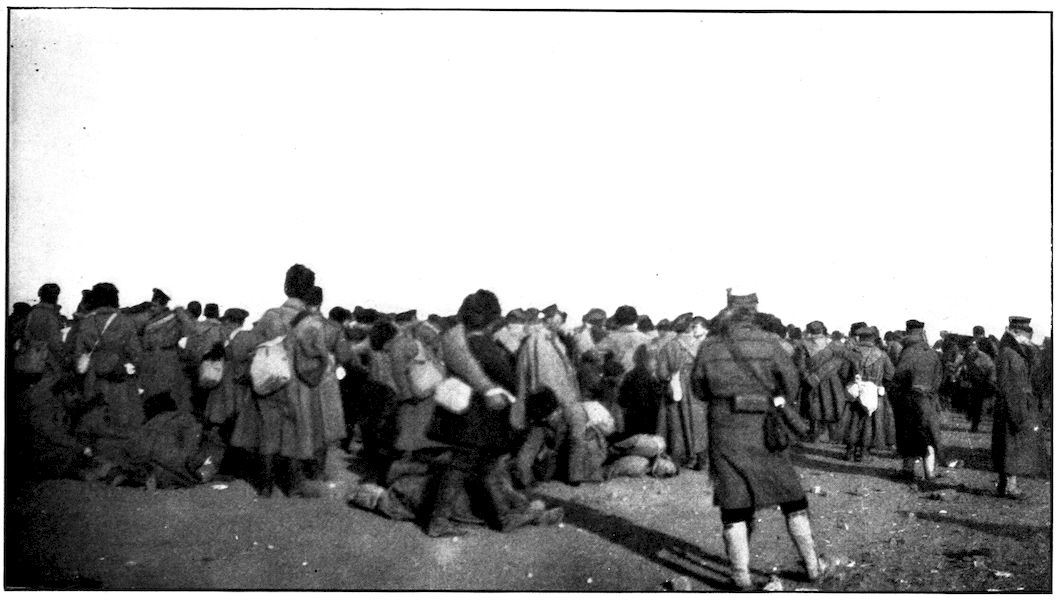
PRISONERS TAKEN AT PORT ARTHUR WAITING TO BOARD JAPANESE TRANSPORT
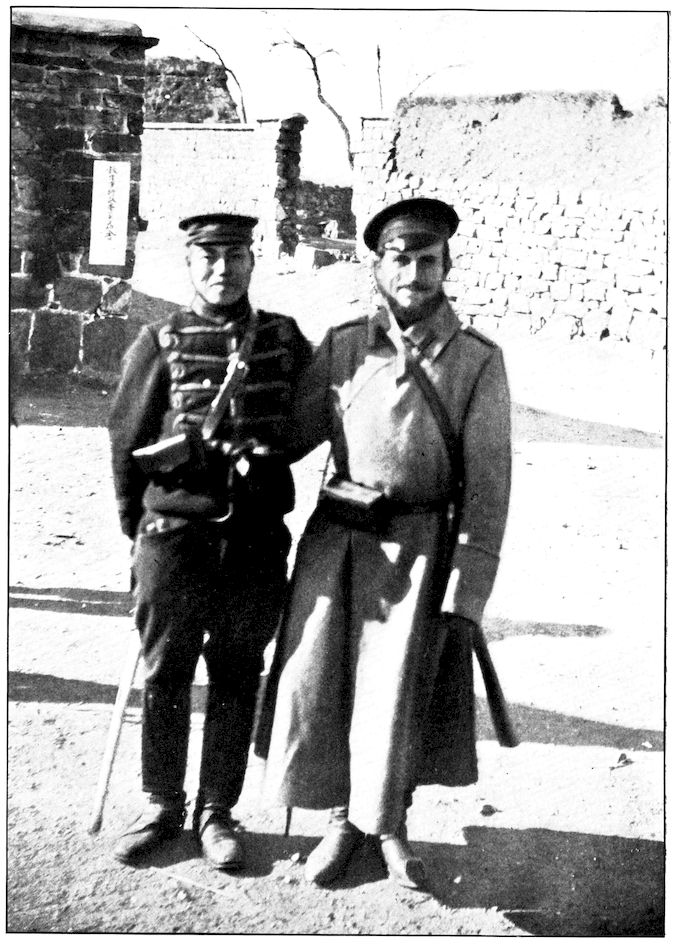
RUSSIAN AND JAPANESE SOLDIERS GETTING ACQUAINTED
SCENES AT PORT ARTHUR IMMEDIATELY AFTER THE SURRENDER
239
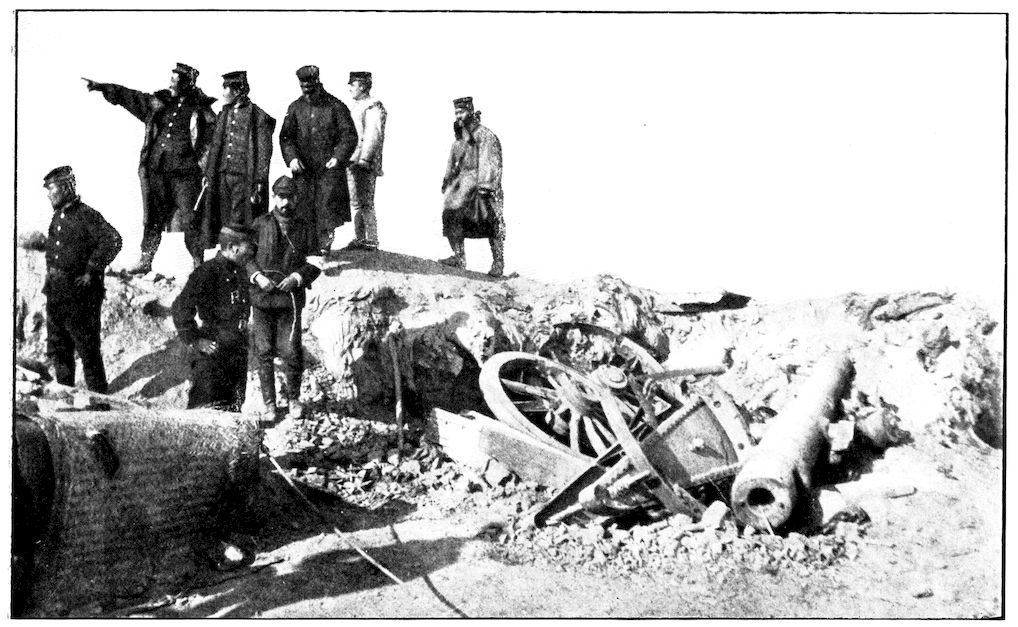
JAPANESE SOLDIERS IN THE NIRYUSAN FORT AFTER THE SURRENDER
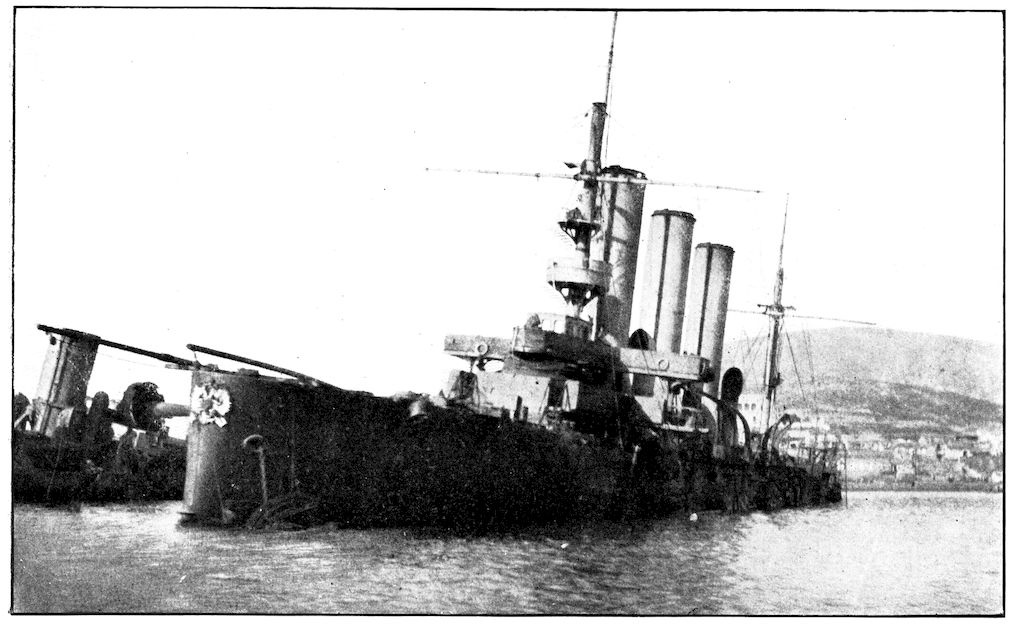
THE CRUISER “PALLADA,” WITH THE “POBIEDA” SHOWING JUST BEHIND HER
ON THEIR WAY TO 203-METER HILL WITH A TWENTY-EIGHT CENTIMETER GUN
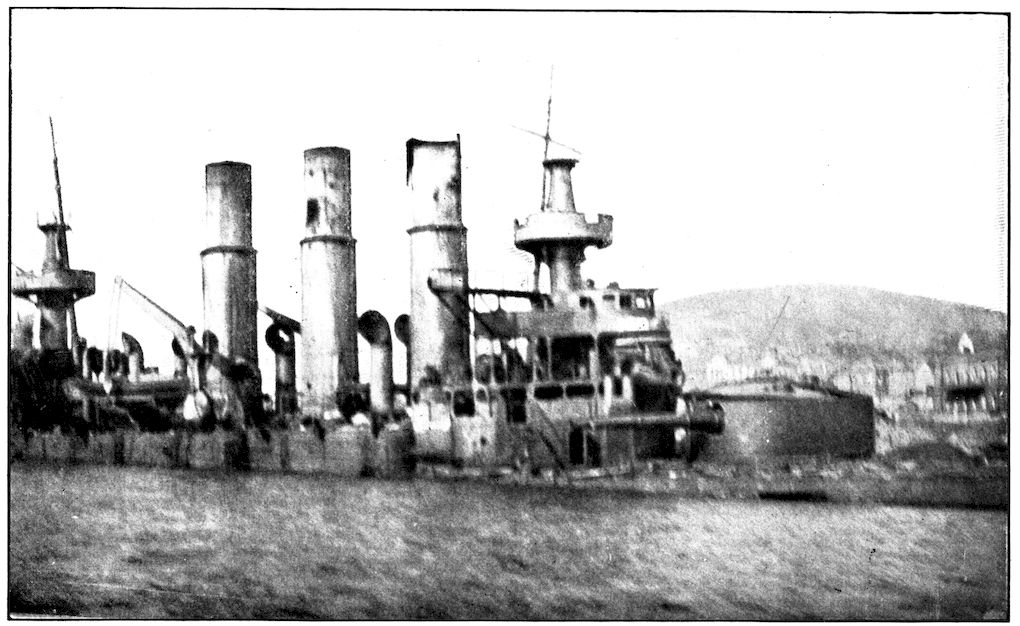
THE BATTLESHIP “RETVIZAN” BEACHED AT PORT ARTHUR
SCENES AT PORT ARTHUR IMMEDIATELY AFTER THE SURRENDER
240
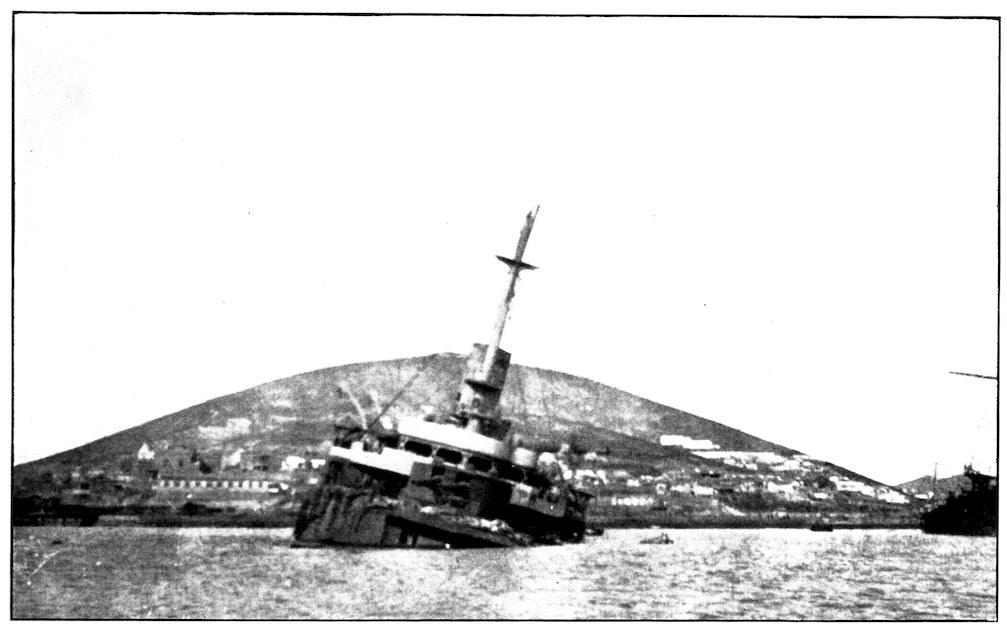
BATTLESHIP “POBIEDA” BEACHED AT PORT ARTHUR
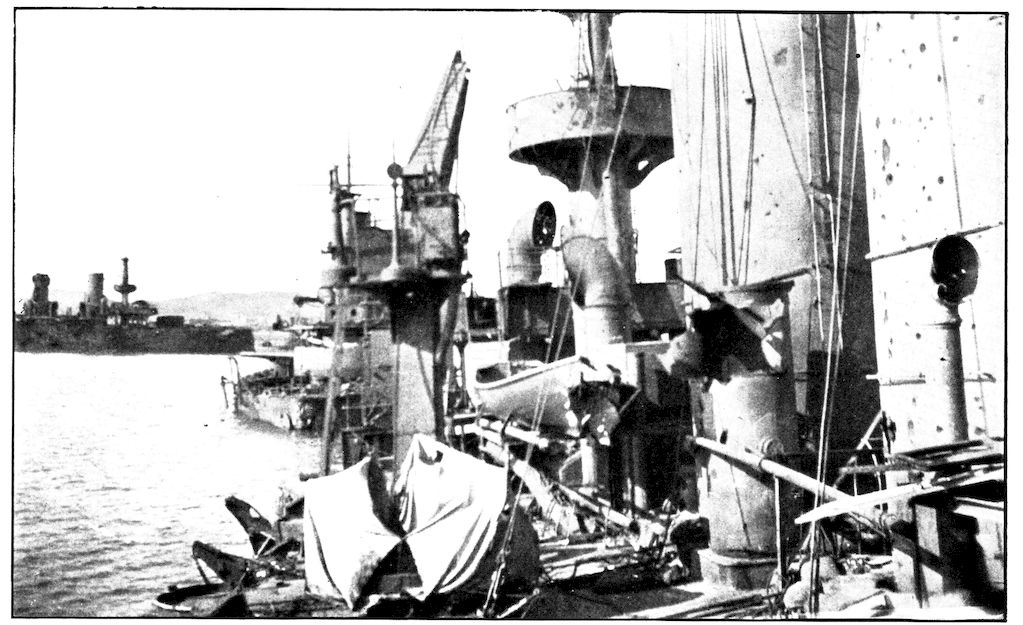
THE “POLTAVA” AND “PERESVIET” AGROUND IN THE HARBOR
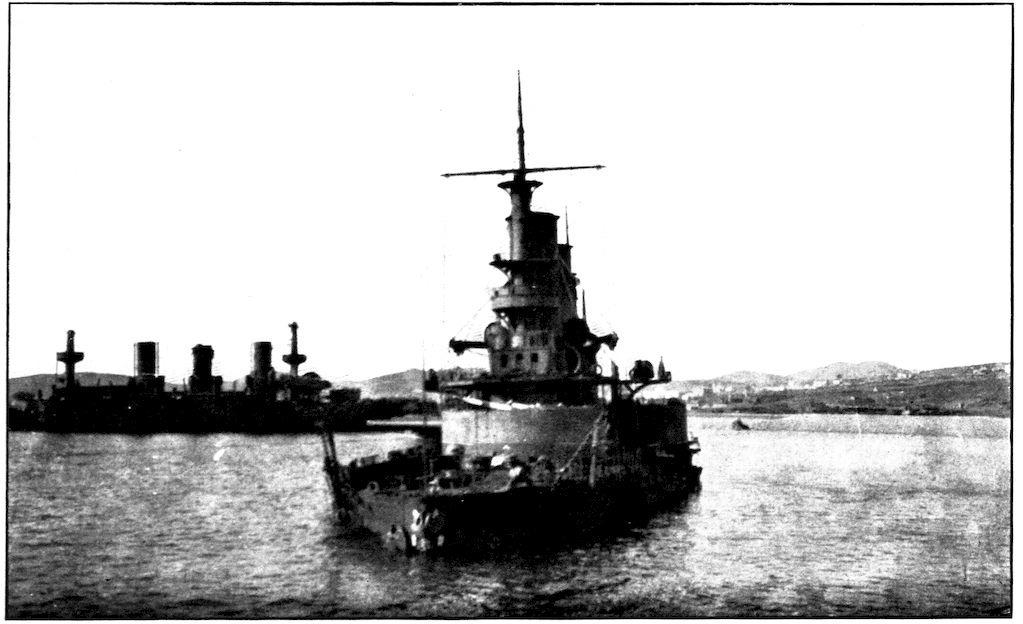
THE BATTERED “RETVIZAN,” “POLTAVA” AND “PERESVIET”
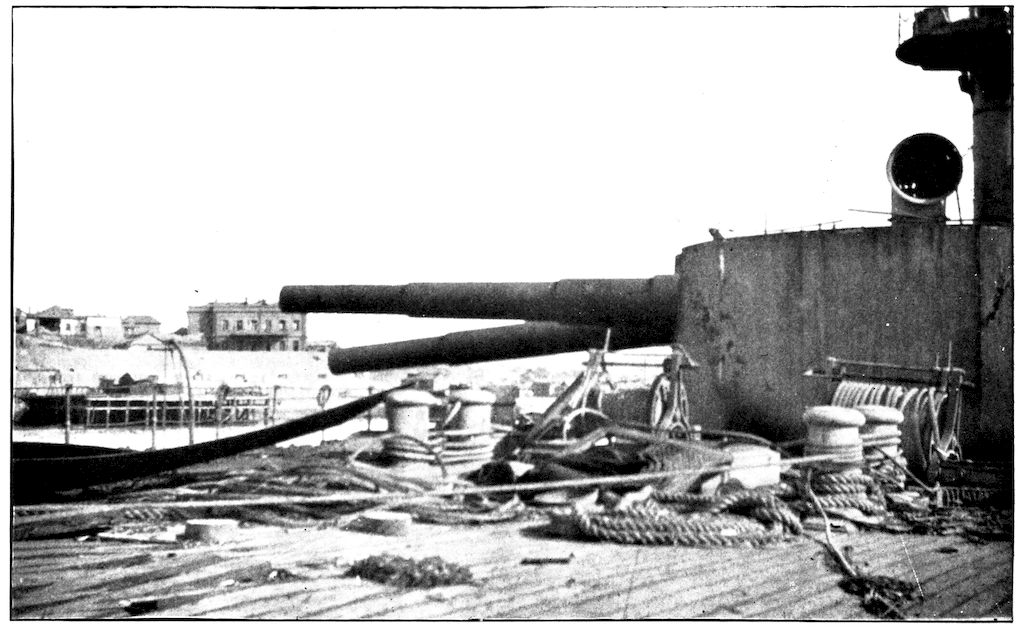
FORWARD TURRET OF THE BATTLESHIP “RETVIZAN”
SUNKEN RUSSIAN BATTLESHIPS AT PORT ARTHUR AFTER ITS CAPTURE BY THE JAPANESE
241
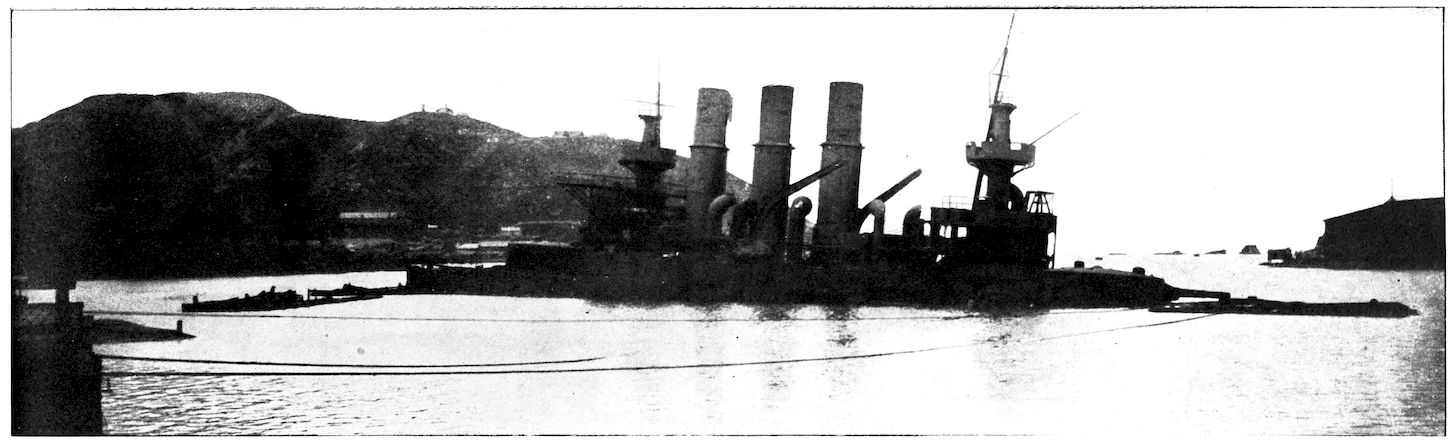
THE BATTLESHIP “RETVIZAN” THE DAY AFTER THE SURRENDER OF PORT ARTHUR
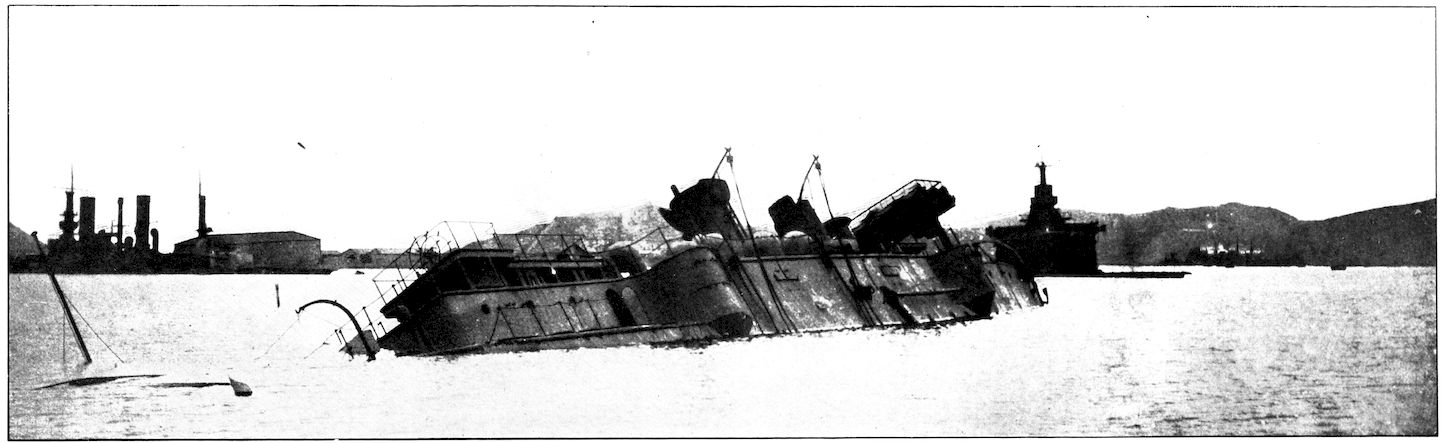
THE RIVER GUNBOAT “GILYAK” OF THE RUSSIAN “VOLUNTEER FLEET”
VIEWS OF THE HARBOR OF PORT ARTHUR WHEN THE JAPANESE TOOK POSSESSION
242
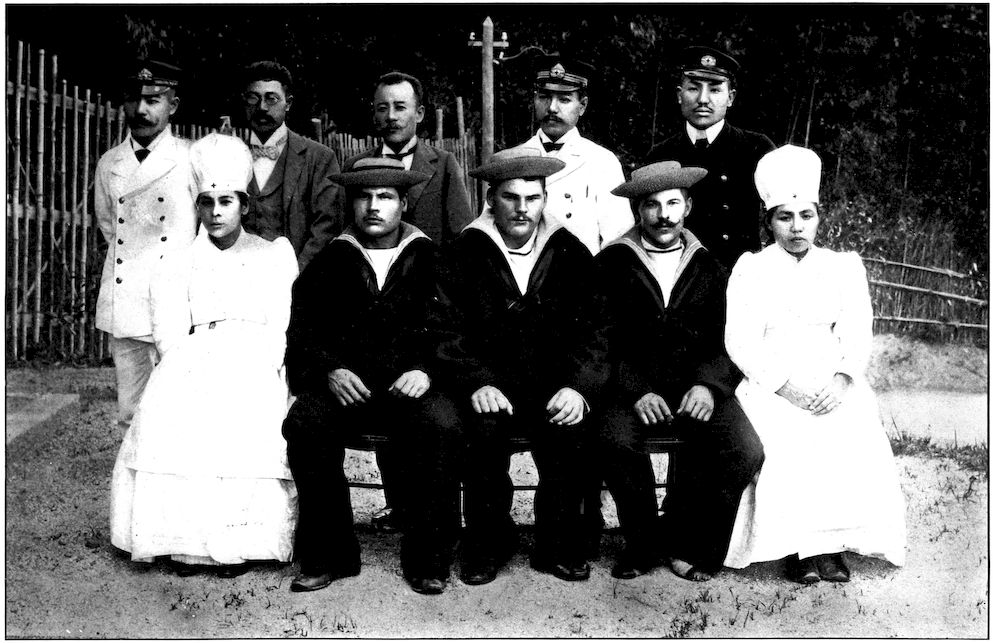
CONVALESCENT WOUNDED RUSSIAN SAILORS AND THEIR JAPANESE NURSES AND DOCTORS AT MATSUYAMA
243