← Table of contents
A New System; or, an Analysis of Antient Mythology. Volume 2 (of 6)

OB, OUB, PYTHO,

Reading edition

SIVE DE

OPHIOLATRIA.

Παρα παντι των νομιζομενων παρ' ὑμιν Θεων Οφις συμβολον μεγα και μυστηριον αναγραφεται. Justin. Martyr. Apolog. l. 1. p. 60.
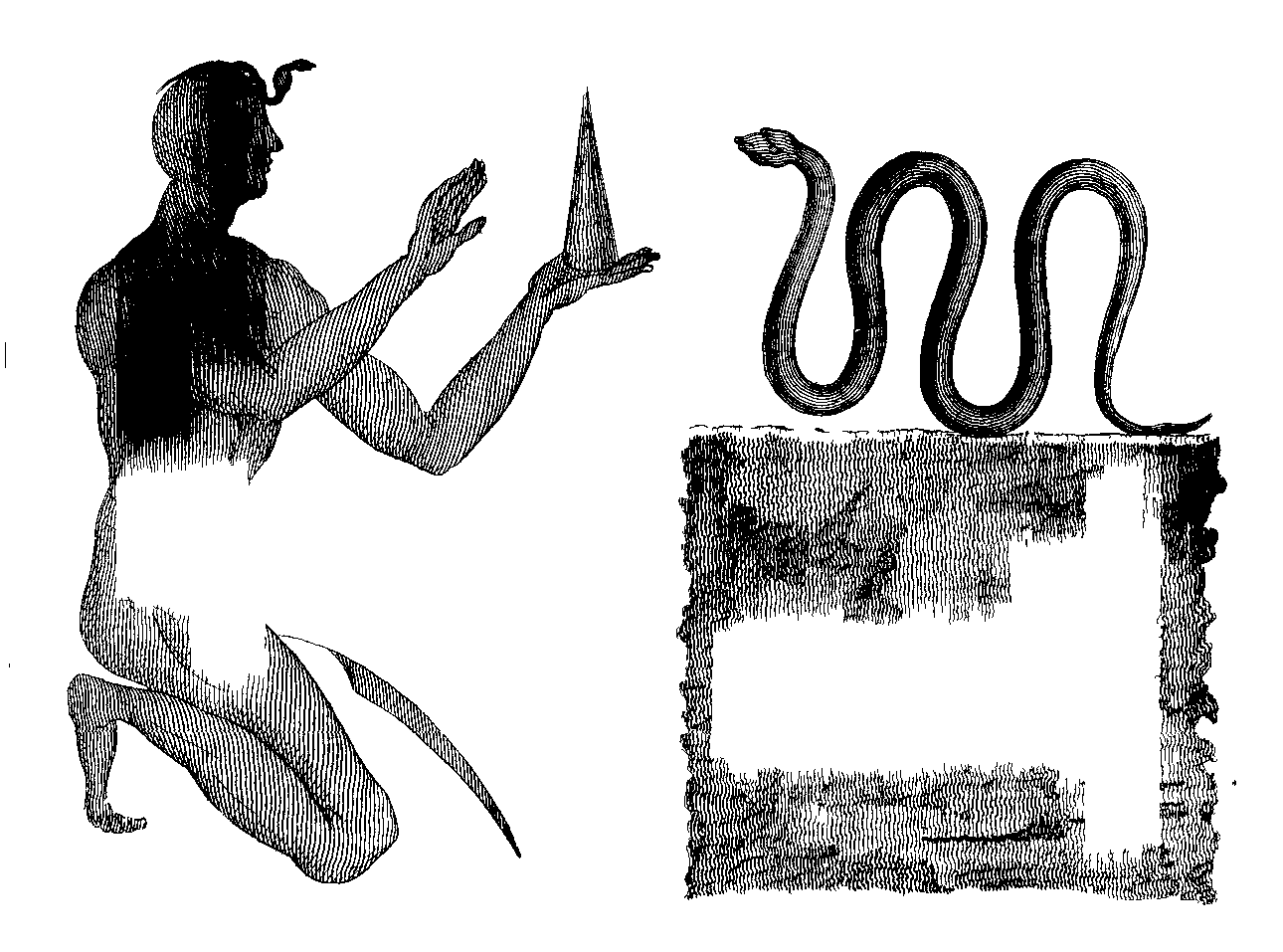
Plate VII
Plate VII

Ophis Thermuthis, sive Ob Basiliscus Ægyptiacus cum Sacerdote Supplicante.
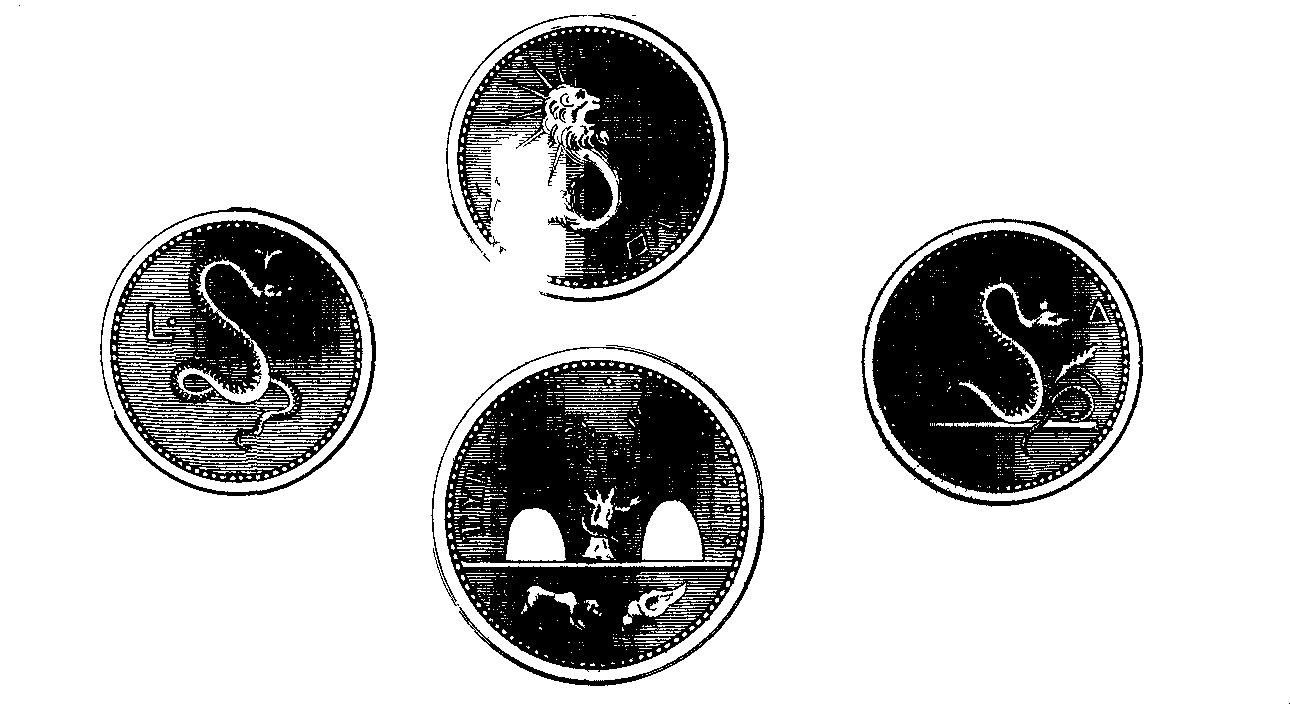
Plate VII
Plate VII

Pl. VII.

Ιατρομαντις, παις Απολλωνος, χθονα

Την δ' εκκαθαιρει κνωδαλον βροτοφθορων.

Factaque de saxo longi simulacra Draconis.
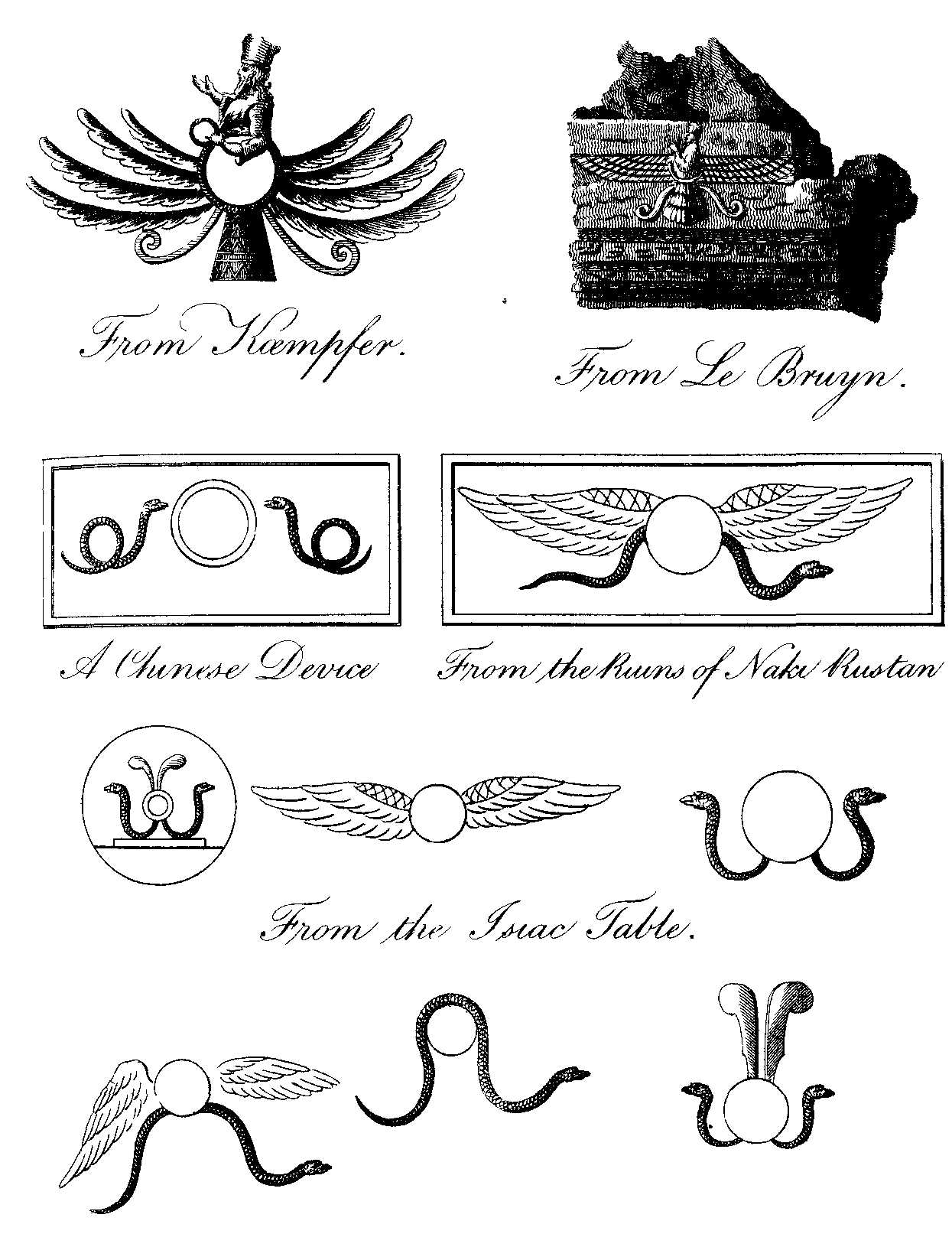
Plate VIII
Plate VIII

Pl. VIII.

CUCLOPES or CYCLOPES.

Παλαιοτατοι μεν λεγονται εν μερει τινι της χωρας (της Σικελιας) Κυκλωπες, και Λαιστρυγονες οικησαι· ὡν εγω ουτε γενος εχω ειπειν, ουτε ὁποθεν εισηλθον, η ὁποι απεχωρησαν. Thucydides. l. 6. p. 378.

Thucydides acquaints us concerning the Cyclopes and Læstrygones, that they were the most antient inhabitants of Sicily, but that he could not find out their race: nor did he know from what part of the world they originally came, nor to what country they afterwards betook themselves. I may appear presumptuous in pretending to determine a history so remote and obscure; and which was a secret to this learned Grecian two thousand years ago. Yet this is my present purpose: and I undertake it with a greater confidence, as I can plainly shew, that we have many lights, with which the natives of Hellas were unacquainted; besides many advantages, of which they would not avail themselves.

Ανδρι γε σιτοφαγῳ, αλλα ῥιῳ ὑληεντι.

Virgil says of the same person,

As these buildings were oftentimes light-houses, and had in their upper story one round casement, Argolici clypeï, aut Phœbeæ lampadis instar, by which they afforded light in the night-season; the Greeks made this a characteristic of the people. They supposed this aperture to have been an eye, which was fiery, and glaring, and placed in the middle of their foreheads. Hence Callimachus describes them as a monstrous race:

Πρηοσιν Οσσειοισιν εοικοτα· πασι δ' ὑπ' οφρυν

Φαεα μουνογληνα σακει ισα τετραβοειῳ.

Αγχου Κυκλωπων ανδρων ὑπερηνορεοντων.

Mœnia conspicio.

Bellum Mycenis restat, ut Cyclopea

Eversa manibus mœnia nostris concidant.

Nonnus speaks of the city in the same light:

Κυκλωπων κανονεσσι.

Turres, labore majus humano decus.
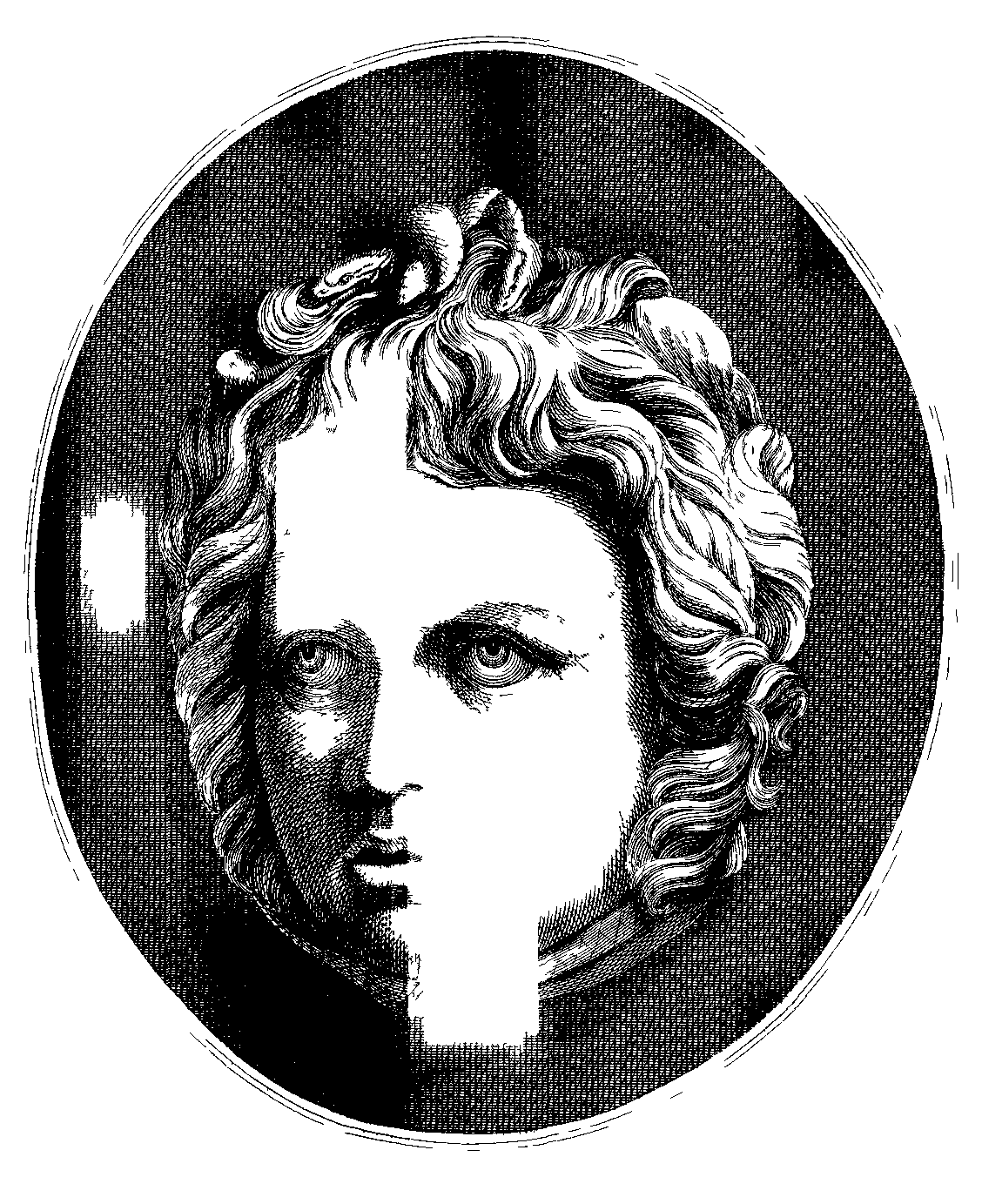
Plate IX
Plate IX

Pl. IX. MEDUSA.

From a Gem in the Collection of His Grace the Duke of Marlborough

Acmon seems to have been worshipped of old at Tiryns, that antient city of Greece, whose towers were said to have been built by the Cyclopians. For Acmon was the Cyclopian Deity; and is represented by Callimachus as the tutelary God of the place, though the passage has been otherwise interpreted.

Ἑστηκε προ πυλεων.

The term has commonly been looked upon as an adjective; and the passage has been rendered Talis Tirynthius indefessus, which is scarce sense. Callimachus was very knowing in mythology, and is here speaking of the Cyclopian God Acmon, whom he makes the θεος προπυλαιος, or guardian Deity of the place. It was the same God, that was afterwards called Hercules, and particularly styled Tirynthius, to whom Callimachus here alludes, under a more antient name.

Brontesque, Steropesque, et nudus membra Pyracmon.
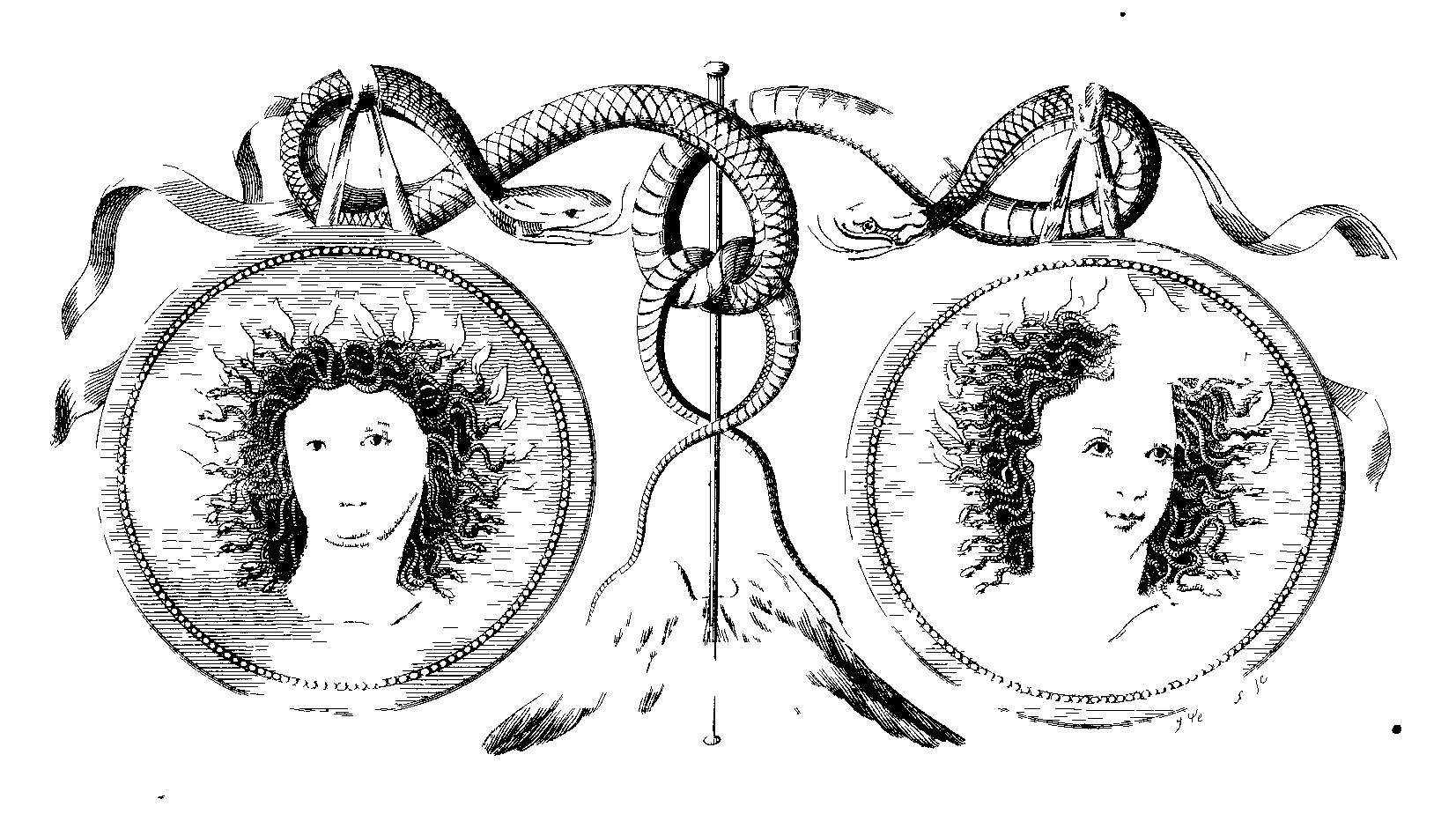
Plate X
Plate X

Pl. X

OF

Notes in this chapter

Note 1 · It may seem extraordinary, that the worship of the serpent should have ever been introduced into the world: and it must appear still more reNote 2 · In Egypt was a serpent named Thermuthis, which was looked upon as very sacred; and the natives are said to have made use of it as a royal tiNote 3 · It is said, that, in the ritual of Zoroaster, the great expanse of the heavens, and even nature itself, was described under the symbol of a Note 4 · Sanchoniathon makes mention of an history, which he once wrote upon the worship of the serpent. The title of this work, according to EusebiuNote 5 · Ουπις τε, Λοξω τε, και Ευαιων Ἑκαεργη.Note 6 · Hercules was esteemed the chief God, the same as Chronus; and was said to have produced the Mundane egg. He was represented in the Orphic ThNote 7 · Æginamque simul, serpentiferamque Seriphon.Note 8 · It had this epithet not on account of any real serpents, but according to the Greeks from [496]Medusa's head, which was brought hither by PeNote 9 · Απις γαρ ελθων εκ περας Ναυπακτιας,Note 10 · Thus the Argives gave the credit to this imaginary personage of clearing their land of this grievance: but the brood came from the very quarNote 11 · As the worship of the serpent was of old so prevalent, many places, as well as people from thence, received their names. Those who settled iNote 12 · Æoliam Pitanem lævâ de parte relinquit,Note 13 · The city was situated upon the river Eva or Evan, which the Greeks rendered [525]Evenus. It is remarkable, that the Opici, who are said to hNote 14 · Menelaus was of old styled [527]Pitanates, as we learn from Hesychius: and the reason of it may be known from his being a Spartan, by which Note 15 · From what has been said, I hope, that I have thrown some light upon the history of this primitive idolatry: and have moreover shewn, that whNote 16 · The gigantic Cyclopes were originally Ophitæ, who worshipped the symbolical serpent. They have been represented by the poets, as persons of Note 17 · But we must not consider the Cyclopians in this partial light: nor look for them only in the island of Sicily, to which they have been by thNote 18 · It is generally agreed by writers upon the subject, that the Cyclopians were of a size superior to the common race of mankind. Among the manNote 19 · Και γαρ θαυμ' ετετυκτο πελωριον, ουδε εῳκειNote 20 · Ipse arduus, altaque pulsat sidera.Note 21 · αινα Πελωρα,Note 22 · The Grecians have so confounded the Cyclopian Deity with his votaries, that it is difficult to speak precisely of either. They sometimes menNote 23 · Ὁι πριν μεν ποτ' εναιον εν ευρυχορῳ Ὑπερειᾳ,Note 24 · But there is no reason to think, that the city Hupereia was in Sicily; or that the Pheacians came from that country. The notion arose from aNote 25 · Οφθαλμον δ' ἑν' ἑκαστος εχει χαριεντι μετωπῳ.Note 26 · How could the front of a Cyclopian, one of the most hideous monsters that ever poetic fancy framed, be styled graceful? The whole is a mistaNote 27 · Εκ δε δομων εδιωκε Χαριν ζηλημονα νυμφην.Note 28 · The Graces were said to be related to the Sun who was in reality the same as Vulcan. The Sun among the people of the east was called Hares, Note 29 · The Amonians, wherever they settled, were celebrated for their superiority in science; and particularly for their skill in building. Of thisNote 30 · Cyclopum educta caminisNote 31 · From hence we find that they were the reputed builders of the infernal mansions; which notion arose from the real buildings, which they erecNote 32 · ——[572]quid moror? majus mihiNote 33 · Στεμματι τειχιοεντι περιζωσθεντα Μυκηνη,Note 34 · The gate of the city, and the chief tower were particularly ascribed to them: [574]Κυκλωπων δε και ταυτα εργα ειναι λεγουσιν. These too are Note 35 · Cyclopum sacrasNote 36 · All these poetical histories were founded in original truths. Some of them built Hermione, one of the most antient cities in Greece. The traNote 37 · I imagine, that not only the common idea of the Cyclopians was taken from towers and edifices; but that the term Κυκλωψ, and Κυκλωπις, CucloNote 38 · There was a place in Thrace called [589]Cuclops, where some of the Cyclopian race had settled; for many of the Amonians came hither. Hence TNote 39 · The head of Medusa in Argolis is said to have been the work of the [593]Cyclopians. This seems to have been an antient hieroglyphical represNote 40 · Και Μητις, πρωτος γενετωρ, και Ερως πολυτερπης.Note 41 · On this account many antient temples were ornamented with this curious hieroglyphic: and among others the temple of Caphisus [596]in ArgolisNote 42 · Αρσην μεν και θηλυς εφυς, πολεματοκε Μητι.Note 43 · Παντοφυης, γενετωρ παντων, πολυωνυμε Δαιμον.Note 44 · I have taken notice that the Cyclopians of Thrace were styled Charopes; which name they must have received from their rites, and place of woNote 45 · Αρκτοιτ', αγροτεροι τε Συες, χαροποι τε Λεοντες.Note 46 · The devices upon temples were often esteemed as talismans, and supposed to have an hidden and salutary influence, by which the building was Note 47 · Ὁι Ζηνι βροντην τ' εδοσαν, τευξαν τε κεραυνον.Note 48 · The Poets considered them merely in the capacity of blacksmiths, and condemned them to the anvil. This arose from the chief Cyclopian Deity Note 49 · Τοιος γαρ αει Τιρυνθιος ΑκμωνNote 50 · As the Cyclopians were great artists, they probably were famous for works in brass, and iron: and that circumstance in their history may havNote 51 · Thus have I endeavoured to shew the true history [612]and antiquity of this people: and we may learn from their works, [613]that there was aNote 52 · Ferrum exercebant vasto Cyclopes in antro,
Explore with AITake your curiosity a little further.

Reading settings