CHAP. XV. PROVINCE OF BAHIA. (continued 2)
Reading edition
Bahia is considered by the English merchants a more agreeable place of residence than any of the maritime towns of the Brazil, and a more social intercourse has existed amongst themselves than at some of the other places. The city and residences in the vicinity are delightfully refreshed by the land and sea breezes, and the climate is deemed very healthy. There is an English hospital here, as at the other commercial towns of note, but there are generally few invalids.
Here, as in all parts of the Brazil, the females are much confined to the houses, and do not take free and open exercise; their domestic habits are slovenly and indolent; many, in the Turkish style, sit on the ground upon mats, while at work; they dress loosely; and to the general listlessness and prevailing custom of indulging in a sesta, or nap after dinner, may be attributed the gross and unshapely appearance of some of the Brazilian females. It would, however, be illiberal to include the whole in this description, as there are many fine women, and if better acquainted with the graces and the refinements of the fair sex, would be ornaments to any circle of society, having naturally much sprightliness and wit, if properly directed, and freed from the shackles of jealousy with which they are surrounded.
This city, on the 10th of February, 1821, followed the example of Para, in declaring itself for the new constitution of Portugal, and a resolution to that effect was publicly adopted in the camara, and signed by Conde de Palma, the governor, who however declined holding that situation longer. This measure was brought about principally by the military. Lieut.-Colonels Manuel Pedro de Freitas and Francisco de Paula, were its most active promoters. It is said, that thirteen of the military, including a major, were killed.
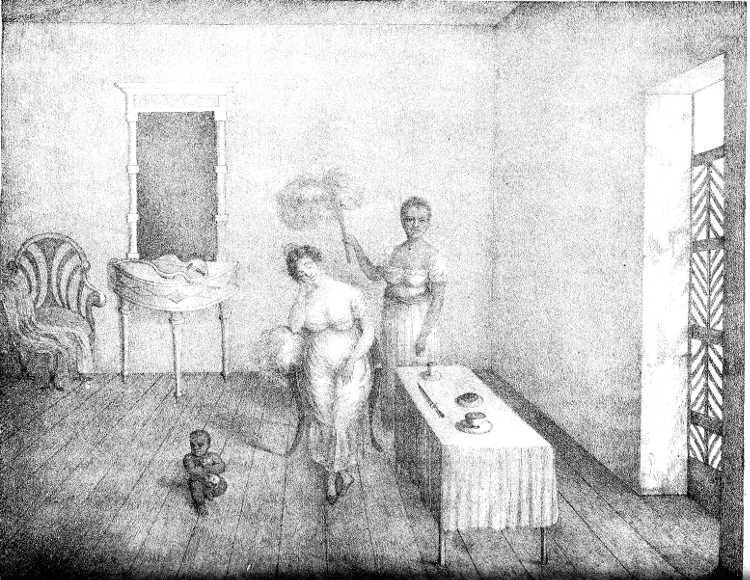
On Stone by C. Shoosmith from a Sketch by Jas. Henderson.
Printed by C. Hullmandel.
A BRAZILIAN SIESTA, OR AFTERNOON NAP.