INDEX
Reading edition
CONSTITUTIONAL MONARCHY
Abercrombie at Ticonderoga, 1027, 1029
Abercromby in Ireland, 1213;
in Egypt, 1232
Aberdeen, Colonial Secretary, 1456
Acts of Parliament—Abjuration, 874, 876;
Additional Force Bill, 1248;
Alien, 926, 927, 1165, 1356;
American Customs, 1047;
Boston Port, 1070;
Calendar, 1014;
Canada, 1072, 1156;
Catholic Emancipation, 1408;
Coercion, 1438, 1450;
Conciliation, 1085;
Convention, 1207;
Corn Laws altered, 1386, 1402;
Coronation Oath, 811;
Corporation, 823;
Corporation and Test repealed, 1401;
Foreign Enlistment, 1360;
of Grace, 825;
Hovering, 1135;
India, Dundas's, 1129, 1130, Fox's, 1129, Pitt's, 1135;
India Company, 861, 1069, 1442;
Insurrection, 1211;
Irish Church, 1436;
Jews Naturalization, 1015;
Libel, 1157;
Marriage, 1015;
Massachusetts, 1070;
Municipal reform, 1460;
Navigation Act changed, 1379;
Occasional Conformity, 906-909;
Peerage, 947, 948;
Pension, 972;
Poor Law, 1452;
Prison Inquiry, 973;
Recoinage, 850;
Reform, of election petitions, 1060, of Scotch burghs, 1360, the Reform Bill, 1425-1432;
Regency, 1048, 1049, 1143, 1324, 1358;
Resumption, 868;
Riot, 932;
Sale of office, 1299;
Schism, 923, repealed, 947;
Sedition and Treason, 1183, 1354;
Septennial, 938, 939;
Silk trade regulation, 1380;
Six Acts, 1363;
Slave trade abolished, 1271;
Slavery abolished, 1445;
Stamp, 1048, 1051, 1052;
Succession, 871, altered, 940;
Test, altered, 947, repealed, 1401;
Toleration, 810, 1087, 1094;
Traitorous Correspondence, 1178;
Treason, trials for, 855;
Triennial, 844;
Union with Scotland, 928;
Union with Ireland, 1219;
Wool trade regulation, 1381
Adams, at Preston's trial, 1061;
ambassador to France, 1083
Adams, secretary of Constitutional Society, 1180
Addington, Premier, 1230;
his weakness, 1238, 1239;
declares war, 1240;
his difficulties, 1243;
resigns, 1245;
in opposition, 1247;
becomes Lord Sidmouth, rejoins ministry, 1252;
dislikes Melville, 1258;
resigns, 1259;
Lord Privy Seal, 1267;
opposes Slave Trade Bill, 1272;
opposes Catholic claims, 1273;
President of the Council, 1325;
his repressive measures, 1354, 1355;
retires, 1369
Addison, Secretary of State, 942
Adolphus, Duke of Cambridge, his marriage, 1358
Agriculture, introduction of turnips, 973;
backward state of, 1014;
improvement in, 1150;
state of, 1333, 1350, 1361
Aislabie implicated in the South Sea frauds, 954
Albemarle. [See Keppel.]
Alberoni, his schemes, 943-945;
his fall, 946
Albuquerque at Cadiz, 1306
Alexander I., Czar, 1233;
remonstrates with Napoleon, 1250, 1260;
character, 1261;
alliance with England, 1281;
at Tilsitt, 1283;
excuses for his conduct, 1284;
at Erfurth, 1294;
estranged from Napoleon, 1312;
determines on war, 1313;
successful, 1320;
mediates in American War, 1326;
visits England, 1335;
desires Poland, 1336, 1338;
dies, 1397
Allen, takes Ticonderoga, 1072;
acknowledged by Congress, 1073
Althorp, head of a Finance Committee, 1394;
Chancellor of the Exchequer, 1423;
his Irish Church Bill, 1434, 1437;
his opinion of the Coercion Bill, 1439, 1448;
his Budget, 1440;
desires gradual emancipation, 1444;
his influence in the House, 1447, 1455;
wishes to resign, 1449;
becomes Lord Spencer, 1455
Amelia, Princess, dies, 1323
America, trade with, 980, 1014;
Wesley in, 1016;
war with the French in, 1019, 1025, 1029-1031;
origin of the thirteen provinces, 1045, 1046;
trade with, 1046, 1047;
petitions against the Stamp Act, 1048, 1051, 1052;
excitement caused by Townshend's measures, 1054, 1055, 1056;
the tax on tea insisted on, 1057;
increased irritation in, 1061;
organizes opposition, 1068;
first Congress, 1071;
war with, 1072-1084, 1087, 1088, 1094-1103;
conclusion of the war, 1107, 1108, 1110;
suffers from the orders in Council, 1279;
war with, 1325, 1328
Amherst succeeds Loudon, 1026;
takes Louisburg, 1027;
at Quebec, 1029;
suppresses the Gordon riots, 1094
Amherst, Governor-General of India, 1471, 1472
André, his trial and death, 1097
Anglesey, quoted, 1394;
resigns, 1406;
restored, 1439;
resigns, 1448
Anne, Duchess of Marlborough's influence over, 833;
her quarrel with her sister, 834;
reconciled to William, 847;
acknowledged successor by Louis XIV., 858;
death of her son, 870;
influence of Marlborough over, 876;
love for her husband, 878, 912, 913;
her love for the Church, 905, 908, 911;
anger against Nottingham, 909;
a Tory, 909, 914;
dismisses Sunderland and Godolphin, 915;
dismisses the Duchess, 917;
announces the peace in Parliament, 921;
her failing health, 922;
sensitive as to the succession, 923;
Bolingbroke's influence over, 924;
dies, 924
Anson, captures treasure ships, 984;
rebuked by Bute, 1037
Argyle, Earl of, his power, 819;
his share in the massacre of Glencoe, 835;
thwarts Bolingbroke's schemes, 924;
Lord Commissioner, 926;
jealousy of his power, 933;
given the command against Mar, 935;
defeats him at Sheriffmuir, 937;
puts the Pretender to flight, 937;
hostile to Walpole, 983;
Master of the Ordnance, 987
Arnold, his origin, 1072;
takes Ticonderoga, 1073;
attacks Quebec, 1075;
his treachery, 1096;
joins the English, 1097;
his expedition against Virginia, 1099
Artois, Royalist leader, 1175;
at L'Ile Dieu, 1177;
joins Pichegru's conspiracy, 1251
Ashburton. [See Dunning.]
Assassination Plot, 853
Assiento, explained, 919;
restored by Spain, 1011
Atterbury, his plot, 954;
arrested, 955;
banished, 956;
dies, 969
Auchmuty at Monte Video, 1280;
at Buenos Ayres, 1281
Auckland, his treaty with Dumouriez, 1166;
prejudices George against Pitt, 1230;
in the Cabinet, 1423;
First Lord of Admiralty, 1447
Augusta, influence over George III., 1035;
her favour to Bute, 1036, 1042;
her name omitted from the Regency Bill, 1048, 1049
Augustus of Saxony, driven from Poland, 896
Augustus, elected King of Poland, 975
Aurungzebe, his treaty with the India Company, 1114;
dies, 1115
Aylesbury, election disputes, 908, 909
Baird in Egypt, 1232;
in Spain, 1294
Balcarras. [See Lindsay.]
Bank of England, established, 843, 844;
advances money, 850;
attempt to ruin it, 851;
advances money, 852;
competition with the South Sea Company, 951;
affected by the march of Charles Edward, 1005;
suspension of cash payments, 1193;
resumption of cash payments, 1359;
in danger of bankruptcy, 1384;
renewal of its charter, 1441
Barclay, his plot, 850, 853, 854
Barlow, Governor-General of India, 1466
Barnard, incapacity of, 1056;
promoted, 1057
Barras, succeeds Menou, 1186;
in the Directory, 1197
Barré, his pension, 1107;
compensated for the loss of it, 1133
Barrier Treaty, 919, 940, 959;
irritation caused by, 1023
Barrington, Chancellor of the Exchequer, 1037;
Secretary at War, 1056
Barthélemy, negotiates treaties at Basle, 1173;
in the Directory, 1197
Barwell, in the India Council, 1123;
votes for Hastings, 1125
Bassano, minister in England, 1166
Bath. [See Pulteney.]
Bathurst, Colonial Secretary, 1382;
Palmerston's opinion of, 1388;
resigns, 1392
Battles—
Abendsberg, 1300;
Argaum, 1256;
Aghrim, 829;
Albuera, 1309;
Alexandria, 1232;
Algiers, 1347;
Almanza, 895;
Almenara, 915;
Amboor, 1117;
Aspern, 1300;
Assye, 1256;
Austerlitz, 1266;
Barosa, 1309;
Basignano, 997;
Baylen, 1288;
Beachy Head, 826;
Bergen, 1031;
Bitonto, 976;
Blenheim, 885, 886;
Boyne, 827;
Brihuega, 916;
Brooklyn, 1077;
Bunker's Hill, 1073;
Busaco, 1307;
Buxar, 1121;
Cassano, 889, 1222;
Camperdown, 1198;
Copenhagen, 1232, 1233;
Corunna, 1297;
Coverpauk, 1117;
Creveld, 1027;
Culloden, 1007;
Denain, 921;
Dettingen, 992, 993;
Diamond, 1209;
Dresden, 1321;
Echeren, 881;
Eckmühl, 1300;
Espinosa, 1295;
Exiles, 1011;
Eylau, 1280;
Falkirk, 1005;
Finisterre, 1263;
Fleurus, 826, 1171;
Fontenoy, 998, 999;
Freiberg, 1041;
Friedberg, 997;
Friedland, 1283;
Friedlingen, 879;
Fuentes Onoro, 1309;
Gebora, 1308;
Guildford Courthouse, 1100;
Hagenau, 888;
Hastenbach, 1026;
Hobkirk's Hill, 1100;
Hochstädt, 881;
Hohenlinden, 1227;
Jemmappes, 1159;
Jena, 1276;
Kesseldorf, 997;
Killiecrankie, 820;
Kirch-Denkern, 1037;
Kloster-Campen, 1037;
Kolin, 1026;
Kunersdorf, 1032;
Lagos, 1028;
La Hogue, 837;
Landen, 841;
Laufeldt, 1010;
Langen-Saltza, 1037;
Laswari, 1257;
Leipsic, 1321;
Liegnitz, 1033;
Ligny, 1340;
Lissa, 1026;
Lowositz, 1024;
Luzara, 879;
Magnano, 1222;
Maida, 1282;
Malplaquet, 903;
Marengo, 1226;
Marsiglia, 841;
Martinique, 1109;
Minden, 1031;
Molwitz, 989;
Narva, 895;
Navarino, 1399;
Newton-Butler, 816;
Nile, 1221;
Nivelle, 1320;
Novi, 1222;
Ocana, 1305;
Orthes, 1321;
Oudenarde, 897-900;
Plassy, 1026, 1119;
Preston, 936;
Prestonpans, 1002;
Pultowa, 896;
Pyramids, 1220;
Quatre Bras, 1341;
Quebec, 1031;
Quiberon, 1177;
Ramillies, 891, 892;
Raucoux 1010;
Ratisbon, 1300;
Rorica, 1291;
Roveredo, 1188;
Sabugal, 1308;
St. Vincent, 1193;
Salamanca, 1316;
Saragossa, 915;
Savenay, 1170;
Schellenberg, 884;
Sheriffmuir, 937;
Spires, 881;
Steinkirk, 838;
Stockach, 1222;
Stolhofen, 895;
Talavera, 1304;
Torgau, 1033;
Toulon, 895, 1169;
Toulouse, 1321;
Trafalgar, 1265;
Tudela, 1295;
Turin, 894;
Valmy, 1159;
Villa Viciosa, 916;
Vimiero, 1292;
Vinegar Hill, 1214;
Vittoria, 1319;
Wagram, 1301;
Walcourt, 823;
Wandewash, 1120;
Warburg, 1037;
Waterloo, 1341-1346;
Wynendale, 901;
Zorndorf, 1028;
Zullichan, 1032;
Zurich, 1224
Bedford, his party, 1042;
Prime Minister, 1043;
offends George III., 1049;
protests against his conduct, 1050;
his conduct to the Americans, 1057;
subscribes to the loan, 1190
Benbow, Admiral, his death, 880
Bentinck, promoted, 810;
Earl of Portland, 811;
discovers Marlborough's treachery, 833;
proved innocent of venality, 845;
conference with Boufflers, 857;
impeached, 871
Bentinck in Sicily, 1317, 1372
Beresford, Irish Tory leader, 1200;
his influence, 1208
Beresford, command of Portuguese army, 1298;
at Elvas, 1309;
at Albuera, 1310
Berwick, Duke of, his plot, 850, 853;
leaves England, 854;
in Portugal, 881;
victorious, 887;
at Almanza, 895;
on the Rhine, 900;
commanding the French army, 976
Bexley. [See Vansittart.]
Bills. [See Acts.]
Blake, at Rio Seco, 1288;
defeated, 1295;
at Albuera, 1310, 1311
Blakeney, surrenders Minorca, 1021
Bligh, destroys Cherbourg, 1027
Blücher in Belgium, 1339, 1340;
retreats, 1341;
at Waterloo, 1345;
desires vengeance, 1346
Blunt, director of the South Sea Company, 950
Bolingbroke (St. John) joins the ministry, 881;
supports Occasional Conformity Bill, 907;
Secretary at War, 909;
leader of the moderate Tories, 911;
retires, 913;
Secretary of State, 915;
made Lord Bolingbroke, 921;
concludes peace, 921;
corresponds with the Pretender, 922;
his plot suspected, gains Anne's favour, 923;
his schemes thwarted, 924;
joins the Pretender, 932;
organizes the rebellion, 933;
tries to postpone it, 934;
dismissed by the Pretender, his overtures rejected by Walpole, returns to France, 956;
constant intrigues against Walpole, 958;
bribes the Duchess of Kendal, 962;
withdraws to France, 977;
advises the Prince of Wales, 978, 979;
effect of his teaching on George III., 1035
Bonaparte. [See Napoleon, Jerome, and Joseph.]
Bon St. André, collects a fleet, 1172;
his energy, 1173
Boscawen, Admiral, 1019;
at Lagos, 1028
Bottetort, Governor in America, 1061
Boufflers, in Flanders, 841;
at the Sambre, 847;
arrested, 848;
at Ryswick, 857;
in Guilders, 879;
at Lille, 901;
at Malplaquet, 903, 905
Bourbon, Regent, his policy, 960
Boyle, Secretary of State, 913;
resigns, 915
Braddock, in America, 1019
Breadalbane, his share in the massacre of Glencoe, 834, 835
Bridgewater, subscribes to the loan, 1190
Bridport, mutiny in his fleet, 1194
Broglie, effect of his appointment, 1153
Brougham, his Bill against the slave trade, 1271;
Attorney-General, 1367;
opposes Government, 1374;
supports Canning, 1392;
announces the Reform Bill, 1422;
Lord Chancellor, 1423;
presents a petition against slavery, 1444;
correspondence with Wellesley, 1448;
proposes Melbourne as Premier, 1449;
supports the new Poor Law, 1453;
his dispute with Durham, 1455
Brunswick. [See Ferdinand.]
Buckner, his fleet mutinies, 1195
Burdett, in Parliament, 1359;
his Catholic Relief Bill, 1390;
presents Catholic petition, 1391;
supports Canning, 1392;
presides at National Union meeting, 1428
Burgoyne, reinforces Gage, 1073;
his disasters, 1081, 1082;
in Parliament, 1089
Burgundy, in Flanders, 896;
at Oudenarde, 898
Burke, introduced by Rockingham, 1050;
his first speech, 1051;
defends the Irish claims, 1090;
proposes economical reform, 1091;
upholds toleration, 1094;
assaults North's Government, 1103;
eager for financial reform, 1105, 1106;
tries to restrain Grattan, 1105;
supports Portland, 1112;
opposes Pitt's Irish Bill, 1137;
his action against Hastings, 1139-1141;
effect of the French Revolution upon, 1145;
his opinion of it, 1154;
his book, 1155;
his breach with Fox, 1156;
supports Pitt, 1161, 1163
Burke, Richard, Irish leader, 1205, 1206
Burrard, placed over Wellesley, 1290;
his caution, 1291, 1292;
at Vimiero, 1293
Bussy, De, French ambassador, 1038, 1039;
in India, 1117-1119
Bute, his influence over George III., 1035;
unpopularity of, 1036, 1042, 1049;
Secretary of State, 1037;
Premier, 1039;
his policy, 1040;
his vengeance on the Whigs, resigns, 1041;
intrigues against the ministry, 1042
Buxton, his efforts against slavery, 1382, 1444
Byng, George, in the Channel, 896;
at Cape Passaro, 945
Byng, John (son of George), at Minorca, 1021;
shot, 1022
Cadogan, at Oudenarde, 898;
accused, 947
Caermarthen. [See Danby.]
Caermarthen (son of Danby), defeated at Brest, 846
Caermarthen, Secretary of State, 1132
Calder, at Cape Finisterre, 1262, 1263
Calonne, French minister, 1147, 1152
Camden. [See Pratt.]
Camden (son of Pratt), Viceroy of Ireland, 1209, 1210;
his yeomanry, 1211;
recalled, 1215;
in the Cabinet, 1246
Cameron of Lochiel, joins Charles, 1000;
skirmish at Fort William, 1000;
escapes, 1008
Camissards, rebellion, 880;
suppression of, 881, 887
Canclaux, in La Vendée, 1175
Canning, asks Addington to resign, 1239;
Treasurer of the Navy, 1247;
Foreign Secretary, 1274, 1285;
quarrel with Castlereagh, 1322;
resigns, 1323;
negotiations for his return, 1325;
avoids the Queen's trial, 1369;
Foreign Secretary, 1370;
his foreign policy, 1375;
his Spanish policy, 1376;
supports Huskisson, 1378;
his slave circular, 1382;
his Portuguese policy, 1386;
his Corn Bill, 1388;
supports Catholic emancipation, 1389;
Premier, 1392;
dies, 1393;
his Turkish policy, 1395-1398
Canning, Sir Stratford, at Constantinople, 1396;
his policy, 1400
Carhampton, in Ireland, 1211;
superseded, 1213
Carleton, defends Quebec, 1075;
Minister in America, 1111
Carlisle, First Lord of the Treasury, 874
Carlisle, in the Cabinet, 1112
Carlos, Don, promised Parma and Tuscany, 945;
becomes King of Sicily, 976
Carlos (brother of Ferdinand VII.), 1463;
his civil war, 1464
Carnot, his tactics, 1168, 1171, 1184;
his great plan, 1187;
in the Directory, 1197
Caroline, Queen, favours Walpole, 966;
character, 967, 968;
reprieves Porteous, 979;
dies, 980;
her peaceful influence, 981;
effect of her Church appointments, 1015
Caroline, of Denmark, 1064
Caroline, of Brunswick, marries George IV., 1182;
George desires her divorce, 1365;
her trial, 1366, 1367;
dies, 1368
Carteret, character, 956, 988;
Lord Lieutenant of Ireland, 957;
joins the Prince of Wales, 978;
Secretary of State, 987;
dismissed, 988;
his German politics, 994;
his fall, 996;
made Lord Granville, 1009;
favourite of George II., 1009;
fails to form a ministry, 1010
Castaños, defeated, 1295
Castlereagh, in Ireland, 1217, 1229;
remains in office, 1246;
Secretary for War, 1274;
neglects the Peninsula War, 1294;
accused of bribery, 1299;
quarrels with Canning, 1322;
resigns, 1323;
Foreign Secretary, 1325;
at Vienna, 1335;
returns, 1339;
his death, 1369;
his foreign policy, 1370, 1371;
its weakness, 1373;
his financial measures, 1377;
supported Catholic emancipation, 1389
Catherine of Russia, her conduct to Poland, 1066;
forms an armed neutrality, 1095;
her ambition, 1148;
her success, 1149
Catholic claims, refused by Walpole, 986;
some penal laws repealed, 1087;
George III. opposes, 1087;
agitation against, 1092-1094;
refused, 1272-1274, 1360, 1368, 1391;
importance of, 1387, 1389;
the Emancipation Bill passed, 1408
Catinat, at Marsiglia, 841;
in Alsace, 879
Cavendish, Chancellor of the Exchequer, 1105
Charlemont, friend of Grattan, 1105
Charles Edward, born, 954;
correspondence with Walpole, 984;
goes to Scotland, 999;
his reception, 1000;
in Edinburgh, 1001;
marches into England, 1003;
his character, 1004;
at Culloden, 1007;
his escape, 1008;
supposed intrigue with Frederick II., 1020
Charles XII., his victories, 895, 896;
favours the Stuarts, 941;
danger to England from, 942, 943;
negotiations with Alberoni, 944;
effect of his death, 945, 946
Charles II. of Spain, probable effect of his death, 859, 862;
his first will, 864;
his second will, 869;
dies, 870
Charles III., King of Spain, 1038
Charles IV., his weakness, 1286;
abdicates, 1287
Charles VI., his claim to Spain, 863, 869;
declared King, in Spain, 889, 890, in the Netherlands, 893;
Louis offers to recognize him, 894;
supported by the Catalonians, 895;
occupies Madrid, 915;
leaves his army, 916;
becomes Emperor, 921;
jealous of the new German kingdoms, 941;
joins the Quadruple Alliance, 945;
desires the guarantee of the Pragmatic Sanction, 959, 970, 971;
agrees to suspend the Ostend Company, 962;
deserts his Spanish allies, 970;
dies, 984
Charles Albert, candidate for the empire, 989;
elected as Charles VII., 990;
concludes peace, Bavaria restored to him, 994;
dies, 996
Charles of Lorraine, victorious over the French, 994
Charles, Archduke, at Stockach, 1222;
in Italy, 1264;
his proclamation, 1300;
at Aspern, 1300;
at Wagram, 1301
Charles X., his views, 1413;
his speech 1414;
deposed, 1416
Charlotte, Princess, born, 1182;
dies, 1357
Charnock, his conspiracy, 847;
his trial and execution, 855
Charrette, makes peace, 1175;
shot, 1177
Chatham. [See Pitt.]
Chatham (son of the above), proposed as Premier, 1240;
his volunteer reviews, 1248;
in the ministry, 1274;
has command of the Walcheren expedition, 1302
Chauvelin, his diplomacy, 1163;
dismissed, 1165;
his false information, 1166
Chesterfield, dismissed, 975;
joins the Prince of Wales, 978;
excluded from the ministry, 987;
Lord Lieutenant of Ireland, 996;
disliked by George II., 997;
Secretary of State, 1010;
reforms the Calendar, 1014
Cheyte Singh, robbed by Hastings, 1128, 1140
Child, Sir Josiah, manager of the East India Company, 860
Choiseul, his vigorous rule, 1031;
desires peace, 1037;
his offers, 1038;
prepares for war, 1058;
his diplomacy, 1062;
effect of his fall, 1165,1166
Chunda Sahib, claims the Carnatic, 1117;
killed, 1118
Church, discontented with the Revolution, 807;
settlement of, 810;
the Nonjurors, 811;
favoured by Tories and by Queen Anne, 905, 911;
Occasional Conformity Bill, 906, 907, 947;
the Schism Act repealed, 947;
favoured by Queen Caroline, 967;
decay of, 1015, 1016;
influence of the Methodists on, 1017;
the Tractarians, 1451
Churchill. [See Marlborough.]
Civil List, of William III., 810, 825;
of Anne, 876;
of George I., 930;
of George II., 966, 967, 1013;
of George III., 1082;
of George IV., 1182;
extravagance of, 1349, 1358
Claim of Right, 818
Clairfait, defeated, 1171
Clare. [See Fitzgibbon.]
Clarence. [See William.]
Clarendon, engaged in a Jacobite plot, 825
Clark, corresponds with Tone, 1190
Clarkson, his evidence on the slave trade, 1271
Clausel, succeeds Marmont, 1317;
his skill, 1318
Claverhouse, agent of James II., 818;
Earl of Dundee, escapes from Edinburgh, 818;
reaches Inverness, 819;
makes use of Highland quarrels, 820;
killed at Killiecrankie, 821
Clermont, his character, 1027
Clinton, reinforces Gage, 1073;
at Bunker's Hill, 1074;
at New York, 1081;
succeeds Howe, 1088;
captures Charleston, 1095;
at New York, 1096;
negotiates with Arnold, 1097;
at New York, 1101;
fails to rescue Yorktown, 1102
Clive, in India, 1019, 1026;
defeats Du-pleix, 1117;
Governor of Madras, 1118;
regains Calcutta, 1118;
his forgery, 1119;
disputes in the Council, 1121;
expels Meer Cossim, 1122;
dies, 1124
Club, in Scotland, origin of, 819;
joins the Jacobites, 830
Clugny, French Minister, 1152
Cobbett, influence of his writings, 1352;
his speeches, 1421
Cobham, deprived of his army commission, 975;
joins the Prince of Wales, 978
Coburg, in Flanders, 1171
Cockburn, in America, 1327
Codrington, at Navarino, 1399, 1400
Cohorn, engineer, 838;
at the siege of Namur, 847
Collingwood, at Trafalgar, 1265;
at the Dardanelles, 1281
Collot d'Herbois, his cruelty, 1169
Commerce, injured by French privateers, 838;
loss of the Smyrna fleet, 841;
the East India trade, 860-862;
the Darien scheme, 865-867;
commercial advantages at the Peace of Utrecht, 919, 921;
regulation of the Scotch trade, 927;
the South Sea scheme, 949-953;
commercial treaty with Spain, 958, 1011;
the Ostend Company, 959, 961, 962, 971;
prevalence of smuggling, 974, 981;
rapid increase of, 1013, 1014;
restrictions on colonial trade, 1046, 1047, 1051, 1052, 1069, 1070;
Pitt's Irish Commercial Bill, 1136;
suspension of cash payments, 1193;
Continental System, 1277-1279;
depression of commerce, 1332, 1350, 1351;
Huskisson's improvements, 1379-1381;
commercial distress, 1383-1386;
the West India trade, 1443
Compton, Sir Spencer, made President of the Council, 966;
made Lord Wilmington, 966;
supports Walpole, 983;
Premier, 987;
dies, 988
Conflans, at Brest, 1028;
at Quiberon, 1029
Conway, Secretary of State, 1050;
his speech, 1051;
deprived of army commission, 1052;
remains in office, 1053;
in Parliament, 1104;
in the ministry, 1105
Cook, director of the East India Company, 845;
his accounts, 861
Coote, defeats Lally, 1120;
in Mahratta war, 1127;
at Madras, 1128
Cope, marches against Charles Edward, 1001;
at Prestonpans, 1002
Cormatin, Chouan leader, 1174
Cornwallis, in Carolina, 1096, 1098, 1100;
retreats, 1101;
takes Yorktown, 1101;
besieged, 1102;
surrenders, 1103;
Viceroy of Ireland, 1215-1217;
in India, 1219;
at Amiens, 1234;
Governor-General of India, 1466
Cornwallis, Admiral, at Brest, 1262
Coronation Oath, 811
Cowper, made Lord Chancellor, 910, 931
Cradock, in Portugal, 1298
Craggs, Secretary at War, 942;
death of, 954
Crillon, takes Minorca, 1099;
attacks Gibraltar, 1109
Cuesta, at Rio Seco, 1288;
his character, 1303;
at Talavera, 1304
Cumberland, William, Duke of, at Dettingen, 993;
at Fontenoy, 998;
collects an army, 1003;
Charles Edward escapes from, 1004;
he overtakes him, 1005;
character, 1006;
at Culloden, 1007;
his cruelty, 1008;
at Laufeldt, 1010;
Fox a protégé of, 1018;
defeated, 1026;
negotiates with Pitt, 1049, 1050;
forms a Whig ministry, 1050
Cumberland (son of William), his character, 1064
Cumberland. [See Ernest.]
Curran, Solicitor-General, 1208;
opposes the Union, 1217
Currency re-established, 848-850
D'Aiguillon, succeeds Choiseul, 1062
Dalrymple, sent to Scotland, 817;
made Viscount Stair, 834
Dalrymple. [See Stair.]
Dalrymple, in Portugal, 1290;
supersedes Burrard, 1293
Danby, President of the Council, 809;
Lord Caermarthen, 811;
Parliamentary attack on, 821;
Premier, 824;
chief adviser to Mary, 826;
discovers Preston's plot, 831;
Lord President, 843;
Duke of Leeds, accused of venality, 845;
retires, 846
Danton, his party, 1185
Darien scheme, 865-867;
ill-feeling excited by, 925, 933;
the Company dissolved, 927
Darmstadt, takes Gibraltar, 887;
his quarrel with Peterborough, 889
Dartmouth, his conspiracy, 825
Dartmouth, Colonial Secretary, 1068, 1072
Dashwood, Treasurer of the Chamber, 1037;
Chancellor of the Exchequer, 1041
Davoust, in Prussia, 1276
De Broglie, at Minden, 1031, 1032;
at Langen-Saltza, 1037
D'Enghien, murdered, 1251
D'Erlon, in Belgium, 1341;
at Waterloo, 1344
D'Estaing, French admiral, 1088
D'Estrées, French admiral, 836
D'Estrées, Marshal, at Hastenbach, 1026
De Grasse, Admiral, 1099;
fights with Graves, 1101, 1102;
at Jamaica, 1109
D'Hervilly, at Quiberon, 1176, 1177
De la Clue, at Lagos, 1028
De la Croix, French minister, 1189
De Puisaye, Chouan leader, 1174;
in England, 1175;
at Quiberon, 1176;
escapes, 1177
De Suffren, Admiral, 1099, 1104;
in India, 1128
Derby. [See Stanley.]
Derwentwater, at Preston, 936;
executed, 938
Desaix, at Marengo, 1226
Devonshire, Lord Steward, 877
Devonshire, First Lord of the Treasury, 1021;
deprived of his office of Chamberlain, 1041;
friend of Pitt, 1042
Digby, Admiral, 1095
Doddington, leader of the Opposition, 1012
Donzelot, at Waterloo, 1344
Drouet, in Estremadura, 1313, 1314
Drummond, James, joins Charles Edward, 1001
Drummond, John, joins Charles Edward, 1005;
at Falkirk, 1006
Dubarry, her influence, 1062;
character, 1065
Dubois, his negotiations, 940
Duckworth, at the Dardanelles, 1281
Dudley, Foreign Secretary, 1392;
supports Wellington, 1395;
signs Treaty of London, 1398;
resigns, 1402
Dumouriez, his victories, 1159;
treats with Auckland, 1166;
meditates treason, 1168
Duncan, watches the Dutch, 1194;
mutiny in his fleet, 1196;
at Camperdown, 1198
Duncannon. [See Ponsonby.]
Dundas, proposes Catholic relief, 1087;
his India Bill, 1129;
supports Pitt, 1132, 1135;
defends Hastings, 1139;
resigns, 1230;
negotiates for Pitt's return, 1240;
made Lord Melville, 1246;
his energy, 1249;
attack on his naval administration, 1258;
resigns, 1259;
acquitted, 1260;
resigns, 1392
Dundee. [See Claverhouse.]
Dunning, Solicitor-General, 1058;
presents American petition, 1068;
his motion, 1092;
Lord Ashburton, in the ministry, 1105
Dupleix, in India, 1019;
in Pondicherry 1115;
his schemes, 1116, 1117;
dies, 1118
Durham, his reform measure, 1368;
Privy Seal, 1423;
resigns, 1439;
his dispute with Brougham, 1455
Edward, Duke of Kent, his marriage, 1358
Egremont, Secretary of State, 1039;
dies, 1042
Elector of Bavaria. [See Charles Albert and Maximilian.]
Elector of Hanover. [See George I.]
Eldon, prosecutes Hardy, 1181;
Lord Chancellor, 1230;
negotiates for Pitt's return, 1245;
remains in office, 1246;
opposes the Slave Trade Bill, 1272;
opposes the Catholic Bill, 1273;
his influence, 1274;
high Tory, 1387;
Palmerston's opinion of, 1388;
resigns, 1392;
quoted, 1401;
interview with George IV., 1408
Elizabeth of Russia, alliance with Austria, 1023;
dies, 1040
Ellenborough, in the Cabinet, 1267;
opposes the Catholic claims, 1273;
judges Hone, 1356
Elliot, at Gibraltar, 1109
Emmett, his rebellion, 1242;
hanged, 1243
Ernest, his marriage, 1358
Erskine, desires reform, 1162;
defends Hardy, 1181
Eugene, in Italy, 879;
his friendship with Marlborough, 882;
joins Marlborough, 884;
sent to Italy, 888;
at Turin, 893;
at Toulon, 895;
at the Hague, 897;
at Oudenarde, 897;
besieges Lille, 901;
at Malplaquet, 903, 904;
at the Diet of Frankfort, 918;
deserted by the English, 921;
commanding German army, 976
Exmouth, at Algiers, 1347
Family Compact, the, 981;
suspected by Pitt, 1038;
signed, 1039
Fenwick, his conspiracy, 847;
his trial, 855;
executed, 856
Ferdinand IV., of Naples, insurrection against, 1372;
at Laibach, 1373
Ferdinand VII., of Spain, 1286;
abdicates, 1287;
restored, rebellion against, 1371;
changes the law of succession, 1463;
dies, 1464
Ferdinand, of Brunswick, 1026;
at Creveld, 1027;
at Minden, 1031, 1032;
his successes, 1037;
his manifesto, 1158;
at Jena, 1276;
in Saxony, 1301
Fitzgerald, in France, 1209, 1211;
killed, 1214
Fitzgerald, his cruelty, 1218
Fitzgibbon, Irish leader, 1200;
his vigour, 1206, 1207;
his policy, 1208;
opposes Catholic claims, 1209;
Lord Clare, advises amnesty, 1215;
urges the Union, 1217
Fitzwilliam, Lord President, 1181;
Viceroy of Ireland, 1208;
recalled, 1209;
President of the Council, 1267
Fleury, his pacific views, 961, 970;
his policy, 975;
dupes Walpole, 981;
promises mediation, 982;
intrigues with the Jacobites, 983
Flood, his Reform Bill, 1136, 1155
Forbes, President of Scotland, 1000
Forbes, takes Fort Duquesne, 1027
Forster, at Preston, 936
Fox, Henry, Secretary at War, 1018;
Secretary of State, 1020;
resigns, 1021;
Paymaster-General, 1022;
purchases a majority in the House, 1041;
belongs to the Bedford party, 1042;
Lord Holland, dismissed, 1049
Fox, Charles James (son of the above), champion of the Americans, 1082;
at Westminster, 1092;
assaults the Government, 1103, 1104;
Secretary of State, 1105;
yields to Grattan, 1106;
supports Pitt, 1107;
negotiates peace, 1108;
in Opposition, 1111;
Secretary of State, 1112;
his India Bill, 1129;
opposes Pitt, 1133;
his election, 1134;
opposes Pitt's Irish Bill, 1137;
accuses Hastings, 1140;
friend of George IV., 1141;
his opinion of the French Revolution, 1154, 1161;
his breach with Burke, 1156;
his Libel Bill, 1157;
opposes Pitt, 1164, 1183;
alliance with Grenville, 1243;
George's prejudice against, 1246;
doubts the French invasion, 1247;
Foreign Minister, 1266;
character, 1267;
negotiations with Napoleon, 1268-1270;
dies, 1270;
proposes the abolition of the slave trade, 1271
Fox, Lord Holland, nephew of Charles, opposes the Government, 1374;
in the Cabinet, 1423
Francis I., marries Maria Theresa, 976;
supported by Frederick II., 989;
elected Emperor, 996;
acknowledged at Aix-la-Chapelle, 1011
Francis, author of Junius' Letters, 1057, 1058;
in India Council, 1124;
opposes Hastings, 1125, 1139
Franklin, in England, 1052;
agent for Massachusetts, 1068;
insulted, 1069;
with Chatham, 1072;
in France, 1083;
his medal, 1103;
in Paris, 1108
Frederick William, becomes King, 941;
desires Juliers, 962
Frederick II., his ambition, 989;
alliance with France, 990;
deserts France, 991;
takes Prague, 996;
deserted by his allies, 997;
quarrels with George II., 1020;
begins the Seven Years' War, 1023;
his campaign of 1758, 1026;
campaign of 1759, 1028;
fourth campaign, 1032, 1033;
his success, 1041;
his character, 1054;
partitions Poland, 1066;
alliance with Russia, 1096, 1148
Frederick William II., attacks France in Holland, 1147;
alliance with England, 1149;
leaves the coalition, 1173;
dies, 1221
Frederick William III., declares war with Napoleon, 1276;
visits England, 1335
Frederick, Prince of Wales, leader of the Opposition, 978, 1012;
his quarrel with his father, 978, 979, 980
Frederick, Duke of York, in Holland, 1169;
recalled, 1172;
captures the Dutch fleet, 1223;
withdraws, 1224;
appreciates the Peninsula War, 1294;
deprived of his office, 1299;
opposes Catholic relief, 1391;
dies, 1392
Frere, urges Moore's advance, 1295;
his false information, 1322;
recalled, 1323
Gage, Governor, 1071;
defeated, 1072;
at Bunker's Hill, 1073;
his delays, 1074, 1075
Galway, succeeds Schomberg, 887;
in Spain, 889;
occupies Madrid, 890;
Commander-in-chief, 895
Gates, Burgoyne surrenders to, 1082;
Washington's rival, 1087;
in Carolina, 1097, 1098
Gaultier, his negotiations, 917, 918
Gay, writes against Walpole, 978
George I., in command of the Imperial troops, 896;
summoned to England, 923, 924;
his character, 930, 931;
goes to Hanover, 940;
his German policy, 941;
his dislike to Townshend, 942;
at the opening of Parliament, 955;
friendship for Carteret, 957;
dies, 963;
character, 964
George II., comes to England, 930;
made Guardian of the Realm, 940;
his dislike to Sunderland, 948;
his character, 966;
trusts Walpole, 967;
Wyndham's description of, 977;
his parsimony, 978;
his quarrel with his son, 979, 980;
desires war, 981;
his love for Hanover, 988;
at Dettingen, 993;
his negotiations at Hanover, 994;
dislikes Chesterfield and Pitt, 997, 1018, 1022;
his friendship for Carteret, 988, 1009, 1010;
his grief at Pelham's death, 1018;
goes to Hanover, 1020;
dies, 1033
George III., his education, 1035;
his views of royalty, 1036, 1060;
his popularity, 1036;
his interview with Pitt, 1042;
his illness, 1048;
the Regency Bill, 1049;
dislike to his ministers, 1050, 1052;
his views on his ministry, 1053;
determination to conquer the Americans, 1055;
appoints Lord North Premier, 1059;
triumph of his policy, 1060;
his domestic life, 1064, 1140;
selfish policy, 1065;
prejudice against America, 1070, 1077, 1085;
his frugality, 1082;
prejudice against Catholic emancipation, 1087;
his command over North, 1089;
his power over Parliament, 1091;
his courage, 1093, 1094, 1183;
his determination, 1104;
friendship for Thurlow, 1105;
his dislike of the Whigs, 1112;
opposition to Fox's India Bill, 1131, 1132;
his illness, 1142, 1143;
chooses a wife for George IV., 1182;
assaulted, 1183;
interferes in the army, 1191;
loyalty of the fleet towards, 1196;
refuses Irish Catholic emancipation, 1209;
return of his illness, 1230;
interview with Pitt, 1245;
his prejudice against Fox, 1246, 1266;
rejects the Catholic claims, 1273-1275;
final illness, 1323;
respected, 1357;
dies, 1363
George IV., as Prince of Wales, his depravity, 1140, 1141, 1357;
proposed as Regent, 1143;
his marriage, 1182;
Regent, 1334;
his speech, 1349;
assaulted, 1354;
his ill health, 1358;
approves of the Manchester massacre, 1363;
his conduct to his wife, 1365, 1367;
opposes the Catholic claims, 1392, 1395, 1407, 1409;
receives Donna Maria, 1411;
dies, 1416
George of Denmark, unfit for a general, 878;
attack on his naval administration, 912;
dies, 913
Georges, Chouan leader, 1240;
his conspiracy, 1251
Germaine, desires to retire, 1084;
retires, 1104
Gibraltar, taken, 887;
importance of, 970
Ginkel, at Ipswich, 808;
in Ireland, 828, 829;
receives a grant, 868
Glencoe, massacre of, 834-836
Gloucester (brother of George III.), his marriage, 1064
Gneisenau, in Belgium, 1341;
at Waterloo, 1346
Goderich. [See Robinson.]
Godolphin, on Treasury Commission, 810;
Jacobite tendencies, 832;
industry, 843;
accused of treason, 855;
resigns, 856;
First Lord of the Treasury, 870;
dismissed, 874;
Lord Treasurer, 876;
intrusted with Marlborough's plans, 882;
influence over Anne, 909;
son-in-law to Marlborough, 910;
timidity, 911, 912;
submits to an affront, 914;
dismissed, 915
Godoy, Spanish minister, 1173;
rules Spain, 1252;
intrigues with Napoleon, 1286
Gordon, his character, 1087;
provokes riots, 1092, 1093;
dies, 1094
Görtz, minister of Charles XII., 943
Goulbourn, Irish Secretary, 1389;
Home Secretary, 1456
Gower, in the Privy Council, 877;
on the Jacobite Committee, 954;
collects followers, 955;
Privy Seal, 997
Gower, President of the Council, 1132
Grafton, visits Wilkes, 1043;
Secretary of State, 1050;
First Lord of the Treasury, 1053;
subservient to the King, 1055;
his conciliatory measures, 1057;
resigns, 1058;
returns, 1063;
in Rockingham's ministry, 1105
Graham, at Cadiz, 1308;
at Vittoria, 1319
Graham, in the Cabinet, 1423;
resigns, 1447;
refuses to join Peel, 1456
Grammont, at Dettingen, 993
Granby, at Minden, 1032;
attacks the ministry, 1058;
dies, 1061
Grant, resigns, 1402, 1403;
President of Board of Control, 1423
Granville. [See Carteret.]
Grattan, Irish leader, 1090, 1105, 1106;
his policy, 1199, 1200, 1201;
interview with Pitt, 1208;
urges Catholic claims, 1209;
secedes, 1213;
opposes the Union, 1217;
speech against the Union, 1218;
speech on Catholic emancipation, 1360
Grenville, George, leader of the Commons, 1041;
First Lord of the Treasury, 1042;
proceeds against Wilkes, 1043;
his mistakes, 1045, 1047;
his trick with regard to the Regency Bill, 1049;
his alliance with Temple, 1049;
his speech in answer to Pitt, 1051;
reconciliation with Pitt, 1058;
reforms election petitions, dies, 1060
Grenville, James (brother of George), resigns, 1058
Grenville, Thomas (second son of George), in Paris, 1108;
joins Pitt, 1163
Grenville, William (third son of George), supports Pitt, 1132;
rebukes Chauvelin, 1163;
his instructions to Malmesbury, 1189;
letter to Napoleon, 1225;
his political economy, 1229;
retires, 1230;
disapproves of the peace, 1235;
excluded from office, 1240;
his alliance with Fox, 1243, 1246, 1247;
ridicules the volunteers, 1248;
First Lord of the Treasury, 1267;
his Catholic policy, 1272;
resigns, 1274;
incapacity for war, 1280;
attempts to form a ministry, 1325;
declines office, 1369
Grey, his liberality, 1161;
his motion for reform, 1162;
his petition, 1163;
First Lord of the Admiralty, 1267;
quoted, 1268;
introduces Slave Trade Bill, 1272;
supports Catholic claims, 1273;
quarrels with George IV., 1324;
attempts to form a ministry, 1325;
opposes Government, 1374;
Premier, 1423;
refuses repressive measures, 1424;
resigns, returns, 1430;
his Church policy, 1435;
his Coercion Bill, 1438;
his speech, 1447;
his difficulties, 1448;\
resigns, 1449
Grouchy, at Bantry Bay, 1212;
pursues Blücher, 1341;
expected at Waterloo, 1344
Gustavus III., his character, 1064;
attacks Russia 1148
Habeas Corpus Act suspended, 808, 854, 935, 1181, 1211, 1354, 1355, 1390, 1439
Hales, Sir Edward, impeached, 823
Halifax. [See Montague.]
Halifax, at the coronation of William, 806;
Privy Seal, 809;
parliamentary attack on, 821, 823;
withdraws, 824;
member of the Junto, 842
Halifax, Secretary of State, 1042;
deceives the King, 1049
Hamilton, Gustavus, at Enniskillen, 813
Hamilton, Richard, his treason, 813;
at Londonderry, 814, 815;
taken prisoner, 827
Hamilton, Duke of, in Scotland, 818
Hanoverian courtiers, 940;
dislike Townshend, 942;
opposition to Stanhope, 946;
receive bribes from the South Sea Company, 952;
bad influence of, 964
Harcourt, French diplomatist, 869
Harcourt, retires, 913;
Lord Chancellor, 915;
Jacobite tendencies, 922;
his skill in wording the Union, 928
Harcourt, in Cuttack, 1255;
successful, 1257
Hardinge, at Albuera, 1311;
insulted by O'Connell, 1421;
Irish Secretary, 1456
Hardwicke, supports Walpole, 983;
remains in office, 987, 988;
his Marriage Act, 1015
Hardwicke, Lord-Lieutenant of Ireland, 1241
Hardy, Admiral, 1089
Hardy, his trial, 1180, 1181
Harley, tries to establish the Land Bank, 851;
joins the ministry, 881;
Secretary of State, 909;
intrigues against Marlborough, 911;
dismissed, 913;
Chancellor of the Exchequer, 915;
his policy, 916;
stabbed, Earl of Oxford, Lord Treasurer, 918;
his Jacobite tendencies, 922;
indecision, 923;
dismissed, 924;
impeachment against him dropped, 932;
his trial, 947;
his financial scheme, 949;
joins James, 955
Harrington. [See Stanhope.]
Harris, at Seringapatam, 1224
Harris. [See Malmesbury.]
Harrison, his speech at Stockport, arrested, 1362;
his trial, 1366
Harrowby, Foreign Secretary, 1246;
his views, 1250;
resigns, 1252;
refuses the Premiership, 1395
Harvey, character, 969;
supports Walpole, 983
Hastings, Warren, Governor-General, 1123;
accused in the Council, 1125;
war with the Mahrattas, 1126, 1127;
robs Cheyte Singh, 1128;
reprimanded, 1129;
his trial, 1139-1141
Hastings. [See Rawdon.]
Hawke, contradictory orders to, 1019;
at Rochefort, 1025;
at Brest, 1028;
at Quiberon, 1029
Hawkesbury, Foreign Secretary, 1238;
Home Secretary, 1246;
remonstrates with Napoleon, 1251;
refuses the Premiership, 1266;
Home Secretary, 1274
Hawley, supersedes Wade, 1005;
at Falkirk, 1006;
his cruelty, 1008
Hébert, his party, 1185
Hedges, Secretary of State, 870;
dismissed, 874;
Secretary of State, 877
Heinsius, friendship with Marlborough, 882;
rejects proposals for peace, 894;
refuses to make a separate peace, 902
Henry, brother of Frederick II., 1041
Herbert, his maladministration, 822;
at Beachy Head, 826
Herries, Chancellor of the Exchequer, 1394;
resigns, 1395;
Secretary at War, 1456
Hill, in Estremadura, 1313;
moves north, 1315;
threatened by Soult, 1318
Hillsborough, Colonial Secretary, 1056;
his folly, 1058;
effect of his policy, 1061
Hobhouse, Irish Secretary, 1439;
resigns, 1440;
in the Cabinet, 1450
Hoche, defeats the Prussians, 1169;
in La Vendée, 1175;
at Quiberon, 1176;
in Belgium, 1194;
plans the Irish invasion, 1189, 1209;
his expedition, 1191, 1211, 1212
Hofer, his insurrection, 1301
Holderness, removed, 1037
Holkar, his power, 1126;
defeated, 1127;
extent of his territory, 1254;
war with Wellesley, 1255;
defeated, 1257;
war with Hastings, 1469
Holland. [See Fox.]
Hone, his trial, 1355, 1356
Hood, succeeds Rodney, 1099;
candidate for Westminster, 1134;
at Toulon, 1169;
takes Bastia, 1172
Horner, his financial views, 1359
Houchard, in Holland, 1168
Howe, Admiral, destroys Cherbourg, 1027;
goes to America, 1076;
at Gibraltar, 1110;
First Lord of the Admiralty, 1132;
defeats the French, 1173;
his popularity, 1195
Howe, General, reinforces Gage, 1073;
succeeds Gage, 1075;
retreats, 1076;
his delays, 1079;
takes Philadelphia, 1080;
superseded, 1088;
in Parliament, 1089
Howick. [See Grey.]
Hozier, at Porto Bello, 984
Hughes, his battles with De Suffren, 1128
Humbert, at Quiberon, 1177;
in Ireland, 1216
Hume, leader of the Radicals, 1434
Hunt, at Spa Fields, 1352;
candidate for Parliament, 1359;
at the Manchester massacre, 1362;
his trial, 1366;
his speeches, 1421
Huskisson, Secretary of the Treasury, 1247;
President of the Board of Trade, 1377;
his Liberal views, 1378;
changes the Navigation Act, 1379;
improves the silk trade, 1380;
the wool trade, 1381;
his views on slavery, 1382;
his opponents, 1387;
his Corn Bill, 1388;
remains in office, 1392;
Colonial Secretary, 1394;
resigns, 1395;
his speech at Liverpool, 1396;
dies, 1421
Hutchinson, Governor, 1067;
his letters, 1068;
recalled, 1071
Hutchinson, in Egypt, 1232
Hyder Ali, his origin, 1122;
attacks Madras, 1127;
dies, 1128
Ibrahim Pasha, in Greece, 1397;
at Navarino, 1399;
in Syria, 1465
Impey, gives judgment for Hastings, 1125, 1126, 1129
India Company, their accounts examined, 845;
union of the two Companies, 860-862, 1113, 1114;
their tea trade, 1069;
settlement of the Company, 1442
India, conquest of, 1019, 1026, 1032, 1040, 1054, 1113-1129;
Fox's India Bill, 1129-1131;
Pitt's India Bill, 1135;
Napoleon's designs on, 1219;
war with Tippoo Sahib, 1224;
the Mahratta war, 1253-1257;
from 1805 till 1825, 1465-1472
Ireland, rebellion against William III., 812-816, 822, 827-830;
Irish forfeitures, 868;
excitement caused by Drapier's letters, 957;
Grattan's agitation in, 1090, 1105, 1106;
Flood's agitation in, 1136, 1137;
the rebellion of 1798, 1199-1219;
Emmett's rebellion, 1241-1243;
Wellesley's administration, 1389, 1390;
the Catholic Association, 1403-1406;
O'Connell's repeal agitation, 1409, 1421, 1434;
the Irish Church, 1435-1438, 1446, 1458;
the Coercion Bill, 1438, 1448
Isabella of Spain, 1464
Jacobites, contrast between Irish and English, 814, 816;
in Scotland, 819;
plot discovered, 825;
Preston's plot, 831;
in the ministry, 832;
Assassination Plot, 853-856;
first attempt of James Edward, 896;
negotiations with Harley, 916, 917;
with Bolingbroke, 922, 930;
dislike to the Union 927;
rebellion of 1715, 932-938;
intrigues with Sweden and Alberoni, 943-945;
Atterbury's plot, 954, 955;
intrigues with Ripperda, 960;
in the ministry, 964;
in the Parliament, 968;
depression of, 969;
intrigues with Spain and France, 983;
threatened invasion, 995;
rebellion of 1745, 999-1009
James II., assisted by Louis XIV., 811;
makes use of Ireland, 812;
at St. Germains, 814;
goes to Ireland, 814;
at Londonderry, 815;
his letter to Scotland, 818;
at the Boyne, 827;
leaves Ireland, 828;
invited to England, 831;
still hopeful, 832;
begs Louis to invade England, 836;
his declaration, 837;
at La Hogue, 838;
leaves France, 858;
dies, 873
James Edward, acknowledged by Louis, 873;
has the measles, 896;
corresponds with Bolingbroke, 922;
his chance of the crown, 930;
his insurrection, 934;
at St. Malo, 935;
in Scotland, 937;
character, 938;
collects a second expedition, 945;
its failure, 946;
attempts discipline, 955;
alienates his friends, 969
Jerome Bonaparte, King of Westphalia, 1283
Jersey, in the Council, 877;
dismissed, 909
Jervis, at St. Vincent, 1193;
mismanagement of, 1244;
his naval inquiries, 1258
Johnson, Dr., quoted, 1133
Joseph, Electoral Prince, his right to Spain, 863;
dies, 869
Joseph Bonaparte, at Amiens, 1234;
King of Naples, 1269;
King of Spain, 1287;
retires, 1288;
in Madrid, 1303;
at Talavera, 1304;
quarrels with Napoleon, 1312;
retreats, 1317;
quarrels with his generals, 1318;
superseded, 1320;
at Paris, 1329
Joseph I., Emperor, 888;
dislikes the proposed peace, 894;
dies, 918
Joseph II., attempt to make him King of the Romans, 1020;
treaty with Russia, 1148;
dies, 1149
Jourdan, defeats the Austrians, 1169;
on the Rhine, 1174;
on the Meuse, 1187;
at Stockach, 1222
Joyce, arrest of, 1180
Junius. [See Francis.]
Junot, invades Portugal, 1287;
occupies Lisbon, 1288;
establishes order, 1289;
at Vimiero, 1292;
his army increased, 1295
Kellermann, at Valmy, 1159
Kempenfeldt, Admiral, 1103
Kendal, Duchess of, opposes Townshend, 940;
bribed, 957, 962, 963
Kenmure, at Preston, 936;
executed, 938
Keppel, receives Crown lands, 868
Keppel, quarrels with Pallisser, 1089;
in the ministry, 1105;
in the Cabinet, 1112
Khevenhüller, at Munich, 990
Kidd, Captain, 871
Kilwarden, murdered, 1242
Kirke, relieves Londonderry, 816
Kleber, in La Vendée, 1169, 1170;
in Egypt, 1224;
assassinated, 1231
Korsakoff, in Switzerland, 1224
Laborde, at Rorica, 1291
Labourdonnais, in India, 1019;
at the Mauritius, 1115;
opposes Dupleix, 1116
Lafayette, goes to America, 1083;
head of the National Guard, 1154
Lake, disarms Ulster, 1212;
disarms Munster, 1213;
in India, 1255, 1257
Lally, in India, 1119;
defeated, 1120
Lambert, at New Orleans, 1328
Lambton. [See Durham.]
Land Bank, its failure, 851
Langrishe, supports Catholic relief, 1205
Lannes, with Napoleon, 1224;
at Tudela, 1295
Lansdowne (son of Shelburne), Chancellor of the Exchequer, 1267;
in the Cabinet, 1392;
Home Secretary, 1394;
President of the Council, 1423
La Peña, inefficiency of, 1309
Lauderdale, his views, 1162;
negotiating with Talleyrand, 1270
Lauriston, his reception, 1234
Lauzun, at the Boyne, 826, 827;
leaves Dublin, 828;
at St. Germains, 836
Leake, Sir John, in Spain, 890
Lebas, in Alsace, 1169;
in Flanders, 1171
Le Brun, French minister, 1165
Leeds. [See Danby.]
Legge, Chancellor of the Exchequer, 1018;
refuses to support subsidies, 1020;
dismissed, 1021;
resigns, 1037
Leopold, marries Princess Charlotte, 1358;
supports Queen Caroline, 1368;
refuses the kingdom of Greece, 1401;
King of Belgium, 1462
Leopold I., his selfish policy, 857;
objects to peace, 858;
his claim to Spain, 862, 863;
joins the Grand Alliance, 873;
his critical position, 882;
dies, 888
Leopold II., concludes Convention of Reichenbach, 1149
Lincoln, surrenders Charleston, 1095
Lindsay, agent of James II., 818;
arrested, 819
Littleton, Irish Secretary, 1439;
his negotiations with O'Connell, 1448;
resigns, 1449
Liverpool, Minister at War, 1323;
Premier, 1325;
at Queen Caroline's trial, 1367;
a high Tory, 1387;
Palmerston's opinion of, 1388;
his illness, 1388
Lochiel. [See Cameron.]
Locke, on the Currency Commission, 849
Lomenie de Brienne, 1147, 1152
Londonderry. [See Castlereagh.]
Londonderry, siege of, 813-816
Lorraine, ceded to France, 976
Loudon, Lord, incapacity of, 1025;
dismissed, 1026
Loudon, Colonel, at Kunersdorf, 1032
Loughborough, opposes Catholic relief, 1229, 1230;
resigns, 1230
Louis XIV., assists James II., 811;
alliance with Turkey, 812;
takes Mons, 831;
plans an invasion of England, 836;
his great efforts, 840, 841;
acquainted with the Assassination Plot, 850, 854;
desires peace, 856-858;
accepts Spain for Philip V., 870;
captures the Dutch troops, 871;
acknowledges James Edward, 873;
secures friendship of Savoy, 877;
loses Savoy, 880;
his eight armies, 881;
proposes peace, 894;
rejects Marlborough's terms, 902, 903;
consents to treat, 915;
assists Spain, 916;
peace negotiations, 918, 919;
dies, 934
Louis XV., engaged to the Infanta, 958;
marries Maria Leczinska, 960;
influence of Madame de Pompadour over, 1023
Louis XVI., character, 1153;
brought to Paris, 1154;
flight to Varennes, 1158;
dethroned, 1159;
guillotined, 1165
Louis XVIII., restored, 1334;
his views, 1336
Louis of Baden, in Alsace, 879;
in Bavaria, 881;
his character, 882;
at Ingolstadt, 884;
hinders Marlborough's plan, 888;
at Hagenau, 888;
dies, 895
Louis Philippe, Lieutenant of France, 1416;
his sympathy with England, 1461;
alliance with Leopold, 1462
Louvois, French minister, 836
Lowther, Lord Treasurer, 824
Lovat, against Charles Edward, 1001;
his duplicity, 1008;
executed, 1009
Lundy, at Londonderry, 813;
deposed, 815
Luttrell, member for Middlesex, 1056;
his sister marries Cumberland, 1064
Luxemburg, in Flanders, 832;
at Steinkirk, 839;
at Landen, 841;
dies, 847
Lyndhurst, Chancellor, 1392;
advises Wellington as Premier, 1395;
his interview with George IV., 1407;
opposes the Reform Bill, 1430;
Chancellor, 1456
Lyttleton, member of the Opposition, 978
Macaulay, on the Coercion Bill, 1438
MacCallum More. [See Argyle.]
Macclesfield, reforms the Calendar, 1014
Macdonald of Keppoch, besieges Inverness, 819;
at Culloden, 1007
Macdonald, Sir Alexander, 1000, 1008
Macdonald of Clanranald, 1000, 1008
Mack, at Naples, 1221;
capitulates at Ulm, 1264
Mackay, at Killiecrankie, 820;
improves the bayonet, 821;
in Ireland, 829, 830
Mackintosh, Jacobite general, 935
Mackintosh, his "Vindiciæ Gallicæ," 1155;
defends Peltier, 1238;
opposes the Government, 1374
Mahon, with Chatham, 1086
Maine, Duke of, in Flanders, 847;
his enmity to England, 943;
his Jacobite intrigue, 944;
arrested, 946
Maintenon, Madame de, favours the Jacobites, 873;
influence over Louis XIV., 934
Maitland, at Alicante, 1317;
at Waterloo, 1345
Malmesbury, in Spain, 1062;
arranges George IV.'s marriage, 1182;
negotiates at Paris, 1189;
at Lisle, 1197, 1198;
requests Addington to resign, 1239;
writes to the King, 1273
Manchester, Secretary of State, 874
Mansell, succeeds Seymour, 909;
dismissed, 913
Mar, Secretary for Scotland, 922;
head of the insurrection, 934;
his first successes, 935;
at Sheriffmuir, 937;
escapes to France, 937;
dies, 969
Marceau, in La Vendée, 1170
Maria Louisa, marries Napoleon, 1301;
deserts him, 1329;
receives Parma, 1339
Maria Theresa, marries Francis of Lorraine, 976;
rejects the overtures of Frederick II., 989;
supported by Hungary, 990;
subsidies sent to, 991;
concedes Silesia, 991;
her secret treaties with Russia, 1023;
partitions Poland, 1066
Maria of Portugal, 1410;
visits England, 1411;
Miguel's rebellion against, 1412;
successful, 1463
Marischal, supports the Pretender, 983
Marlborough, made Earl, 811;
military adviser to Queen Mary, 826;
in Ireland, 828;
his treason, 832;
deprived of his offices, 833;
his treachery to Talmash, 846;
accused of treason, 855;
his power over Anne, 876;
Commander-in-chief, 878;
his first successes, 879;
thwarted by the Dutch, 881;
his march to Vienna, 882;
at Blenheim, 884-887;
his plans, 888;
at Ramillies, 891, 892;
rejects proposals for peace, 894;
diverts Charles XII., 895;
in England, 896;
at Oudenarde, 897-900;
his conduct to Webb, 901;
at Malplaquet, 903-905;
dislike to party conflicts, 906;
removes extreme Tories, 909;
keeps the war to Flanders, 911;
loses Anne's favour, 913, 917;
his great plans, 918;
difficulty of his position, 919;
parliamentary attack on, 920;
deprived of his offices, 920;
excluded from the Council of Regency, 930;
Commander-in-chief, 931
Marlborough, Duchess of, her influence over Anne, 833, 909;
her temper, 911, 913;
dismissed, 917
Marlborough (son of Sunderland), reinforces Ferdinand, 1027
Marmont, in Paris, 1224;
succeeds Massena, 1312;
at the Tagus, 1313, 1314;
invades Portugal, 1315;
at Salamanca, 1316;
wounded, 1317;
at Paris, 1329;
in the July revolution, 1415, 1416
Marsin, succeeds Villars, in Bavaria, 881;
at Blenheim, 884;
in Alsace, 888;
in Italy, 893
Mary, Queen, 806;
head of the Government, 826;
her quarrel with Anne, 834;
her spirited behaviour, 837;
dies, 844
Massena, in Switzerland, 1222, 1224;
successful, 1266;
in Spain, 1306, 1307;
at Busaco, 1308;
succeeded by Marmont, 1312
Maupeou, French minister, 1062
Maurepas, organizes the French navy, 981
Maximilian, renounces his claims on the Empire, 996
Maximilian II., of Bavaria, joins France, 879;
in the Tyrol, 881;
at Dillingen, 884;
at Blenheim, 885, 886;
declines to treat, 887;
at Ramillies, 892;
on the Rhine, 896
Meer Cossim, 1120, 1121
Meer Jaffier, 1119, 1120
Melbourne, Home Secretary, 1423;
receives a deputation, 1429;
Premier, 1449;
intended attack on, 1454;
dismissed, 1455
Melfort, his folly, 818;
his correspondence with Dundee, 819;
his declaration, 837
Melville, his character, 817;
High Commissioner, 830
Melville. [See Dundas.]
Menou, in Egypt, 1231, 1232
Methodists, rise of the, 1016, 1017
Methuen, his treaty, 880, 907, 1139
Metternich, at the Congress of Vienna, 1334;
his Turkish policy, 1396, 1397
Miguel, regent, 1410;
usurps the throne, 1411;
defeated, 1463;
banished, 1464
Minto, Governor-General of India, 1466, 1467
Mirabeau, his power, 1157
Moira. [See Rawdon.]
Monarchy, change in the character of, 806-808;
the power of the Crown, 968, 969;
George III.'s views of, 1036, 1060;
contrast between English and French, 1160, 1161
Monson, member of the India Council, 1124;
dies, 1125
Montague, his financial powers, 839;
Chancellor of the Exchequer, 843;
establishes the Bank of England, 844;
on the Currency Commission, 849;
First Lord of the Treasury, 856;
settles the India trade, 860, 861;
unpopularity of, 864;
made Lord Halifax, impeached, 871;
excluded from the Privy Council, 877;
First Commissioner of the Treasury, 931
Montcalm, at Quebec, 1029, 1030;
dies, 1031
Montesquieu, his writings, 1152
Montrose, Secretary for Scotland, 934;
deprived of his army commission, 975
Montrose, in the Cabinet, 1246
Moore, in Denmark, 1285;
sent to Spain, 1290, 1291;
marches to Salamanca, 1294;
reasons for his retreat, 1295;
his march to Corunna, 1296;
dies, 1297
Mordaunt. [See Peterborough.]
Mordaunt, at Rochefort, 1025
Moreau, on the Rhine, 1187;
in Italy, 1222;
Napoleon's enmity to, 1251
Mornington. [See Wellesley.]
Mountjoy, at Londonderry, 813;
at St. Germains, 814
Muir, trial of, 1179
Mulgrave, in the Cabinet, 1246;
Foreign Secretary, 1252;
Privy Seal, 1450
Munro, in India, 1121, 1127
Murat, leaves Egypt, 1224;
in Bavaria, 1264;
removed from Naples, 1336, 1339
Murphy, Irish leader, 1214
Murray of Broughton, joins Charles Edward, 1000;
turns king's evidence, 1009
Murray, Lord George, joins Charles Edward, 1001;
commander, 1003;
advises retreat, 1004;
his prudence, 1006, 1007;
reassembles the army, 1008;
his military skill, 1009
Murray, Attorney-General, 1018;
Lord Chief-Justice, 1021
Murray, in Gujerat, 1255;
successful, 1257
Napier, quoted, 1297, 1311
Napoleon, at Toulon, 1169;
at the establishment of the Directory, 1186;
his Italian campaign, 1187, 1188;
Commander-in-chief, 1219;
in Egypt, 1220;
at Acre, 1223;
leaves Egypt, 1224;
First Consul, 1225;
in Italy, 1226;
his aggressions, 1235-1237;
his interviews with Whitworth, 1239, 1240;
arrests English travellers, 1241;
excites rebellion in Ireland, 1242;
intends to invade England, 1247, 1248;
attempts to form a coalition, 1250;
murders D'Enghien, 1251;
obtains subsidies from Spain, 1252;
offends Europe, 1260, 1261;
prepares to invade England, 1262, 1263;
attacks Austria, 1264;
at Austerlitz, 1266;
negotiates with Fox, 1268, 1270;
his vassal kingdoms, 1269;
despises Prussia, 1275;
murders Palm, 1276;
at Jena, 1276;
his Berlin Decree, 1277;
desires war with Russia, 1279;
at Eylau, 1280;
at Tilsitt, 1283;
intrigues in Spain, 1286;
makes Joseph King, 1287;
excites popular anger, 1289;
at Erfurth, 1294;
at Madrid, 1295;
leaves Spain, 1296;
at Aspern, 1300;
at Wagram, marries Maria Louisa, 1301;
tyranny over Joseph, 1312;
desires war with Russia, 1312-1314;
his retreat from Moscow, 1320;
at Dresden, 1321;
abdicates, 1321, 1328;
withdraws to Elba, 1329;
escapes, 1339;
in Belgium, 1340;
at Waterloo, 1343-1345;
banished, 1346
National Debt, origin of, 840;
amount of, 927;
dread of, 949, 950, 1012, 1134, 1138, 1377, 1441
Necker, dismissed, 1152;
recalled, 1153
Nelson, takes Bastia, 1172;
at St. Vincent, 1193;
at the Nile, 1220;
at Copenhagen, 1232, 1233;
at Boulogne, 1234;
pursues Villeneuve, 1262-1264;
at Trafalgar, 1265
Newcastle, Privy Seal, 910;
character, 969;
seeks George II.'s favour, 981;
intrigues against Walpole, 983;
remains in office, 987, 988;
thinks of declaring for the Pretender, 1005;
head of the Whigs, 1010;
First Lord of the Treasury, 1018;
incapacity of, 1018, 1019;
attempts the election of the Archduke Joseph, 1020;
secures the support of Fox, 1020;
resigns, 1021;
returns to office, 1022;
his parliamentary influence, 1022, 1025, 1037;
resigns, 1040;
deprived of his Lord-Lieutenancy, 1041;
Privy Seal, 1050
Newton, on the Currency Commission, 849;
approves of the new coinage for Ireland, 957
Ney, in Switzerland, 1237;
pursues Moore, 1296;
at Quatre Bras, 1341;
at Waterloo, 1344, 1345
Nicholas, Emperor of Russia, 1397
Nithsdale, escape of, 938
Noailles, in Franconia, 991;
at Dettingen, 992;
withdraws, 993
Normanby, Privy Seal, 877
North (William), Lord, a Jacobite, 954
North, Frederick, Chancellor of the Exchequer, 1059;
his policy, 1060, 1061;
his supporters, 1064;
yields to the King, 1070, 1085, 1089;
his reconciliation scheme, 1072;
desires to resign, 1084;
shields Sandwich, 1089;
his Irish Bills, 1090, 1091;
upholds toleration, 1094;
resigns, 1104;
his objections to the peace, 1112;
Secretary of State, 1112;
his Regulating Act, 1123
Northington, Lord Chancellor, 1049;
his talents, 1050;
Lord President, 1053
Northumberland, Lord-Lieutenant of Ireland, 1050
Northumberland, Lord-Lieutenant of Ireland, 1406
Nottingham, Secretary of State, 810;
remonstrates with William, 824;
dismissed, 843;
Secretary of State, 877;
dismissed, 909;
returns to office, 931
Nuncomar, rival to Reza Khan, 1122;
accuses him, 1124;
accuses Hastings, trial and death, 1125
O'Connell, forms the Catholic Association, 1390;
his election, 1403, 1404;
his power, 1405;
agitates for repeal, 1409, 1421, 1435, 1446, 1455;
in Parliament, 1434, 1437, 1439, 1450;
his conversation with Littleton, 1448, 1449
O'Connor, plans French invasion, 1211;
his confession, 1216;
his Catholic petition, 1272
Oliver, Government spy, 1354, 1357
Orange, Stadtholder, 1010
Orford. [See Russell and Walpole.]
Orleans, in Italy, 893;
Regent, 934;
negotiations with George I., 940;
applied to by the Jacobites, 955
Ormond, Commander, 920;
his Jacobite tendencies, 922;
joins the Pretender, 932;
attempts to land in England, 935;
collects a second expedition, 945;
a third, 955;
a fourth, 983
Orrery, in Atterbury's plot, 954, 955
Ostend Company, established, 959;
suspended, 961, 962;
destroyed, 971
Overkirk, promoted, 810;
serves with Marlborough, 878
Oxford. [See Harley.]
Paine, effect of his writings, 1077;
his "Rights of Man," 1155;
spread of his works, 1179
Pakenham, at Salamanca, 1317;
at New Orleans, 1317
Pallisser, his quarrel with Keppel, 1089
Palm, murdered, 1276
Palm, Austrian ambassador, 961
Palmerston, under secretary, 1323;
quoted, 1387, 1388;
supports Wellington, 1395;
resigns, 1402;
quoted, 1403, 1404;
Foreign Secretary, 1423;
his foreign policy, 1461;
his Belgian policy, 1462;
his Quadruple Alliance, 1464
Paoli, in Corsica, 1172
Parker, Sir Hyde, 1099;
at Copenhagen, 1232, 1233
Parker, his mutiny, 1195;
hanged, 1196
Parliament, increased power of, 807;
factions in, 821;
venality of, 824;
jealousy between the two Houses, 839;
William's position with regard to, 842;
Triennial Act, 844;
quarrel between the two Houses, 865, 906, 907;
arbitrary assertions of privilege, 872;
the Union with Scotland, 928;
the Septennial Act, 938, 939;
subservient to the Crown, 968;
venality of, 969;
Pension Bill rejected, 972;
Wyndham's description of, 977;
power over the ministry, 985;
in no sense representative, 986;
little interest shown by the people in the debates, 1002;
the nation desires a truer representation, 1017;
irritating privileges of, 1018, 1043, 1044;
Pitt unable to stand without, 1022, 1025;
his power over, 1033;
venality of, 1041, 1055;
want of harmony with the people, 1043, 1044;
struggle of George III. against, 1060;
the liberty of reporting debates, 1062. [See Reform.]
Paterson, his financial scheme, 844;
his Darien scheme, 865-867
Paul, Emperor of Russia, 1221;
his character, 1227
Peel, his financial measures, 1359;
Home Secretary, 1369;
Tory, 1387;
Palmerston's opinion of, 1388;
resigns, 1392;
Home Secretary, 1395;
desires repeal of Test Act, 1401;
supports Catholic emancipation, 1406, 1408;
resigns his seat at Oxford, 1407;
his interview with George IV., 1407;
leader of the Tories, 1434;
supports the Coercion Bill, 1439;
his Liberal views, 1447;
refuses to join Melbourne, 1449;
Premier, 1456;
his Tamworth Manifesto, 1457;
resigns, 1458
Pelham, Henry, character, 983;
Premier, 988;
his timidity, 996;
resigns, 1009;
restored, 1010;
pacific policy, 1011;
financial policy, 1012, 1013;
dies, 1018
Pelham, Thomas (brother of Henry). [See Newcastle.]
Peltier, his paper, 1237
Pembroke, made Lord President, 877;
dismissed, 913
Perceval, Attorney-General, 1247;
opposes Catholic claims, 1273;
Chancellor of the Exchequer, 1274;
accused of bribery, 1299;
Premier, 1323;
assassinated, 1325;
approved of the Walcheren expedition, 1330
Perron, in the Douab, 1255;
defeated, 1257
Peter the Great, war with Charles XII., 895, 896, 941, 943;
threatens to invade England, 945;
deserted by his allies, 946
Peter III., Emperor, 1040;
dies, 1041
Peterborough (Mordaunt), First Lord of the Treasury, 811;
impeached, 823
Peterborough (nephew of the above), in Spain, 889, 890;
recalled, 895
Petty. [See Lansdowne.]
Philip V., his claim to Spain, 863, 869;
becomes King, 870;
marries Princess of Savoy, 877;
supported by the Castilians, 890;
proposal to dethrone him, 894, 902;
retires from Madrid, 915;
renounces his claim on France, 921;
marries Elizabeth of Parma, 944;
dismisses Alberoni, 946;
candidate for the Empire, 989;
dies, 1010
Pichegru, his victories, 1169, 1171, 1172;
meditates treachery, 1174;
his conspiracy, 1251
Pigot, Governor in Madras, 1126
Pitt (Lord Chatham), in Opposition, 978;
his first speech, 982;
excluded from Wilmington's Ministry, 987;
does not oppose Pelham, 996, 997;
George II. dislikes him, 997, 1018;
Paymaster of the Forces, 1010;
popularity of, 1017;
refuses to support subsidies, 1020;
dismissed, 1021;
Secretary of State, 1022;
his vigorous rule, 1022;
apparent change of policy, 1024;
his energy, 1025;
appoints fresh generals, 1026;
raises the English spirit, 1028;
his plan for the capture of Quebec, 1030;
discovers Wolfe's merits, 1029, 1031;
his success, 1033;
he opposes peace, 1038, 1039;
resigns, accepts a pension, 1039;
interview with George III., 1042;
supports Wilkes, 1044;
his negotiation with Cumberland, 1049, 1050;
retires, 1050;
his speech on America, 1051, 1052;
refuses to join Rockingham, 1052;
Prime Minister, Lord Chatham, 1053;
his grand plans, his illness, 1054;
retires, 1055;
reconciliation with Temple and Grenville, his speech on America, 1058;
supports the press warrants, 1062;
his Reform Bill, 1063;
opposes Rockingham, 1064;
his motion of conciliation, 1071;
his speech for America, 1083;
his energy, 1084;
his death, 1086;
his plans for India, 1054, 1123
Pitt, William, with Chatham, 1086;
in Parliament, 1103;
refuses office, 1105;
his Reform Bill, 1107;
Chancellor of the Exchequer, quarrels with Fox, 1111;
the support of the old Tory party, 1112;
Premier, 1132;
his India Bill, 1133, 1135;
popular admiration for, 1133;
his first budget, 1134, 1135;
his Irish legislation, 1136, 1137;
his Reform Bill, 1137, 1138;
his sinking fund, 1138;
supports the charge against Hastings, 1140;
his Regency Bill, 1143;
his power, 1144;
effect of the French Revolution on, 1145, 1160, 1161;
his foreign policy, 1146-1148;
dreads Russia, 1147;
procures the Convention of Reichenbach, 1149;
his opinion of the French Revolution, 1154;
his hopes of peace, 1157;
opposes reform, 1162;
determines on repression, 1164;
desires peace, 1166;
his energy, 1170;
recalls York, 1172;
interferes in Spain, 1173;
negotiates with De Puisaye, 1174;
popular confidence in, 1177;
his repression, 1178;
his energy, 1180;
paramount in Parliament, 1182;
desires peace, 1184;
his first negotiations, 1187;
desires peace, 1189;
his loan, 1190;
desires the Union, 1199, 1206, 1208;
desires Catholic relief, 1204, 1205, 1229;
resigns, 1230, 1231;
approves of the peace, 1234;
leaves Parliament, 1239;
negotiations for his return, 1240;
in Parliament, 1243;
his volunteers, 1244, 1248;
offers himself as Premier, 1245, 1246;
his ministry, 1247, 1252;
sad close to his life, 1257;
his friendship for Melville, 1259;
forms the coalition, 1250, 1261;
dies, 1266;
his funeral, 1267;
his efforts against the slave trade, 1271
Polignac, signs the Treaty of London, 1398;
French minister, 1413;
unpopularity of, 1415
Pompadour, influence over Louis XV., 1023
Ponsonby, Attorney-General, 1208;
opposes the Union, 1217;
Home Secretary, 1450
Popham, takes Gwalior, 1127;
rescues Hastings, 1128
Popham, Sir Home, at Buenos Ayres, 1280;
in Spain, 1317
Poor Law, misery caused by, 1228, 1333, 1361;
reformed, 1451-1453
Porter, his conspiracy, 847
Porteous riots, 979
Portland. [See Bentinck.]
Portland (grandson of Bentinck), First Lord of the Treasury, 1112;
joins Pitt, 1163;
Secretary of State, 1181;
his Irish views, 1208;
remains in office, 1246;
resigns, 1252;
offers to form a ministry, 1273;
Premier, 1274;
resigns, 1323
Pragmatic Sanction, Charles VI. desires guarantee of, 959, 970;
guaranteed, 960, 971, 976, 989, 1011
Pratt, acquits Wilkes, 1043;
Lord Camden, Chancellor, 1053;
attacks the ministry, 1058;
in the ministry, 1105
Preston, his conspiracy, 825;
captured, 831
Pretender. [See James and Charles Edward.]
Prideaux, secures Montreal, 1029
Priestley, his house burnt, 1156
Princess of Wales. [See Augusta.]
Prior, his negotiations, 918, 919
Pulteney, his opposition to Walpole, 958;
friendship with Bolingbroke, 962;
joins the Prince of Wales, 978;
Lord Bath, 987;
candidate for the Premiership, 988
Quebec, siege of, 1029, 1030
Queensberry, Lord Commissioner, 925
Quiberon, expedition to, 1174-1177
Ragotski, threatens Vienna, 882;
invades Austria, 945
Rawdon, in Carolina, 1098;
his severity, 1098;
at Hobkirk's Hill, 1100;
at Charleston, 1101;
Lord Moira, at Quiberon, 1175;
friend of Prince of Wales, 1245;
Master of the Ordnance, 1267;
quarrels with Grey, 1325;
Marquis of Hastings, Governor-General of India, 1467-1471
Reform, Chatham's plan for, 1054;
need of, 1052, 1055;
Dunning's agitation for, 1091, 1092;
Pitt's Reform Bills, 1107, 1137, 1138;
Flood's Bill, 1155;
agitation for, 1162, 1163, 1179, 1352;
of Scotch burghs, 1360;
effect of the Queen's trial on, 1366, 1368;
the Reform Bill, 1423-1434
Revenue. [See Civil List.]
Revolutionary Societies, 1155, 1162, 1164;
prosecuted, 1179, 1180;
meetings of, 1183
Reza Khan, minister, 1122;
apprehended, 1124
Rice, Colonial Secretary, 1447
Richmond, his speech, 1086;
in the ministry, 1105;
supports Pitt, 1107
Ripon. [See Robinson.]
Ripperda, his intrigues, 959, 960
Robespierre, his rule, 1185;
his fall, 1186
Robinson, Leader of the House, 1018;
dismissed, 1020
Robinson, Chancellor of the Exchequer, 1377;
his financial measures, 1378;
Lord Goderich, Colonial Secretary, 1392;
Premier, 1394;
resigns, 1395;
his Turkish policy, 1400;
Colonial Secretary, 1423;
Earl of Ripon, Privy Seal, 1439;
resigns, 1447
Rochambeau, at New York, 1096
Rochester, Privy Councillor, 870;
opposes Marlborough, 877, 905;
dislikes the war, 906;
resigns, 906;
Lord President, 915
Rockingham, removed from his Lord Lieutenancy, 1041;
First Lord of the Treasury, 1050;
retires, 1053;
leader of the old Whigs, 1058;
character, 1104;
First Lord of the Treasury, 1105;
death, 1109, 1111
Rodney, at Havre, 1028;
his successes, 1040;
his victory, 1094;
captures Eustatia, 1098;
returns home, 1099;
defends Jamaica, 1109
Roman Catholic, [See Catholic.]
Romilly, quoted, 1274, 1299;
in Parliament, 1359
Rooke, at La Hogue, 838;
guards the Smyrna fleet, 841;
takes Gibraltar, 887;
vote of thanks to, 909;
dismissed, 910
Rousseau, his influence, 1152
Runjeet Singh, treaty with, 1467;
intrigues with the Mahrattas, 1468
Russell, Admiral, 826;
his treason, 832;
effect of Mary's letter on, 837;
Whig leader, 842;
head of the Admiralty, 843;
pursues Tourville, 846;
guards the Channel, 854;
accused of treason, 855;
made Earl of Orford, 856;
parliamentary attack on, 865;
impeached, 871;
excluded from the Privy Council, 877;
head of the Admiralty, 913
Russell, John, member of the Friends of the People, 1162;
his Reform Bill, 1368;
moves for the repeal of the Test Act, 1401;
Paymaster-General, 1423;
introduces the Reform Bill, 1425;
his motion on the Irish Church, 1458
Rutland, in the Privy Council, 1132
Ruvigny. [See Galway.]
Sacheverell, a Whig leader, 821, 823
Sacheverell, his sermons, 914
Sackville, joins Ferdinand, 1027;
at Minden, 1032
St. John. [See Bolingbroke.]
St. Just, in Alsace, 1169;
in Flanders, 1171;
his rule, 1185;
arrested, 1186
St. Ruth, organizes the Irish army, 829;
killed, 830
St. Vincent. [See Jervis.]
Salisbury, impeached, 823
Sancroft, his letter to James II., 831
Sandwich, Secretary of State, 1043;
prosecutes Wilkes, 1044;
First Lord of the Admiralty, 1063;
opposes Chatham, 1072;
escapes censure, 1089
Sandys, proposes a Pension Bill, 972;
his motion against Walpole, 984;
Chancellor of the Exchequer, 987
Sarsfield, his skill, 828;
prudence, 829;
at Aghrim, 830
Saunders, at Quebec, 1030
Savile, proposes Catholic relief, 1087;
presents a petition, 1091;
his house burnt, 1093
Saxe, at Dunkirk, 995;
in Flanders, 996;
at Fontenoy, 998
Saxe-Coburg, defeats Dumouriez, 1168
Schérer, in Italy, 1187, 1222
Schill, in Saxony, 1301
Schomberg, in Ireland, 822;
killed, 827
Schomberg, at the Boyne, 827;
in Portugal, 887
Schuyler, defeats Burgoyne, 1081, 1082
Scotland, character of the Revolution in, 817, 818;
Killiecrankie, 819, 820;
re-establishment of order, 830;
massacre of Glencoe, 834-836;
the Darien scheme, 865-867;
discontent in, 896;
the Union, 924-928;
the rebellion of 1715, 932-938;
disturbances in, 957, 958;
the rebellion of 1745, 999-1009
Scott, Hastings' agent, 1125, 1139
Sebastiani, his report, 1239;
at Constantinople, 1281
Selim, his war with Russia, 1281
Selwyn, Mrs., quarrel in her house, 972, 978
Seymour, Tory leader, 848;
in the Privy Council, 877;
dismissed, 909
Shah Allum, defeated, 1119;
taken prisoner, 1121;
receives a dominion, 1122;
deprived, 1124;
restored, 1126;
restored by Lake, 1257
Shelburne (Marquis of Lansdowne), Secretary of State, 1053;
retires, 1055;
leader of the Whigs, 1104;
Secretary of State, 1105;
his Irish legislation, 1106;
his conduct of American affairs, 1108;
First Lord of the Treasury, 1111;
resigns, 1112
Sheridan, his speeches against Hastings, 1140, 1141;
his sympathy with the French Revolution, 1161, 1162;
friend of George IV., 1324
Shiel, his opinion of Ireland, 1405
Shippen, leader of the Jacobite party, 947, 968
Shovel, Sir Cloudesley, in Spain, 889;
Commander-in-chief, 910
Shrewsbury, Secretary of State, 810;
remonstrates with William, 824;
rejoins the ministry, 843;
accused of treason, 855;
Lord Chamberlain, 914;
Lord Treasurer, 924;
his influence, 930
Sidmouth. [See Addington.]
Sindia, his power, 1126;
defeated, 1127;
extent of his territory, 1254;
war with Wellesley, 1255, 1256;
his treaty with Hastings, 1469;
his treachery, 1471
Slavery, first motion for abolition, 1142;
abolition supported by Pitt, 1157;
abolition of the trade, 1271, 1272;
in the Mediterranean, 1347;
Canning's circular, 1382, 1383;
the Emancipation Bill, 1443-1445
Smith, Sir Sydney, at Acre, 1223;
in Egypt, 1231
Smith, the missionary, persecuted, 1383
Smyrna fleet, loss of, 841
Solmes, at Steinkirk, 839
Sombreuil, at Quiberon, 1176, 1177
Somers, Whig leader, 842;
Lord Keeper, 843;
on the Currency Commission, 849;
Lord Chancellor, 856;
objects to disband the army, 860;
remonstrates with William, 864;
attacked, 868;
removed, 869;
impeached, 871;
acquitted, 872;
excluded from the Privy Council, 877;
his declaration, 912;
President of the Council, 913;
his Alien Bill, 926
Sophia of Hanover, proposal to name her in the succession, 823;
succession settled upon her, 871;
dies, 923;
her nomination rejected by Scotland, 925
Sophia of Mecklenburg, marries George III., 1048
Soubise, at Kirch-Denkern, 1037
Soult, in Spain, 1295;
pursues Moore, 1296;
at Corunna, 1297;
takes Oporto, 1298;
retreats, 1303;
at Palencia, 1305;
attacks Cadiz, 1306, 1308;
at Albuera, 1310;
at Tarifa, 1313, 1314;
joins Joseph, 1317;
threatens Hill, 1318;
in command, 1320;
his skill, 1321
South Sea Company, 918, 949-953;
trade of, 981
Spencer, his interview with Parker, 1195;
resigns, 1230;
disapproves of the peace, 1235;
alliance with Fox, 1243;
Home Secretary, 1267
Stair, at Glencoe, 834, 835;
friendship with Orleans, 934;
dismissed, 975;
at Dettingen, 991, 993
Stanhope, General, in Spain, 915, 916;
Whig leader, 923;
Secretary of State, 931;
his friendship with Orleans, 934;
at Hanover, 940;
Chancellor of the Exchequer, 942;
Secretary of State, 945;
his foreign policy, 946;
his toleration, 947, 986;
dreads the accession of George II., 948;
dies, 954
Stanhope, Charles, his share in the South Sea frauds, 954
Stanhope, William (Lord Harrington), character, 969;
dismissed, 987;
Secretary of State, 996;
resigns, 1009
Stanhope, Charles, President of the Revolutionary Society, 1155
Stanislas of Poland, 1066
Stanley, Hans, ambassador in Paris, 1038;
at Berlin, 1054
Stanley, Secretary for Ireland, 1423;
his Church policy, 1435, 1437;
his Coercion Bill, 1438;
his speech against O'Connell, 1439;
Colonial Secretary, 1439;
supports slave emancipation, 1445;
resigns, 1447;
refuses to join Peel, 1456
Staremberg, in Spain, 901, 916
Stevenson, in India, 1255, 1266
Stofflet, Chouan leader, 1175, 1177
Stormont, in the Cabinet, 1112;
votes against Pitt's India Bill, 1131
Strangford in Portugal, 1288
Strathallan, collects an army for Charles Edward, 1004;
joins him, 1005
Suchet, in Valencia, 1313, 1317
Suffolk, Secretary of State, 1063
Sujah Dowlah, 1121, 1122, 1128
Sullivan, his dispute with Clive, 1121
Sullivan, General, 1088
Sunderland, advises a Whig ministry, 842;
son-in-law of Marlborough, Secretary of State, 910;
dismissed, 915;
Lord-Lieutenant of Ireland, 931;
at Hanover, Secretary of State, 942;
disliked by George II., 948;
leaves the ministry, dies, 954
Surajah Dowlah, 1118, 1119
Suwarrow, in Italy, 1222, 1224
Swift, his Drapier's Letters, 957;
writes against Walpole, 978
Sydney, Secretary of State, 1132
Talbot, Lord-Lieutenant of Ireland, 812;
his intrigues, 813, 814;
invites James over, 814;
evacuates Dublin, 828;
returns from France, 829
Tallard, ambassador to London, 862;
in Alsace, 881, 882;
at Augsburg, 884;
at Blenheim, 886;
taken prisoner, 887
Talleyrand, at Amiens, 1234;
negotiates with Fox, 1268, 1270;
deserts Napoleon, 1329;
at Vienna, 1336;
opposes Russia, 1338
Talmash, General, in Ireland, 829;
killed at Brest, 846
Tandy, Irish demagogue, 1136;
raises the National Guards, 1206;
escapes, 1216
Tarleton, in Carolina, 1098;
defeated, 1100
Tate, invades Bristol, 1191
Temple, his selfish claims, 1033;
supports Pitt, 1039, 1042;
visits Wilkes, 1043;
deprived of his Lord Lieutenancy, 1043;
his connection with Grenville, 1049, 1050;
forsakes Pitt, 1053;
reconciled with him, 1058;
opposes Fox's India Bill, 1131
Tessé, in Spain, 890;
at Toulon, 895
Thelwall, trial of, 1180, 1181
Thistlewood, a Spencean, 1352;
in Cato Street Conspiracy, 1365
Thurot, blockaded, 1028;
defeated, 1029
Tierney, opposes Government, 1374;
joins Canning, 1392;
supports Althorp, 1394
Tippoo, war with Hastings, 1128;
intrigues with France, 1219;
killed, 1224
Tone, Irish malcontent, 1189;
corresponds with Clark, 1190;
character, 1203;
his Society, 1204;
raises National Guards, 1206;
his hopes sink, 1207;
goes to France, 1209;
dies, 1216
Tooke, trial of, 1180, 1181
Torcy, French ambassador, 902;
desires peace, 918
Torrington. [See Herbert.]
Tourville, at Beachy Head, 826;
burns Teignmouth, 828;
prepares to invade England, 836;
at La Hogue, 837;
in the Mediterranean, 846
Townshend, Charles, Secretary of State, 931;
head of the ministry, 940;
his policy, 941;
dismissed, Viceroy of Ireland, 942;
Lord President, 948;
Secretary of State, 954;
makes the Treaty of Hanover, 962;
quarrels with Walpole, 967, 972;
retires, 973
Townshend, Charles (grandson of the above), Secretary at War, 1037;
Chancellor of the Exchequer, 1053;
his rash measures, 1054
Trade. [See Commerce.]
Treaties—
Limerick, 1691, 830;
Ryswick, 1697, 857, 858;
First Partition, 1698, 863;
Second Partition, 1700, 869;
Grand Alliance, 1701, 873;
Methuen, 1703, 880, 907, 1138;
Gertruydenberg, 1710, 915;
Utrecht, 1713, 919, 921;
Rastadt, 1714, 921;
Barrier, 1715, 941;
Triple Alliance, 1717, 942;
Passarowitz, 1718, 945;
Quadruple Alliance, 1718, 945;
general peace 1720, 946;
Congress of Cambrai, 1724>, 968;
Vienna, 1725, 960;
Hanover, 1725, 961;
the Pardo, 1727, 970;
Congress of Soissons, 1728, 970;
Seville, 1729, 971;
Vienna, 1731, 971;
Vienna, 1738, 976;
Kleinschnellendorf, 1741, 990;
Breslau and Berlin, 1742, 991;
with Charles VII., 1743, 994;
Worms, 1743, 995;
Frankfort, 1744, 995;
Fuessen, 1745, 996;
Aix-la-Chapelle, 1748, 1011;
Warsaw and St. Petersburg, 1745, 1023;
Family Compact, 1761, 1039;
Peace of Paris, 1763, 1040;
Partition of Poland, 1773, 1066;
between America and France, 1777, 1084;
with America, 1783, 1110;
Commercial, with France, 1786, 1138;
with Holland and Prussia, 1789, 1147;
Convention of Reichenbach, 1790, 1149;
Yassy, 1792, 1149;
Convention of Pilnitz, 1791, 1157;
at Basle, 1795, 1173;
Léoben, 1797, 1188;
Campo Formio, 1797, 1193;
Erckmar, 1799, 1224;
Alessandria, 1800, 1226;
Lunéville, 1801, 1227;
El Arish, 1801, 1231;
St. Petersburg, 1801, 1233;
Amiens, 1802, 1234, 1236;
Tripartite, 1800, 1253;
Bassein, 1802, 1255;
Subsidiary, 1803, 1257;
St. Petersburg, 1805, 1261;
Schonbrunn, 1805, 1269;
Presburg, 1805, 1269;
Tilsitt, 1807, 1283;
Fontainebleau, 1807, 1286;
Cintra, 1808, 1293;
Vienna, 1809, 1301;
Chaumont, 1814, 1328;
Paris, 1815, 1346;
Vienna, 1815, 1338, 1339, 1347;
Paris, 1815, 1347;
Holy Alliance, 1815, 1348;
Aix-la-Chapelle, 1818, 1359;
Quadruple Alliance, 1834, 1464;
Unkiar Skelesi, 1833, 1465
Trenchard, Secretary of State, 843
Trevor, Speaker, 824;
expelled, 845
Trimbucjee, favourite of the Peishwa, 1468;
escapes, 1469;
captured, 1470
Tullibardine, joins Mar, 934;
joins Charles Edward, 1000
Turgot, 1152
Turner, letter to James II., 831
Tweeddale, Commissioner, dismissed, 926
Tyrconnel. [See Talbot.]
Vansittart, Governor of Calcutta, 1120
Vansittart, Chancellor of the Exchequer, 1349;
resigns, 1376;
Lord Bexley, his financial views, 1377;
resigns, 1392
Vauban, French engineer, 838;
fortifies Brest, 846;
fortifies Namur, 847
Vaughan, at Eustatia, 1099
Vendome, takes Barcelona, 858;
succeeds Villeroi, 879;
in Savoy, 881;
successful, 887;
in Italy, 893;
in Flanders, 893, 896;
at Oudenarde, 898;
in Spain, 916
Vergennes, negotiates peace, 1108;
supports the Democrats in Holland, 1147
Vernon, takes Porto Bello, 984
Victor Amadeus of Savoy, 877, 880
Victor, in Portugal, 1298;
at Talavera, 1303, 1304;
at Barosa, 1309
Victoria of Saalfield, marries Edward Duke of Kent, 1358
Villaret, Joyeuse, French admiral, 1172, 1173
Villars, French general, 879;
recalled, 881;
in the Cevennes, 881;
on the Moselle, 888;
at Stolhofen, 895;
in Piedmont, 896;
at Malplaquet, 903, 904;
wounded, 905;
his non plus ultra, 918
Villeneuve, prepares to invade England, 1262, 1263;
at Trafalgar, 1265
Villeroi, succeeds Luxemburg, 847;
in Italy, 879;
in Flanders, 881;
in Alsace, 884;
falls back, 887;
in Flanders, 888;
at Ramillies, 892
Voltaire, his influence, 1152
Wade, assembles his army, 1002;
marches against the Pretender, 1003;
superseded, 1005
Waldeck, at Fontenoy, 998, 999.
Walker, Obadiah, impeached, 823
Walmoden, Dutch general, 1172
Walpole, Robert, Secretary at War, 913;
Chancellor of the Exchequer, 931;
dismissed, 942; his opposition, 946-948;
Paymaster of the Forces, 948;
his sinking fund, 950;
his settlement of the South Sea frauds, 953, 954;
First Lord of the Treasury, 954;
his tact in dealing with Ireland, 957;
refuses to restore Bolingbroke, 962;
retains his power with George II., 966;
his quarrel with Townshend, 962, 967, 972;
purchases a majority, 969;
his financial measures, 973, 974;
refuses to join the European war, 976;
his speech in answer to Wyndham, 977;
retains his influence after the Queen's death, 980;
his desire for peace, 981;
declares war, 982;
opposition to, 983, 984;
made Lord Orford, resigns, 985;
review of his ministry, 985-987;
dies, 997
Walpole, Horace (son of Robert), quoted, 1020, 1093
Ward, his motion on the Irish Church, 1446
Wardle, insults Pitt, 1259;
accuses York, 1299
Washington, fighting against the French, 1019;
signs the Declaration, 1061;
raises a regiment, 1070;
Commander-in-chief, 1073;
his army, 1074;
takes Boston, 1075;
goes to New York, 1076;
retires, takes Trenton, 1079;
defends Philadelphia, 1080;
reorganizes his army, 1081;
undervalued, 1087;
trusted, 1088;
at New York, 1095;
his conference with Rochambeau, 1096;
condemns André, 1097;
recommends Greene, 1100;
takes Yorktown, 1102;
proposal to make him Dictator, 1107
Watson, Clive forges his name, 1119
Watson, a Spencean, 1352
Wayne, in Virginia, 1101
Webb, Marlborough's conduct to, 901
Wedderburn, character, 1064;
counsel for Hutchinson, 1068;
insults Franklin, 1069;
his opinion of the Riot Act, 1094
Wellesley, Governor-General in India, 1224;
his subsidiary system, 1254;
war with the Mahrattas, 1255, 1256;
Foreign Secretary, 1323;
resigns, 1323;
negotiations for his return, 1325;
Lord-Lieutenant of Ireland, 1369;
his administration, 1389, 1390;
his correspondence on the Coercion Bill, 1448
Wellington, in India, 1224;
his genius, 1290;
Secretary for Ireland, 1290;
lands in Portugal, at Rorica, 1291;
at Vimiero, 1292;
thwarted by Burrard, 1293;
in command, 1298;
victorious, 1303;
at Talavera, 1304;
made Duke of Wellington, 1305;
fortifies Lisbon, 1306;
at Busaco, 1307;
his plans, 1309;
at Albuera, 1310;
badly supplied, 1312;
his plans, 1314;
at Badajos, 1315;
at Salamanca, 1316;
at Madrid, 1317;
at Vittoria, 1318;
at Toulouse, 1321;
at Congress of Vienna, 1339;
in Belgium, 1340;
at Waterloo, 1341-1345;
his moderation, 1346;
arranges the evacuation of France, 1359;
at the Congress of Verona, 1375;
opposes the Corn Bill, 1388;
resigns, 1392;
returns, 1394;
Premier, 1395;
Ambassador to Russia, 1397;
his Turkish policy, 1400;
his Government, 1401;
dismisses Huskisson, 1402;
supports Catholic emancipation, 1405, 1406, 1408;
his foreign policy, 1410-1412;
his friendship for Polignac, 1413;
his isolated position, 1417, 1420;
reconciliation with Huskisson, 1421;
his speech, 1422;
resigns, 1423;
prepares to suppress tumults, 1429;
fails to form a ministry, 1430;
assaulted, 1433;
in opposition, 1445;
Foreign Secretary, 1456
Wesley, his teaching, 1016, 1017
West, at Minorca, 1021
Westmoreland, his policy, 1209;
in office, 1246;
Palmerston's opinion of, 1388;
resigns, 1392
Westermann, in La Vendée, 1170
Weymouth, Secretary of State, 1056
Wharnecliff, Opposition leader, 1426;
Privy Seal, 1456
Wharton, Whig leader, 842
Wharton, Jacobite leader, 960;
dies, 969
Whitbread, his motion against slavery, 1142;
attacks Melville, 1258
Whitelocke, at Buenos Ayres, 1281
Whitewell, Governor of Madras, 1127
Whitfield, 1016
Whitworth, his interviews with Napoleon, 1239, 1240;
leaves Paris, 1241
Wilberforce, member for Yorkshire, 1134;
votes against Melville, 1259;
his efforts against slavery, 1271;
dies, 1445
Wilkes, his trial, 1043;
expelled the House, 1044;
his election, 1055, 1056;
decline of his power, 1063
William III., accepts the crown, 806;
character, 807;
forms his ministry, 808;
his view of royalty, 809;
his tolerance, 811, 817;
declares war, 811;
negotiates with Tyrconnel, 813;
abused for neglecting Ireland, 814;
his letter to Scotland, receives the Scotch crown, 818;
difficulty of his position, 821;
threatens to leave England, 824;
his revenue, 825;
his Act of Grace, 825;
goes to Ireland, 826;
battle of the Boyne, 827;
enters Dublin, 828;
returns to England, 828;
successful abroad, 831;
deprives Marlborough of his offices, 833;
his part in the massacre of Glencoe, 834, 835;
goes abroad, 836;
at Steinkirk, 839;
returns, 839;
at Landen, 841;
forms a united ministry, 842, 843;
death of his wife, 844;
reconciliation with Anne, 847;
goes to Flanders, 847;
takes Namur, 848;
his triumphant return, 848;
his Land Bank scheme, 851;
the Assassination Plot, 853, 854;
his wisdom during Fenwick's trial, 855, 856;
desires peace, 857;
success of his reign, 859;
forced to reduce his army, 860;
attention to foreign politics, 862;
makes the First Partition Treaty, 863;
threatens to leave England, 864;
goes to Holland, 865;
disapproves of the Darien scheme, 867;
grants land to his Dutch favourites, 868;
arranges the Second Partition Treaty, 869;
his unpopularity, 870;
forms the Grand Alliance, 873;
burst of loyalty on James II.'s death, 873;
dies, 874;
censured by the Tory party, 906
William IV., his marriage, 1358;
High Admiral, 1392;
character, 1418;
supports his ministers, 1426;
dissolves the Houses, 1427;
opposes the Reform Bill, 1429;
his Church policy, 1449;
dismisses Melbourne's ministry, 1455
Willis, Dr., his treatment of George III.'s illness, 1142, 1143, 1230
Wilmington. [See Compton.]
Winchelsea, retires from the ministry, 996
Windham, Secretary at War, 1181;
resigns, 1230;
disapproves of the peace, 1235;
disliked by Addington, 1240;
his alliance with Fox, 1243;
opposes the volunteer movement, 1244;
Secretary at War, 1267
Winter, at Camperdown, 1198
Wolfe, at Rochefort, 1025;
succeeds Loudon, 1026;
takes Quebec, 1029, 1030;
dies, 1031
Wolseley, his speech at Stockport, 1362;
his trial, 1366
Woodstock, receives grant of Crown lands, 868
Wray, candidate for Westminster, 1134
Wright, Lord Keeper, 869
Wurmser, in Italy, 1188
Wyndham, Chancellor of the Exchequer, 922;
leader of Hanoverian Tories, 968;
his speech against Walpole, 977;
joins the Prince of Wales, 978;
dies, 983
York. [See Frederick.]
Yorke. [See Hardwicke.]
Yorke (son of Hardwicke), commits suicide, 1015
Young, character, 983;
in office, 987
FOOTNOTES:
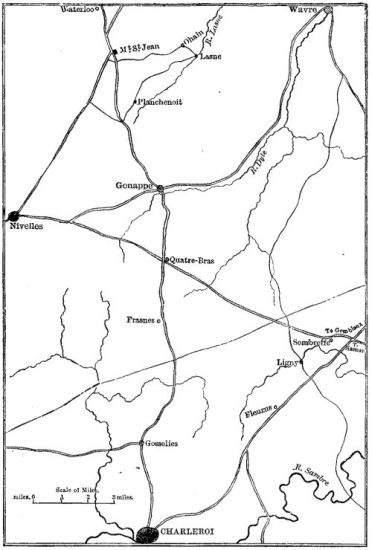
The Campaign of 1815.
Pp. 1340, 1341.
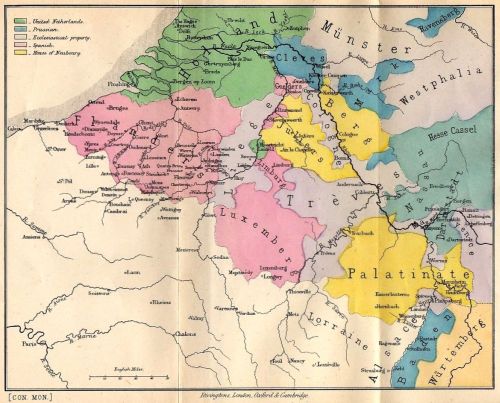
COUNTRIES TO THE NORTH OF FRANCE 1702.
Rivingtons, London, Oxford & Cambridge.
[See larger version]
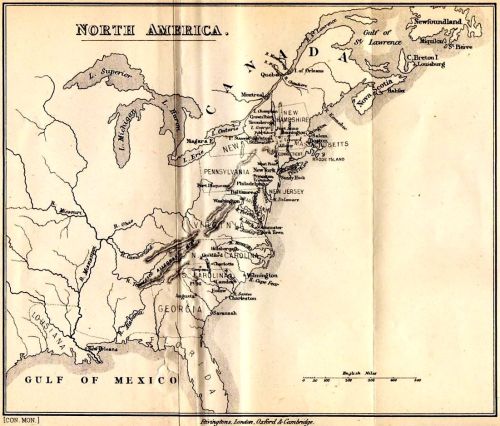
NORTH AMERICA.
Rivingtons, London, Oxford & Cambridge.
[See larger version]
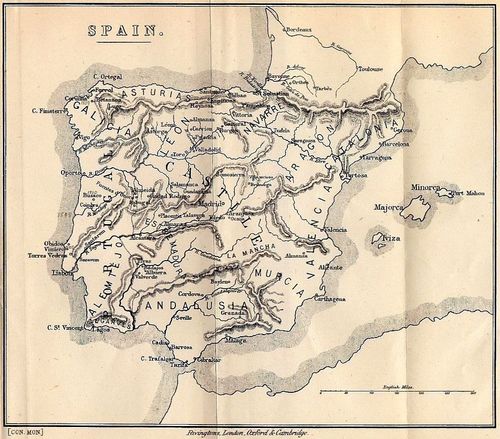
SPAIN.
Rivingtons, London, Oxford & Cambridge.
[See larger version]
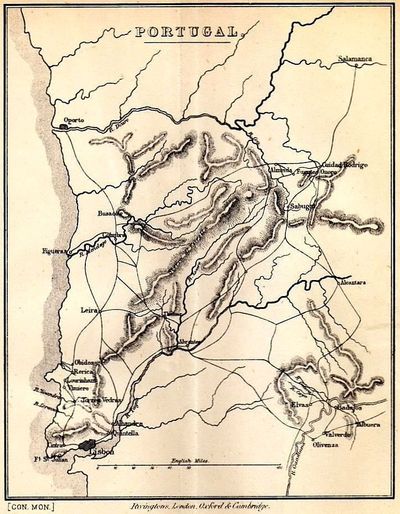
PORTUGAL.
Rivingtons, London, Oxford & Cambridge.
[See larger version]
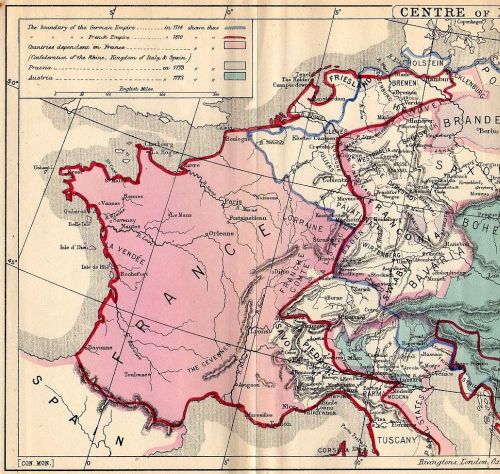
CENTRE OF EUROPE.
[See larger version]
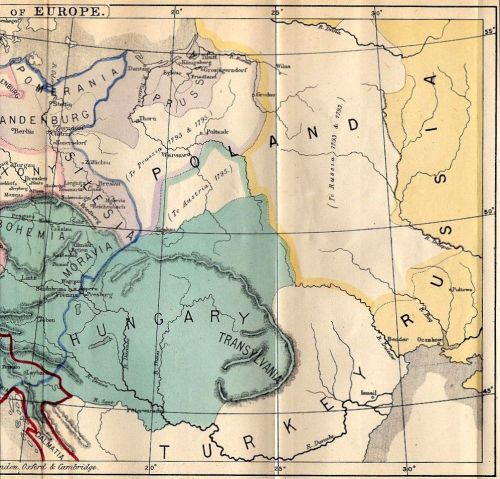
Rivingtons, London, Oxford & Cambridge.
[See larger version]
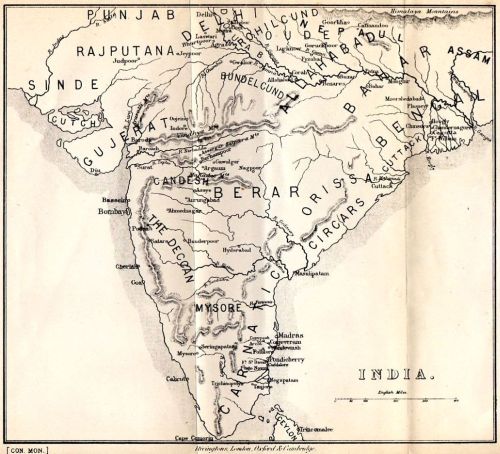
INDIA.
Rivingtons, London, Oxford & Cambridge.
[See larger version]
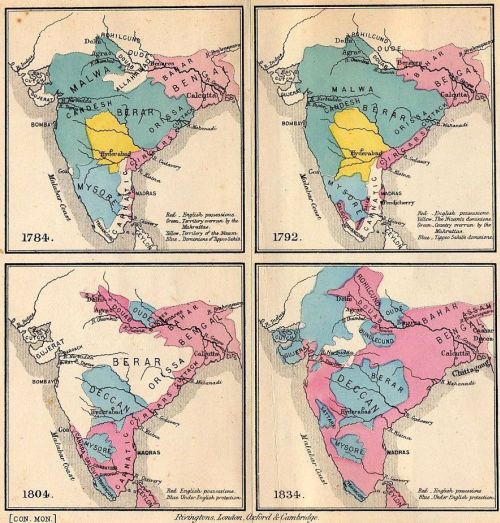
INDIA, SHOWING ROUGHLY THE GROWTH OF THE ENGLISH POWER.
Rivingtons, London, Oxford & Cambridge.
[See larger version]