A CIVIC BIOLOGY (continued 8)
Reading edition
In 1865-1868 Pasteur turned his attention to a silkworm disease which threatened to wipe out the silk industry of France and Italy. He found that this disease was caused by bacteria. After a careful study of the case he made certain recommendations which, when carried out, resulted in the complete overthrow of the disease and the saving of millions of dollars to the poor people of France and Italy.
The greatest service to mankind came later in his life when he applied certain of his discoveries to the treatment of disease. First experimenting upon chickens and later with cattle, he proved that by making a virus (poison) from the germs which caused certain diseases he could reduce this virus to any desired strength. He then inoculated the animals with the virus of reduced strength, giving the inoculated animals a mild attack of the disease, and found that this made them immune from future attacks. This discovery, first applied to chicken cholera, laid the foundation for all future work in the uses of serums, vaccines, and antitoxins.
Pasteur was perhaps the best known through his study of rabies. The great Pasteur Institute, founded by popular subscriptions from all over the world, has successfully treated over 22,000 cases of rabies with a death rate of less than 1 per cent. But more than that it has been the place where Roux, a fellow worker with Pasteur, discovered the antitoxin for diphtheria which has resulted in the saving of thousands of human lives. Here also have been established the principles of inoculation against bubonic plague, lockjaw, and other germ diseases.
Pasteur died in 1895 at the age of seventy-three, "the most perfect man in the realm of science," a man beloved by his countrymen and honored by the entire world.
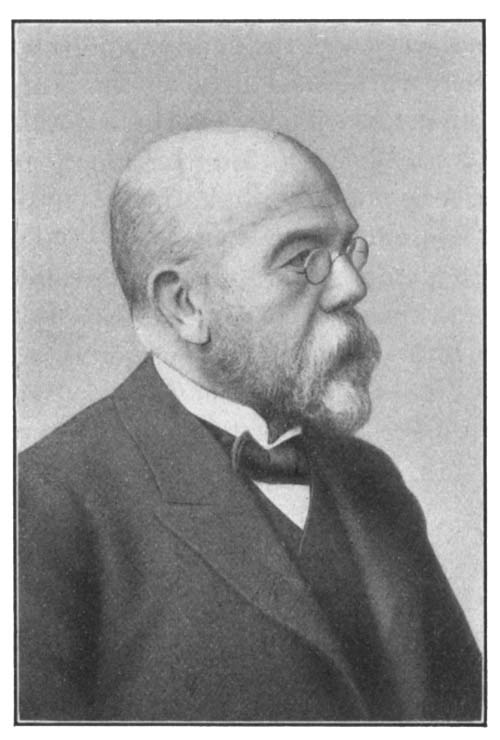
Robert Koch.
Robert Koch.—Another name associated with the battle against disease germs is that of Robert Koch. Born in Klausthal, Hanover, in 1843, he later became a practicing physician, and about 1880 was called to Berlin to become a member of the sanitary commission and professor in the school of medicine. In 1881 he discovered the germ that causes tuberculosis and two years later the germ that causes Asiatic cholera. His later work has been directed toward the discovery of a cure for tuberculosis and other germ diseases. As yet, however, no certain cure seems to have been found.
Lister and Antiseptic Treatment of Wounds.—A third great benefactor of mankind was Sir Joseph Lister, an Englishman who was born in 1827. As a professor of surgery he first applied antiseptics in the operating room. By means of the use of carbolic acid or other antiseptics on the surface of wounds, on instruments, and on the hands and clothing of the operating surgeons, disease germs were prevented from taking a foothold in the wounds. Thus blood poisoning was prevented. This single discovery has done more to prevent death after operations than any other of recent time.
Modern Workers on the Blood.—At the present time several names stand out among investigators on the blood. Paul Ehrlich, a German born in 1854, is justly famous for his work on the blood and its relation to immunity from certain diseases. His last great research has given to the world a specific against the dread disease syphilis.
Another name associated with the blood is that of Elias Metchnikoff, a Russian. He was born in 1845. Metchnikoff first advanced the belief that the colorless blood corpuscles, or phagocytes, did service as the sanitary police of the body. He has found that there are several different kinds of colorless corpuscles, each having somewhat different work to do. Much of the modern work done by physiologists on the blood are directly founded on the discoveries of Metchnikoff.
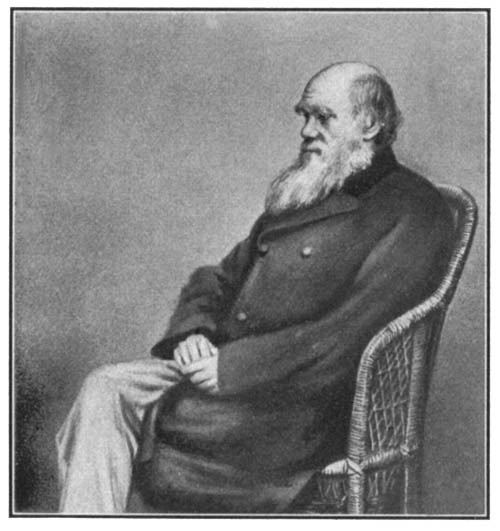
Charles Darwin, the grand old man of biology.
Heredity and Evolution. Charles Darwin.—There is still another important line of investigation in biology that we have not mentioned. This is the doctrine of evolution and the allied discoveries along the line of heredity. The development or evolution of plants and animals from simpler forms to the many and present complex forms of life have a practical bearing on the betterment of plants and animals, including man himself. The one name indelibly associated with the word evolution is that of Charles Darwin.
Charles Darwin was born on February 12, 1809, a son of well-to-do parents, in the pretty English village of Shrewsbury. As a boy he was very fond of out-of-door life, was a collector of birds' eggs, stamps, coins, shells, and minerals. He was an ardent fisherman, and as a young man became an expert shot. His studies, those of the English classical school, were not altogether to his liking. It is not strange, perhaps, that he was thought a very ordinary boy, because his interest in the out-of-doors led him to neglect his studies. Later he was sent to Edinburgh University to study medicine. Here the dull lectures, coupled with his intense dislike for operations, made him determine never to become a physician. But all this time he showed his intense interest in natural history and took frequent part in the discussions at the meetings of one of the student zoölogical societies.
In 1828 his father sent him to Cambridge to study for the ministry. His three years at the university were wasted so far as preparation for the ministry were concerned, but they were invaluable in shaping his future. He made the acquaintance of one or two professors who were naturalists like himself, and in their company he spent many happy hours in roaming over the countryside collecting beetles and other insects. In 1831 an event occurred which changed his career and made Darwin one of the world's greatest naturalists. He received word through one of his professional friends that the position of naturalist on her Majesty's ship Beagle was open for a trip around the world. Darwin applied for the position, was accepted, and shortly after started on an eventful five years' trip around the world. He returned to England a famous naturalist and spent the remainder of his long and busy life producing books which have done more than those of any other writer to account in a satisfactory way for the changes of form and habits of plants and animals on the earth. His theories established a foundation upon which plant and animal breeders were able to work.
His wonderful discovery of the doctrine of evolution was due not only to his information and experimental evidence, but also to an iron determination and undaunted energy. In spite of almost constant illness brought about by eyestrain, he accomplished more than most well men have done. His life should mean to us not so much the association of his name with the Origin of Species or Plants and Animals under Domestication, two of his most famous books, but rather that of a patient, courteous, and brave gentleman who struggled with true English pluck against the odds of disease and the attacks of hostile critics. He gave to the world the proofs of the theory on which we to-day base the progress of the world. Darwin lived long enough to see many of his critics turn about and come over to his beliefs. He died on the 19th of April, 1882, at seventy-four years of age.
Associated with Darwin's name we must place two other co-workers on heredity and evolution, Alfred Russel Wallace, an Englishman who independently and at about the same time reached many of the conclusions that Darwin came to, and August Weissman, a German. The latter showed that the protoplasm of the germ cells (eggs and sperms) is directly handed down from generation to generation, they being different from the other body cells from the very beginning. In 1883 a German named Boveri discovered that the chromosomes of the egg and the sperm cell were at the time of fertilization just half in number of the other cells (see page 252) so that a fertilized egg was really a whole cell made up of two half cells, one from each parent. The chromosomes within the nucleus, we remember, are believed to be the bearers of the hereditary qualities handed down from parent to child. This discovery shows us some of the mechanics of heredity.
Applications to Plant and Animal Breeding.—Turning to the practical applications of the scientific work on the method of heredity, the name of Gregor Mendel, an Austrian monk, stands out most prominently. Mendel lived from 1822 until 1884. His work, of which we already have learned something (see page 258), remained undiscovered until a few years ago. The application of his methods to plant and animal raising are of the utmost importance because the breeder is able to separate the qualities he desires and breed for those qualities only. Another name we have mentioned with reference to plant breeding is Hugo de Vries, the Dutchman who recently showed that in some cases plants arise as new species by sudden and great variations known as mutations. And lastly, in our own California, Luther Burbank, by careful hybridizing, is making lasting fame with his new and useful hybrid plants.
References
Conn, Biology. Silver, Burdett & Co.
Darwin, Life and Letters of Charles Darwin. Appletons.
Galton, Hereditary Genius. London (1892).
Thompson, Heredity. John Murray, London England.
Wasmann, Problem of Evolution. Kegan Paul, Trench, Trübner and Co., London, E. C.
APPENDIX
A SUGGESTED OUTLINE FOR BIOLOGY BEGINNING IN THE FALL
LIST OF TOPICS
First Term
First week. Why study Biology? Relation to human health, hygiene. Relations existing between plants and animals. Relation of bacteria to man. Uses of plants and animals. Conservation of plants and animals. Relation to life of citizen in the city. Plants and animals in relation to their environment. What is the environment; light, heat, water, soil, food, etc. What plants take out of the environment. What animals take out of the environment. Dependence of plants and animals upon the factors of the environment. Laboratory: Study of a plant or an animal in the school or at home to determine what it takes from its environment.
Second week. Some Relations existing between Plants (Green) and Animals. Field trip planned to show that insects feed upon plants; make their homes upon plants. That flowers are pollinated by insects. Insects lay eggs upon certain food plants. Green plants make food for animals. Other relations. (Time allotment. One day trip, collecting, etc.; two days' discussion of trip in all its relations.) Make a careful study of the locality you wish to visit, have a plan that the pupils know about beforehand. Review and hygiene of pupil's environment, 2 days.
Third week. Study of a Flower, Parts Essential to Pollination Named. Adaptations for insect pollination worked out in laboratory. Study of bee or butterfly as an insect carrier of pollen. Names of parts of insect learned. Elementary knowledge of groups of insects seen on field trip. Bees, butterflies, grasshoppers, beetles, possibly flies and bugs. Drawing of a flower, parts labeled. Drawing of an insect, outline only, parts labeled. Careful study of some fall flower fitted for insect pollination with an insect as pollinating agent. Some examples of cross-pollination explained. Practical value of cross-pollination.
Fourth week. Living Plants and Animals Compared. Parts of plants, functions; organs, tissues, cells. Demonstration cells of onion or elodea. How cells form others. What living matter can do. Reproduction. Growth of pollen tube, fertilization. Development of ovule into seed. Fruits, how formed. Uses, to man.
Fifth week. What makes a Seed Grow. Bean seed, a baby plant, and food supply. Food, what is it? Organic nutrients, tests for starch, protein, oil. Show their presence in seeds.
Sixth week. Need for Foods. Germination of bean due to (a) presence of foods, (b) outside factors. What is done with the food. Release of energy. Examples of engine, plants, human body. Oxidation in body. Proof by experiment. Test for presence of CO2. Oxidation in growing plant, experiment. Respiration a general need for both plants and animals.
Seventh week. Need for Digestion. The corn grain. Parts, growth, food supply outside body of plant, how does it get inside. Digestion, need for. Test for grape sugar. Enzymes, their function. Action of diastase on starch.
Eighth week. What Plants take from the Soil, How they do This. Use of root. Influence of gravity and water. Why? Absorption a function. Root hairs. Demonstration. Pocket gardens, optional home work, but each pupil must work on root hairs from actual specimen. How root absorbs. Osmosis; what substances will osmose. Experiments to demonstrate this.
Ninth week. Composition of Soil. What root hairs take out of soil. Plant needs mineral matter to make living matter. Why? Nitrogen necessary. Sources of nitrogen, the nitrogen-fixing bacteria. Relation of this to man. Rotation of crops.
Tenth week. How Green Plants make Food. Passage of liquids up stem. Demonstration. Structure of a green leaf. Cellular structure demonstrated. Microscopic demonstration of cells, stoma, air spaces, chlorophyll bodies. Evaporation of water from green leaf, regulation of transpiration.
Eleventh week. Midterm Examinations. Sun a source of energy. Effect of light on green plants. Experimental proof. Starch made in green leaf. Light and air necessary for starch making. Proof. Protein making in leaf. By-products in starch making. Proof. Respiration.
Twelfth week. The Circulation and Distribution of Food in Green Plants. Uses of bark, wood, what part of stem does food pass down. Willow twig experiment. Summary of functions of living matter in plant. Forestry lecture. Economic uses of green plants. Reports.
Thirteenth week. Plants without Chlorophyll in their Relation to Man. Saprophytic fungi. Molds. Growth on bread or other substances. Conditions most favorable for growth. Favorite foods. Methods of prevention. Economic importance.
Fourteenth week. Yeasts in their Relation to Man. Experiments to show fermentation is caused by yeasts. Experiments to show conditions necessary for fermentation. The part played by yeasts in bread making, in wine making, in other industries. Structure of yeast demonstrated. Summary.
Fifteenth week. Experiments to show where Bacteria may be found and Conditions necessary to Growth Begun. Have cultures collected and placed in a warm room during the holidays. Suggested experiments are exposure to air of quiet room and room with persons moving, dust of floor, knife blade, etc.
Sixteenth, seventeenth, and eighteenth weeks. The Month of January should be Devoted to the Study of Bacteria in their General Relations to Man. Economically, both directly and indirectly. Especial emphasis placed on the nature and necessity of decay. Bacteria in relation to disease should also be emphasized. The experiments to be performed and the topics expected to be covered follow.
Conditions Favorable and Unfavorable for Growth of Bacteria. (Use bouillon cultures.) Effect of intense heat, sterile bouillon exposed to air, effect of boiling, effect of cold, effect of antiseptics (corrosive sublimate, carbolic acid, boric acid, formalin, etc.), effect of large amounts of sugar and salt and the relation of this to preserving, etc. Bring out practical application of principles demonstrated. Discuss sterilization in medicine and surgery, cold storage, canning, sterilization, e.g. laundries, etc., use of antiseptics, preserving by means of salt and sugar. Microscopic demonstration of bacteria. Methods of reproduction. Importance in causing organic decay, fixation of nitrogen, various useful forms in cheese making, butter ripening, etc. Harmfulness of bacteria as disease producers. Specific diseases discussed: tuberculosis, typhoid, infective colds, blood poisoning, etc. Vaccination. Antitoxins begun—continued after knowledge of human body is gained. Work of Lister and Pasteur.
Nineteenth and twentieth weeks. Review and Examinations.
Second Term
First week. The Balanced Aquarium. Carbon and nitrogen cycles. Balanced aquarium and hay infusion compared.
Second week. One Protozoan, Demonstration to show Changes in Shape, Response to Stimuli, Summary of Vital Processes in Cell. Food getting, digestion, assimilation, oxidation, excretion, growth, reproduction. Internal structure of protozoan. Protozoa as cause of disease.
Third week. General Survey of Animal Kingdom. Survey introduced by museum trip if possible. Protozoa, worm, insect, fish, mammal. Distinction between vertebrate and invertebrate. Character of mammalia. Division of labor emphasized. Man's place in nature.
Fourth week. Study of the Frog. Relation to habitat, adaptations for locomotion, food getting, respiration, comparison of frog and fish on latter point. Osmotic exchange of gases emphasized. Cell respiration.
Fifth week. Metamorphosis of Frog. Fertilization, cell division, and differentiation emphasized. Touch on plant and animal breeding. Function of chromosomes as bearers of heredity. Comparison of bird's egg and mammal embryo.
Sixth week. Factors in Breeding. 1. Variation. 2. Selection. 3. Heredity fixes variation. 4. Hybridizing. 5. Control of environment. Eugenics in relation to (a) crime, (b) disease, (c) genius. Continuity of germ plasm. Work of Darwin, Mendel, De Vries, Burbank.
Seventh week. A Brief Study of the Gross Structure of the Human Body. Skin, muscles, bones. Removal of lime from bone by HCl to show other substances and need for lime. Effect of posture, spinal curvature, fractures, sprains.
Eighth week. Need for Food. Nutritive value of food. Use of charts to show foods rich in carbohydrates, fats, proteins, minerals, water, refuse. The relation of age, sex, work, and environment to the food requirements. What is a cheap food. Price list of common foods at present time. Efforts of government to secure a cheap food supply for the people. Digestibility of foods.
Ninth week. How the Fuel Value of Food has been Determined. Meaning of calorie. The 100-caloric portion, its use in determining a daily or weekly dietary. Standard dietary as determined by Atwater. Comparison of standards of Chittenden and Voit with those of Atwater.
Tenth week. Study of Pupil's Dietary. Planning ideal meals. Individual dietaries for one day required from each pupil. Discussions and corrections. The family dietary. Relation to cost.
Eleventh week. Digestion. The digestive system in the frog and in man compared. Drawings of each. Glands and enzymes. Internal secretions and their importance. Demonstration of glandular tissues. Experiment to show digestion of starch in mouth.
Twelfth week. Digestion Continued. Digestion of white of egg by gastric juice. Digestion of starch with pancreatic fluid. Functions of pancreatic juice. Microscopic examination of emulsion. Reasons for digestion. Part played by osmosis. Demonstration of osmosis. Non-osmosis of non-digested foods, comparison between osmosable qualities of starch and grape sugar.
Thirteenth week. Absorption. Where and how foods are absorbed. The structure of a villus explained. Course taken by foods after absorption. Function of liver. Blood making the result of absorption. Composition of blood, red and colorless corpuscles, plasma, blood plates, antibodies. Microscopic drawing of corpuscles of frog's and man's blood.
Fourteenth week. Circulation of Blood. The heart and lungs of frog demonstrated. Heart of man a force pump, explain with use of force pump. Demonstration of beef's heart. Circulation and changes of blood in various parts of body. Work of cells with reference to blood made clear. Capillary circulation (demonstration of circulation in tadpole's tail or web of frog's foot).
Fifteenth week. Respiration and Excretion. Necessity for taking of oxygen to cells and removal of wastes from cells. Part played by blood and lymph. Mechanics of breathing (use of experiments). Changes of air and blood in lungs (experiments). Best methods of ventilation (experiments). Elimination of wastes from blood by lungs, skin, and kidneys. Cell respiration.
Sixteenth week. Hygiene of Organs of Excretion, especially care of skin. The general structure and functions of the central nervous system. Sensory and motor nerves. Reflexes, instincts, habits. Habit formation, importance of right habits. Rules for habit formation. Habit-forming drugs and other agents. Lecture.
Seventeenth, eighteenth, nineteenth weeks. Civic Hygiene and Sanitation. Hygiene of special senses, eye and ear. A well citizen an efficient citizen. Public health is purchasable. Improvement of environment a means of obtaining this. Civic hygiene and sanitation. Cleaning up neighborhood, inquiry into home and street conditions. Fighting the fly. Conditions of milk and water supply. Relation of above to disease. Work of Board of Health, etc. Review and Examinations.
SUGGESTED SYLLABUS FOR COURSE BEGINNING FEBRUARY 1 AND ENDING THE FOLLOWING JANUARY
First Term
First week. Why study Biology? Relation to human health, hygiene. Relations existing between plants and animals. Relation of bacteria to man. Uses of plants and animals. Conservation of plants and animals. Relation to life of citizen in this city. Needs of plants and animals: (1) food, (2) water, (3) air, (4) proper temperature. Study of a single plant or animal in relation to its environment. Problems of city government: (a) storage, preservation and distribution of foods, (b) water supply, (c) overcrowded tenements, (d) street cleaning, (e) clean schools. Biological problems in city government.
Second week. Interrelations between Plants and Animals. Plants furnish food, clothing, shelter, and medicine. Animals use food, shelter. Man's use of plants as above. Man's use of animals as above. Plant and animal industries. Use of balanced aquarium as illustrative material.
Third week. Destruction of Food and Other Things by Mold. Home experiment. Conditions favorable to growth of mold. Food, moisture, temperature. Destruction of commodities by mold: food, leather, clothing.
Fourth week, fifth week. Destruction of Foods by Bacteria. Experiment. To show where bacteria are found. Soil, dust, water, milk, hands, mouth. Use and harm of decay. Relation to agriculture. Experiment. Conditions favorable and unfavorable to growth of bacteria: boiling, cold, sugar, salt. Bacteria in relation to disease briefly mentioned. Bacteria in industries.
Sixth week. Use of Stored Food by Young Green Plant: (a) for energy, (b) for construction of tissue. Experiment. Structure of bean seed. Draw to show outer coat, cotyledon, hypocotyl, and plumule. Test for starch and sugar (grape). Test for oil, protein, water, mineral matter. Use of all nutrients to seedling.
Seventh week. Other Needs of Young Plants. Home experiments to show (a) temperature, (b) amount of water most favorable to germination. Experiment. To show need of oxygen. To show that germinating seeds give off carbon dioxide. Proof of presence of carbon dioxide in breath. The needs of a young plant compared with those of a boy or girl.
Eighth week. Digestion in Seedling. Structure of corn grain. Experiment. To show that starch is digested in a growing seedling (corn). Experiment. To show that diastase digests starch. Discussion of experiments.
Ninth week. What Plants take from the Soil and How they do This. Use of roots. Proof that it holds plant in position, takes in water and mineral matter, and in some cases stores food. Influence of gravity and water. Labeled drawing of root hair. Root hair as a cell emphasized. Osmosis demonstrated.
Tenth week. Composition of the Soil. Demonstration of presence of mineral and organic substances in the soil. What root hairs take from the soil. Mineral matter necessary and why. Importance and sources of nitrogen. Soil exhaustion and its prevention. Nitrogen-fixing bacteria. Review bacteria of decay. Rotation of crops.
Eleventh week. Upward Course of Materials in the Stem. Demonstration of pea seedlings with eosin to show above. Demonstration of evaporation of water from a leaf. Action of stomata in control of transpiration. Cellular structure of leaf. Demonstration of elodea to show cell.
Twelfth week. Sun a Source of Energy. Heliotropism. Demonstration. Necessity of sunlight for starch manufacture. Necessity of air for starch manufacture. By-products in starch making. Oil manufacture in leaf. Protein manufacture in plant. Respiration.
Thirteenth week. Reproduction. Necessity for (a) perpetuation, (b) regeneration. Study of a typical flower to show sepals, petals, stamens, pistil. Functions of each part. Cross and longitudinal sections of ovary shown and drawn. Emphasis on essential organs. Pollination, self and cross. (Note. At least one field trip must be planned for the month of May. This trip will take up the following topics: The relations between flowers and insects. The food and shelter relation between plants and animals. Recognition of 5 to 10 common trees. Need of conservation of forests. An extra trip could well be taken to give child a little knowledge and love for spring flowers and awakening nature.)
Fourteenth week. Study of the Bee Or Butterfly with Reference to Adaptations for Insect Pollination. Study of an irregular flower to show adaptations for insect visitors. Fertilization begun. Growth of pollen tubes.
Fifteenth week. Fertilization Completed. Use of chart to show part played by egg and sperm cell. Ultimate result the formation of embryo and its growth under favorable conditions into young plant. Relation of flower and fruit, pea, or bean used for this purpose. Development of fleshy fruit. Apple used for this purpose.
Sixteenth week. Maturing of Parts and Storing of Food in Seed and Fruit. The devices for scattering the seeds and relation to future plants. Résumé of processes of nutrition to show how materials found in fruit and seed are obtained by the plant.
Seventeenth week. Plant Breeding. Factors: (a) selective planting, (b) cross-pollination, (c) hybridizing. Heredity and variation begun. Darwin and Burbank mentioned.
Eighteenth and nineteenth weeks. The Natural Resources of Man: Soil, Water, Plants, Animals. The relation of plant life to the above factors of the environment. The relation of insects to plants (forage and other crops) and the relation of birds to insects. Need for conservation of the helpful factors in the environment of plants. Attention called to some native birds as insect and wood destroyers.
Twentieth week. Review and Examinations.
Second Term
First week. The Balanced Aquarium. Study of conditions producing this. The rôle of green plants, the rôle of animals. What causes the balance. How the balance may be upset. The nitrogen cycle. What it means in the world outside the aquarium. Symbiosis as opposed to parasitism. Examples.
Second week. Study of the Paramœcium. Study of a hay infusion to show how environment reacts upon animals. Relation to environment. Study of cell under microscope to show reactions. Structure of cell. Response to stimuli, function of cilia, gullet, nucleus, contractile vacuoles, food vacuoles, asexual reproduction. Drawings to show how locomotion is performed, general structure. Copy chart for fine structure.
Third week. A Bird's-eye View of the Animal Kingdom. One day. Development of a multicellular organism. (Use models.) One day. Physiological division of labor. Tissues, organs. Functions common to all animals. Illustrative material. Optional trip to museum for use of illustrative material to illustrate the principal characteristics of (a) a simple metazoan, sponge, or hydrazoan, (b) a segmented worm, (c) a crustacean (Decapod), (d) an insect, (e) a mollusk and echinoderm, (f) vertebrates. (Differences between vertebrates and invertebrates.) The characteristics of the vertebrates. Distinguish between fishes, amphibia, reptiles, birds, mammals. Two days for discussion. Man's place in the animal series, elementary discussion of what evolution means.
Fourth week. The Economic Importance of Animals. Uses of animals: (1) As food. Directly: fish, shellfish, birds, domesticated mammals. (2) Indirectly as food: protozoa, crustacea. (3) They destroy harmful animals and plants. Snakes—birds; birds—insects; birds—weed seeds; herbivorous animals—weeds. (4) Furnish clothing, etc. Pearl buttons, etc. (5) Animal industries, silkworm culture, etc. (6) Domesticated animals.
Animals do harm: (1) To gardens. (2) To crops. (3) To stored food; examples, rats, insects, etc. (4) To forest and shade trees. (5) To human life. Disease: parasitism and its results,—examples, from worms, etc.; disease carriers fly, etc. Preventive measures. Methods of extermination.
References to Toothaker's Commercial Raw Materials. Use one day for laboratory work from references.
Fifth week. The Study of a Water-breathing Vertebrate. Two days. The fish, adaptations in body, fins, for food getting, for breathing. Structure of gills shown. Laboratory demonstration to show how water gets to the gills. Drawings. Outline of fish, gills. Required trip to aquarium. Object, to see fish in environment. One day. Home work at market. Why are some fish more expensive than others. Economic importance of fish. Relation of habits of (a) food getting, (b) spawning to catching and extermination of fish. Two days. Means of preventing overfishing, stocking, fishing laws, artificial fertilization of eggs, methods. Development of fish egg. Comparison with that of frog and bird.
Sixth week. The Factors Underlying Plant and Animal Breeding. Study of pupils in class to show heredity and variation. Conclusion. Animals tend to vary and to be like their ancestors. Heredity, rôle of sex cells, chromosomes. Principles of plant breeding. Selective planting, hybridizing, work of Darwin, Mendel, De Vries, and Burbank. Methods and results. Animal breeding, examples given, results. Improvement of man: (1) by control of environment, (a) example of clean-up campaign, 1913; (2) by control of individual, personal hygiene, and control of heredity. Eugenics. Examples from Davenport, Goddard, etc.
Seventh week. The Human Machine. Skin, bones and muscles, function of each. Examples and demonstration with skeleton. Organs of body cavity; show manikin. Work done by cells in body.
Eighth week. Study of Foods to determine: (a) nutritive value. Exercise with food charts to determine foods rich in water, starch, sugar, fats, proteins, mineral salts, refuse. One day. (b) Nutritive value of foods as related to work, age, sex, environment, cost, and digestibility. Foods compared to determine what is really a cheap food.
Ninth week. How the Fuel Value of Food has been Determined. The dietaries of Atwater, Chittenden, and Voit. The 100-calorie portion table and its use.
Tenth week. The Application of the 100-calorie Portion to the Making of the Daily Dietaries. Luncheon dietaries. A balanced dietary for pupil for one day. Family dietaries. Relation to cost. Reasons for this.
Eleventh week. Food Adulterations. Tests. Drugs and the alcohol question.
Twelfth week. Digestion. The alimentary canal of frog and of man compared. Drawings. (One day.) The work of glands. Work of salivary gland. Enzymes, internal secretions. Experiments to show (a) digestion of starch by saliva, (b) digestion of proteins by gastric or pancreatic juice, (c) emulsification of fats in the presence of an alkaline medium. Functions of other digestive glands. Movements of stomach and intestine discussed and explained.
Thirteenth week. Absorption. How it takes place, where it takes place. Passage of foods into blood, function of liver, glycogen.
Fourteenth week. The Blood and its Circulation. Composition and functions of plasma, red corpuscles, colorless corpuscles, blood plates, antibodies. The lymph and work of tissues. The blood and its method of distribution. Heart a force pump. Demonstration. Arteries, capillaries (demonstration), veins. Hygiene of exercise.
Fifteenth week. What Respiration does for the Body. The apparatus used. Changes of blood within lungs, changes of air within lungs. Demonstration. Cell respiration. The mechanics of respiration. Demonstration. Ventilation, need for, explain proper ventilation. Demonstration. Hygiene of fresh air and proper breathing. Dusting, sweeping, etc.
Sixteenth week. Excretion, Organs of. Skin and kidneys, regulation of body heat. Colds and fevers. Proper care of skin, hygiene. Summary of blood changes in body. Explanation of same.
Seventeenth week. Body Control and Habit Formation. Nervous system, nerve control. The neuron theory, brain psychology explained in brief. Habits and habit formation. Hygiene of sense organs.
Eighteenth and nineteenth weeks. Civic Hygiene and Sanitation. The Improvement Of One's Environment. Civic conditions discussed. Water, milk, food supplies. Relation to disease. How safeguarded. How help improve conditions in city.
Twentieth week. Review and Examinations.
HYGIENE OUTLINE
(This outline may be introduced with Plant Biology, or, better, may come as application of the work in Second-term Biology.)
The Environment. Changes for betterment under control. How a city boy may improve his environment: by proper clothing, proper food and preparation of food, by care in home life; by sanitary conditions in neighborhood and in home.
Review of Activities of Cell. Irritability, food taking, assimilation, oxidation, excretion, reproduction. Similarity of functions of plant and animal cells. All cells perform these functions. Some cells perform functions especially well, e.g. contracting muscle cells. All cells need food and oxygen. Some must have this carried to them. A system of tubes carries blood which carries food and oxygen. Food must be prepared to get into the blood. Digestive system: mouth, teeth, stomach, intestines, glands, and digestive juices. Uses of above in preparing food to pass into the blood. Absorption of food into the blood. How oxygen gets to the cells. Nose, throat, windpipe, lungs; blood goes to lungs and carries away oxygen. Excretion. Cells give up wastes to blood and these wastes taken out of blood by kidneys and other glands and passed out of body. Sweat, urine, carbon dioxide.
Certain Kinds of Work performed by Certain Kinds of Cells. Advantage of this. Cells of movement. Muscles, tissues. Bones as levers necessary for some movements. This especially true for legs and arms. Skeleton also necessary for protection of internal organs and support of body. Making of special things in the body, e.g. digestive juices given to certain cells called gland cells. Working together or coördination of different organs provided for by nervous system. This is composed of cells which are highly irritable or sensitive. Collections of these nerve cells give us the power of feeling or sensation and of thinking.
Dietetics. Diet influenced by age, weight, occupation, temperature or climate, cheapness of food, digestibility.
Nutrients. List of nutrients found in seeds and fruits, also other common foods. Need of nutrients for human body. Nitrogenous foods, examples. A mixed diet best.
Digestion and Indigestion. What is digestion? Where does it take place? Causes of indigestion. Eating too rapidly and not chewing food. Eating foods hard to digest. Overeating. Eating between meals. Hard exercise immediately before or after eating.
Constipation. A condition in which the bowels do not move at least once every day. Dangers of constipation. Poisonous materials may be absorbed, causing lack of inclination to work, headache. Importance of regular habits of emptying the bowels. Each one must try to get at the cause of constipation in his own case. Causes of constipation. Lack of exercise, improper food, not drinking enough water, lack of laxative food, as fruits; lack of sleep, lack of regular habits. Remedies. Avoid use of drugs. Half hour before breakfast a glass of hot water, exercise of abdominal muscles, laxative foods, form habit of moving bowels after breakfast.
Hygiene of Circulation and Absorption. How digested foods get to the cells. Absorption. Definition. The passing of the digested food into the blood. How accomplished. Blood vessels. In walls of stomach and food tube. Membrane of cells separating food from blood. Food passes by osmosis through the membrane and by osmosis through the thin walls of the blood vessels.
Circulation of Foods. Blood contains foods, oxygen, and waste materials. Heart pumps the blood, blood vessels subdivide until very small and thin, so food, etc., passes from them to cells. Hygiene of the heart.
Transpiration and Excretion. Skin, function in excretion. Bathing. Care of skin. Hot baths. Bathe at least twice a week. Cold baths, how taken. Bathtub not a necessity. Effect of latter on educating skin to react. Relation to catching cold.
Care of Scalp and Nails. Scalp should be washed weekly. If dandruff present, wash often enough to keep clean. Baldness often results from dandruff. Finger nails cut even with end of fingers and cleaned daily with scrub brush.
Hygiene of Respiration. Definition of respiration. Object of respiration. (Connection between circulation and respiration.) Necessity of oxygen. Organs of respiration. Lungs most important. Deep breath, function. Ventilation, reasons for. Mouth breathing. Results. Lessened mental power, nasal catarrh, colds easily caught.
Plants Harmful To Man. Poison ivy and mushrooms. Treatment. Poisoning. Send for physician. Cause vomiting by (1) finger, (2) mustard and water. (Note. An unconscious person should not be given anything by the mouth unless he can swallow.) Relation of yeasts and bacteria to man. Fermentation a cause of indigestion. Relation to candy, sirups, sour stomach, formation of gas causes pain.
Bacteria of Mouth and Alimentary Canal. Entrance of bacteria by mouth and nose. Nose: "cold in the head," grippe, catarrh. Mouth: decay of teeth, tonsillitis, diphtheria. Germs pass from one person to another, no one originates germs in himself. Precautions against receiving and transferring germs. Common drinking cups, towels, coins, lead pencils, moistening fingers to turn pages in book or to count roll of bills. Tuberculosis germs. Entrance by mouth, lungs favorite place, may be any part of body. Dust of air, sweeping streets, watering a necessity. Spitting in streets and in public buildings. Germs of typhoid fever. Entrance: water, milk, fresh uncooked vegetables, oysters. Thrive in small intestines. Preventable. Typhoid epidemics, methods of prevention of typhoid. Conditions favorable for growth of specific disease germs. Work of Boards of Health.
Home sanitary conditions, sunlight, air, curtains and blinds, open windows. Live out of doors as much as possible. Cleanliness. Bare walls well scrubbed better than carpets and rugs. Lace curtains, iron bedsteads, one thickness of paper on walls. Open plumbing, dry cellars, all garbage promptly removed.
This outline is largely the work of Dr. L. J. Mason and Dr. C. H. Morse of the department of biology of the De Witt Clinton High School.
WEIGHTS, MEASURES, AND TEMPERATURES
As the metric system of weights and measures and the Centigrade measurement of temperatures are employed in scientific work, the following tables showing the English equivalents of those in most frequent use are given for the convenience of those not already familiar with these standards. The values given are approximate only, but will answer for all practical purposes.
Weight
Kilogram kg. 2-1/5 pounds
Gram gm. 15-½ grains avoirdupois. 1/28 of an ounce avoirdupois.
Capacity
Liter l. 61 cubic inches, or a little more than 1 quart, U. S. measure.
Cubic centimeter cc. 1/16 of a cubic inch.
Measures of Length
Metric English Equivalents
Kilometer km. 2/3 of a mile.
Meter m. 39 inches.
Decimeter dm. 4 inches.
Centimeter cm. 2/5 of an inch.
Millimeter mm. 1/25 of an inch.
The next table gives the Fahrenheit equivalent for every tenth degree Centigrade from absolute zero to the boiling point of water. To find the corresponding F. for any degree C., multiply the given C. temperature by nine, divide by five, and add thirty-two. Conversely, to change F. to C. equivalent, subtract thirty-two, multiply by five, and divide by nine.
Cent. Fahr.
100 212
90 194
80 176
70 158
60 140
50 122
40 104
30 86
20 68
10 50
0 32
-10 14
-20 -4
-30 -22
-40 -40
-50 -58
-100 -148
Absolute zero
-273 -459
Laboratory Equipment
The following articles comprise a simple equipment for a laboratory class of ten. The equipment for larger classes is proportionately less in price. The following articles may be obtained from any reliable dealer in laboratory supplies, such as the Bausch and Lomb Optical Company of Rochester, N.Y., or the Kny-Scheerer Company, 404, 410 West 27th Street, New York City:—
1 balance, Harvard trip style, with weights on carrier.
1 bell jar, about 365 mm. high by 165 mm. in diameter.
10 wide mouth (salt mouth) bottles, with corks to fit.
10 25 c.c. dropping bottles for iodine, etc.
25 250 c.c. glass-stoppered bottles for stock solutions.
100 test tubes, assorted sizes, principally 6" × ¾".
50 test tubes on base (excellent for demonstrations).
2 graduated cylinders, one to 100 c.c., one to 500 c.c.
1 package filter paper 300 mm. in diameter.
10 flasks, Erlenmeyer form, 500 c.c. capacity.
2 glass funnels, one 50, one 150 mm. in diameter.
30 Petri dishes, 100 mm. in diameter, 10 mm. in depth.
10 feet glass tubing, soft, sizes 2, 3, 4, 5, 6, assorted.
1 aquarium jar, 10 liters capacity.
2 specimen jars, glass tops, of about 1 liter capacity.
10 hand magnifiers, vulcanite or tripod form.
2 compound demonstration microscopes or 1 more expensive compound microscope.
300 insect pins, Klaeger, 3 sizes assorted.
10 feet rubber tubing to fit glass tubing, size 3/8 inch.
1 chemical thermometer graduated to 100° C.
15 agate ware or tin trays about 350 mm. long by 100 wide.
1 gal. 95 per cent alcohol. (Do not use denatured alcohol.)
1 set gram weights, 1 mg. to 100 g.
1 razor, for cutting sections.
1 box rubber bands, assorted sizes.
1 support stand with rings.
2 books test paper, red and blue.
10 Syracuse watch glasses.
1 steam sterilizer (tin will do).
1 spool fine copper wire.
1 test tube rack.
5 test tube brushes.
10 pairs scissors.
10 pairs forceps.
20 needles in handles.
10 scalpels.[TN8]
12 mason jars, pints.
12 mason jars, quarts.
1 alcohol lamp.
1 gross slides.
100 cover slips No. 2.
1 mortar and pestle.
2 bulb pipettes.
1 liter formol.
1 oz. iodine cryst.
1 oz. potassium iodide.
6 oz. nitric acid.
6 oz. ammonium hydrate.
6 oz. benzole or xylol.
6 oz. chloroform.
½ lb. copper sulphate.
½ lb. sodium hydroxide.
½ lb. rochelle salts.
6 oz. glycerine.
The materials for Pasteur's solution and[TN9] Sach's nutrient solution can best be obtained from a druggist at the time needed and in very small and accurately measured quantities.
The agar or gelatine cultures in Petri dishes may be obtained from the local Board of Health or from any good druggist. These cultures are not difficult to make, but take a number of hours' consecutive work, often difficult for the average teacher to obtain. Full directions how to prepare these cultures will be found in Hunter's Laboratory Problems in Civic Biology.
INDEX
(Illustrations are indicated by page numerals in bold-faced type.)
A B C D E F G H I J K L M
N O P Q R S T U V W Y Z
Absorption, definition, 270; of digested foods, 308, 309.
Accommodation of eye, 361.
Acetanilid, 295.
Action of the heart, 319.
Adaptations, 24; in bee, 36; in birds, 189; in fish, 232; in frog, 241; in mammalia, 192.
Adenoids, 340, 395.
Adulteration in foods, 288.
Air, and bacteria, 145; composition of, 20; fresh, 337; needed in germination, 66; necessary in starch making, 91; passages in lungs, 330; use to plants and animals, 21.
Albumin, 62.
Alcohol, a food, 289; a poison, 291. and ability to resist disease, 363; and ability to work, 368; and body heat, 345; and crime, 371, 372; and digestion, 311; and duration of life, 370; and efficiency, 369; and heredity, 372; and intellectual ability, 364; and kidneys, 346; and living matter, 291; and memory, 365; and mental ability, 366; and nervous system, 362; and organs of special sense, 362; and pauperism, 371; and resistance, 327; and respiration, 346; and the blood, 327; and treatment of disease, 364; effect on circulation, 327; effect on eye, 361; effect on liver, 312; produces poisons, 347.
Algæ, 176.
Alfalfa plant, 151.
Alimentary canal, 297.
Alkali, 306.
Alkalinity, 298.
Alligator, 230.
Ambergris, 205.
Ammonium hydrate, 61.
Amœba, 170, 182, 332.
Amphibia, 186, 187; as food, 202.
Anal fin of fish, 233.
Angiosperms, 176.
Animals, as disease carriers, 227; breeding of, 259; domesticated, 260; functions of, 48, 180; need plants, 34; oils of, 205; parasitic, 227; series, 182; that prey upon man, 230; use to man, 17; use to plants, 34.
Annual rings, 98.
Anopheles, 217, 218.
Anosia plexippus, 32.
Anther, 36.
Antibodies, uses of, 316.
Antiseptics, 157.
Antitoxin, 157, 391.
Anura, 188.
Anvil, 359.
Aorta, 320.
Apoplexy, 328.
Appendages of the fish, 233.
Appendicular skeleton, 268.
Appendix, 309.
Apples, 56, 124.
Aqueous humor, 361.
Arachnida, 185.
Arteries, 318; structure of, 323.
Arthropods, 185.
Artificial, cross-pollination, 46; propagation of fishes, 240; respiration, 340; selection, 253.
Asexual reproduction, 174.
Assimilation in plants, 103.
Attention, effect of alcohol, 364.
Audubon, 211.
Auricle of human heart, 319; of fish heart, 236.
Automatic activity, 348, 354.
Axial skeleton, 268.
Bacillus, 142.
Bacteria, 134; and fermentation, 150; cause decay, 149; cause disease, 151; effect on food, 144; growth of, 145; isolating a pure culture, 142; nitrogen fixing, 80, 81, 151, 152; of decay, 144; relation to man, 16; size and form, 142, 143; useful, 150; where found, 139, 141.
Bacteriology, 16.
Bad posture, 270.
Balanced, aquarium, 159, 160; diet, 285.
Barbels of fish, 234.
Barberry embryo, 103.
Bark, use of, 98.
Barrier, natural, 25.
Bast, 97.
Beans, as food, 62.
Beans, peas, 55.
Beans, seedlings, 63.
Bedroom, care of, 374.
Bee, adaptations, 36; head of, 38; mouth parts, 38.
Beer and wine making, 137.
Benedict's test, 68.
Benzoic acid, 148.
Beverages and condiments, 124.
Biceps, 269.
Bichloride of mercury, 148.
Bile, functions of, 306, 307.
Biology, definition, 15; relation to society, 18.
Birds, 189; as food, 202; classification, 191; development, 246; eat insects, 209; eat weed seeds, 210; embryo, 246, 247.
Bismuth, 304.
Bison, 192.
Black Death, 227.
Blade of leaf, 85.
Blastula, 177.
Blood, amount and distribution, 318; changes in lungs, 330; circulation of man, 318; clotting, 314; composition, 314; effect of alcohol, 327; function, 313; plates, 315; poisoning, 156; temperature, 318; vessel of skin, 344.
Blubber, 205.
Blue crab, 199.
Board of health, functions, 389.
Body, a machine, 348; cavity, 270; heat and alcohol, 345; of fish, 232.
Bony fish, 187.
Boracic acid, 148.
Borax, 148.
Brain, of fish, 237;
Brain, of man, 351.
Bread, making, 139; mold, 133.
Bream, 233.
Breathing, 333; and tight clothing, 339; hygienic habits, 338; in leaf, 93; of fish, 234; of frog, 242; of vertebrates, 232; rate of, 334.
Breeding of animals, 259.
Bright's disease, 346.
Bronchi, 330.
Bronchial tubes, 330.
Bruises, 345.
Bryophytes, 176.
Bubonic plague, 227.
Budding, 255, 256.
Bumblebees, 37.
Burbank, Luther, 406.
Burns, treatment of, 345.
Butter and eggs, 38, 39.
Calorie, portion, 286; requirement, 282.
Calyx, 35.
Cambium layer, 98.
Canning, 145.
Cannon, Prof., 304.
Capillaries, 318, 323; circulation in, 322; of fish, 236.
Carbohydrates, 60, 273.
Carbolic acid, 149.
Carbon and oxygen cycle, 161.
Carbon dioxide, test for, 64.
Care of milk supply, 380, 383.
Carnivorous, 230.
Caudal fin of fish, 233.
Cause of dyspepsia, 310.
Cells, 50; as units, 171; division, 51; mucous, 299; of pond scum, 173; reproduction of, 50; respiration, 332; tissue, 179; work of, 270.
Cephalothorax, 185.
Cerebellum, 352.
Cerebro-spinal nervous system, 350.
Cerebrum, 351.
Cestodes, 227.
Changes, of blood in lungs, 330; of air in lungs, 331.
Characters, determiners of, 258.
Chelonia, 188.
Chemical, compounds, 20; elements, 20; of human body, 21.
Chestnut canker, 131.
China, deforestation in, 108.
Chittenden table, 311.
Chloral, 293.
Chlorophyll bodies, 50, 90.
Chloroplasts, 90.
Chromosomes, 50; and heredity, 251.
Chrysalis, 33.
Cilia, 171.
Circulation, effect of alcohol, 327; effect of exercise, 326; effect of tobacco, 328; in fish, frog, man, 321, 322; in stem, 99, 100, 101; of blood of man, 318; of fish, 236; of frog, 243; portal, 322; pulmonary, 320; systemic, 320.
City's need for trees, 115.
Civic hygiene, 388.
Clams, 200.
Classification, of birds, 191; of plants, 176.
Cloaca of frog, 243.
Clothing, 203.
Clotting of blood, 314.
Coal, 64.
Cobra, 230.
Cocaine, 293.
Coccus bacteria, 142.
Cochineal and lac, 208.
Cochlea, 359.
Codling moth, 215.
Cœlenterates, 183.
Cold-blooded animals, 318; effect of, 23.
Cold storage, 147.
Colds and fevers, 343.
Coleoptera, 32.
Collecting ashes, 387.
Colonies of bacteria, 141; of trilliums, 175.
Colorless corpuscles, 313; structure, 315; function, 316.
Common foods contain nutrients, 275.
Comparison, of food tube of frog and man, 297; of mold, yeast and bacteria, 143; of starch making and milling, 92.
Complemental air, 334.
Complex one-celled animals, 171.
Composition, of milk, 273, 280; of plasma, 313; of soil, 77.
Compound eyes of bumblebee, 37, 38.
Conservation, of food fish, 239; of fur-bearing animals, 204; of our natural resources, 17.
Constipation, 310.
Constrictor killing a mouse, 213.
Contagious diseases, 152.
Convolutions, 352.
Corn, 120, 121; germinated grain cut lengthwise, 69; long section of ear, 67; structure of grain, 66.
Cornfield, 44.
Corolla, 35.
Corpuscles, colorless and red, 313.
Cost of food and diet, 281, 283; of parasitism, 263.
Cotton, 125; boll weevil, 126, 127, 214.
Cotyledons, 59; food in, 60.
Crab, 199.
Crayfish, 184.
Crocodile, 230.
Crocodilia, 189.
Crustacea, 185.
Culex, 218, 218.
Culture medium, 140.
Cuts and bruises, treatment, 326, 345.
Daily calorie requirement, 282; fuel needs of body, 284.
Dandelion, whorled leaves, 90.
Darwin, Charles, 40, 404.
Darwin and natural selection, 253.
Deaths, table, 312.
Decay caused by bacteria, 149.
Decayed teeth, 396.
Defects in eye, 361.
Deforestation in China, 108.
Dendrites, 351.
Department of Agriculture, work of, 255.
Department of street cleaning, 387.
Determiners, 251; of character, 258.
Development, of apple, 56; of bird, 246; of egg, 178; of trout, 238; of mammal, 247; of salmon, 241; of simple animal, 177.
Diagram of frog's tongue, 242; of gills of fish, 235; of neuron, 351; of wall small intestine, 307.
Diaphragm, 270, 297.
Diastase, 101, 300; action on starch, 69.
Diet, and cost of food, 281; and digestibility, 281; balanced, 285; relation of age, 280; relation of environment to, 280; relation to sex, 280; relation of work to, 277; the best, 284.
Dietary, the best, 282.
Digested food, absorption of, 308.
Digestibility and diet, 281.
Digestion, 68, 100, 181; effect of alcohol, 311; definition of, 270; in stem, 99; in stomach, 304; of starch, 299; purpose of, 69, 296.
Digestive system of fish, 235.
Digestive tract of frog and man, 297.
Diphtheria, 152.
Dipnoi, 187, 236.
Diptera, 31.
Discoverers of living matter, 398.
Disease, and alcohol, 312; and bacteria, 151; carriers, animals, 226; carriers, flies, 222; carriers, insects, 225; caused by bacteria, 152; caused by protozoa, 172; effect of alcohol, 327; of nose and throat, 340; protozoan, 221.
Disinfectants, 148.
Division of labor, 178, 267.
Dog, skeleton, 185.
Domesticated animals, 203, 260.
Dominant characters, 258.
Dormant, 22.
Dorsal, 186; fin, 233.
Drugs, use and abuse, 294.
Duff, 113.
Dyspepsia, cause and prevention, 310.
Ear, section, 359.
Echinoderms, 184.
Economic value of green plants, 117; importance of spawning habits of fishes, 239.
Ectoderm, 177.
Effect of light on leaves, 88.
Efficiency of a week, 370.
Egg, 177, 246.
Egg-laying habits of fishes, 238.
Ehrlich, Paul, 403.
Elasmobranchs, 187.
Elements, chemical, 20, 21.
Elodea, 49, 50.
Embryo, 58, 59, 103; of bird, 247; of mammal, 247.
Emulsion, 306.
Endoderm, 177.
Endoskeleton, definition, 237.
Endosperm, 67.
Enemies of forests, 113, 114.
Energy, 64; of a tree, 94; source of, 88.
English sparrow, 212.
Environment, 19, 19; care and improvement of, 26; changes in, 25; determines kind of plants and animals, 23, 23, 24; normal, 28; of man, 26, 266; natural, 25; relation to diet, 280; what plants and animals take from, 21.
Enzymes, 68, 101, 298.
Epicotyl, 59.
Epidermis, 86.
Epithelial layer, 308.
Epithelium, 179.
Erosion, prevention of, 106, 108; at Sayre, Pa., 106.
Essential organs, 36.
Esophagus, 302.
Eugenics, 261.
Eustachian tubes, 300, 359.
Euthenics, 264.
Evaporation, 99; of water, 85, 86, 87.
Evolution, 194, 195.
Excretion, 181, 270, 332; organs of, 340; in plants, 103.
Exercise and circulation, 326; and health, 339.
Exoskeleton, 185, 237.
Extermination of birds, 211.
Eye, compound, 30; defects in, 361; section of, 360.
Eyestrain, 395.
Factory inspection, 379.
Fallowing, 82.
Fatigue, 326; and nerve cells, 356.
Fats and oils, 60, 273.
Fehling's solution, 68, 299.
Fermentation, 135, 136, 150.
Fertilization, of fish eggs, 240; of flower, 54.
Fibers, vegetable, 127.
Fibrin, 315.
Fibrinogen, 315.
Fig insect, 43.
Filament, 36.
Filter beds at Albany, N. Y., 385.
Fins, 233.
Fishes, 186; artificial propagation, 240; as food, 201; body of, 232; breathing, 234; circulation, 236, 321; digestive system, 235; egg-laying habits, 238; food getting, 234; food of, 237; gills, 234; heart, 236; migration, 238; nervous system, 237; skeleton, 237; senses, 233; swim bladder, 236.
Fission, 170.
Flagella of bacteria, 142.
Flatworms, 183.
Flax, 128.
Flea, 225.
Floral envelope, 35.
Flower, fertilization of, 54; lengthwise section, 35; use and structure, 35.
Fluid, 181.
Fly, a disease carrier, 222; foot of, 223; life history, 222; typhoid, 223.
Foods, absorption of, 309; adulteration, 288; amphibia as, 202; birds as, 202; cost of, 283; fish as, 201; fruits and seeds, 119; getting of fish, 234; in cotyledons, 60; inorganic, 274; inspection, 380; is alcohol a food, 289; leaves, 117, 118; making in green leaf, 93; mammals as, 202; of animal origin, 279; of bacteria, 144; of fishes, 237; of insects, 33; of plant origin, 278; of starfish, 216; reptiles as, 202; roots as, 119; stems as, 118; taking, 181; tube of frog, 243; values, tables, 276; waste in kitchen, 287; why we need, 272.
Foraminifera, 182.
Forestry, 113.
Forest destruction, 112, 113; fires, 112; of North Carolina, 105; other uses, 109; protecting, 114; regions of United States, 109.
Formaldehyde, 148.
Formation of habits, 354.
Four o'clock embryo, 103.
Fresh air, 337.
Frog, adaptations for life, 241; and man, digestive tract, 297; breathing, 242; circulation, 243, 322; development of, 244;
Frog, diagram of tongue, 242; food tube, 243; glands, 243; locomotion of, 241; long section, 243; metamorphosis, 245; nervous system, 352; sense organs, 242.
Fruit, a typical, 55.
Fruit of locust, 55.
Fruits and seeds as foods, 119.
Fruits, how scattered, 56.
Fuel, daily needs, 284.
Fuel values of nutrients, 277.
Functions, of all animals, 180; of an animal, 48; of bile, 307; of blood, 313; of cerebrum, 353; of colorless corpuscle, 316; of lymph, 317; of parts of plant, 48; of red corpuscle, 314.
Fungi, 130, 176; moldlike, 135; of our homes, 132.
Fur-bearing animals, 204.
Gall bladder, 306; insects, 208.
Gallflies, 43.
Ganoids, 186, 187.
Garbage cans, 377.
Garden fruits, 123.
Gastric glands, 303; of frog, 243.
Gastric juice, 303.
Gastrula, 177, 178.
Genus, 175.
Geranium, 45.
German forest, 114.
Germ cells, 251.
Germination, of bean, 63; of pollen, 54.
Gills of fish, 234; rakers, 172, 234.
Glands, 297, 298, 299; gastric, 303; lymph, 324; of frog, 243; salivary, 299.
Glomerulus, 341.
Glottis of frog, 243.
Glycogen, 307.
Gonorrhea, 156.
Grafting, 256.
Grains, 122.
Grape sugar, test for, 68.
Gravity, influence on root, 72.
Green plants, economic value, 117; give off oxygen, 95; harmful, 127; make starch, 90, 92.
Groups of plants, 174.
Guano, 82.
Guard cells, 88.
Gullet, 297, 300, 301, 302, 303; of frog, 243.
Gymnosperms, 176.
Gypsy moth, 215.
Habits, 354.
Habitat of protozoa, 172.
Habit formation, 354.
Hæmoglobin, 314, 330.
Hammer, 359.
Hard palate, 301.
Harm done by insects, 34, 225.
Harmful green plants, 127; preservatives, 148.
Hay infusion, 163, 164.
Head of a bee, 38.
Heart a force pump, 320; diagram, 319; in action, 319; internal structure, 319; of fish, 236; size, position, 318.
Heat, and bacteria, 145; effect of, 22; output, 285.
Heating the house, 375.
Hemiptera, 32.
Hen's egg, 246.
Herbivorous animals, 213.
Heredity, and evolution, 404; bearers of, 251; definition, 249;
Heredity, relation of alcohol to, 372.
Hervey, William, 399.
Hibernate, 22.
Hides, 205.
Hilum, 59.
Honey and wax, 207.
Hookworm, 183, 228, 229.
Horse, ancestor of, 193, 260.
How food is swallowed, 302.
Human blood, 314.
Human body, a machine, 267; composition of, 21.
Human physiology, definition, 15.
Humming bird, 43.
Humus, 79.
Hundred calorie portions, 286.
Huxley, 398.
Hybridizing, 254.
Hybrids, 254.
Hydra, 179.
Hydrochloric acid, 303.
Hydrogen of water, 20, 20.
Hydrophobia, 392.
Hygiene, 27; of breathing, 338; of skin, 344; of mouth, 302; of muscles and bones, 268; outline, 415; personal, 261.
Hypocotyl, 59.
Hymenoptera, 30.
Ichneumon fly, 208.
Illness of drinkers, 363.
Imperfect flowers, 44, 45.
Immunity, 157, 390.
Improvement, by selection, 253; of man, 261.
Impure water, 289.
Incisors, 301.
Infectious diseases, 27, 363, 390.
Infusoria, 182.
Inner ear, 359.
Inoculation, 157.
Inorganic soil, 77; foods, 274.
Insects, 185; and foods, 376; as disease carriers, 225; as pollinating agents, 36; damage done by, 34, 214; diagram of, 29; food of, 33; of the house, 216; orders of, 30.
Inspection, of factories, 379; of raw food, 380.
Instincts, 195.
Internal secretions, 317.
Intestinal fluid, 306; glands, 308.
Intestine, large, 309.
Invertebrates, 185.
Iris, 360.
Isolation, 390.
Jenner, Edward, 400.
Jimson weed, 128.
Jukes, 261.
Kidney bean, 59, 63.
Kidneys, 181; human, 341; of frog, 243.
Kinetic energy, 267.
Knots, 112.
Koch, Robert, 403.
Labor, division of, 178.
Laboratory equipment, 418.
Lacteals, 309, 324.
Lactic acid, 150.
Lactometer, 288.
Ladybug, 209.
Large intestine, 309; of frog, 243.
Larva of milkweed butterfly, 32.
Latent energy, 267.
Lateral line, 234.
Leaves, as food, 117; evaporation of water from, 85; cell structure of, 85; mosaic, 90; respiration, 96; section, 49; skeleton of, 85; structure, 85, 86.
Length measures, 417.
Leopard frog, 188.
Lepidoptera, 30.
Levers, 269.
Life comes from life, 399.
Life cycle, 104; of plants, 103.
Life history of malarial parasite, 217.
Ligaments, 268.
Ligature, applying, 326.
Light, a condition of environment, 21, 22; and bacteria, 145; effect of, 22; necessary for starch making, 91.
Lighting the home, 376.
Lily, narrow leaves, 90.
Limewater test, 64.
Lister, Sir Joseph, 403.
Liver, 306; a storehouse, 307; effect of alcohol on, 312; of frog, 243.
Living matter and alcohol, 291; plant and animal compared, 47; things, needs of, 266; things, varying sizes of, 51.
Lizard, 188.
Lobster, 198.
Locomotion, 181; of frog, 241.
Lowell, typhoid area, 384.
Lumber transporting, 110-111.
Lungs, air passages, 330; changes of blood in, 330.
Lymph, function, 317; glands and vessels, 324, 325.
Lysol, 148.
MacNichol, Dr. T. Alexander, 327.
Macronucleus, 169.
Malaria, cause, 217.
Malarial mosquito, 218.
Malarial parasite, life history, 217.
Mammal development, 247; embryo, 247.
Mammals, 191; adaptations, 192; as food, 202; classification, 192.
Mammary glands, 191.
Man, animals that prey upon, 230; and his environment, 266; circulation of blood, 318; improvement of, 261; in his environment, 26; mouth cavity, 300; place in nature, 195; races of, 196; stomach, 303.
Manufacture of fats, 93.
Measures, 417.
Mechanics of respiration, 332, 333.
Membrane, mucous, 299.
Mendel, Gregor, 257, 406.
Mesenteric glands, 309.
Mesentery, 297.
Mesoderm, 177.
Metamorphosis of frog, 244, 245.
Metchnikoff, 316.
Methods, of cutting timber, 111; of breathing in vertebrates, 232.
Micronucleus, 169.
Micropyle, 59.
Middle ear, 359.
Migration of fishes, 238.
Milk, and tuberculosis, 381; composition of, 273, 280; germs in, 381; grades of, 381; under microscope, 150, 305.
Milkweed, butterfly, 32, 33.
Milling and starch making, 92.
Mink, 205.
Mixed diet, 284.
Moisture, 24, 78.
Mollusca, 185.
Mollusk, 185.
Mold, 133, 134, 135; yeast and bacteria, 143.
Morning glory embryo, 103.
Mosquito, malarial, 218; yellow fever, 219.
Moss plant, 177.
Mother of pearl, 206.
Motor nerves, 351.
Mouth cavity in man, 300, 300.
Mouth parts of bee, 38.
Mucous membrane, 299.
Mucus cells, 299.
Muscles and bones, hygiene, 268.
Mutations, 253, 406.
Mutual aid between flowers and insects, 41.
Mycelium, 133.
Myriapoda, 185.
Natural environment, 25; selection, 253.
Nectar, 35.
Need, of food, 272; of sleep, 356; of ventilation, 335.
Needs of living things, 266.
Nerve cells and fatigue, 356; vasomotor, 325.
Nervous control, 181; of heart, 325; of respiration, 334; of sweat glands, 343.
Nervous system, 271, 349; of frog, 352.
Neuron, diagram, 351.
Newt, 187.
Nicotine, 293.
Nictitating membrane of frog, 242.
Nitrates, 80.
Nitric acid, 61.
Nitrogen, 80; cycle, 162; fixing bacteria, 80, 81, 151; of air, 20.
Nodules, 81.
Normal heat output, 285.
Nose and throat, diseases, 340.
Nucleus, 50.
Nutrients, 273, 274; fuel values, 277; in common foods, 275.
Object of a field trip, 28.
Oils, test for, 61.
Operculum, 234.
Ophidia, 189.
Orbit of eye, 360.
Orchard fruits, 124.
Organic matter, 64.
Organic nutrients, 60.
Organisms, 47.
Organs, 47, 48, 180; of Corti, 360; of excretion, 340; of hearing, 358; of respiration, 330; of taste, 358; of touch, 357.
Orthoptera, 30.
Osmosis, definition, 75; experiment, 100; physiological importance, 77.
Ostrich, 191.
Outline of courses, 407-414.
Ovaries of frog, 243.
Ovary, 36.
Ovules, 54.
Oxidation, 64; in our bodies, 65.
Oxygen cycle, 161; given off by green plants, 95; of air, 20; of water, 20.
Oyster, 199, 200.
Packard (zoölogist), 33.
Palate, hard and soft, 301.
Palisade tissue, 86.
Pancreas, 305; of frog, 243; work of, 305.
Papillæ, 301.
Pappus, 57.
Paramœcium, 167, 168, 169; needs of, 266; response to stimuli, 167.
Parasites, 131.
Parasitic animals cause disease, 227.
Parasitism, cost and remedy, 263.
Parotid, 299.
Pasteur, Louis, 401.
Pasteurization, 146.
Pea pod, 55.
Pearls, 206.
Pectoral fin, 233.
Pelvic fin, 233.
Pepsin, 303.
Peptic gland, 304.
Perfumes, 205.
Pericardium, 319.
Peristaltic waves, 303.
Personal hygiene, 261.
Perspiration, 343.
Petals, 35.
Petri dishes, 140.
Phagocytes, 316.
Pharynx, 301.
Phenolphthalein, 80.
Phosphoric acid, 82.
Photosynthesis, 92, 93.
Physiology of mold, 133.
Pistil, 36.
Pith, 97.
Placentæ of mammal, 247.
Plankton, 235.
Plants, animals depend on, 34; and animals, mutually helpful, 18; classification, 176; food for insects, 33; as food makers, 88; function of parts, 48; groups, 174; need minerals, 80; need of nitrogen, 80, 82; processes, 103; reproduction, 173.
Plasma, 313.
Plasmodium malariæ, 182, 217.
Pleura, 332.
Pleurococcus, 166.
Plumule, 59.
Pneumonia, 336.
Pocket garden, 73.
Poison, alcohol, 291; ivy, 128; produced by alcohol, 347.
Polar bear, 204.
Pollen, 36; germination of, 53, 54.
Pollination, 36, 40; cross and self, 40; wind, 44.
Pond scum, 173.
Pons, 352.
Porifera, 182.
Portal circulation, 309, 322.
Portions, hundred calorie, 286.
Potato beetle, 214.
Potato beetle, embryo, 103.
Premolars, 302.
Preservatives, 147.
Prevention of dyspepsia, 310; of molds, 134.
Proboscis, 30.
Prolegs, 32.
Pronuba, 42, 43.
Protecting forests, 114.
Proteins, 60, 273; making, 93; test for, 61.
Protoplasm, 50; what it can do, 52.
Protozoa, 172, 182, 205.
Protozoan diseases, 221.
Pteridophytes, 176.
Ptomaines, 144, 147.
Ptyalin, 300.
Public hygiene, 389.
Pulmonary circulation, 320.
Pulse, cause, 323.
Pupa of milkweed butterfly, 33.
Pupil of eye, 360.
Pure food laws, 288.
Purpose of digestion, 69, 296.
Pyloric cæca, 235.
Quarantine, 27, 390.
Rabies, 392.
Races of man, 196.
Radiolaria, 182.
Radiolarian skeleton, 182.
Recessive characters, 258.
Rectum, 297.
Red corpuscles, 313, 314.
Reflex actions, 353.
Regulation of heat of body, 343.
Relation, of age to diet, 280; of alcohol to crime, 371; of alcohol to heredity, 372; of alcohol to pauperism, 371; of animals to man, 17; of bacteria to free nitrogen, 81; of bacteria to man, 16; of biology to society, 18; of cost of food to diet, 281; of digestibility to diet, 281;
Relation, of environment to diet, 280; of green plants and animals, 15, 161, 162; of sex to diet, 280; of work to diet, 277; of yeasts to man, 135.
Rennin, 303.
Reproduction, 103, 181; importance of, 52; in seed plants, 173, 174; of cells, 50; of Paramœcium, 169.
Reptiles, 186.
Reptilia, 188.
Reserve air, 334.
Residual air, 334.
Respiration, 66, 181; and alcohol, 346; and nervous control, 334; and tobacco, 346; mechanics of, 332, 333; necessity for, 329; organs of, 330; of cells, 332; of leaves, 96.
Retina, 360.
Rhizoids, 133.
Rhizopoda, 182.
Rice field, 123.
Ringworm, 134.
Roaches, 216.
Rock fern, 175.
Rockweed, 176.
Roots as food, 119; as food storage, 83; downward growth of, 72; fine structure, 73; give out acid, 79, 80; hairs, 74, 75; influence of gravity, 72; influence of moisture, 73; passage of soil water, 76; pressure, 101; system, primary, secondary, tertiary roots, 72; uses of, 71.
Rotation of crops, 81.
Roundworms, 183, 228.
Rules of habit formation, 356.
Russian thistle, 129.
Saliva, 69, 299.
Salivary glands, 299; glands of frog, 243.
Salmon, 201, 241.
Sand shark, 186.
Sandworm, 184.
Sanitarium for tuberculosis, 394.
Sanitation, 27.
Saprophytes, 131.
Scavengers,[TN10] 150.
Schleiden and Schwann, 398.
Schultz, Max, 398.
Sclerotic coat, 360.
Sea anemones, 183.
Secretion, 299, 306.
Secretions, internal, 317.
Section, of ear, 359; of timber, 111.
Sedgwick, William T., 312.
Seed, 54; how scattered, 56; plants, reproduction, 174; why it grows, 58.
Seedlings of bean, 63.
Segmented worms, 183.
Selection, artificial, 253; natural, 253.
Selective planting, 254.
Semicircular canal, 359.
Sensations, 350.
Sense organs, 181; of fish, 233; of frog, 242.
Senses, 357.
Sensory nerves, 351.
Sepals, 35.
Series, animal, 182.
Serum, 314.
Sewage disposal, 386.
Sex, relation to diet, 280.
Shelf fungi, 132.
Sieve tubes, 97.
Simple animal, development, 177.
Simplest plants, 166.
Skeleton, of dog, 185; of fish, 237;
Skeleton, of leaf, 85; of man, 268.
Skin, 268; hygiene of, 344.
Skunk, 205.
Sleep, need of, 356.
Small intestine, 307, 308.
Smell, sense of, 358.
Snail, 185.
Snakes, 189; food of, 212.
Soft palate, 301.
Soil, composition of, 77; how water is held in, 77, 78.
Sound, character of, 360.
Sour bread, 139.
Soy beans, 152.
Sparrow, 246.
Spawning habits, economic importance, 239.
Species, 175, 194.
Sperm, 177.
Spermaries of frog, 243.
Spermatophytes, 176.
Spinal cord of fish, 237.
Spiracles, 29.
Spirillum, 142.
Sponge, 180, 182, 183, 206.
Spore, 131, 173; plants, 174.
Sporozoa, 182.
Sprengel, Conrad, 40.
Squash bug, 215.
Stables, clean and filthy, 388.
Stamens, 36.
Starch, action of diastase, 69; digestion, 299; grains, 60; in bean, 61; made by green leaves, 90, 92; test for, 61.
Starch making and milling, 92.
Starfish, 184;
food of, 216.
Stegomyia, 221.
Stems, as food, 118; passage of fluids up, 84; structure of, 97.
Sterilization, 145.
Sterilizer, 140.
Stigma, 36.
Stimulants, 289.
Stirrup, 359.
Stomata, 86, 88.
Stomach, 297; digestive experiments, 304; of frog, 243; of man, 303.
Street cleaning department, 387.
Structure, colorless corpuscles, 315; of leaf, 85; of red corpuscle, 314; of root, 73; of root hairs, 74.
Sturgeon, 186.
Style, 36.
Sublingual glands, 299.
Submaxillary glands, 299.
Suffocation, 340.
Sulphur, 149.
Sun, source of energy, 88.
Sundew, 102.
Sunlight in home, 374.
Sweat glands, 342.
Sweeping and dusting, 336.
Swim bladder of fish, 236.
Symbiosis, 163.
Sympathetic nerves, 352; nervous system, 304, 350.
Syphilis, 152, 156.
Systemic circulation, 320.
Table of cost of food, 276, 283.
Tactile corpuscles, 357.
Tænia solium, 227.
Tapeworm, 227.
Taproot, cross section, 74.
Taste buds, 301, 358.
Teeth, 301.
Teleosts, 187.
Temperature, 417; of blood, 318.
Tern, 190.
Testa, 59.
Test, for carbon dioxide, 64; nutrients, 61, 68.
Thallophytes, 176.
Thoracic duct, 324.
Tidal air, 334.
Timber, methods of cutting, 111.
Tissue cells, 49, 179.
Toad, use of, 209.
Tobacco and circulation, 328; and respiration, 346; users of, 293.
Tortoise, 188.
Touch, 357.
Tourniquet, 326.
Toxin, 152, 316.
Trachea, 185.
Transpiration, 85, 87.
Transportation of lumber, 110, 111.
Treatment of cuts and bruises, 326.
Trees, need of city, 115; preventing erosion, 108; regulate water supply, 105; value of, 105.
Trichina, 228.
Trichinosis, 228.
Trillium, 175.
Trout, development, 238.
Trypanosomes, 221.
Tuberculosis, 152, 153; and milk, 381; how to fight, 393, 394.
Tussock moth, 215.
Twig, section of, 98.
Tympanic membrane, 358.
Tympanum of frog, 242.
Tyndall box, 399.
Typhoid, 224, 385; and diarrhœa, 200.
Typhoid fever, 152, 155, 382.
Unit characters, 258.
Ureter, 342.
Urethra, 342.
Urine, 341.
Urodela, 188.
Uses, of animals, 198; of antibodies, 316; of green plants, 117; of ice, 377; of nutrients, 274; of protozoa, 172.
Uterus of a mammal, 247.
Vaccination, 157, 221, 391.
Vacuoles, contracting, 168.
Value, of insects, 208; of trees, 105.
Valves, 185, 319; in vein, 324.
Variation, 250.
Vasomotor nerves, 325.
Vegetable fibers and oils, 127.
Veins, 318; function and structure, 323; valves, 324.
Venæ cavæ, 322.
Ventilation, 335, 338.
Ventricle, 319; of fish heart, 236.
Venus fly trap, 102.
Vermiform appendix, 309.
Vertebral column, 186.
Vertebrates, breathing of, 232.
Villi, 308.
Virginia creeper, 128.
Virus, 392.
Vitreous humor, 361.
Vorticella, 171, 178.
Vries, Hugo de, 253, 406.
Warner, Chas. Dudley, 211.
Waste of food, 287.
Water, 275; composition of, 20; impure, 289; supply, 383.
Weed, 48, 128.
Weights, 417.
Wheat crop, 121, 122.
Wild orchid, 40.
Windpipe, 300, 301.
Wood, uses of, 110.
Work of cells, 270; of Department of Agriculture, 255; relation to diet, 277.
Worms, 183.
Yeasts, 136, 138, 139; relation to man, 135.
Yellow fever mosquito, 219.
Yucca, 42, 43.
Zygospore, 174.