Volume 5 — On the Tombs in Westminster Abby.
Reading edition
You must suppose it to be Easter Holy-Days: At what time Sisly and Dol, Kate and Peggy, Moll and Nan, are marching to Westminster, with a Leash of Prentices before ’em; who go rowing themselves along with their right Arms to make more hast, and now and then with a greasie Muckender wipe away the dripping that bastes their Foreheads. At the Door they meet a crowd of Wapping Sea-men, Southwark Broom-men, the Inhabitants of the Bank-Side, with a Butcher or two prickt in among them. There a while they stand gaping for the Master of the Show, staring upon the Suburbs of their dearest delight, just as they stand gaping upon the painted Cloth before they go into the Puppet Play. By and by they hear the Bunch of Keys, which rejoyces their Hearts like the sound of the Pancake-Bell. For now the Man of Comfort peeps over the Spikes, and beholding such a learned Auditory, opens the Gate of Paradise, and by that time they are half got into the first Chapel, (for time is very precious) he lifts up his Voice among the Tombs, and begins his Lurrey in manner and form following.
To the foregoing Tune; In Imitation of the Old Soldiers.
HERE lies William de Valence, A right good Earl of Pembroke, And this is his Monument which you see, I’ll swear upon a Book. He was high Marshal of England, When Henry the Third did Reign; But this you take upon my Word, That he’ll ne’er be so again. Here the Lord Edward Talbot lies, The Town of Shrewsbury’s Earl; Together with his Countess fair, That was a most delicate Girl. The next to him there lyeth one, Sir Richard Peckshall hight; Of whom we only this do say, He was a Hampshire Knight. But now to tell you more of him, There lies beneath this Stone: Two Wives of his, and Daughters four, To all of Us unknown. Sir Bernard Brockhurst there doth lie, Lord Chamberlain to Queen Ann; Queen Ann was Richard the Second’s Queen, And was King of England. Sir Francis Hollis, the Lady Frances, The same was Suffolk’s Dutchess; Two Children of Edward the Third, Lie here in Death’s cold Clutches. This is the Third King Edward’s Brother, Of whom our Records tell Nothing of Note, nor say they whether, He be in Heaven or Hell. This same was John of Eldeston, He was no Costermonger; But Cornwall’s Earl, and here’s one dy’d, ’Cause he could live no longer. The Lady Mohun, Dutchess of York, And Duke of York’s Wife also; But Death resolv’d to Horn the Duke, She lies now with Death below. The Lady Ann Ross, but wot ye well, That she in Childbed dy’d; The Lady Marquiss of Winchester, Lies Buried by her side. Now think your Penny well spent good Folks, And that you’re not beguil’d; Within this Cup doth lie the Heart Of a French Embassador’s Child. But how the Devil it came to pass, On purpose, or by chance; Dol. I warrant ye the Pharises carried it away.The Bowels they lie underneath, The Body is in France.
There’s Oxford’s Countess, and there also The Lady Burleigh her Mother; And there her Daughter, a Countess too, Lie close by one another. These once were bonny Dames, and tho’ There were no Coaches then, Dick. Ho, ho, ho, I warrant ye they did as other Women did, ha Ralf. Ralf. Oy, Oy.Yet could they jog their Tails themselves, Or had them jogg’d by Men.
But woe is me! those high born Sinners; That went to pray so stoutly; Are now laid low, and ’cause they can’t, Their Statues pray devoutly. This is the Dutchess of Somerset, By Name the Lady Ann; Tom. I have heard a Ballad of him sang at Ratcliff Cross. Mol. I believe we have it at home over our Kitchin Mantle-Tree.Her Lord Edward the Sixth Protected, Oh! he was a Gallant Man.
In this fair Monument which you see, Adorn’d with so many Pillars; Doth lie the Countess of Buckingham, And her Husband, Sir George Villers. This old Sir George was Grandfather, And the Countess she was Granny; To the great Duke of Buckingham, Who often topt King Jammy. Sir Robert Eatam, a Scotch Knight, This Man was Secretary; And scribl’d Compliments for two Queens, Queen Ann, and eke Queen Mary. This was the Countess of Lenox, Yclep’d the Lady Marget: King James’s Grandmother, and yet ’Gainst Death she had no Target. This was Queen Mary, Queen of Scots, Whom Buchanan doth bespatter; Dol. How came she here then? Will. Why ye silly Oafe could not she be brought here, after she was Dead?She lost her Head at Tottingham, What ever was the Matter.
The Mother of our Seventh Henry, This is that lyeth hard by; She was the Countess wot ye well, Of Richmond and of Derby. Henry the Seventh lieth here, With his fair Queen beside him, He was the Founder of this Chapel, Oh! may no ill betide him. Therefore his Monument’s in Brass, You’ll say that very much is; Rog. I warrant ye these were no small Fools in those days.The Duke of Richmond and Lenox, There lieth with his Dutchess.
And here they stand upright in a Press With Bodies made of Wax; With a Globe and a Wand in either Hand, And their Robes upon their Backs. Here lies the Duke of Buckingham, And the Dutchess his Wife; Him Felton Stabb’d at Portsmouth Town, And so he lost his Life. Two Children of King James these are, Whom Death keeps very chary; Bess. Good Woman pray still your Child, it keeps such a bawling, we can’t hear what the Man says.Sophia in the Cradle lies, And this is the Lady Mary.
And this is Queen Elizabeth, How the Spaniards did infest her? Here she lies Buried, with Queen Mary, And now agrees with her Sister. To another Chapel now we come, The People follow and chat; This is the Lady Cottington, And the People cry, who’s that? This is the Lady Frances Sidney, The Countess of Suffolk was she; And this the Lord Dudley Carleton is, And then they look up and see. Sir Thomas Brumley lieth here, Death would him not reprieve; With his four Sons, and Daughters four, That once were all alive. The next is Sir John Fullerton, And this is his Lady I trow; And this is Sir John Puckering, Whom none of you did know. That’s the Earl of Bridgwater in the middle, Who makes no use of his Bladder; Although his Lady lie so near him, And so we go up a Ladder.
Kate. He took more pains, than I would ha done for a Hundred such.Edward the First, that Gallant Blade, Lies underneath this Stone; And this is the Chair which he did bring, A good while ago from Scone. Ralf. Gad I warrant there has been many a Maiden-head got in that Chair. Tom. Gad and I’ll come hither and try one of these Days, an’t be but to get a Prince. Dol. A Papist I warrant him.In this same Chair, till now of late, Our Kings and Queens were Crown’d; Under this Chair another Stone Doth lie upon the Ground.
On that same Stone did Jacob sleep, Instead of a Down Pillow; And after that ’twas hither brought, By some good honest Fellow. Richard the Second lieth here, And his first Queen, Queen Ann; Edward the Third lies here hard by, Oh! there was a Gallant Man. For this was his two handed Sword, A Blade both true and Trusty; The French Men’s Blood was ne’er wip’d off, Which makes it look so rusty. Here he lies again, with his Queen Philip, A Dutch Woman by Record, But that’s all one, for now alass! His Blade’s not so long as his Sword. King Edward the Confessor lies Within this Monument fine; I’m sure, quoth one, a worser Tomb Must serve both me and mine. Harry the Fifth lies there, and there Doth lie Queen Eleanor; To our first Edward she was Wife, Which was more than ye knew before. Henry the Third lies there Entomb’d, He was Herb John in Pottage; Little he did, but still Reign’d on, Although his Sons were at Age. Fifty six Years he Reigned King, E’er he the Crown would lay by; Only we praise him, ’cause he was Last Builder of the Abby. Here Thomas Cecil lies, who’s that? Why ’tis the Earl of Exeter; Dol. Ay, ay, I warrant her, rich Folks are as unwilling to die as poor Folks.And this his Countess is, to Die How it perplexed her.
Here Henry Cary, Lord Hunsdon rests, What a noise he makes with his Name? Sisly. That’s he for whom our Bells ring so often, is it not Mary? Mol. Ay, ay, the very same.Lord Chamberlain was he unto Queen Elizabeth of great Fame.
And here’s one William Colchester Lies of a Certainty; An Abbot was he of Westminster, And he that saith no, doth lie. This is the Bishop of Durham, By Death here lay’d in Fetters; Henry the Seventh lov’d him well, And so he wrote his Letters. Sir Thomas Bacchus, what of him? Poor Gentleman not a Word; Only they Buried him here; but now Behold that Man with a Sword. Humphry de Bohun, who though he were Not born with me i’the same Town; Yet I can tell he was Earl of Essex, Of Hertford, and Northampton. He was High Constable of England, As History well expresses; But now pretty Maids be of good Chear, We’re going up to the Presses. And now the Presses open stand, And ye see them all arow; But never no more are said of these Then what is said below. Now down the Stairs come we again, The Man goes first with a Staff; Some two or three tumble down the Stairs, And then the People laugh. This is the great Sir Francis Vere, That so the Spaniards curry’d; Four Colonels support his Tomb, And here his Body’s Buried. Dick. I warrant ye he had two, if he could have but kep’d ’em.That Statue against the Wall with one Eye, Is Major General Norris; He beat the Spaniards cruelly, As is affirm’d in Stories.
His six Sons there hard by him stand, Each one was a Commander; To shew he could a Lady serve, As well as the Hollander. And there doth Sir John Hollis rest, Who was the Major General; To Sir John Norris, that brave blade, And so they go to Dinner all. For now the Shew is at an end, All things are done and said; The Citizen pays for his Wife, The Prentice for the Maid.

A Song Sung by Mrs. Campion, in the Comedy call’d, she wou’d and she wou’d not. By Mr. John Weldon.
[Listen]
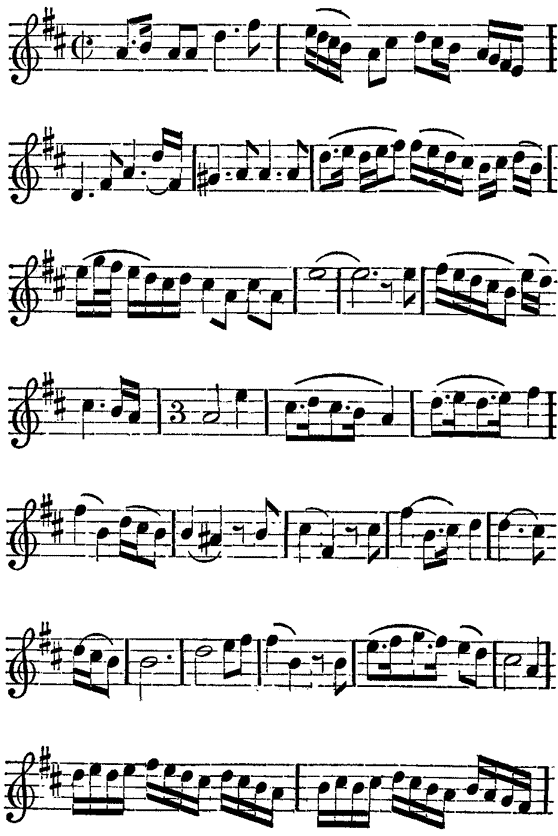
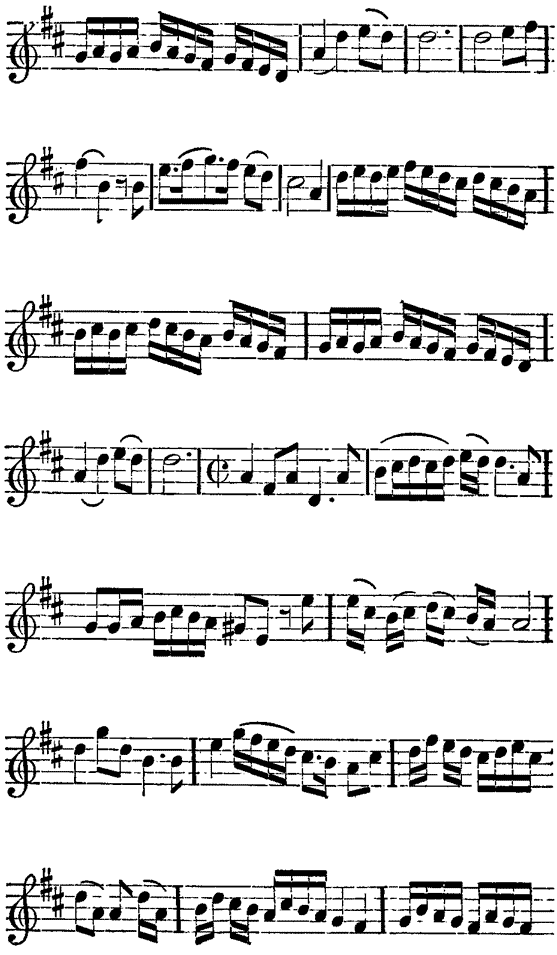
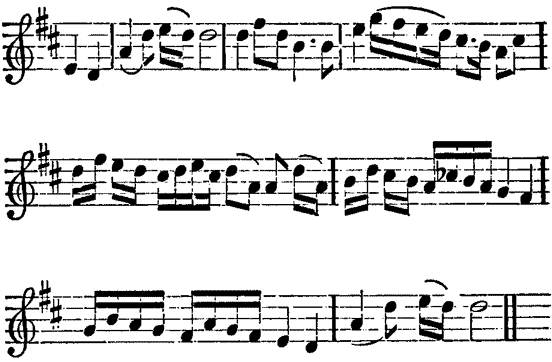
CÆLIA my Heart has often rang’d, Like Bees o’er Gaudy Flowers; And many Thousand Loves have chang’d, ’Till it was fix’d, ’till it was fix’d on yours; But Cælia when I saw those Eyes, ’Twas soon, ’twas soon determin’d there; Stars might as well forsake the Skies, And Vanish into Air: Stars might as well forsake the Skies, And Vanish into Air. Now if from the great Rules I err, New Beauties, new Beauties to admire; May I again, again turn wanderer, And never, never, never, never, never, no, never, Never, never, never, never, never, never, never, Never, never, never, settle more: May I again, again turn wanderer, And never, never, never, never, never, no, never, Never, never, never, never, never, never, never, Never, never, never, settle more.
A Song made for the Entertainment of her Royal Highness. Set by Mr. Leveridge. Sung by Mrs. Lindsey in Caligula.
[Listen]
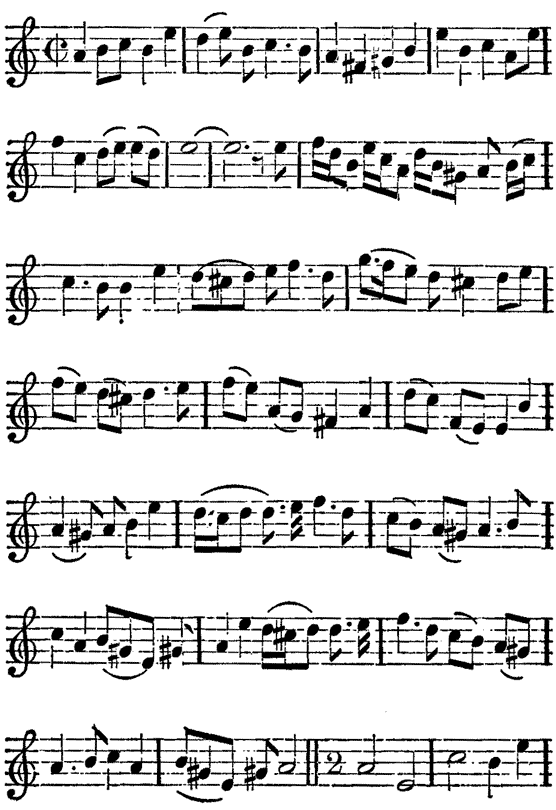
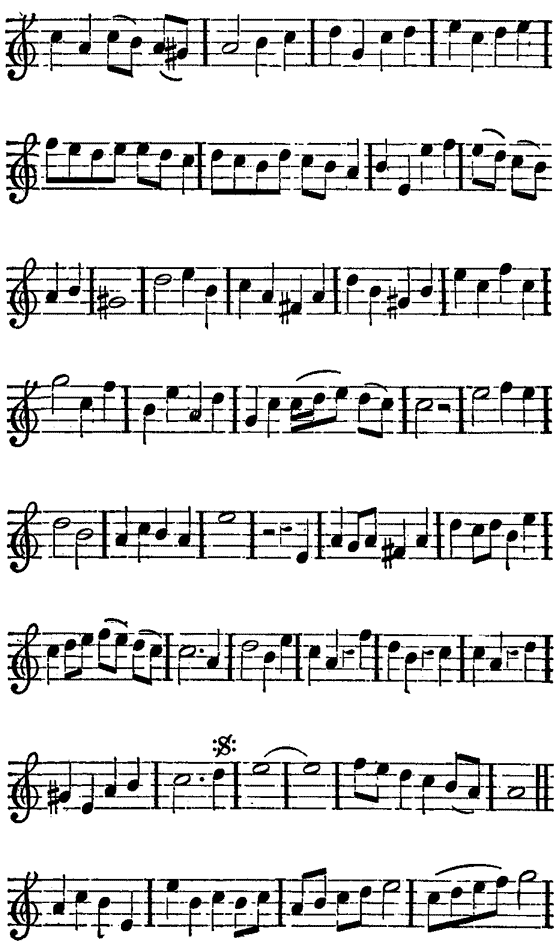
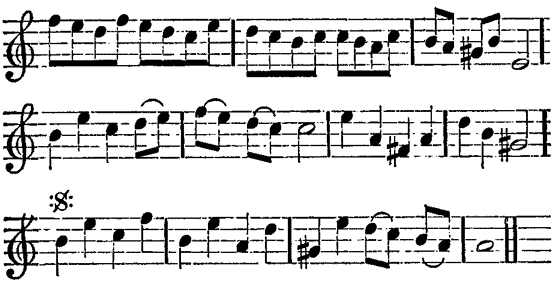
THo’ over all Mankind, besides my conquering Beauty, Conquering beauty, my conquering beauty Reigns; My conquering Beauty Reigns; From him I love, from him I love when I meet disdain, A killing damp, a killing damp comes o’er my Pride: I’m fair and young, I’m fair and young, I’m fair and young in vain: I’m fair and young, I’m fair and young, I’m fair and young in vain; No, no, no, let him wander where he will, Let him wander, let him wander, Let him wander, let him wander where he will, I shall have Youth and Beauty, Youth and Beauty, Youth and Beauty, I shall have Youth and Beauty, Youth and Beauty still; I shall have Beauty that can charm a Jove, Can Charm a Jove, and no fault, No, no, no, no, no, no, no, no, no, no fault, no, no, no fault, But constant Love: From my Arms then let him fly, fly, fly, From my Arms then let him fly; Shall I languish, pine, and dye? No, no, no, no, no, no, no, no, no, no, no not I.