PART I THE PAST AND PRESENT (continued 3)
Reading edition
At an annual meeting of the inhabitants of the town of New Milford holden on the 9th day of December, 1776, the committee of Inspection and Correspondence appointed were: Mr. Samuel Comstock, Mr. Israel Baldwin, Capt. Abram Camp, Daniel Everitt, Esq., Capt. James Terrill, Mr. John Comstock, Mr. George Smith, Doct. Jonah Todd, Joseph Ruggles, Esq., Col. Bushnell Bostwick, Samuel Bostwick, Esq., Col. Samuel Canfield, William Cogswell, Esq., Abel Hine, Esq., Mr. Amos Northrop, Capt. Sherman Boardman, Mr. Reuben Booth, Mr. Asahel Noble, Dea. Benjamin Gaylord, Mr. Oliver Warner, Mr. Caleb Bennett, Mr. Samuel Warner, Dea. Ebenezer Hotchkiss.
1777. Public town meeting held Mar. 10. Voted: “That the regulations contained in the late Acts of Assembly respecting the laying of embargoes and the stating of prices now in force are good and wholesome, and such ought to be strictly adhered to and that it is the indefeasible duty of all informing and executive officers to prosecute in the most effectual manner all violations of said regulations; and that it is the duty of the inhabitants of this town to give all the assistance in their power to such officers in the discharge of their aforesaid duty.”
Mar. 31. “Voted, that a committee be appointed according to the advice of His Honr., the Governor, &c., for the purpose of furnishing the quota of soldiers in the Continental service for said New Milford.
“Lt. Zadock Noble, Capt. Joseph Ruggles, Jr., Jeremiah Canfield, Mr. Ithiel Stone, Dea. Israel Baldwin, Mr. Thomas Brownson, and Mr. Zachariah Sanford, were chosen the committee.
“Voted, that the town of New Milford will give twelve pounds lawful money, bounty, for the first year’s service in addition to all encouragement already given to such inhabitants of this town as shall enlist into the Continental service for three years, or during the present war, within ten days from this time, including those who belong to this town who have already enlisted, subducting only their wages from the time they enlisted to this day, and such private donations as they have received.
“That for the second and third years, said soldiers who shall so enlist shall have six pounds lawful money pr. year to be paid out of the town treasury.”
Sept. 30. “Capt. Sherman Boardman, Mr. Samuel Warner, Mr. Simeon Baldwin, Capt. Benjamin Brownson, Capt. Ebenezer Couch, Mr. Ithiel Stone, Dea. Ebenezer Hotchkiss shall be a committee to procure clothing for the soldiers in the Continental service.”
1778. A meeting held in January was recorded as follows:
“1st. The articles of Confederacy as proposed by Congress stiled, The United States of North America, was read in said meeting and taken into serious consideration by Articles separately, and in succession, and no objection made to said Articles, except some part of ye 5th Article, which respects the mode of choosing our Delegates in Congress.
“Voted: that the Freemen will always hold the Prerogative and sole power choosing our Delegates in Congress by vote.
“2d. Said Articles of Confederacy was approved as good, and adopted in full by the members of sd. meeting without one dissenting voice.”
The Revolutionary Army under General McDougall encamped at Dea. Benjamin Gaylord’s. Some time during the War Generals Washington and Lafayette were said to be guests of Dea. Benjamin Gaylord.
Army under General McDougall was encamped on Second Hill.
The committee of inspection and correspondence, which was a kind of home police of patriotism, were:
Capt. Elizur Warner, Lt. Isaac De Forest, Lt. Benjamin Seelye, Capt. Reuben Bostwick, Capt. Paul Yates, Mr. Daniel Everett, Capt. James Terrill, Mr. Amos Northrop, Mr. John Porter, Mr. Nathan Gaylord, Mr. Samuel Merwin, Jr.
The committee to procure supplies for the soldiers in the Continental army were: Capt. James Terrill, Mr. Reuben Booth, Lt. David Smith, Mr. Simeon Baldwin, Capt. Benjamin Brownson.
To provide clothing for the soldiers in the Continental army were: Ens. Jeremiah Canfield, Mr. Ebenezer Hotchkiss, Mr. Simeon Baldwin, Mr. Asahel Noble.
1779. Received, Litchfield, 28th Sept. 1779, of the First Society of New Milford by the hands of Col. Samuel Canfield, ninety-four pounds, sixteen shillings money, which was contributed by said Society for the relief of the suffering and distressed inhabitants of the towns of New Haven, Fairfield and Norwalk, £94-16.
Per Reuben Smith, County Treasurer.
Nathan Dayton purchased of Enos Camp a piece of land lying “southeast of the lime kiln,” and on it his father and brother Abraham Dayton built a Saw Mill. Col. Josiah Starr and Abel Hine owned a grist-mill there at that time.
1780. The town voted that every soldier who shall voluntarily enlist to serve in the Continental Battalions for the space of six months, or until sooner discharged shall be paid four bushels of wheat or an equivalent in money in addition to the bounty already given by the State. They also voted to give three bushels of wheat or its equivalent in money to all militia men who might be called to serve one month, in addition to all other pay, and when they should serve more than a month, then three bushels of wheat for every month.
Two months later the town offered ten bushels of wheat per month for every soldier who should enlist for four months.
It was voted that none of the persons who had voluntarily gone over and joined the enemy, shall be suffered to abide and continue in the town during the present situation of affairs.
March 13. A committee of inspection on provisions, agreeable to a late act of Assembly, was chosen as follows: Mr. Simeon Baldwin, Capt. Noble Hine, Mr. Daniel Everitt, Capt. Paul Yates, Mr. Ebenezer Hotchkiss, Mr. George Smith, Capt. Sherman Boardman, Mr. Ithiel Stone, Mr. Thomas Lewis, Capt. Benjamin Brownson, Capt. Reuben Bostwick, Mr. Israel Baldwin, Joseph Hartwell, Doct. Reuben Warner, Benjamin Gaylord, Ebenezer Gaylord, Asahel Noble, Capt. Elizur Warner, Israel Camp, Lemuel Warner, Capt. Joseph Ruggles, Dea. Abram Camp, Ephraim Buck, Samuel Merwin, Martin Warner, Uri Jackson, Robert Bostwick, Nehemiah Hawley.
In June, upon the call from Congress for more soldiers, the town voted that “every soldier who shall voluntarily enlist to serve in the Continental Battalions for the space of six months, or until the first day of January next (unless sooner discharged) shall be paid out of the town treasury of said New Milford by the first day of January for every month they are in said service, four bushels of wheat, or an equivalent thereto in money in addition to the bounty and encouragement already given by the State.”
The first burial in the Northville burying ground was that of Abraham Dayton.
Partridge Thatcher liberated his slaves Jacob and Dianah gratis.
Capt. Sherman Boardman liberated his negro slave Nehemiah.
John Treat liberated his negro man named Mingo.
1782. Jemima Wilkinson came to New Milford, held meetings, taught peculiar doctrines and gained some adherents. She was considered an impostor.
1788. The Society of Newbury was organized into a town and named Brookfield in honor of Rev. Thomas Brooks. The town was formed of portions of the towns of New Milford, Newtown, and Danbury. New Milford, Newbury Society contributed nearly one-half of the territory.
The Baptists built a small church in the “Neck,” now Bridgewater.
Nicholas Wanzer deeded land to a Society of People called Quakers, it being the same on which the building known as the Quaker Meeting-house now stands.
1789. Town and School house built north of the cross highway at north end of Main street.
1790. Prof. Nehemiah Strong had a private school for boys about this date.
Rev. Stanley Griswold was ordained by the Consociation of Litchfield Co. Colleague pastor with Rev. Nathaniel Taylor of the First Church of New Milford.
A troop of horse formed, belonging to New Milford, Woodbury, and Litchfield; Captains belonging to the town, were William Taylor, Stephen Chittenden, Jr. & Hermen Canfield.
1792. Bridge built at Little Falls.
A company of Light Infantry was formed, of which the Captains have been Daniel Boardman, Nicholas S. Masters, Briggs Ingersoll, Abraham Hayes.
1793. New Milford divided into two military divisions, line running just north of the Levi S. Knapp residence. The new South Company was organized in that year and Nathan Bostwick was made Captain and James Hine, Lieutenant.
A company of militia was formed belonging to the “Neck” (now Bridgewater).
The second Episcopal Church begun in 1765 was finished and consecrated this year.
1794. June 19. A destructive tornado crossed New Milford; blew over houses, barns, apple trees, destroyed timber, killed a child of Mr. Cole; some others wounded, much grain destroyed.
New bridge across Great River in the Neck.
1796. Watering place for horses and cattle established on Danbury road between Israel Camp’s and Ephraim Buck’s.
The Union Circulating Library established.
1797. Col. Samuel Canfield’s name stands at the head of the tax list of the town. He was the son of Samuel Canfield, Esq., who was the first Canfield in New Milford and one of the Judges of the General Court.
At the annual town meeting, Dec. 11, question put, whether this meeting will remit and give in the fines which are laid upon a certain number of persons for laboring upon the Sabbath at harvest work the year past, and the town treasurer be directed to give up the obligations for sd. fines which are lodged in his hands. Voted in the negative.
1800. Up to this date there had been eight military field officers in the town, viz.: Major John Bostwick, Col. Bushnell Bostwick, Col. Samuel Canfield, Col. Josiah Starr (in ye Army), Col. Elisha Bostwick, Maj. Daniel Boardman, Maj. Reuben Warner, Maj. William Taylor.
The Merryall Plough Foundry established by Elijah Hall, the first foundry established in Conn., and the first that used Blacksmith coal (bituminous). Mr. Hall went about the country disposing of his own wares and, one trip, he collected a bushel basket of coppers in payment.
Perry Smith and William Terrill established a store near Upper Merryall.
1802. After stages began to run for carrying the mail, the bridge was carried away, and the Stage Coach Company sued the town for damages in failing to make a crossing. The town employed Homer Boardman to build a boat to be run across by a large rope to meet the emergency, and the next Spring they applied to the Assembly for the privilege of a toll-bridge.
1803 or 1804. Bridge built at Gaylordsville.
1807. A dam was built across the river. Saw mill erected and Grist mill at Gaylordsville.
Peter Gaylord built a store on the east side of the river about this time.
1809. Church organized in Bridgewater. Meeting-house begun to be built by lottery instituted 1807.
1810. St. Mark’s Episcopal Church organized in Bridgewater.
1812. A fever epidemic occurred that carried off by death fifty-eight persons in two and a half months.
1814. St. Peter’s Lodge No. 21, F. A. M. leased land of Eli Starr to build Lodge on.
1814. Baptists at Northville organized a Church known as the New Milford Baptist Church. Eleazer Beecher was licensed to preach the Gospel to them.
1816. Upon the petition of sundry inhabitants in the vicinity of what is called Gaylord’s Bridge praying a grant of money from the town to rebuild the bridge upon Ousatonic River at Gaylords Falls, it was put to vote that a sum of $400 be granted which was negative; another vote was then put for a sum of $300 which was also voted in the negative.
1818. The New Milford and Sherman Turnpike Company incorporated.
1819. Wm. Roberts settled in Gaylordsville, erected clothing works.
1822. A convention of delegates met to consider the advisability of building “The Housatonic Valley Canal.” Funds were raised and an estimate of the expense of construction made. The enterprise failed.
1823. A Baptist meeting-house erected near Lower Merryall burying place.
Glover Sanford began making hats in Bridgewater.
1824. The first Methodist Church organized by Rev. C. Silliman.
1826. Peter Gaylord appointed first Postmaster, Gaylordsville.
Union Church building erected, Gaylordsville.
The trustees of the Methodist Episcopal Church at Northville bought of Henry Benson a piece of land for erecting a house of worship.
1827. Sylvanus Merwin erected a store and hotel on west side.
1828-9, A Methodist meeting-house was built at the Corners at the old John Warner place in Lanesville.
1830. Anan Hine, James S. Clark, and George Taylor, and such other persons as they shall associate with them, not exceeding twenty in the whole, be and they and their successors
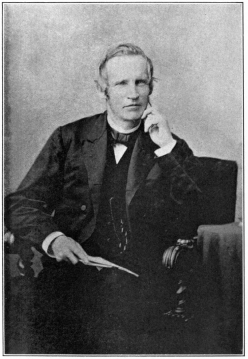
REV. NOAH PORTER, D. D., LL.D. Pastor Congregational Church, New Milford, 1836-1843; President of Yale College, 1871-1886

are made a corporation by the name of “The New Milford Fire Company.”
A Baptist Church was organized.
1832. Roswell and Sheldon Northrop started Machinery business and Foundry in Maryland District, now carried on by Jasper A. Northrop in this village.
1833. Congregational Church erected.
1835. New Milford Toll Bridge Company incorporated with liberty to erect and maintain two toll bridges, one at the present in the village, the other at the great falls.
1836. A special town meeting held February 29, to take into consideration the propriety of making an appropriation not exceeding $500 to defray the expense of surveying a route or routes for a railroad to pass through the town. It was voted that the Treasurer be authorized to borrow on the credit of the town a sum not exceeding five hundred dollars to be devoted to the accomplishment of this object.
1837. A special town meeting, May 12, voted to grant the request of New Milford and Sherman Turnpike Company upon the consideration that said company or some other company for that purpose to be formed shall build and keep in repair a toll bridge at the place commonly called Boardman’s Bridge.
1840. The Housatonic Railroad was opened from New Milford to Bridgeport. Daniel Marsh was the first station agent.
Highway from near railroad station to village of Northville, laid out by commissioners, commencing at land of David S. Boardman.
1841. The New Milford Washingtonian Temperance Benevolent Society organized. Within three years 900 names were recorded as members.
1842. Town appropriated one hundred dollars to assist in paving water courses in village provided two hundred and fifty dollars be expended by the inhabitants of said village.
1843. Erected the Housatonic R. R. station which was called Merwinsville.
The first elm trees in the park were set by Solomon E. Bostwick in front of his residence.
Doct. George Taylor and Albert N. Baldwin appointed a committee to purchase a farm for the town.
1845. The New Milford Republican, the first newspaper in the village, was established by J. K. Averill.
1846-50. “The Housatonic Institute” erected.
1847. Highway laid out now called Bank street.
1849. Bridgewater and Brookfield Toll Bridge Company, incorporated.
1850. The present Methodist Episcopal Church erected.
1852. Bank of Litchfield County organized.
Albert S. Hill erected a paper mill across the road from the Wells Grist Mill.
Mr. and Mrs. B. J. Stone took charge of “The Housatonic Institute.”
1854. The first week in May occurred a great freshet that carried away the dam at Gaylordsville; also the Boardman’s bridge and the town bridge.
1855. New Milford Brass Band organized, Earl Buckingham leader.
1856. Bridgewater set off from New Milford as a separate town.
1858. The New Milford Savings Bank organized.
The Housatonic Agricultural Society formed.
1860. The Adelphic Institute established by Ambrose S. Rogers, A. M.
In Nov., fire destroyed business portion on south side of Bank St. and east side of R. R. St., to the property now owned by Ackley, Hatch & Marsh.
1861. The town voted to pay for the support of the wife, children, father or mother of those persons who enlisted, such sums as the Selectmen deemed necessary.
St. Francis Xavier’s Church erected.
1862. The town voted a bounty of $200 for each resident who should enlist, for a certain time.
William Wells and Edwin S. Wells, sons of Philip Wells,
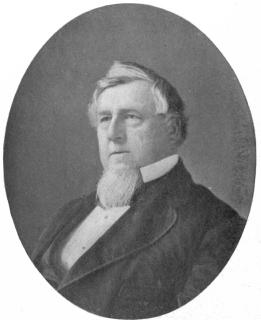
JOHN PRIME TREADWELL A Native of New Milford. Born 1812, died 1876.
purchased the grist-mill on the Aspetuck River a mile above Northville.
1863. The town offered $300 to each person who might be drafted.
Water Witch Engine Company organized.
1864. The town offered a bounty of $500 for each soldier accredited to the town.
The town authorized the issue of bonds to the amount of $21,000 to meet war expenses.
1865. Bank of Litchfield County changed to First National Bank of New Milford.
1870. The Glover Sanford firm removed to Bridgeport, Conn. Ousatonic Chapter, No. 33, R. A. M. organized.
1872. The Housatonic Ray (newspaper) established.
1873. Kindergarten school established by Mrs. Andrew Bristol, Miss Mary C. Wells, assistant.
The New Milford Water Company chartered, authorized capital $25,000.
1875. Roger Sherman Hall erected.
1877. The Good Shepherd’s Lodge, No. 65, I. O. O. F., instituted.
The first New Milford Savings Bank building erected on north side of Bank St.
The New Milford Gazette established.
1878. Miss Wells established kindergarten school in her home in Jan.
1882. Upton Post, G. A. R., organized Dec. 20th, with 26 charter members.
St. John’s Church erected.
All Saints Memorial Church erected.
1884. Sunday School established in Merryall.
1886. Board of Trade established.
1887. New Milford made a Shire town.
Iron bridge built at Boardman.
1888. The great blizzard, March 13.
1889. The New Milford Button factory burned.
1890. The new hose house built.
Union Chapel built, Lower Merryall.
1893. Roger Sherman Chapter, D. A. R., organized.
1893. Congregational Church remodeled at a cost of $18,300.
The New Milford Electric Light Company incorporated.
1897. Public Library and Memorial Hall erected on the site of Housatonic Institute, it being the same site that Eli Starr leased to St. Peter’s Lodge No. 21, F. & A. M., to build lodge on in 1814.
Lime Works at Boardman destroyed by fire.
A bronze tablet to the memory of Roger Sherman was placed on Roger Sherman Hall by Daughters of the American Revolution.
1900. Great Fireman’s parade, 1,300 men in line.
1901. A Town Court established. George H. Jackson, appointed first Judge.
1902. Great fire destroyed the business portion of the village, May 5.
President Roosevelt stopped at the station and made a speech.
The Boardman Sunday School Society organized.
Bridgeport Wood Finishing Company plant burned.
1903. The New Milford Power Company plant established at Gaylordsville.
RECORD OF THE PUBLIC SERVICES OF ROGER SHERMAN
AS REFERRED TO IN THE COLONIAL DOCUMENTS OF CONNECTICUT
Contributed by Hon. Ebenezer J. Hill of Norwalk, Conn.
October, 1745, Roger Sherman appointed to be surveyor for the County of New Haven.
Roger Sherman, surveyor for the County of New Haven, appointed in October, 1750, to lay out lands for certain parties from ungranted lands of the Colony.
May, 1751, appointed to layout certain lands for Williams and Crary.
May, 1751, appointed as one party to view and appraise certain lands in the town of Kent.
May, 1752, made Surveyor for Litchfield County, instead of New Haven.
May, 1752, paid £82, 9s. 10d., in full for his bill for laying out land and highways on the west side of Ousatonick River. As one of a Committee appointed previous October.
October, 1753, Roger Sherman, Surveyor for Litchfield County, ordered to run the Northwest line of town of Litchfield.
October, 1754, mentioned as the fifth Selectman of New Milford.
May, 1756, costs of £2, 17s. 4d., assessed against him and other proprietors of common land in New Milford in certain case.
May, 1755, Representative in Assembly for New Milford, 2d.
August, 1755, Representative in Assembly for New Milford, 2d.
October, 1755, Representative in Assembly for New Milford, 1st.
January, 1756, Representative in Assembly for New Milford, 1st.
February, 1756, Representative in Assembly for New Milford, 1st.
March, 1756, Representative in Assembly for New Milford, 1st.
February, 1756, ordered to eject one Macantire from certain public land.
October, 1756, ordered to inspect certain complaints in regard to land and report. Report made May, 1757.
May, 1755, Appointed Justice of Peace for Litchfield Co.
May, 1756, Appointed Justice of Peace for Litchfield Co.
October, 1757, Appointed to make deeds for certain public lands.
March, 1758, With others incorporated as Toll Bridge Company to own and maintain toll bridge over Ousatonick River in New Milford.
May, 1758, Representative for New Milford, 1st.
October, 1758, Representative for New Milford, 1st.
February, 1759, Representative for New Milford, 1st.
March, 1759, Representative for New Milford, 1st.
May, 1759, Representative for New Milford, 1st.
October, 1759, Representative for New Milford, 1st.
March, 1760, Representative for New Milford, 1st.
May, 1760, Representative for New Milford, 1st.
October, 1760, Representative for New Milford, 1st.
March, 1761, Representative for New Milford, 1st.
May, 1761, Representative for New Milford, 1st.
May, 1757, 1758, 1759, 1760, and 1761, Justice of Peace, Litchfield County.
October, 1760, 1761, 1762, 1763, 1764, 1765, 1766, and 1767, in Nomination for Governor.
October, 1762, Guardian of two Carpenter children authorized to sell land.
October, 1765, Appointed as Committee to investigate certain legal questions. Report made October, 1766.
October, 1764, Representative for New Haven, 1st.
May, 1765, Representative for New Haven, 1st.
October, 1765, Representative for New Haven, 1st.
May, 1766, Representative for New Haven, 1st.
May, 1766 and 1767, Chosen Assistant.
May, 1765, Justice of Peace for New Haven County.
October, 1765, Justice of Peace for New Haven County.
May, 1766, Justice of Peace for New Haven County.
May, 1766 and 1767, Judge of the Superior Court; also, May, 1773, 1774, 1775, 1776, 1777, 1778, & 1779.
May, 1768, 1769, 1770, 1771, 1772, 1773, 1774, 1775, 1776, 1777, 1778, 1779, Chosen Assistant.
Nominated for Governor, 1768, 1769, 1770, 1771, 1772, 1773, 1774, 1775, 1776, 1777, 1778, 1779, 1780.
October, 1768, Appointed to make index of laws.
May, 1769, Appointed to layout highway from New Haven to Windham. Report accepted May, 1770.
May, 1771, Appointed to layout highway, New Haven to East Hadam.
October, 1771, Appointed to purchase some elegant plate to present to Richard Jackson, Colonial Agent. Afterwards bought in England on account of duty if bought here.
October, 1771, Assessed in the construction of addition of Meeting-house.
October, 1772, One of joint Committee on Collegiate School.
January, 1774, One of Committee to adjust certain land questions near the Delaware and Susquehannah Rivers.
October, 1773, One of Committee to consider Earl of Dartmouth’s letter.
April, 1775, Wrote and offered resolution appointing Committee to present letter of Gov. Trumbull to Gen. Gage, demanding explanation of attack of 19th of April and his future plans.
August 3, 1774, Chosen Representative in Congress.
February 27, 1775, Purchased 90 kegs of powder, 3,500 lbs. lead, 30,500 flints for the Colony.
October, 1775, Representative in Congress.
October, 1776, Committee to visit Army and grade the officers appointed by the Assembly.
May, 1777, Named as member of the Committee of Safety.
October, 1776 and 1777, Representative in Congress, 1st man.
July, 1777, One of a Committee to confer with Mass., New Hampshire, R. I., and New York on the state of the currency.
January, 1778, Committee to inquire into conduct of foreign traders in this State.
January, 1778, Commissioner to New Haven Convention. Chairman of Committee to draw report of Convention.
May, 1778 and 1779, Council of Safety.
October, 1778, Representative in Congress.
January, 1780, Representative in Congress.
February, 1780, Delegate to Philadelphia Convention to regulate prices.
Representative in Congress 1789 and 1791. Senator 1791 to 1793. Mayor of New Haven.