Chapter XX · SWINGING AND JOINTED ANIMALS (Plate IX)
Reading edition
The peacock, monkey, and other animals with long tails can be cut from cardboard, and by means of lead buttons attached to their tails be made to swing realistically on a perch.
It is difficult in some animals to get the balance correct and the position natural. If the drawings in this book are carefully enlarged and the lead buttons placed on the spot (A) indicated, they will be found to produce satisfactory animals. They look most effective and move more readily when made from three-ply wood with the fret-saw (see Part II), but this work is beyond the ten-year-old child. Children of ten and younger can, however, make them quite well of cardboard (the thicker the cardboard, providing the children can cut it with scissors, the better).
A set made of wood by the teacher will form a delightful plaything for very little ones, and even material for nature lessons.
The Mouse (Fig. 259) should be drawn on cardboard, cut out, and both sides coloured. If grey cardboard is used, eyes, whiskers, etc., can be drawn in sepia. Two lead buttons (about the size of halfpennies) are glued one on each side of the tail (at A); pieces of paper should then be glued over the buttons and painted to match the tail.
Children will find it easier to draw these animals if a piece of cardboard is given them on which the animal to be drawn will just fit. The colouring should be as simple as possible to be effective. The stand is similar to that for the swinging boats, but with a rounded bar, on which the part of the animal marked B will rest.
The Cat (Fig. 256), enlarged, made more fierce-looking and with stripes painted on it makes a very terrifying tiger, ready to spring.
The Monkey (Fig. 265) may have another monkey swinging from his tail, and so on.
Animals with movable limbs can also be cut from three-ply wood (see Part II) or cardboard. If cut from cardboard the various joints are fastened by small paper-fasteners.
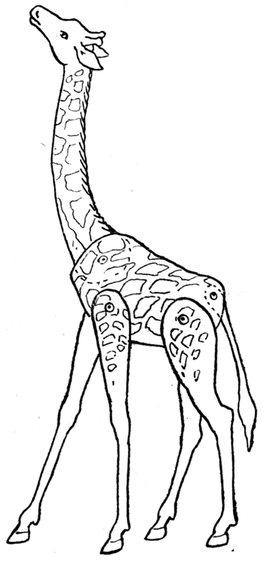
Fig. 255
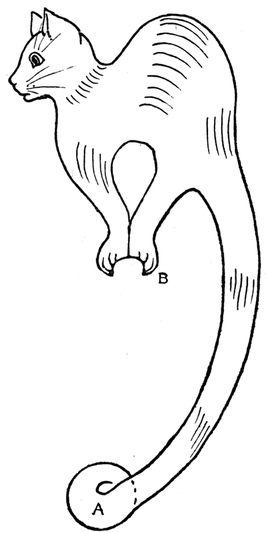
Fig. 256
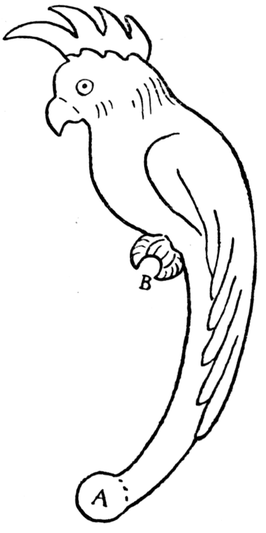
Fig. 257
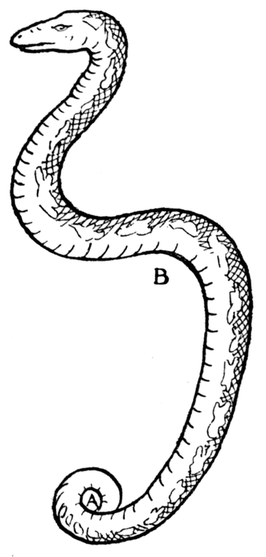
Fig. 258
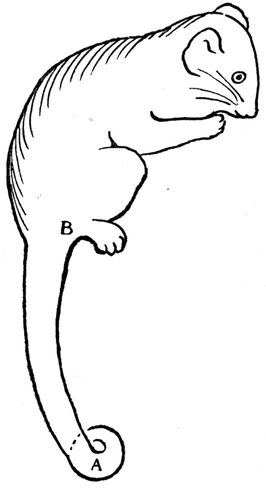
Fig. 259
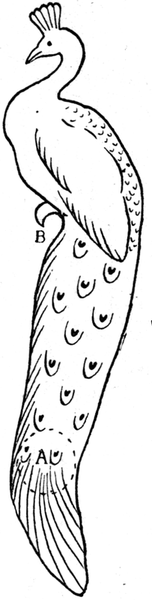
Fig. 260
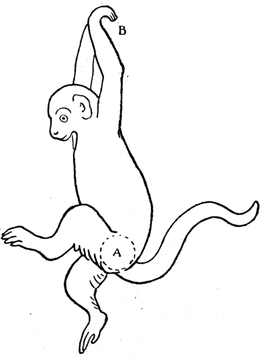
Fig. 261
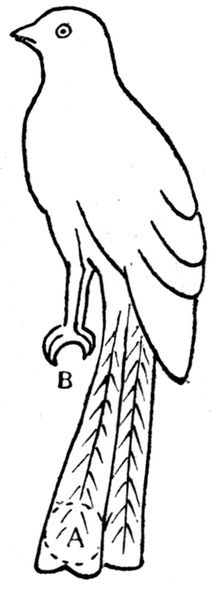
Fig. 262
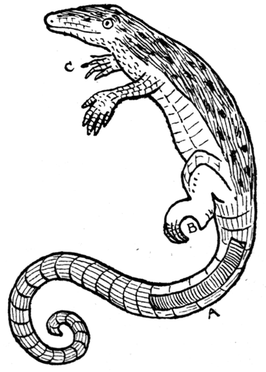
Fig. 263
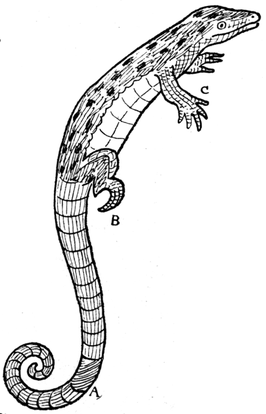
Fig. 264
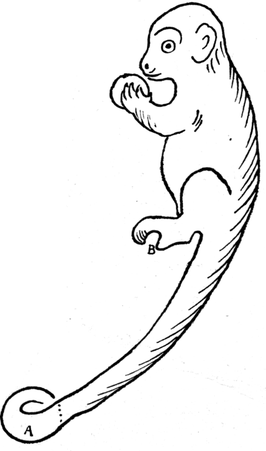
Fig. 265
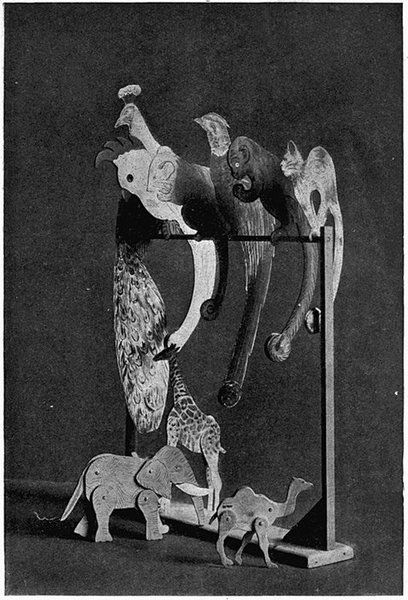
Plate IX SWINGING AND JOINTED ANIMALS
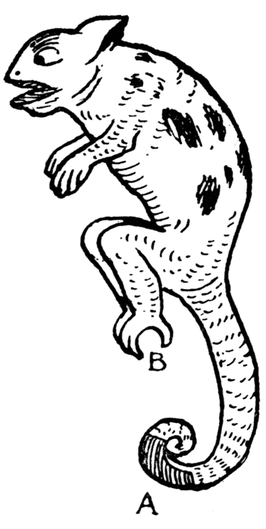
Fig. 266
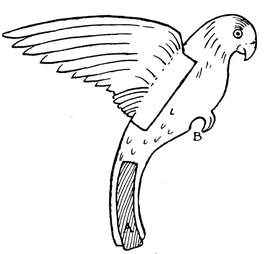
Fig. 267
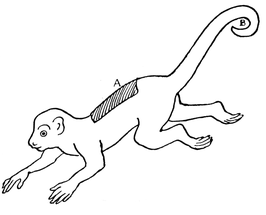
Fig. 268
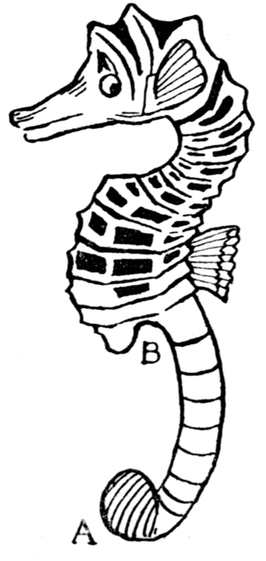
Fig. 269
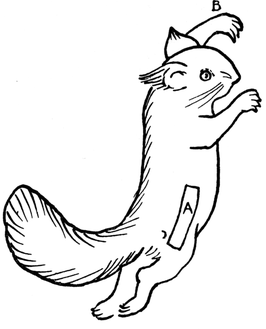
Fig. 270
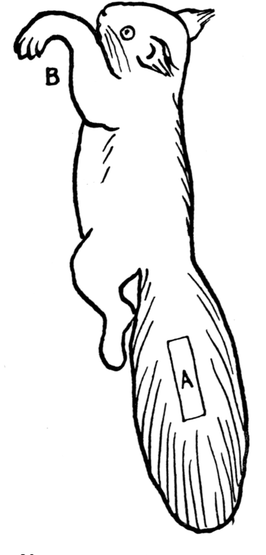
Fig. 271
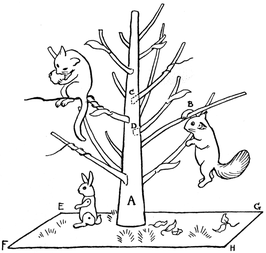
Fig. 272
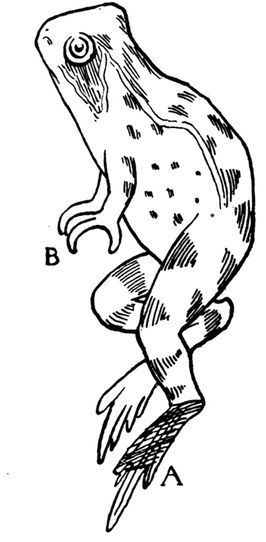
Fig. 273
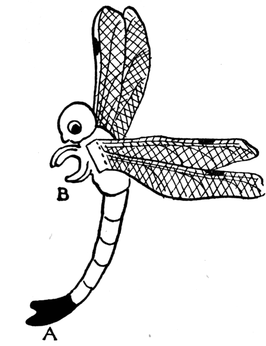
Fig. 274
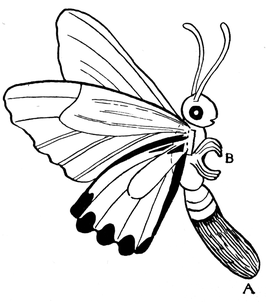
Fig. 275
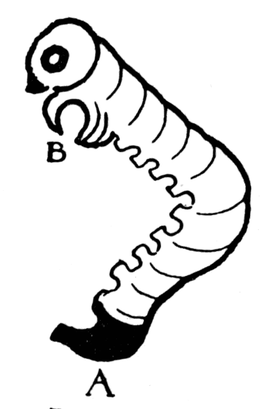
Fig. 276
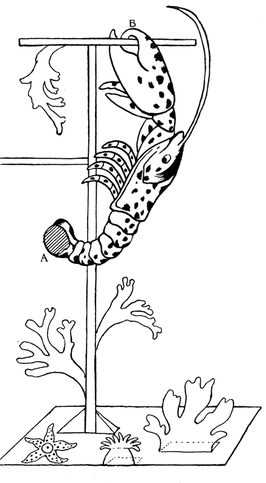
Fig. 277
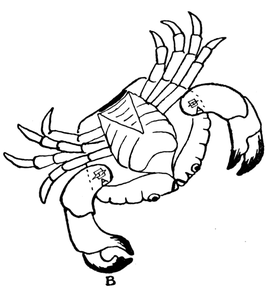
Fig. 278
To make the Elephant cut out two pieces the shape of A for the body (Fig. 279), and make four holes in each piece as in the diagram. Next, cut out four legs, and fasten two to each portion of the body by little paper-fasteners, then cut out the tail and fasten it between the two pieces that form the body; cut out two ears and the head; one fastener will hold the ears, the sides and the head together; the head is inside the two bodies, the ears outside.
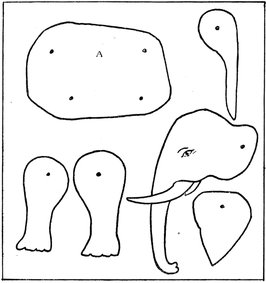
Fig. 279
The Giraffe (Fig. 255) can be made in a similar way.
The Butterfly and the Dragon-fly (Figs. 274 and 275) have their wings and feelers cut out of cartridge paper and gummed on to cardboard bodies, so that when the animals swing their wings wave in a realistic manner.
Fig. 277 shows how cardboard Crabs and Lobsters can be mounted amid under-sea surroundings.