ADAM SEDGWICK, M.A.,
Reading edition
FELLOW AND LECTURER OF TRINITY COLLEGE, CAMBRIDGE.
VOL. I.
SEPARATE MEMOIRS.
London:
MACMILLAN AND CO. 1885
[The Right of Translation is reserved.]
PREFACE.
Upon the death of Francis Maitland Balfour, a desire very naturally arose among his friends and admirers to provide some memorial of him. And, at a public meeting held at Cambridge in October 1882, the Vice-Chancellor presiding, and many distinguished men of science being present, it was decided to establish a 'Balfour Fund' the proceeds of which should be applied: firstly to maintain a studentship, the holder of which should devote himself to original research in Biology, especially in Animal Morphology, and secondly, 'by occasional grants of money, to further in other ways original research in the same subject'. The sum of £8446 was subsequently raised; this was, under certain conditions, entrusted to and accepted by the University of Cambridge; and the first 'Balfour student' was appointed in October 1883.
The publication of Balfour's works in a collected form was not proposed as an object on which part of the fund should be expended, since his family had expressed their wish to take upon themselves the charge of arranging for a memorial edition of their brother's scientific writings. That edition, with no more delay than circumstances have rendered necessary, is now laid before the public. It comprises four volumes.
The first volume contains, in chronological order, all Balfour's scattered original papers, including those published by him in conjunction with his pupils, as well as the Monograph on the Elasmobranch Fishes. The last memoir in the volume, that on the Anatomy and Development of Peripatus Capensis, was published after his death, from his notes and drawings, with additions by Prof. Moseley and Mr Adam Sedgwick, who prepared the manuscript for publication. To the volume is prefixed an introductory biographical notice.
The second and third volumes are the two volumes of the Comparative Embryology reprinted from the original edition without alteration, save the correction of obvious misprints and omissions.
The fourth volume contains the plates illustrating the memoirs contained in Vol. 1. We believe that we are consulting the convenience of readers in adopting this plan, rather than in distributing the plates among the memoirs to which they belong. To assist the reader the explanations of these plates have been given twice: at the end of the memoir to which they belong (in the case of the Monograph on Elasmobranch Fishes at the end of each separate chapter), and in the volume of plates.
All the figures of these plates had to be redrawn on the stone, and our best thanks are due to the Cambridge Scientific Instrument Company for the pains which they have taken in executing this work. We are also indebted to the Committee of Publication of the Zoological Society for the gift of electrotypes of the woodcuts illustrating memoir no. XX. of Vol. 1.
Several photographs of Balfour, taken at different times of his life, the last shortly before his death, are in the possession of his relatives and friends; but these, in the opinion of many, leave much to be desired.
There is also a portrait of him in oils painted since his death by Mr John Collier, A.R.A., and Herr Hildebrand of Florence has executed a posthumous bust in bronze[1]. The portrait which forms the frontispiece of Vol. 1. has been drawn on stone by Mr E. Wilson of the Cambridge Scientific Instrument Company, after the latest photograph. Should it fail, in the eyes of those who knew Balfour well, to have reproduced with complete success his features and expression, we would venture to ask them to bear in mind the acknowledged difficulties of posthumous portraiture.
TABLE OF CONTENTS.
PAGE
Preface i
Introduction 1
1872
I. On some points in the Geology of the East Lothian Coast. By G. W. and F. M. Balfour 25
1873
II. The development and growth of the layers of the blastoderm. With Plate 1 29
III. On the disappearance of the Primitive Groove in the Embryo Chick. With Plate 1 41
IV. The development of the blood-vessels of the Chick. With Plate 2 47
1874
V. A preliminary account of the development of the Elasmobranch Fishes. With Plates 3 and 4 60
1875
VI. A comparison of the early stages in the development of Vertebrates. With Plate 5 112
VII. On the origin and history of the urinogenital organs of Vertebrates 135
VIII. On the development of the spinal nerves in Elasmobranch Fishes. With Plates 22 and 23 168
1876
IX. On the spinal nerves of Amphioxus 197
1876-78
X. A Monograph on the development of Elasmobranch Fishes. With Plates 6-21 203
1878
XI. On the phenomena accompanying the maturation and impregnation of the ovum 521
XII. On the structure and development of the vertebrate ovary. With Plates 24, 25, 26 549
1879
XIII. On the existence of a Head-kidney in the Embryo Chick, and on certain points in the development of the Müllerian duct. By F. M. Balfour and A. Sedgwick. With Plates 27 and 28 618
XIV. On the early development of the Lacertilia, together with some observations on the nature and relations of the primitive Streak. With Plate 29 644
XV. On certain points in the Anatomy of Peripatus Capensis 657
XVI. On the morphology and systematic position of the Spongida 661
1880
XVII. Notes on the development of the Araneina. With Plates 30, 31, 32 668
XVIII. On the spinal nerves of Amphioxus 696
XIX. Address to the Department of Anatomy and Physiology of the British Association for the Advancement of Science 698
1881
XX. On the development of the skeleton of the paired fins of Elasmobranchii, considered in relation to its bearings on the nature of the limbs of the Vertebrata. With Plate 33 714
XXI. On the evolution of the Placenta, and on the possibility of employing the characters of the Placenta in the classification of the Mammalia 734
1882
XXII. On the structure and development of Lepidosteus. By F. M. Balfour and W. N. Parker. With Plates 34-42 738
XXIII. On the nature of the organ in Adult Teleosteans and Ganoids which is usually regarded as the Head-kidney or Pronephros 848
XXIV. A renewed study of the germinal layers of the Chick. By F. M. Balfour and F. Deighton. With Plates 43, 44, 45 854
Posthumous, 1883
XXV. The Anatomy and Development of Peripatus Capensis. Edited by H. N. Moseley and A. Sedgwick. With Plates 46-53 871
Francis Maitland Balfour, the sixth child and third son of James Maitland Balfour of Whittinghame, East Lothian, and Lady Blanche, daughter of the second Marquis of Salisbury, was born at Edinburgh, during a temporary stay of his parents there, on the 10th November, 1851. He can hardly be said to have known his father, who died of consumption in 1856, at the early age of thirty-six, and who spent the greater part of the last two years of his life at Madeira, separated from the younger children who remained at home. He fancied at one time that he had inherited his father's constitution; and this idea seems to have spurred him on to achieve early what he had to do. But, though there was a period soon after he went to College, during which he seemed delicate, and the state of his health caused considerable anxiety to his friends, he eventually became fairly robust, and that in spite of labours which greatly taxed his strength.
The early years of his life were spent chiefly at Whittinghame under the loving care of his mother. She made it a point to attempt to cultivate in all her children some taste for natural science, especially for natural history, and in this she was greatly helped by the boys' tutor, Mr J. W. Kitto. They were encouraged to make collections and to form a museum, and the fossils found in the gravel spread in front of the house served as the nucleus of a geological series. Frank soon became greatly interested in these things, and indeed they may be said to have formed the beginnings of his scientific career. At all events there was thus awakened in him a love for geology, which science continued to be his favorite study all through his boyhood, and interested him to the last. He was most assiduous in searching for fossils in the gravel and elsewhere, and so great was his love for his collections that while as yet quite a little boy the most delightful birthday present he could think of was a box with trays and divisions to hold his fossils and specimens. His mother, thinking that his fondness for fossils was a passing fancy and that he might soon regret the purchase of the box, purposely delayed the present. But he remained constant to his wish and in time received his box. He must at this time have been about seven or eight years old. In the children's museum, which has been preserved, there are specimens labelled with his childish round-hand, such as a piece of stone with the label marks of some shels; and his sister Alice, who was at that time his chief companion, remembers discussing with him one day after the nursery dinner, when he was about nine years old, whether it were better to be a geologist or a naturalist, he deciding for the former on the ground that it was better to do one thing thoroughly than to attempt many branches of science and do them imperfectly.
Besides fossils, he collected not only butterflies, as do most boys at some time or other, but also birds; and he with his sister Alice, being instructed in the art of preparing and preserving skins, succeeded in making a very considerable collection. He thus acquired before long not only a very large but a very exact knowledge of British birds.
In the more ordinary work of the school-room he was somewhat backward. This may have been partly due to the great difficulty he had in learning to write, for he was not only left-handed but, in his early years, singularly inapt in acquiring particular muscular movements, learning to dance being a great trouble to him. Probably however the chief reason was that he failed to find any interest in the ordinary school studies. He fancied that the family thought him stupid, but this does not appear to have been the case.
In character he was at this time quick tempered, sometimes even violent, and the energy which he shewed in after life even thus early manifested itself as perseverance, which, when he was crossed, often took on the form of obstinacy, causing at times no little trouble to his nurses and tutors. But he was at the same time warm-hearted and affectionate; full of strong impulses, he disliked heartily and loved much, and in his affections was wonderfully unselfish, wholly forgetting himself in his thought for others, and ready to do things which he disliked to please those whom he loved. Though, as we have said, somewhat clumsy, he was nevertheless active and courageous; in learning to ride he shewed no signs of fear, and boldly put his pony to every jump which was practicable.
In 1861 he was sent to the Rev. C. G. Chittenden's preparatory school at Hoddesden in Hertfordshire, and here the qualities which had been already visible at home became still more obvious. He found difficulty not only in writing but also in spelling, and in the ordinary school-work he took but little interest and made but little progress.
In 1865 he was moved to Harrow and placed in the house of the Rev. F. Rendall. Here, as at Hoddesden, he did not show any great ability in the ordinary school studies, though as he grew older his progress became more marked. But happily he found at Harrow an opportunity for cultivating that love of scientific studies which was yearly growing stronger in him. Under the care of one of the Masters, Mr G. Griffith, the boys at Harrow were even then taught the elements of natural science. The lessons were at that time, so to speak, extra-academical, carried on out of school hours; nevertheless, many of the boys worked at them with diligence and even enthusiasm, and among these Balfour became conspicuous, not only by his zeal but by his ability. Griffith was soon able to recognize the power of his new pupil, and thus early began to see that the pale, earnest, somewhat clumsy-handed lad, though he gave no promise of being a scholar in the narrower sense of the word, had in him the makings of a man of science. Griffith chiefly confined his teaching to elementary physics and chemistry with some little geology, but he also encouraged natural history studies and began the formation of a museum of comparative anatomy. Balfour soon began to be very zealous in dissecting animals, and was especially delighted when the Rev. A. C. Eaton, the well-known entomologist, on a visit to Harrow, initiated Griffith's pupils in the art of dissecting under water. The dissection of a caterpillar in this way was probably an epoch in Balfour's life. Up to that time his rough examination of such bodies had revealed to him nothing more than what in school-boy language he spoke of as squash; but when under Eaton's deft hands the intricate organs of the larval Arthropod floated out under water and displayed themselves as a labyrinth of threads and sheets of silvery whiteness a new world of observation opened itself up to Balfour, and we may probably date from this the beginning of his exact morphological knowledge.
While thus learning the art of observing, he was at the same time developing his power of thinking. He was by nature fond of argument, and defended with earnestness any opinions which he had been led to adopt. He was very active in the Harrow Scientific Society, reading papers, taking part in the discussions, and exhibiting specimens. He gained in 1867 a prize for an essay on coal, and when, in 1868, Mr Leaf offered a prize (a microscope) for the best account of some locality visited by the writer during the Easter Holidays, two essays sent in, one by Balfour, the other by his close friend, Mr Arthur Evans, since well known for his researches in Illyria, were found to be of such unusual merit that Prof. Huxley was specially requested to adjudicate between them. He judged them to be of equal merit, and a prize was given to each. The subject of Balfour's essay was The Geology and Natural History of East Lothian. When biological subjects were discussed at the Scientific Society, Balfour appears to have spoken as a most uncompromising opponent of the views of Mr Charles Darwin, little thinking that in after life his chief work would be to develop and illustrate the doctrine of evolution.
The years at Harrow passed quickly away, Balfour making fair, but perhaps not more than fair, progress in the ordinary school learning. In due course however he reached the upper sixth form, and in his last year, became a monitor. At the same time his exact scientific knowledge was rapidly increasing. Geology still continued to be his favorite study, and in this he made no mean progress. During his last years at Harrow he and his brother Gerald worked out together some views concerning the geology of their native county. These views they ultimately embodied in a paper, which was published in their joint names in the Geological Magazine for 1872, under the title of Some Points in the Geology of the East Lothian Coast, and which was in itself a work of considerable promise. Geology however was beginning to find a rival in natural history. Much of his holiday time was now spent in dredging for marine animals along the coast off Dunbar. Each specimen thus obtained was carefully determined and exact records were kept of the various 'finds,' so that the dredgings (which were zealously continued after he had left Harrow and gone to Cambridge) really constituted a serious study of the fauna of this part of the coast. They also enabled him to make a not inconsiderable collection of shells, in the arrangement of which he was assisted by his sister Evelyn, of crustacea and of other animals.
Both to the masters and to his schoolfellows he became known as a boy of great force of character. Among the latter his scrupulous and unwavering conscientiousness made him less popular perhaps than might have been expected from his bright kindly manner and his unselfish warmheartedness. In the incidents of school life a too strict conscience is often an inconvenience, and the sternness and energy with which Balfour denounced acts of meanness and falsehood were thought by some to be unnecessarily great. He thus came to be feared rather than liked by many, and comparatively few grew to be sufficiently intimate with him to appreciate the warmth of his affections and the charm of his playful moments.
At the Easter of 1870 he passed the entrance examination at Trinity College, Cambridge, and entered into residence in the following October. His college tutor was Mr J. Prior, but he was from the first assisted and guided in his studies by his friend, Mr Marlborough Pryor, an old Harrow boy, who in the same October had been, on account of his distinction in Natural Science, elected a Fellow of the College, in accordance with certain new regulations which then came into action for the first time, and which provided that every three years one of the College Fellowships should be awarded for excellence in some branch or branches of Natural Science, as distinguished from mathematics, pure or mixed. During the whole of that year and part of the next Mr Marlborough Pryor remained in residence, and his influence in wisely directing Balfour's studies had a most beneficial effect on the latter's progress.
During his first term Balfour was occupied in preparation for the Previous Examination; and this he successfully passed at Christmas. After that he devoted himself entirely to Natural Science, attending lectures on several branches. During the Lent term he was a very diligent hearer of the lectures on Physiology which I was then giving as Trinity Prælector, having been appointed to that post in the same October that Balfour came into residence. At this time he was not very strong, and I remember very well noticing among my scanty audience, a pale retiring student, whose mind seemed at times divided between a desire to hear the lecture and a feeling that his frequent coughing was growing an annoyance to myself and the class. This delicate-looking student, I soon learnt, was named Balfour, and when the Rev. Coutts Trotter, Mr Pryor and myself came to examine the candidates for the Natural Science Scholarships which were awarded at Easter, we had no difficulty in giving the first place to him. In point of knowledge, and especially in the thoughtfulness and exactitude displayed in his papers and work, he was very clearly ahead of his competitors.
During the succeeding Easter term and the following winter he appears to have studied physics, chemistry, geology and comparative anatomy, both under Mr Marlborough Pryor and by means of lectures. He also continued to attend my lectures, but though I gradually got to know him more and more we did not become intimate until the Lent term of 1872. He had been very much interested in some lectures on embryology which I had given, and, since Marlborough Pryor had left or was about to leave Cambridge, he soon began to consult me a good deal about his studies. He commenced practical histological and embryological work under me, and I remember very vividly that one day when we were making a little excursion in search of nests and eggs of the stickleback in order that he might study the embryology of fishes, he definitely asked my opinion as to whether he might take up a scientific career with a fair chance of success. I had by this time formed a very high opinion of his abilities, and learning then for the first time that he had an income independent of his own exertions, my answer was very decidedly a positive one. Soon after, feeling more and more impressed with his power and increasingly satisfied both with his progress in biological studies and his sound general knowledge of other sciences, anxious also, it may be, at the same time that as much original inquiry as possible should be carried on at Cambridge in my department, I either suggested to him or acquiesced in his own suggestion that he should at once set to work on some distinct research; and as far as I remember the task which I first proposed to him was an investigation of the layers of the blastoderm in the chick. It must have been about the same time that I proposed to him to join me in preparing for publication a small work on Embryology, the materials for this I had ready to hand in a rough form as lectures which I had previously given. To this proposal he enthusiastically assented, and while the lighter task of writing what was to be written fell to me, he undertook to work over as far as was possible the many undetermined points and unsatisfactory statements across which we were continually coming.
During his two years at College his health had improved; though still hardly robust and always in danger of overworking himself, he obviously grew stronger. He rejoiced exceedingly in his work, never tiring of it, and was also making his worth felt among his fellow students, and especially perhaps among those of his own college whose studies did not lie in the same direction as his own. At this time he must have been altogether happy, but a sorrow now came upon him. His mother, to whom he was passionately attached, and to whose judicious care in his early days not only the right development of his strong character but even his scientific leanings were due, had for some time past been failing in health, though her condition caused no immediate alarm. In May 1872, however, she died quite suddenly from unsuspected heart disease. Her loss was a great blow to him, and for some time afterward I feared his health would give way; but he bore his grief quietly and manfully and threw himself with even increased vigour into his work.
During the academic session of 1872-3, he continued steadily at work at his investigations, and soon began to make rapid progress. At the beginning he had complained to me about what he considered his natural clumsiness, and expressed a fear that he should never be able to make satisfactory microscopic sections; as to his being able to make drawings of his dissections and microscopical preparations, he looked upon that at first as wholly impossible. I need hardly say that in time he acquired great skill in the details of microscopical technique, and that his drawings, if wanting in so-called artistic finish, were always singularly true and instructive. While thus struggling with the details which I could teach him, he soon began to manifest qualities which no teacher could give him. I remember calling his attention to Dursy's paper on the Primitive Streak, and suggesting that he should work the matter over, since if such a structure really existed, it must, most probably, have great morphological significance. I am free to confess that I myself rather doubted the matter, and a weaker student might have been influenced by my preconceptions. Balfour, however, thus early had the power of seeing what existed and of refusing to see what did not exist. He was soon able to convince me that Dursy's streak was a reality, and the complete working out of its significance occupied his thoughts to the end of his days.
The results of these early studies were made known in three papers which appeared in the Quarterly Journal of Microscopical Science for July 1873, and will be found in the beginning of this volume. The summer and autumn of that year were spent partly in a visit to Finland, in company with his friend and old school-fellow Mr Arthur Evans, and partly in formal preparation for the approaching Tripos examination. Into this preparation Balfour threw himself with characteristic energy, and fully justified my having encouraged his spending so much of the preceding time in original research, not only by the rapidity with which he accumulated the stock of knowledge of various kinds necessary for the examination but also by the manner in which he acquitted himself at the trial itself. At that time the position of the candidates in the Natural Sciences Tripos was determined by the total number of marks, and Balfour was placed second, the first place being gained by H. Newell Martin of Christ's College, now Professor at Baltimore, U.S.A. In the examination, in which I took part, Balfour did not write much, and he had not yet learnt the art of putting his statements in the best possible form; he won his position chiefly by the firm thought and clear insight which was present in almost all his answers.
The examination was over in the early days of Dec. 1873 and Balfour was now free to devote himself wholly to his original work. Happily, the University had not long before secured the use of two of the tables at the then recently founded Stazione Zoologica at Naples. And upon the nomination of the University, Balfour, about Christmas, started for Naples in company with his friend Mr A. G. Dew-Smith, also of Trinity College. The latter was about to carry on some physiological observations; Balfour had set himself to work out as completely as he could the embryology of Elasmobranch fishes, about which little was at that time known, but which, from the striking characters of the adult animals could not help proving of interest and importance.
From his arrival there at Christmas 1873 until he left in June 1874, he worked assiduously, and with such success, that as the result of the half-year's work he had made a whole series of observations of the greatest importance. Of these perhaps the most striking were those on the development of the urogenital organs, on the neurenteric canal, on the development of the spinal nerves, on the formation of the layers and on the phenomena of segmentation, including a history of the behaviour of nuclei in cell division. He returned home laden with facts and views both novel and destined to influence largely the progress of embryology.
In August of the same year he attended the meeting of the British Association for the Advancement of Science at Belfast; and the account he then gave of his researches formed one of the most important incidents at the Biological Section on that occasion.
In the September of that year the triennial fellowship for Natural Science was to be awarded at Trinity College, and Balfour naturally was a candidate. The election was, according to the regulations, to be determined partly by the result of an examination in various branches of science, and partly by such evidence of ability and promise as might be afforded by original work, published or in manuscript. He spent the remainder of the autumn in preparation for this examination. But when the examination was concluded it was found that in his written answers he had not been very successful; he had not even acquitted himself so well as in the Tripos of the year before, and had the election been determined by the results of the examination alone, the examiners would have been led to choose the gentleman who was Balfour's only competitor. The original work however which Balfour sent in, including a preliminary account of the discoveries made at Naples, was obviously of so high a merit and was spoken of in such enthusiastic terms by the External Referee Prof. Huxley, that the examiners did not hesitate for a moment to neglect altogether the formal written answers (and indeed the papers of questions were only introduced as a safeguard, or as a resource in case evidence of original power should be wanted) and unanimously recommended him for election. Accordingly he was elected Fellow in the early days of October.
Almost immediately after, the little book on Embryology appeared, on which he and I had been at work, he doing his share even while his hands and mind were full of the Elasmobranch inquiry. The title-page was kept back some little time in order that his name might appear on it with the addition of Fellow of Trinity, a title of which he was then, and indeed always continued to be, proud. He also published in the October number of the Quarterly Journal of Microscopical Science a preliminary account of his Elasmobranch researches.
He and his friends thought that after these almost incessant labours, and the excitement necessarily contingent upon the fellowship election, he needed rest and change. Accordingly on the 17th of October he started with his friend Marlborough Pryor on a voyage to the west coast of South America. They travelled thither by the Isthmus of Panama, visited Peru and Chili, and returned home along the usual route by the Horn; reaching England some time in Feb. 1875.
Refreshed by this holiday, he now felt anxious to complete as far as possible his Elasmobranch work, and very soon after his return home, in fact in March, made his way again to Naples, where he remained till the hot weather set in in May. On his return to Cambridge, he still continued working on the Elasmobranchii, receiving material partly from Naples, partly from the Brighton Aquarium, the then director of which, Mr Henry Lee, spared no pains to provide him both with embryo and adult fishes. While at Naples, he communicated to the Philosophical Society at Cambridge a remarkable paper on The Early Stages of Vertebrates, which was published in full in the Quarterly Journal of Microscopical Science, July, 1875; he also sent me a paper on The Development of the Spinal Nerves, which I communicated to the Royal Society, and which was subsequently published in the Philosophical Transactions of 1876. He further wrote in the course of the summer and published in the Journal of Anatomy and Physiology in October, 1875, a detailed account of his Observations and Views on the Development of the Urogenital Organs.
Some time in August of the same year he started in company with Mr Arthur Evans and Mr J. F. Bullar for a second trip to Finland, the travellers on this occasion making their way into regions very seldom visited, and having to subsist largely on the preserved provisions which they carried with them, and on the produce of their rods and guns. From a rough diary which Balfour kept during this trip it would appear that while enjoying heartily the fun of the rough travelling, he occupied himself continually with observations on the geology and physical phenomena of the country, as well as on the manners, antiquities, and even language of the people. It was one of his characteristic traits, a mark of the truly scientific bent of his mind, of his having, as Dohrn soon after Balfour's first arrival at Naples said, 'a real scientific head,' that every thing around him wherever he was, incited him to careful exact observation, and stimulated him to thought.
In the early part of the Long Vacation of the same year he had made his first essay in lecturing, having given a short course on Embryology in a room at the New Museums, which I then occupied as a laboratory. Though he afterwards learnt to lecture with great clearness he was not by nature a fluent speaker, and on this occasion he was exceedingly nervous. But those who listened to him soon forgot these small defects as they began to perceive the knowledge and power which lay in their new teacher.
Encouraged by the result of this experiment, he threw himself, in spite of the heavy work which the Elasmobranch investigation was entailing, with great zeal into an arrangement which Prof. Newton, Mr J. W. Clark and myself had in course of the summer brought about, that he and Mr A. Milnes Marshall, since Professor at Owens College, Manchester, should between them give a course on Animal Morphology, with practical instruction, Prof. Newton giving up a room in the New Museums for the purpose.
In the following October (1875) upon Balfour's return from Finland, these lectures were accordingly begun and carried on by the two lecturers during the Michaelmas and Lent Terms. The number of students attending this first course, conducted on a novel plan, was, as might be expected, small, but the Lent Term did not come to an end before an enthusiasm for morphological studies had been kindled in the members of the class.
The ensuing Easter term (1876) was spent by Balfour at Naples, in order that he might carry on towards completion his Elasmobranch work. He had by this time determined to write as complete a monograph as he could of the development of these fishes, proposing to publish it in instalments in the Journal of Anatomy and Physiology, and subsequently to gather together the several papers into one volume. The first of these papers, dealing with the ovum, appeared in Jan. 1876; most of the numbers of the Journal during that and the succeeding year contained further portions; but the complete monograph did not leave the publisher's hands until 1878.
He returned to England with his pupil and friend Mr J. F. Bullar some time in the summer; on their way home they passed through Switzerland, and it was during the few days which he then spent in sight of the snow-clad hills that the beginnings of a desire for that Alpine climbing, which was destined to be so disastrous, seem to have been kindled in him.
In October, 1876, he resumed the lectures on Morphology, taking the whole course himself, his colleague, Mr Marshall, having meanwhile left Cambridge. Indeed, from this time onward, he may be said to have made these lectures, in a certain sense, the chief business of his life. He lectured all three terms, devoting the Michaelmas and Lent terms to a systematic course of Animal Morphology, and the Easter term to a more elementary course of Embryology. These lectures were given under the auspices of Prof. Newton; but Balfour's position was before long confirmed by his being made a Lecturer of Trinity College, the lectures which he gave at the New Museums, and which were open to all students of the University, being accepted in a liberal spirit by the College as equivalent to College Lectures. He very soon found it desirable to divide the morphological course into an elementary and an advanced course, and to increase the number of his lectures from three to four a week. Each lecture was followed by practical work, the students dissecting and examining microscopically, an animal or some animals chosen as types to illustrate the subject-matter of the lecture; and although Balfour had the assistance at first of one[2], and ultimately of several demonstrators, he himself put his hand to the plough, and after the lecture always spent some time in the laboratory among his pupils. Had Balfour been only an ordinary man, the zeal and energy which he threw into his lectures, and into the supervision of the practical work, added to the almost brotherly interest which he took in the individual development of every one of the pupils who shewed any love whatever for the subject, would have made him a most successful teacher. But his talents and powers were such as could not be hid even from beginners. His extensive and exact knowledge, the clearness with which in spite of, or shall I not rather say, by help of a certain want of fluency, he explained difficult and abstruse matters, the trenchant way in which he lay bare specious fallacies, and the presence in almost his every word of that power which belongs only to the man who has thought out for himself everything which he says, these things aroused and indeed could hardly fail to arouse in his hearers feelings which, except in the case of the very dullest, grew to be those of enthusiasm. His class, at first slowly, but afterwards more rapidly, increased in numbers, and, what is of more importance, grew in quality. The room allotted to him soon became far too small and steps were taken to provide for him, for myself, whose wants were also urgent, and for the biological studies generally, adequate accommodation; but it was not until Oct. 1877 that we were able to take possession of the new quarters.
Even this new accommodation soon became insufficient, and in the spring of 1882 a new morphological laboratory was commenced in accordance with plans suggested by himself. He was to have occupied them in the October term, 1883, but did not live to see them finished.
As might have been expected from his own career, he regarded the mere teaching of what is known as a very small part of his duties as Lecturer; and as soon as any of his pupils became sufficiently advanced, he urged or rather led them to undertake original investigations; and he had the satisfaction before his death of seeing the researches of his pupils (such as those by Messrs. Bullar, Sedgwick, Mitzikuri, Haddon, Scott, Osborne, Caldwell, Heape, Weldon, Parker, Deighton and others) carried to a successful end. In each of these inquiries he himself took part, sometimes a large part, generally suggesting the problem to be solved, indicating the methods, and keeping a close watch over the whole progress of the study. Hence in many cases the published account bears his name as well as that of the pupil.
In the year 1878 his Monograph on Elasmobranch Fishes was published as a complete volume, and in the same year he received the honour of being elected a Fellow of the Royal Society, a distinction which now-a-days does not often fall to one so young. No sooner was the Monograph completed than in spite of the labours which his lectures entailed, he set himself to the great task of writing a complete treatise on Comparative Embryology. This not only laid upon him the heavy burden of gathering together the observations of others, enormous in number and continually increasing, scattered through many journals and books, and recorded in many different languages, as well as of putting them in orderly array, and of winnowing out the grain from the chaff (though his critical spirit found some relief in the latter task), but also caused him much labour, inasmuch as at almost every turn new problems suggested themselves, and demanded inquiry before he could bring his mind to writing about them. This desire to see his way straight before him, pursued him from page to page, and while it has resulted in giving the book an almost priceless value, made the writing of it a work of vast labour. Many of the ideas thus originated served as the bases of inquiries worked out by himself or his pupils, and published in the form of separate papers, but still more perhaps never appeared either in the book or elsewhere and were carried with him undeveloped and unrecorded to the grave.
The preparation of this work occupied the best part of his time for the next three years, the first volume appearing in 1880, the second in 1881.
In the autumn of 1880, he attended the Meeting at Swansea of the British Association for the Advancement of Science, having been appointed Vice-President of the Biological Section with charge of the Department of Anatomy and Physiology. At the Meetings of the Association, especially of late years, much, perhaps too much, is expected in the direction of explaining the new results of science in a manner interesting to the unlearned. Popular expositions were never very congenial to Balfour, his mind was too much occupied with the anxiety of problems yet to be solved; he was therefore not wholly at his ease, in his position on this occasion. Yet his introductory address, though not of a nature to interest a large mixed audience, was a luminous, brief exposition of the modern development and aims of embryological investigation.
During these years of travail with the Comparative Embryology the amount of work which he got through was a marvel to his friends, for besides his lectures, and the researches, and the writing of the book, new labours were demanded of him by the University for which he was already doing so much. Men at Cambridge, and indeed elsewhere as well, soon began to find out that the same clear insight which was solving biological problems could be used to settle knotty questions of policy and business. Moreover he united in a remarkable manner, the power of boldly and firmly asserting and maintaining his own views, with a frank courteousness which went far to disarm opponents. Accordingly he found himself before long a member of various Syndicates, and indeed a very great deal of his time was thus occupied, especially with the Museums and Library Syndicates, in both of which he took the liveliest interest. Besides these University duties his time and energy were also at the service of his College. In the preparation of the New Statutes, with which about this time the College was much occupied, the Junior Fellows of the College took a conspicuous share, and among these Junior Fellows Balfour was perhaps the most active; indeed he was their leader, and he threw himself into the investigation of the bearings and probable results of this and that proposed new statute with as much zeal as if he were attacking some morphological problem.
While he was in the midst of these various labours, his friends often feared for his strength, for though gradually improving in health after his first year at Cambridge, he was not robust, and from time to time he seemed on the point of breaking down. Still, hard as he was working, he was in reality wisely careful of himself, and as he grew older, paid more and more attention to his health, daily taking exercise in the form either of bicycle rides or of lawn-tennis. Moreover he continued to spend some part of his vacations in travel. Combining business with pleasure, he made frequent visits to Germany and France, and especially to Naples. The Christmas of 1876-7 he spent in Greece, that of 1878-9 at Ragusa, where his old school-fellow and friend Mr Arthur Evans was at that time residing, and the appointment of his friend Kleinenberg to a Professorship at Messina led to a journey there. Early in the long vacation of 1880, he went with his sister, Mrs H. Sidgwick, and her husband to Switzerland, and was joined there for a short time by his friend and pupil Adam Sedgwick. During this visit he took his first lessons in Alpine climbing, making several excursions, some of them difficult and dangerous; and the love of mountaineering laid so firm a hold upon him, that he returned to Switzerland later on in the autumn of the same year, in company with his brother Gerald, and spent some weeks near Zermatt in systematic climbing, ascending, among other mountains, the Matterhorn and the Weisshorn. In the following summer, 1881, he and his brother Gerald again visited the Alps, dividing their time between the Chamonix district and the Bernese Oberland. On this occasion some of the excursions which they made were of extreme difficulty, and such as needed not only great presence of mind and bodily endurance, but also skilful and ready use of the limbs. As a climber indeed Balfour soon shewed himself fearless, indefatigable, and expert in all necessary movements as well as full of resources and expedients in the face of difficulties, so much so that he almost at once took rank among the foremost of distinguished mountaineers. In spite of his apparent clumsiness in some matters, he had even as a lad proved himself to be a bold and surefooted climber. Moreover he had been perhaps in a measure prepared for the difficulties of Alpine climbing by his experience in deer-stalking. This sport he had keenly and successfully pursued for many years at his brother's place in Rosshire. When however about the year 1877, the question of physiological experiments on animals became largely discussed in public, he felt that to continue the pursuit of this or any other sport involving, for the sake of mere pleasure, the pain and death of animals, was inconsistent with the position which he had warmly taken up, as an advocate of the right to experiment on animals; and he accordingly from that time onward wholly gave it up.
His fame as an investigator and teacher, and as a man of brilliant and powerful parts, was now being widely spread. Pupils came to him, not only from various parts of England, but from America, Australia and Japan. At the York Meeting of the British Association for the Advancement of Science, in August, 1881, he was chosen as one of the General Secretaries. In April, 1881, the honorary degree of LL.D. was conferred upon him by the University of Glasgow, and in November of the same year the Royal Society gave him one of the Royal Medals in recognition of his embryological discoveries, and at the same time placed him on its Council.
At Cambridge he was chosen, in the autumn of 1880, President of the Philosophical Society, and in the December of that year a brilliant company were gathered together at the Annual Dinner to do honour to their new young President. Otherwise nothing as yet had been done for him in his own University in the way of recognition of his abilities and services; and he still remained a Lecturer of Trinity College, giving lectures in a University building. An effort had been made by some of his friends to urge the University to take some step in this direction; but it was thought at that time impossible to do anything. In 1881 a great loss fell upon the sister University of Oxford in the death of Prof. George Rolleston; and soon after very vigorous efforts were made to induce Balfour to become a candidate for the vacant chair. The prospect was in many ways a tempting one, and Balfour seeing no very clear way in the future for him at his own University, was at times inclined to offer himself, but eventually he decided to remain at Cambridge. Hardly had this temptation if we may so call it been overcome when a still greater one presented itself. Through the lamented death of Sir Wyville Thomson in the winter of 1881-2, the chair of Natural History at Edinburgh, perhaps the richest and most conspicuous biological chair in the United Kingdom, became vacant. The post was in many ways one which Balfour would have liked to hold. The teaching duties were it is true laborious, but they had in the past been compressed into a short time, occupying only the summer session and leaving the rest of the year free, and it seemed probable that this arrangement might be continued with him. The large emolument would also have been grateful to him inasmuch as he would have felt able to devote the whole of it to scientific ends; and the nearness to Whittinghame, his native place and brother's home, added to the attractions; but what tempted him most was the position which it would have given him, and the opportunities it would have afforded, with the rich marine Fauna of the north-eastern coast close at hand, to develop a large school of Animal Morphology. The existing Professors at Edinburgh were most desirous that he should join them, and made every effort to induce him to come. On the part of the Crown, in whose hands the appointment lay, not only were distinct offers made to him, but he was repeatedly pressed to accept the post. Nor was it until after a considerable struggle that he finally refused, his love for his own University in the end overcoming the many inducements to leave; he elected to stay where he was, trusting to the future opening up for him some suitable position. In this decision he was undoubtedly influenced by the consideration that Cambridge, besides being the centre of his old friendships, had become as it were a second home for his own family. By the appointment of Lord Rayleigh to the chair of Experimental Physics his sister Lady Rayleigh had become a resident, his sister Mrs Sidgwick had lived there now for some years, and his brother Gerald generally spent the summer there; their presence made Cambridge doubly dear to him.
At the close of the Michaelmas term, with feelings of relief at having completed his Comparative Embryology, the preparation of the second volume of which had led to almost incessant labour during the preceding year, he started to spend the Christmas vacation with his friend Kleinenberg at Messina. Stopping at Naples on his way thither he found his pupil Caldwell, who had been sent to occupy the University table at the Stazione Zoologica, lying ill at Capri, with what proved to be typhoid fever. The patient was alone, without any friend to tend him, and his mother who had been sent for had not yet arrived. Accordingly Balfour (with the kindness all forgetful of himself which was his mark all his life through) stayed on his journey to nurse the sick man until the mother came. He then went on to Messina, and there seemed to be in good health, amusing himself with the ascent of Etna. Yet in January, soon after his return home, he complained of being unwell, and in due time distinct symptoms of typhoid fever made their appearance. The attack at first promised to be severe, but happily the crisis was soon safely passed and the convalescence was satisfactory.
While yet on his sick bed, a last attempt was made to induce him to accept the Edinburgh offer, and for the last time he refused. These repeated offers, and the fact that the dangers of his grave illness had led the University vividly to realize how much they would lose if Balfour were taken away from them, encouraged his friends to make a renewed effort to gain for him some adequate position in the University. This time the attempt was successful, and the authorities took a step, unusual but approved of by the whole body of resident members of the University; they instituted a new Professorship of Animal Morphology, to be held by Balfour during his life or as long as he should desire, but to terminate at his death or resignation unless it should be otherwise desirable. Accordingly in May, 1882, he was admitted into the Professoriate as Professor of Animal Morphology.
During his illness his lectures had been carried on by his Demonstrator, Mr Adam Sedgwick, who continued to take his place during the remainder of that Lent Term and during the ensuing Easter Term. The spring Balfour spent partly in the Channel Islands with his sister Alice, partly in London with his eldest brother, but in the course of the Easter Term returned to Cambridge and resumed his work though not his lectures. His recovery to health was steady and satisfactory, the only drawback being a swelling over the shin-bone of one leg, due to a blow on the rocks at Sark; otherwise he was rapidly becoming strong. He himself felt convinced that a visit to the Alps, with some mountaineering of not too difficult a kind, would complete his restoration to health. In this view many of his friends coincided; for the experience of former years had shewn them what a wonderfully beneficial effect the Alpine air and exercise had upon his health. He used to go away pale, thin and haggard, to return bronzed, clear, firm and almost stout; nor was there anything in his condition which seemed to forbid his climbing, provided that he was cautious at the outset. Accordingly, early in June he left Cambridge for Switzerland, having long ago, during his illness in fact, engaged his old guide, Johann Petrus, whom he had first met in 1880, and who had always accompanied him in his expeditions since.
His first walking was in the Chamonix district; and here he very soon found his strength and elasticity come back to him. Crossing over from Montanvert to Courmayeur, by the Col du Géant, he was attracted by the peak called the Aiguille Blanche de Peuteret, a virgin peak, the ascent of which had been before attempted but not accomplished. Consulting with Petrus he determined to try it, feeling that the fortnight, which by this time he had spent in climbing, had brought back to him his old vigour, and that his illness was already a thing of the past.
There is no reason to believe that he regarded the expedition as one of unusual peril; and an incident which at the time of his death was thought by some to indicate this was in reality nothing more than a proof of his kindly foresight. The guide Petrus was burdened by a debt on his land amounting to about £150. In the previous year Balfour and his brother had come to know of this debt; and, seeing that no Alpine ascent is free from danger, that on any expedition some accident might carry them off, had conceived the idea of making some provision for Petrus' family in case he might meet with sudden death in their service. This suggestion of the previous year Balfour carried out on this occasion, and sent home to his brother Gerald a cheque of £150 for this purpose. But the cheque was sent from Montanvert before he had even conceived the idea of ascending the Aiguille Blanche. It was not a provision for any specially dangerous ascent, and must be regarded as a measure prompted not by a sense of coming peril but rather by the donor's generous care for his servant.
On Tuesday afternoon, July 18, he and Petrus, with a porter to carry provisions and firing to their sleeping-place on the rocks, set out from Courmayeur, the porter returning the same night. They expected to get back to Courmayeur some time on the Thursday, but the day passed without their appearing. This did not cause any great anxiety because it was supposed that they might have found it more convenient to pass over to the Chamonix side than to return to Courmayeur. When on Friday however telegrams dispatched to Chamonix and Montanvert brought answers that nothing had been seen of them, it became evident that some accident had happened, and an exploring party set out for the hills. It was not until early on the Sunday morning that this search party found the bodies, both partly covered with snow, lying on the Glacier de Fresney, below the impassable icefall which separates the upper basin of the glacier from the lower portion, and at the foot of a couloir which descends by the side of the icefall. Their tracks were visible on the snow at the top of the couloir. Balfour's neck was broken, and his skull fractured in three places; Petrus' body was also fractured in many places. The exact manner of their death will never be known, but there can be no doubt that, in Balfour's case at all events, it was instantaneous, and those competent to form a judgment are of opinion that they were killed by a sudden fall through a comparatively small height, slipping on the rocks as they were descending by the side of the ice-fall, and not precipitated from the top of the couloir. There is moreover indirect evidence which renders it probable that in the fatal fall Petrus slipped first and carried Balfour with him. Whether they had reached the summit of the Aiguille and were returning home after a successful ascent or whether they were making their way back disheartened and wearied with failure, is not and perhaps never will be known. Since the provisions at the sleeping-place were untouched, the deaths probably took place on Wednesday the 19th. The bringing down the bodies proved to be a task of extreme difficulty, and it was not till Wednesday the 26th that the remains reached Courmayeur, where M. Bertolini, the master of the hotel, and indeed everyone, not least the officers of a small body of Italian troops stationed there, shewed the greatest kindness and sympathy to Balfour's brothers, Gerald and Eustace, who hastened to the spot as soon as the news of the terrible disaster was telegraphed home. Mr Walter Leaf also and Mr Conway, friends of Balfour, the former a very old one, who had made their way to Courmayeur from other parts of Switzerland as soon as they heard of the accident, rendered great assistance. The body was embalmed, brought to England, and buried at Whittinghame on Saturday, Aug. 5, the Fellows of Trinity College holding a service in the College Chapel at the same time.
In person he was tall, being fully six feet in height, well built though somewhat spare. A broad forehead overhanging deeply set dark brown eyes whose light shining from beneath strongly marked eye-brows told all the changes of his moods, slightly prominent cheek-bones, a pale skin, at times inclined to be even sallow, dark brown hair, allowed to grow on the face only as a small moustache, and slight whiskers, made up a countenance which bespoke at once strength of character and delicacy of constitution. It was an open countenance, hiding nothing, giving sign at once, both when his body was weary or weak, and when his mind was gladdened, angered or annoyed.
The record of some of his thoughts and work, all that he had given to the world will be found in the following pages. But who can tell the ideas which had passed into his quick brain, but which as yet were known only to himself, of which he had given no sign up to that sad day on which he made the fatal climb? And who can say whither he might not have reached had he lived, and his bright young life ripened as years went on? This is not the place to attempt any judgment of his work: that may be left to other times, and to other hands; but it may be fitting to place here on record a letter which shews how much the greatest naturalist of this age appreciated his younger brother. Among Balfour's papers was found a letter from Charles Darwin, acknowledging the receipt of Vol. II. of the Comparative Embryology in the following words:
"July 6, 1881.
Down, Beckenham, Kent.
My Dear Balfour,
I thank you heartily for the present of your grand book, and I congratulate you on its completion. Although I read almost all of Vol. I, I do not feel that I am worthy of your present, unless indeed the fullest conviction that it is a memorable work makes me worthy to receive it.
* * * * *
Once again accept my thanks, for I am proud to receive a book from you, who, I know, will some day be the chief of the English Biologists.
Believe me,
Yours sincerely,
Charles Darwin."
The loss of him was a manifold loss. He is mourned, and will long be mourned, for many reasons. Some miss only the brilliant investigator; others feel that their powerful and sympathetic teacher is gone; some look back on his memory and grieve for the charming companion whose kindly courtesy and bright wit made the hours fly swiftly and pleasantly along; and to yet others is left an aching void when they remember that they can never again lean on the friend whose judgment seemed never to fail and whose warm-hearted affection was a constant help. And to some he was all of these. At the news of his death the same lines came to the lips of all of us, so fittingly did Milton's words seem to speak our loss and grief—
"For Lycidas is dead, dead ere his prime, Young Lycidas, and hath not left his peer."
M. FOSTER.
I. On some Points in the Geology of the East Lothian Coast[3].
By G. W. and F. M. Balfour, Trinity College, Cambridge.
The interesting relation between the Porphyrite of Whitberry Point, at the mouth of the Tyne, near Dunbar, and the adjacent sedimentary rocks, was first noticed, we believe, by Professor Geikie, who speaks of it in the Memoirs of the Geological Survey of East Lothian, pages 40 and 31, and again in the new edition of Jukes's Geology, p. 269. The volcanic mass which forms the point consists of a dark felspathic base with numerous crystals of augite: it is circular in form, and is exposed for two-thirds of its circumference in a vertical precipice facing the sea, about twenty feet in height.
The rock is traversed by numerous joints running both in a horizontal and in a vertical direction. The latter are by far the most conspicuous, and give the face of the cliff, when seen from a distance, a well-marked columnar appearance, though the columns themselves are not very distinct or regular. They are quadrangular in form, and are evidently produced by the intersection at right-angles of the two series of vertical joints.
It is clear that the face of the precipice has been gradually receding in proportion as it yielded to the action of the waves; and that at a former period the volcanic rock extended considerably further than at present over the beds which are seen to dip beneath it. These latter consist of hard fine-grained calcareous sandstones belonging to the Lower Carboniferous formation. Their colour varies from red to white, and their prevailing dip is in a N.W. direction, with an average inclination of 12-20°. If the volcanic mass is a true intrusive rock, we should naturally expect the strata which surround it to dip away in all directions, the amount of their inclination diminishing in proportion to their distance from it. We find, however, that the case is precisely the reverse: as the beds approach the base of the cliff, they dip towards it from every side at perpetually increasing angles, until at the point of junction the inclination amounts in places to as much as 55 degrees. The exact amount of dip in the various positions will be seen on referring to the accompanying map.
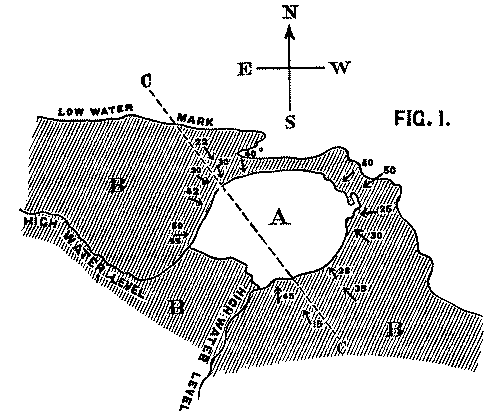
Fig. 1. Map of Strata at Whitberry Point. Scale, 6 in. to the mile.
A. Lava sheet. B. Sandstone Beds, dipping from every side towards the lava. CC. Line of Section along which Fig. 2 is supposed to be drawn.
We conceive that the phenomenon is to be explained by supposing the orifice through which the lava rose and overflowed the surface of the sedimentary strata to have been very much smaller in area than the extent of igneous rock at present visible; and that the pressure of the erupted mass on the soft beds beneath, aided perhaps by the abstraction of matter from below, caused them to incline towards the central point at a gradually increasing angle. The diagram, fig. 2, will serve further to illustrate this hypothesis. A is the neck or orifice by which the melted matter is supposed to ascend. C shews the sheet of lava after it has overspread the surface of the sandstone beds B, so as to cause them to assume their present inclination. The dotted lines represent the hypothetical extension of the igneous mass and sandstones previous to the denudation which they have suffered from the action of the waves.
Professor Geikie, in his admirable treatise on the Geology of the county[4], adopts a view on this subject which is somewhat different from that which is suggested in this paper. He considers that the whole mass is an intrusive neck of rock with perpendicular sides; and that it once filled up an orifice through the surrounding sedimentary strata, of which it is now the only remnant.
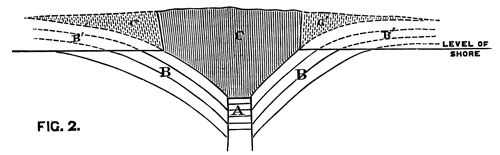
Fig. 2. Vertical Section through CC. Diagram (Fig. 1).
A. Orifice by which the lava ascended. B. Sandstone Beds. B´. Hypothetical extension of ditto. C. Sheet of lava spread over the sandstones B. C´. Hypothetical extension of ditto.
He admits that the inclination of the sandstone beds towards the igneous mass in the centre is a phenomenon that is somewhat difficult to explain, and suggests that a subsequent contraction of the column may have tended to produce such a result. To use his own words: In the case of a solid column of felstone or basalt, the contraction of the melted mass on cooling may have had some effect in dragging down the sides of the orifice[5].
But, apart from other objections, it is scarcely conceivable that this result should have been produced by the contraction of the column.
In his recent edition of Jukes's Manual of Geology (p. 269), in which he also refers to this instance, he states that in other cases of necks it is found to be an almost invariable rule, that strata are bent down so as to dip into the neck all round its margin. We are not aware to what other instances Prof. Geikie may allude; but on referring to his Memoir on the Geology of East Lothian, we find that he states in the cases of 'North Berwick Law' and 'Traprain' (which he compares with the igneous mass at Whitberry Point), that the beds at the base of these two necks, where exposed, dip away from them, and that at a high angle.
In support of the hypothesis which we have put forward, the following arguments may be urged:
(1) That in one place at least the sedimentary strata are seen to be actually dipping beneath the superincumbent basalt; and that the impression produced by the general relation of the two rocks is, that they do so everywhere.
(2) Since the columns into which the lava is split are vertical, the cooling surface must have been horizontal: the mass must, therefore, have formed a sheet, and not a dyke; for, in the latter case, the cooling surfaces would have been vertical.
(3) It is difficult to conceive, on the supposition that the volcanic rock is a neck with perpendicular sides, that the marine denudation should have uniformly proceeded only so far as to lay bare the junction between the two formations. We should have expected that in many places the igneous rock itself would have been cut down to the general level, whereas the only signs of such an effect are shown in a few narrow inlets where the rock was manifestly softer than in the surrounding parts.
The last objection is greatly confirmed by the overhanging cliffs and numerous blocks of porphyrite which lie scattered on the beach, as if to attest the former extension of that ancient sheet of which these blocks now form but a small remnant. Indeed, the existence of such remains appears sufficient of itself to condemn any hypothesis which presumes the present face of the cliff to have formed the original boundary of the mass.
It may be fairly objected to our theory, as Prof. Geikie himself has suggested, that the high angle at which the strata dip is difficult to account for. But, in fact, this steep inclination constitutes the very difficulty which any hypothesis on the subject must be framed to explain; and it is a difficulty which is not more easily solved by Prof. Geikie's theory than by our own.
II. The Development and Growth of the Layers of the Blastoderm[6].
With Plate 1, figs. 1-5 and 9-12.
The following paper deals with the changes which take place in the cells of the blastoderm of the hen's egg during the first thirty or forty hours of incubation. The subject is one which has, as a general rule, not been much followed up by embryologists, but is nevertheless of the greatest interest, both in reference to embryology itself, and to the growth and changes of protoplasm exhibited in simple embryonic cells. I am far from having exhausted the subject in this paper, and in some cases I shall be able merely to state facts, without being able to give any explanation of their meaning.
My method of investigation has been the examination of sections and surface views. For hardening the blastoderm I have employed, as usual, chromic acid, and also gold chloride. It is, however, difficult to make sections of blastoderms hardened by this latter reagent, and the sections when made are not in all cases satisfactory. For surface views I have chiefly used silver nitrate, which brings out the outlines of the cells in a manner which leaves nothing to be desired as to clearness. If the outlines only of the cells are to be examined, a very short immersion (half a minute) of the blastoderm in a half per cent. solution of silver nitrate is sufficient, but if the immersion lasts for a longer period the nuclei will be brought out also. For studying the latter, however, I have found it better to employ gold chloride or carmine in conjunction with the silver nitrate.
My observations begin with the blastoderm of a freshly laid egg. The appearances presented by sections of this have been accurately described by Peremeschko, Ueber die Bildung der Keimblätter im Hühnerei, Sitzungsberichte der K. Akademie der Wissenschaften in Wien, 1868. Oellacher, Untersuchung über die Furchung und Blatterbildung im Hühnerei, Studien aus dem Institut für Experim. Pathologie in Wien, 1870 (pp. 54-74), and Dr Klein, lxiii. Bande der Sitz. der K. Acadamie der Wiss. in Wien, 1871.
The unincubated blastoderm (Pl. 1, fig. 1) consists of two layers. The upper layer is composed of a single row of columnar cells. Occasionally, however, the layer may be two cells thick. The cells are filled with highly refracting spherules of a very small size, and similar in appearance to the finest white yolk spherules, and each cell also contains a distinct oval nucleus. This membrane rests with its extreme edge on the white yolk, its central portion covering in the segmentation cavity. From the very first it is a distinct coherent membrane, and exhibits with silver nitrate a beautiful hexagonal mosaic of the outlines (Pl. 1, fig. 6) of the cells. The diameter of the cells when viewed from above is from 1/2000 - 1/3000 of an inch. The under layer is very different from this: it is composed of cells which are slightly, if at all, united, and which vary in size and appearance, and in which a nucleus can rarely be seen. The cells of which it is composed fill up irregularly the segmentation cavity, though a distinct space is even at this time occasionally to be found at the bottom of it. Later, when the blastoderm has spread and the white yolk floor has been used as food, a considerable space filled with fluid may generally be found.
The shape of the floor of the cavity varies considerably, but it is usually raised in the middle and depressed near the circumference. In this case the under layer is perhaps only two cells deep at the centre and three or four cells deep near the circumference.
The cells of which this layer is composed vary a good deal in size; the larger cells being, however, more numerous in the lower layers. In addition, there are usually a few very large cells quite at the bottom of the cavity, occasionally separated from the other cells by fluid. They were called formative cells (Bildungselemente) by Peremeschko (loc. cit.); and, according to Oellacher's observations (loc. cit.), some of them, at any rate, fall to the bottom of the segmentation cavity during the later stages of segmentation. They do not differ from the general lower layer cells except in size, and even pass into them by insensible gradations. All the cells of the lower layer are granular, and are filled with highly refracting spherules precisely similar to the smaller white yolk spherules which line the bottom of the segmentation cavity.
The size of the ordinary cells of the lower layer varies from 1/2000 - 1/1000 of an inch. The largest of the formative cells come up to 1/300 of an inch. It will be seen from this description that, morphologically speaking, we cannot attach much importance to the formative cells. The fact that they broke off from the blastoderm, towards the end of the segmentation—even if we accept it as a normal occurrence, rather than the result of manipulation—is not of much importance, and, except in size, it is impossible to distinguish these cells from other cells of the lower layer of the blastoderm.
Physiologically, however, as will be afterwards shewn, they are of considerable importance.
The changes which the blastoderm undergoes during the first three or four hours of incubation are not very noticeable. At about the sixth or eighth hour, or in some cases considerably earlier, changes begin to take place very rapidly. These changes result in the formation of a hypoblast and mesoblast, the upper layer of cells remaining comparatively unaltered as the epiblast.
To form the hypoblast a certain number of the cells of the lower layer begin to undergo remarkable changes. From being spherical and, as far as can be seen, non-nucleated, they become (vide fig. 2, h) flattened and nucleated, still remaining granular, but with fewer spherules.
Here, then, is a direct change, of which all the stages can be followed, of a cell of one kind into a cell of a totally different character. The new cell is not formed by a destruction of the old one, but directly from it by a process of metamorphosis. These hypoblast cells are formed first at the centre and later at the circumference, so that from the first the cells at the circumference are less flattened and more granular than the cells at the centre. A number of cells of the original lower layer are enclosed between this layer and the epiblast; and, in addition to these, the formative cells (as has been shewn by Peremeschko, Oellacher, and Klein, whose observations I can confirm) begin to travel towards the circumference, and to pass in between the epiblast and hypoblast.
Both the formative cells, and the lower layer cells enclosed between the hypoblast and epiblast, contribute towards the mesoblast, but the mode in which the mesoblast is formed is very different from that in which the hypoblast originates.
It is in this difference of formation that the true distinction between the mesoblast and hypoblast is to be looked for, rather than in the original difference of the cells from which they are derived.
The cells of the mesoblast are formed by a process which seems to be a kind of free cell formation. The whole of the interior of each of the formative cells, and of the other cells which are enclosed between the epiblast and the hypoblast, become converted into new cells. These are the cells of the mesoblast. I have not been able perfectly to satisfy myself as to the exact manner in which this takes place, but I am inclined to think that some or all of the spherules which are contained in the original cells develop into nuclei for the new cells, the protoplasm of the new cells being formed from that of the original cells.
The stages of formation of the mesoblast cells are shewn in the section (Pl. 1, fig. 2), taken from the periphery of a blastoderm of eight hours.
The first formation of the mesoblast cells takes place in the centre of the blastoderm, and the mass of cells so formed produces the opaque line known as the primitive streak. This is shown in Pl. 1, fig. 9.
One statement I have made in the above description in reference to the origin of the mesoblast cells, viz. that they are only partly derived from the formative cells at the bottom of the segmentation cavity, is to a certain extent opposed to the statements of the three investigators above mentioned. They state that the mesoblast is entirely derived from the formative cells. It is not a point to which I attach much importance, considering that I can detect no difference between these cells and any other cells of the original lower layer except that of size; and even this difference is probably to be explained by their proximity to the white yolk, whose spherules they absorb. But my reason for thinking it probable that these cells alone do not form the mesoblast are: 1st. That the mesoblast and hypoblast are formed nearly synchronously, and except at the centre a fairly even sprinkling of lower layer cells is from the first to be distinguished between the epiblast and hypoblast. 2nd. That if some of the lower layer cells are not converted into mesoblast, it is difficult to see what becomes of them, since they appear to be too numerous to be converted into the hypoblast alone. 3rd. That the chief formation of mesoblast at first takes place in the centre, while if the formative cells alone took part in its formation, it would be natural to expect that it would begin to be formed at the periphery.
Oellacher himself has shewn (Zeitschrift für wissenschaftliche Zoologie, 1873, Beiträge zur Entwick. Gesch. der Knochenfische) that in osseous fishes the cells which break away from the blastoderm take no share in the formation of the mesoblast, so that we can derive no argument from the formation of the mesoblast in these animals, for believing that in the chick it is derived only from the formative cells.
In the later stages, however, from the twelfth to the twenty-fifth hour, the growth of the mesoblast depends almost entirely on these cells, and Peremeschko's discovery of the fact is of great value.
Waldeyer (Henle und v. Pfeufer's Zeitschrift, xxxiv. Band, für 1869) has given a different account of the origin of the layers. There is no doubt, however, in opposition to his statements and drawings, that from the very first the hypoblast is distinct from the mesoblast, which is, indeed, most conspicuously shewn in good sections; and his drawings of the derivation of the mesoblast from the epiblast are not very correct.
The changes which have been described are also clearly shewn by means of silver nitrate. Whereas, at first this reagent brought out no outline markings of cells in the lower layer, by the eighth to the twelfth hour the markings (Pl. 1, fig. 3) are very plain, and shew that the hypoblast is a distinct coherent membrane.
In section, the cells of the hypoblast appear generally very thin and spindle shaped, but the outlines brought out by the silver nitrate shew that they are much expanded horizontally, but very irregular as to size, varying even within a small area from 1/4000 - 1/400 of an inch in the longest diameter.
At about the twelfth hour they are uniformly smaller a short way from each extremity of its longer axis than over the rest of the blastoderm.
It is, perhaps, fair to conclude from this that growth is most rapid at these parts.
At this time the hypoblast, both in sections and from a surface view after treatment with silver nitrate, appears to end abruptly against the white yolk. The surface view also shews that its cells are still filled with highly refractive globules, making it difficult to see the nucleus. In some cases I thought that I could (fig. 3, a) make out that it was hour-glass shaped, and some cells certainly contain two nuclei. Some of the cells (fig. 3, b) shew re-entrant curves, which prove that they have undergone division.
The cells of the epiblast, up to the thirteenth hour, have chiefly undergone change in becoming smaller.
In surface views they are about 1/4000 of an inch in diameter over the centre of the pellucid area, and increase to 1/2000 of an inch over the opaque area.
In the centre of the pellucid area the form of the epiblast cells is more elongated vertically and over the opaque area more flattened than was the case with the original upper layer cells. In the centre the epiblast is two or three cells deep.
Before going on to the further changes of the blastodermic cells it will be well to say a few words in reference to the origin of the mesoblast.
From the description given above it will be clear that in the chick the mesoblast has an independent origin; it can be said neither to originate from the epiblast nor from the hypoblast. It is formed coincidently with the latter out of apparently similar segmentation cells. The hypoblast, as has been long known, shews in the chick no trace of its primitive method of formation by involution, neither does the mesoblast shew any signs of its primitive mode of formation. In so excessively highly differentiated a type as birds we could hardly expect to find, and certainly do not find, any traces of the primitive origin of the mesoblast, either from the epiblast or hypoblast, or from both. In the chick the mesoblast cells are formed directly from the ultimate products of segmentation. From having a secondary origin in most invertebrates the mesoblast comes to have, in the chick, a primary origin from the segmentation spheres, precisely as we find to be the case with the nervous layer in osseous fishes. It is true we cannot tell which segmentation-cells will form the mesoblast, and which the hypoblast; but the mesoblast and hypoblast are formed at the same time, and both of them directly from segmentation spheres.
The process of formation of the mesoblast in Loligo, as observed by Mr Ray Lankester (Annals and Magazine of Natural History, February, 1873), is still more modified. Here the mesoblast arises independently of the blastoderm, and by a process of free cell-formation in the yolk round the edge of the blastoderm. If Oellacher's observations in reference to the origin of formative cells are correct, then the modes of origin of the mesoblast in Loligo and the chick would have nothing in common; but if the formative cells are in reality derived from the white yolk, and also are alone concerned in the formation of the mesoblast, then the modes of formation of the mesoblast in the chick would be substantially the same as that observed by Mr Ray Lankester in Loligo.
No very important changes take place in the actual forms of the cells during the next few hours. A kind of fusion takes place between the epiblast and the mesoblast along the line of the primitive streak forming the axis-string of His; but the line of junction between the layers is almost always more or less visible in sections. In any case it does not appear that there is any derivation of mesoblast cells from the epiblast; and since the fusion only takes place in the region of the primitive groove, and not in front, where the medullary groove arises (see succeeding paper), it cannot be considered of any importance in reference to the possible origin of the Wolffian duct, &c., from the epiblast (as mooted by Waldeyer, Eierstock und Ei, Leipzig, 1870). The primitive groove, as can be seen in sections, begins to appear very early, generally before the twelfth hour. The epiblast spreads rapidly over the white yolk, and the area pellucida also increases in size.
From the mesoblast forming at first only a small mass of cells, which lies below the primitive streak, it soon comes to be the most important layer of the blastoderm. Its growth is effected by means of the formative cells. These cells are generally not very numerous in an unincubated blastoderm, but rapidly increase in numbers, probably by division; at the same time they travel round the edge of, and in some cases through, the hypoblast, and then become converted in the manner described into mesoblast cells. They act as carriers of food from the white yolk to the mesoblast till, after the formation of the vascular area, they are no longer necessary. The numerous cases in which two nucleoli and even two nuclei can be seen in one cell prove that the mesoblast cells also increase by division.
The growth of the hypoblast takes place in a very different way. It occurs by a direct conversion, cell for cell, of the white yolk spheres into hypoblast cells. This interpretation of the appearances, which I will describe presently, was first suggested to me by Dr Foster, from an examination of some of my specimens of about thirty-six hours, prepared with silver nitrate. Where there is no folding at the junction between the pellucid and opaque areas, there seems to be a perfect continuity in the silver markings and a gradual transition in the cells, from what would be undoubtedly called white yolk spheres, to as undoubted hypoblast cells (vide Pl. 1, fig. 5). In passing from the opaque to the pellucid areas the number of white yolk spherules in each cell becomes less, but it is not till some way into the pellucid area that they quite cease to be present. I at first thought that this was merely due to the hypoblast cells feeding on the white yolk sphericles, but the perfect continuity of the cells, and the perfect gradation in passing from the white yolk cells to the hypoblast, proves that the other interpretation is the correct one, viz. that the white yolk spheres become directly converted into the hypoblast cells. This is well shewn in sections (vide Pl. 1, fig. 4) taken from embryos of all ages from the fifteenth to the thirty-sixth hour and onwards. But it is, perhaps, most easily seen in embryos of about twenty hours. In such an embryo there is a most perfect gradation: the cells of the hypoblast become, as they approach the edge of the pellucid area, broader, and are more and more filled with white yolk sphericles, till at the line of junction it is quite impossible to say whether a particular cell is a white-yolk cell (sphere) or a hypoblast cell. The white-yolk cells near the line of junction can frequently be seen to possess nuclei. At first the hypoblast appears to end abruptly against the white yolk; this state of things, however, soon ends, and there supervenes a complete and unbroken continuity between the hypoblast and the white yolk.
Of the mode of increase of the epiblast I have but little to say. The cells undoubtedly increase entirely by division, and the new material is most probably derived directly from the white yolk.
Up to the sixth hour the cells of the upper layer retain their early regular hexagonal pattern, but by the twelfth hour they have generally entirely lost this, and are irregularly shaped and very angular. The cells over the centre of the pellucid area remain the smallest up to the twenty-fifth hour or later, while those over the rest of the pellucid area are uniformly larger.
In the hypoblast the cells under the primitive groove, and on each side as far as the fold which marks off the exterior limit of the protovertebræ are at the eighteenth hour considerably smaller than any other cells of this layer.
In all the embryos between the eighteenth and twenty-third hour which I have examined for the purpose, I have found that at about two-thirds of the distance from the anterior end of the pellucid area, and just external to the side fold, there is a small space on each side in which the cells are considerably larger than anywhere else in the hypoblast. These larger cells, moreover, contain a greater number of highly refractive spherules than any other cells. It is not easy to understand why growth should have been less rapid here than elsewhere, as the position does not seem to correspond to any feature in the embryo. In some specimens the hypoblast cells at the extreme edge of the pellucid area are smaller than the cells immediately internal to them. At about the twenty-third hour these cells begin rapidly to lose the refractive spherules they contained in the earlier stages of incubation, and come to consist of a nucleus surrounded simply by granular protoplasm.
At about this period of incubation the formative cells are especially numerous at the periphery of the blastoderm, and, no doubt, become converted into the mass of mesoblast which is found at about the twenty-fifth hour in the region of the vascular area. Some of them are lobate, and appear as if they were undergoing division. At this time also the greatest number of formative cells are to be found at the bottom of the now large segmentation cavity.
In embryos of from thirty to forty hours the cells of the hypoblast have, over the central portion of the pellucid area, entirely lost their highly refractive spherules, and in the fresh state are composed of the most transparent protoplasm. When treated with reagents they are found to contain an oval nucleus with one or sometimes two nucleoli, imbedded in a considerable mass of protoplasm. The protoplasm appears slightly granular and generally contains one or two small vacuoles. I have already spoken of the gradation of the hypoblast at the edge of the blastoderm into white yolk. I have, therefore, only to mention the variations in the size of its cells in different parts of the pellucid area. The points where the cells are smallest seem generally to coincide with the points of maximum growth. Over the embryo the cells are more regular than elsewhere. They are elongated and arranged transversely to the long axis of the embryo. They are somewhat hexagonal in shape, and not unlike the longer pieces in the dental plate of a Myliobatis (Pl. 1, fig. 10). This regularity, however, is much more marked in some specimens than in others. These cells are about 1/4000th of an inch in breadth, and 1/1000th in length. On each side of the embryo immediately external to the protovertebræ the cells are frequently about the same size as those over the embryo itself. In the neck, however, and near the end of the sinus rhomboidalis, they are considerably smaller, about 1/4000th inch each way. The reason of this small size is not very clear, but probably shews that the greatest growth is taking place at these two points. The cells, again, are very small at the head fold, but are very much larger in front of this—larger, in fact, than any other cells of the hypoblast. Outside the embryo they gradually increase in size towards the edge of the pellucid area. Here they are about 1/1000th of an inch in diameter, irregular in shape and rather angular.
The outlines of the cells of the epiblast at this time are easily distinguished from the cells of the hypoblast by being more elongated and angular; they are further distinguished by the presence of numerous small oval cells, frequently at the meeting point of several cells, at other times at points along the lines of junction of two cells (Pl. 1, fig. 12). These small cells look very like the smaller stomata of endothelial membranes, but are shewn to be cells by possessing a nucleus. There is considerable variation in size in the cells in different parts of the epiblast. Between the front lobes of the brain the cells are very small, 1/4000th inch, rising to 1/2000th on each side. They are about the latter size over the greater part of the embryo. But over the sinus rhomboidalis they fall again to from 1/3000th to 1/4000th inch. This is probably to be explained by the growth of the medullary fold at this point, which pushes back the primitive groove. At the sides of the head the cells are larger than anywhere else in the epiblast, being here about 1/1000th inch in diameter. I at present see no explanation of this fact. At the periphery of the pellucid area and over the vascular area the cells are 1/1500th to 1/2000th inch in diameter, but at the periphery of the opaque area they are smaller again, being about the 1/3000th of an inch. This smaller size at the periphery of the area opaca is remarkable, since in the earlier stages the most peripheral epiblast cells were the largest. It, perhaps, implies that more rapid growth is at this time taking place in that part of the epiblast which is spreading over the yolk sac.
EXPLANATION OF PLATE 1, Figs. 1-5 and 9-12.
Fig. 1. Section through an unincubated blastoderm, shewing the upper layer, composed of a single row of columnar cells, and the lower layer, composed of several rows of rounded cells in which no nucleus is visible. Some of the formative cells, at the bottom of the segmentation cavity, are seen at (b).
Fig. 2. Section through the periphery of an eight hours' blastoderm, shewing the epiblast (p), the hypoblast (h), and the mesoblast commencing to be formed (c), partly by lower-layer cells enclosed between the epiblast and hypoblast, and partly by formative cells. Formative cells at the bottom of the segmentation cavity are seen at b. At s is one of the side folds parallel to the primitive groove.
Fig. 3. Portion of the hypoblast of a thirteen hours' blastoderm, treated with silver nitrate, shewing the great variation in the size of the cells at this period. An hour-glass shaped nucleus is seen at a.
Fig. 4. Periphery of a twenty-three hours' blastoderm, shewing cell for cell the junction between the hypoblast (h) and white-yolk spheres (w).
Fig. 5. Junction between the white-yolk spheres and the hypoblast cells at the passage from the area pellucida to the area opaca. The specimen was treated with silver nitrate to bring out the shape of the cells. The line of junction between the opaque and pellucid areas passes diagonally.
Fig. 9. Section through the primitive streak of an eight hours' blastoderm. The specimen shews the mesoblast very much thickened in the immediate neighbourhood of the primitive streak, but hardly formed at all on each side of the streak. It also shews the primitive groove just beginning to be formed (pr), and the fusion between the epiblast and the mesoblast under the primitive groove. The hypoblast is completely formed in the central part of the blastoderm. At f is seen one of the side folds parallel to the primitive groove. Its depth has been increased by the action of the chromic acid.
Fig. 10. Hypoblast cells from the hinder end of a thirty-six hours' embryo, treated with silver nitrate, shewing the regularity and elongated shape of the cells over the embryo and the smaller cells on each side.
Fig. 11. Epiblast cells from an unincubated blastoderm, treated with silver nitrate, shewing the regular hexagonal shape of the cells and the small spherules they contain.
Fig. 12. Portion of the epiblast of a thirty-six hours' embryo, treated with silver nitrate, shewing the small rounded cells frequently found at the meeting-points of several larger cells which are characteristic of the upper layer.
III. On the Disappearance of the Primitive Groove in the Embryo Chick[7].
With Plate 1, Figs. 6-8 and 13-19.