Chapter XIV · BIRTH AND CHILDHOOD CEREMONIES
Reading edition
The ceremonies connected with childbirth begin before the birth of the child. These ceremonies are only performed for the first child or when the woman obtains a new husband, so that they may, from one point of view, be regarded as marriage ceremonies. Nevertheless, I prefer to consider them here, and to leave the ceremonies more strictly connected with marriage till a later chapter. These latter ceremonies are far less elaborate than those to be described in this chapter, and may be more fitly considered in connexion with the social regulation of marriage.
At or about the fifth month of pregnancy, a ceremony is performed which is called ûr patitth kaitütitthpimi, “village left, hand we burnt,” or more shortly, ürvatpimi, “village we leave,” or kaitütitthpimi. The ceremony is named from its two essential features; the woman leaves the village and lives secluded in a hut and her wrists are burnt.
When it is known that the ceremony is to take place, a special hut, called puzhars (Fig. 45), is built in a prescribed place at some little distance from the village, or if this building already exists, it is put into good order. The word puzhars means “mud-house” or “earth-house,” which would seem to point to a time when a temporary hut of mud was used, but at the present time it is built of wood, though it is of much simpler and rougher construction than the ordinary house.
The distance of the puzhars from the huts in which the people live depends on the degree of sacredness of the village. According to Breeks, the distance is greatest in those villages which have a dairy of the conical kind, but it seems that there is no real difference between these villages and any other etudmad. In some cases when the dairy has a high degree of sanctity, the puzhars may be at an adjacent village; thus, a pregnant woman of Kiudr goes into seclusion at Molkush, about a quarter of a mile away, and at this village the seclusion-hut (Fig. 45) is about a hundred yards from the house in which the people live.
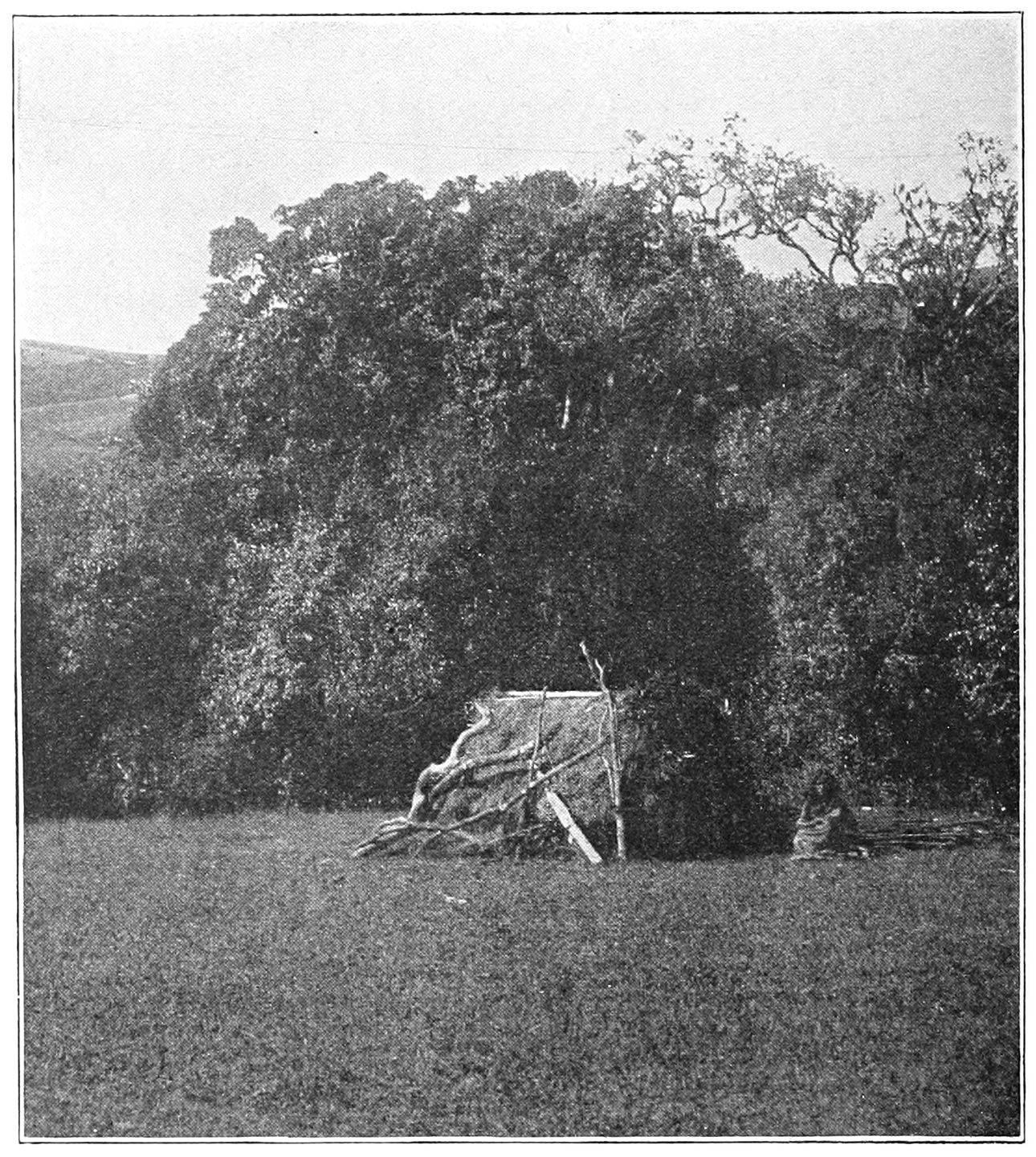
FIG. 45.—THE ‘PUZHARS’ AT MOLKUSH.
I may mention here that the objection to the presence of a pregnant woman in one of the more sacred villages may extend to a time when she is not in the seclusion-hut. When I visited Kiudr for the purpose of testing the people of the village for colour-blindness, Sintagars, who was pregnant and was living at Molkush, was not allowed to come to the hut to be tested like the rest, but sat on the mound shown in the foreground of Fig. 7, about thirty yards away.
The features of the hand-burning ceremony as performed by the Tartharol differ considerably from those for a Teivali woman, and I will begin with a description of the former.
On the day of the new moon, the woman goes to the puzhars. The husband (or in his absence his brother or other near male relative) cuts six sticks of the kind called kwadrikurs and sets them up so as to represent a dairy with two rooms, which is called pülpali. He then cuts four bamboo-reeds called wadr, about eighteen inches long, which represent dairy vessels; two of them are called patatpun, and the other two ertatpun. He fills these with water taken neither from the pali nipa nor from the ars nipa, for if he touched the water of either of the streams, they would be defiled and their water could not be used. He therefore fetches the water from a stream at some distance from the village.
The woman has brought with her a new earthenware pot called mâtkûdrik, into which she puts food (rice or grain) and water, and places it on a small oven made on the spot with stones. When the food is cooked, the woman takes two leaves called pelkkodsthmuliers, i.e., leaves used in the ordination of the palikartmokh, and portions out the food on the leaves. She then brings two pieces of wood called parskuti (Eleagnus latifolia), puts them in the ground and covers them with a blanket. The two leaf-plates with the food are now placed on the two pieces of wood, one on each, and the woman asks Pîrn podia, Piri podia? (podia = have you come?) My informants could tell me nothing about Pirn or Piri, except that the former was supposed to be male and the latter female.
When the woman comes out of the puzhars at the end of the month, there is a ceremony called marthk maj atpimi, “To the village buttermilk we pour.” Early in the morning of the appointed day a man of the Melgars clan comes to the village and milks one of the ordinary buffaloes (putiir) into the vessel called kabanachok. The buffalo must not have been milked by any one else since the time it last calved. The Melgars man places the milk in front of the hut where the woman usually lives, and then goes away, and the milk is taken by the people of the village. In the evening, after the day’s work is over and the buffaloes are shut up for the night, a woman is chosen who has had no contact with the secluded woman, and she takes the milk drawn by the Melgars man to the puzhars, together with the leaves of the kind called parsers. She pours out the milk three times into these leaves and gives to the pregnant woman to drink. The latter has previously bathed and put on a new mantle, and after drinking she returns to the ordinary hut and may resume her household work.
For a woman of the Teivaliol, the ceremony of urvatpimi is much more simple. No pülpali is made, and the husband fetches two pieces of reed only, which are called ertatpun. They are half filled with water, which is poured from one over the back of a calf into the other as in the Tarthar ceremony, and the woman drinks in the same way, but this is immediately followed by the hand-burning, and the rite with the two sticks and the invocation of Pirn and Piri is entirely omitted.
The Teivali ceremony on coming out of the puzhars takes place in the early morning. A man (not the husband) fetches water from the ars nipa in a brass vessel called achok. He takes the vessel to a pregnant buffalo and tries to milk the buffalo over the vessel of water. Although no milk comes, the attempt is supposed to convert the water in the vessel into milk. The woman then leaves the seclusion-hut and is given two leaves (parsers), of which she makes a leaf cup, and the man pours the water which is supposed to be milk into the cup three times, and the woman drinks each time after raising the cup to her forehead. The woman and her companion then go to another special hut, called aliars, and stay there for a week, or if there is in the village a house of the kind called merkalars (see p. 29), the woman may go to the hinder part of this house instead of to the aliars, but in this case all the household things have to be removed from the merkalars.
At the end of the week in the aliars or merkalars, there follows the ceremony called marthk maj atpimi. Early in the morning the palikartmokh brings penmaj (i.e., butter and buttermilk) in an earthenware pot and two firebrands (tütkuli) to the front of the hut, puts the brands on the ground, lays the pot on them for a time, and then puts the pot on the raised platform in front of the hut. He then goes away, and a woman brings a brass vessel (terg) and transfers the butter and buttermilk to the terg, and gives it to the woman, who drinks and goes to the ordinary hut.
While the woman is in the aliars or merkalars, she is not confined to the dwelling as when in the puzhars, but may go about. She must not, however, do any household work, nor go to any other village, nor to the ordinary huts of her own village. If in the hinder part of the merkalars, she must not go to the fore part of the house.
Thus the ritual of the Tartharol differs greatly from that of the Teivaliol in these ceremonies. The rite of making an artificial dairy is entirely omitted by the Teivaliol, and, as we shall see later, it is also omitted in a similar ceremony performed after childbirth, though the pieces of reed used to pour water over the calf are named after dairy vessels in both cases. I could obtain no explanation of the difference of procedure, nor of the omission of the invocation of Pirn and Piri by the Teivali division. It is possible that this latter ceremony has been borrowed, but if so, there is no obvious reason why it should have been borrowed by one division, and not by the other.
In the ceremonies accompanying the return to ordinary life, it is perhaps natural that the Melgars man should only take part in the proceedings of his own division. The other chief difference in the procedure of the two divisions is that the return takes place in two stages among the Teivaliol, while the Tarthar woman goes directly from the puzhars to the ordinary hut. I was told that the difference was connected with the fact that the Tarthar women drank milk, whilst the Teivali women did not, but I could not discover why this should lead to a difference of procedure.
The Pursütpimi Ceremony
The wife then sits down beneath the tree in front of the lamp, and the husband gives her the imitation bow and arrow. In doing so he says the kwarzam of his village followed by the words “Teikirzi Tirsk, pursvat!”—i.e., “To Teikirzi and Tirshti, hold the bow and arrow!” The wife replies, “purs iveru?”—“What is the name of the bow and arrow?”—and the husband then gives the name of the bow and arrow, which is different for each clan. The question and answer are each time repeated so that they are said three times. The formulæ repeated on this occasion differ for each clan in the kwarzam of the village and in the name of the bow. For the Kuudrol the latter was pursgârûv, so that a Kuudr man would first say, “Atthkar Teikirzi Tirsk pursvat,” and in answer to his wife’s question he would answer, “Pursgârûv”. The only clan which does not say the kwarzam of the village is that of Nòdrs, where only the names of the gods are mentioned.
Later the relatives return from the village and all pass the night in the wood, the relatives keeping at some distance from the married pair. At daybreak on the following day, the day of the new moon, all return to the village and feast, food being given to all visitors.
It seemed, however, that after pursütpimi the woman is allowed to resume her ornaments, which she has been prohibited from wearing up to this time, and it is possible that this resumption of her ornaments may have been mistaken for “tying the tali.” It seemed clear, however, that the ornaments were not put on by the husband, nor did the resumption of the ornaments partake in any way of a ceremonial character.
As I hoped to have a chance of witnessing this ceremony during my visit, I did not thresh out the details of pursütpimi as thoroughly as those of most other ceremonies and my account is not as complete as I could wish.
The ceremony of pursütpimi is of the greatest importance from the social point of view and, as we shall see later, the fatherhood of the child depends entirely upon it. The man who gives the bow and arrow is the father of the child for all social purposes, and is regarded as such even if he has had nothing to do with the woman before the ceremony.
The ceremony must always be performed during the first pregnancy of a woman and it takes place in any succeeding pregnancy only when it is desired for any reason to alter the fatherhood of the children. One of the most serious scandals in Toda society is the birth of a child when the mother has not been through this ceremony.
Both the pregnancy ceremonies are performed at the first funeral of an unmarried or barren woman. In the case of an unmarried girl the bow and arrow are given at the pursütpimi ceremony by a matchuni of the deceased—i.e., by a relative whom the deceased girl might herself have married. The hand-burning of the urvatpimi ceremony is usually performed by a woman of the same clan as the deceased.
Childbirth
When the woman returns from the seclusion-hut after the urvatpimi ceremony she lives in her usual home with the rest of the family and does her usual work, and she is delivered there. It seemed that any one might be present, and that there was no special ceremony connected with delivery.
During delivery, the woman kneels with her head resting on the breast of a man, usually her husband, who clasps his hands behind her neck. She is tended by a woman, usually by one noted for skill in these matters. If there is much delay, all men and women present lay their hands on the head of the woman and say:
“Swâmi maz vûrmâ; swâmi pûdikan termâ.”
If this is not efficacious a man brings water in a vessel and prays, stirring the water with a piece of grass of the kind called kakar. When the prayer is finished, the man sprinkles the water over the woman.
The cord (pekû) is cut with a knife, being held down with a stick while it is being cut.
The afterbirth is called naj or pekûkûdri. If there is delay in its delivery, a medicine called najmad is given which is procured from the Badagas. The afterbirth is buried on the day on which the woman goes to the seclusion-hut, a few days after delivery. If the child is still-born its body is buried at the same time.
A caul is named kwadri (umbrella), but no importance is attached to it, nor is it kept.
Seclusion after Childbirth
Two or three days after childbirth the mother and child go to the seclusion-hut, or puzhars, the same structure being used as after the hand-burning ceremony. Various rites are performed, both when going to and leaving the seclusion-hut, and these have many points in common with those which take place before and after the hand-burning. As in that case, the procedure for the Tartharol differs considerably from that of the Teivaliol.
The general name for the ceremony of going to the puzhars is pòlk pòtha nir utpimi—“to the calf back (or hind quarters) water we pour,” from one of the chief features of the proceedings. The ceremony takes place either in the early morning or in the evening.
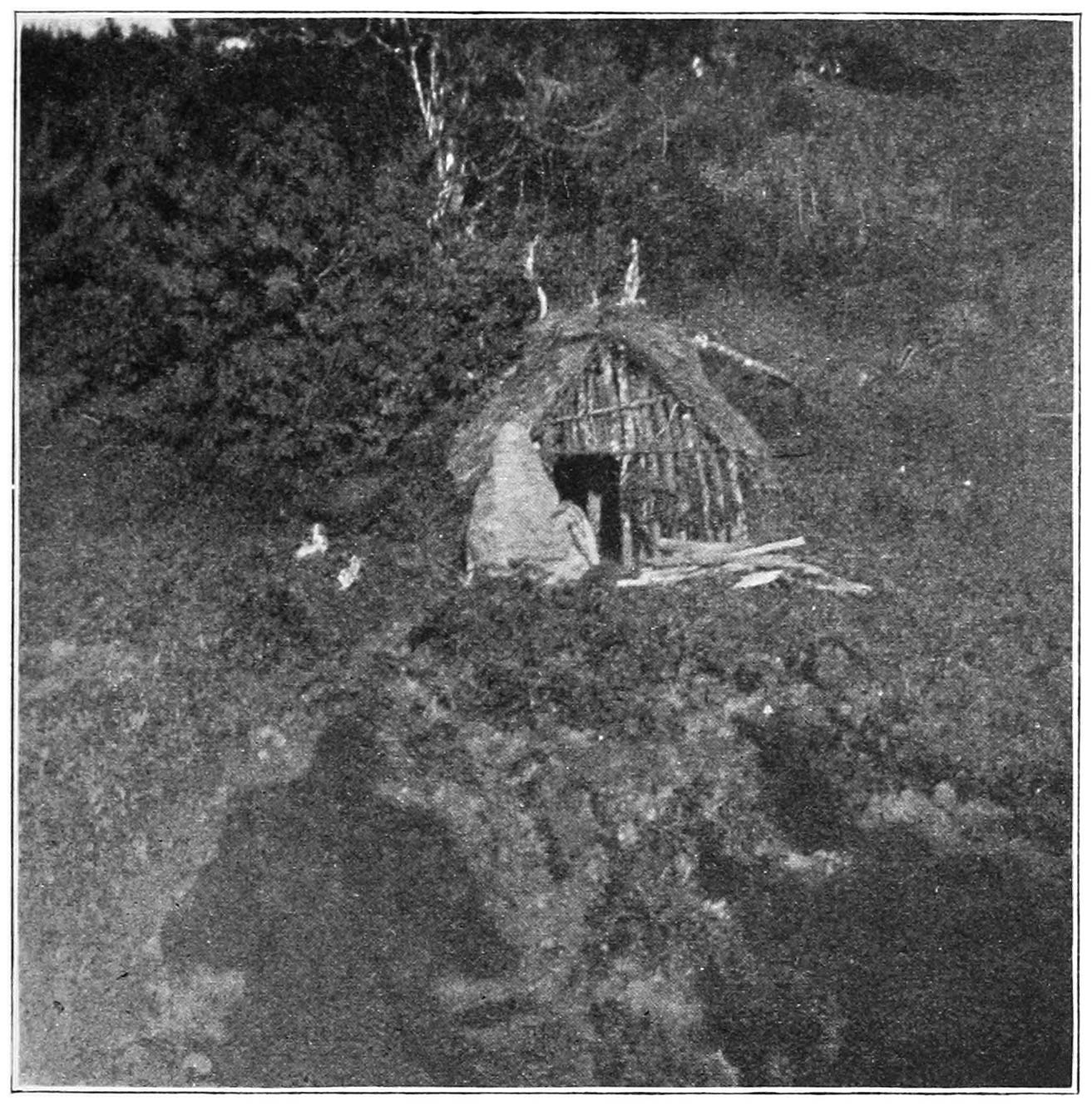
FIG. 46.—TERSVELI SITTING AT THE DOOR OF THE ‘PUZHARS’ AT KARIA WITH HER FACE TURNED FROM THE SUN.
After the woman has drunk of the water which has been poured over the back of the calf, she breaks the earthenware fragment over the fire, saying, Namavku, “to Namav,” this rite being called Namavtur kwudrtpimi, “to Namav we give.” The woman then goes to the seclusion-hut, being assisted by her husband, who now acquires the impurity which is called ichchil, and any one else who touches the woman after this ceremony also becomes ichchil.
I saw the ceremony of going to the puzhars on two occasions, the woman each time belonging to the Teivaliol. The most striking feature of each occasion was the obvious and intense dread of Keirt. In one case, soon after leaving the hut, the woman, Sintagars, called out for another umbrella as she feared that the tòrikwadr was not sufficient to shelter her from Keirt, and during the rest of the proceedings she held over herself both the leafy umbrella and one of the ordinary kind.
I was told that all the chief incidents of the ceremony—the rubbing on of ashes, the holding of the leaf umbrella, the pouring of water over the calf and the giving to Namav—were all designed to avert the evil influence of Keirt, which they call Keirtpudrivuti (see p. 269).
After the woman has gone to the seclusion-hut she is visited by relatives and friends, who stand at a distance, just as they did after the hand-burning ceremony. They bring rice with them as a present and call out
Marsvut Confined sivn life mikh remaining mokh son (or kugh) (or daughter) udpatia? had you?
“Have you had a son (or daughter) and are yet alive?” The visitors then go to the huts of the village and are entertained.
The woman and child stay in the seclusion-hut, accompanied by the husband and by a woman who is usually the assistant at the birth. If the child is not the first, the mother remains in seclusion till a few days before the next new moon, this kind of seclusion being called nâtersper. If the child is the first-born, the stay in the seclusion-hut is longer and is called kadrthersper. In this case the woman stays in the hut till a month has elapsed after the new moon following the birth. Thus Sintagars went into seclusion on Sunday, October 19th, and came out on Thursday, November 27th, 1902, exactly four weeks after the new moon of October 31st.
The proceedings on leaving the seclusion-hut are like those which take place after the seclusion following the urvatpimi ceremony, but with a few additional rites.
Among the Tartharol there is only one ceremony, called marthk maj atpimi, in which a buffalo is milked on the morning of the day by a Melgars man. Before the woman drinks the milk in the evening, another woman lays threads of tuni on leaves of kakud, and puts them on the ground before the mother, who puts them in the right side of her waist-string as when going to the seclusion-hut. After returning to the hut the woman drinks Melgars buttermilk and eats food cooked in Melgars buttermilk in exactly the same way as after the hand-burning ceremony.
Among the Teivaliol the return to ordinary life takes place in two stages, as after the hand-burning ceremony. The woman first goes to the aliars, or to the hinder part of the merkalars, after drinking water, which has been supposed to be turned into milk by pretended milking from a pregnant buffalo. I saw this ceremony on one occasion (Fig. 47) when the pretended milking was done by a small boy, Pongudr (52), and the supposed milk was poured into the leaves and given to the mother by a woman who had not been present in the seclusion-hut with her. The person who pretends to milk the pregnant buffalo becomes ichchil by doing so, and the reason why a young boy was chosen for this office was that the adult members of the family might escape the disabilities attendant on this condition. On this occasion especial care was taken that the mother should sit facing the sun during the ceremony. She at first sat down with her face turned away from the sun, and she was made to turn round, so that she directly faced it. This was the exact opposite of the procedure followed when going to the seclusion-hut.
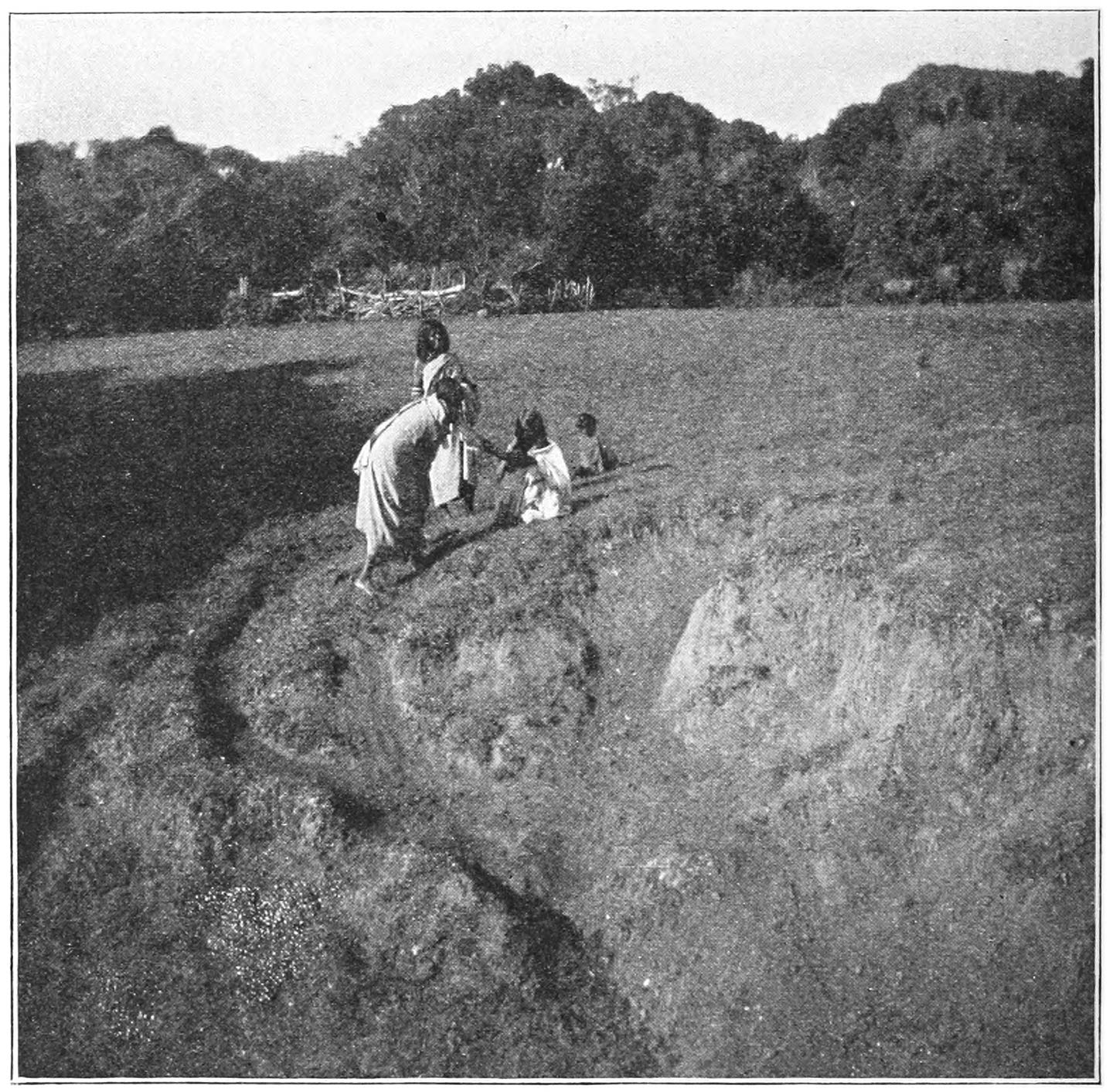
FIG. 47.—SINTAGARS DRINKING AT THE ‘MARTHK MAJ ATPIMI’ CEREMONY. THE BOY, PONGUDR, IS SITTING BEHIND HER.
After being in the aliars or merkalars for a week there follows the ceremony of marthk maj atpimi, which is the same as that after the urvatpimi ceremony, with the addition that a representation of a hut is made with five or six sticks of the kind called kwadrikurs. A boy goes within the imitation hut with a brass vessel (achok), and coming out gives this to the woman, who bows down (nersatiti) with her child at the threshold of the imitation hut. She then takes butter and buttermilk which have been placed by the palikartmokh on fire-brands (see p. 318). After taking the mixture the woman goes to the dwelling-hut and resumes her ordinary duties.
It is the custom for everyone present on this occasion to give the child a four-anna piece (panm), and near relatives may often give more. A small loincloth (tadrp) provided with a pocket called terigs is put round the child, and into this pocket the money is put, this action receiving the name of terigs katpimi, or “we tie the terigs.” I did not hear of this pocket in any other ceremonies, and, so far as I know, it is only made in the tadrp used on this occasion, or if a constant feature of the tadrp, it has no other ceremonial use. So far as I am aware, the representation of a house is only used by the Teivaliol, while the imitation dairy made on going to the seclusion-hut after hand-burning and childbirth is only made by the Tartharol.
It is tempting to suppose that the water poured in these ceremonies from an imitation dairy vessel over the back of a calf is regarded as milk, and if this is so, the drinking of milk, real or fictitious, would be the essential feature of all these ceremonies. Further, the conjecture is natural that the drinking is designed to promote the formation and flow of milk in the woman. It is perhaps in favour of this that in the ceremony after childbirth, when this motive would be especially important, the water is poured over the hind-quarters of the calf and not over the middle of its back, as in the earlier ceremony. But if the promotion of lactation is the leading motive of the ceremonies, it is difficult to see why a buffalo in full milk should not have been chosen instead of a two-year-old calf.
It is possible that there is some reason why an adult buffalo should not be used on such an occasion, and that a calf is used as a substitute, and, on the whole, the view that some features of the ceremonies had their origin in the motive suggested is the most probable one; but this can only be conjecture, for it is, I think, quite clear that the ceremonies have now become purely ritual, and are performed with no other reason than that they are prescribed by custom.
The use of an artificial dairy among the Tartharol, however, has almost certainly a deeper meaning. It is a striking fact that a pregnant woman and one soon after childbirth should have relations with a dairy, even if only artificial, when in ordinary life they have nothing to do with it or its ceremonial. Still more remarkable is the fact that a Tarthar woman after childbirth puts round her waist threads from the garment worn only by dairymen, a garment which has a distinctly sacred character. If this were done only in the case of a male child, it might be supposed that the idea is one of initiation into the life connected with the dairy, but the artificial dairy after the hand-burning ceremony is made when the sex of the child is unknown, and, so far as my information goes, the use of the dairy and the threads from the tuni occurs after the birth of either a boy or girl. It is possible that the ceremonial observances are relics of a time when women had more to do with the dairy and its ritual than they have at present; or it may be that contact with the sacred objects, real or fictitious, is held to neutralise in some way the dangerous nature of pregnant and parturient women.
There is some reason to believe that the material of which the tuni is made is the same as that of the ancient clothing of the Todas, the cloth called än. As we shall see later, the än is still used in the funeral ceremonies, and it is possible that the threads of tuni are used in these ceremonies as relics of the ancient clothing of the Todas, and that they are obtained from the madtuni because it is the most convenient way of obtaining the ancient material. If this had been the motive, however, I think the word än would almost certainly have been used, as it still is in the funeral ceremonies. Nevertheless, this remains as a possible alternative explanation of the use of a sacred dairy garment by a woman after childbirth.
A further mysterious feature of these ceremonies is that the two rites which seem to bring women into special relation with the dairy are limited to the Tartharol. If these rites be regarded as relics of a time when women had more to do with dairy operations than at present, the possibility follows that this former function of women was limited to one division of the Todas.
Uncovering the Child’s Face
If the child is a girl, she is taken by her mother to the majvatvaiidrn, the place where the women go to receive buttermilk from the dairyman, and there the mother uncovers the child’s face.
I was not told that the covering of the face is designed to protect the child from the influence of the evil eye, but this is the probable motive. The object of the ceremony is probably to minimise the danger incurred when the covering is removed by putting the child, if a boy, into relation with the three sacred objects, the dairy, the herd of buffaloes, and the sun. If a girl, the child is taken to the spot nearest to the dairy where women are allowed to go.
Naming the Child
There was some doubt as to the relative by whom a girl is named. It seemed clear that the name is given by a woman, and I was told definitely by some that it is given by the father’s sister (mumi) of the child. The wife of the mun would also be the mumi of the child, and it is possible that this relative may give the name. No calf is given to a girl, this being only done when boys are named.
After the naming, the parents of the child may give a feast if they are rich, but this seems to be now exceptional. After receiving its name, the child is given food for the first time, having been suckled up to this day, but my notes do not make it clear whether the child is weaned at this time or continues to be suckled.
When the child is shaved, a bone of a bird called mâtpül and a stone procured from the bazaar called kansutimani are put round its wrist. The bone is cut into small pieces and strung alternately with pieces of the stone so as to form a kind of bangle. It was said that the child would become ill if this charm were not used, and the name of the stone (kan = eye) shows that it is intended to avert the evil eye.
The Tersamptpimi Ceremony
This is a ceremony closely connected with the naming of a child, but only performed after the second funeral (marvainolkedr) of a Tarthar man. It seemed probable that at one time the name was actually given during the tersamptpimi ceremony, but as the marvainolkedr of Tartharol now occur only at considerable intervals, it has become the custom to bestow the name in connexion with the ceremony of uncovering the face.
The Ear-piercing Ceremony
The ceremony of piercing the ears is called kevi kûtiti, and may be done at any time from infancy up to even twenty years of age. The ceremony is often delayed until it can be performed for several members of a family at the same time in order to avoid the considerable expense connected with it. The ceremony must be done on a Sunday or Wednesday, and there must be no kedr in the clan, i.e., it must not be performed if the funeral ceremonies of a member of the clan are still unfinished.
On the day appointed for the ceremony many guests assemble at the village, and the boys whose ears are to be pierced are dressed in their best clothing. The piercing is performed by two men, one for each ear. One is the mother’s brother (mun) of the boy, while the other is a man of the division to which the boy does not belong—a Teivali man if the boy is one of the Tartharol and vice versa.
The piercing is done with a piece of a small ring, so fine that it is like a needle. The ring used in this way may be of silver or gold, the latter only being used by the richer members of the community.
Each boy then salutes (kalmelpudithti) all those present older than himself, both male and female. Each man as he raises his foot to the head of the boy says:—
Tânenmâ, May it be well, târmâmâ, may it be well, pathk mâ, may he prosper, peda mâ, may he prosper, îr buffaloes anûr 100 òl mâ, may he rule, âr mokh pai mâ. six sons may he have.
Each man also gives four annas to the boy and each chief Toda may give one rupee.
The salutation of their elders seems to be conditional on this gift of money. One of the most recent cases in which the ceremony has been performed was when the ears of six of the sons of Tikievan of Kuudr and his brothers (56) were pierced. On this occasion Tikievan refused to take any money from those present, and the boys only saluted those men who had celebrated the occasion by giving buffaloes to their father.
As the kalmelpudithti salutation was omitted, the words given above as usually said by each person were on this occasion said collectively by all present while the six boys bowed down their heads to the ground. The ears of these boys were pierced by Teikudr (63), the first cousin of Sulnir, the mother of the boys, but regarded according to the Toda system as elder brother of the mother.
The representative of the Tartharol who pierced the other ear was Pidrvan (9), probably chosen because he was one of the oldest and most influential of the Todas who lived at Pakhalkudr, not far from Peivòrs, the home of the boys.
After the ceremony all those present receive two balls of the food called ashkkartpimi, even a young child receiving his two balls of food. Each person then makes a hole in his food, into which ghi is poured, and all eat, washing their hands afterwards in water brought from the ars nipa.
Only the ears of boys are pierced, and a boy may not enter upon the more sacred offices of the dairy till this ceremony has been performed. Among the Teivaliol, he cannot become palol, wursol, or kaltmokh, but he may be palikartmokh. Among the Tartharol, a boy cannot become palikartmokh at any kind of dairy till the ear-piercing ceremony has taken place.
In the case of the ceremony for the sons of Tikievan I inquired into the actual expenses of the day. These were as follows:—
grain 17 rupees
jaggery 10 rupees,,
rice 7 rupees,,
10½ kudi of ghi 21 rupees,,
tobacco and salt 2 rupees,,
amounting to 57 rupees.
On the other hand, six buffaloes were given to Tikievan; two by the Badaga Monegar of Tuneri; one each from Perner and Tebner (68), whose daughter Sinmokh had married Piliagar, one of the boys. The other two buffaloes were given by Teikudr, the uncle of the boys who had taken part in the ear-piercing.
Several of these buffaloes were either given in return for buffaloes which Tikievan had previously given, or Tikievan would be expected to give buffaloes in return when any suitable occasion arose in the families of the donors.