GEORGE M. VICKERS. (continued 6)
Reading edition
Tom stood silent.
“D’ye hear?” said Legree, stamping, with a roar like that of an incensed lion. “Speak!”
“I han’t got nothing to tell, Mas’r,” said Tom, with a slow, firm, deliberate utterance.
“Do ye dare to tell me, ye old black Christian, ye don’t know?” said Legree.
Tom stood silent.
“Speak!” thundered Legree, striking him furiously. “Do you know anything?”
“I know, Mas’r, but I can’t tell anything. I can die!”
Legree drew in a long breath, and, suppressing his rage, took Tom by the arm, and, approaching his face almost to his, said in a terrible voice, “Hark’e, Tom! ye think, ’cause I’ve let ye off before, I don’t mean what I say; but this time I’ve made up my mind, and counted the cost. You’ve always stood it out agin me; now I’ll conquer ye or kill ye!—one or t’other. I’ll count every drop of blood there is in you, and take ’em, one by one, till ye give up!”
Tom looked up at his master, and answered, “Mas’r, if you was sick, or in trouble, or dying, and I could save ye, I’d give ye my heart’s blood; and if taking every drop of blood in this poor old body would save your precious soul, I’d give ’em freely, as the Lord gave His for me. O Mas’r! don’t bring this great sin on your soul! It will hurt you more than ’twill me! Do the worst you can—my troubles’ll be over soon; but, if ye don’t repent, yours won’t never end!”
Like a strange snatch of heavenly music heard in the lull of a tempest, this burst of feeling made a moment’s blank pause.
Legree stood aghast and looked at Tom, and there was such a silence that the tick of the old clock could be heard measuring, with silent touch, the last moments of mercy and probation to that hardened heart.
It was but a moment. There was one hesitating pause—one irresolute, relenting thrill—and the spirit of evil came
* * * * *
Two days after, a young man drove a light wagon up through the avenue of China-trees fronting Legree’s house, and, throwing the reins hastily on the horse’s neck, sprang out and inquired for the owner of the place.
It was George Shelby, the son of Tom’s former master.
He was soon introduced into the house, where he found Legree in the sitting-room.
Legree received the stranger with a kind of surly hospitality.
“I understand,” said the young man, “that you bought, in New Orleans, a boy named Tom. He used to be on my father’s place, and I came to see if I couldn’t buy him back.”
Legree’s brow grew dark, and he broke out, passionately:
“Yes, I did buy such a fellow, and a fine bargain I had of it, too! The most rebellious, saucy, impudent dog! Set up my niggers to run away; got off two gals worth eight hundred or a thousand dollars apiece. He owned to that, and when I bid him tell me where they was, he up and said he knew, but he wouldn’t tell, and stood to it, though I gave him the cussedest flogging I ever gave nigger yet. I b’lieve he’s trying to die, but I don’t know as he’ll make it out.”
“Where is he?” said George, impetuously. “Let me see him.”
The cheeks of the young man were crimson and his eyes flashed fire, but he prudently said nothing as yet.
“He’s in dat ar shed,” said a little fellow, who stood holding George’s horse.
Legree kicked the boy and swore at him, but George, without saying another word, turned and strode to the spot.
Tom had been lying two days since the fatal night, not suffering,
When George entered the shed, he felt his head giddy and his heart sick.
“Is it possible—is it possible?” said he, kneeling down by him. “Uncle Tom, my poor, poor old friend!”
Something in the voice penetrated to the ear of the dying. He moved his head gently, smiled, and said—
“Jesus can make a dying bed Feel soft as downy pillows are.”
Tears, which did honor to his manly heart, fell from the young man’s eyes, as he bent over his poor friend.
“Oh! dear Uncle Tom! do wake—do speak once more! Look up! Here’s Mas’r George—your own little Mas’r George. Don’t you know me?”
“Mas’r George!” said Tom, opening his eyes, and speaking in a feeble voice. “Mas’r George!” He looked bewildered.
Slowly the idea seemed to fill his soul, and the vacant eye became fixed and brightened, the whole face lighted up, the hard hands clasped, and tears ran down the cheeks.
“Bless the Lord! it is—it is—it’s all I wanted! They haven’t forgot me. It warms my soul; it does my old heart good! Now I shall die content! Bless the Lord, oh! my soul!”
“You sha’n’t die! you mustn’t die, nor think of it. I’ve come to buy you, and take you home,” said George, with impetuous vehemence.
“Oh! Mas’r George, ye’re too late. The Lord’s bought me, and is going to take me home, and I long to go. Heaven is better than Kintuck.”
“Oh! don’t die! It’ll kill me!—it’ll break my heart to think what you’ve suffered—and living in this old shed here! Poor, poor fellow!”
“Don’t call me poor fellow!” said Tom, solemnly. “I have been poor fellow, but that’s all past and gone now. I’m right in the door, going into glory! Oh! Mas’r George! Heaven has come! I’ve got the victory!—the Lord Jesus has given it to me! Glory to His name!”
At this moment the sudden flush of strength which the joy of meeting his young master had infused into the dying man gave way. A sudden sinking fell upon him; he closed his eyes; and that mysterious and sublime change passed over his face that told the approach of other worlds.
He began to draw his breath with long, deep inspirations, and his broad chest rose and fell heavily. The expression of his face was that of a conqueror.
“Who—who—who shall separate us from the love of Christ?” he said, in a voice that contended with mortal weakness, and, with a smile, he fell asleep.
There is no monument to mark the last resting-place of our friend. He needs none! His Lord knows where he lies, and will raise him up, immortal, to appear with Him when He shall appear in His glory.
Pity him not! Such a life and death is not for pity! Not in the riches of omnipotence is the chief glory of God, but in self-denying, suffering love! And blessed are the men whom
—Harriet Beecher Stowe.
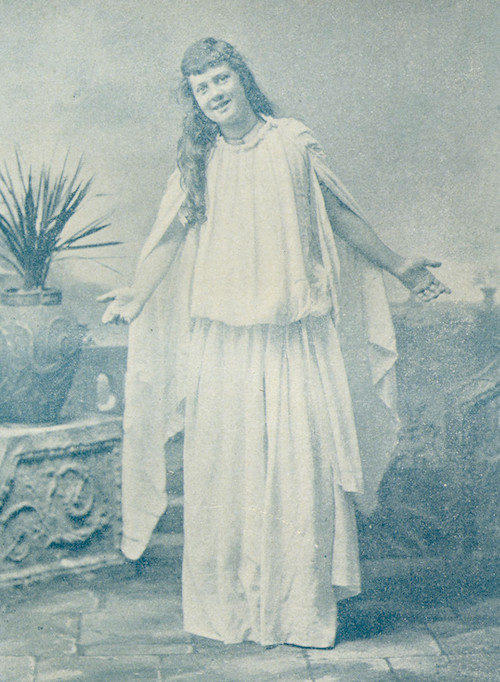
“To-morrow’ll be the happiest day of all the glad New Year, For I’m to be Queen of the May, mother, I’m to be Queen of the May!”
“Swore Off.”
This piece won the class medal at the Ninth Annual Commencement of the Mt. Vernon Institute of Elocution and Languages, 1892.
Sit on chair at right side of a common table.
Boys, take another![1409] To-night we’ll be gay, For to-morrow, you know, is the New Year’s Day, And I promised my Bessie to-night should be The very last night I stayed on this spree. I’ve been a good fellow—spent lots of “tin” In sampling and drinking both whiskey and gin; And yet I remember,[1410] a long while ago, When the sight of a drunken man frightened me so. I ran for a square.[1411] I remember quite well When I even detested[1412] the very smell Of the accursed stuff. I sometimes think ’Twas the devil[1413] who tempted me to take the first drink. But why look back with remorse or regret? I mustn’t remember[1414]—I want to forget. [1415]Landlord, the bottle![1416] That’s pretty good stuff; Though I reckon I’ve seen and tasted enough. It’s a year since I’ve drawn a sober breath. The doctors all say I will go to my death If I do not leave off—you may laugh and scoff; But somehow or other, between me and you, I believe what the doctors tell me is true, For at night when I try to be closing my eyes, Such horrible visions[1417] before me arise That I cannot rest, and I walk[1418] the floor And long for the sleep that is mine no more. To-night it winds up. Laugh on,[1419] but you’ll see[1420] That this is the very last night of my spree. I’ve promised my Bessie, and further, I swore— She’s got the paper—to taste it no more After to-night. When I told her I’d sign, The look on her face made me think of the time When she stood at the altar,[1421] a beautiful bride, And I looked on my choice with a good deal of pride. Ah! many’s the time since I’ve been on this spree, I’ve seen this good woman get down[1422] on her knee And ask God, in His goodness, have mercy on me. To-night it ends up. Do you hear[1423] what I say?— I’m a man[1424] once again from the New Year’s Day. Take one with you? Why, I certainly will—[1425] To-night is my last, and I’ll be drinking my fill. “Good luck and good health!”—[1426] strange wishes to make O’er each glass of whiskey and gin that we take. Good luck! Well, now, fellows, be still,[1427] and we’ll see The good luck I’ve had since I started this spree. What with losing the job where I first learned my trade— I’ve had twenty since, and I’m much afraid The reason for losing them all is this glass.[1428] The story of shame and disgrace let us pass;[1429] I’ll sum up the whole. You all know[1430] it’s true I could own a nice home—now the rent’s overdue, Yet, during this time—it is true,[1431] what I say— I wished myself luck at least ten times a day, And as for good health! Now, do you think it right,[1432] When you know it’s destroying your appetite, To call it good health? Why, I’ve not tasted food For days at a time. Do you call my health good? One with the landlord?[1433] To be sure, ev’ry time— His till has held many a dollar of mine. Come! set up the poison! To-night is the last— Then I’ll look upon rum as a thing of the past[1434] Well, here’s to you,[1435] land— Ah! you’d play me a trick![1436] Take off[1437] that red wig with the horns very quick, Or I’ll put down this glass and be leaving the place. Boys, look[1438] at the way he’s distorting his face! Look![1439] look![1440] it’s the devil—a good masquerade[1441] For those who engage in the rum-selling trade. Go on[1442] with the game!—you’ll find I’m not afraid— Ha, ha, ha, ha! at your by-play I scoff— Whose blood-hound is this?[1443] Keep him off![1444] Keep him off![1445] Get out,[1446] you big brute! Don’t you fellows see[1447] He’s wicked? Will bite? That he’s snapping at me? My God![1448] see his fangs! all reeking with gore— [1449]Help! landlord, help! fell[1450] this brute to the floor. Ah! he’s gone! Take another![1451] my nerves are unstrung, Quick! Give me the bottle[1452] ere the midnight is rung, [1453]Ah! whiskey’s[1454] the stuff that will make me feel gay, And I’ve said I’ve sworn off from the New Year’s Day— Quick! give me the bottle! Curse you![1455] don’t refuse, Or I’ll pull you apart,[1456] if my temper I lose— Now give me a glass! Come, boys, take a drink![1457] It’s the last you’ll be taking with me, so I think— O God! what is this?[1458] See, boys—it’s a snake! Look! the bottle is full—hear the hissing they make— They crawl[1459] from its neck. For God’s sake, a drink! Thanks! Boys, here’s luck![1460] (Midnight hour strikes.) ’Tis the New Year, I think. My oath[1461]—yes my oath! Is this sound I hear[1462] The hour of midnight? Aye, it is the New Year. (Throws glass from him.) Begone from my sight, thou demon of hell! Boys, here they come![1463] there they go! Ah, the spell Is o’er. I’m afire![1464] See! It shoots[1465] from my eyes! I am burning within![1466] There[1467] the red demon lies. What angel is this?[1468] ’Tis my Bessie to see If my word has been kept about ending this spree— No, no, it is black![1469] ’Tis the devil’s device— He’s claiming a soul as a sacrifice. Great God! Is this death?[1470] The blood-hound again! Take him off![1471] Take him off![1472] Do I call you in vain? He clutches my throat[1473]—he chokes out my life![1474] Won’t some of you fellows go after my wife? Must I die here alone? See! they beckon to me. Oh! if Bessie, my heart-broken wife, could but see That I kept my word. Won’t—you—kindly—say I “swore off” for good on the New Year’s Day.[1475] —J. N. Fort.
Gestures.
The Unknown Speaker.
It is the Fourth Day of July, 1776.
In the old State-house[1476] in the city of Philadelphia are gathered half a hundred men to strike[1477] from their limbs the shackles of British despotism. There is silence[1478] in the hall—every face is turned toward the door[1479] where the committee of three, who have been out all night penning a parchment, are soon to enter. The door opens, the committee appears.[1480] That tall man[1481] with the sharp features, the bold brow, and the sand-hued hair, holding the parchment in his hand, is a Virginia farmer, Thomas Jefferson. That stout-built man[1482] with stern look and flashing eye, is a Boston man, one John Adams. And that calm-faced man[1483] with hair drooping in thick curls [1484] is the Philadelphia printer, Benjamin Franklin.
The three advance to the table.[1485]
The parchment is laid[1486] there.
Shall it be signed or not? A fierce debate ensues. Jefferson[1487] speaks a few bold words. Adams[1488] pours out his whole soul. The deep-toned voice of Lee[1489] is heard, swelling[1490] in syllables of thunder-like music. But still there is doubt, and one pale-faced man whispers something about “axes,[1491] scaffolds, and gibbet.”
“Gibbet?” echoes a fierce, bold voice through the hall. “Gibbet? They may stretch our necks on all[1492] the gibbets in the land; they may turn every rock[1493] into a scaffold; every tree[1494] into a gallows; every home[1495] into a grave, and yet the words of that parchment[1496] there can never[1497] die! They may pour our blood[1498] on a thousand scaffolds, and yet from every drop that dyes the axe a new champion of freedom will spring[1499] into birth. The British King may blot out[1500] the stars of God from the sky, but he cannot blot out His words written on that parchment[1501] there. The works[1502] of God may perish; His words, never![1503]
“The words of this declaration will live in the world long after our bones are dust. To the mechanic[1504] in his workshop they will speak hope; to the slave[1505] in the mines, freedom; but to the coward kings,[1506] these words will speak in tones of warning[1507] they cannot choose but hear.
“They will be terrible as the flaming syllables on Belshazzar’s wall![1508] They will speak in language startling as the trump of the Archangel[1509] saying: ‘You have trampled on mankind long enough! At last the voice of human woe has pierced[1510] the ear of God, and called His judgment down! You have waded[1511] to thrones through rivers of blood; you have trampled[1512] on the necks of millions of fellow-beings. Now kings, now purple hangmen, for you[1513] come the days of axes and gibbets and scaffolds.’
“Such is the message of that declaration to mankind,[1514] to the kings of the earth. And shall we falter now? And shall we start back[1515] appalled when our feet touch the very threshold[1516] of Freedom?
“Sign[1517] that parchment! Sign,[1518] if the next moment the gibbet’s rope is about your neck! Sign,[1519] if the next minute this hall rings[1520] with the clash of the falling axes! Sign[1521] by all your hopes in life or death, as men, as husbands,[1522] as fathers,[1523] brothers,[1524] sign your names to the parchment, or be accursed[1525] forever!
“Sign, and not only for yourselves, but for all ages,[1526] for that parchment will be the text-book of freedom,[1527] the Bible[1528] of the rights of men forever. Nay,[1529] do not start and whisper with surprise! It is truth,[1530] your own hearts witness it; God[1531] proclaims it. Look at this strange history of a band[1532] of exiles and outcasts, suddenly transformed into a people,[1533] a handful of[1534] men, weak in arms, but mighty[1535] in God-like faith; nay, look at your recent achievements, your Bunker Hill,[1536] [1537] and then tell me, if you can,[1538] that God has not given America to be free!
“It is not given to our poor human intellect to climb to the skies,[1539] and to pierce[1540] the councils of the Almighty One. But methinks I stand among the awful clouds[1541] which veil[1542] the brightness of Jehovah’s throne.
“Methinks I see the recording angel[1543] come trembling up to that throne to speak his dread message. ‘Father,[1544] the old world is baptized[1545] in blood. Father, look with one glance of Thine eternal eye, and behold evermore that terrible[1546] sight, man trodden beneath the oppressor’s feet, nations lost in blood, murder and superstition walking hand in hand over the graves of the victims, and not a single voice[1547] to whisper hope to man!’
“He stands there,[1548] the angel, trembling with the record of human guilt. But hark![1549] The voice of Jehovah speaks from out the awful cloud: ‘Let there be light again! Tell my people, the poor and oppressed, to go out from the old world, from oppression and blood, and build my altar in the new!’
“As I live, my friends, I believe that to be His voice! Yes, were my soul trembling on the verge[1550] of eternity, were this hand[1551] freezing in death, were this voice choking[1552] in the last struggle, I would still, with the last impulse of that soul, with the last wave[1553] of that hand, with the last gasp of that voice, implore[1554] you to remember this truth—God has given America to be free![1555] Yes, as I sank[1556] into the gloomy shadows of the grave, with my last faint whisper I would beg you to sign[1557] that [1558] in intense expectation as they look up to you for the awful words, ‘You are free!’”[1559]
The unknown speaker fell exhausted in his seat, but the work was done. A wild murmur runs[1560] through the hall. “Sign!” There is no doubt now. Look how they rush forward![1561] Stout-hearted John Hancock has scarcely time to sign his bold name before the pen is grasped by another,[1562] another,[1563] and another.[1564] Look how the names blaze[1565] on the parchment! Adams and Lee, Jefferson and Carroll, Franklin and Sherman!
And now the parchment is signed.
Now, old man[1566] in the steeple, now bare your arm and let the bell speak![1567] Hark[1568] to the music of that bell! Is there not a poetry in that sound, a poetry more sublime than that of Shakespeare[1569] and Milton? Is there not a music in that sound that reminds you of those sublime tones which broke from angel lips when the news of the child Jesus burst on the hill-tops of Bethlehem?[1570] For the tones of that bell now come pealing, pealing, pealing.[1571] “Independence now[1572] and Independence forever.”[1573]
Gestures.
JUVENILES.
The Boy and the Boot.
“Bother!” was all that John Clatterby said; His breath came quick and his cheeks were red, He flourished his elbows and looked absurd, While, over and over, his “Bother!” I heard. Harder and harder he tugged and worked; Vainly and savagely still he jerked; The boot, half on, would dawdle and flap, “Bother!” and then he burst the strap. Redder than ever his hot cheek flamed; Louder than ever he fumed and blamed; He wiggled his heel and he tugged at the leather Till his knees and his chin came bumping together. “My boy,” said I, in a voice like a flute, “Why not first try your troublesome boot On the other foot?” “I’m a goose!” laughed John, As he stood, in a flash, with his two boots on. In half the affairs of this every-day life (As that same day I said to my wife), Our troubles come from trying to put The left-hand boot on the right-hand foot.
Farewell Old Shoe.
To be addressed to an old shoe which the speaker holds in his hand.
Adieu! adieu! My poor old shoe! What comfort I have had with you! My sole companion day by day, You’ve cheered and soothed my weary way! A fond adieu, My dear old shoe! Most faithful friend I’ve found in you! Alike, midst fair or wintry weather, We’ve shared life’s pilgrimage together. Now rent and torn, And sadly worn, Of every trace of beauty shorn. ’Tis with an honest, heart-felt sigh I feel that I must throw you by. A sad adieu! Poor worn-out shoe! What sorry plights you’ve borne me through! And, oh! it tears my tender heart To think that you and I must part. Once more, adieu! My faithful shoe! I ne’er shall find the likes o’ you, And I will bless your memory For all the good you’ve been to me. No other boot Can ever suit As you have done my crippled feet! No other shoe can ever be The tried, true friend you’ve been to me. A last adieu, Dear cast-off shoe! Whatever may become of you, Accept, dear, easiest, best of shoes, This farewell offering of my muse.
Tale of a Dog and a Bee.
Great big dog, Head upon his toes; Tiny little bee Settles on his nose. Great big dog Thinks it is a fly, Never says a word, Winks mighty sly. Tiny little bee Tickles doggie’s nose— Thinks like as not ’Tis a blooming rose. Dog smiles a smile, Winks his other eye, Chuckles to himself How he’ll catch a fly. Then he makes a snap, Mighty quick and spry, Gets the little bug, But doesn’t catch the fly. Tiny little bee, Alive and looking well, Great big dog, Mostly gone to swell. MORAL. Dear friends and brothers all, Don’t be too fast and free, And when you catch a fly Be sure it ain’t a bee.
Little Foxes.
Among my tender vines I spy, A little fox named “By-and-By.” Then set upon him, quick, I say, The swift young hunter “Right Away.” Around each tender vine I plant, I find the little fox “I Can’t!” Then fast as ever hunter ran, Chase him with brave and bold “I Can.” “No Use in Trying!” lags and whines, This fox among my tender vines. Then drive him low and drive him high, With this good hunter, named “I’ll Try.” Among the vines in my small lot, Creeps in the fox “Oh, I Forgot.” Then hunt him out and to his den, With “I-Will-Not-Forget-Again.” A little fox is hidden there Among my vines, named “I Don’t Care.” Then let “I’m Sorry,” hunter true, Chase him far from vines and you.
For a Little Girl.
I love my papa, that I do, And mamma says she loves him too; And both of them love me, I know, A thousand ways their love they show. But papa says he fears some day With some mean scamp I’ll run away.
An Oration for a Boy.
I rise to make this short oration, Without the least equivocation, Or any false exaggeration, And hope to win your approbation— If not your warmest admiration. I want to make a revelation, Just for the sake of exultation, Without a long enumeration, In reference to education; For, since our school association We feel a high appreciation Of teachers’ kind administration. Whate’er may be our destination, We’ll have the pleasing consolation Of living in high estimation With all our teachers, in relation With every day’s assimilation. I hope you’ll have the penetration To see this is my own creation, And quite a novel adaptation. Please pardon the conglomeration, For I’m scared like all the nation, Therefore accept my resignation.
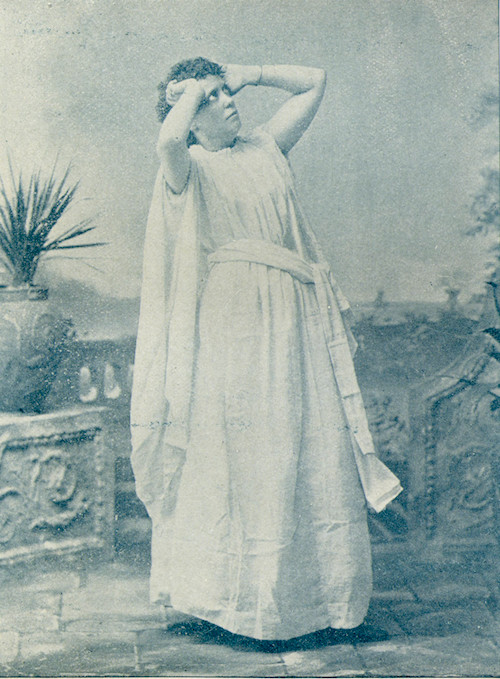
“Blessed mother, save my brain!”
“They Say.”
The subject of my speech is one We hear of every day— ’Tis simply all about the fear We have of what “they say!” How happy all of us could be, If, as we go our way, We did not stop to think and care So much for what “they say.” We never dress to go outside, To church, to ball, or play, But everything we wear or do Is ruled by what “they say.” Half of the struggles we each make To keep up a display, Might be avoided, were it not For dread of what “they say.” The half of those who leave their homes For Long Branch and Cape May Would never go, if it were not For fear of what “they say.” One reason why I’m now so scared (Pardon the weakness, pray!) Is that I’m thinking all the while, “Of me what will ‘they say?’” But so ’twill be, I judge, as long As on the earth folks stay— There’ll always be, with wise and fools, That dread of what “they say.”
Nobody’s Dog.
Only a dirty black and white dog! You can see him any day, Trotting meekly from street to street. He almost seems to say, As he looks in your face with wistful eye, “I don’t mean to be in your way.” His tail hangs drooping between his legs; His body is thin and spare; How he envies the sleek and well-fed dogs That thrive on their masters’ care! And he wonders what they must think of him, And grieves at his own hard fare. Sometimes he sees a friendly face— A face that he seems to know; And he thinks he may be the master That he lost so long ago; And even dares to follow him home, For he loved his master so. Poor Jack! He’s only mistaken again, And stoned and driven back; But he’s used to disappointments now, And takes up his beaten track; Nobody’s dog, for nobody cares For poor, unfortunate Jack.
Johnny’s Soliloquy.
It seems to be father’s greatest joy To tell what he did when he was a boy. Nothing very wonderful, so far’s I can see; And it seems pretty rough on a fellow like me, When I’ve worked like a man all the long summer day— And boys can get tired, I don’t care what they say— To have father declare, in his evening chat, “When I was a boy I did better than that. “I was bound out when I was a boy, Had never a play-day, a book, or a toy. I earned my first suit when I was of age, By working at odd hours for old Deacon Gage; I often went barefoot, having seldom a hat, And as for a coat, I was too poor for that. Of course I had extra clothes for cold weather, But the clothes were not broadcloth, nor the boots patent leather.” Then he talks of this and that wonderful feat, With little to wear and little to eat; How he never went either to church or to school, Just picked up his learning without guide or rule. And says: “John, to be sure, is easy to learn, And always stands first at the close of the term. But if I’d his chance at books in my day, I don’t think you’d have found me always at play.” Now I am just as willing as can be to work, Nobody can call me a bit of a shirk; I don’t ask for fine clothes or frequent play-days, For I know father’s money has plenty of ways: But when I’ve done as well as I can, They might treat me as though I’d some day be a man. I’m so tired of the song father always has sung: “I did better than that when I was young.”
The Wind in a Frolic.
The wind one morning sprang up from sleep, Saying, “Now for a frolic! now for a leap! Now for a mad-cap galloping chase! I’ll make a commotion in every place!” So it swept with a bustle right through a great town, Creaking the signs, and scattering down Shutters; and whisking, with merciless squalls, Old women’s bonnets and gingerbread stalls; There never was heard a much lustier shout, As the apples and oranges tumbled about; And the urchins, that stand with their thievish eyes Forever on watch, ran off each with a prize. Then away to the field it went blustering and humming, And the cattle all wondered whatever was coming; It plucked by the tails the grave matronly cows, And tossed the colts’ manes all over their brows, Till, offended at such a familiar salute, They all turned their backs and stood sulkily mute. So on it went, capering, and playing its pranks, Whistling with reeds on the broad river’s banks, Puffing the birds as they sat on the spray, O’er the traveler’s grave on the king’s highway. It was not too nice to hustle the bags Of the beggar, and flutter his dirty rags; ’Twas so bold that it feared not to play its joke With the doctor’s wig or the gentleman’s cloak. Through the forest it roared, and cried, gayly, “Now, You sturdy old oaks, I’ll make you bow!” And it made them bow without more ado, Or cracked their great branches through and through. Then it rushed like a monster, on cottage and farm, Striking their dwellers with sudden alarm, So they ran out like bees when threatened with harm. There were dames with their kerchiefs tied over their caps, To see if their poultry were free from mishaps; The turkeys they gobbled, the geese screamed aloud, And the hens crept to roost in a terrified crowd; There was rearing of ladders, and logs laying on, Where the thatch from the roof threatened soon to be gone. But the wind it swept on, and met in a lane With a school-boy, who panted and struggled in vain: For it tossed him and twirled him, then passed, and he stood With his hat in a pool, and his shoe in the mud. Then away went the wind in its holiday glee! And now it was far on the billowy sea; And the lordly ships felt its staggering blow, And the little boats darted to and fro:— But lo! night came, and it sank to rest On the sea-bird’s rock in the gleaming west, Laughing to think, in its fearful fun, How little of mischief it had done! —William Howitt.
The Speckled Hen.
Dear Brother Ben, I take my pen To tell you where, and how, and when, I found the nest of our speckled hen. She never would lay in a sensible way, Like other hens, in the barn on the hay; But here and there and everywhere, On the stable floor, and the wood-house stair, And once, on the ground her eggs I found. But yesterday I ran away, With mother’s leave, in the barn to play. The sun shone bright on the seedy floor, And the doves so white were a pretty sight As they walked in and out of the open door, With their little red feet and feathers neat. Cooing and cooing more and more. Well, I went out to look about On the platform wide, where, side by side, I could see the pig-pens in their pride; And beyond them both, on a narrow shelf, I saw the speckled hen hide herself Behind a pile of hoes and rakes And pieces of boards and broken stakes. “Ah, ha! old hen, I have found you now, But to reach your nest I don’t know how, Unless I could climb or creep or crawl Along the edge of the pig-pen wall.” And while I stood in a thoughtful mood, The speckled hen cackled as loud as she could, And flew away, as much as to say, “For once my treasure is out of your way.” I didn’t wait a moment then; I couldn’t be conquered by that old hen! But along the edge of the slippery ledge I carefully crept, for the great pigs slept, And I dared not even look to see If they were thinking of eating me. But all at once, oh! what a dunce! I dropped my basket into the pen, The one you gave me, Brother Ben; There were two eggs in it, by the way, That I found in the manger under the hay, Then the pigs got up and ran about With a noise between a grunt and a shout, And when I saw them rooting, rooting, Of course I slipped and lost my footing, And tripped, and jumped, and finally fell Right down among the pigs, pell-mell. For once in my life I was afraid, For the door that led out into the shed Was fastened tight with an iron hook, And father was down in the fields by the brook, Hoeing and weeding his rows of corn, And here was his Dolly, so scared and forlorn. But I called him, and called him, as loud as I could, I knew he would hear me—he must and he should— “O father! O father! (Get out, you old pig.) O father! oh! oh!” for their mouths were so big. Then I waited a minute and called him again, “O father! O father! I am in the pig-pen!” And father did hear, and he threw down his hoe, And scampered as fast as a father could go. The pigs had pushed me close to the wall, And munched my basket, eggs and all, And chewed my sun-bonnet into a ball. And one had rubbed his muddy nose All over my apron, clean and white; And they sniffed at me, and stepped on my toes, But hadn’t taken the smallest bite, When father opened the door at last, And oh! in his arms he held me fast. —E. W. Denison.
The New Baby.
Muzzer’s bought a baby— Ittle bits of zing; Zink I mos’ could put him Froo my rubber ring. Ain’t he awful ugly? Ain’t he awful pink? Just come down from Heaven!— Dat’s a fib, I zink. Doctor told annuzer Great big awful lie; Nose ain’t out of joyent— Dat ain’t why I cry. Zink I ought to love him? No, I won’t—so zere! Nassy, crying baby— Ain’t got any hair. Send me off wiz Biddy Every single day; “Be a good boy, Charley— Run away and play.” Dot all my nice kisses— Dot my place in bed; Mean to take my drumstick And hit him on ze head.
Katie’s Wants.
Me want Christmas tree, Yes, me do; Want an orange on it, Lots of candy, too. Want some new dishes, Want a red pail, Want a rocking-horse With a very long tail. Want a little watch That says, “Tick, tick!” Want a newer dolly, ’Cause Victoria’s sick. Want so many things Don’t know what to do; Want a little sister, Little brother, too. Won’t you buy ’em, mamma? Tell me why you won’t? Want to go to bed? No, me don’t. —Eva M. Tappan.
Queer Little Stitches.
Oh! queer little stitches, You surely are witches, To bother me so! I’m trying to plant you: Do stay where I want you, All straight in a row. Now keep close together! I never know whether You’ll do as I say. Why can’t you be smaller? You really grow taller, Try hard as I may! There! now my thread’s knotted, My finger is dotted With sharp needle-pricks! I mean to stop trying; I cannot help crying; Oh! dear, what a fix! Yes, yes, little stitches, I know you are witches— I’m sure of it now— Because you don’t bother Grown people like mother When they try to sew. You love to bewilder Us poor little “childer” (As Bridget would say), By jumping and dancing, And leaping and prancing, And losing your way. Hear the bees in the clover! Sewing “over and over” They don’t understand. I wish I was out there And playing about there In that great heap of sand! The afternoon’s going; I must do my sewing Before I can play. Now behave, little stitches, Like good-natured witches, The rest of the day. I’d almost forgotten About waxing my cotton, As good sewers do; And—oh! what a memory!— Here is my emery To help coax it through. I’m so nicely provided I’ve really decided To finish the things. There’s nothing like trying; My needle is flying As if it had wings. There, good-bye, little stitches! You obstinate witches, You’re punished, you know. You’ve been very ugly, And now you sit snugly Along in a row.
The Nose Out of Joint.
Oh! a comical thing is a nose out of joint! There is a wee chap Who met this mishap; He looked very glum, And grew almost dumb; Then he stood in a corner to pout, No doubt, Decidedly hurt and put out. Oh! the innocent cause of a nose out of joint! He tried to appear In excellent cheer. In one eye a smile, A tear all the while In the other, led one to believe, And grieve, That clearly he tried to deceive! Oh! the innocent cause of the nose out of joint! Ten pink little toes, A wee, funny nose, And eyes, bright and new, Of robin’s egg blue, And up-stairs in a soft cradle-nest, At rest, With tiniest hands on its breast! Oh! the wonderful cure of a nose out of joint! A mother’s fond call, A gentle footfall; A sweet word of joy, A kiss for her boy, And a shy little brotherly peep, And deep Spring, love for the baby asleep. —George Cooper.
Valedictory.
It now, kind friends, devolves on me To speak our Val-e-dic-to-ry; You’ve seen our Exhibition through, We’ve tried to please each one of you— And if we’ve failed in any part, Lay it to head, and not to heart; For we have striven, night and day, To study well both speech and play. We hope, within another year, Again before you to appear. But e’er we part—before you go— We wish you one and all to know We thank you for your presence here— Such kindness does our bosoms cheer, And causes every boy to feel He ought to study with more zeal; While all the girls it will inspire With an ambition to rise higher. We feel much more than words can tell— Accept our heart-felt thanks—farewell!
Presentation Speech.
Dear Teacher:
I have been requested by the young ladies of this school (or institution) to offer you a slight token of our affection and regard. I cannot tell you how delighted I am to be the means of conveying to you the expression of our united love. What we offer you is a poor symbol of our feelings, but we know you will receive it kindly, as a simple indication of the attachment which each one of us cherishes for you in her heart of hearts. You have made our lessons pleasant to us—so pleasant that it would be ungrateful to call them tasks. We know that we have often tried your temper and forbearance, but you have dealt gently with us in our waywardness, teaching us, by example as well as precept, the advantages of magnanimity and self-control. We will never forget you. We shall look back to this school (or institution) in after life, not as a place of penance, but as a scene of mental enjoyment,
Little Millie’s Declamation.
See my pretty ruffled dress! See my tienty locket! ’Spects I’m most a lady now, ’Cause I got a pocket. Those down here are my blue shoes, That I walk my feet in; ’Cause it wouldn’t do to wear Copper toes to meetin’. See my pictured hankerfust Sunday days I has it! I can blow a noise in church Most like papa does it. Papa’s hitchin’ Jack and Gray, And they keep a prancin’; Horses don’t wear Sunday clothes— They don’t know they’re dancin’. Grandpa used to go with us— Now he’s gone to heaven; Guess he’s at the angel church, Up where God is livin’. I don’t take no cakes along— Never thing of eatin’; Don’t you want a nice clean kiss ’Fore we go to meetin’.
The Only Child.
Which is my nicest plaything? I really cannot tell; I have a china dolly, I have a silver bell. I have a string of beads; My mother often tells me I have all a baby needs. But if I had a brother As big as cousin Ben, Or if I had a sister Like little Lilly Fen, We should have such times together, ’Twould drive the neighbors wild— Oh! it’s very lonesome To be an only child!
Lulu’s Complaint.
I’se a poor ’ittle sorrowful baby, For B’idget is ’way down stairs: My titten has scatched my fin’er, And Dolly won’t say her p’ayers. I hain’t seen my bootiful mamma Since ever so long ado; An’ I ain’t her tunninest baby No londer, for B’idget says so. Mamma dot anoder new baby, Dod dived it—He did—yes’erday; An’ it kies, it kies—oh! so defful! I wis’ He would take it away. I don’t want no “sweet ’ittle sister;” I want my dood mamma, I do; I want her to tiss me and tiss me, An’ tall me her p’ecious Lulu. I dess my dear papa will bin’ me A ’ittle dood titten some day; Here’s nurse wid my mamma’s new baby; I wis’ she would tate it away. Oh! oh! what tunnin’ red fin’ers! It sees me ’ite out of its eyes; I dess we will teep it and dive it Some can’y whenever it kies. I dess I will dive it my dolly To play wid ’mos’ every day; An’ I dess, I dess—Say, B’idget, Ask Dod not to tate it away.
Little Tommie’s First Smoke.
I’ve been sick.
Mamma said ’mokin’ was a nasty, dirty, disgraceful habit, and bad for the window curtains.
Papa said it wasn’t. He said all wise men ’moked, and that it was good for rheumatism, and that he didn’t care for the window curtains, not a—that thing what busts and drowns people; I forgot its name. And he said women didn’t know much anyway, and that they couldn’t reason like men.
So next day papa wasn’t nice a bit—that day I frew over the accawarium, and papa ’panked me—and I felt as if I had the rheumatism ever’ time I went to sit down, and so I just got papa’s pipe and loaded it and ’moked it, to cure rheumatism where papa ’panked me.
And they put mustard plaster on my tummick till they most burned a hole in it, I guess.
I fink they fought I was going to die.
I fought so too.
Mamma said I was goin’ to be a little cherub, but I fought I was goin’ to be awful sick. Nurse said I was goin’ to be a cherub, too—then she went to put a nuzzar mustard plaster on. I didn’t want her to, and she called me somefing else. I guess that was ’cause I frew the mustard plaster in her face.
I don’t want to be a cherub anyway; I’d rather be little Tommie for a while yet.
But I wont ’moke any more.
I guess mamma was right. Maybe I’m sumfin’ like a window curtain. ’Mokin’ isn’t good for me.
The Elf-Child.
Little Orphant Annie’s come to our house to stay, An’ wash the cups an’ saucers up, and brush the crumbs away, An’ shoo the chickens off the porch, an’ dust the hearth, an’ sweep, An’ make the fire, an’ bake the bread, an’ earn her board and keep; An’ all us other children, when the supper things is done, We set around the kitchen fire an’ has the mostest fun A-list’nin’ to the witch tales ’at Annie tells about, An’ the gobble-uns ’at gits you Ef you Don’t Watch Out! Once they was a little boy wouldn’t say his pray’rs— An’ when he went to bed at night, away up-stairs, His mammy heard him holler, an’ his daddy heard him bawl, An’ when they turn the kivvers down he wasn’t there at all! An’ they seeked him in the rafter-room, an’ cubby-hole, an’ press, An’ seeked him up the chimbly-flue, an’ everywheres, I guess, But all they ever found was this—his pants an’ round-about— An’ the gobble-uns ’ll git you Ef you Don’t Watch Out! An’ one time a little girl ’ud allus laugh an’ grin, An’ make fun of ever’ one an’ all her blood an’ kin. An’ onct, when they was “company,” an’ old folks was there, She mocked ’em, an’ shocked ’em, an’ said she didn’t care! An’ jist as she kicked her heels an’ turn’t to run an’ hide, They was two great Big Black Things a-standin’ by her side, An’ they snatched her through the ceilin’, ’fore she knowed what she’s about! An’ the gobble-uns ’ll git you Ef you Don’t Watch Out! An’ little Orphant Annie says, when the blaze is blue, An’ the lampwick sputters, an’ the wind goes Woo-oo! An’ you hear the crickets quit, an’ the moon is gray, An’ the lightnin’-bugs in dew is all squenched away— You better mind your parents and yer teachers fond an’ dear, An’ cherish them ’at loves you, and dry the orphant’s tear, An’ he’p the po’ an’ needy ones ’at clusters all about, Er the gobble-uns ’ll git you Ef you Don’t Watch Out!
CONTENTS.
DRAMATIC.
PAGE
Ballad of Breakneck, The, 134
Ben Hassan’s Dream, 234
Ben-Hur’s Chariot Race, 301
Corsican, The, 277
Dream of Aldarin, The, 368
Dream of Eugene Aram, The, 337
Dying to Win, 10
Felon’s Wife, The, 127
Fra Giacomo, 271
Jingles, 158
Lost in the Mountains, 195
Mad, 358
Nell, 292
Nydia, the Blind Girl of Pompeii, 333
Old Actor’s Story, The, 227
Sir Rupert’s Wife, 22
Spanish Mother, The, 59
Swore Off, 376
Uncle Ned’s Tale, 254
Woman’s Vengeance, A, 363
PATHETIC.
Back to Griggsby’s, 154
Crazy Nell, 21
Dead Letter, The, 4
Death of Uncle Tom, The, 371
Dog Story, A, 122
Dolores, 308
Dukite Snake, The, 354
Enguerrande’s Child, 209
Ivy-Clad Ruin, 265
Mary, Queen of Scots, 73
Moon, The, 125
New Mother, A, 166
Not in the Ranks, 225
Old Spinster, The, 156
One Day Solitary, 346
Roderick Lee, 51
Suicide, The, 126
Tommy’s Death-Bed, 82
Waiting for the Mail, 300
Wayward Life, A, 140
Why She Didn’t Stay in the Poor-House, 144
Yes, I’m Guilty, 266
HUMOROUS.
Book-Agent Beats the Bandit, The, 223
Charlie’s Story, 237
Chemist to His Love, The, 138
Engineer’s Ride on a Piano, The, 64
Experience with a Refractory Cow, 70
Going to Market, 85
Holding a Baby, 57
How “Ruby” Played, 327
Humors of Elocution, 41
I’m Getting Too Big to Kiss, 299
Lecture by One of the Sex, 206
Little Torment, The, 142
Meeting at Wendletown, The, 178
Merry Mike, 220
Pa, 8
Reason Why, The, 43
Ruling Passion, The, 297
Studying for the Contest, 19
Thora, 317
Village Choir, The, 222
Wanted, a Wife, 153
Yankee Still Ahead, The, 79
PATRIOTIC.
Gallant Fifty-first, The, 3
Last Salute, The, 17
Proud Flag of Freedom, The, 194
Soldier’s Offering, A, 296
Unknown Speaker, The, 380
Valley Forge, 325
World’s Hero, The, 66
DIALOGUES AND DRAMAS.
All Wrong, 283
Civilization, 30
Crowning of the Sunday-School Angel, 88
Dorothy Clyde, 102
Getting Ready, 32
Meg Merrilies, 350
Merry Sunflower, 86
Months, The, 238
Petruchio’s Widow, 181
Scene from “Merchant of Venice,” 313
JUVENILES.
Boy and The Boot, The, 387
Elf-Child, The, 411
Farewell, Old Shoe, 388
For a Little Girl, 391
Johnny’s Soliloquy, 394
Katie’s Wants, 401
Little Foxes, 390
Little Millie’s Declamation, 407
Little Tommie’s First Smoke, 410
Lulu’s Complaint, 409
New Baby, The, 400
Nobody’s Dog, 393
Nose Out of Joint, The, 404
Only Child, The, 408
Oration for a Boy, An, 408
Presentation Speech, 406
Queer Little Stitches, 402
Richard Dingle’s Speech, 175
Speckled Hen, The, 397
Tale of a Dog and a Bee, 389
They Say, 392
Unfinished Prayer, The, 412
Valedictory, 405
Wind in a Frolic, The, 396
MISCELLANEOUS.
Bill, the Engineer, 146
Calls of The Bells, The, 99
Contrasts in Shakespeare, 215
Coquette, The, 67
Echo and the Ferry, 46
Enchanted Shirt, The, 268
Exercise in Pronunciation, 124
Go Fan Yourself, 291
Grain of Truth, A, 276
Hints on Expression, 87
King’s Kiss, The, 214
Legend of the Wissahickon, 161
Little Brown Eyes, 12
Little Christel, 131
Maiden Song, 201
Notation of Gestures, 2
Nothing to Wear, 44
Read This if You Can, 262
Six O’Clock, 236
Stars, The, 143
True Remedy, The, 151
Word Pictures, 176
Transcriber’s Note
This book was written in a period when many words had not become standardized in their spelling. Words may have multiple spelling variations or inconsistent hyphenation in the text. These have been left unchanged unless indicated below. Dialect and misspelled words were not corrected, unless indicated below.
“The Unfinished Prayer,” listed in the Contents on page 412, was not included in the original book.
Illustrations were moved to the nearest break between works. Obvious printing errors, such as backwards, upside down, missing or partially printed letters, were corrected. Apostrophes and diacriticals were adjusted as needed. Final stops missing at the end of sentences and abbreviations were added. Duplicate letters at line endings or page breaks were removed.
Footnotes were renumbered sequentially and were moved to the end of the work to which they pertain. Anchors [1], [305], and [332] were not printed in the original. There are two anchors [456] and [781]. Footnotes resolve to the first of each. Anchor [1151] was added to title of “One Day Solitary” as the footnote applies to whole poem. There are two footnotes numbered [356]; the second is noted [356a], without a link. Duplicate of footnote [646] was deleted.
Links to audio files were added for music. The music files are the music transcriber's interpretation of the printed notation and are placed in the public domain. At the time of this writing, music file links will not work in mobile e-book formats like epub or Kindle/mobi. Users who are reading the e-book in one of these formats can listen to the music or download music files in the HTML version. Lyrics to musical scores are presented as poetry following the illustration of the music.
Spelling corrections:
[whipers] whispers we spoke
[fogotten] forgotten it.
[he] she lingers
[Wherfore] Wherefore should not we
Our brave commander, [Jaques] Jacques
[Elecution] Elocution and Languages -
[Their’s] Theirs not to reason why
[nesttings] nestlings watching them
[They’re] They’ve wrought their fill
[couched] crouched beneath the arch