GEORGE M. VICKERS. (continued 5)
Reading edition
Gestures.
A Soldier’s Offering.
The laurel wreath of glory That decks the soldier’s grave, Is but the finished story, The record of the brave; And he who dared the danger, Who battled well and true, To honor was no stranger, Though garbed in gray or blue Go, strip your choicest bowers, Where blossoms sweet abound, Then scatter free your flowers Upon each moss-grown mound; Though shaded by the North’s tall pine Or South’s palmetto tree, Let sprays that soldiers’ graves entwine, A soldier’s tribute be. —George M. Vickers.
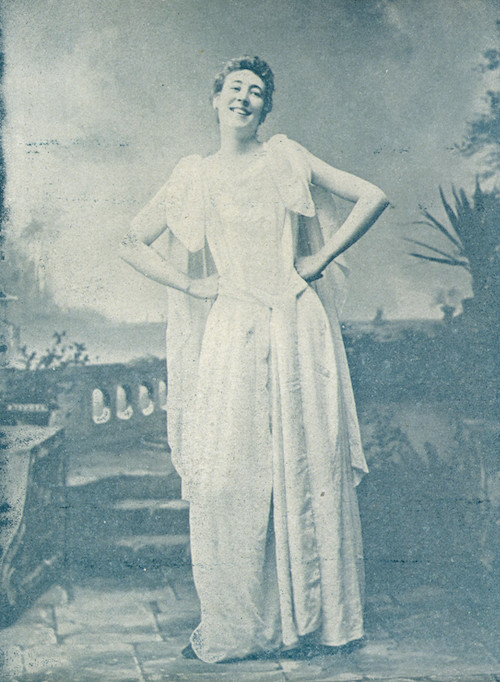
“Ha, ha, ha! well, I believe I do bear a part with a tolerable grace.”
The Ruling Passion.
She had never mailed a letter before, and so she approached the stamp clerk’s window with the same air that she would enter a dry goods store.
“I would like to look at some stamps, please,” she said.
“What denomination do you want?” asked the clerk.
“Denomination!” This was remarked in surprise. She hadn’t supposed that stamps belonged to any church at all.
“Yes,” replied the clerk, who saw no necessity for holding a lengthy palaver over the sale of a stamp, especially when other people were waiting. “Is it for a letter or a newspaper?”
“Oh, I want to send a letter to my Uncle John; he’s just moved to—”
“Then you need a two-cent stamp,” interrupted the clerk, offering her one of that value.
“I hardly like that color,” she observed, holding the brick-tinted stamp up to the light and surveying it critically.
The clerk looked at her in astonishment. In his long experience in the postal business he had never before met a customer who objected to the color of the stamps.
“That is a two-cent stamp, madame. Please stand aside and let the gentleman behind you come up.”
“Haven’t you got them in any other color?” she asked, wholly oblivious to the “gentleman behind.”
The clerk began to act cross.
“I never did like that shade of red,” she added.
“There is only one color,” he replied, curtly.
“That is strange,” she mused. “I’d think you’d keep them in different shades, so that there’d be some choice.”
The clerk said nothing, but he kept getting crosser every
“You are sure you have none in a brighter red, or even in a different color—Nile green, or seal brown, or jubilee blue, for instance?”
“You can put two one-cent stamps on your letter if you like,” said the clerk, who began to see that the customer could not be frowned away from the window.
“Let me see them, please.”
Two blue stamps were solemnly handed to her, and the crowd began to hope that at last she was suited.
“Ah, that will do,” she said, as she took up the one-cent stamps and eyed them as if they were samples of dress goods. “I like that shade better. I’ll take only one, if you please.”
And she handed the other back to the clerk, who took it mechanically, but managed to add:
“If it’s for a letter you’ll need two. These are one-cent stamps and letter postage is two cents per ounce.”
“Oh, I don’t want to put two stamps on my letter,” she said; “I don’t think they will look well.”
“It requires two cents to carry a letter, madame, and you must either put a two-cent stamp on or two ones. It won’t go without. And I must ask you to please hurry, for you are keeping a great many people away from the window.”
“That’s singular. I don’t like the look of two together. You are sure the other doesn’t come in seal brown, or”—
“No!” thundered the clerk, getting very red in the face.
“Then I’ll have to see if I can’t suit myself elsewhere.”
And she departed.
The clerk replaced his despised red and blue stamps, mopped his perspiring brow, and began to make up for lost time.
I’m Getting Too Big to Kiss.
The friends of my childhood with pleasure I greet, Their faces I ever hold dear, In palace or cottage, on meadow or street, Wherever they chance to appear. Then do not misjudge me, and deem me not cold, Nor call me a queen, haughty miss, Oh, no one can budge me, so do not be bold, I’m getting too—too big to kiss. ’Tis hardly a year since the guests of the house, On leaving, would kiss me adieu, The parson, the deacon, old Schnider Von Krouse, Ned Blanc, and the young squire, too. They called me a treasure, a sweet, roguish maid; Now nonsense like that is amiss, Though once ’twas a pleasure, I’m really afraid That somebody’s too big to kiss. Now if you should happen by moonlight to walk, With some one you know very well, Remember ’tis harmless to laugh and to talk, Or sweet little stories to tell. But oh, have a care, girls, and heed me, I pray, For what I would counsel is this— Refuse, though his hair curls, and promptly this say: I’m getting, sir, too big to kiss. Oh, no, no, no, no, sir! Allow me to pass; Oh, no, sir, ’tis more than I dare: That game’s out of fashion (I’m sorry, alas!) You needn’t look cross as a bear. Yet still I’ve an ember of pity right here, I’ll throw you just one kiss like this, But, sir, you’ll remember, now don’t come so near— That really I’m too big to kiss. —George M. Vickers.
Waiting for the Mail.
It is strange I get no letter— I have written twenty-four— And the chances now decidedly are slim; How I wish my luck was better, I am really feeling sore, And my cup of sorrow’s flowing to the brim. Though my sweetheart’s tall and slender, With a dark and roguish eye, And a blushing cheek that shames the blooming rose. One more letter will I send her, Then I’ll write a last good-bye, And so bring my dream of pleasure to a close. If she’s caught another lover, Just to make the moments glide, (Which, without a doubt, she really thinks she ought,) Then, of course, I’ll look it over, And continue to confide— For the best of mortals like a little sport! But suppose this other fellow Should, with sly and skillful art, In the darling girl’s affections fill my place! ’Tis enough to make me bellow,— ’Tis enough to break my heart,— ’Tis enough to make me run and hide my face. When we parted last December, Oh, she vowed she’d share my lot; And to me her silence is a puzzle quite: Though I happen to remember— And ’tis strange that I forgot— That my darling ducky never learned to write! —George M. Vickers.
Ben-Hur’s Chariot Race.
The trumpet sounded short and sharp. The starters, one for each chariot, leaped down, ready to give assistance if any of the fours proved unmanageable. Again the trumpet blew, and simultaneously the gate-keepers threw[765] the stalls open. Forth from each stall, like missiles in a volley from so many great guns, rushed[766] the six contesting fours—the Corinthian’s, Messala’s, the Athenian’s, the Byzantine’s, the Sidonian’s, and Ben-Hur’s—and the vast assemblage rose[767] and, leaping upon the benches, filled[768] the circus with yells and screams.
The competitors were under view from nearly every part[769] of the circus, yet the race was not begun; they had first to make successfully the chalked line, stretched for the purpose of equalizing the start. If it were dashed upon, discomfiture of man and horses might occur; on the other hand, to approach it timidly was to incur the hazard of being thrown behind in the beginning of the race—a certain loss of the great advantage of being next the wall[770] on the inner line of the course.
Each driver looked first for the rope, then for the coveted inner line. With all six aiming at the same point[771] and speeding furiously, a collision seemed inevitable. Quick the eye, steady the hand, unerring the judgment required. The fours neared the rope together. Ben-Hur was on the extreme left[772] of the six. At Messala, who was more than an antagonist to him, he gave one searching look, and saw the soul of the man, cunning, cruel, desperate, in a tension of watchfulness and fierce resolve.
In that brief instant all his former relations with Messala came before him. First, happy childhood, when, loving and beloved, they played together. Then, manhood that brought a change in Messala, and the Roman’s inborn contempt of Jews asserted itself and broke the friendship. Then the bitter day, when, by the accidental falling of a loose tile, the Roman procurator was nearly killed, and he, Ben-Hur, was accused of willfully throwing the missile. One word from Messala would have saved the family from ruin, but the word was not spoken. Nay, more, it was Messala that urged on the Roman authorities and prevented even a fair trial of the case. It was Messala’s influence that had banished[773] him to the galleys for life, that had consigned his mother and sister to an uncertain fate, whose very uncertainty was more torture[774] than their certain death would have been. It was Messala that had stolen his property and with it had bought the silence of the authorities on the cruel deeds; and was it not money that belonged to the House of Hur that Messala was betting with in this very race? Was it human nature[775] to resist an opportunity for vengeance like this? No.[776] At whatever cost[777] he would humble his enemy.
He saw that Messala’s rush would, if there was no collision, and the rope fell, give him the wall. Therefore, he yielded it for the time. Just then the trumpeter blew a signal. The judges dropped[778] the rope. And not an instant too soon, for the hoof of one of Messala’s horses struck it as it fell. The Roman shook out[779] his long lash, loosed the reins, leaned forward, and with a triumphant shout[780] took the wall.
“Jove with us![781] Jove with us!”[781a] yelled the Roman faction, in a frenzy of delight.
“Jove with us!”[782] screamed a young nobleman.
“He wins![783] Jove with us!” answered his associates.
Messala having passed, the Corinthian was the only contestant on the Athenian’s right, and to his side he tried to turn his four; but the wheel of the Byzantine, who was next on the left, struck the tail-piece of his chariot, knocking[784] his feet from under him. There was a crash, a scream of rage and fear, and the unfortunate Athenian fell[785] under the hoofs of his own steeds. Sanballat, a friend of Ben-Hur, turned to a group of Roman noblemen.
“A hundred sestertii on the Jew!”[786] he cried.
“Taken!”[787] answered one of the group.
“Another hundred on the Jew!” shouted Sanballat. Nobody appeared to hear him. The situation below was too absorbing, and they were too busy shouting, “Messala! Messala! Jove with us!”
While the spectators were shivering at the Athenian’s mishap, and the Sidonian, Byzantine, and Corinthian were striving to avoid involvement in the ruin, Ben-Hur drew head to the right,[788] and, with all the speed of his Arabs, darted[789] across the trails of his opponents, and took the course[790] neck and neck with Messala, though on the outside. And now, racing together, side by side, a narrow interval between them, the two neared the second goal. Making the turn here was considered the most telling test of a charioteer. A hush[791] fell over the circus. Then, it would seem, Messala observed Ben-Hur
“Down, Eros![792] up, Mars!”[793] he shouted, whirling his lash. “Down, Eros! up, Mars!” he repeated, and gave the Arab steeds of Ben-Hur a cut, the like of which they had never known.
The blow was seen in every quarter. The silence deepened and the boldest held his breath.[794] The affrighted four sprang forward[795] as with one impulse, and forward leaped[796] the car. The car trembled with a dizzy lurch, but Ben-Hur kept his place and gave the horses free rein, and called to them in a soothing voice, trying to guide them round[797] the dangerous turn, and before the fever of the people began to abate he had back the mastery. Nor that only; on approaching the first goal he was again side by side with Messala, bearing with him the sympathy and admiration of every one[798] not a Roman. Even Messala, with all his boldness, felt it unsafe to trifle further.
On[799] whirled the cars. Three rounds were concluded; still Messala held the inside position; still Ben-Hur moved with him side by side; still the other competitors followed as before. The contest began to have the appearance of a double race, Messala and Ben-Hur in the first, the Corinthian, Sidonian, and Byzantine in the second. In the fifth round the Sidonian succeeded in getting a place outside Ben-Hur, but lost it directly. The sixth round was entered upon without change of relative position. Gradually the speed had been quickened; men and beasts seemed to know alike that the final crisis was near. The interest, which from the beginning
“A hundred sestertii on the Jew!”[800] cried Sanballat to the Romans.
There was no reply.
“A talent, or five talents, or ten;[801] choose ye!”
“I will take thy sestertii,” answered a Roman youth.
“Do not so,” interposed a friend.
“Why?”
“Messala has reached his utmost speed. See him[802] lean over his chariot-rim, the reins loose as flying ribbons, then look at the Jew!”
“By Hercules!” replied the youth, “I see, I see! If the gods help him not, he will be run away with by the Israelite. No; not yet! Look![803] Jove with us! Jove with us!”
If it were true that Messala had gained his utmost speed, he was slowly but certainly beginning to forge ahead. His horses were running with their heads low down; from the balcony their bodies appeared actually to skim the earth; their nostrils showed blood-red in expansion; their eyes seemed straining in their sockets. The good steeds were doing their best! How long could they keep the pace? It was but the commencement of the sixth round. On they dashed! As they neared the second goal, Ben-Hur turned in behind[804] the Roman’s car. The joy of the Messala faction reached its bound. They screamed, and howled, and tossed[805] their colors, and Sanballat filled his tablets with their wagers.
Along the home-stretch—sixth round—Messala leading; next him, pressing close, Ben-Hur. Thus to the first goal, and around it, Messala, fearful of losing his place, hugged the stony wall with perilous clasp; a foot to the left[806] and he had been dashed[807] to pieces; yet when the turn was finished, no man, looking at the wheel-tracks of the two cars, could have said, “Here[808] went Messala, there[809] the Jew.” They left but one trace behind them.
And now all the people drew a long breath, for the beginning of the end was at hand. First, the Sidonian gave the scourge to his four, and they dashed[810] desperately forward, promising for an instant to go to the front. The effort ended in promise. Next, the Byzantine and the Corinthian each made the trial with like result, after which they were practically out of the race. Thereupon, all the factions except the Romans joined hope in Ben-Hur, and openly indulged their feeling.
“Take the wall now!”
“On![813] loose the Arabs! Give them rein and scourge!”
“Let him not have the turn on thee again. Now or never!”[814]
Either he did not hear, or could not do better, for half-way round the course and he was still following; at the second goal, even still no change.
And now, to make the turn, Messala began to draw in[815] his [816] only six hundred feet away, were fame, fortune, promotion, and a triumph[817] ineffably sweetened by hate,[818] all in store for him! That moment Ben-Hur leaned forward over his Arabs and gave them the reins.[819] Out flew[820] the many-folded lash in his hand; over the backs of the startled steeds it writhed[821] and hissed,[822] and hissed[823] and writhed[824] again and again, and, though it fell not, there were both sting and menace in its quick report. Instantly, not one, but the four as one, answered with a leap[825] that landed them alongside the Roman’s car. Messala, on the perilous edge of the goal, heard but dared not look to see what the awakening portended. The thousands on the benches understood it all. They saw the four close outside Messala’s outer wheel, Ben-Hur’s inner wheel behind the other’s car. Then, with a cunning touch[826] of the reins, Ben-Hur caught Messala’s fragile wheel with the iron-shod point of his axle and crushed[827] it. There was a crash loud enough to send a thrill through the circus, and out over[828] the course a spray of shining white and yellow flinders flew. Down on its right side toppled the bed of the Roman’s chariot. There was a rebound, as of the axle hitting the hard earth; another and another; then the car went to pieces, and Messala, entangled in the reins, pitched forward[829] headlong, and lay still, crushed, and bleeding, and crippled for life. Above the noises of the race arose one voice, that of Ben-Hur:
[830]“On, Altair! On, Rigel! What, Antares! dost thou linger
—Gen. Lew Wallace.
Gestures.
Dolores.
Her old boat loaded with oranges, Her baby tied on her breast, Minorcan Dolores bends her oars, Noting each reed[833] on the swift-moving shores; But the way is long and the inlet wide—[834] Can two small hands overcome the tide Sweeping up from the west? Four little walls of conquina stone, Rude thatch of palmetto leaves; There[835] they have nestled, like birds in a tree,[836] From winter, and labor, and hunger free, Taking from earth their small need, but no more; No thought of the morrow,[837] no laying in store. No gathering patient sheaves. Alone in their southern island home, Through the year of summer days, The two live on; and the bountiful beach[838] Clusters its sea-food within his reach; The two love on, and the tropical land And life is a shining haze. Luiz, Dolores, and baby brown, With dreamy, passionate eyes— Far in the past,[839] lured by Saxon wiles, A simple folk came from the Spanish sea-isles, Now, tinged with the blood of the creole quadroon Their children live idly along[840] the lagoon, Under the Florida skies.[841] Luiz, Dolores, and baby brown, Ah! their blooming life of love!— But fever falls, with its withering blight;[842] Dolores keeps watch through the sultry night; In vain[843] her poor herbs, in vain[844] her poor prayers, Her Luiz is mounting the silver-winged stairs That lead up[845] to heaven above. So, her old boat loaded with oranges, Her baby tied on her breast, Dolores rows off to the ancient town,[846] Where the blue-eyed soldiers come marching down From the far cold North;[847] they are men who know— Thus Dolores thinks—how to cure all[848] woe; Nay, their very touch is blest. “Oranges! Oranges!”[849] hear her cry, Through the shaded plaza path; But the Northern soldiers come marching in Through the old Spanish city with stir and din; And silent people[850] stand sullen by, To see the old flag mount[851] again to the sky— The flag they had trampled[852] in wrath. Ah! brown Dolores, will no one hear, And buy thy little store? Now north,[853] now south,[854] on the old sea-wall, But her pitiful tones unheeded fall; Now east,[855] now west,[856] through the angry town, Patient she journeys up and down, Nor misses one surly door. Then, desperate, up[857] to the dreaded ranks She carries her passionate suit; “I have no money,[858] for none would buy; But come,[859] for God’s sake, or he will die! Save him—my Luiz—he is so young,” She pleads in her liquid Minorcan tongue, And proffers[860] her store of fruit. But the Northern soldiers move steadily on,[861] They hear not, nor understand; The last blue rank has passed down the street,[862] She sees but the dust of their marching feet;[863] They have crossed the whole country,[864] by night and by day, And marked with their blood every step of the way, To conquer[865] this Southern land. They are gone—O despair![866] she turns to the church,[867] Half fainting, her fruit wet with tears; “Perhaps de old Saint, who is always dere, May wake up and take dem to pay for a prayer; They are very sweet, as the saint will see, If he would but wake up and listen to me. But he sleeps, so he never hears.” She enters;[868] the church is filled[869] with men, The pallid men of the North; Each dingy old pew[870] is a sick man’s bed, Each battered old bench[871] holds a weary head, The altar candles are swept away,[872] For vials and knives in shining array, And a new saint[873] is stepping forth. He must be a saint, for he comes from the shrine, A saint of a Northern creed, Clad in a uniform, army blue, But surely the saints may wear any hue,[874] Dolores thinks, as he takes her hand, And hears all her story, and understands The cry of her desperate need. An orange he gives to each weary man,[875] To freshen the fevered mouth, Then forth[876] they go down the old sea-wall, And they hear[877] in the dusk the pickets call, And the row-boat is moored on the shadowy shore,[878] The Northern saint can manage an oar, And the boat glides fast[879] to the south. A healing touch and a holy drink, A bright little heavenly knife, And this Northern saint, who prays no prayers, Brings back the soul from the spirit-winged stairs,[880] And once more Minorcan Luiz’s dark eyes, In whose depths the warmth of the tropics lies, Rest calm[881] on the awe-stricken wife. “Oh! dear Nordern saint![882] a shrine will I build, Wild roses I’ll bring from afar,[883] De jasmine, orange flower, wood tulips bright, And dose will I worship each morning and night.” “Nay, nay![884] poor Dolores, I am but a man, A surgeon, who binds up, with what skill he can, The wounds of this heart-breaking man. “See, build me no shrines, but take this small book,[885] And teach the brown baby to read.” He is gone, and Dolores is left on the shore, She watches the boat[886] till she sees it no more, She hears[887] the quick musketry all through the night, She holds fast the book in her pine knot’s red light, The book of the Northern creed. * * * * * The sad war is over, the dear peace has come, The blue-coated soldiers depart.[888] The brown baby reads the small book, and the three Live on in their isle in the Florida sea, The brown baby learns many things wise and strange, But all[889] his new English words never can change The faith of Dolores’ fond heart.
Gestures.
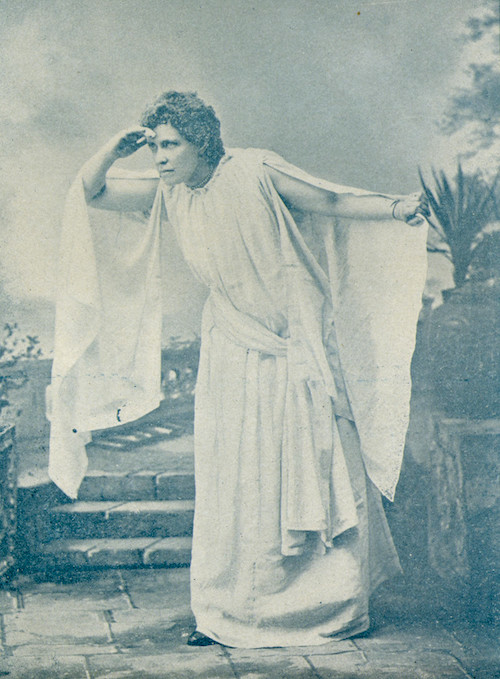
“Wrapped in her blanket, Nekama stands, Scans the horizon with eager eye.”
Scene from Merchant of Venice.
Act III.
Scene II. Belmont. A room in Portia’s house. Enter Bassanio, Portia, Gratiano, Nerissa, and attendants.
Portia.—[890] I pray you, tarry: pause[891] a day or two Before you hazard; for, in choosing wrong, I lose your company; therefore, forbear[892] a while There’s something tells me, but it is not love, I would not lose you; and you know yourself,[893] Hate counsels not in such a quality. I could teach you How to choose right, but then I am forsworn; So will I never be; so may you miss me; But if you do, you’ll make me wish a sin, That I had been forsworn. Beshrew[894] your eyes, They have o’erlook’d me and divided me; One half of me is yours,[895] the other half yours,[896] Mine own, I would say; but if mine, then yours,[897] And so all yours. I speak too long; but ’tis to peize the time, To eke it, and to draw it out[898] in length, To stay you from election. Bassanio.— Let me choose;[899] For as I am, I live upon the rack. Come, let me to my fortune[900] and the caskets. Portia.— Away,[901] then! I am lock’d in one of them; If you do love me, you will find me out. Nerissa and the rest, stand all aloof.[902] Let music sound while he doth make his choice; Then, if he lose, he makes a swan-like end, Fading[903] in music: that the comparison May stand more proper, my eye shall be the stream And watery death-bed for him. Go,[904] Hercules! Live thou, I live. With much more dismay I view the fight, than thou[905] mak’st the fray. Bassanio.— So may the outward shows be least themselves: The world is still deceiv’d with ornament. In law, what plea so tainted and corrupt But, being season’d with a gracious voice, Obscures[906] the show of evil? In religion, What damnèd error, but some sober brow Will bless[907] it, and approve it with a text, Hiding the grossness with fair ornament? Thus, ornament is but the guilèd shore To a most dangerous sea, the beauteous scarf Veiling[908] an Indian beauty; Therefore, thou gaudy gold, Hard food for Midas, I will none[909] of thee; Nor none[910] of thee, thou pale and common drudge ’Tween man and man: but thou,[911] thou meagre lead, Which rather threat’nest than dost promise aught, Thy plainness moves me more than eloquence; And here choose I. Joy be the consequence! Portia. (aside).— How all the other passions fleet[912] to air, As doubtful thoughts, and rash-embrac’d despair, And shuddering fear,[913] and green-eyed jealousy! O love! be moderate;[914] allay thy ecstasy; In measure rein thy joy; scant this excess. I feel too much thy blessing; make it less, For fear I surfeit. Bassanio.— What find I here? (Opening the leaden casket.) Fair Portia’s counterfeit![915] What demi-god Hath come so near creation? Here’s the scroll, The continent and summary of my fortune. [916]You that choose not by the view, Chance as fair, and choose as true! Since this fortune falls to you, Be content and seek no new. If you be well pleas’d with this, And hold your fortune for your bliss, Turn you where your lady is, And claim her with a loving kiss. A gentle scroll.[917] Fair lady, by your leave; I come by note, to give and receive. Yet as doubtful whether what I see be true, Until confirm’d, sign’d, ratified by you. Portia.— You see me,[918] Lord Bassanio, where I stand, Such as I am; though for myself alone I would not be ambitious in my wish, To wish myself much better; yet for you[919] I would be trebled twenty times[920] myself, A thousand times[921] more fair, ten thousand times[922] more rich, That only to stand high in your account, I might in virtues,[923] beauties,[924] livings,[925] friends,[926] Exceed account; but the full sum of me Is sum of nothing,[927] which, to term in gross, Is an unlesson’d girl, unschool’d, unpractis’d: Happy in this,[928] she is not yet so old But she may learn; happier than[929] this, She is not bred so dull but she can learn; Happiest of all[930] is that her gentle spirit Commits itself to yours[931] to be directed, As from her lord, her governor, her king. Myself and what is mine[932] to you and yours[933] Is now converted; but now I was the lord Of this fair mansion,[934] master of my servants, Queen o’er myself; and even now, but now, This house, these servants, and this same myself[935] Are yours,[936] my lord. I give them with this ring;[937] Which when you part from, lose, or give away, Let it presage[938] the ruin of your love, And be my vantage to exclaim you. Bassanio.— Madam, you have bereft me[939] of all words; Only my blood[940] speaks to you in my veins. But when this ring[941] Parts from this finger, then parts life from hence; O then be bold to say, Bassanio’s dead!
Gestures.
Thora.
I. Thin and graceful, like a clipper, Thora was from top to toe, Though her dress was very scanty and perhaps, not comme il faut; Bare and brown her little feet were, and her cheeks were sunburnt, too, But her lips were very rosy and her eyes were very blue. One black skirt with red embroidery and a snowy white pelisse Were her wonted dress on week-days, when she felt herself at ease. Hats she only wore in winter, when with snow the air[942] was dim, But her eyes peeped forth full brightly ’neath the big sou’wester’s brim. For who thinks that a sou’wester, e’en if e’er and e’er so wide,[943] From the boys’ admiring glances could a pretty maiden hide. And ’tis known[944] how much attention every pretty maid annoys; And—it was a thousand pities![945]—Thora did not like the boys; They were either rude and noisy, or too bashful and confused; As for loving them! No, thank you;[946] she would rather be excused! And, besides, there were so many[947]—stout and slender, short and tall— How should she her choice determine, since she could not love them all? Thus she spoke unto her mother, sitting in the evening’s glow, In the shadow of the fish-nets,[948] which were drooping, row[949] on row,[950] From their stakes; while to the westward[951] hung the sun so huge and red; Tinged with flame the white-winged sea-birds,[952] drifting idly o’er her head. “Sooth to say, thy words are canny,”[953] said the good-wife with a sigh, Glancing seaward to conceal the merry twinkle in her eye; “Yet ’tis right young maids should marry; childless age brings no maid boon. Beauty lost, in vain they hanker, fretting idly for the moon. “Therefore I will tell thee,[954] daughter, what ’tis wise for thee to do; One man, e’en if e’er so canny,[955] never knows as much as two. We will call the girls together from the valley’s every part,[956] They shall choose among thy wooers him who is to own thy heart.” “Oh! what sport!”[957] cried pretty Thora; “thanks to thee, my mother dear! Oh! how gayly we shall chatter when no prying men are near! Loved and cherished shall my name be by the maidens round about;[958] I shall cause no cheek to wither and no pretty lips to pout.” II. While the mountain tops[959] were rosy and with dew the grass[960] was wet, Thora hastened to the boat-house[961] to repair the fishing net; Skipping, jumping, wild and wanton, danced[962] she o’er the fields away, Tossing[963] to the sportive echoes many a bright and careless lay. When the lads who boats were bailing heard the pretty Thora sing, Joining hands, they ran to meet her,[964] throwing round[965] the maid a ring, Now!” they cried, with boist’rous laughter; “now we’ve surely caught thee, Miss, Thou canst only buy thy freedom if thou give us each a kiss.” “Come and take it,[966] lads,” cried Thora; “here’s my mouth[967] and here my hand;[968] Kiss, indeed! Why don’t you take it? Modest, sooth, is your demand!” And when one stepped briskly forward, half emboldened by her speech, With a slap[969] she sent him spinning, like a top upon the beach. With a peal of mocking laughter, off[970] she bounded like a hind, And her loosened yellow tresses fluttered gayly in the wind, While the lad, abashed, bewildered, strolled away[971] with burning ears To compose his wounded feelings and escape his comrades’ jeers. Now a gallant lad was Halvor, who in storm and billows’ roar Oft had steered his skiff securely close beneath[972] the rocky shore, And the thought within him rankled, with a dull and gnawing pain, That a little maid had smote him whom he could not smite again. And the dimpled face of Thora haunted him by night and day; He was sure that he must love her, for his wrath had flown away;[973] Yet he could have sworn a little, had not swearing been a sin, Why should he thus love a maiden who was neither kith nor kin? Strange to say, the little Thora, when her anger was at rest, Found some queer, soft thoughts awaking dimly in her troubled breast:[974] “Had she not too harshly punished an offense not gravely meant? Could she hope for God’s forgiveness who could rudely thus resent?” Thus with doubt and passion wrestling, and by vague regrets distraught, Shyly nursing tender yearnings which she dared not frame in thought, On the strand alone she wandered,[975] where, in whispered pulses beat, Drunk with sleep, the mighty ocean, darkly heaving at her feet.[976] There it seemed—what odd illusion!—that her footsteps on the sand Broke into a double rhythm, sharply echoing o’er the strand, And she felt a shadowy presence in the moonlight, gaunt and dread,[977] Moving stealthily behind her,[978] and she dared not turn her head. Swiftly, wildly, on[979] she hurried, while cloud, and moon, and star, With a dumb, phantasmal ardor, sped along[980] th’ horizon’s bar; Till exhausted, panting, sobbing, and bewildered with alarm, Scarce she fell[981] ere she was lifted lightly on her lover’s arm.[982] “Thora,” said he, stooping o’er her, “pardon if I caused thee fright; But my heart[983] was full to bursting. Speak I must, and speak to-night. Silence, Thora, is so heavy, like a load upon the breast; Sooth, I think thou hast bewitched me; I can find no peace nor rest.” Thora half-way stayed her weeping, and the moon,[984] which peeped askance From behind her cloud, revealed the tearful brightness of her glance. “Oh! thou wouldst not love me,”[985] sobbed she, “if thou knew’st how bad I am— Once—I hung—a great, live lobster—on the tail of Hans, our ram!” Scarce I know how he consoled her; but ere long her tears were dried, And ’twas rumored in the parish—though again it was denied—[986] That while all the moon was hidden—[987] all except the golden tips—[988] There was heard a sound mysterious, as of softly-meeting lips. For the good-wife, mildly grumbling at the idle spinning-wheel, Rose at length and trudged[989] sedately, anxious for the daughter’s weal, Over sand, and stone, and tangle, where the frightened plovers flew[990] Screaming seaward, and majestic skyward[991] soared the silent mew. And ’twas she who with amazement heard the soft, mysterious sound; And ’tis said she shook and tottered, almost fainting on the ground. Scarce her reason she recovered, if the wild reports be true, For she saw a queer-shaped figure,[992] which proved later to be two. “Daughter,” said she, not ungently, “I have sought thee in alarm, Fearing, in the treacherous moonlight, thou perchance hadst come to harm; Yet I hoped that I should find thee, though the night be dark and drear, Knowing that thou lov’st to wander where no prying men are near.” Dumb, abashed stood little Thora, and her cheeks were flaming red; Nervously she twirled her apron,[993] and she hung her pretty head, Till at length she gathered courage and she whispered breathlessly: “Mother, dear,[994] I love him truly, and he says that he loves me.” “Lord ’a mercy on us, daughter!”[995] solemnly the dame replied; “I who have the maids invited that they might thy choice decide; For of men there are so many[996]—stout and slender, short and tall— How’s a maid to choose among them, since she cannot love them all?” Now the moon,[997] who had been hiding in a veil of misty lace, Wishing to embarrass no one by the shining of her face, Peeped again, in modest wonder, ere her cloud she gently broke, And she saw the good-wife smiling, as to Thora thus she spoke: “Since thou hast chosen, daughter—every bird[998] must try his wings— Tell me, how didst thou discover that thy heart to Halvor clings?” “Well,” she said, in sweet confusion, while her eyes grew big with tears, “Thou wouldst scarcely understand it, mother dear—I boxed his ears.”
Gestures.
Valley Forge.
Extract from an oration delivered upon the occasion of the first Centenary Anniversary of the Encampment at Valley Forge.
My countrymen, the century that has gone by[999] has changed the face of nature and wrought a revolution in the habits of mankind. We stand to-day at the dawn[1000] of an extraordinary age. Freed[1001] from the chains of ancient thought and superstition, man has begun to win the most extraordinary victories in the domain of science. One by one he has dispelled[1002] the doubts of the ancient world. Nothing is too difficult for his hand to attempt—no region too remote[1003]—no place too sacred[1004] for his daring eye to penetrate. He has robbed the earth[1005] of her secrets and sought to solve the mysteries of the heavens![1006] He has secured and chained[1007] to his service the elemental forces of nature—he has made the fire[1008] his steed—the winds[1009] his ministers—the seas[1010] his pathway—the lightning[1011] his messenger. He has descended into the bowels[1012] of the earth, and walked in safety on the bottom[1013] of the sea. He has raised his head above the clouds,[1014] and made the impalpable air[1015] his resting-place. He has tried to analyze the stars, count[1016] the constellations, and weigh the sun. He has [1017] that, breathless, we have reached a moment when it seems as if distance had been annihilated,[1018] time made as naught, the invisible seen, the inaudible heard, the unspeakable spoken, the intangible felt, the impossible accomplished.[1019] And already we knock at the door of a new century[1020] which promises to be infinitely brighter[1021] and more enlightened and happier than this. But in all this blaze of light which illuminates the present and casts its reflection into the distant recesses of the past, there is not a single ray which shoots into the future.[1022] Not one step have we taken toward the solution of the mystery of life. That remains as dark and unfathomable[1023] as it was ten thousand years ago.
We know[1024] that we are more fortunate than our fathers. We believe[1025] that our children shall be happier than we. We know[1026] that this century is more enlightened than the last. We believe that the time to come[1027] will be better and more glorious than this. We think, we believe, we hope, but we do not know.[1028] Across that threshold[1029] we may not pass; behind that veil we may not penetrate. Into that country it may not be for us to go. It may be vouchsafed to us to behold[1030] it, wonderingly, from afar, but never to enter in. It matters not. The age in which we live is but a link in the endless and eternal chain. Our lives are like the sands upon the shore;[1031] our voices like the breath of this summer breeze[1032] that stirs the leaf for a moment and is forgotten. Whence we have come and whither we shall go, not one[1033] of us can tell. And the last survivor of this mighty multitude shall stay but a little while.
But in the impenetrable To Be, the endless generations are advancing[1034] to take our places as we fall. For them as for us shall the earth roll on[1035] and the seasons come and go, the snowflakes fall, the flowers bloom, and the harvests be gathered in. For them as for us shall the sun, like the life of man, rise out[1036] of darkness in the morning and sink[1037] into darkness in the night. For them as for us shall the years march by[1038] in the sublime procession of the ages. And here,[1039] in this place of sacrifice, in this vale of humiliation, in this valley of the shadow[1040] of that Death out of which the life of America arose, regenerate and free, let us believe with an abiding faith[1041] that, to them, Union will seem as dear,[1042] and Liberty as sweet,[1043] and Progress as glorious,[1044] as they were to our fathers and are to you[1045] and me, and that the institutions which have made us happy, preserved by the virtue of our children, shall bless the remotest generations of the time to come.[1046] And unto Him[1047] who holds in the hollow of His hand the fate of nations, and yet marks[1048] the sparrow’s fall, let us lift up our hearts this day, and into His eternal care[1049] commend ourselves, our children, and our country.
—H. A. Brown.
Gestures.
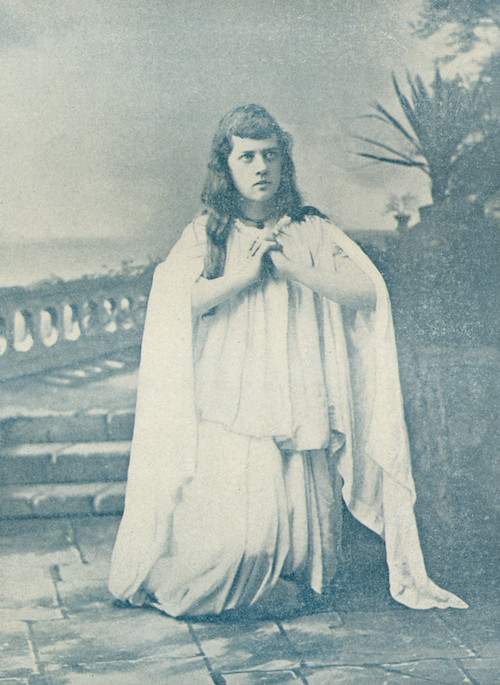
“Now I lay me down to sleep.”
How “Ruby” Played.
Jud Brownin, when visiting New York, goes to hear Rubinstein, and gives the following description of his playing.
Well, sir, he had the blamedest, biggest, catty-cornedest pianner you ever laid eyes on; somethin’ like a distracted billiard-table on three legs. The lid was hoisted, and mighty
Played well? You bet he did; but don’t interrupt me. When he first sit down, he ’peared to keer mighty little ’bout playin’, and wisht he hadn’t come. He tweedle-leedled a little on the treble, and twoodle-oodled some on the base—just foolin’ and boxin’ the thing’s jaws for bein’ in the way. And I says to a man settin’ next to me, says I, “What sort of fool playin’ is that?” And he says, “Heish!” But presently his hands commenced chasin’ one another up and down the keys like a parcel of rats scamperin’ through a garret very swift. Parts of it was sweet, though, and reminded me of a sugar squirrel turnin’ the wheel of a candy cage.
“Now,” I says to my neighbor, “he’s showin’ off. He thinks he’s a doin’ of it, but he ain’t got no idee, no plan of nothin’. If he’d play me a tune of some kind or other, I’d—”
But my neighbor says, “Heish,” very impatient.
I was just about to get up and go home, bein’ tired of that foolishness, when I heard a little bird wakin’ up away off in the woods, and call sleepy-like to his mate, and I looked up and see that Ruby was beginning to take some interest in his business, and I sit down again. It was the peep of day. The light came faint from the east, the breezes blowed gentle and fresh; some more birds waked up in the orchard, then some more in the trees near the house, and all begun singin’ together. People began to stir, and the gal opened the shutters. Just then the first beam of the sun fell upon the blossoms a little more, and it techt the roses on the bushes, and the next thing it was broad day; the sun fairly blazed, the birds sung like they’d split their little throats; all the leaves was movin’, and flashin’ diamonds of dew, and the whole wide world was bright and happy as a king. Seemed to me like there was a
And I says to my neighbor, “That’s music, that is.”
But he glared at me like he’d like to cut my throat.
Presently the wind turned; it began to thicken up, and a kind of gray mist came over things; I got low-spirited directly. Then a silver rain begun to fall. I could see the drops touch the ground; some flashed up like long pearl earrings, and the rest rolled away like round rubies. It was pretty, but melancholy. Then the pearls gathered themselves into long strands and necklaces, and then they melted into thin silver streams, runnin’ between golden gravels, and then the streams joined each other at the bottom of the hill, and made a brook that flowed silent, except that you could kinder see the music, specially when the bushes on the banks moved as the music went along down the valley. I could smell the flowers in the meadow. But the sun didn’t shine, nor the birds sing; it was a foggy day, but not cold.
The most curious thing was the little white angel boy, like you see in pictures, that run ahead of the music brook and led it on, and on, away out of the world, where no man ever was, certain. I could see that boy just as plain as I see you. Then the moonlight came, without any sunset, and shone on the graveyards where some few ghosts lifted their hands and went over the wall, and between the black, sharp-top trees, splendid marble houses rose up, with fine ladies in the lit-up windows, and men that loved ’em, but could never get a-nigh ’em, who played on guitars under the trees, and made me that miserable I could have cried, because I wanted to love somebody, I don’t know who, better than the men with the guitars did.
Then the sun went down, it got dark, the wind moaned and
“Go it, Rube!”
Every blamed man, woman, and child in the house riz on me and shouted, “Put him out! Put him out!”
“Put your great-grandmother’s grizzly-gray-greenish cat into the middle of next month!” I says. “Tech me, if you dare! I paid my money, and you just come a-nigh me!”
With that some several policemen run up, and I had to simmer down. But I could ’a’ fit any fool that laid hands on me, for I was bound to hear Ruby out or die.
He had changed his tune again. He hop-light ladies and tip-toed fine from end to end of the key-board. He played
He stopt a moment or two to ketch breath. Then he got mad. He run his fingers through his hair, he shoved up his sleeves, he opened his coat-tails a leetle further, he drug up his stool, he leaned over, and, sir, he just went for that old pianner. He slapt her face, he boxed her jaws, he pulled her nose, he pinched her ears, and he scratched her cheeks, until she fairly yelled. He knockt her down, and he stampt on her shameful. She bellowed, she bleated like a calf, she howled like a hound, she squealed like a pig, she shrieked like a rat, and then he wouldn’t let her up. He ran a quarter-stretch down the low grounds of the base, till he got clean in the bowels of the earth, and you heard thunder galloping after thunder, through the hollows and caves of perdition, and then he fox-chased his right hand with his left till he got way out of the treble into the clouds, whar the notes was finer than the pints of cambric needles, and you couldn’t hear nothin’ but the shadders of ’em. And then he wouldn’t let the old pianner go. He for’ard two’d, he crost over first gentleman, he chassade right and left, back to your places, he all hands’d
By jinks! it was a mixtery. And then he wouldn’t let the old pianner go. He fecht up his right wing, he fecht up his left wing, he fecht up his centre, he fecht up his reserves. He fired by file, he fired by platoons, by company, by regiments, and by brigades. He opened his cannon—siege guns down thar, Napoleons here, twelve-pounders yonder—big guns, little guns, middle-sized guns, round shot, shells, shrapnels, grape, canister, mortar, mines, and magazines, every livin’ battery and bomb a-goin’ at the same time. The house trembled, the lights danced, the walls shuk, the floor come up, the ceilin’ come down, the sky split, the ground rokt—heavens and earth, creation, sweet potatoes, Moses, ninepences, glory, tenpenny nails, Sampson in a ’simmon tree, Tump Tompson in a tumbler-cart, roodle-oodle-oodle-oodle—ruddle-uddle-uddle-uddle—raddle-addle-addle-addle—riddle-iddle-iddle-iddle—reedle-eedle-eedle-eedle—p-r-r-r-r-r-lang! Bang!!!! lang! per-lang! p-r-r-r-r-r! Bang!!!
With that bang! he lifted himself bodily into the air, and he come down with his knees, his ten fingers, his ten toes, his elbows, and his nose, striking every single, solitary key on the pianner at the same time. The thing busted, and went off into seventeen hundred and fifty-seven thousand five hundred and forty-two hemi-demi-semi-quivers, and I know’d no mo’.
When I come to, I were under ground about twenty foot, in a place they call Oyster Bay, a-treatin’ a Yankee that I never laid eyes on before, and never expect to again. Day was br’akin’ by the time I got to the St. Nicholas Hotel, and I
Nydia, the Blind Girl of Pompeii.
Adapted from Helen Potter’s rendering, by Frances E. Peirce.
Nydia was a Thessalonian, and well-born. Being taken prisoner by the Romans, she was sold into slavery, and treated with great cruelty. Her blindness, beauty, and pitiful condition appealed to the sympathies of Glaucus, a wealthy young Athenian, who purchased her. Arbaces, envious of her possession, and an enemy of Glaucus, captured and imprisoned her, and caused Glaucus to be accused of murder and condemned to fight a lion in the arena. The lion refused, however, to touch him, and Nydia, escaping from her prison at the time of the dreadful eruption of Vesuvius, found Glaucus, and conducted him and his fiancée to the sea. Finding that he loved another, she drowned herself.
Kind Sosia, chide[1050] me not. I cannot endure to be so long alone; the solitude appals[1051] me. Sit with me, I pray, a little while. Nay,[1052] fear not that I should attempt to escape. Place thy seat[1053] before the door. Keep thine eye on me, I will not stir from this spot. Alas! why[1054] am I imprisoned here? [1055]What is the hour? Evening, thou sayest? Hast thou heard how went the trial of the Athenian, Glaucus? He is condemned [1056] The gods forbid! ’Tis false, ’tis false, I say! Arbaces saw[1057] the deed? Arbaces, the Egyptian? Arbaces hates the priest; hates Glaucus, too. Come, Truth,[1058] and triumph o’er thy foes. (Exit Sosia.)
What shrieks are those I hear;[1059] so near and yet so far! It seems this way,[1060] here! Ah! yes. (Calls.) Who is it in distress? Who cries aloud? Calenus, the priest? What, you saw Arbaces strike the blow! Then you can prove dear Glaucus innocent. But why are you here? (Aside.) Ah! me! if free to speak, he could save[1061] my master! (Calls again.) Listen, if you were free, would you give testimony against Arbaces, the rich and powerful Arbaces? Would you the truth proclaim? Would you save the Athenian? Your priestly word can save him. If I procure you liberty, you will not play me false? No, no! I will not doubt you; you could not be so cruel! Remember, Calenus, you have promised![1062]
How can I release the priest?[1063] how best the truth make known? how gain the præetor’s ear? Ah! these gems[1064] I have worn so long may clear the way. I was not born a slave—no, no! My birth is equal his. Why, then freedom would give me the right to love dear Glaucus.
Sosia! Sosia! Come hither,[1065] guard. Sosia, how much dost thou require to make up the purchase of thy freedom? Two thousand sesterces! The gods be praised![1066] Not more? Seest thou these bracelets[1067] and this chain?[1068] I’ll give them thee if thou wilt let me out, only for one little hour; let me out at midnight; I will return before to-morrow’s dawn; nay, thou[1069] canst go with me, keep me [1070] Is there no hope, then? Oh! he is leaving me![1071] I shall go mad,[1072] mad! Stay,[1073] one moment—only one—thou wilt not at least refuse to take a letter for me; thy master cannot kill thee for that. Thou wilt? The gods be praised![1074] Bring me a tablet of wax and a stilus. (Writes.)
“[1075]Nydia, the slave, to Sallust, the friend of Glaucus. I am a prisoner in the house of Arbaces. Hasten to the prætor and procure my release, and we shall yet save Glaucus from the lion. There is another prisoner within these walls, whose witness can exonerate the Athenian from the charge against him; one who saw the crime—who can prove the criminal is a villain hitherto unsuspected. Fly! hasten! quick! quick! Bring with you armed men, lest resistance be made, and a cunning and dexterous smith; for the dungeon of my fellow-prisoner is thick and strong. Oh! by thy right hand, and thy father’s ashes, lose not a moment.”
Sosia, I am blind and in prison. Thou mayest think to deceive me—thou mayest pretend only to take the letter to Sallust, but here I solemnly dedicate[1076] thy head to vengeance, thy soul to the infernal[1077] powers, if thou wrongest thy trust, and I call upon thee to place thy right hand of faith in mine,[1078] and repeat after me these words: “By the ground on which we stand—by the elements which contain life, and can curse life—by Orcus, the all-avenging—by the Olympian Jupiter, the all-seeing—I swear that I will discharge my trust and faithfully deliver into the hands of Sallust this letter. And if I perjure myself in this oath, may the full curses of [1079] It is already dark—depart at once. (Exit Sosia.)
And I, alas, I am a slave forevermore.[1080] No more can look for freedom—for love. Tears, tears! Why, why should eyes that cannot see have power to weep?
Hark![1081] the lion roars as if in fear. It is the amphitheatre and the games are on! I hear a cry, I hear a voice[1082]—“The lion touches not the victim!” Aye, even the wild beasts love Glaucus. “Arbaces, the Egyptian, is the murderer! Glaucus is innocent! Set him free! Set him free!” He is saved, he is saved![1083] What heaviness[1084] fills the air? The ground trembles as though rocked by an earthquake, or is it the throbbing of my heart?[1085] What does it mean? Sosia, Sosia! Unlock the door and let me out. [1086]What sounds do I hear? What thunder shakes the ground; what cries—what strange sounds; the air is hot and stifling—I cannot breathe! Oh! Sallust, is that thy voice? Speak! and tell me what has happened. Vesuvius all ablaze, and the sun gone down at noon? Ah! the gods[1087] are angry! Canst thou tell me of Glaucus? Hast thou seen him? crouched beneath the arch of the Forum? Ah, then, I can find him, for I am free! Some friendly hand slipped the bolts of my prison.
[1088]Glaucus! Glaucus! How can I hope to reach his ears amidst all this tumult and confusion? Hark![1089] a new sound comes from afar. It is the chant of the Christians on their way to their temple to worship.
(Chanted.)
Woe! woe! Behold the Lord descendeth to judgment! He maketh fire come down from the heavens in the sight of men! Woe! woe! ye strong and mighty! Woe to ye of the fasces and the purple! Woe to the idolater and the worshiper of the beast! Woe to ye who pour forth the blood of saints and gloat over the death pangs of the sons of God! Woe! woe!
Glaucus! Glaucus![1090] He answers my call. Ah! take[1091] my hand; this way,[1092] this way; to the sea, to the sea! Trust me, I know the way! To the sea, to the sea! (Exit.)
(Chant off the stage.)
Woe to the proud ones who defy Him; Woe to the wicked who deny Him; Woe to the wicked, woe!
—Lord Lytton.
Gestures.
The Dream of Eugene Aram.
’Twas in the prime of summer-time, An evening calm and cool, And four-and-twenty happy boys Came bounding out of school;[1093] There were some that ran, and some that leapt Like troutlets in the pool. Away[1094] they sped, with gamesome minds, And souls untouched by sin; To a level mead they came, and there They drave the wickets in: Pleasantly shone[1095] the setting sun Over the town of Lynn. Like sportive deer they coursed about, And shouted as they ran— Turning to mirth all things[1096] of earth, As only boyhood can, But the usher[1097] sat remote from all, A melancholy man! His hat was off, his vest apart, To catch Heaven’s[1098] blessed breeze; For a burning thought was in his brow, And his bosom ill at ease; So he leaned his head on his hands, and read The book between his knees. Leaf after leaf he turned[1099] it o’er, Nor ever glanced aside, For the peace of his soul he read that book In the golden eventide; Much study had made him very lean, And pale, and leaden-eyed. At last he shut the ponderous tome; With a fast and fervent grasp He strained[1100] the dusky covers close, And fixed the brazen hasp: “O God![1101] could I so close my mind, And clasp it with a clasp!” Then leaping[1102] on his feet upright: Some moody turns he took— Now up the mead, then down the mead, And past a shady nook— And lo! he saw a little boy[1103] That pored upon a book. “My gentle lad, what is’t you read, Romance or fairy fable? Or is it some historic page, Of kings and crowns unstable?” The young boy gave an upward glance— “It is ‘The Death of Abel.’”[1104] The usher took six hasty strides, As smit with sudden pain— Six hasty strides beyond the place, Then slowly back again; And down[1105] he sat beside the lad, And talked with him of Cain; And, long since then, of bloody men Whose deeds tradition saves; Of lonely folk cut off unseen, And hid[1106] in sudden graves; Of horrid stabs, in groves forlorn, And murders done in caves; And how the sprites of injured men Shriek upward[1107] from the sod— Ay, how the ghostly hand will point To show the burial clod; And unknown facts of guilty acts Are seen in dreams from God; He told how murderers walked the earth Beneath the curse[1108] of Cain, With crimson clouds before their eyes, And flames about their brain; For blood has left upon their souls Its everlasting stain. “And well,” quoth he, “I know, for truth, Their pangs must be extreme— Woe, woe, unutterable woe,[1109] Who spill life’s sacred stream! For why? Methought, last night, I wrought A murder in a dream! “One that had never done me wrong, A feeble man, and old; I led him to a lonely field—[1110] The moon[1111] shone clear and cold; ‘Now here,’ said I, ‘this man shall die, And I will have his gold!’ “Two sudden blows[1112] with ragged stick, And one with a heavy stone, One hurried gash[1113] with a hasty knife, And then the deed was done; There was nothing lying at my foot But lifeless flesh and bone. “Nothing but lifeless flesh and bone, That could not do me ill; And yet I feared him all the more, For lying there so still;[1114] There was a manhood in his look, That murder could not kill. “And, lo! the universal air[1115] Seemed lit with ghastly flame; Ten thousand thousand dreadful eyes[1116] Were looking down in blame; I took the dead men by his hand,[1117] And called upon his name. “O God![1118] it made me quake to see Such sense within the slain; But when I touched[1119] the lifeless clay, The blood gushed out[1120] amain; For every clot a burning spot Was scorching in my brain.[1121] “My head was like an ardent coal; My heart[1122] as solid ice; My wretched, wretched soul, I knew, Was at the devil’s price; A dozen times I groaned; the dead Had never groaned but twice. “And now, from forth the frowning sky,[1123] From the heaven’s topmost height, I heard a voice—the awful voice Of the blood-avenging sprite: ‘Thou guilty man! take up thy dead, And hide it from my sight!’ “I took the dreary body up,[1124] And cast[1125] it in a stream— A sluggish water, black[1126] as ink, The depth was so extreme, My gentle boy, remember[1127] this Is nothing but a dream! “Down[1128] went the corpse with hollow plunge, And vanished in the pool; Anon I cleansed[1129] my bloody hands, And washed my forehead[1130] cool, And sat among the urchins young, That evening in the school. “O heaven![1131] to think of their white souls, And mine so black and grim! I could not share in childish prayer, Nor join in evening hymn; Like a devil of the pit[1132] I seemed, Mid holy cherubim. “And peace went with them, one and all, And each calm pillow spread; But guilt was my grim chamberlain, That lighted me to bed; And drew my midnight curtains round,[1133] With fingers bloody red. “All night I lay in agony, In anguish[1134] dark and deep, My fevered eyes I dared not close, But stared aghast at Sleep; For Sin has rendered unto her The keys of hell to keep. “All night I lay in agony, From weary chime to chime, With one besetting, horrid hint, That racked[1135] me all the time— A mighty yearning like the first Fierce impulse unto crime. “One stern tyrannic thought, that made All other thoughts its slave;[1136] Stronger and stronger every pulse Did that temptation crave, Still urging me to go[1137] and see The dead man in his grave. “Heavily I rose up, as soon As light was in the sky, And sought the black, accursed[1138] pool, With a wild, misgiving eye; And I saw the dead[1139] in the river bed, For the faithless stream was dry. “Merrily rose the lark,[1140] and shook The dewdrop from its wing; But I never marked its morning flight, I never heard it sing; For I was stooping once again Under the horrid thing. “With breathless speed, like a soul in chase, I took him up[1141] and ran; There was no time to dig a grave Before the day began: In a lonesome wood, with heaps of leaves, I hid[1142] the murdered man; “And all that day I read in school, But my thought was otherwhere; As soon as the midday task was done, In secret I was there; And a mighty wind had swept[1143] the leaves, And still the corpse[1144] was bare. “Then down I cast me[1145] on my face, And first began to weep, For I knew my secret then was one That earth refused to keep— Or land or sea, though he should be Ten thousand fathoms[1146] deep. “So wills the fierce avenging sprite, Till blood for blood atones; Ay, though he’s buried in a cave, And trodden down with stones, And years have rotted off his flesh, The world shall see his bones. “O God! that horrid, horrid[1147] dream Besets me now, awake; Again, again, with dizzy brain,[1148] The human life I take; And my red right hand grows raging hot, Like Cranmer’s at the stake. “And still no peace for the restless clay, Will wave or mould allow; The horrid thing pursues my soul— It stands before[1149] me now!” The fearful boy looked up, and saw Huge drops upon his brow. That very night, while gentle sleep The urchin’s eyelids kissed, Two stern-faced men set out from Lynn, Through the cold and heavy mist; And Eugene Aram walked[1150] between, With gyves upon his wrist. —Thomas Hood.
Gestures.
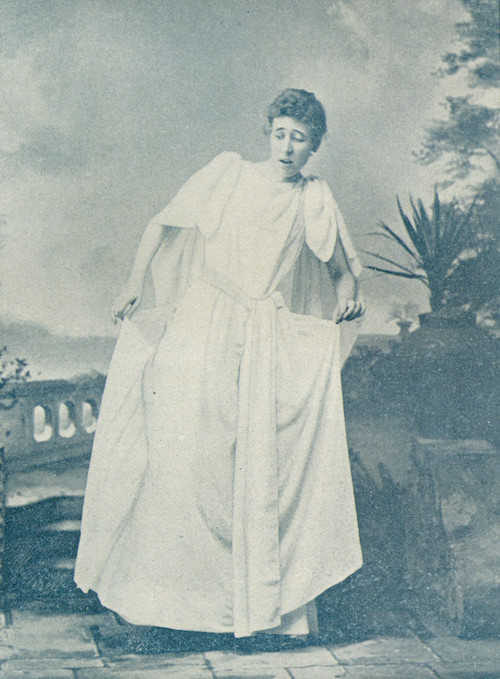
“Shoo! shoo! a mouse, a great mouse! shoo! shoo!”
One Day Solitary.[1151]
I am all right! Good-bye,[1152] old chap! Twenty-four hours, that won’t be long; Nothing to do but take a nap, And—say![1153] can a fellow sing a song? Will the light fantastic be in order— A pigeon-wing[1154] on your pantry floor? What are the rules for a regular boarder? Be quiet? All right![1155] Cling-clang goes the door. Clang-clink the bolts, and I am locked in; Some pious reflection and repentance Come next, I suppose, for I just begin To perceive the sting[1156] in the tail of my sentence— “One day whereof shall be solitary.” Here I am at the end of my journey, And[1157]—well, it ain’t jolly, not so very— I’d like to throttle[1158] that sharp attorney. He took my money, the very last dollar,[1159] Didn’t leave me so much as a dime, Not enough to buy me a paper collar To wear at my trial; he knew all the time[1160] ’Twas some that I got for the stolen silver. Why hasn’t he been indicted, too? If he doesn’t exactly rob and pilfer, He lives by the plunder[1161] of them that do. Then didn’t it put me into a fury, To see him step up,[1162] and laugh and chat With the county attorney, and joke with the jury, When all was over, then go back[1163] for his hat, While Sue was sobbing to break her heart, And all I could do was to stand and stare?[1164] He had pleaded my cause,[1165] he had played his part, And got his fee—and what more[1166] did he care? It’s droll to think how, just out yonder,[1167] The world goes jogging on the same; Old men will save, and boys will squander, And fellows will play at the same old game Of get-and-spend to-morrow,[1168] next year— And drink and carouse, and who will there be To remember a comrade buried here?[1169] I am nothing to them, they are nothing to me. And Sue—yes, she will forget me too, I know; already her tears are drying. I believe there is nothing that girl can do So easy as laughing, and lying, and crying. She clung to me while there was hope, Then broke her heart in that last wild sob; But she ain’t going to sit and mope While I am at work on a five years’ job. They’ll set me to learning a trade, no doubt, And I must forget to speak or smile; I shall go marching in[1170] and out,[1171] One of a silent tramping file Of felons, at morning, and noon, and night, Just down to the shops[1172] and back to the cells,[1173] And work with a thief at left[1174] and right,[1175] And feed, and sleep, and—nothing else.[1176] Was I born for this?[1177] Will the old folks know? I can see them[1178] now on the old home-place; His gait is feeble, his step is slow, There’s a settled grief on his furrowed face; While she goes wearily groping[1179] about In a sort of dream, so bent, so sad! But this won’t do![1180] I must sing and shout, And forget myself, or else go mad.[1181] I won’t be foolish; although for a minute[1182] I was there[1183] in my little room once more. What wouldn’t I give just now to be in it? The bed is yonder,[1184] and there[1185]is the door; The Bible is here[1186] on the neat, white stand; The summer sweets are ripening now; In the flickering light I reach my hand[1187] From the window, and pluck them from the bough. When I was a child (oh! well for me And them if I had never been older!), When he told me stories on his knee, And tossed me, and carried me on his shoulder; When she knelt down and heard my prayer, And gave me in my bed my good-night kiss— Did they ever think that all their care For an only son could come to this? Foolish again![1188] No sense in tears And gnashing the teeth; and yet,[1189] somehow, I haven’t thought of them so for years; I never knew them, I think, till now. How fondly, how blindly, they trusted me! When I should have been in my bed asleep, I slipped from the window,[1190] and down[1191] the tree, And sowed for the harvest which now I reap. And Jennie—how could I bear to leave her? If I had but wished—but I was a fool! My heart was filled with a thirst and a fever, Which no sweet airs of heaven could cool. I can hear her asking: [1192]“Have you heard?” But mother falters and shakes her head; [1193]“O Jennie! Jennie! never a word! What can it mean? He must be dead!” [1194]Light-hearted, a proud, ambitious lad, I left my home that morning in May; What visions,[1195] what hopes, what plans I had! And what have I[1196]—where are they all[1197]—to-day? Wild fellows, and wine, and debts, and gaming, Disgrace,[1198] and the loss of place and friend; And I was an outlaw,[1199] past reclaiming. Arrest and sentence, and—that is the end![1200] Five years! Shall ever I quit this prison?[1201] Homeless, an outcast, where[1202] shall I go? Return to them, like one arisen[1203] From the grave, that was buried long ago? All is still;[1204] ’tis the close of the week; I slink[1205] through the garden, I stop by the well, I see him totter,[1206] I hear her shriek!— What sort of a tale will I have to tell? But here I am![1207] What’s the use of grieving? Five years—will it be too late to begin? Can sober thinking and honest living Still make me the man I might have been? I’ll sleep. Oh![1208] would I could wake to-morrow In that old room, to find, at last, That all my troubles and all their sorrow Are only a dream[1209] of the night that is past. —J. T. Trowbridge.
Gestures.
Meg Merrilies.
ADAPTED BY FRANCES E. PEIRCE.
Argument.—Henry Bertram is stolen by the gypsies when a child; he is abandoned by them, serves in the army, and finally wanders back to his native place. The gypsies discover
Act II.
Scene III. A wild forest, cliff and hills in the distance; a gypsy hut in the centre.
Bert.—My good woman, do you know me, that you look at me so hard?
Meg.—Ay, better than you know yourself!
Bert.—Aye, aye. That is, you’ll tell my fortune.
Meg.—Yes, because I know your past.
Bert.—Indeed! Then you have read a perplexed page.
Meg.—It will be clearer soon.
Bert.—Never less likely.
Meg.—Never more so! If, with a simple spell, I cannot recall times which you have long forgotten, hold me the most miserable impostor. Hear me, hear me, Henry—Henry Bertram! Hark! hark to the sound of other days! Listen, and let your heart awake. (Sings. Air, Gypsy Girl.)
Oh! hark ye, young Henry, Thy sire is a knight, Thy mother a lady, So lovely and bright; The hills and the dales, From the towers which we see, They all shall belong, My dear Henry, to thee. Oh! rest thee, babe; rest thee, babe; Sleep on till day. Oh! rest thee, babe; rest thee, babe; Sleep while thee may.
Bert.—These words do, indeed, thrill my bosom with strange emotions. Woman, speak more plainly, and tell me why those sounds thus agitate my inmost soul, and what ideas they are that thus darkly throng upon my mind at hearing them.
Meg.—
Listen youth, to words of power; Swiftly comes the rightful hour! They who did thee scathe and wrong, Shall pay their deeds by death ere long. The dark shall be light, and the wrong made right, And Bertram’s right, and Bertram’s might, Shall meet on Ellangowan’s height!
Bert.—Bertram! Bertram! Why does that name sound so familiar to me?
Meg.—And now, begone! Franco, Franco, guide these strangers on their way to Kippletringan; Kippletringan! Yet stay; let me see your hand. What say these lines of fortunes past? Wandering, and woe, and danger, and crosses in love and friendship! What of the future? Honor, wealth, prosperity, love rewarded and friendship reunited! But what of the present? Ay! there’s a trace, which speaks of danger, of captivity, perchance; but not of death! If you are attacked, be men, and let your hands defend your heads! I will not be far distant from you in the moment of need. And now begone! Fate calls you! Away, away, away! (Exit.)
Act III.
Scene I. Sea-shore, with the castle on the rocks.
Meg.—So, so; his death is purposed; and they have chosen the scene of one murder to commit another. Right! the blood spilt on that spot has long cried for vengeance, and it shall fall upon them. Sebastian, speed to Dinmont and the youth; tell them not to separate for their lives—guide them to the glen near the tower; there let them wait till Glossin and Hatteraick meet in the cavern, and I will join them. Away, and do my bidding! (Exit Sebastian.) Now to send to Mannering; I must remain on the watch myself—Gabriel I dare not trust. Ha! who comes now? ’Tis Abel Sampson, Henry Bertram’s ancient tutor! It shall be so. (Advance.) Stop! I command ye!
Lucy.—She’s mad!
Meg.—No; I am not mad! I’ve been imprisoned for mad, scourged for mad, banished for mad; but mad I am not! Halt, and stand fast, or ye shall rue the day while a limb of you hangs together! Stay, thou tremblest! (Take out an old black whiskey bottle and hold it out to Sampson, left.) Drink of this and put some heart in ye, or I will— Can your learning tell you what that is, eh? Will you remember my errand now? Ay! then tell Colonel Mannering, if ever he owed a debt to the house of Ellangowan, and hopes to see it prosper, he must come instantly, armed and well attended, to the glen, below the tower of Derncleugh, and fail not on his life! You know the spot! Ay, Abel Sampson, there blazed my hearth for many a day! and there, beneath the willow that hung its garlands over the brook, I’ve sat and sung to Harry Bertram, songs of the old time. That tree is wither’d now, never to be Laugh and stagger back.)
I have said it, old man! ye shall see him again, and the best lord he shall be that Ellangowan has seen these hundred years. But you’re o’er long here. To Mannering! Away! and bid him come to that spot instantly, or the heir of Ellangowan may perish forever! Away, away! (Exit while speaking the last two words.)"
—Sir Walter Scott.
The Dukite Snake.
Well, mate, you’ve asked me about a fellow You met to-day in a black and yellow Chain-gang suit, with a peddler’s pack, Or with some such burden strapped to his back. Did you meet him square? No, passed you by?[1210] Well, if you had, and had looked in his eye, You’d have felt for your irons then and there; For the light of his eye is a madman’s glare. Some eight years back, in the spring of the year, He came from Scotland and settled here.[1211] A splendid young fellow he was just then, And one of the bravest and truest of men. In a year his wife came, and he showed her round His sandal-wood and his crops in the ground, And spoke of the future; they cried for joy, The husband’s arm clasping his wife and boy. Well, friend, if a little of heaven’s best bliss Ever comes from the upper world[1212] to this, It came into that manly bushman’s life, And circled him round with the arms of his wife. God bless that bright memory! Even to me, A rough, lonely man, did she seem to be, While living, an angel[1213] of God’s pure love, And now I could pray to her face above. And David—he loved her as only a man With a heart as large as was his heart, can. I wondered how they could have lived apart, For he was her idol, and she was his heart. Friends, there isn’t much more of the tale to tell; I was talking of angels awhile since. Well, Now I’ll change to a devil—ay, to a devil![1214] You needn’t start; if a spirit of evil Ever came to this world its hate to slake On mankind, it came as a dukite snake, Now, mark[1215] you, these dukites don’t go alone; There’s another near when you see but one; And beware you of killing that one you see Without finding the other; for you may be More than twenty miles from the spot that night, When camped, but you’re tracked by the lone dukite, That will follow[1216] your trail like death or fate, And kill you as sure as you killed its mate. Well, poor Dave Sloane had his young wife here Three months; ’twas just this time of the year. He had teamed some sandal-wood to the Vasse, And was homeward bound when he saw on the grass[1217] A long red snake.[1218] He had never been told Of the dukite’s ways; he jumped to the road, And smashed[1219] its flat head with the bullock goad. He was proud of the red skin, so he tied Its tail to the cart, and the snake’s blood dyed The bush on the path he followed that night. He was early home, and the dead dukite Was flung at the door to be skinned next day. At sunrise next morning he started away To hunt up his cattle. A three hours’ ride Brought him back; he gazed on his home with pride And joy in his heart; he jumped from his horse And entered—to look on[1220] his young wife’s corse, And his dead child clutching its mother’s clothes As in fright; and there, as he gazed, arose, From her breast, where ’twas resting, the gleaming head Of the terrible dukite, as if it said, “I’ve had vengeance, my foe! you took all I had!” And so had the snake: David Sloane was mad! I rode to his hut just by chance that night, And there[1221] on the threshold the clear moonlight Showed the two snakes dead. I pushed in[1222] the door; The dead were stretched[1223] on the moonlit floor; The man held the hand of his wife, his pride, His poor life’s treasure, and crouched[1224] by her side. I touched and called him; he heeded me not; So I dug her grave in a quiet spot, And lifted them both, her boy on her breast, And laid them down in the shade to rest. Then I tried to take my poor friend away, But he cried so woefully, “Let me stay[1225] Till she comes again!” that I had no heart To try to persuade him then to part From all that was left to him here—her grave; So I stayed by his side that night, and save One heart-cutting cry, he uttered no sound— O God! that wail—like the wail of a hound! ’Tis six long years since I heard that cry, But ’twill ring in my ears till the day I die. Since that fearful night no one has heard Poor David Sloane utter sound or word. You have seen to-day how he always goes;[1226] He’s been given that suit of convict’s clothes By some prison officer. On his back You noticed a load like a peddler’s pack? Well, that’s what[1227] he lives for; when reason went, Still memory lived, for his days are spent In searching for dukites; year by year That bundle of skins is growing. ’Tis clear That the Lord out of evil some good still takes; For he’s clearing[1228] this bush of the dukite snakes. —J. Boyle O’Reilly.
Gestures.
Mad.
This piece won the Post-Graduate medal at the Ninth Annual Commencement of the Mt. Vernon Institute of Elocution and Languages, 1892.
’Twas many years since I had left my home To travel distant lands, but time sped on;[1229] Again with eagerness and wonderment I sought the cherish’d haunts[1230] and friends of yore. One man whom I remember’d as a boy, Whose piercing eyes, pale face, and silken locks Had oft comment attracted, now I found In mad-house pent. He recognized my face, Although he would anon bewilder’d gaze. In changing tones which shed a ling’ring light[1231] Awhile upon his soul, but swiftly turn’d To fierce embitter’d grief, he told me there His all-absorbing tale. ’Twas thus he spoke: “They call me mad. And hour by hour I’m watch’d By lurking keepers, who with looks askance,[1232] Would search my thoughts, and deem themselves unseen, For when I would return their gaze, they droop Their eyes, and with a heedless air pass by.[1233] They call me mad, and so deny[1234] my right To liberty enjoy’d by other men. They call me mad! but know they[1235] what they mean? “Yea, if vividly to recall the past, And linger with emotions deep and fond On all that yielded life a moment’s joy, And now lies garner’d in sweet Mem’ry’s store— If this[1236] betokens madness—I am mad. Or if to know with what dear promise youth Was robed—how cherish’d were the constant thoughts Of happiness to come in future years— And feel how treach’rous was the fate that crush’d[1237] Those thoughts and bade me dare to seek revenge[1238]— If this may madness prove, then I am mad. And this is why,[1239] forsooth, they deem me so! “Even now the recollection of the past, In varied visions, float[1240] before mine eyes, And thoughts of old afflictions make me feel How blest[1241] I might have been—how sad I am![1242] “A group of children trotting[1243] off to school, While two[1244] amongst the rest, a boy and girl, Go hand in hand, and prattle as they go, Then fondly kiss and part, till, school-time o’er, They meet and kiss again, and hand in hand Return to home,[1245] recounting all they’ve learnt. Anon they paddle in the rippling brook,[1246] Their merry voices striving to out-do The babble of the water ’neath their feet; Or, roaming in the fields,[1247] they mimic birds[1248] That seem to sing a sweet accomp’niment To happy childhood passing thus away. “The glad years speed[1249] along. Those children twain Have ripen’d ’neath the influence of time, For life has but reveal’d its summer days To him[1250] of impulse strong and keen-sensed soul— To her[1251] of beauteous face and loving heart, And each is happy in the other’s love. “And this glad pair in childhood and in youth Was Cousin Ruth and I. Oh! it was joy To loiter arm in arm on summer eves By hedge-rows,[1252] or through fields[1253] of long-grown grass Where breath’d sweet-scented breezes all around,[1254] And birds sang anthems to the dying day; Or wonder where the murm’ring river ran,[1255] While tales of love gave birth to cheerful smiles. And just as pleasant in the winter-tide To tread the hard, crisp roads; and watch the stars, That look’d like angel-lovers gladd’ning Earth, While we humm’d homely airs, and never dreamt That aught but death could e’er divide our hearts. “Ah! Death assumed most unsuspected guise— The guise of one whom I deemed friend, alas! And whom I’d make my confidant of hopes To be fulfill’d in future happy days. You know[1256] the rest. My friend became my foe, And won the heart of her I loved, though that I might have brook’d in silence and in pain, But he a villain[1257] proved, and mock’d[1258] her tears. I learnt the truth; then sought,[1259] and found him, too, Though not alone, as my heart wish’d. Arose Within my breast[1260] the promptings of wild hate, And, like a furied fiend, with fierce intent I grasp’d[1261] his throat and dash’d[1262] him to the ground, And would have slain[1263] him there had those around Not dragg’d my tight’ning fingers from his flesh. “Thus foil’d, a sudden impulse seized my soul, And hate[1264] intense begat intenser love.[1265] From those who held me I sprang forth,[1266] then rush’d To find my Ruth and clasp[1267] her to my breast; I yearn’d, at least, to heal her sorrow’d heart, Forget her wrong, and love her as of old. But when I found her, my poor girl was dead; There[1268] on the cruel river’s bank she lay, The water dripping[1269] from her golden hair— Those golden ringlets I had fondled oft! I clasp’d her hand[1270] and gazed into her eyes, Whose steadfast stare seemed now to pierce me through, And placed my lips against her clay-cold cheek Till presently they bore her[1271] from my sight. “Night came; the wand’ring wind was wailing wild, And dreary rains were lashing[1272] all the land; I felt them not, I only felt the fire That raged within my soul,[1273] and wander’d on[1274] With pale and haggard features, glaring, blood-shot eyes, Dishevell’d hair, clench’d fists,[1275] and boiling blood! Amid the chaos of my brain[1276] one thought Usurp’d despotic sway, and led me on And on, with purpose fix’d and fierce—to kill,[1277] To murder[1278] him who slew my only love! “Ere long I found the thing I sought—alone! I heard[1279] the sound of voices, heard them say ‘Good-night,’ ‘Good-night.’ One voice I knew; ’twas his! I cowered low,[1280] till, with quick step, he pass’d, Then, silent as a tiger, follow’d[1281] swift. When he had gain’d the meadow he must cross, I quicken’d pace, and saw him speed before—[1282] ‘Hillo, hillo!’ I cried; he stood to hear, And ere a moment pass’d I reach’d his side. There was a look of terror in his face, And seeing me he scream’d, and would have fled, But, with a grasp of steel, I clutch’d[1283] his throat, And, though he craved for mercy, strangled him, And crush’d[1284] the reptile’s form beneath my foot, Then left him[1285] lying on the meadow path, And onward[1286] swiftly sped—I know not where, Until, o’ercome by agony of heart, Upon the grass[1287] in dark despair I fell! My throat[1288] was parch’d, a mist[1289] came o’er my eyes, My head was rack’d, the blood forsook my veins, And coldness, by degrees, my senses numb’d.[1290] “When I awoke as ’twere from a long dream Of agonizing thought, I was confined Within these walls,[1291] and knew they call’d me mad.”
Gestures.
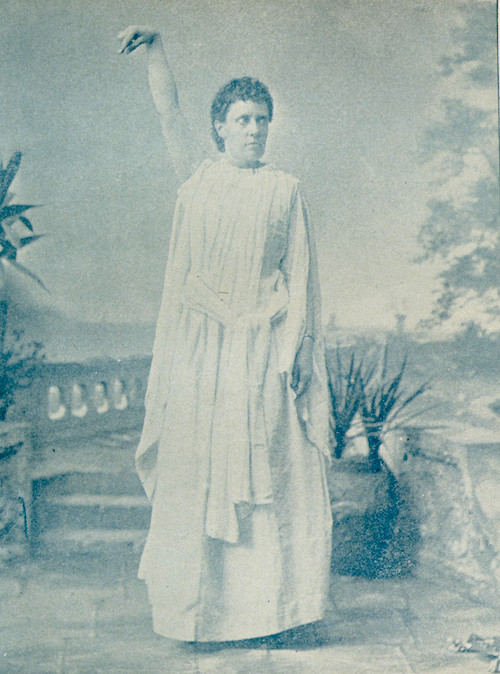
“And having wound their loathsome track to the top Of this huge, mouldering monument of Rome, Hang hissing at the nobler man below.”
A Woman’s Vengeance.
I thank[1292] you for your sympathy, But help! No,[1293] there is none for me. For what I’ve done I feel no sting Of penitence, nor can time bring One pang of sorrow. You may think Me hard, unfeeling, and may shrink[1294] From me with loathing when I say, I’m glad my bullet found the way Into his heart; and I would do The same again, and glory,[1295] too, In having done it. Penalty! For what they now may do with me I care but little.[1296] He is dead, And that ends all. What made me do the deed? The old, Old[1297] time-worn story of man’s cold And heartless cruelty; of wrongs Heaped on her head,[1298] to whom belongs At least respect,[1299] if nothing more. I met him—him, my husband—just Five years ago. My God! what trust I placed in his fair words, so soft, So sweet, so full of love. But love is blind, And I was madly so. The first two years Were full[1300] of joy—joy without tears. My life was of peaceful love. But, ah! the change came sudden, fast; My summer sun was overcast.[1301] The godlike being that I thought Of all mankind[1302] most perfect wrought, Tore off[1303] the mask that hid his face, And, to my horror,[1304] in his place Revealed a demon,[1305] blackest-hued, Remorseless, pitiless, imbued With all the wickedness that heart Can hold, or shameless sin[1306] impart The loving words to curses[1307] turned; My fond advances all were spurned.[1308] I soon became for him a thing To tread upon—a clod to fling[1309] From out his path. I took my child And fled[1310] one night, half maddened, wild, Far from his sight—I cared not where So I again his face might ne’er Behold. But soon once more with words That seemed to me like songs of birds[1311] He sought me out, and with eyes Filled with repentant tears, implored Forgiveness; and I—fool![1312] ignored[1313] The past, forgot my woes, and went Back to his home with heart content. O Heaven![1314] could I have but foreseen, Could I have known he did not mean To keep the vows so freely made! Once more his promises were cast Aside,[1315] as idle words, and worse Than e’en before—a daily curse[1316] My life became. Then came at last the final blow— The worst that love can contemplate, And which can turn that love to hate.[1317] One night, when he had gone from me, I found a letter which he carelessly Had overlooked. The script[1318] was small And neat—a woman’s hand! A wall Of fire outstretched[1319] before my eyes; A nameless horror seemed to rise. No, no! this could not be. He might Be bad, be dead to sense of right, But false! O Heaven![1320] The dreadful thought Surged in my brain.[1321] I crushed[1322] it, fought[1323] It down with frenzied eagerness. The note was open; chilled, nerveless, I drew it[1324] from its fold and read, [1325]“This night to meet him,” so it said. This night! how throbbed[1326] my aching head! Her house it gave—the place, the hour— I seemed renewed with sudden power. He[1327] would be there, and so would I.[1328] I cast[1329] the hated letter by; My child from off the floor I clasped, And from the bureau drawer I grasped A loaded pistol that would right My wrong. So out[1330] into the night, Into the raging storm, I fled, My babe clasped[1331] in my arms. I could but repeat, “False! false! I’ll be revenged!”[1332] My soul Now stirred and roused beyond control, Was filled with one desire alone, And that was that he should atone[1333] For this—to woman—foulest[1334] wrong. So through the night I sped along Until I reached her house. And then I heard[1335] A voice within—his voice! Each word In sweet and loving tenderness, And accents that my[1336] heart should bless Were lavished on her[1337] listening ears. I listened, listened,[1338] all unseen, Until I thought I should go wild.[1339] Then, with a desperate hand, flung wide[1340] The casement. With a bound, beside The two[1341] I stood. She started—screamed; He turned[1342] and saw me, and then seemed A moment as if turned to stone; And as his baseness I made known, She—poor thing—with a long, low cry, Sank[1343] to the floor despairingly. Then, like a fiend let loose from hell, He toward[1344] me leaped with one fierce yell, And grasping[1345] quick a heavy chair Cried, “Curse you!” whirled it high[1346] in air. I sprang aside[1347] in sudden dread; The blow fell full upon the head Of my sweet child, that lifeless dropped Back in my arms. My heart throbs[1348] stopped; A red mist swam[1349] before my sight; I could not scream, try as I might. I grasped the pistol[1350] from my breast, And then I killed[1351] him! All the rest For days to me was blank;[1352] and when— O Heaven! why did I not die then? At last my sense came back. I would Have taken my own life if I could. But it perhaps was better[1353] so; God will not judge me hard, I know. And when, in answer to His call, I stand within the heavenly hall,[1354] And the Blessed One Says, “Why hast thou transgressed my laws?” My babe shall plead its mother’s[1355] cause. —Thomas F. Wilford.
Gestures.
The Dream of Aldarin.
Arranged by Laura Coleman, who won with it the first gold graduating medal at the Eighth Commencement of the Mt. Vernon Institute of Elocution and Languages, 1891.
A chamber with a low, dark ceiling,[1356] supported by massive rafters[1357] of oak; floors[1358] and walls[1359] of dark stone, unrelieved by wainscot or plaster—bare, rugged, and destitute.
A dim, smoking light,[1360] burning in a vessel of iron, threw[1361] its red and murky beams over the fearful contents of a table. It was piled high[1362] with the unsightly forms of the dead. Prostrate among these mangled bodies, his arms flung carelessly[1363] on either side, slept and dreamed Aldarin[1364]—Aldarin, the Fratricide.
He hung on the verge of a rock, a rock of melting bitumen, that burned his hands to masses of crisped and blackened flesh. The rock projected over[1365] a gulf, to which the cataracts of earth might compare as the rivulet[1366] to the vast ocean.[1367] It was the Cataract of Hell. He looked below. God of Heaven,[1368] what a sight! Fiery waves, convulsed and foaming, with innumerable whirlpools[1369] crimsoned by bubbles of flame. Each whirlpool swallowing millions[1370] of the lost. Each bubble bearing on its surface the face of a soul, lost[1371] and lost forever.[1372]
Over this scene, awful and vast, towered a figure[1375] of ebony blackness, his darkened brow concealed[1376] in the clouds, his extended arms grasping[1377] the infinitude of the cataract, his feet resting upon islands of bitumen far in the gulf[1378] below. The eyes of the figure were fixed upon Aldarin,[1379] as he clung with the nervous clasp of despair to the rock, and their gaze curdled[1380] his heated blood.
He was losing his grasp; sliding and sliding from the rock, his feet hung over[1381] the gulf. There was no hope for him. He must fall—fall[1382]—and fall forever. But lo! a stairway,[1383] built of white marble, wide, roomy, and secure, seemed to spring from the very rock to which he clung, winding upward from the abyss, till it was lost in the distance far, far above. He beheld two figures slowly descending[1384]—the figure of a warrior[1385] and the form of a dark-eyed woman.[1386] He knew those figures; he knew them well. They were his victims! Her face, his wife’s! beautiful as when he first wooed her in the gardens of Palestine;[1387] but there was blood[1388] on her vestments, near the heart, and his lip was spotted with one drop of that thick, red blood. “This,” he muttered, “this, indeed, is hell,[1389] and yet I must call for aid—call to them!”[1390] How the thought writhed like a serpent round his very heart.
He drew himself along the rugged rock, clutching[1391] the red-hot ore in the action. He wanted but a single inch, a little inch and he might grasp the marble of the stairway. Another and a desperate effort. His fingers clutched it,[1392] but [1393] Ilmerine, my wife. Thou wilt drag me up to thee.” She stooped. She clutched his blackened fingers and placed them around the marble.[1394] His grasp was tight and desperate. “Julian, O Julian! grasp this hand.[1395] Aid me, O Julian! my brother!” The warrior stooped, laid hold on his hand, and drawing it toward the casement, wound it around[1396] another piece of marble. But again his strength fails. [1397]“Julian, my brother; Ilmerine, my wife, seize me! Drag me from this rock of terror! Save me! O save me!”[1398] She stooped. She unwound finger after finger. She looked at his horror-stricken face and pointed to the red wound in her heart.[1399] He looked toward the other face. “Thou, Julian,[1400] reach me thy hand. Thy hand, or I perish!” The warrior slowly reached forth his hand from beneath the folds of his cloak. He held before the eyes of the doomed a goblet of gold.[1401] It shone and glimmered through the foul air like the beacon fire of hell.
“Take it away![1402] ’Tis the death bowl!” shrieked Aldarin’s livid lips. “I murdered thee. Thou canst not save.” He drew back from the maddening sight. He lost his hold, he slid from the rock, he fell.[1403]
[1404]Above, beneath, around, all[1405] was fire, horror,[1406] death; and still he fell.[1407] “Forever and forever,” rose the shrieks of the lost. All hell groaned aloud, “Ever, ever. Forever and forever,” and his own soul muttered back, “This—this—is—hell!”[1408]
—George Lippard.
Gestures.
The Death of Uncle Tom.
Adapted by C. R. Bechtel.
The escape of Cassy and Emmeline irritated the before surly temper of Legree to the last degree; and his fury, as was to be expected, fell upon the defenceless head of Tom. When he hurriedly announced the tidings among his hands, there was a sudden light in Tom’s eye, a sudden upraising of his hands, that did not escape him. He saw that he did not join the muster of the pursuers. He thought of forcing him to do it, but, having had, of old, experience of his inflexibility when commanded to take part in any deed of inhumanity, he would not, in his hurry, stop to enter into any conflict with him.
Tom, therefore, remained behind, with a few who had learned of him to pray, and offered up prayers for the escape of the fugitives.
When Legree returned, baffled and disappointed, all the long-working hatred of his soul toward his slave began to gather in a deadly and desperate form.
“Well, Tom!” said Legree, walking up and seizing him grimly by the collar of his coat, and speaking through his teeth, in a paroxysm of determined rage, “do you know, I’ve made up my mind to kill you?”
“It’s very likely, Mas’r,” said Tom, calmly.
“I have,” said Legree, with grim, terrible calmness, “done—just—that—thing, Tom, unless you’ll tell me what you know about these yer gals!”