GEORGE M. VICKERS. (continued 2)
Reading edition
I screeched right out and Mr. Scruggins kotched me jest as I was dropping, and he carried me to the door, and I went in and sot down. I felt kind o’ faintish, I was so abominable skeered.
Mr. Scruggins said he would larn her better manners, so he picked up the poker and went out, but I had hardly began to get a leetle strengthened up afore in rushed my dear husband a-flourishing the poker, and that vicious cow arter him like all mad. Mr. Scruggins jumped into the room, and, afore he had time to turn round and shut the door, that desperate brute was in, too.
Mr. Scruggins got up on the dining-room table, and I run into the parlor. I thought I’d be safe there, but I was skeered so bad that I forgot to shut the door, and, sakes alive! after hooking over the dining-room table and rolling Mr. Scruggins off, in she walked into the parlor, shaking her head as much as to say: “I’ll give you a touch now.” I jumped on a chair, but thinking that warn’t high enough, I got one foot on the
Then I boo-hoo’d right out. All this while I was getting agonized; the brass knob on the stove got so hot that I had to sit on the narrer mantel-piece and hold on to nothing. I dussent move for fear I’d slip off.
Mr. Scruggins came round to the front door, but it was locked, and then he come to the window and opened it. I jumped down and run for the window, and hadn’t more’n got my head out afore I heard that critter a-coming after me. Gracious! but I was in a hurry; more haste, less speed, always; for the more I tried to climb quick the longer it took, and just as I got ready to jump down, that brute of a cow kotched me in the back and turned me over and over out of the window.
Well, when I got right side up, I looked at the window and there stood that cow, with her head between the white and red curtains, and another piece of my dress dangling on her horns.
Well, my husband and me was jest starting for the little alley that runs alongside of the house, when the cow give a bawl, and out of the window she come, whisking her tail, which had kotched fire on the Franklin stove, and it served her right.
Mr. Scruggins and me run into the alley in such haste we got wedged fast. Husband tried to get ahead, but I’d been in the rear long enough, and I wouldn’t let him. That dreadful
Husband tried the gate, but that was fast, and there wasn’t nobody inside the house to open it. Mr. Scruggins wanted to climb over and unbolt it, but I wouldn’t let him. I wasn’t going to be left alone again with that desperate cow, even if she was fast; so I made him help me over the gate. Oh, dear, climbing a high gate when you’re skeered by a cow is a dreadful thing, and I know it!
Well, I got over, let husband in, and then it took him and me and four other neighbors to get that dreadful critter out of the alley. She bellered and kicked, and her calf bellered to her, and she bawled back again; but we got her out at last, and such a time! I’d had enough of her; husband sold her for twenty dollars next day. It cost him seventy-five cents to get her to market, and when he tried to pass off one of the five dollar bills he got, it turned out to be a counterfeit.
Mr. Scruggins said to his dying day that he believed the brother of the man that sold him the cow bought it back again. I believe it helped to worry my poor husband into his grave. Ah, my friends, you better believe I know what a cow is.
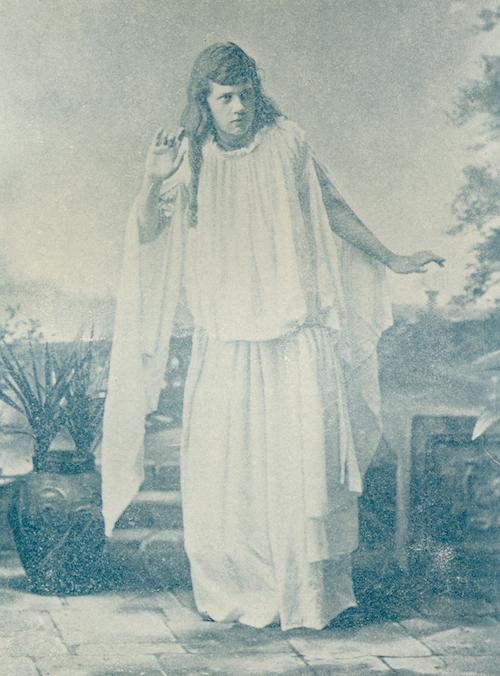
“Hark! ’tis the train; the mother’s ear leans to the sound.”
Mary, Queen of Scots.
[First Honor at Commencement of the Mt. Vernon Institute of Elocution and Languages, 1885.]
I looked far back[169] into other years, and lo! in bright array, I saw, as in a dream, the forms of ages passed away. It was a stately convent, with its old and lofty walls, And gardens with their broad green walks, where soft the footstep[170] falls; And o’er the antique dial stone[171] the creeping shadow passed, And all around,[172] the noonday sun a drowsy radiance cast. No sound of busy life was heard, save from the cloister[173] dim, The tinkling[174] of the silver bell, or the sisters’ holy hymn. And there[175] five noble maidens sat beneath the orchard trees, In that first budding spring of youth, when all its prospects please; And little recked they, when they sang, or knelt at vesper prayers, That Scotland knew no prouder[176] names, held none more dear than theirs: And little even the loveliest thought, before the holy shrine, Of royal blood and high descent from the ancient Stuart line! Calmly her happy days flew on,[177] uncounted in their flight, And as they flew, they left behind a long-continuing light. The scene was changed. It was the court, the gay court of Bourbon, And ’neath a thousand[178] silver lamps a thousand courtiers[179] throng; And proudly kindles Henry’s[180] eye—well pleased, I ween, to see The land assemble all[181] its wealth of grace and chivalry; But fairer far than all the rest who bask on fortune’s tide, Effulgent in the light of youth, is she,[182] the new-made bride! The homage of a thousand hearts—the fond deep love of one— The hopes that dance around a life whose charms are but begun— They lighten up her chestnut eye,[183] they mantle o’er her cheek, They sparkle on her open brow, and high-souled joy bespeak; Ah! who shall blame, if scarce that day, through all its brilliant hours, She thought of that quiet convent’s calm, its sunshine and its flowers? The scene was changed. It was a bark that slowly held its way, And o’er its lee[184] the coast of France in the light of evening lay; And on its deck a lady sat, who gazed with tearful eyes Upon the fast-receding hills,[185] that dim and distant rise. No marvel that the lady wept—there was no land on earth[186] She loved like that dear land, although she owed it not her birth; It was her mother’s land, the land of childhood and of friends— It was the land where she had found for all her griefs amends— The land where her dead husband slept—the land where she had known The tranquil convent’s hushed repose,[187] and the splendors of a throne[188]; No marvel that the lady wept—it was the land of France— The chosen home of chivalry, the garden of romance! The past was bright, like those fair hills[189] so far beyond her bark; The future[190], like the gathering night, was ominous and dark[191]! One gaze again—one long, last gaze—“Adieu, fair France, to thee!”[192] The breeze comes forth—she is alone on the unconscious sea! The scene was changed. It was an eve of raw and surly mood, And in a turret chamber high[193] of ancient Holyrood Sat Mary, listening[194] to the rain, and sighing with the winds, That seemed to suit the stormy state of men’s uncertain minds. The touch of care had blanched her cheek,—her smile was sadder now, The weight of royalty had pressed too heavy on her brow; And traitors to her councils[195] came, and rebels to the field;[196] The Stuart Scepter well she swayed, but the Sword she could not wield. She thought of all her blighted hopes—the dreams of youth’s brief day, And summoned Rizzio[197] with his lute, and bade the minstrel play The songs she loved in early years—the songs of gay Nevarre, The songs, perchance, that erst were sung by gallant Chatelar; They half beguiled her of her cares, they soothed[198] her into smiles, They won her thoughts from bigot zeal, and fierce domestic broils; But hark![199] the tramp of armèd men! the Douglas’ battle cry! They come, they come![200]—and lo! the scowl of Ruthven’s hollow eye! And swords are drawn, and daggers gleam, and tears and words are vain[201]— The ruffian steel is in his heart[202]—the faithful Rizzio’s slain! Then Mary dashed[203] aside the tears that trickling fell; “Now for my father’s arm!”[204] she said, “my woman’s heart, farewell!”[205] The scene was changed. It was a lake, with one small lonely isle, And there[206] within the prison-walls of its baronial pile, Stern men stood menacing their Queen, till she should stoop to sign The traitorous scroll that snatched the crown from her ancestral line. “My lords, my lords!” the captive said, “were I but once more free, With ten good knights on yonder shore[207], to aid my cause and me, That parchment would I scatter[208] wide to every breeze that blows, And once more reign a Stuart Queen o’er my remorseless foes!” A red spot burned upon her cheek—streamed her rich tresses down, She wrote the words—she stood erect—a QUEEN WITHOUT A CROWN! The scene was changed. A royal host a royal banner[209] bore, And the faithful of the land stood round[210] their smiling Queen once more; She stayed her steed upon a hill—she saw them marching by[211]— She heard their shouts—she read success in every flashing eye. The tumult of the strife begins—it roars—it dies away;[212] And Mary’s troops and banners now, and courtiers—where are they?[213] Scattered and strown and flying[214] far, defenseless and undone[215]— Alas! to think what she has lost, and all that guilt has won! —Away! away![216] thy gallant steed must act no laggard’s part; Yet vain his speed—for thou dost bear the arrow in thy heart! The scene was changed. Beside the block a sullen headsman[217] stood, And gleamed the broad-axe in his hand, that soon must drip with blood. With slow and steady step there came a lady[218] through the hall, And breathless silence[219] chained the lips and touched the hearts of all. I knew that queenly form[220] again, though blighted was its bloom— I saw that grief had decked it out—an offering for the tomb! I knew the eye, though faint its light, that once so brightly shone: I knew the voice, though feeble now, that thrilled with every tone. I knew the ringlets, almost gray, once threads of living gold; I knew that bounding grace of step—that symmetry of mould! Even now I see[221] her far away, in that calm convent aisle, I hear[222] her chant her vesper hymn, I mark her holy smile— Even now I see[223] her bursting forth, upon the bridal morn, A new star[224] in the firmament, to light and glory[225] born! Alas! the change!—she placed her foot upon a triple throne, And on the scaffold[226] now she stands—beside the block—ALONE! The little dog that licks her hand—the last of all the crowd That sunned themselves beneath her glance, and round her footsteps bowed! —Her neck is bared—the blow is struck—the soul has passed[227] away! The bright, the beautiful, is now a bleeding piece of clay![228] The dog is moaning piteously; and, as it gurgles o’er, Laps the warm blood that trickling runs unheeded to the floor![229] The blood of beauty, wealth and power—the heart blood[230] of a Queen— The noblest of the Stuart race—the fairest earth has seen— Lapped by a dog! Go, think of it, in silence and alone; Then weigh against a grain[231] of sand the glories[232] of a throne! H. G. Bell.
Gestures.
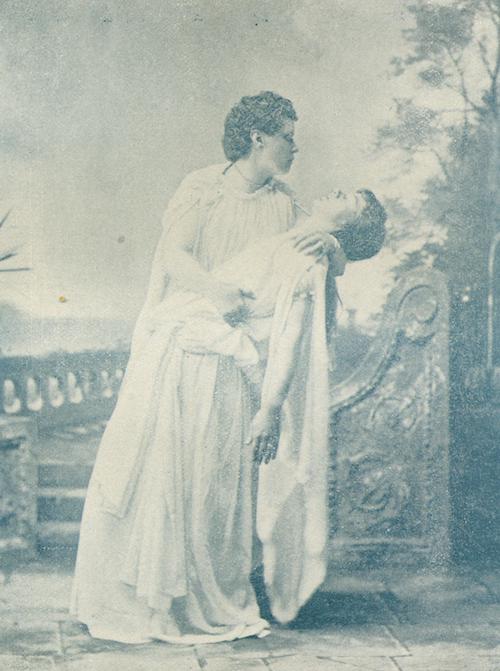
“Alas! poor soul, what woe is thine!”
The Yankee Still Ahead.
A Yankee, visiting London, and passing along one of the principal thoroughfares of trade and travel, stopped to look at some beautiful specimens of writing paper exposed for sale in a shop window; he gazed long and earnestly at the gorgeous display, when presently he turned and encountered the proprietor of the establishment standing at the door. The Yankee politely said:
“Will ye tell me what ye du with them nice bits of paper?”
“Yes, we keep them to tie up gape-seed in,” was the snappish response.
“Oh, ye du, du ye?” said Jonathan, with a sly twinkle in his eye, as he walked on. Passing down the street a short distance
“Yes, sir; he writes letters for persons who desire his assistance.”
“Du ye think he’d write a letter for me if I’d pay him fur it?”
“Certainly he would, and be glad of the chance.”
Our bright-eyed hero thanked him, and turned abruptly away, walking briskly in the direction from which he came. The shop was soon reached, and, fortunately, the same individual stood on the door-step. The Yankee lost no time in addressing the cockney, and thus at once began:
“I say, mister, I heerd that ye write letters fur folks what can’t write; what’ll ye tax me to write a letter to my uncle Peter?”
“I will charge you five shillings,” he said, in such a changed tone of voice that the Yankee had to look again to see that he had not mistaken the person.
“Will ye write jest what I tell ye tu, and spell all the words right?”
“To be sure I will.”
“And if ye don’t, I won’t pay ye; will ye agree to that?”
“As I understand my business thoroughly, of course I will agree to that.”
“Wall, then, ye may commence.”
The scribe arranged his paper, ink and pen, and pronounced himself ready.
“My dear uncle Peter:—ready fur more?”
“Yes.”
“‘Rived here in London last week,—have ye got that deown?”
“Yes, go on.”
“Thought I’d take a stroll through the woods,—got that deown and spelt right?”
“Yes, yes; go on, and do not bother me so.”
“I pay ye five shillings by-and-bye, don’t I?”
“Yes, but you have no need to detain me so if you do.”
“Wall, I walked and walked and walked and walked and walked and—”
“What’s the use of saying it over so many times?”
“None o’ your business,—I pay ye five shillings,—and walked and walked and walked—”
“See here, this page is full of the words ‘and walked.’”
“Turn over then,—and walked and walked, and I couldn’t find any woods. Have ye got all that deown and spelt right?”
“Yes, but why don’t you go on.”
“Jest then I stopped to think what I should du, or where to go,—got that all deown?”
(Snappishly) “Yes.”
“Wall, then I seen a sign, and on it wuz: ‘Teams to hire,’ so I went up and told the man to give me a fust-rate team with a hoss I could easy manage myself. My! but you write fast. Is all that deown?” (Surprised).
“It is, and I would like to have the rest of your letter, sir.”
“Wall, that hoss started off all right, but in less than two minutes she got stubborner than any mule; and I hed to get eout, and lick her and kick her and prick her and lick her and kick her and prick her, (continue to repeat these words very rapidly), and she wouldn’t go. Is that all deown, and spelt right?”
“You are only losing time, sir, in repeating that last phrase.”
“That’s my business,—When I see’d she wouldn’t go fur lickin’, I tried to coax her, and coaxed and coaxed and coaxed and coaxed and coaxed, but she wouldn’t go; then I got crosslike
“I can’t spell that,” said the Englishman.
“Oh, ye can’t spell that, can’t ye? Then ye needn’t write any more for me.”
“Need not write any more!”
“No more,” was the composed reply of the Yankee, as he laid his hand over his fat pocket and said:
“I ’spose ye remember our agreement?”
“Yes, I do, but what’s to be done with all this paper?”
“Keep it to tie up gape-seed in. Good bye, sir!” and the Yankee made a speedy exit.
Arranged by S. Anna Gesemyer.
Tommy’s Deathbed.
But hush! the voice from the little bed, And the watchful mother bent her head. “Mammy, I know that I’m soon to die And I want to wish them all good-bye. I shouldn’t like any here to say, ‘He didn’t shake hands when he went away; He was glad to be off to his harp and wings And couldn’t remember his poor old things.’ In Heaven I never should feel content If I hadn’t been kind before I went; So let me take leave of them, great and small, Animals, people and toys and all.” So the word went forth, and in no great while The servants entered in solemn file— The stout old cook, and the housemaid, Rose, And the aproned boy, with his smutted nose. So each of the women, with streaming cheek, Bent over and kissed him and could not speak; But he said that they must not grieve and cry, For they’d meet again in the happy sky. ’Twas longer and harder to deal with Jim— The child grew grave as he looked at him, For he thought to himself, “He bets and swears, And I hardly believe that he says his prayers. Oh, Jim, dear Jim, if you do such things You’ll never be dressed in a harp and wings.” He talked to the boy as a father should, And begged him hard to be grave and good. The lad lounged out with a brazen air And whistled derisively down the stair. But they found him hid in the hole for coal, Sobbing and praying in grief of soul. Old “Rover” came next, sedate and good, And gazed at his master and understood; Then up we carried, in order due, “Maria,” the cat, and her kittens two. Proud purred the mother, and arched her back, And vaunted her kittens, one white, one black; And the sweet white kitten was good and still, But the black one played with his nightgown’s frill. He stroked them all with his poor weak hand. But he felt they could not understand. He smiled, however, and was not vext, And bade us bring him the rabbit next. He welcomed “Punch” with a loving smile, And hugged him close in his arms awhile; And we knew (for the dear child’s eyes grew dim) How grievous it was to part with him. His mother he bade, with tearful cheek, Give “Punch” his carrot three days a week, With lettuce-leaves on a cautious plan, And only just moisten his daily bran. Then next we brought to him, one by one, His drum and his trumpet, his sword and gun; And we lifted up for his fondling hand His good gray steed on the rocking-stand. Then close to his feet we placed a tray, And we set his armies in array; And his eyes were bright with fire and dew As we propped him up for his last review. His ark came next, and pair by pair, Passed beasts of the earth and fowls of the air; He kissed good Japheth, and Ham, and Shem, And waved his hands to the rest of them. But we saw that his eyes had lost their fire, And his dear little voice began to tire; He lay quite still for a little while, With eyes half-closed and a peaceful smile. Then “Mammy,” he said, and never stirred, And his mother bent for the whispered word; “Give him his carrot each second day,” Our Tommy murmured, and passed away.
Going to Market.
Oh, dear! these are dull times. What is a body to do? Bills cannot be collected, the season for business is over, and prospects for relief look decidedly blue. How can a woman buy a Saturday’s marketing for eight persons with only five dollars? The idea is preposterous! I could cry my eyes out with perplexity, but what’s the use?
Moses Flint is a good husband; he dotes on me, I know; yet he has no more idea of the cost of a shoulder of mutton than a Kickapoo Indian has of a sewing machine. Well, there’s no use of standing here talking about it; it must be done, but how? Oh, my poor head!
One pound of butter, fifty cents; observe—sixteen ounces of butter for eight persons, just two ounces apiece, to last until Monday morning. Why, Moses himself eats two ounces at a meal! The thought distracts me. Butter, fifty; potatoes, twenty-five; onions, fifteen; he will have onions on Sunday; won’t eat ’em through the week; says they interfere with his business; but it makes no difference the day he spends with me. I wonder if my nostrils are better adapted to smell onions than those of his customers? Men are strange mortals, anyhow; my Moses will get shaved and polish his boots to go to the lodge, but let me ask him to go with me to the dressmakers, or to the Muggins’, and he won’t even put on a clean collar. The lodge must be a very particular place.
Cabbage for slaw, ten; there is a dollar gone already. A
—Geo. M. Vickers.
The Merry Sunflower.
With a little ingenuity and with six musical voices this piece may be made a very pleasing and attractive feature in an evening’s entertainment. Procure a piece of sheeting at least six feet in length by five in width. Fasten the lower lengthwise edge to the floor of the stage, and the upper edge, by means of cords or other fastenings, to the ceiling. Cut three holes about the height of a person’s face in standing and of the shape and size of the face, and three others at kneeling height; then around these holes paint or paste on paper to represent the petals of immense sunflowers, with stalks attached. The singer’s faces occupy the holes, and the words are sung to the air of “The Little Brown Jug.”
1ST VOICE. Oh, I’m a namesake of the Sun, Prized and loved by every one. 2D VOICE. Quite tall and stately here am I, Oscar Wilde for me would sigh. Chorus. Oh, proud the rose and pink may be, Still they’re naught compared with me; We look down on all the rest, Thus of flowers we are the best. 3D VOICE. Yes, you’re a beauty, so am I, Sitting on my throne so high! 4TH VOICE. Rich black and yellow, gold and brown, Who’s not heard of my renown? Chorus. 5TH VOICE. Mister Sol he flirts with me, Tries his best my face to see! 6TH VOICE. Here list’ning to the warbler’s song Rock I all the summer long. Chorus.
Hints on Expression.
Expression consists in so modulating the voice by means of the different degrees of pitch, force, rate, and rhetorical pause, as to perfectly convey every shade of meaning contained in the sentiment; in other words, it is painting with sound. As perfect a picture can be conveyed to the ear by means of voice as to the eye through color; and in order to utilize this life-coloring of modulation in reading, you must first acquire a thorough conception of the meaning of the author; try to place yourself in sympathy with the sentiments you are to utter, adopt them and put them into your own words, notice how you express them, what degrees of force come upon words best bring out their meaning, and then take up again the author’s words, and try to give them as nearly as possible like your own; you will find the battle is half won. One of the greatest obstacles in the way of giving true expression is the presence of the printed page before the eye. The words are repeated one after the other mechanically, while the thoughts are perhaps upon another subject. An artist cannot paint a picture without first drawing it in his mind; so we cannot paint a word picture unless its impression is made upon the brain; hence the key to expression consists in understanding what you read.
A future number will contain directions for the remedy of unmanageable voices.
—F. Lizzie Peirce.
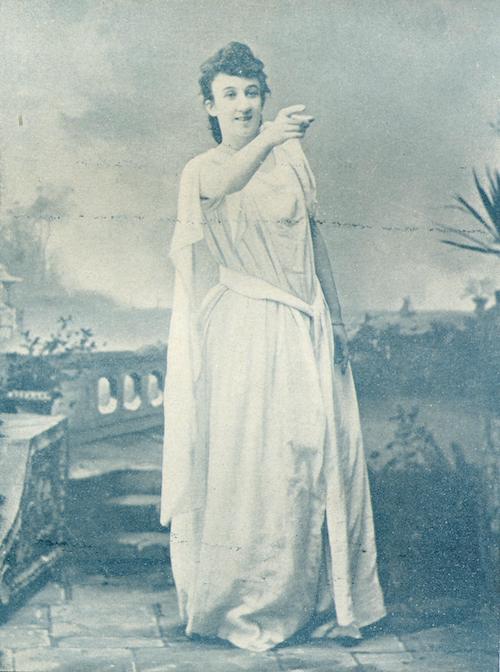
“Look at the fly on that man’s head! Look! another fly.”
The Crowning of the Sunday-School Angel.
MUSICAL DIALOGUE WITH TABLEAU.
CHARACTERS.
The Guard, Gentleman.
The Angel of Order, ⎫ Ladies.
The Angel of Literature, ⎪
The Angel of Music, ⎬
The Angel of Love, ⎪
The Angel of the Word of God. ⎭
⎫ A small boy.
Two Ragged Children, ⎬
⎭ A little girl.
A Chorus of Sunday-school Scholars.
Preparations.—A large Gothic chair raised one step or more from the floor of the pulpit for a throne. A crown (made of pasteboard and covered with gold paper will answer), placed on the top of the chair. A scepter is needed. The ladies taking the parts should be dressed in white; they may each wear a long flowing veil of illusion or other light material, with star on the forehead. The veil should not cover the face, but fall back over the shoulders.
The Guard should wear a Knight Templar or other suitable uniform, and should take charge of and guard the throne before ORDER presents herself.
The Angel of Order (comes up the aisle, with a bell or some emblem of order in her hand, and ascending the pulpit advances towards the throne and addresses the Guard as follows):
I am the Angel of Order; “Order is heaven’s first law,”—a glorious law, seen in those beauteous isles of light that come and go, as circling months fulfil their high behest. Nor less on earth discerned mid rocks snow-clad or wastes of herbless sand.
Throughout all climes, beneath all varying skies, fixing for e’en the smallest flower that blooms, its place of growth.
I am the child of beauty and wisdom. My attendants are comfort, neatness, and activity. I come to be the angel of the Sunday-school. Let me occupy this throne and issue my decrees, and confusion will be unknown; officers, teachers and scholars shall be under my control.
All the regulations essential to a proper conducting of the school shall be enforced. Punctuality in attendance, propriety in behavior, attention to instruction, and obedience to rules shall be insisted upon. I will have a place for everything, and everything shall be in its place.
Guard (replies).—Angel of Order, I welcome thee; what thou hast said is true; what would this universe be without conducts her to the right of the throne).
The Angel of Literature (comes up the aisle with books, papers and tracts in her hand, ascending the pulpit, advances toward the throne, and addresses the Guard as follows):
I am the Angel of Literature. The written thoughts and emotions of men constitute my domain. The pen and the press are the instruments of my progress, and are mightier than the sword. I, too, am an applicant for this throne. Give me authority and I will supply the school with books and papers, with leaves and tracts,—of these there shall be no lack. The library shall be replenished from time to time with entertaining, instructive and religious volumes,—well bound and beautiful. And all will be glad for my presence and rejoice in my power (advances toward the throne).
Guard (replies).—Angel of Literature, I greet thee also with pleasure. Thy sphere is a noble one, and thy mission worthy. The mind must be stored with knowledge and stimulated with truth. It is thine to impart information and administer culture,—to aid in the education of our race. We give thee a place in our school, but cannot crown thee as its Ruling Angel. Stand here upon the left (leads her to the left of the throne).
The Angel of Music (comes up the aisle starting from the vestibule of the church, having in her hand a harp, or other instrument, and a roll of music, singing):
[Audio content is not currently supported on your device.
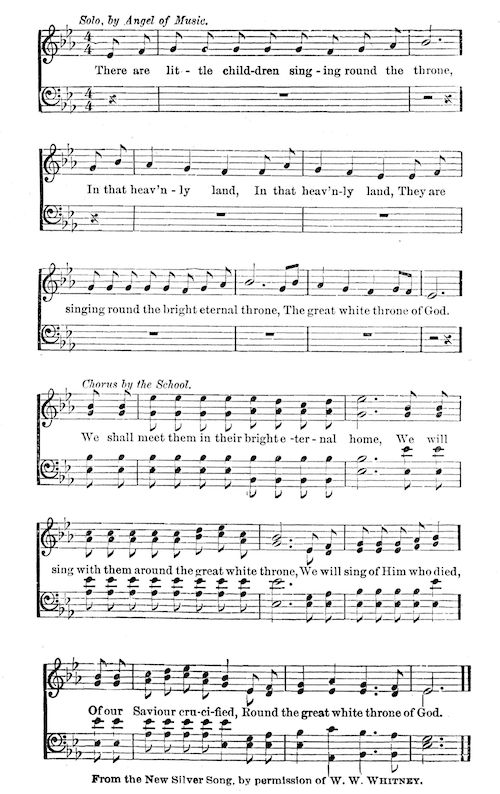
Solo, by Angel of Music. There are little children singing round the throne, In that heav’nly land, In that heav’nly land, They are singing round the bright eternal throne, The great white throne of God. Chorus by the School. We shall meet them in their bright eternal home, We will sing with them around the great white throne, We will sing of Him who died, Of our Saviour crucified, Round the great white throne of God. From the New Silver Song, by permission of W. W. Whitney.
The Angel of Music (advances toward the Guard, and addresses him as follows):
I am the Angel of Music. Melody and Harmony are my children. I open my mouth in song and my voice trembles with sweet sounds. I touch the keys of the instrument and the air is full of delightful strains. I give strength to the weak; encourage the wavering; cheer the sick, and assist in the triumph of the dying. I make heaven jubilant with anthems of praise. My voice is heard on earth in the lullabys of the nursery, in the songs of childhood, in the hymns of the sanctuary and in the ballads of the nation. My power is felt by the refined and the savage.
Let me be the ruling angel of the Sunday-school. I will furnish each department with an organ. I will teach all to sing. The tunes and the time shall be perfect, and no discord shall be heard amid the blended notes. Books of music shall be in abundance and all hearts shall thrill with gladness.
[Audio content is not currently supported on your device.
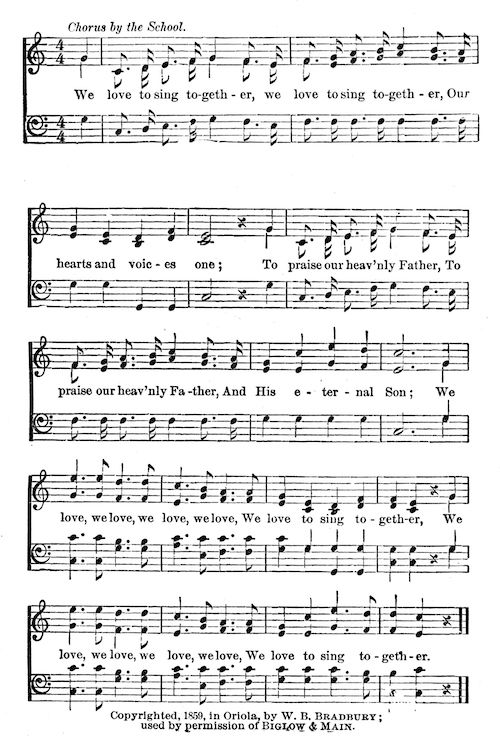
Chorus by the School. We love to sing together, we love to sing together, Our hearts and voices one; To praise our heav’nly Father, To praise our heav’nly Father, And His eternal Son; We love, we love, we love, we love, We love to sing together, We love, we love, we love, we love, We love to sing together. Copyrighted, 1859, in Oriola, by W. B. Bradbury; used by permission of Biglow & Main.
Guard (replies).—Angel of Music, I have listened to thy song, and its sweetness has captivated my soul. Surely thy work is sublime and thy influence great.
“Music the fierest grief can charm, And fate’s severest rage disarm; Music can soften pain to ease, And make despair and madness please; Our joys below it can improve, And antedate the bliss above.”
We cheerfully assign thee a place in our midst, but thou canst not be the Supreme Angel of the school (leads her to the right of the throne).
The Angel of Love (comes up the aisle leading a little boy and girl, each wearing a loose, ragged garment that can be easily thrown off. She advances toward the Guard and addresses him as follows):
I am the Angel of Love. I dwell in the bosom of God and in the hearts of men. Heaven is the scene of my highest manifestation, but I breathe benedictions on the earth. I relieve the needy and cheer the disconsolate with words and deeds of sympathy. The light of my smile kindles a radiance in many dark places of sorrow. My scepter subdues the hardest heart, and my speech often wins the prodigal back to his father’s house. I make home happy and bless the church with prosperity. I am a candidate for this throne. Give me place, and I will cause with magic power springs of happiness to rise, and flowers of social delight to bloom in the pathway of all; the aged and the young shall alike rejoice, and the entire school shall witness how good and pleasant it is to dwell together in unity. Besides this, I will go out into the highways and hedges, into the lanes and alleys; visit the abodes of the poor and the haunts of ignorance, and will gather the children in that they may be enriched with the treasures of grace, and made wise unto salvation.
[Audio content is not currently supported on your device.
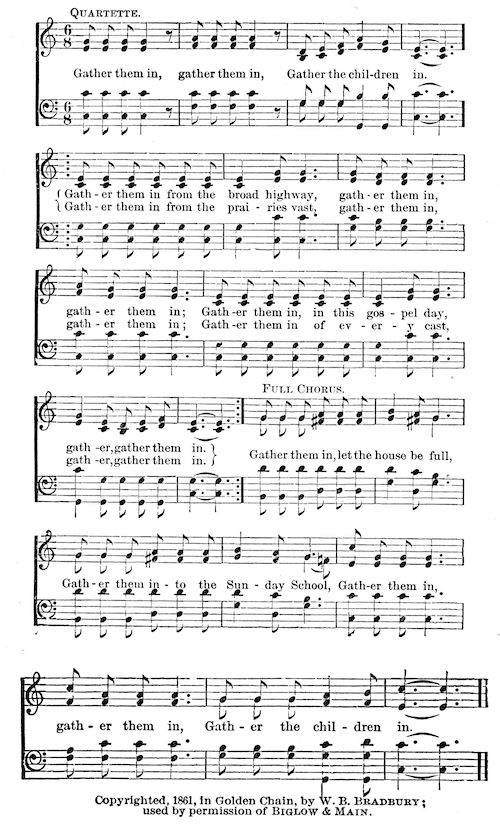
Quartette. Gather them in, gather them in, Gather the children in. Gather them in from the broad highway, gather them in, gather them in; Gather them in, in this gospel day, gather, gather them in. Gather them in from the prairies vast, gather them in, gather them in; Gather them in of every cast, gather, gather them in. Full Chorus. Gather them in, let the house be full, Gather them into the Sunday School, Gather them in, gather them in, Gather the children in. Copyrighted, 1861, in Golden Chain, by W. B. Bradbury; used by permission of Biglow & Main.
Guard.—Angel of Love, fairest daughter of the skies, thy smile is radiant with blessing, and thy coming is ever a benediction. Without thee, this world would be a wilderness, drear and cold, where naught but cruelty and sorrow would abound. Truly thou art welcome. Let thy voice be heard and thy power be felt among us. Bind our hearts together with a threefold cord which cannot be broken, and may the glory of thy presence surround us ever as with a halo; but to thee, as to all who have preceded thee, I am compelled to say, thy place is not upon the throne, as the ruling angel of the Sunday-school. Guard (leads her to the left, beside the Angel of Literature; the boy and girl during the singing having thrown off their ragged garments, take their places one on each side of her).
The Angel of the Word of God (comes up the aisle, carrying a Bible in her arms, and advancing toward the Guard, addresses him as follows):
I am the Angel of the Word of God; Order is indispensible, Literature is needed, Music is to be desired, Love must ever abide. Each has her place and her work, but higher than all, and the inspirer of all, is the Bible. I come as the lamp of truth to a benighted world; the bearer of intelligence from the throne of God—a revelation to men of duty and destiny. I come as the chart and compass to guide men safely over the
Wherever I go, the wilderness and solitary places are glad for me, and the deserts rejoice and blossom as the rose.
If all would heed my words and partake of my spirit, the whole world would soon recover the charms of Eden.
Instead of sin and misery, there would be everywhere purity and bliss. I come to train these children and youth in the ways of piety, and develop in them the elements of true manhood and womanhood; to qualify them for usefulness here, and blessedness hereafter. I wish to be crowned the angel of the Sunday-school.
Guard.—Angel of the Word of God, All Hail! A thousand welcomes. For thee we have waited long and rejoice in thy coming. Thou hast said well—Order is indispensible. Literature is needed. Music is to be desired. Love must ever abide. These are thy handmaids and shall remain with us, but thou shalt be supreme. Ascend the throne (she takes her place on the throne). On thy head I put this crown. In thy hand I place this scepter. Rule thou over us. Fill our minds with thy wisdom, our hearts with thy spirit, that our lives may show forth the praise of Him who created us, and redeemed us by the blood of His Son. Order, Literature, Music, Love, these shall assist thee, and our School shall be a Bible School. Thou art the Angel of the Sunday-school!
TABLEAU.
The Guard.—(Standing immediately in front of the throne, will sheath his sword, take off his hat, and say):
Order, Literature, Music, Love, let us bow in token of our They all kneel and the Angel of the Word of God holds the Bible out on her hand while the school rises and sings):
[Audio content is not currently supported on your device.
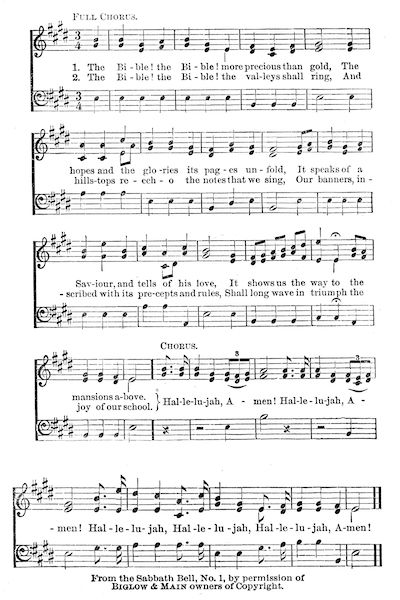
Full Chorus. 1. The Bible! the Bible! more precious than gold, The hopes and the glories its pages unfold, It speaks of a Saviour, and tells of his love, It shows us the way to the mansions above. Chorus. Hallelujah, Amen! Hallelujah, Amen! Hallelujah, Hallelujah, Hallelujah, Amen! 2. The Bible! the Bible! the valleys shall ring, And hillstops reecho the notes that we sing, Our banners, inscribed with its precepts and rules, Shall long wave in triumph the joy of our school. Chorus. Hallelujah, Amen! Hallelujah, Amen! Hallelujah, Hallelujah, Hallelujah, Amen! From the Sabbath Bell, No. 1, by permission of Biglow & Main owners of Copyright.]
CURTAIN.
Rev. D. W. Gordon.
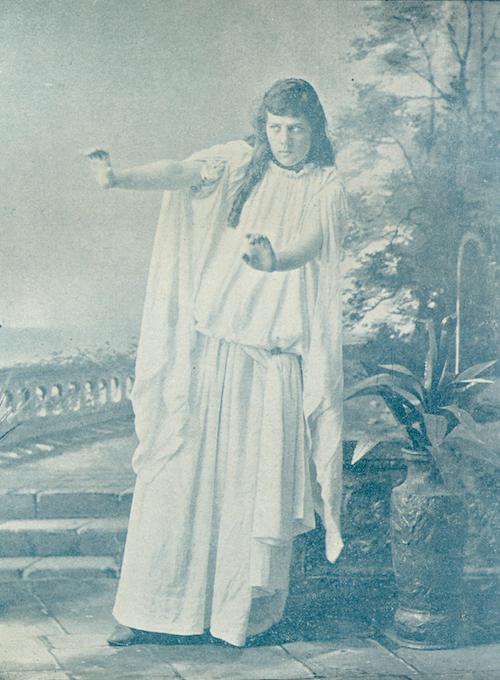
“Hence! horrible shadow, e the Unreal mockery, hence!”
[233]The Calls of the Bells.
[Represent bell tones with the voice upon the italicized words.]
“In union and in freedom dwell!” Peals forth a brave, time-honored bell. “To all proclaim sweet liberty Throughout the land—the land is free!” In the tower let it cheerily swing, And make the whole world hear it ring “The tyrants knell, the knell, the knell,” It is the Independence Bell. At dawn of day, to break the spell Of sleep, the watchman rings a bell. The rough bell in the dusky tower, With rude tongue calls the signal hour. Oh, how it rings, and swings and clangs, Shaking the old roof where it hangs! The sound foretells, foretells, foretells The toils that follow morning bells. In ringing notes that rise and swell, In startling sharpness sounds a bell. To boys and girls, it seems to speak Of German, Latin, French and Greek; The lads and lassies know it well, It is the famed Academy bell. Read well, think well, learn well, do well, In haste exclaims the scholars’ bell. In stout hands, jangling as it fell, Near a white apron rang a bell. Its tones are sounds that all may know, It gives the languid pulse a glow, It tinkles, jingles, rings and sings, And talks of sweet and savory things, The roast, the broil and on the shell, It is the dinner bell, “sweet-bell.” A great white sheet in silence fell, Followed by the tinkling of a bell. How wide and white the snow-lit scene! Wrapped in warm furs two lovers lean, Bringing their beating hearts so near, Responsive throbbings they might hear, And the fond story that love tells, But for the bells, sleigh bells, sleigh bells. Sweet music comes from hill and dell, A charm of sound from a sweet bell; In softest harmony the tones Ring in the sweetest honey-moons. May no harsh speech come from the lips To shade the fair moon with eclipse. Its melody in love-tones tells Of bride and groom and wedding bells. From far and near, where virtue dwells, There comes the sound of sacred bells, Soft choral chimes, one day in seven: Voices of love from the vast heaven. Their varied tones in sweetness blend, And like a psalm of praise ascend, And each glad heart in rapture swells, Responsive to the Sabbath Bells. Flaming like lurid light of hell, Startled at midnight by the bell, Oh, merciless, disastrous fire, That spreads and rises, higher, higher, higher! Crackling in speech like flames in fir, That needs not the interpreter. The thrilling warning peals and swells, It is the fire alarm of bells. There comes at last a saddening knell, Startling our sluggish souls. The bell Reminds us of the close of time, And warns us with its solemn chime. E’en the sad bell seems short of breath, When tolling in slow tones of death! Let’s hope that all is well, is well When tolls at last the funeral bell. —Geo. W. Bungay.
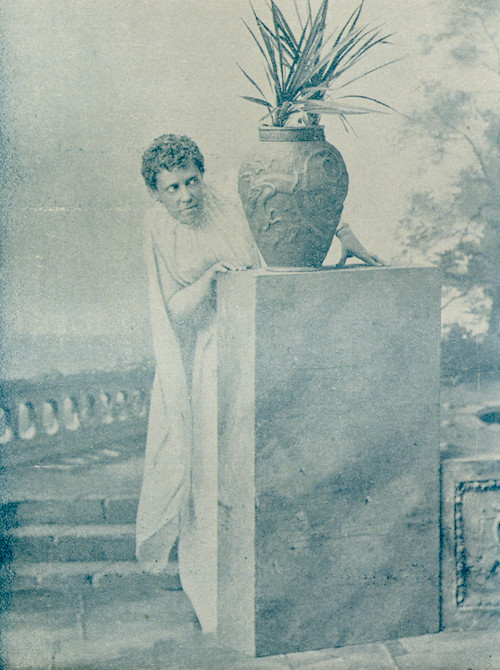
“And seeing, unseen, I watched the perfidy of him I deemed most true.”
Dorothy Clyde;
OR,
The Squire’s Daughter.
A COMEDY IN TWO ACTS.
CHARACTERS:
Barton Clyde, a country squire.
Leslie Raymore, a clerk.
Morley Dingle, a rich man’s son.
Caleb Weatherspout, an old bachelor.
Dorothy, the Squire’s daughter.
Mrs. Felton, a poor widow.
Em’ly, her only child.
Parthenia Philp, an heiress.
Mercy, her maid.
MASQUERADERS.
Scene: A Pennsylvania village.
Time: The present.
Act I. Interior of widow’s cottage.
Act II. The masquerade.
Costumes: For first act—modern. For second act—Squire, sailor; Raymore, Chinese; Dingle, knight; Weatherspout, monk; Dorothy, gypsy; Mrs. Felton, ghost; Em’ly, peasant; Miss Philp, duchess; Mercy, French maid. Masqueraders to suit fancy.
Act I.
Scene: Interior of widow Felton’s cottage. Table, C. Rocking-chair, L. C. Door Pract. in F., windows, etc. Time, morning. Mrs. Felton discovered seated in rocking-chair; Em’ly standing R. facing L.
Em’ly.—Mother, I was never so insulted in my life; she threw the dress on her toilet stand, and fairly ground her teeth with rage.
Mrs. Felton.—Dear! dear! dear! what shall we do! I depended on the money for making that dress to pay at least a month’s rent. Did you explain our distressed condition to Miss Philp?
Em’ly.—Mother, dear, I did my best to reason with her, but she only stamped her foot, and bade me hold my saucy tongue. She said the dress was ruined.
Mrs. Felton.—Our lot is indeed hard. What a dreadful misfortune my sickness has proved to be.
Em’ly.—Dorothy Clyde stopped me on the road opposite the mill; she saw that my eyes were red, and pressed me so hard that I made a clean breast of the whole matter. She said she would be over about ten o’clock with her father, the Squire.
Mrs. Felton.—Oh, if your poor, dear papa had only lived, how different our lot would be to-day. Alas! I fear we shall soon be homeless.
Em’ly (Kneels at her side).—Do not give way to such gloomy thoughts; God has promised to care for the widow and the fatherless; let us trust in His goodness.
Mrs. Felton.—My child, your mother is justly rebuked. We will trust in the Lord, come what may.
[Knock at the door.]
Em’ly (Rises and opens door).—Oh! walk in, Miss Philp.
(Enter Miss Philp and Mercy, the latter bearing a bundle.)
Miss Philp.—Walk in! Do you suppose I would run in, crawl in or creep in? Walk in! Of course I’ll walk in, and when I am ready, I shall walk out again. Humph!
Mrs. Felton.—Em’ly, dear, give the lady a chair. Pray be seated, Miss Philp.
Miss Philp (Dusts the chair with her handkerchief).—I think I shall stand.
Em’ly.—The chairs are perfectly clean, Miss Philp; I carefully dusted them early this morning.
Miss Philp.—I prefer to stand, however.
Mrs. Felton (To Mercy).—Sit down, Mercy.
Mercy.—Thank you. (Attempts to sit on chair.)
Miss Philp.—Stop! how dare you sit when your mistress is standing! Place that bundle on the table; such brazen conduct is intolerable. And as for you, madam, you have not only ruined my robe, but you have prevented my attendance at the ball to-night.
Mrs. Felton.—Mercy!
Mercy (starts).—Eh?
Mrs. Felton.—It was merely an ejaculation. (To Miss Philp).—I deeply regret having incurred your displeasure.
Em’ly.—Perhaps we can remedy the defect if it is but trifling; it is yet early in the day.
Mercy (Places bundle on table).—Why yes; I will open it (Begins to untie bundle).
Mrs. Felton.—That’s it; how stupid we are.
Miss Philp.—Don’t include me; I am not willing to be classified with dolts.
Em’ly.—Oh, dear, no!
Mrs. Felton.—I meant no offense.
Mercy (Takes dress from paper).—Look at it, Mrs. Felton.
Miss Philp.—Silence! Stop talking all together like quacking ducks; your din will drive me distracted. Have you no refinement, no breeding? How I dislike to mingle with vulgar persons. Young woman, ah, that is, Em’ly, hold up that dress.
Em’ly (Takes up dress).—Yes, miss.
Miss Philp.—Just try it on, so that I may show your mother her stupid work.
Mrs. Felton.—Pardon me, but—
Miss Philp.—Silence! I am talking.
Mercy (Aside).—Shame upon you, you spitfire!
Em’ly (Putting on dress).—I am sure we can fix it in time for this evening.
Mercy (Assisting Em’ly).—How well you become fine clothes; you were intended to be a lady. Just see what a graceful figure.
Miss Philp.—Ridiculous; the idea! Why the girl looks like a jointed doll.
Mrs. Felton.—Em’ly, dear, hold still.
Em’ly (Raises dress to her eyes).—Mother—
Miss Philp.—Here, don’t wipe your eyes on that dress, if you please.
Em’ly.—Mother, I do not think it womanly in Miss Philp to thus take advantage of our reverse in fortune.
Mrs. Felton.—There, there, Em’ly! Never mind, let me examine the dress. Where is the fault, Miss Philp?
Miss Philp.—The sleeves are too long, the neck is too small, and the skirt is too short.
Mrs. Felton.—Alas! I fear it is spoiled. My mind has been so burdened with trouble that I am beside myself.
Mercy.—It fits Em’ly to perfection.
Em’ly.—How can we ever pay you for the material? What shall we do?
Miss Philp.—Madam, what is your bill for making this dress?
Mrs. Felton.—I sent you the bill.
Miss Philp.—Ah, yes, I recollect. (Draws bill from pocket ) “To making dress, twelve dollars.” Well, it is of no use to me; you may keep it—take the dress and receipt the bill.
Mrs. Felton.—But our rent—if we do not pay something to-day we may be turned out into the world, homeless.
Miss Philp.—I am not a charity visitor; you should study economy. Ahem! Mercy, follow me. [Exits door F. followed by Mercy.]
Mrs. Felton.—My child, my child! (They embrace and stand weeping.)
[Enter Squire and Dorothy; they pause and observe Mrs. Felton and Em’ly.]
Squire (Aside).—This is, indeed, a tableau. (Aloud) Ladies!
Mrs. Felton. and Em’ly.— (Start) Oh!
Dorothy (Taking their hands).—Why are you weeping? Papa will fix things all right. Do not worry.
Squire.—Mrs. Felton, your husband was a man whom I esteemed highly. He at one time rendered me a valuable service, and it is but common gratitude that I now befriend his family. Here is a check for double the amount of all arrears of rent due on your cottage. (Hands her check.) Accept it as a loan until you are able to return it.
Mrs. Felton.—I could not think of it.
Squire.—You must!
Dorothy.—Take it for my sake; do not refuse; take it and welcome.
Mrs. Felton.—Oh, what kindness!
Em’ly (Kisses Dorothy on forehead).—My own, dear Dorothy.
Squire.—Now for a little talk on another subject. Be seated. (All take chairs) Mrs. Felton, you are aware that I am agent for the Dingle estate, of which your cottage is a part. I have long acted in that capacity as a matter of courtesy to my old friend,
Mrs. Felton.—No doubt it is a great annoyance to you—
Squire.—Not at all. Listen. I am rich, and my friend Dingle, in order to augment his already immense estate, desires his son Morley to become the husband of my daughter.
Dorothy (Confused).—Oh, papa, how can you talk of that horrid young man! You know I detest his very name.
Squire.—My dear child, if you will allow me to talk, I can easily show you the necessity of taking these ladies into our confidence.
Dorothy.—Pardon me, papa, dear; although I have never met Mr. Morley Dingle, yet from your description of his interview with you, I am sure he is very rude and ill-bred.
Squire.—True. Now in order that he may have a pretext for visiting our village, he will in future collect his rents in person. He will be here to-day, perhaps may now be on his way to your cottage.
Mrs. Felton. and Em’ly.— Oh, horrors!
Squire.—You have my check.
Mrs. Felton.—True, true, kind sir; I had for the moment forgotten it.
Squire.—Morley Dingle knows that my daughter has a generous nature and abhors meanness in any guise; therefore, he would act his best were he introduced to her. I prefer Dorothy should see him in his ordinary character.
Dorothy.—And how can I, papa?
Squire.—He will call here for the rent. He knows Mrs. Felton is largely indebted. Ladies, my plan is this: You and I will take a walk in the grove back of the cottage. Dorothy will remain and represent herself to be Em’ly; she can promise
Dorothy.—No, no, papa!
Squire.—Take off your hat, throw an old shawl over your shoulders. (Points through window.) See! there he comes. Let us be off.
Em’ly (Aside).—I wish I could stay and peep.
Mrs. Felton.—I hope he will not be cross to the dear child—
Squire.—Come, quick!
[Exit all except Dorothy.]
Dorothy (Hurriedly searching).—What can I get? (picks up apron) Ah, this will do! (removes hat) I hear his footstep on the gravel walk. (Listens.) Gracious, how my heart beats!
[Loud knock at the door.]
I wish papa was here.
[Prolonged knock.]
Well, he can’t eat me, anyhow. (Opens door.)
[Enter Dingle.]
Dingle (Surveying Dorothy through eye-glasses).—Ah! I presume you are the daughter of the, ah—
Dorothy.—Yes, sir; I am the daughter.
Dingle.—Is it possible!
Dorothy.—Sir, will you be seated?
Dingle (Aside).—What airs these poor creatures assume. (Aloud) Miss, (takes card from case) this will probably explain both who I am and the nature of my business.
Dorothy (Takes card and reads aloud).—“Morley Dingle, Dingleton, Dingle Township, Pennsylvania,” (aside) Dingle, dong, dingle—(Aloud) I am not prepared to pay you anything to-day, Mr. Dingle. There has been very little money earned in this house since the last payment was made.
Dingle (Sits on a chair and puts feet on table).—You must settle with me before I leave this village, or give up the house (pulls book from pocket). Let me see; yes, here it is—Felton—March,
Dorothy (Aside).—How I would like to tell you. (Aloud.) O sir, if you but knew the sufferings of the poor I am sure your sympathy would guide your action.
Dingle.—Not a bit of it. The laws of this State protect the defenseless landlord more effectively than any other government on the globe—except Ireland. I’m proud that I am a Pennsylvanian.
Dorothy.—Surely, sir, you would not invoke the law to distress a poor widow and her child?
Dingle.—John Felton signed a lease giving me the right to sell all his effects for any arrears of rent due upon this house.
Dorothy.—Does not the law exempt a certain amount of household chattels?
Dingle.—John Felton waived the benefit of the exemption law.
Dorothy.—But he is dead.
Dingle.—Young woman, his family must suffer the consequences of his act.
Dorothy (Indignantly).—This is unjust; it is contrary to the letter and spirit of the law.
Dingle (Looking through eyeglass).—You talk like a member of the bar; that is, a country member—a squire.
Dorothy.—The exemption law was enacted as a merciful barrier against the sweeping tide of adversity—a life-boat for helpless castaways: how then dare any man’s hand thwart the law and defeat its purpose? To waive that law repeals it: is this an absolute monarchy?
Dingle.—This government is run upon a solid cash basis: if you have cash, you can smile at waivers. The remedy, young woman, is cash. That’s my prescription for landlords’ Taps his pocket and laughs).
Dorothy.—You shock me, sir; you fill me with alarm; would you strip us of these poor household necessities.
Dingle.—I am a benefactor to women. If I see they have no possibility of keeping house I resort to heroic measures—I sell ’em out. What’s the result? They get situations, get plenty to eat and comfortable quarters.
Dorothy.—And the little children?
Dingle (Pulls out watch).—It is time to end this nonsense. Have the rent by to-night. Good morning. [Exit door F.]
Dorothy (Sits in chair).—So that’s the suitor for my heart and hand! Whew!
[Enter Squire, followed by Mrs. Felton and Em’ly].
Squire (Pointing with cane).—There he goes! Look at him; see how pompously he struts; observe the elevation of his nose! [All look towards window]. Take care! down he goes! [All laugh boisterously].
Dorothy.—Poor fellow, I wonder if he is hurt!
Em’ly.—His hat is completely demolished.
Mrs. Felton.—Rather a bad fall.
Squire.—Off he starts again. There goes the strut—up goes the nose—the lesson is lost. (To Mrs. Felton) Madam, now that we have arranged for the masquerade, banish your sorrows: forget the trials of the day in the pleasures of the evening. Your daughter knows her part well; she will personate Dorothy in her conversation with Dingle, until all unmask.
Dorothy.—And my voice will convince him that I am his delinquent tenant.
Em’ly.—Dorothy, dear, do you really think Miss Philp will not recognize this dress?
Dorothy.—She will be too eager to be seen by Morley All listen.]
Weatherspout (From without).—This way, Leslie, this way; I’ve not forgotten the art of climbing rail fences, even if I am seventy-five.
Squire.—My old friend Weatherspout, as I live!
[Enter Weatherspout].
Weatherspout (Pausing on the threshold). I—I—beg pardon!
Squire.—Come in, my long-tried friend.
Weatherspout.—The door was open and it seemed kind o’ natural to walk right in—so Leslie and—(turning to door) why, I thought he came in! We have just helped ourselves to a draught of your delicious spring water.
Em’ly (Goes to door).—Come in, Leslie.
[Enter Leslie Raymore.]
Leslie.—Pardon my intrusion, ladies; I assure you I had no idea you were engaged.
Mrs. Felton.—You are welcome.
Dorothy. and Em’ly.—No apology is necessary.
Weatherspout.—Ladies, Mr. Raymore has been in my employment for a number of years; in fact, since his boyhood. I have every confidence in his honor and integrity.
Squire.—We all know Leslie, and every one is acquainted with you, Mr. Weatherspout: and it is exceedingly gratifying to hear of the cordial relations which exist between two such worthy men—but you were about to say—
Weatherspout.—I was about to remark that I have come here solely for the purpose of attending the masquerade ball to-night.
Leslie.—Mr. Weatherspout has stated the fact. I showed him the invitation from Squire Clyde, and he gave me permission
Squire.—Which I take as a high compliment to myself, and shall do all in my power to make you remember the hospitalities of Clyde Hall. [All make show of conversing.]
Dorothy (To Leslie).—I am so glad you have come.
Leslie.—I am more than glad; I cannot express my happiness.
Dorothy.—And papa wrote his consent—were you not surprised?
Leslie.—No, Dorothy, love; your father is sensible, and judges a man by his personal worth rather than by the weight of his purse.
Dorothy.—You have told no one?
Leslie.—Only my employer.
Dorothy.—You rogue! No wonder he came with you.
Squire.—Yes, yes; that is so, we had better go to the mansion. Mrs. Felton, we will depart. Recollect, Em’ly, until we unmask you are Dorothy Clyde—that is, to Morley Dingle. Good day, ladies.
[All exit except Mrs. Felton and Em’ly.]
Mrs. Felton.—Em’ly, my child, God is good. Something seems to tell me that there are better days in store for us.
Em’ly.—Let us hope, mother; (takes her hand) my heart, too, seems lighter.
Mrs. Felton.—We will hope.
[CURTAIN.] End of the first act.
Act II.
Scene: Interior of Clyde Hall. Seats arranged at wings. Door pract. in Flat, through which flowers are visible. Em’ly and Dingle discovered standing C. Both are masked.
Dingle.—By yonder fair moon whose radiance is reflected in a thousand dewy gems; by the glorious splendors of this summer night, I adjure you to remove that mask.
Em’ly.—Sir Knight, if eloquence could tempt me to reveal my face before the proper time, then your words would win your wish. I am not what you think I am. Knights woo not poor peasant maids, and I am poor, and humble, too.
Dingle.—The wealth of those bright eyes would make one rich though he were a beggar.
Em’ly.—Flattery from friends is at best embarrassing; from strangers it is wholly out of place.
Dingle (Aside).—There’s no humbleness in that remark. (Aloud) I crave your forgiveness; I am the last man in the world who would do an ungallant act.
Em’ly (Aside).—You are among the latest who did. (Aloud) Are you always mindful of a woman’s feelings? Do you treat them all with gentle courtesy?
Dingle (Aside).—There’s a little sarcasm in that; I wonder what she means? (Aloud) Certainly! I would scorn, loathe, abhor a man who could forget his duty in that regard.
Em’ly.—Even though she owed him money?
Dingle.—Eh! (Aside) What is she driving at? (Aloud) Miss Clyde, you are severe.
Em’ly.—If any one designated me as Miss Clyde they erred. Once more I repeat that I am not Dorothy Clyde.
Dingle (Laughs).—We will not discuss that point. I have danced with you twice to-night, and I have danced with no one else; and yet I have had the honor of twice dancing with the lady whose name you mentioned.
Em’ly.—The music has ceased. The guests will come this way. Excuse me.
[Exits hastily L.]
Dingle (Looking L).—O Jupiter, what a beauty! How
[Enter Dorothy R.]
But why does she persist in denying her identity? A servant volunteered to point out both her and the Felton girl; she evidently desires to—
Dorothy (Coughs).
Dingle (Aside).—The tenant’s daughter. I would recognize that haughty minx though she were doubly masked.
Dorothy.—Pardon me, sir; I would inquire the way to the banquet room.
Dingle (Aside).—It will never do to let her recognize my voice; I will assume a falsetto tone. (Aloud) You had better find a servant, Miss Gypsy Queen; I am not posted in the commissary department.
Dorothy.—I perceive that all knights are not Quixotes in gallantry. Thanks, however, for your suggestion.
Dingle (Sarcastic bow).—Don’t mention it, fair fortune-teller.
Dorothy.—If you knew me you would try to be more courteous; thus have you unmasked your nature, though your face is still unseen.
[Exit L.]
Dingle.—The saucy beggar! Well, in some natures poverty serves to intensify pride; I will seek the Squire.
[Exits R.]
(Enter Weatherspout and Miss Philp, Door F.; she leans upon his arm.)
Weatherspout.—The night is lovely; years and years ago it was my delight to wander forth beneath the moon’s soft rays—
Miss Philp.—Years and years ago! There! you talk like a sexagenarian. I will wager you what you will that you are under twenty-five! Aye, that I know your name!
Weatherspout.—In a few minutes the guests will assemble
Miss Philp (Aside).—The servant volunteered to tell me this man’s name. He is merely assuming the ancient quaver. His form is as straight as a pin oak. (Aloud) My eyes are not deceived, Mr. Morley Dingle.
Weatherspout.—Not knowing the party for whom you take me, I am unable to rate the value of your compliment.
Miss Philp (Aside).—It is Dingle, sure! (Aloud) Then, holy Monk, be my father confessor and learn that Mr. Morley Dingle is a perfect Adonis, a gentleman of rare attainments, one whose name any woman would be proud to—to—that is—include among her list of friends.
Weatherspout.—Or read upon her teaspoons—I comprehend.
Miss Philp.—Of course I speak from hearsay only; I have not the pleasure of a personal acquaintance with the gentleman; although I think I have enjoyed his company this evening.
Weatherspout.—My child, you are mistaken; I am not Dingle. I am glad for your sake that you are deceived. You will also be satisfied when you have reflected upon the matter.
Miss Philp (Angrily).—Do you know to whom you are talking?
Weatherspout.—Candidly, I do not.
Miss Philp (Aside).—I see; he fears I will penetrate his disguise. (Aloud) Oh, you are deep, very deep.
Weatherspout (Offering his arm).—Permit me to escort you to the drawing-room.
Miss Philp (Takes his arm).—What a dreamy, soul-inspiring night.
Weatherspout (Yawning).—Very.
[They exit L.]
Squire (From without).—I will tell you. Step this way. Enter Squire and Leslie R., each holding mask in hand) Knowing that Dingle was anxious to identify my daughter, and that Miss Philp was dying to meet Dingle, I instructed a trusty servant to mislead them by making certain remarks within their hearing. The thing has worked like a charm, and the most ludicrous blunders have resulted.
Leslie.—I thought that Dorothy was unusually interested in the movements of certain couples. So the little rogue is a party to your conspiracy!
Squire.—The motive justifies the means; I desire to reclaim an arrogant young man and a silly woman; both are difficult cases, yet I hope to succeed.
Leslie.—Some one is calling—hark!
Mercy (Without).—Quick! quick! Squire, quick! (Enters L. running) Oh! oh! oh—!
Squire.—Speak, girl, what is amiss?
Mercy.—Oh, sir, you wouldn’t joke if you knew the trouble. It may end in bloodshed!
Squire.—Who’s joking?
Mercy.—You asked me a conundrum.
Squire.—Never!
Mercy.—You asked me what is a miss—every girl knows what a miss is.
[Exits R. running.]
Leslie.—The girl is mixed. [Leslie and Squire mask.]
Dingle (Without).—You shall apologize or fight. (Enter L.) Ah, here are gentlemen who will see fair play. Come on, sir, come on!
[Enter Weatherspout L.]
Weatherspout.—Silence! Give me a chance to explain.
Dingle (Drawing sword).—Retract, sir! Eat your words! (Flourishes sword) Feast upon them! Swallow them!
Weatherspout.—Gentlemen, hear him! His tongue would madden an auctioneer with envy.
Dingle.—Ha! more insults! Hold me back! (Makes a pass at Weatherspout.) Let me dissect him!
[Squire and Leslie take hold of Dingle.]
Squire.—Remember where you are!
Leslie.—Do nothing rash, sir!
Weatherspout.—Release him; I fear his jargon, not his blade; let me explain, and if he then insists on satisfaction, I will thrash him with my staff.
Dingle.—My honor! (Flourishes his sword) must I submit to this!
Squire.—Let the monk speak.
Weatherspout.—While standing on the porch enjoying the cool breeze, my companion, a lady, playfully called me Dingle. I replied that the air was filled with Dingles, whereupon this fellow sprang from behind a bush, and would have throttled me, had I not sneezed in his face.
Dingle.—What right had he to mention my name?
Squire.—You are a masked knight—how should he know you are the champion of one Dingle?
Dingle (Aside).—What a donkey I have made of myself. (Aloud) Gentlemen, there is a blunder here. Mr. Monk, I ask your pardon (Sheathes his sword). I apologize.
[Enter Mrs. Felton D. F. She pauses C.]
Squire.—Gentlemen, you’ve raised the dead with your noise. Look!
Weatherspout.—Beg pardon, sir?
Leslie.—Were you addressing me?
Dingle.—What did you observe, sir?
Squire.—I say it is a shame when even spirits cannot rest.
[All look at each other for explanation.]
Dingle.—My dear sir, you’ve indulged too freely in lobster salad; you’ve got the nightmare.
Squire (Points at Mrs. Felton).—Brave Sir Knight, look over your shoulder.
Dingle (Turns slowly, sees Mrs. F., and runs off L.)
Weatherspout (Same business).
Leslie.—Well, gentlemen—(Turns and sees Mrs. F.) Ugh! (Runs off R.)
Mrs. Felton (Removing pillow case from head).—Is it possible that I am such a hideous object that priests, soldiers and brigands flee from my presence?
Squire (Removes mask).—My dear Mrs. Felton, they were frightened almost to death before you came; they were longing to disperse, and you furnished the excuse.
Mrs. Felton.—This has been a night of excitement and pleasure to the young folks; to me it has proved a season of consternation. One man was so terrified on meeting me in the hall that he fell into a tub of egg flip; another individual dropped the arm of his lady-love and ran howling into the midst of the dancers.
Squire.—When the guests behold your face, their fears will turn to admiration.
Mrs. Felton.—Oh, now, really, Squire!
Squire.—I have long sympathized with you in your bereavement; I have observed your trials and sorrows with positive pain; sympathy often ends in love—
Mrs. Felton (Aside).—Is he going to propose? (Aloud) Don’t, don’t, Squire.
Squire.—I repeat, sympathy often ends in love; Dorothy loves you well.
Mrs. Felton (Aside).—Dorothy! (Aloud) She does, I am sure. Ahem!
Squire (Falls on his knee).—And so does her father.
[Enter Mercy L.; she pauses unobserved.]
Mrs. Felton (Takes his hand).—This is indeed an honor.
Squire.—A true woman is an honor beyond price. I am the honored one (Look bashfully at each other).
Mercy (Aside).—Well, if this isn’t the spooniest collection of humans I ever was thrown among, then my name’s not Mercy. (Aloud) Excuse me.
Squire.— (Start) Eh!
Mrs. Felton.— (Start) Oh, my!
Mercy.—I’ve lost my mistress and I want to find her. It’s time to go home.
Squire.—The masqueraders are coming; (Mrs. Felton and Squire mask) you will soon see your mistress. (Waltz music in distance, to continue until masqueraders enter, when change to march.) They are now dancing the last waltz.
Mrs. Felton.—How sweetly the strains of music fall upon the ear.
Squire (Extending his arms).—Do you waltz, my dear madam?
Mercy.—The idea!
Mrs. Felton (Retreating).—Oh, no, no, no.
Mercy.—Here they come!
(Squire and Mrs. Felton take position C. Mercy L. E.)
Squire.—They come, my dear Mrs. Felton.
Mrs. Felton.—Yes, they come.
Squire.—My dear madam, let them come.
[Enter Dingle and Em’ly, Leslie and Dorothy, Weatherspout and Miss Philp, 2 L. E., followed by masqueraders; all countermarch to music, and take final positions as follows: Dingle and Em’ly R. C., Leslie and Dorothy L. C., Weatherspout and Miss Philp R., masqueraders form semi-circle in rear.]
Squire (Removing mask).—As your host I bid you each and all unmask.
(All unmask.)
Miss Philp (Astonished).—Only look! (Aside) Old as sin!
Squire.—I will first present my daughter.
Dingle (Bows to Em’ly).
Squire.—Ladies and gentlemen (takes Dorothy’s hand), this is Miss Dorothy Clyde (all bow).
Dingle (Aside).—The widow’s daughter! (Aloud to Em’ly) Surely, this is a joke; are you not Miss Clyde?
Dorothy.—No, sir; my name is Dorothy Clyde, and the young lady at your side is the one who did not hear your gallant views on the subject of arrears of rent.
Dingle.—Do you mean to say—?
Em’ly.—She means to say that I am Em’ly Felton.
Squire.—And that you are by no means a stranger to Dorothy.
Miss Philp.—And Mr. Dingle, pray what has become of him?
Squire.—The ladies first. This is Miss Philp, my friends; this is Miss Felton, and last, but not least, this is my esteemed—ah—that is—my very esteemed friend, her mother. Now, Miss Philp, allow me to introduce to your kind consideration Mr. Morley Dingle, of Dingleton, Dingle Township, Pennsylvania.
Dorothy (Aside).—Dingle, dong, dingle.
Dingle.—I am pleased to make your acquaintance, Miss.
Miss Philp.—It is such a pleasure to place your name—
Weatherspout (Aside).—On your teaspoons, if you could.
Miss Philp.—Among those of my chosen friends.
Squire.—Perhaps it would give Mr. Dingle exquisite pleasure to escort you home.
Dingle.—I have already a lady.
Dorothy (To Dingle).—Are you going to distrain the household chattels?
Dingle.—Not with such good collateral security. I was wrong. I deeply regret my action.
Dorothy.—Then the court has reversed its decision?
Dingle.—Completely! The waiver is a fraud.
Squire.—Ladies and gentlemen, this is my old chum, Caleb Weatherspout, and this is my future son-in-law, Leslie Raymore.
Weatherspout.—Of the firm of Weatherspout & Raymore.
Miss Philp.—Mercy, get my wrap, quick.
Mercy.—Must you go home alone?
Weatherspout.—Not by any means. I shall see you both safely home.
Miss Philp (Aside).—He don’t look so aged after all. (Aloud) How kind, sir.
Squire.—Now that we have thrown off our masks, let us keep them off.
Mrs. Felton.—And let us clasp hands in the light of a perfect understanding.
(All join hands.)
Leslie.—This is mainly due to Dorothy Clyde—
Em’ly (Nods to Dorothy).—The Squire’s Daughter.
[Curtain.]
—Geo. M. Vickers.
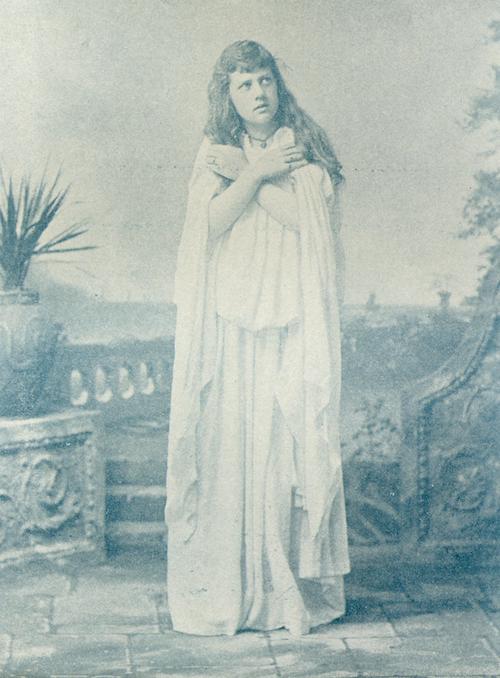
“Backward, turn backward, O time, in your flight, Make me a child again, just for to-night!”
A Dog Story.
I. He was strong and trim, and a good sized cur. A giant of dogs; with soft silk fur, Poised head, of an intellectual size, And two straight, luminous hero eyes. A tail whose gestures were eloquence; A bark with a germ of common sense. And this dog looked, upon the whole, As if he had gathered some crumbs of soul That fell from the feast God spreads for man— Looked like a line of the human plan. There went with his strong, well-balanced stride A dignity oft to man denied. God’s humblest brutes, where’er we turn, Are full of lessons for man to learn. That night that he crouched by the yielding door, And two grim, murderous thieves, or more, Had bribed the locks with their hooks of steel, He fought with more than a henchman’s zeal For sleeping loved ones’ treasures and life:— He conquered rogue, and bullet, and knife. That day that he walked by the river’s brink, Thinking (if certain men can think), And saw distress with a quick, sure eye, And heard the half-choked drowning cry A living life boat, soon he bore The half-killed man to a welcome shore. And when the wife of the rescued one Wept him her love for the great deed done, And fondled him in a warm embrace, He talked with his honest, kind old face, And said, “I have shown you nothing new; It is what we live and love to do. In lake or river, in sea or bay, My race are rescuers every day; In the snowy gulfs, ’mid hills above My race brings life to the race we love.” II. He was sick and reeling—deadly faint; He roamed the streets with a piteous plaint. He had lips afoam, and eyes hard set; He asked the mercy of all he met. He drearily ran his death-strown race; He found no pity in any face. He glanced at an old friend with a moan, There came to him back a well-aimed stone. No cure for him in his strange distress, No tender nursing and kind caress! All fled or fought when he came near; The world seemed mad with rage and fear. He searched for an unfrequented way; He would have prayed if a beast could pray. For he who man had deified Was now all mercy of man denied; He who to save man’s life had flown Now had to fight man for his own. * * * * * The soul of the humble brute has fled: The grand old dog lies safely dead. O, man-like brain, and God-like heart! You were made to carry a noble part. What spirit of vile Satanic breed Had sowed in your veins the poison-seed That turned to a curse your honest breath,— That shaped your lips to a fount of death? Sleep well old friend; your teeth of flame Grew not from a soul of vice and shame. Sleep well, old saint; not yours the will To plant the world with the germs that kill. Not yours the conscious guilt that lies In men who ravage with open eyes. You did, old dog, the best you knew, And that is better than most men do; And if ever I get to the great Just Place I shall look for your honest, kind old face. —Will Carleton.
Exercise in Pronunciation.
A jocund, sacrilegious son of Belial, who suffered from bronchitis, having exhausted his finances at the annual joust, in order to make good the deficit, resolved to ally himself to a comely, lenient and docile young lady of the Malay or Caucasian race. He accordingly purchased a calliope, a coral necklace of chameleon hue, and securing a suite of rooms at a hotel, he engaged the head waiter as his coadjutor. He then dispatched a letter of the most unexceptionable calligraphy extant, with a sentimental hemistich, inviting the young lady to an orchestral concert.
She was harassed, and with a truculent look revolted at the idea, refused to consider herself sacrificable to his desires, and sent a polite note of refusal, on receiving which, he procured a carbine and bowie knife, said that he would not now forge fetters hymeneal with the queen, went to an isolated spot, severed his jugular vein, and discharged the contents of his carbine into his abdomen, with a grimace at the raillery of his acquaintances. He succumbed and was irrefragably dead, and neither vagaries nor pageantry were permitted when he was conveyed to the mausoleum followed by his enervated canine.
The Moon.
Serenely, O moon, thou art beaming to-night, Tracking the sea with thy silvery light; Piercing the forest, thy beautiful rays Are patching the ground in fantastical ways. On city, on hamlet, on palace and hut, On the far-stretching plain, in the deep mountain cut, Thy mellow beams softly on all alike fall; O, queen of the night, thou hast homage from all: From the glistening dew, from the true lover’s sigh, From the cricket’s shrill voice and the katy-did’s cry; Thy heart-soft’ning power all races have felt; To thy soothing appeal the most callous must melt. O mute sympathizer, invoker of tales, A fleet of heart secrets each night to thee sails. To the shipwrecked at sea, when the storm clears away And calm night succeeds the wild, boisterous day, All huddled on raft, or faint clinging to spar, There’s a hope in thy beams that no danger can mar. When red in the east thou ascendest the sky, And thy disc meets the half-naked savage’s eye, He pauses, and feels as he views thy bright light That a Greater than he is displaying His might. Ere since by Omnipotence whirled into space, Thou hast gladdened the night with thy radiant face. To nations long dead, and unheard of by man, Thou wast familiar when first they began, Through their ages of splendor, their waning away, Till their last mould’ring relic succumbed to decay. And so, till Jehovah’s dread voice bids thee stay, And the night is absorbed by Eternity’s day, Thou shalt in thine orbit thy mission pursue, A bright silver ship in an ocean of blue. —Geo. M. Vickers.
The Suicide.
The sun had set. The ruddy clouds Had changed to gloomy gray, And sweet, sad twilight soothed the hour Forsaken by the day. A village road, with nest-like cots, And oaks, on either hand. An old stone bridge, whose single arch, A dark, deep river spanned: And sounds of distant merry shouts Were borne upon the breeze, When, on the bridge there came a maid, And sank upon her knees. A maid? Perhaps a slighted wife— Or neither—none could tell— A stricken life—a broken heart, About to bid farewell— Farewell to that, which lacking hope, Is but a dreary waste; Where Nature’s brightest, fairest sweets Grow bitter to the taste. She rose—advanced unto the brink— A wild, imploring prayer— Alas! she stood, unloved—alone— A statue of despair. One plaintive wail, and then a plunge— The wavelets laved the shore— Then all was still. The river flowed As smoothly as before. —Geo. M. Vickers.
The Felon’s Wife.
The scene was a court of justice, where criminals were tried, And a woman and child[234] stood sobbing close by a prisoner’s side. The man was the woman’s husband, the child their darling boy, And they waited the dreadful sentence that would two fond lives destroy. The sunshine streamed through the window and fell on the judge’s face,[235] While the song of a bird in a tree-top[236] seemed harsh and out of place; Then the sunlight merged into shadow,[237] and the bird had ceased to sing— So quick are the fitful changes that fate and nature bring. The ordeal soon was over, and the woman stood alone, Alone with her tender offspring, with a heart that weighed like stone. The convict’s tear still glistened like a gem on her pallid cheek, And that tear-drop mutely told her what his white lips could not speak. ’Twas a sad farewell, that parting, for it severed man and wife— Doomed her to toil unaided; him to servitude for life: But time soothes[238] the deepest sorrow, and love will hope and pray, And soon like a dream grew the terrors of that sad and awful day. * * * * * ’Tis night on the Mississippi, and a steamer, staunch and new, Has stopped at a village landing her fuel to renew; A man, the only passenger, steps[239] hurriedly on board, And mates and crew stand ready, waiting the captain’s word: “Haul in the gang-plank, lively! cast off your hawser, quick!” Who—oo! blows the hoarse, loud whistle, for the fog hangs low[240] and thick: Dong! dong! rings the pilot’s signal; plash! plash! go the mammoth wheels, And into the gloomy shadows, like a monster swan she steals.[241] A hundred souls are sleeping, and the engine’s throbbing drone[242] Has lulled the weary look-out with its drowsy monotone. Now the mist is lifting[243] slightly, and a light[244] gleams on the shore— ’Tis gone; now the night grows blacker,[245] more dismal than before: Who-oo! goes the whistle hoarsely, but the steamer plows along, For the pilot knows his bearings and he softly hums a song. Who—oo! comes a sound, and faintly, like an echo far away; And the engine still is droning, still is heard the raining spray: “Boat ahead, sir!”[246] calls the look-out; “Ay, ay, sir, boat ahead!” Thus replies the watchful pilot as he glances at the red,[247] Then turns to see the green[248] light, which the mist-clouds magnify Till upon each wheelhouse, gleaming, stares a single monster eye. Below the lights burn dimly, for all are locked in sleep, Save the stewardess and a porter who silent vigil keep— Who—oo! that’s close upon us! dong! quick goes the pilot’s bell, The engineer springs promptly and handles his lever well: “God help us! what has happened?” the frantic people cry, While terror and wild confusion are seen in every eye: Hark[249] to the trampling overhead! to the rudder’s rattling chain! To the shrieks that come from the cabin, where the women still remain! One blinding flash![250] one shudder! now everything is still, Save the swash[251] of the flowing river, and the sigh of the night wind[252] chill. The papers were full of the story, ’twas their theme for a day or more, Then the tale grew old and the world rolled on as smoothly as before. In a lowly home by the river[253] live a woman and her son, And the lines on their patient faces show what toil and care have done: They stand with a priest and surgeon, near the bed of a dying man, And hark to his broken whispers, while his ashen face they scan: His life had been worse than wasted, and his soul was black with sin, And a seething hell of sorrow was raging his breast within— “Yet—I’d—make—one—reparation—” and his trembling voice sinks low— “I—would—do—one—thing—of—honor—tho’ the last—before—I—go.” From—the—wreck—of—the—smouldering—steamer—fate—bore—me—bleeding—here,— That—my—awful—retribution—to—these—victims—might—appear— I—swear![254]—” and his voice grows louder, “if—you—search—that—satchel—there—[255] You—will—find—some—strange—confessions—and—the—proofs—of—truth—they bear—” On the wall[256] hangs a bag all blistered, which the woman hastes to reach, For she of all his hearers knows the purport of his speech. “This[257] proves my husband’s innocence! Thank God for what you’ve said!” And she turns to the lonely passenger, only to find him dead. * * * * * Softly the sunbeams golden steal[258] by a prison bar Lighting an empty dungeon whose iron door stands ajar;[259] And the same sun lights a cottage,[260] with a warm and cheery glow, Where three fond hearts united, with rapture overflow: “O, husband,” the woman whispers, “I knew that you told me true;” And he smiles and gently answers, “let us our vows renew; Come, boy, kiss your new found mother, whom we’ll love to the end of life, For we’ve bid farewell forever to the grief-tried felon’s wife.” —Geo. M. Vickers.
Gestures.
Little Christel.
Fräulein, the young school mistress, to her pupils said one day, “Next week, at Pfingster holiday, King Ludwig rides this way; And you will be wise my little ones, to work with a will at your tasks, That so you may answer fearlessly whatever question he asks. It would be a shame too dreadful, if the king should have it to tell, That Hansel missed in his figures, and Peterkin could not spell!” “Oho! that never shall happen,” cried Hansel, and Peterkin too, “We’ll show King Ludwig when he comes, what the boys in this school can do.” “And we,” said Gretchen and Bertha, and all the fair little maids, Who stood in a row before her, with their hair in flaxen braids. “We will pay such good attention to every word you say That you shall not be ashamed of us when King Ludwig rides this way.” She smiled, the young schoolmistress, to see that they loved her so, And with patient care she taught them the things it was good to know. Day after day she drilled them, till the great day came at last, When the heralds going before him blew out their sounding blast; And with music and flying banners, and the clatter of horses’ feet, The King and his troops of soldiers rode down the village street. Oh, the hearts of the eager children, beat fast with joy and fear, And Fräulein trembled, and grew pale, as the cavalcade drew near; But she blushed with pride and pleasure when the lessons came to be heard, For in all the flock of her boys and girls, not one of them missed a word. And King Ludwig turned to the teacher, with a smile and a gracious look; “It is plain,” said he, “that your scholars have carefully conned their book.” “But now let us ask some questions, to see if they understand;” And he showed to one of the little maids an orange in his hand. It was Christel, the youngest sister of the mistress fair and kind,— A child with a face like a lily, and as lovely and pure a mind. “What kingdom does this belong to?” as he called her to his knee; And at once, “The vegetable,” she answered quietly. “Good,” said the monarch kindly; and showed her a piece of gold; “Now tell me what does this belong to, the pretty coin that I hold?” She touched it with a careful finger—for gold was a metal rare— And then, “The mineral kingdom!” she answered with confident air. “Well done for the little mädchen!” and good King Ludwig smiled At Fräulein and her sister, the teacher, and the child. “Now answer me one more question,”—with a twinkle of fun in his eye,— “What kingdom do I belong to?” For he thought she would make reply “The animal;” and he meant to ask with a frown, if that was the thing For a little child like her, to say to her lord and master, the King? He knew not the artless wisdom that would set his wit at naught, And the little Christel guessed nothing at all of what was in his thought. But her glance shot up at the question, and the brightness in her face, Like a sunbeam on a lily, seemed to shine all over the place. “What kingdom do you belong to?” her innocent lips repeat; “Why, surely, the Kingdom of Heaven!” rings out the answer sweet. And then for a breathless moment a sudden silence fell, And you might have heard the fall of a leaf as they looked at little Christel. But it only lasted a moment; then rose as sudden a shout,— “Well done, well done for little Christel!” and the bravos rang about. For the King in his arms had caught her, to her wondering, shy surprise, And over and over he kissed her, with a mist of tears in his eyes. “May the blessing of God,” he murmured, “forever rest on thy head! Henceforth, by his grace, my life shall prove the truth of what thou hast said.” He gave her the yellow orange, and the golden coin for her own, And the school had a royal feast that day whose like they had never known. To Fräulein, the gentle mistress, he spoke such words of cheer, That they lightened her anxious labor for many and many a year. And because in his heart was hidden the memory of this thing, The Lord had a better servant, the land had a better King. —Mrs. Mary E. Bradley, in “Wide Awake.”
The Ballad of Breakneck.
The sun shines out on the mountain[261] crest; Far down the valley the shadows[262] fall; All crimson and gold is the glowing west;[263] And wheeling and soaring the eagles[264] call. The good ship[265] rides with a filling sail; The sailors are crying, “Away! away! We must stem the tide ere the North wind fail; The night and the breeze brook no delay.” The young mate lingers upon the strand[266] Near a dusky maiden with flushing cheek; In his broad brown palm he holds her hand, And eager and low are the words they speak. “Weep[267] not, Nekama; I shall return; Wait for me here on the mountain side; When the woods in their autumn glory burn, I shall come again to claim my bride.” Slowly the Indian lifts her head; Dry is her cheek, and clear her eye: “Nekama[268] will wait as thou hast said: The son of the pale-face cannot lie. Seeking thy sails on the stream below,[269] Under the shade of the tall pine-tree,[270] When the beeches are gold and the sumachs glow, From the mountain top I shall watch for thee.” The sailors are calling; the broad sails flap; From his neck Dirck loosens his great gold chain, Flings[271] the gleaming links in Nekama’s lap, Then springs[272] to the shallop’s stern again. The stout ash bends to the rowers’ will, Till the small boat reaches the vessel’s side, Then he turns to Nekama waiting still, Sad, but calm in her savage pride. Sails the ship under high Cro’ Nest,[273] Wearing and tacking in Martins’ Reach,[274] While Dirck looks back with a man’s unrest; And Nekama[275] lingers upon the beach. Fade the sails to a vague white speck; Loom the mountains, hazy and tall; Dirck watches still from the vessel’s deck, And the girl moves not, though the night-dews fall. A year has passed, and upon the hills[276] Scarlet and russet have faded to brown; No sound is heard but the flowing rills,[277] The summer’s voices are hushed[278] and gone.[279] A late, sad crow[280] on a bare beech top Caws and swings in an autumn wind; The dead leaves fall, and the acorn’s drop[281] Breaks the stillness and scares the hind. Wrapped in her blanket Nekama stands, Scans[282] the horizon with eager eye. Late she lingers. She clasps[283] her hands, And a sadness dims her wide dark eye. Is it a mist[284] o’er the distant shore? Look how the maiden’s[285] dusky face Glows and brightens! a moment more, And the white speck changes,[286] and grows apace. He comes! he comes! From the wigwams near Gather the braves[287] and the squaws again; The men are decked with arrow and spear, And the women of wampum and feathers vain. Flecked is the river[288] with light canoes, Laden with gifts for the welcome guest; The spoils of the chase let him freely choose; Close to the ship[289] are the frail barks pressed. Brown and still as a bronze relief, Shyly Nekama[290] keeps her place Behind her father, the Mohawk chief, Who, plumed and tall, with painted face, Grasping a spear[291] in his nervous hand, Looking in vain one face to see, Turns and utters his proud demand: “Dirck Brandsen[292] comes not: where lingers he?” “Dirck stays in Holland,”[293] the sailors say; “He has wedded a dame of wealth and state; He sails no more for many a day— God send us all like happy fate!” Dark grows the brow of the angered sire: “Can the white man lie like a Huron knave?” The eyes of the maiden burn like fire, But her mien is steady, her words are brave. From her bosom she drags[294] the great gold chain; Dashed[295] at the captain’s feet it lies: “Take back to the traitor his gift again; Nekama has learned how a pale-face lies!” Proudly she steps[296] to her light canoe; Bends her paddle at every stroke; The graceful bark o’er the waters flew, Nor wist they a woman’s heart had broke. Up the mountain[297] Nekama hies; Stands in the pine tree’s shade again; Scans the scene with her wide wild eyes; Moans like a creature in mortal pain. The dark clouds crowd round the mountain peak,[298] Caws the crow on the bough[299] o’erhead The great limbs bend and the branches creak— “Ah, why do I live?[300] He is false!”[301] she said. A shriek is heard through the gathering storm; A rushing figure darkens the air; Out from the cliff[302] springs a slender form And the maiden’s grief lies buried there.[303] Towers the gray crag[304] grim and high; Drips the blood from its rugged side; Loud and shrill is the eagle’s call O’er the muttering wash of the angry tide! But Storm King[306] nods to old Cro’ Nest,[307] Where the pine-trees nod, and the hoarse crows call, Though the Mohawk sleeps ’neath that rocky crest,[308] While the leaves on his ruined castles fall. To-day on the Hudson sailing by, Under the shadow of Breakneck Hill, We tell the legend, and heave a sigh, Where Nekama’s memory lingers still. —Harper’s Magazine.
Gestures.
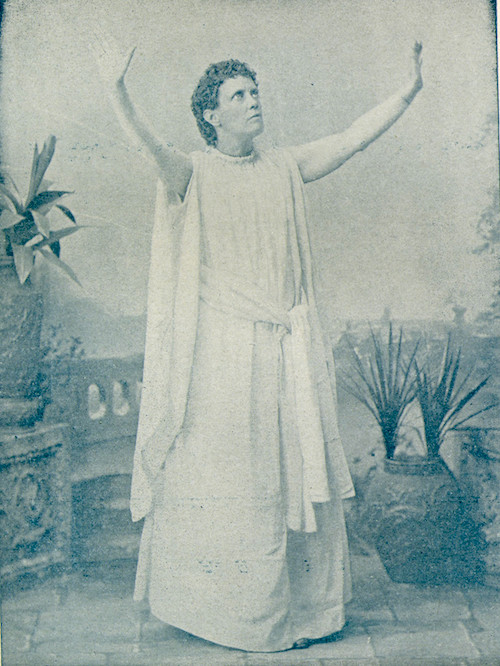
“Hide your faces, Holy Angels!”
The Chemist to his Love.
I love thee, Mary, and thou lovest me, Our mutual flame is like the affinity That doth exist between two simple bodies: I am Potassium to thine Oxygen; ’Tis little that the holy marriage vow Shall shortly make us one. That unity Is, after all, but metaphysical. Oh, would that I, my Mary, were an Acid, A living acid, and thou an alkali, Endowed with human sense, that brought together, We might coalesce unto one salt, One homogeneous crystal. Oh, that thou Wert Carbon, and myself were Hydrogen! We would unite to form olefiant gas, Or common Coal, or Naphtha. Would to Heaven That I were Phosphorus, and thou wert Lime, And we of Lime composed a Phosphuret! I’d be content to be Sulphuric Acid, So that thou might be Soda; in that case We should be Glauber’s Salt. Wert thou Magnesia Instead, we’d form the salt that’s named from Epsom. Could’st thou Potassa be, I, Aquafortis, Our happy union should be that compound form, Nitrate of Potash,—otherwise Saltpetre. And thus our several natures sweetly blent, We’d live and love together, until death Should decompose the fleshy tertium quid, Leaving our souls to all eternity Amalgamated. Sweet, thy name is Briggs And mine is Johnson. Wherefore should not we Agree to form a Johnsonate of Briggs? We will. The day, the happy day is nigh, When Johnson shall with beauteous Briggs combine.
A Wayward Life.
[An organ accompaniment, and singing by a concealed choir, will add very materially to the effect of this piece.]
’Tis a cold winter night, and the earth is robed in a gown of snow. The moon is partly hidden by the driving clouds, and but dimly lights the sleeping world.
The scene is a grave-yard. In the centre stands an old church. From its stained glass windows the warm light softly gleams. Slowly tottering along the narrow path is seen a human form; it is a rough old tramp, lonely, and almost bowed to the earth. He seeks among the tall, white tombs; now he sinks wearily down on a hard, rough mound. There is no marble slab to mark out the spot; only the drifted snow, only the bare leafless willow that moans and sighs above it.
Hark! he speaks; his voice is feeble; he mournfully cries, “Mother, I’ve come home to die with you. Here on your long-neglected grave, here let me pillow my head and fancy I sleep in your arms; and the soft music within that dear church, let me fancy ’tis your sweet voice as you lull me to sleep. I dare not enter yon church, where in youth I worshiped my God.”
See! he lays his head on that cold, hard mound, and sobs like a tired little child, “Oh, mother, I am weary, so weary of life, of toil so bitter and labor so hard. I long for rest, but I am afraid to die.” He pauses, he listens, for within the church a voice speaks slowly and reverently, “Come unto me all ye that labor and are heavy laden, and I will give you rest.” The tramp
Now the choir sings:
“Go tell it to Jesus, He knoweth thy grief, Go tell it to Jesus, He’ll send thee relief; Go gather the sunshine He sheds on the way, He’ll lighten thy burden, go, weary one, pray.”
The wind moans piteously through the tall, gaunt trees, and he murmurs half inaudibly, “The prayers that were taught me in sweet boyhood years I then repeated with smiles, but now tears dim my eyes as I think of that patient mother who lies beneath this mound. I killed her! I broke her heart! But mother, oh, hear me to-night! With my poor, weary form I will guard you and sleep on your snow-covered grave. Could I know that when dead I could meet you in Heaven, I would rest calmly here on this rough pillow, but alas for my sins, so many, so vile! ’Tis only the pure and holy and good that ever dare hope they may enter therein.”
Each note of the organ peals out, full of tenderest pathos, each word from the singers comes clearly and plainly:
“Weary of earth and laden with my sin, I look at Heaven and long to enter in; But there no evil thing may find a home, And yet I hear a voice that bids me come.”
Now he kneels in the snow and his head is bent low, he clasps his trembling hands, then with one yearning look towards Heaven, he sinks like a child, weary of play, sleepy and tired, on that snow-covered pillow, the pillow of death.
Now the flakes fall faster and faster still, they cover him gently, like a mother that covers her child, lest she waken it out of its slumber.
Now more holy than ever, grander than ever, the old organ peals out, and the choir sings:
“Safe in the arms of Jesus, Safe on his gentle breast, There by his love o’er-shadowed, Sweetly my soul shall rest.”
—Lizzie G. Vickers.
The Little Torment.
My name’s Jack. I’m eight years old. I’ve a sister Arathusa, and she calls me a little torment. I’ll tell you why: You know Arethusa has got a beau, and he comes to see her every night, and they turn the gas ’way, ’way down ’till you can’t hardly see. I like to stay in the room with the gas on full blaze, but Arathusa skites me out of the room every night. I checked her once, you better believe. You know she went to the door to let Alphonso in, and I crawled under the sofa. Then they came in, and it got awful dark, and they sat down on the sofa, and I couldn’t hear nothing but smack! smack! smack! Then I reached out and jerked Arethusa’s foot. Then she jumped and said, “Oh, mercy, what’s that?” and Alfonso said she was a “timid little creature.” “Oh, Alfonso, I’m happy by your side, but when I think of your going away it almost breaks my heart.” Then I snickered right out, I couldn’t help it, and Arathusa got up, went and peeked through the key-hole and said, “I do believe that’s Jack, nasty little
The Stars.
Spanglets of heaven! Ye seem to me The alphabet of immensity, By which I read, in dazzling light, The lofty name of the Infinite. Shine on! Shine on! in your depths of blue, ’Till every heart can read it too, And every raptured eye that’s bent Up to the studded firmament, Catches the glow of your ceaseless rays, And glistens in the Eternal’s praise. Beautiful stars! ’Neath your rich beams, As down from heaven their glory streams, When silence has sealed up the lips of Earth, And thought, more wild than the winds, has birth, I wander! I wander! with untold joy, To feast my soul on the orb-lit sky; And never did Chaldee, when taught to kneel At the shrines of your splendor, more wildly feel The torrents of bliss through his bosom flow, As he upward gazed from the dust below. Eyes of the universe! Gems divine! Suns that bask in your own pure shine! Countless guides of the awe-struck soul, As inquiring it rushes from pole to pole: I drink! I drink! at your fountains deep, While the world is locked in the arms of sleep, ’Till filled with the Pythonic draught of light, My intoxicate spirit deems all things bright; And earth (and its deeds) is lost to me, Eclipsed by your dazzling radiency. —Dublin University Magazine.