III. SEXUAL EPOCH OF THE MENOPAUSE.
Eden Paul translation
The Menopause.
That time in a woman’s life at which her sexual activities come to their natural termination, marked by the cessation of menstruation, is known as the menopause, climax, or climacteric period.
This “change of life,” from a condition of sexual maturity to a condition of quiescence of sexual functions, is not a sudden one, the symptoms of sexual retrogression making their appearance gradually, until the cessation of the monthly recurring menstrual flow indicates that the termination of sexual activity has arrived, and that sexual death is taking place.
The influence of this period of life is not manifested by the sexual organs alone—in these latter indeed various changes may be detected already before the cessation of menstruation, whilst after that cessation, the atrophic changes characteristic of old age proceed in these organs with a slow but continuous advance,—but the disturbances evoked by the climacteric involve the entire organism and affect the functions of numerous organs, giving rise to a true storm of irritant phenomena, and to manifestations of decay of manifold nature.
The stormy manifestations, the occurrence of which led the ancients to denote this period as the “critical age” of a woman’s life, are in the first place due to changes in the ovaries; the tissue changes in these organs give rise to a powerful ovarian stimulus, which, by irradiation and reflex action, leads to the occurrence of a number of nervous disturbances, vasomotor manifestations, and circulatory disorders; whilst owing to the cessation of the internal secretions of the ovaries, numerous and intense pathological disorders of metabolism arise. These various symptoms become apparent at the very outset of the menopause, when the oncoming entire cessation of menstruation is already foreshadowed by irregularity in the periods, gradual diminution in the quantity of the flow, and variations in the number of days during which the flow on each occasion persists.
The manifestations of the menopause are in fact so striking, that from ancient times down to the present day a widespread belief has prevailed that especial danger to a woman’s life is threatened by 572the climacteric age. The statistics available on this subject are, however, of dubious significance. Although it cannot be denied that the changes in the entire organism which attend the extinction of sexual activity, bring numerous dangerous influences into play, yet I feel bound to maintain that these dangers are by no means so great as those which are involved by the sexual life in its ripest period of development—the dangers of pregnancy, parturition, and the puerperium.
It is often asserted that in this “critical period” of the menopause, the mortality of the female sex is notably increased. The data available are somewhat conflicting, but a careful examination leads us to believe that, if due allowance is made for the natural increase in mortality with advancing years, no important increase in the mortality of women can be traced as due to the troubles and disturbances of the climacteric period.
The age at which a woman’s last sexual epoch begins is a very variable one. The duration of the “change of life,” the length of time during which the occurrence of the “change” is manifested by local and general disturbances, also varies greatly. Not less variable are the intensity and the general distribution of the symptoms which mark the climacteric.
The external configuration of woman at the climacteric age is usually characterized by signs of over-ripeness, and these changes appear to exercise upon certain men—more especially very young men—a peculiar kind of erotic stimulus. Many women remain long at this period quite fresh looking, with a vivid, youthful colouring; others, however, early manifest alterations in their finer feminine characteristics, hairs, for instance sprouting on the chin, and the voice becoming deeper in tone.
The outward characters of senescence, with withering of the tissues, are not commonly manifested at this time, but first make their appearance in later years, after the completion of the menopause.
A tendency to the excessive accumulation of fatty tissue is one of the most distinctive characteristics of the menopause, varying, however, greatly in degree according to race, family predisposition, and nutritive conditions. The dominant tone is thus given to the physical configuration by the deposit of fat. The face comes to have a rounded, spherical appearance, the eyes looking smaller in proportion, whilst the furrows and folds which form the natural boundaries between the features become indistinct. The formation of the “double chin,” and the abundant deposit of fatty tissue in the supraclavicular region, gives to these extremely obese women an appearance of such a shortening of the neck, that head and thorax seem to be connected as it were by a great mass of fat, 573marked by furrows in the thyroid and sub-hyoid regions. The breasts sometimes attain an enormous size, hanging down to the gastric and even to the umbilical region. The abdomen is greatly enlarged, the fat in the anterior abdominal wall projecting more especially in the hypogastric region, hanging down in two or three horizontal rolls over the tops of the thighs, and pushing the mons veneris downwards, so that this latter itself projects over the genital fissure. The posterior projection of the buttocks is also greatly increased, until they form a huge elastic cushion, of which the sensual orientals, who regard obesity in women as a beauty, poetically write: “Her face is like the full moon, and her buttocks are like two pillows.” Occasionally, so huge a mass of fat forms beneath the tuberosity of the ischium, that the configuration of the nates reminds us of the well-known steatopyga or fat-rump of the Hottentot and Bosjesman women. In the genital organs, as already mentioned, the genital fissure is hidden by the projection of the mons veneris. The labia majora are also greatly enlarged by the deposit of fat, so that they look like two great cylinders lying side by side. Another way in which the characteristic sexual beauty is often lost in extremely obese women, is by the falling out of the pubic hair.
Moreau, in his work on The Natural History of Woman, describes the changes occurring in a woman at the climacteric in similar terms, and concludes: “The only elements of a woman’s beauty that may sometimes be saved from the wreck, to persist for a shorter or longer time after the climacteric, are, the abundance of her hair, the vivacity of her glance, and sometimes also the amiable expression of her countenance; gradually, however, even these last remnants of beauty disappear, and old age takes possession with its irresistible force.”
None the less, some women may preserve substantial elements of beauty for a long time after the menopause. A classical example of this fact is furnished by Ninon de l’Enclos. When she died, at the age of 90, she was still beautiful. At the age of 65 she aroused the passionate love of a young man, who, unfortunately, was her own son. When informed of this, he committed suicide. A young abbé fell in love with her when she was 75 years old.
The psychical life of woman is profoundly affected by the stormy physical changes of the climacteric. Not merely does a woman entertain the disturbing thought that the critical age has begun, bringing in its train certain dreaded dangers to her health and even her life, but she is further depressed by the consciousness that she is about to lose her feminine attractions, and to decline in sexual esteem, and that her reproductive capacity is now to be extinguished. She realizes vividly that the beautiful past, the loving and beloved 574womanhood, is now to be left behind for ever, and by this an intelligent and sensitive woman cannot fail to be profoundly affected. Her feelings at this time were never more characteristically expressed than by the Frenchwoman who said “Autrefois quand j’étais femme.” If, indeed, a woman has been so fortunate as to have made a happy marriage, to have borne healthy children, and to be living a satisfactory family life, she will be enabled to bear with comparative equanimity the disappearance of her sexual life; but it is different with the childless wife and with the unmarried woman, who, at the onset of the climacteric, must bury all their sexual aspirations, and who see the remainder of their lives stretch before them without hopes for the future. The psychical predisposition and the intellectual education of the woman concerned, will now determine whether she will bear the onset of the menopause with composure and resignation, or whether she will become a prey to melancholia. Women of the former kind will seek to find employment for the powers set free by their sexual non-activity, in services of neighbourly affection, in works of benevolence, and in the performance of social duties; women less happily endowed will display their hostility to the world in ill-nature, scandal-mongering, and intrigue, thus giving vent to their inward bitterness; whilst those, finally, with hereditary predisposition to nervous degeneration, will become the prey of veritable psychoses.
A by no means rare result of the excited fantasy and of the eager desire not to grow old, is displayed at the climacteric in the form of self-deception. The women thus affected cannot understand, and cannot be made to believe, that the cessation of menstruation is the natural sign of their sexual decadence, they trick themselves into believing that in their case it is a sign that they have become pregnant. We must not indeed forget that the enlargement of the abdomen, so common at the commencement of the climacteric, in association with the unexpected failure of the menstrual flow to appear, the frequent dyspeptic troubles, and the enlargement of the breasts in consequence of the deposit of fat in these organs, often enough lead to appearance which have a deceptive resemblance to the clinical picture of early pregnancy. The mistake is the more readily made because the breasts sometimes secrete a serous fluid, whilst sacrache is not infrequent, and peristaltic movements of the intestines are mistaken for the movements of the foetus. Cases of this kind, in which all the objective signs of pregnancy appear to be present, and in which it is impossible to convince the woman that she has been deceiving herself, and that all the signs and symptoms are due to the menopause, are mentioned already by very early writers, and have been frequently reported by modern gynecologists. 575(An example of spurious pregnancy especially familiar to English readers is that of Mary I, Queen of England. Transl.)
Sexual desire in woman by no means reaches its physiological term with the climacteric and the cessation of menstruation. On the contrary, we have observed it to be the rule that shortly before and at the commencement of the climacteric, there is a considerable increase in the libido sexualis, and at the same time an increase in sexual sensibility during coitus. This sexual erethism makes its appearance in a manner often extremely surprising to the husband—and especially surprising in the case of women who have previously been characterized by a certain frigidity in sexual matters, and who have, perhaps, always needed strong persuasion before they would consent to perform their marital duties. It is by no means rare for the increased sexual impulse to manifest itself in some pathological form. Even some time after the menopause, when senile changes in the genital organs are far advanced, the sexual impulse may still be remarkably active. There is an interesting analogy in the fact that Glaevecke observed that the sexual impulse was persistent in women in whom an artificial menopause had been induced by oophorectomy; and that Lawson Tait and L. Smith have reported cases in which dyspareunia, which had existed prior to the operation, passed away after the removal of the ovaries, so that after the artificial menopause, voluptas coeundi for the first time made its appearance. Other authors, Goodell, for instance, report that libido sexualis is retained only for a short time after oophorectomy, but subsequently disappears, as in the course of the physiological menopause, and that at the same time the voluptas coeundi is entirely extinguished.
When the menopause is fully established, and the processes of involution in the reproductive organs have taken place in a normal manner, the woman has had time to acquiesce in the inevitableness of the changes that have occurred, and she often attains a state of emotional repose which was quite unknown to her in the earlier phases of her sexual life. More particularly, those women who hitherto during menstruation, and for some days before and after the flow, have been the prey of numerous nervous symptoms and troubles, rejoice, after the menopause, at their new-won freedom from these pains and disquiets, at their delivery from the excitements of the reproductive system, at their now uninterrupted state of well-being.
I once saw a group of statuary by Pietro Balestra, entitled “Time carries off Beauty.” A beautiful woman was striving in vain to resist the overwhelming might of Chronos, whilst Cupid, about to be abandoned, was standing sorrowfully by. Here we have a symbolic representation of the sexual epoch of the menopause.
576In a recently published romance, “Les Demi-Vieilles,” Yvette Guilbert has described in a manner most true to nature the feelings of the “Half-Old,” the mental condition of women at the climacteric, “They endeavour to remain young, to hide their defects, they seek once again the intoxication of love. But that which aforetime in hours of depression they have foreseen, now becomes a dreadful reality. When the lemon has been squeezed dry, the skin is thrown away.”
Sooner or later after the completion of the menopause, the signs of senile marasmus become apparent. The soft, feminine configuration of the face disappears, the features become coarser, approaching the masculine type, hairs appear on the upper lip and on the chin. The voice becomes deeper and harsher. As decrepitude begins, the breasts wither, a change that occurs sooner in proportion to the degree in which their functions have been in previous years exercised by suckling; but also sometimes after a life of complete sexual inactivity. Even in cases in which the loss of substance of the breasts is apparently small, the glandular tissue of the organs has really disappeared, and has been replaced by fat. In advanced age, the breasts become quite small, wrinkled, flaccid, and dependent, and sometimes atrophied to become mere cutaneous folds. The nipples project more prominently, they are darker in colour, and their surface is wrinkled. In the genital organs, the fat disappears from the mons veneris, which becomes flattened, whilst the pubic hair ceases to be curly, and much or all of it is ultimately shed. The labia majora become thin and flaccid, until they are mere empty folds of skin; they are widely separated, so that the vaginal orifice is closed only by the withered nymphæ, until these latter are themselves ultimately indicated by mere traces.
Where the menopause has been artificially induced, the signs of senescence do not appear immediately after the removal of the ovaries; their development is a very gradual one. The sexually mature woman, from whom these tokens of femininity have been removed, experiences at first little change in external configuration, beyond a somewhat exaggerated tendency to the deposit of fat; the other changes described do not usually set in until the physiological climacteric age is attained. A few cases only have been observed in which after oophorectomy a rapid change to the masculine configuration has been observed.
Seldom if ever does it happen that menstruation suddenly ceases without any notable constitutional disturbance, so that in a moment, as it were, the menopause is effected, without any period of transition. Rarely, even, do we meet with cases in which the peculiar manifestations foreshadowing or accompanying the cessation of menstruation last for no more than a few weeks. Most commonly 577the irregularities of the menstrual function (of which the most noteworthy characteristic has hitherto been its extreme regularity), and the associated symptoms of the climacteric period, endure for months, and occasionally for years. According to my own observations, the mean duration of the climacteric manifestations is from two to three years, the limits of variation in individual cases being, however, exceedingly wide.
The manifestations which accompany the cessation of menstruation are as a rule the following: The woman is for some months in an irritable condition, complains of digestive disturbances, constipation, meteorism, epistaxis, haemorrhoidal flux, congestions of the head, increasing fugitive sensations of heat (Ger. fliegende Hitze), and a tendency to profuse perspiration.
The length of the intermenstrual interval commonly increases, to as much as six or eight weeks; the flow itself becomes scantier. In other cases, however, the flow becomes much more abundant, and the intermenstrual intervals much shorter than normal. In some cases, the regularity of the flow is altogether lost, it appears now soon, now late, and is now scanty, now profuse. Sometimes the intervals are several months, it may be 6, 8, and even 10 months, then again the flow will occur every two or three weeks; in exceptional cases, a scanty flow persists right through what should be the interval, so that menstruation becomes continuous, with periodic increases in the flow. Not infrequently, after a sudden cessation of the flow lasting for many months, menstruation recurs, and continues at regular intervals for a long time, until the final cessation of menstrual activity.
The mode of cessation which is most favourable to a woman’s general health, is for the duration of the intermenstrual interval gradually to increase, whilst pari passu with this increase, the amount of the flow progressively decreases, until it ceases altogether. In such cases, the general constitutional disturbance is reduced to a minimum. On the other hand, the sudden cessation of menstruation gives rise to profound disturbance of the domestic economy of the feminine organism, and causes violent changes therein. But even the gradual cessation of menstruation causes notable disturbance of the woman’s mental and physical equilibrium, if the irregularities in the menstrual process are very great and spread over a very long period—more especially when the loss of blood is extensive.
Even after the menopause, after the final termination of the flow, there persists a more or less regular recurrence of certain symptoms referable to the continuance of ovulation. Sacrache, a sense of abdominal tension, a feeling of heat and fullness in the pelvis, dragging pain in the hypogastrium, and general irritability, occur at 578intervals, so that the woman thus affected sometimes describes herself as suffering from the continuance of a “bloodless menstruation.”
Tilt made observations in 637 women, in order to ascertain the various modes in which the menopause occurs, and obtained the following results. The menopause occurred:
By gradual diminution of the amount of the flow in 171 women, or 26.84 per cent.
By sudden interruption of the flow in 94 women, or 14.76 per cent.
By sudden interruption and a terminal attack of metrorrhagia in 43 women, or 6.75 per cent.
By a terminal attack of metrorrhagia in 82 women, or 12.87 per cent.
By a series of attacks of metrorrhagia in 56 women, or 8.79 per cent.
By alternations of very profuse and very scanty menstruation in 36 women, or 5.65 per cent.
By irregular recurrence of menstruation, at intervals exceeding 21 days in 99 women, or 15.54 per cent.
By irregular recurrence of menstruation, at intervals of less than 21 days in 33 women, or 5.18 per cent.
By irregular recurrence of menstruation, the intervals being sometimes longer and sometimes shorter than 21 days in 23 women, or 3.61 per cent.
Totals 637 99.99
The two principal dangers of the climacteric period in women are, first, the great tendency to profuse uterine haemorrhages, and, secondly, the liability to the occurrence of malignant tumours, more especially to carcinomatous disease of the ovaries, the uterus, and the mammae.
With regard to the question whether, in any particular individual, the course of the menopause is likely to be favourable or unfavourable, there are, in my experience, four considerations of principal prognostic significance: the condition of the woman during the menarche, the state of the general health at the time of commencement of the menopause, the degree to which the sexual functions have been and are being exercised, and the manner in which the cessation of menstruation takes place.
As a rule, the disturbances and pathological states of the climacteric period will be especially frequent and severe in women whose sexual development at the time of the menarche was accompanied by severe disturbances of the general condition. In every individual, there appears to be a certain connexion between the manifestations attending the menarche and those attending the menopause, of such a nature that according as puberty has been passed through with little or with much disturbance of the general condition, a similar favourable or unfavourable course of the menopause may be prognosticated. If, at the time of the menarche, there were severe nervous manifestations, or heart troubles of a serious kind, 579the passage of the menopause may be expected to give rise to neuropathic affections and to cardiac disturbances in a similar manner.
The woman’s state of general health is likewise of importance in determining whether the course of the menopause will be favourable or unfavourable. Perfectly healthy women, with a quiescent temperament, and in favourable circumstances of life, will pass most easily through the climacteric period without disturbance of their general condition. Every departure from normal health has an unfavourable influence upon the course of the climacteric. In women of a plethoric habit of body, there is an especial tendency at this time to the occurrence of symptoms of stasis and hyperaemia. Chlorotic and anæmic women are more prone than others to suffer at the time of the menopause from uterine haemorrhages. Women of a sanguino-erethistic constitutional disposition often manifest at this epoch a tendency to neuroses and psychoses. Those women have the best prospect of a smooth and undisturbed passage through the climacteric age, who enter upon it in a state of perfect health. Less favourable is the prognosis in the case of those women who already some time before the climax, at the outset of the fourth decade of their lives, have begun to complain of severe haemorrhages and various other pathological states.
Regarding the influence which the sexual activity of a woman during the menacme exercises upon the course of the climacteric, it may be said, generally speaking, that a previous free exercise of the sexual functions in normal conditions has a favourable influence upon the state of health during the menopause. Women who have been married for many years, who have had many children, and who have suckled these children, pass through the changes of the climacteric much more easily than old maids, than women who have lived for many years in continent widowhood, or than women who have had very few children or none at all. The practice of prohibitive coitus, i. e., the use during intercourse of methods of preventing the occurrence of conception, a form of sexual immorality which has become extraordinarily common during the last few decades, has an unfavourable influence upon the course of the climacteric. Unfavourable, also, is the effect of great sexual activity during the four or five years immediately preceding the menopause. Women who marry shortly before the commencement of the climacteric, and those who have given birth to a child shortly before this time, commonly experience very severe disturbances during the menopause. Prostitutes who continue the active pursuit of their profession until the climacteric age, have at this time much to suffer. Women who have had difficult deliveries, or several miscarriages, or severe puerperal illnesses—and indeed, speaking generally, 580those women who have been subject to any kind of disease of the reproductive organs—are apt to suffer from serious disturbances of the general health during the climacteric period.
The mode in which the cessation of menstruation takes place, is also causally connected with the easy or difficult course of the menopause. Premature cessation of menstruation, or very sudden interruption of this function, has a deleterious effect, manifesting itself both by local disorders of the reproductive organs, and by general disturbances in the nervous system and in the circulatory organs. On the other hand, a late menopause and a gradual cessation of menstruation, are both usually accompanied by a favourable course of the climacteric phenomena.
The influence of sexual activity upon the course of the climacteric is described by Busch in the following terms: “Women who have led an exhausting mode of life, who have had intercourse too frequently, those who have been given to onanism or to some other sexual irregularity, and who therefore enter upon the menopause with flaccid and deteriorated reproductive organs, are liable to haemorrhagic and mucous fluxes, to prolapse, carcinoma, dropsies, enlargements, and suppurative processes. Women, on the other hand, who have lived a life of strict isolation, and who have forcibly repressed all sexual inclinations, frequently suffer from ossifications, indurations, and atrophic conditions of the reproductive organs, and also from neoplasmata.”
After an artificial menopause, induced by the operative removal of the ovaries, similar manifestations occur to those witnessed during the natural menopause. Similar disturbances and troubles occur in both cases, but in the artificial menopause they are commonly more severe than in the natural; they last also for a longer time, varying usually from three to six years; moreover, in the artificial menopause, as in the natural, the disturbance of health is more severe and lasts longer in proportion to the youth of the individual. Further, in the artificial menopause also, the intensity and the duration of the climacteric manifestations are influenced by the constitutional state and by the condition of the genital organs at the time when the operation is performed. We note, moreover, that, just as in the physiological menopause, the attendant troubles are most violent in the initial period, and then gradually subside, so also after the induction of an artificial menopause by the removal of the ovaries, the resultant disturbances rapidly increase in severity, to attain their maximum in from three to six months, and then, after lasting for a year or so, they gradually become less severe, until they are ultimately extinguished.
The extensive process of transformation which goes on in a woman’s system during this period of the sexual life, from the very 581first diminution in ovarian activity to the complete extinction of the reproductive functions, manifests itself throughout the organism by means of a series of changes which can for the most part be referred either to states of blood-stasis and their consequences—congestion of various organs, haemorrhages, and disorders of secretion—or else to perversions of nervous function.
The most manifold symptoms of disordered circulation may occur: hyperaemic states of the central nervous system, flushings of the face, the so-called fugitive heats (Ger. fliegende Hitze), a tendency to epistaxis, to haemorrhoidal flux, and to profuse perspiration. The changes which take place in the reproductive organs at the time of the menopause give rise to venous engorgement and to collateral congestions. Such a condition of venous hyperaemia may occur in the gastric and the intestinal mucous membrane, giving rise to various dyspeptic manifestations, and at times, when severe, even to actual gastric and intestinal catarrh. Hyperaemia of the liver may also arise. In this case, the pressure of the distended bloodvessels on the biliary ducts may interfere with the outflow of the bile, and thus give rise to a slight icterus. Further, the intra-abdominal venous congestion leads to overfilling of the haemorrhoidal veins, and hence to bleeding piles.
When the congestion is long-lasting, various further morbid changes may arise, pulmonary hyperaemia may eventuate in bronchitis, hyperaemia of the cerebral meninges may cause very severe headache, there may be syncopal attacks, tinnitus aurium, choroidal congestion, impaired vision, etc.
Congestion of a more active nature arises from an increased and usually accelerated flow of blood through the vessels of a part in which the resistance to the blood stream has been lowered proportionately to its propulsive force. In this way arises that characteristic symptom of the menopause known as ardor fugax—fugitive heat—one link in the long chain of vasomotor manifestations occurring at this period of life. Fugitive heats are commonly most clearly marked in the face, head, and neck, in which region there suddenly occurs a reddening of the skin, with diffuse and increasing subjective sensation of heat. At the same time there is often a sense of tension, as if the part were about to burst. Actual slight swelling may be noticed, the eyes sparkle and are somewhat prominent, the head feels heavy, stupid, and dizzy. Sometimes these symptoms last for a considerable time; at other times they terminate speedily and suddenly with a local perspiration or with an attack of epistaxis. Not infrequently, after lasting a short time in one region, they pass away as rapidly as they came, but are immediately succeeded by a similar attack in some other part of the body, or by vasomotor 582phenomena of a slightly different kind. Thus, such a flushing and heat of the face may be replaced by a sudden sense of heat in the small of the back or in the sacral region, by pruritus of the extremities, by palpitation of heart, or by an attack of pseud-angina.
A further consequence of active hyperaemia is the onset of those confused states, so common in the climacteric age, of mental and bodily disquiet, which find expression, now in states of excitement, and now in states of depression. So we often observe change of disposition, associated with incapacity for regular work, whilst sleep is restless, and much disturbed by dreams; and again states of dizziness, a sense of mental uneasiness and confusion, and even actual delirium.
In the skin, in addition to the fugitive heats, we often have a peculiar pricking, itching, or stabbing sensation, and various kinds of hyperaesthesia, frequently associated with disturbances of tactile sensation. We observe also muscular twitchings, and general weakness of the organs of locomotion.
In association with the passive and active hyperaemias of the menopause, we frequently see increase or some qualitative change in the various secretions. Above all, these changes affect the various secretions of the different reproductive organs, but we have also increased intestinal secretion, leading to diarrhoea, increased excretion of urinary deposits, and increased secretion by the skin. Symptoms which are common at the menarche, and frequently recurs at the menopause, are: headache, migraine, a state of pseudo-narcotism, slight hysterical attacks, indications of moral insanity, lumbo-abdominal neuralgias, neuralgia of the breasts, leucorrhoea, and various skin eruptions.
According to Tilt, the changes occurring in the organism at the climacteric period may be summarized under the following heads:
1.
Increased elimination of carbonic acid by the lungs,
2.
Increased elimination of uric acid in the urine,
3.
Increased perspiration,
4.
Increased mucous flux,
5.
Haemorrhages from various organs.
As regards the first point, the extensive researches of Andral and Gavaret have shown that in the female sex the quantity of carbonic acid eliminated by the lungs diminishes when menstruation first appears at puberty, but increases again at the climacteric age, when menstruation ceases—whereas in the male a gradual diminution in the elimination of carbonic acid begins already in the 36th year of life; in old age the quantity eliminated is greatly reduced in both sexes alike.
583
Changes in the Female Reproductive Organs at the Menopause.
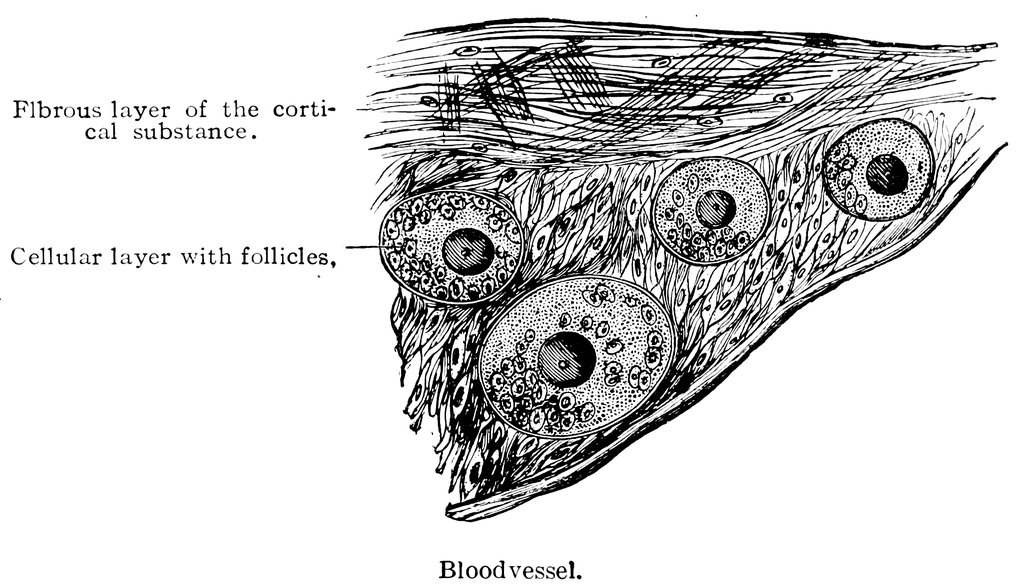
Fig. 84.—Sagittal section through the ovary of a girl aged 16.
In considering the changes that take place in the female reproductive organs at this period of life, we must distinguish between the proper period of the climacteric, with its various manifestations antecedent to and associated with the irregularity and ultimate cessation of menstruation, from the condition of old age in which menstruation has actually and completely ceased, in which the menopause has been fully accomplished, and in which the changes of senescence have set in at once in the organs of the reproductive system and in the organism as a whole.
The most important and most significant changes of this sexual epoch are unquestionably the anatomical alterations in the ovaries. A good many years ago I undertook an investigation whose purpose was to follow the natural involution of the graafian follicles from the time of the climax on into old age, and for this purpose I examined a very large number of ovaries of women at ages varying from 42 to 75 years (Archiv. für Gynecologie, Bd, XII., Heft 3).
Throughout these years a slow but continuously progressive atrophy proceeds in the ovaries; they become smaller and denser, diminishing especially in height and width; their surface becomes extremely uneven; and in extreme old age they wither away until no more is left in the region formerly occupied by the ovaries than a flattened fibro-vascular thickening (Figs. 84–88). The histological characteristic of the changes in the ovary which proceed 584gradually from the commencement of the menopause to extreme old age, may be summed up as consisting in a continual increase and new formation of the connective tissue stroma at the expense of the cellular layer, accompanied by retrogressive metamorphosis of the graafian follicles.
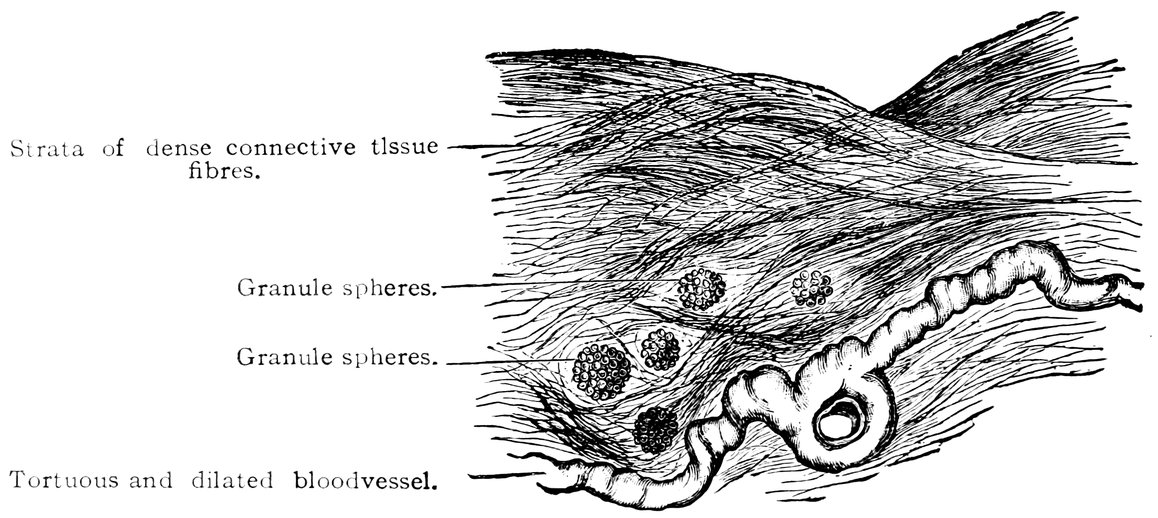
Fig. 85.—Sagittal section through the ovary of a woman aged 72 years.
The connective tissue ground substance of the ovary increases from the periphery towards the centre, and progressively compresses the epithelial structures of the organ. In the outermost layer of the ovarian stroma, the so-called tunica albuginea, the strata of short, dense connective tissue fibres increase notably in number, so that whereas at first three layers at most could be distinguished, the tunic ultimately comes to consist of from six to eight layers; at the same time also the interior ovarian stroma becomes exceedingly dense, so that numerous well-defined interlacing bundles of fibres can be made out in its substance.
The first retrogressive metamorphosis which can be observed in the graafian follicles is fatty degeneration, the formation of granule spheres. Whilst the membrana propria (the theca folliculi) of the follicle remains quite unaltered, we observe in the membrana granulosa, in addition to the ovum, and the ordinary cells of this layer, spherical aggregates of fat droplets, the granule spheres, which continually increase in size, until ultimately of the cellular contents of the follicle nothing whatever remains, and it now appears full of granule spheres and fluid. The theca folliculi has now lost its spherical shape, and assumes an ovid form (Fig. 89).
In a later stage of the degeneration of the graafian follicle, it appears as a vesicular body with a relaxed wall, thrown into numerous folds, this folded wall being formed by the theca folliculi. 585The cavity of the follicle is reduced to a mere cleft, filled with a transparent substance, and the space between this cleft and the inner surface of the theca folliculi is occupied by round cells and a fibrous intercellular substance, and is traversed by a vascular network. This second stage of the retrogression of the follicle may therefore be designated the stage of vesicular degeneration (Fig. 90).
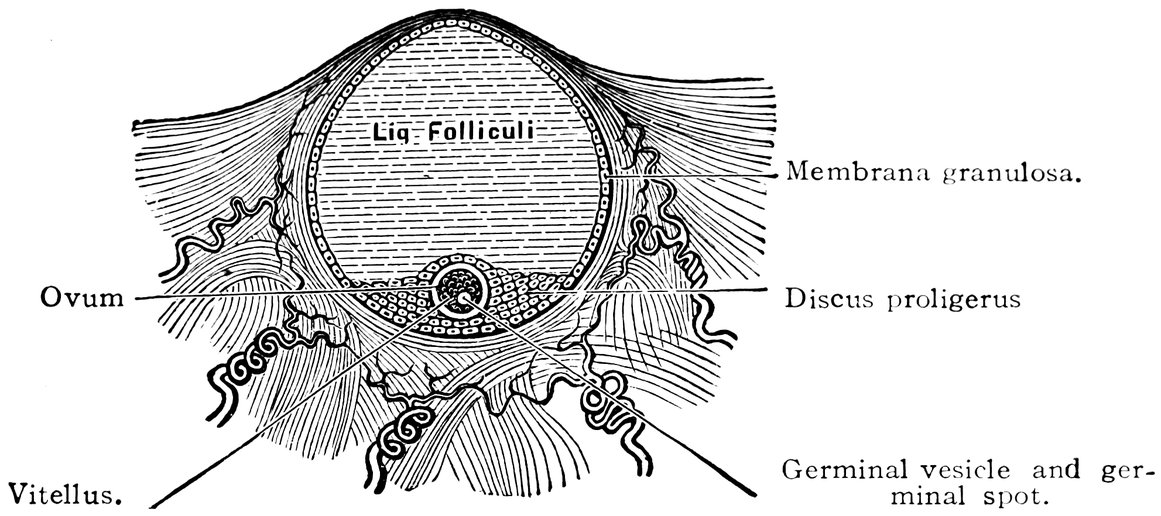
Fig. 86.—Diagrammatic representation of the Graafian Follicle.
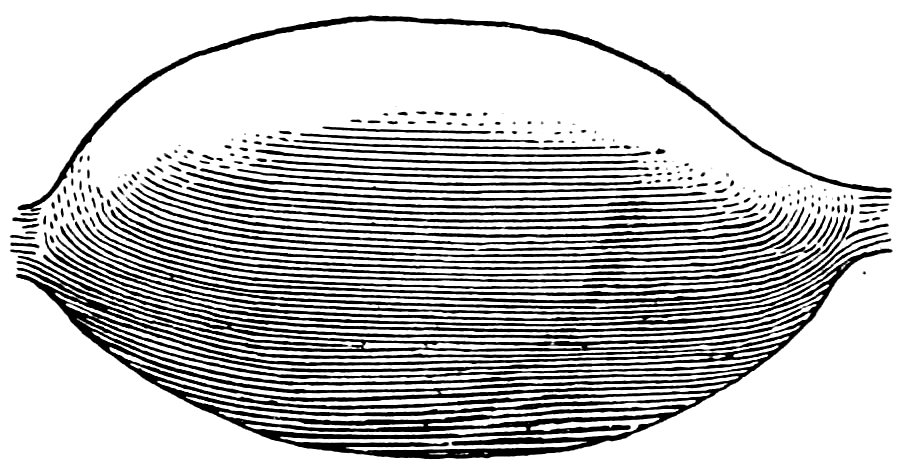
Fig. 87.—Ovary of a girl aged 19 years. (Normal size.)
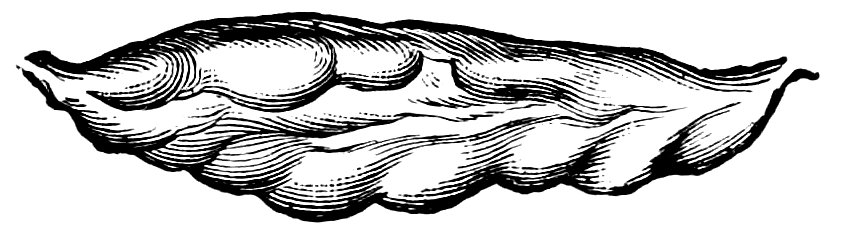
Fig. 88.—Ovary of a woman 72 years of age. (Normal size.)
In the last stage of this retrogressive metamorphosis, we find the follicle completely transformed to a fibrous mass. It appears as an elongated oval body, much lobulated, connected with the surrounding stroma by thick strands of fibres; a trace of the original cavity can still be distinguished in the form of a narrow cleft, without distinguishable contents. The tissue of this body consists of connective tissue fibres, with interspersed nuclei and nuclear fibres (Fig. 91).
The three stages I have observed in the retrogression of the follicle, of which I have given a summary account above, may, I think, be explained in the following manner: When the woman’s reproductive activity ceases, the graafian follicles become subject to a retrogressive metamorphosis, a fatty degeneration setting in in the cells of the membrana granulosa and in the ovum, until ultimately 586the whole of the granular epithelium has undergone atrophy. The follicle now undergoes a vesicular transformation with shrinkage of its cavity, and with the formation of a new tissue which appears to be young connective tissue. As time goes on, this new connective tissue is formed in increasing quantities, until finally the entire follicle is transformed into a firm fibrous mass.
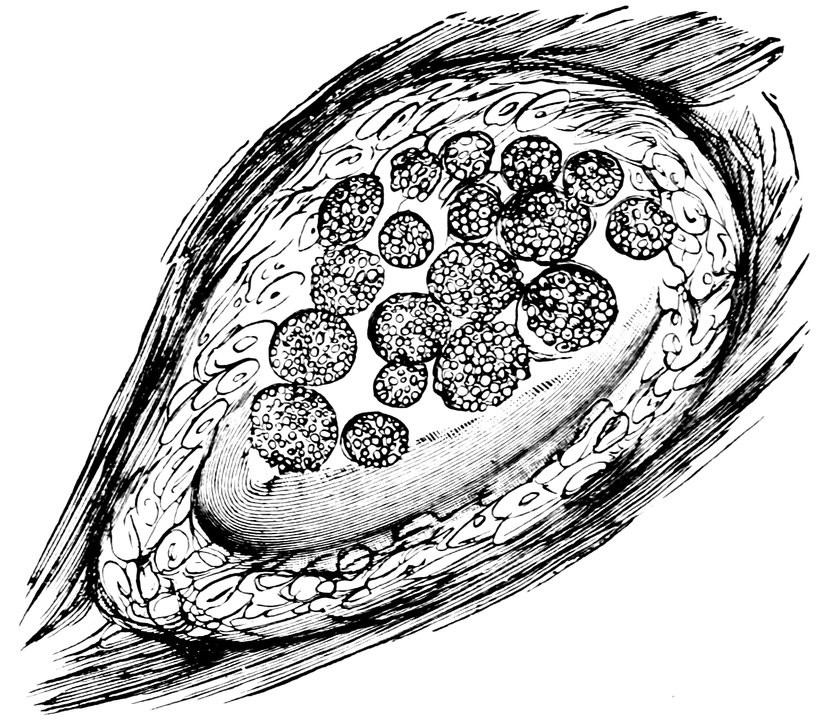
Fig. 89.
Thus we are led to infer that the gradual but extensive thickening of the tunica albuginea (i. e., the outer, condensed layer of the ovarian stroma), which, as we have seen, always occurs at the climacteric period, offers a hindrance to the bursting of the follicles as they mature, and in this we find the explanation of the irregularity of menstruation and of the various troubles which attend the performance of that function at the time of the menopause. It is reasonable to assume that the resistance of this thickened tunica albuginea is responsible for the fact that the interval between the bursting of the successive follicles is now greater than normal, as much as six or eight weeks—this retardation of menstruation being one of the commonest ways in which the onset of the menopause is first manifested. Another phenomenon connected with the onset of the menopause also finds a plausible explanation in the anatomical grounds just mentioned. As already pointed out, in parous women the menopause sets in later than in nulliparae. At every pregnancy, the ovaries share in the more abundant nutrition of all the reproductive organs, due to the general dilatation of the intrapelvic vessels which accompanies this process; hence the ovaries become larger, richer in lymph, and therefore softer, the cellular elements increase in size, and perhaps also in number, and it is readily conceivable 587that in such ovaries the cellular elements are able for a longer time to resist the induration and the new formation of connective tissue which occur at the climacteric.
The numerous nervous disturbances of the climacteric epoch would appear also to depend upon the hyperplasia of the ovarian stroma which we have observed to be the characteristic anatomical change in the ovaries at this period of life.
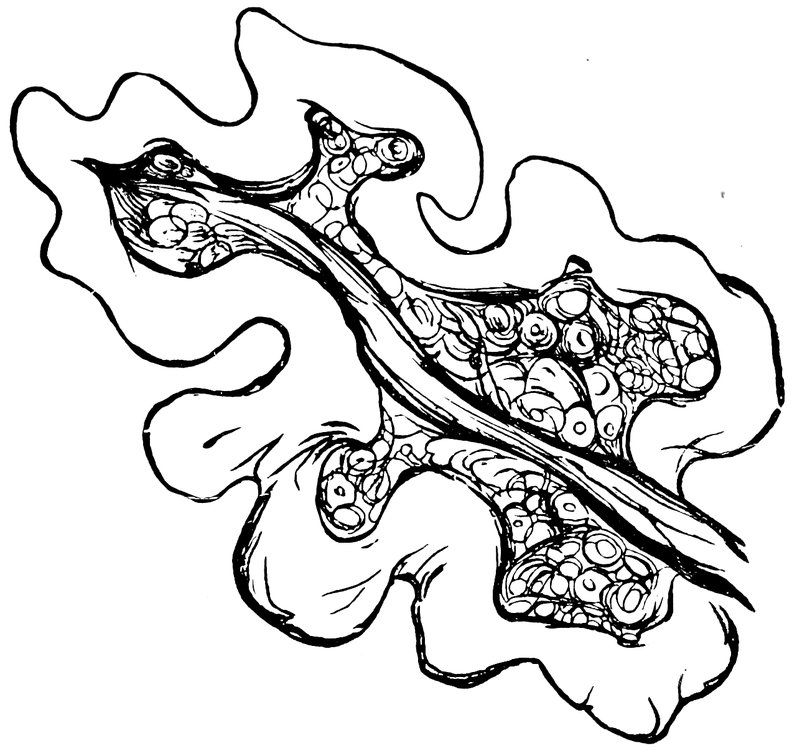
Fig. 90.
Associated with the fibrous transformation of the graafian follicles there is, however, a failure of the so-called internal secretion of the ovaries, a matter to which much attention has recently been paid. Brown-Séquard has especially maintained that the ovaries secrete a substance which enters the blood, a substance which, notwithstanding the fact that its presence cannot be proved either by chemical or any other means known to us, yet is of considerable importance for the maintenance of the equilibrium of mental and physical well-being. It is supposed that the various profound disturbances of the general system occurring at the menopause[52] are dependent upon the cessation of this internal secretion of the ovary—disturbances which rise to a maximum as the atrophy of the ovary proceeds, and which only gradually pass away after a considerable lapse of time.
After the menopause is completely over, in the ovaries, as in other parts of the female reproductive organs, the signs of senile degeneration make their appearance.
588In old women, we find the ovaries either shrunken to the form of small fibrous cords, or else degenerated to form cysts of smaller or larger size, the stroma surrounding these cysts being extremely hard, dense, and tough.
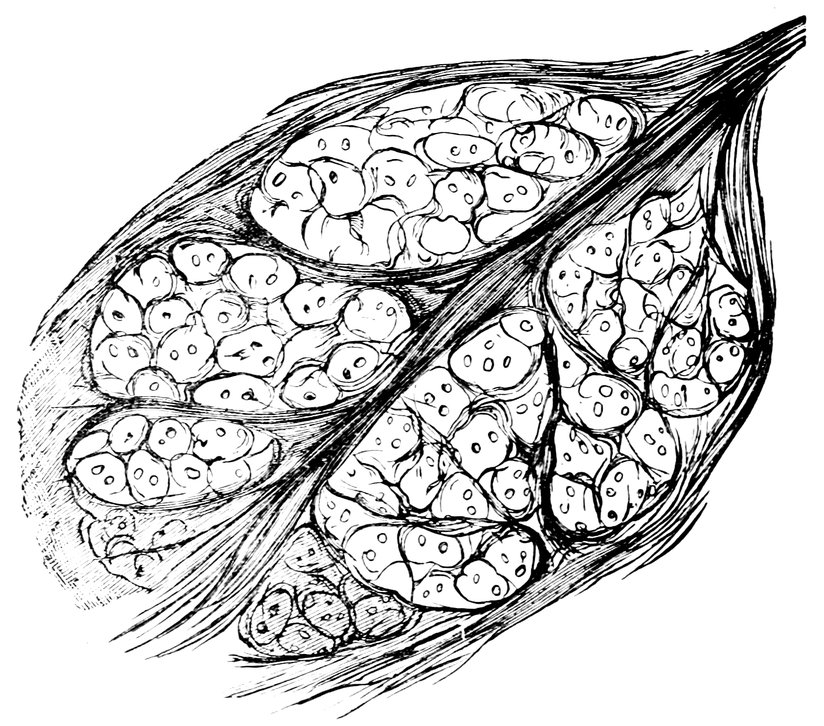
Fig. 91.
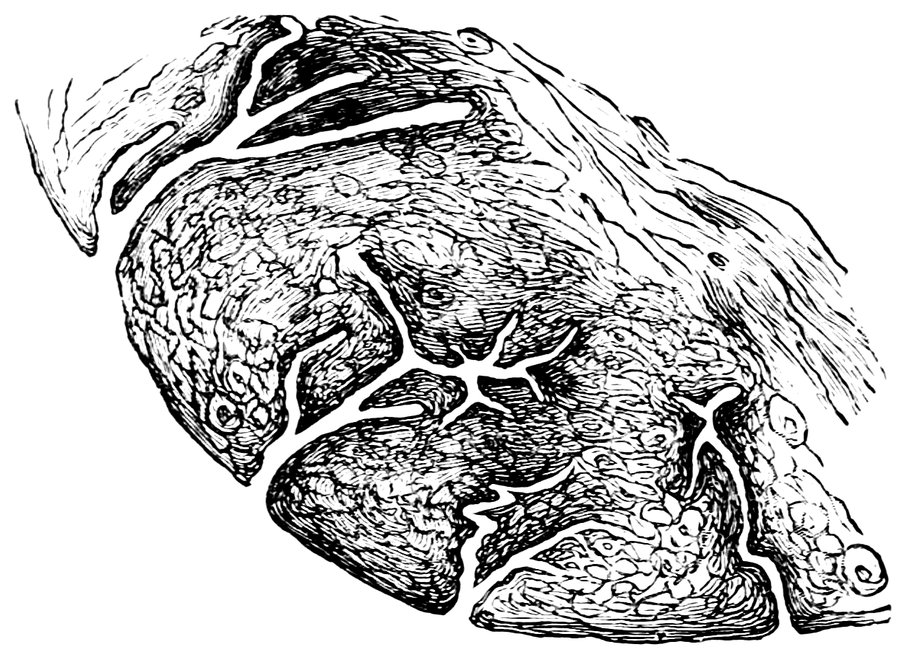
Fig. 92.—Sagittal section through the Cervix of a woman 26 years of age. Dendriform branched Glands.
589
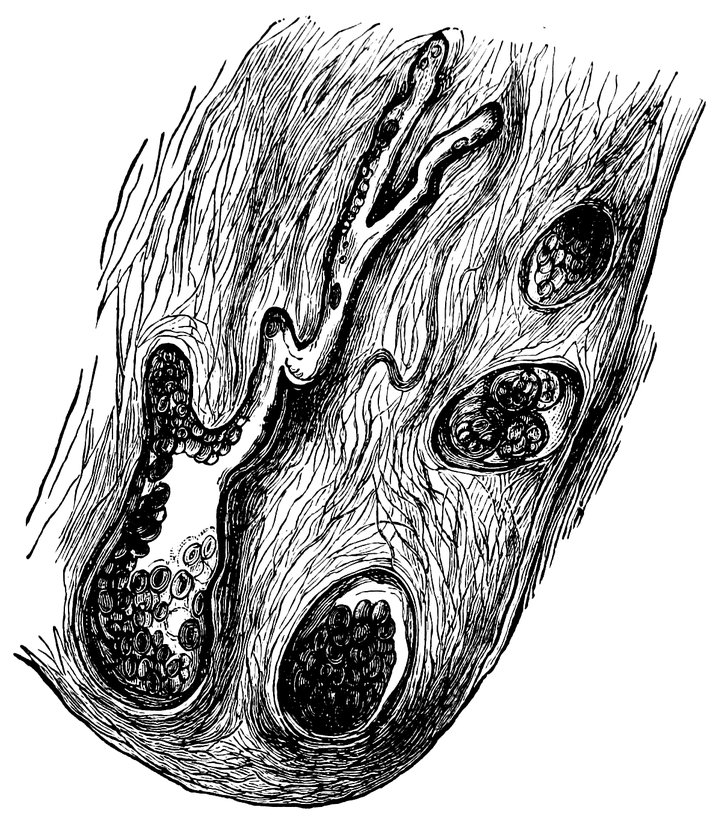
Fig. 93.—Sagittal section through the Cervix of a woman 65 years of age. Glands which have undergone Cystic Degeneration.
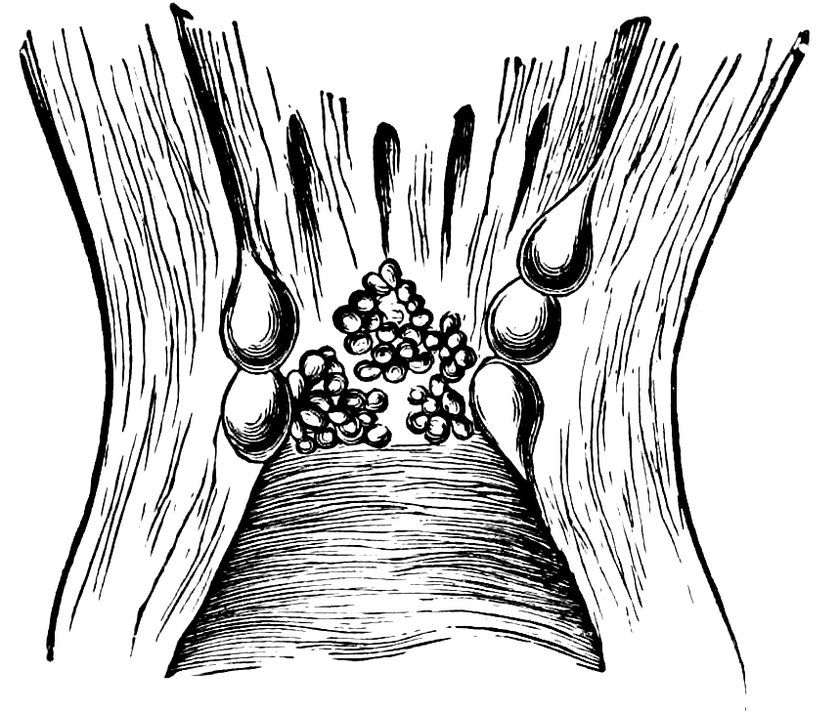
Fig. 94.—Cervix of a woman 70 years of age. The Cervical glands have undergone Cystic Degeneration.
Whereas at the commencement of the climacteric period, the uterus commonly exhibits a slight increase in size, owing to the condition of passive hyperaemia already described, subsequently a gradual diminution in the size of the organ may be observed. This atrophy begins with the portio vaginalis and proceeds upwards. Whilst the body still appears undiminished in size, the vaginal portion will be found already shorter, more slender, and more flaccid. Gradually, however, the entire organ is involved in the atrophic process. The uterus is then smaller than formerly, its walls are thinner, its cavity reduced in size. Its vascularity and its sensibility are alike diminished. The external os is smaller, and the internal os is sometimes entirely obliterated. There is a tendency at the climacteric period for the tubulo-racemose glands of the cervical mucous membrane (Fig. 92) to undergo a cystic degeneration (Fig. 93), and hence arise the cysts which are so commonly met with on the portio vaginalis of women at this time of life, cysts varying in size from that of a millet seed to that of a pea. 590In advanced life, the formation of such cysts may be regarded as normal, and sometimes in the form of grape-like clusters they almost completely occupy the lumen of the cervical canal. (Figs. 94, 95, 96, and 97).
Not infrequently, these cysts lead to the formation of polypi, by enlarging until the mucous membrane projects so far that a stalk is formed.
Examining the bodies of 47 women who died at ages varying from 42 to 80 years, I found in 28 ovula Nabothi in the cervical mucous membrane, for the most part at the os uteri externum, but in some cases also extending up to the os internum, sometimes between the plicae palmatae, sometimes isolated, sometimes grouped.
Sometimes in old women no trace of a vaginal portion remains, and the uterus is found to be transformed to a small, thin-walled, shrunken body, no more than one-fourth of its original size; in such cases the saying of Graaf appears to be justified, that after the menopause the uterus returns to the size it has in the young girl. In the majority of such cases, the cavity of the uterus is also contracted (concentric atrophy). It sometimes happens, however, that in old age the os externum and the os internum are the seat of atresia, whilst the intermediate portion of the cervical canal remains unaffected. In this way, especially when the cervical canal and the cavity of the body of the uterus are distended with mucus or with fungous growths, is produced what is known as the uterus bicameratus vetularum.
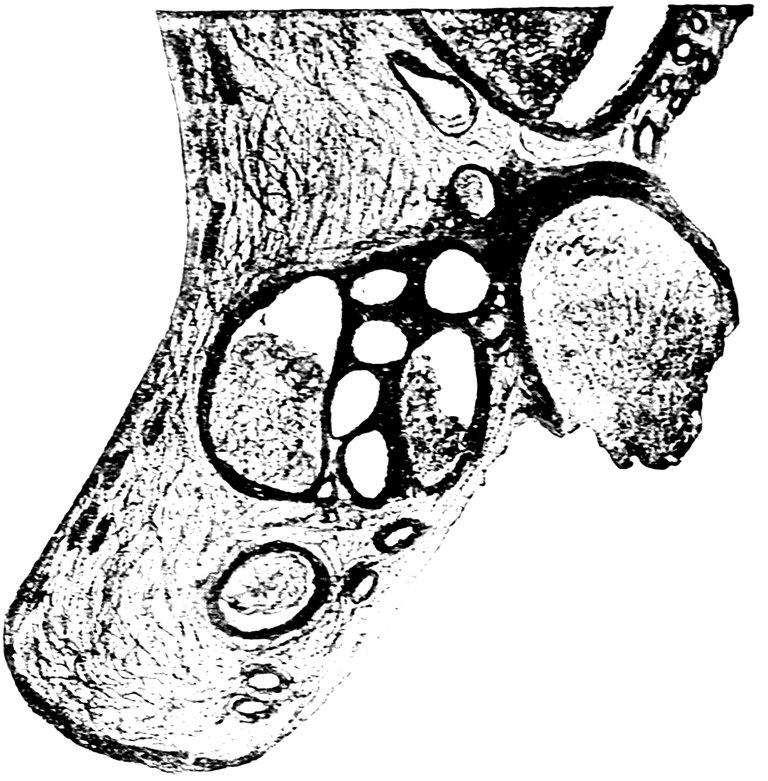
Fig. 95.—Ovula Nabothi in the Portio Vaginalis.
In many cases, when the cervical canal has been obliterated, we find the uterine cavity distended with mucous secretion (excentric 591atrophy). The substance of the uterine wall is in old age commonly dense and tough, but occasionally, in extreme old age, less firm than formerly, withered and friable, and traversed by degenerated arteries, and in this state it is predisposed to haemorrhages (apoplexia uteri). Such intramural haemorrhages usually occur in the fundus; the friable uterine substance has then a blackish-red appearance, infarcted with extravasated blood; sometimes the uterine cavity is also filled with blood. In general it may be said that when the menopause is completely over, when uterine activity has entirely ceased, the uterus returns to the state in which it was before the menarche—it is physiologically dead.
The tubes become flaccid, thinner, shorter, and are at times obliterated. In the mucous membrane of the tubes in old women we no longer find any trace of the glands described by Hennig; the epithelial cells have also lost their cilia.
During the climacteric period, the vagina is usually relaxed and roomy, the mucous membrane is smooth, injected and secretes freely; subsequently, in old age, it becomes firm, tough and dry.
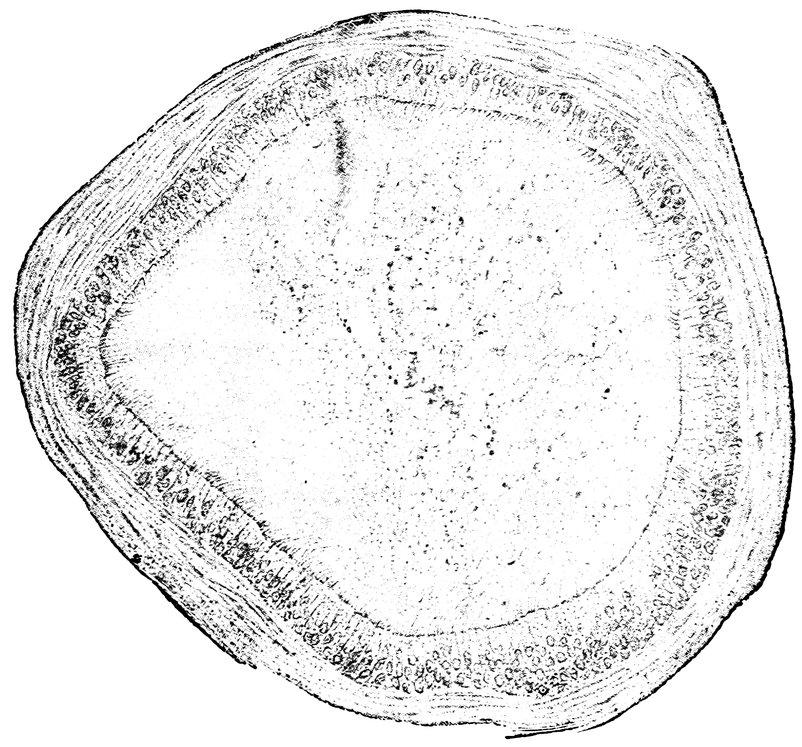
Fig. 96.—Vesicle (Ovula Nabothi) from the Uterine Mucous Membrane.
Wendeler found that the initial change of the climacteric in the ovary is a chronic and progressive endarteritis obliterans; the result of this process is, in addition to the obliteration of the follicles, a continually increasing hyaline degeneration of the smallest arteries and the arterioles, especially along the line of transition between the cortical and the medullary substance of the organ; this degeneration extends to the surrounding connective tissue, and thus leads to 592the formation of peculiar, vitreous, translucent foci of sclerotic connective tissue, containing few cells or none; these are the so-called corpora fibrosa or corpora albicantia. Only subsequently to the formation of these bodies does the characteristic wrinkling of the surface of the ovary occur, with general shrinkage of the organ, these changes being due to the contraction that sets in in the numerous scattered foci of connective tissue, which, as already mentioned, are situated in close proximity to the cortex.
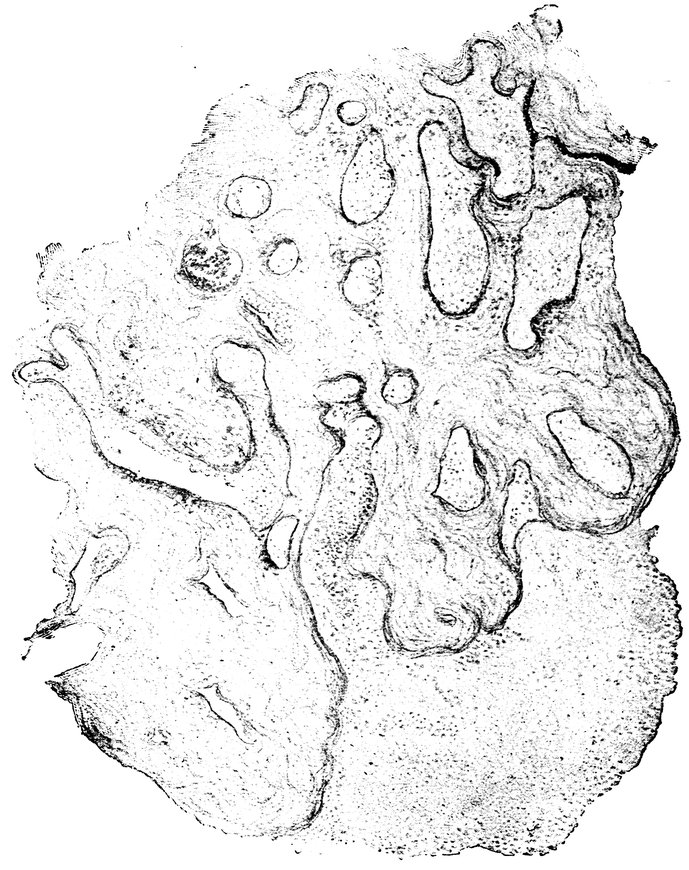
Fig. 97.—Mucous glands undergoing Cystic Degeneration.
The gradual atrophy of the uterus after the extinction of its sexual activity leads to a diminution in all the diameters of the organ, so that in old women it becomes flattened as in childhood, all its curves having disappeared; the muscular substance is replaced 593by connective tissue; and the portio vaginalis dwindles and even entirely disappears.
As regards the bacterial flora of the genital organs of elderly women, Menge and Koenig find that the vagina for the most part contains bacteria which do not thrive when cultivated aërobically on alkaline agar plates. In exceptional cases, however, such bacteria are found, and may even be sufficiently vigorous to produce pyogenic infection. According to Strogamoff, the vagina in all circumstances contains a great variety of micro-organisms—cocci, diplococci and rod-forms. Rod-forms are the prevailing types found in normal conditions in elderly women, but they are much smaller than in women who are still in the period of reproductive activity. Organisms liquefying gelatine were found in one instance only, a case of vaginal prolapse. In one half of the cases examined, there was no development of culture media inoculated from the cervix uteri, whether on agar or gelatine.
The Time of the Menopause.
The age at which the menopause begins is one which varies owing to manifold conditions, congenital and acquired, owing to the local influences which have been brought to bear on the reproductive organs during the menacme, and to the general circumstances of life during this period. In Northern Europe it commonly begins some time between the ages of 40 and 50 years. According to the most trustworthy statistical data, the commonest age for the onset of the menopause is between the ages of 45 and 50 years. Next to these in frequency we find the menopause commencing between the ages of 40 and 45 years. If, however, the menopause does not begin during the fifth decennium, it is more apt to occur during the quinquennium after 50 than during the quinquennium preceding 40 years of age; that is to say, an abnormally late menopause is more often met with than an abnormally early menopause. In a very small proportion of women does the menopause begin either after the age of 55 or before the age of 35.
The Age at Which the Menopause Occurs.
My own observations show that the age at which the menopause begins is affected by the following circumstances:
1. The race (nationality) of the woman.
2. The age at which the menarche occurred.
3. The sexual activity of the woman during the period of the 594menacme, the number of her pregnancies, the exercise or neglect of the function of lactation.
4. The social circumstances of the woman’s life.
5. General constitutional and pathological conditions.
1. Race.
From the statistical data regarding the age at which the menopause occurs among the women of the various nations of Northern Europe, it appears that the latest average age for the cessation of menstruation is met with in Lapland, namely 49.4 years; next comes Norway, where the average age is 48.9; next Germany, where the average age is 47; next England, 46.1; next Russia, 44; and finally Austria, 42.2. In the four principal capital cities, the average age is: in London, 45.5; in Paris, 43.65; in Vienna, 43, and in Berlin, 47. Generally speaking, in southern countries the cessation of menstruation occurs at an earlier age than in northern countries, as the following comparison shows: northern countries: England (Tilt), 48 to 50; France (Courty), 50; North Germany (Mayer), 50; Austria (Szukits), 42; southern counties: Persia (Chardin), 27; Java, 30; various Asiatic races, 30 to 40.
In the case of 500 women of various nationalities in whom I was able to ascertain by personal observation the age at which menstruation ceased, I found that the menopause occurred:
In the quinquennium 35 to 40 in 48 women
In the quinquennium 40 to 45 in 141 women
In the quinquennium 45 to 50 in 177 women
In the quinquennium 50 to 55 in 89 women
455
Thus we see that in about one tenth of my cases, menstruation ceased between the ages of 35 and 40; in more than one-fourth, between the ages of 40 and 45; in more than one-third between the ages of 45 and 50; and in about one-sixth between the ages of 50 and 55. In 267, that is, in more than one-half of the 500, menstruation ceased between the ages of 42 and 51. In 28 women, menstruation ceased before the age of 35; and in 17, after the age of 55. In a very large majority of my 500 cases the women were of German or Austro-Hungarian nationality; next, in order of frequency, came Poles, Russians, women of various southern countries, Swedish women. In women of Slavonic nationality, menstruation ceased remarkably late as compared with women of German nationality.
Brierre de Boismont, Tilt, Courty, and various other observers, have published statistical data regarding the age at which menstruation ceases in women of different nationalities. Krieger, compiling 595from several authors, statistics relating to 2291 women (European) gives the following average results: menstruation ceased
Between the ages of 35 and 40 in 272 women 11.87 per cent.
Between the ages of 40 and 45 in 595 women 25.97 per cent.
Between the ages of 45 and 50 in 940 women 41.03 per cent.
Between the ages of 50 and 55 in 334 women 14.58 per cent.
Before 35 and after 55 in 150 women 6.54 per cent.
2291 99.99
We append a statistical table showing the average age at which menstruation ceases in women of different European nationalities:
Germany. Austria-Hungary. France (Paris). England (London). Russia. Denmark. Norway. Lapland.
Number of cases 824 256 178 500 100 312 391 34
Average age at the cessation of menstruation 47.0 42.2 44.0 46.1 45.9 44.8 48.9 49.4
Observer Magar Szukits Brierre de Boismont Tilt Lieven Hannover Faye and Vogt Vogt
2. The Age at Which the Menarche Occurred.
Until recently, it was generally believed that the earlier the age at which menstruation first made its appearance, the earlier also would the menopause occur; and that, on the other hand, the later the age at which the flow began, the later also would it cease. Virey summarized this opinion in the saying: prius pubescentes prius senescunt. This view of the matter is, however, true only in respect of the influence of climate upon sexual development. In a cold climate, a woman begins to menstruate late and ceases to menstruate late; in a hot climate the opposite conditions prevail. But if we make our comparison between women living in similar conditions as regards latitude and climate, we find that Virey’s saying is far from accurately describing the facts.
In general, and climatic influences apart, it may be said that the earlier in any woman the age at which menstruation first occurs, the later will be the age at which menstruation ceases.
In order to ascertain the influence of the age at the menarche upon the disappearance of menstrual activity, I placed in comparison first the cases of 50 women in whom menstruation had first appeared between the ages of 12 and 16—i. e., cases of early menarche; and secondly the cases of 50 women in whom menstruation 596had begun between the ages of 16 and 20—i. e., cases of late menarche. The result was the following:
In the 50 women in whom the menarche had been early, the menopause occurred
At ages 35 to 40 in 5 instances
At ages 40 to 45 in 12 instances
At ages 45 to 50 in 25 instances
At ages 50 to 55 in 8 instances
On the other hand, in the 50 women in whom the menarche had been late, the menopause occurred
At ages 35 to 40 in 9 instances
At ages 40 to 45 in 28 instances
At ages 45 to 50 in 10 instances
At ages 50 to 55 in 3 instances
Thus whilst among the women in whom the menarche had been late, there were thirteen only who continued to menstruate until they were at least 45 years of age; among those in whom the menarche had been early, the number in whom menstruation thus continued up to the age of 45 or beyond was 33, nearly three times as great.
On the other hand, in those cases in which the menarche occurred at an abnormally early age, i. e., before the age of 12 years, the menopause was also a remarkably early one. The menopause also came on very early in women in whom the menarche had been extremely retarded, until the age of 20 and upwards. An extremely early and an extremely late menarche alike tend to be followed by a premature menopause.
To this rule there are, however, exceptions, and we occasionally meet with women whose reproductive energies are so powerful, that the menarche occurs at an unusually early age, and the menopause is postponed to an age considerably beyond the average. Thus, among 100 women in the Salpetrière, Raciborski observed 29 in whom menstruation had begun at the exceptionally early age of 12 years, and who, notwithstanding this, all experienced a very late menopause. Three of them were still menstruating at the age of 57, 1 at 56, 2 at 52, 2 at 50, 3 at 48, 3 at 45, and 13 at an age less than 45.
Brierre de Boismont reports the case of a woman who began to menstruate in her 12th year; she married, had several children, and continued to menstruate regularly until she was 60 years of age.
The results obtained by W. Guy, who examined a series of 250 cases, confirm the proposition stated above, that the earlier menstruation begins (the extremely early cases being excluded), the later it ceases.
According to Cohnstein, who bases his conclusions upon the observation 597of 400 cases, in women who begin to menstruate early, the menopause occurs on an average three years later, than in women who begin to menstruate late. Puech also states that menstruation lasts longer in women who begin to menstruate early, than in those who begin to menstruate late. According to Scanzoni, in women who begin to menstruate in very early youth, the climacteric age is commonly reached earlier, than in those in whom puberty occurs at the normal age—commonly between the ages of 40 and 42 years.
The homology between the pathological states which, in any particular individual, occur at the respective periods of the menarche and the menopause, is sometimes extremely remarkable; the very same symptoms by which the first appearance of menstruation was preceded, recur as antecedents of the menopause. This is seen in the case of certain eczematous conditions of the skin, of dyspeptic manifestations, epistaxis, nervous disturbances, hysterical and epileptic seizures, vasomotor symptoms, congestions, cardiac troubles, albuminuria, etc. Alibert pointed out that certain skin-diseases may appear twice only during life, once shortly before the commencement of menstruation, and the second time shortly before the cessation of menstrual activity. Brierre de Boismont alludes to the occurrence of hysteria and epilepsy before both these important epochs in a woman’s life, whilst in the intervening period the patient had remained entirely free from such troubles. H. Marsh records the observation that women who just before puberty have suffered from repeated attacks of epistaxis, have suffered from the same trouble as a predominant symptom of the climacteric period. Tilt has seen in several cases the outbreak of numerous furuncles with subsequent diarrhoea, and still more frequently peculiar attacks of severe vertigo, occurring in women just before the two critical epochs in her life, whilst in the intervening period there has been no trace of such troubles, either in connexion with menstruation, with the puerperium, or with lactation.
3. The Woman’s Sexual Activity.
An important influence upon the early or late onset of the menopause is exerted by the degree to which a woman’s reproductive functions have been exercised during the menarche. My personal observations have shown me that in women who are in good health and of a powerful build, whose menstrual flow has always been regular and sufficient in quantity, whose reproductive organs have been adequately and properly exercised, who have had a physiological amount of sexual intercourse, have given birth to several children, and have suckled these children, the cessation of the menstrual flow generally occurs much later than in women in whom the conditions of the sexual life have been the opposite of those 598just mentioned. The more regular menstruation has been, and the more normal the deliveries, the later does the menopause ensue.
Especially striking is the influence of the number of deliveries upon the time of occurrence of the menopause. In women who have given birth to a number of children, menstruation as a rule continues for several years later than in sterile women, or in those who have had one or two children only. If a woman suckles her children, the date of the menopause appears also to be postponed. Deliveries late in life seem likewise to delay the onset of the menopause, whereas abortions accelerate its occurrence. If, however, pregnancy succeeds pregnancy at extremely short intervals, the menopause is likely to occur early; the same result is brought about by sexual intercourse at too early an age. The menopause occurs latest in women who have begun to menstruate early, who have married, have given birth to more than three children, and have been delivered of their last child at full term when 38 to 42 years of age.
As regards the 500 women previously mentioned, in whom I made personal observation as to the age at which the menopause occurred and the circumstances by which its onset was influenced, the effect of marriage and the number of children born is shown by the following details:
Of the 48 women in whom the menopause occurred between the ages of 35 and 40, 16 were unmarried, 6 married and childless, 18 married with one or two children, 8 married with more than two children.
Of the 141 women in whom the menopause occurred between the ages of 40 and 45, 3 were unmarried, 4 married and childless, 46 married with one or two children, 88 married with more than two children.
Of the 177 women in whom the menopause occurred between the ages of 45 and 50, 1 was unmarried, 2 were married and childless, 32 married with one or two children, 142 married with more than two children.
Of the 89 in whom the menopause occurred between the ages of 50 and 55, none were unmarried, none were childless, 19 were married with one or two children, 70 were married with more than two children.
Of the 17 women in whom the menopause occurred at an age above 55 years, there were two only who had not had more than two children, whilst there were 10 who had had six to eight children.
The influence of lactation is shown by the fact that in the case of 40 women who had not suckled their children, the mean duration 599of menstrual activity was four years less than the established mean duration of 27 years.
4. The Social Circumstances of the Woman’s Life.
The conditions in which a woman passes her life are not without influence upon the time of onset of the menopause. In general it may be said that among the women of the labouring classes, whose livelihood is so often precarious, and who are apt to suffer from habitual physical overwork, menstruation ceases at an earlier age than among the women of the well-to-do classes and those who lead an easier life. But though the climacteric thus occurs earlier among the lower than among the upper classes, the difference is not a considerable one.
According to Mayer’s calculation, the mean age at which menstruation ceases is, in upper class women, 47.13 years, in lower class women, 46.97 years. Small as this difference appears, amounting on the average to no more than two months, it must not be forgotten that among the upper classes, menstruation begins earlier than among the lower classes, by an amount which averages 1.31 years. Thus the total duration of sexual activity is almost one and a half years longer in the upper than in the lower classes.
5. General Constitutional and Pathological Conditions.
An important influence upon the time of occurrence of the menopause is exerted by the individual and hereditary predisposition of the woman, by her constitutional state, and by certain illnesses from which she has suffered. Women who by inheritance are constitutionally weakly and delicate, in whom the menstrual flow has always been pale and scanty, in whom the intermenstrual intervals have been excessive, and who have a slender habit of body, attain the climacteric age earlier than women with vigorous bodily development and powerful muscles, with large breasts, and in whom menstruation has always been regular and abundant. Women with a great tendency to obesity cease to menstruate earlier than women of more normal proportions; blondes earlier than brunettes; women of phlegmatic temperament earlier than women of a sanguine and ardent temperament.
In general it may be said, that all influences which have a weakening effect upon the feminine organism, tend also to accelerate the onset of the menopause: such are, severe labour, great sorrow, wearisome occupations, severe menstrual losses, rapidly succeeding pregnancies, and abortions; also a number of pathological general states shortly to be discussed, as well as local diseases of the reproductive organs.
600Fritsch points out that menstruation continues to a later age in proportion as the woman’s state of general nutrition is a good one. He also asserts that women with a very large uterus, who have always had an abundant menstrual flow, those with retroflexion, with hypertrophy of the portio vaginalis, or chronic endocervicitis and endometritis, and those with small myomata which have given rise to no marked symptoms, often continue to menstruate far beyond the usual age.
The mean duration of the climacteric phenomena, from the commencement of these until the final cessation of menstruation, is about two years. This mean is made up of extremely wide individual variations; in a small proportion of the cases the climacteric manifestations may last no more than a month or two, whilst at the other end of the scale we meet with cases in which the duration extends to 4, 6, 8, and even 18 years.
In considerably more than half of all the cases, however, the duration of the climacteric manifestations varies between six months and three years. Thus, in Tilt’s series of cases, the duration of the “change of life” was
6 months in 12.07 of all cases
1 year in 22.64 of all cases
2 years in 18.62 of all cases
3 years in 9.43 of all cases
6. Premature, Delayed and Sudden Onset of the Menopause.
In exceptional cases, the menopause, instead of taking place between the fortieth and the fiftieth year of life, occurs at an abnormally early or an abnormally late age.
Premature cessation of menstrual activity, in the third or the fourth decennium of life—very rarely indeed before the third decade—depends in part upon disturbances of metabolism and of haematopoiesis, and in part upon diseases of the female reproductive organs; in some cases, however, it may be due to some hereditary constitutional peculiarity; or it may occur suddenly, in consequence of some violent shock to the nervous system.
Among the disorders of metabolism which may lead to a premature menopause, excessive adiposity, lipomatosis universalis, occupies the first place. Next in order of importance come a chloro-anæmic condition of the blood, pernicious anæmia, splenic leukaemia, certain of the acute infectious disorders—typhoid, cholera, scarlatina, acute articular rheumatism,—further pulmonary tuberculosis, diabetes mellitus, Graves’ disease, Addison’s disease, and myxoedema. These various conditions may give rise, in part by infective processes, and in part in consequence of the general cachectic condition, to atrophy of the ovaries with destruction of the 601graafian follicles, and to atrophic processes in the uterus, and these changes lead to the premature cessation of menstrual activity.
Excessive obesity has a restrictive influence upon ovarian activity, manifested in part, as already mentioned, by the occurrence of sterility, but in part also, in very obese women, by the onset of a premature menopause. Among 215 cases of extreme obesity in women, I found 49 in which the menopause occurred at a remarkably early age. In these cases the menopause occurred at the following age:
In 1 woman at the age of 17 years
In 14 women at the age of 20 to 25 years
In 11 women at the age of 25 to 30 years
In 9 women at the age of 30 to 35 years
In 14 women at the age of 35 to 40 years
In none of these cases did the local examination of the reproductive organs disclose the existence of any noteworthy disease.
Of the diseases of the genital organs which are competent to give rise to a premature cessation of menstrual activity, the most important are the puerperal infective processes and other inflammatory states of the reproductive organs, with their results—chronic metritis, perimetritic and parametritic exudations, chronic oophoritis, atrophy of the uterus and the ovaries.
After infective puerperal processes, it sometimes happens that there is far-reaching destruction of the uterine musculature, degeneration of the uterine mucosa, permanent and irreparable atrophy of the uterus, and suppuration and atrophy of the ovaries—conditions which result in an extinction of menstrual activity. A similar result may ensue upon the persistent and long-continued pressure upon the uterus and the ovaries of a large intrapelvic exudation; such exudation being commonly post-puerperal, but occasionally arising in the absence of pregnancy. Further, according to Freund, chronic atrophic parametritis may give rise to an incurable atrophy of the uterus, by interference with the circulation of the blood through the broad ligaments, and consequent impairment of the nutrition of the uterus. Gonorrhoeal inflammation may also lead to the termination of menstrual activity, when it gives rise to intramural inflammatory deposits in the uterus, and to chronic inflammatory processes in the ovaries. Tumours of the uterus and the uterine annexa may likewise induce a premature menopause.
We also meet with cases in which after a pregnancy, to all appearance normal in its course and termination, a premature menopause results. To this category belong the cases, according to Kleinwächter of no extreme rarity, in which perfectly healthy women are attacked by profuse uterine haemorrhage during the 602course of a normal, full-term labour, or during miscarriage; subsequently, though the lying-in period is passed without further misadventure or abnormality, and in the absence of lactation, the patient becomes permanently amenorrhoeic. The normal involution of the uterus passes on into hyperinvolution, and ultimately complete atrophy of uterus and ovaries results. In some cases, moreover, such hyperinvolution with consecutive atrophy follows normal labour or abortion without the occurrence of any excessive haemorrhage.
Much more frequently do we find that rapidly successive pregnancies, with long-continued exercise of the lacteal function, in badly nourished, anæmic women, give rise to a premature menopause, due to permanent atrophy of the uterus and ovaries, which are in such cases so poorly supplied with blood. This “lactationatrophy” is described by Frommel and Thorn as a concentric atrophy first of all affecting the corpus uteri, and to this, if the disease advances, there succeeds a general atrophy of the muscular, connective, and fatty tissues of the parametrium, the vagina, the pelvic floor, and ultimately of the ovaries, leading, when permanent, to a premature menopause.
Trauma of the genital organs may also lead to uterine atrophy and to premature menopause.
By many authors it is believed that too-early marriage, sexual excesses, and prostitution, may be the cause of cessatio praecox. In some cases, there is unquestionably a hereditary predisposition to a premature climacteric, since the mothers of the women in whom it occurs have themselves been similarly affected. In the remarkable case which came under my own observation, of a woman from Smyrna, there was hereditary predisposition. This woman began to menstruate when 12 years of age; menstruation was always scanty; she married when 15 years of age; and she ceased to menstruate for ever at the age of 19. In other cases we find there is a family tendency for menstruation to be delayed in its first appearance to a comparatively advanced age, and to cease at the usual time.
In cases of cessatio mensium praecox (unless the failure of menstruation has been quite a sudden one), and after the premature menopause is fully established, we find in the uterus and the ovaries anatomical changes similar to those met with after the natural climacteric—diminution in the size of the uterus with thinning of its walls, density and firmness of the tissues of the organ, smallness and a soft consistency of the ovaries; sometimes, also, the mammae are atrophic.
In cases of premature menopause, the troubles attending the change are commonly more severe and more enduring than those that occur at the natural menopause. Especially is this the case when the premature menopause is quite a sudden occurrence, but this 603phenomenon is rare. Most commonly the premature menopause is gradual in onset; the flow becomes more scanty month by month, until at last it fails altogether to appear. Irregularity in the menstrual rhythm is not often seen in such cases. Early senescence is exceptional in these women in whom a premature menopause occurs. Emaciation, greyness of the hair, wrinkling of the skin, the growth of hairs on the face, etc., are not usually associated with the atrophy of the reproductive organs; the physiognomy and figure of women with cessatio praecox being usually similar to those seen in women of corresponding age in whom menstruation still continues.
Tilt enquired regarding the cause of cessatio praecox in 27 instances, with the following results:
In 3 instances, parturition and lactation. In 1 instance, abortion. In 2 instances, a fall on the sacrum during menstruation. In 2 instances, suppression of menstruation from chill. In 1 instance, haemorrhage from the arm during menstruation. In 1 instance, celebration of nuptials during menstruation. In 2 instances, severe medicinal purgation. In 2 instances, cholera. In 2 instances, rheumatic fever. In 2 instances, febrile bronchitis. In 9 instances, intermittent fever.
In 1 case Tilt saw cessation of menstruation occur at the age of 29, in consequence of metritis. Atlee, in 15 cases of ovarian tumour, saw the menopause occur at ages of 30, 39, 40 and 42. Puech saw a premature menopause at the age of 30 in 3 cases, in each a sequel of cholera. Blondel reports a case of cessatio praecox after prolonged galactorrhoea, although the woman had not suckled her infant; Gottschalk and Rokitansky, cases following injury to the cervix uteri; Kiwisch, Simpson, and Kleinwächter, cases following full-time, normal deliveries, in which, however, severe losses of blood had taken place.
Courty and Brierre de Boismont report cases in which the menopause occurred as early as the age of 21; Mayer, 2 cases at the age of 22; Krieger, 1 case at 23; Brierre de Boismont, 1 case at 24; Mayer, 2 cases at 25; Brierre de Boismont, 1 case at 26, and 1 case at 27; Guy and Tilt, each 1 case at the age of 27; Brierre de Boismont, Courty, and Guy, each 1 case at the age of 28; Brierre de Boismont, Courty, and Mayer, each 1 case at the age of 29; Guy and Tilt, each 1 case at the age of 30; and Mayer, 5 cases at the age of 30.
An unusually late climacteric, the continuance of menstruation beyond the age of 50 years, is not an extremely rare occurrence, but 604is less often seen than cessatio praecox. There is, however, in these cases a difficulty which must not be underestimated, namely, to distinguish between a genuine menstrual bleeding and the other uterine haemorrhages which are common precisely at this age of life, due either to textural changes in the uterus, or to neoplasmata—more especially because in these non-menstrual haemorrhages also a certain periodicity may often be detected. When on careful examination no abnormality can be discovered in the reproductive organs, when the bleeding in question recurs at the intervals and in association with the general symptoms to which the woman thus affected has been accustomed during her previous menstruations, and when the amount of blood discharged is not abnormal, it is permissible to conclude that we have to do with a persistence of true menstruation, even though the woman has some time since completed the fifth decennium of her life. In some women, in fact, the reproductive system is so energetic, that ovulation continues to an age far beyond the average, and such women are to be regarded as sexually long-lived.
Although the instances of protracted menstruation contained in the older literature of the subject are open to suspicion, owing to the fact that at that time it was not possible to distinguish with certainty between menstrual and pathological uterine haemorrhage, quite recently numerous incontestable cases of enduring sexual vitality have been put on record.
I have myself seen no less than 106 cases in which the menopause did not occur until after the age of 50 years; among these there were 4 in which the age at the menopause was 56; 5 in which it was 57; 2 in which it was 58; 1 in which it was 59; and 1 in which it was 60. Tilt records 128 cases of menopause occurring after 50; among these there were 4 in which the woman was 56 when menstruation ceased; 2 who were 57; 4 who were 58; 1 who was 59; 1 who was 60; and 2 who were 61. Courty reports a case in which menstruation persisted after the age of 65; Mayer, 3 cases of menopause at 64; Beigel, 2 cases, 1 in which menstruation continued to the age of 65, the other, to the age of 72. Kleinwächter observed 33 cases in which menstruation continued to an age varying from 50 to 57 years. Emmet, in the year 1886, published the case of a woman who was then 70 years old, and who at this advanced age continued to menstruate regularly.
That not every case in which after the age of 50 years there is recurrent, more or less periodic, haemorrhage from the genital organs, is to be regarded as an instance of delayed menopause, we are taught by the records of post mortem examination in several cases of the kind. Scanzoni reports the case of a woman who at the age of 60 was affected with a fairly regular periodic discharge 605of blood from the vagina. During one of these haemorrhages, she died of pneumonia, and the autopsy showed that the ovaries were completely atrophied and transformed into dense scar tissue, and contained no trace of corpus luteum or of fresh extravasation of blood, whilst in the upper part of the cervical canal there were two mucous polypi each of about the size of a bean. In another case, that of a woman 64 years of age, periodic losses of blood, at intervals of from three to four weeks, continued to the time of her death. This woman suffered from mitral valvular insufficiency, and it was clear that the haemorrhages had been due to the venous engorgement consequent upon imperfect compensation. The ovaries were completely atrophied, and showed no trace of any recent maturation of ova; the uterus was enlarged, the mucous membrane hyperaemic, and the cavity contained a recent clot.
Not infrequently, the haemorrhages attributed to the persistence of menstruation are really due to senile arteriosclerosis—to rigidity and brittleness of the uterine arteries; in other cases they arise from varicosity of the veins of the cervical canal. A common cause of such bleedings from the genital passage in comparatively advanced life, is to be found in the growth of uterine myomata.
To myoma uteri we must attribute a part, though by no means all, of the cases in which menstruation seems to recur some years after the menopause has, to all appearance, been fully established. In most of these cases, indeed, we have to do with pathological haemorrhages, the cause of which is, however, but too often obscure. Still, cases certainly occur in which, two or three years or even longer after the menopause, some unknown stimulus leads to the regular recurrence of menstruation. The possibility of such an occurrence is, in my opinion, fully proved by post mortem examinations of the bodies of elderly women in whom the menopause has been fully established and yet the ovaries are found to contain follicles of various degrees of ripeness, and also fresh corpora lutea—signs that ovulation may persist for a considerable time after the complete cessation of menstruation. Another proof of the last fact is the well known experience that women who have some time ago ceased to menstruate, may nevertheless become pregnant. Waldeyer, indeed, asserts that when four years have elapsed since the menopause, follicles are never to be found in the ovaries, but this negative experience is not decisive, especially as regards the cases in which regular menstruation is resumed some time after the occurrence of a premature menopause.
I have myself seen several cases in which the menopause occurred at 35, 38, 39, and 42 years, respectively; 3, 4, or 5 years later, as a result of hydropathic treatment, regular menstruation recurred. In 606one case, a woman who had ceased to menstruate ten years before, gave birth to a child at the age of 45.
Numerous indisputable cases of this kind are reported in the recent literature of the subject. Krieger had under his personal observation a woman of a robust habit of body, in whom menstruation ceased at the age of 48 years, her eighth child having been born fifteen years before. Two years later irregular menstruation recurred, and on the cessation of these haemorrhages, it appeared that the woman was once more gravid; she was delivered at full term of a girl. Mayer observed the following case: A strong working-class woman 33 years of age had begun to menstruate regularly when 13 years old; between the ages of 17 and 28 she gave birth to five children, and in addition had one miscarriage when 19 years old. Widowed at the age of 29, she fell ill, and on examination the uterus was found to be small and relaxed, whilst the vaginal portion of the cervix was reduced to a mere rudiment. Since she had been 22 years of age she had had persistent leucorrhoea, but no trace of menstrual haemorrhage; yet since that age she had had three children. Renaudin delivered a woman 61 years of age, who had ceased to menstruate 12 years earlier. Meissner reports a case in which a woman first began to menstruate at the age of 20, had her first child when 47 years old, and gave birth to the last of her eight children when 60 years of age.
The sudden and permanent cessation of menstruation, whether at the normal climacteric age, or earlier in life, is always a pathological occurrence. As compared with the normal, gradual disappearance of menstruation, associated with the usual climacteric symptoms, such a sudden extinction of menstrual activity is, moreover, quite rare. When it does occur, the cause is to be found in one of various pathological general states, such as one of the acute infectious disorders, or some other exhausting disease, or sometimes in some local disease of the reproductive organs; occasionally, however, it may occur in perfect health, in consequence of some powerful physical or mental stimulus, such as a severe blow or intense fright.
This sudden menopause has been observed after severe labour or abortion with profuse haemorrhage, or after cholera or typhoid; we must assume that in such cases the anæmia of the genital organs has disturbed the function of ovulation; whilst in cases due to mental shock, the interference with ovulation must be through the intermediation of the nervous system. Frequently, of course, in these cases, the sudden menopause is also a premature one.
Tilt reports a case in which a sudden menopause ensued upon phlebotomy during menstruation; several cases also in which women at ages varying from 30 to 34, or 39 years, ceased to menstruate 607suddenly and permanently in consequence of grief at the unexpected death of the husband; and another case of sudden menopause due to a fall down stairs. Courty reports three cases of sudden menopause at the age of 30, consequent upon an attack of cholera. Dusourd has seen three cases in which, in women aged 40 to 43 years, severe haemorrhoidal bleeding was followed by sudden and permanent cessation of menstruation. Mayer reports the case of a delicate middle-class woman 34 years of age, who had begun to menstruate at the age of 14, had married at the age of 20, and at the age of 21 after a normal delivery, ceased for ever to menstruate; and another case of a working-class woman 34 years of age who first menstruated at the age of 13 years, married at the age of 20, had two children in rapid succession, and finally ceased to menstruate, in consequence of a fright, at the age of 30 years. Krieger reports the case of a very nervous woman who first menstruated at the age of thirteen, and in whom at the age of 23 a sudden menopause ensued upon a nervous attack; in another case reported by the same observer, a sudden menopause occurred in a delicate woman 41 years of age owing to her husband’s death—this woman had previously experienced six months amenorrhœa in consequence of sorrow at the death of one of her children. The following remarkable case is reported by Brierre de Boismont: A sempstress began to menstruate at the age of 13 years; she married very soon after this, and gave birth to four children, the last when 21 years of age. In the course of the following year there was a fire in the house, and owing to this fright a sudden menopause occurred. Similar cases have been reported quite recently by Bossi and Walter.
The harmful influence which the occurrence of a sudden menopause exercises upon the general condition of the woman who experiences it, is manifested chiefly by violent circulatory disturbances, hyperaemia and congestion of the brain, lungs, and abdominal organs, and by states of excitement and depression of the nervous system. Of the vicarious haemorrhages which are apt to ensue upon such a sudden menopause, we have already spoken.
Generally speaking, women in middle life, in whom the whole organism is accustomed to the onset and decline of the menstrual hyperaemia, endure the functional disturbances induced by a sudden and complete cessation of menstruation much more easily than women who have already entered upon the climacteric age, or have nearly attained that age. The climacteric age is one in which women are already predisposed to circulatory disturbances in the pelvic organs, and it will readily be understood that in them the sudden interruption of the menstrual haemorrhages will have more serious consequences than in women in the prime of their sexual life, and therefore endowed with a greater power of resisting disturbances of the normal functions.
608
Pathology of the Menopause.
Diseases of the Genital Organs.
Among the commonest of the symptoms of the sexual epoch of the menopause is menorrhagia. It occurs especially in plethoric women, in those who during the prime of their sexual life have been accustomed to menstruate abundantly, and in those who have given birth to many children or had many miscarriages; but it is seen also in weakly and delicate individuals, in whom the tissues of the genital organs have become extremely flaccid and loose in texture. A luxurious mode of life, more especially a free consumption of alcoholic beverages, and also frequent sexual intercourse during the climacteric period, appear to favour the occurrence of menorrhagia at this epoch.
Not infrequently, menorrhagia is the first sign of the commencement of the climacteric, menstruation having been hitherto regular, and not excessive in amount. Generally, when this climacteric menorrhagia begins, the intervals also become shorter, the menstrual period being reduced to three or even two weeks. At times, however, the more profuse menstruation recurs at longer intervals, six weeks, two months, or even longer. In any case, the occurrence at the climacteric age of a severe or atypical haemorrhage, renders it the imperative duty of the physician to undertake a local examination of the genital organs; for it is necessary to ascertain without delay whether such a haemorrhage is a true climacteric phenomenon, or whether it is due to some actual disease of the reproductive organs—a neoplasm, or the like.
If the haemorrhage is due solely to the change of life, the vaginal portion of the cervix will usually be found soft and flaccid, bleeding readily on slight injury, and sometimes eroded; there is generally associated leucorrhoea. This relaxation and loss of firmness in the uterine tissues at the time of the menopause is the cause of the predisposition to excessive haemorrhage. An additional cause exists in the circulatory disturbances in the pelvic organs. We presume that women affected with menorrhagia at this time of life suffer from some persistent disturbance in the region of the inferior vena cava, whereby the outflow of blood from the veins of the pelvis is hindered, and a chronic condition of stasis in the uterus is conditioned. Hence arises distension of the vessels of the uterine mucous membrane, and this rhexis is relieved by the excessive haemorrhages. In these considerations lies the explanation of the fact that women who have had many children or many miscarriages, are especially prone to suffer from climacteric menorrhagia; and also women who for any reason are predisposed to intra-abdominal stasis.
609Another cause of climacteric menorrhagia is to be found in the frequent occurrence at this epoch of advanced arteriosclerotic changes in the uterine blood vessels, the disease being in some cases limited to the uterine arteries, and in others part of a general arterial degeneration. The blood may be derived from ruptured sclerotic capillaries of the mucous membrane; but in other cases it exudes in consequence of passive hyperaemia, without actual rupture of the bloodvessels. To such haemorrhages from atheromatous vessels we must refer many of the attacks of uterine haemorrhage that occur in elderly women, such as were formerly, before their true nature was understood, commonly regarded as instances of a very late return of menstruation. By careful examination the exact source of the blood can often be detected in such cases.
According to Theilhaber, one cause of the haemorrhages occurring at the climacteric is to be found in the atrophy of the uterine muscle which takes place at this period of life. Except during pregnancy and the puerperium, the uterus is usually in a state of moderate contraction; during the height of the menstrual flux, however, the uterus is relaxed. Then, as contraction of the muscle sets in, the menstrual hyperaemia and consequent haemorrhage are gradually brought to an end. When this contraction is insufficient, the hyperaemia and swelling of the uterus are more enduring. In association with the atrophy of the uterine muscle at the climacteric, there usually occurs a notable diminution in the size of the uterine vessels, so that, notwithstanding the diminished strength of the muscular contractions, any excessive loss of blood is prevented. But if this diminution in the calibre of the vessels fails to take place, the atony of the uterine muscle leads to hyperaemia, to haemorrhage, and often, in addition, to oedema of the organ, with elongation and thickening of its walls—hyperplasia uteri preclimacterica.
Among diseases of the uterus which during the climacteric may give rise to severe haemorrhage, and may lead to the mistaken opinion that menstruation still continues, we must in the first place mention carcinomatous disease of the cervix and of the body of the uterus; next in importance come myoma and fibrous polypi; less frequent causes of such haemorrhages are fungous endometritis, erosions, mucous polypi, prolapse of the uterus, and ovarian cystoma.
The climacteric age gives rise to a predisposition, not only to bleeding, but also to other pathological changes in the reproductive organs. We can by no means endorse the opinion of Currier—one long ago expressed also by Brierre de Boismont—that women during the sexual epoch of the menopause are less disposed to diseases of all kinds, and among them to diseases of the genital organs, than younger women, for the reason that their tissues are endowed with less vitality, and are, therefore, more resistent to all the causes 610of disease. On the contrary, the number of pathological disorders liable to affect the reproductive organs precisely at this period of life, is strikingly large. Among my 500 cases of women at the climacteric age, there were 440 who complained of such symptoms, the diseases from which they suffered being, in order of frequency:
Profuse haemorrhages in 286 cases
Chronic metritis in 79 cases
Leucorrhoea in 327 cases
Displacements of the uterus 117 cases
viz., prolapsus in 65 cases
anteflexion and retroflexion in 52 cases
Genital pruritus in 46 cases
Vaginismus in 12 cases
Carcinoma uteri in 3 cases
Myoma uteri in 5 cases
Tumor mammae in 8 cases
I need hardly point out that in many individuals more than one of these diseases were present at the same time.
The most obvious feature of these statistics is the extraordinary frequency of uterine haemorrhage and of leucorrhoea in climacteric women. The former condition was present in more than half my cases; the latter actually in three-fourths.
The same two pathological states were also those most frequently recorded in Tilt’s statistics. This author, in 446 women at the climacteric, found the following diseases of the reproductive apparatus:
Haemorrhages in 138 cases
Leucorrhoea recurring at irregular intervals in 146 cases
Leucorrhoea recurring monthly in 12 cases
Remittent menstruation in 33 cases
Vaginitis in 4 cases
Follicular inflammation of the vulva in 10 cases
Inflammation of the labia in 4 cases
Ulceration of the cervix uteri in 9 cases
Prolapsus uteri in 5 cases
Uterine polypi in 4 cases
Fibrous tumours of the uterus in 4 cases
Cancer of the uterus in 4 cases
Chronic ovarian tumours in 3 cases
Irritation and swelling of the breasts in 14 cases
Lacteal or gelatinous secretion in breasts in 2 cases
Hard, non-malignant tumour of the breast in 2 cases
Chancre of the breast in 1 case
Frequent sedimentation in the urine in 49 cases
Difficult and painful micturition in 9 cases
Incontinence of urine in 4 cases
Haematuria in 2 cases
Perineal abscess in 2 cases
Chronic metritis and endometritis come under observation with considerable frequency during the climacteric age, but as a rule 611these diseases have originated during the period of sexual maturity, and in exceptional instances only does the cessation of the menses appear to be the etiological starting point of these disorders. In fact, this occurs only when the menopause is premature, or when it is quite sudden in onset, whether this be due to noxious influences or to constitutional disorder. For the menstrual process quite normally gives rise to a certain congestion of the genital organs; and should menstruation be suddenly suppressed, the blood-stasis in the uterus becomes so extreme that morbid tissue changes are very likely to ensue. And when chronic metritis has occurred before, the congestion and stasis in the uterus at the climacteric will usually suffice to light up the inflammatory process afresh. This is the explanation of the fact that symptoms of slight metritis make their appearance at the very beginning of the climax, manifested by thickening of the corpus uteri and of the portio vaginalis of the cervix, by swelling and softening of the mucous membrane, and by abundant secretion. In those who, either after full-term delivery or after abortion, have suffered formerly from chronic metritis or endometritis, but who have been quite free from any symptoms of these troubles for many years prior to the climacteric, it often happens that the change of life is ushered in by symptoms of congestion of the uterus with associated leucorrhoea. With the completion of the menopause, however, the resulting involution of the uterus exerts a favourable influence upon all such chronic inflammatory processes in the genital organs; as the atrophy progresses, the periodic attacks of congestion cease to recur. Thus it happens that women who for years have suffered from haemorrhages, from inflammatory disorders of the genital organs, and from various other troubles of a similar nature, will, once the menopause is fully over, feel quite well up to an advanced period of life—they seem as it were to begin life afresh.
According to Bennet, the characteristic signs of climacteric metritis are that the inflammatory symptoms are less pronounced, that the pains are less severe, that elongation of the cervix is less often seen, and that fungous changes are less marked, than is the case in the chronic metritis of younger women. On the contrary, the cervix appears smaller, often somewhat lobulated, it is harder, granulations are numerous, ulceration is rare, the enlargement of the uterine cavity is but slight. Bennet’s views are, however, opposed by Scanzoni, who maintains that there is no notable difference between the chronic metritis of younger women and the disease as it occurs in women at the climacteric.
In fact, the chronic metritis and endometritis of women during the climacteric age, differs in no important respect from these diseases as they are seen in women during their sexual prime. We 612merely note that the enlargement of the uterus is less marked; but the thickening and extreme hyperaemia of the mucous membrane are the same in both cases, the secretion is increased in quantity, the vaginal portion of the cervix is elongated, and usually displays erosions, excoriations, or ulcers. The subjective troubles appear less pronounced than in the case of the metritis of the menacme. The prognosis is as a rule a more favourable one than in the earlier years of sexual life, for as soon as the series of involuntary processes is completed, when the retrogressive changes in the genital organs are at an end, when senile atrophy of the uterus and the uterine annexa has set in, a cure of the troubles formerly so obstinate and so enduring speedily takes place.
Quite recently, much has been written upon the subject of a peculiar senile endometritis (Patru, Skene, Mundé, Rüder, Sheldon, Herman, and others), and it has been described as “a peculiar form of senile, haemorrhagic, leucocytal hyperplasia of the uterine mucous membrane” (Gottschalk). According to Maurange and Lorain it occurs in as many as 7.2% of elderly women. It is seen especially in women who earlier in life have suffered from diseases of the genital organs, more especially those who have previously suffered from endometritis; at times a senile vulvitis or vaginitis is the cause of the disease. Displacements of the uterus with kinking of its canal, whereby retention of the secretion and its decomposition are induced, has been assigned as an additional cause of the disorder, also prolapse of the uterus, and, in isolated instances, necrotic fibromata. According to the degree to which the atrophy of the tissues has proceeded, and according as the mucous membrane is still partly retained or entirely destroyed, and according to the extent to which the uterine vessels have been affected with the sclerotic processes of old age, does the pathologico-anatomical picture of senile endometritis vary. It may affect the body only of the uterus, it may extend also to the cervix, the vagina, and even the vulva; upwards it may pass to the uterine annexa and to the peritoneum. The first and most important symptom of this senile endometritis is the outflow, usually intermittent, rarely continuous, of a sero-purulent, and sometimes sanguineous discharge, with a powerful foetid smell; there are colicky pains, which pass off when the uterus has emptied itself; often, also, there are atypical bleedings, which are not profuse. The uterus is usually found to be larger than the atrophy general at the patient’s age would have led us to expect, it is often retroflexed, the cervix is thickened, the lips of the os uteri are usually everted and raw. When persistent, this senile endometritis causes profound constitutional disturbance, and is often difficult to differentiate from carcinoma of the uterus.