I. THE SEXUAL EPOCH OF THE MENARCHE.
Eden Paul translation
(PUBERTY.)
The term menarche (μήν, a month, ἀρχή, the beginning) was introduced by me into medical literature to denote the period of life in which, as a sign of puberty, menstruation first makes its appearance.
The age at which this occurs is subject to variations depending upon race, occupation, hereditary tendencies, and climate; but in Germany and Austria the average age at puberty is 14 or 15, the extreme limits being 12 to 19.
Until about the age of 13, the physical differentiation of the sexes, except for the anatomical peculiarities of the genital organs, is in our climates a trifling one. But at puberty the important changes occur by which the sexes are so strikingly differentiated. Whereas in the growing boy all physical change takes the form of increasing strength and energy, in the development of the girl, we note the appearances of the rounded outlines so characteristic of womanhood. At the same time the voice alters, becoming less sharp, with a softer quality, and yet a fuller tone; and we may observe that young brunettes have commonly a contralto voice, young blondes, more often a soprano. The intellectual changes undergone by the girl at puberty are no less extensive and characteristic than the physical changes. In brief, the undifferentiated, neuter girl is transformed into a young woman, endowed with all the attributes, mental and bodily, characteristic of femininity.
As regards the age at which the menarche usually occurs, and the manner in which its occurrence is anticipated or retarded by the various influences already mentioned, the following propositions may be put forward, based on the available statistics and observations:
1. Climate is an important factor. In the torrid zone, menstruation appears at a very early age, on the average from 11 to 14; in the temperate zone, it appears later, on the average from the age of 13 to 16; in the frigid zone, later still, on the average from the age of 15 to 18. The mean temperature of the atmosphere appears to have a direct influence on the age at which menstruation begins, the hotter the climate, the earlier being the menarche. The height of the place of residence above the sea level and its distance from the coast also have a certain influence.
382. Race and constitution have a distinct influence upon the age at which menstruation makes its appearance. In women of the Semitic races the menarche occurs earlier than in women of the Aryan races. The average age at which menstruation begins is in Jewish girls, from 14 to 15; in Magyar girls from 15 to 16; in German girls from 16 to 16½; and in Slavonic girls from 16 to 17.
In general the menarche is earlier in girls of a sanguine, lively temperament and a powerful constitution than in girls of a phlegmatic temperament and a weakly constitution; further, other things being equal, menstruation appears earlier in brunettes, girls with black hair, thick skin, dark eyes, and a dark complexion, than it appears in blondes, girls with light hair, thin skin, blue eyes, and a fair complexion.
3. The age at which menstruation begins is also affected by the conditions of life and the social circumstances. In the higher circles of society, in the upper, well-to-do classes, menstruation appears earlier than among women of the laboring classes, who are compelled to strive for their daily bread. Amongst upper-class girls the menarche occurs at the age of 14 in one-fourth of their number, whereas among lower-class girls barely one-sixth begin to menstruate at the age of 14.
In large towns, again, menstruation appears earlier than in small towns, whilst in the open country the menarche is still further delayed. In the women of Paris the average age at the menarche is 14 years and 6 months, in the women of smaller French towns it is 14 years and 9 months, in French countrywomen it is 14 years and 10 months.
How far the mode of nutrition is concerned in the production of these results is not yet determined.
4. The time of the menarche appears to be influenced by inheritance to this extent, that the daughters of women who began to menstruate early begin themselves to menstruate at an early age, whereas in other families we observe that both mothers and daughters began to menstruate late. But this relation is by no means a constant one.
Ploss has collected observations made in various countries and towns regarding the age at which menstruation begins, and the mean results of these observations are given below.
The average age at which menstruation began was:
In Swedish Lapland 18 years, 0 months, 0 days.
In Christiania 16 years, 9 months, 25 days.
In Copenhagen 16 years, 9 months, 12 days.
In Munich 16 years, 5 months, 12 days.
In Göttingen 16 years, 2 months, 2 days.
In Vienna 15 years, 8 months, 15 days.
In Berlin 15 years, 7 months, 6 days.
39In Stockholm 15 years, 6 months, 22 days.
In Manchester 15 years, 6 months, 0 days.
In Warsaw 15 years, 1 month, 23 days.
In London, between 15 years, 1 month, 4 days.
and 14 years, 9 months, 9 days.
In Paris, between 15 years, 7 months, 18 days.
and 14 years, 5 months, 17 days.
In Madeira 14 years, 3 months, 0 days.
In Montpellier 14 years, 2 months, 0 days.
In Corfu 14 years, 0 months, 0 days.
In Marseilles 13 years, 11 months, 11 days.
In Calcutta 12 years, 6 months, 0 days.
In Egypt 10 years, 0 months, 0 days.
The collective results of the investigations of French authors regarding the average age at which menstruation first appears are given in the following table:
I. In Temperate Climates:
Observer. Place. No. of Cases. Average Age.
De Soye Paris 1,000 15 years, 0 months.
Dubois Paris 600 15 years, 3 months.
Raciborski Paris 200 14 years, 5 months.
M. Despines Paris 85 14 years, 11 months.
Arau Paris 100 15 years, 4 months.
Courty Montpellier 600 14 years, 3 months.
Puech Nîmes 941 14 years, 2 months.
M. Despines Toulon 43 14 years, 1 month.
M. Despines Marseilles 25 14 years, 1 month.
Puech Toulon 144 14 years, 1 month.
Grey London 1,498 15 years, 6 months.
Lee & Murphy London 1,719 15 years, 6 month
Torisiano Corfu 33 14 years, 6 months.
Lebrun Warsaw 100 15 years, 1 month.
from these observations we obtain an average of 15 years.
II. In Cold Climates:
Observer. Place. No. of Cases. Average Age.
Ravn Copenhagen 3,840 16 years, 9 months.
Frugel Christiania 157 16 years, 6 months.
Dubois Russia 600 16 years, 8 months.
Faye Norway 100 15 years, 6 months.
Lundborg Esquimaux 16 15 years, 6 months.
Wistrand Stockholm 100 15 years, 7 months.
from these observations we obtain an average of 16 years and 3 months.
III. In Hot Climates:
Observer. Place. No. of Cases. Average Age.
Goodeve Calcutta 239 12 years, 5 months.
Lith Deccan 217 13 years, 5 months.
Robertson Calcutta 540 12 years, 6 months.
Webb Calcutta 39 12 years, 5 months.
Dubois Asia 600 12 years, 11 months.
from these observations we obtain an average of 12 years and 7 months.
40In 6,550 cases collected by Krieger menstruation first appeared:
At the age of:
9 years in 1 instance.
10 years in 7 instances.
11 years in 43 instances.
12 years in 184 instances.
13 years in 605 instances.
14 years in 1193 instances.
15 years in 1240 instances.
16 years in 1026 instances.
17 years in 758 instances.
18 years in 582 instances.
19 years in 425 instances.
20 years in 281 instances.
21 years in 111 instances.
22 years in 55 instances.
23 years in 15 instances.
24 years in 15 instances.
25 years in 1 instance.
26 years in 4 instances.
27 years in 2 instances.
28 years in 1 instance.
29 years in 1 instance.
From these figures it appears that in the 6,550 cases under consideration, the age 15 was that at which the first appearance of menstruation was most frequently observed, namely in 1,240 instances, or 18.9 per cent. The age 14 comes next, with 1,193 instances, or 18.2 per cent. The case in this series in which menstruation appeared earliest, namely in the ninth year, was observed by Mayer, the girl being a blonde of average height, good family, and German descent; the case in which menstruation appeared latest, namely in the twenty-ninth year, was that of a woman living in Berlin, who was sickly and chlorotic up to the time of her marriage, and in whom menstruation did not appear until some years after that event.
As regards climatic influences, all the data at our disposal prove that the hotter the climate the earlier the menarche. According to Marc d’Espine the age at puberty varies in an almost geometrical ratio with the mean annual temperature.
The dependence of the menarche upon climatic influences is clearly shown by the statistical data collected from various regions of the world. We append the general compilation of Gebhard dealing with this question.
A. Europe.
For Europe the data furnished by Ploss are grouped by Gebhard in the following manner.
1. Northern Europe.
The average age at which menstruation first appears, according to the older statistics, is in Swedish Lapland 18, in Norway, 16.12. In Copenhagen it is 16.75, in St. Petersburg 14.5.
More recent statistics for Finland are furnished by Engström. 41Among 3,500 women of pure Finnish descent, he found that menstruation began:
At the age of:
8 years in 2 instances.
9 years in 2 instances.
10 years in 4 instances.
11 years in 41 instances.
12 years in 178 instances.
13 years in 458 instances.
14 years in 715 instances.
15 years in 778 instances.
16 years in 614 instances.
17 years in 369 instances.
18 years in 195 instances.
19 years in 91 instances.
20 years in 31 instances.
21 years in 8 instances.
22 years in 10 instances.
23 years in 2 instances.
24 years in 1 instance.
25 years in 0 instance.
26 years in 1 instance.
Thus, in nearly half of all Finnish women, menstruation begins with the completion of the fourteenth and fifteenth years. The statistics include women of all classes of society.
At the Pirogoff Congress Grusdeff furnished particulars of the first onset of menstruation in Russia among 10,000 women. Menstruation began:
At the age of:
9 years in 1 instance.
10 years in 4 instances.
11 years in 31 instances.
12 years in 244 instances.
13 years in 864 instances.
14 years in 1641 instances.
15 years in 1795 instances.
16 years in 2012 instances.
17 years in 1692 instances.
18 years in 910 instances.
19 years in 498 instances.
20 years in 183 instances.
21 years in 65 instances.
22 years in 19 instances.
23 years in 5 instances.
24 years in 3 instances.
32 years in 1 instance.
In women of German race living in Russia puberty was earliest, occurring at the average age of 15.16 years; in Finnish women it was latest, occurring at the average age of 16.17 years.
2. Middle Europe.
In Germany, according to the tables of Krieger and L. Mayer, who have recorded 11,500 cases in all, menstruation begins most commonly (in 18.931 per cent. of the cases) at the age of 15; the next most frequent age is 14 (18.213 per cent. of the cases).
For Berlin, in a number of cases collected from the lower classes of society, we find the average age for the first appearance of menstruation to be 16.18 years.
Notwithstanding the more northerly situation of Berlin, the average age at puberty is somewhat less than in Munich, situated 4½ degrees to the southward, for the reason that the retardation dependent upon altitude makes itself manifest in the latter town, which is situate about 500 metres (1,640 feet) higher above the sea level. Whereas in Berlin 18 per cent. of all cases begin to menstruate at the age of 14, and 19 per cent. at the age of 15, in Munich the two 42leading years are 15 with a percentage of 17½, and 16 with a percentage of 18¾.
In Great Britain, according to Krieger, the average age at which menstruation begins is 15 years, 1 month, and 5 days. For Manchester the age given is 15 years, 6 months, and 23 days. In France, according to the calculation of Brierre de Boismont, the most frequent age for the first onset of menstruation is 16. In Paris the average age is 14 years, 6 months, and 14 days. Bohemia, Upper and Lower Austria, and Moravia have an average age of 16 years and 2 to 3 months.
3. Southern Europe.
In Southern Europe the influence of the higher mean temperature manifests itself. The average age at which Spanish girls begin to menstruate is 12. In Northern and Middle Italy the most frequent age is 14; in Southern Italy, 13. In Lyons the average age at which menstruation begins is 14 years, 5 months, and 29 days; in Marseilles and Toulon it is 13 years and 10 months. For Hungary, Doktor gives the statistics of 9,600 cases. In 22⅓ per cent. menstruation began at the age of 15; in 20½ per cent. at the age of 16, and in 10 per cent. at the age of 17. The earliest age among these cases was 8 years; the latest, 33 years. (The latter must no doubt be regarded as pathological.)
B. Asia.
In Palestine puberty most commonly occurs at the age of 13; in Turkey even as early as 10. Rouvier calculated the average of 742 cases observed in Syria to be the age of 12. As regards Persian women, the data vary between the age of 14 for the northern part of the country and the age of 9 or 10 for the southern. According to Joubert’s data in 46.4 per cent. of the indigens of India, menstruation begins at the age of 12 or 13. Similar figures are given for Ceylon and for Siam. In Japan menstruation most frequently begins at the age of 14, sometimes as early as 13; mothers of 15 are by no means rarities in this country, but for menstruation to begin before the age of 12 is considered a very exceptional occurrence. According to a table dealing with 584 women of Tokio menstruation began:
At the age of:
11 years in 2 instances.
12 years in 2 instances.
13 years in 26 instances.
14 years in 78 instances.
15 years in 224 instances.
16 years in 228 instances.
17 years in 68 instances.
18 years in 44 instances.
19 years in 10 instances.
20 years in 2 instances.
The data available regarding China are so exceedingly variable that little importance can be attached to them.
43
C. Africa, Oceania, and America.
The average age at which menstruation begins in the negro women of Africa is from 10 to 13. In Algeria puberty occurs at 9 or 10 years. Among the Australian indigens, menstruation commonly begins as early as 8 years, and at the very latest at the age of 12 years. The data available concerning the indigens of the Oceanic Archipelago are extremely variable and inexact, but we cannot go far astray in stating the age of puberty among these to be from 10 to 13. In tropical South America girls begin to menstruate from the age of 9 to 14 years. The Indian women of North America begin to menstruate at the ages of 12, 13, 14, or even as late as 18 or 20. In the Arctic zone of North America and in Greenland the onset of menstruation is delayed till 17 and even till 23 years.
As regards the position in life and the upbringing years it has been shown by numerous observers that among the well-to-do classes, whose mode of living is luxurious, and whose social circumstances allow free play to the imagination, menstruation begins at an earlier age than among the working classes, whose life is one of want and privation. According to the statistical data of Mayer’s regarding 6,000 women, menstruation began:
In women of the upper classes. In women of the lower classes.
At the age of 13 years 11.73 per cent. 7.06 per cent.
At the age of 14 years 23.90 per cent. 13.33 per cent.
At the age of 15 years 22.83 per cent. 14.56 per cent.
At the age of 16 years 14.10 per cent. 16.53 per cent.
At the age of 17 years 9.60 per cent. 13.33 per cent.
From this table we learn that in nearly one-fourth of the girls of the upper classes puberty occurs at the age of 14, whilst in girls of the lower classes barely one-sixth begin to menstruate at this age. The average age at the first menstruation in girls belonging to the upper classes is seen to be 14.69 years, but in girls belonging to the lower classes, 16.00 years. According to other observers the average age at the first menstruation is:
Brierre de Boismont. (Paris.) Tilt. (London.) Krieger. (Berlin.) Ravn. (Copenhagen.)
Amongst gentle folk and the rich 13y. 8m. 13y. 5½m. 14y. 1m. 14y. 3m.
Amongst the well-to-do middle classes 14y. 5m. 14y. 3½m. 15y. 5m. 15y. 5½m.
Amongst the lower classes 14y. 10m. 16y. 8m. 16y. 5½m.
Comparative observations on women living in towns and women 44living in the country show also that in the former, menstruation begins on the average at an earlier age. According to Brierre de Boismont, the average age at the first menstruation is:
In Paris 14 years, 6 months.
In small towns 14 years, 9 months.
In country districts 14 years, 10 months.
Similarly it was found by Ravn that menstruation first occurred:
In Copenhagen at the average age of 15 years, 7 months.
In industrial towns 15 years, 4 months.
In country districts 16 years, 5 months.
Mayer states that the average age at which the first menstruation occurs is:
In townswomen 15.98 years.
In countrywomen 15.20 years.
In Italy, according to Calderini, in a thousand instances, menstruation begins at the age of 14 in 280, at the age of 15 in 219, at the age of 13 in 205, at the age of 12 in 116, at the age of 16 in 89, at the age of 17 in 55, at the age of 18 in 14, at the age of 11 in 7, at the age of 10 in 6, and at the age of 20 in 6 instances. In girls attending town schools, the first menstruation most commonly occurs in the months of June and August; but in girls attending country schools most commonly in the spring months.
A certain hereditary predisposition is so far determinant in the matter of the early or late onset of the first menstruation, that from a knowledge of the age at which menstruation began in the mother, we are able with great probability to predict the age at which it will begin in the daughter. Among fifty cases which I investigated with this point in view, I found forty-one in which the daughters of mothers who had begun to menstruate early began themselves to menstruate early, usually indeed in about the same year of life; or conversely that when the mother had begun to menstruate late, late onset of menstruation was usually to be observed in the daughter also. Tilt relates a case in which a woman began to menstruate at the age of fourteen, and her daughter and granddaughter both began to menstruate at the same age. Courty observed a mother who began to menstruate at the age of eleven, and whose eight daughters all began to menstruate at the same age.
Gynecologists agree in stating that girls of sanguine temperament and powerful constitution begin to menstruate earlier than weakly and phlegmatic individuals. Tilt describes a peculiar ovarian temperament, in which menstruation begins early; such women have as a rule striking nervous sensibilities, with a dark complexion and glistening, longing eyes, always surrounded by dark rings.
45The opinion is general that in girls with black hair, dark eyes, thick skin, and dark complexion, menstruation begins earlier than in blondes with blue eyes and delicate white skin. Brierre de Boismont states in this connection that not fair hair only, but also chestnut-tinted locks, indicate a late onset of menstruation. L. Mayer found that:
Of blondes. Of brunettes.
17.20 per cent. 18.84 per cent. began to menstruate at the age of 14
16.89 per cent. 18.02 per cent. began to menstruate at the age of 15
15.14 per cent. 16.59 per cent. began to menstruate at the age of 16
According to the same author, the average age at which menstruation begins is:
In blondes 15.55 years.
In brunettes 15.26 years.
As regards race, it is well known that in Jewesses menstruation begins at an early age. According to Joachim the age of puberty varies very greatly among the different races inhabiting Hungary. The first menstruation appears:
In Slavonic girls between the ages of 16 and 17
In Magyar 15 and 16
In Jewish 14 and 15
In Styrian 13 and 14
First Appearance of Menstruation.
The first appearance of menstruation is commonly preceded by various symptoms dependent on the increased flow of blood to the genital organs. Such symptoms are: Sacrache; dragging sensation in the loins; an indefinite feeling of pressure in the lower part of the belly, especially in the region of the uterus and the ovaries, which region is sometimes also tender on pressure; a slight feeling of weariness in the lower extremities; sudden flushings or pallors; alternating sensations of heat and chilliness, sometimes accompanied by actual though slight change of temperature. In many cases also there are disturbances in the intestinal evacuations and urinary secretion, in the process of cutaneous transpiration, and in the functional activity of the gastro-intestinal canal. A frequently observed symptom is an increased irritability of the entire nervous system, with an inclination to melancholy and indefinite amorous desires—symptoms which Tilt denotes by the term “ovarianismus,” Emmet by the term “erection,” Lecal by the term “phlogose amoureuse,” and the older writers by the term “molimina menstrualia.”
The nervous irritability manifests itself already before the appearance of the menstrual flow by headache and moodiness, weariness, 46nervous irritability, and low spirits; further, by slight changes in the facial aspect, dark rings round the eyes, spontaneous blushing, uneasy sensations, epigastric pain, loss of appetite, a sensation of pressure in the abdomen, palpitation, vertigo, dragging sensations passing from the loins to the thighs, feeling of weakness and numbness in the lower extremities—symptoms which often endure for several months and in such cases tend to lower the resisting powers of the organism.
Courty enumerates as prodromal symptoms which are observed in the majority of girls before the first appearance of menstruation: swelling and tenderness of the breasts, sensation of fulness and weight in the hypogastric region, moderate intestinal meteorism, sacrache, aqueo-mucous vaginal discharge, finally, an itching sensation in the genital organs. These manifestations may also assume a morbid character, taking the form of violent abdominal and lumbo-sacral pain, general fatigue and weakness, dyspepsia and diarrhœa, cephalalgia, various kinds of neuralgia, some degree of moral aberration. After the first menstruation, two or three months may elapse before the girl menstruates again, but after the lapse of a year the flow usually recurs at quite regular periods. Sometimes the early periods are very violent and recur very frequently, every twenty days, for instance.
The greatest increase in size and weight occurs in the female sex at the time of the menarche. Amongst the poorer classes the greatest development in size and strength occurs between the ages of 13 and 15 years, whereas in the upper classes of society, those who ultimately attain the same weight exhibit their greatest growth at the ages of 12, 13, and 14 years. According to Pagliani the greatest growth in the female sex always precedes puberty, so that for example a girl who begins to menstruate at the age of 12 will grow most rapidly in the year preceding this, whereas a girl who begins to menstruate at a more advanced age will not undergo her most rapid phase of growth so early as the age of 11. According to the observations of Bowditch, A. Hey, Lombroso, Pagliani, and Ploss, up to the age of 11 or 12 years the growth of girls exceeds that of boys, but whereas in girls growth ceases suddenly at the age of 14, in boys growth proceeds regularly up to the age of 16 years. At birth boys are on the average 1 cm. (⅖″) longer than girls; but during puberty the female sex catches up the male in height, or even surpasses it. According to Ploss, a girl of 16 or 17 years is as tall as a young man of 18 or 19 years.
The earlier development of the female as compared with the male at the time of puberty is a constant phenomenon, to be observed in all races, in every climate, and in all strata of society. 47According to the statistical data published by the authors just quoted, the age of greatest development in the respective sexes is:
In the female. In the male.
As regards weight at the age of 12 to 14 years. 14 to 17 years.
As regards height at the age of 12 to 13 years. 12 to 15 years.
As regards respiratory capacity at the age of 12 to 15 years. 15 to 17 years.
As regards muscular strength at the age of 12 to 14 years. 14 to 15 years.
Puberty occurs in the female on the average about two years earlier than in the male, and upon this difference the observed differences in growth also depend.
The menarche in the wider signification of the term includes the development which occurs at the time of puberty, and continues through a period of several months, and even years, before complete sexual maturity is attained; and includes also the time, which may be considerable, following the first appearance of the menses and before the regular rhythm of the menstrual function is established and the full development of the female genital organs is attained. This time, which forms a notable phase of the sexual life of woman, is characterized by great changes in the genital organs and in the vital processes connected therewith, by a strong tendency to suffer from a series of very various pathological changes and disorders of function in the principal organs, and a lessened general resisting power to disease—a change which finds its most definite expression in the well-established fact that in this period of life the mortality among females is much greater than among males of corresponding age. According to the statistical data of Quetelet and Smits, from the age of 14 to the age of 18 (the period of the menarche) there are 128 deaths of females for every 100 deaths of males; and even in the four succeeding years, from the age of 18 to the age of 22, the unfavorable conditions peculiar to sex are witnessed by 105 deaths of females to every 100 deaths of males.
Many authors draw a distinction between the age of puberty (from the Latin pubes, puberis), when the growth of the pubic hair occurs as an external sign of sexual development, and the age of nubility (from the Latin nubere), when the individual becomes fitted for marriage. The distinction is a partial one only, inasmuch as capacity for copulation is attained already at puberty. The law, however, maintains such a distinction, the Austrian Penal Code, for example, regarding intercourse with a female less than fourteen years old as rape, and the German Code likewise punishing carnal knowledge of a girl under fourteen.
The signs of puberty in girls were noticed and explained in very early times. From the anthropological studies of Ploss and Bartels we take the following data regarding this matter. In the Bible we read (Ezekiel, xvi, 7): “Thy breasts are fashioned and thine hair 48is grown, whereas thou wast naked and bare.” The early Indian physician, Susruta, refers only to the regular recurrence of menstruation as a sign of puberty. That a woman is menstruating may be known by the fact that her face is swollen and bright. In the Roman Empire Justinian ordained that all young women should be examined as to the growth or absence of the pubic hair in order to ascertain if they were ripe for marriage. The early Chinese physicians recorded that in every woman at the age of fourteen or fifteen years a monthly flow of blood from the genital organs began, the period of recurrence being thirty days. The physicians of the Talmud express themselves variously regarding puberty in women. In one place they advance as a sign of puberty the growth of the hair on the genital organs; in another they speak of the notable enlargement of the breasts, and mention as a sign of more complete sexual development that the nipples become elastic. Other Talmudists refer to the appearance of a dark brown coloration in the areola and to the enlargement of the mons Veneris as signs of puberty. Savage races regard the first appearance of the menstrual flow as the only certain sign of puberty, and among many such races this is the occasion of peculiar ceremonial rites. The attainment of puberty in savage tribes is often solemnized by the seclusion of the girls from the time of the first menstruation; they fast during the period of seclusion, which sometimes terminates in an elaborate ritual of purification.
For two reasons in particular, the period of the menarche is a time of storm and stress to women, first on account of the developmental processes in the genital organs, and secondly on account of the intellectual changes that occur at this period.
The local cause is to be found in the extensive transformation of the ovaries and the uterus, by means of which a peculiar and powerful stimulus, the menstrual stimulus, is elaborated, which has a reflex influence upon heart and brain, vascular and nervous systems, and secretory and nutritive processes. Since we know that in every premenstrual period by the growth of the follicles hyperæmia is excited in the ovary, by means of which the liquor folliculi is increased in amount, we can well understand that at the time of the menarche the ripening of the graafian follicles is accompanied by a considerable degree of hyperæmia of the ovaries and of the whole of the genital organs, now undergoing their fullest development, and we can easily see how this hyperæmia may result in manifold reflex disturbances. But in addition to these reflex disturbances, we have once more to take into consideration the as yet imperfectly known chemical processes which are associated with the ripening and development of the graafian follicles, and an abnormal course of 49which may give rise to a disordered constitution of the blood, manifesting itself as chlorosis or in other ways. In connection with the growth and ripening of the ova, extensive and novel demands are made on the organism, and these may well endanger metabolic processes which are not established on a very secure foundation.
The other cause is to be found in the intellectual processes which occur at this time in the youthfully receptive, highly sensitive organ of mind, the brain. The girl growing into womanhood, who with astonishment and stress has witnessed the visible changes in her body, the outward signs of puberty, as they gradually make their appearance, receives powerful psychical stimulation which cannot fail to exercise an influence upon the entire nervous system and its complex interlacements, alike in the sensory and in the motor sphere.
The degree to which these influences radiating from the genital organs make themselves manifest is chiefly dependent upon the resisting power of the nervous system as a whole, upon the temperament, the inherited constitution, and the mode of education of the young girl. In children belonging to families noted for sensibility and irritability, in dwellers in large cities who have attended high schools for girls and have at an early age lifted the veil that covers the sexual processes, the reflex disturbances of the menarche will be more manifold and will manifest themselves with greater intensity than in children brought up in country districts, whose sensibilities are chiefly physical and whose mind is less susceptible to the influence of external stimuli.
A further important consideration is the time at which the menarche occurs, and whether on the one hand it is at or near the average age, or whether on the other, as precocious menstruation, it is unusually early, anticipating the general bodily development, or again as retarded menstruation it is unduly delayed. In some cases of retarded menstruation, the external genital organs are thoroughly well developed, and it is menstruation only that remains in abeyance; but in other cases the external genitals are also backward in development, the pubes and mons Veneris being but sparsely supplied with hair, and the breasts remaining very small.
In addition to these abnormal temporal relations of the menarche, certain other irregularities at the commencement of menstruation are worthy of note. Thus, the first menstruation may be normal, but thereafter amenorrhœa may persist for several months, or if the flow occurs it may be exceedingly scanty, or very pale in color; on the other hand, menstruation may be very profuse, lasting many days.
50The environment in which the young girl is placed during the period of her sexual development has a great influence on the processes of the sexual life and on the pathological disturbances that affect these processes.
In working-class families the immoderate physical strain often thrown upon girls, in many cases continuous movements of the upper extremities whilst the lower extremities and the pelvis are absolutely quiescent, or conversely, an excessive employment of the muscles of the lower extremities—these circumstances in conjunction with insufficient nutriment, night-work, association when at work with persons of the opposite sex, and the frequent premature sexual stimulation, will combine to have a most deleterious effect.
Amongst country-folk, indeed, the girl has the enjoyment of fresh air, and as a rule nutritive food, moreover, there are not so many occasions of nervous stimulation; puberty therefore arrives more slowly and gives rise to less disturbance; but the ignorance of the girls very frequently leads to an early experience of coition, the natural and unnatural consequences of which have then to be taken into account.
Amongst the better classes of townspeople such hygienic regulations and educational measures are in common employment that young girls during the years of development usually receive reasonable care and attention—but very frequently, intercourse with older girls, association with young men, visits to theatres, evening-parties, and balls, and the perusal of stimulating literature, form unfavorable features of urban life which exercise their inevitable effects in the sexual sphere. In some cases, fortunately sufficiently rare, the stimulation of the sexual impulse and the longing for its satisfaction are so intense, that a kind of demi-vierge is brought into being, a young woman who is concerned only to preserve the physical token of virginity, but whose thoughts and fancies are anything but maidenly. It is to be feared that in consequence of the excessive freedom in education and the emancipated independence of feminine youth, these “half-virgins” are increasing both in number and in intensity, a fact which cannot fail to increase also the number of sexual maladies and perversions.
Anatomical Changes in the Female Genital Organs in the Period of the Menarche.
The female reproductive organs, which in childhood were in a comparatively quiescent state, now become powerfully active, as is witnessed by the changes that occur in the external genitals.
51The soft, hairless vulva of the child becomes enlarged at the time of the menarche by the deposit of fat, and its substance becomes tough and elastic. Some time before puberty, fine, pale hairs make their appearance here and there, but not until puberty does the hairy covering of the pubic region become more or less thick. The growth of the denser pubic hair begins with the appearance of hairs along the middle of the mons Veneris and at the margins of the labia majora. Early sexual development is commonly indicated by an early and thick growth of the pubic hair. In the virgin this hair is smoother and less curly than in the later course of the sexual life. In certain tribes of negroes it is the custom for the young unmarried girls to shave off the pubic hair, which is not allowed to grow freely until after marriage. In some of the tribes of South Sea Islanders it is customary at puberty to tattoo the external genitals and the surrounding skin.
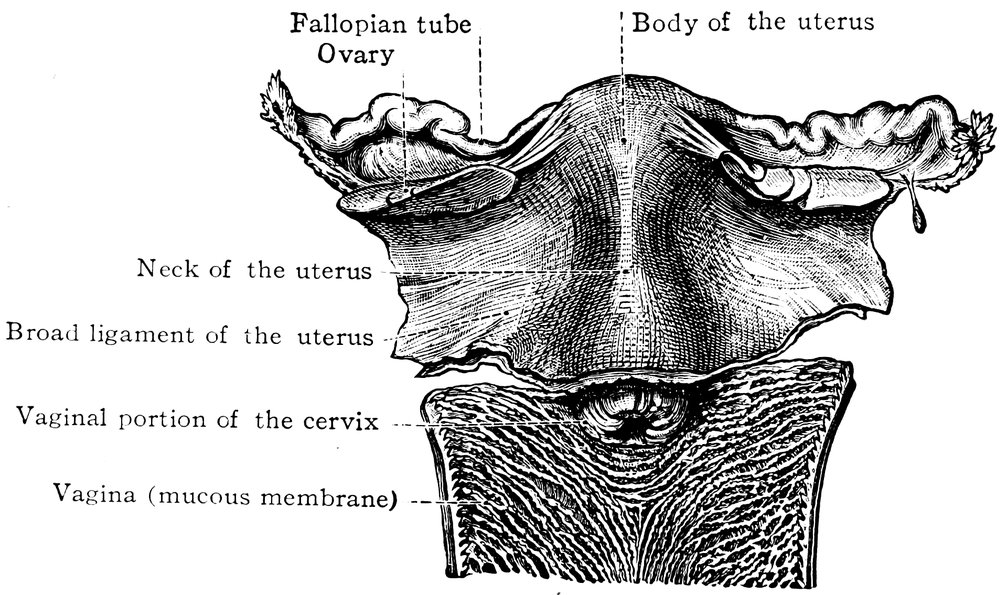
Fig. 8.—Internal genital organs of a new-born, powerfully developed female infant. (From Toldt: Atlas of Human Anatomy.—Rebman Company, New York.)
In young virgins the rima urogenitalis or vulval cleft is closed by the accurate opposition of the labia majora; the labia minora or nymphæ are delicate in texture, rose-red in color, hairless, free from fat, and completely covered by the labia majora; whilst the clitoris is likewise concealed. The sebaceous glands of the labia minora secrete a smegma which collects especially around the glans clitoridis, and as it undergoes decomposition diffuses a peculiar odor, resembling that of old cheese. A wing-like elongation of the labia minora in young girls, with free secretion and a generally moist appearance, leads to a suspicion of the practice of 52masturbation. In the virgin the orifice of the vagina is covered by the hymen.
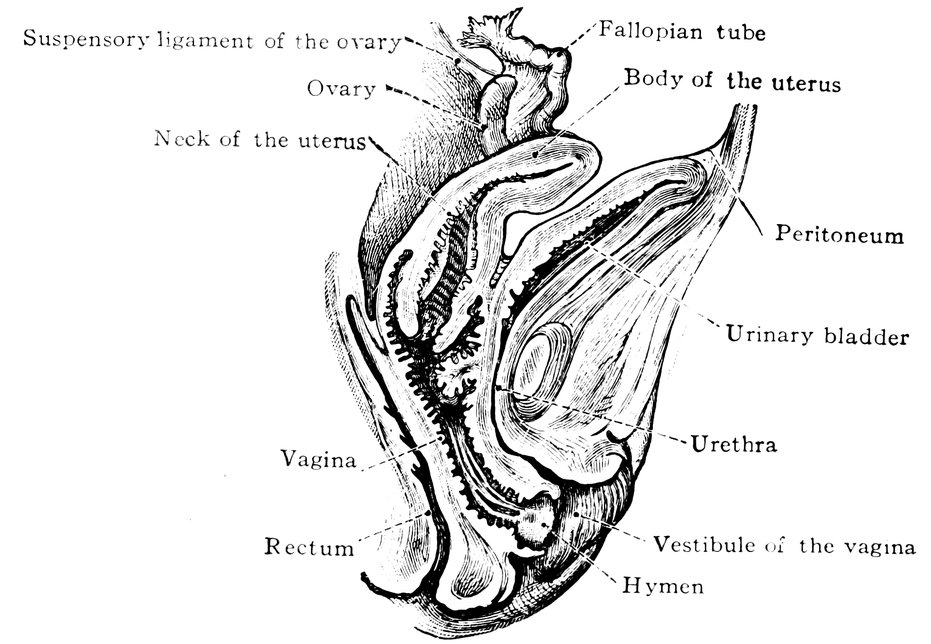
Fig. 9.—Reproductive organs of a new-born, powerfully developed female infant in median sagittal section. (From Toldt: Atlas of Human Anatomy.—Rebman Company, New York.)
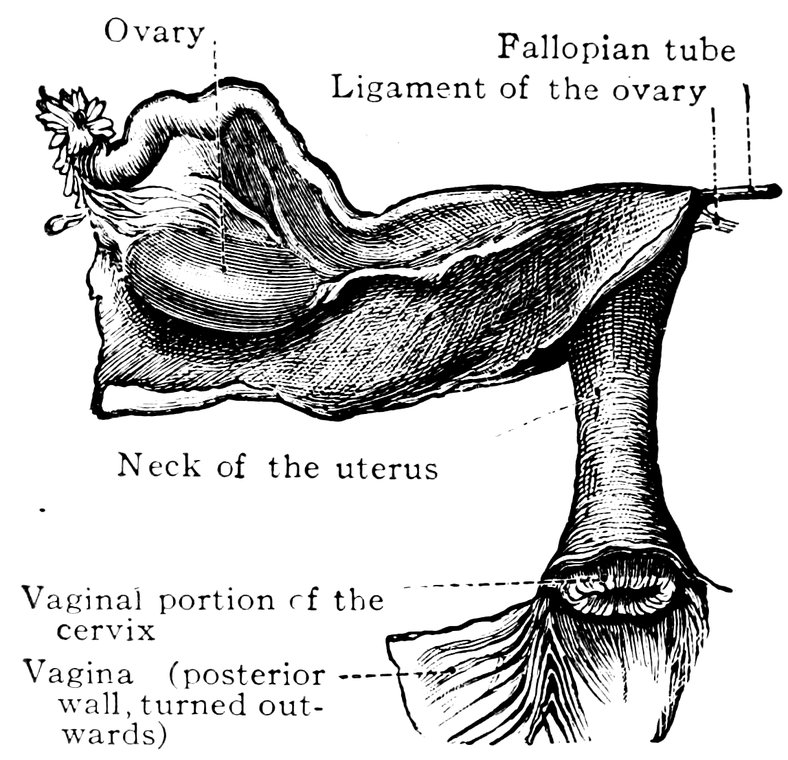
Fig. 10.—Internal genital organs of a girl aged eight years. Seen from behind. (From Toldt: Atlas of Human Anatomy.—Rebman Company, New York.)
The entrance to the vagina in the virgin is rounded, the posterior border of the aperture being deeply concave, whilst the anterior border is often slightly convex backwards. Where this feature is 53strongly marked, the orifice has a semilunar shape. The posterior concave border projects forward in the form of a fold, continuous above with the posterior vaginal wall; this fold is the hymen.
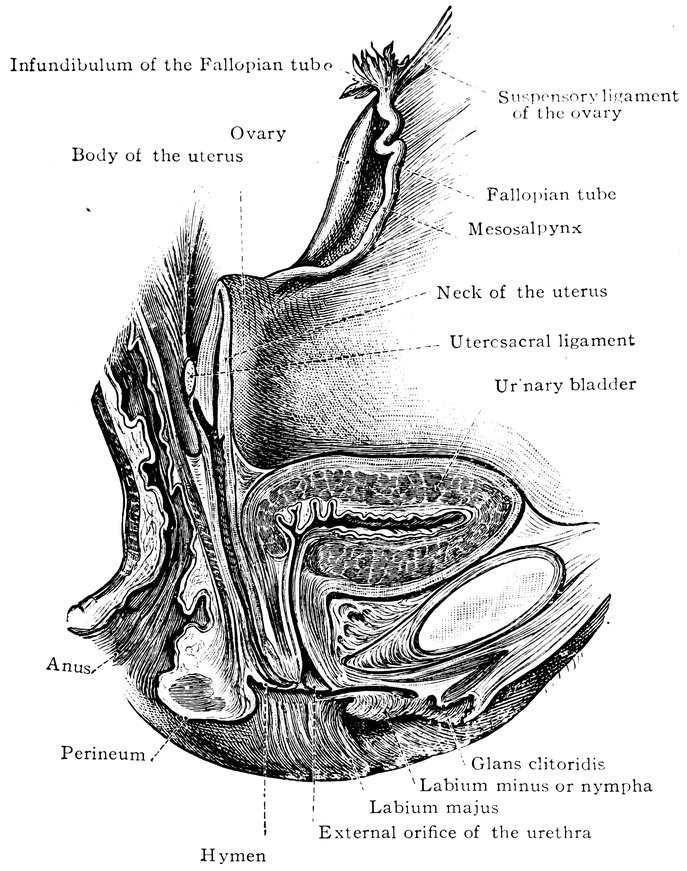
Fig. 11.—Reproductive organs of a girl aged ten years in median sagittal section. Left half. (From Toldt: Atlas of Human Anatomy.—Rebman Company, New York.)
54
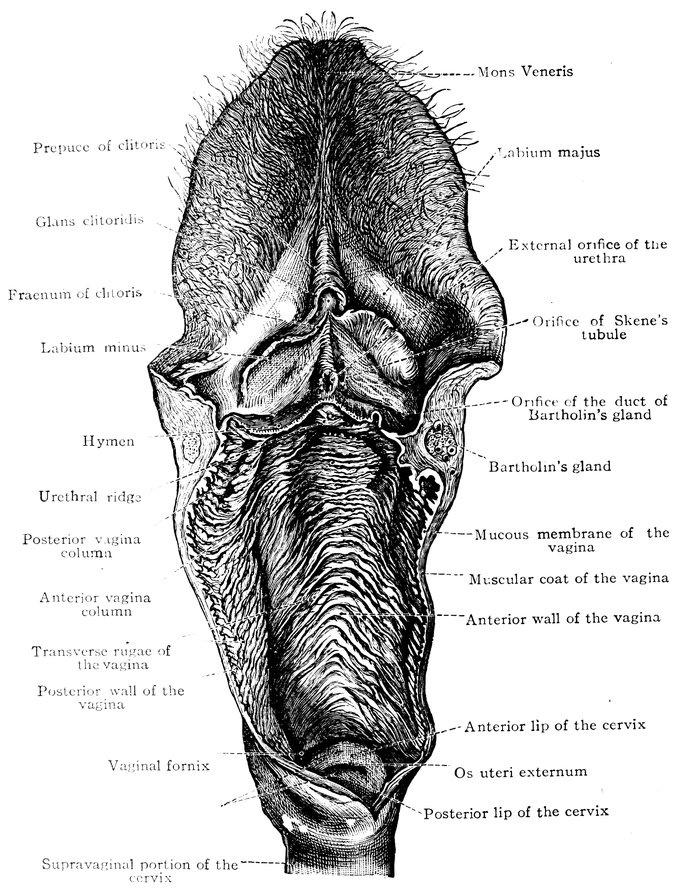
Fig. 12.—Female external genital organs of a virgin, attached to the vagina which has been isolated and opened, and a portion of the cervix uteri, Hymen, etc. (From Toldt: Atlas of Human Anatomy.—Rebman Company, New York.)
55
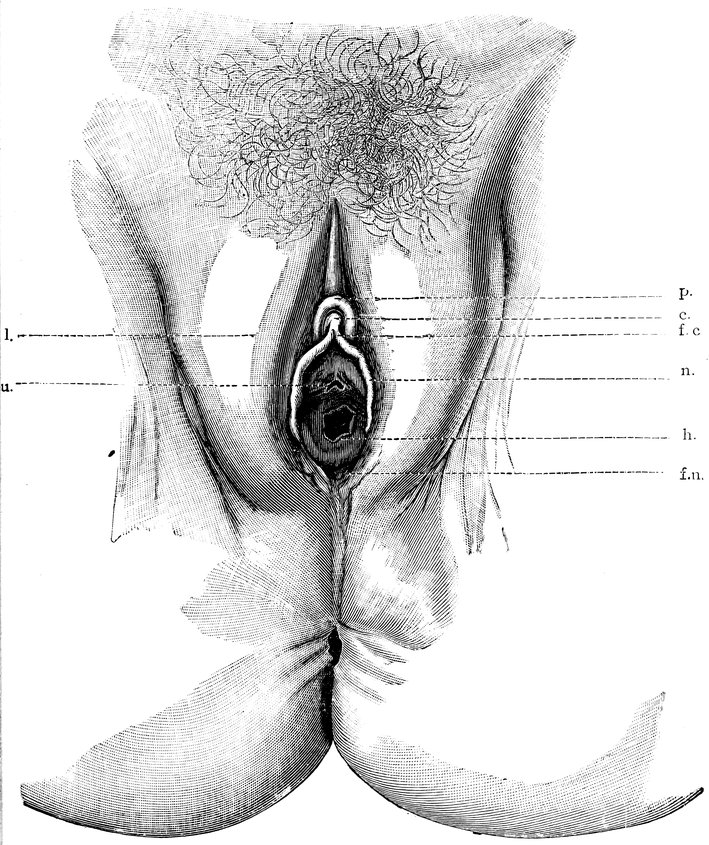
Fig. 13.—The external genital organs of a virgin, drawn apart transversely (after von Preuschen). c. Clitoris. f. c. Frænum of the clitoris. n. Nymphæ. l. Labia majora. o. u. Urethral orifice. h. Hymen. f. n. Fossa navicularis.
56The infantile uterus is so proportioned that its neck (collum vel cervix uteri) constitutes the larger part of the organ, as much indeed as two-thirds. Owing to the small size of the body (corpus uteri), the whole uterus is very flat, and its borders ascend in a direction almost parallel to each other, diverging somewhat abruptly into the Fallopian tubes, recalling in some degree the two-horned embryonic form of the organ (uterus bicornis). The plicæ palmatæ on the surface of the cervical canal, which make up the arbor vitæ uterina, are strongly developed; the median longitudinal ridge bifurcates, and its divisions can be traced on either side into the uterine orifice of the Fallopian tube (ostium uterinum tubæ). The lips of the vaginal portion of the cervix are comparatively speaking very large and terminate in sharp angles. The vaginal mucous membrane is everywhere beset with long papillæ. The development of the uterus shortly before puberty consists chiefly in the enlargement of the body of the uterus, and the growth of its walls in thickness.
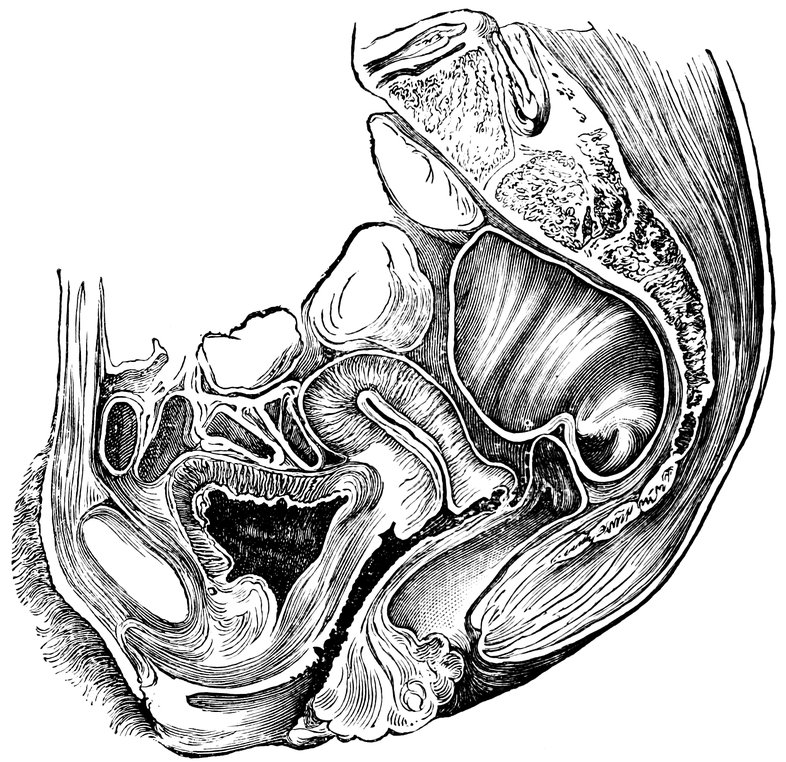
Fig. 14.—Sagittal section of the female pelvis (after Breiolei).
At the time of puberty, according to Toldt, the body of the uterus in the virgin has already increased till its length is half that of the entire organ; and at the first appearance of menstruation the body and neck of the virgin uterus are nearly equal, with perhaps a slight preponderance in size of the cervix, and the walls of the uterus have become convex. In consequence of this change the organ becomes pear-shaped, and the uterine cavity (cavum uteri) assumes the form of a triangle with moderately incurved sides. The cervical canal becomes wider in the middle; the margin of the os uteri becomes smooth and rounded. The walls of the virgin vagina 57are marked with numerous dentate transverse ridges (rugæ), especially near the lower end and on the anterior walls, the columns of the vagina (columnæ rugarum), from which the transverse ridges run to either side at right angles, extend half way up the vagina, and are of a hard consistence.
The characteristic changes in the ovary at the time of the menarche originate in the changes undergone by the ovarian follicles. A large number of small separate follicles is to be found already in the ovary of the new-born infant. These structures, known as primitive follicles, are formed by detachment from the egg-tubes that grow down into the stroma from the superficial germinal epithelium; they are spheroidal vesicles, enveloped by a single layer of cubical cells, and their interior is entirely filled by the primitive ovum or egg-cell. This latter consists of very finely granulated protoplasm with spherical nucleus and distinct nucleolus, but no trace of an investing membrane can as yet be discerned. The further development of the ovarian follicles takes according to Toldt the following course: A rapid multiplication of the cubical cells that form the wall of the follicle occurs, so that the ovum is surrounded by two, three, or several layers of cubical or rounded cells, and the whole follicle gradually increases in size. At the same time the ovum assumes an eccentric position in the interior of the follicle. At or near the middle of the follicle a slit-shaped space now appears, filled with a clear colorless fluid. As this space gradually enlarges, the follicle[19] becomes converted into a vesicle filled with fluid, the wall of which is composed of small cubical cells. Simultaneously with the growth of the follicle a lamination of the elements of the surrounding stroma takes place, so that a somewhat sharply defined capsule is formed. In this condition these glandular structures of the ovary are known as graafian follicles.[19]
Before puberty, these graafian follicles are small vesicles of a diameter of one to two millimetres, containing the large unicellular ova. Each of these consists of an envelope, the zona pellucida (also known as the zona radiata, or striated membrane of the ovum); an external granular mass of protoplasm, the vitellus or yolk; a vesicular, spherical nucleus, the germinal vesicle; and a nucleolus, which if single is large and prominent, the macula germinativa or germinal spot. As early as the second year of infancy every imaginable intermediate stage between the primitive follicle and the fully-developed vesicular graafian follicle can be observed.
58At the time of puberty certain larger follicles are always to be distinguished, which have moved inward toward the interior layers of the ovary, whereas the smaller follicles have a more peripheral situation; thus, according to Waldeyer, we observe at this time in a section of the ovary, proceeding from without inward, first the epithelium, next the fibrous tunic, next the zone of younger follicles, and finally the zone of older follicles. According to Henle and Waldeyer, at the commencement of puberty, there are in each ovary about 36,000 ova, giving a total for the two of 72,000.
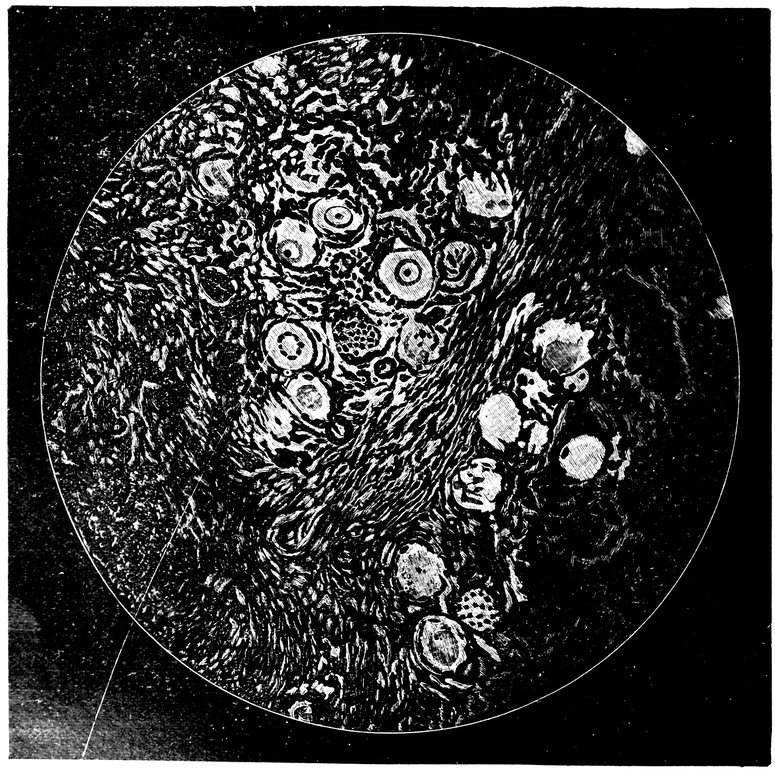
Fig. 15.—Primitive follicles.
In the further course of development of the graafian follicles at this period, the most advanced now reapproach the surface of the ovary, so that a fully-matured follicle comes to occupy almost the entire thickness of the cortical substance, and may even give rise to a localized bulging of the surface of the organ. In such a mature follicle, which has attained nearly the size of a pea, we recognize an outermost connective-tissue investment (theca folliculi), consisting 59of condensed ovarian stroma, in which two layers are distinguished, sometimes called simply outer tunic and inner tunic, sometimes known by the names of tunica fibrosa (outer) and tunica propria (inner), respectively; within this is the cellular layer known as the membrana granulosa (or stratum granulosum), the portion of which, now greatly enlarged, immediately surrounding the ovum is known as the discus proligerus (or cumulus oöphorus); the interspace between the discus proligerus and the membrana granulosa is filled with a clear fluid, the liquor folliculi. In consequence of the continued increase in its fluid contents, the graafian follicle ultimately bursts along the most prominent portion of the superficial wall, and the ovum passes out through the rupture, finding its way under normal conditions into the Fallopian tube and through this into the uterus. The follicle itself then undergoes a regressive metamorphosis, forming the corpus luteum, the rent in the envelope of which, after the absorption of the yellowish semi-fluid contents, undergoes cicatrization. Contemporaneously with this development at puberty of the process of ovulation, menstruation also for the first time makes its appearance, recurring thenceforward at four-weekly intervals as the regular catamenial discharge.
We append the account given by Pfannenstiel regarding the ovarian follicles. He writes: “In correspondence with the especial function of the female reproductive gland, which is to bring to maturity and to evacuate only after the lapse of a considerable period and at successive intervals, the ova which it has contained from the very outset, we find that primitive follicles continue to exist in the ovary up to the very end of the period of sexual activity, though naturally in diminishing numbers; and the size and shape of these primitive follicles remain nearly identical throughout the various periods of life. As the follicle ripens, the epithelium grows, the cells becoming cubical with a rounded nucleus, and increasing in number by cell-division, so that several layers are formed. As soon as these layers are three or four in number, a space, at first slit-shaped, forms in the epithelium on the peripheral surface of the ovum; this space is filled with fluid, known as the liquor folliculi; the peripheral layer of cells, the membrana granulosa, is thus separated from the mass of epithelial cells immediately enveloping the ovum, the discus proligerus, which is situate in the side of the follicle adjacent to the hilum of the ovary. By the increase of the liquor folliculi the graafian follicle is formed, a vesicle the envelope of which is formed by the multilaminar membrana granulosa, whilst in the pole of the vesicle directed toward the hilum ovarii is the ovum imbedded in the mass of cells forming the discus proligerus, a mass which has the form of a truncated cone. The liquor folliculi is formed by 60the epithelium, the nuclei of which disappear by chromatolysis or by simple atrophy whilst the cell-bodies liquefy in consequence of albuminous, not fatty, degeneration (Schottländer). Within the epithelium of the follicle we find the faintly glistening epithelial vacuoles of Fleming, likewise cells which liquefy and assist in increasing the bulk of the liquor folliculi. This liquor is a thin, serous fluid, and contains albumin. * * * Every graafian follicle has a bilaminar investing membrane, which is formed by the ovarian stroma. * * * The ovum of the growing follicle increases in size very slowly indeed, attaining on the average, according to Nagel, a diameter of 165 to 170 µ, it retains its zona pellucida, the greater part of the protoplasm of the cell is transformed into deutoplasm (food-yolk, or yolk-granules), the nucleus assumes an eccentric position. Between the zona pellucida and the cell-body a narrow perivitelline space appears. The ovum is then full-grown, but not yet fully prepared for fertilization; for this, maturation is required, certain changes in the germinal vesicle, which occur after the bursting of the follicle. * * * As a rule each follicle contains a single ovum. But two and even three ova have beyond doubt been observed in one follicle.”
According to Waldeyer, the bursting of the follicle is not to be regarded as dependent upon a sudden rise of pressure in its interior, but as the result of a gradual ripening process. At the deepest pole of the follicle, which in the course of its development has now approached the surface of the ovary, an exuberant growth takes place in the internal layer (tunica propria) of the theca folliculi, with a profuse formation of new vessels. Here numerous “epithelioid” cells, the “lutein-cells,” make their appearance. In consequence of this proliferation of the lutein-cells, the contents of the follicle are gradually pressed toward the “stigma,” the superficial pole of the follicle, and the follicle itself is pushed toward the surface until it finally comes into contact with the germinal epithelium. Meanwhile the follicular epithelium undergoes fatty degeneration, alike in the membrana granulosa and in the discus proligerus. In consequence of the proliferation of the lutein-cells, on the one hand, and the fatty degeneration of the epithelium, on the other, the follicle opens at its weakest point, the stigma, and the ovum is extruded, with the liquor folliculi, and a number of cells belonging to the follicular epithelium. (To illustrate these changes we have borrowed Figs. 15, 16, and 17 from the monograph, by Pfannenstiel on Diseases of the Ovary, in J. Veits’ Handbook of Gynecology.)
The ovaries, which in the new-born female infant are flattened, ribbon-like bodies one-half to one centimeter (0.2 to 0.4″) in length, and in childhood are cylindrical, with a perfectly smooth surface, 61assume at the time of puberty a more or less flattened form. During the menarche they have an elongated oval shape, flattened from side to side, their average length being 2.5 to 5.0 centimetres (1 to 2″), width 1.5 to 3.0 centimetres (0.59 to 1.18″), thickness 0.6 to 1.4 centimetres (0.24 to 0.55″), weight 5 to 8 grammes (77 to 123 grains). After the repeated occurrence of ovulation, the surface of the ovary becomes more and more uneven, being thickly covered with fossæ or scar-like fissures.
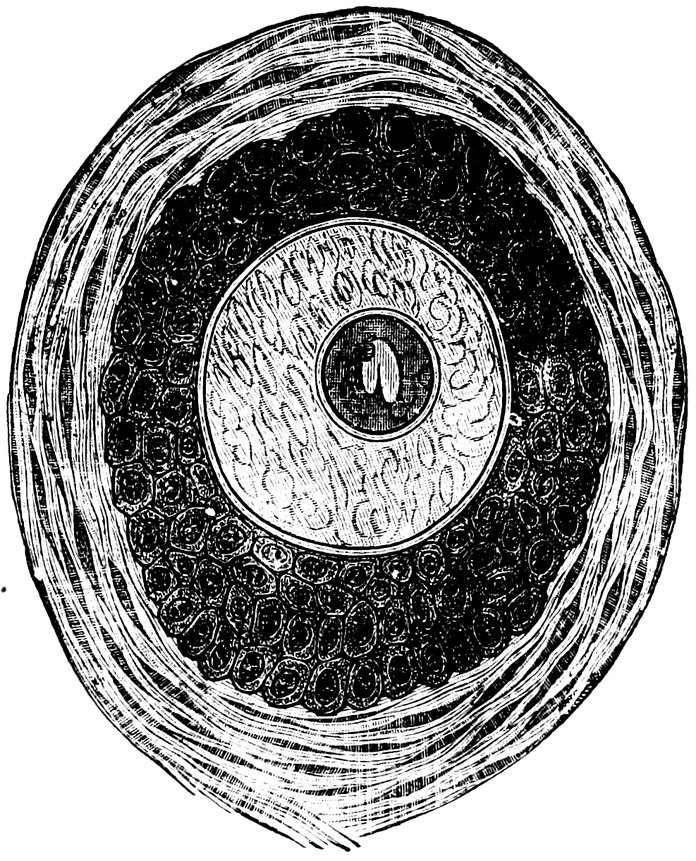
Fig. 16.—Ripening follicles.
The vagina during virgin girlhood is narrow, and its mucous surface is beset with numerous rugæ, which may be plainly felt as well as seen. The calibre of the vagina is proportionately less the younger the girl. The examining finger is gripped by the vaginal wall as by an india-rubber tube (Maschka). The vaginal portion of the cervix is felt in the form of a truncated cone, with a smooth surface, rather dense in consistence; the external os opens at the bottom of a small depression on its surface, in the form of a short oval, the long axis of which is transversely directed. Shortly before the menarche, Bartholin’s glands become noticeable on either side of the lower end of the vagina between the sphincter muscles.
The clitoris in many cases attains a very large size, and this is apt to lead to sexual malpractices. According to Hyrtl, in southern countries the clitoris is larger than in temperate and cold climates. In the women of Abyssinia and among the Mandingoes and the Ibboes, the size is portentous, and amongst the first-named, circumcision of females is a customary operation. It is said that female slaves belonging to these races are greatly esteemed by the 62ladies of the harem, and are eagerly sought for. In the anatomicopathological museum at Prague there is a preparation of the female genital organs with a clitoris as large as the penis of a full-grown man.
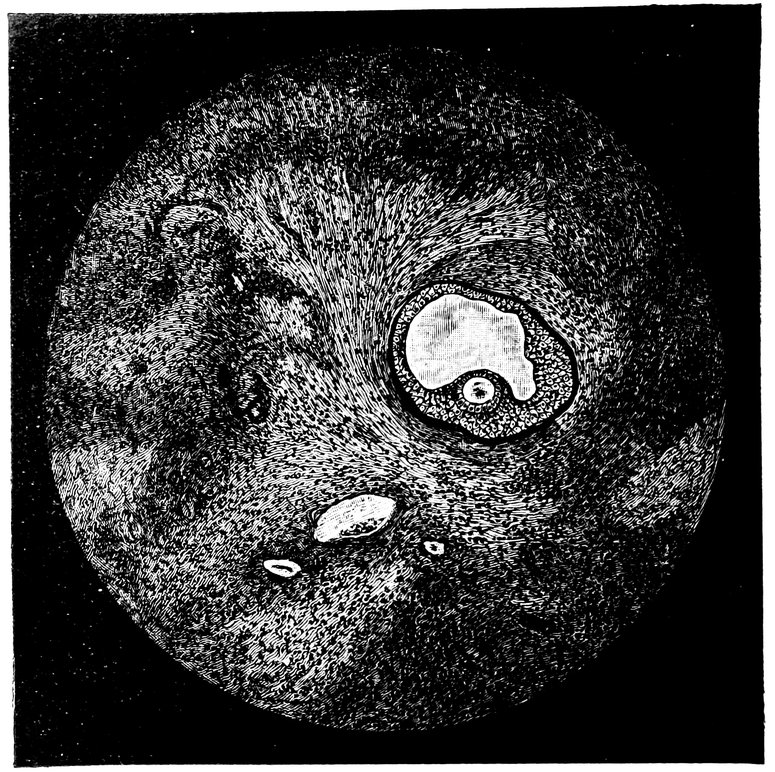
Fig. 17.—Graafian follicles.
Sonini describes “as peculiar to women of Egyptian or Koptic descent, the presence of a thick, fleshy, but soft and pendent outgrowth in the pubic region, completely covered with hair,” which he compares to the hanging caruncle on the bill of the male turkey. This appendage becomes thicker and longer with advancing years. Sonini found such an appendage one-half inch in length in a girl of eight years, one of more than four inches in a woman of twenty to twenty-five years. Circumcision in girls consists in the removal of this outgrowth, which hinders copulation; in that part of the world the operation is usually effected in the seventh or eighth year, just before puberty.
The circumcision of girls as practiced by Mahommedan peoples in Africa is said by Ploss and Bartels to consist in abscission of the labia minora, the clitoris, and the præputium clitoridis. Brehm is of opinion that the object of the operation is to diminish the intensity of the sexual impulse, so overpowering among these races; but others believe that the great enlargement of the clitoris and the 63labia minora usual in those countries is regarded as a serious defect in beauty, a defect removed by the operation; whilst others again hold that the circumcision is required for the removal of the hindrance to copulation presented by the abnormally large clitoris. Closely related to the operation of circumcision in females, according to Ploss and Bartels, is the custom peculiar to Africa of infibulation, wherein, after a preliminary cutting operation like that for circumcision, the fresh wound surfaces are brought into accurate opposition, either by sutures or by appropriate bandages, so that when cicatrization occurs the vulval cleft is closed except for a very small aperture. The object of infibulation is to enforce on girls complete abstinence from sexual intercourse. (Before marriage, the vulval cleft is reopened to an extent corresponding with the size of the genital organs of the future husband; and when pregnancy occurs, the opening is still further enlarged before parturition; but after that event, the wound surfaces are refreshed, and the whole opening is once more closed). On the other hand, in many savage tribes, elongation of the labia minora and the clitoris is artificially undertaken from the earliest years of girlhood, this elongation being regarded as a beauty.
The parts of the external reproductive organs of the female concerned in sexual sensation, first described as such by Kobelt, are already fully developed at the time of the menarche. Of these parts a small portion only, the glans clitoridis, is visible externally, surrounded by the præputium clitoridis, a prolongation of the labia minora, which passes round the front of the clitoris, and sends from each side a fine process behind the glans to become attached to its under surface, forming the frænum of the clitoris. The erectile apparatus of the external genitals is formed by the corpora cavernosa clitoridis. As two delicately constructed trabecular masses of erectile tissue, the crura of the clitoris, these are attached on either side to the inferior or descending rami of the pubic bones; at first passing upwards parallel to the bones, they subsequently curve downward as they converge and unite to form the body of the clitoris; these masses of erectile tissue embrace the sides and the front of the lower extremity of the vagina. This erectile apparatus, when the supply of arterial blood is greatly accelerated and at the same time the outflow of venous blood is diminished, becomes distended with blood, enlarged and stiffened; the process of erection plays an important part, as we shall explain more fully later, in the production of sexual excitement and sexual pleasure during the act of copulation.
In the virgin and in the earlier phases of the sexual life, the hymen is so characteristic an organ that its more minute description would seem desirable.
64The hymen, a fold of mucous membrane, springing from the periphery of the vaginal orifice, separates as a perforated diaphragm the vagina from the vulva. Between the two epithelial layers of which, as a fold of mucous membrane, the hymen consists, is a supporting layer of connective tissue of variable strength; in other respects the mucous membrane of the hymen has the same structure as the mucous membrane of the vagina. On its inner surface the rugæ and folds of the vaginal mucous membrane are prolonged. The shape of the hymen is very variable; most commonly its aperture is more or less central, so that the hymen has a ringed or semilunar shape.
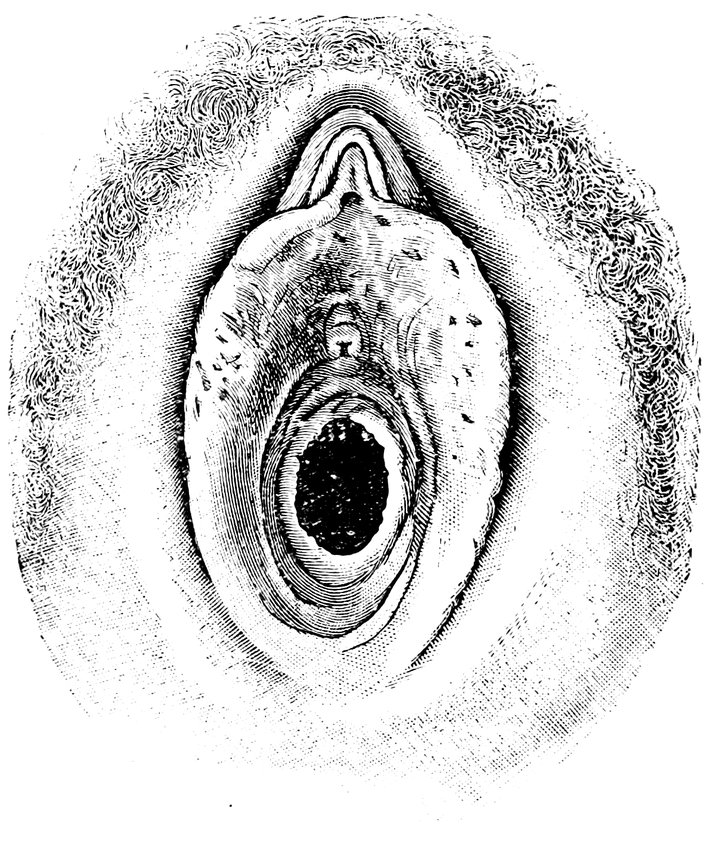
Fig. 18.—Annular Hymen.
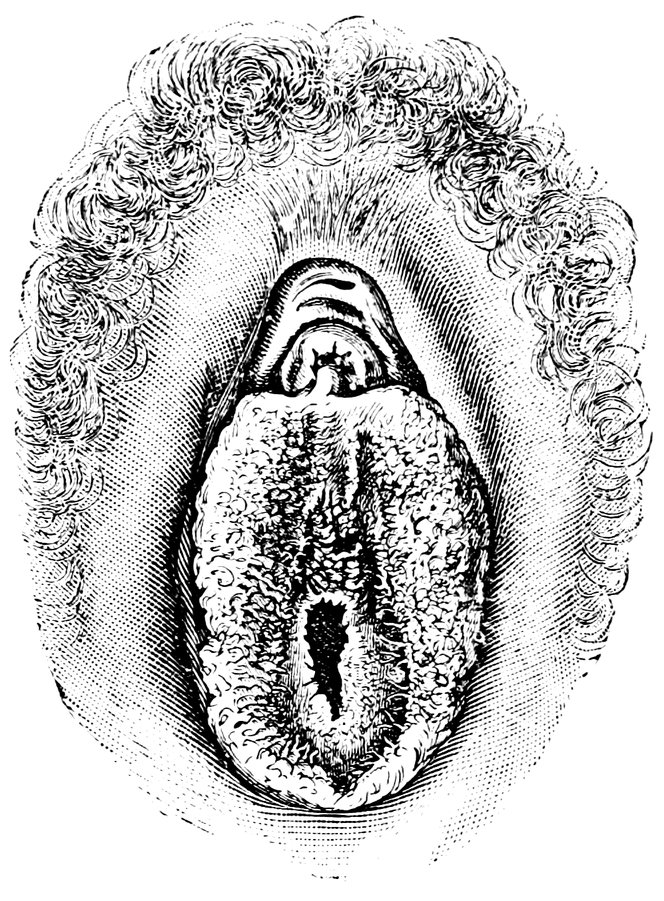
Fig. 19.—Annular Hymen.
In the new-born female infant, the hymen has the appearance of a tubular stopper closing the lower end of the vagina; according to Dohrn it exhibits as a rule one of three typical forms: Hymen annularis, denticulatus, et linguiformis; the annular, the denticulate, and the linguiform (or linguliform) hymen. The transverse ridges on the inner surface of the hymen, prolongations of the rugose columns of the vagina, are strongly developed. During the girl’s further growth, in association with the enlargement of the vagina, the hymen undergoes important changes in form and structure. Its border becomes thinner and more tense; and in the virgin at the time of the menarche, the annular hymen is the fundamental type, subject, however, to extensive variations. In most cases, at any rate, the aperture in the hymen is more or less centrally situated; very commonly, however, this opening is crescentic, when we have a 65semilunar hymen, the height of the border posteriorly being much greater than anteriorly. The consistency of the hymen, its extensibility, and its thickness, are as variable as its shape.
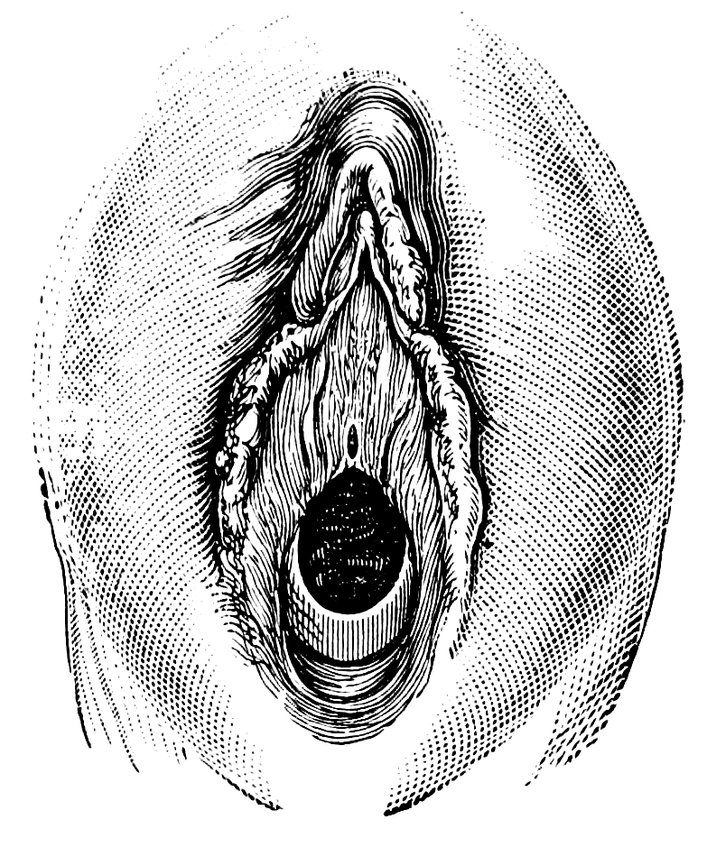
Fig. 20.—Semilunar Hymen.
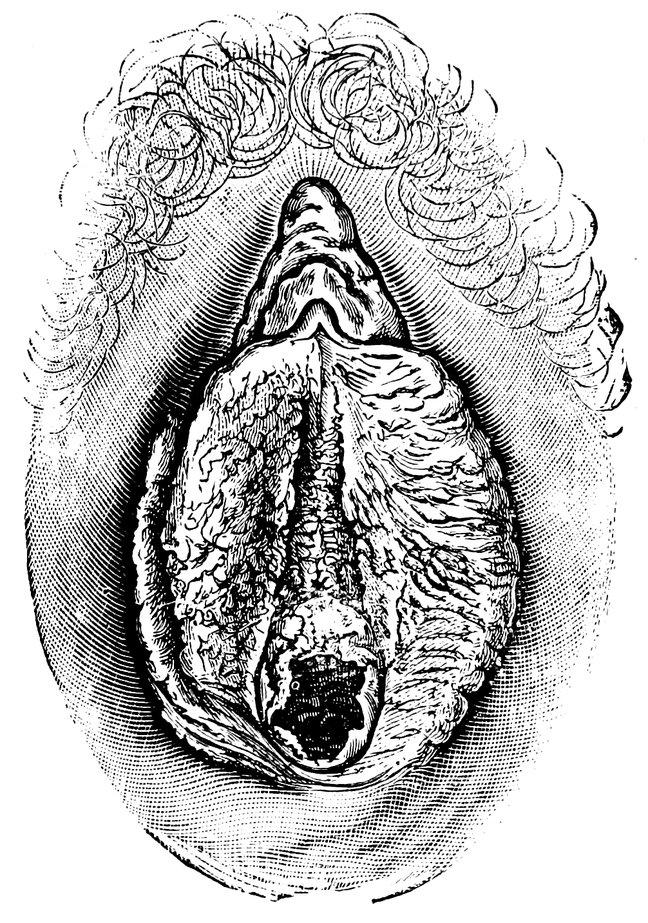
Fig. 21.—Annular Hymen with congenital Symmetrical Indentations.
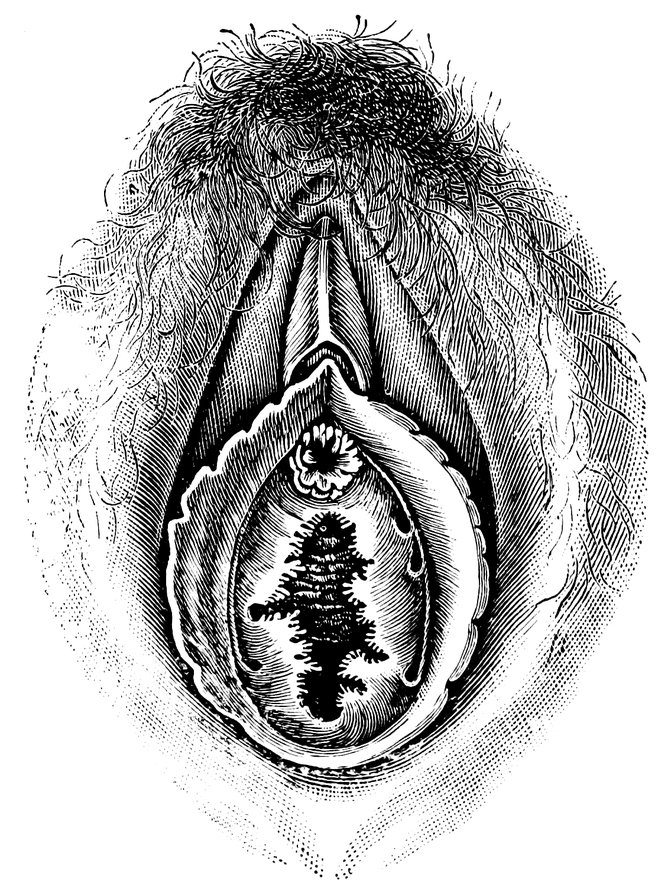
Fig. 22.—Fimbriate Hymen.
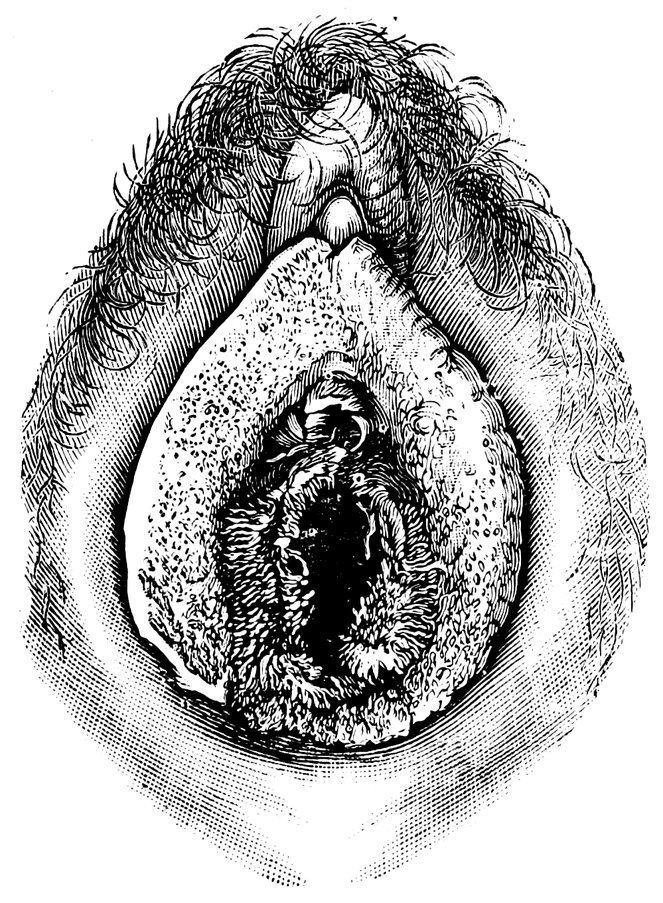
Fig. 23.—Deflorated Fimbriate Hymen.
In the normal position of the reproductive organs the hymen has very rarely the appearance of a tense membrane; as a rule it 66is folded up, and becomes plainly manifest only when the genital organs are stretched. The margin of the hymeneal aperture, as a close examination shows, is sometimes sharp and regular, sometimes lobulated, with small congenital notches. These congenital notches are to be distinguished from the lacerations resulting from defloration by the fact that the former have a smooth border, which is of the same consistency as the general substance of the hymen. In some instances the border of the aperture in the hymen is beset with small, fine villi (villous hymen).
The common varieties of the hymen are thus classified by Maschka:
1. The annular hymen, in which the membrane when stretched is seen to have a rounded aperture, which may be central or eccentric; very often, indeed, the aperture is more toward the upper half of the hymen, in which case it is not always circular, but frequently rather ovoid in shape.
2. The semilunar or crescentic hymen, in which the aperture is eccentrically placed in the upper half of the membrane, in such a manner that the hymen exhibits a wide surface below the aperture, which surface narrows at either side as it passes upwards until it disappears, the two sides failing to reunite above the aperture.
3. The heart-shaped or cordiform hymen, the general shape of which may be circular, ovoid, or even semilunar, but in which from the middle of the upper or lower margin a three-cornered tongue projects across the aperture, which is thus given the form of the conventional heart of a pack of cards.
4. The infundibuliform hymen has the form of a small projecting funnel resembling in appearance the invaginated end of the finger of a glove.
Maschka refers also to the rare condition in which the hymen is sometimes said to be absent. As a matter of fact, however, in such cases, it is represented by a very narrow annular eminence, the genitals being in other respects normal. The smooth character of the eminence will serve to differentiate it from the remains of a destroyed hymen. Other rare forms are:
1. The imperforate hymen, an occlusive membrane, entirely blocking the vaginal orifice. In some cases, however, the hymen is not absolutely imperforate, a very small, punctiform aperture being present.
2. The cribriform hymen, a hymen which is “imperforate” in the sense that there is no opening of a size approaching the normal, but in which several minute apertures are present.
3. The septate, bridged or divided hymen (hymen bifenestratus, etc.), exhibits a strip of mucous membrane, most commonly running 67directly from before backward, occasionally, however, somewhat obliquely, across the aperture in the membrane, which is thus divided into two equal or unequal parts. In some instances the process that bridges the aperture of the hymen is expanded in the vertical plane to form a septum which projects for some distance into the vagina.
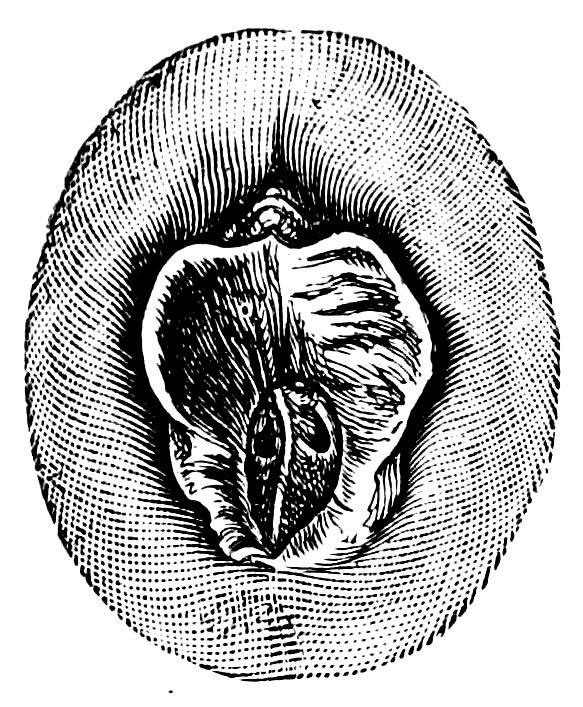
Fig. 24.—Septate Annular Hymen.
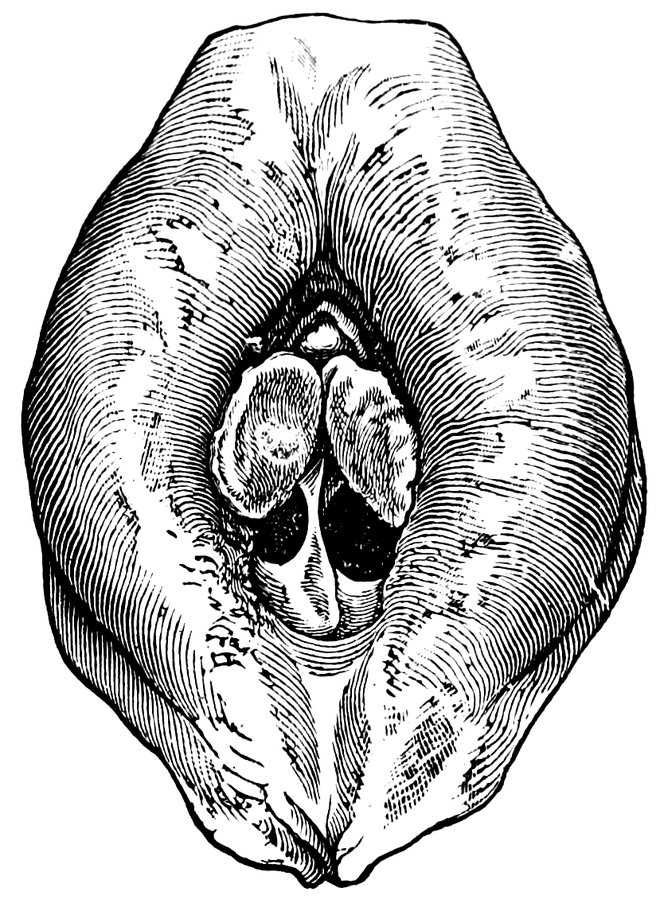
Fig. 25.—Septate Semilunar Hymen.
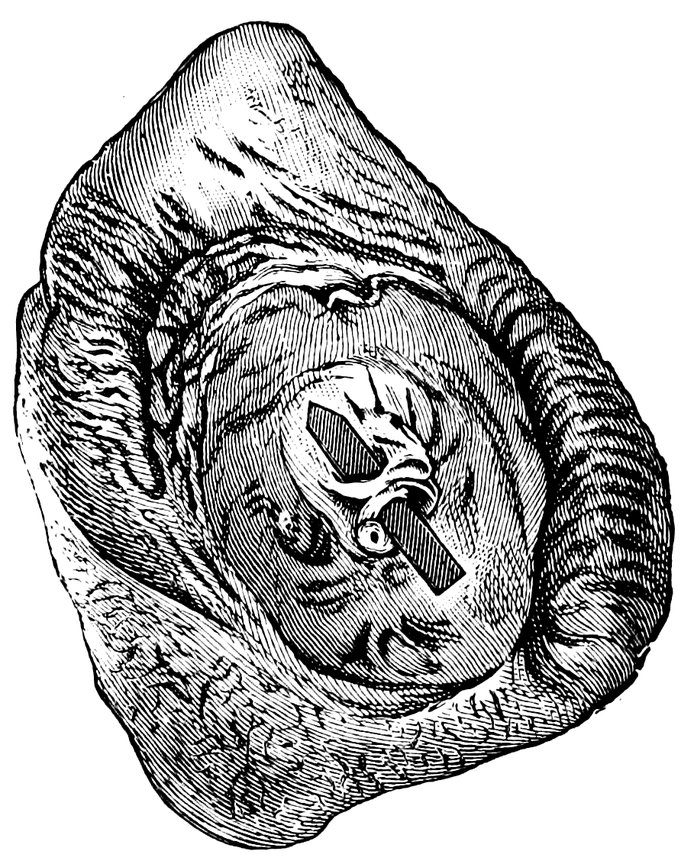
Fig. 26.—Extremely tough Annular Hymen, with an obliquely disposed Septum.
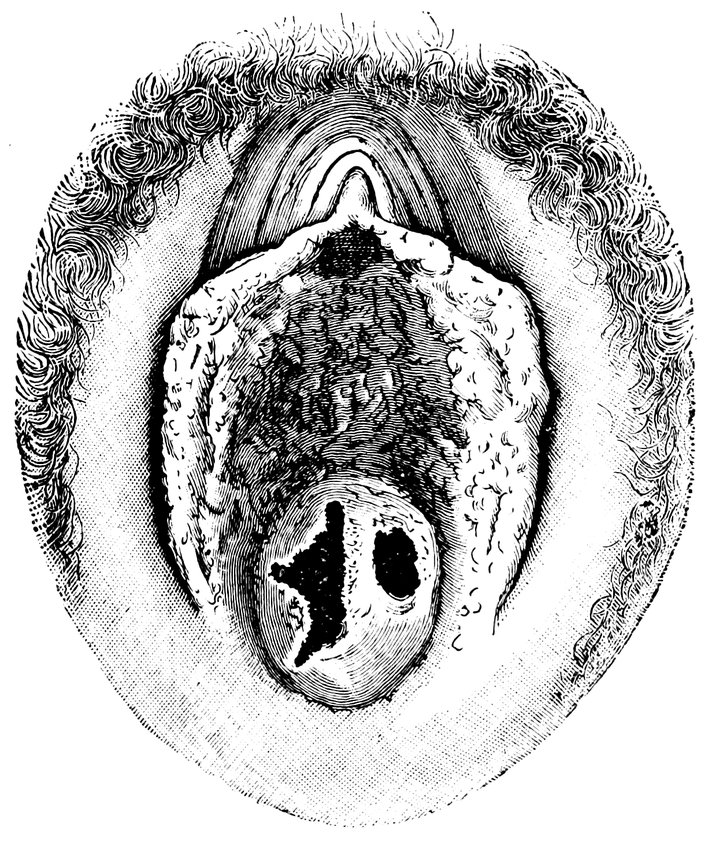
Fig. 27.—Septate Hymen with Apertures of unequal size.
684. The lobate, lobulated, or labiate hymen, which consists of several (two to four) lobes on either side, each overlapping the next like the tiles in a roof, whilst the aperture between the two sides has the form of an antero-posterior slit (Fig. 37); in some cases the lobes of a lobulated hymen are so disposed that the membrane has the appearance of a fold of mucous membrane with a central furrow.
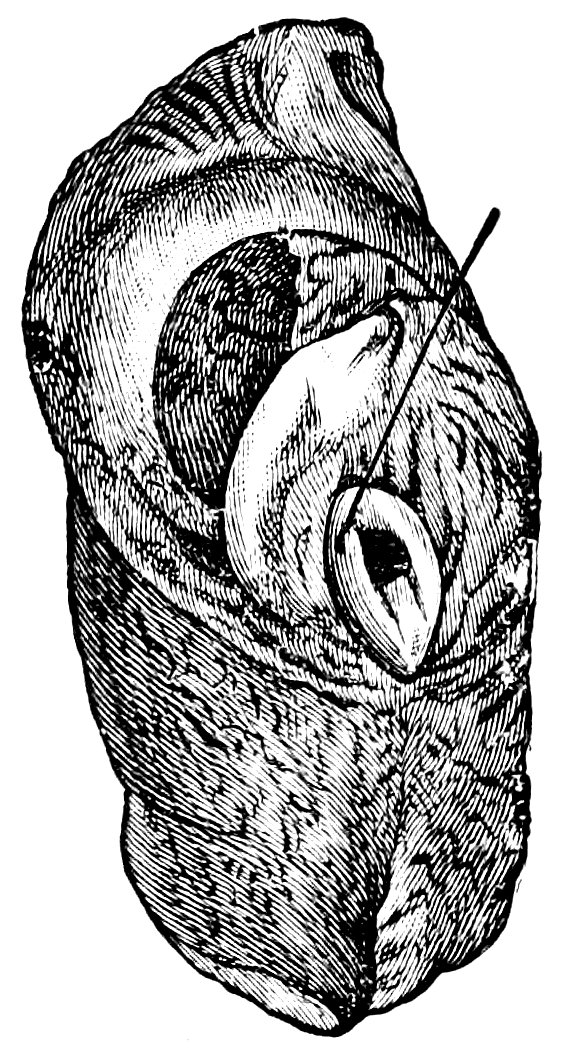
Fig. 28.—Septate Hymen with Apertures of unequal size.
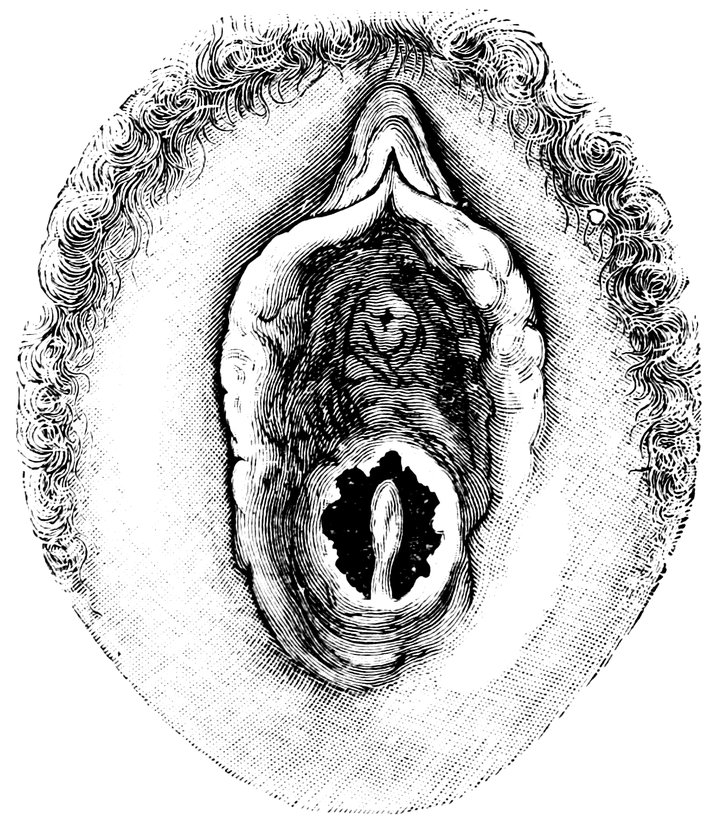
Fig. 29.—Hymen with rudimentary Septum.
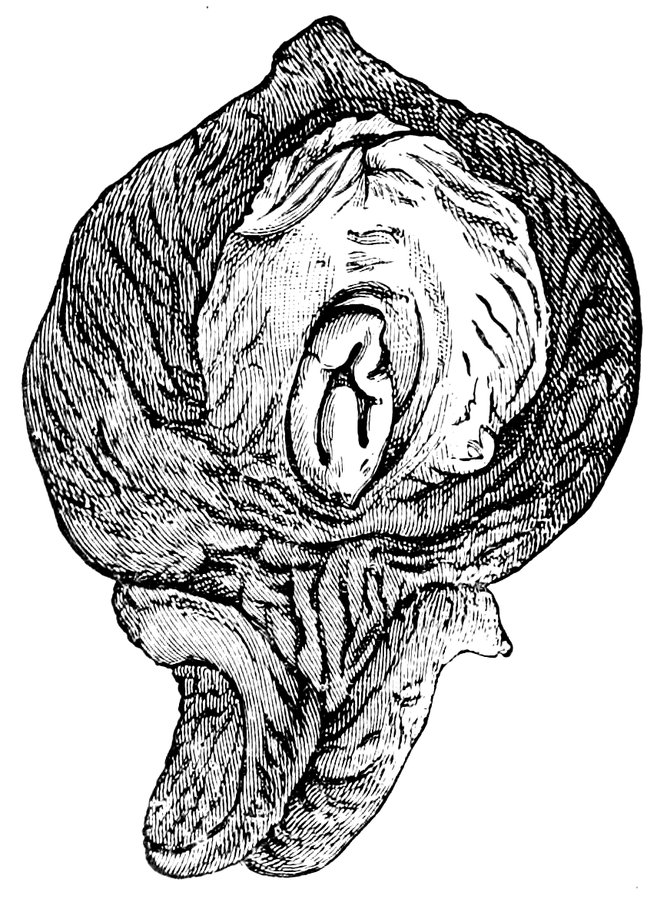
Fig. 30.—Hymen with posterior rudimentary Septum.
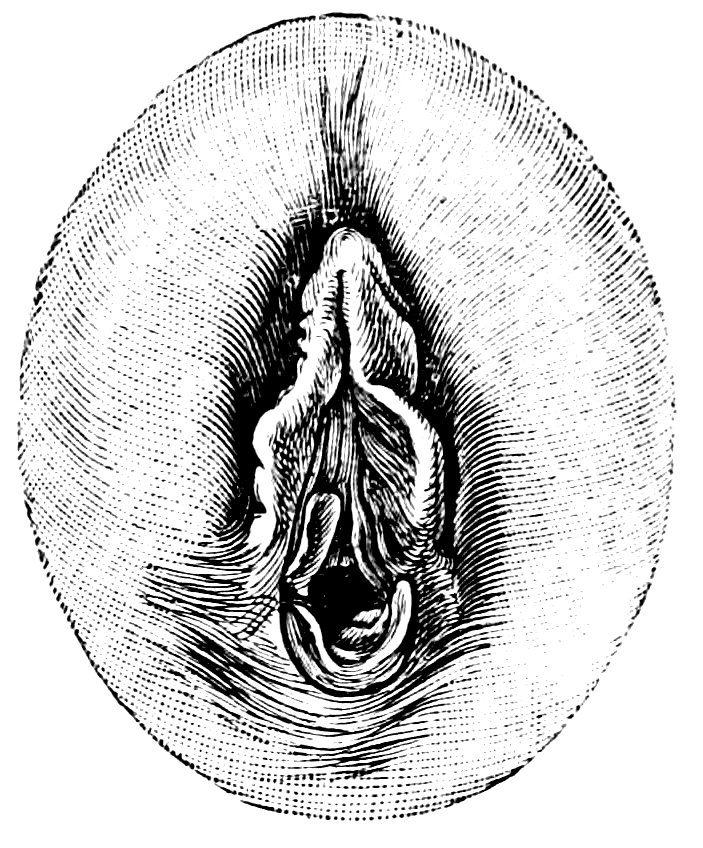
Fig. 31.—Labiate Hymen with posterior rudimentary Septum.
69It is obvious that an imperforate or cribriform hymen, by the hindrance it offers to the passage of the menstrual discharge, is liable at the time of the menarche, and as soon as menstruation begins, to give rise to serious disorder and to pathological states.
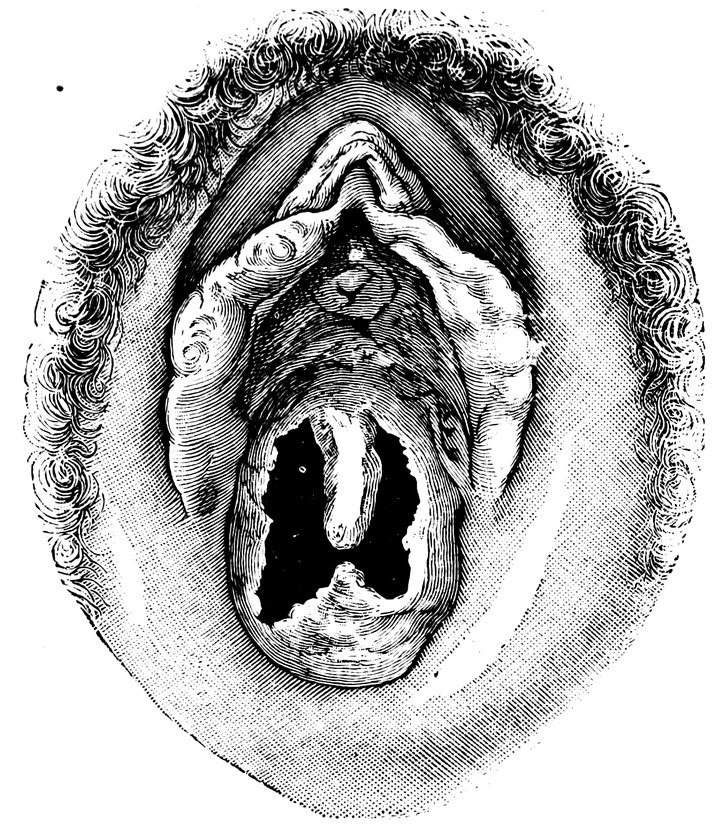
Fig. 32.—Hymen with anterior rudimentary Septum.
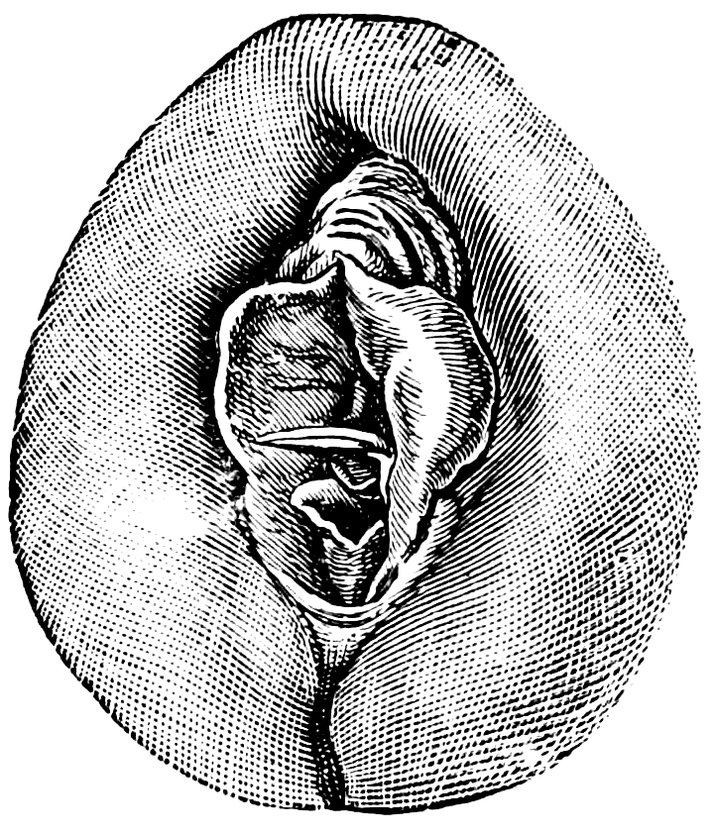
Fig. 33.—Hymen with anterior rudimentary Septum projecting in a opiniform Manner.
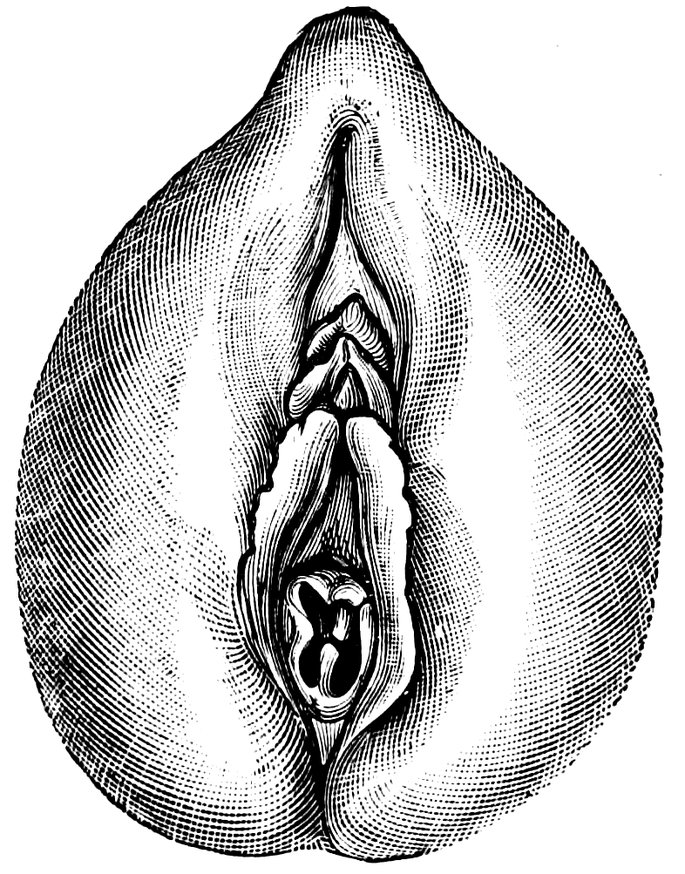
Fig. 34.—Hymen with anterior and posterior rudimentary Septa.
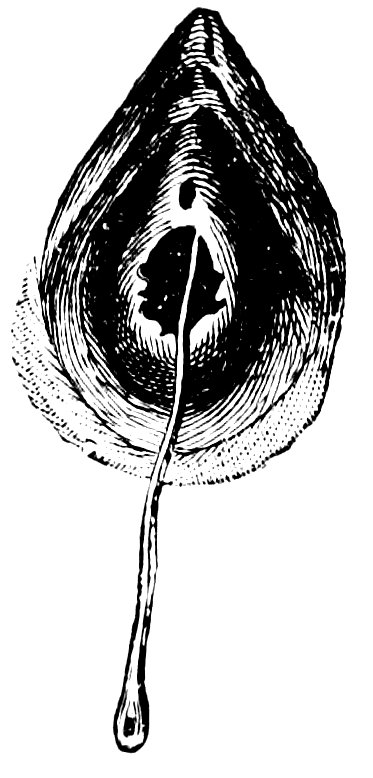
Fig. 35.—Hymen with filiform process projecting from the anterior margin.
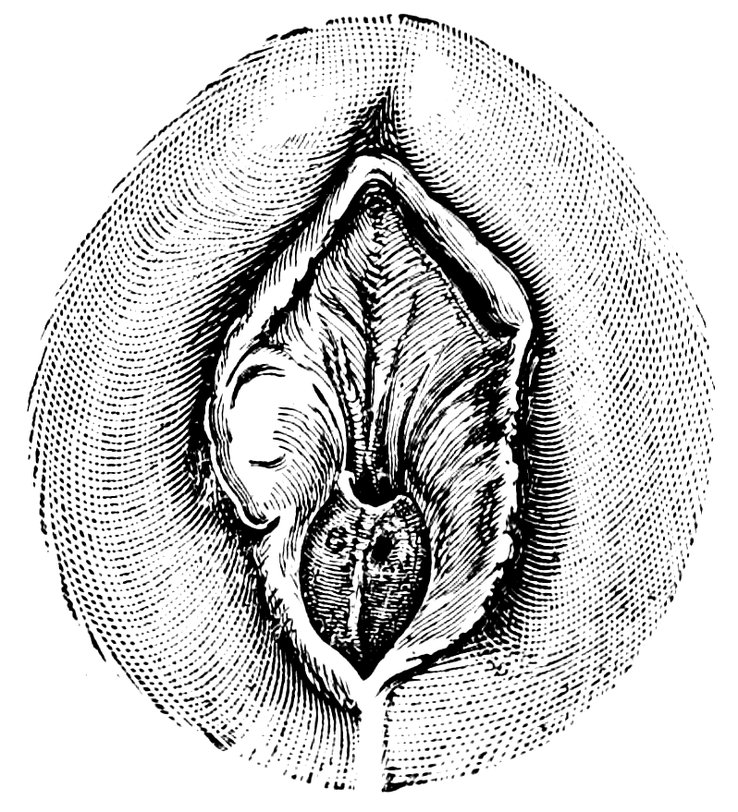
Fig. 36.—Hymen in which there are two symmetrically disposed thinned areas. The left of these is perforated.
The illustrations we append, showing the various forms of the hymen, are taken from von Hoffmann’s Handbook of Medical Jurisprudence. (Figs. 18–45.)
70
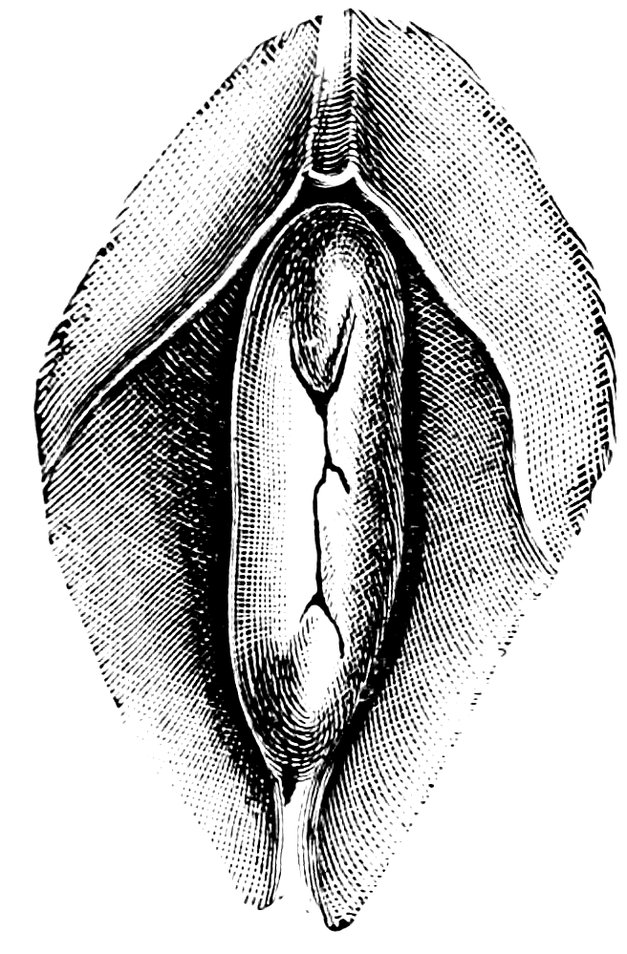
Fig. 37.—Very unusual form of Hymen.
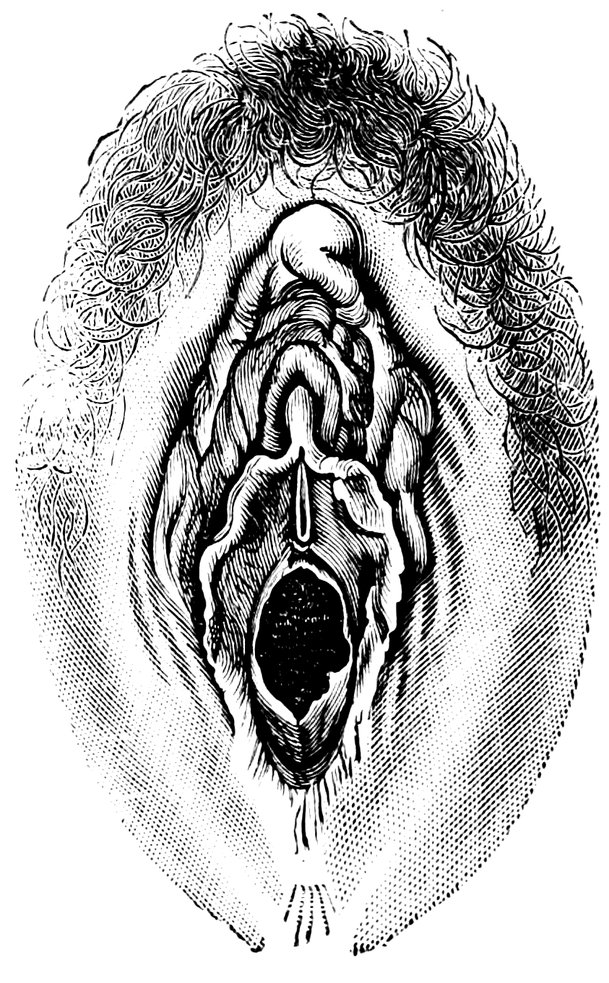
Fig. 38.—Semilunar Hymen with cicatrized Lacerations in its Border.
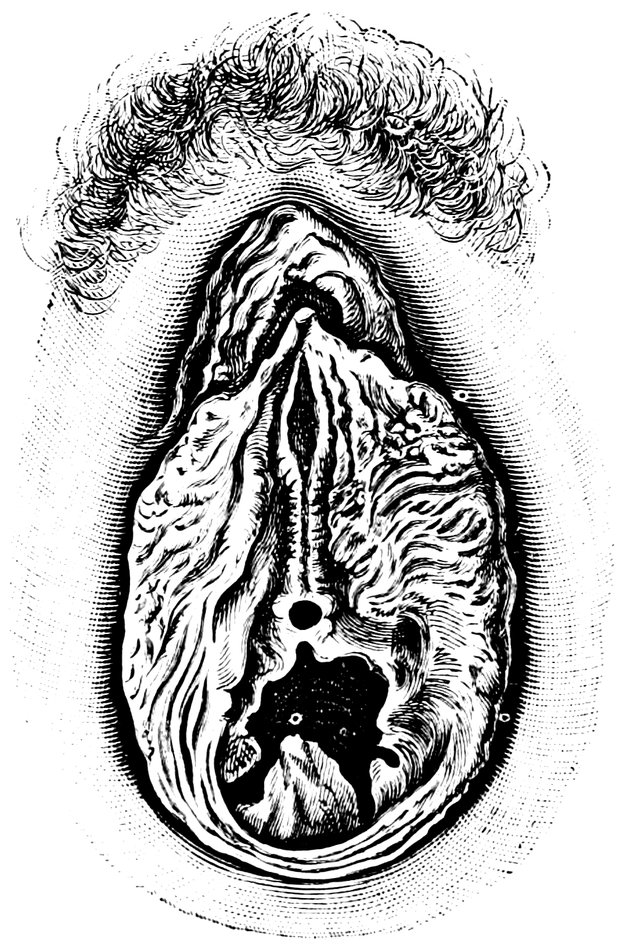
Fig. 39.—Deflorated Semilunar Hymen with laterally disposed Symmetrical Lacerations.
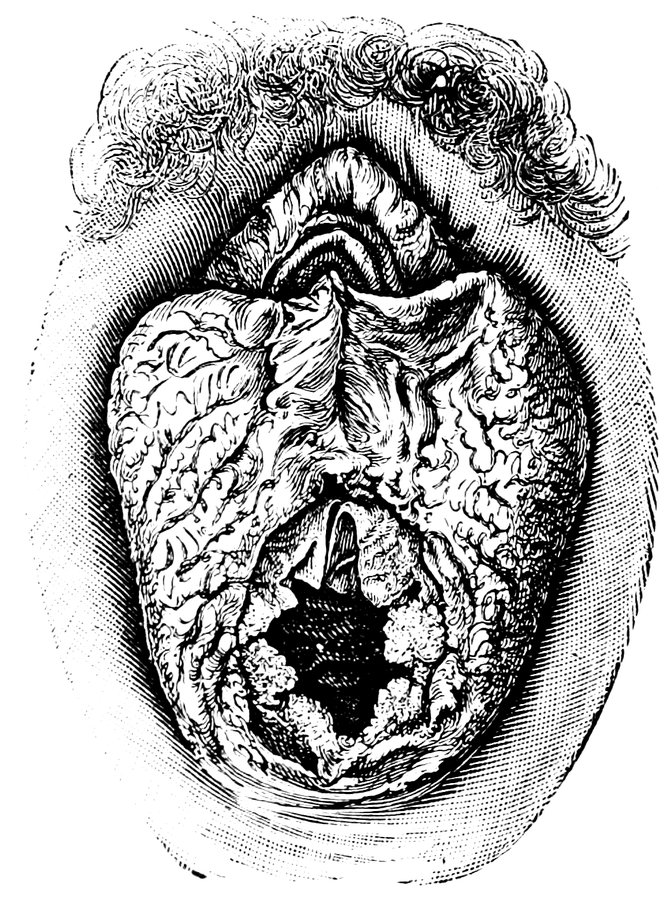
Fig. 40.—Deflorated Annular Hymen with several cicatrized Lacerations.
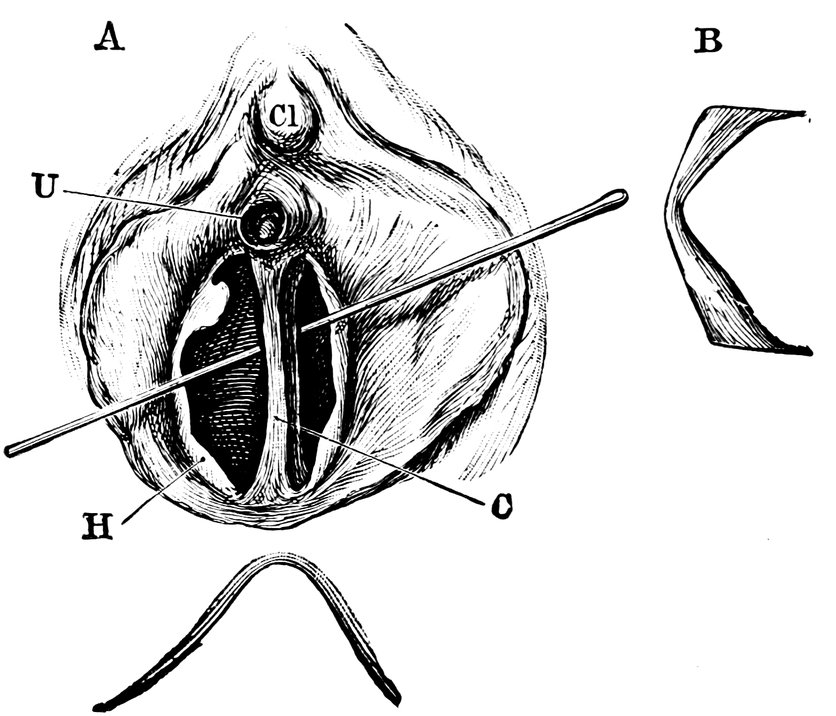
Fig. 41.—A. Septate Hymen in which Defloration has been effected through one of the Apertures. U. Urethra. Cl. Clitoris. H. Cicatrized margin. C. Septum. B. Lateral View of Septum.
In some cases the hymen is exceedingly thin and delicate, so that it is liable to be torn if handled at all roughly; in other cases, on the contrary, it may be very firm, thick, and fleshy, interlaced with strands of connective tissue and muscle, so that it forms a veritable cuirass for the protection of physical virginity.
71
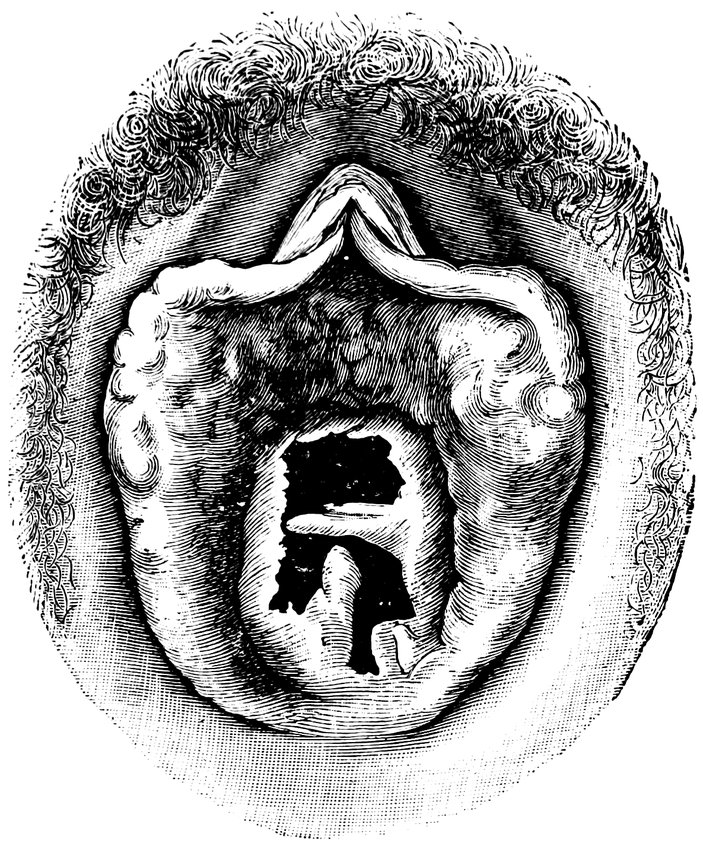
Fig. 42.—Deflorated Septate Hymen.
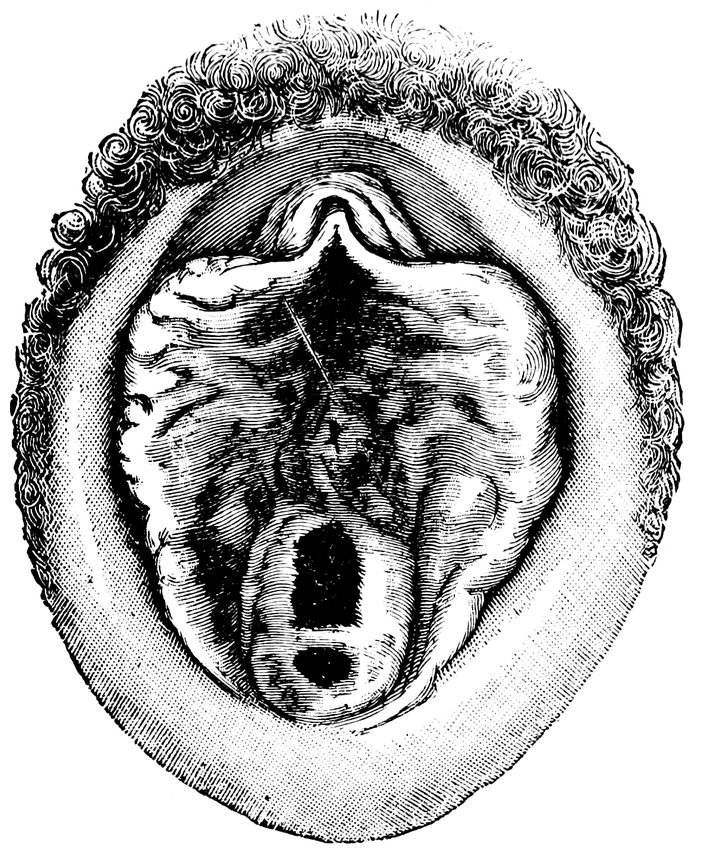
Fig. 43.—Hymen with larger anterior and smaller posterior Apertures.
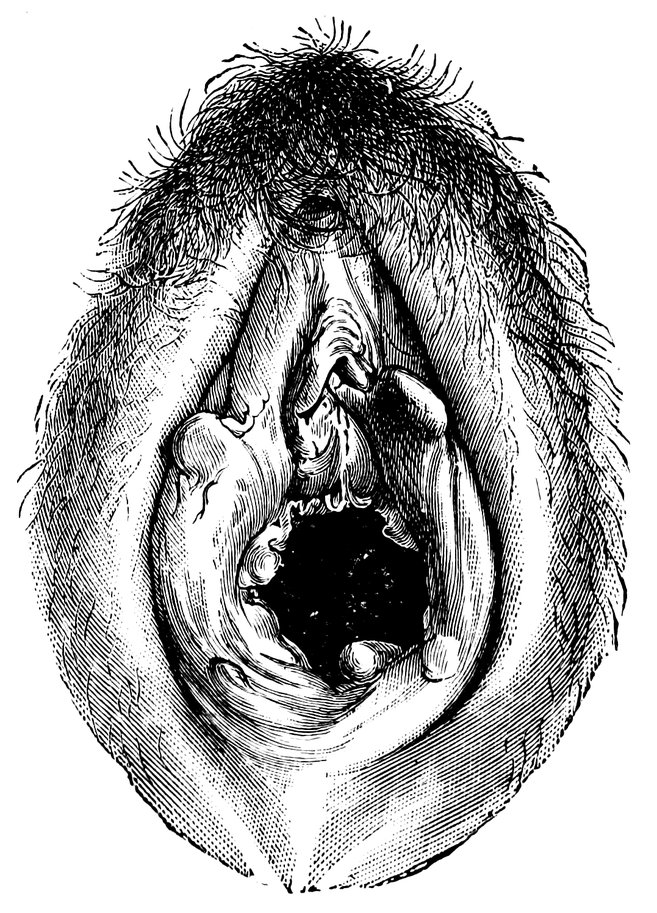
Fig. 44.—Carunculæ Myrtiformes in a Primipara.
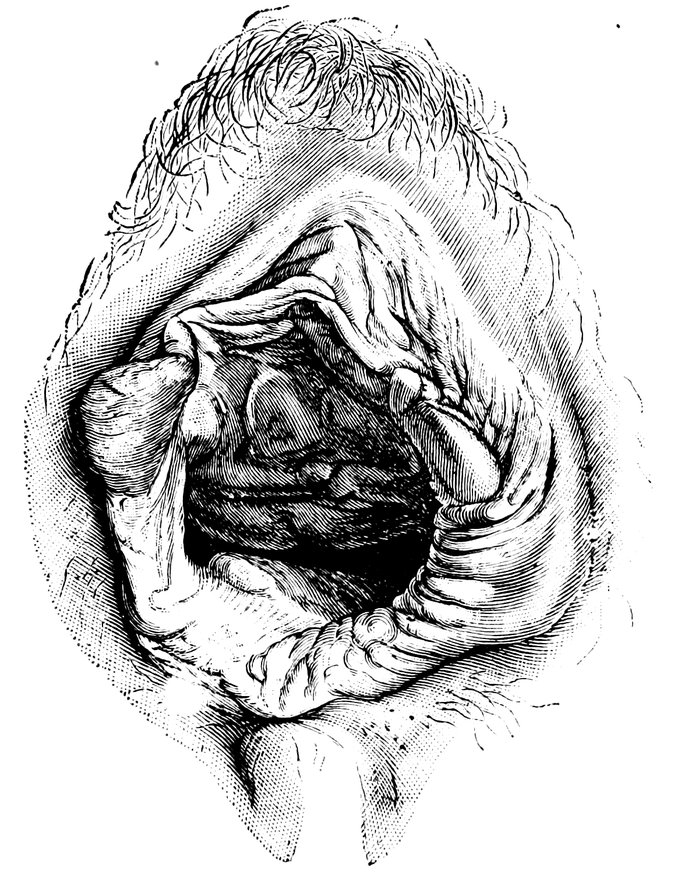
Fig. 45.—Vaginal Inlet of a Multipara, without Carunculæ Myrtiformes. Slight Prolapse of anterior and posterior Vaginal Walls.
As signs of virginity in the female, a knowledge of which is required, not only for the purposes of medical jurisprudence, but 72for various other reasons, we may enumerate the following anatomical characteristics of the genital organs. The labia majora are elastic in consistence and are in close apposition with one another; the labia minora or nymphæ are covered by the labia majora and are but little pigmented; the vestibule and the vaginal orifice are narrow, and the vagina itself is narrow, tense, and markedly rugose; the hymen is normal and uninjured (this, of course, is the most trustworthy of all the signs of virginity); the breasts have the virgin conformation. In opposition to the plea that the hymen can be destroyed by other causes than defloration, as by a fall, especially a fall which brings the external genitals in contact with some hard body, or by diphtheritic, variolous, or syphilitic ulceration, Maschka maintains that such occurrences are among the greatest rarities.
On the other hand it is sufficiently well known that the presence of an uninjured hymen affords no certain assurance of actual virginity. Cases enough are recorded, both in older and more recent medical literature, in which even pregnancy occurred in women in whom the hymen had remained intact, the explanation being that during copulation penetration of the penis had failed to occur, the semen being ejaculated on the vulva. Scanzoni and Zweifel have recorded cases in which the intact hymen offered a hindrance to parturition. The first-named author explains these occurrences by the assumption that the hymen was so stout that the penis was unable to rupture it. Veit remarks that both male and female youth, in these days of the continued advance of knowledge, are well acquainted with coitus sine immissione penis, and that very frequently a woman who is informed that she is pregnant makes answer that this is impossible, her paramour having assured her that pregnancy could not occur. On the other hand, cases are met with in which the aperture in the hymen is a very large one, so large that the penis can penetrate to the vagina without lacerating the membrane.
Broudardel reports a case of rape in which the lacerated hymen healed so completely that an expert maintained the integrity of the membrane, until another pointed out the fine scar.
In general, that we may be assured of the existence of virginity, we must find the hymen uninjured; and, on the other hand, we must regard the laceration of the membrane, unless known to be the result of gynecological examination or other manipulation, as a proof of defloration.
In ancient times among savage races the integrity of the hymen was prized as a proof of virginity, and in the Bible also great stress is laid on this sign in connection with defloration, and its absence was even regarded as a ground for the death punishment (Deut. 73xxii, 21). But amongst other races the hymen was held in no particular esteem as a token of virginity.
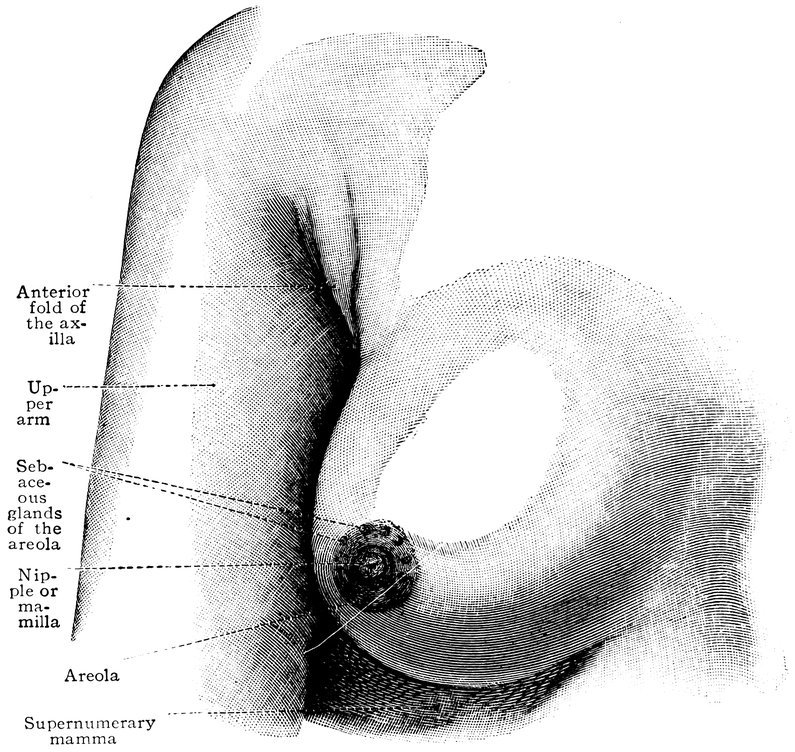
Fig. 46.—Mamma, the breast of a virgin aged eighteen years. (From Toldt: Atlas of Human Anatomy.—Rebman Company, New York.)
In ancient times, and even at the present day in the Philippine Islands, the Ladrone Islands, and certain other islands of the Polynesian Archipelago, also among many African tribes, the right of defloration belonged, not to the bridegroom, but to every man belonging to the same tribe; sometimes on the bridal night all the men of the tribe had access to the bride, the bridegroom coming last, but thenceforward having undisputed possession of his wife. Amongst certain other tribes a similar custom prevails, differing however in this respect, that the rite of defloration is performed by a priest or by one of the chiefs of the tribe. In mediæval Europe, again, the great landed proprietors exercised the well-known jus primae noctis or droit du seigneur.
In girls at the time of the menarche who have long practiced masturbation, some of the following indications of the habit will 74be found: Elongation, redness, and general enlargement of the clitoris; elongation and thickening of the nymphæ, which are also of a tough consistency and deeply pigmented; flaccidity of the labia majora; redness of the vaginal orifice; flaccidity of the hymen, which also may exhibit lacerations, caused by the forcible introduction of the finger or of some hard foreign body.
Not until the time of the menarche do the breasts attain the hemispherical form which constitutes one of the graces of young womanhood, and at the same time these organs assume a firm, elastic consistency; their size of course varies in different individuals. The nipple now has a rose-red color, darker in brunettes than in blondes; it is usually small, sometimes quite inconspicuous, being withdrawn into a cutaneous furrow. The two breasts when regarded from the front are seen to diverge from the longitudinal axis of the body. In some cases even in childhood, before the time of the menarche, the breasts are powerfully developed, being as large as an apple or larger. This depends on climate, race, and sexual excitement; as regards the last of these, early sexual stimulation promotes premature mammary development.
Although it is unusual for any secretion to appear in the mammary gland before the occurrence of pregnancy, cases have certainly been observed in which the breasts of virgins secreted a milk-like fluid, especially in consequence of sexual excitement or during menstruation. Thus Maschka observed in a girl the condition of whose genital organs showed her to be a virgo intacta that pressure on the breast caused a few drops of an opalescent fluid having the appearance of milk to exude from the nipple. She acknowledged that amatory relations had long subsisted between her and a lover who was in the habit of handling her breasts, and that this always produced strong sexual excitement. Hofmann also reported that in two virgins who died during menstruation he was able to express a drop of milk from the breast.
The most important indication of the general changes occurring in the external and internal genital organs, the proof that the young woman has become fitted for the fulfilment of her reproductive vocation, is the appearance of menstruation, a sanguineous discharge from the genital organs recurring every four weeks as the external manifestation of the internal process of ovulation.
The anatomical changes that have already been described as occurring in the genital organs at the time of the menarche will serve to elucidate the numerous reflex processes that manifest themselves at this period of life in so many departments of vital activity.
It is especially the extensive developmental processes in the ovary, influencing the nerves of that organ, which give rise to centripetal 75stimuli and evoke reflex manifestations. In the working of the circulatory system, such influences are apparent; and during the menarche, some time already before the first onset of menstruation, variations occur in the blood-pressure, and these during menstruation take the form of a typical undulatory curve.
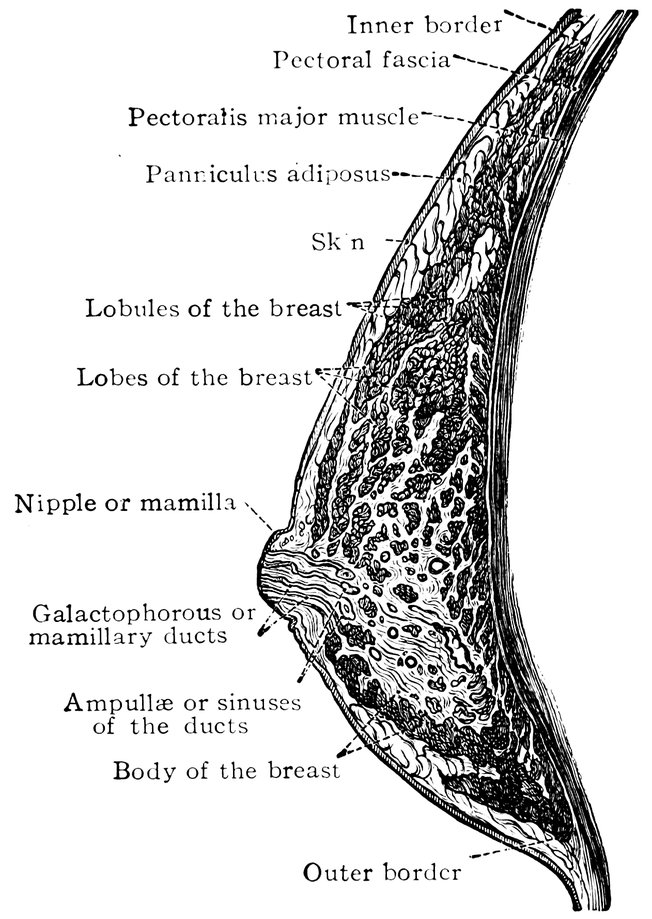
Fig. 47.—Horizontal section through the female breast. (From Toldt: Atlas of Human Anatomy.—Rebman Company, New York.)
Thus it becomes comprehensible that even in healthy girls, the first appearance of the catamenia and likewise the expectation of the flow induce a certain modification and alteration in the whole nature and disposition. Girls often lose their previous cheerful and lively character, becoming quiet, self-absorbed, sometimes even melancholy; they are disinclined for study, have a repugnance to all sustained physical or mental activity, become annoyed and snappish on slight occasion, are restless at night, consider themselves to be ailing, and so on. During the first menstruation girls commonly appear pale and anxious, they have blue lines beneath the eyes, the face has a tired aspect, the movements lack energy, and a general want of tone combined with an abnormal irritability may be noticed. Some days before the first menstruation, the vulva, the labia majora 76and minora, and the vaginal mucous membrane, are swollen, the clitoris becomes conspicuous in consequence of erectile processes, a slight secretion appears in the genital passage, and the breasts become sensitive and slightly turgid. The urine deposits a thick sediment, and occasionally severe strangury is observed. In many cases, also, digestive disturbances occur, loss of appetite, constipation, or a tendency to diarrhœa.
The first menstruation usually lasts four or five days. On the first day the discharge is blood-stained mucus, thereafter becoming sanguineous. In some cases, the bleeding at the first menstruation is profuse and of long duration.
It is not always after the first menstruation that the subsequent discharges follow at the regular intervals of four weeks. In delicate, anæmic girls the second menstruation may not occur till several months have elapsed after the first; less often the second menstruation ensues a fortnight after the first, or even earlier.
At the time of the menarche the sexual impulse, which has hitherto been dormant, becomes strongly developed. It is evoked at this time of life by the anatomico-physiological changes undergone by the reproductive glands; the stimulus aroused by these processes in the ovary, being conducted to the brain, awakens passion. At the same time the observation of the growth of the hairy covering on the genital organs, the development of the breasts, and the appearance of menstruation, tend to arouse erotic presentiments. The reading of romances, conversations with female friends, and observation of the conduct of full-grown persons, convert these presentiments into clear ideas, and excite the impulse to the production of passionate sexual sensations, the sexual impulse. How far these stimuli arising from the reproductive apparatus are encouraged and accentuated, on the one hand, or repressed and diminished, on the other, depends on external impressions of various kinds. The environment is the determinant for the further transformation of the as yet undifferentiated sexual impulse into the fully-developed copulative and reproductive impulses.
In his work on the Physiology of Love, Mantegazza describes the yearning and stress of the awakening sexual life, arising out of the presentiments, hazy sensations, and impulses, which are felt in the very earliest period of the developmental phase known as puberty.
In general, in a young girl during the menarche, the sexual impulse manifests itself rather in the form of semi-conscious reverie, of platonic love. The adolescent girl exercises her imagination with the circumstances of her chaste love, her mind turns to this subject when in solitude, her mood is apt to become melancholy, and it is the perusal of equivocal novels, or the educational assistance of 77sexually experienced female friends, that transforms the sexual impulse to a vivid flame.
Some authors believe that a sign of the awakening of the sexual impulse when directed toward some particular man is a change of color on the part of the girl when she sees this individual or hears him spoken of. Palpitation of the heart comes on, the pulse is increased in frequency, the respiration also, and the voice fails. In this manner, it is asserted, Galen discovered the love of a Roman lady, Justa, for the dancer, Pylades.
The psychological reaction of the sexual impulse at the time of puberty manifests itself, as von Krafft-Ebing points out, in manifold ways, common to all of which, however, is the emotional state of the mind, and the need that the strange and new feelings now experienced should find some objective centre of interest. Such objective and emotional interests lie ready to hand in religion and poetry, both of which, after the period of sexual development is at an end, and the originally incomprehensible desires and impulses have received an explanation, continue to have intimate relations with the world of sexual experience. Any one who doubts this must be reminded of the frequency with which religious fanaticism makes its appearance at the time of puberty. No less influential is the sexual factor in the awakening of æsthetic feelings. This world of the ideal opens itself at the time when the development of the sexual processes begins. * * * The love of early youth, continues von Krafft-Ebing, has a romantic, idealizing tendency. In its first manifestations it is platonic, and willingly exercises itself in poetry and history. But as the sensibility awakens, the danger arises that this passion, with its idealizing power, will be transferred to persons of the opposite sex who in intellectual, physical, and social relations are by no means all that could be wished. Hence proceed misalliances, elopements, and seductions, with the entire tragedy of impassioned love, which conflicts with the dictates of morality and convention, and sometimes finds its bitter end in suicide or a double self-destruction. Love in which the senses play too prominent a part can never be a true and lasting love. For this reason, first love is as a rule very transitory, since it is in most cases no more than the first flare of passion. * * * Platonic love is a thing without existence, a self-deception, a false description of sexual sensations.
Bebel remarks that the number of suicides among women of the ages of sixteen to twenty-one years is an exceptionally large one, and he refers this chiefly to unsatisfied sexual impulse, unfortunate love, secret pregnancy, and to betrayal by men.
78
Menarche Praecox et Tardiva.
(Precocious and Retarded Menstrual Activity.)
By the term precocious menarche we understand the pathological state in which a typical, four-weekly, sanguineous discharge from the female genital organs sets in at an abnormally early age, and is to be regarded as a symptom of a premature sexual development. Very commonly such children with precocious menstruation and premature sexual development, exhibit a comparatively high body-weight, great development of fat, early dentition; they look older than their years; and they have genital organs that also develop very early, with hair on the pubes and in the axillæ; the labia majora and the breasts resemble those of full-grown women, and the pelvis also has the adult form. Commonly also the sexual impulse develops early, whilst, in other respects, the intellectual development lags behind the physical. It is most probably a primary hyperplasia of the ovaries that gives rise to precocious menstruation, the ovarian follicles ripening earlier than usual. Frequently other pathological processes are associated with this early sexual development, such as general lipomatosis, rachitis, and new growths of the ovaries. In several cases of this nature, early conception has also been observed. According to oriental tradition, Khadijah was married at the age of five years to the prophet Mohammed, who cohabited with her three years later.
Even if we except those cases in which in earliest infancy there is a sanguineous discharge from the vagina which remains, however, an isolated occurrence, or if repeated is repeated a few times only and at quite unequal intervals (cases in which the bleeding cannot be regarded as menstrual—such, for instance as were reported by Eröss of six new-born female infants in whom a sanguineous discharge from the vagina appeared three or four days after birth and lasted two to five days, the infants not remaining subsequently under observation),—numerous well-authenticated cases yet remain in which menstrual hæmorrhage was observed before the end of the first year of life. One case, even, is recorded by Bernard in which from the time of birth to the twelfth year menstruation with molimina occurred every month, lasting two days; from the twelfth to the fourteenth year menstruation ceased, recurring subsequently at irregular intervals.
In the recorded cases of such precocious menstruation the menstruation recurred as a rule at regular intervals of four weeks; only in quite exceptional cases were the intervals three to five months.
Some of the most striking and well-authenticated cases of precocious menstruation recorded in the recent literature of the subject are appended.
79Observed by Combys: A girl aged 6 years and 2 months had the appearance of a girl aged 14 or 15; she was a brunette, 3′ 10½″ in height, with full, firm, rounded breasts, girth of chest 28⅓″, mons Veneris covered with hair, uterus normal on rectal examination, hymen intact; menstruation had occurred regularly since the second year of life. Mother and five sisters began to menstruate between the ages of twelve and fourteen. General condition good.
Case recorded by Diamant: A girl aged 6 years, weight 75 pounds, thighs, buttocks, and breasts developed like those of a sexually mature woman, axillæ and mons Veneris covered with hair. Menstruation began at the age of 2 and recurred regularly, the flow lasting 4 days.
Case recorded by Plyette: A girl with precocious physical development began to menstruate in the fourth year of life; menstruation continued regularly with the exception of two monthly periods, when vicarious epistaxis occurred.
From the collection made by Gebhard of the records of fifty-four cases of precocious menstruation, giving the first appearance and the type of menstruation, the development of the breasts, the other signs of premature sexual development, and any complications that may have been observed, we extract the age at which the first menstruation occurred. This was:
In a new-born infant in 1 case.
At the age of 2 weeks in 1 case.
At the age of 2 months in 1 case.
At the age of 3 months in 1 case.
At the age of 4 months in 1 case.
At the age of 5 months in 1 case.
At the age of 7 months in 1 case.
At the age of 9 months in 4 cases.
At the age of 10 months in 2 cases.
At the age of 12 months in 5 cases.
At the age of 15 months in 1 case.
At the age of 16 months in 1 case.
At the age of 18 months in 2 cases.
At the age of 19 months in 1 case.
At the age of 22 months in 1 case.
At the age of 2 years in 4 cases.
At the age of 2½ years in 1 case.
At the age of 2 years and 9 months in 1 case.
At the age of 3 years in 6 cases.
At the age of 3½ years in 1 case.
At the age of 4 years in 4 cases.
At the age of 4 years and 3 months in 1 case.
At the age of 5 years in 1 case.
At the age of 5½ years in 1 case.
At the age of 6 years in 1 case.
At the age of 6½ years in 1 case.
At the age of 7 years in 3 cases.
At the age of 9 years in 2 cases.
At the age of 11½ years in 1 case.
80From this collection of Gebhard’s we learn that in one case menstruation already existed at birth, and that in a large number of cases it occurred before the expiration of the first year. In many cases the development of the breasts preceded the appearance of menstruation, and was noticed from the time of birth. The vulva also early exhibited the characteristics seen in the sexually mature woman. Further, a high body-weight, great development of fat, and early dentition, were usually seen in these cases, in which, however, the intellectual development was not in correspondence with that of the body.
In several of these cases of premature puberty, moreover, sexual intercourse and even parturition occurred at a very early age. A girl in whom menstruation began at the age of one year, gave birth to a child when she was ten years old (Montgomery). A girl who began to menstruate at the age of nine years, became pregnant very shortly afterward (d’Outreport). The well-known case recorded by Haller, in which at birth the pubic hair was already grown, and in which menstruation began at the age of two years, was also one of very early pregnancy, the girl giving birth to a child when nine years old. Another girl in whom at birth the pubes were already covered with hair began to menstruate when four years old, copulated regularly from the age of eight, and at nine years became pregnant, and was delivered of a vesicular mole with an embryo (Molitor). A girl began to menstruate at the age of two, had a growth of hair on the pubes and developed mammæ at the age of three, and became pregnant at the age of eight (Carus). With these cases must be classed that observed by Martin in America of a woman who was a grandmother at the age of twenty-six. Lantier, in his Travels in Greece, speaks of a mother of twenty-five with a daughter of thirteen.
Observations made by Kussmaul and by Hofmeier prove that in many cases changes in the ovaries form the probable cause of precocious menstruation and the other phenomena of premature puberty. In one case of Hofmeier’s, for instance, of a girl of five with precocious menstruation, the removal of a rapidly growing ovarian tumor was followed by the cessation of menstruation, and the pubic hair, which had been shaved off, did not grow again.
Abnormally early puberty related to the early practice of sexual intercourse is seen in many prostitutes. This is shown by the following figures relating to 150 prostitutes in Russia. Sexual intercourse began:
In 1 prostitute at the age of 9 years.
In 1 prostitute at the age of 10 years.
In 4 prostitutes at the age of 12 years.
In 12 prostitutes at the age of 13 years.
81In 14 prostitutes at the age of 14 years.
In 33 prostitutes at the age of 15 years.
In 36 prostitutes at the age of 16 years.
Thus, among the 150 prostitutes, 65 were less than 16 years of age.
Parent-Duchatelet found among 3,517 prostitutes under official observation, 5.6 per cent. under 17 years of age. There were:
2 prostitutes under 10 years of age.
3 prostitutes under 11 years of age.
3 prostitutes under 12 years of age.
6 prostitutes under 13 years of age.
20 prostitutes under 14 years of age.
51 prostitutes under 15 years of age.
111 prostitutes under 16 years of age.
Martineau’s observations also showed that in nearly all prostitutes the first coitus took place in very early youth. Of 607 prostitutes there were 489 in whom defloration had occurred between the ages of 5 and 20 years. According to Grimmaldi and Gurrieri defloration usually takes place in prostitutes before they attain the age of 10 years.
Sometimes we find increased sexuality in early life as a pathological manifestation—psychopathia sexualis. Thus, Esquirol records the case of a little girl aged four years who undertook improper manipulations in association with little boys. A female prisoner, Lombroso writes, had at the age of six years practiced mutual masturbation with her brother aged seven, and at the age of eight years underwent defloration; another murderess, while still a schoolgirl, had conducted herself after the manner of an experienced prostitute. Laurent reports the case of a girl who from the age of ten was engaged in sexual malpractices with her brothers and sisters, and finally underwent defloration at the age of fifteen.
In many cases premature sexual development is manifested by enlargement of the breasts and growth of the axillary and pubic hair, and yet menstruation fails to appear. Thus, Kussmaul has observed girls who while yet children exhibited all the external characteristics of sexually mature women, but who had not yet begun to menstruate. Ploss has published a photograph showing in a girl five years of age the mons Veneris and the labia majora developed like those of a full-grown young woman, and covered with long thick hair; in this case, however, not only had menstruation not yet begun, but the breasts were still in the infantile condition.
The opposite state to menarche praecox is that in which the first appearance of menstruation is unduly delayed; it may be even till after the age of twenty. Such a postponement of the menarche sometimes occurs in girls who exhibit at this period of life an extraordinarily great general fatty development of the body, or a notably severe chlorotic state of the blood, or in whom during the years of 82development some sudden and extensive change in the mode of life has occurred, as for instance when the girl’s place of residence has been removed from the country to the town, or when she has had to undertake some completely new kind of physical or mental work. Raciborski attributes the late appearance of menstruation, at the ages of 20, 22, 24, or 26, in otherwise healthy girls, to an “apathy of the sexual sense,” a phrase which does not convey much meaning.
According to Marc d’Espine, puberty occurs early in girls with dark hair, grey eyes, a delicate white skin, and of a powerful build; late, on the other hand, in girls with chestnut hair, greenish eyes, a coarse darkly-pigmented skin, and of a delicate weakly build.
The genitals of girls in whom the first appearance of menstruation is delayed, frequently exhibit distinct signs of the backwardness of the reproductive organs in their development. The external genitals, in such cases, have little if any covering of hair, and are flabby and relaxed; the body and the fundus of the uterus are shorter and more slender than usual, the uterus as a whole is small and flaccid, sometimes anteflexed; the vaginal portion of the cervix is small, often almost undeveloped, its anterior lip barely projecting above the surface of the vaginal fornix; the vagina is usually short and narrow. The ovaries also are flaccid and inelastic, and occasionally are remarkably small. The breasts are small, the nipples and areolæ undeveloped.
In other cases, notwithstanding the delay in the appearance of the menarche, the genital apparatus is developed to a degree quite in correspondence with the age, but some pathological condition is present, for instance, the mucous membrane secretes excessively, exhibits a catarrhal tendency, there are erosions at the os uteri, etc.
Pathology of the Menarche.
A series of disturbances of function and pathological changes in the organs may occur at the time of the menarche, either directly connected with the genital organs, or etiologically dependent upon the changes occurring in these organs.
The commencement of menstruation, as we have already mentioned, may itself be abnormal in character, being either precocious (menarche precox), or retarded (menarche tardiva). But even where menstruation begins in a normal manner, the period of the menarche may be disturbed by a great number of pathological phenomena, of which the developmental processes occurring in the genital organs of the young girl must be regarded as the cause. First of all, the menstrual hæmorrhage itself may be abnormal in amount and duration. Then, again, functional disturbances of the most various character may occur: especially prominent are, disturbances 83of hæmatopoiesis, of the cardiac functions, and of the nervous system, and constitutional anomalies, which deserve attentive consideration; in addition we have to mention disorders of digestion and disorders of the sense-organs, among which latter certain changes in the skin especially deserve attention.
The diseases of the female genital organs at the time of the menarche are very various in nature. Whereas during infancy and early childhood the uterus and its annexa are in a state of complete quiescence, so that nothing occurs in them to attract attention, at the approach of puberty these organs emerge from obscurity, and the percentage of diseases of the reproductive organs suddenly rises to a great height. In very young girls, among diseases of these organs, we observe only malformations, malignant tumors, and gonorrhœal infections, and these pathological states, even, are quite rare; but at puberty all this is altered, and we have to do with disturbances of the menstrual function and their consequences, and with various inflammatory processes, and the period of sexual maturity offers us an overplus of diseases connected with the reproductive system, justifying the epigram of the French gynecologist who defined a sexually mature woman as “un uterus servi par des organes.”[20]
Anomalies of Menstruation.
Not infrequently, though the catamenial flow has appeared at the usual age and has for a time been regular, pathological disturbances of this function ensue.
Amenorrhœa at the time of the menarche may depend on complete aplasia of the ovaries, associated with a rudimentary and imperfect development of the uterus. In such girls, the development of whose reproductive system is thus imperfect, the continually expected menstrual flow fails to appear, in spite of the fact that a recurrent menstrual discomfort, evoked by the congestion of the genital organs, recurs at intervals of four weeks; as, for instance, colicky pains in the abdomen, irritable, nervous states, and mental disturbances. Further, amenorrhœa may be due to one of the various forms of atresia of the genital organs, as for instance to vaginal or hymeneal atresia. In such individuals the first period passes by without anything to attract attention. But at the second period, distress will usually be manifested; and from this time forward, painful contractions of the uterus will continue to occur at four-weekly intervals, and to become more violent as period succeeds period, whilst the menstrual discharge is wanting, or, to speak strictly, fails to find an outlet. The blood collects behind the seat of atresia, and the accumulation gives rise to pressure symptoms 84affecting the bladder and the rectum, and ultimately also the sacral nerves.
Menstruation, after its first appearance in normal fashion, may be suppressed in young girls in consequence of mental impressions, such as sudden fright; such cases are observed after an escape from a fire, or after a railway accident. Mental stimuli of less intensity but longer duration have a similar effect; sometimes these take the form of auto-suggestion. A well-known instance of the latter phenomenon is furnished by the case of a girl who, in consequence either of actual intercourse or it may be merely of too intimate an embrace with a man, fears she has become pregnant, and actually suffers from amenorrhœa though pregnancy does not really exist. I saw a case in which amenorrhœa was thus produced in a girl seventeen years of age, whose ideas on the process of sexual intercourse were still far from clear. She had permitted a young man to kiss her repeatedly and fervently, and to clasp her in a close embrace. She was then afraid that she had become pregnant; the catamenial flow, which had been regular since she was fifteen years old, ceased to appear; and it was not until at length I was consulted, was able to assure myself that the girl was essentially virgin, and was, therefore, in a position to reassure her as to her own condition, that menstruation again became regular.
Functional amenorrhœa may also occur in young girls in consequence of a sudden change in the conditions of life, a removal from town to country, for instance, or the reverse, travel in regions where the climatic conditions differ widely from those hitherto experienced, or a change from an active to a sedentary kind of occupation. Of this nature is the following case observed by Winter: Miss Q., aged 20; menstruation began at the age of 13 and was regular thereafter; on three successive occasions amenorrhœa occurred during a visit to Berlin, in one case lasting 3 months, another 2 months, and a third 6 weeks, whereas when at home menstruation was regular though somewhat scanty. There were no molimina. Examination showed the wall of the uterus to be thin, length of this organ 7 centimetres (2¾″), both ovaries distinctly palpable. Such a form of amenorrhœa as this, commonly disappears when the girl removes from the conditions unfavorable to the fulfilment of her sexual functions to the conditions favorable to that function.
Not infrequently a chill is in young girls the cause of suppression of the menstrual flow that has hitherto been quite regular, especially effective in this respect being, standing in cold water, getting the feet wet, the influence of rain and wind at the menstrual period on the insufficiently clothed lower extremities, and vaginal injections with water at too low a temperature. Such cases are common 85among the working classes, especially in washerwomen; but they are also observed among the well-to-do. An example is given by Winter: Miss H., aged 19; menstruation began at the age of 13, regular, at intervals of 4 weeks, the flow lasting 2 to 3 days, and being normal in amount. Several years ago the patient caught a severe cold through paddling in cold water during the period. Suppression of the menses resulted, amenorrhœa being complete for a year and a half. Then menstruation recommenced, but was irregular, sometimes anticipating, sometimes postponing the proper period, the interval being occasionally as long as four months; when it occurred, the flow was represented by a drop or two of blood only, and dysmenorrhœa was severe. At each proper period, if the flow failed to appear, severe molimina occurred in the form of abdominal cramps and headache. Examination showed the uterus to be normal in shape, 4½ centimetres (1¾″) in length, with a very thin wall; both ovaries were palpable, but smaller than normal.