II. THE SEXUAL EPOCH OF THE MENACME. (continued 10)
Eden Paul translation
This transient incapacity for conception may, indeed, also depend upon the fact that at first coitus is apt to be incompletely effected, and for this both husband and wife are to blame; but unquestionably in many cases the reason is the one first mentioned.
In some cases, certain psychical influences which affect the intensity of the voluptuous sensation, manifest its significance. Thus, in some instances, the influence of stimulation of the clitoris in leading to conception has been clearly shown; in others, the performance of coitus in some unusual position, varying with the woman concerned, is alone competent to arouse sexual sensibility to its full extent, and to bring about the orgasm. One occasionally receives confidential information from a husband that his wife experiences a voluptuous sensation only when coitus is performed in the lateral posture, or more bestiarum, or in the situs inversus, etc., etc.
548Excessive frequency of intercourse, prolonged and repeated sexual excitement, on the other hand, induce sterility, as is well seen in prostitutes, who rarely become pregnant.
Finally, perverse sexual impulse must be mentioned as a possible cause of sterility. This may be an acquired perversion, due to the fact that at the epoch of the menarche, the commencement of puberty, owing to the strength of sexual desire whilst intercourse is an impossibility, or simply from evil example, the girl has become a confirmed onanist, and continues the habit even after marriage. In other cases we have to do with a psychopathic state, a form of mental degeneration due to very various causes, or in some cases inverted sexual sensibility exists in a person whose mind is in other respects normal. In women with sexual inversion, ordinary copulation with the male is insufficient to arouse the sexual orgasm, and for this reason, as well as because persons thus affected avoid coitus as much as possible, sterility commonly ensues.
In sterile homosexual women, and equally so in women addicted to masturbation, gynecological examination may disclose no abnormality whatever; but in other cases of the kind we may find a contributory cause of sterility in the fact that the internal genital organs are imperfectly developed, or even completely absent. In sterile women, if on gynecological examination we find certain characteristic changes in the reproductive organs, a strong suspicion will be aroused that the sterility is due to abnormal modes of sexual gratification. The changes in question are: hypertrophy of the clitoris, enlargement and a bluish colouration of the labia minora, retroversion of the uterus, neuralgia and displacement of the ovaries, leucorrhoea, and menorrhagia.
The question has been mooted by Cohnstein, whether, as is commonly assumed, a woman is capable of becoming pregnant at any time during the year, or whether, as in the lower animals, the reproductive capacity can be exercised only at certain seasons, or again, whether there may not be individual moments of predilection for the occurrence of conception. He found that in the great majority of women there were such seasons of predilection, and only in a minority could conception be effected indifferently at any time of the year. As a proof of this assertion, he appends the following case: A married woman, 33 years of age, had several years before been delivered prematurely of a still-born child, and since then had not again been pregnant. Her reproductive organs were normal. The husband’s semen was examined, and also found to be quite free from abnormality. In the course of the three following years an attempt was made to cure the sterility by dilatation of the cervical canal, suggestions for the proper regulation of sexual intercourse, etc., but all without effect. Cohnstein now calculated 549the date at which the full term of the previous pregnancy would have fallen, and found that this was the middle of February; he therefore inferred that intercourse effected at the beginning of May would result in impregnation. As a fact, the woman conceived at this time, and at full term gave birth to a healthy girl. The assumption that such a time of predilection for the occurrence of conception exists is, however, contradicted by the well known fact that in the case of large families the children’s birthdays are irregularly distributed throughout the year.
Baker-Brown describes a special form of sterility due to “sympathetic or reflex action.” It depends upon diseases of the organs adjoining the uterus, such as vascular tumours of the urethra, bleeding piles, fistula, fissure, and prolapse of the anus, schirrus of the rectum, ascarides. “These diseases produce sterility in consequence of the loss of blood, the menstrual disturbances, the morbid congestion of the uterine system, and the reflex neuroses, to which they give rise.” Courty reports a case belonging to this category in which in a young married lady sterility was due to fissure of the anus, which had long existed without recognition; after the fissure had healed, conception occurred. Palmay recently reported a case in which “taenia solium was the cause of sterility. In a woman 20 years of age, who had lived in sterile wedlock for three years, the presence in the intestine of a tapeworm, which she had harboured for many years, gave rise to dysmenorrhœal troubles. The complete expulsion of the worm relieved the dysmenorrhœa, the woman became pregnant, and gave birth to a child at full term; since then menstruation has been painless.” The presence of the tapeworm may have had an unfavourable influence upon the blood-supply and the innervation of the uterus. But cases of this nature do not constitute a special form of sterility; they must be classed, either with cases due to interference with ovulation, or with those due to prevention of the contact of ovum and spermatozoon.
Incapacity for Incubation of the Ovum.
The fertilization of the ovum is, as previously described, probably effected in man, as in other mammals, in the upper third of the Fallopian tube. The fertilized ovum is then swept down into the uterus by the action of the cilia which line the tube, assisted by the peristaltic movement of the muscular wall of the canal. The uterine mucous membrane at this time is thickened and thrown into folds, and in these latter the fertilized ovum is entangled; by its presence the ovum now exerts a reflex stimulus leading to a still greater proliferation of the cells of the uterine mucous membrane, which grows up over the ovum and 550soon shuts it off completely from the uterine cavity. Thus the ovum comes to be entirely imbedded in the substance of the mucous membrane.
Thus for the implantation of the ovum, it is first of all necessary that the uterine mucous membrane should be in a normal condition; pathological changes in this membrane, and indeed any morbid structural alteration in the uterine tissues, may prevent the implantation and incubation of the ovum, and may thus give rise to sterility.
The uterine cavity is normally lined with ciliated epithelium, the cells of which have an elongated elliptical form. The movement of the cilia is directed downwards. The epithelium is perforated by the orifices of the uterine glands; these glands are simple tubular glands, passing through the mucous membrane with an S-shaped or corkscrew curve; between the glands lies a rich germinal tissue, made up of rounded cells. The rounded connective tissue cells have processes which build up the scaffolding of the mucous membrane. Among the connective tissue cells of the uterine mucous membrane, wandering leucocytes are almost always to be seen. Menstruation is characterized by a swelling of the mucous membrane, and by enlargement of the uterine glands. At the same time, blood extravasations appear between the more superficial layers of the membrane, and on its free surface, and various portions of the surface of the membrane are cast off.
Very numerous are the morbid states of the uterus and its annexa whereby the implantation and incubation of the ovum are prevented; and incapacity of the uterus for the fulfilment of these functions is therefore a common cause of sterility in women.
That developmental defects of the uterus, even when they are not such as render conception impossible, may yet often give rise to sterility, has been already explained in writing of the conditions of the uterus which prevent the contact of ovum and spermatozoon; for defects of development which are not sufficiently severe to prevent this contact, may yet suffice to render the uterus unfit for the implantation and incubation of the fertilized ovum. Inflammatory disorders, such as perimetritis and the formation of exudations in the parametrium, may render the uterus unable to undergo the enlargement necessary to pregnancy. Tissue changes in the uterine musculature may likewise prevent the implantation of the ovum, or the proper development of the uterus during pregnancy. New-growths of the uterus or its neighbourhood may bring the development of the fertilized ovum to an untimely conclusion. Above all, however, it is diseases of the uterine mucous membrane which unfit the organ for the implantation of the ovum, and thus give rise to sterility. All those inflammatory states which lead either to softening or to induration of the uterine parenchyma, or to swelling and 551thickening of the endometrium or parametrium, may offer a hindrance more or less serious to the normal incubation of the ovum.
The diagnosis whether in an individual case we have to do with sterility dependent upon impotentia gestandi, is often difficult, because the conditions which cause it are frequently associated with those which cause sterility by preventing the contact of ovum and spermatozoon. In any case, a careful examination of the pelvic organs must be made, not only to determine whether there is any displacement or enlargement of the uterus, chronic metritis or perimetritis, parametric exudations, or new growths of the uterus or of neighbouring organs, but also, if necessary by dilating the cervical canal, to ascertain the condition of the uterine mucous membrane, and whether there is hyperplasia or atrophy thereof. In this connexion, examination of the uterine secretion is of especial importance: a purely mucous, transparent, vitreous, tenacious secretion in the os and in the cervical canal, indicates the existence of catarrhal endometritis; a markedly haemorrhagic secretion signifies hyperplastic endometritis; profuse purulent secretion containing gonococci, indicates gonorrhoeal endometritis; the discharge of pieces of membrane shows that there is exfoliative endometritis; the discovery of fragments of carcinomatous tissue indicates the breaking down of a malignant tumour of this nature; etc.
Finally, it is necessary to obtain a careful history of the case, asking whether there have been menstrual irregularities, or miscarriages, and the characters of previous labours (in cases of acquired sterility); any pathological conditions in other organs should be investigated; and the condition of the blood and the state of general nutrition should receive attention. Chlorosis, anæmia, and scrofula often give rise to catarrhal endometritis; severe disease of the heart may lead to congestive troubles of the genital organs; after abortion or difficult labour, chronic metritis or endometritis are common. Further, the differential diagnosis between erosion and carcinoma of the portio vaginalis, must often depend upon consideration of the patient’s age and general health, and upon the nature and duration of the haemorrhage. Pain on micturition, appearing soon after marriage, and lasting often a few days only, will indicate the probability of gonorrhoeal infection, etc.
Von Grünewaldt has vigorously insisted upon the fact that the notion of sterility, i. e., impotentia generandi in women, is not coincident with the notion of impotentia concipiendi, and there is an important distinction between cases in which it is impossible that fertilization should be effected, and cases in which, though fertilization may take place, the implantation and incubation of the ovum fail to ensue. In this author’s opinion, the only absolute mechanical hindrance to the entrance of the semen is to be found in atresia of 552the genital passage, and the role of impotentia concipiendi is of quite minor importance as compared with incapacity on the part of the uterus for the implantation and incubation of the ovum, an opinion, which, notwithstanding the record of exceptional cases in which pregnancy has occurred in spite of the existence of mechanical obstacles to conception, I must regard as altogether beyond the mark. On the other hand, it is indisputable that for the occurrence of pregnancy it is necessary, not only that contact of ovum and spermatozoon should be possible, but further, that the uterus should be in a condition favourable for the implantation and further development of the ovum subsequent to fertilization. For this reason, diseases of the uterine tissues must play an important part in the causation of sterility, though we cannot go so far as to admit with von Grünewaldt that these diseases are the principal cause of reproductive incapacity in women.
Various metritic processes, and also venous hyperaemia consequent upon heart disease, may lead to atrophy of the uterine mucous membrane, which then appears thin and smooth, whilst the uterine glands are destroyed, or transformed into small cysts. The same condition may result from retention of secretions in the uterine cavity—hydrometra and haematometra. In all these cases, the epithelium probably loses its cilia. The process has a serious influence antagonistic to the reproductive capacity inasmuch as the implantation of the chorionic villi is rendered difficult (Klebs).
Hyperplasia of the uterine parenchyma, affecting either the whole organ or a large part, and characterized either by enlargement of the entire organ, or only by thickening and elongation of the cervix, may hinder the incubation of the ovum. It may be due to endometritic catarrhal processes; to venous hyperaemia, especially in cases of valvular heart disease; to subinvolution; and sometimes to excessive sexual stimulation, as in prostitutes. Both the change in the shape of the cervix, and the changes undergone by the uterine mucous membrane in cases of extensive uterine hyperplasia (it commonly becomes atrophic and discharges a watery secretion), interfere with the reproductive capacity.
In all cases of chronic metritis, the hyperaemia and hyperplasia of the uterus may give rise to haemorrhages; these sweep away the ovum, and thus lead to impotentia gestandi. And the nutritive changes in the mucous membrane that occur in chronic metritis also interfere with the implantation and incubation of the ovum. Moreover, it is well known that in these cases, even if conception is effected, abortion is extremely apt to occur, owing to the pathological state of the endometrium, which interferes with the normal development of the decidua. Haemorrhages occur in the decidua, and are followed by abortion. And further, the replacement of portions 553of the muscular tissue of the uterine wall by fibrous tissue, a change which is apt to occur in long continued metritis, interferes with the proper expansion of the uterus during pregnancy, and thus leads to abortion.
On the other hand, it cannot be denied that frequently enough patients with well marked chronic metritis nevertheless conceive in a normal manner, and give birth to a healthy child; and this not once only, but again and again.
As sterility due to mesometritis, von Grünewaldt classes the numerous cases in which sterility ensues upon a confinement in which the patient reports that inflammation followed delivery—or sometimes in which nothing abnormal was noticed. The results of local examination are negative: there is no displacement, no exudation or swelling, and no relevant affection of the endometrium. But the characteristic feature of these cases is, according to von Grünewaldt, that after her last full-time delivery, a woman has had a miscarriage or a premature delivery, and subsequently has been completely sterile. The degenerative process is at first partial, so that it does not prevent conception, but renders it impossible for the pregnancy to go on to full term; subsequently it extends throughout the mesometrium, and conception is no longer possible.
Cole of San Francisco regards as the most frequent cause of sterility ensuing upon a single delivery, subinvolution of the uterus, most commonly due to rising too early after delivery. He therefore considers it of especial importance after a first delivery that the physician should satisfy himself that no serious injury has been effected by the process.
Chronic endometritis is a very frequent cause of sterility: in the first place, the catarrhal swelling of the mucous membrane, which often extends from the os uteri externum to the ostium abdominale of the Fallopian tubes, offers an obstacle alike to the downward passage of the ovum and the upward passage of the spermatozoa; and secondly, in long standing cases, the large size of the uterine cavity and the smoothness of the surface of the atrophied mucous membrane, render the lodgment of the ovum in the uterus very unlikely. A further powerful obstacle to impregnation in cases of endometritis is offered by the profuse muco-purulent secretion which usually, though not invariably, accompanies that disease. This secretion, in some cases flowing freely over the surface of the membrane, but in others adhering to it with tenacity, whitish-yellow in colour, rendered cloudy by admixture of pus, or tinted red by admixture of blood, sometimes of a gelatinous consistency with a strongly alkaline reaction, contains globules of mucus, ciliated and cylindrical epithelial cells, pus corpuscles, bacteria and cocci,—and, if the endometritis is of gonorrhoeal origin, the gonococcus of 554Neisser. This secretion, when profuse and thinly fluid, pours out through the os, and sweeps away the semen; when tenacious and gelatinous, it fills up the dilated cervical canal above the constricted os uteri externum, and constitutes a powerful barrier to the upward passage of the spermatozoa; when purulent, it is destructive to the vital activity of the spermatozoa. The changes in the mucous membrane in cases of long standing endometritis whereby the uterus is rendered unfit for the implantation and incubation of the ovum, are the following. The epithelial cells, as usual in cases of continued catarrh, change in form, the ciliated cells disappear, and are replaced, first by cylindrical cells, later by polymorphic cells, approaching in type those of pavement epithelium. The mucous membrane is swelled, the vessels are dilated, there is hyperplasia of the glands, with a moderate amount of small-celled infiltration of the interglandular tissue (Fig. 83). Ultimately the mucous membrane undergoes atrophy, its glands disappear, it comes to resemble a thin stratum of connective tissue.
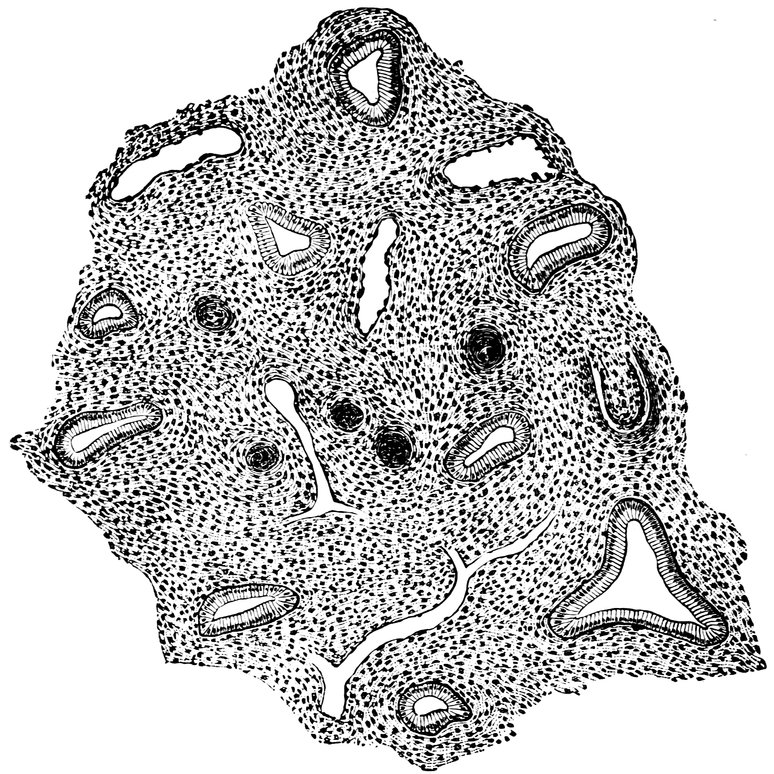
Fig. 83.—Uterine Mucous Membrane in Endometritis. (After A. Martin.)
Thus, in severe and long-continued endometritis, the changes that occur in the uterine mucous membrane render the implantation of 555the ovum and the formation of normal decidua impossible; even if conception does occur, the fertilized ovum is speedily discharged. Frequently, in cases of endometritis, there is consecutive displacement of the uterus which acts as a contributory cause of sterility. When endometritis lasts a long time, proliferation of connective tissue in the uterine parenchyma also occurs, leading often to hypertrophy of the cervix, and to stenosis of the cervical canal. Since in so many different ways endometritis may give rise to sterility, the importance that must be attached to this condition is evident.
The great significance of gonorrhoeal infection in relation to sterility in women depends, not only on the changes this disease causes in the Fallopian tubes, leading to interference with the necessary contact of ovum and spermatozoon, but further, upon the occurrence of gonorrhoeal cervical and corporal endometritis, of perimetritis, and secondary parenchymatous metritis. Still, under appropriate treatment, the inflammatory changes consequent on gonorrhoeal infection are in many cases curable, and, after absorption of the exudations and restoration of the normal nutritive conditions of the tissues, conception may take place. Fritsch, who points out that in the woman infected with gonorrhoea, sterility ensues in a manner analogous to that in which it occurs in the male (for in the latter it is not the primary urethritis, the disease of the passage, but the secondary inflammation of the testicle that leads to sterility), states that he has observed cases in which beyond question conception has occurred, notwithstanding the existence of gonorrhoeal endometritis.
In my own experience, whilst gonorrhoeal endometritis is, among inflammations of the endometrium, the most frequent cause of sterility, the place of next importance in this connexion is occupied by exfoliative endometritis, or membranous dysmenorrhœa. This name is given to a pathological condition in which from time to time, usually during menstruation, fragments of membrane, or even an entire sac-like cast of the uterine cavity, are expelled from the uterus; since this condition is apt to hinder the incubation of the ovum, it is commonly associated with sterility—a fact mentioned already by Denman in 1790, and since then confirmed by numerous observers. I have had under observation several cases of dysmenorrhœa membranacea; in two cases it existed from the time of marriage—in one case 14 years, in the other 8 years—and in both sterility was absolute. In the latter of the two cases, vigorous treatment was undertaken, even curettage of the uterus, but quite without avail. In other cases, the sterility was acquired, the membranous dysmenorrhœa having begun after the woman had already had one or more children; but as I have never seen a case in which a woman became pregnant after the development of this affection, I am compelled to regard it as one of the most severe hindrances to conception.
556As a general rule, exfoliative endometritis terminates only with the onset of the climacteric age; in very exceptional cases, however, a cure may take place earlier. In cases in which this premature termination has been observed, pregnancy has been known to ensue, cases of this nature having been observed by Solowieff, Fordyce Barker, and Thomas. And recently, cases have been reported, in which the disease has returned after such a pregnancy. Fritsch, indeed, is of opinion that exfoliative endometritis does not cause sterility, and that in this disease abortion is no commoner than in other diseases of the uterus. Charpignon, Hennig, and Bordier have also observed conception occur in the course of this disease. In 42 cases of membranous dysmenorrhœa collected by Kleinwächter, pregnancy occurred in four during the existence of the disease. Löhlein also reports that, among 27 patients affected with membranous dysmenorrhœa, six became pregnant, after the symptoms had been clear and unmistakable for a shorter or longer period. Two of these patients had been already pregnant before the first appearance of the exfoliative endometritis; subsequently they became pregnant and were delivered at full term. The other four had suffered for varying periods and with varying severity from the affection, before they first became pregnant. In three of these cases curettage of the uterus was performed; but in one only, in which pregnancy ensued very speedily on the operation, could a causal connexion be inferred. In two of the cases the mothers of the patient had also suffered from the affection.
It has been asserted by B. Schultze and others that curettage of the uterus renders it difficult or impossible for pregnancy subsequently to occur. There is, however, no evidence to justify such an opinion.
Especial attention should be given to inflammatory processes in the perimetrium and the parametrium as diseases giving rise to sterility in women. They are extremely common, and at times are so insidious, running their course without giving rise either to pain or to fever, that even when very extensive, and even when they have led to the formation of secondary tumour-growths, they may yet be overlooked. Hence their pathological significance in the causation of sterility in women is still underestimated. Chronic pelvic peritonitis and parametritis may lead to the onset of sterility in various ways: changes may occur in the cervix, this organ becoming indurated, fixed, and retroposed, and painful when the uterus is moved; inflammatory changes may affect the body of the uterus, the ligaments of the ovary, and various portions of the pelvic peritoneum; displacement of the uterus may occur; one or both ovaries or tubes may be dislocated and fixed, either to the side of the uterus, or behind it, in the pouch of Douglas; all kinds of adhesions or inflammatory 557nodules may result from these processes. Further, in the scarred, contracted, sclerosed parametric tissue, the blood and lymphatic vessels of the parametrium are compressed, and in part obliterated, and the intimate connexion between the pelvic cellular tissue and the uterus readily leads to the onset of endometritis, whereby the implantation of the ovum is interfered with. The occurrence of sterility in cases of pelvic peritonitis and parametritis, depends in part on the indirect effects of the inflammatory exudations, and in part on the direct result of the extension of the inflammation to other regions. The perimetritis, parametritis, and pelvic peritonitis that result from gonorrhoeal infection have thus an especially disastrous influence, for the reason that in these cases cervical metritis and endometritis with blenorrhoea are commonly superadded. This is the principal cause of the almost invariable sterility of prostitutes, in whom, however, we must also take into consideration the influence of the absence of voluptuous sensation in an act which to them has become a mere matter of business. The investigations of Bandl in the post mortem room show that residues of perimetritic and parametritic inflammation are to be found in the bodies of 58.4% of parous women, and 33.3% of the bodies of women (married or unmarried) who have had experience of sexual intercourse but have never had a child. This, he thinks, is the explanation of the great frequency of childless marriages and of relative sterility in women. In the nulliparae mentioned above, Bandl commonly found an indurated, functionless, in places cicatrized, narrowed cervix, paraoophoritic and perisalpingitic residues, and morbid changes in the tubes and the ovaries. In some cases also the husbands of such sterile women were found to be affected with azoospermia. The connexion between azoospermia in men and the discovery of inflammatory residues in their childless wives, is a very intimate one. The husband at the time of marriage was suffering from an imperfectly cured gonorrhoea, and infected his wife. In the other class of cases, in which the women had had children, and subsequently become sterile, the limitation of fertility depended chiefly upon inflammatory residues in and around the ovaries and the tubes. In the majority of such cases, pregnancy is not rendered impossible, but merely difficult, for, notwithstanding the presence of very extensive inflammatory residues, the tubes are often pervious, and the ovaries fully or partially functional. Therefore, even in cases in which intrapelvic inflammation has been very severe, we must be cautious in giving a prognosis that pregnancy has been rendered impossible, for the cases in which both ovaries are imbedded completely in pseudo-membranes, or in which both tubes have been rendered impervious, are unquestionably rare.
558Carcinoma of the uterus rarely causes sterility. In its initial stages, in which there is merely papillary proliferation of the portio vaginalis, or carcinomatous infiltration of the deeper layers of the mucous membrane, no hindrance is offered to conception; but even in the later stages of the disease, when ulceration has occurred, and when there is extensive necrosis of the cancerous masses, there is not necessarily any absolute impossibility of the occurrence of conception, so long as cohabitation remains possible, and no insuperable hindrance has risen to the contact of ovum and spermatozoon. The cases are numerous in which pregnancy has been observed, notwithstanding extensive carcinomatous disease of the cervix, with necrosis of the tumour tissue; and Cohnstein even asserts, though in this he goes too far, that cancer of the cervix actually favours impregnation. Among 127 cases of this kind, there were 21 in which the disease had existed for a year or more before the occurrence of conception.
Winckel summarizes in the three following propositions his experience regarding the relation between uterine carcinoma and sterility: 1. Married women form the very large majority of those affected with carcinoma of the uterus; 2. The marriage of such women has very rarely proved sterile; 3. On the contrary, the women affected with this disease have generally been exceptionally fertile.
Other tumours of the uterus cause sterility, not merely by giving rise to mechanical interference with the necessary contact of ovum and spermatozoon, but also by leading to catarrhal states and hyperplasia of the mucous membrane, which interfere with the implantation of the ovum, even when fertilization has been effected. Uterine polypi give rise to mechanical obstruction of the os uteri externum or of the cervical canal; but they predispose to sterility in an additional way, inasmuch as in a woman affected with such a new growth any vigorous bodily movement is apt to cause profuse uterine haemorrhage.
In cases of myoma of the uterus, apart from the mechanical hindrances to conception imposed by these tumours, there is also interference with the implantation of the ovum. When numerous myomata have formed in the uterine wall, the mucous membrane is usually smooth and atrophied, and discharges a watery secretion, and for these reasons the imbedding of the ovum in the uterine cavity is rendered extremely difficult. But that there is often an additional cause of sterility in cases of myomata uteri, has been shown by the researches of Schorler, who examined 822 patients affected with fibromyoma of the uterus. He found that in most of those in whom sterility was observed, the tumours were not submucous but subserous, and that the sterility was to be explained 559in these cases by the frequent occurrence of partial peritonitis, with its evil results to the uterine annexa.
Schorler appends the following table:
Sterile. Percentage.
Of 85 women with interstitial myoma 21 24.7
Of 92 women with subserous myoma 44 47.8
Of 18 women with submucous myoma 7 38.8
Of 44 women with polypous myoma 4 9.0
Of 14 women with cervical myoma 3 18.7
253 79 31.2
When there are polypous new formations in the uterine cavity, even if conception occurs, abortion follows, for the reason that the rupture of the hypertrophied capillaries in the growths themselves and in the neighbouring tissues, prevents the normal development of the embryo. Horwitz has, however, described a case in which pregnancy went on to full term, notwithstanding the existence of growths of this nature.
Owing to the frequency with which chronic metritis and endometritis ensue upon parturition, it can readily be understood that delivery itself is often the primary cause of subsequent sterility. A temporary sterility often follows the first delivery. It is well known that the birth of boys is in general more difficult than the birth of girls; Pfannkuch collecting information regarding the first and second deliveries of 300 married women, ascertained that after 166 of the first deliveries, in which boys were born, the average lapse of time to the second delivery was 30.2 months, whereas after 134 of the first deliveries in which girls were born, the average lapse of time to the second delivery was only 27.4 months.
The importance of previous delivery in leading to sterility, in consequence of mesometritis and diffuse connective tissue hyperplasia of the uterus, is shown by von Grünewaldt, who published the following figures as a result of his investigations. Of 56 women affected with chronic metritis, 46.4% were sterile; in 19.2% of these the sterility was congenital, in 80.7% it was acquired. Of 134 women suffering from myometritis and its consequences, 71.6% were sterile; in 17.7 of these the sterility was congenital, and in 82.2% it was acquired. On the other hand, of 321 women suffering from endometritis, 29.5% were sterile; in 28.4% of these the sterility was congenital, and in 71.5% it was acquired.
Lier and Ascher also insist upon the importance of puerperal diseases in the causation of acquired sterility, basing their opinion upon Prochownick’s clinical material. They draw, however, the following distinction. If the puerperal infection takes place by way of the external organs of reproduction, through the vagina to the 560cervix and thence to the connective tissue of the pelvis—the most common form, that which occurs soonest after delivery, and the most severe in its course—the women thus affected are likely soon to become pregnant again; if, on the other hand, the disease is pelvic peritonitis, the exciting cause of the inflammation proceeding from the interior of the uterus through the Fallopian tubes to reach the peritoneum, in the majority of cases the women thus affected will prove sterile for a long time or in perpetuity. In almost all the cases in which sterility resulted, the pelvic peritoneum had been severely affected by the puerperal inflammation. Regarding sterility in women, the two following general propositions are laid down by Lier and Ascher: 1. Hardly any single cause of sterility in women is so severe as to be competent by itself to render sterility inevitable throughout the period of sexual maturity, with the exception of defects of development and premature cessation of sexual activity. 2. Most of the hindrances to conception in women depend upon affections of the internal superficies of the reproductive organs, from the vulval mucous membrane upwards to the pelvic peritoneum; of these, the most important are affections of the endometrium.
On the other hand, it must not be forgotten, that the general tendency of a previous delivery is to increase the capacity for impregnation. Olshausen especially insists upon the well-known gynecological fact, that as a result of the first delivery, there occurs an enlargement of the os uteri, which facilitates conception throughout the remainder of the period of sexual maturity. This is well shown by the not infrequent cases in which sterility persists for several years after marriage, and then, with or without artificial aid, the first pregnancy occurs; thereafter one child after another appears in rapid succession.
Spiegelberg has pointed out that cervical lacerations may give rise to sterility by interference with the incubation of the ovum. Olshausen maintains that this affection is liable to cause abortion, for the reason that by the gaping of the cervical canal the inferior pole of the ovum is from time to time exposed, and this gives rise to reflex contractions of the uterus.
Von Grünewaldt publishes figures in support of his opinion that disturbances of the integrity of the uterus, whereby the implantation and further development of the ovum are interfered with, play on a whole a greater part in the causation of sterility than the various conditions previously described which interfere with contact of ovum and spermatozoon. But in this, we think, he goes too far.
Finally, in this connexion, must be mentioned among the hindrances to fertilization, sexual excesses, such as are so common during the first weeks of married life. Too frequent coitus gives rise to 561enduring congestion of the uterus, and hence to an irritable state of the uterine mucous membrane, whereby the implantation of the ovum is rendered difficult. In prostitutes chronic metritis, due to the excessive frequency of intercourse, may be a contributory cause of the sterility which is almost invariable in these women; doubtless, however, the principal cause of their sterility is gonorrhoeal perimetritis.
As a variety of the third kind of sterility, sterility due to incapacity for implantation or further development of the ovum, must be classed the cases in which, though conception and implantation of the ovum are known to occur, and the first stages of development of the embryo certainly take place, the woman proves incapable of giving birth to a viable infant. Some of these cases depend upon abnormal modes of development, myxoma of the chorion and the like. In rare cases, women abort every month, discharging every four weeks a fully developed decidua vera, in which sometimes no trace of ovum can be detected. But this monthly abortion ceases as soon as marital relations are interrupted.
It would be passing beyond the scope of this work to discuss the pathological processes which lead to premature interruption of the pregnancy, after conception, implantation of the ovum, and the first stages of development, have occurred in a normal manner; to discuss, in short, the causes of abortion. Moreover, these pathological processes are outside the concept of sterility. It is sufficient here to enumerate the principal conditions in which abortion occurs. They are: various tissue disorders of the uterus, chronic hyperaemia of the mucosa, displacement of the uterus with fixation, parametric and perimetric exudations, laceration of the cervix with ectropium; further, various constitutional disorders, such as the specific fevers, acute infective processes, chronic circulatory disturbances consequent upon cardiac, pulmonary, renal and hepatic disease, syphilis, anæmia, chlorosis, diabetes, etc.
Only-Child-Sterility.
Until recently, only-child-sterility had received attention in England only, for the reason that it is comparatively common in that country; but this form of relative sterility is by no means rare with us (in Germany and Austria) also. I had a collection made in Austria of the number of children resulting from 2000 fruitful unions, and found that among these there were 105 marriages in which one child only had been born; thus the ratio of these marriages to those which proved fully fruitful was about 1 : 19. But the figures are untrustworthy, since abortions and deaths in infancy were not taken into account. Ansell found that in England, among 5621767 fruitful marriages in which the mean age of the wives at marriage had been 25, there were 131 cases of only-child-sterility, giving a ratio of the latter to the fully fruitful unions of 1 : 13.
This form of relative sterility, in which the wife gives birth to one child, and thereafter remains barren, was referred by Matthews Duncan, either to a premature exhaustion of the reproductive capacity, the general bodily powers remaining unaffected, or else to a simultaneous weakening of the sexual powers and of the constitutional force in general. This explanation is a very inadequate one. The significant fact upon which an understanding of the nature of only-child-sterility must be based, is that the first delivery is the one which entails the greatest dangers to the mother, and that the subsequent sterility is attributable to the difficult delivery, and to the illnesses that follow in its train. In fact, only-child-sterility is observed chiefly after difficult deliveries, followed by long enduring inflammatory processes of the uterus and the uterine annexa, which seriously affect the woman’s reproductive capacity. It occurs especially in delicately organized, anæmic, scrofulous women, whose powers of resistance have been undermined by a single pregnancy and parturition. Finally, it is met with in women suffering from myoma uteri, a form of tumour which beyond others renders the recurrence of pregnancy difficult and unlikely. This form of sterility has been seen also in cases in which comparatively soon after the birth of her first child, the mother has suffered from typhoid, scarlatina, or some other severe infective fever, which appears in some way to interfere for the future with the development of normal ova. We must also take into consideration the fact that at the time of the wife’s first confinement, when the love which brought about the union has often already begun to diminish in intensity, the husband, finding too irksome the continence enforced upon him by his wife’s condition, is not unlikely to go elsewhere for temporary sexual gratification, and to acquire a venereal disease, which he subsequently transmits to his wife, and which is responsible for the latter’s future sterility. And we must not forget to take into account the adoption of means for the prevention of pregnancy after the first child has been born. Again, I saw three cases of only-child-sterility in which the husbands were respectively 24, 26, and 29 years older than their wives, and in these instances no profound search was needful for the discovery of the cause of the wife’s unfruitfulness; it was obvious that in each case the elderly husband’s reproductive powers had sufficed for the procreation of a single child, but had then been completely exhausted. My experience in the mysteries of sterility in women has informed me of yet another cause of only-child-sterility, met with in cases in which the only child was born after several years of unsuccessful marital intercourse. 563In most of these cases, the wife has finally been impelled to seek a substitute for her husband, whose reproductive powers have proved insufficient; having succeeded in obtaining the child she desires, the wife does not again wander in strange pastures, and consequently remains sterile.
According to Kleinwächter—who gives a somewhat wider significance to the term “only-child-sterility,” including as he does cases of premature interruption of the first and only pregnancy, since these even more frequently entail permanent sterilization—only-child-sterility is by no means rare. Among 1081 gynecological cases, he observed it in 90, that is, in 8.32% of the cases. In these 90 cases, there were 69 instances in which the sterility ensued upon full term delivery, and 21 instances in which it followed abortion or premature delivery. Kleinwächter, moreover, on the basis of his personal experience, supports my view of the importance of the sterilizing influence of the first delivery; but he has been unable to determine whether early marriage has any influence in the production of only-child-sterility.
Lier and Ascher also class as instances of only-child-sterility those cases in which a woman has had a single miscarriage, and subsequently remained sterile, since by this miscarriage the capacity of the woman for impregnation has been proved, and the question of capacity for full-term delivery has nothing to do with that of capacity for conception. As causes of this form of sterility, they lay especial stress upon puerperal infection, gonorrhoeal infection, perimetritis, tubo-ovarian tumours, etc.
Operative Sterility.
Finally, in order to complete the etiologically classified series of forms of sterility, we must allude to yet another variety of sterility which is due to the surgical direction of modern gynecology, viz., operative sterility. However much we may prize the gains we owe to modern operative gynecology, it cannot be denied that the new developments have brought many evils in their train. Not the least of these is operative sterility, due to operative procedures involving the female reproductive organs, by which, whether intentionally or unintentionally the reproductive capacity is destroyed. Doubtless, in certain severe organic diseases of the female reproductive apparatus, in which the use of the knife is indicated, the fact that by operating we are sterilizing the patient cannot even be taken into consideration; but many sins have been committed in this kind, and with a ready hand, and, be it openly admitted, with an easy conscience, many an eager operator has undertaken the destruction of a woman’s potentialities for motherhood, without having given the 564careful consideration that is demanded by the irreparable character of his undertaking. Happily, however, the time has nearly passed away, in which it could be said of many a gynecologist, that no ovaries and no Fallopian tubes were safe from his operative zeal, and from his desire to heap up a mountain of statistics.
Three operative measures very commonly undertaken at the present day are responsible for the production of operative sterility: ovariotomy, oophorectomy, and salpingotomy.
The removal of the ovaries, with the object of permitting to the women concerned unbridled sexual indulgence without risk of consequences, was performed, according to Strabo, by the ancient Egyptians and Lydians. The same practice is described by modern writers as occurring in Hindustan (Roberts), and in Australia (Miklucho-Mackay).
With a curative aim, the removal of the ovaries was first undertaken in the early years of the nineteenth century, although the operation had already been discussed as a possibility by leading physicians of the eighteenth century. The first ovariotomy for the removal of an ovarian tumour was performed by MacDowell in the year 1809. During the last three or four decades, the operation has become an extremely common one, and is performed by the surgeons of all nations. Removal of a single ovary, as long as the other ovary is healthy, does not necessarily lead to any impairment of fertility; but when both ovaries are removed, operative sterility is the necessary result. In order to avoid this, Schröder has recommended that a fragment, at least, of healthy ovarian tissue should be left behind, in order to preserve the reproductive capacity. In discussing the subject of impaired ovulation, we have already mentioned cases in which pregnancy has occurred after bilateral removal of the ovaries, a circumstance explicable only on one of two assumptions, either that a fragment of ovarian tissue was left behind, or else that a supernumerary ovary existed.
The extirpation of healthy ovaries, or at any rate, of ovaries which are not notably enlarged, is known as oophorectomy (spaying, Battey’s operation, in Germany, castration). It dates from the year 1869 (Koeberlé); but in the strictly modern sense the operation was first performed by Hegar in the year 1872. [Lawson Tait removed both ovaries for pain in October, 1871. Battey’s first operation of this kind was successfully performed on August 17th, 1872; this was three weeks subsequent to the first performance of the operation by Hegar of Freiburg. But Hegar’s patient died from the operation, and Hegar did not publish the case at the time—Transl.] The aim of ovariotomy is to remove an ovarian cystoma; if the other, apparently healthy, ovary is removed, it is with the object of removing an ovarian tumour in the initial stage. Oophorectomy 565has an altogether different purpose, namely, to relieve or cure pathological manifestations in other organs which are believed to depend on the periodical recurrence of ovulation, to cure them by instituting a premature menopause. At one period, when overzealous operators performed oophorectomy for the supposed relief of comparatively unimportant nervous affections, and the statistics of the operation began to assume gigantic proportions, operative sterility actually came to play no inconspicuous part on the stage of sterility in general. But a reaction inevitably followed; severe diseases were alone considered as furnishing sufficient indications for the operation; of late it has been performed chiefly in cases in which the primary disorder has already rendered the occurrence of pregnancy impossible, or at any rate very unlikely, or, finally, if probable, yet to be avoided, on account of the dangers it would entail. In short, the fertility of women is no longer seriously threatened by this operation.
Some years ago, I was consulted by a beautiful married woman, 26 years of age, of a blooming and healthy aspect. When a young girl, she had suffered every month at the time of the menstrual flow from violent vomiting, accompanied by various spasmodic troubles. Just at this time, oophorectomy was the fashionable operation for the relief of nervous troubles; this girl was subjected to the operation, and the vomiting at the periods ceased, but the other nervous symptoms persisted without alleviation—indeed were at times worse than before. Since then, she had married a man belonging to the upper circles of society; and now, after living for four years in sterile wedlock, she came to me to ask my advice as to whether anything could be done to enable her to have a child! Two other cases have come within my own knowledge, in which women whose ovaries had been removed on account of nervous troubles, had subsequently married, and felt most unhappy owing to their hopeless state of sterility.
It is impossible to make even an approximate estimate of the number of women who in recent years have had their ovaries removed during the period of sexual maturity, and who have thus been made the subjects of operative sterility; nor is it possible to ascertain in what proportion of cases the healthy ovaries, the normal female reproductive glands, have been removed for the problematical relief of nervous troubles or of uterine haemorrhage, and in what proportion of cases there has existed a genuine indication, owing to the presence of fibromyoma of the uterus, for the induction of an artificial and premature menopause. Unquestionably, the number of women thus operated on during the menacme is by no means a small one. In a work by Hermes, “On the Results of Oophorectomy in Cases of Myoma of the Uterus,” Archiv für Gynecologie, 5661894, we find that, among 55 women whose ovaries were removed on account of myoma of the uterus, there were 52 who were between the ages of 21 and 45, i. e., in the period of sexual maturity. The assumption that all these patients were already sterile before the operation, on account of a degenerate condition of the uterine annexa, cannot be justified.
Keppler, indeed, puts forward a very remarkable defence of the removal of the ovaries of women who are competent to become mothers, asserting that such oophorectomy offers no obstacle to marriage, and that many women who have been operated on in this manner are extremely happy in conjugal life. Marriage with a wife whose ovaries have been removed is the ideal Malthusian marriage, the one way in which Malthusianism can be practised without endangering the health and life-happiness of the participators!
Another danger soon appeared, one which threatened the fertility of women to an even greater extent, in the form of operations on the uterine annexa—the first salpingotomy was performed by Hegar in 1877. As knowledge advanced of the various diseases of the Fallopian tubes, salpingitis, hydrosalpinx, and pyosalpinx, whilst at the same time the development of the antiseptic method rendered operative gynecology continually bolder and bolder in its undertakings, there was disclosed an extensive field for radical measures in removal of the tubes, generally combined with removal of the ovaries, since these latter organs commonly were found to have suffered from association in the destructive inflammatory process. The operation of salpingo-oophorectomy soon became a very common one; and since patients with diseased tubes are for the most part still comparatively young, in the period of sexual maturity, there arose a new and frequent variety of operative sterility, and one which the zeal of American gynecologists made especially common on the other side of the Atlantic. An American gynecologist, indeed, has sarcastically observed that “It is the dish-full of excised tubes that shows the master gynecologist”; and Landau has been impelled to lament that “salpingotomy has been performed on a very large number of women who have complained of nothing more serious than uterine haemorrhages, or of insignificant pains, and even on some women who have come to the gynecologist with no other complaint than that—they are sterile”! Fritsch, also, writing of the too rapidly formed diagnosis “tumor of the annexa,” and the consequent resort to operation, remarks: “I know many a happy mother who at one time had worn every variety of pessary, had been through every kind of ‘cure,’ and had visited every accessible spa; until, at last, she came to consult me, with the express wish to have her ovaries removed. Latterly, she had been advised to this 567course by every physician she had consulted. I agreed, in such cases, to perform the operation, with the stipulation that first of all, for the space of an entire year, the patient should not see a single doctor, should visit no spa, should take no medicine, and, in short, should pay no attention whatever to her health. The success of this course of ‘treatment’ was often extraordinary. As soon as the reproductive organs were left in peace, recovery ensued.” The conservative tendencies of the surgery of the last decade, have manifested themselves also in the department of gynecology, for the happy protection of woman and her reproductive capacity. Operative measures are now commonly restricted to the relief of certain severe forms of disease of the uterine annexa; in cases of chronic inflammation of the annexa, the surgeon often contents himself with dividing or breaking down the adhesions, and leaves the organs in situ; even in cases of bilateral disease, one tube only may be removed; whilst in the most recent method of all, after opening the abdomen, and separating the pelvic organs from their adhesions, an aperture is made in the closed tube, and this artificial ostium is brought into apposition with the ovary by the insertion of sutures. In a word, surgeons have come to realize that they have in the past been too ready to sterilize their patients by the performance of double salpingo-oophorectomy, and are much more reluctant than formerly to sacrifice the ovaries and the Fallopian tubes.
Porro’s operation is another cause of operative sterility, excision of the ovaries being combined with the partial excision of the uterus, whereas sterility was seldom the consequence of the older method of Caesarian section. Indeed, Porro’s operation has been extolled precisely on this account, that, indicated as it is for the relief of extremely difficult labour, it renders it impossible for the same difficulty and danger ever to recur.
The classical operation of Caesarian section, if the patient makes a favourable recovery, does not involve sterility, unless in very exceptional cases (as in one described by Lecluyse, in which, after the Caesarian section, a communication persisted between the uterine cavity and the cavity of the abdomen, through which the semen passed during coitus). Occasionally, also, in performing the older operation, the operator has thought it right to prevent the future recurrence of pregnancy by adding an oophorectomy to the primary operation.
Pregnancy and parturition are still possible after the healing of spontaneous or traumatic ruptures of the uterus; but it must be remembered that after such serious injuries, as after extensive operative procedures on the pelvic organs, widespread peritoneal inflammation is apt to occur, with perimetritic and parametritic exudations, leading commonly to sterility.
568Amputation of the vaginal portion of the cervix, an operation sometimes undertaken for the relief of sterility in cases of hypertrophy of the cervix, may on the other hand lead to sterility in cases in which a cicatricial stenosis of the cervical canal results from the operation.
By the too frequent application of caustics to the cervical canal, or by the employment of these agents in too powerful a form, occlusion of the os externum may be caused, or even adhesion of the opposing walls of the vagina just below the cervix, thus giving rise to sterility. Rough use, also, of the uterine sound, and maladroit and violent gynecological massage, have often enough been responsible for the occurrence of sterility, by giving rise to perimetritic inflammation. Landau enumerates among the causes of intrapelvic abscesses, “whereby the specific functions of womanhood are nullified in consequence of degeneration of the tubes or the ovaries,” “certain therapeutic procedures,” and more especially, intra-uterine therapy, (the use of the sound, curettage, injections, cauterization), and operations on the cervix or the vagina, on which intrapelvic inflammation and even suppuration has ensued. How easily pelvic peritonitis and its consequences lead to sterility in women, has been shown many times in the course of our exposition of this subject.
Finally, we must class with operative sterility the result of surgical procedure undertaken by gynecologists to save women, whose lives have already been seriously threatened by pregnancy or parturition, from a repetition of this experience. In such cases, Blundell recommends division of the Fallopian tubes, having found from experiments upon rabbits that this is a safe and certain means for the prevention of conception. Frorieps and Kocks have both frequently brought about an artificial sterility in women by closure of the tubes, the first-named by cauterization with nitrate of silver—the caustic being attached to the end of a piece of whalebone and introduced through a canula into the uterine orifice of the Fallopian tube—whilst Kocks has constructed for the same purpose a galvano-caustic uterine sound, which is only rendered red-hot by passage of the current after it has been introduced into the uterine ostium of the tube. Both these methods are in the first place too uncertain to be relied upon for the attainment of the desired end, and in the second place their employment appears to be neither easy, nor free from danger.
As the importance of conservative methods of procedure becomes once more fully recognized in modern gynecology, cases of operative sterility will become ever more and more rare.
569
TABLE SHOWING THE CAUSES OF STERILITY IN WOMEN.
I. Sterility due to Incapacity for Ovulation.
ABSOLUTE AND IRREMEDIABLE.
Complete absence of the ovaries.
Congenital atrophy of both ovaries.
Premature atrophy of the ovaries, in consequence of infectious disorders, constitutional diseases, and toxic influences.
New-growths of the ovaries, destroying all the follicles.
Senile changes in the ovaries.
Complete oophorectomy, or any equivalent form of operative sterility.
RELATIVE AND TRANSIENT.
Incomplete development of the ovaries.
Imperfect formation of ova, owing to marriage when still too young (amenorrhœa).
Ovarian tumours and oophorectomy, whereby, however, a remnant of healthy ovarian tissue is spared.
Chronic oophoritis and perioophoritis; syphilitic disease of the ovaries.
Excessive obesity, anæmia, chlorosis, scrofula, morphinism, alcoholism, various conditions affecting unfavourably the innervation or nutrition of the ovary; change of climate or mode of life; emotional disturbance; inbreeding, hereditary predisposition.
II. Sterility due to Interference with the Contact of Normal Spermatozoon and Ovum.
A. On the Part of the Wife.
ABSOLUTE AND IRREMEDIABLE.
Congenital or acquired universal thickening of the tunica albuginea of the ovaries, preventing the dehiscence of the follicles.
Absence of both tubes, developmental defects of these organs.
Absence or rudimentary condition of the uterus. Foetal uterus.
Congenital atresia of the uterus with arrest of development.
Complete absence of the vagina.
Extreme contraction of the pelvis, whereby the vagina is rendered inaccessible.
Hermaphroditism.
RELATIVE AND TRANSIENT.
Remediable thickening of the tunica albuginea, inflammatory remnants of perioophoritic processes, diseases of the cervical glands, dislocations and adhesions of the tubes, narrowing or obliteration of the ostia, inflammation of the tubes, pyosalpinx, obliteration of the lumen of the tube.
Retro-uterine haematocele.
New growths in the uterine cavity.
Infantile and pubescent uterus.
Primary atrophy of the uterus.
Puerperal atrophy of the uterus.
Displacements of the uterus—versions and flexions.
Hypertrophy or atrophy or changes in the shape of the cervix, cervical stenosis.
Cervical catarrh, especially when gonorrhoeal.
Ectropium of the cervix.
Spasmodic dysmenorrhœa.
Atresia of the vagina, obliteration of the canal by scars or tumours.
Abnormal termination of the vagina—vesico-vaginal and recto-vaginal fistula.
570Absence of the external organs of generation and partial absence of the vagina, without defect of the internal organs of generation.
Abnormalities of the hymen.
Pathological states of the genital secretions.
Vaginismus.
Dyspareunia.
Perversion of the sexual impulse.
B. On the Part of the Husband.
ABSOLUTE AND IRREMEDIABLE.
Diseases of the central nervous system, and certain constitutional diseases.
Congenital or acquired absence of both testicles.
Atrophy of the testicles.
Complete azoospermia and aspermatism.
Senile impotence.
RELATIVE AND TRANSIENT.
Developmental defects of the penis, and acquired deformities of that organ.
Stricture of the urethra.
Oligozoöspermia.
Nervous impotence.
Gonorrhoeal and syphilitic infection.
The employment of measures for the prevention of pregnancy (facultative sterility).
III. Sterility due to Incapacity for the Implantation and further Development of the Ovum.
ABSOLUTE AND IRREMEDIABLE.
Arrested development of the uterus.
Complete atrophy of the uterine mucous membrane.
RELATIVE AND TRANSIENT.
Chronic metritis.
Chronic endometritis, especially gonorrhoeal and exfoliative endometritis.
Perimetritis, parametritis, pelvic peritonitis; the consequence of these inflammations.
Tumours of the uterus.
Displacements of the uterus.
571