II. THE SEXUAL EPOCH OF THE MENACME. (continued 9)
Eden Paul translation
According to Winckel, stenosis of the external or of the internal os is a cause of sterility only in cases in which it arises from a follicular inflammation of the cervical mucous membrane; in such cases, the os, (internal or external, as the case may be), being 510greatly narrowed by the numerous retention cysts, offers an obstruction to the evacuation of the glutinous secretion of the follicles yet remaining open. This secretion may offer an insuperable hindrance to the passage of the spermatozoa; but in the absence of catarrh of this character, a moderate degree of contraction of the cervical canal will not prevent the outflow of the menstrual discharge, or the upward passage of the spermatozoa.
The experience of horse and cattle-breeders also shows the etiological importance of stenosis of the cervix in the production of sterility: and in the case of mares and cows who are unfruitful from this cause, artificial dilatation of the cervix has often been performed, with resulting restoration of fertility.
Swelling of the follicles of the mucous membrane of the cervical canal or of the cavity of the uterus, a condition which often results from cervical catarrh, will, equally with stenosis of the cervical canal, lead to sterility; pushing the mucous membrane before them, and becoming pedunculated, these swollen follicles ultimately enlarge to form polypi of the cervical canal or the uterine cavity, and may at times completely occlude the uterine canal. In Fig. 78 is depicted a polypus of this kind, which I removed from the cervix of a barren woman 30 years of age. On the apex of the polypus was a large ovulum Nabothi.
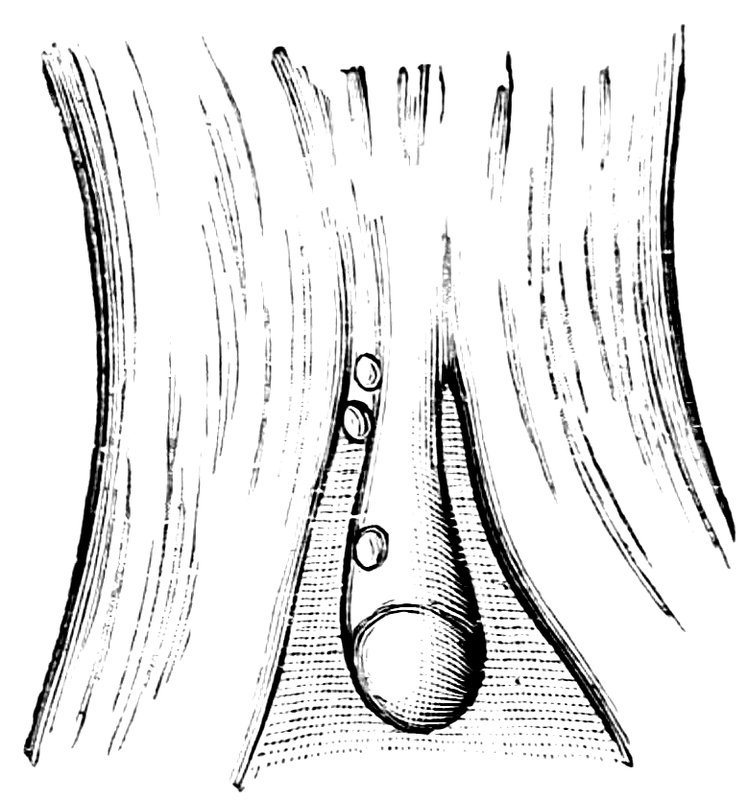
Fig. 78.—Cervical Polypus, originating from an Ovulum Nabothi.
Long-standing cervical catarrh readily leads to stenosis of the cervical canal, and consequently to sterility. The swelling and hypersecretion of the cervical mucous membrane the more readily hinders the entrance of the semen, inasmuch as the mucous folds on the anterior and posterior walls of the cervical canal which combine to form the plicae palmatae are in the normal state already sufficiently prominent; but in cases of catarrhal swelling they may project to such an extent as completely to occlude the canal. Stagnation of the thickened secretion offers in these cases a further hindrance 511to the passage of the spermatozoa, a stagnation which becomes aggravated if in course of time the os becomes stenosed by overgrowth of scar tissue. Ultimately, also, in cases of chronic catarrh, a flexion of the enlarged and flabby corpus uteri readily occurs, and this imposes an additional difficulty in the way of conception.
It is for these reasons that those women who in girlhood have suffered from prolonged cervical catarrh, so often remain childless. The sequence of events is that already described: follicular catarrh, stagnation of secretions, stenosis of the cervical canal, enlargement and loss of tone of the uterus; the thin-walled, enlarged, and flaccid uterus ultimately gives way before the intra-abdominal pressure, bending back, usually, into the pouch of Douglas. Thus, retroflexion of the uterus is a common sequel of cervical catarrh (Hildebrand). In some cases of sterility dependent upon cervical catarrh, this sequence of troubles has not occurred, and it is merely the mucus in the canal which prevents the passage of the spermatozoa. B. Schultze reports the case of a woman who had lived for 13 years in sterile wedlock, but became pregnant after a single removal of the cervical mucus.
The significance of chronic cervical catarrh in the causation of sterility explains how it is that in many cases of barren marriage the blame ultimately rests upon the husband, who, when he married, was suffering from “latent gonorrhoea,” the inconspicuous relic of an acute attack, undergone, it may be, months and even years previously, and infected his wife with the disease. Such a gonorrhoeal catarrh is in women especially apt to assume a chronic form, and will then induce all the secondary morbid conditions previously described, and thus lead to sterility.
Gonorrhoea in women frequently results in sterility. In addition to the effect of cervical stenosis and of a morbid condition of the cervical mucus in preventing the upward passage of the spermatozoa, this disease may lead to many other changes inimical to fertility. Thus, gonorrhoeal infection in women often leads to inflammatory manifestations in the peritoneum, the perimetrium, and the parametrium, and to catarrhal changes in the Fallopian tubes (salpingitis, hydrosalpinx, pyosalpinx); these prevent the contact of spermatozoon and ovum, or cause pathological distortions of the walls or calibre of the tubes, which constitute permanent hindrances to the occurrence of conception. Young married women, whose husbands at the time of marriage were the subjects of incompletely cured gonorrhoea, and who shortly after marriage suffer from cervical catarrh, the discharge from the inflamed mucous membrane not infrequently having a suspicious greenish colour analogous to that seen in recent gonorrhoea in the male, often remain sterile for long periods, owing to this gonorrhoeal cervical catarrh, endometritis, 512and tubal catarrh. For the diagnosis in such cases, in addition to noticing the virulent character of the inflammation of the vulva, urethra, and vagina, we must invoke the aid of the microscope; and it will often be possible to decide at once that the inflammation is gonorrhoeal by finding Neisser’s diplococci enclosed within the pus cells of the cervical secretion.
The influence of “latent gonorrhoea” in diminishing the fertility of women has been especially asserted—and overestimated—by Nöggerath. From the fact that about 90% of sterile women are married to men who have suffered from gonorrhoea either before or during their married life, he infers that the sterility is due to latent gonorrhoea communicated from husband to wife. If this inference were justified, sterility would be far commoner than it actually is. Nöggerath makes use of the term “latent gonorrhoea” because the woman becomes infected without the obvious outbreak of any acute phase of the disorder. The disease remains latent, and a radical cure is not to be expected until the menopause. According to Nöggerath, there are four varieties of this disease: acute, recurrent, and chronic perimetritis, and oophoritis, always accompanied by catarrh of the mucous membrane of the genital organs.
Saenger, also, has asserted that 12% of all cases needing gynecological treatment are of gonorrhoeal origin; and he even considers that the consequences of gonorrhoea are in women more dangerous and destructive than those of syphilis. E. Martin has also maintained that endocervicitis leading to stenosis of the os uteri externum and of the cervical canal is, in the majority of sterile young wives, due to gonorrhoeal infection derived from a chronic, unhealed, but inconspicuous, gonorrhoea in the husband. He further considers it possible that various kinds of mechanical stimulation, for example, intra-vaginal onanism, may, in certain conditions, give rise to inflammation eventuating in cervical stenosis.
Of great interest are the mutual relations between dysmenorrhœa and sterility, a matter to which some allusion has already been made. A high degree of stenosis of the cervical canal is competent to produce both these symptoms; but dysmenorrhœa may arise from many other causes which have no direct influence in preventing conception.
Too much stress has, in fact, been laid upon the association of dysmenorrhœa with sterility, and I must therefore point out that I have seen numerous instances of dysmenorrhœa, including the so-called spasmodic form of the disease, in women who have given birth to many children; that objectively, in such cases, there was an absence of that rigidity of the cervix to which Matthews 513Duncan attached so much importance; and, finally, that even when the dysmenorrhœal pains had subjectively all the character of labour pains, the introduction of the sound could be effected without using any great force, and without giving rise to any severe pain.
Unquestionably, those authors, with Sims at their head, go too far, who regard dysmenorrhœa as a constant sign of stenosis of the cervical canal, and hence infer that in all cases in which sterility is associated with dysmenorrhœa, the sterility is due to such stenosis—an opinion contested by Schultze on the ground of anatomical investigations. Dysmenorrhœa gives no indisputable sign that the cervix is stenosed to such a degree as to hinder the occurrence of conception; and Sims’s view, that in the great majority of cases dysmenorrhœa is due to mechanical obstruction, is not supported by experience. Women who suffer from severe dysmenorrhœa, frequently become pregnant, though later, it may be, than women in whom menstruation is normal and painless. Dysmenorrhœa is not due solely to contraction of the cervical canal, but also to a variety of other pathological conditions. The anomalies of the genital organs which give rise to dysmenorrhœa do not, for the most part, offer any obstacle to conception; and, on the other hand, stenosis of the cervical canal may exist in women who are entirely free from dysmenorrhœa.
In order to test Sims’s theory of the mutual interdependence of dysmenorrhœa and sterility, Kehrer conducted an investigation into the state of menstruation both before and after marriage in relation to the fertility or infertility of the marriage. He ascertained that in sterile women virginal dysmenorrhœa had only been a very little commoner than in fruitful women. Hence, the changes in the reproductive organs upon which the occurrence of dysmenorrhœa depends, must not be regarded as necessarily constituting hindrances also to conception.
English gynecologists differ from those of Germany in believing that there is an intimate causal relation between dysmenorrhœa, and more especially spasmodic dysmenorrhœa, and sterility. The assumption is, that the contractions of the uterus, which by their violence during menstruation give rise to pains like those of labour, occur also during coitus; by these contractions, the entry of the semen into the uterus is prevented, or, if the semen does enter the uterus, it is speedily expelled. This spasmodic dysmenorrhœa has also been called mechanical or obstructive dysmenorrhœa, in order to call attention to the theory that the aim of the cramp-like contractions of the uterus is the expulsion of the menstrual blood which has accumulated in the uterine cavity; although Duncan himself is compelled to admit that neither the alleged mechanical obstruction, 514nor the accumulation of menstrual blood, nor yet the dilatation of the uterine cavity, can actually be proved to occur.
Note.—The author is not quite correct in his contrast between “English” and “German” opinion in this matter. Most English gynecologists follow Matthews Duncan in calling attention to the fact that, as Herman puts it, “spasmodic dysmenorrhœa is often associated with sterility”; but almost all careful writers insist that while the association is proved, the nature of the causal connexion, if such exists, has not been elucidated. For instance, writing on this very question of the association of dysmenorrhœa with sterility, Hart and Barbour remark, “after a careful survey of the literature, we come to the conclusion that any discussion of sterility in which mechanical considerations have a prominent place, must be inadequate, and will always be bootless.” It is true that Matthews Duncan writes (Diseases of Women, Lecture on Sterility), “The most generally recognized cause of sterility is spasmodic dysmenorrhœa”; but a careful perusal of the whole lecture will show that Duncan is saying more than he really means in using the word “cause,” and that what he wishes to insist upon is the frequent and indisputable association of the two conditions. In the lecture on Spasmodic Dysmenorrhœa he writes, “Latterly it has been generally described as obstructive or mechanical dysmenorrhœa; these words ‘obstructive’ and ‘mechanical’ implying a theory of the disease which ... I am sure is quite erroneous.” Obviously, then, Kisch does injustice to Matthews Duncan when he writes that the latter is “compelled to admit” (obgleich Duncan selbst zugeben muss), what he was as a fact one of the first to maintain, in the face of considerable opposition!—Transl.
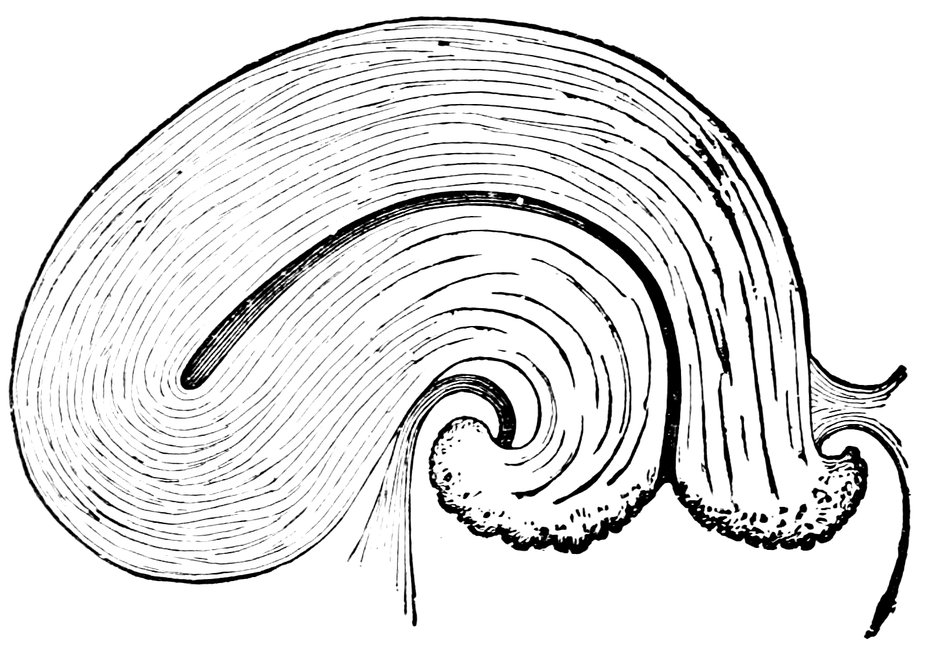
Fig. 79.—Ectropium in a Case of Bilateral Laceration of the Cervix. After A. Martin.
Duncan goes so far as to maintain that no actual or suspected local disturbance has such significance in connexion with the doctrine of sterility as spasmodic dysmenorrhœa. It possesses this significance owing to the probable connexion between the dysmenorrhœic neurosis and the outflow of the semen, the deficiency of the sexual impulse and of sexual pleasure, and other disturbances of sexual excitement during coitus. With the relief of the dysmenorrhœa, we have, Duncan holds, made a long stride towards the cure of the sterility. Among 332 married women who were absolutely sterile, Duncan found 159, nearly half of the total number, who were affected with spasmodic dysmenorrhœa.
515Burton, in order to ascertain with certain beyond question whether stenosis of the external or internal os gives rise to dysmenorrhœic troubles, examined six women during menstruation and at the time when they were experiencing the greatest pain; he found in no one of them any trace of narrowing of the canal. Owing to the congestion that occurs at this time, the uterus becomes erect, and any moderate flexion that may exist is temporarily straightened. In all the cases, the sound could be passed with extreme ease.
Ectropium of the lips of the cervix (“granular erosion”) constitutes a hindrance to conception which is by no means rare; the condition is due to deep lateral lacerations of the cervix. The gaping of the cervical canal arising from such old-standing, often overlooked, cervical lacerations and from the parametric scars associated therewith, causes various irritative manifestations: blenorrhoea, blennorrhagia, cystic degeneration of the mucous membrane, and these secondary conditions may be contributory causes of sterility; but lacerations of the cervix with ectropium interfere in a manner purely mechanical with the proper constitution of a receptaculum seminis and with the aspiration of the semen into the cervical canal. (Fig. 79.) In an earlier section of this work I laid stress on the fact that in the act of conception the musculature of the cervix had in a sense an active part to play; and the proper performance of this role is prevented by cervical lacerations. The cervical glands also suffer in cases of ectropium, and their function in facilitating the entrance of the spermatozoa into the uterine cavity is no longer properly performed. Finally, it is worthy of note that sexual gratification, the sensation of voluptuous pleasure during the sexual act, seems to be diminished in women with cervical lacerations, a fact noted especially by Mundé and Ill. The last-named found that in 34 women thus affected, sexual gratification was no longer experienced in intercourse; whilst in 27 of these cases, restoration of the integrity of the cervix by operation was followed by return of normal sexual feeling. In women who have given birth to one or two children, and then for a long time have remained barren, we not infrequently find deep cervical lacerations. Breisky, Spiegelberg, Schultze, and Goodell have operated in such cases, and shortly after the operation pregnancy has recurred.
Displacements of the Uterus.
With less justice than in the case of the pathological changes in the cervix above described, it is maintained that displacements of the uterus form a very frequent cause of mechanical hindrances to conception, and thus give rise to sterility.
It certainly cannot be denied that displacements of the uterus are found very commonly in sterile women; and, on the other hand, 516among women with pathological flexion of the uterus, the percentage of the sterile is far higher than among women with a uterus normal in position and shape—but from these facts it would be erroneous to infer the general conclusion that displacements of the uterus offer a mechanical hindrance to conception. The casual connexion is less simple than this as a rule. In most cases in which displacements of the uterus are associated with sterility, there are additional pathological states of the uterus and its environment, relics of previous inflammation in the uterus, the uterine annexa, or the parametrium, or displacements of the uterine annexa; these changes may be either the cause or the result of the existing displacement of the uterus, and it is upon them, and not primarily upon the displacement, that the sterility depends. The accuracy of this view is proved by the experience, by no means an uncommon one, that in such cases, when the actual cause of the sterility is removed, the woman will become pregnant, although the displacement of the uterus persists.
How difficult it is, in a particular case, to determine whether the pathological anteflexion is the true obstacle to conception, or the antecedent parametritis posterior and the concomitant metritis and endometritis! How can we decide whether a retroflexion is the simple mechanical cause of sterility, or whether the latter condition does not rather depend upon complicating perimetritis and oophoritis?
On the other hand, we must not fly to the other extreme, and absolutely deny that a displacement of the uterus can be the mechanical cause of sterility. We meet with cases in which we are forced to assume that the flexion interferes both with the outflow of the menstrual blood and with the ingress of the seminal fluid. And this is true, not merely of flexion to an acute angle, often associated with infantile dimensions of the cervical canal or of the external or internal os, but also of those advanced degrees of flexion in which, doubtless in part also from the accompanying catarrh, complete stenosis of the os uteri externum has resulted. The combination of displacement of the uterus with stenosis of the cervix, is in these cases the essential hindrance to conception. When the os is reasonably large, a moderate flexion of the uterus forwards, backwards, or to one side or the other, will not often prevent conception, for the action of the muscular bands in the various ligaments of the uterus will retain the os in a sufficiently favourable position. But if a contracted os is associated with flexion, sterility is very likely; and almost inevitable, if fixation of the flexed uterus has occurred from inflammatory exudation and fibrosis in one of the broad ligaments.
That the belief that displacements of the uterus constitute an obstacle to conception is a widely diffused one, is shown by the fact 517that among certain nations a means employed for the prevention of pregnancy is the artificial production of displacements of the uterus.
Of the displacements of the uterus, the versions, anteversion, retroversion, and lateral version, have a more pronounced influence in hindering conception than the flexions; for, in the case of version of the uterus, the uterus moves as a whole round a horizontal axis, so that when the fundus moves in one direction, the portio vaginalis moves in the opposite. When the neck of the uterus is thus displaced, the tip of the glans penis fails during coitus to come into contact with the os uteri externum, as it normally should do, and passes into a vaginal cul-de-sac, in retroversion, the posterior fornix, in anteversion, the anterior fornix, and in lateral version the lateral fornix of the side opposite to that towards which the cervix uteri is directed. In high degrees of this malposition, the vaginal fornix covers up the os externum as with a valve. (Beigel.)
Von Scanzoni has especially insisted upon the frequency with which sterility results from chronic metritis complicated with anteversion. In 59 sterile women affected with chronic metritis, he found in 34 instances more or less pronounced anteversion, and hence was led to infer that this particular combination of disorders plays a great part in the production of sterility.
Especially frequent is sterility in cases of anteversion of the uterus, if in addition there is some contraction, even though moderate in degree, of the os uteri externum; this combination of disorders is one extremely unfavourable to the entrance of the spermatozoa into the uterus.
Flexion of the uterus offers less hindrance than version to the entrance of the spermatozoa, for the reason that in the former condition the relations between the vaginal portion and the glans penis during coitus are not affected. But when the flexion is extreme in degree, the cervical or uterine canal may at some point become absolutely impassable for the spermatozoa; and further, extreme flexion is apt to lead to the occurrence of parametritis and perimetritis. But, generally speaking, flexions of the uterus are far less often the cause of sterility, than was formerly supposed. It used to be believed that flexion of the uterus was followed by stenosis of the os uteri externum, by which the outflow of the menstrual blood and the ingress of the semen were equally prevented. It is true that infantile acute-angled flexion of the uterus is often associated with infantile stenosis of the cervical canal or of the internal or external os; and it is also true that extreme degrees of flexion associated with uterine catarrh, favour the occurrence of stenosis and obliteration of the external os; but B. Schultze rightly insists that in most of the cases in which a diagnosis is made of stenosis of the uterine canal associated with a flexion of the sexually mature uterus, the supposed 518“stenosis” merely represents the difficulty which has been experienced in passing the customary rigid uterine sound past the angle in the uterine canal. Still, the fact remains, that among women with uterine flexion there is a larger percentage of sterile individuals than among women whose uterus is normal.
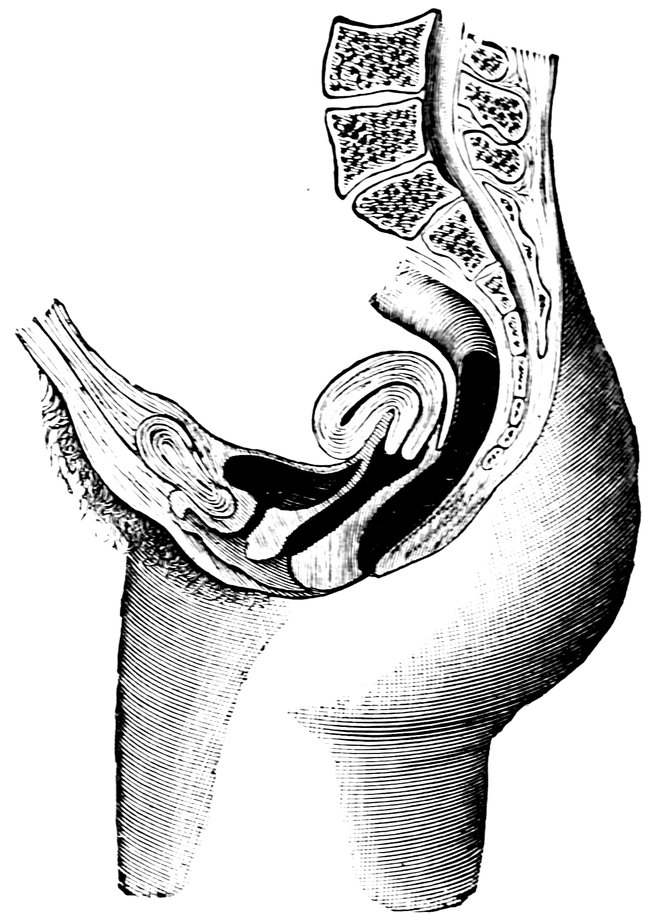
Fig. 80.—Anteflexio Uteri. After A. Martin.
As regards anteflexion of the uterus, either the congenital, uncomplicated anteflexion of the uterus, due to developmental anomaly, or the acquired form, due either to subinvolution of the uterus during the puerperium, or to parametritic or perimetritic processes,—may offer mechanical obstacles to conception, and thus give rise to sterility; sterility with anteflexion occurs especially in cases in which the anteflexion is dependent upon parametritis posterior, associated with metritis and endometritis, or when any other complication is present to make the flexion a severe one. In some sterile women, we find anteflexion associated with supravaginal elongation of the portio, and in such cases both states would appear to result from catarrh of the uterine mucosa. How frequent is the combination of anteflexion of the uterus with sterility, is shown by the figures published by Sims, who in 250 cases of congenital sterility found 103 cases of anteversion, and in 255 cases of acquired sterility found 61 cases of anteversion.
519Fritsch writes in the following terms regarding the difficulty with which impregnation is effected in women suffering from anteflexion of the uterus: “In cases of anteflexion of the uterus, the vagina is remarkably long, the portio vaginalis often badly formed; the ejaculated semen flows away rapidly from the contracted vagina, without, perhaps, ever coming into contact with the portio vaginalis.” He states it as a fact that women with anteversion conceive less readily than those with retroversion of the uterus (when this latter is moderate in degree); for in slighter degrees of retroversion, the axis of the uterus is a continuation of the axis of the vagina, so that the orifice of the male urethra and the os uteri externum will be in contact during intercourse—more especially because in such cases, owing to the portio vaginalis being low in the pelvis, the vagina is short; in cases of anteversion, on the other hand, the cervix is high up, and the vagina is long and narrow. Fritsch considers that generally speaking the fact that the internal or the external os is small is of little importance; but the serious factors, those leading to sterility in cases of anteversion—apart from all other considerations—are the unfavourable high position of the portio vaginalis, the occlusion of the os by the close application of the posterior vaginal wall, and the presence of glutinous mucus in the cervical canal. Since in cases of anteflexion we very commonly find hypersecretion of the uterine mucous membrane, whilst, owing to the narrowing of the external os, the mucus is unable to flow freely away, but accumulates and becomes inspissated, we have the uterine mucous membrane covered with a tenacious coating, which may perhaps render the implantation of the ovum a very difficult matter, even though the upward passage of the spermatozoa be still possible. The clinical association of pain produced by drawing forward the portio vaginalis, with marked anteflexion of the uterus, dysmenorrhœa, and sterility, is a strikingly common one.
Schröder points out that, although sterility is common in cases of anteflexion, cases are yet seen in which, notwithstanding the existence of extreme anteflexion, conception occurs very speedily after marriage. The fact that in cases of anteflexion we have difficulty, not impossibility, of conception, explains how it is that of two women suffering from anteflexion of the same severity, one will readily become pregnant, whilst the other remains permanently barren.
Retroversion and retroflexion offer obstacles to conception chiefly in cases in which this displacement is a congenital anomaly, or when it has developed immediately after puberty; or when complications exist, especially when the retroflexed uterus is fixed by exudation. In nulliparae, these deviations backwards will not rarely be found to be the cause of the sterility. Much less often does sterility ensue 520when retroversion or retroflexion occurs in women who have already given birth to several children, i. e., when the displacement is a puerperal disorder; the reason why such cases are not often sterile, is to be found in the fact that the wide cervical canal favours the passage of the spermatozoa, and the softness of the tissues prevents any serious obstacle to their upward progress being offered at the angle of flexion; on the other hand, severe retroflexion in a woman who has not yet borne a child offers a serious hindrance to conception, on account of the smallness of the cervical canal, and the sharp flexion of the more rigid uterus.
In general, then, retroflexion can be regarded as offering but a slight hindrance to conception. In fact, many women with retroflexion become pregnant again and again, and may abort several times in a single year. When in parous women suffering from retroflexion, sterility ultimately occurs, B. Schultze considers that it is not the retroflexion which is primarily to blame, but rather the secondary consequences so common in this disorder: uterine catarrh; the general constitutional debility due to such catarrh, and to the accompanying menorrhagia; perimetritis, and oophoritis.
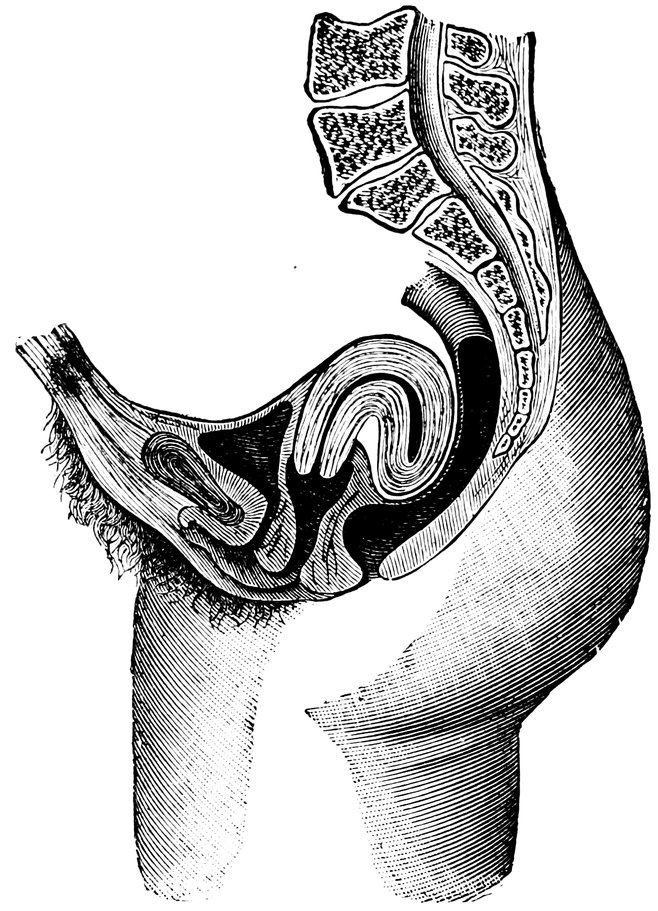
Fig. 81.—Retroflexio Uteri. After A. Martin.
Retroflexion and retroversion of the uterus occur chiefly in women who have previously given birth to children; the bend is commonly 521obtuse or right-angled, and above the upper end of the cervical canal; sterility in such cases, usually acquired, has a favourable prospect of cure. As Kehrer points out, sterility appears to be constant only in cases of retroflexion in which the uterus is fixed; the reason probably is that by the backward inflexion of the uterus the abdominal orifice of the Fallopian tube is dragged away from the ovary, and thus the ovum, when it is discharged from the follicle, fails to find its way into the tube.
Among 57 cases of retroflexion of the gravid uterus, E. Martin found that in 6 the patient was pregnant for the first time, from which it may be inferred that the anomaly existed prior to the occurrence of conception.
That in some cases of sterility it is the retroflexion of the uterus that is to blame, is shown very clearly ex juvantibus, inasmuch as reposition of the uterus and maintenance of the organ in its proper position relieves sterility perhaps of long standing, together with all the other troubles secondary to the displacement of the uterus. As an example, I quote one case from among several of the kind of which I have notes. Mrs. N., 25 years of age, married 6 years, childless, suffers from severe dyspeptic troubles, leading to emaciation and profound depression. She has been treated fruitlessly for gastric catarrh, but has not previously been subjected to gynecological examination. I insisted on making such an examination, and found the uterus somewhat enlarged and completely retroflexed. The successful replacement of the organ was followed by the cessation of the previously constant vomiting after meals, and by the disappearance of the other dyspeptic troubles; shortly afterwards the lady became pregnant, and pregnancy ran a normal course. Since then, she has had three children; there has been no recurrence of the dyspepsia.
According to Sims, retroversion of the uterus is frequently associated with sterility. Among 250 married women who had never been pregnant, we found no less than 68 cases of retroversion; among 255 women who had had one or more children, but had then ceased to be fruitful, he found 111 cases of retroversion; and in some of these cases the retroversion was uncomplicated. Grenser and Vedeler also found retroflexion to be a common cause of sterility; the last-named, examining 7 nulliparous married women, found retroversion in 5; in these cases, however, there was associated disease of the uterus or of its environment.
Inversion of the uterus, even in the minor degrees of the affection, in which coitus is still possible, almost invariably causes sterility, owing to the occlusion of the uterine orifices of the Fallopian tubes. Moreover, in inversion of the uterus, the position assumed by the os uteri externum is such as to render the entrance of the semen 522almost impossible. Finally, when the uterus is inverted, the mucous membrane undergoes changes which render it unfit for the implantation of the ovum; the researches of P. Ruge show that it is thinned and that the epithelium is cast off and replaced by granulation tissue. In cases in which the inverted uterus has long projected through the genital fissure, its surface becomes covered by a multilaminar pavement epithelium; at the same time, the glandular apparatus undergoes atrophy, only the fundi of the glands being preserved, and the muscular substance is hypertrophied. None the less, in exceptional cases, which have been reported by Emmet, Macdonald, and Tyler-Smith, pregnancy has occurred after long-enduring inversion of the uterus. Lauenstein had a patient in whom an inverted uterus was replaced after a year and a half; the following week she became pregnant. Stevens saw a case in which the woman became pregnant six months after the reduction of an inversion of the uterus of nine months’ standing.
Prolapse of the uterus is seldom the cause of sterility, inasmuch as during coitus replacement of the organ is effected. It may even be said that in cases of prolapse, the low position of the uterus and the enlargement of the os uteri externum, favour the direct ejaculation of the semen into the cervical canal (likewise enlarged), and that thus the conditions are advantageous for impregnation. In fact, conception more commonly occurs in cases of prolapse than might have been anticipated in view of the various consecutive disorders apt to complicate this affection—chronic metritis and endometritis, erosion, hypertrophy of the cervix, displacement and laceration of the annexa, etc. The extent to which the capacity for conception is unfavourably affected in cases of prolapse of the uterus, is proportional to the amount of descent undergone by the uterus, for the nearer the os approximates to the vaginal orifice, the farther removed from the os will be the point at which the semen is ejaculated. In cases of complete prolapsus it has happened that coitus has been effected directly through the everted os uteri, and has resulted in conception; a case of this kind is reported by Hervey.
Unbiassed gynecological experience in no way supports the views of Sims and Hewitt regarding the frequency with which displacements of the uterus constitute mechanical causes of sterility. Sims supports his views with the figures previously quoted, from which the following table is compiled:
No. of cases. Anteversion. Retroversion. Total cases of displacement.
First class 250 103 68 171
Second class 255 61 111 172
Totals 505 164 179 343
523From this it appears that in the 1st class, among 250 married women who had never given birth to a child, there were 103 cases of anteversion, and 68 cases of retroversion; whilst in the 2nd class, among 255 women, who had had children, but for one reason or another had become unfruitful earlier than the natural age for this occurrence, there were 61 cases of anteversion, and 111 cases of retroversion.
The general result of these figures is to show that two-thirds of all sterile women, without regard to the especial cause of the displacement, suffer from one form or the other of uterine displacement, and that the relative frequency of anteversions and retroversions is reversed in the two classes, the nulliparous married women, and the married women previous parous but latterly become sterile, respectively.
Hewitt similarly regards malpositions of the uterus as frequent causes of sterility. He analysed 296 cases of flexion and version of the uterus treated by him at University College Hospital during the years 1865 to 1869, partly in the wards, and partly in the out-patient department. Of these 296 women, 235 were married; 100 were cases of retroflexion, and 135 were cases of anteflexion. Of the 235, 81 had had no full-term children, 57 of the 81 having never been pregnant, and the remaining 24 having had miscarriages only. Of the remaining 154, married and parous women, a large proportion were sterile at the time when they applied for treatment; though in the years immediately after marriage they had given birth to one or more children, they had subsequently ceased to be fruitful.
All that these figures prove to an unbiassed judgment is, however, that displacements of the uterus are apt to render conception difficult; or that, in addition to other pathological states of the pelvic organs, they are frequently met with in sterile women—but in and by themselves, displacements of the uterus do not offer any very serious or very frequently occurring obstacle to conception.
That conception is possible in spite of the very notable mechanical hindrances which certain displacements of the uterus may offer to the occurrence of pregnancy, is shown by many striking examples in gynecological literature. Winckel, Olshausen, and Holst have all seen pregnancy occur in women who at the time of conception were wearing intra-uterine pessaries; and von Scanzoni has published cases in which fertilization took place, notwithstanding extreme anteversion which stenosis of the os uteri, and in another instance, notwithstanding the presence of a polypus filling the external os.
Myoma of the Uterus.
Among the mechanical obstacles to conception which act by preventing or rendering difficult the contact of spermatozoon and 524ovum, must be enumerated uterine myomata, and these must therefore be included among the causes of sterility.
According to their number, their size and their situation, uterine myomata give rise to different and manifold mechanical disturbances. When there are numerous intramural myomata, even when these are of a moderate size, the uterine cavity becomes bent and narrowed, and retention of the secretions may ensue, often lasting for a lengthy period. Submucous fibromyomata, when situated low down, near the internal os, may occlude this orifice completely; when implanted higher up in the uterine cavity, they are apt to cause flexion of the uterus; large, pedunculated fibromyomata of the uterus may descend into the vagina and narrow this passage.
Myomata interfere with conception in very various ways. Mechanically, they may occlude the uterine orifices of the Fallopian tubes, or may give rise to displacement of either tubes or ovaries, or, again, by blocking the uterine cavity, they may hinder the descent of the ovum and the upward passage of the spermatozoa; their presence may cause catarrhal disease of the uterine mucous membrane, or give rise to profuse hemorrhage, and either of these secondary changes may interfere with the implantation of the ovum; and there is yet another way in which myomata may interfere with conception, and give rise to sterility—this is a subject to which especial attention has been given by Winckel, and to which we may here most conveniently allude. The continued growth of small submucous myomata often gives rise to a hyperæsthetic state of the genital organs analogous to vaginismus, and this interferes with coitus. Large myomata, on the other hand, give rise to catarrhal states of the uterine cavity and to hyperplasia of the mucous membrane, constituting hindrances alike to conception, and to the implantation and further development of the embryo if fertilization should be effected; moreover, the growth of large myomata often causes perimetritis, perisalpingitis, and perioophoritis, and these, partly by abnormal fixation of the uterus, and partly by closing up the tubes and so thickening the tunics of the ovary as to prevent the rupture of the graafian follicles, give rise to sterility.
The existing statistics regarding the relation of the growth of myomata of the uterus to fertility, incomplete as they are and lacking in exactitude, suffice nevertheless to show that the fruitfulness of women suffering from uterine myomata is notably diminished by the growth of these tumours; more particularly, we learn that whilst the number of women with uterine myomata who have one child is sufficiently large, the number of multiparae thus affected falls greatly below the average of fertility. A characteristic feature of the influence of myomata in producing sterility is clearly shown by the statistics, inasmuch as pregnancy is comparatively 525common in the case of women with subserous myomata, in whom the uterine cavity and mucous membrane are as a rule least affected, whilst fertility is far more seriously impaired in the case of women with submucous myomata.
West, in the case of 43 married women with myomata of the uterus, found 7 childless; the remaining 36 had in all given birth to only 61 children, and 20 of these had only one child each. Of Beigel’s patients, 86 married women with uterine myomata, 21 were sterile; of McClintock’s 21 patients similarly situated, 10 were sterile. Von Scanzoni’s investigation showed 38 sterile women among 60 married women suffering from myoma uteri; Michel, 26 sterile among 127; Winckel, 134 sterile among 415. From a table showing the number of children born to each of 108 women with myoma uteri of whom 46 were observed by Winckel, and 62 were in Süsserott’s collection, it appears that on an average 2.7 children were born to each woman thus affected, whereas in Saxony the average number of children born to each married woman is 4.5.
Many other gynecologists have published statistics regarding this matter, Gusserow, Röhrig, Schröder, E. von Flamerdinghe, and others, some of them dealing with a very large number of cases, and all show that 30% and upwards of married women with uterine myomata remain sterile.
On the other hand, Hofmeier maintains, in opposition to the prevailing view, that in the great majority of cases myomata are not to be regarded as giving rise to sterility. His investigation embraced 313 persons, of whom 25% were unmarried, and 75% married, and of these latter, 25 to 30% were sterile. (It must be pointed out that compared with the average percentage of sterile marriages—about 10%, this figure of 25 to 30% is a very high one.) From a comparison of the age of the sterile married woman with the duration of married life in each case, Hofmeier is led to believe that it is not the myomata which have exercised an influence unfavourable to fertility, and that the occurrence of sterility in these cases is referable to other causes. The origination of myomata he regards as etiologically independent of the exercise or non-exercise of the sexual act. The apparently overwhelming preponderance of the occurrence of myomata in unmarried and in sterile married women is, he thinks, to be explained by the fact that unmarried women and nulliparous married women seldom have occasion to consult a gynecologist, but that the one condition that renders it necessary for them to do so is the growth of a uterine myoma. Generally speaking, pregnancy seldom occurs after the age of 35 years, precisely the age at which the growth of uterine myomata begins to be common. If, however, at this comparatively late age pregnancy does occur, it is so often found to be complicated 526by the presence of a uterine myoma, that Hofmeier is even led to infer that the presence of such a tumour must have a certain favouring influence upon the occurrence of conception; the facilitation of conception in these cases he explains by the fact that the growth of the tumour renders the blood-supply of the whole reproductive apparatus more active than is normally the case, and protracts the duration of ovarian activity.
Diseases of the Vagina and the Vulva.
Various pathological states of the vagina and vulva may cause incapacity for fertilization by rendering copulation impossible. Such states may be either congenital or acquired.
In rare cases the hindrance consists in abnormal smallness of the vulva, but this condition is usually associated with other defects in development of the reproductive organs, which combine to give rise to sterility. Congenital adhesion of the labia minora and majora is sometimes met with, with or without atresia of the urethral orifice, the connexion between the labia may be superficial and epithelial merely, as in a case recorded by Ziemssen; or the labia may be firmly united throughout their whole thickness. Much less common is acquired adhesion of the labia, causing atresia vulvae, and rendering coitus difficult or entirely impossible. Various other abnormalities of the reproductive organs which may give rise to sterility have already been described in the section on the pathology of cohabitation, these are: abnormalities of the hymen; anomalous formation and hypertrophy of the labia; excessive size of the clitoris; anomalies of the vagina, its absence, stenosis, atresia, duplication, and abnormal termination.
More detailed mention must, however, be made here of vesico-vaginal fistula as leading to sterility. Such a fistula is rightly regarded as one of the conditions preventing conception, but it does not render the occurrence of pregnancy absolutely impossible. It will readily be understood that the unpleasant symptoms commonly met with in these cases, will be apt to deprive both husband and wife of inclination toward sexual intercourse; again, apart from this psychical influence, the functions of the female reproductive apparatus are commonly disturbed to a very serious degree by the existence of a vesico-vaginal fistula; and, finally, the unfavourable influence of the urine on the semen must also be taken into consideration, for, as an acid fluid, the urine will notably check the activity of the movements of the spermatozoa—still, notwithstanding all these unfavourable influences, conception will sometimes nevertheless occur in such cases. But of those who acquire a vesico-vaginal fistula as the result of a difficult labour, a very small proportion only will again become pregnant.
527Freund draws attention to Simon’s experiences, reminding us that the latter, in his cases in which women with vesico-vaginal fistula become pregnant, invariably saw the pregnancy terminate in abortion or premature labour; but still, Freund quotes also a case of Schmitt’s, and mentions another of his own, showing that this premature termination of the pregnancy is not absolutely inevitable in such circumstances. Schröder, indeed, goes far in the opposite direction, and writes: “Such women not rarely become pregnant, and their pregnancy usually runs a normal course.” Kroner made a statistical investigation of the question, and found that of 60 women suffering from vesico-vaginal fistula, 6 became pregnant during the persistence of the fistula. Winckel reports a remarkable case in which, after the ordinary means of curing the fistula had been vainly tried, transverse obliteration of the vagina was undertaken; the operation was not completely successful, as a small passage remained patent; the patient returned home for a time, and became pregnant, the spermatozoa having found their way through this passage. Simon reports another noteworthy case, that of a woman 57 years of age, with a vesico-vaginal fistula close to the external os; during the 26 years the fistula had lasted she had complained of cessatio mensium; when the fistula was closed by operation, she again began to menstruate.
Sometimes we meet with abnormalities of the vagina—not strictly speaking morbid states—which, though they may not at first sight appear to be of much significance, yet suffice to render conception difficult, or even impossible. One of these conditions is extreme shortness of the vagina, leading to the formation of a “poche copulatrice” (Courty), in which during coitus the semen is ejaculated at a distance from the os uteri externum; another is excessive length and width of the vagina; another, some displacement of the vagina which diminishes the prospect that the semen will enter the cervical canal. Such vaginal false passages, “fausses routes vaginales,” have been described more especially by Pajot as causes of sterility.
Another cause of sterility is the rapid outflow of the semen after coitus, either in consequence of dyspareunia, or on account of some abnormality in the configuration of the vagina, or, finally, owing to deficient action of the constrictor cunni (or bulbocavernosus muscle) and the muscles of the pelvic diaphragm. In cases of profluvium seminis, the woman herself will often call the physician’s attention to the defect.
Many cases of sterility depend upon a cause the recognition of which in this connexion is comparatively recent, namely, the hermaphroditism of the person concerned. Witness the following case described by Dohrn: The individual had been baptised and brought 528up as a girl. At the age of twenty years she began to suffer from a distressing sensation of pressure, recurring at intervals of four weeks. A local examination was made by a physician, who assured the mother that “there was no hindrance to menstruation, but that when she married an incision would become necessary.” After a time she became engaged and was married; and shortly afterwards her husband demanded a renewed gynecological examination. This was undertaken by Dohrn, who declared that the supposed girl was of the male sex. The external reproductive organs had the feminine form. The labia majora were large and well-formed; in the anterior extremity of each labium was a rounded, sensitive, soft body, of the size of a large bean, which was capable of being drawn forwards towards the abdomen; the labia were beset with muscular fibres; the clitoris was 4 cm. (1.6 in.) in length, resembling an imperforate infantile penis, it was slightly erectile; in the vestibule there were two openings, the anterior of which was the urethra, the posterior led into a blind passage 2 cm. (0.8 in.) in length, representing the fused lower extremities of the ducts of Müller; per rectum no trace could be found of vagina, uterus, or ovaries, but also no trace of prostate. The marriage, in which this individual declared himself to be happy, was annulled. Leopold observed a similar case, in which the individual had lived as a wife for the space of 25 years. Another striking case is recorded by Steglehner. As Zweifel remarks, to decide the true sex of such individuals is often extremely difficult. “At the present day, indeed,” he continues, “it is no longer the fate of those who from no fault of their own have had imposed on them the name and upbringing of another sex than that which is truly theirs, and who have thus been led to contract marriage with one who in reality is of their own sex, to be treated with the horrible injustice which was meted out to them in the middle ages, when, as we learn from contemporary writers, they were haled before the bar of “ecclesiastical justice,” charged with profaning the sacrament of marriage, and threatened with death at the stake—but even now a mistake in the decision of an infant’s sex entails in later life a thousand distresses and inconveniences.”
Recently, Neugebauer has made as complete a collection as possible of all the recorded cases of hermaphroditism.
Secretions of the Genital Organs.
The constitution of the secretion of the vaginal mucous membrane, or of the secretion formed in the cervical canal, or both of these in combination, may constitute hindrances to the normal contact of spermatozoon and ovum.
529The secretions of the female genital organs are manifold. The outer surface of the labia majora is covered with skin, containing sebaceous and sweat glands; but the inner surface of the labia majora and the rest of the external genital organs are covered with mucous membrane, the outer stratum of which consists of stratified pavement epithelium; this epithelium contains sebaceous glands and mucus glands. The intermixture of the secretions of these glands with the epithelial scales which are constantly being cast off in large numbers, constitutes the whitish material with which this region is smeared, known as “smegma.” A mucus secretion of a fluid consistency is discharged from the vulvo-vaginal glands known by the name of Bartholin’s glands.
The mucous lining of the vagina is poor in glands; it contains very numerous papillæ, which do not, however, project from the surface of the membrane, since the depressions between the papillæ are filled in by the stratified epithelium with which the entire extent of the vaginal mucous membrane is covered. The secretion of the vaginal mucous membrane is a fluid of thin consistency with an acid reaction; the admixture of numerous morphological elements, in the form of epithelial cells cast off from the superficial layers of the stratified epithelium, often, however, makes the vaginal secretion thick and opaque. The epithelial lamellae are frequently covered with heaps of lepthothrix granules, and among the granules are seen vibriones and bacteria and also numerous lepthothrix threads of varying length.
The same stratified epithelium extends on to the neck of the uterus to a distance which varies in different individuals; gradually, however, the number of layers diminishes, the flattened cells give place to thicker, prismatic cells, until we have a single-layered prismatic epithelium; finally the cells become columnar and ciliated, and this columnar ciliated epithelium covers the whole of the interior of the uterus. The mucous lining of the cervical canal contains numerous mucous glands, some of which are simple tubular glands, whilst others are racemose; they are lined with columnar ciliated epithelium, and secrete a dense, gelatinous, alkaline mucus, containing a few epithelial cells and occasional leucocytes. The mucous membrane of the uterine cavity is beset with simple tubular glands, lined with a single layer of prismatic epithelium; these glands secrete a grayish alkaline fluid. The secretion formed in the uterine cavity is thinner in consistency than that formed in the cervical canal.
Normally, the secretion of the vaginal mucous membrane is not more than is sufficient to keep the surface of the canal moist and slippery; it is a thin fluid of an acid reaction, and almost as clear as water. Shortly before and after menstruation, the secretion of 530the vaginal mucous membrane becomes more abundant; it is even thinner than at other times; the reaction remains acid. The secretion of the cervical canal is normally, in the absence of sexual intercourse, small in amount, so that a free flow of secretion from the os uteri externum is by itself sufficient to indicate that the mucous membrane of the canal is in an abnormal condition. The vitreous, gelatinous, alkaline mucus secreted by the glands of the cervical canal is normally retained within the canal, and is seen on examination with the speculum to fill the os uteri externum. In consequence of the congestion of the uterus that occurs during menstruation, and for the same reason during sexual excitement, the secretion of the cervical canal is more abundant, it also becomes less tenacious, and flows out through the os into the vagina. But this evacuation of the cervical secretion through the os is a normal occurrence only during menstruation and as a result of sexual intercourse; in these circumstances it appears in the form of a clear or somewhat yellowish drop of fluid exuding through the os uteri externum.
In catarrhal states, the secretions of the genital passage, like those of other mucous membranes, become abnormal. There is an increase in the number both of epithelial elements and of leucocytes; and in very acute catarrhs, erythrocytes also mingle with the secretion. On microscopical examination we find that the catarrhal secretion differs in its characters according to the part from which it is derived: the mucus from the cervical canal forms gelatinous accumulations; that from the vaginal mucous membrane forms thick opaque masses; and in the mixed secretion which exudes from the vulva, we find also smegma from the external genital organs. In addition to cells from the laminated epithelium, we see often young cells, somewhat oval or polyhedral in form, with granular protoplasm, and a vesicular nucleus. In some inflammatory states, pus corpuscles will also make their appearance. Various micro-organisms are in addition to be found in the catarrhal secretions.
The reaction of the vaginal secretion is normally faintly acid; should it become strongly acid, the movements of the spermatozoa are immediately suspended. The mucus of the cervical canal, the alkaline reaction of which is extremely favourable to the onward movement of the spermatozoa, may, owing to catarrhal processes, be so altered that it becomes acid; it then destroys the spermatozoa, and gives rise to sterility. This fact can sometimes be proved by microscopical examination. In several cases in which endometritis existed in sterile women I made a microscopical examination of the cervical mucus shortly after the completion of sexual intercourse; and in a number of these, no living spermatozoa were to be seen, but only dead, motionless spermatozoa (Fig. 82). I had, of course, 531in these cases, previously assured myself that the husband’s semen was normally active.
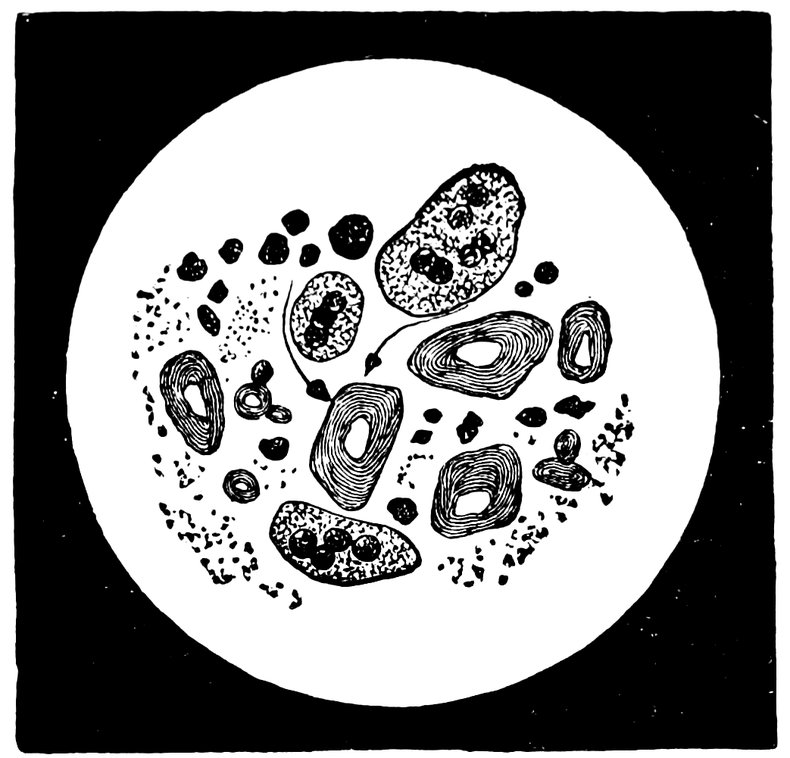
Fig. 82. Mucus from the Cervical Canal, taken one hour after sexual intercourse, from a woman suffering from chronic endometritis. Among the epithelial cells, pus cells, and finely granular masses, we see a few motionless, dead spermatozoa.
According to Nöggerath, in cases of uterine catarrh, we may find one of three different varieties of secretion. In some cases it is small in amount, and very thin in consistency; in others, it is moderate in amount, very thick, non-transparent, bright yellow, and gelatinous in consistency; in the third class of cases, we have numerous degrees of variation, starting from the normal, purely mucus, transparent secretion, mixed with yellow flocculae, up to a secretion which has almost the aspect of pure pus. The first described variety is, according to Nöggerath, met with chiefly in women whose uteri are small, with indurated tissues, and its discharge seems to depend upon commencing atrophy of the mucous membrane. The second form is the most obstinate, the catarrh being situated chiefly in the cervical and probably also the uterine glands; whereas the first variety of secretion is rather a serous transudation, and contains very few formed elements. The third form is characterized by extensive denudation of the superficial epithelium, and is mixed with a smaller or larger quantity of pus.
Levy, who made microscopical examinations in sterile women (39 cases), gives it as a “constant fact” that when the cervical secretion contains epithelial and pus cells in large quantities, the spermatozoa never retain for long their power of movement. Whereas in examinations made repeatedly on healthy women 25 hours after sexual intercourse, he found numerous spermatozoa 532still in active movement, in women having a catarrhal discharge with the characters just mentioned, five hours after intercourse the movements of the spermatozoa had almost entirely ceased.
Not only may the secretions of the genital passage be injurious to the spermatozoa by their quality, but further a very abundant secretion may interfere with fertilization. In the first place a very abundant secretion is apt to be very dilute, and if the spermatozoa are immersed in a fluid of which the specific gravity is too low, they swell up from imbibition of water, and their movements are suspended. But excessive secretion, such as is sometimes met with in cases of cervical catarrh, may also have a purely mechanical deleterious action, by washing away the semen out of the vagina. If, again, the quantity of the ejaculated semen is unusually small, contact with the normally acid vaginal mucus may suffice to render the spermatozoa speedily motionless. Finally, when the cervical secretion is of a too tenacious consistency, so that it fills the os as with a plug, the upward passage of the spermatozoa may be barred.
Such tenacious cervical mucus will give rise to sterility especially in women who have not previously born children; whereas in parous women, owing to the more patulous condition of the os, the entrance of the spermatozoa is not so effectually prevented. The same distinction between nulliparous and parous women must be made, as von Scanzoni has pointed out, also as regards the production of sterility by hypersecretion of uterine mucus. Women who become affected with uterine blenorrhoea only after having had one or more children, will readily become pregnant again; but when such blenorrhoea affects a woman who has never been pregnant, sterility almost invariably results.
Von Grünewaldt has drawn attention to a somewhat rare form of chronic endometritis with tenacious secretion, leading to sterility. The shape, size, and consistency of the uterus appear normal, the organ is often virginal, but with the speculum we see exuding from the os a greyish green, extremely tenacious secretion, which is wiped away with difficulty. He saw 24 women affected with this disease; 10 of these had lived in marital intercourse for many years without ever having become pregnant; in 10 others there was acquired sterility, i. e., they had at first borne children after marriage, but had subsequently ceased to be fruitful; in the remaining 4 it was not possible to ascertain whether they were fruitful or sterile, since two of them were living apart from their husbands, whilst in the case of the other two only two years had elapsed since the birth of the last child. In any case, not one of the women thus affected had ever become pregnant subsequent to the time at which she acquired this form of endometritis, notwithstanding the fact that in several of the cases the symptoms were alleviated by treatment.
533We must here consider also the effect of gonorrhoeal infection in giving rise to sterility in women. Sterility may arise from gonorrhoea in women in various ways. Sometimes the abundance of the cervical secretion is alone sufficient to prevent the entrance of the spermatozoa into the uterus; in other cases the hindrance to fertility depends upon the inflammatory conditions in the pelvis that so frequently result from gonorrhoeal infection—perimetritis and parametritis; it may be catarrhal changes in the tubes—salpingitis, hydrosalpinx, and pyosalpinx—by which the contact between spermatozoon and ovum is prevented. Chronic gonorrhoeal endometritis may give rise to such changes in the uterine mucous membrane as to unfit it permanently for the implantation of the ovum, even should there be no obstacle to fertilization. Finally, double gonorrhoeal oophoritis may result in rendering the formation of mature ovum an entire impossibility—bringing about a condition analogous to azoospermia in the male, and causing absolute sterility. Although in many cases the detection of the gonococcus affords indisputable evidence of the existence of gonorrhoeal infection, it must be remembered that it is often difficult, and sometimes entirely impossible, to make the diagnosis with certainty; and for this reason it is possible that gonorrhoeal infection plays a much larger part in the causation of sterility than has until lately been believed.
The observant physician will in cases of sterile marriage frequently find in husband or wife or both, evidence of previous or still existent gonorrhoea; but he will cautiously weigh all the circumstances before deciding that such gonorrhoeal infection is the efficient cause of the sterility. In many cases, however, the etiological relation is too obvious to be overlooked, and we can trace all the distresses of the unfortunate wife to the injury she unwittingly received upon the momentous wedding night.
Still, we have to remember how extraordinarily common, more especially in the so-called upper classes of society, is gonorrhoeal infection, and what an enormous percentage of men entering upon married life have previously experienced one or more attacks of the disease—so that were sterility a frequent sequel of such infection, fertility would be the exception rather than the rule. By inquiry among friends and patients as to whether when they married they had previously suffered from gonorrhoea, in conjunction with information regarding the fruitfulness of their marriages, I have been led to the conclusion, which appears to me to be one of considerable importance, that the proportion of sterile to fruitful women among the wives of men who have suffered from gonorrhoea before marriage, is about the same as the proportional fertility of all marriages considered independently of gonorrhoeal infection, viz. 1 : 10. This 534depends, as it appears to me, not only upon the fact that very frequently in men gonorrhoea is completely cured, but also upon the fact that in women gonorrhoeal infection does not necessarily cause sterility. It may indeed be regarded as definitely established that women actually suffering from gonorrhoea may become pregnant, and that the pregnancy may proceed to its natural termination. The recent investigations regarding the frequency with which gonococci may be detected in the genital secretions of pregnant and parturient women—and they are to be found in a surprisingly large percentage—suffice to prove that gonorrhoeal infection offers no insuperable obstacle to conception. That the discovery of gonococci in a man’s urethra does not justify us with apodictic certainty in forbidding the man thus affected to marry is in fact proved by the following remarkable case, which came within my own experience. A young man who had had several attacks of acute gonorrhoea, wishing to marry, had himself examined by two specialists in genito-urinary disease. Both detected gonococci in his urethra, and both forbade him to marry. The patient, however, would not be advised, and married the lady of his choice; now, six years after marriage, he is the happy father of four blooming children, and his wife is in perfect health.
Gosselin, in an elaborate work published in 1853, was the first to point out the serious consequences as regards a man’s future potentia generandi which are entailed by an attack of gonorrhoea followed by epididymitis. He insisted that the inflammation might lead to the obliteration at some point of the vas deferens, whereby the secretion of the testicle was prevented from mixing with the secretions of the prostate, Cowper’s gland, and the seminal vesicle; and hence the ejaculated sperm was lacking in its principal constituent. In such cases, either in the epididymis (usually in the globus minor of that organ), or else in the course of the vas deferens, somewhere between the epididymis and the vesicula seminalis, some relic of the former inflammation is usually to be detected, the globus gonorrhoeicus, and this usually represents the seat of strangulation of the excretory duct of the testicle.
In the year 1872 Nöggerath published his book, written with flaming fiery zeal, entitled “Latent Gonorrhoea in the Female Sex.” In the most startling colours he depicted all the misery and distress which formed the wedding gift of the gonorrhoea-infected husband to his wife; when sowing his wild oats, such a husband is preparing for the crop by which his young wife’s happiness is destroyed, her health ruined, her life endangered, and her hopes of offspring annulled. While we may admit that Nöggerath’s motives were of the noblest, we cannot but wonder that the wickedness of the male sex has not yet entailed the destruction of the whole human race, overwhelmed as by a new fall of Sodom and Gomorrah.
535Nöggerath maintained that 90% of men infected with gonorrhoea remained uncured; and that of the women married by men thus permanently infected with gonorrhoea, barely 10% remained free from the disease. It is gonorrhoeal infection, of which this author gives so gloomy a picture, which is, in his opinion, the principle cause of sterility in women. According to his observations, of 81 women thus infected, 49 remained absolutely sterile; only 31 became pregnant; 23 were delivered at full term, 3 had miscarriages, and 5 premature delivery. Thus, not so many as 1 in 3 of these women had a full-time child. Of the 23 who were delivered at full term, 12 never had more than 1 child each; 7 had 2 children each; 3 had 3 children each; 1 only had 4 children, the normal average fruit of healthy marriages. In all, the 81 women had only 39 children. If we take 4 to be the average number of the offspring of a healthy married pair, there was but one normal woman among the whole 81. Forty-nine were absolutely sterile; 11 of the remainder had 1 child, and did not again conceive during periods ranging from 3 to 18 years after the recorded delivery; thus there were 60 sterile women among 81.
Nöggerath’s doctrine regarding the relation between gonorrhoeal infection and sterility obtained at first little credence—perhaps for the reason that he drew such far-reaching conclusions from so limited a material—Schröder mentions Nöggerath’s opinions only to dismiss them as extravagant; but the idea that the husband was mainly to blame for the occurrence of sterility in marriage continued to form the topic of scientific discussion. The indignation which Nöggerath’s assertions, unquestionably too sweeping, had aroused in gynecological circles, gradually subsided, as every gynecologist devoted his attention to supporting or refuting Nöggerath’s conclusions.
It soon became evident, that gonorrhoea in the male had a deleterious influence upon the fertilizing quality of the semen, and this far more frequently than had previously been supposed. Fürbringer, as a result of the examination of 124 cases, laid down the important proposition, that when epididymitis or funiculitis gonorrhoeica duplex had been observed to occur, the probability that the patient would be an azoospermist was expressed by the ratio of 9 : 1, and this in direct opposition to the views of Zeissl, who had maintained that in this respect the consequences of gonorrhoea were trifling.
Seeligmann conducted a pathologico-anatomical investigation which led him to conclude that in cases of gonorrhoeal epididymitis, in addition to the inflammation of the epididymis, phlebitis and periphlebitis of the plexus pampiniformis occurs, and also lymphangitis of the extensive system of lymphatic vessels which pass through 536the spermatic cord from the testicle; the changes left in the blood and lymphatic vessels by the inflammation, result in the testicle being for the future imperfectly nourished, and often therefore lead to impairment of the functions of this organ; thus the oligospermia so frequently seen as a sequel of gonorrhoeal epididymitis (the ejaculated semen containing but few spermatozoa, and these with little or no vitality), is not always due to a complete obliteration of the vasa deferentia by the inflammation, but in many cases to the functional derangements of the testicle brought about in the manner above described. It is probable also that lues may give rise to azoospermia as a result of endarteritic processes. The remarkable result of Seeligmann’s investigations was that in as many as 75% of the sterile marriages that came under his observation, the husband was the one to blame.
Latterly, the view that gonorrhoeal infection plays a very considerable part in the etiology of sterility in women, has been widely accepted. Among German gynecologists, Olshausen, a man of enormous experience, considers that Nöggerath’s book, notwithstanding much exaggeration, is substantially accurate in its main conclusions. A similar view of Nöggerath’s work is taken by E. Schwartz, Bandl, A. Martin, and Hofmeier.
According to the exhaustive work of E. Schwartz, gonorrhoea is in women one of the commonest causes of sterility. Sterility due to this disease may be either primary or secondary. In some cases no ovum can find its way into the uterus, either because the ovaries are completely enveloped in masses of exudation and pseudo-membranes, or on account of dislocation of the ovaries and the Fallopian tubes, or because the tubes have been rendered impermeable by inflammatory stenosis or flexion, or by loss of their ciliated epithelium; in other cases the ovum, indeed, enters the uterus, but fails to be implanted upon the diseased mucous membrane; again, it is conceivable that even when ovum and spermatozoon are properly formed and encounter one another in the normal manner in the tube or in the uterine cavity, and when the uterine mucous membrane is in a condition suitable for the implantation of the fertilized ovum, contact with gonorrhoeal secretions may have impaired the vitality of the ovum or of the spermatozoon, or of both, to such a degree, that either fertilization fails to occur, or the fertilized ovum is incapable of further development. In some instances, sterility dates from the first infection of the wife; but more commonly it does not develop until after the completion of one or more pregnancies.
Hofmeier rightly points out that whilst gonorrhoeal infection in women may cause sterility, such sterility is by no means an inevitable consequence of the disease.
537Other gynecologists are even more reserved in admitting the importance of gonorrhoea as a cause of sterility in women. Fritsch is of opinion that in many cases a casual relation is believed to exist, when in reality there is nothing more than a coincidence. Sterility and slight perimetritis, he remarks, are common in women; gonorrhoea is common in men. But it does not follow that the frequent gonorrhoea of the husbands is the sole cause of the frequent sterility and perimetritis of the wives. “For several years,” he continues, “I have examined all the men I possibly could for evidence of the existence of gonorrhoea, and have enquired for a history of previous attacks of the disease. To my astonishment I discovered that the fathers of many children, whose wives had come to consult me for some quite disconnected condition, had quite as often suffered formerly from gonorrhoea as the husbands of sterile wives.”
M. Saenger is one who very vigorously upholds Nöggerath’s views. He insists that, excluding puellae publicae from consideration, no less than 12% of all gynecological disorders depend upon pathological processes referable to gonorrhoeal infection of the female genital organs. To establish this thesis, it is not necessary to prove that Neisser’s gonococcus is or has been present; the diagnosis must be based principally upon clinical considerations. Chronic vaginitis and urethritis, inflammation of the uterine mucous membrane, tubal suppuration, oophoritis, and perimetritic adhesions (especially those which unite all the lateral pelvic organs into a shapeless knot)—these are conditions thoroughly characteristic of gonorrhoea.
No less unfavourable an influence of gonorrhoeal infection upon fertility is shown by the observations of Glünder. Women numbering 87 were in attendance at the gynecological department of the Policlinik of the University of Berlin, all of them seeking advice on account of sterility. In the case of 24 of these, the husband was also present; 19 of these men admitted having previously suffered from gonorrhoea; the remaining 5 denied such infection, although the wives of all of these had symptoms pointing unmistakably to gonorrhoeal infection; among the other 63 women, there were 8 only in whom the genital organs were found perfectly normal, whilst in 38 of them there were signs of previous gonorrhoeal infection. Thus we see that of these 87 sterile women, 62 (71.3%) had had gonorrhoea; and Glünder, assuming that in these cases the gonorrhoea was the efficient cause of the sterility, and regarding the average percentage of sterile marriages as 12.34 in every 100 contracted, is led to the conclusion that of every eleven or twelve marriages, one is rendered sterile in consequence of gonorrhoea.
538To the same opinion, that gonorrhoea is the principal cause of sterility, Lier and Ascher were led by an investigation of numerous clinical histories. Moreover, they believe that in the large majority of sterile marriages, the husband is directly or indirectly responsible. Directly, in so far as a very large percentage of men have their reproductive capacity annihilated by gonorrhoea; indirectly, because, of those who retain their fertilizing powers, so large a number infect their wives with gonorrhoea, and thus render them incapable of conceiving, that chronic gonorrhoea—in the female harder to eradicate even than in the male—must be regarded as the arch-enemy of fertility. Of 80 men affected with azoospermia, all cases observed by Prochownik, in 75 the disease was the sequel of gonorrhoea; of the remaining 5 cases, two were due to syphilitic disease of the testicles, one to tubercular disease of the same, whilst two were due to long continued masturbation, with consecutive atrophy of the testis and epididymis.
But that the obstacle offered to conception by gonorrhoeal infection is by no means so powerful as Nöggerath and his supporters believed, is shown by the investigations of Oppenheimer, who, in Kehrer’s clinique at Heidelberg, examined 108 pregnant women for the presence of gonococci, and found these organisms, pathognomonic of gonorrhoeal infection, in no less than 30 of them, that is, in 27.7%. Thus, in this large number of cases, pregnancy had occurred notwithstanding the presence of gonorrhoea. Lower, again, in Schröeder’s clinique, examined 32 patients during the lying-in period, and detected the presence of gonococci in 26; an experience which also proves that gonorrhoeal infection is no bar to pregnancy. Dunstone has recently recorded 5 cases in which, notwithstanding the existence of gonorrhoea, the women became pregnant once or several times.
In the “Medical Brief” the question was mooted, “Can a woman have children subsequently to being infected with gonorrhoea?” Numerous affirmative answers were received; and among them one mentioning the case of a woman who was infected with gonorrhoea at the age of 18, and subsequently gave birth to 8 children.
The question of sterility in prostitutes has also attracted attention, since these women may be regarded as invariably infected with gonorrhoea. Meissner and Jeannel speak of the infertility of prostitutes as a well-known fact; and the latter states that, whereas, according to Montesquieu, to every 100 women in France, on an average 341 children are born, of which 200 grow up, to 100 prostitutes in Bordeaux there were born 60 children only, and of these but 21 attained maturity. Marc d’Espine affirms that among 2,000 prostitutes not more than two or three will have children in a year. Parent-Duchatelet, on the other hand, regards the sterility of 539these women as a purely temporary affair, and writes: “les prostituées conçoivent souvent, mais elles avortent fréquement;”[49] and this frequency of abortion he attributes to two causes, in the first place to deliberate induction of abortion, and in the second place, to their mode of life. He continues: “cette fécondité a lieu surtout lorsque, quittant leur mettier, elles se marient ou s’attachent à un seul homme; dans ce cas les grossesses se succèdent, elles sont toujours heureuses et les infants qui en proviennent sont aussi vivaces que les autres;”[50] thus, in his opinion the sterility of prostitutes lasts only as long as they pursue their occupation.
The question as to what influence, if any, gonorrhoeal secretion has per se upon the semen, has often been asked, but not yet satisfactorily answered. We have no certain knowledge whether the gonococci, the pus cells, or one of the toxins of the secretion, exercises a deleterious influence upon the vitality of the spermatozoa; it is certainly possible that this may be the case, for the diplococci, just as much as streptococci and staphylococci, are found not only within the cells, but also in the intercellular fluid and in the detritus, and so must be brought into intimate contact with the spermatozoa; but inasmuch as quite a number of persons who are at the time actually suffering from gonorrhoea beget children, we are compelled to assume that for the harmful influence, if any such exists, to be exercised, a prolonged contact of the semen with the gonorrhoeal pus is necessary. In cases of gonorrhoeal epididymitis and prostatitis, and also in gonorrhoeal urethritis, no such prolonged contact occurs; but when the vas deferens or the vesicula seminalis is inflamed, the contact is more prolonged, and may suffice to destroy the vitality of the spermatozoa, which are extremely sensitive to chemical stimuli. In 8 cases observed by Kroner, the fruitful coitus was unquestionably effected when the husband was suffering from still active gonorrhoea; in all the cases the children were born at full term, and all suffered from conjunctival blenorrhoea. That gonorrhoea often fails to induce sterility, is shown by the familiar fact that a woman frequently has one child after another, all infected with this conjunctival form of gonorrhoea, showing that the mother remains fertile notwithstanding the persistency of the gonorrhoeal infection.
Upon the investigation of 60 carefully written clinical histories, dealing with the relation between proved gonorrhoeal infection and a sterile marriage, Grechen has drawn up the following table, 540showing the various ways in which chronic gonorrhoea may give rise to sterility:
A. Absolute Sterility.
a. Owing to impossibility of fertilization, in consequence of defective formation of spermatozoon or ovum:
I. In the male: 1. Aspermatism. 2. Azoospermia.
II. In the female: Oophoritis glandularis.
b. Owing to impossibility of pregnancy, although semen and ovum may be normal, and fertilization can be effected:
Gonorrhoeal endometritis of atrophic character.
B. Relative Sterility.
a. Owing to mechanical interference with the conjugation of spermatozoon and ovum:
I. In the male: 1. Epididymitis duplex. 2. Strictura impermeabilis urethrae.
II. In the female: I. Perioophoritis and perimetritis, and their results, viz., adhesions and displacements of the reproductive organs. 2. Tubal catarrh, pyosalpinx, kinking and other forms of obstruction of the tubes.
b. Owing to extension of the gonorrhoeal process to the decidua, causing abortion in the early period of pregnancy:
Endometritis gonorrhoeica chronica, and endometritis decidualis.
Benzler has endeavoured to elucidate the problem of the relations between gonorrhoea and sterility by a collective investigation in the army. The investigation was concerned with 474 men who during their period of service with the colours had been treated for gonorrhoea, and who subsequently had married. Dealing with all cases alike, without regard to complications which had been observed in some cases but not in others, of the 474 wives, there were 64 who never became pregnant = 13.5%; 78 who had one child only = 16.5%; total, 142 = 30%.
Leaving out of consideration the cases in which epididymitis had been observed, there remained 363 cases of uncomplicated urethritis; of the 363 wives of these men, there were 38 who never became pregnant = 10.5%; 63 who had one child only = 17.3%; total 101 = 27.8%.
Thus, in the cases in which the husbands had had uncomplicated urethritis, the percentage of absolute sterility was only 10.5; while 541in the unselected cases of gonorrhoea, it was no more than 13.5. The figures show clearly that the influence of uncomplicated gonorrhoea is but trifling; indeed, it is obvious that this must be the case, for it is probable that not less than 80% of men experience at least one attack of gonorrhoea, and did this give rise to sterility, either directly by its influence on the men themselves, or indirectly by transmission to their wives, the human race would soon die out. Moreover, the frequent occurrence of ophthalmia neonatorum is a sufficient proof that notwithstanding gonorrhoeal infection in all these cases, pregnancy and delivery have taken place.
To sum up, it is my opinion that in recent years the influence of gonorrhoeal infection in inducing sterility in women has been painted in far too gloomy colours, and it is time that these extreme views should be abandoned.
This is a convenient place to insist upon the fact that in cases which are by no means rare, in the absence of aspermatism and azoospermia, and altogether independently of gonorrhoeal infection, it is the husband who is responsible for the occurrence of sterility; in such cases the sterility is due to failure of conjugation between spermatozoon and ovum, dependent upon congenital or acquired defects of the penis. The great majority of cases of this kind are due to hypospadias.
A case of sterile marriage is reported by Lier and Ascher, in which the husband had suffered from hypospadias and had been operated upon for the relief of that condition. Although erection of the penis was normal, and coitus terminated in the usual orgasm, with sense of ejaculation, the semen did not find its way into the vagina; it accumulated in the artificial cul-de-sac between the former abnormal urethral orifice and the artificially constructed meatus, and after coitus the semen had to be expelled from this region by digital pressure.
Miclucho-Mackay reports that among the Australian aborigines, hypospadias is artificially induced, in order to prevent fertilization. In young boys, an incision is made through the lower wall of the urethra from the meatus as far up as the scrotum, and care is taken that the several surfaces do not reunite. During coitus, the semen flows away without entering the vagina. This mutilation is practised, not only in South and Central Australia, but also by the indigens of Port Darwin.
That hypospadias does not in all cases offer an insuperable obstacle to impregnation, is, however, shown by a striking case which came under the notice of Labalbary. He saw a hypospadiac who, in micturating, had to crouch down in the feminine posture, because he was unable to project the stream of urine forwards; in coitus, he deposited his semen only on his wife’s vulva. But his wife gave 542birth to two sons, about whose paternity there could be no reasonable doubt, since both exhibited the same malformation as their putative father.
Occasionally, phimosis offers an obstacle to impregnation, and only after relief of the condition by operation, is the wish for offspring fulfilled. A case of this nature is recorded by Amussat.
In cases of severe stricture of the urethra, sterility may result, although the constitution of the semen is perfectly normal. During erection of the penis, the stricture is completely closed, and the semen accumulates in the urethra above it; when the penis becomes flaccid, the semen flows away, outside the vagina. In some such cases, the semen regurgitates into the bladder, and is not discharged until the patient makes water. Although the supposition is not one in which strict proof is obtainable, it is probable that the man is at fault in cases in which the wives of two or more brothers fail to conceive. I have seen several instances of the kind. Three brothers, all quite healthy, and of virile aspect, were married to women in whom on gynecological examination no significant abnormality could be detected; they had been married respectively for 14, 9, and 8 years; all were childless. Three brothers, two of whom were practising physicians, had lived a number of years (20, 4, and 14, respectively) in sterile wedlock; one of them (a physician) informed me that he ejaculated always a very small quantity of semen, and thought it possible that this was the cause of the sterility. Of four brothers, two had lived long in barren wedlock; the third had no child for 14 years after marriage, when at last his wife became pregnant after a visit to a spa; the fourth brother is a misogynist and a confirmed bachelor.
Sexual Sensibility in Women.
In our consideration of the various influences by which the contact of ovum and spermatozoon may be prevented, the degree of sexual excitement experienced by the woman during the sexual act must not be overlooked, for this plays a part not to be underestimated, even though it is a matter on which it is difficult to obtain accurate information.
It is extremely probable that an active participation on the part of the woman in coitus has an important influence upon the attainment of fertilization, i. e., that sexual excitement in the woman is a link in the chain of conditions leading to conception. This excitement has a reflex influence, but the influence may be exercised in either (or both) of two ways: first, it may cause certain reflex changes in the cervical secretion, whereby the passage of the spermatozoa is facilitated; or, secondly, it may give rise to reflex changes 543in the vaginal portion of the cervix, to a rounding of the os uteri externum and a hardening of the consistency of the cervix (changes of an erectile nature) coupled with a slight descent of the uterus—changes which likewise favour the entrance of the semen into the uterine cavity. Theopold goes so far as to say that it is only women who experience erotic excitement who are capable of being impregnated.
My own opinion is that considerable importance is to be attached to voluptuous excitement of the woman during coitus, for the former of the two reasons mentioned above, namely, because such excitement leads to the occurrence of reflex secretion of the cervical glands, the secretion thus produced maintaining or enhancing the activity of the spermatozoa; and contrariwise, in the absence of voluptuous excitement on the woman’s part there is a failure of the reflex secretion, and the passage of the spermatozoa into the uterine cavity is consequently less easily effected. That sexual excitement has great influence upon the production of the first appearance of menstruation, has frequently been shown; and an analogy between such an influence and the suggested effect of sexual excitement in favouring the occurrence of conception, must not lightly be rejected. It is well known that the first menstruation occurs at an earlier age in girls living in towns than in those living in the country; not solely (if at all) in consequence of the better nutriment and easier life of the former, but also, unquestionably, owing to nervous influences. It is, moreover, a familiar experience that factory girls, who from early youth are exposed to sexual stimulation, attain sexual maturity at an extremely early age. Again, from early times it has been the prevailing opinion of the common people that for the impregnation of a woman it was necessary for her to experience voluptuous excitement, or at least, that in the absence of such excitement, conception was rendered difficult. Riedel relates of the indigens of the Island of Buru, that they often have sexual intercourse with foreigners, “but during such intercourse they remain quite passive, in order to avoid impregnation.” It is not an unusual experience in gynecological practice for a sterile woman, in the absence of any prompting, to complain that during coitus she has no “feeling” whatever, and to attribute to this lack of feeling her failure to conceive.
A cultured lady, the mother of several children, assured me, not only that she was always aware, whether an act of intercourse would or would not lead to impregnation, but further, that it was within her power to determine whether the intercourse should or should not be fruitful. If she was passive during intercourse, or if, to use her own expression, her attitude was one of “laisser faire, laisser aller,” conception would not occur; but if, on the other 544hand, she took an active part in the coitus, so that she experienced a powerful voluptuous sensation, pregnancy would result from the intercourse.
In some cases, the previously described condition of dyspareunia is the cause of the sterility. In fact, the combination of dyspareunia with sterility is so strikingly common, that my own observations have led me to infer that there is a casual connexion between the two states, at least in a considerable proportion of cases.
I append a short note of a few instances of this kind: Mrs. G., aged 27, married 6 years, sterile; an anæmic, delicate lady, who has never experienced the sense of ejaculation. The semen flows away from the vagina immediately after the completion of coitus. No abnormality to be detected on gynecological examination. Mrs. S., aged 24, married 5 years, sterile; during intercourse remains completely cold, and has experienced the sense of ejaculation in dreams only. Gynecological examination disclosed the existence of slight cervical catarrh, but no other abnormality. Mrs. E., aged 30, married 10 years, had a child 9 years previously, a difficult delivery followed by puerperal disease, since then sterile; she states that since her delivery she has not experienced the sense of ejaculation, with which she was formerly familiar; further, since that time she has suffered from profluvium seminis. On gynecological examination the uterus was found to be enlarged and retroflexed. Mrs. K., aged 28, married 6 years, sterile; amenorrhoeic, has never experienced the sense of ejaculation, and finds sexual intercourse so unpleasant that, “in order to be left in peace,” she has herself begged her husband to keep a mistress. Examination showed the uterus to be in an infantile condition.
Whilst I have notes of numerous cases similar to those just quoted, I must also insist upon the fact that I have sometimes had complaints of dyspareunia from wives whose fertility has been proved by the birth of numerous children. And, again, anyone whose position permits him frequent glimpses of what passes behind the scenes of married life, will from time to time have noticed as signs of relative dyspareunia instances in which the faithless wife is far more readily impregnated by her lover than by the husband to whom she is indifferent or whom she actually dislikes.
To relative dyspareunia dependent upon sexual disharmony we must refer also those instances in which a man and a woman prove sterile while living together for a considerable period as man and wife, but after separation both prove fertile in fresh unions. Several such cases have come within my own experience, and similar instances attracted the attention of the observers of antiquity—Aristotle, for example. Haller, for this reason, lays stress on the lack 545of mutual affection as a cause of sterility; and Virey, also, believes that sterility may often depend upon the absence of the “harmonie d’amour.”
It is possible that the custom, which in certain rural districts has persisted into quite recent times, of a temporary experimental cohabitation of candidates for matrimony, was based on an attempt to discover the existence of such a sexual harmony. Ploss, for instance, reports that in East Prussia, in 1864, he was informed that among the Mazurs this custom of an experimental year of cohabitation was in force. If during this year the woman became pregnant, the young couple were married; but if pregnancy failed to occur, they separated, considering they were not formed for one another.
A well-known historical example of relative sterility is furnished by the two marriages of Napoleon I. His first marriage to Josephine remained sterile, though Josephine had children by Beauharnais; and Napoleon, remarried to Marie Louise, had a son by the latter.
Von Gutceit, a physician of wide experience, points out that “sensitive women, who have a mental or physical antipathy to cohabitation, or who have a secret but ardent affection for some other man, often fail to conceive as a result of intercourse with their husbands; but when, in illicit intercourse, they experience the voluptuous sensations to which they have hitherto been strangers, pregnancy often speedily ensues.” He maintains, further, “that such women, in consequence of the stimulation of the genital organs in the absence of sexual gratification, become affected with all kinds of menstrual irregularities, with fluor albus, prolapse of the uterus, and chronic metritis; they suffer from digestive disturbances and constipation, leading to emaciation; and they are prone to hysterical manifestations.”
Analogous phenomena have been noted, and with much greater distinctness, in the animal world. Darwin, writing on this subject, remarks: “It is by no means a rare occurrence, that certain males and females will not be fruitful in intercourse together, whilst the same individuals prove perfectly fertile in intercourse with other members of their species—and this in cases in which there is no evidence that the subsequent fertility is due to any change in the conditions of life. The cause is probably to be found in an innate sexual disharmony between the infertile pair. A very large number of instances of this kind have been reported to me by well-known breeders of horses, cattle, pigs, dogs, and pigeons. Sometimes a breeder will fail to obtain offspring from a male and a female of known fertility whom he wishes to couple for some special reasons. The most celebrated living horse-breeder informed me 546that frequently a mare, which in other seasons with other stallions has proved fertile, may be coupled with a stallion likewise of proved reproductive potency, and will fail to be impregnated; yet this same mare will shortly afterwards be impregnated by another stallion.”
Pflüger reports that he has often seen a thoroughbred stallion, which was fully prepared, at a moment’s notice, to serve a thoroughbred mare, prove extremely unwilling to serve a common mare on heat, and only induced to do so with the greatest difficulty, and indeed by a trick. The stallion is placed in the central one of three stalls, on one side of him is the thoroughbred mare, whilst in the third stall is the common mare, covered with a cloth. The stallion’s head is turned to show him the thoroughbred mare; immediately his appearance undergoes a change. Every muscle of his body appears to quiver, and never does a fine animal appear more beautiful than at such a moment, full of pride, fire, and vitality.[51] As soon as the stallion makes ready to serve the mare, he is rapidly led to the other stall, and suitably assisted to the actual commencement of intercourse with the substituted mare. But it sometimes happens, as Pflüger himself has seen, that the stallion becoming aware of the deception, refuses to complete the coitus, withdraws his penis, and immediately turns to the mare of his choice.
Matthews Duncan, among 191 sterile women, found that 39 had no sexual appetite, and 62 had no voluptuous sensations during coitus. He regards abnormal sexual appetite as one of the principal causes of sterility.
Notwithstanding these facts, it must not be forgotten that many cases are recorded in medical literature of women conceiving after intercourse effected against their wishes, as by rape, or when they were in a state of intoxication, or asleep, or in the entire absence of all voluptuous sensation. Moreover, the erection of the vaginal portion of the cervix, and the reflex movements and secretory changes in the uterus, may also occur independently of sexual desire and voluptuous sensation; but such cases are certainly exceptional, and their credibility is frequently open to suspicion. In 547numerous instances in which conception is stated to have followed intercourse in a state of unconsciousness, judicial proceedings have elicited the fact that the intercourse was not entirely involuntary on the woman’s part, and that the alleged force was no more than a vis grata. Von Maschka reports a case in which a girl asserted that she had been violated whilst in a condition of epileptic unconsciousness, but she remembered every detail of the act with precision. Casper, again, in a case in which it was asserted that defloration had been forcibly effected whilst the girl was in a state of alcoholic coma, showed that there had been no more than moderate intoxication combined with great sexual excitement. Assertions that pregnancy has resulted from intercourse effected during sleep, in a state of unconsciousness, or in the “magnetic” or “hypnotic” state, should always be accepted with reserve.
It is interesting to note in this connexion that the Chinese physicians enumerates among the causes of sterility the practice of “congfou” by the man, this name being given to a manipulation analogous to hypnotism, whereby the voluptuous sensation during intercourse is diminished or abolished by distracting the attention elsewhere.
A proof of the importance of specific sexual sensation for the attainment of conception is afforded by the fact that in the majority of women voluptuous excitement is absent at the first act of intercourse, and only gradually develops thereafter; in correspondence with this, we find that the first conception does not usually occur until some time after marriage, and that the period of its occurrence frequently coincides with the full development of voluptuous sensation during intercourse. Thus, even in the woman fully fitted for conception, the actual capacity for impregnation is only developed gradually, and after a sufficient experience of intercourse.