III THE LAST CENTURY OF THE REPUBLIC
Reading edition
urbem uenalem et mature perituram si emptorem inuenerit. Jugurtha in Sallust
HERE is no doubt that many of the disquieting symptoms which we have just noted as afflicting Roman society in the second century B.C. might have been allayed, and possibly even the causes removed, by a wise and foreseeing government. In dealing with the allies and subjects who formed her vast and growing empire any modern politician could have told the senate that they had to choose one of two courses—either centralisation or devolution of power, either a just and firm system of control or a liberal grant of autonomous rights. But the senate had no policy. It left things to shape themselves. Again, the agrarian difficulty of a deserted countryside and an idle, disorderly city proletariat could easily have been solved if it had been taken early, before the habit of city-life grew upon the discharged warriors. Again the senate did nothing till it was too late. Then, having acquired an overseas empire all over the Mediterranean, the senate, if it had not been blind, should have seen that it was necessary to maintain a strong navy and police the seas in the interests of commerce. But again the government neglected its duty. For these and many other sins of negligence there was a heavy reckoning to be paid. It required no oracle to foretell disaster.
While the mass of the senate sat by inert and helpless, allowing the helm of state to sway from side to side in their nerveless fingers, two small parties in the state had policies of their own. There was Cato (it is difficult to find a party for him to lead), who believed that by repeating the mystic words mos maiorum he could put the clock back to the days of Cincinnatus, if not of Numa, mistaking symptoms for diseases and hoping, like many another revivalist, to make people virtuous by making them uncomfortable, a task doomed to failure from the start.
Over against these were set a party who may almost be termed liberals, in that they were prepared to go forward hopefully in company with the spirit of their age. Their foremost representatives were the Scipios, who acted as patrons to many of the literary circle we have just described, and were themselves eager to accept the new culture. Unfortunately there was very little wisdom or foresight among them, and, above all, there was an aristocratic pride which would have rendered them impossible as leaders even if they had had any idea of a destination. As a family the Scipios were by no means uniformly competent, and most of them subsisted on the glamour of the name, which itself had been very largely due to the good luck and opportunity of Scipio Africanus, the Elder and the Younger.
The special feature which distinguishes the age which we have now to consider—that is, roughly, the hundred years from 146 B.C. onwards—is that the historian’s attention now begins to be focussed on a series of personal biographies. One might almost say it is already clear that some individual must dominate this ill-constructed imperial city, and the only question left is who it shall be. In the true polity of the city-state the influence of personality is reduced to a minimum, and various devices, such as the lot at Athens or the double and annual consulship at Rome, are employed to prevent that individual predominance which so easily turns to despotism. It is not due so much to envy as to an instinct of self-preservation that republics are notoriously ungrateful to their great men. But personal eminence, if it is dangerous to the liberty of a republic, is almost essential to the government of a great empire and the control of huge armies. The incompetence of the annual generals, now that warfare was on a large scale and conducted far from the overseeing eye of the administration, became more noticeable. Already in the Third Macedonian War it had been disgracefully apparent. Now the long campaigns against Viriathus in Spain and Jugurtha in Africa reveal pitiful ineptitude, coupled with shameless dishonesty, in the republican generals of the aristocracy. Roman armies are no longer invincible in the field, they are not even disciplined.
The Gracchi
But first we have to recall a futile attempt at reform of the economic distresses of the imperial city. It is not so much the actual schemes of the brothers Gracchus which interest us—for the schemes themselves were unworkable and contained as much folly as wisdom—as the manner in which reform was proposed and defeated. The Gracchi themselves, though of plebeian origin, belonged by numerous ties to the liberal aristocracy. Their famous mother, Cornelia—one of the many Roman women who by their influence help to make Roman history so different from Greek—was the daughter of Scipio Africanus. Tiberius, the elder brother, was married to a Claudia; among his friends were Scævola and Crassus. Thus on all sides he belonged to the circle of progressive nobles. His education had been such as one would expect from such surroundings. As their father had died at an early age, it was Cornelia’s task to make her two “jewels” worthy of her glorious name. Accordingly she employed the most eminent Greeks for their tutors. The boys were trained, no doubt, in Greek oratory to declaim in praise of liberty and tyrannicides, in Greek history and political science to divide constitutions up into monarchies, aristocracies, and democracies, and to believe that in the latter all power belongs to the people. At the same time their military training was not neglected; in horsemanship and feats of arms they outshone all their comrades. Their prospects were in every way brilliant and hopeful. While still a youth of about sixteen, Tiberius was elected augur. The proud aristocrat, Appius Claudius, as it is related by Plutarch, offered him the hand of his daughter, and, having secured it, rushed home to announce her betrothal. As soon as his wife heard of it she exclaimed: “Why in such a hurry unless you have got Tiberius Gracchus for our daughter?” It is the misfortune of rhetorical history that all its good characters appear to be prigs and all its bad ones scoundrels; but it is certain that if Tiberius had been content with the easy road to fame which stretched before him in youth, he might without trouble have had the world at his feet. He accompanied his brother-in-law, the younger Africanus, in the last expedition against Carthage. In camp he was the most distinguished of the young officers, and the first to scale the walls of the city. He served his quæstorship in Spain, and there showed all the diplomatic skill of the Cornelian family. He saved an army of 20,000 men from destruction at Numantia. The Spaniards loved him no less for his name than for his uprightness. Thus at the age of thirty-one he had his future assured. A brilliant orator with distinguished public service behind him, he was obviously destined for the consulship in the near future, and then for a huge province, for wealth, fame, and honour.
Call him a prig and a doctrinaire, if you will, for not being content with that prospect. In passing through, on his way to Spain, he had seen the pleasant lands of Tuscany lying forlorn and desolate, chained gangs of foreign slaves working in the fields or tending the flocks of absentee Roman landlords, while the sturdy peasants who should have been in their place were loafing in the streets of Rome. The public land, conquered in war, had sometimes been simply embezzled by Roman politicians; sometimes granted to veteran soldiers only to fall into the hands of speculators. The old Licinian land-law, which had limited the amount of land which might be held in one hand, was openly flouted, and leases were treated as freeholds.
Seeing these things, the young man was filled with a passion for reform, and deliberately devoted his life to that task. The modern historians who call him prig and demagogue do not deny the awful mischief which he set himself to repair. It is hard to know what he should have done to please them. The senate, by now an entrenched stronghold of property dishonestly acquired and privilege dishonestly maintained, could obviously never be converted. Filled with Greek ideas, Tiberius determined to appeal to the demos. That of course was a mistake. There was no such thing as a demos at Rome, and there never had been. The relation between Senate and Comitia was not in the least the same as that between Council and Assembly in Greece. At Rome the Senate deliberated and the Comitia ratified; at Athens the Council prepared business for the Assembly to discuss and decide. It is not that the letter of the constitution really matters—when people are hungry it does not—but that there was lacking at Rome the very elements of democracy, an articulate commons, an organised will of the people. Failing that, any attempt to pose as champion of the people must be a fraud, conscious or unconscious. But it is grossly unfair to Gracchus to suppose that it was conscious. He thought that he was living in a democracy, he thought that a tribune of the plebs might fairly claim to be champion of the people, unaware that the plebs was now an anachronism, and the tribunate merely a clumsy brake on the wheels of the state. In 133 B.C. Tiberius had himself elected as one of the ten tribunes, and immediately prepared to introduce the millennium by legislative process.
He proposed to enforce the old Licinian laws by which no individual citizen could claim a large holding of public land. Then presently, in his childlike ignorance of the tenacity of property, annoyed at the resistance he encountered, he further proposed to make his measure retrospective, so as to evict thousands of noble land-grabbers. The land thus escheated to the state he proposed to lease on nominal terms as small holdings to the poorer citizens of Rome. The distribution was to be carried out by a commission of three. Very unwisely, but probably because there were no men of standing in the senate whom he could trust, he made this commission a family party consisting of himself, his father-in-law, and his young brother. Property was immediately up in arms against him. The liberal senators discovered, as even liberals are apt to do, that one’s own property has a sanctity far superior to other people’s. Accordingly, they took the Roman constitutional method of putting up another tribune to veto the proposals of Tiberius. Thereupon Tiberius, with his fantastic notions of the people and the people’s rights, declared that a tribune who opposed the people was no tribune, and so had Octavius deposed. The senate’s answer was the only constitutional answer left to them, a threat of prosecution when the tribunate should be over. That, of course, made it necessary for Tiberius to perpetuate his office. He gathered a band of followers sworn to protect his life, proposed a string of attractive measures to secure popular support, and stood for a second term of office. The senate put up more tribunes to veto his election. Thus the state was at a deadlock; there were no more resources for such a situation within constitutional limits, so the senators simply girt up their togas and, led by a Scipio, marched down into the forum to settle the question of reform in a truly Roman manner. Tiberius Gracchus was murdered, and his followers left for judicial assassination.
Ten years later Gaius Gracchus, with a similar programme and the added motive of piety to his brother’s memory, took up the campaign afresh. The senate, indeed, having slain the author of reform, had been forced to allow the reforms themselves at any rate to start. Some lands had been redistributed, and when another Scipio got a decree passed to stop the work of the land commission, he too was assassinated. It is clear that by this time the agrarian agitation had been largely appeased; what follows is political merely. The reformers had got the constitution altered to permit the re-election of tribunes, and in 123 Gaius was elected to that office; he was rather more practical, and therefore far more dangerous, than his brother, but the passion for vengeance against the stubborn and brutal nobility had no doubt blinded his judgment. Coupled with the land-agitation there was now a loud demand for political rights by the Italians, who were debarred even from the elementary rights of market and marriage with each other.
The platform upon which Gaius Gracchus stood was a radical one. Henceforth every poor citizen was to be supplied with cheap corn at less than half price, about 4d. a bushel. The land commission was to be restored. The Assembly was to be reorganised upon a new basis, which would destroy the preponderant voting power of the nobility. New colonies were to be founded, including one at Carthage—a most salutary measure. Easier terms of military service were to be granted, including free equipment and the right of appeal. By these measures, some of them wise and just, some of them mere vote-catching devices, Gaius won the support of the people. Then he turned to the second estate—the capitalist Equites. To buy their favour he took up their demand that the taxes of “Asia,” as the Romans called their new province bequeathed to them by King Attalus III., should be put up for auction not locally but in Rome. It seemed to the Romans that since the Asiatics were bound to be plundered in any case, as indeed the inhabitants of Asia Minor always had and always have been plundered, the proceeds might as well flow straight into the pockets of Roman capitalists. To this he added the proposition that the jury-lists should henceforth be drawn from the Equestrian order and the senators excluded. It was probably more iniquitous that money-lenders and governors should be tried by a jury of money-lenders exclusively than that they should come before a jury of governors past and future. Neither would seem to us or to the provincials an ideal arrangement.
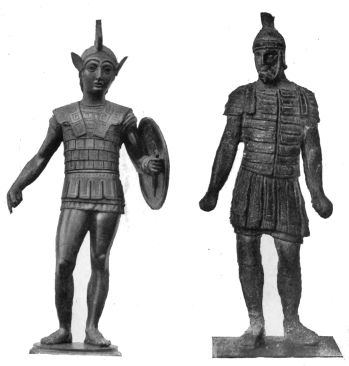
FIG. 1. ETRUSCAN WARRIOR: BRONZE STATUETTE FIG 2. ROMAN LEGIONARY OF THE EMPIRE: BRONZE STATUETTE
Plate XII.
Much of this policy, we have to admit, was pure demagogy, but for that the conservative nobles, who cared nothing for the welfare of the state, and were impervious to anything but force, are directly responsible. Gracchus got his measures through the comitia, and secured his re-election for the next year. Feeling that his policy had secured him a large and faithful party of supporters, he now prepared to introduce a measure which he knew to be necessary for the salvation of his country, but which he must equally well have known to be unpopular at Rome, namely, the grant of citizen rights to the Italians. By this we see that Gaius Gracchus, if he sometimes stooped to the arts of the demagogue, was also capable of real statesmanship. The progressive grant of burgess rights as soon as subject peoples were sufficiently Romanised to be fit for them was the old Roman policy, which had made the city great in the past, and kept her safe in the shock of invasion. But the Romans had now become jealous and exclusive. The proposal was detested in Rome. Each side organised its gangs of roughs; there were daily riots in the streets, and at last the senatorial party once more charged down into the forum and slaughtered the second reformer as they had slaughtered the first. In the prosecutions that followed no fewer than 3000 of his partisans were executed.
In all this it is evident that the Roman political system had completely broken down. The constitution had always been incredibly ill-defined. There is no doubt that sovereignty legally belonged to the people, and that senatorial government was a usurpation, as the Gracchi called it. By calling the citizen body of Rome a mob or a rabble you do not alter the rights of the case. It was largely the fault of the Government that they had been allowed to become so selfish, so disorderly, and so corrupt. The extraordinary machinery of the tribunate—ten magistrates, each with an absolute veto upon all government—had made it impossible to find any constitutional method of reform. The policy of Gaius Gracchus was the only possible one if Rome was to be saved, and as a matter of plain fact it was the policy which after a century of unceasing bloodshed Rome eventually adopted. It was to be a disguised monarchy, like that of Pericles at Athens, working on the basis of the tribunician powers. The old ascendancy of the Senate could not stand a challenge; not only did it rest upon no legal title, but it had lost whatever claim to respect it ever possessed on the score of patriotism or statesmanship. For the agrarian problem it had no policy but to hold fast to its ill-gotten lands; to the demands of the Italian allies it had nothing but a miserly “no.” It watched with indifference the ruin of Italy, the degeneracy of Rome, and the oppression of the provincial world. The policy of the Gracchi may have included dreams and nightmares, but it did look forward and hold out hopes. The Gracchi had now definitely started a party system. They had laid the foundation of a democratic movement, and it is Rome’s misfortune that this foundation was built of such rotten materials. The democracy had been bought by bribes, but it had failed to exhibit a spark of disinterested statesmanship. If ever a state needed a master that state was Rome. Henceforth until a master came the condition of Rome and Italy and the provinces was simply deplorable. Nothing could be done in politics without a hired gang of bravos.
Marius
The next conspicuous attempt at reform comes from a genuine son of the people, one of the very few peasants who emerge into the light of history at Rome. In the wretchedly mismanaged Jugurthan war Gaius Marius had shouldered his way to the front by sheer courage and capacity for war through a crowd of cowardly and incompetent aristocrats, who almost openly trafficked with the foreign enemy of Rome. The course of this business requires a brief sketch if we are to understand the condition of Roman government at this period.
The king of the client state of Numidia dying divided his realm between two legitimate sons and one illegitimate, the latter being Jugurtha. This amiable bastard straightway murdered one of his brothers and attacked the other, who fled to the Roman province and appealed to the senate for protection. Jugurtha, already knowing the ropes of senatorial policy, sent envoys with well-filled purses, and easily convinced the senate of his innocence and good intentions. The senate decided to send out a commission to divide the kingdom equitably between Jugurtha and his half-brother. The result of its labours was that Adherbal got the desert and the capital, while Jugurtha got all the fertile part of the country, and the commission returned home rich and happy. Jugurtha had now only to obtain the capital, but as Adherbal refused to fight and kept appealing to Rome, there was nothing for it but to besiege Cirta. Numerous envoys came to Jugurtha from the senate in the course of the siege, but he easily assured them of his pacific intentions. As soon as he had taken the city he put his rival to death with torture, and massacred the entire male population, including a great number of Italian and Roman citizens.
The senate did not feel that this course of action was entirely meritorious, but it required the stimulus of a democratic agitation and another troublesome tribune to induce them to declare war. The senate sent out two of its best men in Bestia and Scaurus; the latter especially was generally reputed to be a veritable Aristides, for he had ventured to protest against the former iniquities. When the Roman army arrived, Jugurtha knew better ways than fighting. He submitted at discretion, surrendered the Roman deserters, whom of course he did not want to keep, and a few elephants, which he soon afterwards repurchased privately. In return he was permitted to retain his kingdom. Once more there were outcries at Rome, voiced by the same democratic tribune Memmius, who insisted that Jugurtha should be summoned to Rome to answer for his sins. Meekly but with bulging moneybags Jugurtha arrived. As soon as Memmius began to cross-examine him another tribune interposed his veto. During his visit Jugurtha was able to purchase a strong party in the senate; he also had time to procure the assassination of an obnoxious fellow-countryman in the city itself. This outrage, combined with the ambition of the new consul, Spurius Albinus, led to another declaration of war, Jugurtha himself being allowed to go home and prepare for it. As he departed he uttered the famous words, “Ah, Rome! Venal city! She would sell herself if she could find a purchaser.”
When Albinus led out the second army, he found it utterly incapable of fighting. It was a band of cowardly brigands, who spent their time in plundering their own province; and when the consul’s brother conceived the spirited project of seizing the king’s treasury for himself, instead of waiting for the more tedious and uncertain profits of bribery, he led the Roman army into an ambush. It surrendered readily. It was forced to go under the yoke, and agree to evacuate all Numidia.
This was a little too much. Another tribune—in all this period we observe the tribunes acting as the heads of popular opposition quite in the Gracchan manner—proposed a special inquiry to investigate the matter, and bring the offenders to justice. Three of the worst—Spurius Albinus, Bestia, and L. Opimius, the destroyer of G. Gracchus—were banished, but the incorruptible Scaurus escaped condemnation by sitting on the bench. The treaty of peace was cancelled, and its author—following the usual Roman custom when armies in awkward places surrendered—was given up to the enemy.
In the third campaign the senate really tried to do its best. Q. Metellus, the new general, belonged to the party of liberal nobles who were in favour of moderate reform. He began well by choosing his officers for military skill—somewhat of an innovation. Among others he chose a brave young farmer, G. Marius. Arrived in Africa, Metellus had first to reduce the Roman army to order, and then, having failed to get his enemy assassinated, marched out to fight him. Jugurtha was beaten in battle (for the Roman army could still fight under decent leadership), and henceforth was driven to guerilla warfare, in which he displayed such remarkable skill that the war soon came to a standstill.
At this point G. Marius, who had achieved popularity and renown through his valour, conceived the ambitious plan of standing for the consulship. It is hard to guess how such an audacious idea can have entered his head, for such an application from a man of no family was entirely without precedent. Somebody at Rome must have whispered the idea. When he asked his consul for permission to go to Rome for the purpose, Metellus was vastly diverted, and suggested that Marius had better wait until his general’s little boy was grown up, in order that he might have a Metellus for a colleague. Probably Marius had little sense of humour, for he did go to Rome, just in time, and was elected consul. Moreover, a special decree entrusted him with command of the army in Africa.
Among his officers was the young legate, L. Cornelius Sulla, and though Marius undoubtedly displayed vigour and competence, it was very largely the luck and diplomacy of Sulla which procured the seizure and surrender of the Numidian king. Marius, however, reaped the glory. Jugurtha graced his triumph (104 B.C.), and soon afterwards perished in a Roman dungeon.
Simultaneously with the Jugurthan war the Romans were called upon to face a far more serious affair, one of those great folk-wanderings from the north which occur periodically in the course of Mediterranean history. The Cimbri and Teutons, who may have numbered ancestors of our own among them, came down from the shores of the Baltic, travelling with their households in a train of waggons which took six days in defiling past the onlooker. These barbarians were terrible to the Romans, with their strange aspect, their long iron swords and savage war-cries, their fair hair and giant stature. But of course they were savages compared to the Romans, and they should never have inflicted more than one defeat on intelligent generals of disciplined armies. As it was, they had to face mutinous legions and incompetent consuls. First they defeated Carbo and overran Gaul; then coming south into the province they beat Silanus and Scaurus; and then, united with the Helvetians, they inflicted a frightful disaster on Longinus, when a Roman legate had to surrender, and another Roman army was sent under the yoke. In 105 a worse thing happened: the great defeat of Arausio (Orange) seemed more fatal even than Cannæ in the extent of its losses. There was a panic in Italy, which seemed helplessly exposed to the fury of the northmen, but fortunately the aimless barbarians wandered off into the west and spent their strength on the warlike Spanish tribes.
As before, popular indignation at Rome, diverted from the real cause of the mischief, the rotten system of cliques which governed them, wasted its fury on individuals. Senators were mobbed and stoned. A proconsul was actually deposed from office. There was only one man deemed capable of dealing with the peril—Marius, the man of the people, the triumphant conqueror of Jugurtha. So, despite laws forbidding re-election, Marius became consul for a second time and a third—five times consul. This was symptomatic of a changed Rome. It was, however, necessary. Amateur generals had had a long trial. From 104 to 100 Marius was continuously chief magistrate of the state, as well as generalissimo of its armies. He did his work. First he had to get his army in hand, and accustom them to the sight of the terrible barbarians. Then he dealt two smashing blows at the Teutons and Cimbri near Aquæ Sextiæ and on the Raudine Plain. It was the misfortune of the Roman system of imperium that no general could attain to eminence in war without at the same time acquiring political importance. Hence Marius in 100 B.C. found himself absolutely first in the Roman state without education or even common sense in politics. He presents a pathetic figure in the turbulent world of Roman statecraft, a war-scarred veteran, the indubitable saviour of Rome, called upon to play the part of a statesman, and yet a mere puppet in the hands of unscrupulous intriguers. First he fell into the hands of two shameless demagogues—Saturninus and Glaucia—who used him to revive the Gracchan revolution. Marius became consul for the sixth time, and a new reform programme was drawn up, including an agrarian law to divide the land conquered from the Cimbri, and incidentally all the land they had conquered, into small holdings for the Marian veterans, Latins and Italians alike. Marius was to have personal charge of the distribution, and this task would make him master of Rome for many years to come. Secondly, there was to be a still further cheapening of corn; and, thirdly, new colonies were to be founded and the Italian allies to have a share in them. Of course there was violent opposition. The senate tried all its old stratagems, tribunician veto, portents, and lastly bludgeons. To meet the latter, Marius whistled his veteran soldiers to his side, and the “Appuleian Laws” were carried, with the addition of a very obnoxious clause that each senator was to take an oath of allegiance to the new legislation within five days on pain of forfeiting his seat. Q. Metellus alone had the courage to prefer exile.
Then, it seems, the senate found it necessary to beguile the great general over to the side of aristocracy. Marius was a child in their hands. He actually boggled at taking the oath to his own laws, and added the remarkable proviso, “So far as they are valid.” Saturninus and Glaucia in their turn tried violence, and Marius led the forces of the senate against them. There was a battle in the forum, the demagogues were slain, and four magistrates of the Roman people put to death without trial. Once more reaction had triumphed. For the time being Marius was politically defunct.
But one side of his work was lasting and fraught with momentous consequences for the Roman state. It was Marius, the first professional general, who formed the first professional army. We noticed that Greece, even before the end of the fifth century, had already begun to use paid and trained soldiers, partly owing to the unwillingness of her comfortable or busy citizens to engage in annual campaigns, but still more because it was found that the more highly trained and better disciplined mercenaries were far more efficient at their business. So for many centuries Rome had now been the only power in the Mediterranean world to rely upon a citizen militia. That citizen militia had indeed conquered the world; but certainly in dealing with the trained troops of Pyrrhus and Hannibal, the Roman forces had always begun with disaster and slowly been schooled to their trade by defeat. So it was now in the Jugurthan and Cimbric wars: the generals had to train their armies in the face of the enemy, and while that is no doubt the best training ground it is terribly dangerous and expensive. It implies, too, an almost inexhaustible stock of recruits to fall back upon. With the decline of Italian agriculture and the growth of city life the stock of recruits was no longer inexhaustible. Moreover the art of war was becoming more intricate. Rome found it necessary to appoint a genuine soldier for her general against Jugurtha in view of the disastrous failures of aristocratic amateurs. In the same way Marius found it necessary to overhaul the Roman fighting machine, and by the end of his five years of successive consulship he had organised a professional army on much the same system as our own. Rome like England required a highly trained expeditionary force and behind it a large reserve. The principal change instituted by Marius seemed at first a small one and required no legislative sanction. Hitherto the army had consisted only of the propertied classes, the infantry of those who could afford a suit of arms, and the cavalry of the richest citizens who could maintain one of the state horses. The minimum property for a Roman soldier is said to have been £115. The poorest had originally formed a light-armed support, the three middle classes were the line, and the richest the cavalry. But the three classes of the line had by now come to be drawn up not according to property but according to length of service. This was the traditional battle formation of the Roman infantry maniples:
Triara Principes Hastats

with the cavalry upon the wings. But social changes were changing the army. As wealth increased and the gulf between rich and poor grew wider the comfortable burgesses were no longer obedient or willing soldiers. Bad discipline—a monstrous violation of the old Roman spirit—had begun to appear in the ranks as early as the Macedonian wars. In the Jugurthan wars it was deplorably rife. The equestrian class as the richest was also the most mutinous: as early as the third century the knights had refused to work in the trenches alongside of the legionaries. By 140 B.C. they had ceased to act as a military force and become merely a grade of honour, or rather of income, in the state, though the younger knights continued to form a corps of noble guards to the general. As for the army as a whole, the theory down to the time of Marius was still that of the annual spring campaign; each consul levied his own army for a specific purpose. This levy had become more and more difficult. The simple innovation which Marius introduced was that in the process of holding his levy he began by asking for volunteers and enrolling those first. There was generally a distinct promise of rewards on discharge. Thus instead of the moneyed classes Marius filled his ranks with the poorest and hardiest inhabitants of Rome and Italy. Of course the obligation to serve still remained part of the condition of certain subject peoples. The auxiliary ranks were now supplied by foreign experts—cavalry from the Numidian deserts or the Ligurian hills, slingers from the Balearic Islands, and presently archers from Crete. Having thus professionalised his army Marius proceeded to abolish all distinctions in the ranks. All the men of the line now had a uniform equipment supplied by the state, and instead of a bewildering variety of insignia all the legionaries now fought under that emblem destined to be carried in victory to the four corners of Europe—the silver eagle. The eagle was the standard of the legion and it was regarded as sacred. In camp it rested in a special shrine and terrible was the disgrace attaching to its loss in battle. Hitherto legions had been gathered for each campaign and disbanded at its close. Now a legion had a permanent existence, a fixed number, a tradition and an esprit de corps of its own. It was now a larger unit of 6000 men; for while the maniple or company of 120 men still remained, the maniples were grouped into cohorts or battalions, which now became the regular tactical unit, and ten cohorts formed the legion.
Beside the body-armour consisting of helmet, cuirass, and cylindrical shield,[14] the uniform equipment of the legionary included the pilum, a short heavy javelin for throwing (it is interesting to notice that whereas Marius had the point loosely attached to the shaft so as to break off in the shield or body of the enemy, Julius Cæsar actually invented what may fairly be called a “Dum-Dum pilum” with a soft nose for stopping the rush of barbarians), and the short broad-bladed sword[15] which had been copied from the Spanish swordsmen in the Second Punic War. The latter was a very handy little weapon only about thirty inches long including the hilt, with two edges as well as a point, though the thrust was always advocated in preference to the cut. Marius now introduced a new drill which included lessons in fencing given in the first instance by masters from the gladiatorial schools. Though bloodshed be abhorrent to the learned, many a scholar would like to have witnessed the combat between the Roman gladius and the Cimbrian claymore. It must be repeated that the Roman maniple, unlike the close Greek phalanx, stood in open order with a six-foot square of space for each man so that there was room for individual prowess in swordsmanship. Lastly, Marius still further professionalised his army by introducing a system of bounties on discharge which made the army a really attractive career for poor citizens. He promised them each a farm at the end of the war and his example was followed by other generals. In fact a veteran soldier came to expect a handsome pension on retirement.
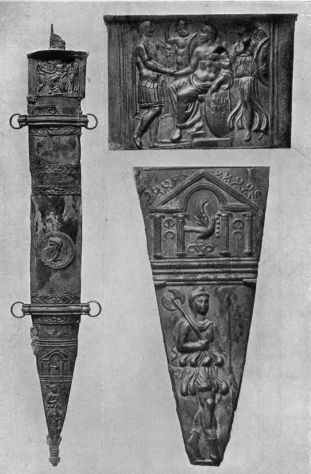
PlateXIII: SCABBARD OF LEGIONARY SWORD
It is surely unnecessary to emphasise the meaning of all this. An army was now a trained corps against which no levy of recruits could stand for an instant. Hitherto it had been the chief guarantee against usurpation by a general that new armies could be summoned from the soil at any time. Now there was a weapon in the hands of a successful general against which the feeble safeguards of the republican constitution were powerless. As with the first trained army in English history, the general of such a force became master of the destinies of the state so long as the allegiance of the soldiers was personal rather than patriotic. The Roman soldier’s allegiance had always been personal and now it became more so. Moreover the Roman constitution had never sought to distinguish military from civil power. Hence that day in 100 B.C., when the Appuleian code was carried under threat of the legions of Marius, was of evil omen for the constitution. Less than twenty years were to elapse before a Roman army entered Rome in triumph to support the political enactments of Sulla. It is in reality henceforward one long state of civil war, open or concealed, between rival generals, until at last a permanent military monarchy was established. It only required a bold free spirit like that of Julius Cæsar to discern the real facts of the case. Marius, as we have already seen, had not sufficient intellect to play a political part with success; Sulla attained what was really a monarchical position but retired when he had won it. Pompeius never had the courage to face the situation. Cæsar had, but he was sacrificed to the republican tradition. Finally the diplomatic Augustus realised the long inevitable fact.
Henceforth, then, it is merely a question of who shall be Emperor of Rome. The causes of the end of Rome’s incoherent constitutional system, called by us a Republic, are already clear. There are the constitutional causes—above all the inelasticity of the Roman system, which made legitimate reform impossible, provided no machinery to express the will of the people, and rendered it inevitable that rioting should accompany every change. It was a constitution essentially municipal and the tribunate was the centre of mischief. Then there are the economic causes, now working more banefully than ever, and causing the decay of the agricultural population, the rise of a dangerous uneducated city proletariat, and the corruption of the governing aristocracy. There was the political fact that the government of a vast ill-organised empire destroyed the Republican spirit and further increased corruption, while it denationalised the Roman temper. Lastly, there is the military cause, namely, the professionalisation of the army, putting excessive power into the hands of the general and replacing patriotism by esprit de corps.
It strikes the onlooker that no one of these evils, nor even the accumulation of them, need have been fatal to the republican system if there had been a genuine spirit of patriotic enthusiasm determined to overcome them. For instance, if the great men of Rome had been loyal and patriotic there is no reason why the excessive power of the generals should have led to high treason. And again, though the provincial system was misbegotten it might have been corrected and reformed. But it was the spirit that failed. Was not that just because Roman power had outstripped Roman civilisation? For the upper-class Roman, faith was dead or dying, and there were no high interests of the mind to replace it. Fighting was their sole inherited interest and their tastes were correspondingly brutal and bloody. The last agony of the Republic in the period we are now considering is painful enough, but the wise will surely regard it as the period in which a new and much more hopeful order of things was gradually evolved.
Sulla
On the extinction of Marius there arose Sulla. Sulla was the aristocrat of talent, almost of genius, who tried to save the state by reaction. He tried, vainly and foolishly enough, to bolster up the rickety structure of senatorial ascendancy, but had not the patience or the wisdom to attempt even that with any thoroughness. L. Cornelius Sulla was of the class of men to which Alcibiades and Alexander belong, but an inferior specimen of the class. Though of noble birth he had risen from poverty and obscurity by his own talents. He was clever—and he did the most foolish acts in history. He was handsome—and his face in later life is described as “a mulberry speckled with meal.” He was brave and successful in war; half lion and half fox, they said, and the fox was the more dangerous of the two. He secured the affections of his soldiers by giving them free licence to plunder or to murder unpopular officers. He was a rake and a gambler, reckless of bloodshed as he was careless of praise or blame, and he had that fatal belief in a star which has led better men than him to follow will-o’-the-wisps. He might have stood where Cæsar stands. He would have made a very typical bad emperor, and whatever it was that made him decline to be one, it was not patriotism. He was as cultured as Nero, and showed it by sacking Athens, plundering Delphi, and looting a famous library. Like Nero, but unlike the majority of his fellow-countrymen, he had a sense of humour.
After the shelving of Marius and the destruction of his democratic associates the governing clique pursued its old course of headlong folly. For one thing the aristocrats soon fell out with the capitalists, which is always an unwise thing for aristocrats to do. The equestrian jury-courts established by Gracchus acted with brutal simplicity on behalf of their tax-gathering and tax-farming brothers against whatever honest governors proceeded from the senate. Men were condemned for honest administration in those days. For another thing the bitter cry of the Italian “allies,” who bore all the hard knocks of the Roman service, and in return got nothing but servitude, was persistently and contemptuously ignored. In 95 a consular law flatly prohibited them from ever claiming the franchise. But presently there came forward a new reformer in M. Livius Drusus. This remarkable man might be described as a third Gracchus, only that he saw the futility of the so-called democracy of Rome, and adopted other means to attain his ends. On the one hand he was a champion of the senate against the knights, and on the other hand he was resolved to give the Italians their rights. He seems to have promoted a widespread secret organisation among the Italians. He then proposed four measures: the inevitable vote-catching corn law and agrarian law, the jury-courts to be restored to the senate, the senate for that purpose to be enlarged by the inclusion of three hundred knights, and, lastly, citizenship for the allies. The first three were carried, not without violence, but the fourth was his stumbling-block. The Italians were by now so clamorous that civil war was inevitable if it were refused, and no man denied the justice of their claim. But neither justice nor expediency had any power to move the dead weight of senatorial conservatism. Drusus was murdered and his laws repealed. That was the signal for the long and terrible Social War which completed the ruin of Italy and caused grave alarm for the very existence of Rome herself. In the course of this struggle and in fear for her existence Rome yielded in fact, if not openly, to the demand of the Italians. Some states received the franchise as a reward for fidelity and others as a bait for submission. By a law of 89 all Italians who applied to the prætor within sixty days received the citizenship, and this belated concession had its effect. The face of Italy had been covered with mourning to secure it. Even so the governing clique succeeded in nullifying the political value of the concession by confining the Italians along with the Roman freedmen to a few of the tribes so that their votes were almost useless.
The pressure of this war and of the great Mithradatic war which began simultaneously in Asia led to a serious economic crisis at Rome. Debt and usury were the symptoms, and when a prætor tried to meet it by reviving the old laws against usury he was murdered in his priestly robes at sacrifice. Now we begin to hear the ominous cry of “Novæ tabulæ”—the clean slate for debtors. A popular orator named Sulpicius Rufus, whose programme included the exclusion of all bankrupts from the senate, protected his valuable person with a bodyguard of 3000 hired roughs, and organised a mock senate of 300 high-spirited young bloods. Then, since Sulla with his army threatened opposition, he passed a decree giving the command of the great army destined to fight Mithradates to the old Marius. During the Social War both these generals had held command with some success, but on the whole the reputation of Marius had declined while that of Sulla had increased. Without hesitation Sulla now marched his army into Rome, and won a battle in the streets of the city. Sulpicius was of course executed, his head was nailed to the rostra, and Marius escaped under circumstances of romantic adventure. Sulla was thus in the year 88 completely master of Rome.
At this moment his real ambition was for more fighting. Mithradates, King of Pontus,[16] was then in full career of rebellion against the Roman dominion in Asia, where 80,000 Roman traders and money-lenders were murdered in a sudden mutiny. Sulla saw in Mithradates a worthy foeman, and much preferred glory on the fields of Asia to Roman politics; and besides, his army was clamouring for plunder. So he hastily flung out a series of constitutional reforms designed to restore the senate to more than its ancient predominance, and then set out for the East, heedless or ignorant of the fact that he had not really changed anything. On the contrary he had left at Rome in sole charge the new consul, Cinna, the worst and most dangerous of all the demagogues. Sulla—most innocent of reprobates—seems to have fancied that an oath to obey his constitution would restrain such a man at such a time.
Consequently as soon as his back was turned a fresh revolution broke out. Cinna also brought an army to Rome and invited Marius to return. Then the old general, furious with all his disappointments, began a fearful debauch of bloodshed. Every distinguished senator left in Rome, including statesmen like L. Cæsar, soldiers like Catulus, orators like Antonius and Crassus, were butchered by his slaves and their heads displayed in the forum. In 86 Marius gained the goal of his ambition, that seventh consulship which had been promised him long ago by a prophet. In the same year he died. Now for four years Cinna ruled as monarch at Rome. Year after year he assumed the consulship and nominated the other magistrates at his own choice without the formality of election. He repealed the laws of Sulla, equalised all the citizens in the tribes, and reduced all debts by 75 per cent. It is the last measure which is truly typical of Roman democracy. Meanwhile, of course, the reckoning was in preparation across the seas. Sulla was winning glorious victories in Greece and Asia, and at length in 84, drove Mithradates to surrender temporarily. Cinna, who does not seem to have understood that a Roman army belonged not to the republic but to its general, audaciously set out to supersede Sulla, and was murdered by the troops.
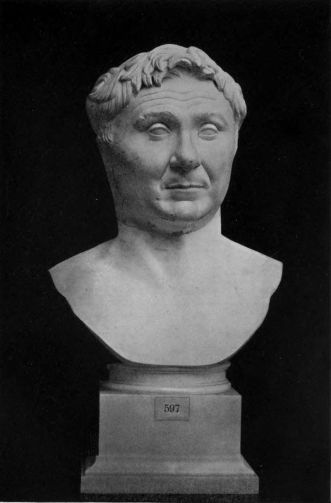
Plate XIV. GN. POMPEIUS MAGNUS
Sulla, having offered terms which the government very foolishly declined, came home in 83 after five years’ absence bearing not peace but a sword. He had five veteran legions of his own, the exiled aristocrats joined him, and among them a young man called Pompeius with three more legions. The lead of the democratic party had now fallen into the hands of a young Marius, and he having no troops to oppose the returning veterans decided to join the Samnite rebels who remained unconquered from the Social War. Before leaving the city they ordered a final and still more bloody massacre of the surviving aristocrats; practically all the men of distinction left in the city suffered death. Sulla had to fight 40,000 Samnites at the Colline Gate of Rome, and after a desperate struggle was victorious. The young Marius committed suicide. Thus Sulla was once more master of Rome. His 8000 Samnite prisoners were slaughtered in the Circus. Of the Roman democrats, 80 senators, 3600 equites, and over 2000 private citizens were proscribed, and their heads nailed up in the forum. In Spain, Sertorius, an honest and valorous democrat, maintained a gallant struggle by the aid of a miraculous deer, and a native Spanish army trained on the Roman model, until at last he fell by treachery.
For two years Sulla was monarch at Rome. For the purpose he invented a sort of revival of the obsolete dictatorship, without limit of time and without a colleague. If we care for the term, Sulla was at that time as much “Emperor” as Augustus. He enacted a whole constitution of his own—which it is scarcely necessary to recount since scarcely anything of it survived—all destined to put the senate on its throne again, and then simply abdicated and retired into private life. I think he was bored with Rome and politics. It is generally admitted that he had a sense of humour. It was a very foolish thing to do. But Sulla’s star was with him and he died in his bed. His dying moments were comforted by the apparition of his deceased wife (he had had five) and son, who invited him to join them in the land of peace and bliss beyond the grave.
Sulla was hardly dead before another consul had marched against Rome with his army and suffered defeat in the city. But these were mere episodes. The streets of the sacred city were in a perpetual state of war: every serious politician had to organise his gang of roughs, and when the very senate-house was burnt down in one such encounter it only seemed an excessive display of political zeal. Of constitutional government there was little pretence. The seas were swarming with pirates, no longer isolated rovers who preyed upon commerce, but an organised pirate-state with head-quarters in Cilicia, and a great fleet consisting of all the broken men and desperate outlaws of the unhappy Mediterranean world. They sailed the high seas in fleets under admirals who voyaged in state like princes. For their homes they had impregnable citadels among the creeks of the Cilician and Dalmatian coasts where they stored their families and their plunder. They were not afraid to march inland to sack a city or loot a rich temple. Commerce at sea was ruined, even the food-supply of the capital was occasionally cut off. On land and even in Italy things were not much better. All through Republican history (but seldom afterwards) we hear of risings among the slaves of Italy. Now, under the plantation system, the inaccessible Apennine highlands were swarming with desperate runaways who constantly committed minor acts of brigandage. In 73 they found a leader in Spartacus, the gladiator who was said to be of royal descent in Thrace. Starting as a mere handful the band swelled in the course of a few months to 40,000. Roman armies one after another and ten in all marched against them in vain. Two consuls were defeated, many eagles were captured, Italy was at their mercy. Respectable towns like Thurii and Nola were seized, their prisoners were crucified like slaves or forced with grim irony to fight one another to the death like gladiators. Thus the most frightful form of civil war was devastating Italy. It was necessary to raise an army of eight legions to crush the slaves, and the command was entrusted to Marcus Crassus, who even then had to decimate a legion before he could get his cowardly troops to stand and fight. After several stubborn battles, and aided by the want of discipline which was even more conspicuous among the slaves than among the Romans, Crassus accomplished his task. Six thousand crucified slaves who lined the road from Capua to Rome testified to the restoration of order.
Abroad matters were little better. The war against Mithradates, which had provided so many Roman triumphs and had so often been proclaimed at an end, actually lasted for twenty-five years, and its duration was due rather to the ineptitude of the government than to the prowess of the unmilitary Asiatics. In Spain it took ten years to defeat Sertorius with his native troops, and even then the result was only accomplished by assassination. If a Hannibal had entered Italy in these latter days the state could not have survived. But there was only one military power of any consequence left in the world in those days, the Parthians. Here there were half-hellenised despots ruling over tribes of warriors only lately descended from the Caucasian and Armenian highlands, and still nursing a fierce mountain spirit though they occupied the rich plains of Mesopotamia. Crassus, the victor over the slaves, was sent to fight them with a great army, but the millionaire displayed wretched ignorance of strategy and especially of the perils of Eastern warfare. He blundered on into the wilderness and tried to meet the terrible horse-bowmen and mail-clad lancers of the East with his legions in a hollow square. The result was the great disaster of Carrhæ in 53, a defeat which amid all the shameful ignominies of this period rankled continually owing to the loss of the eagles and the tragic fate of the leader. Marcus Crassus himself was an almost wholly repulsive character, who had amassed a fortune, colossal even in those days of millionaires, by the most discreditable method. The foundations of his millions had been laid by speculating in the property of the victims of Sulla’s proscriptions. He had been a slave-trainer on a large scale and at one time he had organised a private fire-brigade which he used for acquiring house-property cheaply by blackmail. By lending money to the young spendthrifts of the aristocracy he obtained great influence at Rome, and indeed figures in the wretched politics of his day as a statesman on equality with really great men like Cæsar and Pompeius. But he had no policy and was only of importance through his wealth and influence.
Pompeius and Cæsar
So we come to the final phase of the Republic—the great struggle between the giants Cæsar and Pompeius, with figures like Cicero, Cato, and Clodius in the background. I do not propose to linger over this period, because on the one hand it is so thoroughly well known as the period of fullest evidence in all Roman history, and therefore would require a volume for adequate treatment, and on the other hand because it has been such a battle-ground for partisan historians of all times that it is difficult in such a summary as this to do justice without detailed argument.
Gneius Pompeius the Great[17] had first come into prominence as a supporter of Sulla. He was of high official family and was a born soldier. That is really the secret of his career. Like Marius he was a general and no statesman, but he was a very great general, and one of the few honest men, one might almost say one of the few gentlemen, of his period. The tragedy of his life was to be born in such a period. He had disdained the minor offices of state, and relying on his military renown but in defiance of the law, he stood for the consulship in 70 B.C. As the official aristocracy objected he went over to the democrats, and allied himself with Crassus. These two, elected under threat of Pompeius’s army, straightway repealed most of the Sullan constitution, and restored the balance of power to the knights and the assembly. At the end of the year Pompeius retired into private life. This was characteristic of him; he was capable of grandiose schemes but he lived in fear of public opinion, and he was really moved when orators spoke of illegality. Meanwhile there was a loud demand for some comprehensive scheme of attack upon the pirates. No ordinary
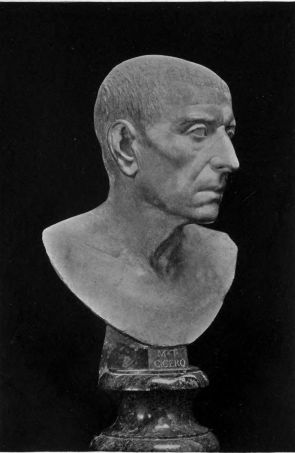
Plate XV. BUST OF CICERO
consular command would do. Even the Roman senate was by this time convinced that it was useless to send legions and cavalry against pirate ships. Accordingly a Gabinian Law of 67 gave to Pompeius a command of unprecedented magnitude. Millions of money were voted to him, he was to be supreme over all the seas and all the coasts for fifty miles inland for three years, with a staff of twenty-five legates, and all governors were to obey his orders. The price of corn fell at once: Pompeius discovered abundance of it in the granaries of the Sicilian corn trust. Then he began a systematic drive of the seas, and in about three months had cleared them. Thousands of pirates were caught and crucified. All this made Pompeius the most powerful and the most dangerous man in Rome.
Next the tribune Manilius, in whose favour that rising novus homo the friend of our youth, Marcus Tullius Cicero, pronounced an oration, gave to Pompeius another huge commission against Mithradates, the irrepressible rebel of Asia. Pompeius succeeded where all his predecessors, from Sulla to Lucullus, had failed, and the wicked old king was driven to suicide. Then Pompeius proceeded to organise the East like an Alexander, but always in perfect loyalty to Rome.
While Pompeius was absent the so-called democracy, which mostly consisted of hired ruffians in the pay of discontented nobles, ruled the streets of the city. Among the young nobles who took this side was one more dissolute and more foppish than the rest, a notorious adulterer and spendthrift, Gaius Julius Cæsar. Though of the highest birth—the goddess Venus by her marriage with the father of Æneas was among his ancestors—he was also by lineage associated with the democracy. His aunt was the wife of Marius, and his wife was a daughter of Cinna. He began his public career quaintly enough as pontifex maximus. When Julia the widow of Marius died, young Cæsar had the audacity to display images and utter an oration in praise of Marius. This, as was intended, set all the gossips talking, and his amazing extravagance kept him well in the public eye. On one occasion he exhibited three hundred gladiators in silver armour, although he was known to be penniless. Probably Crassus was his financier all along.
At this time there was another of the frequently recurring financial crises at Rome. Everybody was deeply in debt, and loud rose the cry for the clean slate, as part of the democratic programme—the only intelligible part. This was the cause of the famous conspiracy of Catiline, who, if Cicero may be trusted, proposed to seize and burn Rome by the aid of the discontented Sullan colonists in Etruria. Both Cæsar and Crassus are said to have favoured the plot, but it is exceedingly difficult to see what a large owner of Roman house property had to gain by it. Cicero was the consul for the year 63, and though it is the fashion just now to sneer at Cicero, he seems to have displayed courage and promptitude in dealing with the conspirators. Unfortunately his arrest and execution of Catiline was technically illegal. Cicero himself, as a parvenu, was naturally an aristocrat, and his policy, though futile, was intelligible. Briefly, it was to unite the senate with the capitalist class in what he called the “union of the orders” against the democratic elements of disorder. Pompeius came home from the East to find the conspiracy crushed. He and his legions were not wanted. With incredible folly and ingratitude the senate, led by Cicero, refused even to grant the lands he had promised to his veterans.
Cæsar had gone as prætor to Spain, and there began to win military renown—much to the surprise of his friends—and money. He wanted the consulship for the next year, and therefore required the support of Pompeius, who had now been driven away from the aristocratic party to which he belonged by sympathy. Crassus came in as Cæsar’s creditor and as the necessary millionaire. Thus was formed the Triumvirate of the year 60, and in 59 Cæsar became consul. By this time he had conceived high, possibly the highest, ambitions. Marius and Sulla, not to mention Alexander and Æneas, had always been much in his mind. For the present his object was to acquire a lasting office and secure the allegiance of a trained army. Cæsar’s colleague in the consulship was a certain Bibulus, who tried to stop the dangerous proceedings of the democrat by seeing omens in the heavens every day, but no one, least of all Cæsar, took any notice of him. The only serious opposition came from Cato the Younger, who represented the genuine and respectable aristocracy. This Cato was a queer anachronism at Rome, an honest man. He was also, if biography may be trusted, a bigot and a priggish eccentric. He was the sort of man to go about Africa without a hat, or to sit on the judicial bench without shoes, because such was the mos maiorum. He tried to revive the ways which had been styled old-fashioned in his grandfather. Nevertheless he was upright and brave, a good soldier, and a man with a clear though impossible policy. Once again it is the fault of rhetorical history that all the good men of Rome appear as prigs and eccentrics. This man most courageously opposed his veto to the proceedings of Cæsar, though he was hustled and beaten by the democratic hirelings, then organised under that most notorious scoundrel Clodius. But the result was that though Cæsar’s laws might pass, they could afterwards be declared illegal, and Cæsar would be liable to prosecution as soon as he became a private citizen. However, he had no immediate intention of becoming a private citizen. He secured the province of Gaul for five years with four legions.
Now Gaul was not reckoned an important province. It was only the peaceful plain of Upper Italy to which the senate had added Narbonensian Gaul, a southern strip of France, chiefly considered as a step on the road to Spain. Four legions was a small consular army for those days; no one supposed that he would have much fighting. But either Cæsar had received secret intelligence or else he had very good luck. At the outset he was called to deal with a great immigration of the barbarian Helvetii, who were migrating out of Switzerland into Gaul and threatening the province.
The conservatives at Rome maintained that Cæsar’s conquests in Gaul were the result of wanton aggression—cheap victories over inoffensive savages, wholly unjustifiable and unauthorised. At this point it is scarcely possible to avoid entering upon the much-debated question of Cæsar’s real character. For orthodox Romans Cæsar was the founder of the empire, a person not only of divine descent, but himself divine. All emperors took his name, until that surname of Cæsar, once a mere nickname, came, in half the languages of Europe, to be synonymous with “Emperor.” For the Middle Ages he stood with Constantine, who christianised the Empire, and Charlemagne, who revived it, as the founder of that divinely instituted polity which shared with the Church God’s viceregency on earth. In the eyes of Dante, Cæsar stood very near to Christ, for the poet peoples the frozen heart of his Inferno with three tormented figures who writhe in the very jaws of Cocytus. Along with Judas Iscariot are the two murderers of Julius Cæsar. Though the Renaissance stripped him of much of his legendary greatness, Cæsar remained for the men of Shakespeare’s day the embodiment of imperial pride. Shakespeare himself was too great an artist to make any of his characters more or less than human, but it is evidently Brutus who has the sympathies of the dramatist. In the French Revolution, again, Brutus and Cassius were heroes and glorious tyrannicides. The reaction against early nineteenth-century liberalism brought Cæsar once more into honour, and Mommsen, the prophet of Cæsarism, makes him the hero of his great history. To Mommsen Cæsar was almost divine, the clear-sighted and magnanimous “saviour” who alone saw the true path out of the disorders of his city. From this view again we are apparently now in reaction once more. To the latest critics the greatness of Cæsar and of Mommsen are alike abhorrent, and Signor Ferrero depicts his greatest fellow-countryman as an unscrupulous demagogue who blundered into renown through treachery and bloodshed.
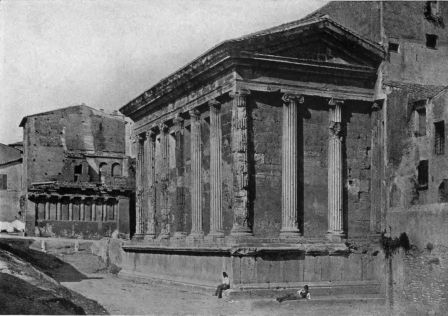
Plate XVI. TEMPLE OF FORTUNA VIRILIS, ROME
The historical principle by which this result is attained is rather typical of certain modern critical methods. Since the account of the Gallic Wars was written chiefly by Cæsar himself, and Cæsar is by hypothesis a scoundrel, the history of these wars must be found by reading between the lines of Cæsar’s account, putting the most unfavourable construction upon everything and preferring any evidence to his, even if it be that of two centuries later. If any gaps or inconsistencies are noticed they must be treated as concealing defeats or acts of treachery. Written in this spirit, the story of the Gallic Wars is a very black one for Cæsar and Rome. Yet unbiassed readers must generally admit that Cæsar was a very careful and on the whole an honest historian. The accusation that he was capable of relentless cruelty springs from his own admissions. It was in the Roman character to despise life, and when Cæsar thought that a rebellious tribe needed a lesson he did not hesitate to massacre defenceless women and children or to lay waste miles of territory with fire and sword. But, on the other hand, his preference was for clemency and justice.
Without making him a demigod, we ought to be able to see his greatness. As a young man his ardour of soul, working in a debased society without ideals, made him simply more extravagant and more foppish than the spendthrifts and rakes who surrounded him. Doubtless the scandalous Suetonius has embellished the story of his early follies. Many of his youthful escapades were, one suspects, carefully designed to bring him into notice. It is probable that from a very early age he was ambitious, and his family connections clearly marked out his career as a democrat. He had the failure of Sulla before his eyes. The greatness of his character lay chiefly in an instinctive hatred for muddle and pretence. He could not fail to see the hopeless confusion into which the Roman state had fallen. From the first, I think, he was aiming at power for himself in order to put things straight. Whether self or country came first in his calculations, it is hard, perhaps impossible, to decide; but the historian is not necessarily a cynic when he demands strong proof of altruism in the world of politics. To obtain power the democratic side was the only possible one, for the nobles stood for the predominance only of their class. Crassus was necessary to Cæsar as his banker and creditor until he had acquired a fortune for himself by conquest. Pompeius was the foremost soldier of the day, and it is probable that Cæsar deliberately sought to climb over the shoulders of Pompeius into monarchy. He saw—he could not help seeing, for it was written plainly in the history of the past century—that for power two things were necessary, the support of the mob in the forum and the backing of a veteran army. At the time when Cæsar got Gaul for his province there was a fresh movement towards imperial expansion. Foreign conquest afforded some relief for the chagrins of internal politics. By it Marius, Sulla, and Pompeius had become powerful. If Cæsar wanted to eclipse them all, he must present Rome with a new province, the most powerful of all bribes. It was in this spirit that he set out for Gaul. If his ulterior motive was selfish it is certain that he threw himself heart and soul, with all the burning energy of which his tireless spirit was capable, into the work of conquest and civilisation.
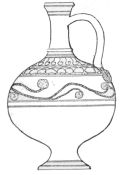
Gallic Pottery
And what a work it was! Archæology is now beginning to prove to history that the so-called barbarians were by no means always savages. Even the “naked woad-stained” Britons had their arts and industries and political systems. The Gauls, when Cæsar attacked them, were well on the road to civilisation. Druidism was a declining force, town-life was beginning, and there was even a fairly artistic coinage. The Gallic pottery is by no means destitute of beauty. As soldiers the Gauls showed many of the qualities of their descendants, a devoted impetuosity in the charge, coupled with a lack of tenacity in resistance which always cost them dear. Much of Cæsar’s success was due to his skill in dividing them against themselves, but many of his difficulties arose from their fickle disposition. Mommsen, like a true Bismarckian German, has a striking comparison of the ancient Gallic Celt with the modern Irishman.
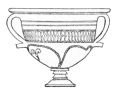
Gallic pottery
“On the eve,” he says, “of parting from this remarkable nation, we may be allowed to call attention to the fact that in the accounts of the ancients as to the Celts on the Loire and the Seine we find almost every one of the characteristic traits which we are accustomed to recognise as marking the Irish. Every feature reappears: the laziness in the culture of the fields; the delight in tippling and brawling; the ostentation ... the droll humour ... the hearty delight in singing and reciting the deeds of past ages, and the most decided talent for rhetoric and poetry; the curiosity—no trader was allowed to pass before he had told in the open street what he knew, or did not know, in the shape of news—and the extravagant credulity which acted on such accounts ... the childlike piety which sees in the priest a father and asks him for advice in all things” (this, by the way, was apparently a characteristic of the contemporary Germans also), “the unsurpassed fervour of national feeling, and the closeness with which those who are fellow-countrymen cling together almost like one family in opposition to the stranger; the inclination to rise in revolt under the first chance leader that presents himself, but at the same time the utter incapacity to preserve a self-reliant courage equally remote from presumption and pusillanimity, to perceive the right time for waiting and for striking, to obtain or even barely to tolerate any organisation, any sort of fixed military or political discipline. It is, and remains, at all times and places the same indolent and poetical, irresolute and fervid, inquisitive, credulous, amiable, clever, but—from a political point of view—thoroughly useless nation; and therefore its fate has been always and everywhere the same.”
The internal politics of Gaul seem to have been marked by a division between two parties, one the conservative party of the aristocratic knights, the other a nationalist and popular faction. Cæsar used these divisions for the furtherance of his scheme of conquest. He was not only a consummate general with an instinct for strategic points and huge combinations, but he was also a superb regimental officer in the making of soldiers. By the end of his ten years he had forged a small but invincible army devoted to his interests and entirely confident in his leadership. Personally, moreover, the Roman debauchee was the best soldier in the army. Physically he was a stranger to weariness or fatigue. He could travel immense distances with incredible rapidity, alone on horseback, or with a handful of followers. He seemed ubiquitous. In the battle, when his men wavered, he would leap down into the ranks, sword in hand, or snatch the standard from the hand of a centurion and fight among the foremost. No detail of fortification or commissariat escaped him, and he, more than any one else, showed the power of engineering in warfare. In the supreme battle against Pompeius he even carried his devotion to the spade beyond reasonable limits when he tried to circumvallate the much larger camp of his enemies. One of his most surprising exploits was when half Gaul, supposed to be pacified, rose in sudden revolt under Vercingetorix. With a much smaller army he chased the rebels into the fortress of Alesia, neglecting for the time all communication with his base, and fully aware that a still larger army would soon advance to the relief of the besieged. He therefore entrenched himself outside the gates of the city and kept off the relieving force with one hand while he continued the siege with the other. But while he was capable of brilliant strokes of audacity like this, he was also a cold and cautious organiser of victory, ready to meet his enemies on their own ground and with their own weapons.
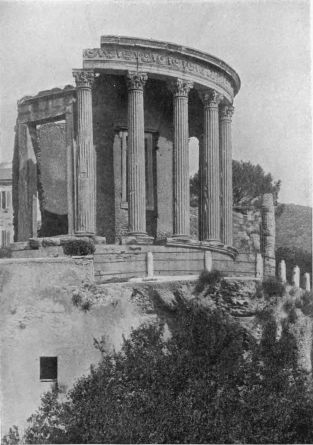
Plate XVII. TEMPLE OF VESTA, TIVOLI
In this great war, which ended in the conquest of Gaul, Cæsar’s expeditions to Britain were mere episodes which have been greatly exaggerated in the traditional histories of our schools. They were summer raids, like his dash across the Rhine, intended for a warning to the barbarians of the hinterland; for it seems that communication to and fro across the channel was continuous. It is probable enough that the persuasions of the Roman traders who swarmed after the eagles across Gaul had their influence also. Undoubtedly the Romans of this generation were keenly alive to commercial openings, and always on the search for mines, real or imaginary. Further, we cannot deny that Cæsar in all his undertakings had one eye upon his political position in Rome itself, and the “conquest of Britain,” that almost legendary corner of the earth, concealed in boreal mists and embosomed in the ever-flowing Ocean river, would be a sensational achievement calculated to outshine the Oriental triumphs of Pompeius. One cannot but place among the extravagances of hero-worship Mommsen’s belief that Cæsar had a prophetic insight into the true nature of the “German Peril” for Rome. When Cæsar took over the Gallic province there was no tremendous German menace. There had always been occasional irruptions of the barbarians from across the Rhine, and a steady German penetration of the Netherlands. Cæsar did not lay down any intelligible frontier policy: that was one of the achievements of Augustus. Both in Gaul and Britain it was simply a forward movement by a general of bold and untiring resolution, backed by an invincible army. The two trips to Britain, like those across the Rhine, were reconnaissances only, and the conquest of the island was one of the legacies which Cæsar intended to reserve for the future. His successor very wisely declined it. There was little immediate profit there, and the Gallic conquests had glutted the Roman market with slaves.
Gaul had submitted easily to a force of less than forty thousand Romans; then it had revolted unsuccessfully. In the end the whole country acknowledged defeat and rapidly began to assimilate Latin civilisation. Meanwhile in the imperial city the Republic was slowly expiring by a natural death. Every winter Cæsar returned to the Cisalpine part of his province to receive intelligence from Rome and secure his position there. Clodius, the most evil of mob-leaders, was his agent with the democracy. Clodius had managed to hound the respectable Cicero into exile for his share in suppressing Catiline, and when Cicero, who was really popular at Rome, had at length persuaded Pompeius to allow his return, the great orator remained thenceforward a timid and reluctant servant of the triumvirate, defending their friends or prosecuting their enemies, with inward reluctance, no doubt, but with unimpaired eloquence. With his astonishing victories in Gaul the star of Julius was rising in the political heavens. The commons of Rome were not only dazzled by his successes, but captivated by his largesses. Meanwhile Pompeius was living on his military reputation, and slowly squandering it by his political incapacity. He continued to hold various high offices unknown to the constitution; he became sole consul, a thing abhorrent to the Roman system; he held the province of Spain and governed it from Italy through his legates, and at the same time continued to exercise a general oversight over the corn-supply of Rome. In fact there was scarcely anything in the future position of a Roman emperor which had not its precedent in the career of Pompeius. Had he wished it, or, more probably, had he known how to obtain it, he and not Augustus might easily have been the first Roman emperor. By taste and natural sympathies he was an aristocrat, but the force of circumstances had driven him into an uncomfortable position of alliance with Cæsar the democrat and Crassus the plutocrat. This was in a large measure the secret of his political helplessness. He, the conqueror of the East, often found himself openly flouted, nay, actually hustled and threatened in the streets, by the organised roughs. Meanwhile there was a small but tenacious opposition party of aristocrats, who had no discipline and therefore no leaders, but among whom Cato and Marcellus were the most conspicuous. They had not the strength to offer any consistent resistance to Cæsar’s progress, which they watched with growing jealousy and alarm. They had not the sense to rally the respectable elements in the state to their side. Both Cicero and Pompeius would readily have joined them if they had made it possible. Instead of that, they were content to carp at Cæsar’s achievements and threaten him with a prosecution as soon as he should return to private life. That was the stupidest mistake, for it made Cæsar resolve at all costs to retain his command, and eventually precipitated the civil war.
As it can easily be seen, the coalition between Cæsar and Pompeius was not a natural one: psychologically they had nothing in common, and their interests soon began to diverge. Pompeius could hardly fail to perceive that Cæsar was climbing by his help and at his expense. The old general saw the memory of his great deeds eclipsed by the new one, and there was no lack of mischief-makers to widen the breach. The alliance had been cemented in a striking fashion at a conference at Lucca in 56 B.C. when the conservatives were threatening to annul Cæsar’s acts in Gaul. Cæsar had replied by inviting Pompeius to meet him in his southern province; he also invited those senators who were his friends to appear at the same time. Two hundred senators had answered the invitation, and for the time being the opposition died away into grumbling.
But now the breach was growing open to all men’s eyes. Cæsar’s charming daughter, Julia, who had been married to Pompeius as a pledge of union, and had done much to hold the two chiefs together, died at an early age in the year 54. In the next year Crassus, the mediating third party of the “triumvirate,” met his fate at Carrhæ. In the next there were more than ordinary disorders over the elections, culminating in a fierce battle in the forum between the rival gangs of Clodius for the triumvirate and Milo for the senate. The senate-house was burnt and Clodius slain. Pompeius then became sole consul, and proceeded, under threat of his army, to introduce a series of laws almost openly aimed at Cæsar. By the Pompeian law of magistrates Cæsar would be compelled to appear in Rome as a private citizen for some months in the year 49, at the mercy of his enemies, while Pompeius himself, by having his titular command in Spain prolonged, would still be master of an army. These laws were passed at the crisis of Cæsar’s fate in Gaul, when the whole nation had risen in arms against him. But Cæsar emerged victorious, and was now, in the year 50, free to consider his position in regard to Pompeius and the senate. Cæsar himself maintains that he was reluctant to resort to violence, and I think we may believe him. Though nine legions were still under his command, he could hardly venture to denude the newly conquered province of its garrisons, while Pompeius was master of an equal number of legions, including the veteran Spanish troops, and could levy any number of recruits or reservists in Italy. Cæsar could not have faced the prospect of a civil war with any confidence as to the result, even if he had been the sort of man to provoke it without scruple. There is a further proof: as late as 50 B.C. he resigned two legions to Pompeius, which would have been madness if he had then intended to wade through bloodshed to a throne. In all the abortive negotiations which preceded the outbreak of the great civil war, Cæsar was prepared to resign everything except the one condition upon which his very life depended, namely, that he should not have to return to Rome as a defenceless private citizen. The civil war was due to the mad folly of the conservatives led by Marcellus, who had convinced themselves that Cæsar meant to sack Rome with his Gallic cavalry and to reign as tyrant over its ashes. In the end they succeeded in communicating their panic to Pompeius.
Conciliatory to the last, Cæsar was driven to show that he was in earnest. Bidden to dismiss his army, and declared a public enemy, in January 49 B.C. he took the decisive step of crossing the little river Rubicon which marked the frontier of Italy. Even then it was only a demonstration of force. Only 1500 men followed Cæsar to Rimini and Arezzo, and he still offered peace on the most moderate terms. But the panic-stricken and conscience-stricken senators, still believing in the imminent sack of Rome, decided to leave their wives and children there while they saved their precious necks, in headlong flight to Capua, and then to Brindisi, and then to Greece. The great Pompeius showed equal panic. Apparently demoralised by Cæsar’s swift and decisive movements, he decided to give up Italy without a struggle and retire to the East, where all his triumphs had been won. From there he would fight for the lordship of the world.
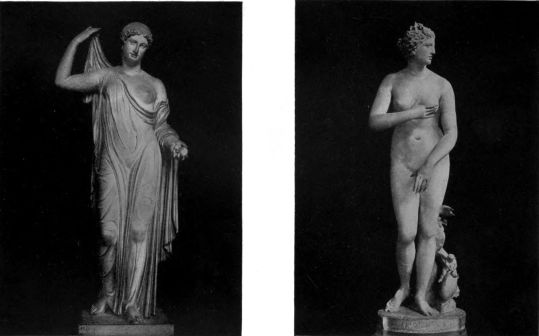
FIG 1. VENUS GENETRIX FIG 2. THE MEDICI VENUS
Plate XVIII
But meanwhile Cæsar, by his clemency no less than by his bold resolution, was winning all Italy to his side. Only one member of his army—his old lieutenant-general Labienus—deserted him, while fresh recruits even from the senatorial party daily joined him. Cool and methodical as ever, he left Rome to recover from its panic, and the East to wait until he had secured his hold upon the West. He knew the value of a veteran army, and therefore turned his march first to Spain. It took him but a short time to secure the capitulation of Pompeius’s lieutenants in that province, and then at last he returned to Rome. He was only in the city for eleven days, but in that time he was able to remove the panic and disorder there. He restored credit, assured the supply of corn, and got a grant of citizen rights for his faithful provincials of Cisalpine Gaul.
Meanwhile the Pompeian army was gathering in northern Greece, and the senators were breathing death and damnation against Cæsar. The final struggle on the Albanian coast and in Thessaly, which culminated in the great battle of Pharsalus (48 B.C.), decided the fate of the world. The troops were fairly equal, if numbers and training are taken into account; in numbers alone Cæsar was far inferior. But Cæsar’s men had extraordinary devotion to their general, as he had to his beloved legions. Never was there completer confidence between an army and its leader than between Cæsar and his veterans. He could be merciless in discipline. Once he had to decimate the Ninth Legion, but he could move his grim legionaries to tears by a reproach. He shared all their labours, he starved with them, and marched those prodigious forced marches by their side. They trusted in his generalship, and they were not disappointed. Pompeius showed, when at last he roused himself, that he too had not forgotten the military art. It was a battle of giants; Pompeius the more orthodox tactician, Cæsar incredibly bold, rapid, and far-seeing. More than once it was touch and go. Cæsar had terrible difficulties to face, above all in the necessity of transporting his army across the wintry Adriatic in face of the enemy when he had no fleet. The feat was accomplished by sheer audacity, and then he had to face and contain a larger army, thoroughly well prepared and supplied, with no base and no communications for his own men. He actually tried to fling a line of earthworks round the Pompeian army while his own men were starving. Yet it was by generalship that the battle of Pharsalus was won.
Pompeius fled to Egypt for refuge, and was murdered there by treacherous Alexandrians and renegade Romans. Cæsar, who had received the submission of the whole provincial world with the exception of King Juba’s African realm, followed Pompeius to Egypt, and on landing was presented with his rival’s head. In Alexandria itself Cæsar had to face one of the most serious crises of his life. For six months he held the royal palace against a host of infuriated Orientals. In the palace was Cleopatra, the wife and sister of the reigning Ptolemy, and then a brilliant and fascinating young woman of twenty. Let us believe that she was beautiful, and that the portrait-painters and coin-engravers of her day were incompetent or disloyal.[18] But if rumour spoke truly, Cæsar was by no means exclusive in his devotion to female charms. Her son was named Cæsarion.
When at length Julius Cæsar escaped from the twofold entanglements of love and battle at Alexandria, he had more fighting still before he could make the earth his footstool. He spent a few days in Syria to arrange the affairs of the East, and among other things gave orders to build up the wall of Jerusalem, which had been thrown down by the orders of Pompeius. Then he passed over to Asia Minor, and at Zela crushed the rebellion of a Pontic successor of Mithradates. So back to Italy for a few weeks, and there he found all in disorder, and his legions, including the faithful Tenth, mutinying for their pay. He settled the disorder at Rome by his mere presence, enacted laws to relieve the economic distress there, and, having no money to pay his soldiers, quelled their mutiny by sheer sleight of speech. Meanwhile the broken Pompeians had gathered in thousands at the court of King Juba, who himself had a formidable host. As soon as he could find time, the restless conqueror crossed straight to Africa with as many soldiers as he could muster, leaving the main force to follow. That was always Cæsar’s way—to dart straight upon the scene of danger was his first instinct. At his coming the marrow oozed out of the very bones of his foe. He had a Scipio and a Cato, and a host of notable Romans arrayed against him. At Thapsus, in April of the year 46, he smote them, and slew (it is said) fifty thousand men—fourteen legions of Romans. There at Utica, Cato died his famous Stoic death, far the noblest scene of his mistaken life, and so became a theme for the glorification of Stoic Republicanism for all time. Afranius, Scipio, King Juba, Faustus Sulla, and many others, died also. A few stragglers found their way to Spain, to continue the fight there under the two sons of Pompeius. Thither in the next year, so soon as he had leisure, Cæsar followed them, and in a last great battle at Munda he finished the resistance. Only Sextus Pompeius was left of the Pompeian party, and he escaped for a time to begin an interesting career as a gentleman-pirate.
In this manner the amazing Cæsar conquered the world. Now it was unquestionably his. What was he to make of it? This story has been told in vain unless it has shown that the city of Rome was rotten to the core, with no sound elements left in it. Cæsar himself was a solitary prodigy; he had no supporters worthy of his confidence. Labienus had deserted him, Quintus Cicero, another of his legates in Gaul, had also fought against him. Mark Antony was perhaps his right-hand man, but Antony was nothing but a brilliant orator and a fair soldier; of character or reputation he had not a shred. Brutus, to whom Cæsar was personally devoted, had fought against him, and was—in spite of Shakespeare and republican tradition—a vain and shallow egoist. Cæsar had no brother and no legitimate son. Across in Apollonia his little great-nephew Octavius was still at school. Julius Cæsar had to reorganise a broken world alone. For a hundred years there had been no peace in Rome, and no proper government in the empire. Every year of its lingering agony, the Republic had drawn closer to the inevitable issue in Monarchy. Even Cicero, when he tried to console himself for the horrible disorders of Roman life by depicting an ideal commonwealth, had been compelled to build it round a princeps who should maintain order, and thus allow liberty to exist. In practice also the last century had seen a succession of “princes”—Gracchus, Marius, Cinna, Sulla, Pompeius—all from the necessity of the case forced into unconstitutional positions. And now Cæsar had succeeded without a rival. Sulla had resigned power, and his work had almost immediately fallen to pieces. There was now, even more than then, no chance of building up a senatorial party, and indeed Cæsar had been the lifelong victim of senatorial arrogance and folly. It was equally impossible to build up a Roman democracy out of the demoralised loungers in the forum.
Obviously monarchy was the only solution. Cæsar was fifty-five years old, spent with war and labour, and, as I have said, quite alone. He was a man without beliefs or illusions or scruples. Not a bad man: for he preferred justice and mercy to tyranny and cruelty, and he had a passion for logic and order. He was not the sort of man to make compromises. His sudden successes had taught him to despise his enemies. He was not, of course, ignorant that the Romans (if there were any true Romans left) had it in their blood to hate the title of Rex. Every Roman schoolboy was brought up to declaim in praise of regicides. But possibly in time they could be accustomed to the hideous idea. For the present, old-fashioned titles like Dictator, Consul, and Tribune would suffice. But the office must be made hereditary, and the boy Octavius was already marked for adoption and succession. The title of Rex could wait. Cæsar would feel his way gently.
But patience was not one of his virtues. Actually fortune only left him less than two years, and those broken by tedious campaigns in the Spanish provinces, for the regeneration of Roman society. In that time he restored the finances, rearranged the provincial system, abolished the political clubs which had been centres of disorder at Rome, reformed the Calendar, dedicated a new forum and new temples, restored and revised the senate, founded a system of municipal government for Italy, settled his veterans on the land, and was preparing a great expedition to chastise the Parthians.
Most of these acts were wisely done, but in one thing Cæsar miscalculated. His brilliant successes and the adulation with which he was surrounded led him to despise his enemies. He would not stoop to flatter antiquarian prejudices or to cast a decent veil over his monarchical position. You may treat people as slaves and they will admire you for it, but when you call them slaves they will begin to resent it. Cæsar failed to rise from his chair to receive the senators. In his reformed senate he included representatives of the equestrian class, provincials and even distinguished soldiers of quite humble birth. He allowed his statue to be set up beside the Seven Kings of Rome. He accepted a gilt chair, he permanently retained the triumphant general’s laurel-crown, partly because he was bald and keenly sensitive about it; and then either through his orders or by their own officiousness his friends began to throw up ballons d’essai in the direction of kingship. At the Lupercalia Antony offered him a crown of gold. It was spread abroad that an ancient Sibylline prophecy had foretold that the Parthians could only be conquered by a king and that Cæsar was to adopt the title for the purpose of his Eastern expedition. It was trifles like these, and trivial jealousies, trivial requests declined in the name of justice, that led to the great conspiracy. No doubt the influence of rhetorical patriotism had its effect upon many of the conspirators. An unknown hand wrote “O that thou wert living!” upon the statue of old Brutus the Liberator. But neither Brutus nor Cassius deserves our admiration. It was pique not patriotism that sharpened their daggers. Sixty senators conspired together, and on the eve of setting out for Parthia—the Ides of March, 44 B.C.—Julius Cæsar was slain.
And then, having slain the tyrant and liberated the republic, the patriots were helpless. A doctrinaire like Cicero might still dream of restoring the commonwealth; but the only real question was who should succeed. The people only cried for peace. It was not so much the speech of Mark Antony as the funeral of Cæsar, cleverly stage-managed by Calpurnia, and the genuine sorrow of his veterans, which gradually turned the popular feeling against the conspirators. The senate did not venture to declare Cæsar a tyrant, they confirmed his acts, but there was no proposal to punish the murderers. The whole conclusion was a feeble compromise.
The man who should have grasped the helm was Mark Antony. He was left sole consul, there was a legion and the prætorian cohort under arms only waiting the word. The conspirators had only a few gladiators in their pay. Antony had every right to arrest them. But Antony was not the man for the part. With all his talents his character was feeble. He was always dependent on his surroundings and generally under feminine influence. Once it had been the dancer Cytheris, at present it was the aggressive Fulvia; for a time Octavia almost reformed him, but Cleopatra easily ensnared him. He was a rake and a spendthrift, always in debt. He was timid of public opinion: just now the aristocratic society in which he moved was prating of tyrannicide. Antony wanted to be in the fashion. There were dramatic embracements between Antony and Brutus.
Now the testament of Cæsar, which had just been confirmed by the senate, named young Gneius Octavius as heir to three-quarters of his estate. At the end of the will was a codicil adopting him. Henceforth until he gets the title of Augustus this young Cæsar must be called Octavianus, though he never accepted that name for himself. The “second heirs” named in case the first should fail or decline to succeed included D. Brutus, one of the murderers, and Mark Antony himself. Whosoever should accept the heirship would be bound by all Roman ideas of honour to undertake the chastisement of the murderers. Antony seems to have assumed that the obscure young man would not be likely to accept the inheritance. He therefore got together all Cæsar’s papers, and began to spend Cæsar’s immense fortune as only Antony could. He began also to manipulate Cæsar’s papers, inserting anything he liked among Cæsar’s “acts,” selling honours, raising taxes, recalling exiles to please Fulvia. For some time no one ventured to complain. Leading senators like Cicero retired to the country remarking that the tyrant was dead but the tyranny still alive. Then, of course, Antony had to provide himself with a province to ensure his future safety. Moreover, the cry of the veterans for revenge began to move him to play the Cæsarian. Thus Antony was virtually master of the Roman world and the sky was dark with menace.