Chapter III · THE PLANT Stimulus and Response
Reading edition
GENERAL RELATIONS
144. The nature of stimuli. Whatever produces a change in the functions of a plant is a stimulus. The latter may be a force or a material; it may be imponderable or ponderable; effect, not character, determines a stimulus. Consequently, reaction or response decides what constitutes a stimulus. The presence of the latter can be recognized only through an appreciable or visible response, since it is impossible to discriminate between an impact which produces no reaction and one which produces a merely latent one. From this it is evident that quantity is decisive in determining whether the impact becomes a stimulus. Plants grow constantly under the influence of many stimuli, all varying from time to time in amount. Small changes in these are so frequent that, in many cases at least, the plant no longer appreciably reacts to them. Such changes, though usually measurable, are not stimuli. Furthermore, it must be clearly recognized that plants which are in constant response to stimuli are stimulated anew by an efficient increase or decrease in the amount of any one of these. As is well known, however, such increase or decrease is a stimulus only within certain limits, and the degree of change necessary to produce a response depends upon the amount of the factor normally present. The entire absence of a force usually present, moreover, often constitutes a stimulus, as is evident in the case of light. The nature of the plant itself has a profound bearing upon the factors that act as stimuli. Many species are extremely labile, and react strongly to relatively slight stimuli; others are correspondingly stable, and respond only to stimuli of much greater force. Some light is thrown upon the nature of this difference by the behavior of ecads. A form which has grown under comparatively uniform conditions for a long time seems to respond less readily, and is therefore less labile than one which is subject to constant fluctuation. In many cases this is not true, however, and the degree of stability, i. e., of response, can only be connected in a general way with taxonomic position.
145. The kinds of stimuli. The factors of a habitat are external to the plant, and consequently are termed external stimuli. Properly speaking, all stimuli are external, but since the response is often delayed or can 101not be clearly traced, it may be permissible to speak of internal stimuli, i. e., those which appear to originate within the plant. These, however, are extremely obscure, and it is hardly possible to deal with them until much more is known of the action of external stimuli. Of the latter, certain forces, gravity and polarity, act in a way not at all understood, and as they are essentially alike for all plants and all habitats, they can here be ignored. Stimuli are imponderable when, like light and heat, they are measured with reference to intensity, and ponderable, when, as in the case of water-content, humidity, and salt-content, they can be expressed in mass or weight. It is undesirable to insist upon this distinction, however, since the real character of a stimulus is determined by its effect, and the latter is not necessarily dependent upon whether the stimulus is one of force or one of material. There is, however, a fundamental difference between factors with respect to their relation to the plant. Direct factors alone are stimuli, since indirect factors must always act through them. For example, the wind, its mechanical influence excepted, can affect the plant only in so far as it is converted into the stimulus of increased or decreased humidity. Consequently, the normal stimuli of the plants of a formation are: (1) water-content, (2) solutes, (3) humidity, (4) light, (5) temperature, (6) wind. Soil, pressure, physiography, and biotic factors influence plants only through these, and are not stimuli, though exceptions must be made of biotic factors in the case of sensitive, insectivorous, and gall-producing plants.
146. The nature of response. Since plants have no special organs for the perception of stimuli, nor sensory tracts for their transmission, an external stimulus acting upon a plant organ is ordinarily converted into a response at once. The latter as a rule becomes evident immediately; in some cases it is latent or imperceptible, or some time elapses before the chain of responses finds visible expression. A marked decrease in humidity calls forth an immediate increase of transpiration, but the ultimate response is seen in the closing of the stomata. A response to decreased light intensity, on the other hand, is much less rapid and obvious. This difference is largely due to the fact that the functional response is more marked, or at least more perceptible in one case than in the other.
Response is the reaction of the plant to a stimulus; it begins with the impact of an efficient factor, and ends only with the consequent final readjustment. The immediate reaction is always functional. The nature and intensity of the stimulus determine whether this functional response is followed by a corresponding change in structure. The consideration of this theme consequently gains in clearness if a functional and a structural 102response be distinguished. The chief value of this distinction lies in the fact that many reactions are functional alone; it serves also to emphasize the absolute interdependence of structure and function, and the imperative need of considering both in connection with the common stimulus. For these reasons, the logical treatment is to connect each stimulus with its proper functional change, and, through this, with the corresponding modification of structure. For the sake of convenience, the term adjustment is used to denote response in function, and adaptation, to indicate the response in structure.
147. Adjustment and adaptation. The adjustment of a plant to the stimuli of its habitat is a constant process. It is the daily task, seen in nutrition and growth. So long as these take place under stimulation by factors which fall within the normal variation of the habitat, the problems belong to what has long been called physiology. When the stimuli become unusual in degree or in kind, by a change of habitat or a modification in it, adjustment is of much greater moment and is recorded in the plant’s structure. These structural records are the foundation of proper ecological study. Since they are the direct result of adjustment, however, this affords further evidence that a division of the field into ecology and physiology is illogical and superficial. Slight or periodical adjustment may concern function alone; it may be expressed in the movement of parts or organs, such as the closing of stomata or changes in the position of leaves, in growth, or in modifications of structure. This expression is fundamentally affected by the nature of the factor and is in direct relation to the intensity of the latter. Adaptation comprises all structural changes resulting from adjustment. It includes both growth and modification. The latter is merely growth in response to unusual stimuli, but this fact is the real clue to all evolution. Growth is periodic, and in a sense quantitative; it results from the normal continuous adjustment of the plant to the stimuli of its proper habitat. In contrast, modification is relatively permanent and qualitative; it is the response to stimuli unusual in kind or intensity. A definite knowledge of the processes of growth is indispensable to an understanding of modification. In the fundamental task of connecting plant and habitat, it is the modification of the plant, and not its growth, which records the significant responses to stimuli. For this reason the discussion of adaptation in the pages that follow is practically confined to modification of structure. This is particularly desirable, since growth has long been the theme of physiological study, while modification has too often been considered from the structural standpoint alone. The comparatively few studies that have taken function into account have been largely empirical; 103in them neither stimulus nor adaptation has received anything approaching adequate treatment.
148. The measurement of response. The amount of response to a stimulus is proportional to the intensity of the factor concerned. This does not mean that the same stimulus produces the same response in two distinct species, or necessarily in two plants of one species. In these cases the rule holds only when the plants or species are equally plastic. For each individual, however, this quantitative correspondence of stimulus and response is fundamental. It is uncertain whether an exact or constant ratio can be established between factor and function; the answer to this must await the general use of quantitative methods. There can be no doubt, however, that within certain limits the adjustment is proportional to the amount of stimulus, whereas reaction is well known to be abnormal or inhibited beyond certain extremes. It is quite erroneous to think that reaction is independent of quantity of stimulus, or to liken the stimulating factor to “the smallest spark (which) by igniting a mass of powder, produces an enormous mechanical effect.”[8] Such a statement is only apparently true of the action of mechanical stimuli upon the few plants that may properly be said to possess irritability, such as sensitive plants and certain insectivorous ones. Of the normal relation of response to direct factors, water, light, etc., it is entirely untrue. Axiomatically, there is ordinarily an essential correspondence, also, between the amount of adjustment and of adaptation. This correspondence is profoundly affected, however, by the structural stability of the plant.
From the preceding it follows that the measurement of response and the relating it to definite amounts of direct factors as stimuli are two of the most fundamental tasks of ecology. The exact determination of physical factors has no value apart from its use for this purpose. It is perfectly clear that precise methods of measuring stimuli call for similar methods in determining the amount of adjustment and of adaptation. The problem is a difficult one, and it is possible at present only to indicate the direction which its development should take, and to describe a few methods which will at least serve as a beginning. To cover the ground adequately it is necessary to measure response by adjustment and by adaptation separately, and in the latter to find a measure for the individual and one for the species. The one is furnished by the methods of morphology and the other by biometry.
104A primary requisite for any method for measuring adjustment is that it be applicable to field conditions. Many instruments for measuring transpiration, for example, are valueless, not because they are inaccurate, but because the plant studied is under abnormal conditions. To avoid the latter is absolutely necessary, a fact which makes it peculiarly difficult to devise a satisfactory field method. After the latter has been found and applied, it becomes possible to check other methods by it, and to give them real value. The final test of a field method is three-fold: (1) the plant must be studied while functioning normally in its own habitat; (2) the method must give accurate results; and (3) it must permit of extensive and fairly convenient application in the field. Until methods of this character, some of which are described later, have been employed for some time, it is impossible to connect definite intensities of factor stimuli with measured amounts of adjustment. Ultimately, it seems certain that researches will regularly take this form.
Adaptation is primarily indicated by changes in the arrangement and character of the cells of the plant. Since these determine the form of each organ, morphology also furnishes important evidence in regard to the course of adaptation, but form can be connected certainly with adjustment only through the study of cellular adaptation. In tracing the modifications of cell and of tissue, the usual methods of histology, viz., sectioning and drawing, suffice for the individual. It is merely necessary to select plants and organs which are as nearly typical as can be determined. The question of quantity becomes paramount, however, since it often gives the clue to qualitative changes, and hence it is imperative that complete and accurate measurements of cells, tissues, and organs be made. These measurements, when extended to a sufficiently large number of plants, serve to indicate the direction of adaptation in the species. They constitute the materials for determining biometrically the mean of adaptation for the species and the probable evolution of the latter. In its present development, biometry contains too much mathematics, and too little biology. This has perhaps been unavoidable, but it is to be hoped that the future will bring about a wise sifting of methods, which will make biometry the ready and invaluable servant of all serious students of experimental evolution. This condition does not obtain at present, and in consequence it seems unwise to consider the subject of biometry in this treatise.
149. Plasticity and fixity. As the product of accumulated responses, each species is characterized by a certain ability or inability to react to stimuli. Many facts seem to indicate that the degree of stability is connected with the length of time during which the species is acted upon by 105the same stimuli. It seems probable that plants which have reacted to sunlight for hundreds of years will respond less readily to shade than those which have grown in the sun for a much shorter period. This hypothesis is not susceptible of proof in nature because it is ordinarily impossible to distinguish species upon the basis of the time during which they have occupied one habitat. Evidence and ultimate proof, perhaps, can be obtained only by field and control experiments, in which the time of occupation of any habitat is definitely known. Even in this case, however, it is clear that antecedent habitats will have left effects which can neither be traced nor ignored. Additional support is given this view by the fact that extreme types, both ecological and taxonomic, are the most stable. Intense xerophytes and hydrophytes are much more fixed than mesophytes, though the intensity of the stimulus has doubtless as great an influence as its duration. Composites, labiates, grasses, orchids, etc., are less plastic than ranals, rosals, etc., but there are many exceptions to the apparent rule that fixity increases with taxonomic complexity. At present it seems quite impossible to suggest an explanation of the rule. Recent experiments indicate that there may be ancestral fixity of function, as well as of structure. It has been found, for example, that the flowers of certain species always react normally to the stimuli which produce opening and closing, while others make extremely erratic response. If further work confirms this result and extends it to other functions, the necessity of arriving at a better understanding of fixity will be greatly emphasized.
It is impossible to make progress in the study of adaptation without recognizing the fundamental importance of ancestral fixity as a factor. E. S. Clements[9] has shown that a number of species undergo pronounced changes in habitat without showing appreciable modification. Consequently, it is incorrect to assume that each habitat puts a structural impress upon every plant that enters it. For this reason, the writer feels that the current explanation of xerophytic bog plants, etc., is probably wrong, and that the discrepancy between the nature of the habitat and the structure of the plant is to be explained by the persistence of a fixed ancestral type. The anomaly is scarcely greater than in cases that have proved capable of being explained.
150. The law of extremes. When a stimulus approaches either the maximum or minimum of the factor for the species concerned, response becomes abnormal. The resulting modifications approach each other and in some respects at least become similar. Such effects are found chiefly in 106growth, but they occur to some degree in structure also. It is imperative that they be recognized in nature as well as in field and control experiment, since they directly affect the ratio between response and stimulus. The data which bear upon the similarity of response to extremes of different factors are too meager to permit the formulation of a rule. It is permissible, however, to suggest the general principle that extreme stimuli produce similar growth responses, and to emphasize the need of testing its application to adaptation proper.
151. The method of working hypotheses. In the study of stimulus and response, where the unimpeachable facts are relatively few, and their present correlation slight, the working hypothesis is an indispensable aid. “The true course of inductive procedure ... consists in anticipating nature, in the sense of forming hypotheses as to the laws which are probably in operation, and then observing whether the combinations of phenomena are such as would follow from the laws supposed. The investigator begins with facts and ends with them. He uses such facts as are in the first place known to him in suggesting probable hypotheses; deducing other facts which would happen if a particular hypothesis is true, he proceeds to test the truth of his notion by fresh observations or experiments. If any result prove different from what he expects, it leads him either to abandon or to modify his hypothesis; but every new fact may give some new suggestion as to the laws in action. Even if the result in any case agrees with his anticipations, he does not regard it as finally confirmatory of his theory, but proceeds to test the truth of the theory by new deductions and new trials.”[10] In the treatment of adjustment and adaptation which follows, the method of multiple working hypotheses is uniformly employed. No apology is felt to be necessary for this, since the whole endeavor is to indicate the proper points of attack, and not to distinguish between that which is conjectural and that which is known. If an hypothesis occasionally seem to be stated too strongly, it is merely that it appears, after a survey of the problem from all sides, to explain the facts most satisfactorily. The final proof of any hypothesis, however, rests not only upon its ability to explain all the facts, but also upon the inability of other hypotheses to meet the same test. The discovery and examination of all possible hypotheses, and the elimination of those that prove inadequate are the essential steps in the method of working hypotheses.
107
HYDROHARMOSE
ADJUSTMENT
152. Water as a stimulus. Plants are continually subjected to the action of the water of the soil and of the air; exception must naturally be made of submerged plants. The stimulus of soil water acts upon the absorbing organ, the root, while that of humidity affects the part most exposed to the air, viz., the assimilative organ, which is normally the leaf. But since both are simultaneous water stimuli, a clearer conception is gained of this operation if they are viewed as two phases of the same stimulus. This point of view receives further warrant from the essential and intimate relation of humidity and water-content as determined by the plant. They are in fact largely compensatory, as is shown at some length later. In determining the intensity of the two, a significant difference between them must be recognized. The total humidity of the air at any one time constitutes a stimulus to the leaf which it touches. This is not true of the total soil water. Part of the latter is not available under any circumstances, and can not affect the plant, at least directly. The chresard alone can act as a stimulus, but even this is potential in the great majority of cases, since the actual stimulus is not the water available but the water absorbed. The latter, moreover, contains many nutrient salts which are in themselves stimuli, but as they normally have little bearing upon the action of water as a stimulus they are to be considered only when present in excessive amounts.
153. The influence of other factors upon water. The amount of humidity is modified directly by temperature, wind, precipitation, and pressure, and, through these, it is affected by altitude, slope, exposure, and cover. Naturally, also, the evaporation of soil water has a marked influence. In determining water-content, atmospheric factors, with the exception of precipitation, are usually subordinate to edaphic ones. Soil texture, slope, and precipitation act directly in determining soil water, while temperature, wind, and pressure can operate only through humidity. This is likewise true of altitude, exposure, and cover, though the latter has in addition a profound effect upon run-off. Biotic factors can affect humidity or water-content only through the medium of another factor. Light in itself has no action upon either, but through its conversion into heat within the chloroplast, it has a profound effect upon transpiration. The following table indicates the general relation between water and the other physical factors of the habitat. 108The order of the signs, ±, denotes that the water increases and decreases with an increase and decrease of the factor, or the reverse, ∓.
Humidity ± Water-content ±
Temperature ∓ Temperature ∓
Wind ∓ Wind ∓
Precipitation ± Precipitation ±
Pressure ± Pressure ∓
Soil texture 0 Soil texture
Altitude ∓ Porosity ∓
Capillarity ±
Slope ∓ Slope ∓
Exposure ∓ Exposure ∓
Cover ± Cover ±
154. Response. The normal functional responses to water stimuli are absorption, diffusion, transport, and transpiration. Of these, absorption and transpiration alone are the immediate response to soil water and humidity, respectively. Consequently they are the critical points of attack in studying the fundamental relation of the plant to the water of its habitat. In determining the pathway of the response, it is necessary to trace the steps in diffusion and transport, but, as these are essentially alike for all vascular plants, this task lies outside the scope of the work in hand. As previously suggested, the relation between absorption and transpiration is strictly compensatory, though, for obvious reasons, the amount of water transpired is usually somewhat less than the amount absorbed. Absorption falls below transpiration when extreme conditions cause temporary or permanent wilting; the two activities are essentially equal after a growing plant reaches maturity. In all cases, however, the rule is that an increase or decrease in water loss produces a corresponding change in the amount of water absorbed, and, conversely, variation in absorption produces a consequent change in transpiration. This is strictly true only when the stimuli are normal. For example, a decrease in humidity causes increased water loss, which, through diffusion and transport, is compensated by increased activity of the root surface. Frequently the water supply is insufficient to compensate for a greater stimulus, and the proper balance can be attained only by the closing of the stomata. In the case of excessive stimuli, neither compensation suffices, and the plant dies. Many mesophytes and all xerophytes have probably resulted from stimuli which regularly approached the limit of compensation for each, and often overstepped, but never permanently exceeded it. For hydrophytes, the danger arises from excessive water supply, not water loss. There is a limit to the compensation afforded by transpiration, which is naturally dependent upon the amount of plant surface 109exposed to the air. No compensation occurs in the case of submerged plants; floating hydrophytes possess a single transpiring leaf surface, while the leaves of amphibious plants behave as do those of mesophytes. The whole question of response to water stimuli thus turns upon the compensation for water loss afforded by water supply where the latter is moderate or precarious, and upon the compensation for water supply furnished by water loss where the supply is excessive, submerged plants excepted.
155. The measurement of absorption. As responses to measured stimuli of water-content and humidity, it is imperative that the amount of absorption and of transpiration be determined quantitatively. It is also extremely desirable that this be done in the normal habitat of the plant. A careful examination of the problems to be met quickly discloses the great difficulty of obtaining a direct and accurate measure of absorption under normal conditions, especially in the field. For this purpose, the ordinary potometric experiments by means of cut stems are valueless. The use of the entire plant in a potometer yields much more trustworthy results, though the fact that the root is under abnormal conditions can not be overlooked, especially in the case of mesophytes and xerophytes. While potometric conditions are less abnormal for amphibious plants, the error is not wholly eliminated, since the roots normally grow in the soil. The potometer can be made of value for quantitative work only by checking the results it gives by means of an instrument or a method in which the plant functions normally. In consequence, the potometer can not at present be used to measure absorption directly, though, as is further indicated in the discussion of transpiration, it is a valuable supplementary instrument, after the check mentioned has been applied to its use with a particular species.
An estimate of the amount of absorption may be obtained either in the field or in the control house by taking samples from the protected soil at different times. Since it is impossible to determine the weight of the area in which the roots lie, and since the soil water is often unequally distributed, this method can not yield exact results. An accurate method of measuring absorption under essentially normal conditions has been devised and tested in the control house. The essential feature of the process is the placing a plant in a soil containing a known quantity of water, and removing it after it has absorbed water from the soil for a certain period. In carrying out the experiment, a soil consisting of two parts of sod and one of sand was used, since the aeration is more perfect and the particles are more easily removed from the roots. The soil was completely dried out in a water bath and then placed in a five-inch battery jar. The latter, together with the rubber cloth used later to prevent evaporation, was weighed to the decigram. A weighed quantity of water was added, and the whole again weighed as a 110check. Two plants of Helianthus annuus were taken from the pots in which they had grown, and the soil was carefully washed from the roots. Each plant was weighed with its roots in a dish of water to prevent wilting, and then carefully potted, one in each battery jar. A thistle tube was placed in the soil of each jar to facilitate aeration, as well as the addition of weighed amounts of water, when necessary, and the rubber cloth attached in the usual manner to prevent evaporation. The entire outfit was weighed again, and the weighing repeated at 8:00 A.M. and 5:00 P.M. for five days, in order to determine the amount of transpiration and its relation to the water absorbed. The plants were kept in diffuse light to prevent excessive water loss while the roots were becoming established. At the close of the experiment, the jar and its contents were weighed finally. The plants were removed and weighed, the soil particles being shaken from the roots into the jar, which was also weighed. The results obtained were as follows:
Wt. of pot and dry soil Wt. of pot and wet soil Total H2O H2O left H2O absorbed H2O transpired
I II
I 1846.0 g. 2218.0 g. 2174.3 g. 372.0 g. 328.3 g. 43.7 g. 43.7 g.
II 1886.7 g. 2253.2 g. 2221.6 g. 366.5 g. 334.9 g. 31.6 g. 31.6 g.
The amount of water absorbed may be obtained directly by subtracting the final weight of the jar and moist soil from their first weight, but a desirable check is obtained by taking the dry weight of jar and soil from the first, and the final weight of these, and subtracting the one from the other as indicated in the table. A second check is afforded by daily weighings, from which the amount of water transpired is determined. Since the two sunflower plants made practically no growth during the period of experiment, the exact correspondence between water absorbed and water lost is not startling, though it can not be expected that the results will always coincide.
This method has certain slight sources of error, all of which, it is thought, have been corrected in a new and more complete series of experiments now being carried on. The aeration of the soil is not entirely normal, as is also true of the capillary movements of the water, on account of the nonporous glass jar and the rubber cloth. Since the latter are necessary conditions of all accurate methods for measuring absorption and transpiration, the resulting error must be ignored. It can be reduced, however, by forcing air through the thistle tube from time to time. Sturdy plants, such as the sunflower, are the most satisfactory, since they recover more quickly from the shock of transplanting. Almost any plant can be used, however, if 111repotted in a loose sandy soil often enough. This permits the root system to develop normally, and also makes it possible to wash the soil away without injury to the root. The method is so recent that there has been no opportunity to test it in the field. It would seem that it can be applied without essential change to plants in their normal habitats. Very large herbs or plants with extensive root systems could not be used to advantage, and to be practicable the experiments would need to be carried on near the base station. The great value of the method, however, lies in its use as a check in determining the accuracy of other methods, and in practice it will often be found convenient and time-saving to use the latter, after they have once been carefully checked for different groups of species. This matter is further considered under measures of transpiration.
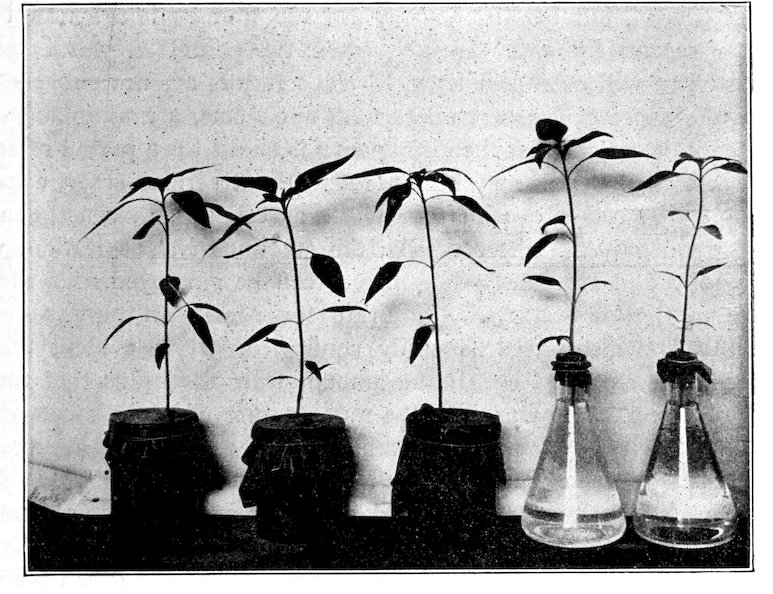
Fig. 31. Absorption and transpiration of Helianthus annuus. I and II, plants repotted in soil of known weight and water-content; III, plant undisturbed in the original soil; IV, potometer containing plant with cut stem; V, potometer with entire plant.
156. The quantitative relation of absorption and transpiration. Burgerstein[11] has summarized the results of various investigators in the statement “that between the quantitative absorption of water on the one hand and emission on the other there exists no constant parallelism or proportion,” 112and he has cited the work of Kröber, and of Eberdt in proof. This statement holds, however, only for short periods of a few hours, or more rarely, a day, and even here its truth still remains to be conclusively demonstrated. The discrepancy between absorption and transpiration for a short period is often greater than for a longer time, but it is evident that a transient change in behavior or a small error in the method would inevitably produce this result. Eberdt found the discrepancy for a few hours to be 1–2 ccm. in an entire plant of Helianthus annuus, while for a whole day the water absorbed was 33.57 ccm. and the water lost 33.98 ccm. Kröber’s experiments with cut branches of Asclepias incarnata showed a maximum difference for 12 hours of 2.5 ccm., but the discrepancy for the first 24 hours was 1 ccm. and for the second 1.9 ccm. In both cases, the potometer was employed. Consequently, as will be shown later, Eberdt’s results are not entirely trustworthy, while those of Kröber, made with cut stems, are altogether unreliable. Hence, it is clear that the discrepancy is slight for a period of several days or weeks, and that it may be ignored without serious error, except in a few plants that retain considerable water as cell-sap, in consequence of extremely rapid growth. Accordingly, the amount of transpiration, which may be readily and accurately determined, can be employed as a measure of absorption that is sufficiently accurate for nearly all purposes. The truth of this statement may be easily confirmed. It is evident that the amount of water absorbed equals the amount transpired plus that retained by the plant as cell-sap, or used in the manufacture of organic compounds. In plants not actively growing, the amount lost equals that absorbed, as already shown in the experiment with Helianthus. According to Gain[12], Dehérain has found that a plant rooted in ordinary soil transpired 680 kg. of water for each kilogram of dry substance elaborated. In Helianthus annuus, the dry matter is 10 per cent of the weight of the green plant. A well-grown plant weighing 1,000 grams, therefore, consists of 100 grams of dry matter and 900 of water. The length of the growing period for such a plant is approximately 100 days, during which it transpires 68 kilograms of water. Assuming the rate of transpiration and of growth to be constant, the plant transpires 680 grams daily, adds 9 grams to its cell-sap, and 1 gram to its dry weight. The amount of water in a gram of cellulose and its isomers is about ⅗. Consequently, the total water absorbed daily by the plant is 689.6 grams. The 680 grams transpired are 98.6 per cent of the amount absorbed; in other words, only 1.4 per cent of the water absorbed is retained by the plant. From this it is evident that the simplest 113and most convenient measure of absorption under normal conditions can be obtained through transpiration, since the discrepancy between absorption and transpiration is scarcely larger than the error of any method applicable to the field. Conversely, the measure of absorption obtained by the process described in the preceding section serves also as a measure of transpiration. The determination of the latter in the field is so much simpler, however, that it is rarely desirable to apply the absorption method.
157. Measurement of transpiration. The water loss of a plant may be determined absolutely or relatively. Absolute or quantitative determinations are by (1) weighing, (2) collecting, or (3) measuring the water absorbed; relative values are indicated by hygroscopic substances. A number of methods have been employed more or less generally for measuring transpiration. The great majority of these can be used to advantage only in the laboratory, and practically all fail to meet the fundamental requirement for successful field work, namely, that the plant be studied under normal conditions in its own habitat. The following is a summary of the various methods, the details of which may be found in Burgerstein.
1. Weighing. This is the most satisfactory of all methods for determining water loss. It is more accurate than any other, and is unique in that it does not place the plant under abnormal conditions. On the score of convenience, moreover, it excels every other method capable of yielding quantitative results. Various modifications of weighing are employed, but none of these have all the advantages of a direct, simple weighing of the plant in its own soil.
2. Collecting the water transpired. This may be done by collecting and weighing the water vapor exhaled by a plant placed within a bell jar, or by weighing a deliquescent salt, such as calcium chloride, which is used to absorb the water of transpiration. The decisive disadvantage of these methods is that transpiration is carried on in an atmosphere far more humid than normal. If an excessive amount of salt is used, the air is abnormally dry. In both cases, the water loss decreases until it reaches a point much below the usual amount. Finally, all methods of this kind are open to considerable error, and are inconvenient, especially in field work. They are of relatively slight value in comparison with weighing.
3. Potometers. It has already been shown that the amount of water absorbed is a close measure of the amount transpired. In consequence, the potometer can be used to determine the amount of transpiration provided the absorption is not abnormal. It is rarely and only with much difficulty that this condition can be met. The use of cut stems and branches does not meet it, and even in the case of plants with roots, the results must be 114compared with those obtained from absorption experiments made with plants rooted in soil before they can be relied upon. This necessity practically puts the potometer out of commission for accurate work, unless future study may show a somewhat constant ratio between the absorption of a plant in its own soil and that of a plant placed in a potometer.
4. Measuring absolute humidity. The cog psychrometer makes it possible to determine the increased relative humidity produced within a glass cylinder or special tin chamber by a transpiring plant. From this result the absolute humidity is readily obtained, and by means of the latter the actual amount of water given off. The evident drawback to this method is that the increasing humidity within the chamber gives results entirely abnormal for the plant concerned.
5. Self-registering instruments. There are various methods for registering the amount of transpiration, based upon weighing, or upon the potometer. The Richard recording evaporimeter has all the advantages of weighing, inasmuch as the water loss is measured in this way, and in addition the amount is recorded upon a revolving drum, obviating the necessity of repeated attention in case it is desirable to know the exact course of transpiration. On the other hand, methods which depend upon the potometer, while graphic, are not sufficiently accurate to be of value.
6. The use of hygroscopic materials. Hygroscopic substances change their form or color in response to moisture. As they indicate comparative water loss alone, they are of value chiefly in the study of the stomatic surfaces of leaves. F. Darwin[13] has used strips of horn, awns of Stipa, and epidermis of Yucca to construct small hygroscopes for this purpose. In these instruments the error is large, but as no endeavor is made to obtain exact results, it is negligible. Filter paper impregnated with a 3–5 per cent aqueous solution of cobalt chloride is deep blue when dry. If a strip of cobalt paper is placed upon a leaf and covered with a glass slip it turns bright rose color, the rapidity of the change affording a clue to the amount of transpiration.
158. Field methods. The conditions which a satisfactory field method of measuring transpiration must fulfill have already been discussed; they are accuracy, simplicity, and normality. These conditions are met only by weighing the plant in its own soil and habitat. This has been accomplished by means of the sheet-iron soil box, already described under the determination of the chresard. The method is merely the familiar one of pot and balance, slightly modified for field use. The soil block, which contains the 115plant to be studied, is cut out, and the metal plates put in position as indicated in section 53. Indeed, it is a great saving of time and effort to determine transpiration and chresard in the same experiment; this is particularly desirable in view of the close connection between them. In this event, the soil block must be small enough not to exceed the load of a field balance. After the block is cut and encased, all the plants are removed, except the one to be studied. If several individuals of the same species are present, it is an advantage to leave all of them, since the error arising from individual variations of water loss may, in this way, be almost completely eliminated. A sheet of rubber or rubber cloth is carefully tied over the box to prevent evaporation from the soil. A broad band is passed under the box to aid in lifting it upon the scales. The latter must be of the platform type, and should have a capacity as great as consistent with the need for moving it about in the field. Weighings are made in the usual way, care being taken to free the surface of the box from soil. The aeration of the soil block is kept normal by removing the rubber for a few minutes from time to time, or by forcing air through a thistle tube. Water is also added through the latter, when it is desired to continue the experiment for a considerable period. After the study of transpiration is concluded, the rubber cloth is removed, soil samples taken, and the soil allowed to dry out until the plant becomes thoroughly wilted. If the box is weighed again, the difference represents the amount of available water. The per cent of chresard is also obtained in the usual way by taking samples for ascertaining the echard, and subtracting this from the holard. Field determinations of water loss yield the most valuable results when different habitat forms, or ecads, of the same species are used. There is little profit in comparing the transpiration of a typical sun plant, such as Touterea multiflora, with that of a shade plant, such as Washingtonia obtusa. But the simultaneous study of plants like Chamaenerium angustifolium, Gentiana acuta, Scutellaria brittonii etc., which grow in several different habitats, furnishes direct and fundamental evidence of the course of adjustment and adaptation.
Hesselmann[14], in his study of open woodlands in Sweden, has employed a method essentially similar to the preceding. Young plants of various species were transferred to pots in the field, where they were allowed to grow for several months before a series of weighings was made to determine the amount of transpiration. Since weighing is the measure used in each, both methods are equally accurate. The one has a certain advantage in that the pots are, perhaps, more easily handled, while the other has the advantage 116of maintaining the normal relation of soil and roots, a condition more or less impossible in a pot. In both instances the weighing should be done in the habitat, which was not the case in Hesselmann’s researches.
The slight value of the potometer, which has had a vogue far beyond its merits, is indicated by the following table. These results were obtained from three plants of Helianthus annuus; III was left undisturbed in the pot where it had been growing, IV was placed in a potometer, after the root had been cut off, and V was an entire plant placed in a potometer. The amount of transpiration is indicated in grams per square decimeter of leaf surface. The plants were kept in diffuse light, except for a period of two hours (8:00 to 10:00 A.M.) on the last day, when they were in full sunshine at a temperature of 75° F. Plant IV wilted so promptly in the sunshine that it was found necessary to conclude the experiment in diffuse light.
8 A.M. 5 P.M. 8 A.M. 5 P.M. 8 A.M. 5 P.M. 8 A.M. 10 A.M. 5 P.M. 8 A.M. Total
III 2.9 7.3 2.4 6.0 1.7 1.6 2.0 3.4 2.0 1.8 31.1
IV 4.7 7.2 2.9 2.3 1.0 0.6 0.9 0.5 0.5 0.4 21.0
V 3.7 5.3 3.2 4.8 2.5 1.6 3.0 2.6 1.6 2.6 30.9
The cut plant, IV, lost more water the first day than either of the others, but the water loss soon decreased, and at the end of the period was almost nil. The total transpiration for III and V is much the same, but the range of variation for periods of 12 hours is from +2 to –1 gram. This experiment is taken as a fair warrant that the use of cut stems in potometers can not give accurate results. It is inconclusive, however, as to the merits of potometric values obtained by means of the entire plant, and further studies are now being made with reference to this point.
159. Expression of results. From the previous discussion of the relation between them, it follows that an expression of the amount of transpiration likewise constitutes an expression of absorption. It is very desirable also that the latter be based upon root surface and chresard, but the difficulty of determining the former accurately and readily is at present too great to make such a basis practicable. In expressing transpiration in exact terms, the fact that plants of the same species or form are somewhat individual in their behavior must be constantly reckoned with. In consequence, experiments should be made upon two or three individuals whenever possible, in order to avoid the error arising from this source.
117Water loss may be expressed either in terms of transpiring surface or of dry weight. Since there is no constant relation between surface and weight, the terms are not interchangeable or comparable, and in practice it is necessary to use one to the exclusion of the other. Obviously, surface furnishes by far the best basis, on account of its intimate connection with stomata and air-spaces, a conclusion which Burgerstein (l. c., p. 6) has shown by experiment to be true. For the best results, the whole transpiring surface should be determined. This is especially necessary in making comparisons of different species. In those studies which are of the greatest value, viz., ecads of the same species, it is scarcely desirable to measure stem and petiole surfaces, unless these organs show unusual modification. The actual transpiring surface is constituted by the walls of the cells bordering the intercellular spaces, but, since it is impossible to determine the aggregate area of these, or the humidity of the air-spaces themselves, the leaf surface must be taken as a basis. Since the transpiration through the stomata is much greater than that through the epidermal walls, the number of stomata must be taken into account. Since they are usually less abundant on the upper surface, their number should be determined for both sides of the leaf. The errors arising from more or less irregular distribution are eliminated by making counts near the tip, base, and middle of two or three mature leaves. The most convenient unit of leaf surface is the square decimeter. The simplest way to determine the total leaf area of a plant is to outline the leaves upon a homogeneous paper, or to print them upon a photographic paper. The outlines are then cut out and weighed, and the leaf area obtained in square decimeters by dividing the total weight by the weight of a square decimeter of the paper used. The area may also be readily determined by means of a planimeter.
160. Coefficient of transpiration. At present it does not seem feasible to express the transpiration of a plant in the form of a definite coefficient, but it is probable that the application of exact methods to each part of the problem will finally bring about this result. Meanwhile the following formula is suggested as a step toward this goal: t = g(u/l)LHT, in which t, the transpiration relation of a plant, is expressed by the number of grams of water lost per hour, on a day of sunshine, by one square decimeter of leaf, considered with reference to the stomata of the two surfaces, and the amount of the controlling physical factors, light, humidity, and temperature, at the time of determination. For Helianthus annuus, this formula would appear as follows: t = 2(²⁰⁰⁄₂₅₀) : 1 : 50 : 75°. To avoid the large figures arising 118from the extent of surface considered, the number of stomata per square decimeter is divided by 10,000. This amounts to the number per square millimeter, and time may consequently be saved by using this figure directly. While this formula obviously leaves much to be desired, it has the great advantage of making it possible to compare ecads of one species, or species of the same habitat or of different habitats, upon an exact basis of factor, function, and structure.
ADAPTATION
161. Modifications due to water stimuli. In adaptation, the great desideratum is to connect each modification quantitatively with the corresponding adjustment. This is even more difficult than to ascertain the quantitative relation between stimulus and functional response, a task still beset with serious obstacles. At the present time, little more can be done than to indicate the relation of marked adaptations of organs and tissues to the direct factors operating upon them, and to attempt to point out among the functions possibly concerned the one which seems to be the most probable connection between the probable stimulus and the structure under investigation. In the pages that follow, no more than this is attempted. The general changes of organs and tissues produced by water are first discussed, and after this is given a summary of the structural features of the plant types based upon water-content.
162. Modifications due to a small water supply. A water supply which may become deficient at any time is compensated either by changes which decrease transpiration, or by those that increase the amount of water absorbed or stored. These operate upon the form and size of the organs concerned, as well as upon their structure. Modifications of the form of leaf and stem are alike in that they lessen transpiration by a reduction of the amount of surface exposed to the air. Structural adaptations, on the other hand, bring about the protection of epidermal cells and stomata, and often internal cells also, from the factors which cause transpiration, or they anticipate periods of excessive transpiration by the storage of water in specialized cells or tissues. In certain extreme types the epidermis is itself modified for the absorption of water vapor from the air.
163. The decrease of water loss. The following is a summary of the contrivances for reducing transpiration.
1. Position of the leaf. Since the energy of a ray of sunlight is greatest at the sun’s highest altitudes, those leaves transpire least which are in such a 119position during midday that the rays strike them as obliquely as possible. A leaf at right angles to the noonday sun receives ten times as much light and heat upon a square decimeter of surface as does one placed at an angle of 10 degrees. This device for reducing the intensity of insolation is best developed in the erect or hanging leaves of many tropical trees. In temperate zones, it is found in such plants as Silphium laciniatum and Lactuca scariola, and in species with equitant leaves. In such plants as Helianthus annuus, the effect is just the opposite, since the turning of the crown keeps the leaves for a long time at a high angle to the incident rays. In the case of mats, it is the aggregation of plants which brings about the mutual protection of the leaves from insolation and wind.
2. Rolling of the leaf. Many grasses and ericaceous plants possess leaves capable of rolling or folding themselves together when drouth threatens. In other cases, the leaves are permanently rolled or folded. The advantage of this device arises not only from the reduction of surface, but also from the fact that the stomata come to lie in a chamber more or less completely closed. In the case of those mosses whose leaves roll or twist, a reduction of surface alone is effected.
3. Reduction of leaf. The transpiring surface of a plant is reduced by decreasing the number of leaves, by reducing the size of each leaf, or by a change in its form. In so far as the stem is a leaf, a decrease in size or a change in shape brings about the same result. The final outcome of reduction in size or number is the complete loss of leaves, and more rarely, of the stem. Such marked decrease of leaf area is found only in intense xerophytes, though it occurs in all deciduous trees as a temporary adaptation. Changes in leaf form are nearly always accompanied by a decrease in size. Of the forms which result, the scale, the linear or cylindrical leaf, and the succulent leaf are the most common. Leaves which show a tendency to divide often increase the number of lobes or make them smaller.
4. Epidermal modifications. Excretions of wax and lime by the epidermis have a pronounced effect by increasing the impermeability of the cuticle, and, hence, decreasing epidermal transpiration. It seems improbable that a coating of wax on the lower surface of a diphotic leaf can have this purpose. The thickening of the outer wall of epidermal cells to form a cuticle is the most perfect of all contrivances for decreasing permeability and reducing transpiration. In many desert plants, the greatly thickened cuticle effectually prevents epidermal transpiration. In these also the cuticle is regularly developed in such a way as to protect the guard cells, and even to close the opening partially. An epidermis consisting of two or more layers of cells is an effective, though less frequent device against water loss. When combined with a cuticle, as is usually the case, the impermeability is almost complete. Hairs decrease transpiration by screening the 120epidermis so that the amount of light and heat is diminished, and the access and movement of dry air impeded. While hairs assume the most various forms, all hairy coverings serve the same purpose, even when, as in the case of Mesembryanthemum, they are primarily for water-storage. Hairs protect stomata as well as epidermal cells: the greater number of the former on the lower surface readily explains the occurrence of a hairy covering on this surface, even though absent on the more exposed upper side. In some cases, hairs are developed only where they serve to screen the stomata.
The modifications of the stomata with respect to transpiration are numerous, yet all may be classed with reference to changes of number or level. With the exception of aquatic and some shade plants, the number of stomata is normally greater on the less exposed, i. e., lower surface. The number on both surfaces decreases regularly as the danger of excessive water loss increases, but the decrease is usually more rapid on the upper surface, which finally loses its stomata entirely. It has been shown by many observers that species growing in dry places have fewer stomata to the same area than do those found in moist habitats. This result has been verified experimentally by the writer in the case of Ranunculus sceleratus, in which, however, the upper surface possesses the larger number of stomata. Plants of this species, which normally grow on wet banks, were grown in water so that the leaves floated, and in soils containing approximately 10, 15, 30, and 40 per cent of water. The averages for the respective forms were: upper 20, lower 0; upper 18, lower 10; upper 18, lower 11; upper 11, lower 8; upper 10, lower 6. Reduction of number is effective, however, only under moderate conditions of dryness. As the latter becomes intense, the guard cells are sunken below the epidermis, either singly or in groups. In both cases, the protection is the same, the guard cells and the opening between them being withdrawn from the intense insolation and the dry air. The sun rays penetrate the chimney-shaped chambers of sunken stomata only for a few minutes each day, and they are practically excluded from the stomatal hollows which are filled with hairs. The influence of dry winds is very greatly diminished, as is also true, though to a less degree, for leaves in which the stomata are arranged in furrows. Sunken stomata often have valve-like projections of cuticle which reduce the opening also. Finally, in a few plants, water loss in times of drouth is almost completely prevented by closing the opening with a wax excretion.
5. Modifications in the chlorenchym. A decrease in the size and number of the air passages in the leaf renders the movement of water-laden air to the stomata more difficult, and effects a corresponding decrease in transpiration. The increase of palisade tissue, though primarily dependent upon light, reduces the air-spaces, and consequently the amount of water lost. 121The development of sclereids below the epidermis likewise hinders the escape of water. Finally the character of the cell sap often plays an important part, since cells with high salt-content or those containing mucilaginous substances give up their water with reluctance.
164. The increase of water supply. Plants of dry habitats can increase their absorption only by modifying the root system so that the absorbing surfaces are carried into the deep-seated layers of soil, and the surfaces in contact with the dry soil are protected by means of a cortex. Exception must be made for epiphytes and a few other plants that absorb rain water and dew through their leaves, and for those desert plants that seem to condense the moisture of the air by means of hygroscopic salts, and absorb it through the epidermis of the leaf. The storage of water in the leaf is a very important device; it increases the water supply by storing the surplus of absorbed water against the time of need. Modifications for water-storage are occasionally found in roots and stems, but their chief development takes place in the leaf. The epidermis frequently serves as a reservoir for water, either by the use of the epidermal cells themselves, by the formation of hypodermal water layers, or by means of superficial bulliform cells. The water cells of the chlorenchym regularly appear in the form of large clear cells, scattered singly or arranged in groups. In this event, they occur either as transverse bands, or as horizontal layers, lying between the palisade and sponge areas, and connecting the bundles. A few plants possess tracheid-like cells which also serve to store water. In the case of succulent leaves, practically the whole chlorenchym is used for storing water, though they owe their ability to withstand transpiration to a combination of factors.
165. Modifications due to an excessive water supply. Water plants with aerial leaf surfaces are modified in such manner as to increase water loss and to decrease water supply, but the resulting modifications are rarely striking. There is a marked tendency to increase the exposed surface. This is indicated by the fact that, while the leaves of mud and floating forms become larger, they change little or not at all in thickness. The lobing of leaves is also greatly reduced, or the lobes come to overlap. Leaves of water plants are practically destitute of all modifications of epidermis and stomata, which could serve to hinder transpiration. The stomata are usually more numerous on the upper surface, and in the same species their number is greater in the forms grown in wet places. These facts explain in part the extreme development of air-passages in water plants, though this is, in large measure, a response to the increasing difficulty of aeration. The 122increase of air-spaces is correlated with reduction of the palisade, and a decided increase in the sponge. An increase in water supply is indicated by the absence of storage tissues, and the reduction of the vascular system, which, however, is more closely connected with a diminished need for mechanical support.
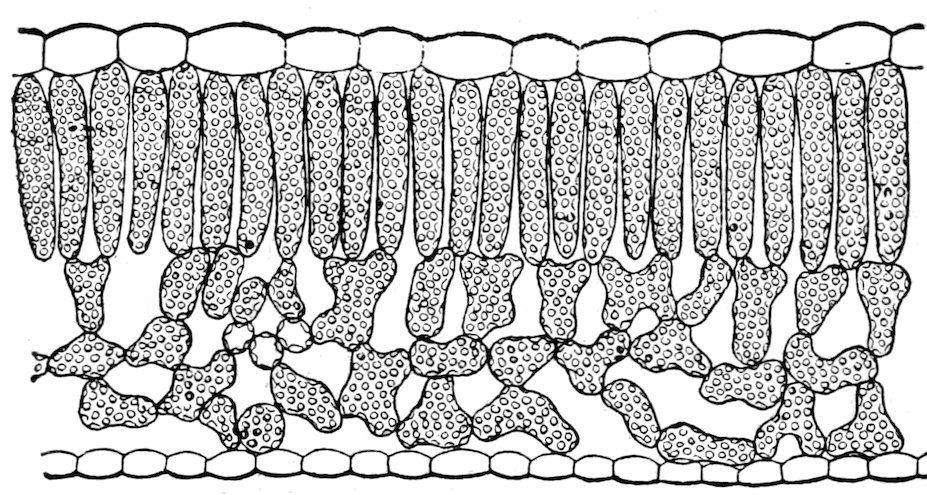
Fig. 32. Mesophyll of Pedicularis procera (chresard, 15%, light, 1). × 130.
166. Plant types. The necessity for decreasing or increasing water loss in compensation of the water supply has made it possible to distinguish two fundamental groups of plants upon the twofold basis of habitat and structure. These familiar groups, xerophytes and hydrophytes, represent two extremes of habitat and structure, between which lies a more or less vague, intermediate condition represented by mesophytes. These show no characteristic modifications, and it is consequently impossible to arrange them in subgroups. Xerophytes and hydrophytes, on the other hand, exhibit marked diversity among themselves, a fact that makes it desirable to recognize subgroups, which correspond to fundamental differences of habitat or adaptation. It is hardly necessary to point out that these types are not sharply defined, or that a single plastic species may be so modified as to exhibit several of them. The extremes are always clearly defined, however, and they indicate the specific tendency of the adaptation shown by other members of the same group.
167. Xerophytic types. With the exception of dissophytes, all xerophytes agree in the possession of a deep-seated root system, adapted to withdraw water from the lower moist layers, and to conserve from loss from the upper dry layers. Reservoirs are developed in the root, however, in relatively few cases. The stem follows the leaf more or less closely in its modification, except when the leaf is greatly reduced or disappears, in which event the stem exhibits peculiar adaptations. While the leaf is by far the most strikingly modified, it is a difficult task to employ it satisfactorily as the basis for distinguishing types. Several adaptations are often combined in the same leaf, and it is only where one of these is preeminently developed, as in the case of succulence, that the plant can be referred to a definite type. The latter does not happen in many species of the less 123intensely xerophytic habitats, and, consequently, it is difficult, if not undesirable, to place such xerophytes under a particular group. The best that can be done is to recognize the types arising from extreme or characteristic modification, and to connect the less marked forms as closely as possible with these. Halophytes differ from xerophytes only in the fact that the chresard is determined by the salt-content of the habitat, and not by the texture of the soil. In consequence, they should not be treated as a distinct group.
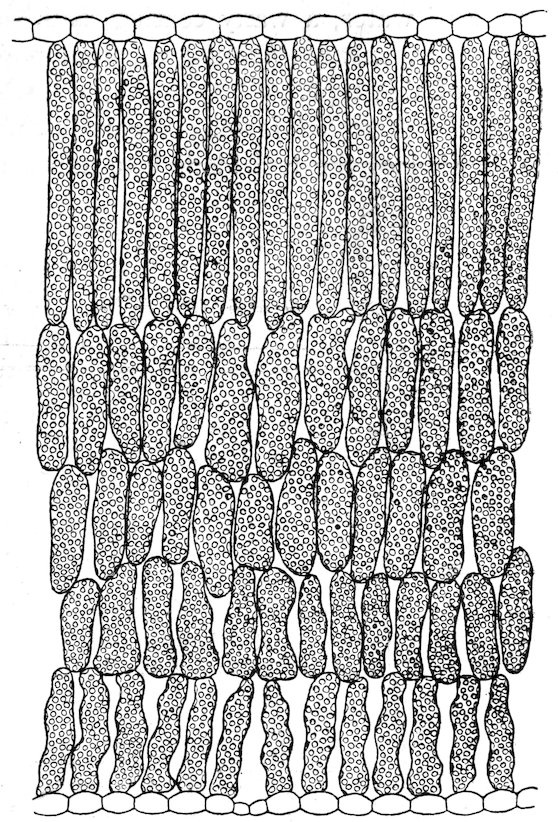
Fig. 33. Staurophyll of Bahia dissecta, showing extreme development of palisade (chresard, 3–9%; light, 1). × 130.
168. Types of leaf xerophytes. In these, adaptation has acted primarily upon the leaf, while the stem has remained normal for the most part. Even when the leaves have become scale-like, they persist throughout the growing season, and continue to play the primary part in photosynthesis. The following types may be distinguished:
1. The normal form. The leaf is of the usual dorsiventral character. In place of a reduction in size, structural modifications are used to decrease transpiration. With respect to the protective feature that is predominant, three subtypes may be recognized. The cutinized leaf compensates for a low water-content by means of a thick cuticle, often reinforced by a high development of palisade tissue. Such leaves are more or less leathery, and they are often evergreen also. Arctostaphylus and many species of Pentstemon are good examples. Lanate leaves, i. e., those with dense hairy coverings on one or both surfaces, as Artemisia, Antennaria, etc., regularly lack both cuticle and palisade tissue. The protection against water loss, however, is so perfect that the chlorenchym often assumes the loose structure of a shade leaf. Storage leaves usually have a well-developed cuticle and several rows of palisade cells, but their characteristic feature is the water-storage tissue, which maintains a reserve supply of 124water for the time of extreme drouth. Xerophytic species of Helianthus furnish examples of transverse bundles of storage cells, while those of Mertensia illustrate the more frequent arrangement in which the water tissue forms horizontal layers.
2. The succulent form. Many succulent leaves are normal in shape and size, though always thicker than ordinary leaves. Usually, however, they are reduced in size and are more or less cylindrical in form. The necessary decrease in transpiration is effected by the reduction in surface, the general storage of water, a waxy coating, and, often also, by a very thick cuticle. Agave, Mesembryanthemum, Sedum, and Senecio furnish excellent examples of this type.
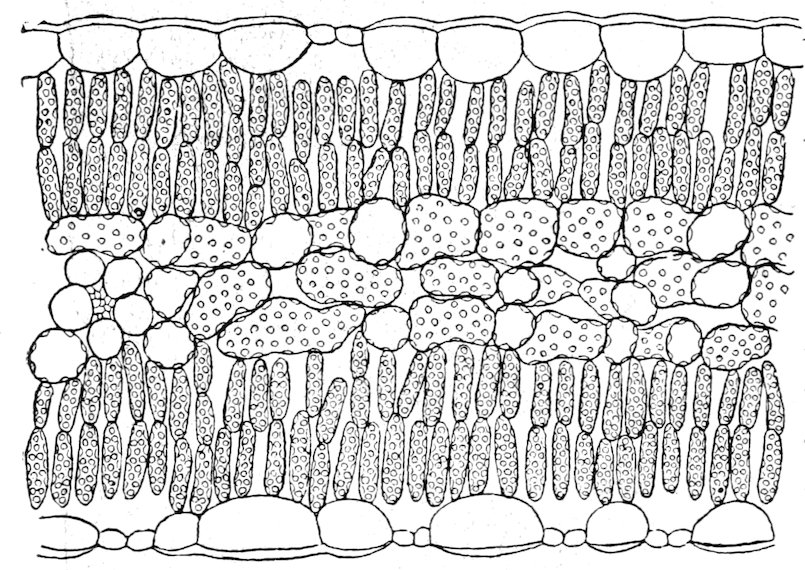
Fig. 34. Diplophyll of Mertensia linearis, showing water cells (chresard, 3–9%, light, 1). × 130.
3. The dissected form. The reduction in surface is brought about by the division of the leaf blade into narrow linear or thread-like lobes which are widely separated. The latter are themselves protected by a hairy covering or a thick cuticle, which is often supplemented by many rows of palisade, or by storage tissue. Artemisia, Senecio, and Gilia contain species which serve as good examples of this type.
4. The grass form. Xerophytic grasses and sedges have narrow filamentous leaves with longitudinal furrows which serve to protect the stomata. The furrows are sometimes filled with hairs which are an additional protection, and the leaves often protect themselves further by rolling up into a thread-like shape. The elongated subulate leaves of Juncus and certain Cyperaceae are essentially of this type, although they are usually not furrowed.
5. The needle form. This is the typical leaf of conifers, in which a sweeping reduction of the leaf surface is an absolute necessity. The relatively small water loss of the needle leaf is still further decreased by a thick cuticle, and usually also by hypodermal layers of sclerenchyma.
6. The roll form. Roll leaves are frequently small and linear. Their characteristic feature is produced by the rolling in of the margin on the under side, by which an almost completely closed chamber is formed for the protection of the stomata which are regularly confined to the lower surface of the leaf. The upper epidermis is heavily cutinized and the lower 125one often protected by hairs. This type is found especially among the genera of the Ericales, but it also occurs in a large number of related families.
7. The scale form. Reduction of leaf surface for preventing excessive water loss reaches its logical culmination in the scale leaf characteristic of many trees and shrubs, e. g., Cupressus, Tamarix, etc. Scale leaves are leathery in texture, short and broad, and closely appressed to the stem, as well as often overlapping.
169. Types of stem xerophytes. In these types the leaves are deciduous early in the growing period, reduced to functionless scales, or entirely absent. The functions of the leaf have been assumed by the stem, which exhibits many of the structural adaptations of the former. Warming[15] has distinguished the following groups:
1. The phyllode form. The petiole is broadened and takes the place of the leaf blade which is lacking. In other cases, the stem is flattened or winged, and it replaces the entire leaf. This type occurs in Acacia, Baccharis, Genista, etc.
2. The virgate form. The leaves either fall off early or they are reduced to functionless scales. The stems are thin, erect, and rod-like, and are often greatly branched. They are heavily cutinized and palisaded, and the stomata are frequently in longitudinal furrows. This type is characteristic of the Genisteae; it is also found in Ephedra, many species of Polygonum, Lygodesmia, etc.
3. The rush form. In Heleocharis, many species of Juncus, Scirpus, and other Cyperaceae, the stem, which is nearly or completely leafless, is cylindrical and unbranched. It usually possesses also a thick cuticle, and several rows of dense palisade tissue.
4. The cladophyll form. In Asparagus the leaves are reduced to mere functionless scales, and their function is assumed by the small needle-shaped branches.
5. The flattened form. As in the preceding type, the place of the scale-like leaves is taken by cladophylls, which are more or less flattened and leaf-like. Ruscus is a familiar illustration of this form.
6. The thorn form. This is typical of many spiny desert shrubs, in which the leaves are lost very early, or, when present, are mere functionless scales. The stems have an extremely thick cuticle, and the stomata are deeply sunken, as a rule. Colletia and Holacantha are good examples of the type.
1267. The succulent form. Plants with succulent stems such as the Cactaceae, Stapelia, and Euphorbia have not only decreased water loss by extreme reduction or loss of the leaves, and the reduction of stem surface, but they also offset transpiration by means of storage tissues containing a mucilaginous sap. The cuticle is usually highly developed and the stomata sunken. Thorns and spines are also more or less characteristic features.
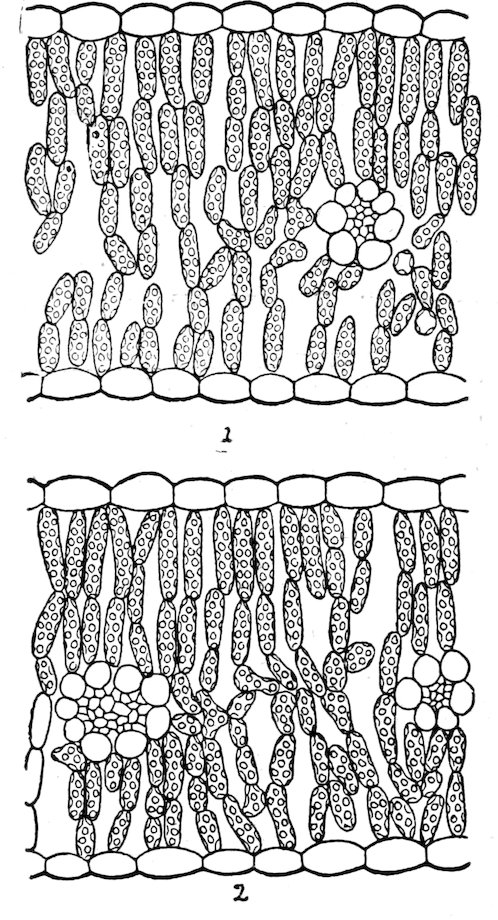
Fig. 35. Polygonum bistortoides, a stable type: 1, mesophyll (chresard, 25%); 2, xerophyll (chresard, 3–5%). × 130.
170. Bog plants. Many of the xerophytic types just described are found in ponds, bogs, and swamps, where the water supply is excessive, and hydrophytes would be expected. The explanation that “swamp xerophytes” are due to the presence of humic acids which inhibit absorption and aeration in the roots has been generally accepted. As Schimper has expressed it, bogs and swamps are “physiologically dry”, i. e., the available water is small in amount, in spite of the great total water-content. Burgerstein (l. c., 142) has shown, however, that maize plants transpire, i. e., absorb, three times as much water in a solution of 0.5 per cent of oxalic acid as they do in distilled water, and that branches of Taxus in a solution containing 1 per cent of tartaric acid absorb more than twice as much as in distilled water. Consequently, it seems improbable that small quantities of humic acids should decrease absorption to the extent necessary for the production of xerophytes in ponds and bogs. Indeed, in many ponds and streams, where Heleocharis, Scirpus, Juncus, etc., grow, not a trace of acid is discoverable. Furthermore, plants with a characteristic hydrophytic structure throughout, such as Ranunculus, Caltha, Ludwigia, Sagittaria, etc., are regularly found growing alongside of apparent xerophytes. Many of the latter, furthermore, show a striking contrast in size and vigor of growth in places where they grow both upon dry gravel banks and in the water, indicating that the available water-content is much greater in the latter. Finally, many so-called “swamp xerophytes” possess typically hydrophytic structures, such as air-passages, diaphragms, etc. In spite of a growing feeling that the xerophytic features of certain amphibious plants can not be ascribed to a low chresard in ponds and swamps, a satisfactory explanation 127of them has been found but recently. This explanation has come from the work of E. S. Clements already cited, in which it was found that certain sun plants underwent no material structural change when grown in the shade, and that the same was true also of a few species which grew in two or more habitats of very different water-content. In accordance with this, it is felt that the xerophytic features found in amphibious plants are due to the persistence of stable structures, which were developed when these species were growing in xerophytic situations. When it is called to mind that monocotyledons, and especially the grasses, sedges, and rushes, are peculiarly stable, it may be readily understood how certain ancestral characters have persisted in spite of a striking change of habitat. Such a hypothesis can only be confirmed by the methods of experimental evolution, and a critical study of this sort is now under way.
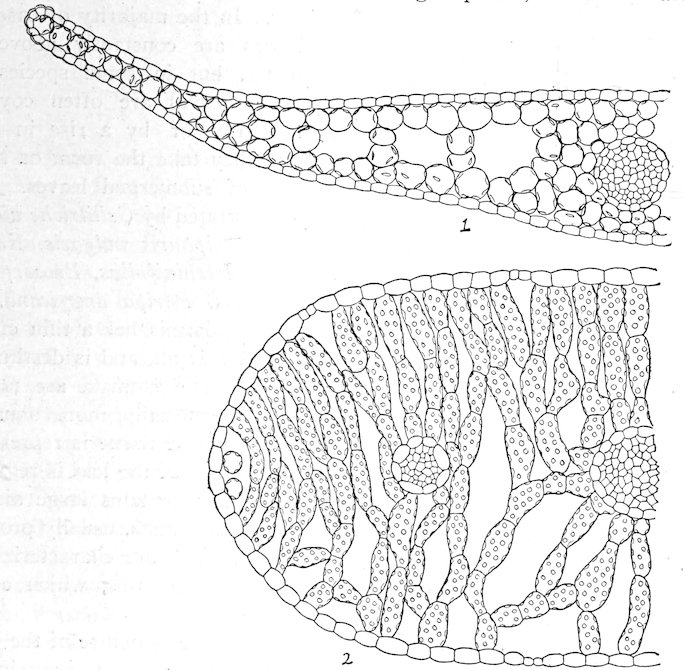
Fig. 36. Hippuris vulgaris: 1, submerged leaf; 2, aerial leaf. × 130.
171. Hydrophytic types. Hydrophytes permit a fairly sharp division into three groups, based primarily upon the relation of the leaf surface to the two media, air and water. In submerged plants, the leaves are constantly 128below the water; in amphibious ones, they grow normally in the air. Floating plants have leaves in which the upper surface is in contact with the air, and the lower in contact with the water. Transpiration is at a maximum in the amphibious plant; it is reduced by half in the floating type, and is altogether absent in submerged plants. Aeration reaches a high development in amphibious and floating forms, but air-passages are normally absent from submerged forms except as vestiges. Photosynthesis is marked in the former, but considerably weakened in the latter. The vascular system, which attains a moderate development in the amphibious type, is considerably reduced in floating forms, and it is little more than vestigiate in submerged ones.
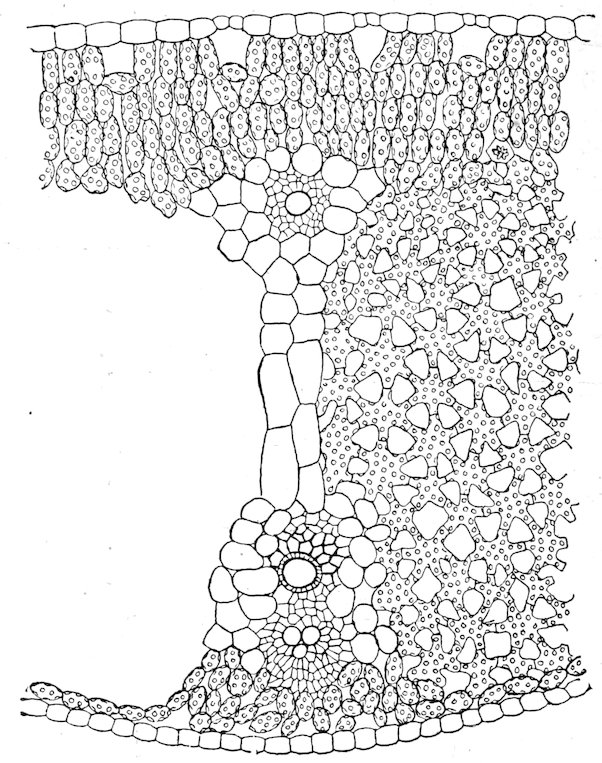
Fig. 37. Floating leaf of Sparganium angustifolium. × 130.
1. The amphibious type. Plants of this type grow in wet soil or in shallow water. The leaves are usually large and entire, the stem well developed, and the roots numerous and spreading. In the majority of cases the leaves are constantly above the water, but in some species the lower leaves are often covered, normally, or by a rise in level, and they take the form or structure of submerged leaves. This is illustrated by Callitriche autumnalis, Hippuris vulgaris, Ranunculus delphinifolius, Proserpinaca palustris, Roripa americana, etc. The epidermis has a thin cuticle, or none at all, and is destitute of hairs. The stomata are numerous and usually more abundant on the upper than on the lower surface. The palisade tissue is represented by one or more well-developed rows, but this portion of the leaf is regularly thinner than that of the sponge part. The latter contains large air-passages, or, in the majority of cases, numerous air-chambers, usually provided with diaphragms. The stems are often palisaded, and are characterized by longitudinal air-chambers crossed by frequent diaphragms, which extend downward through the roots.
2. The floating type. With respect to form and the structure of the upper part of the leaf, floating leaves are essentially similar to those of amphibious plants. They are usually lacquered or coated with wax to prevent the 129stoppage of the stomata by water. Stomata, except as vestiges, are found only on the upper surface, and the palisade tissue is much less developed than the sponge, which is uniformly characterized by large air-chambers. The stems are elongated, the aerating system is enormously developed, and the supportive tissues are reduced. In the Lemnaceae, the leaf and the stem are represented by a mere frond or thallus, and the roots are in the process of disappearance, e. g., Spirodela has several, Lemna one, and Wolffia none.
3. The submerged type. Both stem and root have been greatly reduced in submerged plants, owing to the generalization of absorption and the density of the water. The leaves are greatly reduced in size and thickness, chiefly, it would seem, for the purpose of insuring readier aeration and great illumination. The leaf may be ribbon-like, linear, cylindrical, or finely dissected. Stomata are sometimes present, but they are functionless and vestigial. A distinction into palisade and sponge tissues, when present, must also be regarded as a vestige; the chlorenchym is essentially that of a shade leaf. The air-chambers are much reduced, and sometimes lacking; they function doubtless as reservoirs for air obtained from the water.
PHOTOHARMOSE
ADJUSTMENT
172. Light as a stimulus. In nature, light stimuli are determined by intensity and not by quality. A single exception is afforded by those aquatic habitats where the depth of water is great, and in consequence of which certain rays disappear by absorption more quickly than others. In forests and thickets, where the leaves transmit only the green and yellow rays, it would appear that the light which reaches the herbaceous layers is deficient in red and violet rays. The amount of light transmitted by an ordinary sun leaf is so small, however, that it has no appreciable effect upon the quality of the light beneath the facies, which is diffuse white light that has passed between the leaves. Indeed, it is only in the densest forests that distinct sunflecks do not appear. Coniferous forests, with a light value less than .005, which suffices only for mosses, lichens, and a few flowering plants, show frequent sunflecks. This is convincing evidence that the light of such habitats is normal in quality. It warrants the conclusion that in all habitats with an intensity capable of supporting vascular plants the light, no matter how diffuse, is white light. The direction of the light ray is of slight importance in the field, apart from the difference in intensity which may result from it. In habitats with diffuse light, the latter comes normally and constantly from above. Likewise, in sunny situations, direction can 130have little influence, since both the direction and the angle of the incident rays change continually throughout the day, and the position of the leaf itself is more or less constantly changed by the wind. The influence of duration upon the character of light stimuli is difficult to determine. There can be no question that the time during which a stimulus acts has a profound bearing upon the response that is made to it. In nature the problem is complicated by the fact that light stimuli are both continuous and periodic. The duration of sunlight is determined by the periodic return of night as well as by the irregular occurrence of clouds. Since one is a regular, and the other at least a normal happening, it is necessary to consider duration only with respect to the time of actual sunlight on sunny days, except in the case of formations belonging to regions widely different in the amount of normal sunshine, i. e., the number of cloudy days. In consequence, duration is really a question of the intensities which succeed each other during the day. The differences between these have already been shown to fall within the efficient difference for light, and for this reason the ratio between the light intensity of a meadow and of a forest is essentially the ratio between the sums of light intensity for the two habitats, i. e., the duration. The latter is of importance only where there is a daily alternation between sunshine and shadow, as at the edge of forest and thicket, in open woodland, etc. In such places duration determines the actual stimulus by virtue of the sum of preponderant intensities. The periodicity of daylight is a stimulus to the guard cells of stomata, but its relation to intensity in this connection is not clear.
The amount of change in light intensity necessary to constitute an efficient stimulus seems to depend upon the existing intensity as well as upon the plant concerned. Apparently, a certain relative decrease is more efficient for sun plants than for shade plants. At least, many species sooner or later reach a point where a difference larger than that which has been efficient no longer produces a structural response. This has been observed by E. S. Clements (l. c.) in a number of shade ecads. For example, a form of Galium boreale, which grew with difficulty in a light value of .002, showed essentially the leaf structure of the form growing in light of .03, while the form in full sunlight showed a striking difference in the leaf structure. In considering the light stimuli of habitats, it is unnecessary to discuss the stimulus of total darkness upon chlorophyllous plants, although this is of great importance in experimental evolution and in control experiment. The normal extremes of light intensity, i. e., those within which chlorenchym can function, are full sunshine represented by 1, and a diffuseness of .002, though small flowering plants have once or twice been found in an intensity of .001. The maximum light value, even on high mountains, never exceeds 1 by more than an inconsiderable amount, except for the 131temporary concentration due to drops of dew, rain, etc. It seems improbable that the concentrating effect of epidermal papillae can do much more than compensate for the reflection and absorption of the epidermis. Experimental study has shown that the maximum intensity in nature may be increased several, if not many times, without injurious results and without an appreciable increase in the photosynthetic response, thus indicating that the efficient difference increases toward the maximum as well as toward the minimum.
173. The reception of light stimuli. Rays of light are received by the epidermis, by which they are more or less modified. Part of the light is reflected by the outer wall or by the cuticle, particularly when these present a shining surface. Hairs diffract the light rays, and hairy coverings consequently have a profound influence in determining stimuli. The walls and contents of epidermal cells furthermore absorb some of the light, especially when the cell sap is colored. In consequence of these effects, the amount of light that reaches the chlorenchym is always less than that incident upon the leaf, and in many plants, the difference is very great. According to Haberlandt[16], the epidermal cells of some shade plants show modifications designed to concentrate the light rays. Of such devices, he distinguishes two types: one in which the outer epidermal wall is arched, another in which the inner wall is deeply concave. Although there can be no question of the effect of lens-shaped epidermal cells, their occurrence does not altogether support Haberlandt’s view. Arched and papillate epidermal cells are found in sun plants where they are unnecessary for increasing illumination, to say the least. A large number of shade plants show cells of this character, but in many the outer wall is practically a plane. Shade forms of a species usually have the outer wall more arched or papillate, but this is not always true, and, in a few cases, it is the lower epidermis alone that shows this feature. Finally, a localization of this function in certain two-celled papillae, such as Haberlandt indicates for Fittonia verschaffelti, does not appear to be plausible.
The epidermis merely receives the light; the perception of the stimulus normally occurs in those cells that contain chloroplasts. The cytoplasm of the epidermal cells, as well as that of the chlorenchym cells, is sensitive to light, but the response produced by the latter is hardly discernible in the absence of plastids, except in those plants which possess streaming protoplasm. The daily opening and closing of the stomata, which is due to light, is evidently connected with the presence of chloroplasts in the guard cells. Naturally, the perception of light and the corresponding response occur in the epidermis of many shade and submerged plants which have 132chloroplasts in the epidermal cells. Such cases merely serve to confirm the view that the perception of light stimuli is localized in the chloroplast. In conformity with this view, the initial response to such stimuli must be sought in the chloroplast, and the explanation of all adaptations due to light must be found in the adjustment shown by the chloroplasts.
174. Response of the chloroplast. The fundamental response of a plastid to light is the manufacture of chlorophyll. In the presence of carbon dioxide and water, leucoplasts invariably make chlorophyll, and chloroplasts replace that lost by decomposition, in response to the stimulus exerted by light. The latter is normally the efficient factor, since water is always present in the living plant, and carbon dioxide absent only locally at most. Sun plants which possess a distinct cuticle, however, produce leucoplasts, not chloroplasts, in the epidermal cells, although these are as strongly illuminated as the guard cells, which contain numerous chloroplasts. This is evidently explained by the lack of carbon dioxide in the epidermis. This gas is practically unable to penetrate the compact cuticle, at least in the small quantity present in the air. The supply obtained through the stomata is first levied upon by the guard cells and then by the cells of the chlorenchym, with the result that the carbon dioxide is all used before it can reach the epidermal cells. This view is also supported by the presence of chloroplasts along the sides and lower wall of palisade cells, where there is normally a narrow air-passage, and their absence along the upper wall when this is closely pressed against the epidermis, as is usually the case. Furthermore, the leaves of some mesophytes when grown in the sun develop a cuticle and contain leucoplasts. Under glass and in the humid air of the greenhouse, the same plants develop epidermal chloroplasts but no cuticle. This is in entire harmony with the well-known fact that shade plants and submerged plants often possess chloroplasts in the epidermis. Although growing in different media, their leaves agree in the absence of a cuticle, and consequent absorption of gases through the epidermis. The size, shape, number, and position of the chloroplasts are largely determined by light, though a number of factors enter in. No accurate studies of changes in size and shape have yet been made, though casual measurements have indicated that the chloroplasts in the shade form of certain species are nearly hemispherical, while those of the sun form are plane. In the same plants, the number of chloroplasts is strikingly smaller in the shade form, but exact comparisons are yet to be made. The position and movement of chloroplasts have been the subject of repeated study, but the factors which control them are still to be conclusively indicated. Light is clearly the principal cause, although there are many cases where a marked change in the light intensity fails to call forth any readjustment of the 133plastids. The position of air-spaces as reservoirs of carbon dioxide and the movement of crude and elaborated materials from cell to cell frequently have much to do with this problem. Finally, it must be constantly kept in mind that the chloroplasts lie in the cytoplasm, which is in constant contact with a cell wall. Hence, any force that affects the shape of the cell will have a corresponding influence upon the position of the chloroplasts. When it is considered that in many leaves these four factors play some part in determining the arrangement of the plastids, it is not difficult to understand that anomalies frequently appear.
It may be laid down as a general principle that chloroplasts tend to place themselves at right angles to rays of diffuse light and parallel to rays of sunlight. This statement is borne out by an examination of the leaves of typical sun and shade species, or of sun and shade forms of the same species. Cells which receive diffuse light, i. e., sponge cells, normally have their rows of plastids parallel with the leaf surface, while those in full sunlight place the rows at right angles to the surface. This disposition at once suggests the generally accepted view that chloroplasts in diffuse light are placed in such a way as to receive all the light possible, while those in sunlight are so arranged as to be protected from the intense illumination. Many facts support this statement with respect to shade leaves, but the need of protection in the sun leaf is not clearly indicated. The regular occurrence of normal chloroplasts in the guard cells seems conclusive proof that full sunlight is not injurious to them. Although the upper wall of the outer row of palisade cells is usually free from chloroplasts, yet it is not at all uncommon to find it covered by them. These two conditions are often found in cells side by side, indicating that the difference is due to the presence of carbon dioxide and not to light. In certain species of monocotyledons, the arrangement of the chloroplasts is the same in both halves of the leaf, and there is no difference between the sun and shade leaves of the same species. The experimental results obtained with concentrated sunlight, though otherwise conflicting, seem to show conclusively that full sunlight does not injure the chloroplasts of sun plants, and that the position of plastids in palisade cells is not for the purpose of protection. This arrangement, which is known as apostrophe, is furthermore often found in shade forms of heliophytes. In typical shade species, and in submerged plants, the disposition of plastids on the wall parallel with the leaf surface, viz., epistrophe, is more regular, but even here there are numerous exceptions to the rule.
The absorption of the light stimulus by the green plastid results, under normal conditions, in the immediate production of carbohydrates, which in the vast majority of cases soon become visible as grains of starch. The appearance of starch in the chloroplasts of flowering plants is such a 134regular response to the action of light that it is regarded as the normal indication of photosynthetic activity. The mere presence of chlorophyll is not an indication of the latter, since chlorophyll sometimes persists in light too diffuse for photosynthesis. The amount of starch formed is directly connected with the light intensity, and in consequence it affords a basis for the quantitative estimation of the response to light. Two responses to light stimuli have a direct effect upon the amount of transpiration. Of the light energy absorbed by the chloroplast, only 2.5 per cent is used in photosynthesis, while 95–98 per cent is converted into heat, and brings about marked increase in transpiration. Furthermore, in normal turgid plants, the direct action of light, as is well known, opens the stomata in the morning and closes them at night.
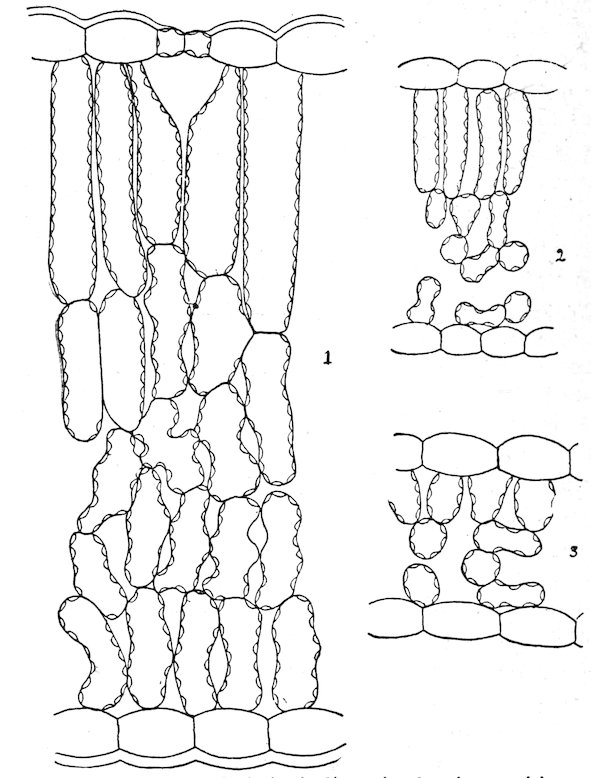
Fig. 38. Ecads of Allionia linearis, showing position of chloroplasts. The palisade shows apostrophe, the sponge epistrophe: 1, sun leaf (chresard, 2–5%, light, 1); 2, shade leaf (chresard, 11%; light, .012); 3, shade leaf (chresard, 11%; light, .003). × 250.
175. Aeration and translocation. The movements of gases and of solutions through the tissues of the leaf are intimately connected with photosynthesis, and hence with responses to light stimuli. Aeration depends primarily upon the periodic opening of the stomata, for, while the carbon dioxide and oxygen of the air are able to pass through epidermal walls not highly cutinized, the amount obtainable in this manner is altogether inadequate, if not negligible. The development of sponge tissue or aerenchym is intimately connected with the stomata. The position and amount of aerenchym and the relative extent of sponge cells and air-spaces are in part determined by the number and position of the 135breathing pores. The disposition of air spaces has much to do with the arrangement of chloroplasts in both palisade and sponge tissues. Starch formation is also dependent upon the presence of air spaces, but, contrary to what would be expected, it seems to be independent of their size, since sun leaves, which assimilate much more actively than shade leaves, have the smallest air spaces. From this fact, it appears that the rapidity of aeration depends very largely upon the rapidity with which the gases are used. Translocation likewise affects the arrangement of the chloroplasts and the formation of starch. According to Haberlandt, it also plays the principal part in determining the form and arrangement of the palisade cells. Chloroplasts are regularly absent at those points of contact where the transfer of materials is made from cell to cell, though this is not invariably true. Since air passages are necessarily absent where cell walls touch, it is possible that this disposition of the plastids is likewise due to the lack of aeration. Translocation is directly connected with the appearance of starch. As long as all the sugar made by the chloroplasts is transferred, no starch appears, but when assimilation begins to exceed translocation, the increasing concentration of the sugar solution results in the production of starch grains. The latter is normally the case in all flowering plants, with the exception of those that form sugar or oil, but no starch. The constant action of translocation is practically indispensable to starch formation, since an over-accumulation of carbohydrates decreases assimilation, and finally inhibits it altogether. In consequence, translocation occurs throughout the day and night, and by this means the accumulated carbohydrates of one day are largely or entirely removed before the next.
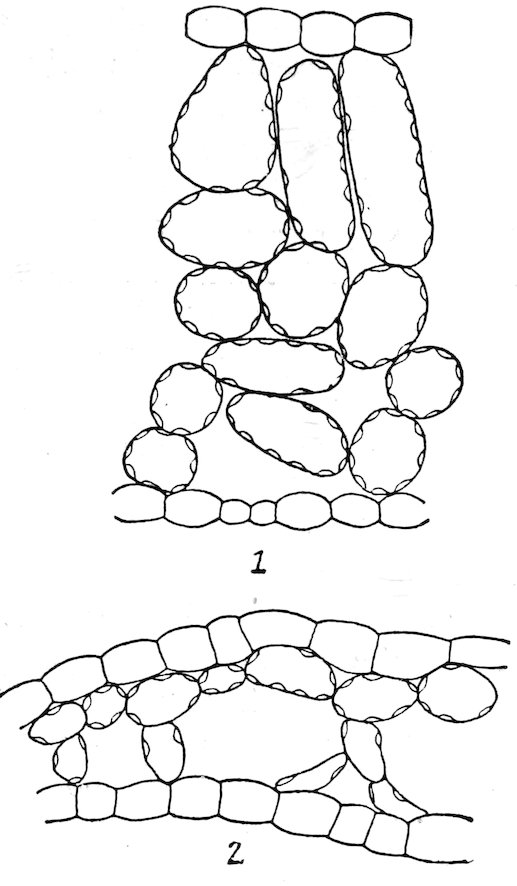
Fig. 39. Position of chloroplasts in aerial leaf (1) and submerged leaf (2) of Callitriche bifida. × 250.
176. The measurement of responses to light. Responses, such as the periodic opening and closing of stomata, which are practically the same for all leaves, are naturally not susceptible of measurement. This is also true of the transpiration produced by light, but the difficulty in this case is due 136to the impossibility of distinguishing between the water loss due to light and that caused by humidity and other factors. If it were possible to determine the amount of chlorophyll or glucose produced, these could be used as satisfactory measures of response. As it is, they can only be determined approximately by counting the chloroplasts or starch grains. The arrangement of the chloroplasts can not furnish the measure sought, since it does not lend itself to quantitative methods, and since the relation to light intensity is too inconstant. Hesselmann (l. c., 400) has determined the amount of carbon dioxide respired, by means of a eudiometer, and has based comparisons of sun and shade plants upon the results. As he points out, however, light has no direct connection with respiration. Although the latter increases necessarily with increased nutrition, the relation between them is so obscure, and so far from exact, that the amount of respiration can in no wise serve as a measure of the response to light. As a result of the foregoing, it is clear that no functional response is able to furnish a satisfactory measure of adjustment to light, though one or two have perhaps sufficient value to warrant their use. Indeed, structural adaptations offer a much better basis for the quantitative determination of the effects of light stimuli, as will be shown later.
In attempting to use the number of chloroplasts or starch grains as a measure of response, the study should be confined to the sun and shade forms of the same species, or, in some cases, to the forms of closely related species. The margin of error is so great and the connection with light sufficiently remote that comparisons between unrelated forms or species are almost wholly without value. It has already been stated that starch is merely the surplus carbohydrate not removed by translocation; the amount of starch, even if accurately determined, can furnish no real clue to the amount of glucose manufactured. In like manner, the number of chloroplasts can furnish little more than an approximation of the amount of chlorophyll, unless size and color are taken into account. In sun and shade ecads of the same species, the general functional relations are essentially the same, and whatever differences appear may properly be ascribed to different light intensities for the two habitats. The actual counting of chloroplasts and starch grains is a simple task. Pieces of the leaves of the two or more forms to be compared are killed and imbedded in paraffin in the usual way. To save time, the staining is done in toto. Methyl green is used for the chloroplasts and a strong solution of iodine for the starch grains. When counts are to be made of both, the leaves are first treated with iodin and then stained with the methyl green. The thickness of the microtome sections should be less than that of the palisade cells in order that the chloroplasts may appear in profile, thus facilitating the counting. The count is made for a segment 100 μ in width across the entire leaf. 137Two segments in different parts of the section are counted, and the result multiplied by five to give the number for a segment 1 millimeter in width. Although sun and shade leaves regularly differ in size and thickness, no correction is necessary for these. Size and thickness stand in reciprocal relation to each other in ecads, and thickness is largely an expression of the absorption of light, and hence of its intensity. In the gravel, forest, and thicket ecads of Galium boreale, counts of the chloroplasts gave the following results. The gravel form (light 1) showed 3,500 plastids in the 1–mm. segment, the forest form (light .03) possessed 1,350, and the thicket form (light .002), 1,000. In these no attention was paid to the size and form of the plastids in the different leaves, since the differences were inappreciable. When this is not the case, both factors should be taken into account. Starch grains are counted in exactly the same way. Indeed, if care is taken to collect leaves of forms to be compared, at approximately the same time on sunshiny days, a count of the chloroplasts is equivalent to a count of the starch grains in the vast majority of cases. Measurements of the size of starch grains can be made with accuracy only when the leaves are killed in the field at the same time, preferably in the afternoon. Counts of chloroplasts alone can be used as measures of response in plants that produce sugar or oil, while either chloroplasts or starch grains or both may be made the basis in starch-forming leaves.
Hesselmann (l. c., 379) has employed Sachs’s iodine test as a measure of photosynthesis. This has the advantage of permitting macroscopic examination, but the comparison of the stained leaves can give only a very general idea of the relative photosynthetic activity of two or more ecads. The iodine test is made as follows:[17] fresh leaves are placed for a few minutes in boiling water, and then in 95 per cent alcohol for 2–5 minutes, in order to remove the chlorophyll and other soluble substances. The leaves are placed in the iodine solution for ½–3 hours, or until no further change in color takes place. The strength of the solution is not clearly indicated by Sachs, who says: “I used an alcoholic solution of iodin which is best made by dissolving a large quantity of iodin in strong alcohol and adding to this sufficient distilled water to give the liquid the color of dark beer.” This solution may be approximated by dissolving ⅓ gram of iodin in 100 grams of 30 per cent alcohol. The stained leaves are put in a white porcelain dish filled with distilled water, and the dish placed in the strong diffuse light of a window. The colored leaf stands out sharply against the porcelain, and the degree of coloration, and hence of starch content, is determined by the following table: