SECOND SERIES. (continued 3)
Reading edition
Various are the names of men, and drawn from different wells; Aspects of body, or characters of mind, the creature's first idea: And some have sprung of trades, and some of dignities or office; Other some added to a father's, and yet more growing from a place: Animal creation, with sciences, and things,—their composites, and near associations, Contributed their symbollings of old, wherewith to title men: And heraldry set upon its cresture the figured attributes as ensigns By which, as by a name concrete, its bearer should be known.
Egypt opened on the theme, dressing up her gods in qualities; Horns of power, feathers of the swift, mitres of catholic dominion, The sovereign asp, the circle everlasting, the crook and thong of justice, By many mystic shapes and sounds displayed the idol's name. Thereafter, high-plumed warriors, the chieftains of Etruria and Troy, And Xerxes, urging on his millions to the tomb of pride, Thermopylæ, And Hiero with his bounding ships, all figured at the prow, And Rome's Prætorian standards, piled with strange devices, And stout crusaders pressing to the battle, clad in sable mail; These all in their speaking symbols, earned, or wore, a name. Eve; the mother of all living, and Abraham, father of a multitude, Jacob, the supplanter, and David, the beloved, and all the worthies of old time, Noah, who came for consolation, and Benoni, son of sorrow, Kings and prophets, children of the East, owned each his title of significance.
There be names of high descent, and thereby storied honours; Names of fair renown, and therein characters of merit: But to lend the lowborn noble names, is to shed upon them ridicule and evil; Yea, many weeds run rank in pride, if men have dubbed them cedars. And to herald common mediocrity with the noisy notes of fame, Tendeth to its deeper scorn; as if it were to call the mole a mammoth. Yet shall ye find the trader's babe dignified with sounding titles, And little hath the father guessed the harm he did his child: For either may they breed him discontent, a peevish repining at his station, Or point the finger of despite at the mule in the trappings of an elephant: And it is a kind of theft to filch appellations from the famous, A soiling of the shrines of praise with folly's vulgar herd. Prudence hath often gone ashamed for the name they added to his father's, If minds of mark and great achievements bore it well before; For he walketh as the jay in the fable, though not by his own folly, Another's fault hath compassed his misfortune, making him a martyr to his name.
Who would call the tench a whale, or style a torch, Orion? Yet many a silly parent hath dealt likewise with his nurseling. Give thy child a fit distinguishment, making him sole tenant of a name, For it were a sore hindrance to hold it in common with a hundred: In the Babel of confused identities fame is little feasible, The felon shall detract from the philanthropist, and the sage share honours with the simple: Still, in thy title of distinguishment, fall not into arrogant assumption, Steering from caprice and affectations; and for all thou doest, have a reason. He that is ambitious for his son, should give him untried names, For those that have served other men, haply may injure by their evils; Or otherwise may hinder by their glories; therefore, set him by himself, To win for his individual name some clear specific praise. There were nine Homers, all goodly sons of song, but where is any record of the eight? One grew to fame, an Aaron's rod, and swallowed up his brethren: Who knoweth? more distinctly titled, those dead eight had lived; But the censers were ranged in a circle to mingle their sweets without a difference.
Art thou named of a common crowd, and sensible of high aspirings? It is hard for thee to rise,—yet strive: thou mayest be among them a Musæus. Art thou named of a family, the same in successive generations? It is open to thee still to earn for epithets, such an one, the good or great. Art thou named foolishly? Show that thou art wiser than thy fathers; Live to shame their vanity or sin by dutiful devotion to thy sphere. Art thou named discreetly? It is well, the course is free; No competitor shall claim thy colours, neither fix his faults upon thee: Hasten to the goal of fame between the posts of duty, And win a blessing from the world, that men may love thy name: Yea, that the unction of its praise, in fragrance well deserving, May float adown the stream of time, like ambergris at sea; So thy sons may tell their sons, and those may teach their children, He died in goodness, as he lived;—and left us his good name. And more than these: there is a roll whereon thy name is written; See that, in the Book of Doom, that name is fixed in light: Then, safe within a better home, where time and its titles are not found, God will give thee His new Name, and write it on thy heart: A Name better than of sons, a Name dearer than of daughters, A Name of union, peace, and praise, as numbered in thy God.
OF THINGS.
Taken separately from all substance, and flying with the feathered flock of thoughts, The idea of a thing hath the nature of its Soul, a separate seeming essence: Intimately linked to the idea, suggesting many qualities, The name of a thing hath the nature of its Mind, an intellectual recorder: And the matter of a thing, concrete, is a Body to the perfect creature, Compacted three in one, as all things else within the universe. Nothing canst thou add to them, and nothing take away, for all have these proportions, The thought, the word, the form, combining in the Thing: All separate, yet harmonizing well, and mingled each with other, One whole in several parts, yet each part spreading to a whole: The idea is a whole; and the meaning phrase that spake idea, a whole; And the matter, as ye see it, is a whole; the mystery of true triunity: Yea, there is even a deeper mystery,—which none, I wot, can fathom, Matter, different from properties whereby the solid substance is described; For, size and weight, cohesion and the like, live distinct from matter, Yet who can imagine matter, unendowed with size and weight? As in the spiritual, so in the material, man must rest with patience, And wait for other eyes wherewith to read the books of God.
Men have talked learnedly of atoms, as if matter could be ever indivisible; They talk, but ill are skilled to teach, and darken truth by fancies: An atom by our grosser sense was never yet conceived, And nothing can be thought so small, as not to be divided: For an atom runneth to infinity, and never shall be caught in space, And a molecule is no more indivisible than Saturn's belted orb. Things intangible, multiplied by multitudes, never will amass to substance, Neither can a thing which may be touched, be made of impalpable proportions; The sum of indivisibles must needs be indivisible, as adding many nothings, And the building up of atoms into matter is but a silly sophism; Lucretius, and keen Anaximander, and many that have followed in their thoughts, (For error hath a long black shadow, dimming light for ages,) In the foolishness of men without a God fancied to fashion Matter Of intangibles, and therefore uncohering, indivisibles, and therefore Spirit.
Things breed thoughts; therefore at Thebes and Heliopolis, In hieroglyphic sculptures are the priestly secrets written: Things breed thoughts; therefore was the Athens of idolatry Set with carved images, frequent as the trees of Academus: Things breed thoughts; therefore the Brahmin and the Burman With mythologic shapes adorn their coarse pantheon: Things breed thoughts; therefore the statue and the picture, Relics, rosaries, and miracles in act, quicken the Papist in his worship: Things breed thoughts; therefore the lovers at their parting, Interchanged with tearful smiles the dear reminding tokens: Things breed thoughts; therefore when the clansman met his foe, The bloodstained claymore in his hand revived the memories of vengeance.
Things teach with double force; through the animal eye, and through the mind, And the eye catcheth in an instant, what the ear shall not learn within an hour. Thence is the potency of travel, the precious might of its advantages To compensate its dissipative harm, its toil and cost and danger. Ulysses, wandering to many shores, lived in many cities, And thereby learnt the minds of men, and stored his own more richly: Herodotus, the accurate and kindly, spake of that he saw, And reaped his knowledge on the spot, in fertile fields of Egypt: Lycurgus culled from every clime the golden fruits of justice; And Plato roamed through foreign lands, to feed on truth in all. For travel, conversant with Things, bringeth them in contact with the mind; We breathe the wholesome atmosphere about ungarbled truth: Pictures of fact are painted on the eye, to decorate the house of intellect, Rather than visions of fancy, filling all the chambers with a vapour. For, in Ideas, the great mind will exaggerate, and the lesser extenuate truth; But in Things the one is chastened, and the other quickened, to equality: And in Names,—though a property be told, rather than some arbitrary accident, Still shall the thought be vague or false, if none have seen the Thing: For in Things the property with accident standeth in a mass concrete, These cannot cheat the sense, nor elude the vigilance of spirit. Travel is a ceaseless fount of surface education, But its wisdom will be simply superficial, if thou add not thoughts to things: Yet, aided by the varnish of society, things may serve for thoughts, Till many dullards that have seen the world shall pass for scholars: Because one single glance will conquer all descriptions, Though graphic, these left some unsaid, though true, these tended to some error; And the most witless eye that saw, had a juster notion of its object, Than the shrewdest mind that heard and shaped its gathered thoughts of Things.
OF FAITH.
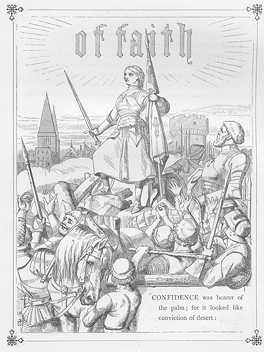
Confidence was bearer of the palm; for it looked like conviction of desert: And where the strong is well assured, the weaker soon allow it. Majesty and Beauty are commingled, in moving with immutable decision, And well may charm the coward hearts that turn and hide for fear. Faith, firmness, confidence, consistency,—these are well allied; Yea, let a man press on in aught, he shall not lack of honour: For such an one seemeth as superior to the native instability of creatures; That he doeth, he doeth as a god, and men will marvel at his courage. Even in crimes, a partial praise cannot be denied to daring, And many fearless chiefs have won the friendship of a foe.
Confidence is conqueror of men; victorious both over them and in them; The iron will of one stout heart shall make a thousand quail: A feeble dwarf, dauntlessly resolved, will turn the tide of battle, And rally to a nobler strife the giants that had fled; The tenderest child, unconscious of a fear, will shame the man to danger, And when he dared it, danger died, and faith had vanquished fear. Boldness is akin to power: yea, because ignorance is weakness, Knowledge with unshrinking might will nerve the vigorous hand: Boldness hath a startling strength; the mouse may fright a lion, And oftentimes the horned herd is scared by some brave cur. Courage hath analogy with faith, for it standeth both in animal and moral; The true is mindful of a God, the false is stout in self: But true or false, the twain are faith; and faith worketh wonders: Never was a marvel done upon the earth, but it had sprung of faith: Nothing noble, generous, or great, but faith was the root of the achievement; Nothing comely, nothing famous, but its praise is faith. Leonidas fought in human faith, as Joshua in divine: Xenophon trusted to his skill, and the sons of Mattathias to their cause: In faith Columbus found a path across those untried waters; The heroines of Arc and Saragossa fought in earthly faith: Tell was strong, and Alfred great, and Luther wise, by faith; Margaret by faith was valiant for her son, and Wallace mighty for his people: Faith in his reason made Socrates sublime, as faith in his science, Galileo: Ambassadors in faith are bold, and unreproved for boldness: Faith urged Fabius to delays, and sent forth Hannibal to Cannæ: Cæsar at the Rubicon, Miltiades at Marathon; both were sped by faith. I set not all in equal spheres: I number not the martyr with the patriot; I class not the hero with his horse, because the twain have courage; But only for ensample and instruction, that all things stand by faith; Albeit faith of divers kinds, and varying in degree. There is a faith towards men, and there is a faith towards God; The latter is the gold and the former is the brass; but both are sturdy metal: And the brass mingled with the gold floweth into rich Corinthian; A substance bright and hard and keen, to point Achilles' spear: So shall thou stop the way against the foes that hem thee; Trust in God to strengthen man;—be bold, for He doth help.
Yet more: for confidence in man, even to the worst and meanest, Hath power to overcome his ill, by charitable good. Fling thine unreserving trust even on the conscience of a culprit, Soon wilt thou shame him by thy faith, and he will melt and mend: The nest of thieves will harm thee not, if thou dost bear thee boldly; Boldly, yea and kindly, as relying on their honour: For the hand so stout against aggression, is quite disarmed by charity; And that warm sun will thaw the heart case-hardened by long frost. Treat men gently, trust them strongly, if thou wish their weal; Or cautious doubt and bitter thoughts will tempt the best to foil thee. Believe the well in sanguine hope, and thou shall reap the better; But if thou deal with men so ill, thy dealings make them worse; Despair not of some gleams of good still lingering in the darkest, And among veterans in crime, plead thou as with their children: So, astonied at humanities, the bad heart long estranged, Shall even weep to feel himself so little worth thy love; In wholesome sorrow will he bless thee; yea, and in that spirit may repent; Thus wilt thou gain a soul, in mercy given to thy Faith.
Look aside to lack of faith, the mass of ills it bringeth: All things treacherous, base, and vile, dissolving the brotherhood of men. Bonds break; the cement hath lost its hold; and each is separate from other; That which should be neighbourly and good, is cankered into bitterness and evil. O thou serpent, fell Suspicion, coiling coldly round the heart,— O thou asp of subtle Jealousy, stinging hotly to the soul,— O distrust, reserve, and doubt,—what reptile shapes are here, Poisoning the garden of a world with death among its flowers! No need of many words, the tale is easy to be told; A point will touch the truth, a line suggest the picture. For if, in thine own home, a cautious man and captious, Thou hintest at suspicion of a servant, thou soon wilt make a thief; Or if, too keen in care, thou dost evidently disbelieve thy child, Thou hast injured the texture of his honour, and smoothed to him the way of lying: Or if thou observest upon friends, as seeking thee selfishly for interest, Thou hast hurt their kindliness to thee, and shalt be paid with scorn; Or if, O silly ones of marriage, your foul and foolish thoughts, Harshly misinterpreting in each the levity of innocence for sin, Shall pour upon the lap of home pain where once was pleasure, And mix contentions in the cup, that mantled once with comforts, Bitterly and justly shall ye rue the punishment due to unbelief; Ye trust not each the other, nor the mutual vows of God; Take heed, for the pit may now be near, a pit of your own digging,— Faith abused tempteth unto crime, and doubt may make its monster.
Man verily is vile, but more in capability than action; His sinfulness is deep, but his transgressions may be few, even from the absence of temptation: He is hanging in a gulf midway, but the air is breathable about him: Thrust him not from that slight hold, to perish in the vapours underneath. For, God pleadeth with the deaf, as having ears to hear, Christ speaketh to the dead, as those that are capable of living; And an evil teacher is that man, a tempter to much sin, Who looketh on his hearers with distrust, and hath no confidence in brethren. All may mend; and sympathies are healing: and reason hath its influence with the worst; And in those worst is ample hope, if only thou hast charity, and faith.
Somewhiles have I watched a man exchanging the sobriety of faith, Old lamps for new,—even for fanatical excitements. He gained surface, but lost solidity; heat, in lieu of health; And still with swelling words and thoughts he scorned his ancient coldness: But, his strength was shorn as Samson's; he walked he knew not whither; Doubt was on his daily path; and duties shewed not certain: Until, in an hour of enthusiasm, stung with secret fears, He pinned the safety of his soul on some false prophet's sleeve. And then, that sure word failed; and with it, failed his faith; It failed, and fell; O deep and dreadful was his fall in faith! He could not stop, with reason's rein, his coursers on the slope, And so they dashed him down the cliff of hardened unbelief. With overreaching grasp he had strained for visionary treasures, But a fiend had cheated his presumption, and hurled him to despair. So he lay in his blood, the victim of a credulous false faith, And many nights, and night-like days, he dwelt in outer darkness. But, within a while, his variable mind caught a new impression, A new impression of the good old stamp, that sealed him when a child: He was softened, and abjured his infidelity; he was wiser, and despised his credulity; And turned again to simple faith more simply than before. Experience had declared too well his mind was built of water, And so, renouncing strength in self, he fixed his faith in God.
It is not for me to stipulate for creeds; Bible, Church, and Reason, These three shall lead the mind, if any can, to truth. But I must stipulate for faith: both God and man demand it: Trust is great in either world, if any would be well. Verily, the sceptical propensity is an universal foe; Sneering Pyrrho never found, nor cared to find, a friend: How could he trust another? and himself, whom would he not deceive? His proper gains were all his aim, and interests clash with kindness. So, the Bedouin goeth armed, an enemy to all, The spear is stuck beside his couch, the dagger hid beneath his pillow. For society, void of mutual trust, of credit, and of faith, Would fall asunder as a waterspout, snapped from the cloud's attraction.
Faith may rise into miracles of might, as some few wise have shown: Faith may sink into credulities of weakness, as the mass of fools have witnessed. Therefore, in the first, saints and martyrs have fulfilled their mission, Conquering dangers, courting deaths, and triumphing in all. Therefore, in the last, the magician and the witch, victims of their own delusion, Have gained the bitter wages of impracticable sins. They believed in allegiance with Satan; they worked in that belief, And thereby earned the loss and harm of guilt that might not be. For, faith hath two hands; with the one it addeth virtue to indifferents; Yea, it sanctified a Judith and a Jael, for what otherwise were treachery and murder: With the other hand it heapeth crime even on impossibles or simples, And many a wizard well deserved the faggot for his faith: He trusted in his intercourse with evil, he sacrificed heartily to fiends, He withered up with curses to the limit of his will, and was vile, because he thought himself a villain.
A great mind is ready to believe, for he hungereth to feed on facts, And the gnawing stomach of his ignorance craveth unceasing to be filled: A little mind is boastful and incredulous, for he fancieth all knowledge is his own, So will he cavil at a truth; how should it be true, and he not know it?— There is an easy scheme, to solve all riddles by the sensual, And thus, despising mysteries, to feel the more sufficient; For it comforteth the foul hard heart, to reject the pure unseen, And relieveth the dull soft head, to hinder one from gazing upon vacancy. True wisdom, labouring to expound, heareth others readily; False wisdom, sturdy to deny, closeth up her mind to argument. The sum of certainties is found so small, their field so wide an universe, That many things may truly be, which man hath not conceived: The characters revealed of God are a strong mind's sole assurance That any strangeness may not stand a sober theme for faith. Ignorance being light denied, this ought to show the stronger in its view, But ignorance is commonly a double negative, both of light and morals: So, adding vanity to blindness, for ease, it taketh refuge in a doubt, And aching soon with ceaseless doubt, it finisheth the strife by misbelieving.
Faith, by its very nature, shall embrace both credence and obedience: Yea, the word for both is one, and cannot be divided. For, work void of faith, wherein can it be counted for a duty; And faith not seen in work,—whereby can the doctrine be discovered? Faith in religion is an instrument; a handle, and the hand to turn it: Less a condition than a mean, and more an operation than a virtue. A moral sickness, like to sin, must have a moral cure; And faith alone can heal the mind, whose malady is sense. Ye are told of God's deep love: they that believe will love Him: They that love Him, will obey: and obedience hath its blessing. Ye are taught of the soul's great price; they that believe will prize it, And, prizing soul, will cherish well the hopes that make it happy. Effects spring from feelings; and feelings grow of faith: If a man conceive himself insulted, will not his anger smite? Thus, let a soul believe his state, his danger, destiny, redemption, Will he not feel eager to be safe, like him that kept the prison at Philippi?
A mother had an only son, and sent him out to sea: She was a widow, and in penury; and he must seek his fortunes. How often in the wintry nights, when waves and winds were howling, Her heart was torn with sickening dread, and bled to see her boy. And on one sunny morn, when all around was comfort, News came, that weeks agone, the vessel had been wrecked; Yea, wrecked, and he was dead! they had seen him perish in his agony: Oh then, what agony was like to her's,—for she believed the tale. She was bowed and broken down with sorrow, and uncomforted in prayer; Many nights she mourned, and pined, and had no hope but death. But on a day, while sorely she was weeping, a stranger broke upon her loneliness,— He had news to tell, that weather-beaten man, and must not be denied: And what were the wonder-working words that made this mourner joyous, That swept her heaviness away, and filled her world with praise? Her son was saved,—is alive,—is near!—O did she stop to question? No, rushing in the force of faith, she met him at the door!
OF HONESTY.
All is vanity that is not honesty;—thus is it graven on the tomb: And there is no wisdom but in piety;—so the dead man preacheth: For, in a simple village church, among those classic shades Which sylvan Evelyn loved to rear, (his praise, and my delight,) These, the words of truth, are writ upon his sepulchre Who learnt much lore, and knew all trees, from the cedar to the hyssop on the wall. A just conjunction, godliness and honesty; ministering to both worlds, Well wed, and ill to be divided, a pair that God hath joined together. I touch not now the vulgar thought, as of tricks and cheateries in trade; I speak of honest purpose, character, speech and action. For an honest man hath special need of charity, and prudence, Of a deep and humbling self-acquaintance, and of blessed commerce with his God, So that the keennesses of truth may be freed from asperities of censure, And the just but vacillating mind be not made the pendulum of arguments: For a false reason, shrewdly put, can often not be answered on the instant, And prudence looketh unto faith, content to wait solutions; Yea, it looketh, yea, it waiteth, still holding honesty in leash, Lest, as a hot young hound, it track not game, but vermin. Many a man of honest heart, but ignorant of self and God, Hath followed the marsh-fires of pestilence, esteeming them the lights of truth; He heard a cause, which he had not skill to solve,—and so received it gladly; And that cause brought its consequence, of harm to an unstable soul. Prudence, for a man's own sake, never should be separate from honesty; And charity, for other's good, and his, must still be joined therewith: For the harshly chiding tongue hath neither pleasuring nor profit, And the cold unsympathizing heart never gained a good. Sin is a sore, and folly is a fever; touch them tenderly for healing; The bad chirurgeon's awkward knife harmeth, spite of honesty. Still, a rough diamond is better than the polished paste,— That courteous flattering fool, who spake of vice as virtue: And honesty, even by itself, though making many adversaries Whom prudence might have set aside, or charity have softened, Evermore will prosper at the last, and gain a man great honour By giving others many goods, to his own cost and hindrance.
Freedom is father of the honest, and sturdy Independence is his brother; These three, with heart and hand, dwell together in unity. The blunt yeoman, stout and true, will speak unto princes unabashed: His mind is loyal, just and free, a crystal in its plain integrity; What should make such an one ashamed? where courtiers kneel, he standeth;— I will indeed bow before the king, but knees were knit for God. And many such there be, of a high and noble conscience, Honourable, generous, and kind, though blest with little light: What should he barter for his Freedom? some petty gain of gold? Free of speech, and free in act, magnates honour him for boldness: Long may he flourish in his peace, and a stalwarth race around him, Rooted in the soil like oaks, and hardy as the pine upon the mountains!
Yet, there be others, that will truckle to a lie, selling honesty for interest: And do they gain?—they gain but loss; a little cash, with scorn. Behold, the sorrowful change wrought upon a fallen nature: He hath lost his own esteem, and other men's respect; For the buoyancy of upright faith, he is clothed in the heaviness of cringing; For plain truth where none could err, he hath chosen tortuous paths; In lieu of his majesty of countenance—the timorous glances of servility; Instead of Freedom's honest pride,—the spirit of a slave.
Nevertheless, there is something to be pleaded, even for a necessary guile, Whilst the world, and all that is therein, lieth deep in evil. Who can be altogether honest,—a champion never out of mail, Ready to break a lance for truth with every crowding error? Who can be altogether honest,—dragging out the secresies of life, And risking to be lashed and loathed for each unkind disclosure? Who can be altogether honest,—living in perpetual contentions, And prying out the petty cheats that swell the social scheme? For he must speak his instant mind,—a mind corrupt and sinful, Exhibiting to other men's disgust its undisguised deformities: He must utter all the hatred of his heart, and add to it the venom of his tongue; Shall he feel, and hide his feelings? that were the meanness of a hypocrite:— Still, O man, such hypocrisy is better, than this bold honesty to sin: Kill the feeling, or conceal it: let shame at least do the work of charity.
O charity, thou livest not in warnings, meddling among men, Rebuking every foolish word, and censuring small sins; This is not thy secret,—rather wilt thou hide their multitude, And silence the condemning tongue, and wearisome exhortation. But for thee, thy strength and zeal shine in encouragement to good, Lifting up the lantern of ensample, that wanderers may find the way: That lantern is not lit to gaze on all the hatefulness of evil, But set on high for life and light, the loveliness of good. The hard censorious mind sitteth as a keen anatomist Tracking up the fibres in corruption, and prying on a fearful corpse: But the charitable soul is a young lover, enamoured little wisely, That saw no fault in her he loved, and sought to see one less; So, in his kind and genial light, she grew more worthy of his love; Won to good by gentle suns, and not by frowning tempest.
Verily, infirm thyself,—be slow to chide a brother's imperfections; For many times the decent veil must hang on faults of nature: And the rude hands, that rend it, offend against the modesty of right, While seeming zeal, and its effort to do good, is only feigned self-praise: Often will the meannesses of life, hidden away in corners, Prove wisdom; and the generous is glad to leave them unregarded in the shade. The follies none are found to praise, let them die unblamed; Thine honest strife will only tend to make some think them wise: And small conventional deceits, let them live uncensured: Or if thou war with pigmies, thou shalt haply help the cranes. Where to be blind was safety, Ovid had been wise for winking: And when a tell-tale might do harm, be sure it is prudent to be dumb; That which is just and fit is often found combating with honesty: In the cause of good, be wise; and in a case indifferent, keep silence.
Let honesty's unblushing face be shaded by the mantle of humility, So shall it shine a lamp of love, and not the torch of strife: Otherwise the lantern of Diogenes, presumptuously thrust before the face, If it never find an honest man, shall often make an angered. Let honesty be companied by charity of heart, lest it walk unwelcome; Or the mouthing censor of others and himself, soon shall sink to scorn. Let honesty be added unto innocence of life: then a man may only be its martyr; But if openness of speech be found with secresy of guilt, the martyr will be seen a malefactor.
There is a cunning scheme, to put on surface bluntness, And cover still deep water, with the clamorous ripples of a shallow. For a man, to gain his selfish ends, will make a stalking-horse of honesty; And hide his poaching limbs behind, that he may cheat the quicker. Such an one is loud and ostentatious, full of oaths for argument, Boastful of honour and sincerity, and not to be put down by facts: He is obstinate, and sheweth it for firmness; he is rude, displaying it for truth; And glorieth in doggedness of temper, as if it were uncompromising justice. Be aware of such a man; his brawling covereth designs; This specious show of honesty cometh as the herald of a thief: His feint is made with awkward clashing on the buckler's boss, But meanwhile doth his secret skill ensure its fatal aim. This is the hypocrite of honesty; ye may know him by an overacted part; Taking pains to turn and twist, where other men walk straight; Or walking straight, he will not step aside to let another pass, But roughly pusheth on, provoking opposition on the way; He is full of disquietude for calmness, full of intriguing for simplicity, Valorous with those who cannot fight, and humble to the brave: Where brotherly advice were good, this man rudely blameth, And on some small occasion, flattereth with coarse praise. The craven in a lion's skin hath conquered by his character for courage; Sheep's clothing helped the wolf, till he slew by his character for kindness.
For honesty hath many gains, and well the wise have known This will prosper to the end, and fill their house with gold. The phosphorus of cheatery will fade, and all its profits perish, While honesty with growing light endureth as the moon. Yea, it would be wise in a world of thieves, where cheating were a virtue, To dare the vice of honesty, if any would be rich. For that which by the laws of God is heightened into duty, Ever, in the practice of a man, will be seen both policy and privilege. Thank God, ye toilers for your bread, in that, daily labouring, He hath suffered the bubbles of self-interest to float upon the stream of duty: For honesty, of every kind, approved by God and man, Of wealth and better weal is found the richest cornucopia. Tempered by humbleness and charity, honesty of speech hath honour; And mingled well with prudence, honesty of purpose hath its praise: Trust payeth homage unto truth, rewarding honesty of action: And all men love to lean on him, who never failed nor fainted. Freedom gloweth in his eyes, and Nobleness of nature at his heart, And Independence took a crown and fixed it on his head: So, he stood in his integrity, just and firm of purpose, Aiding many, fearing none, a spectacle to angels, and to men: Yea,—when the shattered globe shall rock in the throes of dissolution, Still, will he stand in his integrity, sublime—an honest man.
OF SOCIETY.
Better is the mass of men, Suspicion, than thy fears, Kinder than thy thoughts, O chilling heart of Prudence, Purer than thy judgments, ascetic tongue of Censure, In all things worthier to love, if not also wiser to esteem. Yea, let the moralist condemn, there be large extenuations of his verdict, Let the misanthrope shun men and abjure, the most are rather loveable than hateful. How many pleasant faces shed their light on every side, How many angels unawares have crossed thy casual way! How often, in thy journeyings, hast thou made thee instant friends, Found, to be loved a little while, and lost, to meet no more; Friends of happy reminiscence, although so transient in their converse, Liberal, cheerful, and sincere, a crowd of kindly traits. I have sped by land and sea, and mingled with much people, But never yet could find a spot, unsunned by human kindness; Some more, and some less,—but truly all can claim a little; And a man may travel through the world, and sow it thick with friendships.
There be indeed, to say it in all sorrow, bad apostate souls, Deserted of their ministering angels, and given up to liberty of sin,— And other some, the miserly and mean, whose eyes are keen and greedy, With stony hearts, and iron fists, to filch and scrape and clutch,— And others yet again, the coarse in mind, selfish, sensual, brutish, Seeming as incapable of softer thoughts, and dead to better deeds; Such, no lover of the good, no follower of the generous and gentle, Can nearer grow to love, than may consist with pity. Few verily are these among the mass, and cast in fouler moulds, Few and poor in friends, and well-deserving of their poverty: Yet, or ever thou hast harshly judged, and linked their presence to disgust, Consider well the thousand things that made them all they are. Thou hast not thought upon the causes, ranged in consecutive necessity, Which tended long to these effects, with sure constraining power. For each of those unlovely ones, if thou couldst hear his story, Hath much to urge of just excuse, at least as men count justice: Foolish education, thwarted opportunities, natural propensities unchecked,— Thus were they discouraged from all good, and pampered in their evil; And, if thou wilt apprehend them well, tenderly looking on temptations, Bearing the base indulgently, and liberally dealing with the froward, Thou shalt discern a few fair fruits even upon trees so withered, Thou shalt understand how some may praise, and some be found to love them.
Nevertheless for these, my counsel is, Avoid them if thou canst; For the finer edges of thy virtues will be dulled by attrition with their vice. And there is an enemy within thee; either to palliate their sin, Until, for surface-sweetness, thou too art drawn adown the vortex; Or, even unto fatal pride, to glorify thy purity by contrast, Until the publican and harlot stand nearer heaven than the Pharisee: Or daily strife against their ill, in subtleness may irritate thy soul, And in that struggle thou shall fail, even through infirmity of goodness; Or, callous by continuance of injuries, thou wilt cease to pardon, Cease to feel, and cease to care, a cold case-hardened man. Beware of their example,—and thine own; beware the hazards of the battle; But chiefly be thou ware of this, an unforgiving spirit. Many are the dangers and temptations compassing a bad man's presence; The upas hath a poisonous shade, and who would slumber there? Wherefore, avoid them if thou canst; only, under providence and duty, If thy lot be cast with Kedar, patiently and silently live to their rebuke.
How beautiful thy feet, and full of grace thy coming, O better kind companion, that art well for either world! There is an atmosphere of happiness floating round that man, Love is throned upon his heart, and light is found within his dwelling: His eyes are rayed with peacefulness, and wisdom waiteth on his tongue; Seek him out, cherish him well, walking in the halo of his influence: For he shall be fragrance to thy soul, as a garden of sweet lilies, Hedged and apart from the outer world, an island of the blest among the seas.
There is an outer world, and there is an inner centre; And many varying rings concentric round the self. For, first, about a man,—after his communion with Heaven,— Is found the helpmate even as himself, the wife of his vows and his affections: See then that ye love in faith, scorning petty jealousies, For Satan spoileth too much love, by souring it with doubts; See that intimacy die not to indifference, nor anxiety sink into moroseness, And tend ye well the mutual minds bound in a copartnership for life.
Next of those concentric circles, radiating widely in circumference, Wheel in wheel, and world in world,—come the band of children: A tender nest of soft young hearts, each to be separately studied, A curious eager flock of minds, to be severally tamed and tutored. And a man, blest with these, hath made his own society, He is independent of the world, hanging on his friends more loosely: For the little faces round his hearth are friends enow for him, If he seek others, it is for sake of these, and less for his own pleasure. What companionship so sweet, yea, who can teach so well As these pure budding intellects, and bright unsullied hearts? What voice so musical as theirs, what visions of elegance so comely, What thoughts and hopes and holy prayers, can others cause like these? If ye count society for pastime,—what happier recreation than a nurseling, Its winning ways, its prattling tongue, its innocence and mirth? If ye count society for good,—how fair a field is here, To guide these souls to God, and multiply thyself for heaven! And this sweet social commerce with thy children groweth as their growth, Unless thou fail of duty, or have weaned them by thine absence. Keep them near thee, rear them well, guide, correct, instruct them; And be the playmate of their games, the judge in their complainings. So shall the maiden and the youth love thee as their sympathizing friend, And bring their joys to share with thee, their sorrows for consoling: Yea, their inmost hopes shall yearn to thee for counsel, They will not hide their very loves, if thou hast won their trust; But, even as man and woman, shall they gladly seek their father, Feeling yet as children feel, though void of fear in honour: And thou shall be a Nestor in the camp, the just and good old man, Hearty still, though full of years, and held the friend of all; No secret shall be kept from thee; for if ill, thy wisdom may repair it; If well, thy praise is precious; and they would not miss that prize. O the blessing of a home, where old and young mix kindly, The young unawed, the old unchilled, in unreserved communion! O that refuge from the world, when a stricken son or daughter May seek, with confidence of love, a father's hearth and heart; Sure of a welcome, though others cast them out; of kindness, though men scorn them; And finding there the last to blame, the earliest to commend. Come unto me, my son, if sin shall have tempted thee astray, I will not chide thee like the rest, but help thee to return; Come unto me, my son, if men rebuke and mock thee, There always shall be one to bless,—for I am on thy side!
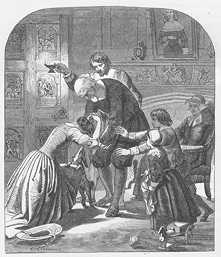
Alas,—and bitter is their loss, the parents, and the children, Who, loving up and down the world, have missed each other's friendship. Haply, it had grown of careless life, for years go swiftly by; Or sprang of too much carefulness, that drank up all the streams: Haply, sullen disappointment came and quenched the fire; Haply, sternness, or misrule, crushed or warped the feelings. Then, ill-combined in tempers, they learnt not each the other; The growing child grew out of love, and drew the breath of fear; The youth, ill-trained, renounced his fears, and made a league with cunning; And so those hardened men were foes, that should have been chief friends. Where was the cause, the mutual cause? O hunt it out to kill it: And what the cure, the simple cure?—A mutual flash of love. For dull estrangement's daily air froze up those early sympathies By cold continuance in apathy, or cutting winds of censure; It was a slow process, which any fleeting hour could have melted; But every hour duly came, and passed without the sun. Caution, care, and dry distrust, obscured each other's minds, Till both those gardens, rich to yield, were rank with many weeds: And doubt, a hidden worm, gnawed at the root of their Society, They lacked of mutual confidence, and lived in mutual dread. Judge me, many fathers; and hearken to my counsel, many sons; I come with good in either hand, to reconcile contentions; For better friends can no man have, than those whom God hath given, And he that hath despised the gift, thought ill of that he knew not. Be ye wiser,—(I speak unto the sons,)—and win paternal friendships, Cultivate their kindness, seek them out with honour, and be the screening Japhet to their failings: And be ye wiser,—(I speak unto the fathers)—gain those filial comrades, Cherish their reasonable converse, and look not with coldness on your children. For the friendship of a child is the brightest gem set upon the circlet of Society, A jewel worth a world of pains—a jewel seldom seen.
The third cycle on the waters, another of those rings upon the onyx, A further definite broad zone, holdeth kith and kin: A motley band of many tribes, and under various banners; The intimate and strangers, the known and loved, or only seen for loathing: Some, dear for their deserts, shall honour and have honour of relationship, Some, despising duties, will add to it both burden and disgrace. A man's nearest kin are oftentimes far other than his dearest, Yet in the season of affliction those will haste to help him. For, note thou this, the providence of God hath bound up families together, To mutual aid and patient trial; yea, those ties are strong. Friends are ever dearer in thy wealth, but relations to be trusted in thy need, For these are God's appointed way, and those the choice of man: There is lower warmth in kin, but smaller truth in friends, The latter show more surface, and the first have more of depth: Relations rally to the rescue, even in estrangement and neglect, Where friends will have fled at thy defeat, even after promises and kindness; For friends come and go, the whim that bound may loose them, But none can dissever a relationship, and Fate hath tied the knot.
Wide, and edged with shadowy bounds, a distant boulevard to the city, The common crowd of social life is buzzing round about: That is as the outer court, with all defences levelled, Ranged around a man's own fortress, and his father's house. For many friends go in and out, and praise thee, finding pasture, And some are honeycomb to-day, who turn to gall to-morrow: And many a garrulous acquaintance with his frequent visit Will spend his leisure to thy cost, selling dulness dearly: For the idle call is a heavy tax, where time is counted gold, And even in the day of relaxation, haply he may spare his presence,— He found himself alone, and came to talk,—till they that hear are tired; Let the man bethink him of an errand, that his face be not unwelcome.
But many friends there be, both well and wisely greeted, Gladly are they hailed upon the hills, and are chidden that they come so seldom. Of such are the early recollections, school friendships that have thriven to grey hairs, And veteran men are young once more, and talk of boyish pranks: And such, yet older on the list, are those who loved thy father, Thy father's friend, and thine, who tendereth thee tried love: Such also, many gentle hearts, whom thou hast known too lately, Hastening now to learn their worth, and chary of those minutes: And such, thy faithful pastor, coming to thy home with peace;— Greet the good man heartily,—and bid thy children bless him!
Many thoughts, many thoughts,—who can catch them all? The best are ever swiftest winged, the duller lag behind: For, behold, in these vast themes, my mind is as a forest of the West, And flocking pigeons come in clouds, and bend the groaning branches; Here for a rest, then off and away,—they have sped to other climes, And leave me to my peace once more, a holiday from thoughts. I dare not lure them back, for the mighty subject of Society Would tempt to many a hackneyed note in many a weary key: Sage warnings, stout advice, experiences ever to be learned, The foolish floatiness of vanity, and solemn trumperies of pride,— Economy, the poor man's mint,—extravagance, the rich man's pitfall, Harmful copings with the better, and empty-headed apings of the worse, Circumstance and custom, sympathies, antipathies, diverse kinds of conversation, Vapid pleasures, the weariness of gaiety, the strife and bustle of the world, Home comforts, the miseries of style, the cobweb lines of etiquette, The hollowness of courtesies, and substance of deceits,—idleness, business, and pastime,— The multitude of matters to be done, the when, and where, and how, And varying shades of character, to do, undo, or miss them,— All these, and many more alike, thick converging fancies, Flit in throngs about my theme, as honey-bees at even to their hive. Find an end, or make one: these seeds are dragon's teeth: Sown thoughts grow to things, and fill that field, the world: Many wise have gone before, and used the sickle well; Who can find a corner now, where none have bound the sheaves? So, other some may reap: I do but glean and gather: My sorry handful hath been culled after the ripe harvest of Society.
OF SOLITUDE.

Who hath known his brother,—or found him in his freedom unrestrained? Even he, whose hidden glance hath watched his deepest Solitude. For we walk the world in domino, putting on characters and habits, And wear a social Janus mask, while others stand around: I speak not of the hypocrite, nor dream of meant deceptions, But of that quick unconscious change, whereof the best know most.
For mind hath its influence on mind; and no man is free but when alone; Yea, let a dog be watching thee, its eye will tend to thy restraint: Self-possession cannot be so perfect, with another intellect beside thee, It is not as a natural result, but rather the educated produce: The presence of a second spirit must control thine own, And throw it off its equipoise of peace, to balance by an effort. The common minds of common men know of this but little; What then? they know nothing of themselves: I speak to those who know. The consciousness that some are hearing, cometh as a care, The sense that some are watching near, bindeth thee to caution; And the tree of tender nerves shrinketh as a touched mimosa, Drooping like a plant in drought, with half its strength decayed. There are antipathies warning from the many, and sympathies drawing to the few, But merchant-minds have crushed the first, and cannot feel the latter: Whereas to the quickened apprehension of a keen and spiritual intellect, Antipathies are galling, and sympathies oppress, and solitude is quiet.
He that dwelleth mainly by himself, heedeth most of others, But they that live in crowds, think chiefly of themselves. There is indeed a selfish seeming, where the anchorite liveth alone, But probe his thoughts,—they travel far, dreaming for ever of the world: And there is an apparent generosity, when a man mixeth freely with his fellows; But prove his mind, by day and night, his thoughts are all of self: The world, inciting him to pleasures, or relentlessly provoking him to toil, Is full of anxious rivals, each with a difference of interest; So must he plan and practise for himself, even as his own best friend; And the gay soul of dissipation never had a thought unselfish. The hermit standeth out of strife, abiding in a contemplative calmness; What shall he contemplate,—himself? a meagre theme for musing: He hath cast off follies, and kept aloof from cares; a man of simple wants; God and the soul, these are his excuse, a just excuse, for solitude: But he carried with him to his cell the half-dead feelings of humanity; There were they rested and refreshed; and he yearned once more on men.
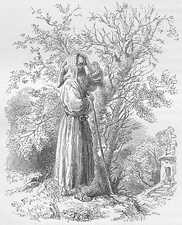
Where is the wise, or the learned, or the good, that sought not solitude for thinking, And from seclusion's secret vale brought forth his precious fruits? Forests of Aricia, your deep shade mellowed Numa's wisdom, Peaceful gardens of Vaucluse, ye nourished Petrarch's love; Solitude made a Cincinnatus, ripening the hero and the patriot, And taught De Staël self-knowledge, even in the damp Bastile; It fostered the piety of Jerome, matured the labours of Augustine, And gave imperial Charles religion for ambition: That which Scipio praised, that which Alfred practised, Which fired Demosthenes to eloquence, and fed the mind of Milton, Which quickened zeal, nurtured genius, found out the secret things of science, Helped repentance, shamed folly, and comforted the good with peace,— By all men just and wise, by all things pure and perfect, How truly, Solitude, art thou the fostering nurse of greatness!
Enough;—the theme is vast; sear me these necks of Hydra: What shall drive away the thoughts flocking to this carcase? Yea,—that all which man may think, hath long been said of Solitude: For many wise have proved and preached its evils and its good. I cannot add,—I will not steal; enough, for all is spoken: Yet heed thou these for practice, and discernment among men.
There are pompous talkers, solemn, oracular, and dull: Track them from society to solitude; and there ye find them fools. There are light-hearted jesters, taking up with company for pastime; How speed they when alone?—serious, wise, and thoughtful. And wherefore? both are actors, saving when in solitude, There they live their truest life, and all things show sincere: But the fool by pomposity of speech striveth to be counted wise, And the wise, for holiday and pleasance, playeth with the fool's best bauble. The solemn seemer, as a rule, will be found more ignorant and shallow Than those who laugh both loud and long, content to hide their knowledge.
For thee; seek thou Solitude, but neither in excess, nor morosely; Seek her for her precious things, and not of thine own pride. For there, separate from a crowd, the still small voice will talk with thee, Truth's whisper, heard and echoed by responding conscience; There, shalt thou gather up the ravelled skeins of feeling, And mend the nets of usefulness, and rest awhile for duties; There, thou shalt hive thy lore, and eat the fruits of study, For Solitude delighteth well to feed on many thoughts: There, as thou sittest peaceful, communing with fancy, The precious poetry of life shall gild its leaden cares: There, as thou walkest by the sea, beneath the gentle stars, Many kindling seeds of good will sprout within thy soul; Thou shalt weep in Solitude,—thou shalt pray in Solitude, Thou shalt sing for joy of heart, and praise the grace of Solitude. Pass on, pass on!—for this is the path of wisdom: God make thee prosper on the way; I leave thee well with Solitude.
RECAPITULATION.
Every beginning is shrouded in a mist, those vague ideas beyond, And the traveller setteth on his journey, oppressed with many thoughts, Balancing his hopes and fears, and looking for some order in the chaos, Some secret path between the cliffs, that seem to bar his way: So, he commenceth at a clue, unravelling its tangled skein, And boldly speedeth on to thread the labyrinth before him. Then as he gropeth in the darkness, light is attendant on his steps, He walketh straight in fervent faith, and difficulties vanish at his presence; The very flashing of his sword scattereth those shadowy foes; Confident and sanguine of success, he goeth forth conquering and to conquer.
Every middle is burdened with a weariness,—to have to go as far again,— And Diligence is sick at heart, and Enterprise foot-sore: That which began in zeal, bursting as a fresh-dug spring, Goeth on doggedly in toil, and hath no help of nature: Then, is need of moral might, to wrestle with the animal re-action, Still to fight, with few men left, and still though faint pursuing. The middle is a marshy flat, whereon the wheels go heavily, With clouds of doubt above, and ruts of discouragement below: Press on, sturdy traveller, yet a league, and yet a league! While every step is binding wings on thy victorious feet.
Every end is happiness, the glorious consummation of design, The perils past, the fears annulled, the journey at its close: And the traveller resteth in complacency, home-returned at last: Work done may claim its wages, the goal gained hath won its prize: While the labour lasted, while the race was running, Many-times the sinews ached, and half refused the struggle: But now, all is quietness, a pleasant hour given to repose; Calmness in the retrospect of good, and calmness in the prospect of a blessing. Hope was glad in the beginning, and fear was sad midway, But sweet fruition cometh in the end, a harvest safe and sure. That which is, can never not have been: facts are solid as the pyramids: A thing done is written in the rock, yea, with a pen of iron. Uncertainty no more can scare, the proof is seen complete, Nor accident render unaccomplished, for the deed is finished. Thus the end shall crown the work, with grace, grace, unto the top-stone, And the work shall triumph in its crown, with peace, peace, unto the builder.
I have written, as other some of old, in quaint and meaning phrase, Of many things for either world, a crowd of facts and fancies: And will ye judge me, men of mind?—judge in kindly calmness; For bitter words of haste or hate have often been repented. Deep dreaming upon surface reading; imagery crowded over argument; Order less considered in the multitude of thoughts: this witnessing is just. Scripture gave the holier themes, the well-turned words and wisdom; While Fancy on her swallow's wing skimmed those deeper waters. And wilt thou say with shrewdness,—He hath burnished up old truths, But where he seemed to fashion new, the novelty was false? Alas, for us in these last days, our elders reaped the harvest: Alas, for all men in all times, who glean so many tares! That which is true, how should it be new? for time is old in years: That which is new, how should it be true? for I am young in wisdom: Nevertheless, I have spoken at my best, according to the mercies given me, Of high, and deep, and famous things, of Evil, or of Good. I have told of Errors near akin to Truth, and wholesomes linked with poison; Of subtle Uses in the humblest, and the deep laid plots of Pride: I have praised Wisdom, comforted thy Hope, and proved to thee the folly of Complainings; Hinted at the hazard of an Influence, and turned thee from the terrors of Ambition. I have shown thee thy captivity to Law: yet bade thee hide Humilities; I have lifted the curtains of Memory; and smoothed the soft pillow of Rest. Experience had his sober hour; and Character its keen appreciation; And holy Anger stood sublime, where Hatred fell condemned. Prayer spake the mind of God, even in His own good words: And Zeal, with kindness warmly mixt, allied him to Discretion. I taught thee that nothing is a Trifle, even to the laugh of Recreation; I led thee with the Train of Religion, to be dazzled at the name of the Triune. Thought confessed his unseen fears; and Speech declared his triumphs; I sang the blessedness of books; and commended the prudence of a letter: Riches found their room, either unto honour—or despising: Inventions took their lower place, for all things come of God. I scorned Ridicule; nor would humble me for Praise; for I had gained Self-knowledge; And pleaded fervently for Brutes, who suffer for man's sin. Then, I rose to Friendship; and bathed in all the tenderness of Love; Knew the purity of Marriage; and blest the face of Children. And whereas, by petulance or pride, I had haply said some evil, Mine after-thought was Tolerance, to bear the faults of all: Many faults, ill to bear, bred the theme of Sorrow; Many virtues, dear to see, induced the gush of Joy.
Thus, for awhile, as leaving thee in joy, was I loth to break that spell; I roamed to other things and thoughts, and fashioned other books. But in a season of reflection, after many days, A thought stood before me in its garment of the past,—and lo, a legion with it! They came in thronging bands,—I could not fight nor fly them,— And so they took me to their tent, the prisoner of thoughts.
Then, I bade thee greet me well, and heed my cheerful counsels; For every day we have a Friend, who changeth not with time. Gladly did I speak of my commission, for I felt it graven on my heart, And could not hold my wiser peace, but magnified mine office. Mystery had left her echoes in my mind, and I discoursed her secret: And thence I turned aside to man, and judged him for his Gifts. Beauty, noble thesis, had a world of sweets to sing of, And dated all her praise from God, the birthday of the soul. Thence grew Fame; and Flattery came like Agag; But this was as the nauseous dregs, of that inspiring cup: Forth from Flattery sprang in opposition harsh and dull Neglect; And kind Contentment's gentle face to smile away the sadness. Life, all buoyancy and light, and Death, that sullen silence, Sped the soul to Immortality, the final home of man. Then, in metaphysical review, passed a triple troop, Swift Ideas, sounding Names, and heavily armed Things: Faith spake of her achievements even among men her brethren; And Honesty, with open mouth, would vindicate himself: The retrospect of Social life had many truths to tell of, And then I left thee to thy Solitude, learning there of Wisdom.
Friend and scholar, lover of the right, mine equal kind companion,— I prize indeed thy favour, and these sympathies are dear: Still, if thy heart be little with me, wot thou well, my brother, I canvass not the smiles of praise, nor dread the frowns of censure. Through many themes in many thoughts, have we held sweet converse; But God alone be praised for mind! He only is sufficient, And every thought in every theme by prayer had been established: Who then should fear the face of man, when God hath answered prayer?— I speak it not in arrogance of heart, but humbly as of justice, I think it not in vanity of soul, but tenderly, for gratitude,— God hath blest my mind, and taught it many truths: And I have echoed some to thee, in weakness, yet sincerely: Yea, though ignorance and error shall have marred those lessons of His teaching, I stand in mine own Master's praise, or fall to His reproof. If thou lovest, help me with thy blessing; if otherwise, mine shall be for thee; If thou approvest, heed my words; if otherwise, in kindness be my teacher. Many mingled thoughts for self have warped my better aim; Many motives tempted still, to toil for pride or praise: Alas, I have loved pride and praise, like others worse or worthier; But hate and fear them now, as snakes that fastened on my hand: Scævola burnt both hand and crime; but Paul flung the viper on the fire: He shook it off, and felt no harm: so be it! I renounce them. Rebuke then, if thou wilt rebuke,—but neither hastily nor harshly; Or, if thou wilt commend, be it honestly, of right: I work for God and good.
The End of the Second Series
BRADBURY, EVANS, AND CO., PRINTERS, WHITEFRIARS.