SECOND SERIES. (continued 2)
Reading edition
The world is full of fools; and sycophancy liveth on the foolish: So he groweth great and rich, that fawning supple parasite. Sometimes he boweth like a reed, cringing to the pompousness of pride, Sometimes he strutteth as a gallant, pampering the fickleness of vanity; I have known him listen with the humble, enacting silent marveller, To hear some purse-proud dunce expose his poverty of mind; I have heard him wrangle with the obstinate, vowing that he will not be convinced, When some weak youth hath wisely feared the chance of ill success: Now, he will barely be a winner,—to magnify thy triumphs afterward; Now, he will hardly be a loser,—but cannot cease to wonder at thy skill: He laudeth his own worth, that the leader may have glory in his follower; He meekly confesseth his unworthiness, that the leader may have glory in himself. Many wiles hath he, and many modes of catching, But every trap is selfishness, and every bait is praise.
Come, I would forewarn thee and forearm thee; for keen are the weapons of his warfare; And, while my soul hath scorned him, I have watched his skill from far. His thoughts are full of guile, deceitfully combining contrarieties, And when he doeth battle in a man, he is leagued with traitorous Self-love. Strange things have I noted, and opposite to common fancy; We leave the open surface, and would plumb the secret depths. For he will magnify a lover, even to disparaging his mistress; So much wisdom, goodness, grace,—and all to be enslaved? Till the Narcissus, self-enamoured, whelmed in floods of flattery, Is cheated from the constancy and fervency of love by friendship's subtle praise. Moreover, he will glorify a parent, even to the censure of his child,— O degenerate scion, of a stock so excellent and noble! Scant will he be in well-earned praise of a son before his father; And rarely commendeth to a mother her daughter's budding beauty: Yet shall he extol the daughter to her father, and be warm about the son before his mother; Knowing that self-love entereth not, to resist applause with jealousies. Wisely is he sparing of hyperbole where vehemence of praise would humble, For many a father liketh ill to be counted second to his son: And shrewdly the flatterer hath reckoned on a self still lurking in the mother, When his tongue was slow to speak of graces in the daughter. But if he descend a generation, to the grandsire his talk is of the grandson, Because in such high praise he hideth the honours of the son; And the daughter of a daughter may well exceed, in beauty, love, and learning, For unconsciously old age perceived—she cannot be my rival. These are of the deep things of flattery: and many a shallow sycophant Hath marvelled ill that praise of children seldom won their parents. This therefore note, unto detection: flattery can sneer as well as smile; And a master in the craft wotteth well, that his oblique thrust is surest.
Flattery sticketh like a burr, holding to the soil with anchors, A vital, natural, subtle seed, everywhere hardy and indigenous. Go to the storehouse of thy memory, and take what is readiest to thy hand,— The noble deed, the clever phrase, for which thy pride was flattered: Oh, it hath been dwelt upon in solitude, and comforted thy heart in crowds, It hath made thee walk as in a dream, and lifted up the head above thy fellows; It hath compensated months of gloom, that minute of sweet sunshine, Drying up the pools of apathy, and kindling the fire of ambition: Yea, the flavour of that spice, mingled in the cup of life, Shall linger even to the dregs, and still be tasted with a welcome; The dame shall tell her grandchild of her coy and courted youth, And the grey-beard prateth of a stranger, who praised his task at school.
Oftimes to the sluggard and the dull, flattery hath done good service, Quickening the mind to emulation, and encouraging the heart that failed. Even so, a stimulating poison, wisely tendered by the leech, Shall speed the pulse, and rally life, and cheat astonished death. For, as a timid swimmer ventureth afloat with bladders, Until self-confidence and growth of skill have made him spurn their aid, Thus commendation may be prudent, where a child hath ill deserved it; But praise unmerited is flattery, and the cure will bring its cares: For thy son may find thee out, and thou shalt rue the remedy: Yea, rather, where thou canst not praise, be honest in rebuke.
I have seen the objects of a flatterer mirrored clearly on the surface, Where self-love scattereth praise, to gather praise again. This is a commodity of merchandize, words put out at interest: A scheme for canvassing opinions, and tinging them all with partiality. He is but a harmless fool; humour him with pitiful good-nature: If a poetaster quote thy song, be thou tender to his poem: Did the painter praise thy sketch? be kind, commend his picture; He looketh for a like return; then thank him with thy praise. In these small things with these small minds count thou the sycophant a courtier, And pay back, as blindly as ye may, the too transparent honour.
Also, where the flattery is delicate, coming unobtrusive and in season, Though thou be suspicious of its truth, be generous at least to its gentility. The skilful thief of Lacedæmon had praise before his judges, And many caitiffs win applause for genius in their callings. Moreover, his meaning may be kind,—and thou art a debtor to his tongue; Hasten well to pay the debt, with charity and shrewdness: He must not think thee caught, nor feel himself discovered, Nor find thine answering compliment as hollow as his own. Though he be a smiling enemy, let him heed thee as the fearless and the friendly; A searching look, a poignant word, may prove thou art aware: Still, with compassion to the frail, though keen to see his soul, Let him not fear for thy discretion: see thou keep his secret, and thine own.
However, where the flattery is gross, a falsehood clear and fulsome, Crush the venomous toad, and spare not for a jewel in its head. Tell the presumptuous in flattery, that or ever he bespatter thee with praise, It might be well to stop and ask how little it were worth: Thou hast not solicited his suffrage,—let him not force thee to refuse it; Look to it, man, thy fence is foiled,—and thus we spoil the plot. Self-knowledge goeth armed, girt with many weapons, But carrieth whips for flattery, to lash it like a slave: But the dunce in that great science goeth as a greedy tunny, To gorge both bait and hook, unheeding all but appetite: He smelleth praise and swalloweth,—yea, though it be palpable and plain, Say unto him, Folly, thou art Wisdom,—he will bless thee for thy lie.
Flatterer, thou shalt rue thy trade, though it have many present gains; Those varnished wares may sell apace, yet shall they spoil thy credit. Thine is the intoxicating cup, which whoso drinketh it shall nauseate: Thine is trickery and cheating; but deception never pleased for long. And though while fresh thy fragrance seemed even as the dews of charity, Yet afterward it fouled thy censer, as with savour of stale smoke. For the great mind detected thee at once, answering thine emptiness with pity, He saw thy self-interested zeal, and was not cozened by vain-glory: And the little mind is bloated with the praise, scorning him who gave it, A fool shall turn to be thy tyrant, an thou hast dubbed him great: And the medium mind of common men, loving first thy music, After, when the harmonies are done, shall feel small comfort in their echoes; For either he shall know thee false, conscious of contrary deservings, And, hating thee for falsehood, soon will scorn himself for truth, Or, if in aught to toilsome merit honest praise be due, Though for a season, belike, his weakness hath been raptured at thy witching, Shall he not speedily perceive, to the vexing of his disappointed spirit, That thine exaggerated tongue hath robbed him of fair fame? Thou hast paid in forger's coins, and he had earned true money: For the substance of just praise, thou hast put him off with shadows of the sycophant: Thou art all things to all men, for ends false and selfish, Therefore shalt be nothing unto any one, when those thine ends are seen.
Turn aside, young scholar, turn from the song of Flattery! She hath the Siren's musical voice, to ravish and betray. Her tongue droppeth honey, but it is the honey of Anticyra; Her face is a mask of fascination, but there hideth deformity behind; Her coming is the presence of a queen, heralded by courtesy and beauty, But, going away, her train is held by the hideous dwarf, Disgust.
Know thyself, thine evil as thy good, and flattery shall not harm thee: Yea, her speech shall be a warning, a humbling and a guide. For wherein thou lackest most, there chiefly will the sycophant commend thee, And then most warmly will congratulate, when a man hath least deserved. Behold, she is doubly a traitor; and will underrate her victim's best, That, to the comforting of conscience, she may plead his worse for better.
Therefore, is she dangerous,—as every lie is dangerous: Believe her tales, and perish: if thou act upon such counsel. Her aims are thine not thee, thy wealth and not thy welfare, Thy suffrage not thy safety, thine aid and not thine honour. Moreover, with those aims insured, ceaseth all her glozing; She hath used thee as a handle,—but her hand was wise to turn it; Thus will she glorify her skill, that it deftly caught thy kindness, Thus will she scorn thy kindness, so pliable and easy to her skill. And then, the flatterer will turn to be thy foe, the bitterest and hottest, Because he oweth thee much hate to pay off many humblings. Thinkest thou now that he is high, he loveth the remembrance of his lowliness, The servile manner, the dependent smile, the conscience self-abased? No, this hour is his own, and the flatterer will be found a busy mocker; He that hath salved thee with his tongue, shall now gnash upon thee with his teeth; Yea, he will be leader in the laugh,—silly one, to listen to thy loss, We scarce had hoped to lime and take another of the fools of flattery.
At the last; have charity, young scholar,—yea, to the sycophant convicted; Be not a Brutus to thyself, nor stern in thine own cause. Pardon exaggerated praise; for there is a natural impulse, Spurring on the nobler mind, to colour facts by feelings: Take an indulgent view of each man's interest in self, Be large and liberal in excuses; is not that infirmity thine own? Search thy soul and be humble; and mercy abideth with humility; So that, yea, the insincere may find thee pitiful, and love thee. Mildly put aside, without rudeness of repulse, the pampering hand of flattery, For courtesy and kindness have gone beneath its guise, and ill shouldst thou rebuke them.
Thou art incapable of theft: but flowers in the garden of a friend Are thine to pluck with confidence, and it were unfriendliness to hesitate: Thou abhorrest flattery: but a generous excess in praise Is thine to yield with honest heart, and false were the charity to doubt it: The difference lieth in thine aim; kindliness and good are of charity, But selfish, harmful, vile, and bad, is Flattery's evil end.
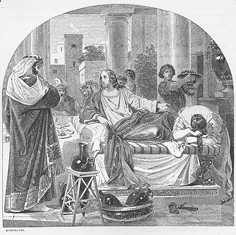
OF NEGLECT.
Generous and righteous is thy grief, slighted child of sensibility; For kindliness enkindleth love, but the waters of indifference quench it: Thy soul is athirst for sympathy, and hungereth to find affection, The tender scions of thy heart yearn for the sunshine of good feeling; And it is an evil thing and bitter, when the cheerful face of Charity, Going forth gaily in the morning to woo the world with smiles, Is met by those wayfaring men with coldness, suspicion, and repulse, And turneth into hard dead stone at the Gorgon visage of Neglect. O brother, warm and young, covetous of other's favour, I see thee checked and chilled, sorrowing for censure or forgetfulness: Let coarse and common minds despise—that wounding of thy vanity, Alas, I note a sorer cause, the blighting of thy love; Let the callous sensual deride thee,—disappointed of thy praise, Alas, thou hast a juster grief, defrauded of their kindness: It is a theme for tears to feel the soft heart hardening, The frozen breath of apathy sealing up the fountain of affection; It is a pang, keen only to the best, to be injured well-deserving, And slumbering Neglect is injury,—Could ye not watch one hour? When God Himself complained, it was that none regarded, And indifference bowed to the rebuke, Thou gavest Me no kiss when I came in.
Moreover, praise is good; honour is a treasure to be hoarded; A good man's praise foreshadoweth God's, and in His smile is heaven: But men walk on in hardihood, steeling their sinfulness to censure, And when rebuke is ridiculed, the love of praise were an infirmity; The judge thou heedest not in fear, cannot have deep homage of thy hope, And who then is the wise of this world, that will own he trembleth at his fellows? Calm, careless, and insensible, he mocketh blame or calumny, Neither should his dignity be humbled to some pittance of their praise: The rather, let false pride affect to trample on the treasure Which evermore in secret strength unconquered Nature prizeth; Rather, shall ye stifle now the rising bliss of triumph, Lest after, in the world's Neglect, he must acknowledge bitterness.
For lo, that world is wide, a huge and crowded continent, Its brazen sun is mammon, and its iron soil is care: A world full of men, where each man clingeth to his idol; A world full of men, where each man cherisheth his sorrow; A world full of men, multitude shoaling upon multitude; A surging sea, where every wave is burdened with an argosy of self; A boundless beach, where every stone is a separate microscopic world: A forest of innumerable trees, where every root is independent.
What then is the marvel or the shame, if units be lost among the million? Canst thou reasonably murmur, if a leaf drop off unnoticed? Wondrous in architecture, intricate and beautiful, delicately tinged and scented, Exquisite of feeling and mysterious in life, none cared for its growth, or its decay: None? yea,—no one of its fellows,—nor cedar, palm, nor bramble,— None? its twin-born brother scarcely missed it from the spray: None?—if none indeed, then man's neglect were bitterness; And Life a land without a sun, a globe without a God! Yea, flowers in the desert, there be that love your beauty; Yea, jewels in the sea, there be that prize your brightness; Children of unmerited oblivion, there be that watch and woo you, And many tend your sweets, with gentle ministering care: Thronging spirits of the happy, and the ever-present Good One Yearning seek those precious things, man hath not heart to love, Gems of the humblest or the highest, pure and patient in their kind, The souls unhardened by ill usage, and uncorrupt by luxury.
And ye, poor desolates unsunned, toilers in the dark damp mine, Wearied daughters of oppression, crushed beneath the car of avarice, There be that count your tears,—He hath numbered the hairs of thy head,— There be that can forgive your ill, with kind considerate pity: Count ye this for comfort, Justice hath her balances, And yet another world can compensate for all: The daily martyrdom of patience shall not be wanting of reward; Duty is a prickly shrub, but its flower will be happiness and glory.
Ye too, the friendless, yet dependent, that find nor home nor lover, Sad imprisoned hearts, captive to the net of circumstance,— And ye, too harshly judged, noble unappreciated intellects, Who, capable of highest, lowlier fix your just ambition in content,— And chiefest, ye, famished infants of the poor, toiling for your parents' bread, Tired, and sore, and uncomforted the while, for want of love and learning, Who struggle with the pitiless machine in dull continuous conflict, Tasked by iron men, who care for nothing but your labour,— Be ye long-suffering and courageous: abide the will of Heaven; God is on your side; all things are tenderly remembered: His servants here shall help you; and where those fail you through Neglect, His kingdom still hath time and space for ample discriminative Justice: Yea, though utterly on this bad earth ye lose both right and mercy, The tears that we forgat to note, our God shall wipe away.
Nevertheless, kind spirit, susceptible and guileless, Meek uncherished dove, in a carrion flock of fowls, Sensitive mimosa, shrinking from the winds that help to root the fir, Fragile nautilus, shipwrecked in the gale whereat the conch is glad, Thy sharp peculiar grief is uncomforted by hope of compensation, For it is a delicate and spiritual wound, which the probe of pity bruiseth: Yet hear how many thoughts extenuate its pain; Even while a kindred heart can sorrow for its presence. For the sting of neglect is in this,—that such as we are all, forget us, That men and women, kith and kin, so lightly heed of other: Sympathy is lacking from the guilty such as we, even where angels minister, And souls of fine accord must prize a fellow-sinner's love; For the worst love those who love them, and the best claim heart for heart, And it is a holy thirst to long for love's requital: Hard it will be, hard and sad, to love and be unloved; And many a thorn is thrust into the side of him that is forgotten. The oppressive silence of reserve, the frost of failing friendship, Affection blighted by repulse, or chilled by shallow courtesy, The unaided struggle, the unconsidered grief, the unesteemed self-sacrifice, The gift, dear evidence of kindness, long due, but never offered, The glance estranged, the letter flung aside, the greeting ill received, The services of unobtrusive care unthanked, perchance unheeded, These things, which hard men mock at, rend the feelings of the tender, For the delicate tissue of a spiritual mind is torn by those sharp barbs; The coldness of a trusted friend, a plenitude ending in vacuity, Is as if the stable world had burst a hollow bubble.
But consider, child of sensibility; the lot of men is labour, Labour for the mouth, or labour in the spirit, labour stern and individual. Worldly cares and worldly hopes exact the thoughts of all, And there is a necessary selfishness, rooted in each mortal breast. The plans of prudence, or the whisperings of pride, or all-absorbing reveries of love, Ambition, grief, or fear, or joy, set each man for himself; Therefore, the centre of a circle, whereunto all the universe convergeth, Is seen in fallen solitude, the naked selfish heart: Stripped of conventional deceptions, untrammelled from the harness of society, We all may read one little word engraved on all we do; Other men, what are they unto us? the age, the mass, the million,— We segregate, distinct from generalities, that isolated particle, a self: It is the very law of our life, a law for soul and body, An earthly law for earthly men, toiling in responsible probation. For each is the all unto himself, disguise it as we may, Each infinite, each most precious; yet even as a nothing to his neighbour. O consider, we be crowding up an avenue, trapped in the decoy of time, Behind us the irrevocable past, before us the illimitable future: What wonder is there, if the traveller, wayworn, hopeful, fearful, Burdened himself, so lightly heed the burden of his brother? How shouldst thou marvel and be sad, that the pilgrims trouble not to learn thee, When each hath to master for himself the lessons of life and immortality?
Moreover, what art thou,—so vainly impatient of Neglect, Where then is thy worthiness, that so thou claimest honour? Let the true judgment of humility reckon up thine ill deserts, How little is there to be loved, how much to stir up scorn! The double heart, the bitter tongue, the rash and erring spirit, Be these, ye purest among men, your passports unto favour? It is mercy in the Merciful, and justice in the Just, to be jealous of His creature's love, But how should evil or duplicity arrogate affection to itself? Where love is happiness and duty, to be jealous of that love is godlike, But who can reverence the guilty? who findeth pleasure in the mean? Check the presumption of thy hopes: thankfully take refuge in obscurity, Or, if thou claimest merit, thy sin shall be proclaimed upon the housetops.
Yet again: consider them of old, the good, the great, the learned, Who have blessed the world by wisdom, and glorified their God by purity. Did those speed in favour? were they the loved and the admired? Was every prophet had in honour? and every deserving one remembered to his praise? What shall I say of yonder band, a glorious cloud of witnesses, The scorned, defamed, insulted,—but the excellent of earth? It were weariness to count up noble names, neglected in their lives, Whom none esteemed, nor cared to love, till death had sealed them his. For good men are the health of the world, valued only when it perisheth, Like water, light, and air, all precious in their absence. Who hath considered the blessing of his breath, till the poison of an asthma struck him? Who hath regarded the just pulses of his heart, till spasm or paralysis have stopped them? Even thus, an unobserved routine of daily grace and wisdom, When no more here, had worship of a world, whose penitence atoned for its neglect. And living genius is seen among infirmities, wherefrom the commoner are free; And other rival men of mind crowd this arena of contention; And there be many cares; and a man knoweth little of his brother; Feebly we appreciate a motive, and slowly keep pace with a feeling: And social difference is much; and experience teacheth sadly, How great the treachery of friends, how dangerous the courtesy of enemies. So, the sum of all these things operateth largely upon all men, Hedging us about with thorns, to cramp our yearning sympathies, And we grow materialized in mind, forgetting what we see not, But, immersed in perceptions of the present, keep things absent out of thought: Thus, where ingratitude, and guilt, and labour, and selfishness would harden, Humbly will the good man bow, unmurmuring, to Neglect.
Yet once more, griever at Neglect, hear me to thy comfort, or rebuke: For, after all thy just complaint, the world is full of love. O heart of childhood, tender, trusting, and affectionate, O youth, warm youth, full of generous attentions, O woman, self-forgetting woman, poetry of human life, And not less thou, O man, so often the disinterested brother, Many a smile of love, many a tear of pity, Many a word of comfort, many a deed of magnanimity, Many a stream of milk and honey pour ye freely on the earth, And many a rosebud of love rejoiceth in the dew of your affection. Neglect? O liberal world, for thine are many prizes: Neglect? O charitable world, where thousands feed on bounty; Neglect? O just world, for thy judgments err not often; Neglect? O libel on a world where half that world is woman! Where is the afflicted, whose voice, once heard, stirreth not a host of comforters? Where is the sick untended, or in prison, and they visited him not? The hungry is fed, and the thirsty satisfied, till ability set limits to the will, And those who did it unto them, have done it unto God! For human benevolence is large, though many matters dwarf it, Prudence, ignorance, imposture, and the straitenings of circumstance and time. And if to the body, so to the mind, the mass of men are generous; Their estimate, who know us best, is seldom seen to err; Be sure the fault is thine, as pride, or shallowness, or vanity, If all around thee, good and bad, neglect thy seeming merit: No man yet deserved, who found not some to love him; And he, that never kept a friend, need only blame himself: Many for unworthiness will droop and die, but all are not unworthy; It must indeed be cold clay soil, that killeth every seed. Therefore, examine thy state, O self-accounted martyr of Neglect, It may be, thy merit is a cubit, and thy measure thereof a furlong; But grant it greater than thy thoughts, and grant that men thy fellows, For pleasure, business, or interest, misuse, forget, neglect thee,— Still be thou conqueror in this, the consciousness of high deservings; Let it suffice thee to be worthy; faint not thou for praise; For that thou art, be grateful; go humbly even in thy confidence; And set thy foot upon the neck of an enemy so harmless as Neglect.
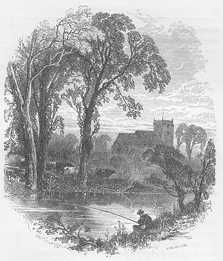
OF CONTENTMENT.
Godliness with Contentment,—these be the pillars of felicity, Jachin, wherewithal it is established, and Boaz, in the which is strength; And upon their capitals is lily-work, the lotus fruit and flower, Those fair and fragrant types of holiness, innocence, and beauty; Great gain pertaineth to the pillars, nets and chains of wreathen gold, And they stand up straight in the temple porch, the house where Glory dwelleth.
The body craveth meats, and the spirit is athirst for peacefulness, He that hath these, hath enough; for all beyond is vanity. Surfeit vaulteth over pleasure, to light upon the hither side of pain; And great store is great care, the rather if it mightily increaseth. Albeit too little is a trouble, yet too much shall swell into an evil, If wisdom stand not nigh to moderate the wishes: For covetousness never had enough, but moaneth at its wants for ever, And rich men have commonly more need to be taught contentment than the poor. That hungry chasm in their market-place gapeth still unsatisfied, Yea, fling in all the wealth of Rome,—it asketh higher victims; So, when the miser's gold cannot fill the measure of his lust, Curtius must leap into the pit, and avarice shall close upon his life.
Behold Independence in his rags, all too easily contented, Careful for nothing, thankful for much, and uncomplaining in his poverty: Such an one have I somewhile seen earn his crust with gladness; He is a gatherer of simples, culling wild herbs upon the hills; And now, as he sitteth on the beach, with his motherless child beside him, To rest them in the cheerful sun, and sort their mints and horehound,— Tell me, can ye find upon his forehead the cloud of covetous anxiety, Or note the dull unkindled eyes of sated sons of pleasure?— For there is more joy of life with that poor picker of the ditches, Than among the multitude of wealthy who wed their gains to discontent.
I have seen many rich, burdened with the fear of poverty, I have seen many poor, buoyed with all the carelessness of wealth: For the rich had the spirit of a pauper, and the moneyless a liberal heart; The first enjoyeth not for having, and the latter hath nothing but enjoyment. None is poor but the mean in mind, the timorous, the weak, and unbelieving; None is wealthy but the affluent in soul, who is satisfied and floweth over. The poor-rich is attenuate for fears, the rich-poor is fattened upon hopes; Cheerfulness is one man's welcome, and the other warneth from him by his gloom. Many poor have the pleasures of the rich, even in their own possessions; And many rich miss the poor man's comforts, and yet feel all his cares. Liberty is affluence, and the Helots of anxiety never can be counted wealthy; But he that is disenthralled from fear, goeth for the time a king; He is royal, great, and opulent, living free of fortune, And looking on the world as owner of its good, the Maker's child and heir: Whereas, the covetous is slavish, a very Midas in his avarice, Full of dismal dreams, and starved amongst his treasures: The ceaseless spur of discontent goaded him with instant apprehension, And his thirst for gold could never be quenched, for he drank with the throat of Crassus.
Vanity, and dreary disappointment, care, and weariness, and envy; Vanity is graven upon all things; wisely spake the preacher. For ambition is a burning mountain, thrown up amid the turbid sea, A Stromboli in sullen pride above the hissing waves; And the statesman climbing there, forgetful of his patriot intentions, Shall hate the strife of each rough step, or ever he hath toiled midway: And every truant from his home, the happy home of duty, Shall live to loathe his eminence of cares, that seething smoke and lava. Contentment is the temperate repast, flowing with milk and honey: Ambition is the drunken orgy, fed by liquid flames: A black and bitter frown is stamped upon the forehead of Ambition, But fair Contentment's angel-face is rayed with winning smiles.
There was in Tyre a merchant, the favourite child of fortune, An opulent man with many ships, to trade in many climes; And he rose up early to his merchandize, after feverish dreaming, And lay down late to his hot unrest, overwhelmed with calculated cares. So, day by day, and month by month, and year by year, he gained; And grew grey, and waxed great: for money brought him all things. All things?—verily, not all; the kernel of the nut is lacking,— His mind was a stranger to content, and as for Peace, he knew her not: Luxuries palled upon his palate, and his eyes were satiate with purple; He could coin much gold, but buy no happiness with it. And on a day, a day of dread, in the heat of inordinate ambition, When he threw with a gambler's hand, to lose or to double his possessions, The chance hit him,—he had speculated ill,—and men began to whisper;— Those he trusted, failed; and their usuries had bribed him deeply; One ship foundered out at sea,—and another met the pirate,— And so, with broken fortunes, men discreetly shunned him. He was a stricken stag, and went to hide away in solitude, And there in humility, he thought,—he resolved, and promptly acted: From the wreck of all his splendours, from the dregs of the goblet of affluence, He saved with management a morsel and a drop, for his daily cup and platter: And lo, that little was enough, and in enough was competence; His cares were gone,—he slept by night, and lived at peace by day; Cured of his guilty selfishness,—money's love, envy, competition,— He lived to be thankful in a cottage that he had lost a palace: For he found in his abasement what he vainly had sought in high estate, Both mind and body well at ease, though robed in the russet of the lowly.
Once more; a certain priest, happy in his high vocation, With faith, and hope, and charity, well served his village altar; As men count riches, he was poor; but great were his treasures in heaven, And great his joys on earth, for God's sake doing good: He had few cares and many consolations, one of the welcome everywhere; The labourer accounted him his friend, and magnates did him honour at their table: With a large heart and little means he still made many grateful, And felt as the centre of a circle, of comfort, calmness, and content. But, on a weaker sabbath,—for he preached both well and wisely,— Some casual hearer loudly praised his great neglected talents: Why should he be buried in obscurity, and throw these pearls to swine? Could he not still be doing good,—the whilst he pushed his fortunes? Then came temptation, even on the spark of discontent; The neighbouring town had a pulpit to be filled; hotly did he canvass, and won it: Now was he popular and courted, and listened to the spell of admiration, And toiled to please the taste, rather than to pierce the conscience. Greedily he sought, and seeking found, the patronizing notice of the great; He thirsted for emoluments and honours, and counted rich men happy: So he flattered, so he preached; and gold and fame flowed in; They flowed in,—he was reaping his reward, and felt himself a fool. Alas, what a shadow was he following,—how precious was the substance he had left! Man for God, gold for good, this was his miserable bargain. The village church, its humble flock, and humbler parish priest, Zeal, devotion, and approving Heaven,—his books, and simple life, His little farm and flower-beds,—his recreative rambles with a friend, And haply, at eventide, the leaping trouts, to help their humble fare, All these wretchedly exchanged for what the world called fortune, With the harrowing conscience of a state relapsed to vain ambitions. Then,—for God was gracious to his soul,—his better thoughts returned, And better aims with better thoughts, his holy walk of old. Sickened of style, and ostentation, and the dissipative fashions of society, He deserted from the ranks of Mammon, and renewed his allegiance to God: For he found that the praises of men, and all that gold can give, Are not worthy to be named, against godliness and calm contentment.
OF LIFE.
A child was playing in a garden, a merry little child, Bounding with triumphant health, and full of happy fancies; His kite was floating in the sunshine,—but he tied the string to a twig And ran among the roses to catch a new-born butterfly; His horn-book lay upon a bank, but the pretty truant hid it, Buried up in gathered grass, and moss, and sweet wild-thyme; He launched a paper boat upon the fountain, then wayward turned aside, To twine some fragrant jessamines about the dripping marble: So, in various pastime shadowing the schemes of manhood, That curly-headed boy consumed the golden hours: And I blessed his glowing face, envying the merry little child, As he shouted with the ecstasy of being, clapping his hands for joyfulness: For I said, Surely, O Life, thy name is happiness and hope, Thy days are bright, thy flowers are sweet, and pleasure the condition of thy gift.
A youth was walking in the moonlight, walking not alone, For a fair and gentle maid leant on his trembling arm: Their whispering was still of beauty, and the light of love was in their eyes, Their twin young hearts had not a thought unvowed to love and beauty; The stars and the sleeping world, and the guardian eye of God, The murmur of the distant waterfall, and nightingales warbling in the thicket, Sweet speech of years to come, and promises of fondest hope, And more, a present gladness in each other's trust, All these fed their souls with the hidden manna of affection, While their faces shone beatified in the radiance of reflected Eden: I gazed on that fond youth, and coveted his heart, Attuned to holiest symphonies, with music in its strings: For I said, Surely, O Life, thy name is love and beauty, Thy joys are full, thy looks most fair, thy feelings pure and sensitive.
A man sat beside his merchandize, a careworn altered man, His waking hope, his nightly fear, were money, and its losses: Rarely was the laugh upon his cheek, except in bitter scorn For his foolishness of heart, and the lie of its romance, counting Love a treasure. His talk is of stern Reality, chilling unimaginative facts, The dull material accidents of this sensual body; Lucreless honour were contemptible, impoverished affection but a pauper's riches, Duty, struggling unrewarded, the bargain of a cheated fool: The market value of a fancy must be measured by the gain it bringeth, No man is fed or clothed by fame, or love, or duty:— So toiled he day by day, that cold and joyless man, I gazed upon his haggard face, and sorrowed for the change: For I said, Surely, O Life, thy name is care and weariness, Thy soil is parched, thy winds are fierce, and the suns above thee hardening.
A withered elder lay upon his bed, a desolate man and feeble: His thoughts were of the past, the early past, the bygone days of youth: Bitterly repented he the years stolen by the god of this world: Remembering the maiden of his love, and the heart-stricken wife of his selfishness. For the sunshiny morning of life came again to him a vivid truth, But the years of toil as a long dim dream, a cloudy blighted noon: He saw the nutting schoolboy, but forgat the speculative merchant; The callous calculating husband was shamed by the generous lover: He knew that the weeds of worldliness, and the smoky breath of Mammon Had choked and killed those tender shoots, his yearnings after honour and affection; So was he sick at heart, and my pity strove to cheer him, But a deep and dismal gulf lay between comfort and his soul. Then I said, Surely, O Life, thy name is vanity and sorrow, Thy storms at noon are many, and thine eventide is clouded by remorse.
Now, when I thought upon these things, my heart was grieved within me: I wept, with bitterness of speech, and these were the words of my complaining: "Wherefore then must happiness and love wither into care and vanity,— Wherefore is the bud so beautiful, but flower and fruit so blighted? Hard is the lot of man; to be lured by the meteor of romance, Only to be snared, and to sink, in the turbid mudpool of reality."
Suddenly, a light,—and a rushing presence,—and a consciousness of Something near me,— I trembled, and listened, and prayed: then I knew the Angel of Life: Vague, and dimly visible, mine eye could not behold Him, As, calmly unimpassioned, He looked upon an erring creature; Unseen, my spirit apprehended Him; though He spake not, yet I heard: For a sympathetic communing with Him flashed upon my mind electric.
Pensioner of God, be grateful; the gift of Life is good: The life of heart, and life of soul, mingled with life for the body. Gladness and beauty are its just inheritance,—the beauty thou hast counted for romance: And guardian spirits weep that selfishness and sorrow should destroy it. Thou hast seen the natural blessing marred into a curse by man; Come then, in favour will I show thee the proper excellence of life. Keep thou purity, and watch against suspicion,—love shall never perish; Guard thine innocency spotless, and the buoyancy of childhood shall remain. Sweet ideals feed the soul, thoughts of loveliness delight it, The chivalrous affection of uncalculating youth lacketh not honourable wisdom. Charge not folly on invisibles, that render thee happier and purer, The fair frail visions of Romance have a use beyond the maxims of the Real.
Behold a patriarch of years, who leaneth on the staff of religion; His heart is fresh, quick to feel, a bursting fount of generosity: He, playful in his wisdom, is gladdened in his children's gladness, He, pure in his experience, loveth in his son's first love: Lofty aspirations, deep affections, holy hopes are his delight; His abhorrence is to strip from Life its charitable garment of Idea. The cold and callous sneerer, who heedeth of the merely practical, And mocketh at good uses in imaginary things, that man is his scorn: The hard unsympathizing modern, filled with facts and figures, Cautious, and coarse, and materialized in mind, that man is his pity. Passionate thirst for gain never hath burnt within his bosom, The leaden chains of that dull lust have not bound him prisoner: The shrewd world laughed at him for honesty, the vain world mouthed at him for honour, The false world hated him for truth, the cold world despised him for affection: Still, he kept his treasure, the warm and noble heart, And in that happy wise old man survive the child and lover. For human Life is as Chian wine, flavoured unto him who drinketh it, Delicate fragrance comforting the soul, as needful substance for the body: Therefore, see thou art pure and guileless; so shall thy Realities of Life Be sweetened, and tempered, and gladdened by the wholesome spirit of Romance.
Dost thou live, man, dost thou live,—or only breathe and labour? Art thou free, or enslaved to a routine, the daily machinery of habit? For, one man is quickened into life, where thousands exist as in a torpor, Feeding, toiling, sleeping, an insensate weary round: The plough, or the ledger, or the trade, with animal cares and indolence, Make the mass of vital years a heavy lump unleavened. Drowsily lie down in thy dulness, fettered with the irons of circumstance, Thou wilt not wake to think and feel a minute in a month. The epitome of common life is seen in the common epitaph, Born on such a day, and dead on such another, with an interval of threescore years. For time hath been wasted on the senses, to the hourly diminishing of spirit: Lean is the soul and pineth, in the midst of abundance for the body: He forgat the worlds to which he tended, and a creature's true nobility, Nor wished that hope and wholesome fear should stir him from his hardened satisfaction. And this is death in life; to be sunk beneath the waters of the Actual, Without one feebly-struggling sense of an airier spiritual realm: Affection, fancy, feeling—dead; imagination, conscience, faith, All wilfully expunged, till they leave the man mere carcase. See thou livest, whiles thou art: for heart must live, and soul, But care and sloth and sin and self, combine to kill that life. A man will grow to an automaton, an appendage to the counter or the desk, If mind and spirit be not roused, to raise the plodding groveller: Then praise God for sabbaths, for books, and dreams, and pains, For the recreative face of nature, and the kindling charities of home; And remember, thou that labourest,—thy leisure is not loss, If it help to expose and undermine that solid falsehood, the Material.
Life is a strange avenue of various trees and flowers; Lightsome at commencement, but darkening to its end, in a distant massy portal. It beginneth as a little path, edged with the violet and primrose, A little path of lawny grass, and soft to tiny feet: Soon, spring thistles in the way, those early griefs of school, And fruit-trees ranged on either hand show holiday delights: Anon, the rose and the mimosa hint at sensitive affection, And vipers hide among the grass, and briars are woven in the hedges: Shortly, staked along in order, stand the tender saplings, While hollow hemlock and tall ferns fill the frequent interval: So advancing, quaintly mixed, majestic line the way Sturdy oaks, and vigorous elms, the beech and forest-pine: And here the road is rough with rocks, wide, and scant of herbage, The sun is hot in heaven, and the ground is cleft and parched: And many-times a hollow trunk, decayed, or lightning-scathed, Or in its deadly solitude, the melancholy upas: But soon, with closer ranks, are set the sentinel trees, And darker shadows hover amongst Autumn's mellow tints; Ever and anon, a holly,—junipers, and cypresses, and yews; The soil is damp; the air is chill; night cometh on apace: Speed to the portal, traveller,—lo, there is a moon, With smiling light to guide thee safely through the dreadful shade: Hark,—that hollow knock,—behold, the warder openeth, The gate is gaping, and for thee;—those are the jaws of Death!
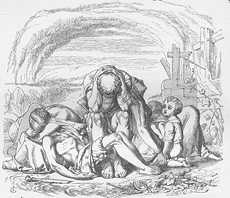
OF DEATH.
Keep silence, daughter of frivolity,—for Death is in that chamber! Startle not with echoing sound the strangely solemn peace. Death is here in spirit, watcher of a marble corpse,— That eye is fixed, that heart is still,—how dreadful in its stillness! Death, new tenant of the house, pervadeth all the fabric; He waiteth at the head, and he standeth at the feet, and hideth in the caverns of the breast: Death, subtle leech, hath anatomized soul from body, Dissecting well in every nerve its spirit from its substance: Death, rigid lord, hath claimed the heriot clay, While joyously the youthful soul hath gone to take his heritage: Death, cold usurer, hath seized his bonded debtor; Death, savage despot, hath caught his forfeit serf; Death, blind foe, wreaketh petty vengeance on the flesh; Death, fell cannibal, gloateth on his victim, And carrieth it with him to the grave, that dismal banquet-hall, Where in foul state the Royal Goul holdeth secret orgies.
Hide it up, hide it up, draw the decent curtain: Hence! curious fool, and pry not on corruption: For the fearful mysteries of change are being there enacted, And many actors play their part on that small stage, the tomb. Leave the clay, that leprous thing, touch not the fleshly garment: Dust to dust, it mingleth well among the sacred soil: It is scattered by the winds, it is wafted by the waves, it mixeth with herbs and cattle, But God hath watched those morsels, and hath guided them in care: Each waiting soul must claim his own, when the archangel soundeth, And all the fields, and all the hills, shall move a mass of life; Bodies numberless crowding on the land, and covering the trampled sea, Darkening the air precipitate, and gathered scatheless from the fire; The Himalayan peaks shall yield their charge, and the desolate steppes of Siberia, The Maelström disengulph its spoil, and the iceberg manumit its captive: All shall teem with life, the converging fragments of humanity, Till every conscious essence greet his individual frame; For in some dignified similitude, alike, yet different in glory, This body shall be shaped anew, fit dwelling for the soul: The hovel hath grown to a palace, the bulb hath burst into the flower, Matter hath put on incorruption, and is at peace with spirit.
Amen,—and so it shall be:—but now, the scene is drear,— Yea, though promises and hope strive to cheat its sadness; Full of grief, though faith herself is strong to speed the soul, For the partner of its toil is left behind to endure an ordeal of change. Dear partner, dear and frail, my loved though humble home,— Should I cast thee off without a pang, as a garment flung aside? Many years, for joy and sorrow, have I dwelt in thee, How shall I be reckless of thy weal, nor hope for thy perfection?— This also, He that lent thee for my uses in mortality, Shall well fulfil with boundless praise on that returning day: Behold, thou shalt be glorified: thou, mine abject friend, And should I meanly scorn thy state, until it rise to greatness? Far be it, O my soul, from thine expectant essence, To be heedless, if indignity or folly desecrate those thine ashes: Keep them safe with careful love; and let the mound be holy; And, thou that passest by, revere the waiting dead.
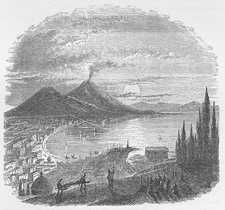
Naples sitteth by the sea, key-stone of an arch of azure, Crowned by consenting nations peerless queen of gaiety: She laugheth at the wrath of Ocean, she mocketh the fury of Vesuvius, She spurneth disease and misery and famine, that crowd her sunny streets: The giddy dance, the merry song, the festal glad procession, The noonday slumber and the midnight serenade,—all these make up her Life: Her Life?—and what her Death?—look we to the end of life,— Solon, and Tellus the Athenian, wisely have ye pointed to the grave. For behold yon dreary precinct,—those hundreds of stone wells, A pit for a day, a pit for a day,—a pit to be sealed for a year: And in the gloom of night, they raise the year-closed lid,— Look in,—for gnawing lime hath half consumed the carcases; Thus they hurl the daily dead into that horrible pit, The dead that only died this day,—as unconsidered offal! There, a stark white heap, unwept, unloved, uncared for, Old men and maidens, young men and infants, mingle in hideous corruption; Fling in the gnawing lime,—seal up the charnel for a year; For lo, a morrow's dawn hath tinged the mountain summit. O fair false city, thou gay and gilded harlot, Woe, for thy wanton heart, woe, for thy wicked hardness: Woe unto thee, that the lightsomeness of Life, beneath Italian suns, Should meet the solemnity of Death, in a sepulchre so foul and fearful.
For that, even to the best, the wise and pure and pious, Death, repulsive king, thine iron rule is terrible: Yea, and even at the best, in company of buried kindred, With hallowing rites, and friendly tears, and the dear old country church, Death, cold and lonely, thy frigid face is hateful, The bravest look on thee with dread, the humblest curse thy coming. Still, ye unwise among mankind, your foolishness hath added fears; The crowded cemetery, the catacomb of bones, the pestilential vault, With fancy's gliding ghost at eve, her moans and flaky footfalls, And the gibbering train of terror to fright your coward hearts. We speak not here of sin, nor the phantoms of a bloody conscience, Nor of solaces, and merciful pardon: we heed but the inevitable grave; The grave, that wage of guilt, that due return to dust, The grave, that goal of earth, and starting-post for Heaven.
Plant it with laurels, sprinkle it with lilies, set it upon yonder dewy hill Midst holy prayers, and generous griefs, and consecrating blessings: Let Sophocles sleep among his ivy, green perennial garlands, Let olives shade their Virgil, and roses bloom above Corinne; To his foster-mother, Ocean, entrust the mariner in hope; The warrior's spirit, let it rise on high from the flaming fragrant pyre. But heap not coffins and corruption to infect the mass of living, Nor steal from odious realities the charitable poetry of Death: It is wise to gild uncomeliness, it is wise to mask necessity, It is wise from cheerful sights and sounds to draw their gentle uses: Hide the facts, the bitter facts, the foul, and fearful facts, Tend the body well in hope, this were praise and wisdom: But to plunge in gloom the parting soul, that hath loved its clay tenement so long, This were vanity and folly, the counsel of moroseness and despair. Not thus, the Scythian of old time welcomed Death with songs; Not thus, the shrewd Egyptian decorated Death with braveries; Not thus, on his funeral tower sleepeth the sun-worshipping Parsee; Not thus, the Moslem saint lieth in his arabesque mausoleum; Not thus, the wild red Indian, hunter of the far Missouri, In flowering trees hath nested up his forest-loving ancestry; Not thus, the Switzer mountaineer scattereth ribboned garlands About the rustic cross that halloweth the bed of his beloved; Not thus, the village maiden wisheth she may die in spring, With store of violets and cowslips to be sprinkled on her snow-white shroud; Not thus, the dying poet asketh a cheerful grave,— Lay him in the sunshine, friends, nor sorrow that a Christian hath departed!
Yea; it is the poetry of Death, an Orpheus gladdening Hadës, To care with mindful love for all so dear—and dead; To think of them in hope, to look for them in joy, and—but for its simple vanity,— To pray with all the earnestness of nature for souls who cannot change. For the tree is felled, and boughed, and bare, and the Measurer standeth with His line; The chance is gone for ever, and is past the reach of prayer: For men and angels, good and ill, have rendered all their witness; The trial is over, the jury are gone in, and none can now be heard; Well are they agreed upon the verdict, just, and fixt, and final, And the sentence showeth clear, before the Judge hath spoken: Now,—while resting matter is at peace within the tomb, The conscious spirit watcheth in unspeakable suspense; Racked with a fearful looking-forward, or blissfully feeding on the foretaste, Waiting souls in eager expectation pass the solemn interval: They slumber not at death, but awaken, quickened to the terrors of the judgment; They lie not insensate among darkness, but exult, looking forward to the light: Idiotcy, brightening on the instant, when that veil is torn, Is grateful that his torpor here hath left him as an innocent: The young child, stricken as he played, and guileless babes unborn, Freed from fetters of the flesh, burst into mind immediate: Madness judgeth wisely, and the visions of the lunatic are gone, And each hasteneth to praise the mercy that made him irresponsible. For the soul is one, though manifold in act, working the machinery of brain, Reason, fancy, conscience, passion, are but varying phases; If, in God's wise purpose, the machine were shattered or confused, Still is soul the same, though it exhibit with a difference: Therefore, dissipate the brain, and set its inmate free, Behold, the maniacs and embryos stand in their place intelligent. That solvent eateth away all dross, leaving the gold intact: Matter lingereth in the retort, spirit hath flown to the receiver: And lo, that recipient of the spirits, it is some aerial world, An oasis midway on the desert space, separating earth from heaven, A prison-house for essences incorporate, a limbus vague and wide, Tartarus for evil, and Paradise for good, that intermediate Hadës.
O Death, what art thou? a Lawgiver that never altereth, Fixing the consummating seal, whereby the deeds of life become established: O Death, what art thou? a stern and silent usher, Leading to the judgment for Eternity, after the trial-scene of Time: O Death, what art thou? an Husbandman, that reapeth always, Out of season, as in season, with the sickle in his hand: O Death, what art thou? the shadow unto every substance, In the bower as in the battle, haunting night and day: O Death, what art thou? Nurse of dreamless slumbers Freshening the fevered flesh to a wakefulness eternal: O Death, what art thou? strange and solemn Alchymist, Elaborating life's elixir from these clayey crucibles: O Death, what art thou? Antitype of Nature's marvels, The seed and dormant chrysalis bursting into energy and glory. Thou calm safe anchorage for the shattered hulls of men,— Thou spot of gelid shade, after the hot-breathed desert,— Thou silent waiting-hall, where Adam meeteth with his children,— How full of dread, how full of hope, loometh inevitable Death: Of dread, for all have sinned; of hope, for One hath saved; The dread is drowned in joy, the hope is filled with immortality! —Pass along, pilgrim of life, go to thy grave unfearing, The terrors are but shadows now, that haunt the vale of Death.
OF IMMORTALITY.
Gird up thy mind to contemplation, trembling inhabitant of earth; Tenant of a hovel for a day,—thou art heir of the universe for ever! For, neither congealing of the grave, nor gulphing waters of the firmament, Nor expansive airs of heaven, nor dissipative fires of Gehenna, Nor rust of rest, nor wear, nor waste, nor loss, nor chance, nor change, Shall avail to quench or overwhelm the spark of soul within thee!
Thou art an imperishable leaf on the evergreen bay-tree of Existence; A word from Wisdom's mouth, that cannot be unspoken; A ray of Love's own light; a drop in Mercy's sea; A creature, marvellous and fearful, begotten by the fiat of Omnipotence. I, that speak in weakness, and ye, that hear in charity, Shall not cease to live and feel, though flesh must see corruption; For the prison-gates of matter shall be broken, and the shackled soul go free, Free, for good or ill, to satisfy its appetence for ever: For ever,—dreadful doom, to be hurried on eternally to evil,— For ever,—happy fate, to ripen into perfectness—for ever!
And is there a thought within thy heart, O slave of sin and fear, A black and harmful hope, that erring spirit dieth? That primal disobedience hath ensured the death of soul, And separate evil sealed it thine—thy curse, Annihilation? Heed thou this; there is a Sacrifice; the Maker is Redeemer of His creature; Freely unto each, universally to all, is restored the privilege of essence: Whether unto grace or guilt, all must live through Him, Live in vital joy, or live in dying woe: Death in Adam, Life in Christ; the curse hung upon the cross: Who art thou that heedest of redemption, as narrower than the fall? All were dead,—He died for all; that living, they might love; If living souls withhold their love,—still, He hath died for them. Eve stole the knowledge; Christ gave the life: Knowledge and life are the perquisites of soul, the privilege of Man: Mercy stepped between, and stayed the double theft; God gave; and giving, bought; and buying, asketh love: And in such asking rendereth bliss, to all that hear and answer, For love with life is heaven; and life unloving, hell.
Creature of God, His will is for thy weal, eternally progressing; Fear not to trust a Maker's love, nor a Saviour's ransom: He drank for all,—for thee, and me,—the poison of our deeds; We shall not die, but live,—and, of His grace, we love. For, in the mysteries of Mercy, the One fore-knowing Spirit Outstrippeth reason's halting choice, and winneth men to Him: Who shall sound the depths? who shall reach the heights? Freedom, in the gyves of fate; and sovereignty, reconciled with justice.
If then, as annihilate by sin, the soul was ever forfeit, Godhead paid the mighty price, the pledge hath been redeemed: He from the waters of Oblivion raised the drowning race, Lifting them even to Himself, the baseless Rock of Ages. None can escape from Adam's guilt, or second Adam's guerdon: Sin and death are thine; thine also is interminable being: Let it be even as thou wilt, still are we ransomed from nonentity, The worlds of bliss and woe are peopled with immortals: And ruin is thy blame; for thou, the worst, art free To take from Heaven the grace of love, as the gift of life: Yet is not remedy thy praise; for thou, the best, art bound In self, and sin, and darkling sloth, until He break the chain: None can tell, without a struggle, if that chain be broken; Strive to-day,—one effort more may prove that thou art free! Here is faith and prayer, here is the Grace and the Atonement, Here is the creature feeling for its God, and the prodigal returning to his Father. But, behold, His reasonable children, standing in just probation, With ears to hear, neglect; with eyes to see, refuse: They will not have the blessing with the life, the blessing that enricheth Immortality; And look for pleasures out of God, for heaven in life alone: So, they snatch that awful prize, existence void of love, And in their darkening exile make a needful hell of self.
Therefore fear, thou sinner, lest the huge blessing, Immortality, Be blighted in thine evil to a curse,—it were better he had not been born: Therefore hope, thou saint, for the gift of Immortality is free; Take and live, and live in love; fear not, thou art redeemed! The happy life, that height of hope, the knowledge of all good, This is the blessing on obedience, obedience the child of faith: The miserable life, that depth of all despair, the knowledge of all evil, This is the curse upon impenitence, impenitence that sprung of unbelief. God, from a beautiful necessity, is Love in all He doeth, Love, a brilliant fire, to gladden or consume: The wicked work their woe by looking upon love, and hating it: The righteous find their joys in yearning on its loveliness for ever.
Who shall imagine Immortality, or picture its illimitable prospect? How feebly can a faltering tongue express the vast idea! For consider the primæval woods that bristle over broad Australia, And count their autumn leaves, millions multiplied by millions; Thence look up to a moonless sky from a sleeping isle of the Ægæan, And add to these leaves yon starry host, sparkling on the midnight numberless; Thence traverse an Arabia, some continent of eddying sand, Gather each grain, let none escape, add them to the leaves and to the stars; Afterward gaze upon the sea, the thousand leagues of an Atlantic, Take drop by drop, and add their sum, to the grains, and leaves, and stars; The drops of ocean, the desert sands, the leaves, and stars innumerable, (Albeit, in that multitude of multitudes, each small unit were an age,) All might reckon for an instant, a transient flash of Time, Compared with this intolerable blaze, the measureless enduring of Eternity!
O grandest gift of the Creator,—O largess worthy of a God,— Who shall grasp that thrilling thought, life and joy for ever? For the sun in heaven's heaven is Love that cannot change, And the shining of that sun is life, to all beneath its beams: Who shall arrest it in the firmament,—or drag it from its sphere? Or bid its beauty smile no more, but be extinct for ever? Yea, where God hath given, none shall take away, Nor build up limits to His love, nor bid His bounty cease; Wide, as space is peopled, endless as the empire of heaven, The river of the water of life floweth on in majesty for ever!
Why should it seem a thing impossible to thee, O man of many doubts, That God shall wake the dead, and give this mortal immortality? Is it that such riches are unsearchable, the bounty too profuse? And yet, what gift, to cease or change, is worthy of the King Almighty? For remember the moment thou art not, thou mightest as well not have been; A millennium and an hour are equal in the gulph of that desolate abyss, annihilation: If Adam had existed till to-day, and to-day had perished utterly, What were his gain in length of a life, that hath passed away for ever? No tribute of thanks can exhale from the empty censer of nonentity; The Giver, with His gift reclaimed, is mulcted of all praise.
Tell me, ye that strive in vain to cramp and dwarf the soul, Wherefore should it cease to be, and when shall essence die? It is,—and therefore shall be, till just obstacle opposeth: Show no cause for change, and reason leaneth to continuance. The body verily shall change; this curious house we live in Never had continuing stay, but changeth every instant: But the spiritual tenant of the house abideth in unalterable consciousness, He may fly to many lands, but cannot flee himself. The soil wherein ye drop the seed, by suns or rains may vary; But the seed is the same; and soul is the seed; and flesh but its anchorage to earth.
The machine may be broken, and rust corrode the springs: but can rust feed on motion? Worms may batten on the brain: but can worms gnaw the mind? Dynamics are, and dwell apart, though matter be not made; Spirit is, and can be separate, though a body were not: Power is one, be it lever, screw, or wedge; but it needeth these for illustration: Mind is one, be it casual or ideal; but it is shown in these. The creature is constructed individual, for trial of his reasonable will, Clay and soul, commingled wisely, mingled not confused: As power is not in the spring, till somewhat give it action, So, until spirit be infused, the organism lieth inergetic.
Or shalt thou say that mind is the delicate offspring of matter, The bright consummate flower that must perish with its leaf? Go to: doth weight breed lightness? is freedom the atmosphere of prisons? When did the body elevate, expand, and bud the mind? Lo, a red-hot cinder flung from the furnaces of Ætna,— There is fire in that ash; but did the pumice make it? Nay, cold clod, never canst thou generate a flame, Nay, most exquisite machinery, nevermore elaborate a mind: Rather do ye battle and contend, opposite the one to the other; Till God shall stop the strife, and call the body colleague.
Garment of flesh, and art thou then a vest, so tinged with subtle poison, (Maddening tunic of the centaur,) as to kill the soul? Not so: fruit of disobedience, rot in dissolution, as thou must,— The seed is in the core, its germ is safe, and life is in that germ: Moreover, Marah shall be sweetened; and a Good Physician Yet shall heal those gangrene wounds, the spotted plague of sin: He, through worldly trials, and the separative cleansing of the grave, Shall change its corruptible to glory, and wash that garment white.
Still, is the whisper in thy heart, that oftenest the bed of death Seemeth but a sluggish ebb, of sinking soul and body? Mind dwelling, long-time, sensual in the chambers of the flesh, May slumber on in conscious sloth, and wilfully be dulled: But is it therefore nigh to dissolution, even as the body of this death? Ask the stricken conscience, gasping out its terrors; Ask the dying miser, loth to leave his gold; Ask the widowed poor, confiding her fatherless to strangers; Ask the martyr-maid, a broken reed so strong, That weak and tortured frame, with triumph on its brow!— O thou gainsayer, the finger of disease may seem to reach the soul, But it is a spiritual touch, sympathy with that which aileth: Pain or fear may dislocate and shatter this delicate machinery of nerves; But madness proveth mind: the fault is in the engine, not the impetus: Dissipate the mists of matter, lo, the soul is clear: Timour's cage bowed it in the dust; but now it goeth forth a freedman.
Yet more, there is reason in moralities, that the soul must live; If God be king in heaven, or have care for earth. Can wickedness have triumphed with impunity, or virtue toiled unseen? Shall cruelty torture unavenged, and the innocent complain unheard? Is there no recompense for woe, must there be no other world for justice,— No hope in setting suns of good, nor terror for the evil at its zenith? How shall ye make answer unto this; a just God prospering iniquity, Wisdom encouraging the foolish, and goodness abetting the depraved!
Yet again; mine erring brother, pardon this abundance of my speech, Yield me thy candour and thy charity, listening with a welcome: For, even now, a thousand thoughts are trooping to my theme; O mighty theme, O feeble thoughts! Alas! who is sufficient? Judge not so high a cause by these poor words alone, For lo, the advocate hath little skill: pardon and pass on: Certify thyself with surer proofs; fledge thine own mind for flight; Think, and pray; those better proofs shall follow on with holy aspiration. Yet in my humbler grade to help thy weal and comfort, Thy weal for this and higher worlds, and comfort in thy sickness, Suffer the multitude of fancies, walking with me still in love; But tread in fear, it is holy ground,—remember, Immortality!
Wilt thou argue from infirmities, thine abject evil state, As how should stricken wretched man indeed exist for ever: The brutal and besotted, the savage and the slave, the sucking infant and the idiot, The mass of mean and common minds, and all to be immortal?— Consider every beginning, how small it is and feeble: Ganges, and the rolling Mississippi sprung of brooks among the mountains; The Yew-tree of a thousand years was once a little seed, And Nero's marble Rome, a shepherd's mud-built hovel: A speck is on the tropic sky, and it groweth to the terrible tornado; An apple, all too fair to see, destroyed a world of souls: A tender babe is born,—it is Attila, scourge of the nations! A seeming malefactor dieth,—it is Jesus, the Saviour of men!
And hive not in thy thoughts the vain and wordy notion That nothing which was born in Time can tire out the footsteps of Infinity: Reckon up a sum in numbers; where shall progression stop? The starting-post is definite and fixed, but what is the goal of numeration? So, begin upon a moment, and when shall being end? Souls emanate from God, to travel with Him equally for ever. Moreover, thou that objectest the unenterable circle of eternity, That none but He from everlasting can endure, as to a future everlasting, Consider, may it be impossible that creatures were counted in their Maker, And so, that the confines of Eternity are filled by God alone? Trust not thy soul upon a fancy: who would freight a bubble with a diamond, And launch that priceless gem on the boiling rapids of a cataract?
If then we perish not at death, but walk in spirit through the darkness, Waiting for a mansion incorruptible, whereof this body is the seed, Tell me, when shall be the period? time and its ordeals are done: The storms are passed, the night is at end, behold the Sabbath morning. Is death to be conqueror again, and claim once more the victory,— Can the enemy's corpse awaken into life, and bruise the Champion's head? Evil, terrible ensample, that foil to the attributes of Good, Is banished to its own black world, weeded out of earth and heaven: Shall that great gulf be passed, and sin be sown again?— We know but this, the book of truth proclaimeth gladly, Never!
There remaineth the will of our God: when He repenteth of His creature, Made by self-suggested mercy, ransomed by self-sacrificing justice,— When Truth, that swore unto his neighbour, disappointeth him, and cleaveth to a lie,— When the counsels of Wisdom are confounded, and Love warreth with itself,— When the Unchangeable is changed, and the arm of Omnipotence is broken,— Then,—thy quenchless soul shall have reached the goal of its existence.
But it seemeth to thy notions of the merciful and just, a false and fearful thing, To lay such a burden upon time, that eternity be built on its foundation: As if so casual good or ill should colour all the future, And the vanity of accident, or sternness of necessity, save or wreck a soul. Were it casual, vain, or stern, this might pass for truth: But all things are marshalled by Design, and carefully tended by Benevolence. O man, thy Judge is righteous,—noting, remembering, and weighing;— Want, ignorance, diversities of state, are cast into the balance of advantage: The poisonous example of a parent asketh for allowance in the child; Care, diseases, toils, and frailties,—all things are considered. And again, a mysterious Omniscience knoweth the spirits that are His, While the delicate tissues of Event are woven by the fingers of Ubiquity. Should Providence be taken by surprise from the possible impinging of an accident, One fortuitous grain might dislocate the banded universe: The merest seeming trifle is ordered as the morning light; And He, that rideth on the hurricane, is pilot of the bubble on the breaker.
Once more, consider Matter, how small a thing is father to the greatest; Thou that lightly hast regarded the results of so-called accident. A blade of grass took fire in the sun,—and the prairies are burnt to the horizon: A grain of sand may blind the eye, and madden the brain to murder: A careful fly deposited its egg in the swelling bud of an acorn,— The sapling grew,—cankrous and gnarled,—it is yonder hollow oak: A child touched a spring, and the spring closed a valve, and the labouring engine burst,— A thousand lives were in that ship,—wrecked by an infant's finger! Shall nature preach in vain? thy casualty, guided in its orbit, Though less than a mote upon the sunbeam, saileth in a fleet of worlds; That trivial cause, watered and observed of the Husbandman day by day,— In calm undeviating strength doth work its large effect. Thus, in the pettiness of life note thou seeds of grandeur, And watch the hour-glass of Time with the eyes of an heir of Immortality.
There still be clouds of witnesses,—if thou art not weary of my speech,— Flocks of thoughts adding lustre to the light, and pointing on to Life. For reflect how Truth and Goodness, well and wisely put, Commend themselves to every mind with wondrous intuition: What is this? the recognition of a standard, unwritten, natural, uniform; Telling of one common source, the root of Good and True. And if thus present soul can trace descent from Deity, Being, as it standeth, individual, a separate reasonable thing, What should hinder that its hope may not trace gladly forward, And, in astounding parallel, like Enoch walk with God? Yea, the genealogy of soul, that vivifying breath of a Creator, Breath, no transient air, but essence, energy, and reason, Is looming on the past, and shadowing the future, sublimely as Melchisedek of old, Having not beginning, nor end of days, but present in the majesty of Peace!
O false scholar, credulous in vanities, and only sceptical of truth, Wherefore toil to cheat thy soul of its birthright, Immortality? Is it for thy guilt? He pardoneth: Is it for thy frailty? He will help: Though thou fearest, He is love; and Mercy shall be deeper than Despair: Even for thy full-blown pride, is it much to be receiver of a God? And lo, thy rights, He made thee; thy claims, He hath redeemed. Hath the fair aspect of affection no beauty that thou shouldst desire it? And are those sorrows nothing, to thee that passest by? For it is Fact, immutable, that God hath dwelt in Man: With gentle generous love ennobling while He bought us. What, though thou art false, ignorant, weak and daring,— Can the sun be quenched in heaven—or only Belisarius be blind?
But, even stooping to thy folly, grant all these hopes are vain; Stultify reason, wrestle against conscience, and wither up the heart: Where is thy vast advantage?—I have all that thou hast, The buoyancy of life as strong, and term of days no shorter; My cup is full with gladness, my griefs are not more galling: And thus, we walk together, even to the gates of death: There, (if not also on my journey, blessing every step, Gladdening with light, and quickening with love, and killing all my cares,) There,—while thou art quailing, or sullenly expecting to be nothing,— There,—is found my gain; I triumph, where thou tremblest. Grant all my solace is a lie, yet it is a fountain of delight, A spice in every pleasure, and a balm for every pain: O precious wise delusion, scattering both misery and sin,— O vile and silly truth, depraving while it curseth!
Darkling child of knowledge, commune with Socrates and Cicero, They had no prejudice of birth, no dull parental warpings; See, those lustrous minds anticipate the dawning day,— Whilst thou, poor mole, art burrowing back to darkness from the light. I will not urge a revelation, mercies, miracles, and martyrs, But, after twice a thousand years, go, learn thou of the pagan: It were happier and wiser even among fools, to cling to the shadow of a hope, Than, in the company of sages, to win the substance of despair; But here, the sages hope; despair is with the fools, The base bad hearts, the stolid heads, the sensual and the selfish.
And wilt thou, sorry scorner, mock the phrase, despair? Despair for those who die and live,—for me, I live and die: What have I to do with dread?—my taper must go out;— I nurse no silly hopes, and therefore feel no fears: I am hastening to an end.—O false and feeble answer: For hope is in thee still, and fear, a racking deep anxiety. Erring brother, listen: and take thine answer from the ancients: Consider every end, that it is but the end of a beginning. All things work in circles; weariness induceth unto rest, Rest invigorateth labour, and labour causeth weariness: War produceth peace, and peace is wanton unto war: Light dieth into darkness, and night dawneth into day: The rotting jungle reeds scatter fertility around; The buffalo's dead carcase hath quickened life in millions: The end of toil is gain, the end of gain is pleasure, Pleasure tendeth unto waste, and waste commandeth toil.
So, is death an end,—but it breedeth an infinite beginning; Limits are for time, and death killed time: Eternity's beginning is for ever. Ambition, hath it any goal indeed? is not all fruition, disappointment? A step upon the ladder, and another, and another,—we start from every end? Look to the eras of mortality, babe, student, man, The husband, the father, the death-bed of a saint,—and is it then an end? That common climax, Death, shall it lead to nothing? How strong a root of causes flowering a consequence of vapour: That solid chain of facts, is it to be snapped for ever? How stout a show of figures, weakly summing to nonentity.
Or haply, Death, in the doublings of thy thought, shall seem continuous ending; A dull eternal slumber, not an end abrupt. O most futile chrysalis, wherefore dost thou sleep? Dreamless, unconscious, never to awake,—what object in such slumber? If thou art still to live, it may as well be wakefully as sleeping: How grovelling must that spirit be, to need eternal sleep! Or was indeed the toil of life so heavy and so long, That nevermore can rest refresh thine overburdened soul?— Sleep is a recreance to body, but when was mind asleep? Even in a swoon it dreameth, though all be forgotten afterward: The muscles seek relaxing, and the irritable nerves ask peace; But life is a constant force, spirit an unquietable impetus: The eye may wear out as a telescope, and the brain work slow as a machine, But soul unwearied, and for ever, is capable of effort unimpaired.
I live, move, am conscious: what shall bar my being? Where is the rude hand, to rend this tissue of existence? Not thine, shadowy Death, what art thou but a phantom? Not thine, foul Corruption, what art thou but a fear? For death is merely absent life, as darkness absent light; Not even a suspension, for the life hath sailed away, steering gladly somewhere. And corruption, closely noted, is but a dissolving of the parts, The parts remain, and nothing lost, to build a better whole. Moreover, mind is unity, however versatile and rapid; Thou canst not entertain two coincident ideas, although they quickly follow: And Unity hath no parts, so that there is nothing to dissolve: An element is still unchanged in every searching solvent. Who then shall bid me be annulled,—He that gave me being? Amen, if God so will; I know that will is love: But love hath promised life, and therefore I shall live; So long as He is God, I shall be His Creature!
And here, shrewd reasoner, so eager to prove that thou must perish, I note a sneer upon thy lip, and ridicule is haply on thy tongue: How, said he,—creature of a God, and are not all His creatures,— The lion, and the gnat,—yea, the mushroom, and the crystal,—have all these a soul? Thy fancies tend to prove too much, and overshoot the mark: If I die not with brutes, then brutes must live with me?— I dare not tell thee that they will, for the word is not in my commission; But of the twain it is the likelier; continuance is the chance: Men, dying in their sins, are likened unto beasts that perish; They are dark, animal, insensate, but have they not a lurking soul? The spirit of a man goeth upward, reasonable, apprehending God; The spirit of a beast goeth downward, sensual, doting on the creature: Who told thee they die at dissolution?—boldly think it out,— The multitude of flies, and the multitude of herbs, the world with all its beings: Is Infinity too narrow, Omnipotence too weak, and Love so anxious to destroy, Doth Wisdom change its plan, and a Maker cancel His created? God's will may compass all things, to fashion and to nullify at pleasure: Yet are there many thoughts of hope, that all which are shall live. True, there is no conscience in the brute, beyond some educated habit, They lay them down without a fear, and wake without a hope: Hunger and pain is of the animal: but when did they reckon or compare? They live, idealess, in instinct; and while they breathe they gain: The master is an idol to his dog, who cannot rise beyond him; And void of capability for God, there would seem small cause for an infinity. Therefore, caviller, my poor thoughts dare not grant they live: But is it not a great thing to assume their annihilation—and thine own? Would it be much if a speck on space, this globe with all its millions, Verily, after its pollution, were suffered to exist in purity? Or much, if guiltless creatures, that were cruelly entreated upon earth, Found some commensurate reward in lower joys hereafter? Or much, if a Creator, prodigal of life, and filled with the profundity of love, Rejoice in all creatures of His skill, and lead them to perfection in their kind? O man, there are many marvels; yet life is more a mystery than death: For death may be some stagnant life,—but life is present God!
Many are the lurking-holes of evil; who shall search them out? Who so skilled to cut away the cancer with its fibres? For wily minds with sinuous ease escape from lie to lie; And cowards driven from the trench steal back to hide again. Vain were the battle, if a warrior, having slain his foes, Shall turn and find them vital still, unharmed, yea, unashamed: For Error, dark magician, daily cast out killed, Quickeneth animate anew beneath the midnight moon: Once and again, once and again, hath reason answered wisely; But not the less with brazen front doth folly urge her questions. It were but unprofitable toil, a stand-up fight with unbelief: When was there candour in a caviller, and who can satisfy the faithless? Too long, O truant from the fold, have I tracked thy devious paths; Too long, treacherous deserter, fought thee as a noble foeman: Haply, my small art, and an arm too weakly for its weapon, Hath failed to pierce thine iron coat, and reach thy stricken soul: Haply, the fervour of my speech, and too patient sifting of thy fancies, Shall tend to make thee prize them more, as worthier and wiser: Go to: be mine the gain: we measure swords no more; Go,—and a word go with thee,—Man, thou ART Immortal!
Child of light, and student in the truth, too long have I forgotten thee: Lo, after parley with an alien, let me hold sweet converse with a brother. Glorious hopes and ineffable imaginings, crowd our holy theme, Fear hath been slaughtered on the portal, and Doubt driven back to darkness: For Christ hath died, and we in Him; by faith His All is ours; Cross and crown, and love, and life; and we shall reign in Him! Yea, there is a fitness and a beauty in ascribing immortality to mind, That its energies and lofty aspirations may have scope for indefinite expansion. To learn all things is privilege of reason, and that with a growing capability, But in this age of toil and time we scarce attain to alphabets: How hardly in the midst of our hurry, and jostled by the cares of life, Shall a man turn and stop to consider mighty secrets; With barely hours, and barely powers, to fill up daily duties, How small the glimpse of knowledge his wondering eye can catch! And knowledge is a noting of the order wherein God's attributes evolve, Therefore worthy of the creature, worthy of an angel's seeking; Yea, and human knowledge, meagre though the harvest, Hath its roots, both deep and strong; but the plants are exotic to the climate; All we seem to know demand a longer learning, History and science, and prophecy and art, are workings all of God: And there are galaxies of globes, millions of unimagined beings, Other senses, wondrous sounds, and thoughts of thrilling fire, Powers of strange might, quickening unknown elements, And attributes and energies of God which man may never guess.
Not in vain, O brother, hath soul the spurs of enterprize, Nor aimlessly panteth for adventure, waiting at the cave of mystery: Not in vain the cup of curiosity, sweet and richly spiced, Is ruby to the sight, and ambrosia to the taste, and redolent with all fragrance: Thou shalt drink, and deeply, filling the mind with marvels; Thou shalt watch no more, lingering, disappointed of thy hope; Thou shalt roam where road is none, a traveller untrammelled, Speeding at a wish, emancipate, to where the stars are suns!
Count, count your hopes, heirs of immortality and love; And hear my kindred faith, and turn again to bless me. For lo, my trust is strong to dwell in many worlds, And cull of many brethren there, sweet knowledge ever new: I yearn for realms where fancy shall be filled, and the ecstasies of freedom shall be felt, And the soul reign gloriously, risen to its royal destinies: I look to recognize again, through the beautiful mask of their perfection, The dear familiar faces I have somewhile loved on earth: I long to talk with grateful tongue of storms and perils past, And praise the mighty Pilot that hath steered us through the rapids: He shall be the focus of it all, the very heart of gladness,— My soul is athirst for God, the God who dwelt in Man! Prophet, priest, and king, the sacrifice, the substitute, the Saviour, Rapture of the blessed in the hunted One of earth, the Pardoner in the victim; How many centuries of joy concentrate in that theme, How often a Methusalem might count his thousand years, and leave it unexhausted! And lo, the heavenly Jerusalem, with all its gates one pearl, That pearl of countless price, the door by which we entered,— Come, tread the golden streets, and join that glorious throng, The happy ones of heaven and earth, ten thousand times ten thousand; Hark, they sing that song,—and cast their crowns before Him; Their souls alight with love,—Glory, and Praise, and Immortality!— Veil thine eyes: no son of time may see that holy vision, And even the seraph at thy side hath covered his face with wings.
Doth he not speak parables?—each one goeth on his way, Ye that hear, and I that counsel, go on our ways forgetful. For the terrible realities whereto we tend, are hidden from our eyes, We know, but heed them not, and walk as if the temporal were all things. Vanities, buzzing on the ear, fill its drowsy chambers, Slow to dread those coming fears, the thunder and the trumpet; Motes, steaming on the sight, dim our purblind eyes, Dark to see the ponderous orb of nearing Immortality: Hemmed in by hostile foes, the trifler is busied on an epigram; The dull ox, driven to slaughter, careth but for pasture by the way. Alas, that the precious things of truth, and the everlasting hills, The mighty hopes we spake of, and the consciousness we feel,— Alas, that all the future, and its adamantine facts, Clouded by the present with intoxicating fumes,— Should seem even to us, the great expectant heirs, To us, the responsible and free, fearful sons of reason, Only as a lovely song, sweet sounds of solemn music, A pleasant voice, and nothing more,—doth he not speak parables?
Look to thy soul, O man, for none can be surety for his brother: Behold, for heaven—or for hell,—thou canst not escape from Immortality!
OF IDEAS.
Mind is like a volatile essence, flitting hither and thither, A solitary sentinel of the fortress body, to show himself everywhere by turns: Mind is indivisible and instant, with neither parts nor organs, That it doeth, it doth quickly, but the whole mind doth it: An active versatile agent, untiring in the principle of energy, Nor space, nor time, nor rest, nor toil, can affect the tenant of the brain; His dwelling may verily be shattered, and the furniture thereof be disarranged, But the particle of Deity in man slumbereth not, neither can be wearied: However swift to change, even as the field of a kaleidoscope, It taketh in but one idea at once, moulded for the moment to its likeness: Mind is as the quicksilver, which, poured from vessel to vessel, Instantly seizeth on a shape, and as instantly again discardeth it; For it is an apprehensive power, closing on the properties of Matter, Expanding to enwrap a world, collapsing to prison up an atom: As, by night, thine irritable eyes may have seen strange changing figures, Now a wheel, now suddenly a point, a line, a curve, a zigzag, A maze ever altering, as the dance of gnats upon a sunbeam, Swift, intricate, neither to be prophesied, nor to be remembered in succession, So, the mind of a man, single, and perpetually moving, Flickereth about from thought to thought, changed with each idea; For the passing second metamorphosed to the image of that within its ken, And throwing its immediate perceptions into each cause of contemplation. It shall regard a tree; and unconsciously, in separate review, Embrace its colour, shape, and use, whole and individual conceptions; It shall read or hear of crime, and cast itself into the commission; It shall note a generous deed, and glow for a moment as the doer; It shall imagine pride or pleasure, treading on the edges of temptation; Or heed of God and of His Christ, and grow transformed to glory.
Therefore, it is wise and well to guide the mind aright, That its aptness may be sensitive to good, and shrink with antipathy from evil: For use will mould and mark it, or nonusage dull and blunt it;— So to talk of spirit by analogy with substance; And analogy is a truer guide, than many teachers tell of, Similitudes are scattered round, to help us, not to hurt us; Moses, in his every type, and the Greater than Moses, in His parables, Preach, in terms that all may learn, the philosophic lessons of analogy: And here, in a topic immaterial, the likeness of analogy is just; By habits, knit the nerves of mind, and train the gladiator shrewdly: For thought shall strengthen thinking, and imagery speed imagination, Until thy spiritual inmate shall have swelled to the giant of Otranto.
Nevertheless, heed well, that this Athlete, growing in thy brain, Be a wholesome Genius, not a cursed Afrite: And see thou discipline his strength, and point his aim discreetly; Feed him on humility and holy things, weaned from covetous desires; Hour by hour and day by day, ply him with ideas of excellence, Dragging forth the evil but to loathe, as a Spartan's drunken Helot: And win, by gradual allurements, the still expanding soul, To rise from a contemplated universe, even to the Hand that made it.
A common mind perceiveth not beyond his eyes and ears: The palings of the park of sense enthral this captured roebuck: And still, though fettered in the flesh, he doth not feel his chains, Externals are the world to him, and circumstance his atmosphere. Therefore tangible pleasures are enough for the animal man; He is swift to speak and slow to think, dreading his own dim conscience; And solitude is terrible, and exile worse than death, He cannot dwell apart, nor breathe at a distance from the crowd. But minds of nobler stamp, and chiefest the mint-marked of heaven, Walk independent, by themselves, freely manumitted of externals: They carry viands with them, and need no refreshment by the way, Nor drink of other wells than their own inner fountain. Strange shall it seem how little such a man will lean upon the accidents of life, He is winged and needeth not a staff; if it break, he shall not fall: And lightly perchance doth he remember the stale trivialities around him, He liveth in the realm of thought, beyond the world of things; These are but transient Matter, and himself enduring Spirit: And worldliness will laugh to scorn that sublimated wisdom. His eyes may open on a prison-cell, but the bare walls glow with imagery; His ears may be filled with execration, but are listening to the music of sweet thoughts; He may dwell in a hovel with a hero's heart, and canopy his penury with peace, For mind is a kingdom to the man, who gathereth his pleasure from Ideas.
OF NAMES.
Adam gave the name, when the Lord had made His creature, For God led them in review, to see what man would call them. As they struck his senses, he proclaimed their sounds, A name for the distinguishing of each, a numeral by which it should be known: He specified the partridge by her cry, and the forest prowler by his roaring, The tree by its use, and the flower by its beauty, and everything according to its truth.
There is an arbitrary name; whereunto the idea attacheth; And there is a reasonable name, linking its fitness to idea: Yet shall these twain run in parallel courses, Neither shall thou readily discern the habit from the nature. For mind is apt and quick to wed ideas and names together, Nor stoppeth its perception to be curious of priorities; And there is but little in the sound, as some have vainly fancied, The same tone in different tongues shall be suitable to opposite ideas: Yea, take an ensample in thine own; consider similar words: How various and contrary the thoughts those kindred names produce: A house shall seem a fitting word to call a roomy dwelling, Yet there is a like propriety in the small smooth sound, a mouse: Mountain, as if of a necessity, is a word both mighty and majestic,— What heed ye then of Fountain?—flowing silver in the sun.
Many a fair flower is burdened with preposterous appellatives, Which the wiser simplicity of rustics entitled by its beauties; And often the conceit of science, loving to be thought cosmopolite, Shall mingle names of every clime, alike obscure to each. There is wisdom in calling a thing fitly; name should note particulars Through a character obvious to all men, and worthy of their instant acceptation. The herbalist had a simple cause for every word upon his catalogue, But now the mouth of Botany is filled with empty sound; And many a peasant hath an answer on his tongue, concerning some vexed flower, Shrewder than the centipede phrase, wherewithal philosophers invest it.
For that, the foolishness of pride, and flatteries of cringing homage, Strew with chaff the threshing-floors of science; names perplex them all: The entomologist, who hath pried upon an insect, straightway shall endow it with his name; It had many qualities and marks of note,—but in chief, a vain observer: The geographer shall journey to the pole, through biting frost and desolation, And, for some simple patron's sake, shall name that land, the happy: The fossilist hath found a bone, the rib of some huge lizard, And forthwith standeth to it sponsor, to tack himself on reptile immortalities: The sportsman, hunting at the Cape, found some strange-horned antelope, The spots are new, the fame is cheap, and so his name is added. Thus, obscurities encumber knowledge, even by the vanity of men Who play into each other's hand the game of giving names.