FIRST SERIES. (continued 3)
Reading edition
Youth, confident in self, tampereth with dangerous dalliance, Till the vice his heart once hated hath locked him in her foul embrace: Manhood, through zeal of doing good, seeketh high place for its occasions, Unwitting that the bleak mountain-air will nip the tender budding of his motives: Or painfully, for love of truth, he climbeth the ladder of science, Till pride of intellect heating his heart, warpeth it aside to delusion: The maiden, to give shadow to her fairness, plaiteth her raven hair, Heedlessly weaving for her soul the silken net of vanity: The grey-beard looketh on his gold, till he loveth its yellow smile, Unconscious of the bright decoy which is luring his heart unto avarice: Wrath avoideth no quarrel, jealousy counteth its suspicions, Pining envy gazeth still, and melancholy seeketh solitude, The sensitive broodeth on his slights, the fearful poreth over horrors, The train of wantonness is fired, the nerves of indecision are unstrung; Each special proneness unto harm is pampered by ignorant indulgence, And the man, for want of warning, yieldeth to the apt temptation.
A smith at the loom, and a weaver at the forge, were but sorry craftsmen; And a ship that saileth on every wind never shall reach her port: Yet there be thousands among men who heed not the leaning of their talents, But cutting against the grain, toil on to no good end; And the light of a thoughtful spirit is quenched beneath the bushel of commerce, While meaner plodding minds are driven up the mountain of philosophy: The cedar withereth on a wall, while the house-leek is fattening in a hot-bed, And the dock with its rank leaves hideth the sun from violets. To everything a fitting place, a proper honourable use; The humblest measure of mind is bright in its humble sphere: The glow-worm, creeping in the hedge, lighteth her evening torch, And her far-off mate, on gossamer sail, steereth his course by that star: But ignorance mocketh at proprieties, bringing out the glow-worm at noon; And setteth the faults of mediocrity in the full blaze of wisdom. Ravens croaking in darkness, and a skylark trilling to the sun, The voice of a screech-owl from a ruin, and the blackbird's whistle in a wood, A cushion-footed camel for the sands, and a swift rein-deer for the snows, A naked skin for Ethiopia, and rich soft furs for the Pole: In all things is there a fitness: discord with discord hath its music; And the harmony of nature is preserved by each one knowing his place.
The blind at an easel, the palsied with a graver, the halt making for the goal, The deaf ear tuning psaltery, the stammerer discoursing eloquence,— What wonder if all fail? the shaft flieth wide of the mark Alike if itself be crooked, or the bow be strung awry; And the mind which were excellent in one way, but foolishly toileth in another, What is it but an ill-strung bow, and its aim a crooked arrow? By knowledge of self, thou provest thy powers: put not the racer to the plough, Nor goad the toilsome ox to wager his slowness with the fleet: Consider thy failings, heed thy propensities, search out thy latent virtues, Analyze the doubtful, cultivate the good, and crush the head of evil; So shalt thou catch with quick hand the golden ball of opportunity, The warrior armed shall be ready for the fray, beside his bridled steed; Thou shall ward off special harms, and have the sway of circumstance, And turn to thy special good the common current of events; Choosing from the wardrobe of the world, thou shalt suitably clothe thy spirit, Nor thrust the white hand of peace into the gauntlet of defiance: The shepherd shall go with a staff, and conquer by sling and stone; The soldier shall let alone the distaff, and the scribe lay down the sword; The man unlearned shall keep silence, and earn one attribute of wisdom, The sage be sparing of his lessons before unhearing ears: Calm shalt thou be, as a lion in repose, conscious of passive strength, And the shock that splitteth the globe, shall not unthrone thy self-possession.
Acquaint thee with thyself, O man! so shalt thou be humble: The hard hot desert of thy heart shall blossom with the lily and the rose; The frozen cliffs of pride shall melt, as an iceberg in the tropics; The bitter fountains of self-seeking be sweeter than the waters of the Nile. But if thou lack that wisdom,—thy frail skiff is doomed, On stronger eddy whirling to the dreadful gorge; Untaught in that grand lore, thou standest, cased in steel, To dare with mocking unbelief the thunderbolts of heaven. For look now around thee on the universe, behold how all things serve thee; The teeming soil, and the buoyant sea, and undulating air, Golden crops, and bloomy fruits, and flowers, and precious gems, Choice perfumes and fair sights, soft touches and sweet music: For thee, shoaling up the bay, crowd the finny nations, For thee, the cattle on a thousand hills live, and labour, and die: Light is thy daily slave, darkness inviteth thee to slumber; Thou art served by the hands of Beauty, and Sublimity kneeleth at thy feet: Arise, thou sovereign of creation, and behold thy glory! Yet more, thou hast a mind; intellect wingeth thee to heaven, Tendeth thy state on earth, and by it thou divest down to hell; Thou hast measured the belts of Saturn, thou hast weighed the moons of Jupiter, And seen, by reason's eye, the centre of thy globe; Subtly hast thou numbered by billions the leagues between sun and sun, And noted in thy book the coming of their shadows; With marvellous unerring truth, thou knowest to an inch and to an instant, The where and the when of the comet's path that shall seem to rush by at thy command: Arise, thou king of mind, and survey thy dignity! Yet more,—for once believe religion's flattering tale; Thou hast a soul, yea, and a God,—but be not therefore humbled; Thy Maker's self was glad to live and die—a man; The brightest jewel in His crown is voluntary manhood: By deep dishonour, and great price, bought He that envied freedom, But thou wast born an heir of all, thy Master scarce could earn. O climax unto pride, O triumph of humanity, O triple crown upon thy brow, most high and mighty Self! Arise, thou Lord of all, thou greater than a God!— How saidst thou, wretched being?—cast thy glance within; Regard that painted sepulchre, the hovel of thy heart: Ha! with what fearful imagery swarmeth that small chamber; The horrid eye of murder, scowling in the dark, The bony hand of avarice, filching from the poor, The lurid fires of lust, the idiot face of folly, The sickening deed of cruelty, the foul fierce orgies of the drunken, Weak contemptible vanity, stubborn stolid unbelief, Envy's devilish sneer, and the vile features of ingratitude,— Man, hast thou seen enough? or are these full proof That thou art a miracle of mercy, and all thy dignity is dross?
Well, said the wisdom of earth, O mortal, know thyself; But better the wisdom of heaven, O man, learn thou thy God: By knowledge of self thou art conusant of evil, and mailed in panoply to meet it; By knowledge of God cometh knowledge of good, and universal love is at thy heart. Every creature knoweth its capacities, running in the road of instinct, And reason must not lag behind, but serve itself of all proprieties: The swift to the race, and the strong to the burden, and the wise for right direction; For self-knowledge filleth with acceptance its niche in the temple of utility: But vainly wilt thou look for that knowledge, till the clue of all truth is in thy hand, For the labyrinth of man's heart windeth in complicate deceivings: Thou canst not sound its depths with the shallow plumb-line of reason, Till religion, the pilot of the soul, have lent thee her unfathomable coil: Therefore, for this grand knowledge, and knowledge is the parent of dominion, Learn God, thou shalt know thyself; yea, and shalt have mastery of all things.
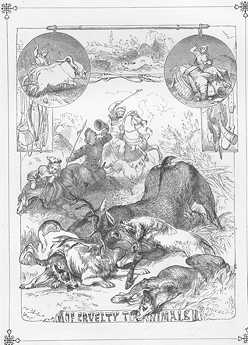
OF CRUELTY TO ANIMALS.
Shame upon thee, savage Monarch-Man, proud monopolist of reason; Shame upon Creation's lord, the fierce ensanguined despot: What, man! are there not enough, hunger, and diseases, and fatigue,— And yet must thy goad or thy thong add another sorrow to existence? What! art thou not content thy sin hath dragged down suffering and death On the poor dumb servants of thy comfort, and yet must thou rack them with thy spite? The prodigal heir of creation hath gambled away his all,— Shall he add torment to the bondage that is galling his forfeit serfs? The leader in nature's pæan himself hath marred her psaltery, Shall he multiply the din of discord by overstraining all the strings? The rebel hath fortified his stronghold, shutting in his vassals with him,— Shall he aggravate the woes of the besieged by oppression from within? Thou twice deformed image of thy Maker, thou hateful representative of Love, For very shame be merciful, be kind unto the creatures thou hast ruined; Earth and her million tribes are cursed for thy sake, Earth and her million tribes still writhe beneath thy cruelty: Liveth there but one among the million that shall not bear witness against thee, A pensioner of land or air or sea, that hath not whereof it will accuse thee? From the elephant toiling at a launch, to the shrew-mouse in the harvest-field, From the whale which the harpooner hath stricken, to the minnow caught upon a pin, From the albatross wearied in its flight, to the wren in her covered nest, From the death-moth and lace-winged dragon-fly, to the lady-bird and the gnat, The verdict of all things is unanimous, finding their master cruel: The dog, thy humble friend, thy trusting, honest friend; The ass, thine uncomplaining slave, drudging from morn to even; The lamb, and the timorous hare, and the labouring ox at plough; The speckled trout, basking in the shallow, and the partridge, gleaning in the stubble, And the stag at bay, and the worm in thy path, and the wild bird pining in captivity, And all things that minister alike to thy life and thy comfort and thy pride, Testify with one sad voice that man is a cruel master.
Verily, they are all thine: freely mayst thou serve thee of them all: They are thine by gift for thy needs, to be used in all gratitude and kindness; Gratitude to their God and thine,—their Father and thy Father, Kindness to them who toil for thee, and help thee with their all: For meat, but not by wantonness of slaying: for burden, but with limits of humanity; For luxury, but not through torture; for draught, but according to the strength: For a dog cannot plead his own right, nor render a reason for exemption, Nor give a soft answer unto wrath, to turn aside the undeserved lash; The galled ox cannot complain, nor supplicate a moment's respite; The spent horse hideth his distress, till he panteth out his spirit at the goal; Also, in the winter of life, when worn by constant toil, If ingratitude forget his services, he cannot bring them to remembrance; Behold, he is faint with hunger; the big tear standeth in his eye; His skin is sore with stripes, and he tottereth beneath his burden; His limbs are stiff with age, his sinews have lost their vigour, And pain is stamped upon his face, while he wrestleth unequally with toil; Yet once more mutely and meekly endureth he the crushing blow; That struggle hath cracked his heart-strings,—the generous brute is dead! Liveth there no advocate for him? no judge to avenge his wrongs? No voice that shall be heard in his defence? no sentence to be passed on his oppressor? Yea, the sad eye of the tortured pleadeth pathetically for him; Yea, all the justice in heaven is roused in indignation at his woes; Yea, all the pity upon earth shall call down a curse upon the cruel; Yea, the burning malice of the wicked is their own exceeding punishment. The Angel of Mercy stoppeth not to comfort, but passeth by on the other side, And hath no tear to shed, when a cruel man is damned.
OF FRIENDSHIP.
As frost to the bud, and blight to the blossom, even such is self-interest to Friendship: For Confidence cannot dwell where Selfishness is porter at the gate. If thou see thy friend to be selfish, thou canst not be sure of his honesty; And in seeking thine own weal, thou hast wronged the reliance of thy friend. Flattery hideth her varnished face when Friendship sitteth at his board: And the door is shut upon Suspicion, but Candour is bid glad welcome. For Friendship abhorreth doubt, its life is in mutual trust, And perisheth, when artful praise proveth it is sought for a purpose. A man may be good to thee at times, and render thee mighty service, Whom yet thy secret soul could not desire as a friend; For the sum of life is in trifles, and though, in the weightier masses, A man refuse thee not his purse, nay his all in thine utmost need, Yet if thou canst not feel that his character agreeth with thine own, Thou never wilt call him friend, though thou render him a heartful of gratitude. A coarse man grindeth harshly the finer feelings of his brother; A common mind will soon depart from the dull companionship of wisdom; A weak soul dareth not to follow in the track of vigour and decision; And the worldly regardeth with scorn the seeming foolishness of faith. A mountain is made up of atoms, and friendship of little matters, And if the atoms hold not together, the mountain is crumbled into dust.
Come, I will show thee a friend; I will paint one worthy of thy trust: Thine heart shall not weary of him: thou shalt not secretly despise him. Thou art long in learning him, in unravelling all his worth; And he dazzleth not thine eyes at first, to be darkened in thy sight afterward, But riseth from small beginnings, and reacheth the height of thine esteem. He remembereth that thou art only man; he expecteth not great things from thee: And his forbearance toward thee silently teacheth thee to be considerate unto him. He despiseth not courtesy of manner, nor neglecteth the decencies of life: Nor mocketh the failings of others, nor is harsh in his censures before thee: For so, how couldst thou tell, if he talketh not of thee in ridicule? He withholdeth no secret from thee, and rejecteth not thine in turn; He shareth his joys with thee, and is glad to bear part in thy sorrows. Yet one thing, he loveth thee too well to show thee the corruptions of his heart: For as an ill example strengthened the hands of the wicked, So to put forward thy guilt, is a secret poison to thy friend: For the evil in his nature is comforted, and he warreth more weakly against it, If he find that the friend whom he honoureth, is a man more sinful than himself. I hear the communing of friends; ye speak out the fulness of your souls, And being but men, as men, ye own to all the sympathies of manhood: Confidence openeth the lips, indulgence beameth from the eye, The tongue loveth not boasting, the heart is made glad with kindness: And one standeth not as on a hill, beckoning to the other to follow, But ye toil up hand in hand, and carry each other's burdens. Ye commune of hopes and aspirations, the fervent breathings of the heart, Ye speak with pleasant interchange the treasured secrets of affection, Ye listen to the voice of complaint, and whisper the language of comfort, And as in a double solitude, ye think in each other's hearing.
Choose thy friend discreetly, and see thou consider his station, For the graduated scale of ranks accordeth with the ordinance of Heaven. If a low companion ripen to a friend, in the full sunshine of thy confidence, Know, that for old age thou hast heaped up sorrow; For thou sinkest to that level, and thy kin shall scorn thee, Yea, and the menial thou hast pampered haply shall neglect thee in thy death: And if thou reachest up to high estates, thinking to herd with princes, What art thou but a footstool, though so near a throne? O rush among the lilies, be taught thou art a weed, O briar among the cedars, hot contempt shall burn thee. But thou, friend and scholar, select from thine own caste, And make not an intimate of one, thy servant or thy master; For only friendship among men is the true republic, Where all have equality of service, and all have freedom of command. And yet, if thou wilt take my judgment, be shy of too much openness with any, Lest thou repent hereafter, should he turn and rend thee: For many an apostate friend hath abused unguarded confidence, And bent to selfish ends the secret of the soul.
Absence strengthened friendship, where the last recollections were kindly; But it must be good wine at the last, or absence shall weaken it daily. A rare thing is faith, and friendship is a marvel among men, Yet strange faces call they friends, and say they believe when they doubt. Those hours are not lost that are spent in cementing affection; For a friend is above gold, precious as the stores of the mind. Be sparing of advice by words, but teach thy lesson by example: For the vanity of man may be wounded, and retort unkindly upon thee. There be some that never had a friend, because they were gross and selfish; Worldliness, and apathy, and pride, leave not many that are worthy: But one who meriteth esteem, need never lack a friend: For as thistle-down flieth abroad, and casteth its anchor in the soil, So philanthropy yearneth for a heart, where it may take root and blossom.
Yet I hear the child of sensibility moaning at the wintry cold, Wherein the mists of selfishness have wrapped the society of men: He grieveth, and hath deep reasons; for falsehood hath wronged his trust, And the breaches in his bleeding heart have been filled with the briars of suspicion. For, alas, how few be friends, of whom charity hath hoped well! How few there be among men who forget themselves for other! Each one seeketh his own, and looketh on his brethren as rivals, Masking envy with friendship, to serve his secret ends. And the world, that corrupteth all good, hath wronged that sacred name, For it calleth any man friend, who is not known for an enemy: And such be as the flies of summer, while plenty sitteth at thy board: But who can wonder at their flight from the cold denials of want? Such be as vultures round a carcase, assembled together for the feast; But a sudden noise scareth them, and forthwith are they specks among the clouds. There be few, O child of sensibility, who deserve to have thy confidence; Yet weep not, for there are some, and such some live for thee: To them is the chilling world a drear and barren scene, And gladly seek they such as thou art, for seldom find they the occasion: For, though no man excludeth himself from the high capability of friendship, Yet verily the man is a marvel whom truth can write a friend.
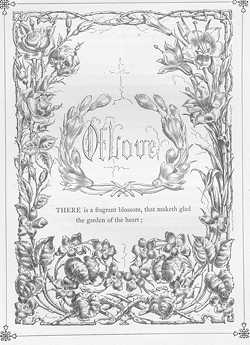
Of Love.
There is a fragrant blossom, that maketh glad the garden of the heart; Its root lieth deep: it is delicate, yet lasting, as the lilac crocus of autumn: Loneliness and thought are the dews that water it morn and even; Memory and Absence cherish it, as the balmy breathings of the south: Its sun is the brightness of Affection, and it bloometh in the borders of Hope; Its companions are gentle flowers, and the briar withereth by its side. I saw it budding in beauty; I felt the magic of its smile; The violet rejoiced beneath it, the rose stooped down and kissed it; And I thought some cherub had planted there a truant flower of Eden, As a bird bringeth foreign seeds, that they may flourish in a kindly soil. I saw, and asked not its name; I knew no language was so wealthy, Though every heart of every clime findeth its echo within. And yet what shall I say? Is a sordid man capable of Love? Hath a seducer known it? Can an adulterer perceive it? Or he that seeketh strange women, can he feel its purity? Or he that changeth often, can he know its truth? Longing for another's happiness, yet often destroying its own; Chaste, and looking up to God, as the fountain of tenderness and joy: Quiet, yet flowing deep, as the Rhine among rivers; Lasting, and knowing not change—it walketh with Truth and Sincerity.
Love:—what a volume in a word, an ocean in a tear, A seventh heaven in a glance, a whirlwind in a sigh, The lightning in a touch, a millennium in a moment, What concentrated joy or woe in blest or blighted love! For it is that native poetry springing up indigenous to Mind, The heart's own-country music thrilling all its chords, The story without an end that angels throng to hear, The word, the king of words, carved on Jehovah's heart! Go, call thou snake-eyed malice mercy, call envy honest praise, Count selfish craft for wisdom, and coward treachery for prudence, Do homage to blaspheming unbelief as to bold and free philosophy, And estimate the recklessness of license as the right attribute of liberty,— But with the world, thou friend and scholar, stain not this pure name; Nor suffer the majesty of Love to be likened to the meanness of desire: For love is no more such, than seraphs' hymns are discord, And such is no more Love, than Etna's breath is summer.
Love is a sweet idolatry enslaving all the soul, A mighty spiritual force, warring with the dulness of matter, An angel-mind breathed into a mortal, though fallen yet how beautiful! All the devotion of the heart in all its depth and grandeur. Behold that pale geranium, pent within the cottage window; How yearningly it stretcheth to the light its sickly long-stalked leaves, How it straineth upward to the sun, coveting his sweet influences, How real a living sacrifice to the god of all its worship! Such is the soul that loveth; and so the rose-tree of affection Bendeth its every leaf to look on those dear eyes, Its every blushing petal basketh in their light, And all its gladness, all its life, is hanging on their love.
If the love of the heart is blighted, it buddeth not again: If that pleasant song is forgotten, it is to be learnt no more: Yet often will thought look back, and weep over early affection; And the dim notes of that pleasant song will be heard as a reproachful spirit, Moaning in Æolian strains over the desert of the heart, Where the hot siroccos of the world have withered its one oasis.
OF MARRIAGE.
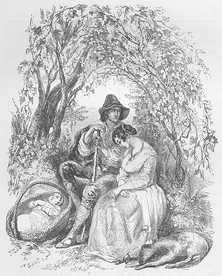
Seek a good wife of thy God, for she is the best gift of His providence; Yet ask not in bold confidence that which He hath not promised: Thou knowest not His good will:—be thy prayer then submissive there-unto; And leave thy petition to His mercy, assured that He will deal well with thee. If thou art to have a wife of thy youth, she is now living on the earth; Therefore think of her, and pray for her weal; yea, though thou hast not seen her. They that love early become like-minded, and the tempter toucheth them not: They grow up leaning on each other, as the olive and the vine. Youth longeth for a kindred spirit, and yearneth for a heart that can commune with his own; He meditateth night and day, doting on the image of his fancy. Take heed that what charmeth thee is real, nor springeth of thine own imagination; And suffer not trifles to win thy love; for a wife is thine unto death. The harp and the voice may thrill thee,—sound may enchant thine ear, But consider thou, the hand will wither, and the sweet notes turn discord: The eye, so brilliant at even, may be red with sorrow in the morning; And the sylph-like form of elegance must writhe in the crampings of pain.
O happy lot, and hallowed, even as the joy of angels, Where the golden chain of godliness is entwined with the roses of love: But beware thou seem not to be holy, to win favour in the eyes of a creature, For the guilt of the hypocrite is deadly, and winneth thee wrath elsewhere. The idol of thy heart is, as thou, a probationary sojourner on earth; Therefore be chary of her soul, for that is the jewel in her casket: Let her be a child of God, that she bring with her a blessing to thy house,— A blessing above riches, and leading contentment in its train: Let her be an heir of Heaven; so shall she help thee on thy way: For those who are one in faith, fight double-handed against evil. Take heed lest she love thee before God; that she be not an idolater: Yet see thou that she love thee well: for her heart is the heart of woman; And the triple nature of humanity must be bound by a triple chain, For soul and mind and body—godliness, esteem, and affection.
How beautiful is modesty! it winneth upon all beholders: But a word or a glance may destroy the pure love that should have been for thee. Affect not to despise beauty: no one is freed from its dominion; But regard it not a pearl of price:—it is fleeting as the bow in the clouds. If the character within be gentle, it often hath its index in the countenance: The soft smile of a loving face is better than splendour that fadeth quickly. When thou choosest a wife, think not only of thyself, But of those God may give thee of her, that they reproach thee not for their being: See that He hath given her health, lest thou lose her early and weep: See that she springeth of a wholesome stock, that thy little ones perish not before thee: For many a fair skin hath covered a mining disease, And many a laughing cheek been bright with the glare of madness.
Mark the converse of one thou lovest, that it be simple and sincere; For an artful or false woman shall set thy pillow with thorns. Observe her deportment with others, when she thinketh not that thou art nigh, For with thee will the blushes of love conceal the true colour of her mind. Hath she learning? it is good, so that modesty go with it: Hath she wisdom? it is precious, but beware that thou exceed; For woman must be subject, and the true mastery is of the mind. Be joined to thine equal in rank, or the foot of pride will kick at thee; And look not only for riches, lest thou be mated with misery: Marry not without means; for so shouldst thou tempt Providence; But wait not for more than enough; for Marriage is the DUTY of most men: Grievous indeed must be the burden that shall outweigh innocence and health, And a well-assorted marriage hath not many cares. In the day of thy joy consider the poor; thou shall reap a rich harvest of blessing; For these be the pensioners of One who filleth thy cup with pleasures: In the day of thy joy be thankful: He hath well deserved thy praise: Mean and selfish is the heart that seeketh Him only in sorrow. For her sake who leaneth on thine arm, court not the notice of the world, And remember that sober privacy is comelier than public display. If thou marriest, thou art allied unto strangers; see they be not such as shame thee: If thou marriest, thou leavest thine own; see that it be not done in anger.
Bride and bridegroom, pilgrims of life, henceforward to travel together, In this the beginning of your journey, neglect not the favour of Heaven: Let the day of hopes fulfilled be blest by many prayers, And at eventide kneel ye together, that your joy be not unhallowed: Angels that are round you shall be glad, those loving ministers of mercy, And the richest blessings of your God shall be poured on His favoured children. Marriage is a figure and an earnest of holier things unseen, And reverence well becometh the symbol of dignity and glory. Keep thy heart pure, lest thou do dishonour to thy state; Selfishness is base and hateful; but love considereth not itself. The wicked turneth good into evil, for his mind is warped within him; But the heart of the righteous is chaste: his conscience casteth off sin. If thou wilt be loved, render implicit confidence; If thou wouldst not suspect, receive full confidence in turn: For where trust is not reciprocal, the love that trusted withereth. Hide not your grief nor your gladness; be open one with the other; Let bitterness be strange unto your tongues, but sympathy a dweller in your hearts: Imparting halveth the evils, while it doubleth the pleasures of life, But sorrows breed and thicken in the gloomy bosom of Reserve.
Young wife, be not froward, nor forget that modesty becometh thee: If it be discarded now, who will not hold it feigned before? But be not as a timid girl,—there is honour due to thine estate; A matron's modesty is dignified: she blusheth not, neither is she bold. Be kind to the friends of thine husband, for the love they have to him: And gently bear with his infirmities: hast thou no need of his forbearance? Be not always in each other's company; it is often good to be alone; And if there be too much sameness, ye cannot but grow weary of each other: Ye have each a soul to be nourished, and a mind to be taught in wisdom, Therefore, as accountable for time, help one another to improve it. If ye feel love to decline, track out quickly the secret cause; Let it not rankle for a day, but confess and bewail it together: Speedily seek to be reconciled, for love is the life of marriage; And be ye co-partners in triumph, conquering the peevishness of self.
Let no one have thy confidence, O wife, saving thine husband: Have not a friend more intimate, O husband, than thy wife. In the joy of a well-ordered home be warned that this is not your rest; For the substance to come may be forgotten in the present beauty of the shadow. If ye are blessed with children, ye have a fearful pleasure, A deeper care and a higher joy, and the range of your existence is widened: If God in wisdom refuse them, thank Him for an unknown mercy: For how can ye tell if they might be a blessing or a curse? Yet ye may pray, like Hannah, simply dependent on His will: Resignation sweeteneth the cup, but impatience dasheth it with vinegar. Now this is the sum of the matter:—if ye will be happy in marriage, Confide, love, and be patient: be faithful, firm, and holy.
OF EDUCATION.
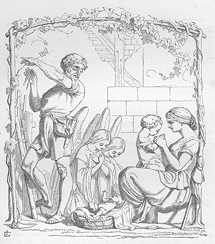
A babe in a house is a well-spring of pleasure, a messenger of peace and love: A resting place for innocence on earth; a link between angels and men: Yet is it a talent of trust, a loan to be rendered back with interest; A delight, but redolent of care; honey-sweet, but lacking not the bitter. For character groweth day by day, and all things aid it in unfolding, And the bent unto good or evil may be given in the hours of infancy: Scratch the green rind of a sapling, or wantonly twist it in the soil, The scarred and crooked oak will tell of thee for centuries to come; Even so mayst thou guide the mind to good, or lead it to the marrings of evil, For disposition is builded up by the fashioning of first impressions: Wherefore, though the voice of instruction waiteth for the ear of reason, Yet with his mother's milk the young child drinketh Education. Patience is the first great lesson; he may learn it at the breast: And the habit of obedience and trust may be grafted on his mind in the cradle: Hold the little hands in prayer, teach the weak knees their kneeling; Let him see thee speaking to thy God; he will not forget it afterward: When old and grey will he feelingly remember a mother's tender piety, And the touching recollection of her prayers shall arrest the strong man in his sin.
Select not to nurse thy darling one that may taint his innocence, For example is a constant monitor, and good seed will die among the tares. The arts of a strange servant have spoiled a gentle disposition: Mother, let him learn of thy lips, and be nourished at thy breast. Character is mainly moulded by the cast of the minds that surround it: Let then the playmates of thy little one be not other than thy judgment shall approve: For a child is in a new world, and learneth somewhat every moment, His eye is quick to observe, his memory storeth in secret, His ear is greedy of knowledge, and his mind is plastic as soft wax. Beware then that he heareth what is good, that he feedeth not on evil maxims, For the seeds of first instructions are dropped into the deepest furrows. That which immemorial use hath sanctioned, seemeth to be right and true; Therefore, let him never have to recollect the time when good things were strangers to his thought. Strive not to centre in thyself, fond mother, all his love; Nay, do not thou so selfishly, but enlarge his heart for others; Use him to sympathy betimes, that he learn to be sad with the afflicted; And check not a child in his merriment,—should not his morning be sunny? Give him not all his desire, so shalt thou strengthen him in hope; Neither stop with indulgence the fountain of his tears, so shall he fear thy firmness. Above all things graft on him subjection, yea, in the veriest trifle; Courtesy to all, reverence to some, and to thee unanswering obedience.
Read thou first, and well approve, the books thou givest to thy child; But remember the weakness of his thought, and that wisdom for him must be diluted: In the honied waters of infant tales, let him taste the strong wine of truth: Pathetic stories soften the heart; but legends of terror breed midnight misery; Fairy fictions cram the mind with folly, and knowledge of evil tempteth to like evil: Be not loth to curb imagination, nor be fearful that truths will depress it; And for evil, he will learn it soon enough; be not thou the devil's envoy. Induce not precocity of intellect, for so shouldst thou nourish vanity; Neither can a plant, forced in the hot-bed, stand against the frozen breath of winter. The mind is made wealthy by ideas, but the multitude of words is a clogging weight: Therefore be understood in thy teaching, and instruct to the measure of capacity. Analogy is milk for babes, but abstract truths are strong meat; Precepts and rules are repulsive to a child, but happy illustration winneth him: In vain shalt thou preach of industry and prudence, till he learn of the bee and the ant; Dimly will he think of his soul, till the acorn and the chrysalis have taught him; He will fear God in thunder, and worship His loveliness in flowers; And parables shall charm his heart, while doctrines seem dead mystery: Faith shall he learn of the husbandman casting good corn into the soil; And if thou train him to trust thee, he will not withhold his reliance from the Lord. Fearest thou the dark, poor child? I would not have thee left to thy terrors; Darkness is the semblance of evil, and nature regardeth it with dread: Yet know thy father's God is with thee still, to guard thee: It is a simple lesson of dependence; let thy tost mind anchor upon Him. Did a sudden noise affright thee? lo, this or that hath caused it: Things undefined are full of dread, and stagger stouter nerves. The seeds of misery and madness have been sowed in the nights of infancy; Therefore be careful that ghastly fears be not the night companions of thy child.
Lo, thou art a landmark on a hill; thy little ones copy thee in all things: Let, then, thy religion be perfect: so shalt thou be honoured in thy house. Be instructed in all wisdom, and communicate that thou knowest, Otherwise thy learning is hidden, and thus thou seemest unwise. A sluggard hath no respect; an epicure commandeth not reverence; Meanness is always despicable, and folly provoketh contempt. Those parents are best honoured whose characters best deserve it; Show me a child undutiful, I shall know where to look for a foolish father: Never hath a father done his duty, and lived to be despised of his son: But how can that son reverence an example he dare not follow? Should he imitate thee in thine evil? his scorn is thy rebuke. Nay, but bring him up aright, in obedience to God and to thee; Begin betimes, lest thou fail of his fear; and with judgment, that thou lose not his love: Herein use good discretion, and govern not all alike, Yet, perhaps, the fault will be in thee, if kindness prove not all sufficient: By kindness, the wolf and the zebra become docile as the spaniel and the horse; The kite feedeth with the starling, under the law of kindness: That law shall tame the fiercest, bring down the battlements of pride, Cherish the weak, control the strong, and win the fearful spirit. Be obeyed when thou commandest; but command not often: Let thy carriage be the gentleness of love, not the stern front of tyranny. Make not one child a warning to another; but chide the offender apart: For self-conceit and wounded pride rankle like poisons in the soul. A mild rebuke in the season of calmness, is better than a rod in the heat of passion; Nevertheless, spare not, if thy word hath passed for punishment; Let not thy child see thee humbled, nor learn to think thee false; Suffer none to reprove thee before him, and reprove not thine own purposes by change; Yet speedily turn thou again, and reward him where thou canst, For kind encouragement in good cutteth at the roots of evil.
Drive not a timid infant from his home, in the early spring-time of his life, Commit not that treasure to an hireling, nor wrench the young heart's fibres: In his helplessness leave him not alone, a stranger among strange children, Where affection longeth for thy love, counting the dreary hours; Where religion is made a terror, and innocence weepeth unheard; Where oppression grindeth without remedy, and cruelty delighteth in smiting. Wherefore comply with an evil fashion? Is it not to spare thee trouble? Can he gather no knowledge at thy mouth? Wilt thou yield thine honour to another? What can he gain in learning, to equal what he loseth in innocence? Alas! for the price above gold, by which such learning cometh! For emulative pride and envy are the specious idols of the diligent, Oaths and foul-mouthed sin burn in the language of the idle: Bolder in that mimic world of boys stareth brazen-fronted vice, Than thereafter in the haunts of men, where society doth shame her into corners. My soul, look well around thee, ere thou give thy timid infant unto sorrows. There be many that say, We were happiest in days long past, When our deepest care was an ill-conned book, And when we sported in that merry sunshine of our life, Sadness a stranger to the heart, and cheerfulness its gay inhabitant. True, ye are now less pure, and therefore are more wretched: But have ye quite forgotten how sorely ye travailed at your tasks, How childish griefs and disappointments bowed down the childish mind? How sorrow sat upon your pillow, and terror hath waked you up betimes, Dreading the strict hand of justice, that would not wait for a reason, Or the whims of petty tyrants, children like yourselves, Or the pestilent extract of evil poured into the ear of innocence? Behold the coral island, fresh from the floor of the Atlantic, It is dinted by every ripple, and a soft wave can smooth its surface; But soon its substance hardeneth in the winds and tropic sun, And weakly the foaming billows break against its adamantine wall: Even thus, though sin and care dash upon the firmness of manhood, The timid child is wasted most by his petty troubles; And seldom, when life is mature, and the strength proportioned to the burden, Will the feeling mind, that can remember, acknowledge to deeper anguish, Than when, as a stranger and a little one, the heart first ached with anxiety, And the sprouting buds of sensibility were bruised by the harshness of a school. My soul, look well around thee, ere thou give thine infant unto sorrows. Yet there be boisterous tempers, stout nerves, and stubborn hearts, And there is a riper season, when the mind is well disciplined in good, And a time, when youth may be bettered by the wholesome occasions of knowledge, Which rarely will he meet with so well, as among the congregation of his fellows. Only for infancy, fond mother, rend not those first affections; Only for the sensitive and timorous, consign not thy darling unto misery.
A man looketh on his little one, as a being of better hope; In himself ambition is dead, but it hath a resurrection in his son: That vein is yet untried,—and who can tell if it be not golden? While his, well nigh worked out, never yielded aught but lead: And thus is he hurt more sorely, if his wishes are defeated there, He has staked his all upon a throw, and lo! the dice have foiled him. All ways, and at all times, men follow on in flocks, And the rife epidemic of the day shall tincture the stream of education. Fashion is a foolish watcher posted at the tree of knowledge, Who plucketh its unripe fruit to pelt away the birds; But, for its golden apples,—they dry upon the boughs, And few have the courage or the wisdom to eat in spite of fashion. One while, the fever is to learn, what none will be wiser for knowing, Exploded errors in extinct tongues, and occasions for their use are small; And the bright morning of life, for years of misspent time, Wasted in following sounds, hath tracked up little sense, Till at noon a man is thrown upon the world, with a mind expert in trifles, Having yet everything to learn that can make him good or useful: The curious spirit of youth is crammed with unwholesome garbage, While starving for the mother's milk the breasts of nature yield; And high-coloured fables of depravity lure with their classic varnish, While truth is holding out in vain her mirror much despised.
Of olden time, the fashion was for arms, to make an accomplished slayer, And set gregarious man a-tilting with his fellows; Thereafter, occult sciences, and mystic arts, and symbols, How to exorcise a wizard, and how to lay a ghost; Anon, all for gallantry and presence, the minuet, the palfrey, and the foil, And the grand aim of education was to produce a coxcomb; Soon came scholastical dispute with hydra-headed argument, And the true philosophy of mind confounded in a labyrinth of words; Then the Pantheon, and its orgies, initiating docile childhood, While diligent youth strove hard to render his all unto Cæsar; And now is seen the passion for utility, when all things are accounted by their price, And the wisdom of the wise is busied in hatching golden eggs: Perchance, not many moons to come, and all will again be for abstrusity, Unravelling the figured veil that hideth Egypt's gods; Or in those strange Avatars seeking benignant Vishnu, Kali, and Kamala the fair, and much invoked Ganesa.
The mines of knowledge are oft laid bare through the forked hazel wand of chance, And in a mountain of quartz we find a grain of gold. Of a truth, it were well to know all things, and to learn them all at once, And what, though mortal insufficiency attain to small knowledge of any? Man loveth exclusions, delighting in the sterile trodden path, While the broad green meadow is jewelled with wild flowers: And whether is it better with the many to follow a beaten track, Or by eccentric wanderings to cull unheeded sweets?
When his reason yieldeth fruit, make thy child thy friend; For a filial friend is a double gain, a diamond set in gold. As an infant, thy mandate was enough, but now let him see thy reasons; Confide in him, but with discretion: and bend a willing ear to his questions. More to thee than to all beside, let him owe good counsel and good guidance; Let him feel his pursuits have an interest, more to thee than to all beside. Watch his native capacities; nourish that which suiteth him the readiest; And cultivate early those good inclinations wherein thou fearest he is most lacking: Is he phlegmatic and desponding? let small successes comfort his hope: Is he obstinate and sanguine? let petty crosses accustom him to life: Showeth he a sordid spirit? be quick, and teach him generosity: Inclineth he to liberal excess? prove to him how hard it is to earn. Gather to thy hearth such friends as are worthy of honour and attention; For the company a man chooseth is a visible index of his heart: But let not the pastor whom thou hearest be too much a familiar in thy house, For thy children may see his infirmities, and learn to cavil at his teaching. It is well to take hold on occasions, and render indirect instruction; It is better to teach upon a system, and reap the wisdom of books: The history of nations yieldeth grand outlines: of persons, minute details: Poetry is polish to the mind, and high abstractions cleanse it. Consider the station of thy son, and breed him to his fortune with judgment: The rich may profit in much which would bring small advantage to the poor. But with all thy care for thy son, with all thy strivings for his welfare, Expect disappointment, and look for pain: for he is of an evil stock, and will grieve thee.
OF TOLERANCE.
A wise man in a crowded street winneth his way with gentleness, Nor rudely pusheth aside the stranger that standeth in his path; He knoweth that blind hurry will but hinder, stirring up contention against him, Yet holdeth he steadily right on, with his face to the scope of his pursuit: Even so, in the congress of opinions, the bustling highway of intelligence, Each man should ask of his neighbour, and yield to him again, concession. Terms ill-defined, and forms misunderstood, and customs, where their reasons are unknown, Have stirred up many zealous souls to fight against imaginary giants: But wisdom will hear the matter out, and often, by keenness of perception, Will find in strange disguise the precious truth he seeketh; So he leaveth unto prejudice or taste the garb and the manner of her presence, Content to see so nigh the mistress of his love. There is no similitude in nature that owneth not also to a difference, Yea, no two berries are alike, though twins upon one stem; No drop in the ocean, no pebble on the beach, no leaf in the forest, hath its counterpart, No mind in its dwelling of mortality, no spirit in the world unseen: And therefore, since capacity and essence differ alike with accident, None but a bigot partizan will hope for impossible unity. Wilt thou ensue peace, nor buffet with the waters of contention, Wilt thou be counted wise and gain the love of men, Let unobtruded error escape the frown of censure, Nor lift the glass of truth alway before thy fellows: I say not, compromise the right, I would not have thee countenance the wrong, But hear with charitable heart the reasons of an honest judgment; For thou also hast erred, and knowest not when thou art most right, Nor whether to-morrow's wisdom may not prove thee simple to-day: Perchance thou art chiding in another what once thou wast thyself; Perchance thou sharply reprovest what thou wilt be hereafter. A man that can render a reason, is a man worthy of an answer; But he that argueth for victory, deserveth not the tenderness of Truth.
Whiles a man liveth he may mend: count not thy brother reprobate; When he is dead his chance is gone: remember not his faults in bitterness. A man, till he dieth, is immortal in thy sight; and then he is as nothing: Make not the living thy foe, nor take weak vengeance of the dead. For life is as a game of chess, where least causeth greatest, And an ill move bringeth loss, and a pawn may ensure victory. Dost thou suspect? seek out certainty: for now, by self-inflicted pain, Or ill-directed wrath, thou wrongest thyself or thy neighbour: Suspicion is an early lesson, taught in the school of experience, Neither shalt thou easily unlearn it, though charity ply thee with her preaching; Yet look thou well for reasons, or ever mistrust hath marred thee, Or fear curdled thy blood, or jealousy goaded thee to madness; For a look, or a word, or an act, may be taken well or ill As construed by the latitude of love, or the closeness of cold suspicion.
Better is the wrong with sincerity, rather than the right with falsehood: And a prudent man will not lay siege to the stronghold of ignorant bigotry. To unsettle a weak mind were an easy inglorious triumph, And a strong cause taketh little count of the worthless suffrage of a fool: Lightly he held to the wrong, loosely will he cling to the right; Weakness is the essence of his mind, and the reed cannot yield an acorn. Dogged obstinacy is oftentimes the buttress that proppeth an unstable spirit, But a candid man blusheth not to own, he is wiser to-day than yesterday. A man of a little wisdom is a sage among fools; But himself is chief among the fools, if he look for admiration from them. A heresy is an evil thing, for its shame is its pride: Its necessary difference of error is the character it most esteemeth: Give a man all things short of liberty, thou shalt have no thanks, And little wilt thou speed with thine opponent, by proving points he will concede. The tost sand darkeneth the waves; and clear had been the pages of truth, Had not the glosses of men obscured the simplicity of faith. In all things consider thine own ignorance, and gladly take occasion to be taught; But suffer not excess of liberality to neutralize thy mental independence.
The faults and follies of most men make their deaths a gain: But thou also art a man, full of faults and follies: Therefore sorrow for the dead, or none shall weep for thee, For the measure of charity thou dealest, shall be poured into thine own bosom. That which vexeth thee now, provoking thee to hate thy brother, Bear with it; the annoyance passeth, and may not return for ever: The same combinations and results which aggravate thy soul to-day, May not meet again for centuries in the kaleidoscope of circumstance; For men and matters change, new elements mixing in continually, And, as with chemical magic, the sour is transmuted into sweetness: A little explained, a little endured, a little passed over as a foible, And lo, the jagged atoms fit like smooth mosaic. Thou canst not shape another's mind to suit thine own body, Think not, then, to be furnishing his brain with thy special notions. Charity walketh with a high step, and stumbleth not at a trifle: Charity hath keen eyes, but the lashes half conceal them: Charity is praised of all, and fear not thou that praise, God will not love thee less, because men love thee more.
OF SORROW.
I said, I will seek out Sorrow, and minister the balm of pity; So I sought her in the house of mourning; but peace followed in her train. Then I marked her brooding silently in the gloomy cavern of Regret; But a sunbeam of heavenly hope gleamed on her folded wing. So I turned to the cabin of the poor, where famine dwelt with disease: But the bed of the sick was smoothed, and the ploughman whistled at his labour. So I stopt, and mused within myself, to remember where Sorrow dwelt, For I sought to see her alone, uncomforted, uncompanioned. I went to the prison, but penitence was there, and promise of better times; I listened at the madman's cell, but it echoed with deluded laughter. Then I turned me to the rich and noble; I noted the sons of fashion: A smile was on the languid cheek, that had no commerce with the heart; Unhallowed thoughts, like fires, gleamed from the window of the eye; And sorrow lived with those whose pleasures add unto their sins.
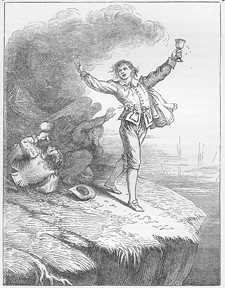
His infancy wanted not guilt; his life was continued evil: He drew in pride with his mother's milk, and a father's lips taught him cursing. I marked him as the wayward boy; I traced the dissolute youth: I saw him betray the innocent, and sacrifice affection to his lust; I saw him the companion of knaves, and a squanderer of ill-got gain; I heard him curse his own misery, while he hugged the chains that galled him: For well had experience declared the bitterness of guilty pleasure, But habit, with its iron net, involved him in its folds. Behind him lowered the thunder-storm, which the caldron of his wickedness had brewed; Before him was the smooth steep cliff, whose base is ruin and despair. So he rushed madly on, and tried to forget his being: The noisy revel and the low debauch, and fierce excitement of play, With dreary interchange of palling pleasures, filled the dull round of existence: Memory was to him as a foe, so he flew for false solace to the wine-cup, And stunned his enemy at even; but she rent him as a giant in the morning.
I turned aside to weep; I lost him a little while: I looked, and years had past; he was hoar with the winter of his age. And what was now his hope? where was the balm for his sadness? The memory of the past was guilt: the feeling of the present, remorse. Then he set his affections on gold, he worshipped the shrine of Mammon, And to lay richer gifts before his idol, he starved his own bowels; So, the youth spent in profligacy ended in the gripings of want: The miser grudged himself husks to take deeper vengeance of the prodigal. And I said, this is Sorrow, but pity cannot reach it; This is to be wretched indeed, to be guilty without repentance.
OF JOY.
My soul was sickened within me, so I sought the dwelling place of Joy: And I met it not in laughter; I found it not in wealth or power; But I saw it in the pleasant home, where religion smiled upon content, And the satisfied ambition of the heart rejoiced in the favour of its God. Behold the happy man, his face is rayed with pleasure, His thoughts are of calm delight, and none can know his blessedness. I have watched him from his infancy, and seen him in the grasp of death, Yet, never have I noted on his brow the cloud of desponding sorrow. He hath knelt beside his cradle; his mother's hymn lulled him to sleep: In childhood he hath loved holiness, and drank from that fountain-head of peace. Wisdom took him for her scholar, guiding his steps in purity: He lived unpolluted by the world; and his young heart hated sin. But he owned not the spurious religion engendered of faction and moroseness, Neither were the sproutings of his soul seared by the brand of superstition. His love is pure and single, sincere, and knoweth not change; For his manhood hath been blest with the pleasant choice of his youth: Behold his one beloved, she leaneth on his arm, And he looketh on the years that are past, to review the dawn of her affection. Memory is sweet unto him, as a perfect landscape to the sight; Each object is lovely in itself, but the whole is the harmony of nature. Behold his little ones around him, they bask in the warmth of his smile, And infant innocence and joy lighten their happy faces; He is holy, and they honour him: he is loving, and they love him: He is consistent, and they esteem him: he is firm, and they fear him. His friends are the excellent among men; and the bands of their friendship are strong: His house is the palace of peace: for the Prince of Peace is there. As the wearied man to his couch, as the thoughtful man to his musings, Even so, from the bustle of life, he goeth to his well-ordered home. And though he often sin, he returneth with weeping eyes: For he feeleth the mercies of forgiveness, and gloweth with warmer gratitude.
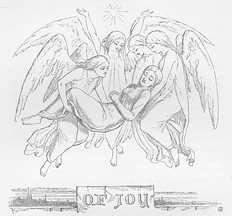
Thus did he walk in happiness, and sorrow was a stranger to his soul; The light of affection sunned his heart, the tear of the grateful bedewed his feet, He put his hand with constancy to good, and angels knew him as a brother, And the busy satellites of evil trembled as at God's ally: He used his wealth as a wise steward, making him friends for futurity: He bent his learning to religion, and religion was with him at the last: For I saw him after many days, when the time of his release was come, And I longed for a congregated world, to behold that dying saint. As the aloe is green and well-liking, till the last best summer of its age, And then hangeth out its golden bells, to mingle glory with corruption; As a meteor travelleth in splendour, but bursteth in dazzling light; Such was the end of the righteous: his death was the sun at its setting.
Look on this picture of joy, and remember that portrait of sorrow: Behold the beauty of holiness, behold the deformity of sin! How long, ye sons of men, will ye scorn the words of wisdom? How long will ye hunt for happiness in the caverns that breed despair? Will ye comfort yourselves in misery, by denying the existence of delight, And from experience in woe, will ye reason that none are happy? Joy is not in your path, for it loveth not that bleak broad road, But its flowers are hung upon the hedges that line a narrower way; And there the faint travellers of earth may wander and gather for themselves, To soothe their wounded hearts with balm from the amaranths of heaven.
ΘΕΩ ΔΟΞΑ.