FIRST SERIES. (continued 2)
Reading edition
Beware of the angry in his passion; but fear not to approach him afterward; For if thou acknowledge thine error, he himself will be sorry for his wrath: Beware of the hater in his coolness; for he meditateth evil against thee: Commending the resources of his mind calmly to work thy ruin. Deceit and treachery skulk with hatred, but an honest spirit flieth with anger: The one lieth secret, as a serpent; the other chaseth, as a leopard. Speedily be reconciled in love, and receive the returning offender, For wittingly prolonging Anger, thou tamperest unconsciously with Hatred. Patience is power in a man, nerving him to rein his spirit: Passion is as palsy to his arm, while it yelleth on the coursers to their speed: Patience keepeth counsel, and standeth in solid self-possession, But the weakness of sudden passion layeth bare the secrets of the soul. The sentiment of anger is not ill, when thou lookest on the impudence of vice, Or savourest the breath of calumny, or hast earned the hard wages of injustice; But see that thou curb it in expression, rendering the mildness of rebuke, So shall thou stand without reproach, mailed in all the dignity of virtue.
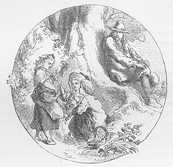
OF GOOD IN THINGS EVIL.

I heard the man of sin reproaching the goodness of Jehovah, Wherefore, if He be Almighty Love, permitteth He misery and pain? I saw the child of hope vexed in the labyrinth of doubt, Wherefore, O holy One and just, is the horn of Thy foul foe so high exalted? And, alas! for this our groaning world, for that grief and guilt are here; Alas! for that Earth is the battle-field, where good must combat with evil: Angels look on and hold their breath, burning to mingle in the conflict, But the troops of the Captain of Salvation may be none but the soldiers of the cross: And that slender band must fight alone, and yet shall triumph gloriously, Enough shall they be for conquest, and the motto of their standard is, Enough. Thou art sad, O denizen of earth, for pains and diseases and death, But remember, thy hand hath earned them; grudge not at the wages of thy doings: Thy guilt, and thy fathers' guilt, must bring many sorrows in their company, And if thou wilt drink sweet poison, doubtless it shall rot thee to the core. What art thou but the heritor of evil, with a right to nothing good? The respite of an interval of ease were a boon which Justice might deny thee: Therefore lay thy hand upon thy mouth, O man much to be forgiven, And wait, thou child of hope, for time shall teach thee all things.
Yet hear, for my speech shall comfort thee: reverently, but with boldness, I would raise the sable curtain, that hideth the symmetry of Providence. Pain and sin are convicts, and toil in their fetters for good; The weapons of evil are turned against itself, fighting under better banners: The leech delighteth in stinging, and the wicked loveth to do harm, But the wise Physician of the Universe useth that ill tendency for health. Verily, from others' griefs are gendered sympathy and kindness; Patience, humility, and faith, spring not seldom from thine own: An enemy, humbled by his sorrows, cannot be far from thy forgiveness; A friend, who hath tasted of calamity, shall fan the dying incense of thy love: And for thyself, is it a small thing, so to learn thy frailty, That from an aching bone thou savest the whole body? The furnace of affliction may be fierce, but if it refineth thy soul, The good of one meek thought shall outweigh years of torment. Nevertheless, wretched man, if thy bad heart be hardened in the flame, Being earth-born, as of clay, and not of moulded wax, Judge not the hand that smiteth, as if thou wert visited in wrath: Reproach thyself, for He is Justice; repent thee, for He is Mercy.
Cease, fond caviller at wisdom, to be satisfied that everything is wrong: Be sure there is good necessity, even for the flourishing of evil. Would the eye delight in perpetual noon? or the ear in unqualified harmonics? Hath winter's frost no welcome, contrasting sturdily with summer? Couldst thou discern benevolence, if there were no sorrows to be soothed? Or discover the resources of contrivance, if nothing stood opposed to the means? What were power without an enemy? or mercy without an object? Or truth, where the false were impossible? or love, where love were a debt? The characters of God were but idle, if all things around Him were perfection, And virtues might slumber on like death, if they lacked the opportunities of evil. There is One all-perfect, and but one; man dare not reason of His essence: But there must be deficiencies in heaven, to leave room for progression in bliss: A realm of unqualified BEST were a stagnant pool of being, And the circle of absolute perfection, the abstract cipher of indolence. Sin is an awful shadow, but it addeth new glories to the light; Sin is a black foil, but it setteth off the jewelry of heaven: Sin is the traitor that hath dragged the majesty of mercy into action; Sin is the whelming argument, to justify the attribute of vengeance. It is a deep dark thought, and needeth to be diligently studied, But perchance evil was essential, that God should be seen of His creatures: For where perfection is not, there lacketh possible good, And the absence of better that might be, taketh from the praise of it is well: And creatures must be finite, and finite cannot be perfect: Therefore, though in small degree, creation involveth evil, He chargeth His angels with folly, and the heavens are not clean in His sight: For every existence in the universe hath either imperfection or Godhead: And the light that blazeth but in One, must be softened with shadow for the many. There is then good in evil; or none could have known his Maker; No spiritual intellect or essence could have gazed on His high perfections, No angel harps could have tuned the wonders of His wisdom, No ransomed souls have praised the glories of His mercy, No howling fiends have shown the terrors of His justice, But God would have dwelt alone, in the fearful solitude of holiness.
Nevertheless, O sinner, harden not thine heart in evil; Nor plume thee in imaginary triumph, because thou art not valueless as vile; Because thy dark abominations add lustre to the clarity of Light; Because a wonder-working alchemy draineth elixir out of poisons; Because the same fiery volcano that scorcheth and ravageth a continent, Hath in the broad blue bay cast up some petty island; Because to the full demonstration of the qualities and accidents of good The swarthy legions of the Devil have toiled as unwitting pioneers. For sin is still sin; so hateful Love doth hate it; A blot on the glory of creation, which Justice must wipe out. Sin is a loathsome leprosy, fretting the white robe of innocence; A rottenness, eating out the heart of the royal cedars of Lebanon; A pestilential blast, the terror of that holy pilgrimage; A rent in the sacred veil, whereby God left His temple. Therefore, consider thyself, thou that dost not sorrow for thy guilt: Fear evil, or face its Enemy: dread sin, or dare Justice.
Yea, saith the Spirit: and their works do follow them; Habits, and thoughts, and deeds, are shadows and satellites of self. What! shall the claimant to a throne stand forward with a rabble rout,— Meanness, impiety, and lust; riot and indolence and vanity? Nay, man! the train wherewith thou comest attend whither thou shalt go: A throne for a king's son, but an inner dungeon for the felon. For a man's works do follow him: bodily, standing in the judgment, Behold the false accuser, behold the slandered saint; The slave, and his bloody driver; the poor, and his generous friend; The simple dupe, and the crafty knave: the murderer, and—his victim! Yet all are in many characters; the best stand guilty at the bar; And he that seemed the worst may have most of real excuse. The talents unto which a man is born, be they few or many, Are dropped into the balance of account, working unlooked-for changes; And perchance the convict from the galleys may stand above the hermit in his cell, For that, the obstacles in one outweigh the propensions in the other. There be, who have made themselves friends, yea, by unrighteous mammon,— Friends, ready waiting as an escort to those everlasting habitations; Embodied in living witnesses, thronging to meet them in a cloud, Charity, meekness and truth, zeal, sincerity and patience, There be, who have made themselves foes, yea, by honest gain, Foes, whose plaint must have its answer, before the bright portal is unbarred: Pride, and selfishness, and sloth, apathy, wrath and falsehood, Bind to their everlasting toil many that must weary in the fires. Love hath a power and a longing to save the gathered world, And rescue universal man from the hunting hell-hounds of his doings: Yet few, here one and there one, scanty as the gleaning after harvest, Are glad of the robes of praise which Mercy would fling around the naked; But wrapping closer to their skin the poisoned tunic of their works, They stand in self-dependence, to perish in abandonment of God.
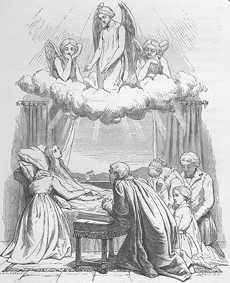
OF PRAYER.
A wicked man scorneth prayer, in the shallow sophistry of reason, He derideth the silly hope that God can be moved by supplication:— Shall the Unchangeable be changed, or waver in His purpose? Can the weakness of pity affect Him? Should He turn at the bidding of a man? Methought He ruled all things, and ye called His decrees immutable, But if thus He listeneth to words, wherein is the firmness of His will?— So I heard the speech of the wicked, and, lo, it was smoother than oil; But I knew that his reasonings were false, for the promise of the Scripture is true: Yet was my soul in darkness, for his words were too hard for me; Till I turned to my God in prayer: for I know He heareth always. Then I looked abroad on the earth, and, behold, the Lord was in all things; Yet saw I not His hand in aught, but perceived that He worketh by means; Yea, and the power of the mean proveth the wisdom that ordained it, Yea, and no act is useless, to the hurling of a stone through the air. So I turned my thoughts to supplication, and beheld the mercies of Jehovah, And I saw sound argument was still the faithful friend of godliness; For as the rock of the affections is the solid approval of reason, Even so the temple of Religion is founded on the basis of Philosophy.
Scorner, thy thoughts are weak, they reach not the summit of the matter; Go to, for the mouth of a child might show thee the mystery of prayer: Verily, there is no change in the counsels of the Mighty Ruler: Verily, His purpose is strong, and rooted in the depths of necessity: But who hath shown thee His purpose, who hath made known to thee His will? When, O gainsayer! hast thou been schooled in the secrets of wisdom? Fate is a creature of God, and all things move in their orbits, And that which shall surely happen is known unto Him from eternity; But as, in the field of nature, He useth the sinews of the ox, And commandeth diligence and toil, Himself giving the increase; So, in the kingdom of His grace, granteth He omnipotence to prayer, For He knoweth what thou wilt ask, and what thou wilt ask aright. No man can pray in faith, whose prayer is not grounded on a promise: Yet a good man commendeth all things to the righteous wisdom of his God: For those, who pray in faith, trust the immutable Jehovah, And they, who ask blessings unpromised, lean on uncovenanted mercy.
Man, regard thy prayers as a purpose of love to thy soul; Esteem the providence that led to them as an index of God's good will; So shalt thou pray aright, and thy words shall meet with acceptance. Also, in pleading for others, be thankful for the fulness of thy prayer: For if thou art ready to ask, the Lord is more ready to bestow. The salt preserveth the sea, and the saints uphold the earth; Their prayers are the thousand pillars that prop the canopy of nature. Verily, an hour without prayer, from some terrestrial mind, Were a curse in the calendar of time, a spot of the blackness of darkness. Perchance the terrible day, when the world must rock into ruins, Will be one unwhitened by prayer,—shall He find faith on the earth? For there is an economy of mercy, as of wisdom, and power, and means; Neither is one blessing granted, unbesought from the treasury of good: And the charitable heart of the Being, to depend upon whom is happiness, Never withholdeth a bounty, so long as His subject prayeth; Yea, ask what thou wilt, to the second throne in heaven, It is thine, for whom it was appointed; there is no limit unto prayer: But and if thou cease to ask, tremble, thou self-suspended creature, For thy strength is cut off as was Samson's: and the hour of thy doom is come.
Frail art thou, O man, as a bubble on the breaker, Weak and governed by externals, like a poor bird caught in the storm; Yet thy momentary breath can still the raging waters, Thy hand can touch a lever that may move the world. O Merciful, we strike eternal covenant with thee, For man may take for his ally the King who ruleth kings: How strong, yet how most weak, in utter poverty how rich, What possible omnipotence to good is dormant in a man! Behold that fragile form of delicate transparent beauty, Whose light-blue eye and hectic cheek are lit by the bale-fires of decline: All droopingly she lieth, as a dew-laden lily, Her flaxen tresses, rashly luxuriant, dank with unhealthy moisture; Hath not thy heart said of her, Alas! poor child of weakness? Thou hast erred; Goliah of Gath stood not in half her strength: Terribly she fighteth in the van as the virgin daughter of Orleans, She beareth the banner of Heaven, her onset is the rushing cataract, Seraphim rally at her side, and the captain of that host is God, And the serried ranks of evil are routed by the lightning of her eye; She is the King's remembrancer, and steward of many blessings, Holding the buckler of security over her unthankful land: For that weak fluttering heart is strong in faith assured, Dependence is her might, and behold—she prayeth.
Angels are round the good man, to catch the incense of his prayers, And they fly to minister kindness to those for whom he pleadeth; For the altar of his heart is lighted, and burneth before God continually, And he breatheth, conscious of his joy, the native atmosphere of heaven: Yea, though poor, and contemned, and ignorant of this world's wisdom, Ill can his fellows spare him, though they know not of his value. Thousands bewail a hero, and a nation mourneth for its king, But the whole universe lamenteth the loss of a man of prayer. Verily, were it not for One, who sitteth on His rightful throne, Crowned with a rainbow of emerald, the green memorial of earth,— For One, a mediating man, that hath clad His Godhead with mortality, And offereth prayer without ceasing, the royal priest of Nature, Matter and life and mind had sunk into dark annihilation, And the lightning frown of Justice withered the world into nothing.
Thus, O worshipper of reason, thou hast heard the sum of the matter: And woe to his hairy scalp that restraineth prayer before God. Prayer is a creature's strength, his very breath and being; Prayer is the golden key that can open the wicket of Mercy: Prayer is the magic sound that saith to Fate, So be it; Prayer is the slender nerve that moveth the muscles of Omnipotence. Wherefore, pray, O creature, for many and great are thy wants; Thy mind, thy conscience, and thy being, thy rights commend thee unto prayer, The cure of all cares, the grand panacea for all pains, Doubt's destroyer, ruin's remedy, the antidote to all anxieties.
So then, God is true, and yet He hath not changed: It is He that sendeth the petition, to answer it according to His will.
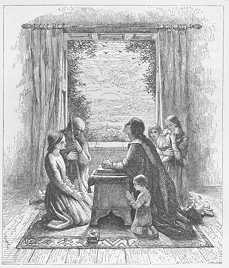
THE LORD'S PRAYER.
Inquirest thou, O man, wherewithal may I come unto the Lord? And with what wonder-working sounds may I move the majesty of Heaven? There is a model to thy hand; upon that do thou frame thy supplication; Wisdom hath measured its words; and redemption urgeth thee to use them. Call thy God thy Father, and yet not thine alone, For thou art but one of many, thy brotherhood is with all: Remember His high estate, that He dwelleth King of Heaven; So shall thy thoughts be humbled, nor love be unmixed with reverence: Be thy first petition unselfish, the honour of Him who made thee, And that in the depths of thy heart His memory be shrined in holiness: Pray for that blessed time, when good shall triumph over evil, And one universal temple echo the perfections of Jehovah: Bend thou to His good will, and subserve His holy purposes, Till in thee, and those around thee, grow a little heaven upon earth: Humbly, as a grateful almsman, beg thy bread of God,— Bread for thy triple estate, for thou hast a trinity of nature: Humility smootheth the way, and gratitude softeneth the heart, Be then thy prayer for pardon mingled with the tear of penitence; Yea, and while, all unworthy, thou leanest on the hand that should smite, Thou canst not from thy fellows withhold thy less forgiveness. To thy Father thy weaknesses are known, and thou hast not hid thy sin, Therefore ask Him, in all trust, to lead thee from the dangers of temptation; While the last petition of the soul, that breatheth on the confines of prayer, Is deliverance from sin and the evil one, the miseries of earth and hell. And wherefore, child of hope, should the rock of thy confidence be sure? Thou knowest that God heareth and promiseth an answer of peace; Thou knowest that He is King, and none can stay His hand; Thou knowest His power to be boundless, for there is none other: And to Him thou givest glory, as a creature of His workmanship and favour, For the never-ending term of thy saved and bright existence.
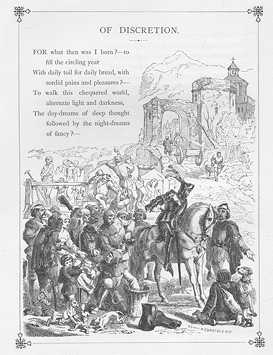
OF DISCRETION.
For what then was I born?—to fill the circling year With daily toil for daily bread, with sordid pains and pleasures?— To walk this chequered world, alternate light and darkness, The day-dreams of deep thought followed by the night-dreams of fancy?— To be one in a full procession?—to dig my kindred clay?— To decorate the gallery of art?—to clear a few acres of forest? For more than these, my soul, thy God hath lent thee life. Is then that noble end to feed this mind with knowledge, To mix for mine own thirst the sparkling wine of wisdom, To light with many lamps the caverns of my heart, To reap, in the furrows of my brain, good harvest of right reasons?— For more than these, my soul, thy God hath lent thee life. Is it to grow stronger in self-government, to check the chafing will, To curb with tightening rein the mettled steeds of passion, To welcome with calm heart, far in the voiceless desert, The gracious visitings of heaven that bless my single self?— For more than these, my soul, thy God hath lent thee life. To aim at thine own happiness, is an end idolatrous and evil; In earth, yea in heaven, if thou seek it for itself, seeking thou shalt not find. Happiness is a road-side flower, growing on the highway of Usefulness; Plucked, it shall wither in thy hand; passed by, it is fragrance to thy spirit: Love not thine own soul, regard not thine own weal, Trample the thyme beneath thy feet; be useful, and be happy!
Thus unto fair conclusions argueth generous youth, And quickly he starteth on his course, knight-errant to do good. His sword is edged with arguments, his vizor terrible with censures; He goeth full mailed in faith, and zeal is flaming at his heart. Yet one thing he lacketh, the Mentor of the mind, The quiet whisper of Discretion—Thy time is not yet come. For he smiteth an oppressor; and vengeance for that smiting Is dealt in doubled stripes on the faint body of the victim: He is glad to give and to distribute; and clamorous pauperism feasteth, While honest labour, pining, hideth his sharp ribs: He challengeth to a fair field that subtle giant Infidelity, And, worsted in the unequal fight, strengtheneth the hands of error; He hasteth to teach and preach, as the war-horse rusheth to the battle, And to pave a way for truth, would break up the Apennines of prejudice: He wearieth by stale proofs, where none looked for a reason, And to the listening ear will urge the false argument of feeling. So hath it often been, that, judging by results, The hottest friends of truth have done her deadliest wrong. Alas! for there are enemies without, glad enough to parley with a traitor, And a zealot will let down the drawbridge, to prove his own prowess: Yea, from within will he break away a breach in the citadel of truth, That he may fill the gap, for fame, with his own weak body.
Zeal without judgment is an evil, though it be zeal unto good; Touch not the ark with unclean hand, yea, though it seem to totter. There are evil who work good, and there are good who work evil, And foolish backers of wisdom have brought on her many reproaches. Truth hath more than enough to combat in the minds of all men, For the mist of sense is a thick veil, and sin hath warped their wills; Yet doth an officious helper awkwardly prevent her victory,— These thy wounded hands were smitten in the house of friends:— To point out a meaning in her words, he will blot those words with his finger; And winnow chaff into the eyes, before he hath wheat to show: He will heap sturdy logs on a faint expiring fire, And with a room in flames, will cast the casement open; By a shoulder to the wheel down hill harasseth the labouring beast, And where obstruction were needed, will harm by an ill-judged thrusting-on.
A vessel foundereth at sea, if a storm hath unshipped the rudder; And a mind with much sail shall require heavy ballast. Take a lever by the middle, thou shalt seem to prove it powerless, Argue for truth indiscreetly, thou shalt toil for falsehood. There is plenty of room for a peaceable man in the most thronged assembly; But a quarrelsome spirit is straitened in the open field: Many a teacher, lacking judgment, hindereth his own lessons; And the savoury mess of pottage is spoiled by a bitter herb: The garment woven of a piece is rashly torn by schism, Because its unwise claimants will not cast lots for its possession.
Discretion guide thee on thy way, noble-minded youth, Help thee to humour infirmities, to wink at innocent errors, To take small count of forms, to bear with prejudice and fancy: Discretion guard thine asking, discretion aid thine answer, Teach thee that well-timed silence hath more eloquence than speech, Whisper thee, thou art Weakness, though thy cause be Strength, And tell thee, the key-stone of an arch can be loosened with least labour from within. The snows of Hecla lie around its troubled smoking Geysers; Let the cool streams of prudence temper the hot spring of zeal: So shalt thou gain thine honourable end, nor lose the midway prize: So shall thy life be useful, and thy young heart happy.
OF TRIFLES.
Yet once more, saith the fool, yet once, and is it not a little one? Spare me this folly yet an hour, for what is one among so many? And he blindeth his conscience with lies, and stupifieth his heart with doubts;— Whom shall I harm in this matter? and a little ill breedeth much good; My thoughts, are they not mine own? and they leave no mark behind them; And if God so pardoneth crime, how should these petty sins affect Him?— So he transgresseth yet again, and falleth by little and little, Till the ground crumble beneath him, and he sinketh in the gulf despairing. For there is nothing in the earth so small that it may not produce great things, And no swerving from a right line, that may not lead eternally astray. A landmark tree was once a seed; and the dust in the balance maketh a difference; And the cairn is heaped high by each one flinging a pebble: The dangerous bar in the harbour's mouth is only grains of sand; And the shoal that hath wrecked a navy is the work of a colony of worms: Yea, and a despicable gnat may madden the mighty elephant; And the living rock is worn by the diligent flow of the brook. Little art thou, O man, and in trifles thou contendest with thine equals, For atoms must crowd upon atoms, ere crime groweth to be a giant. What, is thy servant a dog?—not yet wilt thou grasp the dagger, Not yet wilt thou laugh with the scoffers, not yet betray the innocent; But, if thou nourish in thy heart the reveries of injury or passion, And travel in mental heat the mazy labyrinths of guilt, And then conceive it possible, and then reflect on it as done, And use, by little and little, thyself to regard thyself a villain, Not long will crime be absent from the voice that doth invoke him to thy heart, And bitterly wilt thou grieve, that the buds have ripened into poison.
A spark is a molecule of matter, yet may it kindle the world: Vast is the mighty ocean, but drops have made it vast. Despise not thou a small thing, either for evil or for good; For a look may work thy ruin, or a word create thy wealth: The walking this way or that, the casual stopping or hastening, Hath saved life, and destroyed it, hath cast down and built up fortunes. Commit thy trifles unto God, for to Him is nothing trivial; And it is but the littleness of man that seeth no greatness in a trifle. All things are infinite in parts, and the moral is as the material, Neither is anything vast, but it is compacted of atoms. Thou art wise, and shalt find comfort, if thou study thy pleasure in trifles, For slender joys, often repeated, fall as sunshine on the heart: Thou art wise, if thou beat off petty troubles, nor suffer their stinging to fret thee; Thrust not thine hand among the thorns, but with a leathern glove. Regard nothing lightly which the wisdom of Providence hath ordered; And therefore, consider all things that happen unto thee or unto others. The warrior that stood against a host, may be pierced unto death by a needle; And the saint that feareth not the fire, may perish the victim of a thought: A mote in the gunner's eye is as bad as a spike in the gun; And the cable of a furlong is lost through an ill-wrought inch. The streams of small pleasures fill the lake of happiness: And the deepest wretchedness of life is continuance of petty pains. A fool observeth nothing, and seemeth wise unto himself; A wise man heedeth all things, and in his own eyes is a fool: He that wondereth at nothing hath no capabilities of bliss: But he that scrutinizeth trifles hath a store of pleasure to his hand. If pestilence stalk through the land, ye say, This is God's doing; Is it not also His doing when an aphis creepeth on a rosebud? If an avalanche roll from its Alp, ye tremble at the will of Providence: Is not that will concerned when the sear leaves fall from the poplar?— A thing is great or little only to a mortal's thinking, But abstracted from the body, all things are alike important: The Ancient of Days noteth in His book the idle converse of a creature, And happy and wise is the man to whose thought existeth not a trifle.
OF RECREATION.
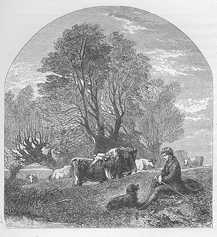
To join advantage to amusement, to gather profit with pleasure, Is the wise man's necessary aim, when he lieth in the shade of recreation. For he cannot fling aside his mind, nor bar up the flood-gates of his wisdom; Yea, though he strain after folly, his mental monitor shall check him: For knowledge and ignorance alike have laws essential to their being,— The sage studieth amusements, and the simple laugheth in his studies. Few, but full of understanding, are the books of the library of God, And fitting for all seasons are the gain and the gladness they bestow: The volume of mystery and Grace, for the hour of deep communings, When the soul considereth intensely the startling marvel of itself: The book of destiny and Providence, for the time of sober study, When the mind gleaneth wisdom from the olive grove of history: And the cheerful pages of Nature, to gladden the pleasant holiday, When the task of duty is complete, and the heart swelleth high with satisfaction. The soul may not safely dwell too long with the deep things of futurity; The mind may not always be bent back, like the Parthian, straining at the past; And, if thou art wearied with wrestling on the broad arena of science, Leave awhile thy friendly foe, half vanquished in the dust, Refresh thy jaded limbs, return with vigour to the strife,— Thou shalt easier find thyself his master, for the vacant interval of leisure.
That which may profit and amuse is gathered from the volume of creation, For every chapter therein teemeth with the playfulness of wisdom. The elements of all things are the same, though nature hath mixed them with a difference, And Learning delighteth to discover the affinity of seeming opposites: So out of great things and small draweth he the secrets of the universe, And argueth the cycles of the stars, from a pebble flung by a child. It is pleasant to note all plants, from the rush to the spreading cedar, From the giant king of palms, to the lichen that staineth its stem; To watch the workings of instinct, that grosser reason of brutes,— The river horse browsing in the jungle, the plover screaming on the moor, The cayman basking on a mud-bank, and the walrus anchored to an iceberg, The dog at his master's feet, and the milch-kine lowing in the meadow; To trace the consummate skill that hath modelled the anatomy of insects, Small fowls that sun their wings on the petals of wild flowers; To learn a use in the beetle, and more than a beauty in the butterfly; To recognize affections in a moth, and look with admiration on a spider. It is glorious to gaze upon the firmament, and see from far the mansions of the blest, Each distant shining world, a kingdom for one of the redeemed; To read the antique history of earth, stamped upon those medals in the rocks Which Design hath rescued from decay, to tell of the green infancy of time; To gather from the unconsidered shingle mottled starlike agates, Full of unstoried flowers in the bubbling bloom-chalcedony: Or gay and curious shells, fretted with microscopic carving, Corallines, and fresh seaweeds, spreading forth their delicate branches. It is an admirable lore, to learn the cause in the change, To study the chemistry of Nature, her grand, but simple secrets, To search out all her wonders, to track the resources of her skill, To note her kind compensations, her unobtrusive excellence. In all it is wise happiness to see the well-ordained laws of Jehovah, The harmony that filleth all His mind, the justice that tempereth His bounty, The wonderful all-prevalent analogy that testifieth one Creator, The broad arrow of the Great King, carved on all the stores of His arsenal. But beware, O worshipper of God, thou forget not Him in His dealings, Though the bright emanations of His power hide Him in created glory; For if, on the sea of knowledge, thou regardest not the pole-star of religion, Thy bark will miss her port, and run upon the sand-bar of folly: And if, enamoured of the means, thou considerest not the scope to which they tend, Wherein art thou wiser than the child, that is pleased with toys and baubles? Verily, a trifling scholar, thou heedest but the letter of instruction: For, as motive is spirit unto action, as memory endeareth place, As the sun doth fertilize the earth, as affection quickeneth the heart, So is the remembrance of God in the varied wonders of creation.
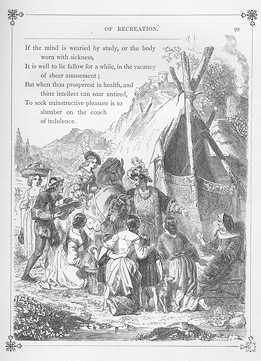
Man hath found out inventions, to cheat him of the weariness of life, To help him to forget realities, and hide the misery of guilt. For love of praise, and hope of gain, for passion and delusive happiness, He joineth the circle of folly, and heapeth on the fire of excitement; Oftentimes sadly out of heart at the tiresome insipidity of pleasure, Oftentimes labouring in vain, convinced of the palpable deceit: Yet a man speaketh to his brother, in the voice of glad congratulation, And thinketh others happy, though he himself be wretched: And hand joineth hand to help in the toil of amusement, While the secret aching heart is vacant of all but disappointment. The cheapest pleasures are the best; and nothing is more costly than sin; Yet we mortgage futurity, counting it but little loss: Neither can a man delight in that which breedeth sorrow, Yet do we hunt for joy even in the fires that consume it. Whoso would find gladness may meet her in the hovel of poverty, Where benevolence hath scattered around the gleanings of the horn of plenty; Whoso would sun himself in peace, may be seen of her in deeds of mercy, When the pale lean cheek of the destitute is wet with grateful tears. If the mind is wearied by study, or the body worn with sickness, It is well to lie fallow for a while, in the vacancy of sheer amusement; But when thou prosperest in health, and thine intellect can soar untired, To seek uninstructive pleasure is to slumber on the couch of indolence.
THE TRAIN OF RELIGION.
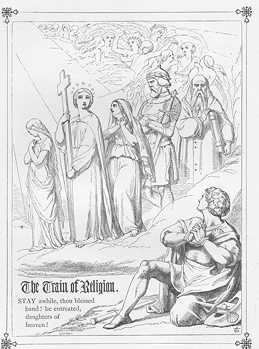
Stay awhile, thou blessed band! be entreated, daughters of heaven! While the chance-met scholar of Wisdom learneth your sacred names: He is resting a little from his toil, yet a little on the borders of earth, And fain would he have you his friends, to bid him glad welcome hereafter. Who among the glorious art thou, that walkest a Goddess and a Queen, Thy crown of living stars, and a golden cross thy sceptre? Who among flowers of loveliness is she, thy seeming herald, Yet she boasteth not thee nor herself, and her garments are plain in their neatness? Wherefore is there one among the train, whose eyes are red with weeping, Yet is her open forehead beaming with the sun of ecstasy? And who is that bloodstained warrior, with glory sitting on his crest? And who that solemn sage, calm in majestic dignity? Also, in the lengthening troop see I some clad in robes of triumph, Whose fair and sunny faces I have known and loved on earth: Welcome, ye glorified Loves, Graces, and Sciences, and Muses, That, like sisters of charity, tended in this world's hospital; Welcome, for verily I knew, ye could not but be children of the light, Though earth hath soiled your robes, and robbed you of half your glory; Welcome, chiefly welcome, for I find I have friends in heaven, And some I might scarce have looked for, as thou, light-hearted Mirth; Thou also, star-robed Urania; and thou, with the curious glass, That rejoicedst in tracking wisdom where the eye was too dull to note it: And art thou too among the blessed, mild, much-injured Poetry? Who quickenest with light and beauty the leaden face of matter, Who not unheard, though silent, fillest earth's gardens with music, And not unseen, though a spirit, dost look down upon us from the stars,— That hast been to me for oil and for wine, to cheer and uphold my soul, When wearied, battling with the surge, the stunning surge of life: Of thee, for well have I loved thee, of thee may I ask in hope, Who among the glorious is she, that walketh a Goddess and a Queen? And who that fair-haired herald, and who that weeping saint? And who that mighty warrior, and who that solemn sage?
Son, happy art thou that Wisdom hath led thee hitherward: For otherwise never hadst thou known the joy-giving name of our Queen. Behold her, the life of men, the anchor of their shipwrecked hopes: Behold her, the shepherdess of souls, who bringeth back the wanderers to God. And for that modest herald, she is named on earth, Humility: And hast thou not known, my son, the tearful face of Repentance? Faith is yon time-scarred hero, walking in the shade of his laurels: And Reason, the serious sage, who followeth the footsteps of Faith: And we, all we, are but handmaids, ministers of minor bliss, Who rejoice to be counted servants in the train of a Queen so glorious: But for her name, son of man, it is strange to the language of heaven, For those who have never fallen need not and may not learn it: Ligeance we swear to our God, and ligeance well have we kept; It is only the band of the redeemed who can tell thee the fulness of that name; Yet will I comfort thee, my son, for the love wherewith thou hast loved me, And thou shalt touch for thyself the golden sceptre of Religion.
So that blessed train passed by me; but the vision was sealed upon my soul; And its memory is shrined in fragrance, for the promise of the Spirit was true: I learn from the silent poem of all creation round me, How beautiful their feet, who follow in that train.
OF A TRINITY.
Despise not, shrewd reckoner, the God of a good man's worship, Neither let thy calculating folly gainsay the unity of three: Nor scorn another's creed, although he cannot solve thy doubts; Reason is the follower of faith, where he may not be precursor: It is written, and so we believe, waiting not for outward proof, Inasmuch as mysteries inscrutable are the clear prerogatives of godhead. Reason hath nothing positive, faith hath nothing doubtful; And the height of unbelieving wisdom is to question all things. When there is marvel in a doctrine, faith is joyful and adoreth; But when all is clear, what place is left for faith? Tell me the sum of thy knowledge,—is it yet assured of anything? Despise not what is wonderful, when all things are wonderful around thee. From the multitude of like effects, thou sayest, Behold a law: And the matter thou art baffled in unmaking, is to thy mind an element. Then look abroad, I pray thee, for analogy holdeth everywhere, And the Maker hath stamped His name on every creature of His hand: I know not of a matter or a spirit, that is not three in one, And truly should account it for a marvel, a coin without the image of its Cæsar.
Man talketh of himself as ignorant, but judgeth by himself as wise: His own guess counteth he truth, but the notions of another are his scorn; But bear thou yet with a brother, whose thought may be less subtle than thine own, And suffer the passing speculation suggested by analogies to faith. Like begetteth like, and the great sea of Existence In each of its uncounted waves holdeth up a mirror to its Maker: Like begetteth like, and the spreading tree of being With each of its trefoil leaves pointeth at the Trinity of God. Let him whose eyes have been unfilmed, read this homily in all things, And thou, of duller sight, despise not him that readeth: There be three grand principles; life, generation, and obedience; Shadowing in every creature, the Spirit, and the Father, and the Son. There be three grand unities, variously mixed in trinities, Three catholic divisors of the million sums of matter: Yea, though science hath not seen it, climbing the ladder of experiment, Let faith, in the presence of her God, promulgate the mighty truth; Of three sole elements all nature's works consist: The pine, and the rock to which it clingeth, and the eagle sailing around it: The lion, and the northern whale, and the deeps wherein he sporteth; The lizard sleeping in the sun; the lightning flashing from a cloud; The rose, and the ruby, and the pearl; each one is made of three; And the three be the like ingredients, mingled in diverse measures. Thyself hast within thyself body, and life, and mind: Matter, and breath, and instinct, unite in all beasts of the field; Substance, coherence, and weight, fashion the fabrics of the earth; The will, the doing, and the deed, combine to frame a fact: The stem, the leaf, and the flower; beginning, middle, and end; Cause, circumstance, consequent: and every three is one. Yea, the very breath of man's life consisteth of a trinity of vapours, And the noonday light is a compound, the triune shadow of Jehovah.
Shall all things else be in mystery, and God alone be understood? Shall finite fathom infinity, though it sound not the shallows of creation? Shall a man comprehend his Maker, being yet a riddle to himself? Or time teach the Lesson that eternity cannot master? If God be nothing more than one, a child can compass the thought; But seraphs fail to unravel the wondrous unity of three. One verily He is, for there can be but one who is all mighty; Yet the oracles of nature and religion proclaim Him three in one. And where were the value to thy soul, O miserable denizen of earth, Of the idle pageant of the cross, where hung no sacrifice for thee? Where the worth to thine impotent heart, of that stirred Bethesda, All numbed and palsied as it is, by the scorpion stings of sin? No, thy trinity of nature, enchained by treble death, Helplessly craveth of its God, Himself for three salvations: The soul to be reconciled in love, the mind to be glorified in light, While this poor dying body leapeth into life. And if indeed for us all the costly ransom hath been paid, Bethink thee, could less than Deity have owned so vast a treasure? Could a man contend with God, and stand against the bosses of His buckler, Rendering the balance for guilt, atonement to the uttermost? Thou art subtle to thine own thinking, but wisdom judgeth thee a fool, Resolving thou wilt not bow the knee to a Being thou canst not comprehend: The mind that could compass perfection were itself perfection's equal; And reason refuseth its homage to a God who can be fully understood.
Thou that despiseth mystery, yet canst expound nothing, Wherefore rejectest thou the fact that solveth the enigma of all things? Wherefore veilest thou thine eyes, lest the light of revelation sun them, And puttest aside the key that would open the casket of truth? The mind and the nature of God are shadowed in all His works, And none could have guessed of His essence, had He not uttered it Himself. Therefore, thou child of folly, that scornest the record of His wisdom, Learn from the consistencies of nature the needful miracle of Godhead: Yea, let the heathen be thy teacher, who adoreth many gods, For there is no wide-spread error that hath not truth for its beginning. Be content; thine eye cannot see all the sides of a cube at one view, Nor thy mind in the self-same moment follow two ideas: There are now many marvels in thy creed, believing what thou seest, Then let not the conceit of intellect hinder thee from worshipping mystery.
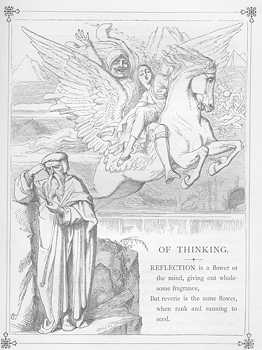
OF THINKING.
Reflection is a flower of the mind, giving out wholesome fragrance, But reverie is the same flower, when rank and running to seed. Better to read little with thought, than much with levity and quickness; For mind is not as merchandize, which decreaseth in the using, But liker to the passions of man, which rejoice and expand in exertion: Yet live not wholly on thine own ideas, lest they lead thee astray; For in spirit, as in substance, thou art a social creature; And if thou leanest on thyself, thou rejectest the guidance of thy betters, Yea, thou contemnest all men,—Am I not wiser than they?— Foolish vanity hath blinded thee, and warped thy weak judgment: For, though new ideas flow from new springs, and enrich the treasury of knowledge, Yet listen often, ere thou think much; and look around thee ere thou judgest. Memory, the daughter of Attention, is the teeming mother of Wisdom, And safer is he that storeth knowledge, than he that would make it for himself.
Imagination is not thought, neither is fancy reflection: Thought paceth like a hoary sage, but imagination hath wings as an eagle: Reflection sternly considereth, nor is sparing to condemn evil, But fancy lightly laugheth, in the sun-clad gardens of amusement. For the shy game of the fowler the quickest shot is the surest; But with slow care and measured aim the gunner pointeth his cannon: So for all less occasions, the surface-thought is best, But to be master of the great take thou heavier metal. It is a good thing, and a wholesome, to search out bosom sins, But to be the hero of selfish imaginings, is the subtle poison of pride: At night, in the stillness of thy chamber, guard and curb thy thoughts, And in recounting the doings of the day, beware that thou do it with prayer, Or thinking will be an idle pleasure, and retrospect yield no fruit. Steer the bark of thy mind from the syren isle of reverie, And let a watchful spirit mingle with the glance of recollection: Also, in examining thine heart, in sounding the fountain of thine actions, Be more careful of the evil than of the good; and humble thyself in thy sin.
The root of all wholesome thought is knowledge of thyself, For thus only canst thou learn the character of God toward thee. He made thee, and thou art; He redeemed thee, and thou wilt be: Thou art evil, yet He loveth thee; thou sinnest, yet He pardoneth thee. Though thou canst not perceive Him, yet is He in all His works, Infinite in grand outline, infinite in minute perfection: Nature is the chart of God, mapping out all His attributes; Art is the shadow of His wisdom, and copieth His resources. Thou knowest the laws of matter to be emanations of His will, And thy best reason for aught is this,—Thou, Lord, wouldst have it so. Yea, what is any law but an absolute decree of God? Or the properties of matter and mind, but the arbitrary fiats of Jehovah? He made and ordained necessity; He forged the chain of reason; And holdeth in His own right hand the first of the golden links. A fool regardeth mind as the spiritual essence of matter, And not rather matter as the gross accident of mind. Can finite govern infinite, or a part exceed the whole, Or the wisdom of God sit down at the feet of innate necessity? Necessity is a creature of His hand: for He can never change; And chance hath no existence where everything is needful.
Canst thou measure Omnipotence, canst thou conceive Ubiquity, Which guideth the meanest reptile, and quickeneth the brightest seraph, Which steereth the particle of dust, and commandeth the path of the comet? To Him all things are equal, for all things are necessary. The smith was weary at his forge, and welded the metal carelessly, And the anchor breaketh in its bed; and the vessel foundereth with her crew: A word of anger is muttered, engendering the midnight murder: The sun bursteth from a cloud, and maddeneth the toiling husbandman. Shall these things be, and God not know it? Shall He know, and not be in them? shall He see, and not be among them? And how can they be otherwise than as He knoweth? Truly, the Lord is in all things; verily, He worketh in all. Think thus, and thy thoughts are firm, ascribing each circumstance to Him; Yet know surely, and believe the truth, that God willeth not evil; For adversities are blessings in disguise, and wickedness the Lord abhorreth: That He is in all things is an axiom, and that He is righteous in all: Ascribe holiness to Him, while thou musest on the mystery of sin, For infinite can grasp that, which finite cannot compass.
In works of art, think justly: what praise canst thou render unto man? For he made not his own mind, nor is he the source of contrivance. If a cunning workman make an engine that fashioneth curious works, Which hath the praise, the machine or its maker,—the engine, or he that framed it? And could he frame it so subtly as to give it a will and freedom, Endow it with complicated powers, and a glorious living soul, Who, while he admireth the wondrous understanding creature, Will not pay deeper homage to the Maker of master minds? Otherwise, thou art senseless as the pagan, that adoreth his own handywork; Yea, while thou boastest of thy wisdom, thy mind is as the mind of the savage, For he boweth down to his idols, and thou art a worshipper of self, Giving to the reasoning machine the credit due to its creator.
The key-stone of thy mind, to give thy thoughts solidity, To bind them as in an arch, to fix them as the world in its sphere, Is to learn from the book of the Lord, to drink from the well of His wisdom. Who can condense the sun, or analyse the fulness of the Bible, So that its ideas be gathered, and the harvest of its wisdom be brought in? That book is easy to the man who setteth his heart to understand it, But to the careless and profane it shall seem the foolishness of God; And it is a delicate test to prove thy moral state; To the humble disciple it is bread, but a stone to the proud and unbelieving: A scorner shall find nothing but the husks, wherewith to feed his hunger, But for the soul of the simple, it is plenty of full-ripe wheat. The Scripture abideth the same, in the sober majesty of truth; And the differing aspects of its teaching proceed from diversity in minds. He that would learn to think may gain that knowledge there; For the living word, as an angel, standeth at the gate of wisdom, And publisheth, This is the way, walk ye surely in it. Religion taketh by the hand the humble pupil of repentance, And teacheth him lessons of mystery, solving the questions of doubt; She maketh man worthy of himself, of his high prerogative of reason, Threadeth all the labyrinths of thought, and leadeth him to his God.
Come hither, child of meditation, upon whose high fair forehead Glittereth the star of mind in its unearthly lustre: Hast thou nought to tell us of thine airy joys,— When, borne on sinewy pinions, strong as the western condor, The soul, after soaring for a while round the cloud-capped Andes of reflection, Glad in its conscious immortality, leaveth a world behind, To dare at one bold flight the broad Atlantic to another? Hast thou no secret pangs to whisper common men, No dread of thine own energies, still active day and night, Lest too ecstatic heat sublime thyself away, Or vivid horrors, sharp and clear, madden thy tense fibres? In half-shaped visions of sleep hast thou not feared thy flittings, Lest reason, like a raking hawk, return not to thy call: Nor waked to work-day life with throbbing head and heart, Nor welcomed early dawn to save thee from unrest? For the wearied spirit lieth as a fainting maiden, Captive and borne away on the warrior's foam-covered steed, And sinketh down wounded, as a gladiator on the sand, While the keen faulchion of Intellect is cutting through the scabbard of the brain. Imagination, like a shadowy giant looming on the twilight of the Hartz, Shall overwhelm judgment with affright, and scare him from his throne: In a dream thou mayst be mad, and feel the fire within thee; In a dream thou mayst travel out of self, and see thee with the eyes of another; Or sleep in thine own corpse: or wake as in many bodies; Or swell, as expanded to infinity; or shrink, as imprisoned to a point; Or among moss-grown ruins mayst wander with the sullen disembodied, And gaze upon their glassy eyes until thy heart-blood freeze.
Alone must thou stand, O man! alone at the bar of judgment; Alone must thou bear thy sentence, alone must thou answer for thy deeds: Therefore it is well thou retirest often to secresy and solitude, To feel that thou art accountable separately from thy fellows: For a crowd hideth truth from the eyes, society drowneth thought, And being but one among many, stifleth the chidings of conscience. Solitude bringeth woe to the wicked, for his crimes are told out in his ear; But addeth peace to the good, for the mercies of his God are numbered. Thou mayst know if it be well with a man,—loveth he gaiety or solitude? For the troubled river rusheth to the sea, but the calm lake slumbereth among the mountains. How dear to the mind of the sage are the thoughts that are bred in loneliness; For there is as it were music at his heart, and he talketh within him as with friends: But guilt maddeneth the brain, and terror glareth in the eye, Where, in his solitary cell, the malefactor wrestleth with remorse. Give me but a lodge in the wilderness, drop me on an island in the desert, And thought shall yield me happiness, though I may not increase it by imparting: For the soul never slumbereth, but is as the eye of the Eternal, And mind, the breath of God, knoweth not ideal vacuity: At night, after weariness and watching, the body sinketh into sleep, But the mental eye is awake, and thou reasonest in thy dreams: In a dream, thou mayst live a lifetime, and all be forgotten in the morning: Even such is life, and so soon perisheth its memory.
OF SPEAKING.
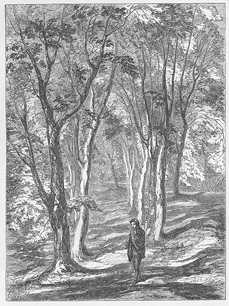
Speech is the golden harvest that followeth the flowering of thought; Yet oftentimes runneth it to husk, and the grains be withered and scanty: Speech is reason's brother, and a kingly prerogative of man, That likeneth him to his Maker, who spake, and it was done: Spirit may mingle with spirit, but sense requireth a symbol; And speech is the body of a thought, without which it were not seen. When thou walkest, musing with thyself, in the green aisles of the forest, Utter thy thinkings aloud, that they take a shape and being: For he that pondereth in silence crowdeth the storehouse of his mind, And though he hath heaped great riches, yet is he hindered in the using. A man that speaketh too little, and thinketh much and deeply, Corrodeth his own heart-strings, and keepeth back good from his fellows: A man that speaketh too much, and museth but little and lightly, Wasteth his mind in words, and is counted a fool among men: But thou, when thou hast thought, weave charily the web of meditation, And clothe the ideal spirit in the suitable garments of speech.
Uttered out of time, or concealed in its season, good savoureth of evil; To be secret looketh like guilt, to speak out may breed contention: Often have I known the honest heart, flaming with indignant virtue, Provoke unneeded war by its rash ambassador the tongue: Often have I seen the charitable man go so slily on his mission, That those who met him in the twilight, took him for a skulking thief: I have heard the zealous youth telling out his holy secrets Before a swinish throng, who mocked him as he spake; And I considered, his openness was hardening them that mocked, Whereas a judicious keeping-back might have won their sympathy: I have judged rashly and harshly the hand, liberal in the dark, Because in the broad daylight, it hath holden it a virtue to be close; And the silent tongue have I condemned, because reserve hath chained it, That it hid, yea from a brother, the kindness it had done by comforting. No need to sound a trumpet, but less to hush a footfall: Do thou thy good openly, not as though the doing were a crime. Secresy goeth cowled, and Honesty demandeth wherefore? For he judgeth—judgeth he not well?—that nothing need be hid but guilt. Why should thy good be evil spoken of, through thine unrighteous silence? If thou art challenged, speak, and prove the good thou doest. The free example of benevolence, unobtruded, yet unhidden, Soundeth in the ears of sloth, Go, and do thou likewise: And I wot the hypocrite's sin to be of darker dye, Because the good man, fearing, thereby hideth his light: But neither God nor man hath bid thee cloak thy good, When a seasonable word would set thee in thy sphere, that all might see thy brightness. Ascribe the honour to thy Lord, but be thou jealous of that honour, Nor think it light and worthless, because thou mayst not wear it for thyself: Remember, thy grand prerogative is free unshackled utterance, And suffer not the flood-gates of secresy to lock the full river of thy speech.
Come, I will show thee an affliction, unnumbered among this world's sorrows, Yet real and wearisome and constant, embittering the cup of life. There be, who can think within themselves, and the fire burneth at their heart, And eloquence waiteth at their lips, yet they speak not with their tongue: There be, whom zeal quickeneth, or slander stirreth to reply, Or need constraineth to ask, or pity sendeth as her messengers, But nervous dread and sensitive shame freeze the current of their speech; The mouth is sealed as with lead, a cold weight presseth on the heart, The mocking promise of power is once more broken in performance, And they stand impotent of words, travailing with unborn thoughts; Courage is cowed at the portal; wisdom is widowed of utterance; He that went to comfort is pitied; he that should rebuke, is silent: And fools who might listen and learn, stand by to look and laugh; While friends, with kinder eyes, wound deeper by compassion: And thought, finding not a vent, smouldereth, gnawing at the heart, And the man sinketh in his sphere, for lack of empty sounds. There be many cares and sorrows thou hast not yet considered, And well may thy soul rejoice in the fair privilege of speech; For at every turn to want a word,—thou canst not guess that want; It is as lack of breath or bread: life hath no grief more galling.
Come, I will tell thee of a joy, which the parasites of pleasure have not known, Though earth and air and sea have gorged all the appetites of sense. Behold, what fire is in his eye, what fervour on his cheek! That glorious burst of winged words! how bound they from his tongue! The full expression of the mighty thought, the strong triumphant argument, The rush of native eloquence, resistless as Niagara, The keen demand, the clear reply, the fine poetic image, The nice analogy, the clenching fact, the metaphor bold and free, The grasp of concentrated intellect wielding the omnipotence of truth, The grandeur of his speech in his majesty of mind! Champion of the right,—patriot, or priest, or pleader of the innocent cause, Upon whose lips the mystic bee hath dropped the honey of persuasion, Whose heart and tongue have been touched, as of old, by the live coal from the altar, How wide the spreading of thy peace, how deep the draught of thy pleasures! To hold the multitude as one, breathing in measured cadence, A thousand men with flashing eyes, waiting upon thy will; A thousand hearts kindled by thee with consecrated fire, Ten flaming spiritual hecatombs offered on the mount of God: And now a pause, a thrilling pause,—they live but in thy words,— Thou hast broken the bounds of self, as the Nile at its rising, Thou art expanded into them, one faith, one hope, one spirit, They breathe but in thy breath, their minds are passive unto thine, Thou turnest the key of their love, bending their affections to thy purpose, And all, in sympathy with thee, tremble with tumultuous emotions: Verily, O man, with truth for thy theme, eloquence shall throne thee with archangels.
OF READING.
One drachma for a good book, and a thousand talents for a true friend;— So standeth the market, where scarce is ever costly: Yea, were the diamonds of Golconda common as shingles on the shore, A ripe apple would ransom kings before a shining stone: And so, were a wholesome book as rare as an honest friend, To choose the book be mine: the friend let another take. For altered looks and jealousies and fears have none entrance there: The silent volume listeneth well, and speaketh when thou listest: It praiseth thy good without envy, it chideth thine evil without malice, It is to thee thy waiting slave, and thine unbending teacher. Need to humour no caprice, need to bear with no infirmity; Thy sin, thy slander, or neglect, chilleth not, quencheth not, its love: Unalterably speaketh it the truth, warped nor by error nor interest; For a good book is the best of friends, the same to-day and for ever.
To draw thee out of self, thy petty plans and cautions, To teach thee what thou lackest, to tell thee how largely thou art blest, To lure thy thought from sorrow, to feed thy famished mind, To graft another's wisdom on thee, pruning thine own folly, Choose discreetly, and well digest the volume most suited to thy case, Touching not religion with levity, nor deep things when thou art wearied. Thy mind is freshened by morning air, grapple with science and philosophy; Noon hath unnerved thy thoughts, dream for a while on fictions: Grey evening sobereth thy spirit, walk thou then with worshippers: But reason shall dig deepest in the night, and fancy fly most free.
O books, ye monuments of mind, concrete wisdom of the wisest; Sweet solaces of daily life; proofs and results of immortality; Trees yielding all fruits, whose leaves are for the healing of the nations; Groves of knowledge, where all may eat, nor fear a flaming sword: Gentle comrades, kind advisers; friends, comforts, treasures: Helps, governments, diversities of tongues; who can weigh your worth?— To walk no longer with the just; to be driven from the porch of science; To bid long adieu to those intimate ones, poets, philosophers, and teachers; To see no record of the sympathies which bind thee in communion with the good; To be thrust from the feet of Him who spake as never man spake; To have no avenue to heaven but the dim aisle of superstition; To live as an Esquimaux, in lethargy; to die as the Mohawk, in ignorance: O what were life, but a blank? what were death, but a terror? What were man, but a burden to himself? what were mind, but misery? Yea, let another Omar burn the full library of knowledge, And the broad world may perish in the flames, offered on the ashes of its wisdom!
OF WRITING.
The pen of a ready writer, whereunto shall it be likened? Ask of the scholar, he shall know,—to the chains that bind a Proteus: Ask of the poet, he shall say,—to the sun, the lamp of heaven: Ask of thy neighbour, he can answer,—to the friend that telleth my thought: The merchant considereth it well, as a ship freighted with wares; The divine holdeth it a miracle, giving utterance to the dumb. It fixeth, expoundeth, and disseminateth sentiment; Chaining up a thought, clearing it of mystery, and sending it bright into the world. To think rightly, is of knowledge; to speak fluently, is of nature; To read with profit, is of care; but to write aptly, is of practice. No talent among men hath more scholars, and fewer masters: For to write is to speak beyond hearing, and none stand by to explain. To be accurate, write; to remember, write; to know thine own mind, write; And a written prayer is a prayer of faith: special, sure, and to be answered. Hast thou a thought upon thy brain, catch it while thou canst; Or other thoughts shall settle there, and this shall soon take wing: Thine uncompounded unity of soul, which argueth and maketh it immortal, Yieldeth up its momentary self to every single thought; Therefore, to husband thine ideas, and give them stability and substance, Write often for thy secret eye; so shalt thou grow wiser. The commonest mind is full of thoughts; some worthy of the rarest: And could it see them fairly writ, would wonder at its wealth.
O precious compensation to the dumb, to write his wants and wishes; O dear amends to the stammering tongue, to pen his burning thoughts! To be of the college of Eloquence, through these silent symbols; To pour out all the flowing mind without the toil of speech; To show the babbling world how it might discourse more sweetly; To prove that merchandize of words bringeth no monopoly of wisdom; To take sweet vengeance on a prating crew, for the tongue's dishonour, By the large triumph of the pen, the homage rendered to a writing. With such, that telegraph of mind is dearer than wealth or wisdom, Enabling to please without pain, to impart without humiliation.
Fair girl, whose eye hath caught the rustic penmanship of love, Let thy bright brow and blushing cheek confess in this sweet hour,— Let thy full heart, poor guilty one, whom the scroll of pardon hath just reached,— Thy wet glad face, O mother, with news of a far-off child,— Thy strong and manly delight, pilgrim of other shores, When the dear voice of thy betrothed speaketh in the letter of affection,— Let the young poet, exulting in his lay, and hope (how false) of fame, While watching at deep midnight, he buildeth up the verse,— Let the calm child of genius, whose name shall never die, For that the transcript of his mind hath made his thoughts immortal,— Let these, let all, with no faint praise, with no light gratitude, confess The blessings poured upon the earth from the pen of a ready writer.
Moreover, their preciousness in absence is proved by the desire of their presence: When the despairing lover waiteth day after day, Looking for a word in reply, one word writ by that hand, And cursing bitterly the morn ushered in by blank disappointment: Or when the long-looked-for answer argueth a cooling friend, And the mind is plied suspiciously with dark inexplicable doubts, While thy wounded heart counteth its imaginary scars, And thou art the innocent and injured, that friend the capricious and in fault: Or when the earnest petition, that craveth for thy needs, Unheeded, yea, unopened, tortureth with starving delay: Or when the silence of a son, who would have written of his welfare, Racketh a father's bosom with sharp-cutting fears. For a letter, timely writ, is a rivet to the chain of affection, And a letter, untimely delayed, is as rust to the solder. The pen, flowing with love, or dipped black in hate, Or tipped with delicate courtesies, or harshly edged with censure, Hath quickened more good than the sun, more evil than the sword, More joy than woman's smile, more woe than frowning fortune; And shouldst thou ask my judgment of that which hath most profit in the world, For answer take thou this, The prudent penning of a letter.
Thou hast not lost an hour, whereof there is a record; A written thought at midnight shall redeem the livelong day. Idea is as a shadow that departeth, speech is fleeting as the wind, Reading is an unremembered pastime; but a writing is eternal: For therein the dead heart liveth, the clay-cold tongue is eloquent, And the quick eye of the reader is cleared by the reed of the scribe. As a fossil in the rock, or a coin in the mortar of a ruin, So the symbolled thoughts tell of a departed soul: The plastic hand hath its witness in a statue, and exactitude of vision in a picture, And so, the mind that was among us, in its writings is embalmed.
OF WEALTH.
Prodigality hath a sister Meanness, his fixed antagonist heart-fellow, Who often outliveth the short career of the brother she despiseth: She hath lean lips and a sharp look, and her eyes are red and hungry; But he sloucheth in his gait, and his mouth speaketh loosely and maudlin. Let a spendthrift grow to be old, he will set his heart on saving, And labour to build up by penury that which extravagance threw down: Even so, with most men, do riches earn themselves a double curse; They are ill-got by tight dealing: they are ill-spent by loose squandering. Give me enough, saith Wisdom;—for he feareth to ask for more; And that by the sweat of my brow, addeth stout-hearted Independence: Give me enough, and not less, for want is leagued with the tempter; Poverty shall make a man desperate, and hurry him ruthless into crime: Give me enough, and not more, saving for the children of distress; Wealth ofttimes killeth, where want but hindereth the budding: There is green glad summer near the pole, though brief and after long winter, But the burnt breasts of the torrid zone yield never kindly nourishment. Wouldst thou be poor, scatter to the rich,—and reap the tares of ingratitude; Wouldst thou be rich, give unto the poor; thou shalt have thine own with usury: For the secret hand of Providence prospereth the charitable all ways, Good luck shall he have in his pursuits, and his heart shall be glad within him; Yet perchance he never shall perceive, that, even as to earthly gains, The cause of his weal as of his joy, hath been small givings to the poor.
In the plain of Benares is there found a root that fathereth a forest, Where round the parent banian-tree drop its living scions; Thirstily they strain to the earth, like stalactites in a grotto, And strike broad roots, and branch again, lengthening their cool arcades: And the dervish madly danceth there, and the faquir is torturing his flesh, And the calm brahmin worshippeth the sleek and pampered bull: At the base lean jackals coil, while from above depending With dull malignant stare watcheth the branch-like boa. Even so, in man's heart is a sin that is the root of all evil; Whose fibres strangle the affections, whose branches overgrow the mind: And oftenest beneath its shadow thou shalt meet distorted piety,— The clenched and rigid fist, with the eyes upturned to heaven, Fanatic zeal with miserly severity, a mixture of gain with godliness, And him, against whom passion hath no power, kneeling to a golden calf: The hungry hounds of extortion are there, the bond, and the mortgage, and the writ, While the appetite for gold, unslumbering, watcheth to glut its maw:— And the heart, so tenanted and shaded, is cold to all things else; It seeth not the sunshine of heaven, nor is warmed by the light of charity.
For covetousness disbelieveth God, and laugheth at the rights of men; Spurring unto theft and lying, and tempting to the poison and the knife; It sundereth the bonds of love, and quickeneth the flames of hate; A curse that shall wither the brain, and case the heart with iron. Content is the true riches, for without it there is no satisfying, But a ravenous all-devouring hunger gnaweth the vitals of the soul. The wise man knoweth where to stop, as he runneth in the race of fortune, For experience of old hath taught him, that happiness lingereth midway; And many in hot pursuit have hasted to the goal of wealth, But have lost, as they ran, those apples of gold,—the mind and the power to enjoy it.
There is no greater evil among men than a testament framed with injustice: Where caprice hath guided the boon, or dishonesty refused what was due. Generous is the robber on the highway, in the open daring of his guilt, To the secret coward, whose malice liveth and harmeth after him; Who smoothly sank into the tomb, with the smile of fraud upon his face, And the last black deed of his existence was injury without redress: For deaf is the ear of the dead, and can hear no palliating reasons; The smiter is not among the living, and Right pleadeth but in vain. Yet shall the curse of the oppressed be as blight upon the grave of the unjust; Yea, bitterly shall that handwriting testify against him at the judgment. I saw the humble relation that tended the peevishness of wealth, And ministered, with kind hand, to the wailings of disease and discontent: I noted how watchfulness and care were feeding on the marrow of her youth, How heavy was the yoke of dependence, loaded by petty tyranny; Yet I heard the frequent suggestion,—It can be but a little longer, Patience and mute submission shall one day reap a rich reward. So, tacitly enduring much, waited that humble friend, Putting off the lover of her youth until the dawn of wealth: And it came, that day of release, and the freed heart could not sorrow, For now were the years of promise to yield their golden harvest: Hope, so long deferred, sickly sparkled in her eye, The miserable past was forgotten, as she looked for the happier future, And she checked, as unworthy and ungrateful, the dark suspicious thought That perchance her right had been the safer, if not left alone with honour: But, alas, the sad knowledge soon came, that her stern task-master's will Hath rewarded her toil with a jibe, her patience with utter destitution!— Shall not the scourge of justice lash that cruel coward, Who mingled the gall of ingratitude with the bitterness of disappointment? Shall not the hate of men, and vengeance, fiercely pursuing, Hunt down the wretched being that sinneth in his grave? He fancied his idol self safe from the wrath of his fellows, But Hades rose as he came in, to point at him the finger of scorn; And again must he meet that orphan-maid to answer her face to face, And her wrongs shall cling around his neck, to hinder him from rising with the just: For his last most solemn act hath linked his name with liar, And the crime of Ananias is branded on his brow!
A good man commendeth his cause to the one great Patron of innocence, Convinced of justice to the last, and sure of good meanwhile. He knoweth he hath a Guardian, wise and kind and strong, And can thank Him for giving, or refusing, the trust or the curse of riches: His confidence standeth as a rock; he dreadeth not malice nor caprice, Nor the whisperings of artful men, nor envious secret influence; He scorneth servile compromise, and the pliant mouthings of deceit; He maketh not a show of love, where he cannot concede esteem; He regardeth ill-got wealth, as the root most fruitful of wretchedness, So he walketh in straight integrity, leaning on God and his right.
No gain, but by its price: labour, for the poor man's meal, Ofttimes heart-sickening toil, to win him a morsel for his hunger: Labour, for the chapman at his trade, a dull unvaried round, Year after year, unto death; yea, what a weariness is it! Labour, for the pale-faced scribe, drudging at his hated desk, Who bartereth for needful pittance the untold gold of health; Labour, with fear, for the merchant, whose hopes are ventured on the sea; Labour, with care, for the man of law, responsible in his gains; Labour, with envy and annoyance, where strangers will thee wealth; Labour, with indolence and gloom, where wealth falleth from a father; Labour unto all, whether aching thews, or aching head, or spirit,— The curse on the sons of men, in all their states, is labour. Nevertheless, to the diligent, labour bringeth blessing: The thought of duty sweeteneth toil, and travail is as pleasure; And time spent in doing hath a comfort that is not for the idle, The hardship is transmuted into joy by the dear alchemy of Mercy. Labour is good for a man, bracing up his energies to conquest, And without it life is dull, the man perceiving himself useless: For wearily the body groaneth, like a door on rusty hinges, And the grasp of the mind is weakened, as the talons of a caged vulture. Wealth hath never given happiness, but often hastened misery: Enough hath never caused misery, but often quickened happiness: Enough is less than thy thought, O pampered creature of society, And he that hath more than enough, is a thief of the rights of his brother.
OF INVENTION.
Man is proud of his mind, boasting that it giveth him divinity, Yet with all its powers can it originate nothing; For the Great God into all His works hath largely poured out Himself, Saving one special property, the grand prerogative,—Creation. To improve and expand is ours, as well as to limit and defeat; But to create a thought or a thing is hopeless and impossible. Can a man make matter?—and yet this would-be god Thinketh to make mind, and form original idea: The potter must have his clay, and the mason his quarry, And mind must drain ideas from everything around it. Doth the soil generate herbs, or the torrid air breed flies, Or the water frame its monads, or the mist its swarming blight?— Mediately, through thousand generations, having seed within themselves, All things, rare or gross, own one common Father. Truly spake Wisdom, There is nothing new under the sun: We only arrange and combine the ancient elements of all things. Invention is activity of mind, as fire is air in motion; A sharpening of the spiritual sight, to discern hidden aptitudes: From the basket and acanthus, is modelled the graceful capital; The shadowed profile on the wall helpeth the limner to his likeness; The footmarks, stamped in clay, lead on the thoughts to printing; The strange skin garments cast upon the shore suggest another hemisphere: A falling apple taught the sage pervading gravitation; The Huron is certain of his prey, from tracks upon the grass: And shrewdness, guessing out the hint, followeth on the trail; But the hint must be given, the trail must be there, or the keenest sight is as blindness.
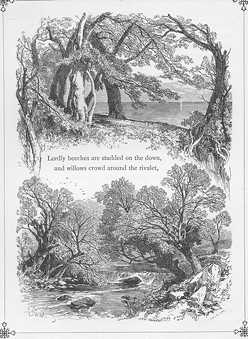
Behold the barren reef, which an earthquake hath just left dry; It hath no beauty to boast of, no harvest of fair fruits: But soon the lichen fixeth there, and, dying, diggeth its own grave, And softening suns and splitting frosts crumble the reluctant surface; And cormorants roost there, and the snail addeth its slime, And efts, with muddy feet, bring their welcome tribute; And the sea casteth out her dead, wrapped in a shroud of weeds; And orderly nature arrangeth again the disunited atoms; Anon, the cold smooth stone is warm with feathery grass, And the light sporules of the fern are dropt by the passing wind, The wood-pigeon, on swift wing, leaveth its crop-full of grain, The squirrel's jealous care planteth the fir-cone and the filbert: Years pass, and the sterile rock is rank with tangled herbage; The wild-vine clingeth to the briar, and ivy runneth green among the corn, Lordly beeches are studded on the down, and willows crowd around the rivulet, And the tall pine and hazel-thicket shade the rambling hunter. Shall the rock boast of its fertility? shall it lift the head in pride?— Shall the mind of man be vain of the harvest of its thoughts? The savage is that rock; and a million chances from without, By little and little acting on the mind, heap up the hot-bed of society; And the soul, fed and fattened on the thoughts and things around it, Groweth to perfection, full of fruit, the fruit of foreign seeds. For we learn upon a hint, we find upon a clue, We yield an hundred-fold; but the great sower is Analogy. There must be an acrid sloe before a luscious peach, A boll of rotting flax before the bridal veil, An egg before an eagle, a thought before a thing, A spark struck into tinder to light the lamp of knowledge, A slight suggestive nod to guide the watching mind, A half-seen hand upon the wall, pointing to the balance of Comparison. By culture man may do all things, short of the miracle,—Creation; Here is the limit of thy power,—here let thy pride be stayed: The soil may be rich, and the mind may be active, but neither yield unsown; The eye cannot make light, nor the mind make spirit. Therefore it is wise in man to name all novelty Invention; For it is to find out things that are, not to create the unexisting: It is to cling to contiguities, to be keen in catching likeness, And with energetic elasticity to leap the gulphs of contrast. The globe knoweth not increase, either of matter or spirit; Atoms and thoughts are used again, mixing in varied combinations; And though, by moulding them anew, thou makest them thine own, Yet have they served thousands, and all their merit is of God.
OF RIDICULE.
Seams of thought for the sage's brow, and laughing lines for the fool's face; For all things leave their track in the mind; and the glass of the mind is faithful. Seest thou much mirth upon the cheek? there is then little exercise of virtue; For he that looketh on the world, cannot be glad and good: Seest thou much gravity in the eye? be not assured of finding wisdom; For she hath too great praise, not to get many mimics. There is a grave-faced folly; and verily, a laughter-loving wisdom; And what, if surface-judges account it vain frivolity? There is indeed an evil in excess, and a field may lie fallow too long; Yet merriment is often as a froth, that mantleth on the strong mind: And note thou this for a verity,—the subtlest thinker when alone, From ease of thoughts unbent, will laugh the loudest with his fellows: And well is the loveliness of wisdom mirrored in a cheerful countenance, Justly the deepest pools are proved by dimpling eddies; For that, a true philosophy commandeth an innocent life, And the unguilty spirit is lighter than a linnet's heart: Yea, there is no cosmetic like a holy conscience; The eye is bright with trust, the cheek bloomed over with affection, The brow unwrinkled by a care, and the lip triumphant in its gladness.
And for yon grave-faced folly, need not far to look for her; How seriously on trifles dote those leaden eyes, How ruefully she sigheth after chances long gone by, How sulkily she moaneth over evils without cure! I have known a true-born mirth, the child of innocence and wisdom, I have seen a base-born gravity, mingled of ignorance and guilt: And again, a base-born mirth, springing out of carelessness and folly; And again, a true-born gravity, the product of reflection and right fear. The wounded partridge hideth in a furrow, and a stricken conscience would be left alone; But when its breast is healed, it runneth gladly with its fellows: Whereas the solitary heron, standing in the sedgy fen, Holdeth aloof from the social world, intent on wiles and death.
Need but of light philosophy to dare the world's dread laugh; For a little mind courteth notoriety, to illustrate its puny self: But the sneer of a man's own comrades trieth the muscles of courage, And to be derided in his home is as a viper in the nest: The laugh of a hooting world hath in it a notion of sublimity, But the tittering private circle stingeth as a hive of wasps. Some have commended ridicule, counting it the test of truth, But neither wittily nor wisely; for truth must prove ridicule: Otherwise a blunt bulrush is to pierce the proof armour of argument, Because the stolidity of ignorance took it for a barbed shaft. Softer is the hide of the rhinoceros, than the heart of deriding unbelief, And truth is idler there, than the Bushman's feathered reed: A droll conceit parrieth a thrust, that should have hit the conscience, And the leering looks of humour tickle the childish mind; For that the matter of a man is mingled most with folly, Neither can he long endure the searching gaze of wisdom. It is pleasanter to see a laughing cheek than a serious forehead, And there liveth not one among a thousand whose idol is not pleasure. Ridicule is a weak weapon, when levelled at a strong mind: But common men are cowards, and dread an empty laugh. Fear a nettle, and touch it tenderly, its poison shall burn thee to the shoulder; But grasp it with a bold hand,—is it not a bundle of myrrh? Betray mean terror of ridicule, thou shalt find fools enough to mock thee; But answer thou their laughter with contempt, and the scoffers will lick thy feet.
OF COMMENDATION.
The praise of holy men is a promise of praise from their Master; A fore-running earnest of thy welcome,—Well done, faithful servant; A rich preludious note, that droppeth softly on thine ear, To tell thee the chords of thy heart are in tune with the choirs of heaven. Yet is it a dangerous hearing, for the sweetness may lull thee into slumber, And the cordial quaffed with thirst may generate the fumes of presumption. So seek it not for itself, but taste, and go gladly on thy way, For the mariner slacketh not his sail, though the sandal-groves of Araby allure him; And the fragrance of that incense would harm thee, as when, on a summer evening, The honied yellow flowers of the gorse oppress thy charmed sense: And a man hath too much of praise, for he praiseth himself continually; Neither lacketh he at any time self-commendation or excuse.
Praise a fool, and slay him: for the canvas of his vanity is spread; His bark is shallow in the water, and a sudden gust shall sink it: Praise a wise man, and speed him on his way; for he carrieth the ballast of humility, And is glad when his course is cheered by the sympathy of brethren ashore. The praise of a good man is good, for he holdeth up the mirror of Truth, That Virtue may see her own beauty, and delight in her own fair face: The praise of a bad man is evil, for he hideth the deformity of Vice, Casting the mantle of a queen around the limbs of a leper. Praise is rebuke to the man whose conscience alloweth it not: And where conscience feeleth it her due, no praise is better than a little. He that despiseth the outward appearance, despiseth the esteem of his fellows; And he that overmuch regardeth it, shall earn only their contempt: The honest commendation of an equal no one can scorn, and be blameless, Yet even that fair fame no one can hunt for, and be honoured: If it come, accept it and be thankful, and be thou humble in accepting; If it tarry, be not thou cast down; the bee can gather honey out of rue: And is thine aim so low, that the breath of those around thee Can speed thy feathered arrow, or retard its flight? The child shooteth at a butterfly, but the man's mark is an eagle; And while his fellows talk, he hath conquered in the clouds. Ally thee to truth and godliness, and use the talents in thy charge; So shall thou walk in peace, deserving, if not having. With a friend, praise him when thou canst; for many a friendship hath decayed, Like a plant in a crowded corner, for want of sunshine on its leaves: With another, praise him not often—otherwise he shall despise thee; But be thou frugal in commending; so will he give honour to thy judgment: For thou that dost so zealously commend, art acknowledging thine own inferiority, And he, thou so highly hast exalted, shall proudly look down on thy esteem.
Wilt thou that one remember a thing?—praise him in the midst of thy advice; Never yet forgat man the word whereby he hath been praised. Better to be censured by a thousand fools, than approved but by one man that is wise; For the pious are slower to help right, than the profane to hinder it: So, where the world rebuketh, there look thou for the excellent, And be suspicious of the good, which wicked men can praise. The captain bindeth his troop, not more by severity than kindness, And justly, should recompense well doing, as well as be strict with an offender; The laurel is cheap to the giver, but precious in his sight who hath won it, And the heart of the soldier rejoiceth in the approving glance of his chief. Timely given praise is even better than the merited rebuke of censure, For the sun is more needful to the plant than the knife that cutteth out a canker. Many a father hath erred, in that he hath withheld reproof, But more have mostly sinned, in withholding praise where it was due: There be many such as Eli among men; but these be more culpable than Eli, Who chill the fountain of exertion by the freezing looks of indifference: Ye call a man easy and good, yet he is as a two-edged sword; He rebuketh not vice, and it is strong: he comforteth not virtue, and it fainteth. There is nothing more potent among men than a gift timely bestowed; And a gift kept back where it was hoped, separateth chief friends: For what is a gift but a symbol, giving substance to praise and esteem? And where is a sharper arrow than the sting of unmerited neglect?
Expect not praise from the mean, neither gratitude from the selfish; And to keep the proud thy friend, see thou do him not a service: For, behold, he will hate thee for his debt: thou hast humbled him by giving; And his stubbornness never shall acknowledge the good he hath taken from thy hand: Yea, rather will he turn and be thy foe, lest thou gather from his friendship That he doth account thee creditor, and standeth in the second place. Still, O kindly feeling heart, be not thou chilled by the thankless, Neither let the breath of gratitude fan thee into momentary heat: Do good for good's own sake, looking not to worthiness nor love; Fling thy grain among the rocks, cast thy bread upon the waters, His claim be strongest to thy help, who is thrown most helplessly upon thee,— So shalt thou have a better praise, and reap a richer harvest of reward.
If a man hold fast to thy creed, and fit his thinkings to thy notions, Thou shalt take him for a man right-minded, yea, and excuse his evil: But seest thou not, O bigot, that thy zeal is but a hunting after praise, And the full pleasure of a proselyte lieth in the flattering of self? A man of many praises meeteth many welcomes, But he, who blameth often, shall not keep a friend; The velvet-coated apricot is one thing, and the spiked horse-chestnut is another, A handle of smooth amber is pleasanter than rough buck-horn. Show me a popular man; I can tell thee the secret of his power; He hath soothed them with glozing words, lulling their ears with flattery, The smile of seeming approbation is ever the companion of his presence, And courteous looks, and warm regards, earn him all their hearts.
Nothing but may be better, and every better might be best; The blind may discern, and the simple prove, fault or want in all things; And a little mind looketh on the lily with a microscopic eye, Eager and glad to pry out specks on its robe of purity; But a great mind gazeth on the sun, glorying in his brightness, And taking large knowledge of his good, in the broad prairie of creation: What, though he hatch basilisks? what, though spots are on the sun? In fulness is his worth, in fulness be his praise!
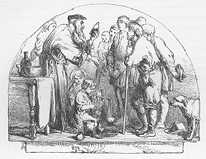
OF SELF-ACQUAINTANCE.
Knowledge holdeth by the hilt, and heweth out a road to conquest; Ignorance graspeth the blade, and is wounded by its own good sword: Knowledge distilleth health from the virulence of opposite poisons; Ignorance mixeth wholesomes, unto the breeding of disease: Knowledge is leagued with the universe, and findeth a friend in all things; But ignorance is everywhere a stranger; unwelcome, ill at ease, and out of place. A man is helpless and unsafe up to the measure of his ignorance, For he lacketh perception of the aptitudes commending such a matter to his use, Clutching at the horn of danger, while he judgeth it the handle of security, Or casting his anchor so widely, that the granite reef is just within the tether. Untaught in science, he is but half alive, stupidly taking note of nothing, Or listening with dull wonder to the crafty saws of an empiric: Simple in the world, he trusteth unto knaves; and then to make amends for folly, Dealeth so shrewdly with the honest, they cannot but suspect him for a thief; With an unknown God, he maketh mock of reason, fathering contrivance on chance, Or doting with superstitious dread on some crooked image of his fancy: But ignorant of Self, he is weakness at heart; the key-stone crumbleth into sand, There is panic in the general's tent, the oak is hollow as hemlock; Though the warm sap creepeth up its bark, filling out the sheaf of leaves, Though knowledge of all things beside add proofs of seeming vigour, Though the master-mind of the royal sage feast on the mysteries of wisdom, Yet ignorance of self shall bow down the spirit of a Solomon to idols; The storm of temptation, sweeping by, shall snap that oak like a reed, And the proud luxuriance of its tufted crown drag it the sooner to the dust.