FIRST SERIES.
Reading edition
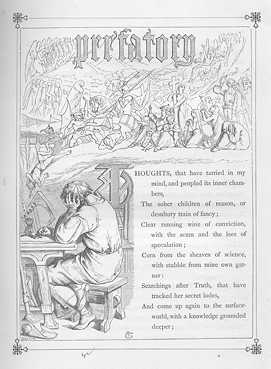
PREFATORY.
Thoughts, that have tarried in my mind, and peopled its inner chambers, The sober children of reason, or desultory train of fancy; Clear running wine of conviction, with the scum and the lees of speculation; Corn from the sheaves of science, with stubble from mine own garner: Searchings after Truth, that have tracked her secret lodes, And come up again to the surface-world, with a knowledge grounded deeper; Arguments of high scope, that have soared to the key-stone of heaven, And thence have swooped to their certain mark, as the falcon to its quarry; The fruits I have gathered of prudence, the ripened harvest of my musings, These commend I unto thee, O docile scholar of Wisdom, These I give to thy gentle heart, thou lover of the right.
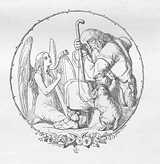
What, though a guilty man renew that hallowed theme, And strike with feebler hand the harp of Sirach's son? What, though a youthful tongue take up that ancient parable, And utter faintly forth dark sayings as of old? Sweet is the virgin honey, though the wild bee have stored it in a reed, And bright the jewelled band, that circleth an Ethiop's arm; Pure are the grains of gold in the turbid stream of Ganges, And fair the living flowers, that spring from the dull cold sod. Wherefore, thou gentle student, bend thine ear to my speech, For I also am as thou art; our hearts can commune together: To meanest matters will I stoop, for mean is the lot of mortal; I will rise to noblest themes, for the soul hath an heritage of glory: The passions of puny man; the majestic characters of God; The feverish shadows of time, and the mighty substance of eternity.
Commend thy mind unto candour, and grudge not as though thou hadst a teacher, Nor scorn angelic Truth for the sake of her evil herald; Heed not him, but hear his words, and care not whence they come; The viewless winds might whisper them, the billows roar them forth, The mean unconscious sedge sigh them in the ear of evening, Or the mind of pride conceive, and the mouth of folly speak them. Lo now, I stand not forth laying hold on spear and buckler, I come a man of peace, to comfort, not to combat; With soft persuasive speech to charm thy patient ear, Giving the hand of fellowship, acknowledging the heart of sympathy: Let us walk together as friends in the shaded paths of meditation, Nor Judgment set his seal until he hath poised his balance; That the chastenings of mild reproof may meet unwitting error, And Charity not be a stranger at the board that is spread for brothers.
THE WORDS OF WISDOM.
Few and precious are the words which the lips of Wisdom utter: To what shall their rarity be likened? What price shall count their worth? Perfect and much to be desired, and giving joy with riches, No lovely thing on earth can picture all their beauty. They be chance pearls, flung among the rocks by the sullen waters of Oblivion, Which Diligence loveth to gather, and hang around the neck of Memory; They be white-winged seeds of happiness, wafted from the islands of the blessed, Which Thought carefully tendeth, in the kindly garden of the heart; They be sproutings of an harvest for eternity, bursting through the tilth of time, Green promise of the golden wheat, that yieldeth angels' food; They be drops of the crystal dew, which the wings of seraphs scatter, When on some brighter sabbath, their plumes quiver most with delight: Such, and so precious, are the words which the lips of Wisdom utter.
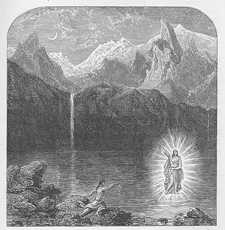
Yet more, for the half is not said, of their might, and dignity, and value; For life-giving be they and glorious, redolent of sanctity and heaven: As fumes of hallowed incense, that veil the throne of the Most High; As beaded bubbles that sparkle on the rim of the cup of immortality; As wreaths of the rainbow spray, from the pure cataracts of truth: Such, and so precious, are the words which the lips of Wisdom utter.
Yet once again, loving student, suffer the praises of thy teacher, For verily the sun of the mind, and the life of the heart is Wisdom: She is pure and full of light, crowning grey hairs with lustre, And kindling the eye of youth with a fire not its own; And her words, whereunto canst thou liken them? for earth cannot show their peers: They be grains of the diamond sand, the radiant floor of heaven, Rising in sunny dust behind the chariot of God; They be flashes of the dayspring from on high, shed from the windows of the skies; They be streams of living waters, fresh from the fountain of Intelligence: Such, and so precious, are the words which the lips of Wisdom utter.
For these shall guide thee well, and guard thee on thy way; And wanting all beside, with these shalt thou be rich: Though all around be woe, these shall make thee happy; Though all within be pain, these shall bring thee health: Thy good shall grow into ripeness, thine evil wither and decay, And Wisdom's words shall sweetly charm thy doubtful into virtues: Meanness shall then be frugal care; where shame was, thou art modest; Cowardice riseth into caution, rashness is sobered into courage; The wrathful spirit, rendering a reason, standeth justified in anger; The idle hand hath fair excuse, propping the thoughtful forehead. Life shall have no labyrinth but thy steps can track it, For thou hast a silken clue, to lead thee through the darkness: The rampant Minotaur of ignorance shall perish at thy coming, And thine enfranchised fellows hail thy white victorious sails. Wherefore, friend and scholar, hear the words of Wisdom; Whether she speaketh to thy soul in the full chords of revelation; In the teaching earth, or air, or sea; in the still melodies of thought; Or, haply, in the humbler strains that would detain thee here.
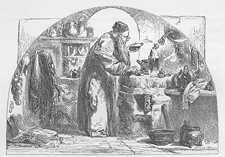
OF TRUTH IN THINGS FALSE.
Error is a hardy plant; it flourisheth in every soil; In the heart of the wise and good, alike with the wicked and foolish. For there is no error so crooked, but it hath in it some lines of truth: Nor is any poison so deadly, that it serveth not some wholesome use: And the just man, enamoured of the right, is blinded by the speciousness of wrong; And the prudent, perceiving an advantage, is content to overlook the harm. On all things created remaineth the half-effaced signature of God, Somewhat of fair and good, though blotted by the finger of corruption: And if error cometh in like a flood, it mixeth with streams of truth; And the Adversary loveth to have it so, for thereby many are decoyed. Providence is dark in its permissions; yet one day, when all is known, The universe of reason shall acknowledge how just and good were they; For the wise man leaneth on his wisdom, and the righteous trusteth to his righteousness, And those, who thirst for independence, are suffered to drink of disappointment. Wherefore?—to prove and humble them; and to teach the idolaters of Truth, That it is but the ladder unto Him, on whom only they should trust.
There is truth in the wildest scheme that imaginative heat hath engendered, And a man may gather somewhat from the crudest theories of fancy: The alchymist laboureth in folly, but catcheth chance gleams of wisdom, And findeth out many inventions, though his crucible breed not gold; The sinner, toying with witchcraft, thinketh to delude his fellows, But there be very spirits of evil, and what if they come at his bidding? He is a bold bad man who dareth to tamper with the dead; For their whereabout lieth in a mystery—that vestibule leading to Eternity, The waiting-room for unclad ghosts, before the presence-chamber of their King: Mind may act upon mind, though bodies be far divided; For the life is in the blood, but souls communicate unseen: And the heat of an excited intellect, radiating to its fellows, Doth kindle dry leaves afar off, while the green wood around it is unwarmed. The dog may have a spirit, as well as his brutal master; A spirit to live in happiness: for why should he be robbed of his existence? Hath he not a conscience of evil, a glimmer of moral sense, Love and hatred, courage and fear, and visible shame and pride? There may be a future rest for the patient victims of the cruel; And a season allotted for their bliss, to compensate for unjust suffering. Spurn not at seeming error, but dig below its surface for the truth; And beware of seeming truths, that grow on the roots of error: For comely are the apples that spring from the Dead Sea's cursed shore, But within are they dust and ashes, and the hand that plucked them shall rue it.
A frequent similar effect argueth a constant cause: Yet who hath counted the links that bind an omen to its issue? Who hath expounded the law that rendereth calamities gregarious, Pressing down with yet more woes the heavy-laden mourner? Who knoweth wherefore a monsoon should swell the sails of the prosperous, Blithely speeding on their course the children of good luck? Who hath companied a vision from the horn or ivory gate? Or met another's mind in his, and explained its presence? There is a secret somewhat in antipathies; and love is more than fancy; Yea, and a palpable notice warneth of an instant danger; For the soul hath its feelers, cobwebs floating on the wind, That catch events in their approach with sure and apt presentiment; So that some halo of attraction heraldeth a coming friend, Investing in his likeness the stranger that passed on before; And while the word is in thy mouth, behold thy word fulfilled, And he of whom we spake can answer for himself. O man, little hast thou learnt of truth in things most true, How therefore shall thy blindness wot of truth in things most false? Thou hast not yet perceived the causes of life or motion, How then canst thou define the subtle sympathies of mind? For the spirit, sharpest and strongest when disease hath rent the body, Hath welcomed kindred spirits in nightly visitations, Or learnt from restless ghosts dark secrets of the living, And helped slow justice to her prey by the dreadful teaching of a dream.
Verily, there is nothing so true, that the damps of error have not warped it; Verily, there is nothing so false, that a sparkle of truth is not in it. For the enemy, the father of lies, the giant Upas of creation, Whose deadly shade hath blasted this once green garden of the Lord, Can but pervert the good, but may not create the evil; He destroyeth, but cannot build; for he is not antagonist deity: Mighty is his stolen power, yet is he a creature and a subject; Not a maker of abstract wrong, but a spoiler of concrete right: The fiend hath not a royal crown; he is but a prowling robber, Suffered, for some mysterious end, to haunt the King's highway; And the keen sword he beareth, once was a simple ploughshare; Yea, and his panoply of error is but a distortion of the truth: The sickle that once reaped righteousness, beaten from its useful curve, With axe, and spike, and bar, headeth the marauder's halbert. Seek not further, O man, to solve the dark riddle of sin; Suffice it, that thine own bad heart is to thee thine origin of evil.
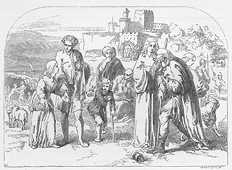
OF ANTICIPATION.
Thou hast seen many sorrows, travel-stained pilgrim of the world, But that which hath vexed thee most hath been the looking for evil; And though calamities have crossed thee, and misery been heaped on thy head, Yet ills, that never happened, have chiefly made thee wretched. The sting of pain and the edge of pleasure are blunted by long expectation, For the gall and the balm alike are diluted in the waters of patience: And often thou sippest sweetness, ere the cup is dashed from thy lip; Or drainest the gall of fear, while evil is passing by thy dwelling. A man too careful of danger liveth in continual torment, But a cheerful expecter of the best hath a fountain of joy within him: Yea, though the breath of disappointment should chill the sanguine heart, Speedily gloweth it again, warmed by the live embers of hope; Though the black and heavy surge close above the head for a moment, Yet the happy buoyancy of Confidence riseth superior to Despair. Verily, evils may be courted, may be wooed and won by distrust: For the wise Physician of our weal loveth not an unbelieving spirit; And to those giveth He good, who rely on His hand for good; And those leaveth He to evil, who fear, but trust Him not. Ask for good, and hope it, for the ocean of good is fathomless; Ask for good, and have it, for thy Friend would see thee happy; But to the timid heart, to the child of unbelief and dread, That leaneth on his own weak staff, and trusteth the sight of his eyes, The evil he feared shall come, for the soil is ready for the seed, And suspicion hath coldly put aside the hand that was ready to help him. Therefore look up, sad spirit; be strong, thou coward heart, Or fear will make thee wretched, though evil follow not behind: Cease to anticipate misfortune; there are still many chances of escape; But if it come, be courageous; face it, and conquer thy calamity. There is not an enemy so stout, as to storm and take the fortress of the mind, Unless its infirmity turn traitor, and Fear unbar the gates. The valiant standeth as a rock, and the billows break upon him; The timorous is a skiff unmoored, tost and mocked at by a ripple: The valiant holdeth fast to good, till evil wrench it from him; The timorous casteth it aside, to meet the worst half way: Yet oftentimes is evil but a braggart, that provoketh and will not fight; Or the feint of a subtle fencer, who measureth his thrust elsewhere: Or perchance a blessing in a masque, sent to try thy trust, The precious smiting of a friend, whose frowns are all in love: Often the storm threateneth, but is driven to other climes, And the weak hath quailed in fear, while the firm hath been glad in his confidence.
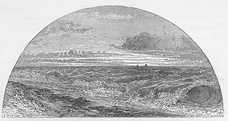
OF HIDDEN USES.
The sea-wort floating on the waves, or rolled up high along the shore, Ye counted useless and vile, heaping on it names of contempt: Yet hath it gloriously triumphed, and man been humbled in his ignorance, For health is in the freshness of its savour, and it cumbereth the beach with wealth; Comforting the tossings of pain with its violet-tinctured essence, And by its humbler ashes enriching many proud. Be this, then, a lesson to thy soul, that thou reckon nothing worthless, Because thou heedest not its use, nor knowest the virtues thereof. And herein, as thou walkest by the sea, shall weeds be a type and an earnest Of the stored and uncounted riches lying hid in all creatures of God: There be flowers making glad the desert, and roots fattening the soil, And jewels in the secret deep, scattered among groves of coral, And comforts to crown all wishes, and aids unto every need, Influences yet unthought, and virtues, and many inventions, And uses above and around, which man hath not yet regarded. Not long to charm away disease hath the crocus yielded up its bulb, Nor the willow lent its bark, nor the nightshade its vanquished poison; Not long hath the twisted leaf, the fragrant gift of China, Nor that nutritious root, the boon of far Peru, Nor the many-coloured dahlia, nor the gorgeous flaunting cactus, Nor the multitude of fruits and flowers, ministered to life and luxury: Even so, there be virtues yet unknown in the wasted foliage of the elm, In the sun-dried harebell of the downs, and the hyacinth drinking in the meadow, In the sycamore's winged fruit, and the facet-cut cones of the cedar; And the pansy and bright geranium live not alone for beauty, Nor the waxen flower of the arbute, though it dieth in a day, Nor the sculptured crest of the fir, unseen but by the stars; And the meanest weed of the garden serveth unto many uses, The salt tamarisk, and juicy flag, the freckled orchis, and the daisy. The world may laugh at famine, when forest-trees yield bread, When acorns give out fragrant drink, and the sap of the linden is as fatness: For every green herb, from the lotus to the darnel, Is rich with delicate aids to help incurious man.
Still, Mind is up and stirring, and pryeth in the corners of contrivance, Often from the dark recesses picking out bright seeds of truth: Knowledge hath clipped the lightning's wings, and mewed it up for a purpose, Training to some domestic task the fiery bird of heaven; Tamed is the spirit of the storm, to slave in all peaceful arts, To walk with husbandry and science; to stand in the vanguard against death: And the chemist balanceth his elements with more than magic skill, Commanding stones that they be bread, and draining sweetness out of wormwood. Yet man, heedless of a God, counteth up vain reckonings, Fearing to be jostled and starved out, by the too prolific increase of his kind; And asketh, in unbelieving dread, for how few years to come Will the black cellars of the world yield unto him fuel for his winter. Might not the wide waste sea be pent within narrower bounds? Might not the arm of diligence make the tangled wilderness a garden? And for aught thou canst tell, there may be a thousand methods Of comforting thy limbs in warmth, though thou kindle not a spark. Fear not, son of man, for thyself nor thy seed:—with a multitude is plenty; God's blessing giveth increase, and with it larger than enough.
Search out the wisdom of nature, there is depth in all her doings; She seemeth prodigal of power, yet her rules are the maxims of frugality: The plant refresheth the air, and the earth filtereth the water, And dews are sucked into the cloud, dropping fatness on the world: She hath, on a mighty scale, a general use for all things; Yet hath she specially for each its microscopic purpose: There is use in the prisoned air, that swelleth the pods of the laburnum; Design in the venomed thorns, that sentinel the leaves of the nettle; A final cause for the aromatic gum, that congealeth the moss around a rose: A reason for each blade of grass, that reareth its small spire. How knoweth discontented man what a train of ills might follow, If the lowest menial of nature knew not her secret office? If the thistle never sprang up to mock the loose husbandry of indolence, Or the pestilence never swept away an unknown curse from among men? Would ye crush the buzzing myriads that float on the breath of evening? Would ye trample the creatures of God that people the rotting fruit? Would ye suffer no mildew forest to stain the unhealthy wall, Nor a noisome savour to exhale from the pool that breedeth disease? Pain is useful unto man, for it teacheth him to guard his life, And the fetid vapours of the fen warn him to fly from danger: And the meditative mind, looking on, winneth good food for its hunger, Seeing the wholesome root bring forth a poisonous berry; For otherwhile falleth it out that truth, driven to extremities, Yieldeth bitter folly as the spoilt fruit of wisdom. O, blinded is thine eye, if it see not just aptitude in all things: O, frozen is thy heart, if it glow not with gratitude for all things: In the perfect circle of creation not an atom could be spared, From earth's magnetic zone to the bindweed round a hawthorn.
The sage, and the beetle at his feet, hath each a ministration to perform: The briar and the palm have the wages of life, rendering secret service. Neither is it thus alone with the definite existences of matter; But motion and sound, circumstance and quality, yea, all things have their office. The zephyr playing with an aspen-leaf,—the earthquake that rendeth a continent; The moon-beam silvering a ruined arch,—the desert-wave dashing up a pyramid; The thunder of jarring icebergs,—the stops of a shepherd's pipe; The howl of the tiger in the glen,—and the wood-dove calling to her mate; The vulture's cruel rage,—the grace of the stately swan; The fierceness looking from the lynx's eye, and the dull stupor of the sloth: To these, and to all, is there added each its USE, though man considereth it lightly; For Power hath ordained nothing which Economy saw not needful.
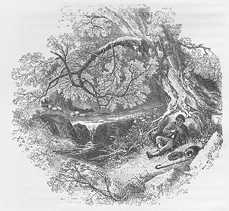
All things being are in concord with the ubiquity of God; Neither is there one thing overmuch, nor freed from honourable servitude. Were there not a need-be of wisdom, nothing would be as it is; For essence without necessity argueth a moral weakness. We look through a glass darkly, we catch but glimpses of truth; But, doubtless, the sailing of a cloud hath Providence to its pilot, Doubtless, the root of an oak is gnarled for a special purpose, The foreknown station of a rush is as fixed as the station of a king, And chaff from the hand of the winnower, steered as the stars in their courses. Man liveth only in himself, but the Lord liveth in all things; And His pervading unity quickeneth the whole creation. Man doeth one thing at once, nor can he think two thoughts together; But God compasseth all things, mantling the globe like air: And we render homage to His wisdom, seeing use in all His creatures, For, perchance, the universe would die, were not all things as they are.
OF COMPENSATION.
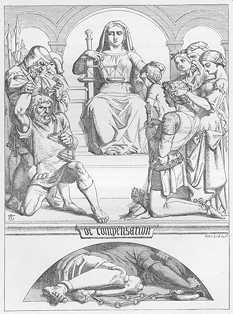
Equal is the government of heaven in allotting pleasures among men, And just the everlasting law, that hath wedded happiness to virtue: For verily on all things else broodeth disappointment with care, That childish man may be taught the shallowness of earthly enjoyment. Wherefore, ye that have enough, envy ye the rich man his abundance? Wherefore, daughters of affluence, covet ye the cottager's content? Take the good with the evil, for ye all are pensioners of God, And none may choose or refuse the cup His wisdom mixeth. The poor man rejoiceth at his toil, and his daily bread is sweet to him: Content with present good, he looketh not for evil to the future: The rich man languisheth with sloth, and findeth pleasure in nothing, He locketh up care with his gold, and feareth the fickleness of fortune. Can a cup contain within itself the measure of a bucket? Or the straitened appetites of man drink more than their fill of luxury? There is a limit to enjoyment, though the sources of wealth be boundless: And the choicest pleasures of life lie within the ring of moderation.
Also, though penury and pain be real and bitter evils, I would reason with the poor afflicted, for he is not so wretched as he seemeth. What right hath an offender to complain, though others escape punishment, If the stripes of earned misfortune overtake him in his sin? Wherefore not endure with resignation the evils thou canst not avert? For the coward pain will flee, if thou meet him as a man: Consider, whatever be thy fate, that it might and ought to have been worse, And that it lieth in thy hand to gather even blessing from afflictions: Bethink thee, wherefore were they sent? and hath not use blunted their keenness? Need hope, and patience, and courage, be strangers to the meanest hovel? Thou art in an evil case, it were cruel to deny to thee compassion, But there is not unmitigated ill in the sharpest of this world's sorrows: I touch not the sore of thy guilt; but of human griefs I counsel thee, Cast off the weakness of regret, and gird thee to redeem thy loss: Thou hast gained, in the furnace of affliction, self-knowledge, patience, and humility, And these be as precious ore, that waiteth the skill of the coiner: Despise not the blessings of adversity, nor the gain thou hast earned so hardly, And now thou hast drained the bitter, take heed that thou lose not the sweet.
Power is seldom innocent, and envy is the yoke-fellow of eminence; And the rust of the miser's riches wasteth his soul as a canker. The poor man counteth not the cost at which such wealth hath been purchased; He would be on the mountain's top, without the toil and travail of the climbing. But equity demandeth recompense: for high-place, calumny and care; For state, comfortless splendour eating out the heart of home; For warrior fame, dangers and death; for a name among the learned, a spirit overstrained; For honour of all kinds, the goad of ambition; on every acquirement, the tax of anxiety. He that would change with another, must take the cup as it is mixed: Poverty, with largeness of heart; or a full purse, with a sordid spirit; Wisdom, in an ailing body; or a common mind, with health: Godliness, with man's scorn; or the welcome of the mighty, with guilt: Beauty, with a fickle heart; or plainness of face, with affection. For so hath Providence determined, that a man shall not easily discover Unmingled good or evil, to quicken his envy or abhorrence. A bold man or a fool must he be, who would change his lot with another; It were a fearful bargain, and mercy hath lovingly refused it: For we know the worst of ourselves, but the secrets of another we see not, And better is certain bad, than the doubt and dread of worse.
Just, and strong, and opportune is the moral rule of God; Ripe in its times, firm in its judgments, equal in the measure of its gifts: Yet men, scanning the surface, count the wicked happy, Nor heed the compensating peace, which gladdeneth the good in his afflictions. They see not the frightful dreams that crowd a bad man's pillow, Like wreathed adders crawling round his midnight conscience; They hear not the terrible suggestions, that knock at the portal of his will, Provoking to wipe away from life the one weak witness of the deed; They know not the torturing suspicions that sting his panting breast, When the clear eye of penetration quietly readeth off the truth. Likewise of the good what know they? The memories bringing pleasure, Shrined in the heart of the benevolent, and glistening from his eye; The calm self-justifying reason that establisheth the upright in his purpose; The warm and gushing bliss that floodeth all the thoughts of the religious. Many a beggar at the cross-way, or grey-haired shepherd on the plain, Hath more of the end of all wealth, than hundreds who multiply the means.
Moreover, a moral compensation reacheth to the secrecy of thought; For if thou wilt think evil of thy neighbour, soon shalt thou have him for thy foe: And yet he may know nothing of the cause that maketh thee distasteful to his soul,— The cause of unkind suspicion, for which thou hast thy punishment: And if thou think of him in charity, wishing or praying for his weal, He shall not guess the secret charm that lureth his soul to love thee. For just is retributive ubiquity: Samson did sin with Dalilah, And his eyes and captive strength were forfeit to the Philistine: Jacob robbed his brother, and sorrow was his portion to the grave: David must fly before his foes, yea, though his guilt is covered: And He who, seeming old in youth, was marred for others' sin, For every special crime must bear its special penalty: By luxury, or rashness, or vice, the member that hath erred suffereth,— And therefore the Sacrifice for all was pained at every pore.
Alike to the slave and his oppressor cometh night with sweet refreshment, And half of the life of the most wretched is gladdened by the soothings of sleep. Pain addeth zest unto pleasure, and teacheth the luxury of health; There is a joy in sorrow, which none but a mourner can know: Madness hath imaginary bliss, and most men have no more; Age hath its quiet calm, and youth enjoyeth not for haste: Daily, in the midst of its beatitude, the righteous soul is vexed; And even the misery of guilt doth attain to the bliss of pardon. Who, in the face of the born-blind, ever looked on other than content? And the deaf ear listeneth within to the silent music of the heart. There is evil poured upon the earth from the overflowings of corruption,— Sickness, and poverty, and pain, and guilt, and madness, and sorrow; But, as the water from a fountain riseth and sinketh to its level, Ceaselessly toileth justice to equalize the lots of men: For, habit and hope and ignorance, and the being but one of a multitude, And strength of reason in the sage, and dulness of feeling in the fool, And the light elasticity of courage, and the calm resignation of meekness, And the stout endurance of decision, and the weak carelessness of apathy, And helps invisible but real, and ministerings not unfelt, Angelic aid with worldly discomfiture, bodily loss with the soul's gain, Secret griefs, and silent joys, thorns in the flesh, and cordials for the spirit, (—Short of the insuperable barrier dividing innocence from guilt,—) Go far to level all things, by the gracious rule of Compensation.
OF INDIRECT INFLUENCES.
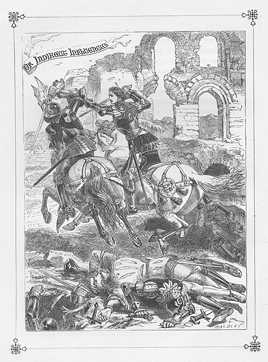
Face thy foe in the field, and perchance thou wilt meet thy master, For the sword is chained to his wrist, and his armour buckled for the battle; But find him when he looketh not for thee, aim between the joints of his harness, And the crest of his pride will be humbled, his cruelty will bite the dust. Beard not a lion in his den, but fashion the secret pitfall; So shall thou conquer the strong, thyself triumphing in weakness. The hurricane rageth fiercely, and the promontory standeth in its might, Breasting the artillery of heaven, as darts glance from the crocodile: But the small continual creeping of the silent footsteps of the sea Mineth the wall of adamant, and stealthily compasseth its ruin. The weakness of accident is strong, where the strength of design is weak: And a casual analogy convinceth, when a mind beareth not argument. Will not a man listen? be silent; and prove thy maxim by example: Never fear, thou losest not thy hold, though thy mouth doth not render a reason. Contend not in wisdom with a fool, for thy sense maketh much of his conceit; And some errors never would have thriven, had it not been for learned refutation: Yea, much evil hath been caused by an honest wrestler for truth, And much of unconscious good, by the man that hated wisdom: For the intellect judgeth closely, and if thou overstep thy argument, Or seem not consistent with thyself, or fail in thy direct purpose, The mind that went along with thee, shall stop and return without thee, And thou shalt have raised a foe, where thou mightest have won a friend.
Hints, shrewdly strown, mightily disturb the spirit, Where a bare-faced accusation would be too ridiculous for calumny: The sly suggestion toucheth nerves, and nerves contract the fronds, And the sensitive mimosa of affection trembleth to its root; And friendships, the growth of half a century, those oaks that laugh at storms, Have been cankered in a night by a worm, even as the prophet's gourd. Hast thou loved, and not known jealousy? for a sidelong look Can please or pain thy heart more than the multitude of proofs: Hast thou hated, and not learned that thy silent scorn Doth deeper aggravate thy foe than loud-cursing malice?— A wise man prevaileth in power, for he screeneth his battering engine, But a fool tilteth headlong, and his adversary is aware.
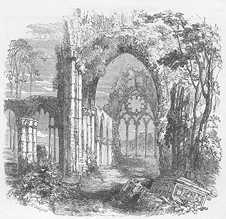
Behold those broken arches, that oriel all unglazed, That crippled line of columns bleaching in the sun, The delicate shaft stricken midway, and the flying buttress Idly stretching forth to hold up tufted ivy: Thinkest thou the thousand eyes that shine with rapture on a ruin, Would have looked with half their wonder on the perfect pile? And wherefore not—but that light hints, suggesting unseen beauties, Fill the complacent gazer with self-grown conceits? And so, the rapid sketch winneth more praise to the painter, Than the consummate work elaborated on his easel: And so, the Helvetic lion caverned in the living rock Hath more of majesty and force, than it upon a marble pedestal.
Tell me, daughter of taste, what hath charmed thine ear in music? Is it the laboured theme, the curious fugue or cento,— Nor rather the sparkles of intelligence flashing from some strange chord, Or the soft melody of sounds far sweeter for simplicity? Tell me, thou son of science, what hath filled thy mind in reading? Is it the volume of detail where all is orderly set down, And they that read may run, nor need to stop and think; The book carefully accurate, that counteth thee no better than a fool, Gorging the passive mind with annotated notes;— Nor rather the half-suggested thoughts, the riddles thou mayst solve, The fair ideas, coyly peeping like young loves out of roses, The quaint arabesque conceptions, half cherub and half flower, The light analogy, or deep allusion, trusted to thy learning, The confidence implied in thy skill to unravel meaning mysteries? For ideas are ofttimes shy of the close furniture of words, And thought, wherein only is power, may be best conveyed by a suggestion: The flash that lighteth up a valley, amid the dark midnight of a storm, Coineth the mind with that scene sharper than fifty summers.
A worldly man boasteth in his pride, that there is no power but of money; And he judgeth the characters of men by the differing measures of their means: He stealeth all goodly names, as worth, and value, and substance, Which be the ancient heritage of Virtue, but such an one ascribeth unto Wealth: He spurneth the needy sage, whose wisdom hath enriched nations, And the sons of poverty and learning, without whom earth were a desert: Music, the soother of cares, the tuner of the dank discordant heart-strings, It is nought unto such an one but sounds, whereby some earn their living: The poem, and the picture, and the statue, to him seem idle baubles, Which wealth condescendeth to favour, to gain him the name of patron. But little wotteth he the might of the means his folly despiseth; He considereth not that these be the wires which move the puppets of the world. A sentence hath formed a character, and a character subdued a kingdom; A picture hath ruined souls, or raised them to commerce with the skies: The pen hath shaken nations, and stablished the world in peace; And the whole full horn of plenty been filled from the vial of science. He regardeth man as sensual, the monarch of created matter, And careth not aught for mind, that linketh him with spirits unseen; He feedeth his carcase and is glad, though his soul be faint and famished, And the dull brute power of the body bindeth him a captive to himself.
Man liveth from hour to hour, and knoweth not what may happen; Influences circle him on all sides, and yet must he answer for his actions: For the being that is master of himself, bendeth events to his will, But a slave to selfish passion is the wavering creature of circumstance. To this man temptation is a poison, to that man it addeth vigour; And each may render to himself influences good or evil. As thou directest the power, harm or advantage will follow, And the torrent that swept the valley, may be led to turn a mill; The wild electric flash, that could have kindled comets, May by the ductile wire give ease to an ailing child. For outward matter or event fashion not the character within, But each man, yielding or resisting, fashioneth his mind for himself.
Some have said, What is in a name?—most potent plastic influence; A name is a word of character, and repetition stablisheth the fact: A word of rebuke, or of honour, tending to obscurity or fame; And greatest is the power of a name, when its power is least suspected. A low name is a thorn in the side, that hindereth the footman in his running; But a name of ancestral renown shall often put the racer to his speed. Few men have grown unto greatness whose names are allied to ridicule, And many would never have been profligate, but for the splendour of a name. A wise man scorneth nothing, be it never so small or homely, For he knoweth not the secret laws that may bind it to great effects. The world in its boyhood was credulous, and dreaded the vengeance of the stars, The world in its dotage is not wiser, fearing not the influence of small things: Planets govern not the soul, nor guide the destinies of man, But trifles, lighter than straws, are levers in the building up of character. A man hath the tiller in his hand, and may steer against the current, Or may glide down idly with the stream, till his vessel founder in the whirlpool.
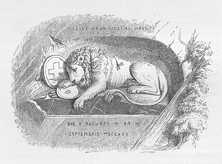
Helvetiorum Fidei ac Virtuti Die X Augusti II et III Septembris MDCCXCII
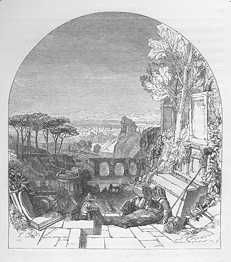
OF MEMORY.
Where art thou, storehouse of the mind, garner of facts and fancies,— In what strange firmament are laid the beams of thine airy chambers? Or art thou that small cavern, the centre of the rolling brain, Where still one sandy morsel testifieth man's original? Or hast thou some grand globe, some common hall of intellect, Some spacious market-place for thought, where all do bring their wares, And gladly rescued from the littleness, the narrow closet of a self, The privileged soul hath large access, coming in the livery of learning? Live we as isolated worlds, perfect in substance and spirit, Each a sphere, with a special mind, prisoned in its shell of matter? Or rather, as converging radiations, parts of one majestic whole, Beams of the Sun, streams from the River, branches of the mighty Tree, Some bearing fruit, some bearing leaves, and some diseased and barren,— Some for the feast, some for the floor, and some—how many—for the fire? Memory may be but a power of coming to the treasury of Fact, A momentary self-desertion, an absence in spirit from the Now, An actual coursing hither and thither, by the mind, slipped from its leash, A life, as in the mystery of dreams, spent within the limits of a moment.
A brutish man knoweth not this, neither can a fool comprehend it, But there be secrets of the Memory, deep, wondrous, and fearful. Were I at Petra, could I not declare, My soul hath been here before me? Am I strange to the columned halls, the calm dead grandeur of Palmyra? Know I not thy mount, O Carmel! Have I not voyaged on the Danube, Nor seen the glare of Arctic snows,—nor the black tents of the Tartar? Is it then a dream, that I remember the faces of them of old, While wandering in the grove with Plato, and listening to Zeno in the porch? Paul have I seen, and Pythagoras, and the Stagyrite hath spoken me friendly, And His meek eye looked also upon me, standing with Peter in the palace. Athens and Rome, Persepolis and Sparta, am I not a freeman of you all? And chiefly can my yearning heart forget thee, O Jerusalem?— For the strong magic of conception, mingled with the fumes of memory, Giveth me a life in all past time, yea, and addeth substance to the future. Be ye my judges, imaginative minds, full-fledged to soar into the sun, Whose grosser natural thoughts the chemistry of wisdom hath sublimed, Have ye not confessed to a feeling, a consciousness strange and vague, That ye have gone this way before, and walk again your daily life, Tracking an old routine, and on some foreign strand, Where bodily ye have never stood, finding your own footsteps? Hath not at times some recent friend looked out an old familiar, Some newest circumstance or place teemed as with ancient memories? A startling sudden flash lighteth up all for an instant, And then it is quenched, as in darkness, and leaveth the cold spirit trembling.
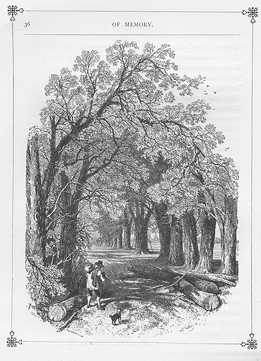
Memory is not wisdom; idiots can rote volumes: Yet, what is wisdom without memory? a babe that is strangled in its birth, The path of the swallow in the air, the path of the dolphin in the waters, A cask running out, a bottomless chasm: such is wisdom without memory. There be many wise, who cannot store their knowledge; Yet from themselves are they satisfied, for the fountain is within: There be many who store, but have no wisdom of their own, Lumbering their armoury with weapons their muscles cannot lift: There be many thieves and robbers, who glean and store unlawfully, Calling in to memory's help some cunningly devised Cabala: But to feed the mind with fatness, to fill thy granary with corn, Nor clog with chaff and straw the threshing-floor of reason, Reap the ideas, and house them well; but leave the words high stubble: Strive to store up what was thought, despising what was said. For the mind is a spirit, and drinketh in ideas, as flame melteth into flame; But for words it must pack them as on floors, cumbrous and perishable merchandize. To be pained for a minute, to fear for an hour, to hope for a week—how long and weary! But to remember fourscore years, is to look back upon a day. An avenue seemeth to lengthen in the eyes of the wayfaring man, But let him turn, those stationed elms crowd up within a yard; Pace the lamp-lit streets of some sleeping city, The multitude of cressets shall seem one, in the false picture of perspective; Even so, in sweet treachery, dealeth the aged with himself, He gazeth on the green hill-tops, while the marshes beneath are hidden; And the partial telescope of memory pierceth the blank between, To look with lingering love at the fair star of childhood. Life is as the current spark on the miner's wheel of flints; Whiles it spinneth there is light; stop it, all is darkness: Life is as a morsel of frankincense burning in the hall of Eternity; It is gone, but its odorous cloud curleth to the lofty roof: Life is as a lump of salt, melting in the temple-laver; It is gone,—yet its savour reacheth to the farthest atom: Even so, for evil or for good, is life the criterion of a man, For its memories of sanctity or sin pervade all the firmament of being. There is but the flitting moment, wherein to hope or to enjoy, But in the calendar of Memory, that moment is all time.
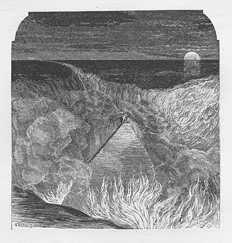
THE DREAM OF AMBITION.
I left the happy fields that smile around the village of Content, And sought with wayward feet the torrid desert of Ambition. Long time, parched and weary, I travelled that burning sand, And the hooded basilisk and adder were strewed in my way for palms; Black scorpions thronged me round, with sharp uplifted stings, Seeming to mock me as I ran; (then I guessed it was a dream,— But life is oft so like a dream, we know not where we are.) So I toiled on, doubting in myself, up a steep gravel cliff, Whose yellow summit shot up far into the brazen sky; And quickly, I was wafted to the top, as upon unseen wings Carrying me upward like a leaf: (then I thought it was a dream,— Yet life is oft so like a dream, we know not where we are.) So I stood on the mountain, and behold! before me a giant pyramid, And I clomb with eager haste its high and difficult steps; For I longed, like another Belus, to mount up, yea, to heaven, Nor sought I rest until my feet had spurned the crest of earth.
Then I sat on my granite throne under the burning sun, And the world lay smiling beneath me, but I was wrapt in flames; (And I hoped, in glimmering consciousness, that all this torture was a dream,— Yet life is oft so like a dream, we know not where we are.) And anon, as I sat scorching, the pyramid shuddered to its root, And I felt the quarried mass leap from its sand foundations: Awhile it tottered and tilted, as raised by invisible levers,— (And now my reason spake with me; I knew it was a dream: Yet I hushed that whisper into silence, for I hoped to learn of wisdom, By tracking up my truant thoughts, whereunto they might lead.) And suddenly, as rolling upon wheels, adown the cliff it rushed, And I thought, in my hot brain, of the Muscovites' icy slope; A thousand yards in a moment we ploughed the sandy seas, And crushed those happy fields, and that smiling village, And onward, as a living thing, still rushed my mighty throne, Thundering along, and pounding, as it went, the millions in my way: Before me all was life, and joy, and full-blown summer, Behind me death and woe, the desert and simoom. Then I wept and shrieked aloud, for pity and for fear; But might not stop, for, comet-like, flew on the maddened mass Over the crashing cities, and falling obelisks and towers, And columns, razed as by a scythe, and high domes, shivered as an egg-shell, And deep embattled ranks, and women, crowded in the streets, And children, kneeling as for mercy, and all I had ever loved, Yea, over all, mine awful throne rushed on with seeming instinct,— And over the crackling forests, and over the rugged beach, And on with a terrible hiss through the foaming wild Atlantic That roared around me as I sat, but could not quench my spirit,— Still on, through startled solitudes we shattered the pavement of the sea, Down, down, to that central vault, the bolted doors of hell; And these, with horrid shock, my huge throne battered in, And on to the deepest deep, where the fierce flames were hottest, Blazing tenfold as conquering furiously the seas that rushed in with me,— And there I stopped: and a fearful voice shouted in mine ear, "Behold the home of Discontent; behold the rest of Ambition!"
OF SUBJECTION.
Law hath dominion over all things, over universal mind and matter; For there are reciprocities of right, which no creature can gainsay. Unto each was there added by its Maker, in the perfect chain of being, Dependencies and sustentations, accidents, and qualities, and powers: And each must fly forward in the curve, unto which it was forced from the beginning; Each must attract and repel, or the monarchy of Order is no more. Laws are essential emanations from the self-poised character of God, And they radiate from that sun to the circling edges of creation. Verily, the mighty Lawgiver hath subjected Himself unto Laws, And God is the primal grand example of free unstrained obedience; His perfection is limited by right, and cannot trespass into wrong, Because He hath established Himself as the fountain of only good, And in thus much is bounded, that the evil hath He left unto another, And that dark other hath usurped the evil which Omnipotence laid down. Unto God there exist impossibilities; for the True One cannot lie, Nor the Wise One wander from the track which He hath determined for Himself: For His will was purposed from eternity, strong in the love of order; And that will altereth not, as the law of the Medes and Persians. God is the origin of order, and the first exemplar of His precept; For there is subordination of His Essence, self-guided unto holiness; And there is subordination of His Persons, in due procession of dignity; For the Son, as a son, is subject; and to Him doth the Spirit minister: But these things be mysteries to man, he cannot reach nor fathom them, And ever must he speak in paradox, when labouring to expound his God; For, behold, God is alone, mighty in unshackled freedom; And with those wondrous Persons abideth eternal equality.
So then, start ye from the fountain, and follow the river of existence; For its current is bounded throughout by the banks of just subordination: Thrones, and dominions, and powers, Archangels, Cherubim, and Seraphim, Angels, and flaming ministers, and breathing chariots and harps. For there are degrees in heaven, and varied capabilities of bliss, And steps in the ladder of Intelligence, and ranks in approaches to Perfection: Doubtless, reverence is given, as their due, to the masters in wisdom; Doubtless, there are who serve; or a throne would have small glory. Regard now the universe of matter, the substance of visible creation, Which of old, with well-observing truth, the Greek hath surnamed, Order: Where is there an atom out of place? or a particle that yieldeth not obedience? Where is there a fragment that is free? or one thing the equal of another?— The chain is unbroken down to man, and beyond him the links are perfect: But he standeth solitary sin, a marvel of permitted chaos.
And shall this seeming error in the scale of due subordination Be a spot of desert unreclaimed, in the midst of the vineyard of the Lord? Shall his presumptuous pride snap the safe tether of connexion, And his blind selfish folly refuse the burden of maintenance? O man, thou art a creature; boast not thyself above the law: Think not of thyself as free: thou art bound in the trammels of dependence. What is the sum of thy duty, but obedience to righteous rule; To the great commanding Oracle, uttered by delegated organs? Thou canst not render homage to abstract Omnipresent Power, Save through the concrete symbol of visible ordained authority. Those who obey not man, are oftenest found rebels against God; And seldom is the delegate so bold, as to order what he knoweth to be wrong. Yet mark me, proud gainsayer! I say not, obey unto sin; But, where the Principal is silent, take heed thou despise not the Deputy: And He that loveth order, will bless thee for thy faith, If thou recognize His sanction in the powers that fashion human laws.
Thou, the vicegerent of the Lord, His high anointed image, Towards whom a good man's loyalty floweth from the heart of his religion, Thou, whose deep responsibilities are fathomed by a nation's prayers, Whom wise men fear for while they love, and envy thee nothing but thy virtues, From thy dizzy pinnacle of greatness, remember thou also art a subject, And the throne of thine earthly glory is itself but the footstool of thy God. The homage thy kingdoms yield thee, regard thou as yielded unto Him; And while girt with all the majesty of state, consider thee the Lord's chief servant: So shalt thou prosper, and be strong, grafted on the strength of Another; So shall thy royal heart be happy, in being humble. And thou shalt flourish as an oak, the monarch of thine island forests, Whose deep-dug roots are twisted around the stout ribs of the globe, That mocketh at the fury of the storm, and rejoiceth in summer sunshine, Glad in the smiles of heaven, and great in the stability of earth.
A ruler hath not power for himself, neither is his pomp for his pride; But beneath the ermine of his office should he wear the rough hair-cloth of humility. Nevertheless, every way obey him, so thou break not a higher commandment; For Nero was an evil king, yet Paul prescribeth subjection. If the rulers of a nation be holy, the Lord hath blessed that nation; If they be lewd and impious, chastisement hath come upon that people: For the bitterest scourge of a land is ungodliness in them that govern it, And the guilt of the sons of Josiah drove Israel weeping into Babylon. Yet be thou resolute against them, if they change the mandates of thy God, If they touch the ark of His covenant, wherein all His mercies are enshrined: Be resolute, but not rebellious; lest thou be of the company of Korah: Set thy face against them as a flint: but be not numbered with Abiram. Daniel nobly disobeyed; but not from a spirit of sedition: And Azarias shouted from the furnace,—I will not bow down, O KING. If truth must be sacrificed to unity, then faithfulness were folly; If man must be obeyed before God, the martyrs have bled in vain: Yet none of that blessed army reviled the rulers of the land, They were loud and bold against the sin, but bent before the ensign of authority. Honesty, scorning compromise, walketh most suitably with Reverence; Otherwise righteous daring may show but as obstinate rebellion: Therefore, suffer not thy censure to lack the savour of courtesy, And remember, the mortal sinneth, but the staff of his power is from God.
Man, thou hast a social spirit, and art deeply indebted to thy kind: Therefore claim not all thy rights; but yield, for thine own advantage. Society is a chain of obligations, and its links must support each other; The branch can not but wither, that is cut from the parent vine. Wouldst thou be a dweller in the woods, and cast away the cords that bind thee, Seeking, in thy bitterness or pride, to be exiled from thy fellows? Behold, the beasts shall hunt thee, weak, naked, houseless outcast, Disease and Death shall track thee out, as bloodhounds in the wilderness: Better to be vilest of the vile, in the hated company of men, Than to live a solitary wretch, dreading and wanting all things; Better to be chained to thy labour, in the dusky thoroughfares of life, Than to reign monarch of Sloth, in lonesome savage freedom.
Whence then cometh the doctrine, that all should be equal and free?— It is the lie that crowded hell, when Seraphs flung away subjection. No man is his neighbour's equal, for no two minds are similar, And accidents, alike with qualities, have every shade but sameness: The lightest atom of difference shall destroy the nice balance of equality, And all things, from without and from within, make one man to differ from another. We are equal and free! was the watchword that spirited the legions of Satan; We are equal and free! is the double lie that entrappeth to him conscripts from earth: The messengers of that dark despot will pander to thy licence and thy pride, And draw thee from the crowd where thou art safe, to seize thee in the solitary desert. Woe unto him whose heart the syren-song of Liberty hath charmed; Woe unto him whose mind is bewitched by her treacherous beauty; In mad zeal flingeth he away the fetters of duty and restraint, And yieldeth up the holocaust of self to that fair Idol of the Damned. No man hath freedom in aught, save in that from which the wicked would be hindered, He is free toward God and good; but to all else a bondman.
Thou art in a middle sphere, to render and receive honour; If thy king commandeth, obey; and stand not in the way with rebels: But if need be, lay thy hand upon thy sword, and fear not to smite a traitor, For the universe acquitteth thee with honour, fighting in defence of thy king. If a thief break thy dwelling, and thou take him, it were sin in thee to let him go; Yea, though he pleadeth to thy mercy, thou canst not spare him and be blameless: For his guilt is not only against thee, it is not thy moneys or thy merchandize, But he hath done damage to the Law, which duty constraineth thee to sanction. Feast not thine appetite of vengeance, remembering thou also art a man, But weep for the sad compulsion, in which the chain of Providence hath bound thee: Mercy is not thine to give; wilt thou steal another's privilege? Or send abroad, among thy neighbours, a felon whom impunity hath hardened? Remember the Roman father, strong in his stern integrity, And let not thy slothful self-indulgence make thee a conniver at the crime. Also, if the knife of the murderer be raised against thee or thine, And through good providence and courage, thou slay him that would have slain thee, Thou losest not a tittle of thy rectitude, having executed sudden justice; Still mayst thou walk among the blessed, though thy hands be red with blood. For thyself, thou art neither worse nor better; but thy fellows should count thee their creditor: Thou hast manfully protected the right, and the right is stronger for thy deed. Also, in the rescuing of innocence, fear not to smite the ravisher; What though he die at thy hand? for a good name is better than the life; And if Phineas had everlasting praise in the matter of Salu's son, With how much greater honour standeth such a rescuer acquitted? Uphold the laws of thy country, and fear not to fight in their defence: But first be convinced in thy mind; for herein the doubter sinneth. Above all things, look thou well around, if indeed stern duty forceth thee To draw the sword of justice, and stain it with the slaughter of thy fellows.
She, that lieth in thy bosom, the tender wife of thy affections, Must obey thee, and be subject, that evil drop not on thy dwelling. The child that is used to constraint, feareth not more than he loveth; But give thy son his way, he will hate thee and scorn thee together. The master of a well-ordered home knoweth to be kind to his servants; Yet he exacteth reverence, and each one feareth at his post. There is nothing on earth so lowly, but duty giveth it importance; No station so degrading, but it is ennobled by obedience: Yea, break stones upon the highway, acknowledging the Lord in thy lot, Happy shalt thou be, and honourable, more than many children of the mighty. Thou that despisest the outward forms, beware thou lose not the inward spirit; For they are as words unto ideas, as symbols to things unseen. Keep then the form that is good; retain, and do reverence to example; And in all things observe subordination, for that is the whole duty of man.
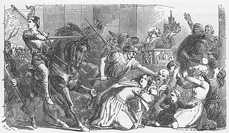
A horse knoweth his rider, be he confident or timid, And the fierce spirit of Bucephalus stoopeth unto none but Alexander; The tigress, roused in the jungle by the prying spaniels of the fowler, Will quail at the eye of man, so he assert his dignity; Nay, the very ships, those giant swans breasting the mighty waters, Roll in the trough, or break the wave, to the pilot's fear or courage: How much more shall man, discerning the Fountain of authority, Bow to superior commands, and make his own obeyed. And yet, in travelling the world, hast thou not often known A gallant host led on to ruin by a feeble Xerxes? Hast thou not often seen the wanton luxury of indolence Sullying with its sleepy mist the tarnished crown of headship? Alas! for a thousand fathers, whose indulgent sloth Hath emptied the vial of confusion over a thousand homes: Alas! for the palaces and hovels, that might have been nurseries for heaven, By hot intestine broils blighted into schools for hell: None knoweth his place, yet all refuse to serve, None weareth the crown, yet all usurp the sceptre; And perchance some fiercer spirit, of natural nobility of mind, That needed but the kindness of constraint to have grown up great and good, Now—the rich harvest of his heart choked by unweeded tares,— All bold to dare and do, unchecked by wholesome fear, A scoffer about bigotry and priestcraft, a rebel against government and God, And standard-bearer of the turbulent, leading on the sons of Belial, Such an one is king of that small state, head tyrant of the thirty, Brandishing the torch of discord in his village home: And the timid Eli of the house, yon humble parish-priest, Liveth in shame and sorrow, fearing his own handywork; The mother, heart-stricken years agone, hath dropped into an early grave; The silent sisters long to leave a home they cannot love; The brothers, casting off restraint, follow their wayward wills; And the chance-guest, early departing, blesseth his kind stars, That on his humbler home hath brooded no domestic curse! Yet is that curse the fruit; wouldest thou the root of the evil? A kindness—most unkind, that hath always spared the rod; A weak and numbing indecision in the mind that should be master; A foolish love, pregnant of hate, that never frowned on sin; A moral cowardice of heart, that never dared command.
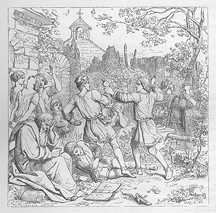
A kingdom is a nest of families, and a family a small kingdom; And the government of whole or part differeth in nothing but extent. The house, where the master ruleth, is strong in united subjection, And the only commandment with promise, being honoured, is a blessing to that house: But and if he yieldeth up the reins, it is weak in discordant anarchy, And the bonds of love and union melt away, as ropes of sand. The realm, that is ruled with vigour, lacketh neither peace nor glory, It dreadeth not foes from without, nor the sons of riot from within: But the meanness of temporizing fear robbeth a kingdom of its honour, And the weakness of indulgent sloth ravageth its bowels with discord. The best of human governments is the patriarchal rule; The authorized supremacy of one, the prescriptive subjection of many: Therefore, the children of the East have thriven from age to age, Obeying, even as a god, the royal father of Cathay: Therefore, to this our day, the Rechabite wanteth not a man, But they stand before the Lord, forsaking not the mandate of their sire: Therefore shall Magog among nations arise from his northern lair, And rend, in the fury of his power, the insurgent world beneath him: For the thunderbolt of concentrated strength can be hurled by the will of one, While the dissipated forces of many are harmless as summer lightning.
OF REST.
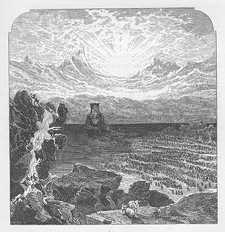
In the silent watches of the night, calm night that breedeth thoughts, When the task-weary mind disporteth in the careless play-hours of sleep, I dreamed; and behold, a valley, green and sunny and well watered, And thousands moving across it, thousands and tens of thousands: And though many seemed faint and toil-worn, and stumbled often, and fell, Yet moved they on unresting, as the ever-flowing cataract. Then I noted adders in the grass, and pitfalls under the flowers, And chasms yawned among the hills, and the ground was cracked and slippery: But Hope and her brother Fear suffered not a foot to linger; Bright phantoms of false joys beckoned alluringly forward, While yelling grisly shapes of dread came hunting on behind: And ceaselessly, like Lapland swarms, that miserable crowd sped along To the mist-involved banks of a dark and sullen river. There saw I, midway in the water, standing a giant fisher, And he held many lines in his hand, and they called him Iron Destiny. So I tracked those subtle chains, and each held one among the multitude: Then I understood what hindered, that they rested not in their path: For the fisher had sport in his fishing, and drew in his lines continually, And the new-born babe, and the aged man, were dragged into that dark river: And he pulled all those myriads along, and none might rest by the way, Till many, for sheer weariness, were eager to plunge into the drowning stream.
So I knew that valley was Life, and it sloped to the waters of Death. But far on the thither side spread out a calm and silent shore, Where all was tranquil as a sleep, and the crowded strand was quiet: And I saw there many I had known, but their eyes glared chillingly upon me, As set in deepest slumber; and they pressed their fingers to their lips. Then I knew that shore was the dwelling of Rest, where spirits held their Sabbath, And it seemed they would have told me much, but they might not break that silence; For the law of their being was mystery: they glided on, hushing as they went. Yet further, under the sun, at the roots of purple mountains, I noted a blaze of glory, as the night-fires on northern skies; And I heard the hum of joy, as it were a sea of melody; And far as the eye could reach, were millions of happy creatures Basking in the golden light; and I knew that land was Heaven. Then the hill whereon I stood split asunder, and a crater yawned at my feet, Black and deep and dreadful, fenced round with ragged rocks; Dimly was the darkness lit up by spires of distant flame: And I saw below a moving mass of life, like reptiles bred in corruption, Where all was terrible unrest, shrieks and groans and thunder.
So I woke, and I thought upon my dream; for it seemed of Wisdom's ministration. What man is he that findeth Rest, though he hunt for it year after year? As a child he had not yet been wearied, and cared not then to court it; As a youth he loved not to be quiet, for excitement spurred him into strife; As a man he tracketh rest in vain, toiling painfully to catch it, But still is he pulled from the pursuit, by the strong compulsion of his fate: So he hopeth to have peace in old age, as he cannot rest in manhood, But troubles thicken with his years, till Death hath dodged him to the grave. There remaineth a rest for the spirit on the shadowy side of life; But unto this world's pilgrim no rest for the sole of his foot. Ever, from stage to stage, he travelleth wearily forward, And though he pluck flowers by the way, he may not sleep among the flowers. Mind is the perpetual motion; for it is a running stream From an unfathomable source, the depth of the Divine Intelligence: And though it be stopped in its flowing, yet hath it a current within, The surface may sleep unruffled, but underneath are whirlpools of contention. Seekest thou rest, O mortal?—seek it no more on earth, For destiny will not cease from dragging thee through the rough wilderness of life; Seekest thou rest, O immortal?—hope not to find it in heaven, For sloth yieldeth not happiness: the bliss of a spirit is action. Rest dwelleth only on an island in the midst of the ocean of existence, Where the world-weary soul for a while may fold its tired wings, Until, after short sufficient slumber, it is quickened unto deathless energy, And speedeth in eagle flight to the Sun of unapproachable Perfection.
OF HUMILITY.
Vice is grown aweary of her gawds, and donneth russet garments, Loving for change to walk as a nun, beneath a modest veil: For Pride hath noted how all admire the fairness of Humility, And to clutch the praise he coveteth, is content to be drest in hair-cloth; And wily Lust tempteth the young heart, that is proof against the bravery of harlots, With timid tears and retiring looks of an artful seeming maid; And indolent Apathy, sleepily ashamed of his dull lack-lustre face, Is glad of the livery of meekness, that charitable cloak and cowl; And Hatred hideth his demon frown beneath a gentle mask; And Slander, snake-like, creepeth in the dust, thinking to escape recrimination. But the world hath gained somewhat from its years, and is quick to penetrate disguises, Neither in all these is it deceived, but divideth the true from the false.
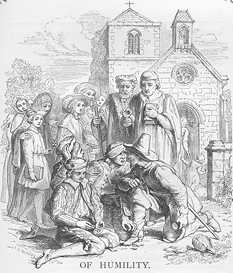
Yet there is a meanness of spirit, that is fair in the eyes of most men, Yea, and seemeth fair unto itself, loving to be thought Humility. Its choler is not roused by insolence, neither do injuries disturb it: Honest indignation is strange unto its breast, and just reproof unto its lip. It shrinketh, looking fearfully on men, fawning at the feet of the great; The breath of calumny is sweet unto its ear, and it courteth the rod of persecution. But what! art thou not a man, deputed chief of the creation? Art thou not a soldier of the right, militant for God and good? Shall virtue and truth be degraded, because thou art too base to uphold them? Or Goliath be bolder in blaspheming for want of a David in the camp? I say not, avenge injuries; for the ministry of vengeance is not thine: But wherefore rebuke not a liar? wherefore do dishonour to thyself? Wherefore let the evil triumph, when the just and the right are on thy side? Such Humility is abject, it lacketh the life of sensibility, And that resignation is but mock, where the burden is not felt: Suspect thyself and thy meekness: thou art mean and indifferent to sin; And the heart that should grieve and forgive, is case-hardened and forgetteth.
Humility mainly becometh the converse of man with his Maker, But oftentimes it seemeth out of place in the intercourse of man with man: Yea, it is the cringer to his equal, that is chiefly seen bold to his God, While the martyr, whom a world cannot brow-beat, is humble as a child before Him. Render unto all men their due, but remember thou also art a man, And cheat not thyself of the reverence which is owing to thy reasonable being. Be courteous, and listen, and learn: but teach and answer if thou canst: Serve thee of thy neighbour's wisdom, but be not enslaved as to a master. Where thou perceivest knowledge, bend the ear of attention and respect; But yield not further to the teaching, than as thy mind is warranted by reasons. Better is an obstinate disputant, that yieldeth inch by inch, Than the shallow traitor to himself, who surrendereth to half an argument.
Modesty winneth good report, but scorn cometh close upon servility; Therefore, use meekness with discretion, casting not pearls before swine. For a fool will tread upon thy neck, if he seeth thee lying in the dust; And there be companies and seasons where a resolute bearing is but duty. If a good man discloseth his secret failings unto the view of the profane, What doeth he but harm unto his brother, confirming him in his sin? There is a concealment that is right, and an open-mouthed humility that erreth; There is a candour near akin to folly, and a meekness looking like shame. Masculine sentiments, vigorously holden, well become a man; But a weak mind hath a timorous grasp, and mistaketh it for tenderness of conscience. Many are despised for their folly, who put it to the account of their religion, And because men treat them with contempt, they look to their God for glory; But contempt shall still be their reward, who betray their Master unto ridicule, Reflecting on Him in themselves, meanness and ignorance and cowardice. A Christian hath a royal spirit, and need not be ashamed but unto One: Among just men walketh he softly, but the world should see him as a champion. His humbleness is far unlike the shame that covereth the profligate and weak, When the sober reproof of virtue hath touched their tingling ears; It is born of love and wisdom, and is worthy of all honour, And the sweet persuasion of its smile changeth contempt into reverence.
A man of a haughty spirit is daily adding to his enemies: He standeth as the Arab in the desert, and the hands of all men are against him: A man of a base mind daily subtracteth from his friends, For he holdeth himself so cheaply, that others learn to despise him: But where the meekness of self-knowledge veileth the front of self-respect, There look thou for the man, whom none can know but they will honour. Humility is the softening shadow before the stature of Excellence, And lieth lowly on the ground, beloved and lovely as the violet: Humility is the fair-haired maid, that calleth Worth her brother, The gentle silent nurse, that fostereth infant virtues: Humility bringeth no excuse; she is welcome to God and to man: Her countenance is needful unto all, who would prosper in either world: And the mild light of her sweet face is mirrored in the eyes of her companions, And straightway stand they accepted, children of penitence and love. As when the blind man is nigh unto a rose, its sweetness is the herald of its beauty, So when thou savourest Humility, be sure thou art nigh unto merit. A gift rejoiceth the covetous, and praise fatteneth the vain, And the pride of man delighteth in the humble bearing of his fellow; But to the tender benevolence of the unthanked Almoner of good, Humility is queen among the graces, for she giveth Him occasion to bestow.
OF PRIDE.
Deep is the sea, and deep is hell, but Pride mineth deeper; It is coiled as a poisonous worm about the foundations of the soul. If thou expose it in thy motives, and track it in thy springs of thought, Complacent in its own detection, it will seem indignant virtue; Smoothly will it gratulate thy skill, O subtle anatomist of self, And spurn at its very being, while it nestleth the deeper in thy bosom. Pride is a double traitor, and betrayeth itself to entrap thee, Making thee vain of thy self-knowledge; proud of thy discoveries of Pride. Fruitlessly thou strainest for humility, by darkly diving into self; Rather look away from innate evil, and gaze upon extraneous good: For in sounding the deep things of the heart, thou shalt learn to be vain of its capacities, But in viewing the heights above thee, thou shalt be taught thy littleness: Could an emmet pry into itself, it might marvel at its own anatomy, But let it look on eagles, to discern how mean a thing it is. And all things hang upon comparison; to the greater, great is small: Neither is there anything so vile, but somewhat yet is viler: On all sides is there an infinity: the culprit at the gallows hath his worse, And the virgin martyr at the stake need not look far for a better. Therefore see thou that thine aim reacheth unto higher than thyself: Beware that the standard of thy soul wave from the loftiest battlement: For Pride is a pestilent meteor, flitting on the marshes of corruption, That will lure thee forward to thy death, if thou seek to track it to its source: Pride is a gloomy bow, arching the infernal firmament, That will lead thee on, if thou wilt hunt it, even to the dwelling of despair. Deep calleth unto deep, and mountain overtoppeth mountain, And still shalt thou fathom to no end the depth and the height of Pride: For it is the vast ambition of the soul, warped to an idol object, And nothing but a Deity in Self can quench its insatiable thirst.
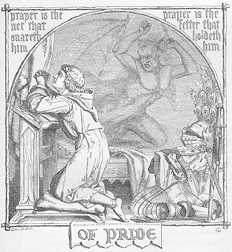
Be aware of the smiling enemy, that openly sheatheth his weapon, But mingleth poison in secret with the sacred salt of hospitality: For Pride will lie dormant in thy heart, to snatch his secret opportunity, Watching, as a lion-ant, in the bottom of his toils. Stay not to parley with thy foe, for his tongue is more potent than his arm; But be wiser, fighting against Pride in the simple panoply of prayer. As one also of the poets hath said, let not the Proteus escape thee; For he will blaze forth as fire, and quench himself in likeness of water; He will fright thee as a roaring beast, or charm thee as a subtle reptile. Mark, amid all his transformations, the complicate deceitfulness of Pride, And the more he striveth to elude thee, bind him the closer in thy toils. Prayer is the net that snareth him; prayer is the fetter that holdeth him: Thou canst not nourish Pride, while waiting as an almsman on thy God,— Waiting in sincerity and trust, or Pride shall meet thee even there; Yea, from the palaces of Heaven, hath Pride cast down his millions. Root up the mandrake from thy heart, though it cost thee blood and groans, Or the cherished garden of thy graces will fade and perish utterly.
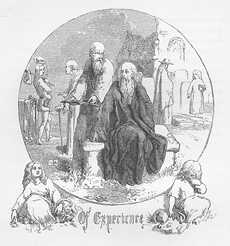
OF EXPERIENCE.
I knew that age was enriched with the hard-earned wages of knowledge, And I saw that hoary wisdom was bred in the school of disappointment: I noted that the wisest of youth, though provident and cautious of evil, Yet sailed along unsteadily, as lacking some ballast of the mind: And the cause seemed to lie in this, that while they considered around them, And warded off all dangers from without, they forgat their own weakness within. So steer they in self-confidence, until, from the multitude of perils, They begin to be wary of themselves, and learn the first lesson of Experience. I knew that in the morning of life, before its wearisome journey, The youthful soul doth expand, in the simple luxury of being; It hath not contracted its wishes, nor set a limit to its hopes; The wing of fancy is unclipt, and sin hath not seared the feelings: Each feature is stamped with immortality, for all its desires are infinite, And it seeketh an ocean of happiness, to fill the deep hollow within. But the old and the grave look on, pitying that generous youth, For they also have tasted long ago the bitterness of hope destroyed: They pity him, and are sad, remembering the days that are past, But they know he must taste for himself, or he will not give ear to their wisdom. For Experience hath another lesson, which a man will do well if he learn, By checking the flight of expectation, to cheat disappointment of its pain.
Experience teacheth many things, and all men are his scholars: Yet is he a strange tutor, unteaching that which he hath taught. Youth is confident, manhood wary, and old age confident again: Youth is kind, manhood cold, and age returneth unto kindness. For youth suspecteth nought, till manhood, bitterly learned, Mistrusteth all, overleaping the mark; and age correcteth his excess. Suspicion is the scaffold unto faith, a temporary needful eyesore, By which the strong man's dwelling is slowly builded up behind; But soon as the top-stone hath been set to the well-proved goodly edifice, The scaffold is torn down, and timely trust taketh its long leave of suspicion.
A thousand volumes in a thousand tongues enshrine the lessons of Experience, Yet a man shall read them all, and go forth none the wiser: For self-love lendeth him a glass, to colour all he conneth, Lest in the features of another he find his own complexion. And we secretly judge of ourselves as differing greatly from all men, And love to challenge causes to show how we can master their effects: Pride is pampered in expecting that we need not fear a common fate, Or wrong-headed prejudice exulteth, in combating old Experience; Or perchance caprice and discontent are the spurs that goad us into danger, Careless, and half in hope to find there an enemy to joust with. Private Experience is an unsafe teacher, for we rarely learn both sides, And from the gilt surface reckon not on steel beneath: The torrid sons of Guinea think scorn of icy seas, And the frostbitten Greenlander disbelieveth suns too hot. But thou, student of Wisdom, feed on the marrow of the matter: If thou wilt suspect, let it be thyself; if thou wilt expect, let it not be gladness.
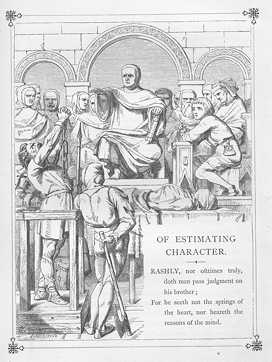
OF ESTIMATING CHARACTER.
Rashly, nor ofttimes truly, doth man pass judgment on his brother; For he seeth not the springs of the heart, nor heareth the reasons of the mind. And the world is not wiser than of old, when justice was meted by the sword, When the spear avenged the wrong, and the lot decided the right, When the footsteps of blinded innocence were tracked by burning plough-shares, And the still condemning water delivered up the wizard to the stake: For we wait, like the sage of Salamis, to see what the end will be, Fixing the right or the wrong, by the issues of failure or success. Judge not of things by their events: neither of character by providence; And count not a man more evil, because he is more unfortunate: For the blessings of a better covenant lie not in the sunshine of prosperity, But pain and chastisement the rather show the wise Father's love.
Behold that daughter of the world: she is full of gaiety and gladness; The diadem of rank is on her brow, uncounted wealth is in her coffers: She tricketh out her beauty like Jezebel, and is welcome in the courts of kings: She is queen of the fools of fashion, and ruleth the revels of luxury: And though she sitteth not as Tamar, nor standeth in the ways as Rahab, Yet in the secret of her chamber, she shrinketh not from dalliance and guilt. She careth not if there be a God, or a soul, or a time of retribution; Pleasure is the idol of her heart: she thirsteth for no purer heaven. And she laugheth with light good humour, and all men praise her gentleness; They are glad in her lovely smile, and the river of her bounty filleth them. So she prospered in the world: the worship and desire of thousands; And she died even as she had lived, careless and courteous and liberal. The grave swallowed up her pomp, the marble proclaimed her virtues, For men esteemed her excellent, and charities soundeth forth her praise: But elsewhere far other judgment setteth her—with infidels and harlots! She abused the trust of her splendour: and the wages of her sin shall be hereafter.
Look again on this fair girl, the orphan of a village pastor Who is dead, and hath left her his all,—his blessing, and a name unstained. And friends, with busy zeal, that their purses be not taxed, Place the sad mourner in a home, poor substitute for that she hath lost. A stranger among strange faces she drinketh the wormwood of dependence; She is marked as a child of want: and the world hateth poverty. Prayer is not heard in that house; the day she hath loved to hallow Is noted but by deeper dissipation, the riot of luxury and gaming: And wantonness is in her master's eye, and she hath nowhere to flee to; She is cared for by none upon earth, and her God seemeth to forsake her. Then cometh, in fair show, the promise and the feint of affection, And her heart, long unused to kindness, remembereth her father, and loveth. And the villain hath wronged her trust, and mocked, and flung her from him, And men point at her and laugh; and women hate her as an outcast: But elsewhere, far other judgment seateth her—among the martyrs! And the Lord, who seemed to forsake, giveth double glory to the fallen.
Once more, in the matter of wealth: if thou throw thine all on a chance, Men will come around thee, and wait, and watch the turning of the wheel: And if, in the lottery of life, thou hast drawn a splendid prize, What foresight hadst thou, and skill! yea, what enterprize and wisdom! But if it fall out against thee, and thou fail in thy perilous endeavour, Behold, the simple did sow, and hath reaped the right harvest of his folly: And the world will be gladly excused, nor will reach out a finger to help; For why should this speculative dullard be a whirlpool to all around him? Go to, let him sink by himself: we knew what the end of it would be:— For the man hath missed his mark, and his fellows look no further.
Also, touching guilt and innocence: a man shall walk in his uprightness Year after year without reproach, in charity and honesty with all: But in one evil hour the enemy shall come in like a flood; Shall track him, and tempt him, and hem him,—till he knoweth not whither to fly. Perchance his famishing little ones shall scream in his ears for bread, And, maddened by that fierce cry, he rusheth as a thief upon the world; The world that hath left him to starve, itself wallowing in plenty,— The world, that denieth him his rights,—he daringly robbeth it of them. I say not, such an one is innocent; but, small is the measure of his guilt To that of his wealthy neighbour, who would not help him at his need; To that of the selfish epicure, who turned away with coldness from his tale; To that of unsuffering thousands, who look with complacence on his fall.
Or perchance the continual dropping of the venomed words of spite, Insult and injury and scorn, have galled and pierced his heart; Yet, with all long-suffering and meekness, he forgiveth unto seventy times seven: Till, in some weaker moment, tempted beyond endurance, He striketh, more in anger than in hate; and, alas! for his heavy chance, He hath smitten unto instant death his spiteful life-long enemy! And none was by to see it; and all men knew of their contentions: Fierce voices shout for his blood, and rude hands hurry him to judgment. Then man's verdict cometh,—Murderer, with forethought malice; And his name is a note of execration; his guilt is too black for devils. But to the Righteous Judge, seemeth he the suffering victim; For his anger was not unlawful, but became him as a Christian and a man; And though his guilt was grievous when he struck that heavy bitter blow, Yet light is the sin of the smiter, and verily kicketh the beam, To the weight of that man's wickedness, whose slow relentless hatred Met him at every turn, with patient continuance in evil. Doubtless, eternal wrath shall be heaped upon that spiteful enemy.
It is vain, it is vain, saith the preacher; there be none but the righteous and the wicked, Base rebels, and staunch allies, the true knight, and the traitor: And he beareth strong witness among men, There is no neutral ground, The broad highway and narrow path map out the whole domain; Sit here among the saints, these holy chosen few, Or grovel there a wretched condemned, to die among the million. And verily for ultimate results, there be but good and bad; Heaven hath no dusky twilight; hell is not gladdened with a dawn. Yet looking round among his fellows, who can pass righteous judgment, Such an one is holy and accepted, and such an one reprobate and doomed? There is so much of good among the worst, so much of evil in the best, Such seeming partialities in providence, so many things to lessen and expand, Yea, and with all man's boast, so little real freedom of his will,— That, to look a little lower than the surface, garb or dialect or fashion, Thou shalt feebly pronounce for a saint, and faintly condemn for a sinner. Over many a good heart and true, fluttereth the Great King's pennant; By many an iron hand, the pirate's black banner is unfurled: But there be many more besides, in the yacht and the trader and the fishing-boat, In the feathered war-canoe, and the quick mysterious gondola: And the army of that Great King hath no stated uniform; Of mingled characters and kinds goeth forth the countless host; There is the turbaned Damascene, with his tattooed Zealand brother, There the slim bather in the Ganges, with the sturdy Russian boor, The sluggish inmate of a Polar cave, with the fire-souled daughter of Brazil, The embruted slave from Cuba, and the Briton of gentle birth. For all are His inheritance, of all He taketh tithe: And the church, His mercy's ark, hath some of every sort. Who art thou, O man, that art fixing the limits of the fold? Wherefore settest thou stakes to spread the tent of heaven? Lay not the plummet to the line: religion hath no landmarks: No human keenness can discern the subtle shades of faith: In some it is as earliest dawn, the scarce diluted darkness; In some as dubious twilight, cold and grey and gloomy: In some the ebon east is streaked with flaming gold: In some the dayspring from on high breaketh in all its praise. And who hath determined the when, separating light from darkness? Who shall pluck from earliest dawn the promise of the day? Leave that care to the Husbandman, lest thou garner tares; Help thou the Shepherd in His seeking, but to separate be His: For I have often seen the noble erring spirit Wrecked on the shoals of passion, and numbered of the lost; Often the generous heart, lit by unhallowed fire, Counted a brand among the burning, and left uncared for in his sin: Yet I waited a little year, and the mercy thou hadst forgotten Hath purged that noble spirit, washing it in waters of repentance; That glowing generous heart, having burnt out all its dross, Is as a golden censer, ready for the aloes and cassia: While thou, hard-visaged man, unlovely in thy strictness, Who turned from him thy sympathies with self-complacent pride, How art thou shamed by him! his heart is a spring of love, While the dry well of thine affections is choked with secret mammon.
Sometimes at a glance thou judgest well; years could add little to thy knowledge: When charity gloweth on the cheek, or malice is lowering in the eye, When honesty's open brow, or the weasel-face of cunning is before thee, Or the loose lip of wantonness, or clear bright forehead of reflection. But often, by shrewd scrutiny, thou judgest to the good man's harm: For it may be his hour of trial, or he slumbereth at his post, Or he hath slain his foe, but not yet levelled the stronghold, Or barely recovered of the wounds, that fleshed him in his fray with passion. Also, of the worst, through prejudice, thou loosely shalt think well: For none is altogether evil, and thou mayst catch him at his prayers: There may be one small prize, though all beside be blanks; A silver thread of goodness in the black serge-cloth of crime.
There is to whom all things are easy; his mind, as a master-key, Can open, with intuitive address, the treasuries of art and science: There is to whom all things are hard; but industry giveth him a crow-bar, To force, with groaning labour, the stubborn lock of learning: And often, when thou lookest on an eye, dim in native dulness, Little shalt thou wot of the wealth diligence hath gathered to its gaze; Often, the brow that should be bright with the dormant fire of genius, Within its ample halls, hath ignorance the tenant. Yet are not the sons of men cast as in moulds by the lot? The like in frame and feature have much alike in spirit; Such a shape hath such a soul, so that a deep discerner From his make will read the man, and err not far in judgment: Yea, and it holdeth in the converse, that growing similarity of mind Findeth or maketh for itself an apposite dwelling in the body: Accident may modify, circumstance may bevil, externals seem to change it, But still the primitive crystal is latent in its many variations: For the map of the face, and the picture of the eye, are traced by the pen of passion; And the mind fashioneth a tabernacle suitable for itself. A mean spirit boweth down the back, and the bowing fostereth meanness; A resolute purpose knitteth the knees, and the firm tread nourisheth decision; Love looketh softly from the eye, and kindleth love by looking; Hate furroweth the brow, and a man may frown till he hateth: For mind and body, spirit and matter, have reciprocities of power, And each keepeth up the strife; a man's works make or mar him.
There be deeper things than these, lying in the twilight of truth; But few can discern them aright, from surrounding dimness of error. For perchance, if thou knewest the whole, and largely with comprehensive mind Couldst read the history of character, the chequered story of a life, And into the great account, which summeth a mortal's destiny, Wert to add the forces from without, dragging him this way and that, And the secret qualities within, grafted on the soul from the womb, And the might of other men's example, among whom his lot is cast, And the influence of want or wealth, of kindness or harsh ill-usage, Of ignorance he cannot help, and knowledge found for him by others, And first impressions, hard to be effaced, and leadings to right or to wrong, And inheritance of likeness from a father, and natural human frailty, And the habit of health or disease, and prejudices poured into his mind, And the myriad little matters none but Omniscience can know, And accidents that steer the thoughts, where none but Ubiquity can trace them;— If thou couldst compass all these, and the consequents flowing from them, And the scope to which they tend, and the necessary fitness of all things, Then shouldst thou see as He seeth, who judgeth all men equal,— Equal, touching innocence and guilt; and different alone in this, That one acknowledged his evil, and looketh to his God for mercy; Another boasteth of his good, and calleth on his God for justice; So He, that sendeth none away, is largely munificent to prayer, But, in the heart of presumption, sheatheth the sword of vengeance.
OF HATRED AND ANGER.
Blunted unto goodness is the heart which anger never stirreth, But that which hatred swelleth, is keen to carve out evil. Anger is a noble infirmity, the generous failing of the just, The one degree that riseth above zeal, asserting the prerogatives of virtue: But hatred is a slow continuing crime, a fire in the bad man's breast, A dull and hungry flame, for ever craving insatiate. Hatred would harm another; anger would indulge itself: Hatred is a simmering poison; anger, the opening of a valve: Hatred destroyeth as the upas-tree; anger smiteth as a staff: Hatred is the atmosphere of hell; but anger is known in heaven. Is there not a righteous wrath, an anger just and holy, When goodness is sitting in the dust, and wickedness enthroned on Babel? Doth pity condemn guilt?—is justice not a feeling but a law Appealing to the line and to the plummet, incognizant of moral sense? Thou that condemnest anger, small is thy sympathy with angels, Thou that hast accounted it for sin, cold is thy communion with heaven.