WALTER HAMILTON, (continued 7)
Reading edition
Mary had a Little Lamb.
A Tale.
Mary was the proprietress of a diminutive incipient sheep, whose outer covering was as devoid of colour as congealed atmospheric vapour, and to all localities to which Mary perambulated, her young South-down was morally sure to follow. It tagged her to the dispensary of learning one diurnal section of time, which was contrary to all precedent, and excited cachinnation to the seminary attendants when they perceived the presence of a young mutton at the establishment of instruction. Consequently the preceptor expelled him from the interior, but he continued to remain in the immediate vicinity, without fretfulness, until Mary once more became visible.
“What caused this specimen of the genus ovis to bestow so much affection on Mary?” the impetuous progeny vociferated.
“Because Mary reciprocated the wool-producer’s esteem, you understand,” the teacher answered.
——:o:——
Mary’s Little Lamb. Verses culled from different Authors. Oh, who has not heard of Sweet Mary’s pet sheep, With fleece like the lilies by Alaway’s stream, When the day on the breast of the night falls asleep With the fragrance of lilies to perfume its dream? The love of that mutton for Mary was more Like the nightingale’s song by the swift Bendemeer Which born in the grove, seeks a grave on the shore As laughter or music is drowned in a tear. Thomas Moore.
I saw that lamb rise from the hallowed ground That emperors have kissed as they resigned their rule; I saw him rise like Venice rise and straddle round, There where the wraith of Time prowls like a ghoul And centuries have sate, each on its stool, Then, with a spring of ages, saw him bound To Mary’s side, and down the sombre cool Dark corridors of rotting years he followed her to school Lord Byron.
Bounce, bounce, bounce, For Mary’s poor pet wool! But the tenderness of three days’ grace Can’t get him back to school; Oh, well for the sailor lad That he bit his sister’s thumb, For the contribution box goes round And the lamb is deaf and dumb! Tennyson.
Prithee, good pedagogue, we lend our ears To feed on explanation. It appears That this pet lamb has passed the world’s estate Of treachery, and love that loves to prate Of love, while loving but the sound The gnashing lips that bear it breathe around, Beseemeth he would with her spangle nights And wear her as the stars wear satellites, To him she is the lightning to the cloud, The rain to summer, to death the shroud, Dreams to eyes, sleep to the weary, rest To the yearning or ambitious breast. We prithee, pedagogue, if so be you know, Why does this sheep love little Mary so? Shakespeare.
——:o:——
William had a big gingham, Its folds were strong and broad; And everywhere that William came That gingham too abode. Lord Rosey put it up one day, And many sheltered there; It made the Tories laugh and play To see the huge affair. To shut it up their leaders tried, But still its folds are spread, And ’neath them Libs and Rads abide Around their Grand Old Head. “Why do they all love William so?” The jealous Tories cry. “Because he trusteth us you know,” The people loud reply. Scrawler. Truth. October 15, 1885.
Mary had a little corn Upon her little toe, And everywhere that Mary went The corn was sure to go. 127 But Mary bought an Alcock’s shield, And stuck it on her toe; And then she ran about alone, For the corn soon had to go. And Mary, grown up, tells the tale, Of that time, long ago, When she was little Mary with That corn upon her toe.
Mary had a little lamb, With coat as black as soot, And into Mary’s cup of milk It put its dirty foot. Now Mary, a straightforward girl, Who hated any sham, Rapped out a naughty little word That rhymed with Mary’s lamb. Hussar. Truth. September 30, 1886.
Mary had a pot of jam Presented by the cook, And everywhere that Mary went, The luscious jar she took. She carried it to school one day, Which was against the rule; And when the teacher looked away, She ate the jam in school. At last the teacher found her out, And, oh! was most severe: But what the imposition was It doth not well appear. Now Mary soon began to roll Her head upon her arm, And felt dismayed, and much afraid The jam had done her harm. “Oh! why does Mary’s head ache so” The curious children cry, “Quaejam est, ea sic erit,” The teacher did reply. C. W. G. Newcastle Weekly Chronicle. 1887.
Joseph and his Jesse.
An Adaptation of “Mary had a Little Lamb,” said to have been Sung during the Ayr Contest, in which Mr. Collings took an active part.
Joseph had a little lamb—a little lamb— Joseph had a little lamb, Which loved its master so, That everywhere that Joseph went—that Joseph went— That everywhere that Joseph went, The lamb was sure to go. It followed him so close about—so close about— It followed him so close about, To every place you know, It made the people laugh and shout—laugh and shout— It made the people laugh and shout, To see the lamb and Joe. And when the laborers turned it out—turned it out— And when the laborers turned it out, Yet still it lingered near, And wandered helplessly about—helplessly about— And wandered helplessly about, Till Joseph did appear. “What makes the lamb love Joseph so—love Joseph so— What makes the lamb love Joseph so?” The “Rural Laborers” cry, “Why Joseph loves the lamb, you know—the lamb, you know”— Why Joseph loves the lamb—you know, And Jesse makes reply, Baa! Baa! The Star. June 18, 1888.
Mary had a cactus plant So modestly it grew, Shooting its little fibers out It lived upon the dew. Her little brother often heard Her say it lived on air, And so he pulled it up one day And placed it in a chair. Placed it in a chair he did, Then laughed with ghoulish glee— Placed it in the old arm chair Under the trysting tree. Nor thought of Mary’s lover, Who called each night to woo, Or even dreamed they’d take a stroll, As lovers often do. The eve drew on. The lover came. They sought the trysting tree, Where has the little cactus gone? The lover—where is he!
——:o:——
SONG.
Air.—“If I had a donkey vot vouldn’t go, Do you think I’d wallop, &c.” Had I an ass averse to speed, Deem’st thou I’d strike him? No, indeed Mark me, I’d try persuasion’s art, For cruelty offends my heart: Had all resembled me, I ween, Martin, thy law had needless been Of speechless brutes from blows to screen The poor head; For had I an ass averse to speed I ne’er would strike him; no indeed! I’d give him hay, and cry, “Proceed,” And “Go on, Edward!” Why speak I thus? This very morn, I saw that cruel William Burn, Whilst crying “Greens!” upon his course, Assail his ass with all his force; He smote him o’er the head and thighs, Till tears bedimm’d the creature’s eyes! Oh! ’twas too much. My blood ’gan rise, And I exclaim’d, “Had I an” &c. 128 Burn turn’d and cried, with scornful eye, “Perchance thou’rt one of Martin’s fry, And seek’st occasion base to take, The vile informer’s gain to make.” Word of denial though I spoke, Full on my brow his fury broke, And thus, while I return’d the stroke, I exclaim’d, “Had I an” &c. To us, infringing thus the peace, Approach’d its guardians—the police; And, like inevitable Fate, Bore us to where stern Justice sate: Her minister the tale I told, And to support my word, made bold To crave he would the ass behold: “For,” I declared, “Had I an” &c. They call’d the creature into court, Where, sooth to say, he made some sport, With ears erect, and parted jaws, As though he strove to plead his cause: I gain’d the palm of feelings kind; The ass was righted; William fined. For Justice, one with me in mind, Exclaim’d, by her Minister, “Had I an” &c. Cried William to his Judge, “’Tis hard (Think not the fine that I regard), But things have reach’d a goodly pass— One may not beat a stubborn ass!” Nought spoke the Judge, but closed his book; So William thence the creature took, Eyeing me—ah! with what a look, As gently whispering in his ear, I said, “William, had I an,” &c. Punch. February 17, 1844.
The Cry of the Children. (A propos of Jumbo.) If I owned Jumbó, (Who declines to go) Would I sell him to a show? No, no, not I! When the Titan I saw Firmly plant his paw, I would shout “Hooraw!” For his bra-ve-ry. Chorus. If an army of Yankees should proffer their pay, I’d button my pockets, and send them away. * * * * * Punch. March 4, 1884.
On Lord Gumboil. What are you doing, my pretty maid? I’m mashing a lord, kind sir, she said. Then pray be careful, my pretty maid; I’m more than seven, sir, she said. What is his father, my pretty maid? His father’s a lawyer, sir, she said. Say, has he married you, my pretty maid? No, an it please you, kind sir, she said. What will you do then, my pretty maid? I’ll sue on his promise, sir, she said. Then has he a fortune, my pretty maid! He’s got one—at present—sir, she said. Penzance. The Weekly Dispatch. April 13, 1884.
There was an old statesman, And what do you think? He used mountains of paper, And oceans of ink, And even on postcards would issue his fiat, And yet this great statesman Could never rest quiet. August Fifteenth. Truth. June 14, 1888.
——:o:——
The Legislative Organ.
[“The capacity of our Legislative Organ is limited. Its strength is overtaxed. In its perspective, the first place is held by the great and urgent Irish question. Still more limited are the means, especially as to the future, possessed by a man on the margin of his eightieth year.”—Mr. Gladstone’s letter.]
Seated long since at the organ, I strummed in my weary way; And my fancies wandered widely For a popular air to play. I know not what I was doing, (And I cannot explain it still), But I struck one chord of faction; Like the sound of a Home Rule Bill. It startled the House and the Empire, With a fantasy wild and new; And it shattered a mighty party Like a thunderbolt from the blue. And I struggled and “reconstructed,” But passions I could not cool; So I gave up my seat at the organ, Where I might not play “Home Rule.” Yet still on that worn-out Organ I shall strike those chords once more; And sing in life’s sunless gloaming, The song that I learnt of yore; And the Law of the Land shall quaver In tune to a plundering Plan, When the grand Old English Organ Shall throb to the Grand Old Man. The St. James’s Gazette. 1889.
——:o:——
An Utter Passion uttered Utterly.
This poem, inserted on page 81, was disfigured by a misprint, the third line should have read:—
“And drapen in tear-colour’d minivers.”
The author (Dr. Todhunter) wishes it to be understood that the poem was intended as a skit on the imitators of Mr. Swinburne’s style in general, and not on any particular individual. It was therefore a little out of place amongst the Parodies of Mr. Oscar Wilde, as it was not intended to refer in any way to the writings of that gentleman.—Ed. Parodies.
——:o:——
129
PARODIES & POEMS
IN
PRAISE OF TOBACCO.

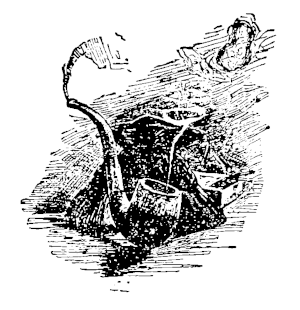
he following poems, devoted entirely to the laudation of Tobacco, either as smoked in the pipe, cigar, or cigarette, or as taken in the form of snuff, have been collected from many different works. One of the principal sources of information has been that entertaining journal Cope’s Tobacco Plant, which has now unfortunately ceased to exist. Another useful authority was a little book published at the office of Tobacco in Gracechurch Street, London, entitled Tobacco Jokes for Smoking Folks, which contained many amusing anecdotes, and humorous illustrations. A few of the latter are here inserted by the kind permission of the proprietors. Following the Parodies some of the most noted Poems on Tobacco are given, so as to make the collection on this interesting topic more complete.
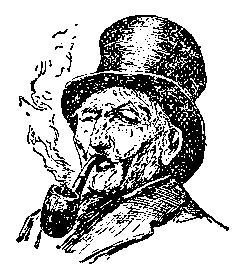
One of the earliest burlesque poems in praise of Tobacco was that written by Mr. Isaac Hawkins Browne about one hundred and fifty years ago, entitled “A Pipe of Tobacco, in imitation of Six Several Authors.”
This poem has been repeatedly reprinted, although there is little in it that strikes a modern reader as either remarkably humorous or clever. The authors imitated are Colley Cibber (the Poet Laureate), Ambrose Phillips, James Thomson, Edward Young, Alexander Pope, and Jonathan Swift, Dean of St. Patrick’s. It is stated that the imitation of Ambrose Phillips was not written by Mr. I. H. Browne, but was sent to him by a friend, whose name has not been transmitted to us. This is to be regretted, as this particular imitation (the second) is generally considered the best in the collection. According to Ritson this was written for the collection by Dr. John Hoadley.
A PIPE OF TOBACCO:
In Imitation of Six Several Authors.
Imitation I. Laudes egregii Cæsaris—— Culpâ deterere ingenî. Hor.
A New-Year’s Ode. Recitative. Old battle-array, big with horror is fled, And olive-robed peace again lifts up her head. Sing, ye Muses, Tobacco, the blessing of peace; Was ever a nation so blessed as this? Air. When summer suns grow red with heat, Tobacco tempers Phœbus’ ire, When wintry storms around us beat, Tobacco cheers with gentle fire. Yellow autumn, youthful spring, In thy praises jointly sing. Recitativo. Like Neptune, Cæsar guards Virginian fleets, Fraught with Tobacco’s balmy sweets; Old Ocean trembles at Britannia’s pow’r, And Boreas is afraid to roar. Air. Happy mortal! he who knows Pleasure which a Pipe bestows; Curling eddies climb the room, Wafting round a mild perfume. Recitativo. Let foreign climes the vine and orange boast, While wastes of war deform the teeming coast; Britannia, distant from each hostile sound, Enjoys a Pipe, with ease and freedom crown’d; E’en restless Faction finds itself most free, Or if a slave, a slave to Liberty. Air. Smiling years that gayly run, Round the Zodiack with the sun, Tell, if ever you have seen Realms so quiet and serene. Britain’s sons no longer now Hurl the bar, or twang the bow, Nor of crimson combat think, But securely smoke and drink. 130 Chorus. Smiling years that gayly run Round the Zodiack with the sun, Tell, if ever you have seen Realms so quiet and serene.
Imitation II. Tenues fugit ceu fumus in auras. Virg. Little tube of mighty pow’r, Charmer of an idle hour, Object of my warm desire, Lip of wax, and eye of fire: And thy snowy taper waist, With my finger gently brac’d; And thy pretty swelling crest, With my little stopper prest, And the sweetest bliss of blisses, Breathing from thy balmy kisses. Happy thrice, and thrice agen, Happiest he of happy men; Who when agen the night returns, When agen the taper burns; When agen the cricket’s gay, (Little cricket, full of play) Can afford his tube to feed With the fragrant Indian weed: Pleasure for a nose divine, Incense of the god of wine. Happy thrice, and thrice agen, Happiest he of happy men.
Imitation III. ——Prorumpit ad æthera nubem Turbine fumantem piceo. Virg.
O thou, matur’d by glad Hesperian suns, Tobacco, fountain pure of limpid[16] truth, That looks the very soul; whence pouring thought Swarms all the mind; absorpt is yellow care, And[17] at each puff imagination burns. Flash on thy bard, and with exalting fires Touch the mysterious lip, that chaunts thy praise In strains to mortal sons of earth unknown. Behold an engine, wrought from tawny mines Of ductile clay, with plastic[18] virtue form’d, And glaz’d magnifick o’er, I grasp, I fill. From Pætotheke[19] with pungent pow’rs perfum’d, Itself[20] one tortoise all, where shines imbib’d Each parent ray; then rudely ram’d illume, With the red touch of zeal-enkindling sheet, Mark’d[21] with Gibsonian lore; forth issue clouds, Thought-thrilling, thirst-inciting clouds around, And many-mining fires: I all the while, Lolling at ease, inhale[22] the breezy balm. But chief, when Bacchus wont with thee to join In genial strife and orthodoxal ale, Stream[23] life and joy into the Muses’ bowl. Oh be thou still my great inspirer, thou My Muse; oh fan me with thy zephyrs boon, While I, in clouded tabernacle shrin’d, Burst forth all oracle and mystick song.
Imitation IV. ——Bullatis mihi nugis, Pagina turgescat, dare pondus idonea fumo. Pers.
Criticks avaunt; Tobacco is my theme; Tremble like hornets at the blasting steam. And you, court-insects, flutter not too near Its light, nor buzz within the scorching sphere. Pollio, with flame like thine, my verse inspire, So shall the Muse from smoke elicit fire. Coxcombs prefer the tickling sting of snuff; Yet all their claim to wisdom is—a puff: Lord Fopling smokes not—for his teeth afraid: Sir Tawdry smokes not—for he wears brocade. Ladies, when pipes are brought, affect to swoon; They love no smoke, except the smoke of town; But courtiers hate the puffing tribe,—no matter, Strange if they love the breath that cannot flatter! Its foes but shew their ignorance; can he Who scorns the leaf of knowledge, love the tree? The tainted templar (more prodigious yet) Rails at Tobacco, tho’ it makes him—spit. Citronia vows it has an odious stink; She will not smoke (ye gods!) but she will drink: And chaste Prudella (blame her if you can) Says, pipes are us’d by that vile creature Man: Yet crowds remain, who still its worth proclaim, While some for pleasure smoke, and some for fame: Fame, of our actions universal spring, For which we drink, eat, sleep, smoke,—ev’rything.
Imitation V. ——Solis ad ortus Vanescit fumus. Lucan. Blest leaf! whose aromatick gales dispense To templars modesty, to parsons sense: So raptur’d priests, at fam’d Dodona’s shrine Drank inspiration from the steam divine. Poison that cures, a vapour that affords Content, more solid than the smile of lords: Rest to the weary, to the hungry food, The last kind refuge of the wise and good. Inspir’d by thee, dull cits adjust the scale Of Europe’s peace, when other statesmen fail. By thee protected, and thy sister, beer, Poets rejoice, nor think the bailiff near. Nor less the critick owns thy genial aid, While supperless he plies the piddling trade. What tho’ to love and soft delights a foe, By ladies hated, hated by the beau, Yet social freedom, long to courts unknown, Fair health, fair truth, and virtue are thy own. Come to thy poet, come with healing wings, And let me taste thee unexcis’d by kings.
Imitation VI. Ex fumo dare lucem. Hor.
Boy! bring an ounce of Freeman’s best, And bid the vicar be my guest: Let all be placed in manner due, 131 A pot wherein to spit or spue, And London Journal and Free Briton, Of use to light a pipe—— * * * * * This village, unmolested yet By troopers, shall be my retreat: Who cannot flatter, bribe, betray; Who cannot write or vote for pay. Far from the vermin of the town, Here let me rather live, my own, Doze o’er a pipe, whose vapour bland In sweet oblivion lulls the land; Of all which at Vienna passes, As ignorant as —— Brass is: And scorning rascals to caress, Extoll the days of good Queen Bess, When first Tobacco blest our isle, Then think of other Queens—and smile. Come jovial pipe, and bring along Midnight revelry and song; The merry catch, the madrigal, That echoes sweet in City Hall; The parson’s pun, the smutty tale Of country justice o’er his ale. I ask not what the French are doing, Or Spain to compass Britain’s ruin: Britons, if undone, can go, Where Tobacco loves to grow.
——:o:——
HORACE.
In imitation of Epode III. An Ode against Tobacco. For parricide, that worst of crimes, Hemlock’s cold draught, in ancient times, Scarce taught the rogue repentance: But had tobacco then been known, Its burning juices swallow’d down, Had prov’d a fitter sentence. How callous are the lab’rers jaws, Who this dire weed both smokes and chaws, And feasts upon the venom! While I by chance a taste once got, That so inflam’d my mouth and throat, I thought all hell was in ’em. Sure, this vile drug, that serv’d me thus, The deadly viper’s poisonous juice Infus’d must have great share in; Or else some hag, with midnight wish, Procur’d it as a special dish Of Satan’s own preparing. This was the charm Medea taught Her dear advent’rous Argonaut, To steal the Golden Fleece with; Down bulls and dragons gaping throat A quid he threw, which, quick as thought, The brutes were laid at peace with. Ting’d in tobacco’s baleful oil, Her presents made her rival broil Past Jason’s art of quenching: And when he swore revenge, the witch Mounted aloft astride her switch, Pleas’d she had spoil’d his wenching. Under the blue I’d rather live, And the sun’s fiercest rays receive, How apt soe’er to burn us: Nay, Hercules’s shirt I’d wear, Or any flame much sooner bear, Than a pipe’s fiery furnace. My merry lord, if quid or whiff You ever taste of this damn’d leaf, May you meet with what you dread most, May Chloe, when with her you lie, And press to kiss her, put you by, And rather hug the bed post! From The Gentleman’s Magazine. May, 1744.
——:o:——
Elegy. Written over an old Pipe-Box. The postman hits his last rat-tat to day, And hies him to his lowly home with glee; My wife reposes in her white array; The night is left to “’Bacca” and to me. Now starts a glimmering bottle on the sight, And all the air a spirit perfume holds; At sight of me the cockroach takes to flight, And leaves awhile my common dips and moulds. All raving now, at yonder area gate, The moping “bobbies” to the cooks complain That soldiers, with their padded breasts elate, Molest their ancient privilege and reign. Beneath this hingeless lid, bound round with braid, Wherein no anti-vermin dare to creep (Each one done brown, aside for ever laid), The ancient tutors of my smoking sleep. The bull-like voice of nicotinian Bob, The sylph-like tones of sweet, poetic, Ned, The fierce denouncings of the anti-mob, No more shall call them from their narrow bed. For them no more the fierce fusee shall burn, Or plugs be purchased and put in with care; In memory only, I to them return; Their smoke, too strong, would all my nerves impair. Oft have they lain with me in some green field; Their solace oft some stiff-neck’d care has broke. How strangely sorrow to the pipe doth yield, And joy descends e’en through ascending smoke. 132 Let not philosophy at smoking mock— Philosophy is but its prototype; Nor e’en religion hear with spurning shock, The short and simple annals of the pipe. * * * * * Ah me! In this neglected box is laid Old pipes, once glowing with the scented fire; Pipes for which shillings, ay, and pounds were paid. Start not—’tis true, or I’m a living liar! But pipes on pipes of “Bacca,” day by day, With poison laden, did their fates control; Strong-smelling oil stopp’d up the narrow way, And now they may no more console my soul. Full many a pipe, of purest briar root, The stern schoolmaster confiscates and breaks; Full many a clay, too, seized is by the brute, And flung with tops and marbles, buttons, cakes. One colour’d meerschaum that, in hidden poke Conceal’d, full many a day in school did lie, Escaped the notice of the stern-eyed bloke, To linger in this box and never die. To take excursion by the iron way, In smoking-carriage, where thick clouds arise; To fumigate—(tho’ anti-smokers bray), And blow their ashes into people’s eyes— Their state forbids. Now, circumscribed they lie, For pleasure useless, and for work as well; Weak, helpless, all, I bid them now good-by; For, tho’ so weak, dear me, how strong they smell! For thee, who, brooding thus with bended head, Deploring much their sad and helpless state, If chance, by nicotinian feelings led, Some brother smoker shall inquire thy fate: Haply some wooden-headed clown may say: “I’ve often seed him, when the ale-house closed, Wandering along the all-too narrow way, His eyes a quiver, like to one who dozed; “There, at the foot of yonder painted sign, That looks more like a pig than like a cow, He’d drink his beer—it would’nt run to wine— And smoke his pipe, all reckless—anyhow. “Or down the street, to put his watch in pawn, Feeling for vanish’d coppers, he would rove, His old hat on, his bristly chin unshorn. He liked his beer, but warn’t a drunken cove. “One night I miss’d him at the accustom’d pub; Unoccupied remain’d his favourite seat. Another came. Where was he?—sore the rub; In losing him, we lost a look’d-for treat. “The next, with solemn march, in blue array (A crowd behind with strong tumultuous din,) Two bobbies came. They’d found him on the way, With beer o’ercome, and so they ran him in!” The Epitaph. Here rests, with his old head upon a stone, A man who smoked till he did reason drown. To-morrow morn the mayor, all fully blown, Will frown on him, and fine him half-a-crown. H. L. From Cope’s Tobacco Plant. September, 1874.
Hamlet’s Soliloquy on Tobacco. To smoke or not to smoke, that is the question: Whether a mild cigar assists digestion; Or, whether it begets a kind of quaintness, Which some would say was nothing but a faintness; To smoke—to drink and then to go to bed; To find a pillow for an aching head; To snore—perchance to dream! and half your senses scare With visionary demons or nightmare; To wake, in perspiration nicely dished, ’Tis a consummation hardly to be wished; For who would bear the kicks, cuffs, and abuse Of this base world, when he might cook his goose Upon his toasting fork? Or who would care For half the motley groups which at him stare, Some morning early, stuck before the bench, When soda-water would his fever quench, But that a little thing within doth call? Thus porter doth make rumuns of us all! And thus our resolution to keep sober Is drown’d and soon forgot in good October. But hush! my Phelia comes, the pretty dear! Oh! think of me love—when you fetch your beer. Anonymous.
To Smoke, or not to Smoke. To smoke, or not to smoke—that is the question! Whether ’tis better to abjure the habit, And trust the warnings of a scribbling doctor, Or buy at once a box of best Havanas, And ten a day consume them? To smoke, to puff, Nay more, to waste the tender fabric of the lungs And risk consumption and its thousand ills The practice leads to—’tis a consummation Discreetly to be shunned. To smoke, to puff— To puff, perhaps to doze—ay, there’s the rub; For in that dozing state we thirsty grow, And, having burned the tube up to a stump, We must have drink, and that’s one cause We modern youth are destined to short life; For who can bear to feel his mouth parched up, His throat like whalebone and his chest exhausted, His head turned giddy, and his nerves unstrung, When he himself might drench these ills away With wine or brandy? Who could live in smoke, And pine and sicken with a secret poison; But that the dread of breaking o’er a rule Prescribed by Fashion, whose controlling will None disobey, puzzles ambitious youth, And makes us rather bear the ills we feel Than others that the doctor warns us of. Thus custom does make spectres of us all, And thus the native hue of our complexion If sicklied o’er with a consumptive cast; The appetite, a loss of greater moment, Palled by the weed, and the digestive powers Lose all their action. John W. Farrell. Rare Bits. November 18, 1882.
——:o:——
A Song, after Sheridan. Here’s to the hookah with snake of five feet, Or the “portable” fix’d to one’s “topper”; Here’s to the meerschaum more naughty than neat, 133 And here’s to all pipes that are proper. Fill them up tight, Give ’em a light; I’ll wager a smoke will set everything right. Here’s to the Warden’s twelve inches of stalk, Here’s to Jack Tar’s clay, with one, sir; To the pipes now with mountings so rich that they “walk,” And here’s to most pipes which have none, sir. Fill them up tight, &c. Here’s to the Milo just out of the shop, With mouthpiece as dry as pale sherry; Here’s to your veteran, wet as a mop, Black as a sloe or a cherry. Fill them up tight, &c. Let them be clumsy or let them be slim, Light or heavy, I care not a feather; So, fill them with ’Baccy right up to the rim, And let us all smoke them together. Fill them up tight, Give ’em a light; I’ll wager a smoke will set everything right. From Cope’s Tobacco Plant. February, 1875.
——:o:——
Hail to the Plant. (A Parody of Sir Walter Scott.) Hail! to the Plant which we owe to brave Raleigh, Long may it flourish on Cuba’s lone shore, Bloom on the mountain, and spread in the valley, Fertile, and fragrant, and fresh evermore! Bright sunshine, nourish it, Gentle deeds, cherish it, Life giving breezes, around it still flow; Moisture and warmth, give aid, That it may never fade; Tabak, St. Nicotine, ho, ieroe! * * * * * Smoke, brother, smoke of the pride of Virginia; Snuff, brother, snuff, if you’d clear up your brain; Chew, brother, chew, and I’ll bet you a guinea, Once fairly started, you’ll do it again. Oh, would our northern air Nurture this plant so rare! Never aught else in my garden I’d grow: All my flowers pluck’d should be, Fruit-trees give place to thee, Tabak, St. Nicotine, ho, ieroe!
The Lay of the Last Smoker. The weed was rank, the pipe was old, Along the road the smoker rolled; His scared and hesitating way Showed that he owed and couldn’t pay. The pipe, his one remaining joy, Was scoff of every man and boy; For last of all the smokers, he, This old man was well known to be For ’Bacca’s day was lately fled, And all his brother smokers dead; And he but stayed to smoke and swear, And wonder where the others were. No more amid the jest and song, He puffed at his churchwarden long; No longer in a smoking car He blew a cloud from his cigar, And stood his ground both stern and stout, To smoke the anti-puffers out. Old days were drowned in Time’s dark stream, And “antis” reigned now all supreme; The quivering noses of the time Now called each harmless puff a crime. A wandering smoker, scorned and sad, He nearly drove the city mad; And had to smoke—oh! wretched elf! Some ’Bacca that he grew himself. * * * * * From Cope’s Tobacco Plant. April, 1876.
——:o:——
The Last Cigar. (After Thomas Moore.) ’Tis a last choice Havana I hold here alone; All its fragrant companions In perfume have flown. No more of its kindred To gladden the eye, So my empty cigar case I close with a sigh. I’ll not leave thee, thou lone one, To pine; but the stem I’ll bite off and light thee To waft thee to them And gently I’ll scatter The ashes you shed, As your soul joins its mates in A cloud overhead. All pleasure is fleeting, It blooms to decay From the weeds glowing circle, The ash drops away. A last whiff is taken, The butt-end is thrown, And with empty cigar case I sit all alone. Anonymous.
’Tis the last weed of Hudson’s Left lying alone; All his dark brown Regalias Are vanished and gone. No cigar of its colour, No “Lopez” is mine, To delight with its perfume And fragrance divine. I’ll not leave thee, thou lone one! I’ll ring for a light; Thy companions are ashes, I’ll smoke thee to-night. Thy halo and incense Shall rise o’er my head, As I sigh for the beauties All scentless and dead. And soon may I follow Those lov’d ones’ decay; Since from each tempting bundle 134 They’ve faded away. When Regalias are smok’d out, And “Lopez” are blown, Oh! who would still linger, Cigarless, alone? From Hints to Freshmen, in the University of Oxford.
A Last Cigar. ’Tis my last mild Havana Pervading the room; Her companions have taken Their leaves in a fume. No kindred to back her, Nor plug, twist, nor snuff, To return her aroma Or give puff for puff. Oh, fain would I follow When the last whiff is sped, And in life’s brightest garden The weeds are all dead. When troubles oppress us, Or better-halves jar, Oh, what were existence Without a cigar?
——:o:——
The Butcher Boy. The butcher boy down the road has gone, With beefsteak he has lined him; A pipe of clay he has put on, And his basket’s slung behind him. “Lend me that,” cried the baker’s boy, “The pipe you now are biting,” “Not I,” cried he, “my pipe I’ll guard!” And so they fell to fighting. The butcher fell, but the baker’s boy, Could not bring his proud soul under; The pipe he loved ne’er smoked again, For he broke its stem asunder; And cried, “No dough shall sully thee, I’ll be thy undertaker; Thy joys were made for the butcher boy— Thou shalt ne’er be smoked by a baker!” H. L. From Cope’s Tobacco Plant. July. 1873.
My Old Dhudeen. (Air: Love’s Young Dream.) Oh! the days are gone when lollipops My heart could move; When sugar-sticks and almond rock Were my first love; Inventions sweet And succulent, Made childhood all serene; Now there’s nothing half so sweet in life As my old Dhudeen; Yes, there’s nothing half so sweet in life As my old Dhudeen. For the youth will tire at last of sweets When “down” appears, And he wears a collar in the streets That hides his ears: The vile “Pickwick” May make him sick, And turn his face quite green, Yet there’s nothing half so sweet in life As his old Dhudeen; Oh! there’s nothing half so sweet in life As his old Dhudeen. Oh! the first sly smoke I’ll ne’er forget— It made me queer; And when I my stern parent met, He pulled my ear; But now I’m old, And weak and cold, And on my stick do lean, There’s nothing half so sweet in life As my old Dhudeen; Oh! there’s nothing half so sweet in life As my old Dhudeen. H. L. From Cope’s Tobacco Plant. December, 1872.
——:o:——
I Remember. (After Hood.) I remember, I remember, The pipe that first I drew; With red waxed end and snowy bowl, It perfect was and new. It measured just four inches long, ’Twas made of porous clay; I found when I began to smoke, It took my breath away, I remember, I remember, In fear I struck a light; And when I smoked a little time, I felt my cheeks grow white. My nervous system mutinied, My diaphragm uprose, And I was very—very ill In a way you may suppose. I remember, I remember, The very rod he got, When father who discovered me, Made me exceeding hot. He scattered all my feathers then, While, face down I reclined; I sat upon a cold hearthstone, I was so warm behind. I remember, I remember, I viewed the rod with dread, And silent, sad, and supperless, I bundled off to bed. It was a childish punishment, And now ’tis little joy To know that, for the self-same crime, I wallop my own boy! From Cope’s Tobacco Plant. March, 1875.
——:o:——
The Old Black Clay. I love it! I love it! though some may say It’s wrong to be fond of an old black clay; 135 I haven’t exactly inlaid it with sighs— The turn of my mind has been otherwise— For I always feel excessively gay When I’m gazing upon that old black clay. When rude and frivolous folk are by, I never produce it—I’ll tell you why— They call it harsh, injurious names, And vex my soul with mischievous games; But when to a lonely place I repair, I make quite sure there’s nobody there, And adore in the most abandoned way That stumpy loveable coal-black clay. I’ll never forget the dreadful day When they “played it low” on that harmless clay— The ruthless hand of a mother dear Hid it away in a dust-hole drear; But, ah! no words can properly tell My joy when I found it again by the smell; And I took to my heart (as one may say), Once more that redolent, long lost clay. I love it! I love it! as I have said, I smoke it abroad, and I smoke it abed; And if the prophecy turn out right That I’m burned to a cinder some fine night, I’ll simply deem it a glorious way Of ending my life with my faithful clay. The Manchester City Jackdaw. April 21, 1876.
——:o:——
Smoke not! Smoke not, smoke not your weeds nor pipes of clay! Cigars that are made from leaves of cauliflowers;— Things that are doomed no duty e’er to pay;— Grown, made, and smokèd in a few short hours. Smoke not, smoke not. Smoke not, smoke not! the weed you smoke may change The healthfulness of your stomachic tone; Things to the eye grow queer and passing strange; All thought seems undefined—save one, to be alone. Smoke not, smoke not. Smoke not! the tradesman whose weed you smoke may die! May perish from the cabbage-bearing earth;— The sordid dun into your chamber hie— Sent by the trustees in their tinless dearth. Smoke not, smoke not. Smoke not, smoke not! O, warning vainly said! Cane and cap-paper since we first did try, Smoke flings a halo round the smoker’s head; And all in vain do anxious mothers cry, Smoke not, smoke not!
From Hints to Freshmen in the University of Oxford, published by J. Vincent, Oxford, and attributed to the Rev. Canon Hole.
——:o:——
The Pipes of England. The stately pipes of England, How beautiful they be, With amber tips and meerschaum bowls— Such pipes are not for me! With scented Latakie they burn, And golden crowns they wear; And the smoke steals from the scented urn— Like summer’s perfumed air. The merry pipes of England, Amid the joke and jest, With gladsome glasses of hot grog, Are found then at their best, The smoker’s eye is seen to wink, As many a tale is told; Or lips ope cheerfully to drink The glorious ale of old. The cottage pipes of England— By thousands made of clay— All snowy in their wooden box, How beautiful are they! From ruddy lips they outward poke, As white as wool or lard; And the lowly do a cheerful smoke, When the times are not too hard. The free, fair pipes of England Live long in hall and hut; And sweet for ever be their lips, And scented be their bowls; And may no humbug e’er eclipse The solace of our souls. From Cope’s Tobacco Plant. April 1873.
——:o:——
The Genius of Smoking.
[We have been favored with the following defence of smoking, by an intimate literary friend of Lord Byron, who assures us it is selected from several unpublished juvenile trifles written at various times in his album by the noble bard.]
I had a dream—it was not all a dream; Methought I sat beneath the silver beam Of the sweet moon, and you were with me there, And everything around was free and fair; And from our mouths upcurled the fragrant smoke, Whose light blue wreaths can all our pleasures yoke, In sweetest union to young Fancy’s car, And waft the soul out thro’ a good cigar. There as we sat and puffed the hours away, And talked and laughed about life’s little day, And built our golden castles in the air, And sighed to think what transient things they were, As the light smoke around our heads was thrown, Amidst its folds a little figure shone, An elfin sprite, who held within her hand A small cigar her sceptre of command. Her hair above her brow was twisted tight off, Like a cigar’s end, which you must bite off; Her eyes were red and twinkling like the light Of Eastern Hookah, or Meerschaum, by night; A green tobacco leaf her shoulders graced, And dried tobacco hung about her waist; Her voice breathed softly, like the easy puffing Of an old smoker, after he’s been stuffing. Thus as she rolled aside the wanton smoke, To us, her awe-struck votaries she spoke,— “Hail faithful slaves! my choicest joys descend On him who joins the smoker to the friend, Yours is a pleasure that shall never vanish Provided that you smoke the best of Spanish; Puff forth your clouds”—(with that we puff’d amain) 136 “Sweet is their fragrance”—(then we puff’d again) “How have I hung, with most intense delight, Over your heads when you have smoked at night, And gratefully imparted all my powers To bless and consecrate those happy hours; Smoke on,” she said. I started and awoke, And with my dream she vanished into smoke. Anonymous.
——:o:——
An American Parody of Wordsworth’s “Sonnet on the Sonnet.” Scorn not the meerschaum. Housewives, you have croaked In ignorance of its charms. Through this small reed Did Milton, now and then, consume the weed; The poet Tennyson hath oft evoked The Muse with glowing pipe, and Thackeray joked And wrote and sang in nicotinian mood; Hawthorne with this hath cheered his solitude; A thousand times this pipe hath Lowell smoked; Full oft hath Aldrich, Stoddard, Taylor, Cranch, And many more whose verses float about, Puffed the Virginian or Havanna leaf; And when the poet’s or the artist’s branch, Drops no sustaining fruit, how sweet to pout Consolatory whiffs—alas, too brief!
——:o:——
My Hookah. What is it, that affords such joys On Indian shores, and never cloys, But makes that pretty, bubbling noise? My Hookah. What is it, that a party if in At breakfast, dinner, or at Tiffin, Surprises and delights the Griffin? My Hookah. What is it to Cadets gives pleasure? What is it occupies their leisure? What do they deem the greatest treasure? My Hookah. Say—what makes Decency wear sable? What makes each would-be nabob able To cock his legs upon the table? My Hookah. What is it (trust me, I’m not joking, Tis truth—altho’, I own, provoking) That sets e’en Indian belles a smoking? My Hookah. What is it—whensoe’er we search In ev’ry place;—except the Church, That leaves sweet converse in the lurch? My Hookah. But hold my Muse—for shame for shame— One question ere you smoking blame— What is it gives your book a name? My Hookah. My fault I own—my censure ends; Nay more—I’ll try to make amends, Who is the safest of all friends? My Hookah. Say who? or what retains the power, When fickle Fortune ’gins to lour, To solace many a lonely hour? My Hookah. When death-like dews and fogs prevailing In Pinnace or in Budg’-row sailing, What is it that prevents our ailing? My Hookah. When we’re our skins with claret soaking, And heedless wits their friends are joking, Which friend will stand the greatest smoking? My Hookah. By what—(nay, answer at your ease, While pocketing our six rupees)— By what d’ye mean the town to please? My Hookah.
From My Hookah; or, The Stranger in Calcutta. Being a collection of Poems by an Officer. Calcutta: Greenway and Co., 1812.
A Pinch of Snuff. With mind or body sore distrest, Or with repeated cares opprest, What sets the aching heart at rest? A pinch of snuff! Or should some sharp and gnawing pain Creep round the noddle of the brain, What puts all things to rights again? A pinch of snuff! When speech and tongue together fail, What helps old ladies in their tale, And adds fresh canvass to their sail? A pinch of snuff! Or when some drowsy parson prays, Or still more drowsy people gaze, What opes their eyelids with amaze? A pinch of snuff! A comfort which they can’t forsake, What is it some would rather take, Than good roast beef, or rich plum cake? A pinch of snuff! What warms without a conflagration, Excites without intoxication, And rouses without irritation? A pinch of snuff! Then let us sing in praise of snuff! And call it not such “horrid stuff,” At which some frown, and others puff, And seem to flinch But when a friend presents a box, Avoid the scruples and the shocks Of him who laughs and her who mocks, And take a pinch! From The Sportsman. August, 1835.
Stanzas to a Lady In defence of Smoking. What taught me first sweet peace to blend With hopes and fears that knew no end, 137 My dearest, truest, fondest friend? My pipe, love! What cheer’d me in my boyhood’s hour, When first I felt Love’s witching power, To bear deceit,—false woman’s dow’r My pipe, love! What still upheld me since the guile, Attendant on false friendship’s smile, And I in hope, deceiv’d the while? My pipe, love! What cheer’d me when misfortunes came, And all had flown me? Still the same My only true and constant flame, My pipe, love! What sooth’d me in a foreign land, And charm’d me with its influence bland, Still whisp’ring comfort, hand in hand? My pipe, love! What charm’d me in the thoughts of past When mem’ry’s gleam my eyes o’ercast, And burns to serve me to the last? My pipe, love! Nicotiana, by H. J. Meller. London. E. Wilson, 1832.
To my Cigar. When cares oppress the drooping mind, And fickle friends are most unkind, Who constant still remains behind? My true cigar! Oh! where’s the friend who’d cheerfully, To soothe one pensive hour for me, Resign his latest breath like thee— My kind cigar? Thy spirit’s gone, poor fragile thing! But still thine ashes, mouldering, To me a valued lesson bring,— My pale cigar! Like man’s, how soon thy vital spark, Expiring, leaves no other mark, But mouldering ashes, drear and dark, My dead cigar. T. G. J. Bristol. 1844.
Tobacco. Whene’r I’m out of sorts or sad, Oppress’d with care, and well-nigh mad, What comforts me, and makes me glad? Tobacco! What builds such castles in the air, And paints my prospects bright and fair, And makes me negligent of care? Tobacco! How is it that I’m so resign’d, When’er my wife must speak her mind, And ne’er retaliate in kind? Tobacco! What makes my holidays so sweet, And ev’ry “outing” such a treat That I would fain their joys repeat? Tobacco! Whene’er my brain is dull and dark, And utterly beside the mark, What wakes the latent, slumb’ring spark? Tobacco! What changes all my scowls to smiles, And many a tedious hour beguiles, And ne’er by any chance me riles, Tobacco. Enlarger of our mortal ken, Familiar of the artist’s den, Beloved by literary men— Tobacco! Far kinder than the kindest friend, O, teach us how your powers blend! And from your heavenly throne descend, Tobacco! E. H. S.
From Cope’s Cope’s Tobacco PlantTobacco Plant. April, 1873.
The Weed. When roses droop beside the wall, When lily petals fade and fall, What swiftly rises, covering all? The Weed. When starts the widow on the chase, To fill “the late lamented’s” place, What decorates her pretty face? The Weed. When coffee’s served and wine runs low, When conversation waxes slow, What brings the after-dinner glow? The Weed.
A Smoke. What comforts me when I am sad, Or when I’ve got the toothache bad, Or when the money market’s mad? A smoke. What soothes me if I dine not well, When lies about me people tell, Or friendship proves a hollow sell? A smoke. What quiets indigestion’s pangs, And takes the edge off hatred’s fangs, And salves misfortune’s cruel bangs? A smoke.
——:o:——
Hymn to Saint Nicotine. (Imitation of Dr. Oliver Wendell Holmes.) Strange! that this gently breathèd cloud So far, far sweeter unto me, Than all that this green earth enshroud, Or float above the sea. My meerschaum, when thy mouth I greet, No lady’s lips seem half so sweet. 138 I look upon the fair blue skies, And naught but empty air I see; But when thy circling cloudlets rise, It seemeth unto me Ten thousand angels spread their wings, Within those little azure rings. Tobacco hath the choicest leaf That ever western breeze hath fanned; Its healing odour gives relief To men of ev’ry land. This precious herb to me doth yield More joy than all the broider’d field. O, comrade! there be many things That seem right fair in truth or joke; But sure from none among them springs A richer charm than smoke. Let us not puff our pipes alone, But join two altars both in one. From Cope’s Tobacco Plant. December, 1871.
——:o:——
Parody of Dr. Watts, by an Anti-Smoker. How doth the nasty, dirty man, Go smoking every hour; And spend his money wastefully On Old Nick’s favourite flower. How wistfully he seeks his pipe, How glad he doth it light; And smokes the foul thing all the day, And feels quite ill at night. In shag, bird’s eye, or honey-dew, His mind is ever fast; And Satan knows to him he’s due, For he’ll get him at last. Anonymous.
The Last Pipe. T’was the voice of the doctor, I heard him declare, “You’ve been smoking too much, of tobacco beware! To be candid and plain you’ll find it no joke, For you’ll become ashes yourself if you smoke.” So I’ve filled my last pipe as I sit by the fire, And gaze at the cloud rising higher and higher, And languidly watching each up-curling ring, A mournful adieu to tobacco I sing. Farewell, good cigars, I will e’en call you dear, Yet your price were no object so you were still here. Good bye! Latakia, Mild Turkey, good by! Virginia, Cavendish, Bristol Bird’s-eye, And my pipe! My sweet pipe, with thy cool amber tip! No more shall that amber caress my fond lip. Oh! friend of my youth! must thou really go— My partner in joy, and my solace in woe? ’Tis too true; nought avail me these heart-broken sighs! And, alas! thou art out. There are tears in my eyes, As I lay thee down gently. I will not complain, But I feel I shall never be happy again. Fun, 1870.
——:o:——
The Pipe. A Parody of Barry Cornwall’s “The Sea, the Sea!” The pipe, the pipe, the German pipe! The short, the long, the meerschaum ripe! Its odorous puffs without a sound, They float my head’s wide regions round; They rise in clouds and mock the skies, While Baccy snugly eradled lies. My hookah wide! my hookah deep! I’ve that which I would ever keep; With the smoke above, and smoke below, And smoke wheresoe’er I go. If a storm (like a Chinese gong) should ring What matters that? I’ll smoke and sing. What matters, &c. I love—oh! how I love to smoke, And drink full bumpers of th’ foaming soak! And when its waves have drowned my soul, I’ll whistle aloud such a “Tol-de-rol!” Don’t ask me where the world is going, Nor why the sou’-west blast is blowing. I never breathed the dull tame air, But I relish my great pipe mair and mair, And back again flew for a soothing puff, Like a bird—I’m sure that’s quick enough. My mother it is, and I’ll prove it to ye, (Much more of a mother than the open sea!) For smoking, I’m at it ever and ever! I hope your comment on this line is “clever!” For fear of growing at all lackadaisical I hasten to lay down my pen parody-sical; In truth these stanzas concluding with somewhat ’Bout “birth” and “death,” which things I can’t come I’ve only one word, and that’s to crave pardon, These sweet pretty verses that I’ve been so hard on. From The Individual. Cambridge, January 31, 1837.
——:o:——
A Dream (Anti-cipated). (After Kingsley.) Three Antis[24] went groaning out into the east— Out into the east, as the sun arose; Each thought on the newspaper he loved the least; The Tobacco Plant followed, and chaff’d at their woes. But antis will croak, and smokers will smoke, Tho’ chaff it be sudden, and endless the joke That the antis afford with their moaning. The Plant having stopped in a garden bower, Lit up his sweet pipe, as the sun arose; And he heard those three antis bawl out by the hour The weakest of humbug, in seedy old clothes. But antis will croak, and the Plant have his joke, And chaff, if ignited, must all end in smoke, And the antis must soon end their moaning. Three antis lay drunk on the shining sands, In the morning gleam, as the sun arose; And smokers are laughing and rubbing their hands, To know they’re already relieved of their foes. For Observers will talk, and the Plant doesn’t sleep; Though tough be the job, ’tis amusing to keep All the anti-Tobaccoites moaning. From Cope’s Tobacco Plant. January, 1875.
ODE TO TOBACCO.139
Thou who, when fears attack, Bidst them avaunt, and Black Care, at the horseman’s back Perching, unseatest; Sweet when the morn is grey; Sweet, when they’ve clear’d away Lunch; and at close of day Possibly sweetest: I have a liking old For thee, though manifold Stories, I know, are told. Not to thy credit How one (or two at most) Drops make a cat a ghost— Useless, except to roast— Doctors have said it: How they who use fusees All grow by slow degrees Brainless as chimpanzees, Meagre as lizards; Go mad, and beat their wives; Plunge (after shocking lives) Razors and carving knives Into their gizzards. Confound such knavish tricks! Yet know I five or six Smokers who freely mix Still with their neighbours; Jones—(who, I’m glad to say, Asked leave of Mrs. J—) Daily absorbs a clay After his labours. Cats may have had their goose Cooked by tobacco-juice; Still why deny its use Thoughtfully taken? We’re not as tabbies are: Smith, take a fresh cigar! Jones, the tobacco-jar! Here’s to thee, Bacon! C. S. Calverley.
Detained. Hand me another spill— Phœbe, my glass refill, As I’ve some time to kill. What do you mention? Boat, gun, and tackle nigh, Horse and trap ready?—I Think I can manage my Task of detention. Rowing? I’ve had a bout! Raining? Then can’t go out! Capital stream for trout? Not very handy! No, I’ll just pen a lay; Clear all these things away; Landlord! another clay Soda and brandy Anti-Tobaccoite! I have no wish to fight; But if you douse my light, Mind, we shall wrangle. Why should you interfere, With your new-fangled gear, And try my course to steer At such an angle? No! I must have my light; Whether I read or write, Smoking, by day or night, Aids the reflection. Some may prefer Bohea; Excellent though it be, I think Tobacco the Pink of Perfection! Shag’s my divinity, Pure as virginity; In its vicinity Come not, you croakers! What, though the Antis choke? Still I must have my smoke; Pshaw! let the beggars croak! Here’s to the smokers! E. H. S.
——:o:——
Beware! I know a meerschaum fair to see, Take care! It whispers “Smoke and colour me,” Beware! beware! Smoke it not, ’Tis fooling thee! It cost two guineas, golden brown, Take care! You’d better smash it; drop it down; Beware! beware! Smoke it not; ’Tis fooling thee. A mouthpiece of a golden hue, Take care! ’Twill very likely make you—vomit, Beware! beware! Smoke it not! ’Tis fooling thee. It hath a bowl as white as snow, Take care! Smoke it black, to Old Nick you’ll go; Beware! beware! Smoke it not; ’Tis fooling thee. P. C.
Tobacco Smoke! The clouds of smoke were rising fast, As through a college room there passed A youth, who bore, ’spite sage advice, A “baccy”-pouch, with strange device, “Tobacco smoke!” His brow was sad; his eye beneath Glared on a pipe, laid in its sheath, And in his ears there ever rung The accents of the donor’s tongue, Tobacco smoke! 140 In ground-floor rooms he saw the light, Of pipes and weeds glow strong and bright; And, heedless of the passing don, From out his lips escaped a groan, Tobacco smoke! “Try not the shag,” the old man said, “It is o’er strong for thy young head, Dire its effects to those untried;” Heedless he was, and but replied, Tobacco smoke! “Oh, stay,” the maiden said, “and test Our Latakia—’tis the best!” He grasped his packet of birds’-eye, And only muttered with a sigh, Tobacco smoke! “Beware; don’t set your room alight— The college might object—good night!” Such were the words the scholar spoke, And scarcely heard through closing oak, Tobacco smoke! At midnight hour, as bedroom-ward Two “undergrads” from drinking hard, Steered up the gas-less break-neck stair, A voice cried from the “right two-pair,” Tobacco smoke! The Freshman by his scout was found, Lying all prone upon the ground, And still his hand grasped like a vice The “baccy”-pouch with strange device, Tobacco smoke! There, in the morning cold and gray, Moaning, and all unkempt, he lay, And then the scout, unmoved, serene— Said—“Oh! ’tis easy to be seen, Tobacco smoke!” R. C. From College Rhymes. Part XVI., 1864.
The Song of Firewater, a parody of Longfellow’s “Song of Hiawatha,” appeared in Cope’s Tobacco Plant for November, 1871. The poem relates to snuff, but as it extends to over 200 lines it cannot be inserted here. It commences thus:—
Should you ask me whence this story? Whence this legend and tradition? I should answer, I should tell you, From the lips of Blow-me-tite-o; Blow-me-tite-o, sweetest singer, Singer of the mournful ditties. * * * * *
The Song of Nicotine. Should you ask me why this meerschaum, Why these clay-pipes and churchwardens, With the odours of tobacco, With the oil and fume of “mixture,” With the curling smoke of “bird’s eye,” With the gurgling of rank juices, With renewed expectorations As of sickness on the fore-deck? I should answer, I should tell you, From the cabbage, and the dust-heaps, From the old leeks of the Welshland, From the soil of kitchen gardens, From the mud of London sewers, From the garden-plots and churchyards, Where the linnet and cock-sparrow Feed upon the weeds and groundsel, I receive them as I buy them From the boxes of Havana, The concoctor, the weird wizard. Should you ask how this Havana Made cigars so strong and soothing, Made the “bird’s eye,” and “York-river,” I should answer, I should tell you, In the purlieus of the cities, In the cellars of the warehouse, In the dampness of the dungeon, Lie the rotten weeds that serve him; In the gutters and the sewers, In the melancholy alleys, Half-clad Arab boys collect them, Crossing-sweepers bring them to him, Costermongers keep them for him, And he turns them by his magic Into “cavendish” and “bird’s-eye,” For those clay-pipes and churchwardens, For this meerschaum, or he folds them, And “cigars” he duly labels On the box in which he sells them. From Figaro. October 7, 1874.
Lines to the “Anti-Tobacco Journal.” Tell me not in penny numbers Smoking’s but a loathsome dream; Worse than onions and cucumbers, Though they be chawed up like steam! Smoke is sweetness, done in earnest, Power possessing to console, If ’tis healthy weed thou burnest In the clay or meerschaum bowl. Not to aid expectoration Doth the smoker burn the weed, But to woo sweet meditation, And also digest his “feed.” “Shag” is strong, “Returns” is milder, “Cavendish” but suits the brave; Though our pulses beat the wilder, Still for ’bacca do we crave. In this world so full of brawling, If in years your manhood’s ripe, Heed ye not the antis’ calling— Be a man and smoke a pipe. Pipes of great men all remind us (Tho’ of clay the bowl and stem), Wheresoever fate may find us, We can colour pipes like them. Dhudeens, that perhaps another On the wheel of fortune broke, Some forlorn and bankrupt brother, Seeing, may take heart, and smoke. 141 Let us, then, take weeds and matches, And a pipe—that is enough; Tho’ it only be by snatches, Spared from toil, we still will puff! From Cope’s Tobacco Plant. March, 1876.
Meerschaum. Come to me, O! my meerschaum, For the vile street organs play; And the torture they’re inflicting Will vanish quite away. I open my study window And into the twilight peer, And my anxious eyes are watching For the man with my evening beer. In one hand is the shining pewter, All amber the ale doth glow; In t’other are long “churchwardens,” As spotless and pure as snow. Ah! what would the world be to us Tobaccoless?—Fearful bore! We should dread the day after to-morrow Worse than the day before. As the elephant’s trunk to the creature, Is the pipe to the man, I trow; Useful and meditative As the cud to the peaceful cow. So to the world is smoking; Through that we feel, with bliss, That, whatever worlds come after, A jolly old world is this. Come to me, O! my meerschaum, And whisper to me here, If you like me better with coffee Than grog, or the bitter beer. Oh! what are our biggest winnings If peaceful content we miss? Though fortune may give us an innings, She seldoms conveys us bliss. You’re better than all the fortunes That ever were made or broke; For a penny will always fill you, And buy me content with a smoke. Wrongfellow.
The Pipe and the Quid. An imitation of Longfellow’s “The Arrow and the Song.” I flung a pipe into the air, And it fell down, I knew not where; For many folks were near to me, And so I did not stay to see. I spun a quid up in the air, And that fell down, I knew not where; For ’twould require the strongest sight To follow a quid in its erring flight. Shortly I found my pipe again, On the head of my uncle broke in twain; And the quid I had not seen descend, I found in the eye of my dearest friend. Wrongfellow. Cope’s Tobacco Plant. June, 1876.
——:o:——
Another Match. (After A. C. Swinburne.) If love were dhudeen olden, And I were like the weed, Oh! we would live together, And love the jolly weather, And bask in sunshine golden, Rare pals of choicest breed; If love were dhudeen olden, And I were like the weed. If I were what cigars are, And love were like the case, In double rows or single, Our varied scents we’d mingle, Both brown as Persian shahs are— (You recollect his face); If I were what cigars are, And love were like the case. If you were snuff, my darling, And I, your love, the box, We’d live and sneeze together, Shut out from all the weather, And anti-snuffers snarling, In neckties orthodox; If you were snuff, my darling, And I, your love, the box. If you were oil essential, And I were nicotine, We’d hatch up wicked treason, And spoil each smoker’s reason, Till he grew penitential, And turned a bilious green; If you were oil essential, And I were nicotine. If you were shag of dark hue, And I were mild bird’s eye, We’d scent the passing hours, And fumigate the flowers; And in the midnight, hark you, The Norfold Howards should die If you were Shag of dark hue, And I were mild Bird’s-eye. If you were the aroma, And I were simply smoke, We’d skyward fly together, As light as any feather; And flying high as Homer, His grey old ghost we’d choke; If you were the aroma, And I were simply smoke. From Cope’s Tobacco Plant. August, 1876.
142
Another Ballad of More Burdens. (After Swinburne.) The burden of false meerschaums: Fair to sight Built up by scamps in a most fraudful way, With glass for amber, can’t be seen at night, But looketh what it is in truthful day. And bowls that turn (with dirt) to dirty grey, And narrow bores that all our jaws do tire, And fill our souls with horrible dismay. This is a cause of every smoker’s ire. The burden of bad ’Bacca: This is worse. A burden with full fruit of mild swearing: We drop the pipe to drop a gentle curse, Six score between the morn and evening. The quivering of the glands, the shuddering, The wheezy grunts with which we do respire, Makes “weed” seem horrid and a treacherous thing. This is a cause of every smoker’s ire. The burden of burnt breeches: Nay, sit down; Cover thyself and sleep; for verily The market women all about the town Behind thy back shall laugh and hoot at thee. Like the red beet-root all thy face shall be; That box of lights set thy coat tails on fire, And burnt thee bare. Tarry till daylight flee. This is a cause of every smoker’s ire. The burden of the missus: oh! her tongue Shall let thee rest not, e’en upon thy bed; For that her curtains at the window hung, Of stale smoke smelling, fill her soul with dread. With mutton cold thou shalt be often fed, And drink cold grog, against thy warm desire, And wear a broomstick round thy shrinking head. This is a cause of every smoker’s ire. The burden of mean cadgers; thou shalt flee All ways at once, but still they will be seen; And at the thing thou seest thy face shalt be Transmogrified, and not at all serene. And thou shalt say of ’Bacca, “It hath been Consumed by me;” and they shall whisper “Liar;” And go their ways with chagrin turning green. This is a cause of every smoker’s ire. The burden of sad Antis: Every day They will prognosticate thy doom, and tell Where thou art going to at last, and say The place is warm and undesirable. And swear that for a mile thy clothes do smell; And preach to thee till thy whole soul doth tire; Then, going, groan—just for a parting knell. This is a cause of every smoker’s ire. The burden of the taxes: Spoiled is Spring, With fragrant ’Bacca ’neath the growing trees, To think of what we pay for this one thing, The dearest physic for our miseries. For, at each puff, the weeping smoker sees His wreath fly up, away, and higher, higher, Till thoughts of bankruptcy do make him freeze. This is a cause of every smoker’s ire. The burden of the fusees: Some won’t light, And some will spit out fire upon the hands; The wretch who sells them slinketh in the night, And counts his fortune in far, foreign lands Where police are not, and where are no cab-stands, While we still on his head heap curses dire And blame the makers of the various brands. This is a cause of every smoker’s ire. The burden of fierce headaches: When we must Forsake the weed, altho’ ’tis our delight, When all our eyes seem red with blinding dust, And on our head a weight hangs day and night, And our red faces, lo! are bloodless white; When nothing in the world we do admire, And folks do ask us when we last were tight. This is a cause of every smoker’s ire. L’Envoy. Smokers, and ye whom ’Bacca tickleth, Heed what is here before the weed you fire; You cannot smoke for ever. Where’s your breath? This is a cause of every smoker’s ire. Sinburn. From Cope’s Tobacco Plant. September 1876.
——:o:——
THE CIGAR-SMOKERS.
“‘Courage!’ he said, and pointed towards the land; ‘This mounting wave will roll us shoreward soon.’ In the afternoon they came unto a land In which it seemed always afternoon.” The Lotos Eaters—Alfred Tennyson. I. “Land ho!” he cried “I see it now,” says he, “This jolly breeze will fetch us soon to land.” Towards night they got there, time for early tea, A land where tea seemed ever smoking hot to stand. Thick clouds of smoke, by sleepy breezes fanned, Twined, serpent like, o’er all, in curves and twists; The setting sun glared red and angry, close at hand, And from his steaming brow fell off the mists, As falls the sweat from boxers, boxing with their fists. II. A land of smokers! smoking fast were some, Quick, restless puffers wand’ring to and fro; And some, with drowsy eyes and senses dumb, Rolled heavy smoke-clouds very long and slow. The strangers saw the smokers come and go Along the shore, in groups of eight and sometimes ten, From somewhere up above to somewhere down below; Strange, dingy faces, strongly-perfumed men, Smelling as husbands when their wives ask, where they’ve been. III. The sun went out, the moon began to rise, But could not shine; smoke rests on everything And closes o’er the sea; the hum of flies Is heard afar, and vast musquitoes sing, Who buzz and nearer buzz, then ’light and sting; A place where all things always sleepy feel! And round about and in and out, on odorous wing, With faces like an owl, and tail unlike an eel, The red-eyed ghosts of old Tobacco-smokers steal. IV. Great leaves of that disgusting weed they brought, And some chopped fine to chew, and also snuff, 143 Whereof they gave to each, but who once caught The taste, from him the strangely-smelling stuff Took all good sense, nor said he ever, “hold! enough;” The ocean’s voice he heard as tho’ it spake To some one else; his own grew thick and gruff, And half asleep and scarcely half awake, An everlasting puffing, puffing he did make. V. They sat them down upon the dingy shore, Betwixt the moonlight and the moonlight’s ray, And closed their eyes with heavy eyelids o’er, And saw the “old folks’” faces far “at home” away; But dark and dismal seemed the tossing bay, Dismal the hammock’s swing, the boatswain’s cry. Then one man said, “We won’t go home, to-day!” And all at once chimed in, “Agreed say I; Let’s all together not go home till by-and-by!”
Choric Song. I. There’s sweet tobacco here, of every kind, Sweeter than honey in the hollow tree, Or sugar in the sugar-cane, you’ll find, Or dew-drop in the hollyhock can be; Cigars whose smoke floats lightly round the eye, As round the buttercup the butterfly; Cigars that one would die to smoke, then smoke to die! Here lie long-nines beside, And plugs no teeth have ever tried, And all the earth is snuff too, far and wide, And in the craggy rocks the cigarettos hide! II. Why leave dry land to sail on boiling water? Why make our short lives, any longer, shorter By still debating, while the minutes flee? All folks smoke here; why only smoke not we?— We who have smoked vile smoke as e’er was known, And chewed vile chews on land and sea, Still from a bad one to a worse one thrown! Nor ever end our woes, By snuffing up the nose, Nor yield our senses to the potent spell; Nor hearken to the song that o’er us goes; “No joy that tongue can tell Is like what enters thro’ the avenue of smell!” III. Hateful is the pea-green sky, Hanging o’er the pea-green sea— Life ends in smoke, oh! why Should life all labor be? Let us alone. We do not want to go! Since life’s a vapor, smoke it all away! Let us alone. We have no strength to row, We won’t attempt it, anyhow, to-day. Let us alone. What fun can sailors find In climbing up a wave, and down behind? All folks have rest excepting only tars, Their work is always of the endless kind;— Give us a smoke or sleep, sound sleep or good cigars! IV. How sweet it were, seeing the rising fog, With half-cigar and half a smile, Dozing in a half-and-half the while, To dream and dream like yonder aged frog, Which only leaves his hole, the smoky log, To muse amid abandoned stumps near by; Chewing Tobacco, here to lie And see the waves rush up, our joy to share, Clutching with eager arms the vacant air, To grasp the sweets the scented breezes bear; To give our minds up to it wholly, To chase away blue-thoughted melancholy, To put rich flavorous, antique fine-cut tobacco, Into these pipes by steady use grown blacker; Pressed down with thumb to make it stay; Two pinches of black dust shut in a bowl of clay. V. Our wives and children are at home, ’tis true; But we can do without them, I and you; All things have undergone a change back there; Our babes climb other knees; our shirts new husbands wear! They would not know us now, so dirty grown: So strong we smell they’d slam the angry door, Thinking our souls upon the wings of smoke had flown, Been puffed away upon this dingy shore, Leaving behind the wasted stumps alone, Fit on the ash-pile only to be thrown. Let what is, be as ’tis, of course; A wife is hard to reconcile; We might be driven out by force; ’Tis hard to fix things, when they’ve run awhile; ’Twould be at best our labor for our pains; He gains but little who a woman gains: Sad work, for hearts worn out with household noise, And arms grown lame long since with nursing baby-boys! VI. Tobacco-posies blossom high and low; Tobacco-posies bloom where’er you go; All day the breezes from the ocean dipping, O’er hill and vale, on tireless tiptoe tripping, Up and down the sandy beach the dust of the Tobacco blow. We have done enough of rolling and of pitching, O! Up the foremast, up the hindmast, in the musty hold below, While the bellowing boatswain shouted his eternal “Yo heave ho!” Let us take an oath and keep it, with an open eye, In the land of the Tobacco still to live and lie, On the bank, like pigs together, you and also I; For they lie beside each other, and the slops are hurled All around them in the gutter, while their tails are tightly curled All around them—glad and happy, in a glad and happy world; There they smile in comfort, dreaming over future joys, Dreading neither thirst nor hunger, sun nor storm, nor roaring noise, Swearing men, nor scolding women, barking dogs, nor tyrant boys. But they smile, they smell a prospect of a dinner by-and-bye, Steaming up, a preparation making in the kitchens nigh, And their tail is full of meaning when it’s curled so high! But the luckless race of human labor for their life, Plant and dig and raise potatoes, mostly keep a wife; Wife who scolds them late and early, more than one would think, ’Till they lose their senses nearly—some, ’tis whispered, take to drink— Swigging endless potions—others in Tobacco islands dwell, 144 Resting weary legs, at last, on beds of assfoodel. Surely, surely, smoking is more nice than not-the chew, Than life upon the great big ocean, with so much work to do; Oh! bless you, brothers, yes of course, we’ll stay here, I and you!
This is taken from a small volume of American parodies, entitled “The Song of Milkan Watha, and other poems,” by Marc Antony Henderson, D.C.L. Cincinnati: Tickell and Grinne. 1856.
Nicotina.
After Tennyson’s “Oriana.”
At a bal masqué in San Francisco a young lady appeared attired to represent Nicotine. Her dress was made of Tobacco leaves, her necklace was formed of cigars, and she carried a fan and a parasol constructed of the weed.
My liver’s out of order, oh! Nicotina! A cloudy gloom doth o’er me flow, Nicotina! When blossoms fall as white as snow, I think of her of “Francisco,” Nicotina! I wriggle in my bitter woe, Nicotina! When the dark to light was growing, Nicotina! And the cock left off a crowing, Nicotina! Thin ones “oh”-ing, fat ones blowing, All unto the ball were going, Nicotina! I, too, went, to my o’erthrowing! Nicotina! In the ball-room fill’d with light, Nicotina! (Some were downstairs getting tight, Nicotina!) While thine eyes entranced my sight, Underneath the gay gaslight, Nicotina! I engaged you; you said “Right!” Nicotina! We danced in the whirling ball Nicotina! She loved my mask ’mong them all, Nicotina! She saw me slip, she heard me fall, When out stepp’d a rival tall, Nicotina! He kicked me hard, and made me bawl, Nicotina! The villain dragg’d thee on one side, Nicotina! The bitter beast, he went aside, Nicotina! The darn’d brute, he glanced aside, And took thee oft, my love, my bride, Nicotina! Thy dress, thy fan, and thee beside, Nicotina! Oh! narrow, narrow was the place, Nicotina! I call’d out as a donkey brays, Nicotina! Oh! dreadful looks were dealt apace, There was no room for dancing ways, Nicotina! And flat I went upon my face! Nicotina! They tried to smash me where I lay, Nicotina! I couldn’t rise and get away, Nicotina! No more I thought to see the day, They tried to smash me where I lay, Nicotina! They nearly turn’d my dust to clay, Nicotina! Oh! breaking ribs, that would not break, Nicotina! Oh! damaged nose, so snub and meek, Nicotina! She winketh, but she does not speak; I rub the chalk dust from my cheek, Nicotina! And feel inclined away to sneak, Nicotina! I cry, “my corns!” none hear my cries, Nicotina! And, rueful, rub my blacken’d eyes, Nicotina! My face is like to boneless size, Up from my chin unto my eyes, Nicotina! On thy programme my name it lies, Nicotina! Oh! cursed boot! oh! cursed blow, Nicotina! I was not happy lying low, Nicotina! All night my nose with blood did flow; A quart it bled, and more, I know, Nicotina! A damaged man, away I go, Nicotina! When my old pipe is lit by me Nicotina! I crawl about and think of thee, Nicotina! I do not dare to look at thee, I fear him, tall as forest tree, Nicotina! I “cuss” him, and his pedigree. Nicotina! H. L.
O Darling Weed! O darling weed! my heart’s delight, Dear plant, the apple of my sight, Thou hast a ray so warm and bright I know no charm so exquisite As puffing out thy smoke so white. 145 It puts all troublous thoughts to flight, Sending dull spirits left and right, While yielding joy by day and night.
This is a parody of a little poem by Alfred Tennyson, published in 1833, but afterwards omitted from his works, probably because of the ridicule it received from Lord Lytton in “The New Timon”:—
O darling room, my heart’s delight Dear room, the apple of my sight, With thy two couches soft and white, There is no room so exquisite, No little room so warm and bright, Wherein to read, wherein to write. * * * * *
The Weed. I come from vaunted root, and burn To many a merry sally; I sparkle, and to ashes turn, Men’s spirits worn to rally. Thrice thirty ills that press folks down, I fumigate like midges; In country, city, little town, My charm some care abridges. Yon chattering Stiggins with a craze, In little sharps and trebles, A hubbub makes in my dispraise— Demosthenes, sans pebbles. Ay! chatter, with thy face of woe; With bile and anger quiver; Thus Antis come and Antis go, But I’m smoked on for ever. They go about, and fume and spout, Against Tobacco railing, With here and there a lusty shout, And here and there a wailing. I’m smoked on lawns and grassy plots, By sportsmen in the covers; My cloud’s blue as forget-me-nots That grow for happy lovers. There is not under moon and stars, In this world’s wildernesses, A plant that care more stoutly bars, Or labour better blesses. Behold my vapour curve and flow Tow’rds where the pure clouds quiver; Let antis come and antis go— My smoke goes up for ever. R. C. Cope’s Tobacco Plant. March, 1874.
——:o:——
Song from the Mikado. The travellers who try in the spring, Tra la! To sell their cigars by the case, Must find it a difficult thing, Tra la! When the shopkeeper won’t buy a thing, Tra la! And kicks them right out of the place, And he kicks them all out of his place. And that’s what they mean when they say or they sing: “Oh, bother the trade we are having this spring,” Tra la la la la la, tra la la la la, Tra la la la la la lah!
——:o:——
The following can scarcely be termed parodies, they are poems in praise of Tobacco written in the newly-revived but old-fashioned Ballade metre.
Ballade of the best Pipe. I hear you fervently extol The virtues of your ancient clay, As black as any piece of coal. To me it smells of rank decay And bones of people passed away,— A smell I never could admire. With all respect to you I say, Give me a finely seasoned briar. Poor Jones, whose judgment as a whole Is faultless, has been led astray To nurse a costly meerschaum bowl. Well, let him nurse it as he may, I hardly think he’ll find it pay. Before the colour gets much higher, He’ll drop it on the grate some day. Give me a finely seasoned brier. The heathen Turk of Istamboul, In Oriental turban gay, Delights his unregenerate soul With hookahs, bubbling in a way To fill a Christian with dismay, And wake the old Crusading fire. May no such pipe be mine I pray! Give me a finely seasoned brier Envoy. Clay, meerschaum, hookah, what are they That I should view them with desire? I’ll sing, till all my hair is grey, Give me a finely seasoned brier.
The University News Sheet. St. Andrews, N.B. March 3, 1886.
The Ballade of Tobacco. When verdant youth sees life afar, And first sets out wild oats to sow, He puffs a stiff and stark cigar, And quaffs champagne of Mumm & Co. He likes not smoking yet; but though Tobacco makes him sick indeed, Cigars and wine he can’t forego:— A slave is each man to the weed. In time his tastes more dainty are, And delicate. Become a beau, From out the country of the Czar He brings his cigarettes, and lo! He sips the vintage of Bordeaux. 146 Thus keener relish shall succeed The baser liking we outgrow:— A slave is each man to the weed. When age and his own lucky star To him perfected wisdom show, The schooner glides across the bar, And beer for him shall freely flow, A pipe with genial warmth shall glow; To which he turns in direst need, To seek in smoke surcease of woe:— A slave is each man to the weed. Envoi. Smokers! who doubt or con or pro, And ye who dare to drink, take heed! And see in smoke a friendly foe:— L slave is each man to the weed. Brander Matthews.
From Mr. Gleeson White’s collection of Ballades and Rondeaus. London, Walter Scott, 1887.
In a Cloud of Smoke. A Rondel. In a cloud of smoke when the lights are low I half forget that I’m nearly “broke,” And my cares and my sorrows they seem to go In a cloud of smoke. Ah, yes! ’tis a mystical “Basingstoke,”[25] That guides my thoughts to a saner flow So a fig to the Anti-Tobacco folk! Her tongue has no “measured beat and slow;” She says that in fumes narcotic I soak; But her withering scorn seems to softer grow In a cloud of smoke. From Judy. April 18, 1888.
With Pipe and Book. With Pipe and Book at close of day, O! what is sweeter, mortal, say? It matters not what book on knee, Old Izaak or the Odyssey, It matters not meerschaum or clay. And though our eyes will dream astray, And lips forget to sue or sway, It is “enough to merely Be,” With Pipe and Book. What though our modern skies be grey, As bards aver, I will not pray For “soothing death” to “succour” me, But ask thus much, O! Fate, of thee, A little longer yet to stay With Pipe and Book.
From Volumes in Folio. By Richard Le Gallienne, author of “My Ladies’ Sonnets,” etc. London, Elkin Matthews, Vigo Street, W. 1889.
A dainty little Volume of Bookish Verses.
Lines on an Empty Tobacco-pouch. I, who was brisk and R T once, Am C D now; become a dunce. If U the reason would descry, I’ll very quickly tell U Y. I ne’er indulged in sad I—OOO! When smoke was curling round my N—OOO; But I am falling 2 D K, Who could X L, no distant day. I lack not T, or O D V, But B 4 long my want U’ll C: My pouch is M T; so, indeed, I N V men with lots of weed. I C U feel an interest In what your poet would request; There 4 I ask U 2 X QQQ The plaint of my dejected M UUU. I C U R the smoker’s friend; Send me some weed, B 4 my end! This craving I would fain ap PPP, And smoke my pipe “O K” at EEE. Declare I lived and died in peace, If U should hear of my D CCC. Erect an F-I-G of me, And write this in my L-E-G. Here lies a man of Letters, C, Who shunned X S; and yet was E Merry and YYY; a busy B, Who never made an N M E. From Cope’s Tobacco Plant. November 1871.
——:o:——
The Smoker’s Alphabet. A was an Anti-Tobacconist moke, B was the ’Bacca his neighbours would smoke, C was the Counsel he forced on the world, D was Derision, that at him was hurled. E more Enlightened, would chuckle and say, F “Fill your pipes, and puff nonsense away.” G was a Guardsman, who lit a cigar; H was the health that it never could mar. I was an Irishman witty and gay, J was the Joy that his pipe gave each day. K was the Keel of the vessel that bore L Lots of the “Weed” from Columbia’s shore. M was the Mariner, chewing a quid, N was a Noodle, who vowed “If he did, O “Only ’Orrible qualms would arise.” P was the Punch that he got ’twixt his eyes, Q with the Quid; he turned sickly and wan, R was the “Robert” who made him “move on.” S was the Snuff, pungent, fragrant, and light, T the Torment of Headache cured by it quite. U the plant Universal, that is still V the Victor over full many an ill. W the Wealth, that its growers may hoard, X is a Xebeck, with tobacco on board. Y was a Yankee, who offered cheroots, Z was a Zealot, who said “Fit for brutes!” & the Yankee replied, “Brutes don’t talk, or wear boots.” Anonymous.
147
POEMS IN PRAISE OF TOBACCO.
In the following pages the poems are thus arranged—on Tobacco generally, on the Pipe, Cigar and Cigarette, and on Snuff. No poets have been found, however, to sing the praise of chewing Tobacco, a very old form of enjoying the weed. This habit is now principally confined to sailors, soldiers, policemen and others, whose duties compel them to remain in solitude for many hours at a stretch without the solace of a pipe. The following amusing letter shows the importance a sailor attaches to his Quid:—
Gravesend, March 24, 1813.
Dear Brother Tom;
This comes hopein to find you in good health as it leaves me safe anckor’d here yesterday at 4 P.M. arter a pleasant voyage tolerable short and a few squalls.—Dear Tom—hopes to find poor old father stout, and am quite out of pig-tail.—Sights of pig-tail at Gravesend, but unfortinly not fit for a dog to chor.
Dear Tom, Captain’s boy will bring you this, and put pig-tail in his pocket when bort. Best in London at the Black Boy in 7 diles, where go acks for best pig-tail—pound a pig-tail will do, and am short of shirts. Dear Tom, as for shirts ony took 2 whereof one is quite wored out and tuther most, but don’t forget the pig-tail, as I aint had a quid to chor never since Thursday. Dear Tom, as for shirts, your size will do, only longer. I liks um long—get one at present, best at Tower-hill, and cheap, but be particler to go to 7 diles for the pig-tail at the Black Boy, and Dear Tom, acks for pound best pig-tail, and let it be good.
Captain’s boy will put the pig-tail in his pocket he likes pigtail, so ty it up. Dear Tom, shall be up about Monday there or thereabouts. Not so perticuler for the shirt, as the present can be washed, but dont forgit the pig-tail without fail, so am your loving brother,
Timothy Parsons.
P. S.—Dont forget the pig-tail.
——:o:——
THE INDIAN WEED.
Many versions exist of the following very old song, and the history of it is somewhat contradictory and confusing. It has been ascribed to George Wither (1588-1667), and was originally published in 1631, in a volume entitled The Soules Solace, by Thomas Jenner. Another version was printed in 1672 in “Two Broadsides against Tobacco.”
One version commenced with the following stanza:
Why should we so much despise So good and sweet an exercise As, early and late, to meditate? Thus think, and drink tobacco.[26]
The most usually accepted version runs as follows:—
The Indian weed withered quite, Green at noon, cut down at night, Shows thy decay,— All flesh is hay: Thus think, then drink tobacco. The pipe that is so lily-white, Shows thee to be a mortal wight, And even such, Gone with a touch: Thus think, then drink tobacco. And when the smoke ascends on high, Think thou behold’st the vanity Of worldly stuff, Gone with a puff: Thus think, then drink tobacco. And when the pipe grows foul within, Think on thy soul defiled with sin; And then the fire It doth require: Thus think, then drink tobacco. The ashes that are left behind, May serve to put thee still in mind, That unto dust, Return thou must, Thus think, then drink tobacco.
The next is a more modern version:—
Tobacco is an Indian Weed. This Indian weed now withered quite Though green at noon, cut down at night, Shows thy decay; All flesh is hay; Thus think, and smoke tobacco. The pipe, so lily-like and weak, Does thus thy mortal state bespeak; Thou art e’en such, Gone with a touch: Thus think, and smoke tobacco. And when the smoke ascends on high, Then thou behold’st the vanity Of worldly stuff, Gone with a puff! Thus think, and smoke tobacco. And when the pipe grows foul within, Think on thy soul defiled with sin; For then the fire It does require: Thus think, and smoke tobacco. Thou seest the ashes cast away, Then to thyself thou mayest say, That to the dust Return thou must: Thus think, and smoke tobacco.
Some additional, but very inferior stanzas, were written by the Rev. Ralph Erskine, a minister of the Scotch Church, and printed in his Gospel Sonnets, about the end of the last century. This continuation has been called
Smoking Spiritualized. “Was this small plant for thee cut down? So was the plant of great renown, Which mercy sends For nobler ends. Thus think and smoke tobacco. 148 “Doth juice medicinal proceed From such a naughty foreign weed? Then what’s the power Of Jesse’s flower? Thus think and smoke tobacco. “The promise, like the pipe, inlays And, by the mouth of faith, conveys What virtue flows From Sharon’s rose. Thus think and smoke tobacco. “In vain th’ unlighted pipe you blow, Your pains in outward means are so, Till heavenly fire Your heart inspire. Thus think and smoke tobacco. “The smoke, like burning incense, towers; So should a praying heart of yours With ardent cries Surmount the skies. Thus think and smoke tobacco.”
A Catch on Tobacco. (Sung by four men smoking their Pipes.) Good, good indeed; The herb’s good weed; Fill thy pipe, Will. And I prithee, Sam, fill, And yet sing still, And yet sing still, What say the learn’d? What say the learn’d? Vita fumus, vita fumus! ’Tis what you and I, And he and I, You, and he, and I, And all of us sumus. But then to the learned say we again, If life’s a smoke as they maintain; If life’s a vapour without doubt, When a man does die, He should not cry, That his glass is run but his pipe is out. But whether we smoke or whether we sing, Let us be loyal and remember the King, Let him live, and let his foes vanish thus, thus, thus, Like, like a pipe, like a pipe of Spanish, thus, thus, thus, A pipe of Spanish! From “Bacchus and Venus.” 1737.
Invocation to Tobacco. Weed of the strange power, weed of the earth, Killer of dulness—parent of mirth; Come in the sad hour, come in the gay, Appear in the night, or in the day: Still thou art welcome as June’s blooming rose, Joy of the palate, delight of the nose. Weed of the green field, weed of the wild, Foster’d in freedom, America’s child; Come in Virginia, come in Havannah, Friend of the universe, sweeter than manna: Still thou art welcome, rich, fragrant and ripe. Pride of the tube-case, Delight of the pipe. Weed of the savage, weed of each pole, Comforting,—soothing,—Philosophy’s soul; Come in the snuff-box, Come in cigar, In Strasburgh and King’s, come from afar; Still thou art welcome, the purest, the best, Joy of earth’s millions, for ever carest.
From Nicotiana, by Henry James Meller. London Effingham Wilson. 1832.
Virginia Tobacco. Two maiden dames of sixty-two Together long had dwelt: Neither, alas! of love so true, The bitter pangs had felt. But age comes on, they say, apace, To warn us of our death, And wrinkles mar the fairest face, At last it stops our breath. One of these dames, tormented sore With that curst pang, tooth-ache, Was at a loss for such a bore What remedy to take: “I’ve heard,” thought she, “this ill to cure, A pipe is good, they say, Well then, tobacco I’ll endure, And smoke the pain away.” The pipe was lit, the tooth soon well, And she retir’d to rest— When thus the other ancient belle Her spinster mate addressed:— “Let me request a favour, pray”— “I’ll do it if I can”— “Oh! well then, love, smoke everyday, You smell so like a man!”