WILLIAM GILBERT (continued 2)
Silvanus P. (Silvanus Phillips) Thompson translation
CHAP. XVII.
That the globe of the earth is magnetick, & a magnet; & how in our hands the magnet stone has all the primary forces of the earth, while the earth by the same powers remains constant in a fixed direction in the universe.
rior to bringing forward the causes of magnetical motions, & laying open the proofs of things hidden for so many ages, & our experiments (the true foundations of terrestrial philosophy), we have to establish & present to the view of the learned our New & unheard of doctrine about the earth; and this, when argued by us on the grounds of its probability, with subsequent experiments & proofs, will be as certainly assured as anything in philosophy ever has been considered & confirmed by clever arguments or mathematical proofs. The terrene mass, which together with the vasty ocean produces the sphærick figure & constitutes our globe, being of a firm & constant substance, is not easily changed, does not wander about, & fluctuate with uncertain motions, like the seas, & flowing waves: but holds all its volume of moisture in certain beds & bounds, & as it were in oft-met veins, that it may be the less diffused & dissipated at random. Yet the solid magnitude of the earth prevails & reigns supreme in the nature of our globe. Water, however, is attached to it, & as an appendage only, & a flux emanating from it; whose force from the beginning is conjoined with the earth through its smallest parts, and is innate in its substance. This moisture the earth as it grows hot throws off freely when it is of the greatest possible service in the generation of things. But the thews and dominant stuff of the globe is that terrene body which far exceeds in quantity all the volume of flowing streams and open waters (whatever vulgar philosophers may dream of the magnitudes and proportions of their elements), and which takes up most of the whole globe and almost fills it internally, and by itself almost suffices to endow it with sphærick shape. For the seas only fill certain not very deep or profound hollows, since they rarely go down to a depth of a mile and generally do not exceed a hundred or 50 fathoms. For so it is ascertained by the observations of seamen when by the plumb-line and sinker its abysms are explored with the nautical sounder; which depths relatively to the dimensions of the globe, do not much deform its globular shape. Small then appears to be that portion of the real earth that ever emerges to be seen by man, or is turned up; since we cannot penetrate deeper into its bowels, further than the wreckage of its outer efflorescence, either by reason of the waters which gush up in deep workings, as through veins, or for want of a wholesome air to support life in the miners, or on account of the vast cost that would be incurred in pumping out such huge workings[103], and many other difficulties; so that to have gone down to a depth of four hundred, or (which is of rarest occurrence) of five hundred fathoms[104] as in a few mines, appears to all a stupendous undertaking. But it is easy to understand how minute, how almost negligibly small a portion that 500 fathoms is of the earth's diameter, which is 6,872 miles. It is then parts only of the earth's circumference and of its prominences that are perceived by us with our senses; and these in all regions appear to us to be either loamy, or clayey, or sandy, or full of various soils, or marls: or lots of stones or gravel meet us, or beds of salt, or a metallick lode, and metals in abundance. In the sea and in deep waters, however, either reefs, and huge boulders, or smaller stones, or sands, or mud are found by mariners as they sound the depths. Nowhere does the Aristotelian element of earth come to light; and the Peripateticks are the sport of their own vain dreams about elements. Yet the lower bulk of the earth and the inward parts of the globe consist of such bodies; for they could not have existed, unless they had been related to and exposed to the air and water, and to the light and influences of the heavenly bodies, in like manner as they are generated, and pass into many dissimilar forms of things, and are changed by a perpetual law of succession. Yet the interior parts imitate them, and betake themselves to their own source, on the principle of terrene matter, albeit they have lost the first qualities and the natural terrene form, and are borne towards the earth's centre, and cohære with the globe of the earth, from which they cannot be wrenched asunder except by force. But the loadstone and all magneticks, not the stone only, but every magnetick homogenic substance, would seem to contain the virtue of the earth's core and of its inmost bowels, and to hold within itself and to have conceived that which is the secret and inward principle of its substance; and it possesses the actions peculiar to the globe of attracting, directing, disposing, rotating, stationing itself in the universe, according to the rule of the whole, and it contains and regulates the dominant powers of the globe; which are the chief tokens and proofs of a certain distinguishing combination, and of a nature most thoroughly conjoint. For if among actual bodies one sees something move and breathe, and experience sensations, and be inclined and impelled by reason, will one not, knowing and seeing this, conclude that it is a man or something rather like a man, than that it is a stone or a stick? The loadstone far excels all other bodies known to us in virtues and properties pertaining to the common mother: but those properties have been far too little understood or realized by philosophers: for to its body bodies magnetical rush in from all sides and cleave to it, as we see them do in the case of the earth. It has poles, not mathematical points, but natural termini of force excelling in primary efficiency by the co-operation of the whole: and there are poles in like manner in the earth which our forefathers sought ever in the sky: it has an æquator, a natural dividing line between the two poles, just as the earth has: for of all lines drawn by the mathematicians on the terrestrial globe, the æquator is the natural boundary, and is not, as will hereafter appear, merely a mathematical circle. It, like the earth, acquires Direction and stability toward North and South, as the earth does; also it has a circular motion toward the position of the earth, wherein it adjusts itself to its rule: it follows the ascensions and declinations of the earth's poles, and conforms exactly to the same, and by itself raises its own poles above the horizon naturally according to the law of the particular country and region, or sinks below it. The loadstone derives temporary properties, and acquires its verticity from the earth, and iron is affected by the verticity of the globe even as iron is by a loadstone: Magneticks are conformable to and are regulated by the earth, and are subject to the earth in all their motions. All its movements harmonize with, and strictly wait upon, the geometry and form of the earth, as we shall afterwards prove by most conclusive experiments and diagrams; and the chief part of the visible earth is also magnetical, and has magnetick motions, although it be disfigured by corruptions and mutations without end. Why then do we not recognize this the chief homogenic substance of the earth, likest of substances to its inner nature and closest allied to its very marrow? For none of the other mixed earths suitable for agriculture, no other metalliferous veins, nor stones, nor sand, nor other fragments of the earth which have come to our view possess such constant and peculiar powers. And yet we do not assume that the whole interior of this globe of ours is composed of stones or iron (although Franciscus Maurolycus, that learned man, deems the whole of the earth's interior to consist of solid stone). For not every loadstone that we have is a stone, it being sometimes like a clod, or like clay and iron either firmly compacted together out of various materials, or of a softer composition, or by heat reduced to the metallick state; and the magnetick substance by reason of its location and of its surroundings, and of the metallick matrix itself, is distinguished, at the surface of the terrene mass, by many qualities and adventitious natures, just as in clay it is marked by certain stones and iron lodes. But we maintain that the true earth is a solid substance, homogeneous with the globe, closely coherent, endowed with a primordial and (as in the other globes of the universe) with a prepotent form; in which position it persists with a fixed verticity, and revolves with a necessary motion and an inherent tendency to turn, and it is this constitution, when true and native, and not injured or disfigured by outward defects, that the loadstone possesses above all bodies apparent to us, as if it were a more truly homogenic part taken from the earth. Accordingly native iron which sui generis (as metallurgists term it), is formed when homogenic parts of the earth grow together into a metallick lode; Loadstone being formed when they are changed into metallick stone, or a lode of the finest iron, or steel: so in other iron lodes the homogenic matter that goes together is somewhat more imperfect; just as many parts of the earth, even the high ground, is homogenic but so much more deformate. Smelted iron is fused and smelted out of homogenic stuffs, and cleaves to the earth more tenaciously than the ores themselves. Such then is our earth in its inward parts, possessed of a magnetick homogeneal nature, and upon such more perfect foundations as these rests the whole nature of things terrestrial, manifesting itself to us, in our more diligent scrutiny, everywhere in all magnetick minerals, and iron ores, in all clay, and in numerous earths and stones; while Aristotle's simple element, that most empty terrestrial phantom of the Peripateticks, a rude, inert, cold, dry, simple matter, the universal substratum, is dead, devoid of vigour, and has never presented itself to any one, not even in sleep, and would be of no potency in nature. Our philosophers were only dreaming when they spoke of a kind of simple and inert matter. Cardan does not consider the loadstone to be any kind of stone, "but a sort of perfected portion of some kind of earth that is absolute; a token of which is its abundance, there being no place where it is not found. And there is" (he says) "a power of iron in the wedded Earth which is perfect in its own kind when it has received fertilizing force from the male, that is to say, the stone of Hercules" (in his book De Proportionibus). And later: "Because" (he says) "in the previous proposition I have taught that iron is true earth." A strong loadstone shows itself to be of the inward earth, and upon innumerable tests claims to rank with the earth in the possession of a primary form, that by which Earth herself abides in her own station and is directed in her courses. Thus a weaker loadstone and every ore of iron, and nearly all clay, or clayey earth, and numerous other sorts (yet more, or less, owing to the different labefaction of fluids and slimes), keep their magnetick and genuine earth-properties open to view, falling short of the characteristic form, and deformate. For it is not iron alone (the smelted metal) that points to the poles, nor is it the loadstone alone that is attracted by another and made to revolve magnetically; but all iron ores, and other stones, as Rhenish slates and the black ones from Avignon (the French call them Ardoises) which they use for tiles, and many more of other colours and substances, provided they have been prepared; as well as all clay, grit[105], and some sorts of rocks, and, to speak more clearly, all the more solid earth that is everywhere apparent; given that that earth be not fouled with fatty and fluid corruptions; as mud, as mire, as accumulations of putrid matter; nor deformate by the imperfections of sundry admixtures; nor dripping with ooze, as marls; all are attracted by the loadstone, when simply prepared by fire, and freed from their refuse humour; and as by the loadstone so also by the earth herself they are drawn and controlled magnetically, in a way different from all other bodies; and by that inherent force settle themselves according to the orderly arrangement and fabric of the universe and of the Earth, as will appear later. Thus every part of the earth which is removed from it exhibits by sure experiments every impulse of the magnetick nature; by its various motions it observes the globe of the earth and the principle common to both.
BOOK SECOND.
CHAP. I.
ON MAGNETICK Motions.
ivers things concerning opinions about the magnet-stone, and its variety, concerning its poles and its known faculties, concerning iron, concerning the properties of iron, concerning a magnetick substance common to both of these and to the earth itself, have been spoken briefly by us in the former book. There remain the magnetical motions, and their fuller philosophy, shown and demonstrated. These motions are incitements of homogeneal parts either among themselves or toward the primary conformation of the whole earth. Aristotle admits only two simple motions of his elements, from the centre and toward the centre; of light ones upward, heavy ones downward; so that in the earth there exists one motion only of all its parts towards the centre of the world,—a rude and inert precipitation. But what of it is light, and how wrongly it is inferred by the Peripateticks from the simple motion of the elements, and also what is its heavy part, we will discuss elsewhere. But now our inquiry must be into the causes of other motions, depending on its true form, which we have plainly seen in our magnetick bodies; and these we have seen to be present in the earth and in all its homogenic parts also. We have noticed that they harmonize with the earth, and are bound up with its forces. Five movements[106] or differences of motions are then observed by us: Coition (commonly called attraction), the incitement to magnetick union; Direction towards the poles of the earth, and the verticity and continuance of the earth towards the determinate poles of the world; Variation, a deflexion from the meridian, which we call a perverted movement; Declination, a descent of the magnetick pole below the horizon; and circular motion, or Revolution. Concerning all these we shall discuss separately, and how they all proceed from a nature tending to aggregation, either by verticity or by volubility. Jofrancus Offusius[107] makes out different magnetick motions; a first toward a centre; a second toward a pole at seventy-seven degrees; a third toward iron; a fourth toward loadstone. The first is not always to a centre, but exists only at the poles in a straight course toward the centre, if the motion is magnetick; otherwise it is only motion of matter toward its own mass and toward the globe. The second toward a pole at seventy-seven degrees is no motion, but is direction with respect to the pole of the earth, or variation. The third and fourth are magnetick and are the same. So he truly recognizes no magnetick motion except the Coition toward iron or loadstone, commonly called attraction. There is another motion in the whole earth, which does not exist towards the terrella or towards its parts; videlicet, a motion of aggregation, and that movement of matter, which is called by philosophers a right motion, of which elsewhere.
CHAP. II.
On the Magnetick Coition, and first on the Attraction of Amber, or more truly, on the Attaching of Bodies to Amber.
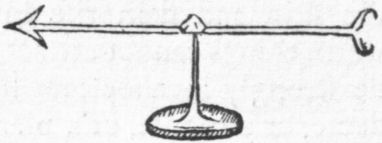
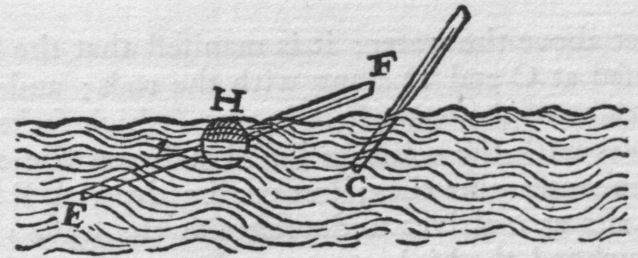
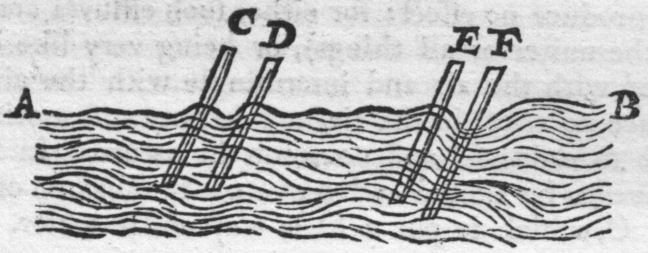
elebrated has the fame of the loadstone and of amber ever been in the memoirs of the learned. Loadstone and also amber do some philosophers invoke when in explaining many secrets their senses become dim and reasoning cannot go further. Inquisitive theologians also would throw light on the divine mysteries set beyond the range of human sense, by means of loadstone and amber; just as idle Metaphysicians, when they are setting up and teaching useless phantasms, have recourse to the loadstone as if it were a Delphick sword, an illustration always applicable to everything. But physicians even (with the authority of Galen), desiring to confirm the belief in the attraction of purgative medicines by means of the likeness of substance and the familiarities of the juices—truly a vain and useless error—bring in the loadstone as witness as being a nature of great authority and of conspicuous efficacy and a remarkable body. So in very many cases there are some who, when they are pleading a cause and cannot give a reason for it, bring in loadstone and amber as though they were personified witnesses. But these men (apart from that common error) being ignorant that the causes of magnetical motions are widely different from the forces of amber, easily fall into error, and are themselves the more deceived by their own cogitations. For in other bodies a conspicuous force of attraction manifests itself otherwise than in loadstone; like as in amber, concerning which some things must first be said, that it may appear what is that attaching of bodies, and how it is different from and foreign to the magnetical actions; those mortals being still ignorant, who think that inclination to be an attraction, and compare it with the magnetick coitions. The Greeks call it ἤλεκτρον[108] because it attracts straws to itself, when it is warmed by rubbing; then it is called ἅρπαξ[109]; and χρυσοφόρον from its golden colour. But the Moors call it Carabe[110], because they are accustomed to offer the same in sacrifices and in the worship of the Gods. For Carab signifies to offer in Arabic; so Carabe, an offering: or seizing chaff, as Scaliger quotes from Abohalis, out of the Arabic or Persian language. Some also call it Amber, especially the Indian and Ethiopian amber, called in Latin Succinum, as if it were a juice[111]. The Sudavienses or Sudini[112] call it geniter, as though it were generated terrestrially. The errors of the ancients concerning its nature and origin having been exploded, it is certain that amber comes for the most part from the sea, and the rustics collect it on the coast after the more violent storms, with nets and other tackle; as among the Sudini of Prussia; and it is also found sometimes on the coast of our own Britain. It seems, however, to be produced also in the soil and at spots of some depth, like other bitumens; to be washed out by the waves of the sea; and to become concreted more firmly from the nature and saltness of the sea-water. For it was at first a soft and viscous material; wherefore also it contains enclosed and entombed in pieces of it, shining in eternal sepulchres, flies, grubs, gnats, ants; which have all flown or crept or fallen into it when it first flowed forth in a liquid state[113]. The ancients and also more recent writers recall (experience proving the same thing), that amber attracts straws and chaff[114]. The same is also done by jet[115], which is dug out of the earth in Britain, in Germany, and in very many lands, and is a rather hard concretion from black bitumen, and as it were a transformation into stone. There are many modern authors[116] who have written and copied from others about amber and jet[117] attracting chaff, and about other substances generally unknown; with whose labours the shops of booksellers are crammed. Our own age has produced many books about hidden, abstruse, and occult causes and wonders, in all of which amber and jet are set forth as enticing chaff; but they treat the subject in words alone, without finding any reasons or proofs from experiments, their very statements obscuring the thing in a greater fog, forsooth in a cryptic, marvellous, abstruse, secret, occult, way. Wherefore also such philosophy produces no fruit, because very many philosophers, making no investigation themselves, unsupported by any practical experience, idle and inert, make no progress by their records, and do not see what light they can bring to their theories; but their philosophy rests simply on the use of certain Greek words, or uncommon ones; after the manner of our gossips and barbers nowadays, who make show of certain Latin words to an ignorant populace as the insignia of their craft, and snatch at the popular favour. For it is not only amber and * jet (as they suppose) which entice small bodies[118]; but Diamond, Sapphire, Carbuncle, Iris gem[119], Opal, Amethyst, Vincentina, and Bristolla (an English gem or spar)[120], Beryl, and Crystal[121] do the same. Similar powers of attraction are seen also to be possessed by glass (especially when clear and lucid), as also by false gems made of glass or Crystal, by glass of antimony, and by many kinds of spars from the mines, and by Belemnites. Sulphur also attracts, and mastick, and hard sealing-wax[122] compounded of lac tinctured of various colours. Rather hard resin entices, as does orpiment[123], but less strongly; with difficulty also and indistinctly under a suitable dry sky[124], Rock salt, muscovy stone, and rock alum. This one may see when the air is sharp and clear and rare in mid-winter, when the emanations from the earth hinder electricks less, and the electrick bodies become * more firmly indurated; about which hereafter. These substances draw everything, not straws and chaff only[125], but all metals, woods, leaves, stones, earths, even water and oil, and everything which is subject to our senses, or is solid; although some write that amber does not attract anything but chaff and certain twigs; (wherefore Alexander Aphrodiseus falsely declares the question of amber to be inexplicable, because it attracts dry chaff only, and not basil leaves[126]), but these are the utterly false and disgraceful tales of the writers. But in order that you may be able clearly to test how such attraction occurs[127], and what those materials[128] are which thus entice other bodies (for even if bodies incline towards some of these, yet on account of weakness they seem not to be raised by them, but are more easily turned), make yourself a versorium of any metal you like, three or four digits in length, resting rather lightly on its point of support after the manner of a magnetick needle, to one end of which bring up a piece of amber or a smooth and polished gem which has been gently rubbed; for the versorium turns forthwith. Many things are thereby seen to attract, both those which are formed by nature alone, and those which are by art prepared, fused, and mixed; nor is this so much a singular property of one or two things (as is commonly supposed), but the manifest nature of very many, both of simple substances, remaining merely in their own form, and of compositions, as of hard sealing-wax, & of certain other mixtures besides, made of unctuous stuffs. We must, however, investigate more fully whence that tendency arises, and what those forces be, concerning which a few men have brought forward very little, the crowd of philosophizers nothing at all. By Galen three kinds of attractives in general were recognized in nature: a First class of those substances which attract by their elemental quality, namely, heat; the Second is the class of those which attract by the succession of a vacuum; the Third is the class of those which attract by a property of their whole substance, which are also quoted by Avicenna and others. These classes, however, cannot in any way satisfy us; they neither embrace the causes of amber, jet, and diamond, and of other similar substances (which derive their forces on account of the same virtue); nor of the loadstone, and of all magnetick substances, which obtain their virtue by a very dissimilar and alien influence from them, derived from other sources. Wherefore also it is fitting that we find other causes of the motions, or else we must wander (as in darkness), with these men, and in no way reach the goal. Amber truly does* not allure by heat, since if warmed by fire and brought near straws, it does not attract them, whether it be tepid, or hot, or glowing, or even when forced into the flame. Cardan (as also Pictorio) reckons that this happens in no different way[129] than with the cupping-glass, by the force of fire. Yet the attracting force of the cupping-glass does not really come from the force of fire. But he had previously said that the dry substance wished to imbibe fatty humour, and therefore it was borne towards it. But these statements are at variance with one another, and also foreign to reason. For if amber had moved towards its food, or if other bodies had inclined towards amber as towards provender, there would have been a diminution of the one which was devoured, just as there would have been a growth of the other which was sated. Then why should an attractive force of fire be looked for in amber? If the attraction existed from heat, why should not very many other bodies also attract, if warmed by fire, by the sun, or by friction? Neither can the attraction be on account of the dissipating of the air, when it takes place in open air (yet Lucretius the poet adduces this as the reason for magnetical motions). Nor in the cupping-glass can heat or fire attract by feeding on air: in the cupping-glass air, having been exhausted into flame, when it condenses again and is forced into a narrow space, makes the skin and flesh rise in avoiding a vacuum. In the open air warm things cannot attract, not metals even or stones, if they should * be strongly incandescent by fire. For a rod of glowing iron, or a flame, or a candle, or a blazing torch, or a live coal, when they are brought near to straws, or to a versorium, do not attract; yet at the same time they manifestly call in the air in succession; because they consume it, as lamps do oil. But concerning heat, how it is reckoned by the crowd of philosophizers, in natural philosophy and in materia medica to exert an attraction otherwise than nature allows, to which true attractions are falsely imputed, we will discuss more at length elsewhere, when we shall determine what are the properties of heat and cold. They are very general qualities or kinships of a substance, and yet are not to be assigned as true causes, and, if I may say so, those philosophizers utter some resounding words; but about the thing itself prove nothing in particular. Nor does this attraction accredited to amber arise from any singular quality of the substance or kinship, since by more thorough research we find the same effect in very many other bodies; and all bodies, moreover, of whatever quality, are allured by all those bodies. Similarity also is not the cause; because all things around us placed on this globe of the earth, similar and dissimilar, are allured by amber and bodies of this kind; and on that account no cogent analogy is to be drawn either from similarity or identity of substance. But neither do similars mutually attract one another, as stone stone, flesh flesh, nor aught else outside the class of magneticks and electricks. Fracastorio would have it that "things which mutually attract one another are similars, as being of the same species, either in action or in right subjection. Right subjection is that from which is emitted the emanation which attracts and which in mixtures often lies hidden on account of their lack of form, by reason of which they are often different in act from what they are in potency. Hence it may be that hairs and twigs move towards amber and towards diamond, not because they are hairs, but because either there is shut up in them air or some other principle, which is attracted in the first place, and which bears some relation and analogy to that which attracts of itself; in which diamond and amber agree through a principle common to each." Thus far Fracastorio. Who if he had observed by a large number of experiments that all bodies are drawn to electricks except those which are aglow and aflame, and highly rarefied, would never have given a thought to such things. It is easy for men of acute intellect, apart from experiments and practice, to slip and err. In greater error do they remain sunk who maintain these same substances to be not similar, but to be substances near akin; and hold that on that account a thing moves towards another, its like, by which it is brought to more perfection. But these are ill-considered views; for towards all electricks all things move[130] except such as are aflame or are too highly rarefied, as air, which is the universal effluvium of this globe and of the world. Vegetable substances draw moisture by which their shoots are rejoiced and grow; from analogy with that, however, Hippocrates, in his De Natura Hominis, Book I., wrongly concluded that the purging of morbid humour took place by the specifick force of the drug. Concerning the action and potency of purgatives we shall speak elsewhere. Wrongly also is attraction inferred in other effects; as in the case of a flagon full of water, when buried in a heap of wheat, although well stoppered, the moisture is drawn out; since this moisture is rather resolved into vapour by the emanation of the fermenting wheat, and the wheat imbibes the freed vapour. Nor do elephants' tusks attract moisture, but drive it into vapour or absorb it. Thus then very many things are said to attract, the reasons for whose energy must be sought from other causes. Amber in a fairly large mass allures, if* it is polished; in a smaller mass or less pure it seems not to attract without friction. But very many electricks (as precious stones and some other substances) do not attract at all unless rubbed. On the other hand many gems, as well as other bodies, are polished, yet do* not allure, and by no amount of friction are they aroused; thus the emerald, agate, carnelian, pearls, jasper, chalcedony, alabaster, porphyry, coral, the marbles, touchstone, flint, bloodstone, emery[131], do not acquire any power; nor do bones, or ivory, or the hardest woods, as ebony, nor do cedar, juniper, or cypress; nor do metals, silver, gold, brass, iron, nor any loadstone, though many of them are finely polished and shine. But on the other hand there are some other polished substances of which we have spoken before, toward which, when they have been rubbed, bodies incline. This we shall understand only when we have more closely looked into the prime origin of bodies. It is plain to all, and all admit, that the mass of the earth, or rather the structure and crust of the earth, consists of a twofold material, namely, of fluid and humid matter, and of material of more consistency and dry. From this twofold nature or the more simple compacting of one, various substances take their rise among us, which originate in greater proportion now from the earthy, now from the aqueous nature. Those substances which have received their chief growth from moisture, whether aqueous or fatty, or have taken on their form by a simpler compacting from them, or have been compacted from these same materials in long ages, if they have a sufficiently firm hardness, if rubbed after they have been polished and when they remain bright with the friction—towards those substances everything, if presented to them in the air, turns, if its too heavy weight does not prevent it. For amber has been compacted of moisture, and jet also. Lucid gems are made of water; just as Crystal[132], which has been concreted from clear water, not always by a very great cold, as some used to judge, and by very hard frost, but sometimes by a less severe one, the nature of the soil fashioning it, the humour or juices being shut up in definite cavities, in the way in which spars are produced in mines. So clear glass is fused out of sand, and from other substances, which have their origin in humid juices. But the dross of metals, as also metals, stones, rocks, woods, contain earth rather, or are mixed with a good deal of earth; * and therefore they do not attract. Crystal, mica, glass, and all electricks do not attract if they are burnt or roasted; for their primordial supplies of moisture perish by heat, and are changed and exhaled. All things therefore which have sprung from a predominant moisture and are firmly concreted, and retain the appearance of spar and its resplendent nature in a firm and compact body, allure all bodies, whether humid or dry. Those, however, which partake of the true earth-substance or are very little different from it, are seen to attract also, but from a far different reason, and (so to say) magnetically; concerning these we intend to speak afterwards. But those substances which are more mixed of water and earth, and are produced by the equal degradation of each element (in which the magnetick force of the earth is deformed and remains buried; while the watery humour, being fouled by joining with a more plentiful supply of earth, has not concreted in itself but is mingled with earthy matter), can in no way of themselves attract or move from its place anything which they do not touch. On this account metals, marbles, flints, woods, herbs, flesh, and very many other things can neither allure nor solicit any body either magnetically or electrically. (For it pleases us to call that an electrick force, which hath * its origin from the humour.) But substances consisting mostly of humour, and which are not very firmly compacted by nature (whereby do they neither bear rubbing, but either melt down and become soft, or are not levigable, such as pitch, the softer kinds of resin, camphor, galbanum, ammoniack[133], storax, asafœtida, benzoin, asphaltum, especially in rather warm weather) towards them small bodies are not borne; for without rubbing most electricks do not * emit their peculiar and native exhalation and effluvium. The resin turpentine when liquid does not attract; for it cannot be rubbed; but if it has hardened into a mastick it does attract. But now at length we must understand why small bodies turn towards those substances which have drawn their origin from water; by what force and with what hands (so to speak) electricks seize upon kindred natures. In all bodies in the world two causes or principles have been laid down, from which the bodies themselves were produced, matter and form[134]. Electrical motions become strong from matter, but magnetick from form chiefly; and they differ widely from one another and turn out unlike, since the one is ennobled by numerous virtues and is prepotent; the other is ignoble and of less potency, and mostly restrained, as it were, within certain barriers; and therefore that force must at times be aroused by attrition or friction, until it is at a dull heat and gives off an effluvium and a polish is induced on the body. For spent air, either blown out of the mouth or given* off from moister air, chokes the virtue. If indeed either a sheet of paper or a piece of linen be interposed, there will be no movement. But a loadstone, without friction or heat, whether dry or suffused with moisture, as well in air as in water, invites magneticks, even with the most solid bodies interposed, even planks of wood or pretty thick slabs of stone or sheets of metal. A loadstone appeals to magneticks* only; towards electricks all things move. A loadstone[135] raises great weights; so that if there is a loadstone weighing two ounces and strong, it attracts half an ounce or a whole ounce. An electrical substance only attracts very small weights; as, for instance, a piece of amber of three ounces weight, when rubbed, scarce raises a fourth part of a grain of barley. But this attraction of amber and of electrical substances must be further investigated; and since there is this particular affection of matter, it may be asked why is amber rubbed, and what affection is produced by the rubbing, and what causes arise which make it lay hold on everything? As a result of friction it grows slightly warm and becomes smooth; two results which must often occur together. A large polished fragment of amber or jet attracts indeed, even without friction, but less strongly; but if it be brought gently near a flame or a live coal, so that it equally becomes warm, it does not attract small bodies because* it is enveloped in a cloud from the body of the flaming substance, which emits a hot breath, and then impinges upon it vapour from a foreign body which for the most part is at variance with the nature of amber. Moreover the spirit of the amber which is called forth is enfeebled by alien heat; wherefore it ought not to have heat excepting that produced by motion only and friction, and, as it were, its own, not sent into it by other bodies. For as the igneous heat emitted from any burning substance cannot be so used that electricks may acquire their force from it; so also heat from the solar rays does not fit an electrick by the loosening of its* right material, because it dissipates rather and consumes it (albeit a body which has been rubbed retains its virtue longer exposed to the rays of the sun than in the shade; because in the shade the effluvia are condensed to a greater degree and more quickly). Then again the fervour from the light of the Sun aroused by means of a* burning mirror confers no vigour on the heated amber[136]; indeed it dissipates and corrupts all the electrick effluvia. Again, burning* sulphur and hard wax, made from shell-lac, when aflame do not allure; for heat from friction resolves bodies into effluvia, which flame consumes away. For it is impossible for solid electricks to be resolved into their own true effluvia otherwise than by attrition, save in the case of certain substances which by reason of innate vigour emit effluvia constantly. They are rubbed with bodies which do not befoul their surface, and which produce a polish, as pretty stiff silk or a rough wool rag which is as little soiled as possible, or the dry palm. Amber also is rubbed with amber, with diamond, and with glass, and numerous other substances. Thus are electricks manipulated. These things being so, what is it which moves? Is it the body itself, inclosed within its own circumference? Or is it something imperceptible to us, which flows out from the substance into the ambient air? Somewhat as Plutarch opines, saying in his Quæstiones Platonicæ[137]: That there is in amber something flammable or something having the nature of breath, and this by the attrition of the surface being emitted from its relaxed pores attracts bodies. And if it be an effusion does it seize upon the air whose motion the bodies follow, or upon the bodies themselves? But if amber allured the body itself, then what need were there of friction, if it is bare and smooth? Nor does the force arise from the light which is reflected from a smooth and polished body; for a Gem of Vincent's rock[138], Diamond, and clear glass, attract when they are rough; but not so powerfully and quickly, because they are not so readily cleansed from extraneous moisture on the surface, and are not rubbed equally so as to be copiously resolved at that part. Nor does the sun by its own beams of light and its rays, which are of capital importance in nature, attract bodies in this way; and yet the herd of philosophizers considers that humours are attracted by the sun, when it is only denser humours that are being turned into thinner, into spirit and air; and so by the motion of effusion they ascend into the upper regions, or the attenuated exhalations are raised up from the denser air. Nor does it seem to take place from the effluvia attenuating the air, so that bodies impelled by the denser air penetrate towards the source of the rarefaction; in this case both hot and flaming bodies would also allure other bodies; but not even the lightest chaff, or any versorium moves towards a flame. If there is a flow and rush of air towards the body, how can a small diamond of the size of a pea[139] summon towards itself so much air, that it seizes hold of a biggish long body placed in equilibrio (the air about one or other very small part of an end being attracted)? It ought also to have slopped or moved more slowly, before it came into contact with the body, especially if the piece of amber was rather broad and flat, from the accumulation of air on the surface of the amber and its flowing back again. If it is because the effluvia are thinner, and denser vapours come in return, as in breathing, then the body would rather have had a motion toward the electrick a little while after the beginning of the application; but when electricks which have been rubbed are applied quickly to * a versorium then especially at once they act on the versorium, and it is attracted more when near them. But if it is because the rarefied effluvia produce a rarefied medium, and on that account bodies are more prone to slip down from a denser to a more attenuated medium; they might have been carried from the side in this way or downwards, but not to bodies above them; or the attraction and apprehension of contiguous bodies would have been momentary only. But with a single friction jet and amber draw and attract bodies to them strongly and for a long time, sometimes for the twelfth part of an hour, especially in clear weather. But if the mass of amber be rather large, and the surface polished, it attracts without friction. Flint is rubbed and emits by attrition an inflammable matter that turns into sparks and heat. Therefore the denser effluvia of flint producing fire are very far different from electrical effluvia, which on account of their extreme attenuation do not take fire, nor are fit material for flame. Those effluvia are not of the nature of breath, for when emitted they do not propel anything, but are exhaled without sensible resistance and touch bodies. They are highly attenuated humours much more subtile than the ambient air; and in order that they may occur, bodies are required produced from humour and concreted with a considerable degree of hardness. Non-electrick bodies are not resolved into humid effluvia, and those effluvia mix with the common and general effluvia of the earth, and are not peculiar. Also besides the attraction of bodies, they retain them longer. It is probable therefore that amber does exhale something peculiar to * itself, which allures bodies themselves, not the intermediate air. Indeed it plainly does draw the body itself in the case of a spherical drop of water standing on a dry surface; for a piece of amber applied to it at a suitable distance pulls the nearest parts out of their position and draws it up into a cone; otherwise, if it were * drawn by means of the air rushing along, the whole drop would have moved. That it does not attract the air is thus demonstrated: take a very thin wax candle, which makes a very small and clear flame; bring up to this, within two digits or any convenient distance, a piece of amber or jet, a broad flat piece, well prepared * and skilfully rubbed, such a piece of amber as would attract bodies far and wide, yet it does not disturb the flame; which of necessity would have occurred, if the air was disturbed, for the flame would have followed the current of air. As far as the effluvia are sent out, so far it allures; but as a body approaches, its motion is accelerated, stronger forces drawing it; as also in the case of magneticks and in all natural motion; not by attenuating or by expelling the air, so that the body moves down into the place of the air which has gone out[140]; for thus it would have allured only and would not have retained; since it would at first also have repelled approaching bodies just as it drives the air itself; but indeed a particle, be it ever so small, does not avoid the first application made very quickly after rubbing. An effluvium exhales from amber and is emitted by rubbing: pearls, carnelian, agate, jasper, chalcedony, coral, metals, and other substances of that kind, when they are rubbed, produce no effect. Is there not also something which is exhaled from them by heat and attrition? Most truly; but from grosser bodies more blended with the earthy nature, that which is exhaled is gross and spent; for even towards very many electricks, if they are rubbed * too hard, there is produced but a weak attraction of bodies, or none at all; the attraction is best when the rubbing has been gentle and very quick; for so the finest effluvia are evoked. The effluvia arise from the subtile diffusion of humour, not from excessive and turbulent violence; especially in the case of those substances which have been compacted from unctuous matter, which when the atmosphere is very thin, when the North winds, and amongst us (English) the East winds, are blowing, have a surer and firmer effect, but during South winds and in damp weather, only a weak one; so that those * substances which attract with difficulty in clear weather, in thick weather produce no motion at all; both because in grosser air lighter substances move with greater difficulty; and especially because the effluvia are stifled, and the surface of the body that has been rubbed is affected by the spent humour of the air, and the effluvia are stopped at their very starting. On that account in the case of amber, jet, and sulphur, because they do not so easily take up moist air on their surface and are much more plenteously set free, that force is not so quickly suppressed as in gems, crystal, glass, and substances of that kind which collect on their surface the moister breath which has grown heavy. But it may be asked why does amber allure water, when water placed on its surface removes its action? Evidently because it is one thing to suppress it at its very start, and quite another to extinguish it when it has been * emitted. So also thin and very fine silk, in common language Sarcenet, placed quickly on the amber, after it has been rubbed, * hinders the attraction of the body; but if it is interposed in the intervening space, it does not entirely obstruct it. Moisture also from spent air, and any breath blown from the mouth, as well as water put on the amber, immediately extinguishes its force. But oil, which is light and pure, does not hinder it; for although amber * be rubbed with a warm finger dipped in oil, still it attracts. But * if that amber, after the rubbing, is moistened with aqua vitæ or spirits of wine, it does not attract; for it is heavier than oil, denser, and when added to oil sinks beneath it. For oil is light and rare, and does not resist the most delicate effluvia. A breath therefore, proceeding from a body which had been compacted from humour or from a watery liquid, reaches the body to be attracted; the body that is reached is united with the attracting body, and the one body lying near the other within the peculiar radius of its effluvia makes one out of two; united, they come together into the closest accord, and this is commonly called attraction. This unity, according to the opinion of Pythagoras, is the principle of all things, and through participation in it each several thing is said to be one. For since no action can take place by means of matter unless by contact, these electricks are not seen to touch, but, as was necessary, something is sent from the one to the other, something which may touch closely and be the beginning of that incitement. All bodies are united and, as it were, cemented together in some way by moisture; so that a wet body, when it touches another body, attracts it, if it is small. So wet bodies on the surface of water attract wet bodies. But the peculiar electrical effluvia, which are the most subtile material of diffuse humour, entice corpuscles. Air (the common effluvium of the earth) not only unites the disjointed parts, but the earth calls bodies back to itself by means of the intervening air; otherwise bodies which are in higher places would not so eagerly make for the earth. Electrical effluvia differ greatly from air; and as air is the effluvium of the earth, so electricks have their own effluvia and properties, each of them having by reason of its peculiar effluvia a singular tendency toward unity, a motion toward its origin and fount, and toward the body emitting the effluvia. But those substances which by attrition emit a gross or vapourous or aeriform effluvium produce no effect; for either such effluvia are alien to the humour (the uniter of all things), or being very like common air are blended with the air and intermingle with the air, wherefore they produce no effect in the air, and do not cause motions different from those so universal and common in nature. In like manner * bodies strive to be united and move on the surface of water, just as the rod C, which is put a little way under water. It is plain that the rod E F, which floats on the water by reason of the cork H, and only has its wet end F above the surface of the water, is attracted by the rod C, if the rod C is wet a little above the surface of the water; they are suddenly united, just as a drop adjoining a drop is attracted. So a wet thing on the surface of water seeks union with a wet thing, since the surface of the water is raised on both; and they immediately flow together, just like drops or bubbles. But they are in much greater proximity than electricks, and are united by their clammy natures. If, however, the whole rod be dry * above the water, it no longer attracts, but drives away the stick E F. The same is seen in those bubbles also which are made on water. For we see one drive towards another, and the quicker the nearer they are. Solids are impelled towards solids by the medium of liquid: for example, touch the end of a versorium with the end of a rod on which a drop of water is projecting; as soon as the versorium touches the top of the droplet, immediately it is joined * strongly by a swift motion to the body of the rod. So concreted humid things attract when a little resolved into air (the effluvia in the intermediate space tending to produce unity); for water has on wet bodies, or on bodies wet with abundant moisture on the top of water, the force of an effluvium. Clear air is a convenient medium for an electrical effluvium excited from concreted humour. Wet bodies projecting above the surface of water (if they are near) run together so that they may unite; for the surface of the water is raised around wet substances. But a dry thing is not impelled to a wet one, nor a wet to a dry, but seems to run away. For if all is dry above the water, the surface of the water close to it does not rise, but shuns it, the wave sinking around a dry thing. So neither does a wet thing move towards the dry rim of a vessel; but it seeks a wet rim. A B is the surface of the water; C D two rods, which stand up wet above the water; it is manifest that the surface of the water is raised at C and D along with the rods; and therefore the rod C, by reason of the water standing up (which seeks its level and unity), moves with the water to D. On E, on the other hand, a wet rod, the water also rises; but on the dry rod F the surface is depressed; and as it drives to depress also the wave rising on E in its neighbourhood, the higher wave at E turns away from F[141]; for it does not suffer itself to be depressed. All electrical attraction occurs through an intervening humour; so it is by reason of humour that all things mutually come together; fluids indeed and aqueous bodies on the surface of water, but concreted things, if they have been resolved into vapour, in air;—in air indeed, the effluvium of electricks being very rare, that it may the better permeate the medium and not impel it by its motion; for if that effluvium had been thick, as that of air, or of the winds, or of saltpetre burnt by fire, as the thick and foul effluvia given out with very great force, from other bodies, or air set free from humour by heat rushing out through a pipe (in the instrument of Hero of Alexandria, described in his book Spiritalia), then the effluvium would drive everything away, not allure it. But those rarer effluvia take hold of bodies and embrace them as if with arms extended, with the electricks to which they are united; and they are drawn to the source, the effluvia increasing in strength with the proximity. But what is that effluvium from crystal, glass, and diamond, since these are bodies of considerable hardness and firmly concreted? In order that such an effluvium should be produced, there is no need of any marked or perceptible flux[142] of the substance; nor is it necessary that the electrick should be abraded, or worn away, or deformed. Some odoriferous substances are fragrant for many years, exhaling continually, yet are not quickly consumed. Cypress wood as long as it is sound, and it lasts a very long time indeed, is redolent; as many learned men attest from experience. Such an electrick only for a moment, when stimulated by friction, emits powers far more subtile and more fine beyond all odours; yet sometimes amber, jet, sulphur, when they are somewhat easily let free into vapour, also pour out at the same time an odour; and on this account they allure with the very gentlest rubbing, often even without rubbing; they also excite more strongly, and retain hold for a longer time, because they have stronger effluvia and last longer. But diamond, glass, rock-crystal, * and numerous others of the harder and firmly concreted gems first grow warm: therefore at first they are rubbed longer, and then they also attract strongly; nor are they otherwise set free into vapour. Everything rushes towards electricks[143] excepting flame, and flaming bodies, and the thinnest air. Just as they do not draw flame, in like manner they do not affect a versorium, if on any side it is very near to a flame, either the flame of a lamp or of any burning matter. It is manifest indeed that the effluvia are destroyed by flame and igneous * heat; and therefore they attract neither flame nor bodies very near a flame. For electrical effluvia have the virtue of, and are analogous with, extenuated humour; but they will produce their effect, union and continuity, not by the external impulse of vapours, not by heat and attenuation of heated bodies, but by their humidity itself attenuated into its own peculiar effluvia. Yet they entice * smoke sent out by an extinguished light; and the more that smoke is attenuated in seeking the upper regions, the less strongly is it turned aside; for things that are too rarefied are not drawn to them; and at length, when it has now almost vanished, it does not * incline towards them at all, which is easily seen against the light. When in fact the smoke has passed into air, it is not moved, as has been demonstrated before. For air itself, if somewhat thin, is not attracted in any way, unless on account of succeeding that which has vacated its place, as in furnaces and such-like, where the air is fed in by mechanical devices for drawing it in. Therefore an effluvium resulting from a non-fouling friction, and one which is not changed by heat, but which is its own, causes union and coherency, a prehension and a congruence towards its source, if only the body to be attracted is not unfitted for motion, either by the surroundings of the bodies or by its own weight. To the bodies therefore of the electricks themselves small bodies are borne. The effluvia extend out their virtue—effluvia which are proper and peculiar to them, and sui generis, differing from common air, being produced from humour, excited by a calorifick motion from attrition and attenuation. And as if they were material rays[144], they hold and take up chaff, straws, and twigs, until they become extinct or vanish away: and then they (the corpuscles) being loosed again, attracted by the earth itself, fall down to the earth. The difference between Magneticks and Electricks[145] is that all magneticks run together with mutual forces; electricks only allure; that which is allured is not changed by an implanted force, but that which has moved up to * them voluntarily rests upon them by the law of matter. Bodies are borne towards electricks in a straight line towards the centre of the electrick; a loadstone draws a loadstone directly at the poles only, in other parts obliquely and transversely, and in this way also they adhere and hang to one another. Electrical motion is a motion of aggregation of matter; magnetical motion is one of disposition and conformation. The globe of the earth is aggregated and cohæres by itself electrically. The globe of the earth is directed and turned magnetically; at the same time also it both cohæres, and in order that it may be solid, is in its inmost parts cemented together.
CHAP. III.
Opinions of others on Magnetick Coition, which they call Attraction.
iscussion having now been made concerning electricks, the causes of magnetick coition must be set forth. We say coition, not attraction[146]. The word attraction unfortunately crept into magnetick philosophy from the ignorance of the ancients; for there seems to be force applied where there is attraction and an imperious violence dominates. For, if ever there is talk about magnetick attraction, we understand thereby magnetick coition, or a primary running together. Now in truth it will not be useless here first briefly to set forth the views given by others, both the ancient and the more modern writers. Orpheus in his hymns[147] narrates that iron is attracted by loadstone as the bride to the arms of her espoused. Epicurus holds that iron is attracted by a loadstone just as straws by amber; "and," he adds, "the Atoms and indivisible particles which are given off by the stone and by the iron fit one another in shape; so that they easily cling to one another; when therefore these solid particles of stone or of iron strike against one another, then they rebound into space, being brought against one another by the way, and they draw the iron along with them." But this cannot be the case in the least; since solid and very dense substances interposed, even squared blocks of marble, do not obstruct this power, though they can separate atoms from atoms; and the stone and the iron would be speedily dissipated into such profuse and perpetual streams of atoms. In the case of amber, since there is another different method of attracting, the Epicurean atoms cannot fit one another in shape. Thales, as Aristotle writes, De Anima, Bk. I., deemed the loadstone to be endowed with a soul of some sort, because it had the power of moving and drawing iron towards it. Anaxagoras also held the same view. In the Timæus of Plato there is an idle fancy[148] about the efficacy of the stone of Hercules. For he says that "all flowings of water, likewise the fallings of thunderbolts, and the things which are held wonderful in the attraction of Amber, and of the Herculean stone, are such that in all these there is never any attraction; but since there is no vacuum, the particles drive one another mutually around, and when they are dispersed and congregated together, they all pass, each to its proper seat, but with changed places; and it is forsooth, on account of these intercomplicated affections that the effects seem to arouse the wonder in him who has rightly investigated them." Galen does not know why Plato should have seen fit to select the theory of circumpulsion rather than that of attraction (differing almost on this point alone from Hippocrates), though indeed it does not agree in reality with either reason or experiment. Nor indeed is either the air or anything else circumpelled; and the bodies themselves which are attracted are carried towards the attracting substance not confusedly, or in an orbe. Lucretius, the poet of the Epicurean sect, sang his opinion of it thus:
[149]First, then, know, Ceaseless effluvia from the magnet flow,— Effluvia, whose superior powers expel The air that lies between the stone and steel. A vacuum formed, the steely atoms fly In a link'd train, and all the void supply; While the whole ring to which the train is join'd The influence owns, and follows close behind. &c.
Such a reason Plutarch also alleges in the Quæstiones Platonicæ: That that stone gives off heavy exhalations, whereby the adjacent air, being impelled along, condenses that which is in front of it; and that air, being driven round in an orbe and reverting to the place it had vacated, drags the iron forcibly along with it. The following explanation of the virtues of the loadstone and of amber is propounded by Johannes Costæus of Lodi[150]. For he would have it that "there is mutual work and mutual result, and therefore the motion is partly due to the attraction of the loadstone and partly to a spontaneous movement on the part of the iron: For as we say that vapours issuing from the loadstone hasten by their own nature to attract the iron, so also the air repelled by the vapours, whilst seeking a place for itself, is turned back, and when turned back, it impels the iron, lifts it up, as it were, and carries it along; the iron being of itself also excited somehow. So by being drawn out and by a spontaneous motion, and by striking against another substance, there is in some way produced a composite motion, which motion would nevertheless be rightly referred to attraction, because the terminus from which this motion invariably begins is the same terminus at which it ends, which is the characteristic proper of an attraction." There is certainly a mutual action, not an operation, nor does the loadstone attract in that way; nor is there any impulsion. But neither is there that origination of the motion by the vapours, and the turning of them back, which opinion of Epicurus has so often been quoted by others. Galen errs in his De Naturalibus Facultatibus, Book I., chap. 14, when he expresses the view that whatever agents draw out either the venom of serpents or darts also exhibit the same power as the loadstone. Now of what sort may be the attraction of such medicaments (if indeed it may be called attraction) we shall consider elsewhere. Drugs against poisons or darts have no relation to, no similitude with, the action of magnetical bodies. The followers of Galen (who hold that purgative medicaments attract because of similitude of substance) say that bodies are attracted on account of similitude, not identity, of substance; wherefore the loadstone draws iron, but iron does not draw iron. But we declare and prove that this happens in primary bodies, and in those bodies that are pretty closely related to them and especially like in kind one to another, on account of their identity; wherefore also loadstone draws loadstone and likewise iron iron; every really true earth draws earth; and iron fortified by a loadstone within the orbe of whose virtue it is placed draws iron more strongly than it does the loadstone. Cardan asks why no other metal is attracted by any other stone; because (he replies) no metal is so cold as iron; as if indeed cold were the cause of the attraction, or as if iron were much colder than lead, which neither follows nor is deflected towards a loadstone. But that is a chilly story, and worse than an old woman's tale. So also is the notion that the loadstone is alive and that iron is its food. But how does the loadstone feed on the iron, when the filings in which it is kept are neither consumed nor become lighter? Cornelius Gemma, Cosmographia, Bk. X.[151], holds that the loadstone draws iron to it by insensible rays, to which opinion he conjoins a story of a sucking fish and another about an antelope. Guilielmus Puteanus[152] derives it, "not from any property of the whole substance unknown to any one and which cannot be demonstrated in any way (as Galen, and after him almost all the physicians, have asserted), but from the essential nature of the thing itself, as if moving from the first by itself, and, as it were, by its own most powerful nature and from that innate temperament, as it were an instrument, which its substance, its effective nature uses in its operations, or a secondary cause and deprived of its intermediary"; so the loadstone attracts the iron not without a physical cause and for the sake of some good. But there is no such thing in other substances springing from some material form; unless it were primary, which he does not recognize. But certes good is shown to the loadstone by the stroke of the iron (as it were, association with a friend); yet it cannot either be discovered or conceived how that disposition may be the instrument of form. For what can temperament do in magnetical motions, which must be compared with the fixed, definite, constant motions of the stars, at great distances in case of the interposition of very dense and thick bodies? To Baptista Porta[153] the loadstone seems a sort of mixture of stone and iron, in such a way that it is an iron stone or stony iron. "But I think" (he says) "the Loadstone is a mixture of stone and iron, as an iron stone, or a stone of iron. Yet do not think the stone is so changed into iron, as to lose its own Nature, nor that the iron is so drowned in the stone, but it preserves itself; and whilst one labours to get the victory of the other, the attraction is made by the combat between them. In that body there is more of the stone than of iron; and therefore the iron, that it may not be subdued by the stone, desires the force and company of iron; that being not able to resist alone, it may be able by more help to defend itself.... The Loadstone draws not stones, because it wants them not, for there is stone enough in the body of it; and if one Loadstone draw another, it is not for the stone, but for the iron that is in it." As if in the loadstone the iron were a distinct body and not mixed up as the other metals in their ores! And that these, being so mixed up, should fight with one another, and should extend their quarrel, and that in consequence of the battle auxiliary forces should be called in, is indeed absurd. But iron itself, when excited by a loadstone, seizes iron no less strongly than the loadstone. Therefore those fights, seditions, and conspiracies in the stone, as if it were nursing up perpetual quarrels, whence it might seek auxiliary forces, are the ravings of a babbling old woman, not the inventions of a distinguished mage. Others have lit upon sympathy as the cause. There may be fellow-feeling, and yet the cause is not fellow-feeling; for no passion can rightly be said to be an efficient cause. Others hold likeness of substance, many others insensible rays as the cause; men who also in very many cases often wretchedly misuse rays, which were first introduced in the natural sciences by the mathematicians. More eruditely does Scaliger[154] say that the iron moves toward the loadstone as if toward its parent, by whose secret principles it may be perfected, just as the earth toward its centre. The Divine Thomas[155] does not differ much from him, when in the 7th book of his Physica he discusses the reasons of motions. "In another way," he says, "it may be said to attract a thing, because it moves it to itself by altering it in some way, from which alteration it happens that when altered it moves according to its position, and in this manner the loadstone is said to attract iron. For as the parent moves things whether heavy or light, in as far as it gives them a form, by means of which they are moved to their place; so also the loadstone gives a certain quality to the iron, in accordance with which it moves towards it." This by no means ill-conceived opinion this most learned man shortly afterwards endeavoured to confirm by things which had obtained little credence respecting the loadstone and the adverse forces of garlick. Cardinal Cusan[156] also is not to be despised. "Iron has," he says, "in the loadstone a certain principle of its own effluence; and whilst the loadstone by its own presence excites the heavy and ponderous iron, the iron is borne by a wonderful yearning, even above the motion of nature (by which in accordance with its weight it ought to tend downwards) and moves upwards, in uniting itself with its own principle. For if there were not in the iron a certain natural foretaste of the loadstone itself, it would not move to the loadstone any more than to any other stone; and unless there were in the stone a greater inclination for iron than for copper, there would not be that attraction." Such are the opinions expressed about the loadstone attracting (or the general sense of each), all dubious and untrustworthy. But those causes of the magnetical motions, which in the schools of the Philosophers are referred to the four elements and the prime qualities, we relinquish to the moths and the worms.
CHAP. IIII.
On Magnetick Force & Form, what it is; and on the cause of the Coition.
elinquishing the opinions of others on the attraction of loadstone, we shall now show the reason of that coition and the translatory nature of that motion. Since there are really two kinds of bodies, which seem to allure bodies with motions manifest to our senses, Electricks and Magneticks, the Electricks produce the tendency by natural effluvia from humour; the Magneticks by agencies due to form, or rather by the prime forces. This form is unique, and particular, not the formal cause of the Peripateticks, or the specifick in mixtures, or the secondary form; not the propagator of generating bodies, but the form of the primary and chief spheres and of those parts of them which are homogeneous and not corrupted, a special entity and existence, which we may call a primary and radical and astral form; not the primary form of Aristotle, but that unique form, which preserves and disposes its own proper sphere. There is one such in each several globe, in the Sun, the moon, and the stars; one also in the earth, which is that true magnetick potency which we call the primary vigour. Wherefore there is a magnetick nature peculiar to the earth and implanted in all its truer parts in a primary and astonishing manner; this is neither derived nor produced from the whole heaven by sympathy or influence or more occult qualities, nor from any particular star; for there is in the earth a magnetick vigour of its own, just as in the sun and moon there are forms of their own, and a small portion of the moon settles itself in moon-manner toward its termini and form; and a piece of the sun to the sun, just as a loadstone to the earth and to a second loadstone by inclining itself and alluring in accordance with its nature. We must consider therefore about the earth what magnetical bodies are, and what is a magnet; then also about the truer parts of it, which are magnetical, and how they are affected as a result of the coition. A body which is attracted by an electrick is not changed by it, but remains unshaken and unchanged, as it was before, nor does it excel any the more in virtue. A loadstone draws magnetical substances, which eagerly acquire power from its strength, not in their extremities only, but in their inward parts and * their very marrow. For when a rod of iron is laid hold of, it is magnetically excited in the end by which it is laid hold of, and that force penetrates even to the other extremity, not through its surface only, but through the interior and all through the middle. Electrical bodies have material and corporeal effluvia. Is any such magnetical effluvium given off, whether corporeal or incorporeal? or is nothing at all given off that subsists? If it really has a body, that body must be thin and spiritual, since it is necessary that it should be able to enter into iron. Or what sort of an exhalation is it that comes from lead, when quicksilver which is bright and fluid is bound together by the odour merely and vapour of the lead, and remains, as it were, a firm metal? But even gold, which is exceedingly solid and dense, is reduced to a powder by the thin vapour of lead. Or, seeing that, as the quicksilver has entrance into gold, so the magnetical odour has entrance into the substance of the iron, how does it change it in its essential property, although no change is perceptible to our senses in the bodies themselves? For without ingression into the body, the body is not changed, as the Chemists not incorrectly teach. But if indeed these things resulted from a material ingression, then if strong and dense and thick substances had been interposed between the bodies, or if magnetical substances had been inclosed in the centres of the most solid and the densest bodies, the iron particles would not have suffered anything from the loadstone. But none the less they strive to come together and are changed. Therefore there is no such conception and origin of the magnetick powers; nor do the very minute portions of the stone exist, which have been wrongly imagined to exist by Baptista Porta, aggregated, as it were, into hairs, and arising from the rubbing of the stone which, sticking to the iron, constitute its strength. Electrick effluvia are not only impeded by any dense matter, but also in like manner by flames, or if a small flame is near, they do not allure. But as iron is not hindered by any obstacle from receiving force or motion from a loadstone, so it will pass through the midst of flames to the body of the loadstone and adhære to the stone. Let there be a flame or a candle near the stone; bring up a short piece of iron wire, and when it has come near, it will penetrate through the midst of the flames to the stone; * and a versorium turns towards the loadstone nor more slowly nor less eagerly through the midst of flames than through open air. So flames interposed do not hinder the coition. But if the iron itself became heated by a great heat, it is demonstrable that it would not be attracted. Bring a strongly ignited rod of iron near a magnetized versorium; the versorium remains steady and does not turn towards * such iron; but it immediately turns towards it, so soon as it has lost somewhat of its heat. When a piece of iron has been touched by a loadstone, if it be placed in a hot fire until it is perfectly red hot * and remain in the fire some considerable time, it will lose that magnetick strength it had acquired. Even a loadstone itself through a longish stay in the fire, loses the powers of attracting implanted and innate in it, and any other magnetick powers. And although certain veins of loadstone exhale when burnt a dark vapour of a black colour, or of a sulphurous foul odour, yet that vapour was not the soul, or the cause of its attraction of iron (as Porta thinks), nor do all loadstones whilst they are being baked or burnt smell of or exhale sulphur. It is acquired as a sort of inborn defect from a rather impure mine or matrix. Nor does anything analogous penetrate into the iron from that material corporeal cause, since the iron conceives the power of attracting and verticity from the loadstone, even if glass or gold or any other stone be interposed. Then also cast iron acquires the power of attracting iron, and verticity, from the verticity of the earth, as we shall afterwards plainly demonstrate in Direction. But fire destroys the magnetick virtues in a stone, not because it takes away any parts specially attractive, but because the consuming force of the flame mars by the demolition of the material the form of the whole; as in the human body the primary faculties of the soul are not burnt, but the charred body remains without faculties. The iron indeed may remain after the burning is completed and is not changed into ash or slag; nevertheless (as Cardan not inaptly says) burnt iron is not iron, but something placed outside its nature until it is reduced. For just as by the rigour of the surrounding air[157] water is changed from its nature into ice; so iron, glowing in fire, is destroyed by the violent heat, and has its nature confused and perturbed; wherefore also it is not attracted by a loadstone, and even loses that power of attracting in whatever way acquired, and acquires another verticity when, being, as it were, born again, it is impregnated by a loadstone or the earth, or when its form is revived, not having been dead but confused, concerning which many things are manifest in the change of verticity. Wherefore Fracastorio[158] does not confirm his opinion, that the iron is not altered; "for if it were altered," he says, "by the form of the loadstone, the form of the iron would have been spoiled." This alteration is not generation, but the restitution and reformation of a confused form. There is not therefore anything corporeal which comes from the loadstone or which enters the iron, or which is sent back from the iron when it is stimulated; but loadstone disposes loadstone by its primary form; iron, however, which is closely related to it, loadstone at the same time recalls to its conformate strength, and settles it; on account of which it rushes to the loadstone and eagerly conforms itself to it (the forces of each in harmony bringing them together). The coition also is not vague or confused, not a violent inclination of body to body, no rash and mad congruency; no violence is here applied to the bodies; there are no strifes or discords; but there is that concord (without which the universe would go to pieces), that analogy, namely, of the perfect and homogeneous parts of the spheres of the universe to the whole, and a mutual concurrency of the principal forces in them, tending to soundness, continuity, position, direction, and to unity. Wherefore in the case of such wonderful action and such a stupendous implanted vigour (diverse from other natures) the opinion of Thales of Miletus[159] was not very absurd, nor was it downright madness, in the judgment of Scaliger, for him to grant the loadstone a soul; for the loadstone is incited, directed, and orbitally moved by this force, which is all in all, and, as will be made clear afterwards, all in every part; and it seems to be very like a soul. For the power of moving itself seems to point to a soul; and the supernal bodies, which are also celestial, divine, as it were, are thought by some to be animated, because they move with admirable order. If two loadstones be set one over against the other, each in a boat, on the surface of water, they do not immediately run together, but first they turn towards one another, or the lesser conforms to the greater, by moving itself in a somewhat circular manner, and at length, when they are disposed according to their nature, they run together. In smelted iron which has not been excited by a magnet there is no need for such an apparatus; since it has no verticity, excepting what is adventitious and acquired, and that not stable and confirmed (as is the case with loadstone, even if the iron has been smelted from the best loadstone), on account of the confusion of the parts by fire when it flowed as a liquid; it suddenly acquires polarity and natural aptitude by the presence of the loadstone, by a powerful mutation, and by a conversion into a perfect magnet, and by an absolute metamorphosis; and it flies to the body of the magnet as if it were a real piece of loadstone. For a loadstone has no power, nor can a perfect loadstone do anything which iron when excited by loadstone cannot perform, even when it has not been touched but only placed in its vicinity. For when first it is within the orbe of virtue of the loadstone, though it may be some distance away, yet it is immediately changed, and has a renovated form, formerly indeed dormant and inert in body, now lively and strong, which will be clearly apparent in the demonstrations of Direction. So the magnetick coition is a motion of the loadstone and of the iron, not an action of one[160]; an ἐντελέχεια, of each, not ἔργον; a συνεντελέχεια or conjoint action, rather than a sympathy. There is properly no such thing as magnetick antipathy. For the flight and declination of the ends, or an entire turning about, is an action of each towards unity by the conjoint action and συνεντελέχεια of both. It has therefore newly put on the form, and on account of this being roused, it then, in order that it may more surely acquire it, rushes headlong on the loadstone, not with curves and turnings, as a loadstone to a loadstone. For since in a loadstone both verticity and the power disponent have existed through many ages, or from the very beginnings, have been inborn and confirmed, and also the special form of the terrestrial globe cannot easily be changed by another loadstone, as iron is changed; it happens from the constant nature of each, that one has not the sudden power over another of changing its verticity, but that they can only mutually come to agreement with each other. Again, iron which has been excited by a loadstone, * if that iron on account of obstacles should not be able to turn round immediately in accordance with its nature, as happens with a versorium, is laid hold of, when a loadstone approaches, on either side or at either end. Because, just as it can implant, so it can suddenly change the polarity and turn about the formal energies to any part whatever. So variously can iron be transformed when its form is adventitious and has not yet been long resident in the metal. In the case of iron, on account of the fusion of the substance when magnetick ore or iron is smelted, the virtue of its primary form, distinct before, is now confused; but an entire loadstone placed near it again sets up its primal activity; its adjusted and arranged form joins its allied strength with the loadstone; and both mutually agree and are leagued together magnetically in all their motions towards unity, and whether joined by bodily contact or adjusted within the orbe, they are one and the same. For when iron is smelted out of its own ore, or steel (the more noble kind of iron) out of its ore, that is, out of loadstone, the material is loosed by the force of the fire, and flows away, and iron as well as steel flow out from their dross and are separated from it; and the dross is either spoiled by the force of the fire and rendered useless, or is a kind of dregs of a certain imperfection and of mixture in the prominent parts of the earth. The material therefore is a purified one, in which the metallick parts, which are now mixed up by the melting, since those special forces of its form are confused and uncertain, by the approach of a loadstone are called back to life, as if to a kind of disponent form and integrity. The material is thus awakened and moves together into unity, the bond of the universe and the essential for its conservation. On this account and by the purging of the material into a cleaner body, the loadstone gives to the iron a greater force of attracting than there is in itself. For if iron dust * or an iron nail be placed over a large loadstone, a piece of iron joined to it takes away the filings and nail from the loadstone and retains them so long as it is near the loadstone; wherefore iron attracts iron more than loadstone does, if it have been conformed by a loadstone and remains within the orbe of its communicated form. A piece of iron even, skilfully placed near the pole of a loadstone, lifts up more than the loadstone. Therefore the material of its own ore is better, and by the force of fire steel and iron are re-purged; and they are again impregnated by the loadstone with its own forms; therefore they move towards it by a spontaneous approach as soon as they have entered within the orbe of the magnetick forces, because they were possessed by it before, connected and united with it in a perfect union; & they have immediately an absolute continuity within that orbe, & have been joined on account of their harmony, though their bodies may have been disjoined. For the iron is not taken possession of and allured by material effluvia, after the manner of electricks, but only by the immaterial action of its form or an incorporeal progression, which in a piece of iron as its subject acts and is conceived, as it were, in a continuous homogeneous body, and does not need more open ways. Therefore (though the most solid substances be interposed) the iron is still moved and attracted, and by the presence of loadstone the iron moves and attracts the loadstone itself, and by mutual forces a concurrency is made towards unity, which is commonly called attraction of the iron. But those formal forces pass out and are united to one another by meeting together; a force also, when conceived in the iron, begins to flow out without delay. But Julius Scaliger, who by other examples contends that this theory is absurd, makes in his 344th Exercise a great mistake. For the virtues of primary bodies are not to be compared with bodies formed from and mixed with them. He would now have been able (had he been still alive) to discern the nature of effused forms in the chapter on forms effused by spherical magneticks. But if iron is injured somewhat by rust, it is affected either only slightly or not at all by the stone. For the metal is spoiled when eaten away and deformed by external injuries or by lapse of time (just as has been said about the loadstone), and it loses its prime qualities which are conjoined to its form; or, being worn out by age, retains them in a languid and weak condition; indeed it cannot be properly re-formed, when it has been corrupted. But a powerful and fresh loadstone attracts sound and clean pieces of iron, and those pieces of iron (when they have conceived strength) have a powerful attraction for other iron wires and iron nails, not only one at a time, but even successively one behind another, three, four or five, end to end, sticking and hanging in order like a chain. The loadstone, however, would not attract the last one following in such a row, if there were no nails between. A loadstone placed as at A draws a nail or a bar B; similarly behind B it draws C; and after C, D. But the nails B and C being removed, the loadstone A, if it remain at the same distance, does not raise the nail D into the air. This occurs for this reason: because in the case of a continuous row of nails the presence of the loadstone A, besides its own powers, raises the magnetick natures of the iron works B and C, and makes them, as it were, forces auxiliary to itself. But B and C, like a continuous magnetical body, extend as far as D the forces by which D is taken and conformed, though they are weaker than those which C receives from B. And those iron nails indeed from that contact only, and from the presence of the loadstone even without contact, acquire powers which they retain in their own bodies, as will be demonstrated most clearly in the passage on Direction. For not only whilst the stone is present does the iron assume these powers, and take them, as it were, vicariously from the stone, as Themistius lays down in his 8th book on Physicks[161]. The best iron, when it has been melted down (such is steel), is allured by a loadstone from a greater distance, is raised though of greater weight, is held more firmly, assumes stronger powers than the common and less expensive, because it is cast from a better ore or loadstone, imbued with better powers. But what is made from more impure ore turns out weaker and is moved more feebly. As to Fracastorio's[162] statement that he saw a piece of loadstone draw a loadstone by one of its faces, but not iron; by another face iron, but not loadstone; by another both; which he says is an indication that in one part there is more of the loadstone, in another more of the iron, in another both equally, whence arises that diversity of attraction; it is most incorrect and badly observed on the part of Fracastorio, who did not know how to apply skilfully loadstone to loadstone. A loadstone draws iron and also a loadstone, if both are suitably arranged and free and unrestrained. That is removed more quickly from its position and place which is lighter; for the heavier bodies are in weight, the more they resist; but the lighter both moves itself to meet the heavier and is allured by the other.

CHAP. V.
How the Power dwells in the Loadstone.
hat a loadstone attracts loadstone, iron and other magnetical bodies, has been shown above in the previous book, and also with what strength the magnetick coition is ordered; but now we must inquire how that vigour is disposed in a magnetick substance. And indeed an analogy must be inferred from a large loadstone. Any magnetick substance joins itself with a loadstone strongly, if the loadstone itself is strong; but more weakly, when it is somewhat imperfect or has been weakened by some flaw. A loadstone does not draw iron equally well with every part; or a magnetick substance does not approach every part of a loadstone alike; because a loadstone has its points, that is its true poles, in which an exceptional virtue excels. Parts nearer the pole are stronger, those far away more weak, and yet in all the power is in a certain way equal. The poles of a terrella are A, B; the æquinoctial is C, D. At A and B the alluring force seems greatest.
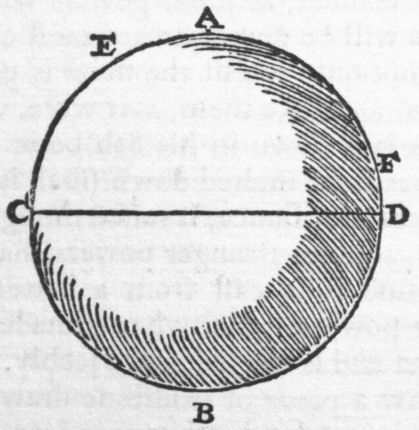
At C and D there is no force alluring magnetick ends to the body, for the forces tend toward both poles. But direction is powerful on the æquator. At C, D, the distances are equal from both poles; therefore iron which is at C, D, when it is allured in contrary ways, does not adhære with constancy; but it remains and is joined to the stone, if only it incline to the one or other side. At E there is a greater power of alluring than at F, because E is nearer the pole. This is not so because there is really greater virtue residing at the pole, but since all the parts are united in the whole, they direct their forces towards the pole. From the forces flowing from the plane of the æquinoctial towards the pole, the power increases. A fixed verticity exists at the pole, so long as the loadstone remains whole; if it is divided or broken, the verticity obtains other * positions in the parts into which it is divided. For the verticity always changes in consequence of any change in the mass, and for this cause, if the terrella be divided from A to B, so that there are two stones, the poles will not be A, B, in the divided parts, but F, G, and H, I.
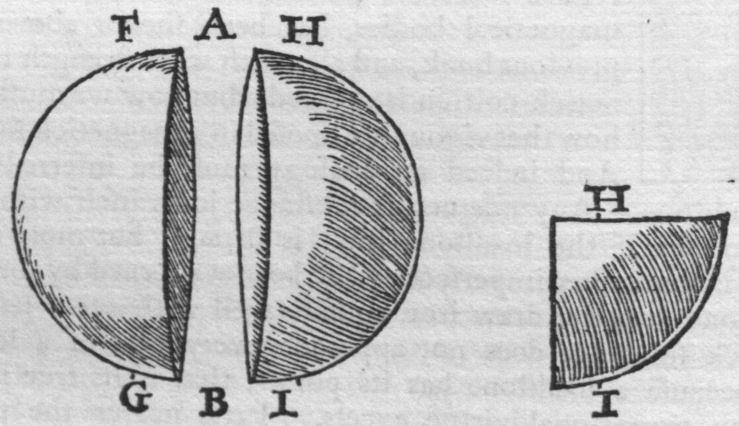
Although these stones now are in agreement with one another, so that F would not seek H, yet if A was previously the boreal pole[163], F is now boreal, and H also boreal; for the verticity is not changed (as Baptista Porta incorrectly affirms in the fourth chapter of his seventh book); since, though F and H do not agree, so that the one would incline to the other, yet both turn to the same point of the horizon. If the hemisphere H I be divided into two quadrants, the one pole takes up its position in H, the other in I. The whole mass of the stone, as I have said, retains the site of its vertex constant; and any part of the stone, before it was cut out from the block[164], might have been the pole or vertex. But concerning this more under Direction. It is important now to comprehend and to keep firmly in mind that the vertices are strong on account of the force of the whole, so that (the command being, as it were, divided by the æquinoctial) all the forces on one side tend towards the north; but those of an opposite way towards the south, so long as the parts are united, as in the following demonstration.